



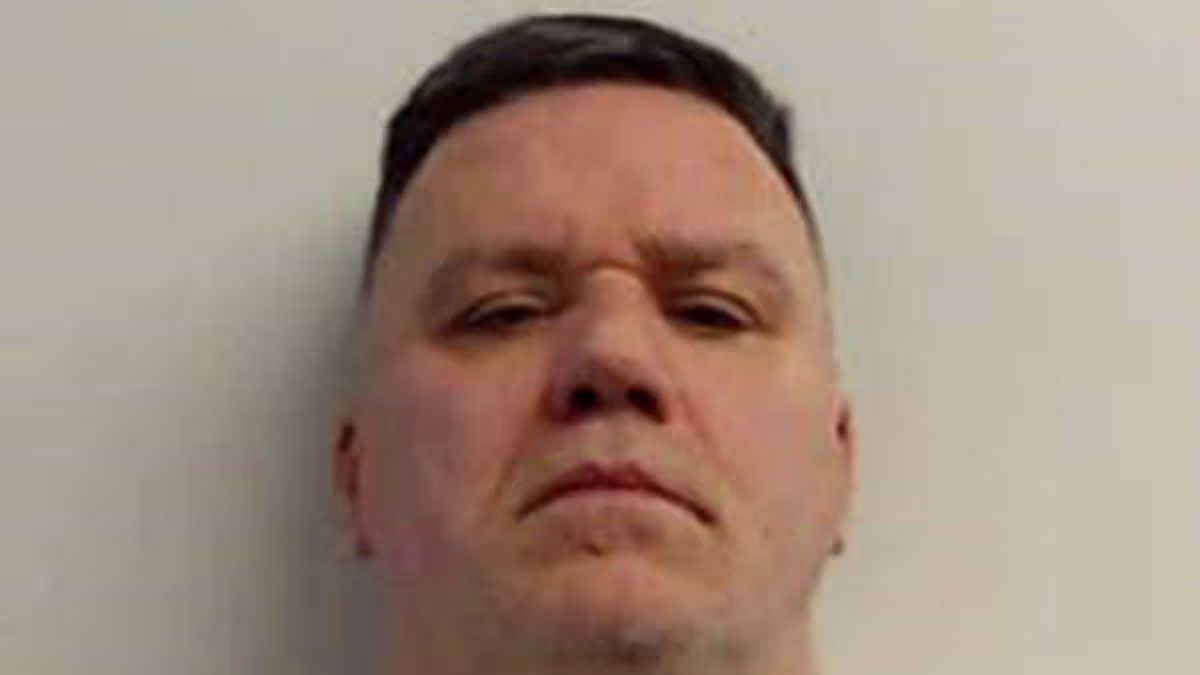
Iain Packer is serving life for the murder of Emma Caldwell and the rape and sexual assault of 22 other women.
Emma Caldwell killer Iain Packer tried to force his way on to a bus where women involved in prostitution were taking refuge.
Anne McIlveen operated the safe haven from a converted double-decker providing hot food and clothing and got to know Emma well.
She recalled how Packer regularly came to the bus looking for girls, acting in a threatening and intimidating manner, and her husband would have to order him to leave.
Anne thinks Packer might have been looking for certain women, including Emma, and was angry because they were not out on the street.
Anne, who is now in her late 60’s, added:”He had a terrible darkness about him.
“He didn’t have one iota of respect.
“He’s seen it as it was his right to come and target whoever he wanted to target, but he wasn’t doing it in my bus.”
Anne says Packer was one of a number of men who came to the bus looking for the women but he stood out the most.
It was run by the Christian Salt and Light outreach charity based in a nearby church in the city’s Govanhill.
She added: “He never spoke to me. He would speak to other people around about the bus, where’s such and such.
“My husband, used to just go up and say to him, move. He did that with a lot of the folk that we knew that were abusing the lassies. The lassies were getting some doings up that town. It was It was awful.”
Emma. then 27, was one of seven women involved in prostitution who were murdered between 1991 and 2005 while working in Glasgow.
Packer is serving life for the murder of Emma and the rape and sexual assault of 22 other women.
Anne was speaking out in the latest episode of the Clyde1 podcast Beware Book, about the killings
The title refers to a diary at a drop in centre where women like Emma logged dangerous clients’ names.
Anne also recalled the day she learned Emma’s body was found in Limefield Woods in Biggar, Lanarkshire in May 2005 after she had been reported missing the previous month.
At the time the double decker was kept in the church car park next to the hostel in Inglefield Street on the south-side of Glasgow where Emma had lived.
Anne added:”I was standing outside with the lassies. We didn’t know what had happened to her. And the reporter from the Daily Record, she came and told us that Emma’s body had been found. “So, we opened the church up and all the lassies bailed into the church because they were all in total shock. “We also had the police come out on the bus for 10 months and they took statements from all the girls.”
Anne received an MBE in 2016 for her work with Salt and Light.
She added:”We used the bus as a drop-in during the days, and the girls came over and had their tea.
“When you go all over it and you go back over it and you think we could maybe have done some things different, but I don’t think it would have prevented what happened to Emma.
“What was going to happen to Emma was going to happen to her regardless of what anybody else could do.
“Her mum and dad. My heart broke for them. They were out looking for her nightly. It was just awful. It was a horrible time and the lassies were really frightened.”
Anne also talks about the violence women like Emma regularly experienced while working Glasgow’s red light district, known as The Drag.
She added:”The girls were frightened. They knew that somebody was out there and they were frightened going to work. These lasses were living in a knife edge every night when they were going out there selling their bodies. There was girls being raped up lanes.
“A lot of lassies were treated like something in your shoe, but these were vulnerable women that didn’t get the help that they desperately needed.
“When Salt and Light was set up in the early 90s. there was a real need for the women in the streets. We had the double-decker bus kitted out. It had a soup kitchen on the lower deck, and on the upper deck was the girls. That was their safe haven. That was their space.”
Anne also recalls how she she was threatened by a man with a bar outside the double decker but he ran off when she got out of her car.
She added:”I never needed to worry about being on that bus. Because the people that actually came and got fed, they stood up for us.”
Packer, now 53, was overlooked as a prime suspect in the original 2005 investigation even though he admitted taking Emma and other women to Limefield Woods for sex.
Instead senior officers focussed their attention on four Turks who were charged with Emma’s murder in 2007 but had the charges dropped the following year.
A public inquiry into the original investigation by Strathclyde Police has begun and is due to hear evidence later this year.
* The latest episode of Beware Book is available on the Rayo app, Apple, Amazon Music and Spotify.








![Crypto Leverage Shocker: $61B Risks EXPOSED [Full Report]](https://wordupnews.com/wp-content/uploads/2026/04/1776665179_maxresdefault-80x80.jpg)





































You must be logged in to post a comment Login