Baiju Bhatt, founder and CEO of Aetherflux. (LinkedIn Photo)
Aetherflux, a Bay Area-based space startup, is expanding to Seattle to open what it calls a “core center for satellite development.”
In a post on LinkedIn last week, Aetherflux said its team is growing and the company is currently hiring across all disciplines, from engineering to operations.
Founded in 2024 by CEO Baiju Bhatt, the billionaire co-founder of the trading platform Robinhood, Aetherflux is currently focused on creating an orbital data center satellite. The company says the goal is for its constellation of satellites — which it calls “Galactic Brain” — to leverage solar power in space to address the massive energy needs on Earth for artificial intelligence. The first data center node for commercial use is targeted for launch in 2027.
The startup will join a robust aerospace community of companies big and small in the Seattle area and beyond. They include Blue Origin, Stoke Space, Aerojet Rocketdyne, Starfish Space, Starcloud, Xplore and many more.
SpaceX, which produces satellites for its Starlink broadband constellation from its Redmond, Wash., facility, is seeking approval from the Federal Communications Commission for its plan to put up to a million satellites in orbit to process data for artificial intelligence applications.
Advertisement
Amazon produces satellites for its Amazon Leo broadband satellite network in Kirkland, Wash.
AI companies have been considering the idea of using solar-powered data center satellites to get around the limiting factors for ground-based facilities, such as rapidly growing requirements for electrical power as well as the availability of water for cooling systems.
“The race for artificial general intelligence is fundamentally a race for compute capacity, and by extension, energy. The elephant in the room is that our current energy plans simply won’t get us there fast enough,” Bhatt said in December. “Galactic Brain puts the sunlight next to the silicon and skips the power grid entirely.”
Aetherflux raised $50 million in a Series A funding in April 2025. The round was led by Index Ventures and Interlagos, with participation from Bill Gates’ Breakthrough Energy Ventures, Andreessen Horowitz, and NEA, according to TechCrunch. Total funding to date is $60 million.
Advertisement
Based in San Carlos, Calif., and Washington, D.C., Aetherflux’s team includes people who’ve worked at Robinhood, SpaceX, NASA’s Jet Propulsion Laboratory, Anduril and the U.S. Navy.
Aetherflux has attracted to attention from the U.S. military. The company was awarded funding from the Department of Defense’s Operational Energy Capability Improvement Fund (OECIF) to develop space solar power for the military.
The Seattle-area company that comes closest to Aetherflux’s target market is Redmond-based Starcloud, which is working to put a network of data center satellites in orbit. In a LinkedIn post, Starcloud CEO Philip Johnston hailed Aetherflux’s Seattle plans as a positive sign for the region’s space industry. “Welcome to the neighbourhood, Aetherflux! … Did we kick off a new trend for space startups?” Johnston wrote.
GeekWire reached out to Aetherflux to learn where its Seattle hub will be located and how many people it hopes to employ. We’ll update when we hear back.
The ASX-listed data centre operator is raising A$1.5 billion in a fully underwritten equity offering and expanding its hybrid securities programme by A$700 million, with La Caisse de dépôt et placement du Québec now committed to a total of A$1.7 billion.
The raise will fund accelerated development of the S4 Western Sydney campus, where contracted utilisation jumped 250 megawatts in a single quarter.
NEXTDC (ASX: NXT), Australia’s largest independent data centre operator, has halted trading to launch a A$2.2 billion capital plan anchored by a fully underwritten A$1.5 billion equity entitlement offer, the company announced on Monday.
The raise is a direct response to a step-change in demand: between December 2025 and 31 March 2026, NEXTDC’s pro forma contracted utilisation jumped 250 megawatts, a 60% increase in a single quarter, to reach 667MW.
Advertisement
The 💜 of EU tech
The latest rumblings from the EU tech scene, a story from our wise ol’ founder Boris, and some questionable AI art. It’s free, every week, in your inbox. Sign up now!
Its forward order book grew 83% over the same period to 544MW, driven by hyperscale cloud providers and AI infrastructure customers.
The equity component is structured as a 1-for-5.4 pro-rata accelerated non-renounceable entitlement offer, priced at A$12.70 per share, an 8.6% discount to the theoretical ex-rights price of A$13.90.
Advertisement
New shares are expected to be issued to retail shareholders by 18 May, with the institutional bookbuild already underway at the time of the halt. Prior to the suspension, NEXTDC shares had risen approximately 25% through April, reflecting mounting investor enthusiasm for data centre infrastructure plays across Asia-Pacific.
The A$2.2 billion total capital plan combines the A$1.5 billion equity offer with a A$700 million expansion of the company’s hybrid securities programme.
NEXTDC’s hybrid securities, which are deeply subordinated instruments ranking junior to all existing debt, had previously been backed by a A$1 billion binding commitment from La Caisse de dépôt et placement du Québec (CDPQ), Canada’s second-largest pension fund with approximately C$517 billion in assets.
The expanded commitment brings La Caisse’s total backing to A$1.7 billion, cementing what the Canadian investor described as a “promising first step toward a long-term partnership” with NEXTDC.
Advertisement
The primary use of proceeds is the accelerated development of S4, NEXTDC’s data centre campus in Western Sydney, where the company intends to invest approximately A$1.5 billion through the end of financial year 2027.
A record 250MW customer commitment at S4 during the quarter is what triggered the announcement: CEO Craig Scroggie described the capital raise as a way to “materially expand NEXTDC’s contracted capacity and de-risk the company’s Western Sydney developments ahead of potential strategic partnership transactions with private capital partners from 2027.”
That last phrase signals intent to bring in joint venture partners or asset-level investors once the facility is contracted and de-risked, a common monetisation mechanism for large-scale data centre infrastructure.
The financial guidance accompanying the announcement is striking. NEXTDC raised its FY26 capital expenditure guidance by A$300 million to a range of A$2.7 billion to A$3.0 billion.
Advertisement
For FY27, capex is forecast at approximately A$5.0 billion. The company is simultaneously maintaining its existing FY26 revenue and EBITDA guidance while projecting that contracted EBITDA from existing customer agreements alone will exceed A$1 billion over time, roughly four times the midpoint of current FY26 guidance of A$235 million.
Following the raise and recent funding activity, NEXTDC expects pro forma liquidity of approximately A$5.9 billion.
NEXTDC operates or is developing 20 data centres across Australia, in Sydney, Melbourne, Brisbane, Perth, Port Hedland, Canberra, Adelaide, the Sunshine Coast, and Darwin, and is evaluating sites in Tokyo, Bangkok, Johor and Kuala Lumpur in Malaysia, and Singapore.
Australia’s deployable data centre capacity stands at approximately 1,350 megawatts today, with consensus forecasts projecting 3,100 MW by 2030–31 and potentially up to 7.4 gigawatts by 2035 under AI-driven scenarios.
Advertisement
NSW has endorsed A$51.9 billion worth of data centre projects through its Investment Delivery Authority, effectively concentrating approvals, and the grid connections and planning support that come with them, in a small number of qualified operators.
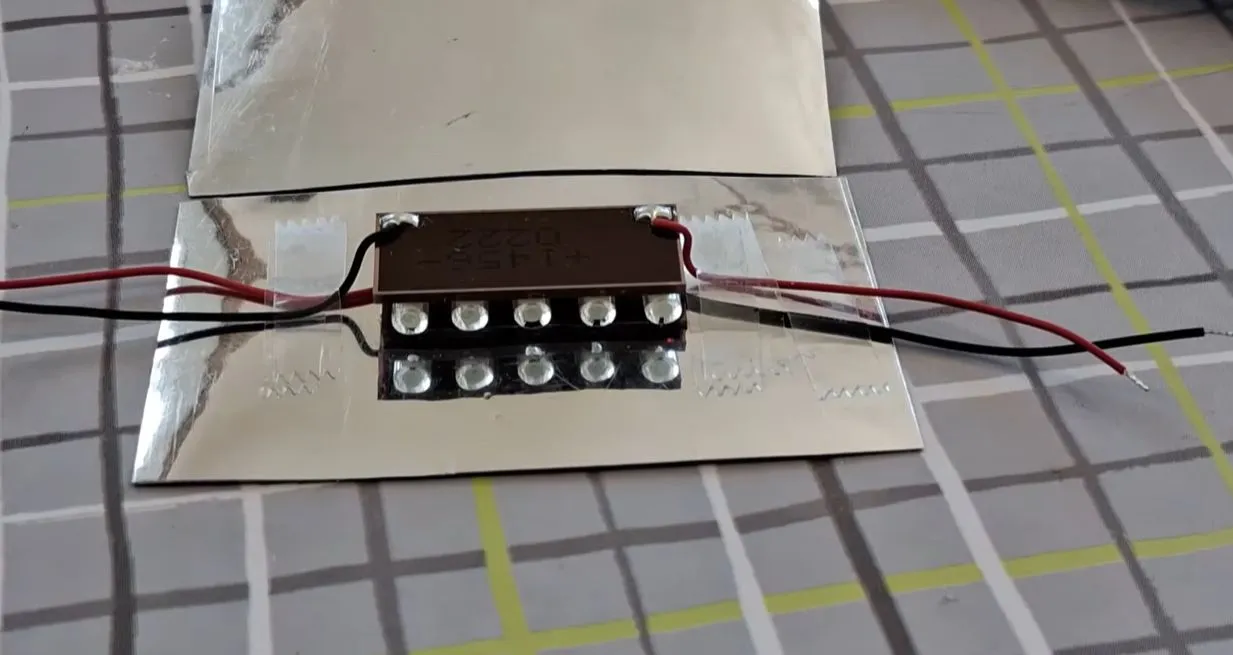
Nuclear batteries are pretty simple devices that are conceptually rather similar to photovoltaic (PV) solar, just using the radiation from a radioisotope rather than solar radiation. It’s also possible to make your own nuclear battery, with [Double M Innovations] putting together a version that uses standard PV cells combined with small tritium vials as radiation source.
The PV cells are the amorphous type, rated for 2.4 V, which means that they’re not too fussy about the exact wavelength at the cost of some general efficiency. You generally find these on solar-powered calculators for this reason. Meanwhile the tritium vials have an inner coating of phosphor so they glow. With a couple of these vials sandwiched in between two amorphous cells you thus have technically something that you could call a ‘nuclear battery’.
With an approximately 12 year half-life, tritium isn’t amazingly radioactive and thus the glow from the phosphor is also not really visible in daylight. With this DIY battery wrapped up in aluminium foil to cover it up fully, it does appear to generate some current in the nanoamp range, with a single-cell and series voltage of about 0.5 V.
Advertisement
A 170 VAC-rated capacitor is connected to collect some current over time, with just under 3 V measured after a night of charging. In how far the power comes from the phosphor and how much from sources like thermal radiation is hard to say in this setup. However, if you can match up the PV cell’s bandgap a bit more with the radiation source, you should be able to pull at least a few mW from a DIY nuclear battery, as seen with commercial examples.
This isn’t the first time we’ve seen this particular trick. A few years ago, a similar setup was used to power a handheld game, as long as you don’t mind waiting a few months for it to charge.
Surveillance and analytics company Palantir recently posted what it called a “brief” 22-point summary of CEO Alex Karp’s book “The Technological Republic.”
Written by Karp and Palantir’s head of corporate affairs, Nicholas Zamiska, “The Technological Republic” was published last year and described by its authors as “the beginnings of the articulation of the theory” behind Palantir’s work. (One critic said it was “not a book at all, but a piece of corporate sales material.”)
In fact, congressional Democrats recently sent a letter to ICE and the Department of Homeland Security demanding more information about how tools built by Palantir and “a range of surveillance companies” are being used in the Trump administration’s aggressive deportation strategy.
Advertisement
Palantir’s post doesn’t reference much of that context directly, simply saying that it’s providing the summary “because we get asked a lot.” It then suggests that “Silicon Valley owes a moral debt to the country that made its rise possible” and declares that “free email is not enough.”
“The decadence of a culture or civilization, and indeed its ruling class, will be forgiven only if that culture is capable of delivering economic growth and security for the public,” the company says.
The post is wide-ranging, at one point criticizing a culture that “almost snickers at [Elon] Musk’s interest in grand narrative” and at another point touching on recent debates about the use of artificial intelligence by the military.
Techcrunch event
Advertisement
San Francisco, CA | October 13-15, 2026
“The question is not whether A.I. weapons will be built; it is who will build them and for what purpose,” Palantir says. “Our adversaries will not pause to indulge in theatrical debates about the merits of developing technologies with critical military and national security applications. They will proceed.”
Advertisement
Similarly, the company suggests that “the atomic age is ending,” while “a new era of deterrence built on A.I. is set to begin.”
The post also takes a moment to denounce the “postwar neutering of Germany and Japan,” adding that the “defanging of Germany was an overcorrection for which Europe is now paying a heavy price” and that “a similar and highly theatrical commitment to Japanese pacifism” could “threaten to shift the balance of power in Asia.”
The post ends by criticizing “the shallow temptation of a vacant and hollow pluralism.” In Palantir’s argument, a blind devotion to pluralism and inclusivity “glosses over the fact that certain cultures and indeed subcultures . . . have produced wonders. Others have proven middling, and worse, regressive and harmful.”
After Palantir posted this on Saturday, Eliot Higgins, the CEO of the investigative website Bellingcat, dryly remarked that it was “extremely normal and fine for a company to put this in a public statement.”
Advertisement
Higgins also argued that there’s more to the post than a simple “defense of the West” — in his view, it’s an attack on what he said are key pillars of democracy that need rebuilding: verification, deliberation, and accountability.
“It’s also worth being clear about who’s doing the arguing,” Higgins wrote. “Palantir sells operational software to defense, intelligence, immigration & police agencies. These 22 points aren’t philosophy floating in space, they’re the public ideology of a company whose revenue depends on the politics it’s advocating.”
Home Depot has a launched a massive spring sale, appropriately named ‘Spring Black Friday‘, with up to 40% in savings on patio furniture, appliances, grills, lawn mowers, tools and more.
As TechRadar’s deals editor and a huge fan of Home Depot, I’ve gone through Home Depot’s sale and hand-picked the best deals. While Home Depot’s Black Friday sale is always a popular event, with impressive savings, Home Depot’s spring sale is even better, because you get to save on seasonal items.
The retailer has record-low prices on outdoor essentials like patio furniture, gardening tools and grills, as well Black Friday-like discounts on major appliances, including refrigerators, washing machines and dishwashers from brands like LG, Samsung and Whirlpool.
Advertisement
You’ll find links to Home Depot’s most popular sale categories below, followed by my pick of the top deals. Keep in mind that Home Depot’s sale ends on April 29, so time is running out to score spring savings.
Zoom “has partnered with World, Sam Altman’s iris-scanning identity company (previously known as Worldcoin), ” reports Digital Trends, “to add real-time human verification inside meetings.”
Zoom is now inviting organizations to join the beta version of the rollout, which Digital Trends says “lets hosts confirm that every face on the call belongs to a real person, not an AI-generated imposter. ”
For those wondering how World’s Deep Face technology works, it includes a three-step process. It cross-references a signed image from a user’s original Orb registration, a live face scan from the device, and the frame of the video that’s visible to the other participants in the meeting. Only when the three samples match does a “Verified Human” badge appear next to the user’s name…
Hosts can also make Deep Face verification mandatory for joining meetings, preventing unverified participants from joining entirely. Mid-call, on-the-spot checks are also possible…
Summary: Threads head Connor Hayes previewed a redesigned web interface that adds direct messages, a navigation sidebar with shortcuts to saved posts and insights, and a cleaner single-feed layout replacing the current multi-column design. DMs, which launched on mobile in June 2025, will roll out on web “over the coming weeks,” bringing one-on-one chats, group conversations of up to 50, and media sharing to the platform’s most engaged desktop users as Threads surpasses 450 million monthly active users and begins scaling its global advertising business.
Threads is getting a redesigned web interface that adds direct messages, a navigation sidebar, and quicker access to features that were previously buried in the mobile-first layout. Connor Hayes, who took over as head of Threads in September 2025, previewed the changes in a post on the platform this week, writing that “web is an important part of how our most engaged users interact with Threads, and we’ll be investing more here going forward.” Messages on the web version are not yet publicly testing, Hayes said, but users should “start to see them appear over the coming weeks.”
The redesign replaces the current multi-column layout with a cleaner single-feed view anchored by a left-side navigation rail. The sidebar includes shortcuts to saved posts, performance insights, activity, notifications, and the ability to switch between feeds, all features that exist on the mobile app but required multiple taps or profile navigation to find on the web. The result looks significantly more like X’s desktop layout, which is either a pragmatic design choice or an admission that the format Threads was trying to replace turned out to be the right one.
DMs finally reach the desktop
Direct messages launched on the Threads mobile app in June 2025, nearly two years after the platform itself launched. The web version has operated without them since, meaning that the users Hayes describes as “most engaged,” those who use Threads on a computer, have been unable to access one of the platform’s core communication features. The web rollout will bring one-on-one chats, group conversations of up to 50 people, emoji reactions, and the ability to send photos, GIFs, and stickers.
Advertisement
Threads has been building out its messaging infrastructure steadily. In January, it launched a basketball mini-game within DMs. In February, it began testing a shortcut that converts the phrase “DM me” in a post into a clickable link that opens a direct message. The messaging system is built on Instagram’s infrastructure, which gives it reliability but also ties it to a platform with different privacy expectations and content norms.
The 💜 of EU tech
The latest rumblings from the EU tech scene, a story from our wise ol’ founder Boris, and some questionable AI art. It’s free, every week, in your inbox. Sign up now!
The redesign preview came one day after Hayes showed changes to how replies look on mobile. Replies under a post will now be indented to make conversation threads easier to follow, a feature rolling out on iOS and currently testing on Android.
Advertisement
The competitive context
Threads has grown faster than any social platform in history and now has more than 450 million monthly active users, with daily active users estimated at roughly 137 to 141 million. In January, Similarweb data showed Threads had surpassed X in daily mobile users, 141.5 million to 125 million, a milestone that would have seemed improbable when the app launched as a text-based companion to Instagram in July 2023.
The growth has come alongside a broaderdecline of Xunder Elon Musk’s ownership, which has pushed users, advertisers, and publishers toward alternatives.Bluesky, which raised $100 million in its Series B and has grown to 43 million users under new CEO Toni Schneider, has captured a vocal segment of the market. But Threads’ integration with Instagram’s 2 billion-plus user base gives it a distribution advantage that no standalone competitor can match.
The web redesign is part of a shift from growth to retention. Threads has the users. What it has lacked is the feature depth that makes a platform indispensable for the power users who drive conversation and content creation. DMs, a proper desktop experience, and improved reply threading address the specific complaints that have kept some users treating Threads as a secondary platform rather than a primary one.
Monetisation and Meta’s broader bet
Meta began rolling out ads on Threads globally in late January 2026, after testing in the US and Japan throughout 2025. The rollout uses Meta’s existing Ads Manager and supports image, video, and carousel formats through both Advantage+ and manual campaigns. Early pricing has been lower than Facebook and Instagram, with CPMs estimated at $3 to $8 and cost per click at $0.30 to $1.50, reflecting the early stage of advertiser competition on the platform. Evercore ISI analysts have projected Threads advertising revenue of $8 billion by the end of 2025 and $11.3 billion by 2026.
Advertisement
The advertising rollout gives the web redesign commercial significance beyond user experience. Desktop users tend to have higher engagement times and are more valuable to advertisers. A web interface that keeps users on the platform longer and adds messaging, which increases session frequency, directly supports the revenue trajectory that analysts are projecting.
Hayes was appointed to lead Threads in July 2025, taking over from Adam Mosseri, who had been running the platform directly alongside Instagram. Hayes previously served as Meta’s VP of product for generative AI and spent 14 years at the company in various product roles, including a stint growing Instagram Reels. Mosseri said at the time that “given Threads’ maturity, we think we need a dedicated app lead who can focus all of their time on helping Threads move forward.” The web redesign and DM rollout are the most visible results of that dedicated focus.
Threads is also the largest platform running on the ActivityPub protocol, allowing users to share posts to Mastodon, WordPress, and other fediverse-compatible services. Meta says it has interacted with over 75% of all fediverse servers, though full account portability is not yet available.
The redesign is incremental rather than transformative. It brings the web version closer to feature parity with the mobile app, which is itself still catching up to the feature set that X has built over 17 years. But for a platform that hasMeta’s resourcesbehind it, 450 million monthly users in front of it, and agrowing creator economyto support, the gap between what Threads offers and what its most engaged users expect is closing faster than most new platforms manage. Hayes is signalling that the web is where the next phase of that closure will happen.
Filling a gap that fans of its retro-inspired speaker range have long identified, Wharfedale has introduced the Heritage Centre.
This new speaker is a dedicated centre channel speaker that’s been built to integrate with Wharfedale’s Linton, Super Linton, Denton, and Dovedale models that have made the Heritage Series one of its most successful lines in recent memory.
The absence of a centre speaker has been a barrier for Heritage owners wanting to build a multichannel home cinema system as the range has until now been limited to stereo pairs.
That’s left buyers to either mix in a mismatched centre channel or go without one entirely when configuring a 3.1 or 5.1 channel setup. Now that’s no longer an issue.
Advertisement
Image Credit (Wharfedale)
Advertisement
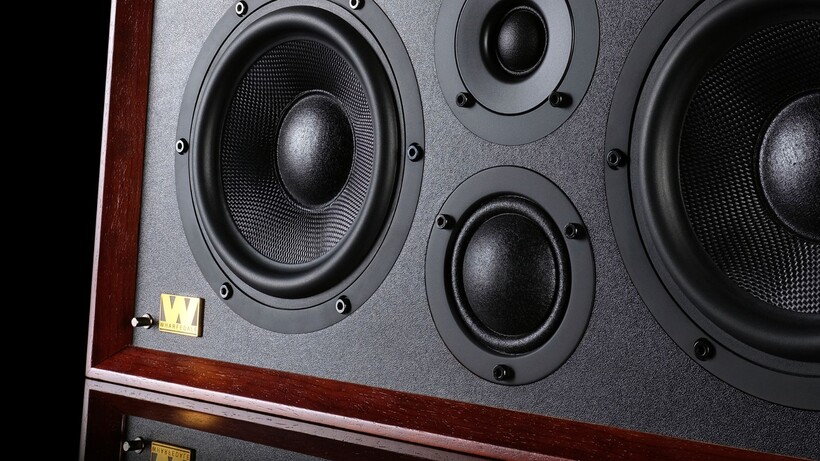
Wharfedale’s solution draws directly from the Super Denton’s driver architecture, adopting the same three-way configuration used across the broader Heritage range to keep the technical foundation consistent across the full speaker family.
That configuration pairs twin 165mm woven Kevlar bass drivers with a 50mm fabric dome midrange and a 25mm fabric dome treble unit, with all three driver types adapted directly from those developed for the Super Denton.
The midrange driver covers the 900Hz to 2.7kHz frequency band, the range most responsible for vocal clarity and dialogue intelligibility in film and television. The treble unit uses a damped rear chamber to push its resonant frequency well below the crossover point to keep high-frequency reproduction clean across a wide listening area.
Cabinet construction uses layered particle board and MDF bonded with a resonance-damping adhesive. It’s a build approach designed to distribute panel resonances across multiple frequencies rather than concentrating them at a single audible point. The internal bracing adds further control over cabinet colouration.
Advertisement
Peter Comeau, Wharfedale’s Director of Acoustic Design said: ““The Heritage Series was originally conceived purely for the enjoyment of stereo music, but the speakers’ richly expressive sonic qualities lend themselves perfectly to other forms of AV entertainment. When the demand for a dedicated centre speaker for people building multichannel systems with Linton and Denton speakers became clear, we embarked on the project with the rigorous attention to engineering detail applied to every Heritage model.”
Advertisement
Real-wood veneers in walnut, mahogany, or black oak finish the cabinet to a hand-polished satin lacquer, maintaining visual consistency with the full Heritage range across all three finish options.
The Wharfedale Heritage Centre arrives in late May, priced at £649, available in walnut, mahogany, or black oak to match whichever Heritage speaker system it sits in.
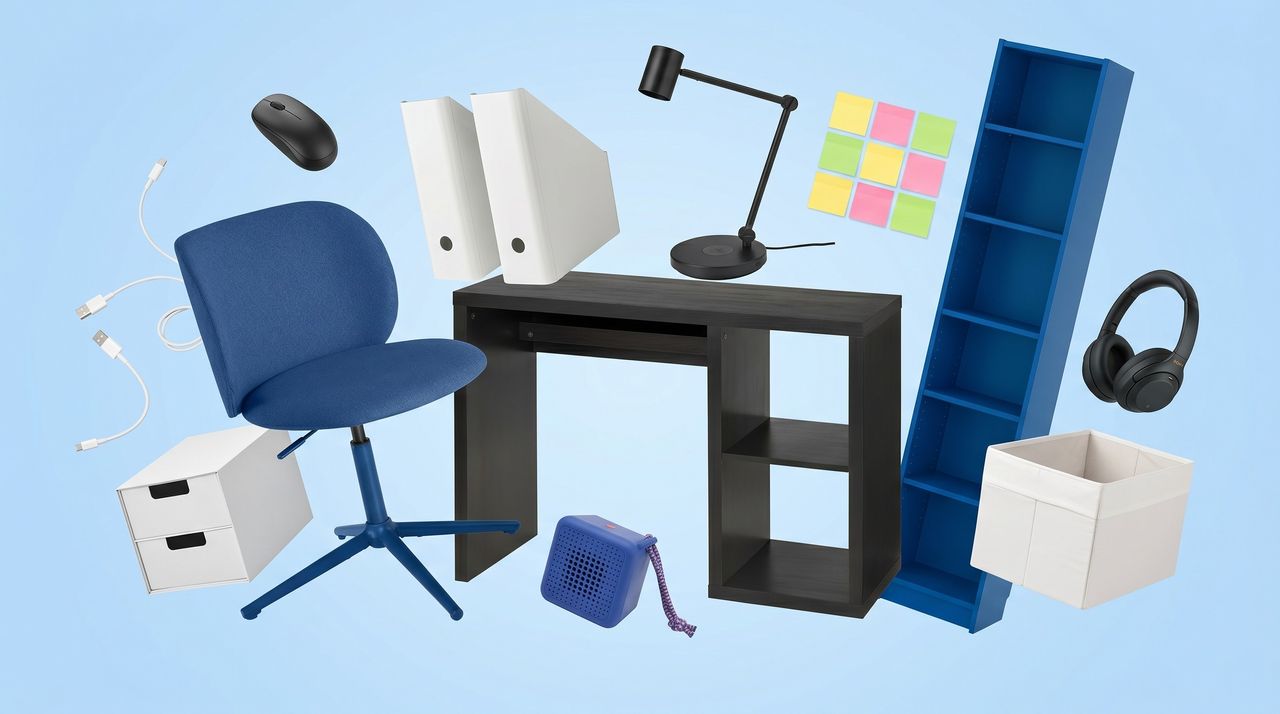
Simple and iconic, IKEA’s Billy bookcase has been around since the 1970s, and over 140 million have bene sold worldwide. The classic wood and white finishes are timeless, but now it’s got a new look for 2026 with a limited-edition blue version.
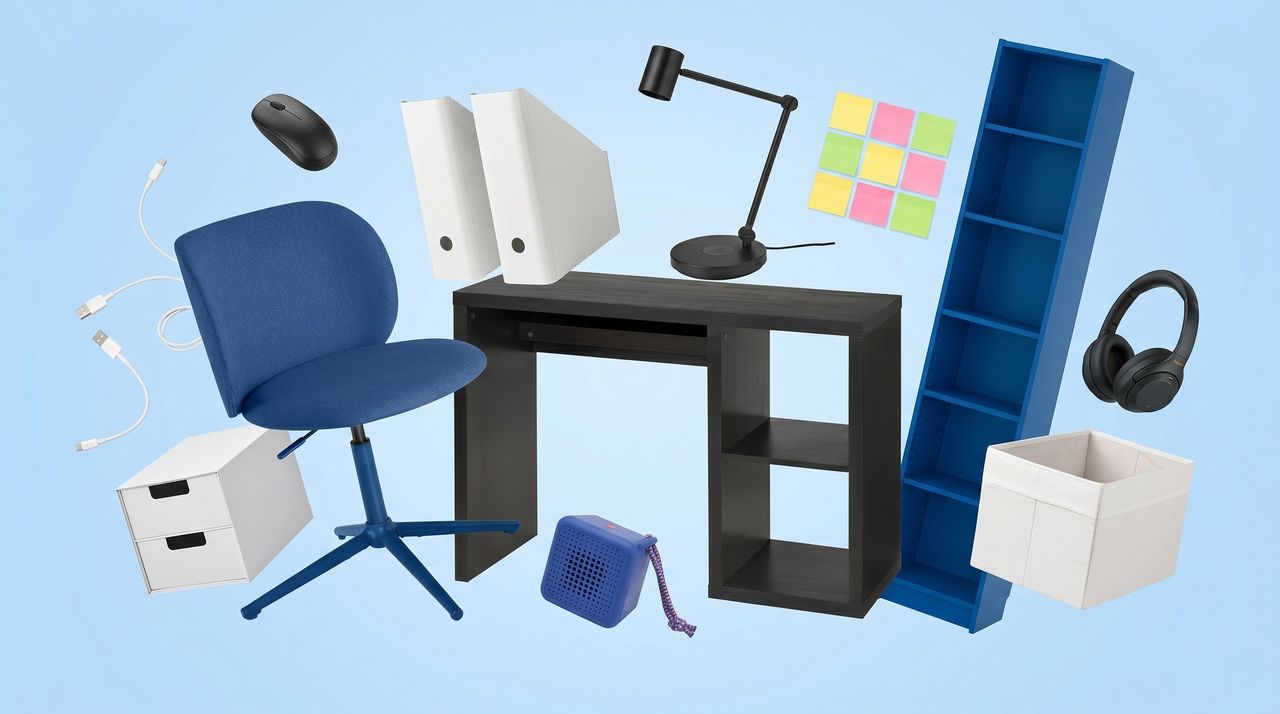
A bold piece of furniture like this needs the right styling, and as TechRadar’s Homes Editor, I like making it pop by teaming it with black and white for a striking effect. This compelling cobalt bookcase would look particularly good in a home office, with an IKEA Kallax desk in black/brown, and white accessories.
If one pop of blue isn’t enough (if you have a particularly large room, for example) you could add a splash more with a matching Krylbo swivel chair, or a few small accessories to tie it all together, like the royal blue Vappeby Bluetooth speaker (which TR’s audio editor loves) and the minimalist Ps 1995 clock.
Advertisement
The limited-edition blue Billy bookcase won’t be around forever, and it’s bound to be popular, so grab one while you can!
Built around Billy
Advertisement
Sign up for breaking news, reviews, opinion, top tech deals, and more.
Disclaimer: Unless otherwise stated, any opinions expressed below belong solely to the author.
In Mar, Singapore’s Ministry of Manpower (MOM) released its annual summary of job creation efforts that took place in the year before, highlighting the skills and expertise needed in both PMET and non-PMET professions.
For this piece, we focus on PMET roles—Professionals, Managers, Executives and Technicians—where many of Singapore’s best and most sought-after jobs are often concentrated (although some statistics may overlap).
Why are new jobs created in Singapore?
MOM’s analysis begins with the fundamental question: are Singaporean employers looking for replacements or are they genuinely adding new openings to their offer?
Advertisement
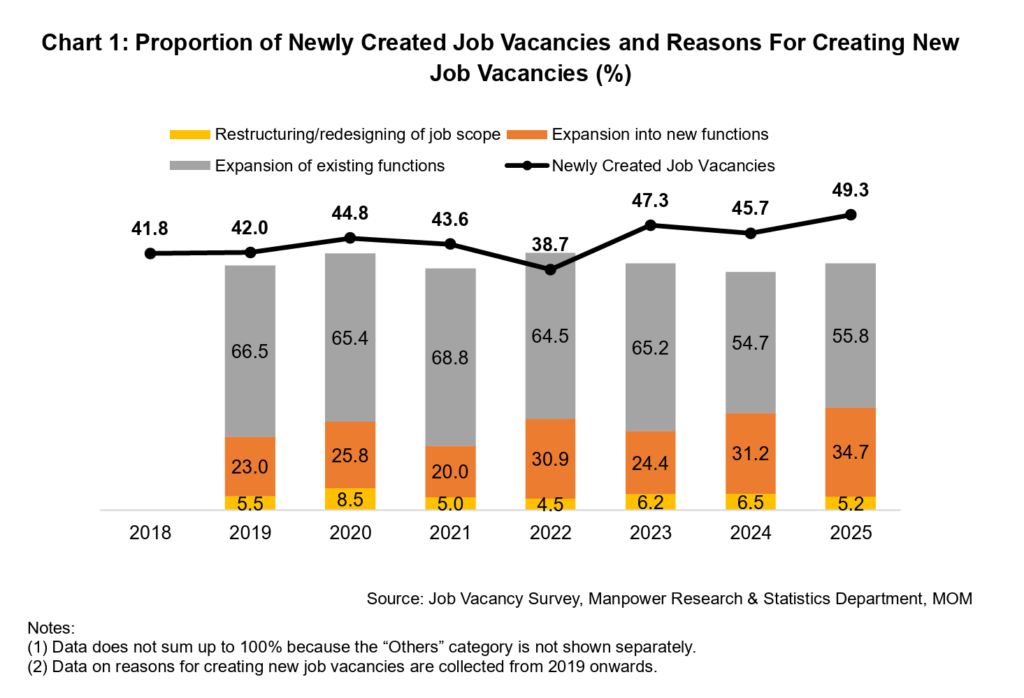
Fortunately, last year brought the highest reading yet: 49.3% of vacancies were for completely new positions. This means that local companies are looking for more people and are not simply rotating staff.
What’s more, a record-high share of this expansion is being driven by businesses creating entirely new functions. In 34.7% of cases, job growth came from new roles rather than the expansion of existing operations, which, unsurprisingly, still accounts for the majority at 55.8%.
It suggests that 2025, despite the fears caused by the US tariffs, was a very dynamic year, and companies still ventured into new areas.
Where are the jobs created?
Where are those new areas found, then?
Well, as has been typical over the past few years, the industry with the highest share of fresh openings remains Information & Communications, where close to three-quarters of vacancies are for roles that did not exist before.
Advertisement
It is followed by Construction (though it’s most likely driven by non-PMET employment), as well as Professional Services and Finance & Insurance, where more than half of the jobs on offer are new.
That is great news, of course, given that some of the best-paid roles are found in Singapore’s corporate sector.
Who are these jobs for?
Qualified people, naturally, but as we explained on Vulcan Post recently, paper degrees matter less and less, even for PMETs, where 70% of employers stated that academic qualifications are not their main consideration.
This doesn’t mean they don’t matter at all, but if all you have is a paper rather than practical experience, your job search may be considerably longer, just as it is a problem for employers to recruit workers for some vacancies for more than six months (listed in the table below).
Lack of skills and experience are the two primary reasons they remain in the market, with not enough talent available to fill them. And it’s not like employer expectations are huge, but over half of those looking for PMET specialists expect at least two to five years spent on the job somewhere before.
Only one in five is willing to employ complete newbies.
Advertisement
Here’s a more specific breakdown by industry:
If you’re a fresh graduate or someone without experience at a particular job, your best chance may be to look for something in the public sector, as it is the most open to candidates without a long CV. It also pays well and looks for applicants with greater educational attainment.
So, if you have a degree but are struggling for work, perhaps take a look at what state administration or education are offering.
How much do they pay?
Finally, let’s talk about the money.
Here’s the list of the Top 10 most in-demand PMET jobs, compiled from the data collected in 2025, together with the salaries you can expect.
Top 10 PMET Vacancies in 2025
Rank
Occupation
Range of wages offered
1
Teaching & Training Professional
S$2,611 to S$8,580
2
Commercial & Marketing Sales Executive
S$3,000 to S$4,350
3
Software, Web & Multimedia Developer
S$7,000 to S$10,000
4
Policy & Planning Manager
S$4,800 to S$9,700
5
Electronics Engineer
S$5,000 to S$8,000
6
Civil Engineer
S$3,500 to S$5,500
7
Industrial & Production Engineer
S$4,200 to S$6,775
8
Accountant
S$4,550 to S$6,700
9
Systems Analyst
S$6,000 to S$9,700
10
Financial & Investment Adviser
S$7,500 to S$12,000
Source: Job Vacancies 2025/ Singapore Ministry of Manpower
The podium is occupied by the same jobs as last year, with a switch between second and third places. But it’s the teachers who are still in the highest demand, while the upper pay band places their earnings at over S$100,000 per year. Not bad.
Software developers and related IT experts are still highly needed—and highly paid, as are Electronics Engineers, System Analysts and Financial Advisers.
Advertisement
Other jobs may not be quite as lucrative, but their availability should make up for it, as many Singaporeans (including young grads) are looking for their way into the labour market.
Read other articles we’ve written on Singaporean businesses here.
In short: Stanford’s 2026 AI Index Report finds the performance gap between the best American and Chinese AI models has collapsed to 2.7%, down from 17.5-31.6 percentage points in May 2023, despite the US spending 23 times more on private AI investment ($285.9 billion vs $12.4 billion). China leads in AI patents (69.7% of global filings), publications (23.2% of global output), industrial robot installations (9x the US rate), and energy infrastructure, while AI talent migration to the US has dropped 89% since 2017.
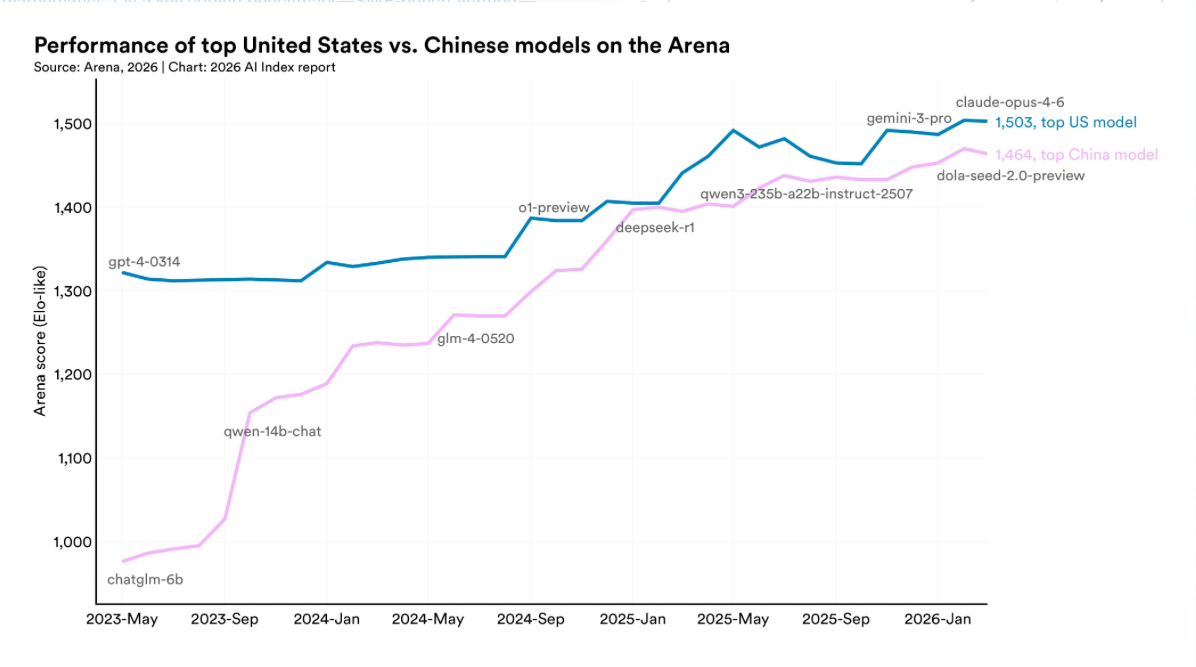
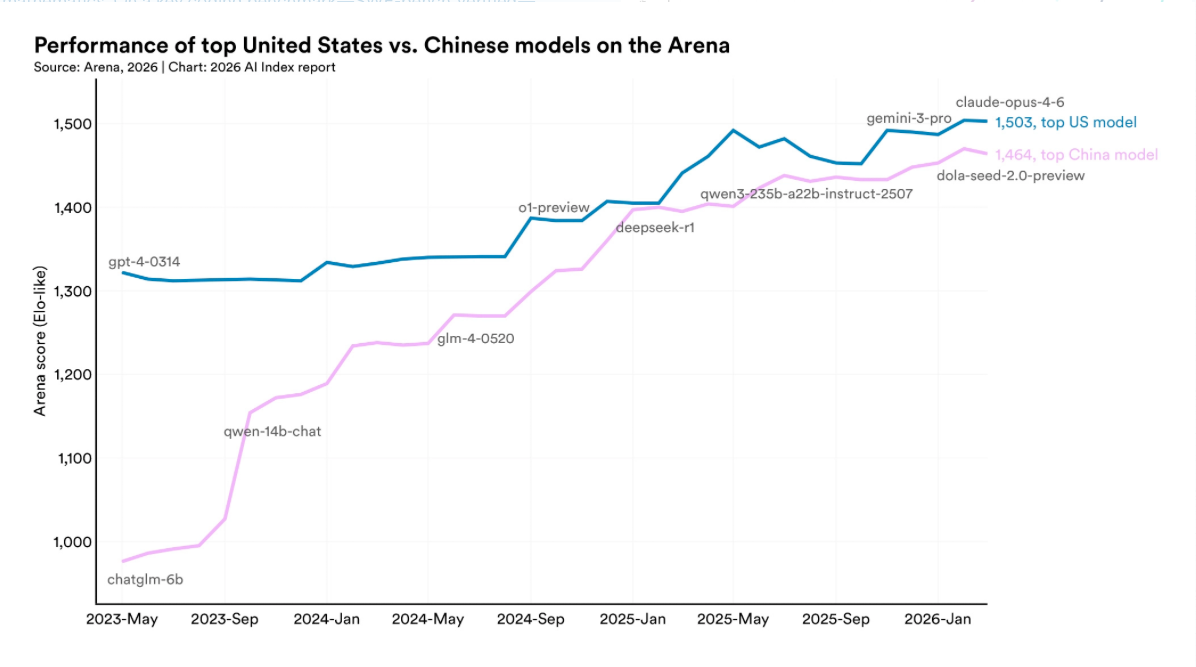
The performance gap between the best American and Chinese AI models has collapsed to 2.7%, according to the 2026 AI Index Report published this week by Stanford University’s Institute for Human-Centered Artificial Intelligence. In May 2023, the gap was between 17.5 and 31.6 percentage points across major benchmarks. As of March 2026, Anthropic’s Claude Opus 4.6 leads the global leaderboard with an Arena score of 1,503, while ByteDance’s Dola-Seed-2.0-Preview sits at 1,464, a difference of 39 points. DeepSeek’s R1 reasoning model briefly matched the top US model in February 2025, and American and Chinese models have traded the lead multiple times since.
The 423-page report, the most comprehensive annual assessment of the global AI landscape, documents a situation in which the United States spends 23 times more on private AI investment than China but leads on the only metric that arguably matters, model performance, by less than three percentage points. The question the report raises without quite answering is whether that spending advantage is sustaining American leadership or whether China has found a way to compete without it.
Where each country leads
The United States dominates private AI investment, with $285.9 billion in 2025 compared with China’s $12.4 billion. California alone accounted for $218 billion, more than 75% of the US total. American companies produced 50 notable AI models last year, compared with China’s 30, though China’s count doubled from 15 the previous year while America’s grew more modestly. The US hosts 5,427 data centres, more than ten times any other country.
Advertisement
China leads in volume. Chinese researchers produced 23.2% of all global AI publications and 20.6% of citations, compared with 12.6% for the US. Chinese entities filed 69.7% of all AI patents worldwide. China installed 295,000 industrial robots in the most recent reporting period, nearly nine times the 34,200 installed in the United States. And China’s electricity reserve margin has never dipped below 80%, twice the necessary capacity, while the US power grid suffers from decades of underinvestment that the report identifies as a potential bottleneck for AI infrastructure growth.
The investment figures come with a significant caveat. The report notes that private investment data “likely understates” China’s actual AI spending because the Chinese government channels resources through guidance funds and state-initiated investment vehicles that do not appear in private capital databases. The 23-to-1 spending ratio may be less dramatic than it appears.
The talent crisis
The most striking finding may be about people rather than models. The number of AI scholars moving to the United States has dropped 89% since 2017, with 80% of that decline occurring in the last year alone. The report describes the fall as “precipitous.” Switzerland now ranks first in the world for AI researchers and developers per capita.
Advertisement
The talent migration data complicates the narrative that American AI leadership is secure because of its investment advantage. If the researchers who build frontier models are increasingly choosing not to come to the US, the spending premium buys hardware and infrastructure but not the intellectual capital that turns compute into capability.DeepSeek demonstratedin January 2025 that a Chinese lab could match Silicon Valley’s best with a fraction of the resources. The talent data suggests the conditions that produced DeepSeek are strengthening, not weakening.
What AI can and cannot do
The report documents performance gains that would have seemed implausible two years ago. On SWE-bench, a coding benchmark, model performance rose from 60% to near 100% in a single year. On graduate-level science questions, model accuracy hit 93%, above the expert human validator baseline of 81.2%. Google’s Gemini Deep Think won a gold medal at the International Mathematical Olympiad. On Humanity’s Last Exam, a benchmark designed to be unsolvable, frontier models gained 30 percentage points in a year.
But the report also documents what it calls a “jagged frontier.” The top model reads analog clocks correctly only 50.1% of the time. Robotic manipulation systems achieve 89.4% success in simulation but only 12% in real household tasks. Nearly half of the 500-plus clinical AI studies reviewed used exam-style questions rather than real patient data, and only 5% used actual clinical records. The gap between benchmark performance and real-world reliability remains wide in domains where errors have consequences.
Adoption, trust, and regulation
Generative AI reached 53% population adoption within three years of launch, faster than the personal computer or the internet. Eighty-eight per cent of organisations report using AI. Four in five university students now use generative AI tools. But the US ranks 24th globally in adoption at just 28.3%, behind Singapore at 61% and the UAE at 54%.
Advertisement
Public trust is lower still. Only 31% of Americans trust their government to regulate AI, the lowest figure of any country surveyed and well below the global average of 54%. Theexpert-public disconnectis a central theme of the report: 73% of AI experts expect a positive impact on jobs, compared with 23% of the general public. Only a third of Americans expect AI to make their jobs better.
Credit: Arena,2026Performance of top United States vs. Chinese models on the Arena
Forty-seven countries now have active AI legislation, but only 12 have enforcement mechanisms. Documented enforcement actions rose from 43 in 2024 to 156 in 2025. Compliance costs vary eightfold between jurisdictions. TheEU AI Actentered full enforcement in January 2026, but the broader regulatory picture is one of fragmentation rather than coordination.
The environmental cost
Training xAI’s Grok 4 produced 72,816 tonnes of CO2 equivalent, roughly the emissions of driving 17,000 cars for a year. AI data centre power capacity reached 29.6 gigawatts globally, enough to power New York State at peak demand. The environmental section of the report reads as a counterweight to the performance gains: the models are getting better, but the cost of making them better is scaling alongside the capabilities.
What the numbers mean
The headline finding, that China has nearly closed the performance gap with the US, will dominate the policy conversation. But the report’s deeper implication is about the relationship between spending and outcomes. The United States invested $285.9 billion in private AI capital last year. China invested $12.4 billion. The performance gap between their best models is 2.7%. Meanwhile, AI talent migration to the US has collapsed, China dominates patents and publications, and Chineseinfrastructure investmentin energy and manufacturing dwarfs America’s.
The open-versus-closed source debate adds another dimension. The top closed model now leads the top open model by 3.3%, up from 0.5% in August 2024, and six of the top ten Arena models are closed-source. The performance advantage of proprietary systems is widening, which favours the American companies that dominate the closed-source tier but also means the open-source models that have driven China’s catch-up may face diminishing returns.
Advertisement
Employment data for software developers aged 22 to 25 fell nearly 20% since 2022. One-third of surveyed organisations expect AI to reduce their workforce in the coming year. The Foundation Model Transparency Index dropped from 58 to 40, with most frontier models reporting nothing on fairness, security, or human agency. Documented AI incidents rose 55% in a year.
The Stanford AI Index does not make policy recommendations. It presents data. But the data in the 2026 edition tells a story that should unsettle anyone who assumes American AI dominance is durable. The US leads on investment and model performance. China leads on talent pipeline, patents, publications, robotics, andenergy infrastructure. The performance gap is 2.7% and shrinking. The spending gap is 23 to 1 and growing. One of those trends is sustainable. The report leaves it to the reader to decide which one.



















































You must be logged in to post a comment Login