For the last couple of years, the mid-range smartphone pitch has been simple: offer a rounded package without making the obvious compromises. A good screen, solid battery life, and decent performance go a long way. That’s why the iPhone 17e vs Pixel 10a matchup is a bit spicy.
Google’s Pixel 10a still seems like a sensible pick; familiar, practical, and easy to recommend. But Apple’s iPhone 17e is doing something disruptive, which is making the “budget iPhone” feel like the real deal.
And that’s what makes the Pixel 10a look worse.
The 128GB era isn’t dead, but Apple just made it embarrassing
Apple has effectively killed the 128GB baseline. The iPhone 17e starts at $599 for 256GB, with no 128GB version at all. Google’s Pixel 10a, on the other hand, starts at $499 for 128GB and costs $599 for 256GB. If you come down to a direct, same-price comparison, storage isn’t the dunk it looks like at first. But Apple’s move still matters because it upgrades the default. On the 17e, 256GB is the baseline reality. On the Pixel 10a, it’s the version you have to consciously choose.
Advertisement
It also makes the iPhone 17e feel like a more meaningful upgrade over last year’s iPhone 16e, which launched at the same $599, but with 128GB. That’s a real bump in everyday value.
PixelSnap snubbed the 10a, while Apple brought in the whole ecosystem
The Pixel 10a feels oddly incomplete because Google seemingly decided to skip the Qi2 magnetic charging support on the budget phone. PixelSnap was a big update to the Pixel experience, and this makes the 10a feel like the one phone in the Pixel 10 lineup that can’t really tap into that new accessory push.
Apple did the opposite. The iPhone 17e gains MagSafe support (and Qi2) that was originally missing on its predecessor. This brings Apple’s magnetic charging-and-accessory ecosystem to the “e” tier. This is one of those features that doesn’t look like a headline spec until you live with it. Magnetic chargers, stands, wallets, and car mounts — it’s convenience you stop thinking about because it just works.
Google Pixel 10aGoogle
Apple making MagSafe standard here gives the 17e something the Pixel 10a doesn’t have: a budget phone that still feels like it belongs to a larger ecosystem.
The real $100 trade-off isn’t specs, it’s how complete the phone feels
Yes, the Pixel 10a is $100 cheaper at the entry point. But Apple is betting that $100 buys you more than storage. It buys you fewer compromises:
Advertisement
The base configuration that doesn’t feel like a trap
MagSafe as a real daily-life bonus
A more polished “it just fits” story. It’s not just accessories, but how the 17e slots into Apple’s broader ecosystem (Macs, iPads, Watch) in ways that feel less optional and more baked in
This is where the iPhone 17e starts pulling ahead. It’s not just good for the money; it feels like Apple has decided that the ‘e’ model shouldn’t come with an asterisk.
The Pixel 10a does have two big wins, though
To be fair, the Pixel 10a isn’t showing up completely empty-handed.
First, the display. All of the performance gains of the iPhone 17e’s A19 feel a bit wasted on a phone still locked to a 60Hz display. It’s like a lion caged in a tiny box. Google’s aging Tensor G4 might not win benchmark wars, but the 120Hz screen will make the phone feel instantly snappier in scrolling, animations, and everyday use.
Second, software. Where the Pixel 10a really separates itself is software, especially with Google’s AI-driven features that actually feel practical. Real-time scam detection is working quietly in the background. Call Assist can screen unknown numbers and filter spam without you having to deal with the annoyance first.
Features like Call Notes can transcribe and summarize calls, while on-call translation is arguably the most nifty feature of them all. And yet, these are just the tip of the iceberg. The Pixel-only software perks are the kind of thing that becomes sticky once you’re used to them.
The “more compelling upgrade” bottom line
The Pixel 10a’s problem isn’t that it’s bad. It’s that it’s safe.
Advertisement
A safe Pixel a-series release is still a good phone. But the iPhone 17e feels like a more meaningful statement: Apple kept the same $599 starting price while upgrading the things budget iPhones typically cheap out on. That makes the 17e feel like a better upgrade this year, even before you get into the typical talking points of cameras, processors, or benchmarks.
If you’re purely maximizing dollars, the Pixel 10a at $499 will still tempt a lot of people.
But the better choice is the one that feels like fewer compromises. Apple didn’t just tweak the ‘e’ series; it made it more complete. And in the mid-range market, where good enough is everywhere, complete is a pretty nice flex.
This ER is suffering from the worst bout of lockdown since the COVID-19 pandemic. To prevent a ransomware attack, all online comms have been shut down in The Pitt season 2, meaning staff don’t have access to any resources or patient information.
While Dr. Baran Al-Hashimi (Sepideh Moafi) has been keen to up the AI ante since episode 2, efforts have spectacularly blown up in her face. The team are back to using whiteboards, pen and paper… but really, it’s only the tip of a chaotic iceberg.
Just another day at the office, then. But when does The Pitt season 2 episode 9 arrive on HBO Max?
Advertisement
What time can I watch The Pitt season 2 episode 9 on HBO Max?
The Pitt Season 2 | Official Trailer | HBO Max – YouTube
For US viewers, The Pitt season 2 episode 9 will drop on Thursday, March 5 at 6pm PT/ 9pm ET. As always, it’ll come out on HBO Max, too.
Internationally, you’re looking out for these timings:
Advertisement
US – 6pm PT / 9pm ET
Canada – 6pm PT / 9pm ET
India – Friday, March 6 at 7:30am IST
Singapore – Friday, March 6 at 10am SGT
Australia – Friday, March 6 at 1pm AEDT
New Zealand – Friday, March 6 at 3pm NZDT
You’ll notice that I’ve not included the UK here. That’s because HBO Max doesn’t launch in the UK until March 26. It hasn’t been released on Sky or Now TV either, which are usually the homes to HBO Originals on British shores.
In short: you’ll have to wait until HBO Max makes its UK debut to binge both seasons, but you’ll at least should be able to watch the season finale with everyone else on April 16.
Sign up for breaking news, reviews, opinion, top tech deals, and more.
When do new episodes of The Pitt season 2 come out?
Appreciation for Dana just because I can. (Image credit: Max)
New episodes of The Pitt will make landfall every Thursday in the US, and Fridays everywhere else. Here are the all-important dates you need to know about:
And of course, you can also follow TechRadar on YouTube and TikTok for news, reviews, unboxings in video form, and get regular updates from us on WhatsApp too.
The AI coding assistant Cursor has surpassed $2 billion in annualized revenue, according to a Bloomberg source. This individual says the four-year-old startup saw its revenue run rate double over the past three months.
The disclosure appears timed to counter a recent wave of skepticism. Last week, tweets went viral questioning whether Cursor’s momentum was stalling, citing high-profile defections by individual developers to competing tools — particularly Anthropic’s Claude Code.
Founded in 2022, Cursor initially sold its product primarily to individual developers. Over the last year, however, it has focused more on landing large corporate buyers, which now account for approximately 60% of revenue, according to Bloomberg.
While some individual developers and smaller startups have switched from Cursor to Claude Code, which is seen as more competitively priced, that attrition seems to higher-spending corporate customers who tend to stick around longer.
Advertisement
Beyond Claude Code, OpenAI’s coding tool Codex is also competing for share in the rapidly growing market for AI-assisted software development. Other startups in the space include Replit, Cognition, and Lovable.
Cursor was last valued at $29.3 billion when it raised a $2.3 billion funding round co-led by Accel and Coatue in November.
Cursor did not immediately respond to our request for comment.
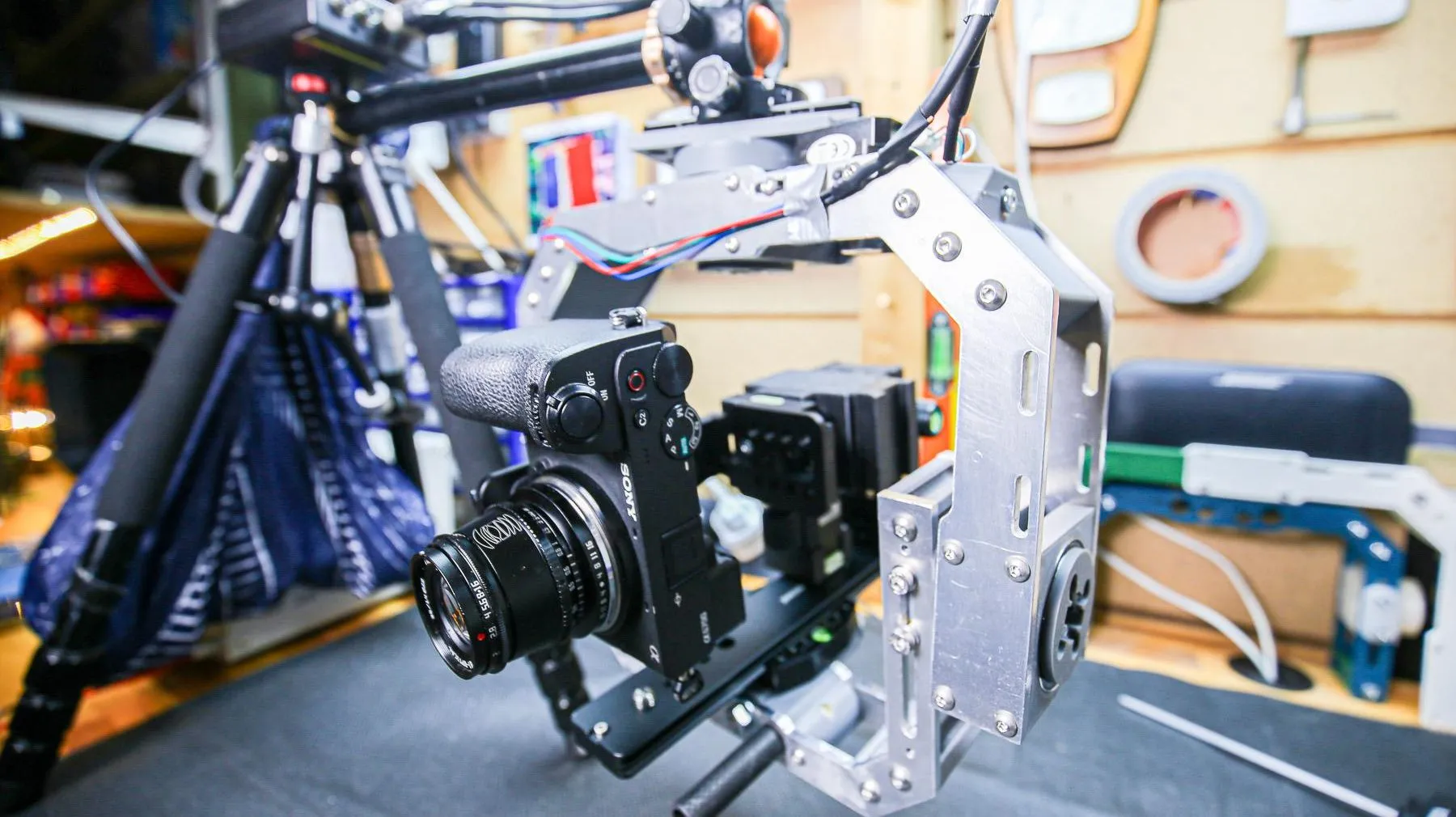
Historically, moving and pointing a camera while filming was the job of a highly-skilled individual. However, there are machines that can do that, enabling all kinds of fancy movement that is difficult or impossible for a human to recreate. A great example is this pan-tilt build from [immofoto3d.]
The build uses a hefty cradle to mount DSLR-size cameras or similar. It’s controlled in the tilt axis by a chunky NEMA 17 stepper motor hooked up to a belt drive for smooth, accurate movement. Similarly, another stepper motor handles the pan axis, with an option for upgrade if you have a heavier camera rig that needs more torque to spin easily. Named Gantry Bot, it’s an open-source design with source files available, so you can make any necessary tweaks on your own. You will have to bring your own control mechanism, though—telling the stepper motors what to do and how fast to do it is up to you.
It’s a heavy-duty build, this one, and you’ll really want a decent metal-capable CNC to get it done, along with a 3D printer for all the plastic pieces. With that said, we’ve featured some other similar builds that might be more accessible if you don’t have a hardcore machine shop in the basement. If you’ve got your own impressive motion rig in the works, be sure to notify the tipsline!
Experts from Accenture, BearingPoint and Workhuman discuss how AI and automation can positively impact working life.
For many professionals artificial intelligence (AI) and automation have the power to transform day-to-day work. David Burke, a senior director of global talent acquisition and the employer brand at Workhuman explained that this transformation is effective not because it is ‘futuristic’ but because it meets the needs of an evolving workforce.
“It’s much more practical than that,” he told SiliconRepublic.com. “We’re using AI across our internal systems to reduce manual work, improve decision-making and help teams move faster. The goal isn’t to replace roles, it’s to remove friction.
“In areas like hiring, performance enablement and cross-functional collaboration, automation is taking care of the repeatable tasks and surfacing better data. That means our teams spend less time chasing information or managing processes and more time solving problems and focusing on work that actually moves the business forward.”
Advertisement
This is a viewpoint shared by Wendy Walsh, a talent and organisation lead at Accenture, who noted that AI and automation have not only altered the tools she uses in the workplace, but have actually changed how she personally “shows up at work”.
She said: “On a very practical level, I use AI every single day to think better. I use it to explore ideas, challenge my own assumptions, shape early thinking and get to a stronger point of view before anything ever becomes a document. For me, it’s less about productivity shortcuts and much more about cognitive support.”
Walsh added: “It helps me move faster to insight and clarity, not simply faster to output. The biggest difference is that my time has shifted away from preparing information and towards interpreting it.”
For BearingPoint’s Barry Haycock, who is a senior manager of data analytics and AI, when it comes to the topic of AI and automation, one subject that has dominated the conversation is agentic AI. He explained, he has noticed in the last 12 months or so, more and more people are choosing to use AI as an augmentation tool as opposed to automation.
Advertisement
He said: “In my personal day to day, I use AI to draft code I plan to write, or as a sounding board to discuss and tease out ideas before I start developing a slide deck or a document.
“In many areas, people can use AI to perform a detailed search, for example of in-house documents, or to summarise their upcoming week and help them plan their goals. I find it useful too for flagging upcoming deadlines and prioritising them every Monday.”
For Walsh, Burke and Haycock, amid the evolution brought about by the proliferation of advanced technologies and processes in the working ecosystem, comes the need for a modern upskilling strategy.
New day, new challenges
For Walsh, soft skills have grown in importance, with AI acting as a core reason why. She said: “As AI becomes part of everyday work, the qualities that really differentiate people are human ones. Skills in AI and data are important and technological literacy will increasingly be expected of everyone. But they’re not enough on their own.
Advertisement
“Looking ahead to 2030, many of the fastest-growing core skills are deeply human. AI can analyse, generate and optimise at incredible speed. But it can’t build trust. It can’t create belonging.
“It can’t decide what matters most in a moment of uncertainty. Technology is a powerful enabler, but it still needs people to shape it, question it and use it with purpose. The organisations that thrive will be those that invest just as seriously in human capability as they do in AI.”
Haycock said that in software development, MLOps and AIOps roles, business analytics is becoming the most important skill. He explained that, while the latest frontier AI models are excellent at coding or creating a script that a developer might need, the developer really needs to explain what’s required clearly.
He said: “This is traditionally considered a soft skill and in times gone by a developer might write the code to explain their thoughts. I’ve noticed that ‘explain-in-plain-language’ skills are developing across many technical roles lately.”
Advertisement
“Technical skills will always matter,” said Burke, “but they’re increasingly learnable at speed. AI can help people acquire knowledge and capabilities faster than ever. What’s harder to automate and therefore more valuable, are human skills.”
Skills such as judgement, communication, the ability to trust, context-setting, ethical decision-making and leading through ambiguity are among those that should be prioritised, especially as professionals are further expected to adopt and understand tech advancements.
“As technology accelerates, the differentiator won’t be who knows the most,” said Burke. “It will be who can interpret, connect and lead. The irony is that the more advanced AI becomes, the more deeply human capability becomes alongside it. That’s what ultimately drives sustained performance.”
Don’t miss out on the knowledge you need to succeed. Sign up for the Daily Brief, Silicon Republic’s digest of need-to-know sci-tech news.
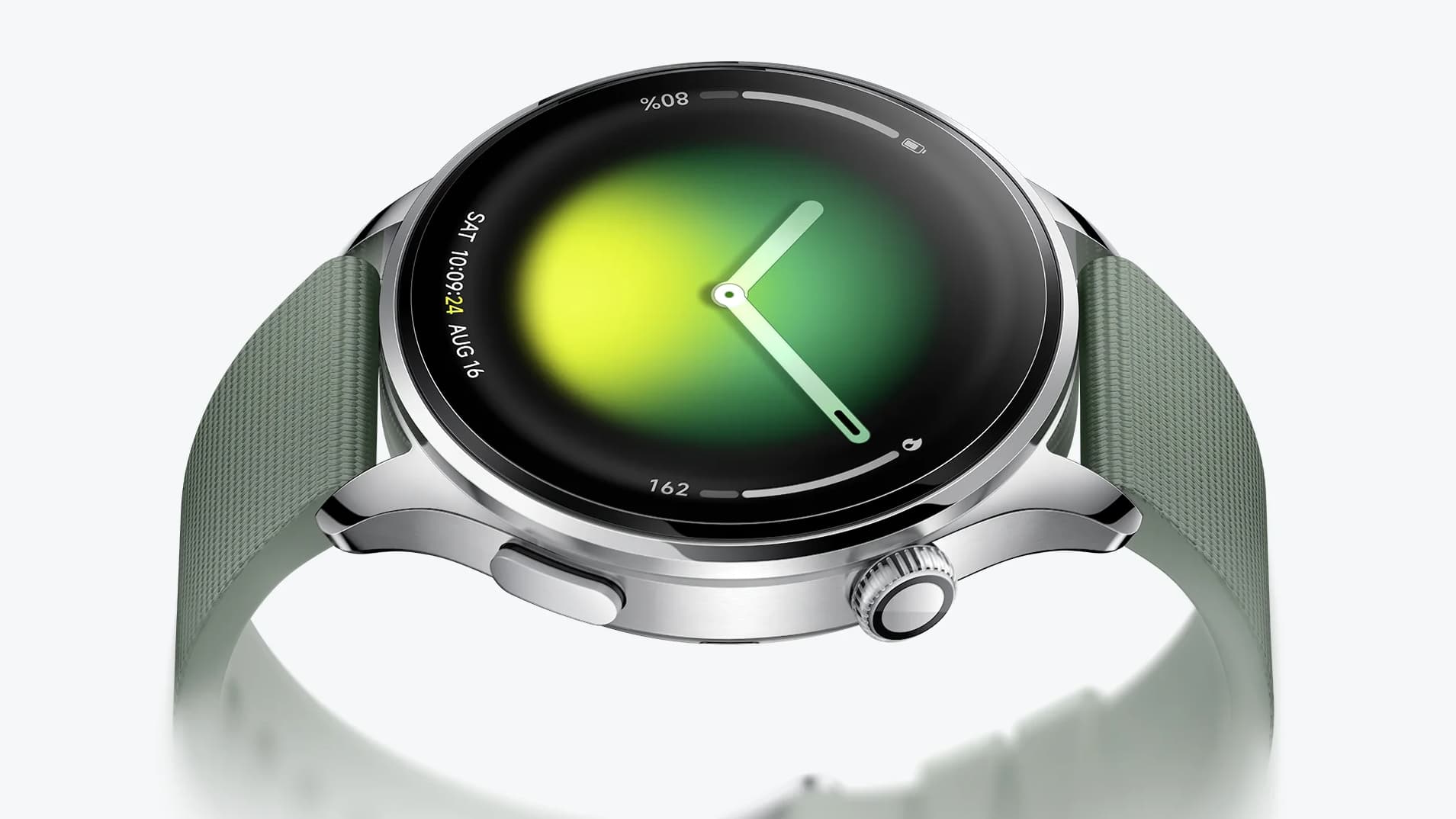
The Xiaomi Watch 5 is now available for sale outside China
The smartwatch originally launched in China in late 2025
It’s switched operating systems from HyperOS to Google’s Wear OS 6
Back in December, Xiaomi launched its Watch 5 wearable with Wear OS 6 compatibility. The bad news is that it was only released in China, but the company has now made the device available worldwide, bringing its new features to a much wider audience.
The Watch 5 comes with a 1.54-inch AMOLED display featuring sapphire glass on both the front and back and reaching up to 1,500 nits of brightness. The body is made from a stainless steel frame and is available in Juniper Green or Black, while the 3D-printed strap weighs 43g, which Xiaomi says is about 50% lighter than a stainless steel equivalent.
Xiaomi’s watch is powered by a combination of a 4nm Snapdragon W5 and a low-power 6nm BES2800 chip. This move is to “balance performance and energy efficiency,” Xiaomi says. When used in Performance Mode, you’ll get six days of battery life on a single charge, which extends to 18 days when Power Saving Mode is activated.
Gesture control gets a boost in the form of an electromyography (EMG) sensor that brings Xiaomi’s “most precise gesture control to date,” the firm says. This supports seven gestures and interactions. Aside from that, there are over 150 sports modes, 3D-animated workout guidance, and ECG analysis.
Switching to Wear OS 6
(Image credit: Xiaomi / Future)
Xiaomi often releases many of its best smartwatches in China first, then expands them around the world. That’s proven to be no different in the case of the Watch 5.
We’ve not reviewed a device in Xiaomi’s Watch series yet, but we have cast our eyes over other wearables made by the company. That includes the Watch S1 Pro, which we scored 3.5 stars out of five, and the four-star Smart Band 9. When we tested those products, we were impressed by their premium-feeling hardware, but we felt they were let down by sometimes-erratic software. We’ll have to see if that’s something Xiaomi has addressed with the Watch 5.
Advertisement
Speaking of software, Xiaomi has switched from its own HyperOS operating system to Google’s Wear OS 6. We’ve not been told why, but that should help to give it similar software features to the likes of the Google Pixel Watch 4, which we reviewed favorably last year.
Sign up for breaking news, reviews, opinion, top tech deals, and more.
How much will you have to shell out for a Watch 5? That’s a little unclear, as US pricing doesn’t appear to be available yet, but it’s listed at £269.99 in the UK and AU$499 in Australia. Either way, it’s available to buy now in various regions around the world.
Unlike on Earth there aren’t dozens of satellites whizzing around Mars to provide satellite navigation functionality. Recently NASA’s JPL engineers tried something with the Perseverance Mars rover that can give such Marsbound vehicles the equivalent of launching GPS satellites into Mars orbit, by introducing Mars Global Localization.
Although its remote operators back on Earth have the means to tell the rover where it is, it’d be incredibly helpful if it could determine this autonomously so that the rover doesn’t have to constantly stop and ask its human operators for directions. To this end the processor which was originally used to communicate with its Ingenuity helicopter companion was repurposed, reprogrammed to run an algorithm that compares panoramic images from the rover’s navigation cameras with its onboard orbital terrain maps.
Much like terrain-based navigation as used in cruise missiles back on Earth, this can provide excellent results depending on how accurate your terrain maps are. This terrain mapping process used to be done back on Earth, but for the past years engineers have worked to give the rover its own means to perform this task.
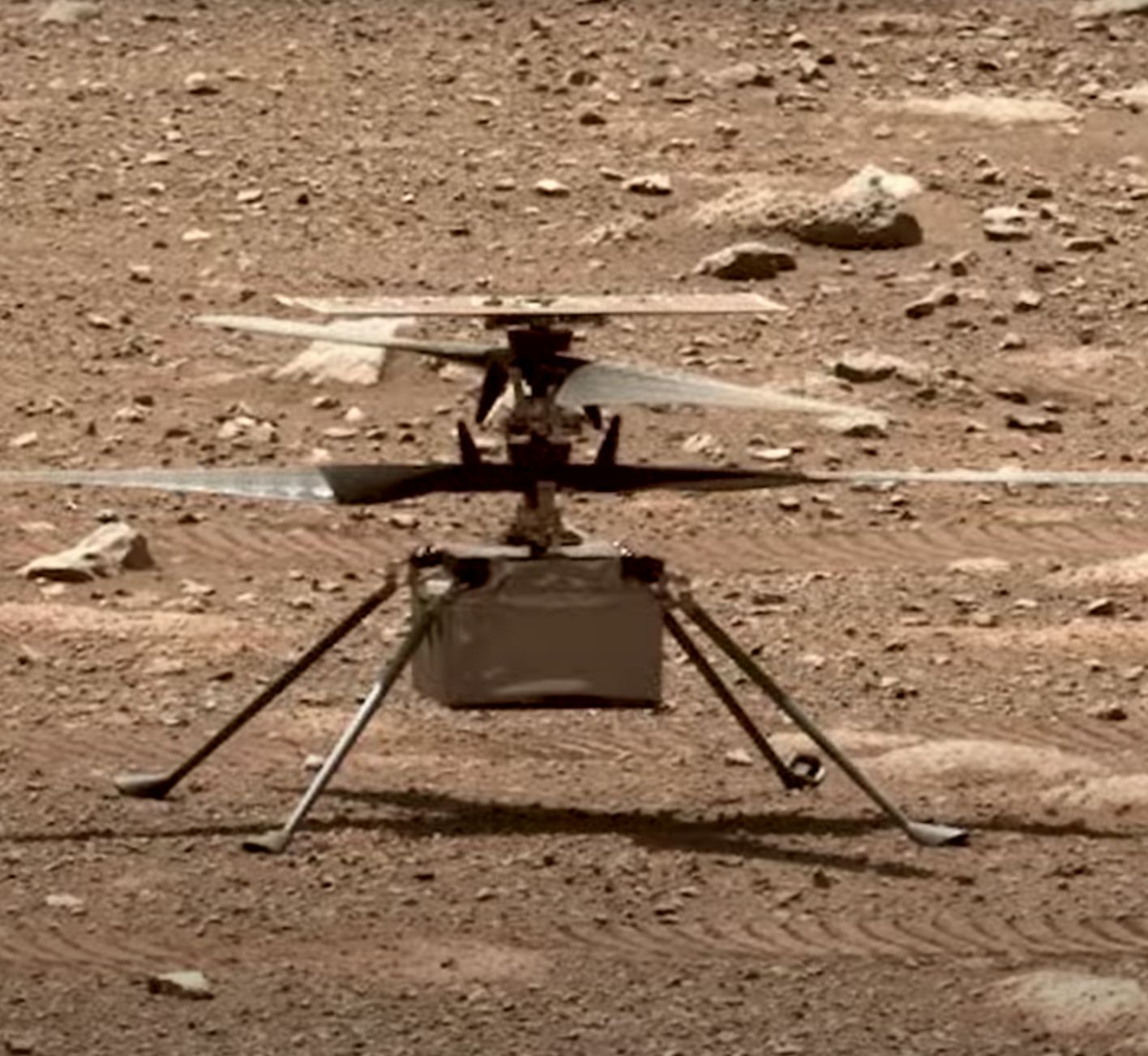
Ingenuity: left behind but not forgotten. (Credit: NASA, JPL)
Because the off-the-shelf processor in the rover’s Helicopter Base Station (HBS) is much faster than the custom, radiation-hardened processors that control the rover, the decision was made to try the algorithm on the HBS, especially since Ingenuity was left behind after it fatally damaged its propeller during a rough landing. This left the HBS unused and free to be repurposed.
Repurposing such OTS hardware also provided a good way to check for radiation damage to such standard hardware that was never certified for high radiation environments. To validate reliability the algorithm was run multiple times on the HBS, with the results compared by the main computer. This found some discrepancies, attributed to damage to about 25 bits out of 1 GB of RAM.
Advertisement
By isolating these damaged bits, the algorithm could run reliably, while giving another nod to the genius of the Ingenuity program that enabled such new features with what was at the time an unproven and relatively low-budget side-project tacked onto the Perseverance rover.
One of the affected developers shared the incident on Reddit. According to the post, the Google Cloud API key was compromised between February 11 and February 12 and was primarily used to access Gemini 3 Pro Image and Gemini 3 Pro Text services. Read Entire Article Source link
At sundown on Monday, Purim begins; a holiday rooted in survival, marking the Jewish people’s narrow escape from annihilation in ancient Persia. The story, told in the Book of Esther, is not subtle. A Persian court insider, named Haman convinces the king that the Jews must be wiped out. A young queen named Esther risks everything, steps forward, and turns the tide. Hamantaschen for everyone and don’t even think about handing me one that isn’t filled with poppy seed.
Two and a half millennia later, history has a way of sounding uncomfortably familiar.
With hostilities resuming between Israel, the United States, and the Islamic regime in Tehran, the rhetoric stopped being theoretical and the missiles started flying. As Iran’s retaliation unfolded on Sunday, a ballistic missile struck Beit Shemesh, just west of Jerusalem, and in that instant, the war was no longer a headline scrolling past. It was immediate. It was personal. I put the pen down. I stopped writing. I called family. Nine neighbours were murdered in that strike. Politics disappears when your phone starts ringing and you’re counting names.
Believe what you believe about governments and geopolitics. But no people should live under the shadow of missiles or under a regime that exports death. May the Iranian people one day live in freedom and without fear. They deserve better than this nightmare.
And yet here we are, covering Paramount swallowing Warner Bros, Qobuz drawing a line in the sand over AI, Empire Ears going dark, AMC and indie theaters fighting for oxygen. The media and hi-fi worlds keep spinning. Deals get signed. Products launch. CEOs posture. But this week is a reminder that none of it exists in a vacuum. Not the mergers. Not the music. Not the movies. Not us.
Advertisement
Paramount Wins Warner Bros While Netflix Walks
For the past few months, the future of Warner Bros. Discovery was negotiated behind closed doors; over private dinners in Los Angeles, New York, and Washington, with lawyers murmuring, investors hovering, and regulators quietly keeping score. That maneuvering is over. Paramount has secured the company, with the board approving the deal late on February 26, 2026. David Ellison stayed in the fight. Netflix’s CEO chose not to counter within the allotted window rather than ignite a bidding war.
All of it unfolded under the watchful gaze of the Trump administration, where antitrust scrutiny and political leverage made clear that no media empire moves without federal gravity. Paramount won. Netflix stepped aside. Now the real battle for your wallet begins.
Control of Warner Bros. Discovery means control of one of the deepest libraries in modern entertainment — films, franchises, cable networks, news divisions, and streaming platforms that have defined multiple generations. The dollars matter. The regulators matter. The politics matter. But beneath all of that is a larger shift: power in Hollywood is consolidating fast, and the streaming hierarchy is being rewritten in real time.
Now comes the part nobody puts in the press release. HBO Max, TNT, CNN, Warner Bros. Television, DC, and a sprawl of international assets have to be folded into a single operating strategy. Tens of thousands of jobs sit under that umbrella. Overlap will be cut. Billions in costs will be slashed. Paramount has made it clear this must turn profitable quickly and before its own board starts asking hard questions. With more than $110 billion in enterprise value and obligations tied up in this ecosystem, there is no room for sentimental restructuring.
Advertisement
Hollywood is not easing into a new era. It’s being forced into one.
Consolidation at this scale doesn’t lead to kumbaya town halls and better consumer bundles. It leads to layoffs. Platform convergence. Redundancies circled in red ink. Expect overlap to be cut aggressively and quickly. If HBO Max survives as a standalone brand under Paramount’s roof, it will be a minor miracle. The far more likely outcome is a folding into Paramount+, some Frankenstein hybrid pitched as “value.” As for the rest of the television portfolio under the umbrella; TNT, TBS, legacy cable properties, their long-term fate is anything but secure.
Advertisement. Scroll to continue reading.
And then there’s CNN. That’s the real live wire. Owning CBS News and CNN hands one studio extraordinary influence over the tone, framing, and velocity of national news coverage. That level of concentration will not go unnoticed. CNN’s ratings are soft even on a good week. Its on-air talent is expensive. Very expensive. Does Paramount maintain two separate news divisions? Do they merge them into something unified with a very prominent “C” at the beginning? No one at CNN is sleeping particularly well right now.
Advertisement
It’s difficult to imagine that decision unfolding quietly or without casualties; Bari Weiss has every reason to be smiling right now, knowing that after selling The Free Press to Paramount and stepping into control at CBS News, she now holds the professional fate of many who once lined up to attack her.
The ripple effects extend to theaters. Both Netflix and Paramount made promises during the bidding process about theatrical commitments, windowing strategies, and respect for exhibition. We’ll see. The length of theatrical runs before titles shift to streaming is now a corporate lever, not a creative one. If windows shrink below three weeks, exhibitors, especially chains like AMC are going to feel it fast. Theaters are already operating on thin margins. Compress the window and you accelerate the decline.
Then there’s physical media — the part enthusiasts still care about. As buyers of discs, many of us felt marginally safer with Paramount controlling Warner’s catalog. But let’s not kid ourselves. What was once a multi-billion-dollar category is now a thin, diminished version of itself. Outside of specialty labels like The Criterion Collection, Arrow Video, and Kino Lorber, mainstream studio releases in 2026 are lucky to hit low six figures in unit sales. Low. Six. Figures. For companies the size of Paramount and Warner, that’s a rounding error tolerated, not prioritized.
Talent is the final pressure point. Do we really believe someone like James Gunn who has been openly critical of President Trump — remains comfortably in place at DC when Ellison did not win this fight without political gravity on his side? Maybe. But Hollywood loyalty lasts exactly as long as leverage does. Don’t be shocked if Gunn finds his way back to Marvel or under the Disney umbrella where the corporate alignment is cleaner.
Advertisement
This is what monumental change actually looks like. Jobs will disappear. Platforms will merge. Newsrooms will consolidate. Theatrical windows will compress. Physical media will shrink further into boutique territory. And consumers? They won’t be the primary beneficiaries. Power has concentrated. Now we find out what that concentration costs and don’t expect the bill to be lower than what you’re paying now.
Qobuz Cracks Down on AI Content to Protect Artists
AI music is no longer some nerdy weird science experiment in a lab. It is a content factory running three shifts before its workers head out to Waffle House for eggs, grits, and fisticuffs.
Streaming platforms are getting buried under machine generated tracks. Endless ambient playlists by artists who have never seen a sunrise. Jazz trios that have never boozed it up and fought backstage over a set list. Singer songwriters with flawless pitch and the emotional range of a toaster. Upload by the truckload. Tweak the metadata. Scoop up fractions of a penny at industrial scale.
Advertisement
If that sounds familiar, it should. It is basically the subplot of Office Space. Skim a microscopic amount from each transaction and hope nobody notices until the money adds up. Except this time it is not Initech. And there are no conjugal visits. It is the global music ecosystem. And the people getting screwed over are real musicians trying to pay the rent and afford health insurance. Spotify has been playing whack a mole with this stuff for a while now and they’re not winning. When the system rewards sheer output, you get a flood. Not art. A flood. Quality gets shoved to the curb and the consumer gets stuck listening to garbage they really didn’t want to pay for.
That is the mess Qobuz is stepping into.
Earlier this month Qobuz rolled out its AI Charter, which was easy to applaud and just as easy to ignore. Instead of leaving it as a mission statement, they built a proprietary detection system to scan the catalog and flag music that is one hundred percent AI generated. Not “possibly.” Not “we think so.” Tagged. Labeled. Out in the open. Those identifiers will begin showing up across the apps in the coming months so you actually know what you are listening to.
Qobuz is also tightening the screws on fraud. Impersonation attempts. Streaming patterns that look like they were engineered in a basement server farm in Tehran. The company is expanding its detection tools so if something smells off, it does not get the benefit of the doubt. It gets flagged, refused, or removed. And those fake streams do not count toward royalty reports. Good luck getting Spotify to offer up something like that.
Advertisement
Advertisement. Scroll to continue reading.
On the editorial side, Qobuz is keeping actual humans in the driver’s seat. Real editors picking Albums of the Week. Real teams building playlists and Qobuzissimes. No content mill dumping twenty thousand tracks into the hopper and hoping the algorithm gets bored enough to promote one. The Discover page will lean on curated data from in-house teams and trusted music labels.
And here is the line that will make certain tech executives roll their eyes. Qobuz says it will not generate audio for its catalog. It will not replace human curation with AI systems and not use customer data to train external AI models. That almost feels like open rebellion against the Emperor.
Why should you care?
Advertisement
Because the money is not theoretical. A 2024 CISAC study projected that by 2028 music creators could lose around ten billion euros over five years due to AI competition and unlicensed use of their work. At the same time, generative AI companies could be pulling in billions annually from that same ecosystem. None of that sounds like a win for the artists who create real music and don’t be surprised when that becomes an even uglier fight for screenwriters, actors, and cinematographers.
The WGA and SAG have already gone on strike to fight against these practices and if you think studios undergoing acquisition and consolidation will continue to spend hundreds of millions on individual films when they can produce 10 for the same price using AI — you’re about to find out that profits matter more than quality.
For artists, this is survival. If machine output floods playlists and crowds out real musicians, visibility collapses and compensation shrinks even further. For listeners, it is about knowing whether the song you love was written by someone with rent due or generated by a prompt and a power bill.
Qobuz Deputy CEO, Georges Fornay explained that “the hyperinflation of AI content is creating distrust across the industry.” He is not wrong. When everything looks and sounds polished, authenticity becomes the differentiator.
Advertisement
Qobuz is betting some of you still care who made the music. In a business chasing endless content like it is oxygen, backing humans is slower and messier. You didn’t sign up for synthetic background noise pretending to be art so it will be interesting to see if the rest of the market follows or bends the knee.
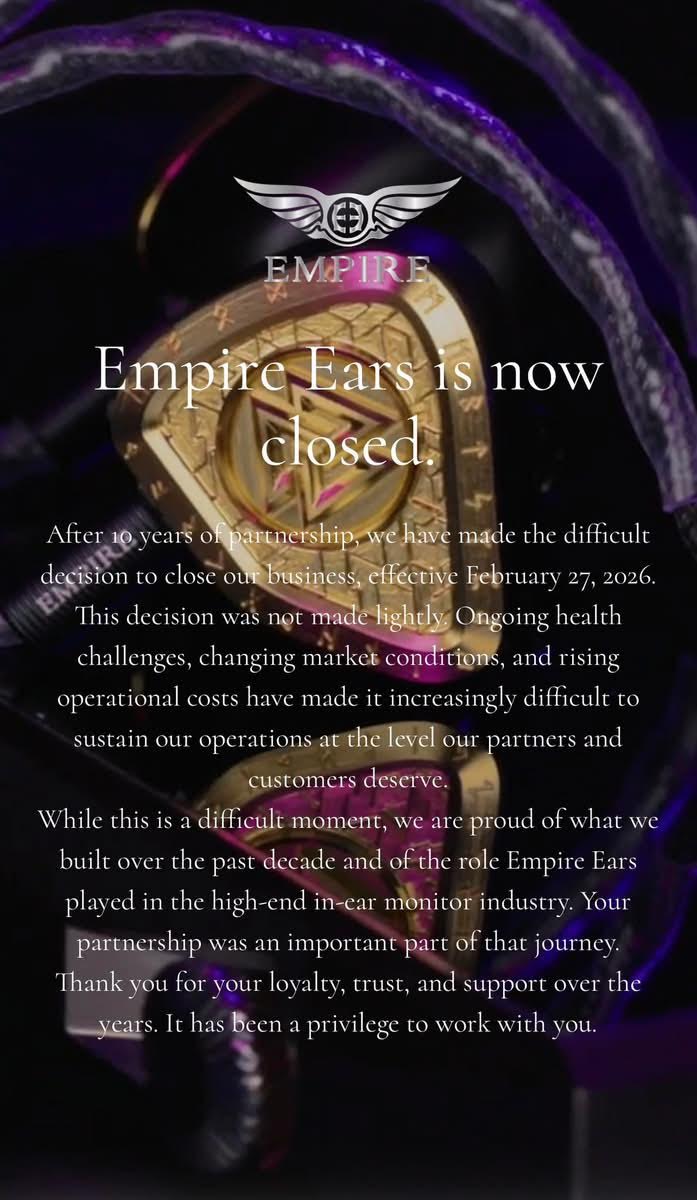
Empire Ears Shuts Down After 10 Years in the High End IEM Market
Empire Ears, a name that meant something in the boutique, high-end IEM world — is gone. After a decade of carving out a reputation for sonic excellence and obsessive craftsmanship, the brand quietly shut its doors on February 27, citing health challenges, rising costs, and an increasingly inhospitable market. For enthusiasts who watched Empire’s cables and custom monitors become fixtures on enthusiast wish lists, this is not a footnote. It’s a sign.
And let’s be honest: not all is well in the high-end wired IEM market.
Brands like FiiO, Campfire Audio, and other smaller Asian boutiques are still shipping products and carving out niches, but Empire’s departure forces a hard question: have we hit saturation with ultra-premium wired IEMs in a world that has moved on to wireless? Four-figure cables and hand-crafted shells feel increasingly like boutique curiosities next to the convenience and everyday usability of wireless. The market that once justified artisanal attention has shrunk, shifted, and in some corners evaporated.
That tension will be on full display this weekend at CanJam NYC 2026, and yes, we will be there covering it. If wired IEMs still have gas in the tank, this is where the next spark of innovation should show up: new driver tech, refreshed tuning philosophies, perhaps unexpected form factors that justify carrying wires in the age of Bluetooth dominance. We already know that one of our favorite European headphone and IEM manufacturers plans to unveil a new $1,000 wired IEM this weekend, and it will be very interesting to see how the market reacts.
Advertisement
Advertisement. Scroll to continue reading.
But the departure of Empire cannot be ignored. It underscores a larger industry truth that many in audio enthusiast circles are quietly wrestling with: excellence does not guarantee survival. Passion does not pay rent. And even the most covetable products can find themselves adrift when consumer priorities shift faster than product cycles.
Smells Like Victory
Robert Duvall died on February 15 at 95, and with him goes the kind of actor Hollywood does not turn out anymore.
Duvall did not arrive in Hollywood fully formed. He earned it the old way. He started on stage in 1952, grinding through summer stock at the Gateway Playhouse in Bellport on Long Island, taking a year off to serve in the United States Army before returning to the boards. Those early contacts opened the door to television in the 1960s, with appearances on serious dramas like The Defenders, Playhouse 90, and Armstrong Circle Theatre, where actors were expected to act, not pose.
He made his Broadway debut in Wait Until Dark in 1966. More than a decade later, already a film star, he went back to the stage for David Mamet’s American Buffalo in 1977 and earned a Drama Desk nomination. That tells you something. He did not see theater as a stepping stone. It was part of the craft.
Advertisement
His film debut came quietly but memorably as Boo Radley in To Kill a Mockingbird in 1962. No grand speech. Barely any lines. Just presence. Then the run started. Bullitt. True Grit. M*A*S*H. THX 1138. He slipped into supporting roles and made them stick. You might not have walked into the theater for Robert Duvall in those early years, but you walked out remembering him.
Everything changed with The Godfather. Tom Hagen. Quiet consigliere. The man in the room who did not need to raise his voice because he already understood the temperature. It was a supporting role that felt like a lead. Duvall did that a lot. He made space feel heavier. He made silence do the talking.
Apocalypse Now is the obvious landmark. Lieutenant Colonel Kilgore, sunburned and unhinged, delivering lines about napalm with a grin that told you everything about war and madness in a single breath. But go deeper and you see the range that defined him. The Apostle, which he wrote and directed, was raw and fearless. Tender Mercies earned him an Academy Award and showed how much power he could summon by barely moving at all. Lonesome Dove on television turned him into Augustus McCrae, all warmth and steel, reminding Hollywood that the small screen could still carry epic performances if you put the right actor in the saddle.
He was also a better dancer than anyone remembers. Watch him in Tender Mercies or The Apostle. Loose hips. Total commitment. No vanity. He moved like a man who did not care who was watching. He understood rhythm. Not just musical rhythm. Emotional rhythm. Scene rhythm. He could charm you in one beat and terrify you in the next.
Advertisement
Duvall belonged to the old guard. The Clint Eastwood school. The Al Pacino and Gene Hackman generation. Actors who showed up prepared, knew their lines, respected the craft, and did not spend their days refreshing social feeds to see how the discourse was trending. He was not shy about his political views. He did not tailor them for applause. He also did not make them the centerpiece of his career. The work came first.
That is the difference. Today too many performers treat acting like branding. The right cause. The right quote. The right viral moment. Duvall did not need any of that. He was about the scene. About the truth inside it. He could be gentle and disarming. He could be solemn and wounded. And when the role demanded it, he could be cold, manipulative, and downright evil without blinking.
Even late in his career he could walk into a scene and own it. In Thank You for Smoking, he played tobacco tycoon Captain, half mischievous uncle, half corporate warlord, dancing around the moral hypocrisy of Washington with a grin and a glass in hand.
Advertisement
Every film or television project he joined improved simply because he was in it. He raised the standard in the room. Directors trusted him. Co-stars leaned on him. Audiences believed him.
Advertisement. Scroll to continue reading.
He was not flashy. He was not desperate to be liked. He was a professional in the purest sense of the word. And in an industry that increasingly rewards noise over depth, Robert Duvall felt like something rarer each year. A craftsman. A grown up. A cut above what too often passes for acting today.
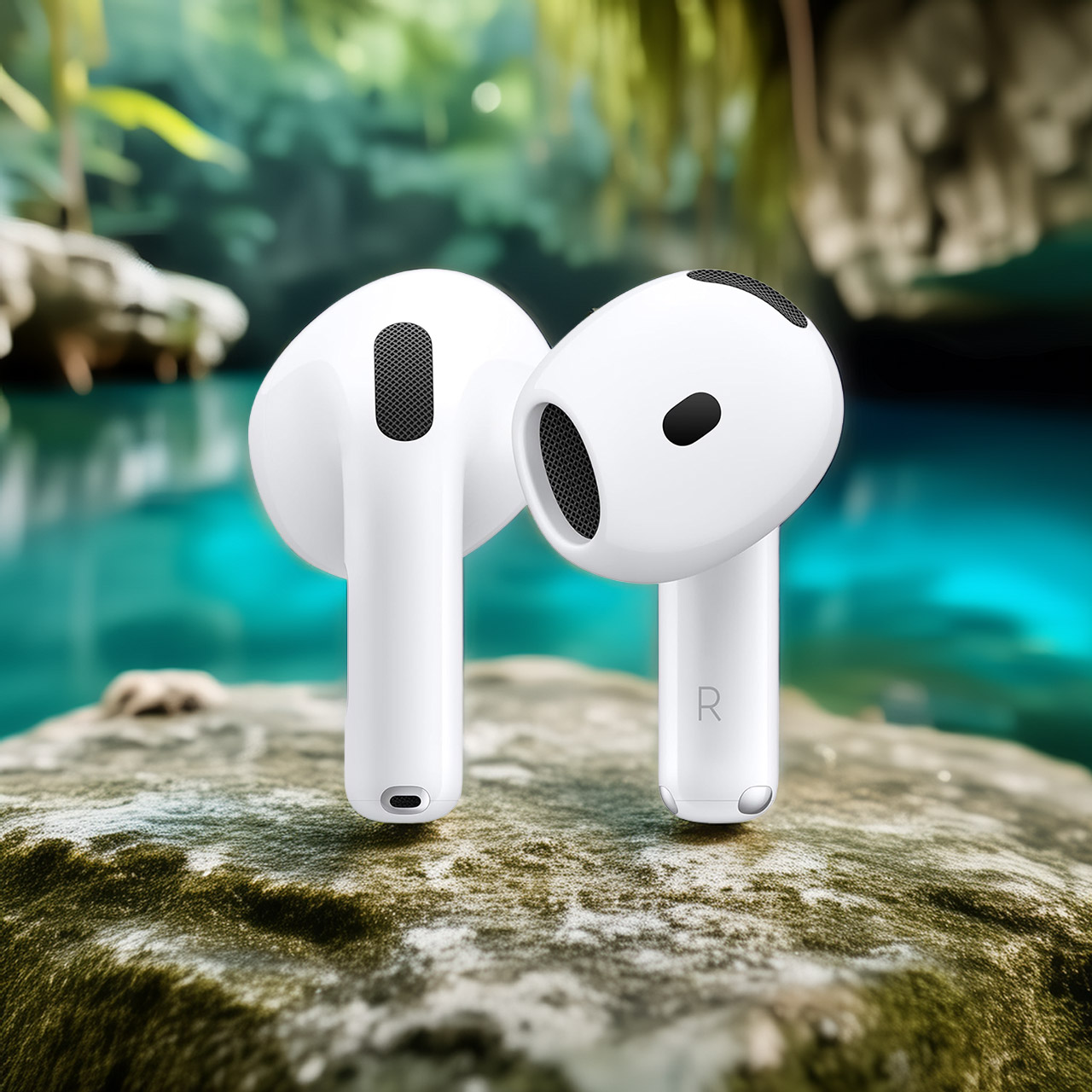
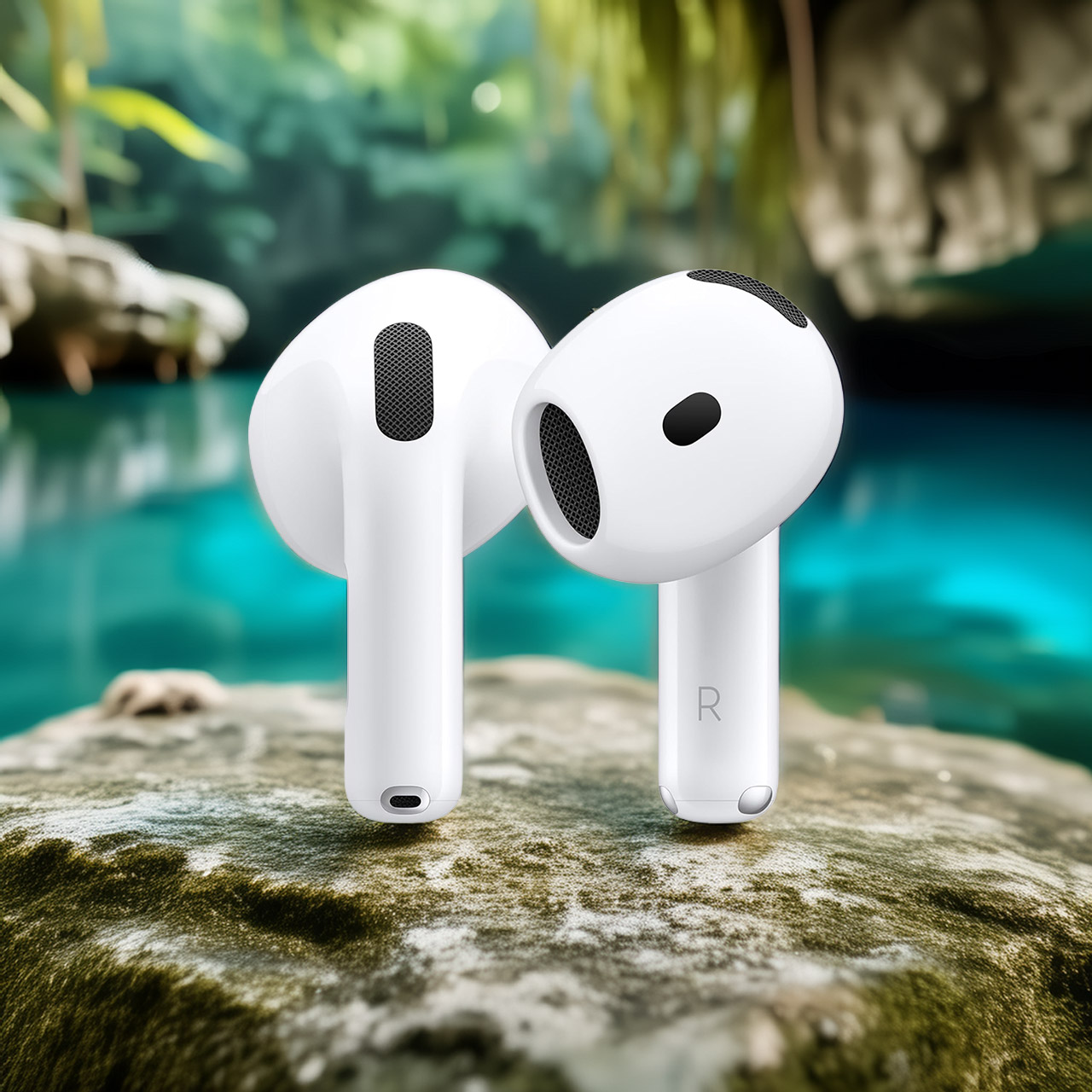
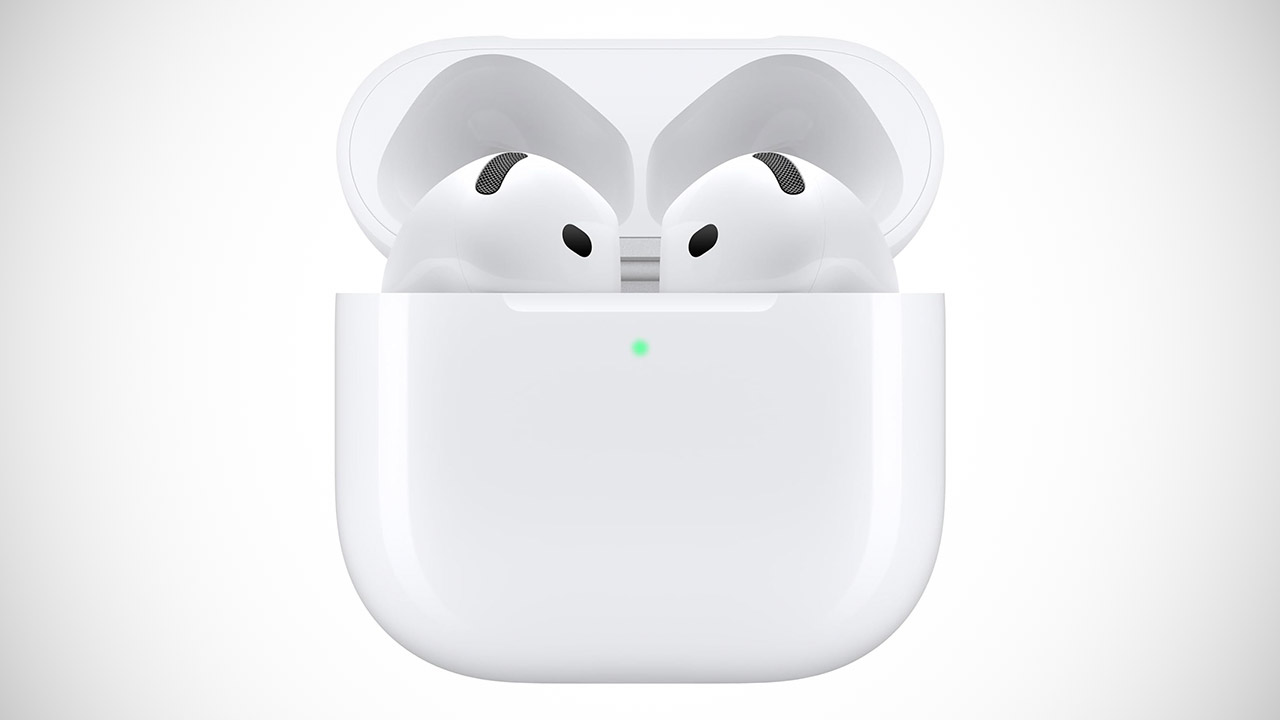
In terms of fit and feel, Apple’s earbuds have always been a source of contention. Some swear by the sealed tips on the Pro models for keeping everything out, while others prefer the normal versions to prevent the uncomfortable plugged-up feeling. Then Apple debuted the AirPods 4 with active noise cancellation, and for $119 (was $179), they manage to make a huge difference in terms of quietness without requiring you to insert a seal into your ear canal.
Apple’s designers spent some time adjusting the contour of these earphones to ensure they fit more firmly in your ear than their predecessors. Simply screw them in gently and they will stick firmly, even during a bumpy subway journey or a fast stroll. They’re also far more comfortable, because to the curved shape, which prevents pressure points from forming over time. To top it off, they’re dust and water resistant to a considerable degree.
REBUILT FOR COMFORT — AirPods 4 have been redesigned for exceptional all-day comfort and greater stability. With a refined contour, shorter stem…
ACTIVE NOISE CANCELLATION — AirPods 4 with Active Noise Cancellation help reduce outside noise before it reaches your ears, so you can immerse…
HEAR THE WORLD AROUND YOU — The powerful H2 chip comes to AirPods 4. Adaptive Audio seamlessly blends ANC and Transparency mode — which lets you…
The case design has also been improved, as it is now somewhat smaller and allows wireless charging and USB-C for rapid top-ups, while the sound on these earbuds is excellent. The bass comes through clearly and does not overpower the mids, allowing you to easily identify different instruments in a song. The treble is also sparkling and detailed, so it doesn’t get too jumbled like it used to.
Advertisement
Adaptive EQ works by fine-tuning the sound to your ear shape on the fly, resulting in a pleasant, consistent sound over a wide range of music. It also works the same for calls, as Voice Isolation removes background noise, allowing you to be heard clearly on the other end. Active noise cancellation in an open ear setup may seem improbable at first, but it is really quite effective in real-world conditions. So you won’t be able to hear low rumbles from airplanes, buses, or office air conditioning systems, which helps to quiet things down. When you have music playing at an appropriate volume, it makes everything more enjoyable. You can enable Transparency mode if you need to have a quick chat or whatever.
The battery life is also fairly decent, with 4 hours of listening with noise cancellation and 20 hours with the case. Without ANC, it is 5 and 30 hours, respectively. Fast charging allows you to just place them in the case for a short period of time and have enough juice to last for an extended period. Oh, and the case has a little built-in speaker that you can use with Find My if you misplace it.
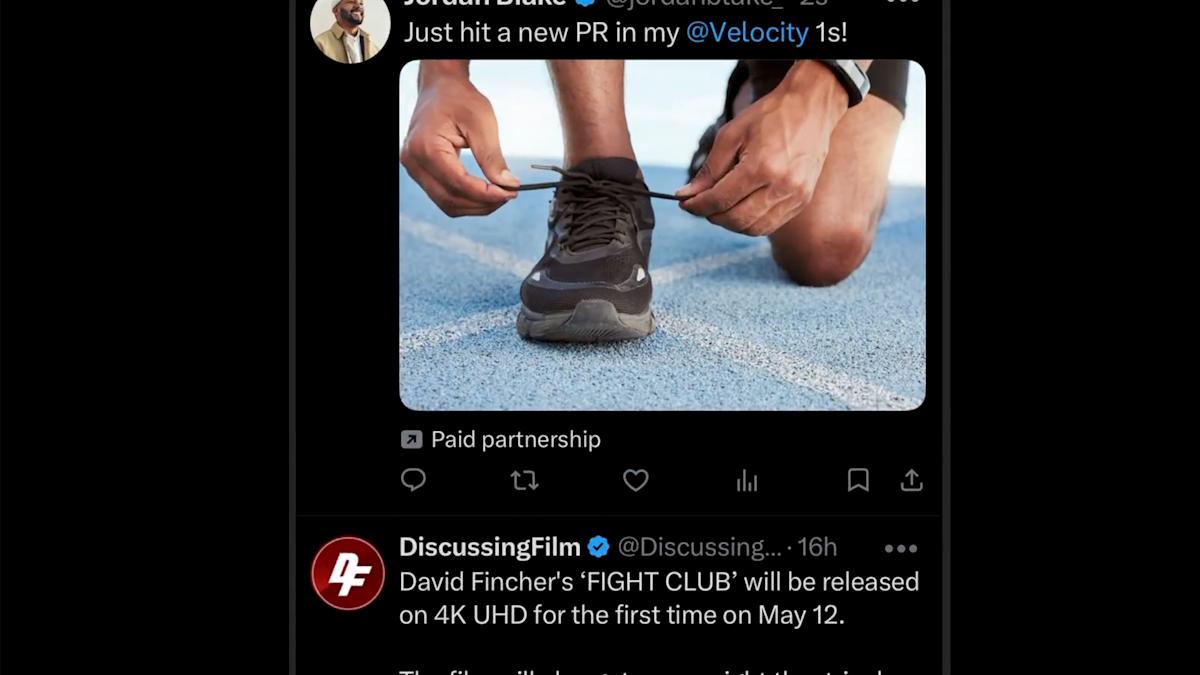
X is rolling out a built-in “Paid Partnership” label that creators can apply to sponsored posts, replacing the hashtag workarounds they’ve had to rely on until now. The feature, by the platform’s head of product Nikita Bier, adds a toggle that places a disclosure label directly below a post’s content. It can also be applied retroactively.
The label is meant to help creators comply with years-old requiring clear disclosure of sponsored content. The agency reminding influencers about this requirement in 2017, and a disclosure feature that same year. Without a native tool, X creators had been left to use hashtags like #ad and #paidpartnership.
X has been trying to court creators for some time with tools like and creator , but the platform still struggles with major image issues following a string of scandals like . The Elon Musk-owned platform is under investigation both and for the AI agent’s behavior.