The Seattle skyline. (GeekWire File Photo / Kurt Schlosser)
Seattle tech leaders are warning that a new income tax proposal could stall the region’s momentum in artificial intelligence.
In a letter sent Monday to Gov. Bob Ferguson, a group of AI researchers, founders, and investors argue that higher taxes on high earners and investment gains would push top talent and future startups elsewhere.
“These policies would materially undermine Washington’s ability to keep growing the tech sector, which is a core driver of our economy, and would slow the AI innovation and investment momentum that we should be accelerating, not discouraging,” the letter reads.
The group frames the issue as an AI competitiveness problem, writing that Washington is “competing for the talent required to build and scale AI products, companies, and jobs” but is “starting to lose momentum” compared to rival hubs.
Advertisement
“AI is at a critical moment, and a hasty decision now would do serious damage to the future of Washington’s innovation economy,” they wrote.
Citing Silicon Valley Bank’s recent State of the Markets report, they say Seattle has seen a “significant” downturn in startup formation over the past three years, while San Francisco benefits from a deeper AI ecosystem and Texas is attracting companies with what they describe as a more favorable tax climate.
The report shows that VC-backed company formation in Seattle has fallen 30% since 2022. San Francisco is the only tech hub to see growth in company formation, according to the report, driven by the AI boom.
Signatories of the letter include Pedro Domingos, professor emeritus of computer science and engineering at the University of Washington; Brian Hall, a former executive at Microsoft, Amazon Web Services, and Google; Oren Etzioni, former CEO of the Allen Institute for Artificial Intelligence; Read AI co‑founder and CEO David Shim; CloudMoyo CEO Manish Kedia; Founders’ Co‑op general partner Aviel Ginzburg; AZX CEO Aaron Goldfeder; LaunchDarkly CTO Cameron Etezadi; Salesforce engineering leader Paul Brown; AJW Services managing director Adam Wray; and longtime software engineer and author Vijay Boyapati.
Advertisement
The Wall Street Journal’s editorial board cited the letter, writing that “Democrats are putting their economy and jobs at risk if they follow the California ratchet of tax, spend, and tax some more.”
GeekWire reached out to Gov. Ferguson’s office for comment.
The proposed income tax, Senate Bill 6346, was approved by Washington’s Senate earlier this month and is being debated by House lawmakers. Gov. Ferguson has criticized the proposal for doing too little for small businesses and lower-income residents in the state. Democrats have made subsequent changes but the governor told the Washington State Standard on Friday that the bill “still has a long way to go.”
The tax would take effect in 2030 and is expected to generate an estimated $3.7 billion annually.
Advertisement
An analysis from the Tax Foundation concluded that the tax “would make the state increasingly undesirable for high earners, particularly in the state’s crucial tech sector.”
Another proposal in Washington, SB 6229, would apply the capital gains tax to profits from the sale of qualified small business stock, or QSBS, even when gains are fully exempt under federal law. It’s not clear if that bill will advance in this year’s legislative session.
Others in Seattle’s tech ecosystem have pushed back on the idea that higher taxes on top earners would trigger an existential threat to the startup economy.
The debate over taxes on high earners comes as the state is struggling to plug a budget deficit above $2 billion with spending cuts and a slate of potential tax changes. Meanwhile, many large tech employers are cutting thousands of jobs.
The legislative session is scheduled to end on March 12. Read the letter in full below.
Looking for the most recent Mini Crossword answer? Click here for today’s Mini Crossword hints, as well as our daily answers and hints for The New York Times Wordle, Strands, Connections and Connections: Sports Edition puzzles.
Today’s NYT Mini Crossword was pretty tough! I was stumped on 1-Across and 1-Down, and it took me a while to figure them out. Read on for all the answers. And if you could use some hints and guidance for daily solving, check out our Mini Crossword tips.
If you’re looking for today’s Wordle, Connections, Connections: Sports Edition and Strands answers, you can visit CNET’s NYT puzzle hints page.
The dawn of the jet age changed the landscape of commercial flight forever, giving rise to affordable, faster travel hallmarked by chic flight attendants and non-stop flights that could take you across the ocean in hours. In the decades since, planes have gotten faster, hitting supersonic speeds, and larger. Aviation safety has also drastically improved: with millions of flights annually, fatal accidents are now exceptionally rare.
Statistically speaking, that old adage that flying is safer than driving is definitely true, though several incidents a year typically make the headlines. In February 2026, a JetBlue flight departing out of Newark Liberty International Airport was forced to return after engine failure. Just a few days later, a Delta Air Lines flight sparked a grass fire near a Savannah/Hilton Head International Airport runway after an engine blew out during takeoff. No one was injured in either incident.
At the time of writing, there’s no indication that these incidents were related to the age of the engines, but just what is the average lifespan of a jet engine? According to Aerospace Global News, the majority of engines used on modern commercial planes have a life of about 25 to 35 years, or about 150,000 flight hours with proper maintenance. To put it another way, the engines on your commercial flight will last much longer than your car probably will! Military aircraft, of course, perform much differently than commercial aircraft, and this vastly affects the lifespan of their engines. These jet engines tend to see about 5,000 to 10,000 mission hours before being retired.
Advertisement
What influences the lifespan of a jet engine?
Frankpeters/Getty Images
We talk about ourselves, our kids, and even our cars in terms of chronological age — your car may be five years old, for example. But when it comes to jet engines, their lifespan is affected more by flight hours and flight cycles than physical age. Most of us keep our vehicles in top shape by performing regular, preventive maintenance, and jet engines are no different, though the process is typically much more extensive! In addition to their own version of an oil change, most jet engines typically require several maintenance visits during their lifespan, where the engine is removed from the aircraft. It may be dismantled, inspected, and serviced to ensure that it continues to operate safely and efficiently.
We are not jet engine mechanics, but we do know that maintaining a jet engine is a complicated process with many metrics. Different parts of the engine have different life cycles and are replaced at different intervals, and there are many factors that can affect the lifespan of a jet engine. These include its maintenance history and its typical operating conditions.
Advertisement
Commercial jets that fly short-haul routes often require more frequent maintenance than long-haul jets, because they experience more takeoff and landing cycles than aircraft that are flying longer routes. Engines on jets that fly short-haul flights typically follow a maintenance schedule based on Engine Flight Cycles, or EFC, and planes that fly longer flights are maintained based on total Engine Flight Hours, or EFH. Ultimately, passengers should feel assured that airlines adhere to strict maintenance guidelines and schedules to keep everyone safe in the air.
A well-specc’d if not quite as strong a performer, the OneOdio Focus A6 deliver good comfort and long battery life but aren’t better than their rivals when it comes to noise-cancellation and there are better-sounding efforts available
Affordable
Lightweight, comfortable design
Long battery life
App support
No carry case/pouch
Average ANC for the money
Average call quality
Better-sounding alternatives available
Key Features
Bluetooth 6.0
New wireless standard for better battery, Find My feature, and connectivity
Battery Life
Advertisement
75 hours max without ANC
LDAC
LDAC Bluetooth for higher quality streaming
Introduction
You’re not spoilt for choice as for as wireless headphones go, and in the last few years, you can bag yourself a pair of budget headphones with comparable specs to over-ears that costs twice as much.
Advertisement
That’s what the OneOdio Focus A6 is aiming for, with wireless Hi-Res Audio support, long battery life, “powerful” noise-cancelling and more for well under £100 / $100, on paper at least, it looks like a bargain.
But, as always, buyer beware, as specs can tell one story but performance will tell another. What story does the OneOdio Focus A6 tell? It’s somewhere in the middle.
Advertisement
Design
Stylish looks
No carry pouch
Foldable design
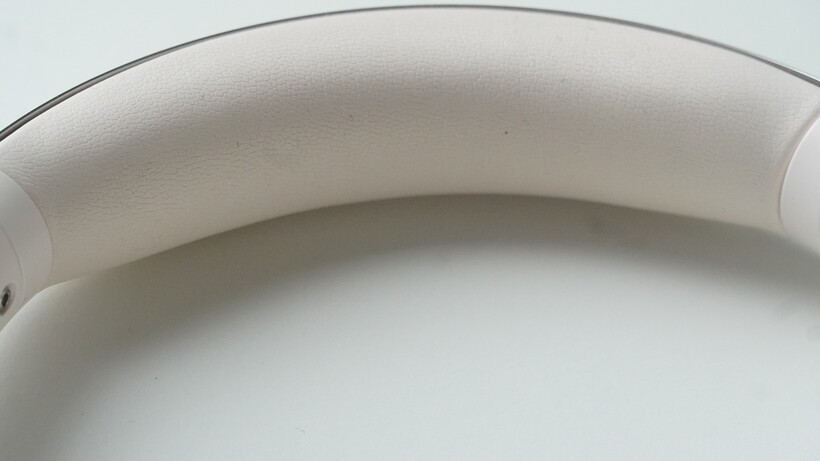
Flashy is the first word that comes to mind with the Focus A6 headphones. They look stylish with the metal CD textured radial design with gold trim that stands out on both black and white options (the version here is the latter).
They are comfortable to wear over long periods, the lightweight design and lack of any forcible clamping force mean they don’t feel intrusive to wear. The adjustable headband makes it easier to make the headphones fit your head (big or small).
Advertisement
Image Credit (Trusted Reviews)
The design can be folded both outwards and inwards if you want the headphones to take up less space in a bag. Disappointingly, there’s no case or even a pouch to keep them safe from marks or nicks. It’s a common absence on many budget headphones, and I’m always disappointed when I see it.
Advertisement
The buttons are clicky, if a bit cheap-feeling, but there’s a sense of just getting the job done. Wearing the headphones, they also feel a little rattly from time-to-time – walking down a flight of stairs in Canary Wharf I heard something shaking about in the right earcup. Despite the premium aesthetic, the build quality is what you’d expect for the money.
Image Credit (Trusted Reviews)
Features
OneOdio companion app
Bluetooth 6.0
LDAC support
The OneOdio, similar to Soundcore and a few others, have a list of features as long as my arm (the span of which is very long), and while they’re impressive on paper, it’s always worth taking them with a pinch of salt.
These are one of the first headphones I’ve used that have Bluetooth 6.0 support, which helps in terms of better battery life, better sound (apparently), less interference, more accurate Find My location help, and more seamless switching between multiple devices (which the Focus A6 supports). You do need a Bluetooth 6 compatible device to make the most out of these features, however.
With the OneOdio Focus A6, I haven’t come a cropper in terms of any wireless interference so it seems as if the headphones hit the mark.
Advertisement
Advertisement
Image Credit (Trusted Reviews)
Elsewhere, there’s SBC, AAC, and LDAC support; the latter boosting the headphones credentials in terms of high quality sound. Though it’s worth adding that it’s not always about the Bluetooth codec in terms of the sound you hear, the quality and tuning of the driver itself will have even greater impact on audio. But at least with LDAC, the OneOdio gives itself a better chance of producing a better sound, though with LDAC enabled it doesn’t appear as if you can utilise Bluetooth multipoint.
It is Hi-Res certified in terms of wired audio, which it supports through its USB input so you can listen to lossless audio (a wired connection also supports ANC as well).
Image Credit (Trusted Reviews)
There’s the OneOdio app, which offers decent customisation for a headphone at this price, offers some modes including a Game mode (a claimed 0.065 seconds of latency) and the Movie Sound Effect. To be honest, with this mode I can’t hear much of a difference other than it sounding slightly warmer.
There’s also a Find My headphones feature, which with Bluetooth 6.0, is said to be more accurate in figuring out where your headphones are.
Advertisement
Advertisement
Noise-cancelling
Cancels up to 48dB
Wind Noise Reduction mode
Transparency mode
You’d be right not to expect a level of noise-cancellation that, say, the Sony WH-1000XM6 can muster. Despite OneOdio’s claims of cancelling up to 48dB of noise; the performance is in line with similarly priced efforts from Sony, Panasonic, EarFun and Soundcore, which is to say that it’s just ok.
Having used them on a long-haul flight, they reduce the cabin noise a little but not by a huge amount. The sound of the cabin and the engines was still noticeable and I had to raise the volume a lot to hear what I was listening to.
Back on solid ground and again the Focus A6 let quite a bit of noise. They’re decent at suppressing low frequencies but mid and high frequencies still tend to evade the headphones’ microphones. You hear what’s around you with ANC on, and when the Transparency mode is activated, there is a slight artificial sound added on top of what you can hear.
Image Credit (Trusted Reviews)
The noise-cancelling performance is similar to what you’d get from many budget over-ears at the moment, but I will say that the Lindy BNXe offers a slightly stronger performance if ANC is the prime reason you’re looking to purchase a new pair of headphones.
Advertisement
You do also get Wind Noise Reduction in the app, but again it’s worth bearing in mind the performance isn’t the strongest.
Advertisement
Call quality is not the best either, letting in plenty of noise and making it a fight between your voice and what’s around you when it comes to being heard. In a quiet place you’re likely be fine – take these headphones outside to make calls and it is a struggle despite the Dual-Mic Environment Noise Cancellation these headphones boast.
Battery Life
Up to 40 ANC with ANC
Fast-charging support
The headline feature is 75 hours, but there’s a catch, as always, as that high number is with ANC off. Turn it on and you get close to 40 hours.
Image Credit (Trusted Reviews)
And in the battery drain test I carried out, I’d say that’s an accurate claim. It took five hours for the headphones to drop 10% battery, which would peg these headphones closer to 50 hours (and this was in LDAC mode). That’s the same performance as the less expensive Mixx StreamQ C4 and better than the likes of the Soundcore Space One.
Advertisement
Fast-charging is provided, and 10 minutes nets you a quite stunning ten extra hours of playback.
Sound Quality
Sharp treble response
Lacks detail
Underwhelming bass performance
I mentioned earlier that having wireless and wired lossless support isn’t as important as the quality and tuning of the drivers, and the sound quality here is not what I’d call excellent. But it’s not bad either.
The OneOdio Focus A6 have a bright and sharp tuning that’s brighter than I’d expected. This tuning initially gives the impression that detail, at least with the highs, is better than you’d expect. But the Focus A6’s overall sense of detail is what I’d term as hazy, and bass comes across as a little limp.
Advertisement
Image Credit (Trusted Reviews)
With GoGo Penguin’s Atomised it’s a sharp, lean and crisp sound that defers to the highs in terms of brightness, but the midrange isn’t home to the clearest sense of detail or clarity – it’s a treble forward response that I wonder might grate with some who are sensitive to treble. I do like how the highs sound but it’s the rest of the frequency range where the headphones come across as lacklustre.
Advertisement
The headphones in general offer lower levels of detail and definition that remind me of the Mixx StreamQ C4 headphones. The soundstage is spacious but what exists within it is not the most defined. The tone of instruments is a bit hard to tell, the headphones don’t dig out detail as well as I’d hoped, and while voices sound clear they don’t sound particularly natural.
Image Credit (Trusted Reviews)
Bass is lacking depth and extension with every track I put through these headphones 40mm drivers, and switching on the Super Bass Mode produces a performance that’s less than super. This mode seems to make vocals sound recessed (further away). Pop mode is the default mode and it’s the best of a weak bunch.
The sound has also been tuned with ANC in mind, so when it’s turned off the OneOdio Focus A6 sound softer and the soundstage is smaller. That’s not at all what I expected.
Should you buy it?
The ANC is, for the price, just decent. While they cost less than efforts from the likes of Sony and Soundcore, they’re not better for ANC. You’re saving on money, but not getting a better performance than average here
Advertisement
There are better alternatives out there
Advertisement
There’s nothing here that you could say the OneOdio does better than other pairs, and on that basis, while they’re a decent value proposition in terms of price, there are better options available
Advertisement
Advertisement
Final Thoughts
On paper, these headphones have the elements of what would make a good sound, but OneOdio doesn’t bring all the elements together successfully.
The noise-cancellation is average, as is the call quality. The battery life is long, and the levels of comfort are also good. So what story does the OneOdio Focus A6 tell? I think it’s one where if you approach these headphones with the right expectations, they’ll offer a decent performance for their relatively inexpensive price but if you’re expecting these headphones to outperform their price, that’s not the case.
You could do better, certainly for sound, with the Sony WH-CH720N, Panasonic RB-M600B, Lindy BNXe as alternative options. These headphones won’t make it on the list of best cheap headphones but as a pair of inexpensive wireless over-ears, they just about past muster.
How We Test
The OneOdio Focus A6 were tested over the course of a month, the ANC tested in real-world circumstances and compared against similarly priced rivals through a pink noise test.
A battery drain was carried out over five hours, while the wireless connected was tested out in busy outdoor environments. ANC was used indoors, on planes and walking around cities.
Tested for a month
Tested with real world use
Battery drain carried out
FAQs
Which Bluetooth codecs does the OneOdio Focus A6 support?
You get SBC, AAC, and LDAC with the Focus A6, and they’re also one of the first headphones Trusted Reviews has tested that supports Bluetooth 6.0, which brings with it various new improvements in battery and connectivity.
This ER is suffering from the worst bout of lockdown since the COVID-19 pandemic. To prevent a ransomware attack, all online comms have been shut down in The Pitt season 2, meaning staff don’t have access to any resources or patient information.
While Dr. Baran Al-Hashimi (Sepideh Moafi) has been keen to up the AI ante since episode 2, efforts have spectacularly blown up in her face. The team are back to using whiteboards, pen and paper… but really, it’s only the tip of a chaotic iceberg.
Just another day at the office, then. But when does The Pitt season 2 episode 9 arrive on HBO Max?
Advertisement
What time can I watch The Pitt season 2 episode 9 on HBO Max?
The Pitt Season 2 | Official Trailer | HBO Max – YouTube
For US viewers, The Pitt season 2 episode 9 will drop on Thursday, March 5 at 6pm PT/ 9pm ET. As always, it’ll come out on HBO Max, too.
Internationally, you’re looking out for these timings:
Advertisement
US – 6pm PT / 9pm ET
Canada – 6pm PT / 9pm ET
India – Friday, March 6 at 7:30am IST
Singapore – Friday, March 6 at 10am SGT
Australia – Friday, March 6 at 1pm AEDT
New Zealand – Friday, March 6 at 3pm NZDT
You’ll notice that I’ve not included the UK here. That’s because HBO Max doesn’t launch in the UK until March 26. It hasn’t been released on Sky or Now TV either, which are usually the homes to HBO Originals on British shores.
In short: you’ll have to wait until HBO Max makes its UK debut to binge both seasons, but you’ll at least should be able to watch the season finale with everyone else on April 16.
Sign up for breaking news, reviews, opinion, top tech deals, and more.
When do new episodes of The Pitt season 2 come out?
Appreciation for Dana just because I can. (Image credit: Max)
New episodes of The Pitt will make landfall every Thursday in the US, and Fridays everywhere else. Here are the all-important dates you need to know about:
And of course, you can also follow TechRadar on YouTube and TikTok for news, reviews, unboxings in video form, and get regular updates from us on WhatsApp too.
The AI coding assistant Cursor has surpassed $2 billion in annualized revenue, according to a Bloomberg source. This individual says the four-year-old startup saw its revenue run rate double over the past three months.
The disclosure appears timed to counter a recent wave of skepticism. Last week, tweets went viral questioning whether Cursor’s momentum was stalling, citing high-profile defections by individual developers to competing tools — particularly Anthropic’s Claude Code.
Founded in 2022, Cursor initially sold its product primarily to individual developers. Over the last year, however, it has focused more on landing large corporate buyers, which now account for approximately 60% of revenue, according to Bloomberg.
While some individual developers and smaller startups have switched from Cursor to Claude Code, which is seen as more competitively priced, that attrition seems to higher-spending corporate customers who tend to stick around longer.
Advertisement
Beyond Claude Code, OpenAI’s coding tool Codex is also competing for share in the rapidly growing market for AI-assisted software development. Other startups in the space include Replit, Cognition, and Lovable.
Cursor was last valued at $29.3 billion when it raised a $2.3 billion funding round co-led by Accel and Coatue in November.
Cursor did not immediately respond to our request for comment.
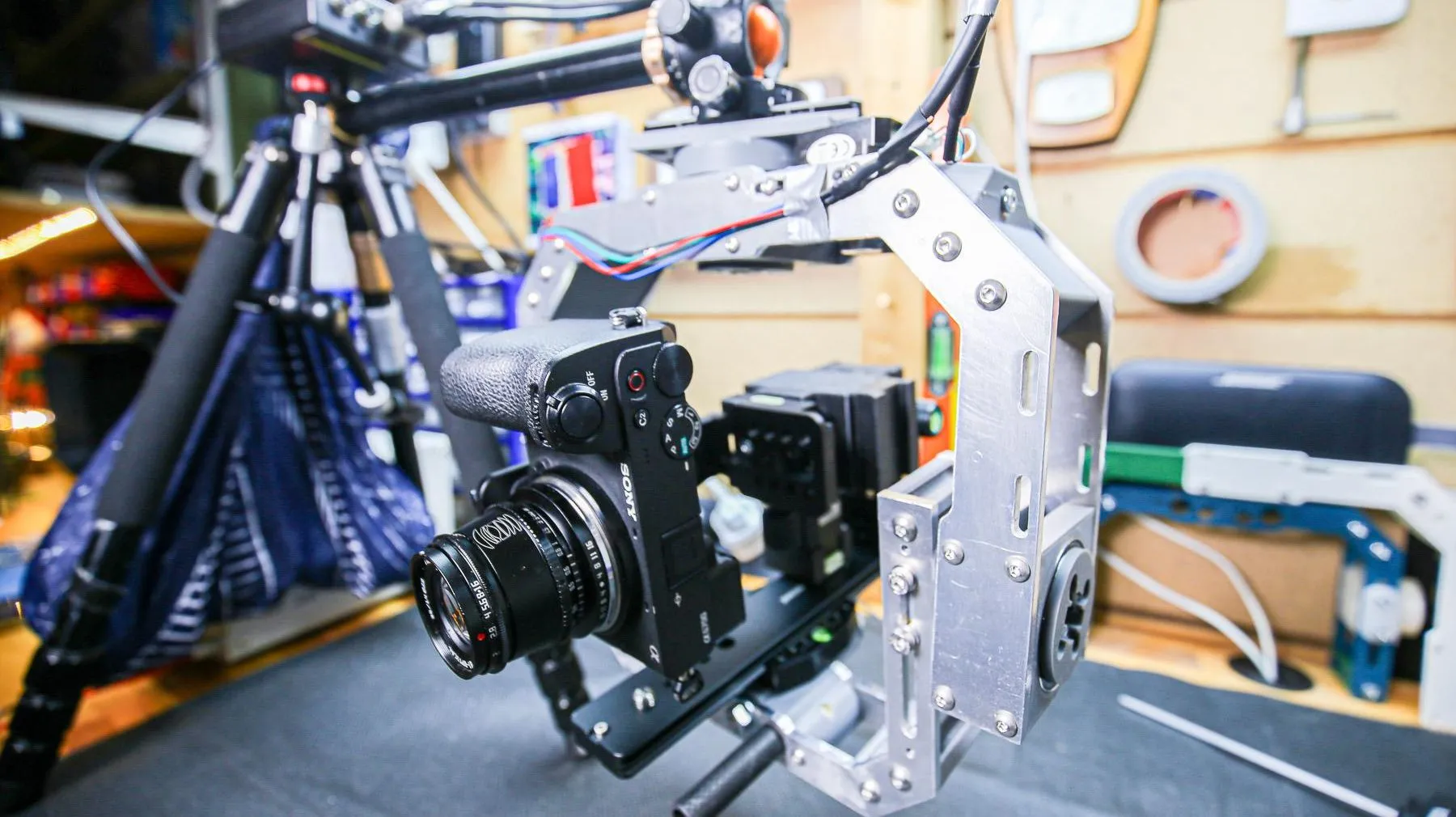
Historically, moving and pointing a camera while filming was the job of a highly-skilled individual. However, there are machines that can do that, enabling all kinds of fancy movement that is difficult or impossible for a human to recreate. A great example is this pan-tilt build from [immofoto3d.]
The build uses a hefty cradle to mount DSLR-size cameras or similar. It’s controlled in the tilt axis by a chunky NEMA 17 stepper motor hooked up to a belt drive for smooth, accurate movement. Similarly, another stepper motor handles the pan axis, with an option for upgrade if you have a heavier camera rig that needs more torque to spin easily. Named Gantry Bot, it’s an open-source design with source files available, so you can make any necessary tweaks on your own. You will have to bring your own control mechanism, though—telling the stepper motors what to do and how fast to do it is up to you.
It’s a heavy-duty build, this one, and you’ll really want a decent metal-capable CNC to get it done, along with a 3D printer for all the plastic pieces. With that said, we’ve featured some other similar builds that might be more accessible if you don’t have a hardcore machine shop in the basement. If you’ve got your own impressive motion rig in the works, be sure to notify the tipsline!
Experts from Accenture, BearingPoint and Workhuman discuss how AI and automation can positively impact working life.
For many professionals artificial intelligence (AI) and automation have the power to transform day-to-day work. David Burke, a senior director of global talent acquisition and the employer brand at Workhuman explained that this transformation is effective not because it is ‘futuristic’ but because it meets the needs of an evolving workforce.
“It’s much more practical than that,” he told SiliconRepublic.com. “We’re using AI across our internal systems to reduce manual work, improve decision-making and help teams move faster. The goal isn’t to replace roles, it’s to remove friction.
“In areas like hiring, performance enablement and cross-functional collaboration, automation is taking care of the repeatable tasks and surfacing better data. That means our teams spend less time chasing information or managing processes and more time solving problems and focusing on work that actually moves the business forward.”
Advertisement
This is a viewpoint shared by Wendy Walsh, a talent and organisation lead at Accenture, who noted that AI and automation have not only altered the tools she uses in the workplace, but have actually changed how she personally “shows up at work”.
She said: “On a very practical level, I use AI every single day to think better. I use it to explore ideas, challenge my own assumptions, shape early thinking and get to a stronger point of view before anything ever becomes a document. For me, it’s less about productivity shortcuts and much more about cognitive support.”
Walsh added: “It helps me move faster to insight and clarity, not simply faster to output. The biggest difference is that my time has shifted away from preparing information and towards interpreting it.”
For BearingPoint’s Barry Haycock, who is a senior manager of data analytics and AI, when it comes to the topic of AI and automation, one subject that has dominated the conversation is agentic AI. He explained, he has noticed in the last 12 months or so, more and more people are choosing to use AI as an augmentation tool as opposed to automation.
Advertisement
He said: “In my personal day to day, I use AI to draft code I plan to write, or as a sounding board to discuss and tease out ideas before I start developing a slide deck or a document.
“In many areas, people can use AI to perform a detailed search, for example of in-house documents, or to summarise their upcoming week and help them plan their goals. I find it useful too for flagging upcoming deadlines and prioritising them every Monday.”
For Walsh, Burke and Haycock, amid the evolution brought about by the proliferation of advanced technologies and processes in the working ecosystem, comes the need for a modern upskilling strategy.
New day, new challenges
For Walsh, soft skills have grown in importance, with AI acting as a core reason why. She said: “As AI becomes part of everyday work, the qualities that really differentiate people are human ones. Skills in AI and data are important and technological literacy will increasingly be expected of everyone. But they’re not enough on their own.
Advertisement
“Looking ahead to 2030, many of the fastest-growing core skills are deeply human. AI can analyse, generate and optimise at incredible speed. But it can’t build trust. It can’t create belonging.
“It can’t decide what matters most in a moment of uncertainty. Technology is a powerful enabler, but it still needs people to shape it, question it and use it with purpose. The organisations that thrive will be those that invest just as seriously in human capability as they do in AI.”
Haycock said that in software development, MLOps and AIOps roles, business analytics is becoming the most important skill. He explained that, while the latest frontier AI models are excellent at coding or creating a script that a developer might need, the developer really needs to explain what’s required clearly.
He said: “This is traditionally considered a soft skill and in times gone by a developer might write the code to explain their thoughts. I’ve noticed that ‘explain-in-plain-language’ skills are developing across many technical roles lately.”
Advertisement
“Technical skills will always matter,” said Burke, “but they’re increasingly learnable at speed. AI can help people acquire knowledge and capabilities faster than ever. What’s harder to automate and therefore more valuable, are human skills.”
Skills such as judgement, communication, the ability to trust, context-setting, ethical decision-making and leading through ambiguity are among those that should be prioritised, especially as professionals are further expected to adopt and understand tech advancements.
“As technology accelerates, the differentiator won’t be who knows the most,” said Burke. “It will be who can interpret, connect and lead. The irony is that the more advanced AI becomes, the more deeply human capability becomes alongside it. That’s what ultimately drives sustained performance.”
Don’t miss out on the knowledge you need to succeed. Sign up for the Daily Brief, Silicon Republic’s digest of need-to-know sci-tech news.
The Xiaomi Watch 5 is now available for sale outside China
The smartwatch originally launched in China in late 2025
It’s switched operating systems from HyperOS to Google’s Wear OS 6
Back in December, Xiaomi launched its Watch 5 wearable with Wear OS 6 compatibility. The bad news is that it was only released in China, but the company has now made the device available worldwide, bringing its new features to a much wider audience.
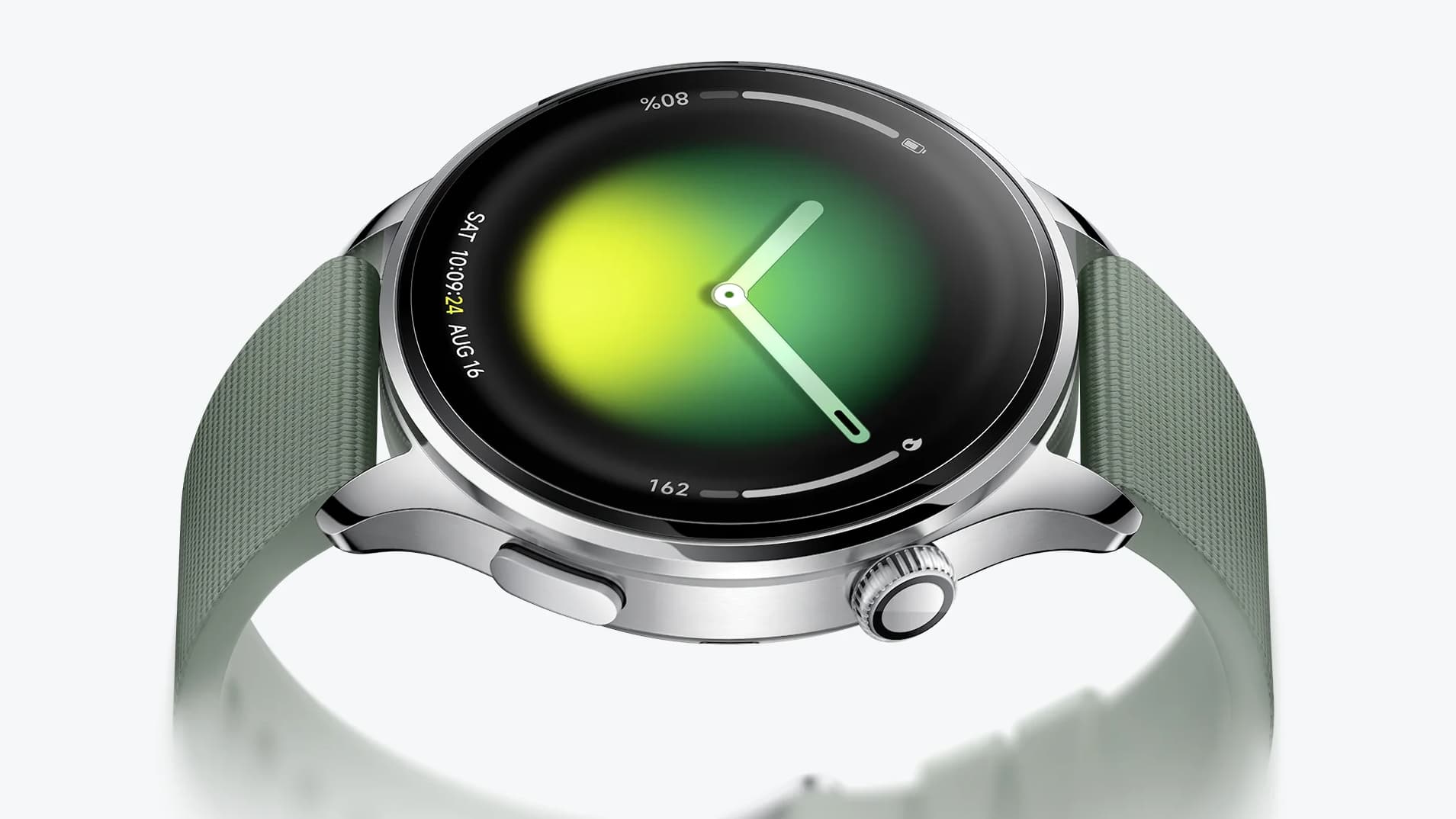
The Watch 5 comes with a 1.54-inch AMOLED display featuring sapphire glass on both the front and back and reaching up to 1,500 nits of brightness. The body is made from a stainless steel frame and is available in Juniper Green or Black, while the 3D-printed strap weighs 43g, which Xiaomi says is about 50% lighter than a stainless steel equivalent.
Xiaomi’s watch is powered by a combination of a 4nm Snapdragon W5 and a low-power 6nm BES2800 chip. This move is to “balance performance and energy efficiency,” Xiaomi says. When used in Performance Mode, you’ll get six days of battery life on a single charge, which extends to 18 days when Power Saving Mode is activated.
Gesture control gets a boost in the form of an electromyography (EMG) sensor that brings Xiaomi’s “most precise gesture control to date,” the firm says. This supports seven gestures and interactions. Aside from that, there are over 150 sports modes, 3D-animated workout guidance, and ECG analysis.
Switching to Wear OS 6
(Image credit: Xiaomi / Future)
Xiaomi often releases many of its best smartwatches in China first, then expands them around the world. That’s proven to be no different in the case of the Watch 5.
We’ve not reviewed a device in Xiaomi’s Watch series yet, but we have cast our eyes over other wearables made by the company. That includes the Watch S1 Pro, which we scored 3.5 stars out of five, and the four-star Smart Band 9. When we tested those products, we were impressed by their premium-feeling hardware, but we felt they were let down by sometimes-erratic software. We’ll have to see if that’s something Xiaomi has addressed with the Watch 5.
Advertisement
Speaking of software, Xiaomi has switched from its own HyperOS operating system to Google’s Wear OS 6. We’ve not been told why, but that should help to give it similar software features to the likes of the Google Pixel Watch 4, which we reviewed favorably last year.
Sign up for breaking news, reviews, opinion, top tech deals, and more.
How much will you have to shell out for a Watch 5? That’s a little unclear, as US pricing doesn’t appear to be available yet, but it’s listed at £269.99 in the UK and AU$499 in Australia. Either way, it’s available to buy now in various regions around the world.
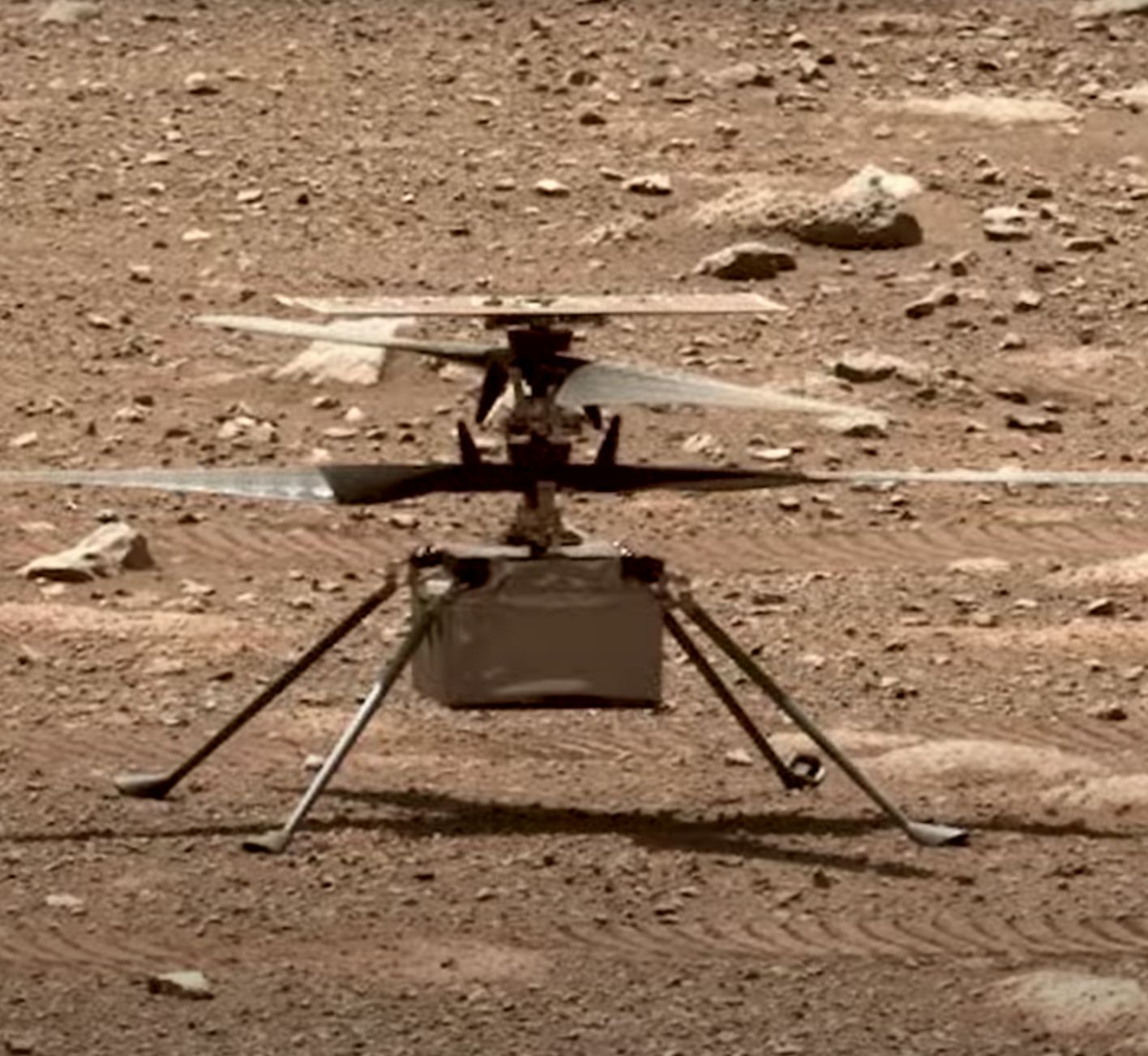
Unlike on Earth there aren’t dozens of satellites whizzing around Mars to provide satellite navigation functionality. Recently NASA’s JPL engineers tried something with the Perseverance Mars rover that can give such Marsbound vehicles the equivalent of launching GPS satellites into Mars orbit, by introducing Mars Global Localization.
Although its remote operators back on Earth have the means to tell the rover where it is, it’d be incredibly helpful if it could determine this autonomously so that the rover doesn’t have to constantly stop and ask its human operators for directions. To this end the processor which was originally used to communicate with its Ingenuity helicopter companion was repurposed, reprogrammed to run an algorithm that compares panoramic images from the rover’s navigation cameras with its onboard orbital terrain maps.
Much like terrain-based navigation as used in cruise missiles back on Earth, this can provide excellent results depending on how accurate your terrain maps are. This terrain mapping process used to be done back on Earth, but for the past years engineers have worked to give the rover its own means to perform this task.
Ingenuity: left behind but not forgotten. (Credit: NASA, JPL)
Because the off-the-shelf processor in the rover’s Helicopter Base Station (HBS) is much faster than the custom, radiation-hardened processors that control the rover, the decision was made to try the algorithm on the HBS, especially since Ingenuity was left behind after it fatally damaged its propeller during a rough landing. This left the HBS unused and free to be repurposed.
Repurposing such OTS hardware also provided a good way to check for radiation damage to such standard hardware that was never certified for high radiation environments. To validate reliability the algorithm was run multiple times on the HBS, with the results compared by the main computer. This found some discrepancies, attributed to damage to about 25 bits out of 1 GB of RAM.
Advertisement
By isolating these damaged bits, the algorithm could run reliably, while giving another nod to the genius of the Ingenuity program that enabled such new features with what was at the time an unproven and relatively low-budget side-project tacked onto the Perseverance rover.
One of the affected developers shared the incident on Reddit. According to the post, the Google Cloud API key was compromised between February 11 and February 12 and was primarily used to access Gemini 3 Pro Image and Gemini 3 Pro Text services. Read Entire Article Source link