
Crypto World
Top 8 Countries Ripe for Agentic AI in Crypto Neo-Banking


AI Summary
- In the fast-evolving world of crypto neo-banking, traditional approaches are no longer sufficient.
- The future lies in Agentic AI, a sophisticated system that brings autonomous intelligence to the forefront.
- This technology goes beyond mere analysis, actively executing tasks with minimal human intervention.
- By seamlessly integrating with blockchain infrastructure, Agentic AI streamlines complex DeFi processes, enhances regulatory compliance, and optimizes user experience.
- In the competitive landscape of white-label neo banking, Agentic AI offers a range of benefits, from automating compliance and improving operational efficiency to enhancing treasury management and mitigating fraud risks.
“The future of crypto neo-banking won’t be built by dashboards – it will be governed by autonomous intelligence.”
Across the globe, regulators are tightening oversight, liquidity cycles are accelerating, and cross-border rails are fragmenting. White label neo banks can no longer rely on static compliance workflows or manual treasury oversight. They need infrastructure that thinks, reacts, and enforces policy in real time. Explore Agentic AI, not as a feature, but as a sovereign-grade control layer. From programmable compliance and self-adjusting liquidity engines to travel-rule automation and on-chain threat containment, agentic systems transform crypto neo-banking into a continuously adaptive, regulator-aligned machine. For enterprises and governments, this is no longer innovation theater. It’s operational survival and competitive advantage, engineered into the core.
Why Agentic AI Matters In Crypto Neo-Banking Development Space?
- Autonomy and action: Agentic AI doesn’t just analyze; it plans and executes tasks (sets goals, signs/submits transactions, and calls smart contracts) with limited human supervision. That makes it a natural fit where speed, continuous monitoring, and automated execution matter (e.g., liquidity management, treasury ops, automated compliance).
- Web3-native execution: On-chain agents can observe blockchain state, reason over real-time signals, and directly interact with smart contracts, making automation verifiable and composable with DeFi primitives. That capability is different from off-chain AI acting as an advisor.
- Simplifying DeFi and Neo-bank App UX: Agents can abstract complex DeFi steps for retail users (route swaps, managing gas, and harvesting yields) so that enterprises with neo-banking platforms can offer “one-click” Web3 products without exposing users to manual on-chain complexity.
What Extra Does Agentic AI In White Label Neo Banking Bring To The Table?
1. Delivers continuous, automated regulatory compliance (policy-as-code): Encode jurisdictional rules and platform policies as machine-readable policies so agents enforce them before any customer-facing action. This turns ad hoc manual compliance into deterministic, auditable enforcement, ideal for white-label BaaS vendors that must serve many license regimes and clients.
2. Reduces operational cost and time-to-market for licensees: White-label neo banking service providers promise rapid launches and lower OPEX; agentic automation accelerates routine back-office tasks (KYC triage, AML screening, reconciliation) and reduces human review volumes. This shortens onboarding cycles and improves unit economics for merchants and partners.
3. Enables safer autonomous treasury & liquidity operations: Agents continuously monitor liquidity, on-chain pools, and fiat corridors, then recommend or execute hedges, peg-support actions, or tranche rebalances within pre-approved guardrails, crucial for neo-banks offering tokenized products or stablecoin rails.
4. Improves customer UX while hiding Web3 complexity: Agents orchestrate multi-step DeFi flows (swap → stake → settle) and handle gas optimization, routing, and fallback logic so end users see “one-click” products without exposure to on-chain failure modes. This preserves the white-label brand experience across client deployments.
5. Provides a programmable, auditable “autonomy layer” that scales for many tenants: White-label neo banking platforms must operate multi-tenant rule sets. Agentic AI combined with policy-as-code delivers per-tenant policy profiles, versioning, and immutable decision logs, enabling auditability for both regulators and the platform’s customers.
6. Delivers near-real-time fraud detection and response: Agents spot anomalous sequences across on-chain and off-chain signals and can enact containment actions (temporary holds, multisig freezes, and session invalidation) with preconfigured escalation logic, reducing losses and reputational damage.
7. Supports composable, modular product extension (plug-and-play for partners): Because white-label offerings are built for reuse, agentic components (KYC agent, treasury agent, and payments agent) can be offered as modular microservices that clients enable/disable, accelerating product customization without code rewrites. Industry frameworks already encourage reusable agent patterns.
8. Enables explainability, governance, and human-in-the-loop controls: Best practice: agents operate with three authority modes: observe, propose, and execute. Critical/high-impact actions require multisig/human signoff; all agent decisions produce replayable rationales and evidence bundles for audits. This preserves regulatory comfort while unlocking autonomy.
9. Drives product differentiation and revenue enablement: Agentic features (autonomous savings, instant FX optimization, proactive fee-reduction routing) become premium modules that white-label operators can upsell to clients (merchant plans, high-volume remitters, cross-border SMEs). Agents make advanced automation a monetizable capability.
10. Mitigates vendor risk through policy and provenance controls: Agents should be cryptographically identifiable, have verifiable provenance (signed decision logs), and run within hardened key custody (HSMs/multisig). This reduces impersonation and audit risk for white-label vendors operating across multiple banking partners and regulators.
Now, let us have a closer look at how one of the hottest markets globally faces challenges in its financial market, and that can only be solved by integrating Agentic AI into white label crypto neo banking solutions that can overcome their pain points in a click.
Top Regulatory Markets Where Agentic AI Enhances White-Label Crypto Neo-Banking
1. United States
Major challenge
Fragmented regulator expectations, heavy custody & AML obligations, and fast-moving guidance that makes product roadmaps risky for banks offering crypto services.
How is agentic AI in neo banking helping them?
- Regulatory surveillance agents: continuously ingest regulator releases, rule changes, and enforcement actions; extract obligations; and auto-generate compliance checklists mapped to product features.
- Treasury-stress agents: run continuous scenario simulations (liquidity shocks and stablecoin runs); recommend hedges or rebalance steps; and prepare human-approved execution plans.
- Evidence-pack creation agents: when a suspicious flow is detected, agents collate on-chain traces + off-chain identity data into audit-grade packets for investigators.
2. United Kingdom
Major challenge
Retail transfers to regulated exchanges are frequently blocked or delayed by incumbent banks and payment rails, creating UX breakdowns and market fragmentation.
The Only Solution To The Problems: Agentic AI White Label Neo Bank App
- Payment-route intelligence agents: predict the likelihood of a rails approval using historical failure signals, merchant metadata, and bank rule heuristics; pre-choose compliant rails or suggest off-ramp alternatives to users.
- Auto-remediation agents: when a payment stalls, automatically surface the failure code, prepare corrective messages (pre-filled forms/evidence), and open the right banking/exchange ticket with the required attachments.
3. Singapore
Major challenge
High MAS expectations for KYC/AML, consumer protection, and strict data-privacy tradeoffs when combining on-chain transparency with off-chain identity.
Agentic AI-Based Neo Banking Acts As A Solution
- Policy-as-code agents: MAS rules and DPT (digital payment token) obligations encoded as machine-readable policies; agents enforce limits and trigger enhanced due diligence automatically.
- Privacy-aware orchestration agents: decide whether to store attestations off-chain or to submit zero-knowledge proofs on-chain, thus preserving auditability while respecting PDPA-like constraints.
4. Switzerland
Major challenge
High AML standards, reputational risk for banks that take crypto clients, and the need for continuous counterparty & contract monitoring.
Is an Agentic AI-powered customized BaaS platform, the solution to it?
- Continuous counterparty-risk agents: fuse on-chain behavior (mixing, sourcing of funds) with KYC/OSINT signals to produce evolving risk scores and recommended mitigations (transaction limits, additional attestations).
- Smart-contract guardian agents: run attack-surface simulations and detect anomalous contract state changes; when thresholds hit, trigger multisig freezes or emergency settlement paths.
5. United Arab Emirates
Major challenge
Rapid licensing growth (VARA/ADGM) meets uneven banking partner acceptance and strict local advertising/product rules, creating operational friction for entrants.
How does agentic AI in crypto neo banking help?
- Regulatory-fit assistants: automatically scan product copy, onboarding flows, and partner contracts against VARA/ADGM rule sets and flag non-compliant language or missing controls.
- Partnership-optimization agents: analyze historical acceptance patterns and generate tailored documentation bundles to improve bank partner approval odds.
Launch Your Agentic AI-Powered Banking Solutions Today
6. Nigeria
Major challenge
High grassroots stablecoin adoption for remittances and dollar-hedging amid FX instability; regulators worry about dollarization and capital flight.
How does agentic AI help?
- Stablecoin-peg & liquidity agents: monitor local liquidity, on-chain pool depths, and OTC lanes; automatically route swaps and on/off ramps to preserve peg and minimize slippage for retail users.
- Cost-optimal remittance agents: detect the lowest-cost, compliant corridor (stablecoin payment rails vs. traditional FX) and present the user with a single-click, auditable trail.
7. El Salvador
Major challenge
Volatility, limited merchant adoption, public distrust, and infrastructure constraints were exposed by nationwide policy experiments.
How does agentic AI help?
- User-protection agents: auto-offer instant fiat-backs or stable-value settlement for merchant receipts and protect small savers from token volatility via optional auto-convert rules.
- Resource-aware orchestration agents: if national initiatives tie to mining or local validation, agents in crypto-friendly neo-banking solutions schedule heavy compute/mining tasks for low-impact periods and prefer renewables where possible.
8. India
Major challenge
Tight KYC/AML enforcement, mandatory FIU registration, travel-rule implementation with zero thresholds, and frequent regulatory updates that raise compliance overhead.
How does agentic AI help?
- Travel-rule automation agents: collect, validate, and transmit originator/beneficiary data in real-time to meet India’s no-threshold travel-rule requirements and generate audit trails for FIU-Ind.
- Adaptive KYC orchestration agents: dynamically escalate to Enhanced Due Diligence (EDD) based on behavior and maintain replayable decision logs for enforcement queries.
Concrete Crypto-Friendly Neo-Banking Use Cases
- Autonomous treasury & liquidity management: agents rebalance stablecoin reserves, shift assets between pools, or top up liquidity automatically based on thresholds and forecasts.
- Programmatic compliance & continuous KYC/AML monitoring: agents scan transactions, flag anomalies, and open tickets or freeze flows for human review.
- Personalized, active wealth management: per-user agents that rebalance portfolios, auto-stake, or switch yield strategies based on risk profile and market signals.
- Smart contract guardians: watch contracts for exploits (or upgrade opportunities) and execute emergency multisig flows or circuit breakers when rules are breached.
- Autonomous onboarding & UX helpers: agents assist users with wallet linking, gas estimation, and transaction bundling to reduce friction and errors.
Wrapping It Up!
Agentic AI is not a marketing checkbox; it’s an operational and product architecture that transforms white-label neo-banking from a static tech stack into an adaptive, policy-driven platform. When coupled with strong policy governance, explainability, and human gates, agentic AI is a practical and defensible way to reduce costs, accelerate launches, and offer premium automation to partners and end users.
Are you planning to launch your solution with the best team of experts? Get in touch with us! Antier, being the leading white-label neo bank development company, is at the forefront of this transformation. Combining advanced blockchain domain expertise with AI-native automation, our team architects modular, policy-driven agent stacks and secure custody layers that accelerate launches and harden operational controls. Our proven delivery cadence, spanning from full white-label deployments within seven days that are combined with enterprise-grade decisioning and deterministic audit trails, empowers clients to launch faster, operate smarter, and monetize automation.
Get in touch with us today and share your requirements or plan to start the execution.
Frequently Asked Questions
01. What is Agentic AI and how does it impact crypto neo-banking?
Agentic AI is an autonomous intelligence system that enhances crypto neo-banking by enabling real-time compliance, liquidity management, and automated execution of tasks with minimal human supervision, transforming traditional banking operations into adaptive, regulator-aligned processes.
02. How does Agentic AI improve regulatory compliance in white label neo banks?
Agentic AI automates regulatory compliance by encoding jurisdictional rules and platform policies as machine-readable policies, ensuring deterministic and auditable enforcement before any customer-facing actions, which is essential for white-label banking service providers.
03. What benefits does Agentic AI offer to enterprises using neo-banking platforms?
Agentic AI reduces operational costs and accelerates time-to-market for enterprises by automating complex processes, allowing for rapid launches of services and the delivery of user-friendly Web3 products without exposing users to the complexities of on-chain interactions.



The International Monetary Fund (IMF) lowered its global growth forecast for 2026 to 3.1% in its April update. This marks a 0.2 percentage point downgrade from its January estimate.
The Fund noted that the latest downgrade largely reflects economic disruptions stemming from the ongoing Middle East conflict. It added that in its absence, the outlook would have instead been revised upward by 0.1 percentage point to 3.4%.
IMF Cuts Growth, Lifts Inflation Forecast in 2026
The report added that the global growth forecast for 2027 remains unchanged from the January 2026 World Economic Outlook update.
Follow us on X to get the latest news as it happens
Meanwhile, global headline inflation is expected to edge higher in 2026 before resuming its downward trajectory in 2027. It is currently projected at 4.4% this year, before easing to 3.7% in 2027.
The economic impact remains uneven across regions. Emerging markets saw their 2026 growth outlook downgraded by 0.3 percentage points. Yet, projections for advanced economies were largely unchanged.
“Crucially, there is a high degree of cross-country dispersion in the reference forecast. While the growth and inflation revisions seem relatively modest at the global level, the toll on the conflict region and more vulnerable economies elsewhere—in particular, commodity-importing emerging market and developing economies with preexisting fragilities—is much more pronounced,” the report read.
The IMF also outlined additional downside risks. In a scenario where energy prices rise more sharply and persistently, global growth could slow to 2.5% in 2026.
At the same time, inflation may climb to 5.4%. A more severe disruption, particularly involving damage to energy infrastructure in the conflict region, would deepen the impact, dragging global growth to around 2% and pushing inflation above 6% by 2027. Emerging and developing economies would be disproportionately affected again, with nearly twice the impact as advanced economies.
The IMF said its latest World Economic Outlook uses a “reference forecast” rather than a traditional baseline. This reflects the difficulty of forming stable assumptions amid ongoing uncertainty.
Subscribe to our YouTube channel to watch leaders and journalists provide expert insights
The post IMF Cuts 2026 Global Growth Forecast by 0.2 Points as Middle East War Hits Momentum appeared first on BeInCrypto.


Bitcoin is absorbing the return of Middle East risk better than oil or equities.
Bitcoin traded at $74,335 on Monday morning, down 1.6% over 24 hours but still up 4.8% on the week after the U.S. Navy seized an Iranian ship over the weekend and Tehran reimposed controls on the Strait of Hormuz.
Ether slipped 2.6% to $2,272, Solana fell 1.5% to $84, and BNB held flat at $618, with the broader top-10 showing red across the board but none of the moves breaching 3%.
Brent crude jumped 5.7% to $95.50 a barrel, European natural gas futures surged as much as 11%, S&P 500 futures fell 0.6% after Friday’s record close, and European equity futures indicated a 1.2% drop at the open. Gold fell 0.8% to $4,790, and the dollar edged up as traditional war-hedge demand returned.
The weekend flare-up reversed a three-week unwind of war risk premium. Iran had declared the Strait “completely open” on Friday, prompting the S&P 500’s record close and a broad rally across emerging markets.
By Sunday morning, Trump was threatening to destroy every power plant and bridge in Iran if negotiations fail, and Tehran was signaling it may skip a second round of talks while the U.S. maintains its naval blockade.
This is the fourth major Iran-related risk event crypto has absorbed since the conflict began, and the pattern of shrinking sell-offs continues. Earlier escalations produced sharper drawdowns in bitcoin than this one, with each successive flare-up compressing the magnitude of the crypto reaction even as oil and equities continue to price each headline fresh.
The divergence suggests crypto has largely finished pricing the geopolitical tail risk that traditional markets are still reacting to, either because holders who were going to sell on Iran headlines have already sold, or because the spot ETF bid has become a more reliable floor than the futures-driven weekend gaps that defined earlier cycles.
What traders will watch through the U.S. session is whether the 10-year Treasury yield holding near 4.27% and the dollar bid pull bitcoin lower through the risk-parity channel, or whether the equity correlation that dominated Q1 loosens on a day when the driver is explicitly geopolitical rather than macro-liquidity.
If bitcoin holds $74,000 through the European open and the Strait of Hormuz situation deteriorates further, the asset’s emerging reputation as a geopolitical shock absorber gains another data point. If the move extends below $73,000 on any incremental Iran headline, the shrinking-sell-off thesis breaks.
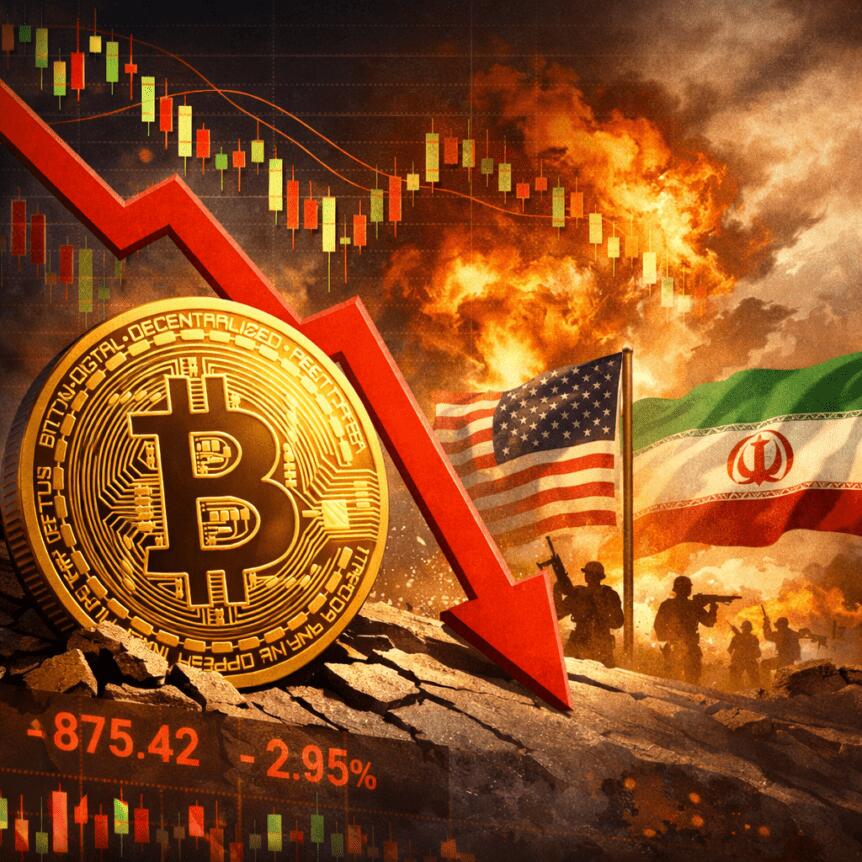
Geopolitical tensions surrounding the Strait of Hormuz renewed a risk-off mood across cryptocurrency markets over the weekend, pressuring Bitcoin after a brief rally earlier in the week. On Friday, Bitcoin surged above $78,300 on Coinbase — its highest level since early February — but the rally faded as broader developments escalated. By weekend’s end, BTC had retreated to the $75,000–$76,000 zone, and late Sunday slid further to briefly dip below $74,000 in the wake of a U.S. military operation in the region.
The U.S. military announced that it opened fire on and later seized an Iranian cargo ship it said was attempting to breach a blockade of Iranian ports, a move that Tehran characterized as a violation of a two-week ceasefire between the two nations. The ceasefire, which had contributed to a calmer backdrop for energy markets and crypto trading alike, is due to expire this week, with investors watching how any renewal or breakdown could influence risk assets.
As tensions escalated, Tehran signaled retaliation and reportedly rejected a new round of peace talks slated for Monday in Islamabad, citing the U.S. blockade. The combined stance from Washington and Tehran underscored the fragility of a de-escalation path, complicating the outlook for both oil and crypto markets in the near term.
The broader market backdrop reflected the tension. U.S. stock futures opened Sunday night lower, with S&P 500 futures down about 0.8%, Nasdaq-100 futures off 0.6%, and Dow futures down roughly 0.9% (around 450 points). Oil markets reacted in kind, with crude futures rising more than 4.5% and trading above $95 a barrel as supply concerns and geopolitical risk re-entered the narrative.
Crypto market sentiment also shifted. The Crypto Fear & Greed Index edged higher to 29 out of 100 on Monday, signaling a return to fear after a period of relative calm, though it remained in the cautious end of the spectrum rather than outright panic.
Bitcoin’s price trajectory over the weekend underscores how sensitive the crypto market remains to macro-driven risk factors in addition to its own supply-and-demand dynamics. The move back toward the mid-$70,000s after a weekend foray into the mid-$70k range highlighted the potential for renewed volatility should the conflict persist or escalate around Hormuz and related channels.
Cointelegraph has previously noted how macro tensions, including geopolitical flare-ups and oil price swings, have historically fed into bitcoin’s price action, offering a potential liquidity tilt during periods of global uncertainty. The current sequence — a Friday peak followed by a weekend retreat and a Sunday plunge tied to military actions — illustrates the ongoing intersection between energy markets, geopolitical risk, and crypto liquidity.
Looking ahead, the key question for traders is whether the ceasefire holds long enough for markets to re-price risk more calmly or if renewed escalation magnifies volatility. The end-date of the current two-week ceasefire looms large for both oil markets and digital assets, as any renewal terms or new conflict dynamics could reintroduce abrupt shifts in sentiment, liquidity, and hedge demand.
Analysts will also be watching how the U.S. and Iranian sides approach diplomacy in the coming days. Tehran’s rejection of new talks and its vow of retaliation, alongside the U.S. military actions, suggests that any easing in risk appetite may depend heavily on clear signals of de-escalation rather than the mere absence of headlines.
In the near term, Bitcoin and other major cryptocurrencies may continue to trade within a risk-off framework so long as geopolitical headlines dominate. Traders will likely weigh potential upside toward prior resistance levels against the risk of renewed volatility if tensions intensify or the ceasefire breaks down again. As always, liquidity, macro cues, and the evolving diplomatic calculus will shape the path forward for BTC and the broader crypto market.
What to watch next: the timing and outcome of any renewed discussions around the ceasefire, ongoing responses from both Tehran and Washington, and the corresponding reactions in oil and traditional equity markets. The coming days could reveal whether this episode marks a temporary pause in risk appetite or a more sustained shift in how investors price geopolitical risk into digital assets.
Crypto World
LayerZero blames Kelp’s setup for $290 million exploit, attributes it to North Korea’s Lazarus


LayerZero has placed responsibility for the $290 million Kelp DAO exploit on Kelp’s own security configuration, saying the liquid restaking protocol ran a single-verifier setup that LayerZero had previously warned against.
The attack used a novel vector targeting the infrastructure layer rather than any protocol code.
Attackers, whom LayerZero attributed with preliminary confidence to North Korea’s Lazarus Group and its TraderTraitor subunit, compromised two of the remote procedure call (RPC) nodes that LayerZero’s verifier relied on to confirm cross-chain transactions.
RPC nodes are the servers that let software read and write data on a blockchain, and LayerZero’s verifier used a mix of internal and external ones for redundancy.
The attackers swapped the binary software running on two of those nodes with malicious versions designed to tell LayerZero’s verifier that a fraudulent transaction had occurred, while continuing to report accurate data to every other system querying those same nodes.
That selective lying was engineered to keep the attack invisible to LayerZero’s own monitoring infrastructure, which queries the same RPCs from different IP addresses.
Compromising two nodes was not enough. LayerZero’s verifier also queried uncompromised external RPC nodes, so the attackers ran a distributed denial-of-service attack on those to force failover to the poisoned ones.
Traffic logs LayerZero shared show the DDoS running between 10:20 a.m. and 11:40 a.m. Pacific Time on Saturday. Once the failover triggered, the compromised nodes told the verifier a valid cross-chain message had arrived, and Kelp’s bridge released 116,500 rsETH to the attackers. The malicious node software then self-destructed, wiping binaries and local logs.
The attack only worked because Kelp ran a 1-of-1 verifier configuration, meaning LayerZero Labs was the sole entity verifying messages to and from the rsETH bridge.
LayerZero’s public integration checklist and direct communications to Kelp had recommended a multi-verifier setup with redundancy, where consensus across several independent verifiers would be required to confirm a message. Under that configuration, poisoning one verifier’s data feed would not have been enough to forge a valid message.
“KelpDAO chose to utilize a 1/1 DVN configuration,” LayerZero wrote, using the protocol’s term for decentralized verifier networks. “A properly hardened configuration would have required consensus across multiple independent DVNs, rendering this attack ineffective even in the event of any single DVN being compromised.”
LayerZero said it has confirmed zero contagion to any other application on the protocol. Every OFT-standard token and application running multi-verifier setups was unaffected.
The LayerZero Labs verifier is back online, and the company said it will no longer sign messages for any application running a 1-of-1 configuration, forcing a protocol-wide migration off single-verifier setups.
The architectural distinction matters for how DeFi prices LayerZero risk going forward.
A protocol-level bug would have implied every OFT token on every chain was potentially at risk. However, a configuration failure by a single integrator, combined with a targeted infrastructure attack, implies the protocol worked as designed and that Kelp’s security choices, not LayerZero’s code, created the opening.
Kelp has not yet publicly responded to LayerZero’s framing or addressed why it operated a 1-of-1 verifier setup despite the explicit recommendations against it.
Lazarus Group has been linked to the Drift Protocol exploit on April 1 and now Kelp on April 18, meaning the same North Korean unit has drained more than $575 million from DeFi in 18 days through two structurally different attack vectors: social engineering governance signers at Drift and poisoning infrastructure RPCs at Kelp.
The group is adapting its playbook faster than DeFi protocols are hardening their defenses.


Crypto protocols lost over $606 million to hacks in just 18 days of April 2026. That makes it the single worst month for exploits since February 2025.
The surge comes from two attacks on KelpDAO and Drift Protocol. Together, they account for 95% of April’s losses and 75% of 2026’s total of $771.8 million.
April 2026 Crypto Hack Losses Dwarf Q1 Combined
According to data from DefiLlama, April’s $606.2 million total across 12 incidents, it has already eclipsed the first quarter’s $165.5 million haul. That makes the month roughly 3.7 times as large as January, February, and March combined.
Follow us on X to get the latest news as it happens
| Month | Number of Hacks | Amount Lost |
| January | 12 | $100.1M |
| February | 8 | $24.2M |
| March | 15 | $41.3M |
| April (to April 18) | 12 | $606.2M |
| YTD Total | 47 | $771.8M |
Every month since February 2025 has held under $240 million, per DefiLlama’s tracker. That earlier figure was skewed by the $1.4 billion Bybit breach, which drove February 2025’s total to $1.466 billion.
April 2026’s losses arrived without any headline exchange hack of that size. The pattern shows how quickly attackers pivoted to Decentralized Finance (DeFi) infrastructure.
BeInCrypto reported that KelpDAO lost over $290 million on April 18, now the year’s largest single hack. Drift Protocol sits just behind at $285 million.
The damage has stacked up in recent days. Incidents at Vercel, Hyperbridge, Grinex Exchange, and Rhea Finance have piled in 2026.
“None of these accounts for the collateral damage seen across TVL, user trust, valuations, and the space’s morale. DeFi remains a niche market until risk can be properly priced; at this time, we’re far from it,” an anlyst wrote.
DeFi TVL Slides as Sentiment Cracks
DeFi total value locked (TVL) fell by more than 7% over the past 24 hours following the Kelp exploit. Aave alone dropped from $26.4 billion to near $17.9 billion.
“Every protocol is taking a hit now,” analyst Ted Pillows wrote.
Hack frequency is also climbing sharply. DeFi recorded 47 incidents in the first 4.5 months of 2026, compared with 28 over the same period in 2025. That works out to a roughly 68% year-over-year rise.
The reactions point to rising concern that DeFi’s risk pricing has not caught up with infrastructure-layer exploits. Dollar losses sit below 2025’s Bybit-skewed pace, yet incidents keep stacking. The next few weeks will show whether DeFi can tighten security before April’s trend defines the year.
The post April 2026 Becomes Worst Month for Crypto Hacks Since February 2025 appeared first on BeInCrypto.


The decentralized finance (DeFi) ecosystem is experiencing a sharp capital outflow following the weekend exploit of the KelpDAO protocol.
Leading DeFi lending platform Aave has lost $8.45 billion in deposits over the past 48 hours, driving a broader $13.21 billion decline in total value locked (TVL) across DeFi. TVL refers to the combined dollar value of crypto assets deposited across DeFi protocols, such as Aave, and is widely used as to measure liquidity and overall market activity.
Total value locked across DeFi fell from $99.497 billion to $86.286 billion, while Aave’s TVL declined by $8.45 billion to $17.947 billion over the same period, according to DefiLlama. Protocol-level data shows double-digit percentage drops across platforms, including Euler, Sentora, and Aave, with losses concentrated in lending, restaking, and yield strategies tied to the affected collateral.
The move stems from a $292 million exploit of Kelp’s bridge that allowed attackers to use stolen rsETH, a liquid re-staking token widely used in DeFi, as collateral to borrow funds on lending platforms.
Because these stolen tokens lacked legitimate collateral backing, borrowing against them created potential shortfalls for lenders. It’s similar to conning a traditional bank by depositing fake fiat and taking out loans against it, ultimately leaving the lender with bad debt.
Protocols responded by freezing affected markets, while panicked users withdrew funds, leading to a broad decline in total value locked.
Token prices have moved less sharply than deposits. The AAVE token is down about 2.5% over 24 hours, while UNI and LINK are down less than 1% over the same period, according to CoinDesk market data.
Peter Chung, head of research at Presto Research, said in a note the incident highlights risks in cross-chain infrastructure, particularly in verification systems used by bridges.
Early analysis suggests the issue may have originated in the verification layer rather than in smart contracts themselves.
Chung added that the episode also shows how interconnected DeFi protocols can transmit shocks beyond the initial point of failure, with withdrawal activity and market freezes extending to platforms without direct exposure to the exploit.
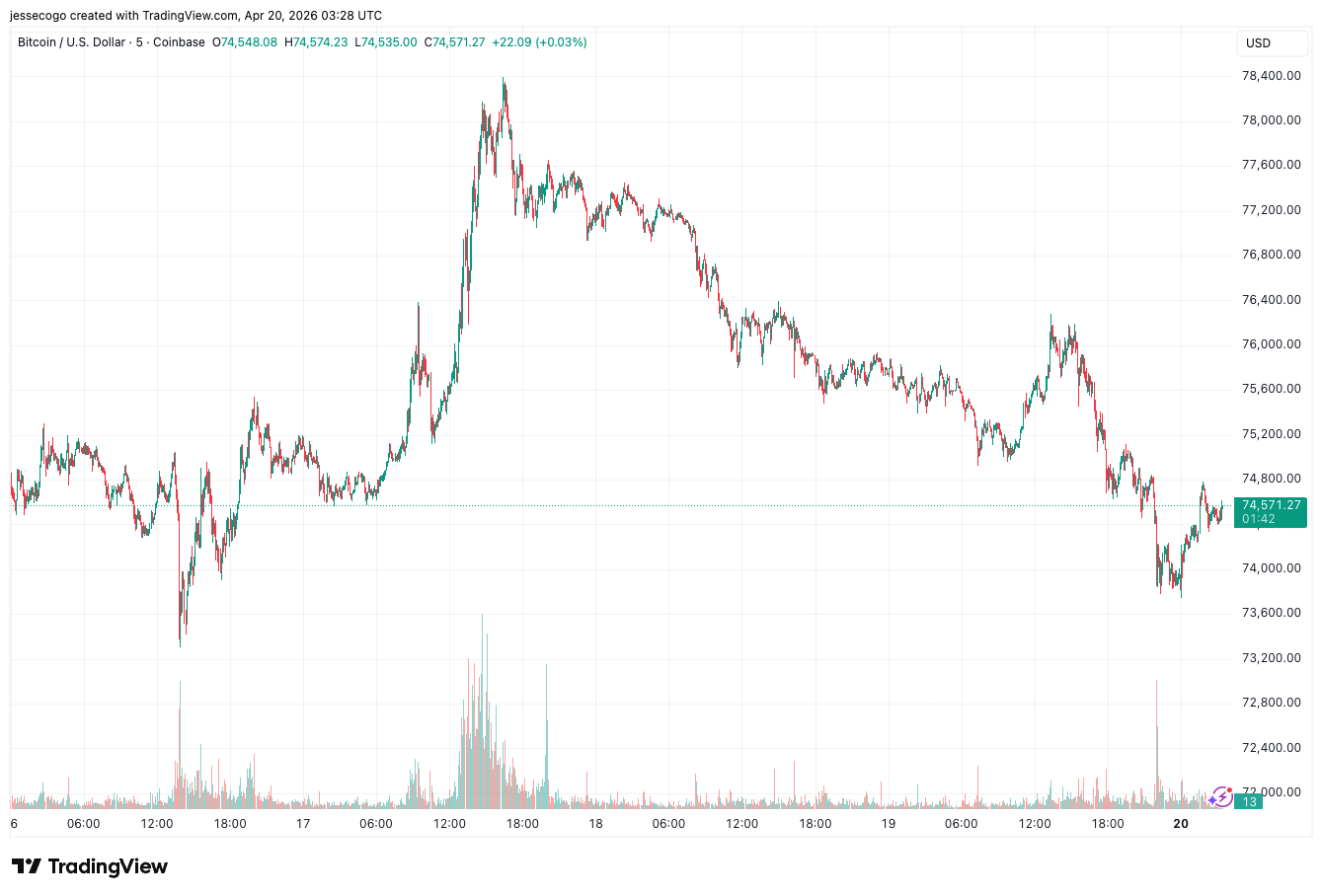
Bitcoin erased its weekend gains as it fell below $74,000 on Sunday after the US military seized an Iranian cargo ship, putting pressure on a ceasefire between the two countries.
Bitcoin (BTC) had soared above $78,300 late Friday on Coinbase, its highest price since early February, but dropped to between $75,000 and $76,000 over the weekend after Iran said it would close vital oil routes in the Strait of Hormuz.
The cryptocurrency then sank sharply late on Sunday to briefly trade below $74,000 after the US military said it opened fire on, and later seized, an Iranian cargo ship it claimed tried to run its blockade of Iranian ports, with Tehran accusing the US of violating an agreed ceasefire.
The two-week ceasefire between the US and Iran, which had helped boost the markets and temper oil prices, is set to end on Wednesday.

Tehran has vowed to retaliate over the US military’s seizure of the ship and has rejected a new round of peace talks slated for Monday in Islamabad, Pakistan, due to the US blockade, Iranian state media reported.
Related: Bitcoin eyes $90K as whales absorb 20x daily BTC supply in 30 days
US stock futures sank Sunday night amid rising tensions, with S&P 500 futures dropping 0.8%, Nasdaq-100 futures falling 0.6% and Dow Jones futures declining 0.9%, or about 450 points.
Oil futures also soared amid the hostilities and Iran’s threat to close the Strait of Hormuz, with crude oil futures rising over 4.5% to over $95 a barrel.
The Crypto Fear & Greed index rose by two points to a score of 29 out of 100 on Monday, its highest score since late January, but which still indicated a sentiment of “fear.”
Magazine: Bitcoin will not hit $1M by 2030, says veteran trader Peter Brandt
Crypto analyst Ansem argues that Ethereum (ETH) is in a “worse spot” in 2026 than it was in 2023, pointing to a thesis he says has been eroding for years.
His bearish take drew rebuttals from some members of the community. Meanwhile, on-chain activity and technical indicators elsewhere on the network flash bullish signals.
Ansem Lists Cracks in the ETH Thesis
Ansem argues that Solana (SOL) has dominated retail activity this cycle. Hyperliquid has taken the lead in perpetual futures trading, while rollups have failed to gain traction.
He also noted that Vitalik Buterin “publicly abandoned” the general-use rollup thesis. The ongoing Aave (AAVE) situation around the KelpDAO rsETH exploit, Ansem said, is a mark on Ethereum’s core value proposition of “safety + security of defi & insto interest.
“ETH thesis has been weakening consistently for years,” the analyst wrote. ETH in 2026 is in a worse spot than it was in 2023, amplified by AI doing extremely well & tech stocks being much more favorable investments with real revenues / emerging narratives / increasing momentum, ETH is a $300B asset with a ton of overhang from Tom Lee topblasting + complacent ETH holders sitting idle in defi protocols.”
Follow us on X to get the latest news as it happens
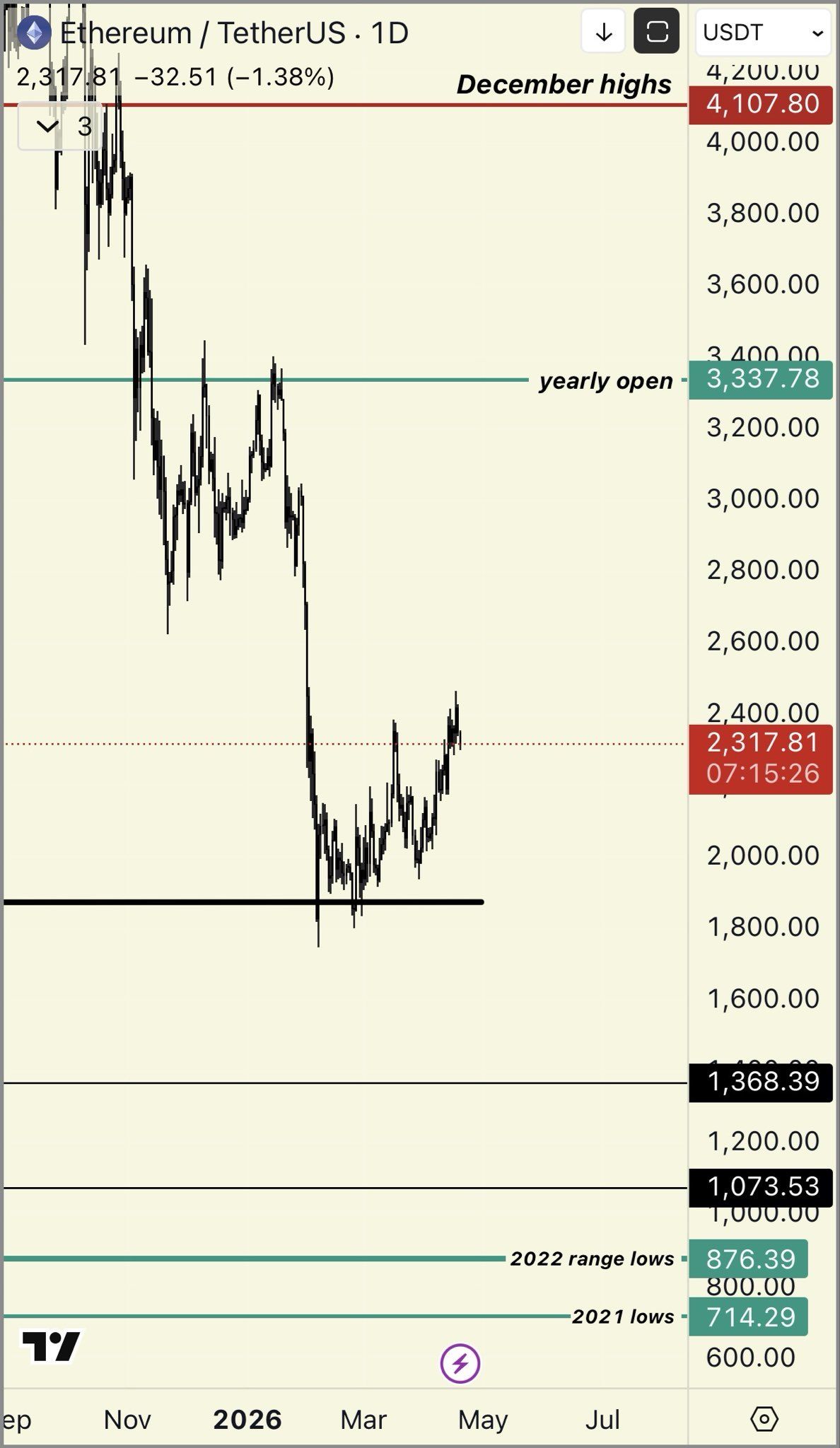
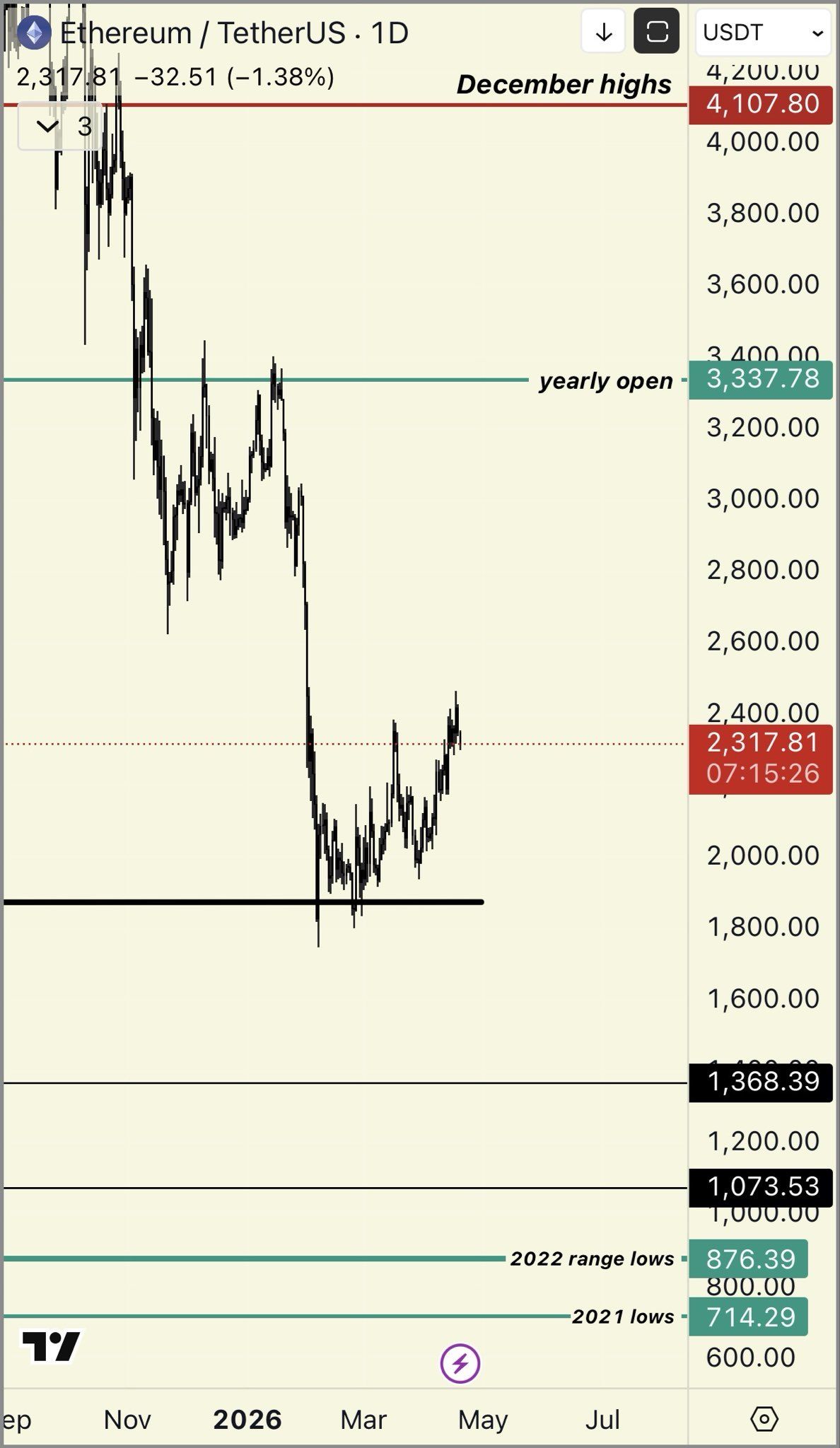
Technically, the analyst noted that ETH remains in a sustained downtrend after failing to break multi-year resistance. He projected that the second-largest cryptocurrency could slip to 2025 lows near $1,300 and to the bear-market lows from 2022.
“Tight invalidation 2377 assuming problems worsen if you want to play it loose assuming other risk assets continues doing well & drags it up probably somewhere around 2700/2800 invalidation fundamentals wise would want to see breakout activity from some new vertical,” the post read.
Community Members Push Back
The take triggered notable pushback. Ryan Berckmans accused Ansem of not understanding fundamentals. Leo Lanza went further, sharply dismissing the analyst’s bearish case on X.
Another user pointed to a 56% drop in the SOL/ETH pair this cycle.
“Soleth is down 56% after being up 12x+ *this cycle* because one guy decided to buy 5% of the eth supply after it had underperformed all cycle. idk why you guys act like i dont also bearpost solana i havent posted anything bullish about sol in over a year,” Ansem replied.
Not everyone shares the bearish view on Ethereum. BeInCrypto recently highlighted that network activity remains strong, while technical indicators like the Rainbow Chart and MACD are also flashing bullish signals.
With macro and geopolitical uncertainty still in play, the question is whether ETH slides further this year or stages a renewed rally.
Subscribe to our YouTube channel to watch leaders and journalists provide expert insights
The post Ansem Says Ethereum Is in a Worse Spot Than 2023 as Thesis Weakens appeared first on BeInCrypto.
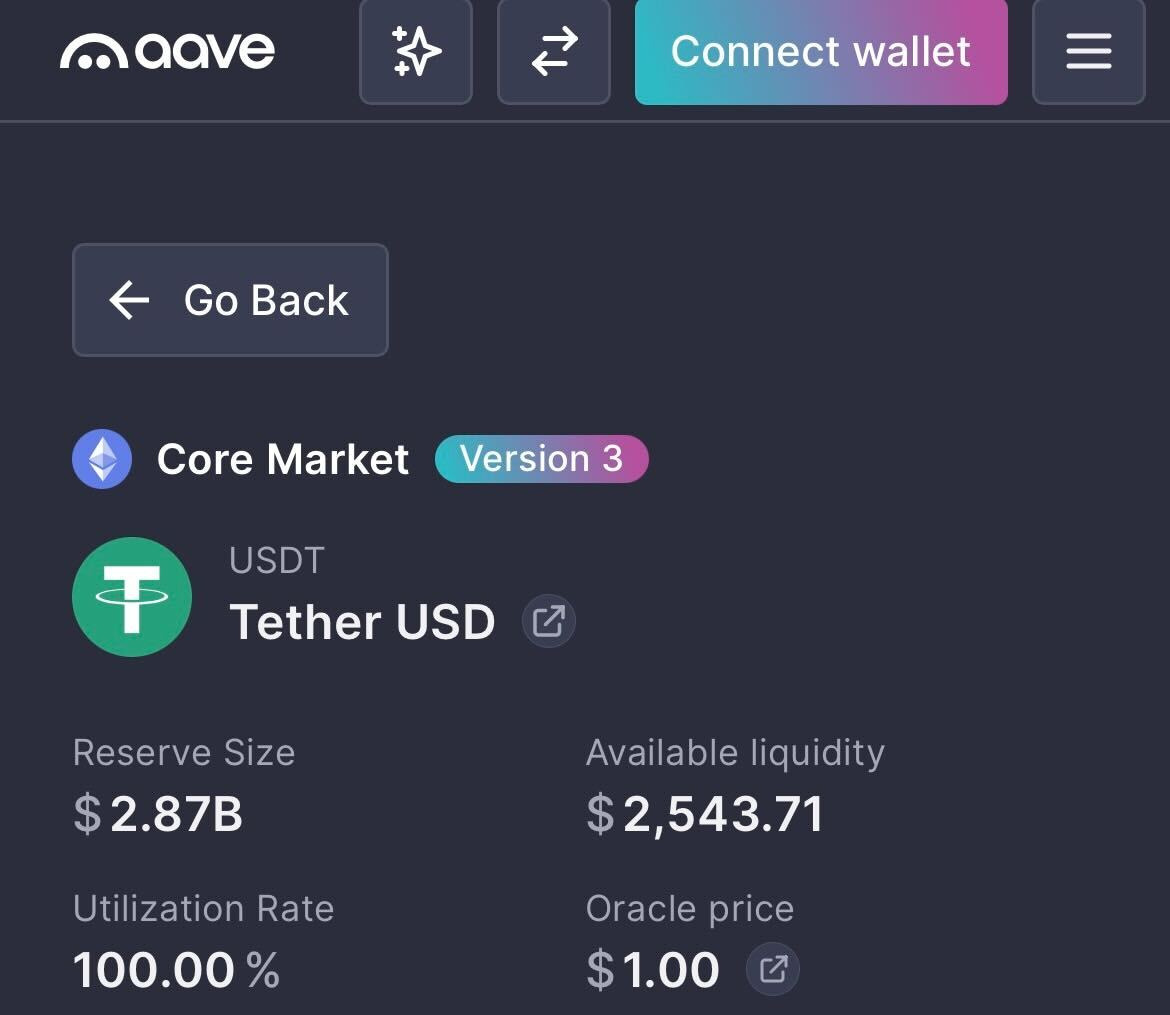
Total value locked on decentralized lending protocol Aave dropped by nearly $8 billion over the weekend after hackers behind the $293 million Kelp DAO exploit borrowed funds on Aave, leaving roughly $195 million in “bad debt” on the protocol and triggering withdrawals.
Data from DeFiLlama shows that Aave’s TVL fell from about $26.4 billion to $18.6 billion by Sunday, losing the top spot as the largest DeFi protocol.
Aave v3’s lending pools for USDt (USDT) and USDC (USDC) are now at 100% utilization, meaning that more than $5.1 billion worth of stablecoins cannot be withdrawn until new liquidity arrives or borrows are repaid.

Aave’s TVL fall shows how rapidly risk from a single security incident can spread throughout the broader, interconnected DeFi lending market, potentially leading to a severe liquidity crisis.
The incident began on Saturday when hackers stole 116,500 Kelp DAO Restaked ETH (rsETH) tokens worth about $293 million from Kelp DAO’s LayerZero-powered bridge and used them as collateral on Aave v3 to borrow wrapped Ether (wETH).
Crypto analytics platform Lookonchain said the move created about $195 million in “bad debt” on Aave, which contributed to the Aave (AAVE) token tanking nearly 20% from $112 on Saturday at 6:00 pm UTC to $89.5 about 25 hours later.
Lookonchain noted that some of the largest crypto whales to withdraw funds from Aave were the MEXC crypto exchange and Abraxas Capital at $431 million and $392 million, respectively.

Several crypto networks and protocols tied to rsETH or the LayerZero bridge have paused use of the bridge until the problem is resolved, including DeFi platform Curve Finance, stablecoin issuer Ethena and BitGo’s Wrapped Bitcoin (WBTC).
Aave has frozen several rsETH, wETH markets
Shortly after the Kelp DAO exploit, Aave said it froze the rsETH markets on both Aave v3 and v4 to prevent any suspicious borrowing and later stated that rsETH on Ethereum mainnet remains fully backed by underlying assets.
WETH reserves also remain frozen on Ethereum, Arbitrum, Base, Mantle and Linea, Aave said.
This incident marks the first significant stress test of Aave’s “Umbrella” security model, which was introduced in June 2025 to provide automated protection against protocol bad debt while enabling users to earn rewards.
Related: Aave DAO backs V4 mainnet plan in near-unanimous vote
Earlier this month, the Bank of Canada found that Aave avoided bad debt in its v3 market by using overcollateralization, automated liquidations and other strategies that shifted risk to borrowers.
In comments to Cointelegraph, Aave defended its liquidation-based model, framing it as a core safety mechanism that protects lenders while limiting downside for borrowers.
It comes as Aave parted ways with its longest-standing DeFi risk service provider, Chaos Labs, on April 6, following disagreements over the direction of Aave v4 and budget constraints.
Magazine: Are DeFi devs liable for the illegal activity of others on their platforms?


A breach at web infrastructure provider Vercel is forcing crypto teams to rotate API keys and do a deep inspection of their underlying code.
In a bulletin, Vercel said the hacker was able to grab behind-the-scenes settings that weren’t locked down, potentially exposing API keys — the digital credentials apps use to connect to other services. Those credentials act like digital passwords, allowing software to connect to databases, crypto wallets, and external services. In the wrong hands, they can be used to impersonate an app, burn through usage limits, or manipulate how it runs.
A post on cybercrime forum BreachForums claimed to be selling Vercel data for $2 million, including access keys and source code, though those claims have not been independently verified. Vercel said it has engaged incident response firms and law enforcement and is continuing to investigate whether any data was exfiltrated.
The company traced the intrusion to Context.ai, a third-party AI tool used by an employee, its CEO said in an X post, where a compromised Google Workspace connection allowed attackers to escalate access into Vercel’s internal environments. Vercel said environment variables marked as “sensitive” are stored in a way that prevents them from being read, and that there is no evidence that they were accessed.
The incident is drawing scrutiny because Vercel underpins frontend infrastructure for many crypto applications and is the primary steward of Next.js, one of the most widely used web development frameworks. Many Web3 teams host wallet interfaces and decentralized app dashboards on Vercel, relying on environment variables to store credentials that connect their frontends to blockchain data providers and backend services.
Solana-based decentralized exchange Orca said its frontend is hosted on Vercel and that it has rotated all deployment credentials as a precaution. The project added that its on-chain protocol and user funds were not affected.
Nabung #tabungan #nabung #money #menabung #budgeting #savings

Crash victim, 86, was determined to walk again, court hears

Opinion: Hunker down for a trifecta of trouble


-

 Crypto World6 days ago
The SEC Conditionalises DeFi Platforms to Be Avoided for Broker Registration
-

 Fashion2 days ago
Weekend Open Thread: Theodora Dress
-

 NewsBeat6 days ago
Trump and Pope Leo: Behind their disagreement over Iran war
-

 Crypto World6 days ago
SEC Signals Exemption for Crypto Interfaces From Broker Registration
-

 News Videos5 days ago
Secure crypto trading starts with an FIU-registered
-

 Sports3 days ago
NWFL Suspends Two Players Over Post-Match Clash in Ado-Ekiti
-

 Crypto World6 days ago
SEC Proposes Certain Crypto Interfaces Don’t Need to Register as Brokers
-

 Business15 hours ago
Powerball Result April 18, 2026: No Jackpot Winner in Powerball Draw: $75 Million Rolls Over
-

 Politics2 days ago
Palestine barred from entering Canada for FIFA Congress
-

 Crypto World2 days ago
Russia Pushes Bill to Criminalize Unregistered Crypto Services
-

 Sports7 days ago
NWFL opens Pathway for new Clubs ahead of 2026 Season
-
 Business3 days ago
Creo Medical agree sale of its manufacturing operation
-
 Entertainment6 days ago
Brand New Day’ Footage Reveals the Devastating Impact of ‘Now Way Home’
-

 Politics20 hours ago
Zack Polanski demands ‘council homes not luxury flats for foreign investors’
-

 Crypto World7 days ago
Trump whales load up ahead of Mar-a-Lago luncheon.
-
Business7 days ago
Kering slides after Morgan Stanley downgrade, Gucci woes loom
-

 Tech7 days ago
Apple glasses won’t go brand shopping like Meta did with Ray-Ban and Oakley
-

 Tech7 days ago
Google adds E2E encryption to Gmail for iOS and Android enterprise users
-

 Tech5 days ago
Microsoft adds Windows protections for malicious Remote Desktop files
-
 Entertainment6 days ago
Karol G’s ‘Ultra Raunchy’ Coachella Set Gave ‘Satanic Vibes’
You must be logged in to post a comment Login