Connect with us

Business

10 Fun Facts About the Lone Star State’s Historic Celebration

Published

on

Pokémon Pokopia

Texans across the state marked Texas Independence Day on March 2, 2026, commemorating 190 years since delegates boldly declared the region free from Mexican rule in 1836. The annual observance, a legal state holiday, blends solemn historical reflection with lively festivities, parades and reenactments that highlight Texas’ unique path to sovereignty.
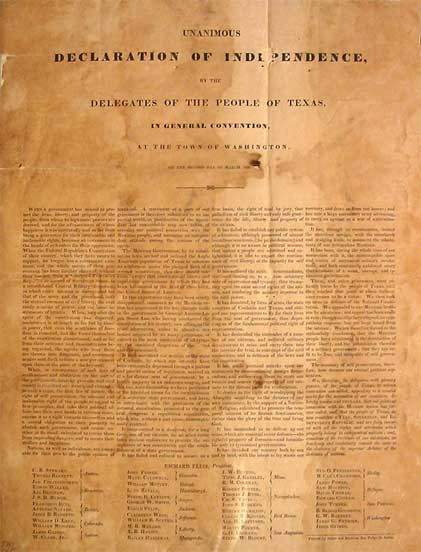
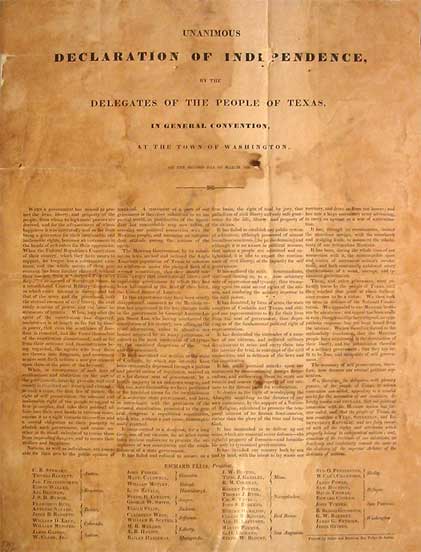
The Texas Declaration of Independence

As state offices closed and flags flew high, communities from Austin to San Antonio hosted events honoring the Texas Declaration of Independence. The centerpiece remained Washington-on-the-Brazos State Historic Site, where the declaration was signed, drawing crowds to a revamped venue after major renovations.

Here are 10 key things to know about Texas Independence Day and its enduring significance:

1. The date marks the adoption of the Texas Declaration of Independence on March 2, 1836. Fifty-nine delegates, representing Texian and Tejano settlers, convened at Washington-on-the-Brazos amid the Texas Revolution. They unanimously approved the document, severing ties with Mexico and establishing the Republic of Texas. The declaration cited grievances against Mexican centralist policies, including lack of representation and violations of rights.

2. Washington-on-the-Brazos is forever known as the “birthplace of Texas.” The small settlement hosted the Convention of 1836, where delegates worked swiftly — completing the declaration in a single day. The site now features Independence Hall replica, the Star of the Republic Museum and Barrington Living History Farm, preserving the story of Texas’ brief era as an independent nation.

Advertisement

3. 2026 marks the 190th anniversary of the declaration. Celebrations emphasized this milestone, with the Texas Historical Commission hosting a major event Feb. 28 at Washington-on-the-Brazos following $54 million in renovations completed in late 2025. The free public gathering included an opening ceremony, parade starting at 10:30 a.m., live performances, musket and cannon demonstrations, vendor booths and food trucks. A special exhibit displayed the “Ark of the Covenant” box crafted from original Independence Hall wood to house the declaration.

4. Texas Independence Day is a state holiday, but not federal. State government offices, libraries and many agencies close, though banks, post offices and federal facilities remain open. Public schools typically hold regular classes, often incorporating educational programs about the Texas Revolution. The day also coincides with Texas Flag Day and Sam Houston Day observances.

5. The Republic of Texas existed for nearly a decade before joining the United States. After independence, battles like the Alamo (February 1836) and San Jacinto (April 1836) secured the victory. Sam Houston’s forces captured Mexican General Antonio López de Santa Anna at San Jacinto, forcing recognition of Texas sovereignty. Texas became the 28th U.S. state on Dec. 29, 1845.

6. Only one original copy of the Texas Declaration survives. Of the five handwritten versions produced in 1836, four were lost or destroyed over time. The lone surviving original is preserved at the Texas State Library and Archives Commission in Austin. Modern replicas and digital versions allow widespread access to the text, which echoes the American Declaration in structure and ideals.

Advertisement

7. Celebrations extend statewide with parades, reenactments and cultural events. In Austin, the annual Texas Independence Day Parade features floats, historical attire and community groups. San Antonio hosts observances at the Alamo, including commemorations from March 1-2 with free admission and programs. Gruene Hall near New Braunfels offers live music and activities, while university campuses like the University of Texas at Austin uphold traditions dating back over a century, including gatherings inspired by early 20th-century student observances.

8. The holiday underscores Texas’ distinct identity. Texans often proudly note their state’s unique history as a former independent republic — a status shared by few others in U.S. history. Popular lore includes myths like Texas’ right to secede or divide into five states, though legal experts clarify these claims lack foundation under current U.S. law. The day reinforces pride in symbols like the Lone Star flag, which flew over the Republic and remains the state banner.

9. Modern observances tie into broader American commemorations. In 2026, Texas America250 initiatives highlight the state’s role in U.S. history ahead of the nation’s semiquincentennial on July 4. Events at Washington-on-the-Brazos featured new exhibits on 1836 convention scenes, emphasizing American influences on Texian settlers who drew inspiration from the 1776 Declaration.

10. The spirit of independence lives on through education and community. Reenactments, storytelling sessions, homeschool days and lantern tours (like the sold-out Feb. 27 event at Washington-on-the-Brazos) engage new generations. Other sites, such as Boonville Heritage Park, offer hands-on 19th-century activities. Amid ongoing renovations and investments, historic sites aim to preserve this chapter as Texas continues evolving while honoring its revolutionary roots.

Advertisement

Texas Independence Day remains a point of pride for millions, blending history with celebration. As one observer at Washington-on-the-Brazos noted, the holiday reminds residents that Texas began with a bold assertion of freedom — a legacy that endures 190 years later.


Continue Reading
Click to comment

Leave a Reply

Your email address will not be published. Required fields are marked *

Business

Multi-million equity fund boost for Welsh life sciences venture Antiverse

Published

on

Business Live

The round has been backed by the Development Bank of Wales and the Cardiff Capital Region’s equity fund

Antiverse investment deal: L-R Mike Brough, strategic growth director, CCR, Ben Holland, chief technology officer of Antverse and the firm’s chief executive Murat Tunaboylu.

The Development Bank of Wales and the Cardiff Capital Region has backed a £7m equity investment into AI life science venture Antiverse. The Series A funding round boost for the Cardiff-based business has also been supported by international investors, led by Prague-based venture capital firm Soulmates Ventures.

Antiverse applies advanced generative AI and machine learning to predict, design and optimise antibody-based drugs. By dramatically reducing the time and cost of traditional discovery methods, it enables pharmaceutical and biotechnology partners to bring life-changing treatments to patients faster and more efficiently. Antiverse’s platform already supports programmes across oncology, immunology and infectious diseases, positioning the company at the forefront of next-generation therapeutics.

Advertisement

READ MORE: Next Welsh Government must look to deliver an M4 Relief Road says business body the CBIREAD MORE: Cardiff Capital Region equity fund backs the growth of energy innovation firm Sero

This is the third investment in Antiverse by the development bank since it first provided early-stage seed capital in 2020. The funding will accelerate new intellectual property and expand its local team, with five new jobs created and 19 high- skilled jobs safeguarded.

The deal is the sixth by the Cardiff Capital Region, through its £50m Innovation Investment Capital (IIC) fund, which is managed by Capricorn Fund Managers. The value of the investments by the development bank and the IIC fund have not been disclosed. It is the first time they have both invested in the same investment round.

Murat Tunaboylu, Antiverse’s co-founder and chief executive said of the investment round: “This is a powerful endorsement of both our technology and our roots in Cardiff. This investment not only enables us to scale our platform, grow our team and deepen partnerships with pharma and biotech leaders worldwide, but also positions Antiverse strongly for our next phase of growth. By strengthening our foundations at Series A, we are laying the groundwork for a successful Series B and the opportunity to bring our technology to an even broader global market.

Advertisement

Kellie Beirne, chief executive of the Cardiff Capital Region, a statutory body covering the ten local authorities of south east Wales: “Antiverse is a great example of the kind of cutting-edge innovation we want to see growing in our region. By combining AI with life sciences, the team is tackling some of the most important challenges in healthcare today. CCR is committed to investing in medical tech innovators and we are proud to support a business like Antiverse that is creating global impact from Cardiff.”

Rhian Elston, Wales investment director for the Development Bank of Wales said: “Antiverse represents a compelling life sciences opportunity with the potential to build a business of genuine global scale. By combining deep biological expertise with advanced AI‑led design in a proprietary platform, the company is redefining how antibody therapeutics are developed. We’re pleased to be working alongside Innovation Investment Capital to continue our support for this Welsh‑based tech business as it continues to scale and strengthen its foundations for long‑term growth.”

Continue Reading

Business

Bank of England rate cuts at risk in 2026 as Middle East conflict sparks inflation fears

Published

on

The governor of the Bank of England has acknowledged the challenges faced by policymakers due to unreliable data, expressing a desire for more accurate figures on the unemployment rate.

Expectations of further Bank of England base rate cuts this year have been thrown into doubt after escalating conflict in the Middle East triggered sharp rises in energy prices and government bond yields, raising fears of a fresh inflationary shock.

Only a week ago, markets were confident that the Bank of England would cut rates again at its March meeting, with traders pricing in an 86 per cent probability of a 0.25 percentage point reduction. Now, following military escalation involving the US and Iran and renewed instability across the Gulf region, those expectations have collapsed. Markets are currently assigning less than a 5 per cent chance of a rate cut this month and less than a 50 per cent probability of a move in April.

The Bank’s base rate currently stands at 3.75 per cent, having been reduced four times in 2025 as inflation fell to 3 per cent. Governor Andrew Bailey had previously suggested that a return to the 2 per cent target was “baked in”. However, the geopolitical shock has materially altered that outlook.

UK wholesale gas prices have surged by around 40 per cent in recent days, while oil prices have approached $80 per barrel. Two-year gilt yields have risen to their highest levels since December as markets reassess the inflationary impact of higher energy costs.

The risk, analysts say, is that sustained disruption to global energy supplies, particularly through the Strait of Hormuz, could keep inflation elevated for longer, forcing the Bank of England to pause or even reverse its easing cycle.

Advertisement

Tony Redondo, founder of Cosmos Currency Exchange, said the shift in expectations had been dramatic.

“With 2-year gilt yields hitting December highs due to a 40 per cent surge in UK gas prices and oil nearing $80, the Bank of England faces a significant inflationary shock,” he said. “High-street banks are no longer competing on price but are instead protecting margins against rising swap rates. Buyers may see ‘best-buy’ deals pulled with only a few hours’ notice as lenders move to price in the geopolitical risk premium.”

Swap rates, which underpin fixed-rate mortgage pricing, have risen sharply in response to higher gilt yields. Lenders typically price mortgage products several days in advance, meaning further volatility could quickly feed through into the housing market.

Riz Malik, director at R3 Wealth, warned that the situation could resemble the market turmoil seen in 2022 following Russia’s invasion of Ukraine and the UK’s mini-Budget crisis.

Advertisement

“Last week, the outlook was promising for the 1.8 million mortgages up for renewal in 2026,” he said. “Today, we could see major volatility in the mortgage market with the outlook for further cuts disappearing by the second. If you have a mortgage renewal in the next six months, I would strongly suggest you look at your options and don’t hold off.”

Justin Moy, managing director at EHF Mortgages, said the duration of the conflict would be critical.

“In the short term, any talk of base rate cuts will be null and void,” he said. “If the conflict resolves within weeks, this may be temporary. But if it continues beyond Easter, inflation and base rate expectations will be adversely affected, putting the brakes on rate cuts and pushing deals higher.”

Aaron Strutt, product and communications director at Trinity Financial, said uncertainty was the defining feature of the current environment.

Advertisement

“We do not know what is going to happen yet. Rates could go up, the war might stop and rates drop again as previously forecast. Either way, it makes sense to secure a mortgage rate if you are coming up to remortgage soon.”

Some advisers believe the situation, while serious, differs structurally from the disorderly repricing seen in autumn 2022.

Nouran Moustafa, practice principal at Roxton Wealth, said lenders are better prepared than during the Truss-era turmoil.

“Markets have moved quickly, but mortgage pricing reacts to sustained trends, not single sessions,” she said. “Back in 2022, funding costs moved disorderly and fast. Today’s move looks more like volatility driven by inflation expectations.”

Advertisement

She added that the key question is whether elevated yields persist. “If yields stay elevated for several days, we could see short-notice repricing or selective withdrawals. If this retraces, lenders will prioritise stability.”

The Bank of England now faces a delicate balancing act. While inflation had been easing and economic growth remains fragile, an externally driven energy shock risks reintroducing cost pressures just as policymakers were preparing to loosen monetary conditions further.

If wholesale gas prices remain elevated and oil continues to climb, rate-setters may judge it prudent to delay cuts to prevent inflation expectations becoming unanchored. That would prolong pressure on households and businesses already grappling with high borrowing costs.

For now, the direction of travel depends less on domestic economic data and more on developments in the Middle East. Should tensions subside and energy prices retreat, the easing cycle could resume. But if the conflict deepens or spreads, expectations of multiple rate cuts in 2026 may quickly evaporate.

Advertisement

In the meantime, borrowers and investors alike are being reminded that global geopolitical events can reshape monetary policy forecasts in a matter of days.


Jamie Young

Jamie Young

Jamie is Senior Reporter at Business Matters, bringing over a decade of experience in UK SME business reporting.
Jamie holds a degree in Business Administration and regularly participates in industry conferences and workshops.

When not reporting on the latest business developments, Jamie is passionate about mentoring up-and-coming journalists and entrepreneurs to inspire the next generation of business leaders.

Advertisement
Continue Reading

Business

Three forecasts in the Spring Statement that could affect you and your money

Published

on

Three forecasts in the Spring Statement that could affect you and your money

The government’s policy on tax thresholds – the point at which you start to pay tax, and the point where you tip into paying a higher rate of tax -has had an impact on this number. In last year’s Budget, Chancellor Rachel Reeves said these would stay frozen until 2031. That is three years longer than previously planned.

Continue Reading

Business

Reeves downgraded growth as business leaders demand urgent action

Published

on

Reeves downgraded growth as business leaders demand urgent action

Chancellor Rachel Reeves delivered her Spring Statement to the House of Commons under the shadow of escalating conflict in the Middle East and mounting fears of a renewed inflation shock driven by surging energy prices.

In a speech lasting just over 20 minutes, Reeves stressed the importance of “stability in an increasingly uncertain world”, pointing to falling inflation and previous interest rate cuts as evidence that the cost-of-living squeeze on households is easing. However, beyond presenting updated forecasts from the Office for Budget Responsibility (OBR) and criticising opposition parties, she unveiled no new tax or spending measures.

The Chancellor has pledged to hold only one fiscal event each year, the autumn Budget, meaning the Spring Statement was positioned as a forecast update rather than a policy platform.

Growth downgraded for 2026

The OBR has revised down its forecast for UK economic growth in 2026 to 1.1 per cent, weaker than the 1.4 per cent predicted in November. Reeves insisted that the longer-term outlook remains resilient, with growth forecast to reach 1.6 per cent in both 2027 and 2028, slightly stronger than previously projected, before settling at 1.5 per cent in 2029 and 2030.

The downgrade comes amid soft domestic demand, geopolitical instability and renewed energy market volatility following military escalation in the Gulf region. Rising oil and gas prices threaten to complicate the inflation trajectory, particularly if disruption to global supply chains persists.

Advertisement

Unemployment to rise before falling

Unemployment is forecast to peak at 5.3 per cent later this year as weaker labour demand feeds through the economy. The rate is then expected to decline steadily, ending the parliamentary term at 4.1 per cent, lower than at the start.

The Chancellor framed this as evidence that the labour market remains fundamentally strong despite short-term headwinds. However, youth unemployment and business hiring caution remain key concerns across several sectors.

Borrowing falls and headroom improves

The OBR forecasts that borrowing will be nearly £18 billion lower than anticipated in the autumn. Public sector net borrowing is projected to decline from 4.3 per cent of GDP this year to 1.8 per cent by 2030.

Reeves highlighted that fiscal “headroom” against her self-imposed rules has increased from £21.7 billion in November to £23.6 billion. The buffer is designed to reassure financial markets and protect against unexpected shocks.

Advertisement

She also confirmed plans to meet North Sea energy industry leaders to discuss the implications of Middle East tensions on domestic production and energy security.

Night-time economy: “Stability rhetoric won’t save us”

Despite the Chancellor’s emphasis on stability, business leaders were quick to challenge what they described as a disconnect between Westminster messaging and frontline reality.

Michael Kill, chief executive of the Night Time Industries Association (NTIA), said the statement failed to recognise the acute pressures facing hospitality and leisure businesses.

“Across the UK, major brands and corporates are collapsing at pace. Confidence is fragile. Margins are exhausted,” he said.

Advertisement

Kill warned that escalating energy costs, higher National Insurance contributions and ongoing business rates burdens are placing “compounding pressure” on the sector. He called for a VAT cut for hospitality, arguing that targeted intervention would stimulate demand, protect jobs and restore confidence.

With youth unemployment rising, the NTIA stressed that the night-time economy has traditionally provided entry-level employment for young people, and warned that increased employment costs are making it harder to sustain those roles.

Business confidence remains fragile

Separate research from the Zoho Digital Health Study 2026 underscores the cautious mood across UK businesses. Twenty-one per cent of business leaders cited high inflation, recession risk and rising interest rates as their biggest external challenge.

Half of firms reported rising costs per employee over the past year, ahead of a further 4.1 per cent rise in the National Living Wage due in April 2026.

Advertisement

Sachin Agrawal, managing director at Zoho UK, said leaders are prioritising productivity and automation over expansion.

“Businesses want to grow, but they’re doing so more selectively by investing in technologies that deliver clear efficiency gains,” he said.

AI platform Photoroom also urged the government to match pro-entrepreneur rhetoric with tangible digital support for SMEs, arguing that access to AI tools can significantly reduce overheads and increase productivity.

Thames transport: a missed green opportunity

Uber Boat by Thames Clippers said the Spring Statement missed an opportunity to accelerate London’s transition to greener river transport.

Advertisement

Geoff Symonds, chief operating officer at Uber Boat by Thames Clippers, said regulatory reform and green fuel incentives could be implemented at minimal cost.

“Low-key budgets don’t have to mean low ambition for the environment,” he said, calling for parity in green incentives between river transport and land-based networks.

A cautious tone in uncertain times

The Spring Statement was deliberately restrained. Reeves’ strategy is to project fiscal discipline and market stability while preserving room for manoeuvre ahead of the autumn Budget.

However, with energy prices climbing, geopolitical tensions rising and consumer confidence fragile, the path ahead is far from settled. The coming months will test whether stability alone is sufficient, or whether targeted intervention becomes unavoidable.

Advertisement

For now, the Chancellor’s message is clear: hold the line, protect fiscal credibility and hope that inflation continues to fall despite global turbulence. Whether businesses and households feel that stability in practice remains an open question.


Paul Jones

Harvard alumni and former New York Times journalist. Editor of Business Matters for over 15 years, the UKs largest business magazine. I am also head of Capital Business Media’s automotive division working for clients such as Red Bull Racing, Honda, Aston Martin and Infiniti.

Advertisement
Continue Reading

Business

Venture Global shares jump as court rejects Shell’s challenge to LNG ruling

Published

on

Venture Global shares jump as court rejects Shell’s challenge to LNG ruling


Venture Global shares jump as court rejects Shell’s challenge to LNG ruling

Continue Reading

Business

Form DEF 14A BLOOMIN’ BRANDS For: 3 March

Published

on


Form DEF 14A BLOOMIN’ BRANDS For: 3 March

Continue Reading

Business

Davis Jason, FibroBiologics CFO, buys $28973 in FBLG stock

Published

on


Davis Jason, FibroBiologics CFO, buys $28973 in FBLG stock

Continue Reading

Business

Global Markets | European shares fall again as Mideast war drags on

Published

on

Global Markets | European shares fall again as Mideast war drags on
European shares extended their decline on Tuesday as the global equity selloff deepened, as investors grappled with ‌the prospect ⁠of ⁠a drawn-out Middle East war, and a sharp jump in oil prices led to fears of a rise in the cost of living.

The pan-European STOXX 600 was down 1.3% at 615.72 points by 0804 GMT, after closing at the lowest level in ⁠more than two ‌weeks on Monday.

The utilities index and banks led sectors lower with 2.6% declines ⁠each, while energy climbed marginally, adding to the previous session’s gains.

U.S. President Donald Trump sought to justify a broad, open-ended war on Iran, saying the stated aims of the conflict had shifted.

Advertisement

An official from Iran’s Revolutionary Guards said the Strait of Hormuz is closed and any ‌vessel trying to pass would be targeted, pushing up global oil and gas shipping rates.


European Central Bank Chief ⁠Economist Philip Lane told the Financial Times a long war could massively put upward pressure on inflation and reduce growth rate in the euro zone.
Among individual stocks, Thales gained 0.7% after the French aerospace and technology firm reported a slightly higher-than-expected annual core profit.

Continue Reading

Business

CMA investigates Hilton, IHG and Marriott over alleged hotel data sharing via STR

Published

on

CMA investigates Hilton, IHG and Marriott over alleged hotel data sharing via STR

The UK’s competition watchdog has launched a formal investigation into three of the world’s largest hotel groups, Hilton, InterContinental Hotels Group and Marriott International, over concerns they may have shared “competitively sensitive” information through a third-party data analytics platform.

The Competition and Markets Authority (CMA) said it is examining whether the hotel operators exchanged commercially sensitive data using STR, a widely used industry benchmarking tool owned by CoStar Group.

Together, the three hotel groups operate more than 25,000 hotels globally, giving the probe significant weight in the international hospitality sector.

Hotel chains routinely use analytics platforms such as STR to track industry metrics including occupancy rates, average daily room prices and revenue per available room (RevPAR). Such tools can help operators adjust pricing in response to demand and competition.

However, the CMA warned that where rival businesses share competitively sensitive information, even indirectly through a third-party provider, it may reduce uncertainty between competitors and risk softening competition.

Advertisement

“When rival businesses share competitively sensitive information, including through a third-party data analytics provider, this reduces the uncertainty competing businesses normally have about how each other will act,” the regulator said.

“This can affect how strongly companies compete because it makes it easier for them to predict what each other will do and coordinate their behaviour.”

The watchdog will now spend up to six months gathering evidence before deciding whether to issue a formal statement of objections.

At this stage, the CMA stressed that no conclusion has been reached and no assumptions should be made about whether competition law has been breached.

Advertisement

Shares in London-listed IHG fell by as much as 5 per cent in early trading on Monday, although the wider travel sector was also under pressure due to geopolitical tensions in the Middle East.

In the US, Hilton and Marriott shares each fell around 3 per cent, while CoStar, which has a market value of more than $18 billion, dropped approximately 2 per cent.

IHG and Hilton both confirmed they were cooperating fully with the CMA’s investigation. CoStar said it was surprised by the regulator’s interest in what it described as a “longstanding hotel data analytics and benchmarking platform” that has been used by companies and government bodies for decades.

Marriott did not immediately respond to requests for comment.

Advertisement

If the CMA concludes that competition rules have been breached, it has the power to impose fines of up to 10 per cent of a company’s global annual turnover.

The regulator can also offer immunity or reduced penalties to companies that report cartel activity early and cooperate with investigations.

The probe forms part of the CMA’s broader scrutiny of how digital tools and algorithms are used in pricing decisions across sectors.

The watchdog has increasingly focused on the intersection of competition law and technology, warning that algorithmic pricing systems, while potentially efficiency-enhancing, must not facilitate anti-competitive coordination.

Advertisement

The hospitality investigation comes amid a series of high-profile competition cases in recent years.

In November, the CMA opened investigations into eight companies over online pricing practices. Last year, seven major UK housebuilders agreed to contribute £100 million to affordable housing initiatives after the regulator found evidence of information sharing that may have affected competition.

The latest case underscores growing regulatory concern that data-sharing arrangements, even when mediated through analytics providers, could blur the line between legitimate benchmarking and unlawful coordination.

For the hotel sector, the outcome of the investigation could have significant implications for how pricing data is shared, analysed and used across the industry.

Advertisement

Jamie Young

Jamie Young

Jamie is Senior Reporter at Business Matters, bringing over a decade of experience in UK SME business reporting.
Jamie holds a degree in Business Administration and regularly participates in industry conferences and workshops.

When not reporting on the latest business developments, Jamie is passionate about mentoring up-and-coming journalists and entrepreneurs to inspire the next generation of business leaders.

Advertisement
Continue Reading

Business

Plans to transform Swansea Civic Centre take another big step forward

Published

on

Business Live

The regeneration project aims to bring more leisure and hospitality facilities to the city

Proposals include commercial spaces and workspaces

Proposals include commercial spaces and workspaces(Image: Swansea Council)

Plans to transform Swansea’s landmark Civic Centre on the seafront have taken a major step forward, with Swansea Council’s cabinet giving the go-ahead for further work to take place which will help inform a future planning application.

The redevelopment, led by the council’s regeneration partners Urban Splash, aims to bring cafes, bars, shops, apartments, workspaces, and leisure areas to the largely vacant building. Proposals include 15 commercial units on the ground and lower floors, around 140 apartments above, and unique attractions such as an aquarium and a saltwater lido.

Advertisement

Set in a prime coastal location, the civic centre occupies one of the most enviable plots in the city – a space many believe holds money-can’t-buy views and untapped potential.

READ MORE: Next Welsh Government must look to deliver an M4 Relief Road says business body the CBIREAD MORE: Despite the promise of £14bn of rail investment Wales isn’t getting a fair deal

The regeneration plans were unveiled at a two-day public exhibition held earlier this month at the Y Storfa community services hub. According to organisers, the response had been overwhelmingly positive, with strong public interest in what could become one of Swansea’s most ambitious redevelopment projects in a generation.

Council leader Cllr Rob Stewart said the project marks the first phase of a wider vision for the Civic Centre site. “The Civic Centre sits on one of the most spectacular waterfront sites in the UK, but the building is now largely vacant following the successful move of services into the city centre,” he said.

Advertisement

“We want to see it transformed into a vibrant destination with new homes, independent businesses, leisure and community spaces that will benefit local people while attracting more visitors to Swansea.” Never miss a Swansea story by signing up to our newsletter here

David Warburton, Development Director at Urban Splash, added: “It’s an extraordinary building in an unrivalled waterfront location, and we see enormous potential to create a place that people will want to live in, visit and spend time in.

“Our ambition is to sensitively repurpose the building, delivering high-quality homes alongside dynamic spaces for independent businesses, hospitality, leisure and community uses – creating activity throughout the day and into the evening.”

Many council services that were previously based at the Civic Centre have now moved to the Y Storfa community services hub on Oxford Street. This includes the central library, contact centre, revenues and benefits, and the West Glamorgan Archive Service.

Advertisement

The Civic Centre redevelopment represents the first step in Swansea Council’s broader plan to strengthen the city’s waterfront as a leading destination.

The city centre has already seen significant investment in recent years, with projects such as the indoor arena and the privately-led restoration of the Albert Hall expanding cultural and leisure offerings. Retail also continues to perform well in some areas, while empty upper floors of commercial units are being converted into flats, potentially boosting footfall for local businesses.

Continue Reading

Trending

Copyright © 2025