Connect with us

Business

CMA investigates Hilton, IHG and Marriott over alleged hotel data sharing via STR

Published

on

CMA investigates Hilton, IHG and Marriott over alleged hotel data sharing via STR
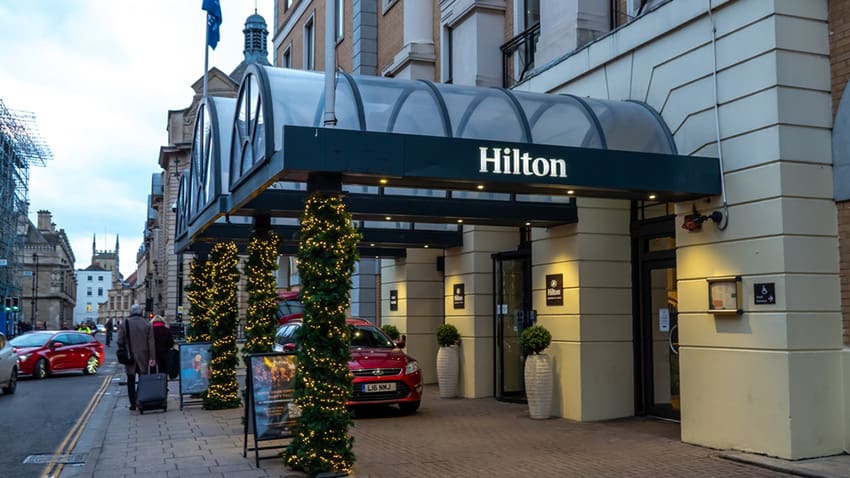
The UK’s competition watchdog has launched a formal investigation into three of the world’s largest hotel groups, Hilton, InterContinental Hotels Group and Marriott International, over concerns they may have shared “competitively sensitive” information through a third-party data analytics platform.

The Competition and Markets Authority (CMA) said it is examining whether the hotel operators exchanged commercially sensitive data using STR, a widely used industry benchmarking tool owned by CoStar Group.

Together, the three hotel groups operate more than 25,000 hotels globally, giving the probe significant weight in the international hospitality sector.

Hotel chains routinely use analytics platforms such as STR to track industry metrics including occupancy rates, average daily room prices and revenue per available room (RevPAR). Such tools can help operators adjust pricing in response to demand and competition.

However, the CMA warned that where rival businesses share competitively sensitive information, even indirectly through a third-party provider, it may reduce uncertainty between competitors and risk softening competition.

Advertisement

“When rival businesses share competitively sensitive information, including through a third-party data analytics provider, this reduces the uncertainty competing businesses normally have about how each other will act,” the regulator said.

“This can affect how strongly companies compete because it makes it easier for them to predict what each other will do and coordinate their behaviour.”

The watchdog will now spend up to six months gathering evidence before deciding whether to issue a formal statement of objections.

At this stage, the CMA stressed that no conclusion has been reached and no assumptions should be made about whether competition law has been breached.

Advertisement

Shares in London-listed IHG fell by as much as 5 per cent in early trading on Monday, although the wider travel sector was also under pressure due to geopolitical tensions in the Middle East.

In the US, Hilton and Marriott shares each fell around 3 per cent, while CoStar, which has a market value of more than $18 billion, dropped approximately 2 per cent.

IHG and Hilton both confirmed they were cooperating fully with the CMA’s investigation. CoStar said it was surprised by the regulator’s interest in what it described as a “longstanding hotel data analytics and benchmarking platform” that has been used by companies and government bodies for decades.

Marriott did not immediately respond to requests for comment.

Advertisement

If the CMA concludes that competition rules have been breached, it has the power to impose fines of up to 10 per cent of a company’s global annual turnover.

The regulator can also offer immunity or reduced penalties to companies that report cartel activity early and cooperate with investigations.

The probe forms part of the CMA’s broader scrutiny of how digital tools and algorithms are used in pricing decisions across sectors.

The watchdog has increasingly focused on the intersection of competition law and technology, warning that algorithmic pricing systems, while potentially efficiency-enhancing, must not facilitate anti-competitive coordination.

Advertisement

The hospitality investigation comes amid a series of high-profile competition cases in recent years.

In November, the CMA opened investigations into eight companies over online pricing practices. Last year, seven major UK housebuilders agreed to contribute £100 million to affordable housing initiatives after the regulator found evidence of information sharing that may have affected competition.

The latest case underscores growing regulatory concern that data-sharing arrangements, even when mediated through analytics providers, could blur the line between legitimate benchmarking and unlawful coordination.

For the hotel sector, the outcome of the investigation could have significant implications for how pricing data is shared, analysed and used across the industry.

Advertisement

Jamie Young

Jamie Young

Jamie is Senior Reporter at Business Matters, bringing over a decade of experience in UK SME business reporting.
Jamie holds a degree in Business Administration and regularly participates in industry conferences and workshops.

When not reporting on the latest business developments, Jamie is passionate about mentoring up-and-coming journalists and entrepreneurs to inspire the next generation of business leaders.


Advertisement
Continue Reading
Click to comment

Leave a Reply

Your email address will not be published. Required fields are marked *

Business

Aeries Technology, Inc (AERT) Shareholder/Analyst Call Prepared Remarks Transcript

Published

on

OneWater Marine Inc. (ONEW) Q1 2026 Earnings Call Transcript

Aeries Technology, Inc (AERT) Shareholder/Analyst Call March 3, 2026 8:30 AM EST

Company Participants

Bhisham Khare – CEO & Director
Daniel Webb – CFO & Chief Investment Officer

Presentation

Advertisement

Bhisham Khare
CEO & Director

Good morning. I’m Ajay Khare, Chief Executive Officer and a member of Board of Directors of Aeries Technology, Inc. and will be serving as the Chairman of this Annual General Meeting. It is my pleasure to welcome you all to the Annual General Meeting of the Shareholders of the company. This Annual General Meeting of Shareholders is held for the purposes described in the proxy statements prepared by the company for this meeting and provided to our shareholders.

The following officers and members of the management team of the company are in attendance today: me, Ajay Khare, Chief Executive Officer; and Daniel S. Webb, Chief Financial Officer. The formal business of the meeting will begin with the proof that proper notice of the meeting has been given and that a quorum is present. Daniel S. Webb, Chief Financial Officer and the Secretary of this Annual General Meeting will now report to you regarding this notice.

Advertisement

Daniel Webb
CFO & Chief Investment Officer

Mr. Chairman, the proxy materials for this meeting were made available via Internet and notice of Internet availability of proxy materials was mailed on or about February 6, 2026, to each shareholder of record as of close of business on January 28, 2026, the record date for this meeting, the notice complied with requirements of the amended and restated memorandum and Articles of Association of the company and the laws of the Cayman Islands. Affidavit attesting to the mailing of the notice of the meeting will be filed with the records of the meeting.

Bhisham Khare
CEO & Director

Advertisement

Thank you. In advance of this meeting, I

Advertisement
Continue Reading

Business

Star Headlines Netflix’s Vladimir and Joins Sydney Sweeney

Published

on

Leo Woodall

LONDON — British actor Leo Woodall has quickly become one of the most talked-about talents in Hollywood, transitioning from breakout roles in prestige television to leading parts in major streaming projects and feature films. As of March 2026, the 29-year-old is generating buzz with the upcoming Netflix limited series Vladimir, premiering March 5, and a high-profile casting opposite Sydney Sweeney in the Edith Wharton adaptation Custom of the Country.

Leo Woodall
Leo Woodall

Here are 10 essential facts about Leo Woodall in 2026:

  1. Born into a Theatrical Family — Leo Vincent Woodall was born on September 14, 1996, in Hammersmith, West London, and raised in Shepherd’s Bush. He is the youngest of three siblings, with an older sister Constance and brother Gabriel. His father, Andrew Woodall, is an established actor known for roles in Solo: A Star Wars Story and television series like The Reckoning. His mother, Jane Mary Ashton, studied drama but did not pursue acting professionally. Woodall’s stepfather, Alexander Morton, is also an actor, and the family traces ancestry to silent film star Maxine Elliott, giving him deep roots in performance arts.
  2. Drama School Graduate — Woodall initially considered sports but shifted to acting after watching Peaky Blinders. He enrolled at Arts Educational School (ArtsEd) in London at age 19 and graduated in 2019 with a Bachelor of Arts in Acting. The training provided a foundation for his early professional gigs.
  3. Early Career Beginnings — Post-graduation, Woodall debuted on television with a 2019 episode of the BBC medical drama Holby City as Jake Reader. He followed with small roles, including a short film Man Down and features like Nomad and the Russo Brothers’ Cherry (2021) alongside Tom Holland, where he played a soldier in a low-pressure, fun environment that introduced him to big-budget filmmaking.
  4. Breakout in The White Lotus — Woodall gained international recognition in 2022 as Jack in the second season of HBO’s The White Lotus. His portrayal of a charming yet questionable Essex lad vacationing in Sicily earned praise for its mix of humor, vulnerability and edge, thrusting him into the spotlight amid the show’s critical and commercial success.
  5. Romantic Lead in One Day — In 2024, Woodall starred as Dexter Mayhew in Netflix’s adaptation of David Nicholls’ novel One Day, opposite Ambika Mod. The romantic drama miniseries, following two friends over two decades, showcased his emotional range and chemistry, solidifying his status as a leading man in prestige streaming content.
  6. Diverse Roles Across Genres — Woodall has tackled varied parts, including Adrian Ivashkov in Peacock’s Vampire Academy (2022), a recurring role in Amazon’s Citadel (2023), and appearances in other projects. His versatility spans satire, romance, action and drama, appealing to major platforms.
  7. Upcoming Netflix Thriller Vladimir — Woodall stars opposite Rachel Weisz in Vladimir, a limited series premiering March 5, 2026, on Netflix. Based on Julia May Jonas’ 2022 novel, it follows a middle-aged professor (Weisz) whose obsession with her younger colleague Vladimir (Woodall) consumes her life. Recent interviews, including on TODAY, highlight Woodall discussing the themes of desire, aging and obsession, while sharing his fandom for shows like The Traitors.
  8. High-Profile Casting with Sydney Sweeney — In February 2026, Deadline reported Woodall joining Sydney Sweeney in Custom of the Country, a Studiocanal and Rabbit’s Foot Films adaptation of Edith Wharton’s novel directed by Josie Rourke. The period drama positions him in a major feature opposite one of Hollywood’s biggest rising stars.
  9. Other 2026 Projects — Woodall leads the thriller Tuner, co-starring Dustin Hoffman, set for theatrical release in May 2026. He also appears in Prime Target and has been linked to Harry Potter and the Goblet of Fire in some casting rumors. His schedule reflects rapid ascent, with multiple high-visibility roles.
  10. Personal Style and Public Persona — Known for his tattoos — often acquired for roles — Woodall maintains a low-key social media presence (@leowoodall on Instagram) while attending events like Burberry’s Winter 2026 show. He has spoken candidly about bullying in school, survival instincts and family support. Woodall keeps his personal life private but has been linked romantically to Meghann Fahy from The White Lotus.
Continue Reading

Business

Dow Jones Plunges Over 1,100 Points as Iran Conflict Escalates, Oil Surges to Multi-Year Highs

Published

on

Dow Jones

NEW YORK — The Dow Jones Industrial Average tumbled more than 1,100 points in early trading on March 3, 2026, as the deepening U.S.-Israel conflict with Iran triggered a sharp global risk-off move, sending oil prices soaring and reigniting inflation fears across Wall Street.

Dow Jones
Dow Jones

The blue-chip index (^DJI) fell as much as 1,238 points or 2.5% intraday, trading near 47,784 before partial recoveries, with losses led by energy-sensitive names like Caterpillar, which dropped over 4%. The benchmark closed the prior session on March 2 around 48,904.78, down modestly amid initial conflict jitters, but Tuesday’s sell-off erased those gains and pushed the index toward its steepest single-day decline since April 2025.

Broader markets joined the retreat. The S&P 500 (^GSPC) slid about 2.2% to near 6,742, while the tech-heavy Nasdaq Composite (^IXIC) dropped roughly 2.3% toward 22,268. Trading volume spiked as investors fled equities for safe havens like gold and the U.S. dollar, with the VIX fear gauge climbing sharply.

The catalyst remained the fourth day of intense military exchanges. Fresh U.S. and Israeli airstrikes targeted Iranian facilities overnight, prompting Tehran to vow closure of the Strait of Hormuz — the chokepoint for about 20% of global oil flows — and retaliatory attacks on U.S. interests and allies in Saudi Arabia, Qatar and elsewhere. Brent crude surged another 8-9% toward $84 per barrel, while West Texas Intermediate climbed to around $77, marking levels not seen since 2024 highs and amplifying concerns about sustained supply disruptions.

“This escalation is forcing a rapid repricing,” one market strategist said in a client note. “Oil’s spike revives sticky inflation risks just as markets were digesting Fed policy uncertainty. A prolonged conflict could delay rate cuts and crimp global growth.”

Advertisement

Treasury yields rose, with the 10-year note climbing above 4.10%, reflecting bets on higher-for-longer borrowing costs. The dollar strengthened against major currencies, while energy and defense stocks provided pockets of relative strength amid broader weakness in consumer discretionary, airlines and tech.

Airlines bore heavy losses from surging fuel costs and flight disruptions: United, American and Delta each fell 3-4%. Broader consumer sectors faced headwinds as higher energy bills threaten household spending.

The Dow’s retreat follows a mixed start to 2026, with the index showing resilience earlier through rotation into value and cyclical names. Yet the latest shock has accelerated a defensive stance, testing support levels near 47,500-48,000. Analysts warn that persistent oil elevation above $80 could complicate the economic soft-landing narrative that buoyed equities through much of the prior cycle.

Global markets echoed the turmoil. South Korea’s Kospi plunged 7.2% — its worst day in years — as a major energy importer. Japan’s Nikkei fell 3.1%, while European benchmarks like the FTSE 100 dropped 2.6% and Germany’s DAX slid 3.4%. Shipping rates surged to record highs on rerouting and insurance concerns.

Advertisement

Investors monitored diplomatic channels for de-escalation signals, alongside any further military developments. President Donald Trump indicated operations could continue for weeks, with no firm timeline, heightening uncertainty. U.S. officials emphasized strikes aimed at neutralizing threats, but Iran’s threats to global energy chokepoints kept caution dominant.

Energy producers and defense contractors offered counterpoints, with gains in select names on bets of elevated demand and spending. Yet the broader equity sell-off reflected fears of secondary effects: renewed inflation, supply chain strains and potential consumer pullback.

Looking ahead, traders await key economic data and corporate earnings that could either reinforce or ease concerns. The conflict’s trajectory will likely dictate near-term sentiment, with oil stability as a critical barometer.

The Dow’s performance underscores markets’ vulnerability to geopolitical shocks in 2026, balancing long-term growth optimism against immediate inflationary and supply threats from the Middle East.

Advertisement

As trading unfolds, participants brace for volatility, with the index’s defensive characteristics — lower beta components — providing some cushion amid the storm.

Continue Reading

Business

Dharshini David: Don't be fooled – taxes are still set to rise

Published

on

Dharshini David: Don't be fooled - taxes are still set to rise

There are measures, announced ahead of the chancellor’s Spring Statement, yet to take effect.

Continue Reading

Business

Japanese homebuilders go on a U.S. shopping spree

Published

on

Japanese homebuilders go on a U.S. shopping spree

Continue Reading

Business

V8 Energy adds sugar-free beverages

Published

on

V8 Energy adds sugar-free beverages

The beverages are available in three fruity flavors. 

Continue Reading

Business

(VIDEO) McDonald’s CEO Chris Kempczinski Mocked Online Over Awkward Big Arch Burger Taste Test

Published

on

McDonald’s CEO Chris Kempczinski

McDonald’s Corp. CEO Chris Kempczinski found himself the unwitting star of a viral social media moment after a promotional video of him taste-testing the chain’s new Big Arch burger drew widespread ridicule, with commenters mocking his hesitant bite, stiff delivery and apparent discomfort while praising his own “product.”

McDonald’s CEO Chris Kempczinski

The clip, originally posted to Kempczinski’s Instagram (@chrisk_mcd) in late February 2026, exploded in popularity over the weekend of March 1-2, amassing tens of thousands of views, shares and comments across platforms including Instagram, X, Reddit and TikTok. In the roughly 30-second reel, Kempczinski introduces the oversized burger — featuring two quarter-pound beef patties, extra cheese, crispy onions and a special sauce — as a limited-time U.S. launch item debuting March 3.

“I love this product. It is so good,” he says, tapping the wrapped burger gently before unwrapping it. “I’m going to do a tasting right now, but I’m going to eat this for my lunch, just so you know.” He then takes what many viewers described as a tiny, cautious nibble — barely denting the massive sandwich — before holding it toward the camera to “prove” the bite. “There’s so much going on with this,” he adds, followed by effusive praise: “It’s distinctively McDonald’s … delicious.”

Social media users pounced on the awkwardness. One widely shared comment read, “Man’s aura screams kale salad,” implying the polished executive seemed more at home with health food than fast-food indulgence. Others called the performance “robotic,” “disingenuous” and “the most unnatural thing I’ve ever seen.” Comments included: “He looks like he’s never eaten a burger before,” “That was the smallest first bite I’ve ever seen,” and “We need to see less CEOs doing normal stuff. I don’t like it.”

The phrase “product” — repeated multiple times instead of “burger” — fueled further mockery, with parodies likening it to a corporate infomercial for shampoo or industrial cleaner. “What a delicious product my fellow humans,” one sarcastic reply quipped. Some suggested Kempczinski appeared “visibly disgusted” or “panicked” when confronting the burger’s size, comparing his nibble to “Squidward trying a Krabby Patty.”

Advertisement

The Big Arch, tested previously in Portugal, Germany and Canada, features double the beef of a standard Quarter Pounder with Cheese, plus American and cheddar cheeses, pickles, onions, lettuce and a signature sauce on a sesame seed bun. Priced around $8-$9 depending on location, it aims to compete in the premium burger segment amid competition from chains like Shake Shack and Smashburger.

McDonald’s has not commented directly on the viral backlash, though the company promoted the launch heavily on its channels, emphasizing the burger’s hearty appeal for “big appetites.” Kempczinski, who became CEO in 2019 and chairman in 2024, has focused on value menus, digital sales and menu innovation during his tenure, including the return of fan favorites and healthier options.

The incident echoes past executive gaffes that backfired on social media. Critics argue such forced “relatable” content often highlights disconnects between corporate leadership and everyday consumers. “He’s trying too hard to sell something he clearly doesn’t eat,” one Reddit user wrote in a thread with thousands of upvotes. Others defended Kempczinski, noting the pressure of on-camera performances and suggesting the small bite was pragmatic given the burger’s size.

The video’s timing coincides with the Big Arch’s nationwide U.S. rollout on March 3, 2026, with McDonald’s hoping to drive traffic amid economic pressures on fast-food spending. The chain has faced scrutiny over prices and portion sizes in recent years, prompting value-focused promotions like the $5 Meal Deal.

Advertisement

Online reaction remained polarized as of March 4. Supporters praised Kempczinski’s transparency in sharing behind-the-scenes content, while detractors used the clip to question brand authenticity. Memes proliferated, superimposing kale salads or salads over Kempczinski’s face or dubbing his voice with lines like “This product is so healthy.”

The episode highlights the double-edged sword of executive social media presence in 2026. While intended to humanize leaders and build excitement, unpolished moments can amplify criticism in an era of instant, viral judgment.

McDonald’s stock (NYSE: MCD) showed minimal movement amid broader market volatility from geopolitical events, closing slightly lower on March 3. Analysts view the Big Arch as a potential traffic driver, though execution and consumer reception remain key.

For now, the CEO’s taste test has become an unintended masterclass in online roasting — proving even the head of the world’s largest fast-food chain can’t escape the internet’s sharp eye when a burger bite goes awry.

Advertisement

Continue Reading

Business

That’s It rolls out fiber-focused products

Published

on

That’s It rolls out fiber-focused products

New innovations include fruit-based granola and a fiber bar. 

Continue Reading

Business

Veracyte at Raymond James Conference: Strong Growth and Future Plans

Published

on


Veracyte at Raymond James Conference: Strong Growth and Future Plans

Continue Reading

Business

Spring Statement 2026: Budget watchdog downgrades growth forecast for 2026 as Rachel Reeves defends Government’s plan

Published

on

Business Live

Chancellor speaks against backdrop of Middle East war

Screen grab of Chancellor of the Exchequer Rachel Reeves delivers her spring statement to MPs in the House of Commons

Chancellor of the Exchequer Rachel Reeves delivers her spring statement to MPs in the House of Commons(Image: House of Commons/UK Parliament/PA Wire)

Chancellor Rachel Reeves has used her Spring Statement to insist she had the “right economic plan” for the UK despite the budget watchdog cutting its growth forecast for this year.

The Office for Budget Responsibility indicated gross domestic product will increase by 1.1% in 2026, down from the 1.4% it forecast in November. But the watchdog upgraded its forecasts for 2027 and 2028 from 1.5% to 1.6%.

Advertisement

Speaking in the House of Commons against a backdrop of conflict in the Middle East, Ms Reeves said: “This Government has the right economic plan for our country, a plan that is even more important in a world that in the last few days has become yet more uncertain.”

She added: “The new forecasts from the Office for Budget Responsibility confirm that our plan is the right one – inflation is down, borrowing is down, living standards are up and the economy is growing.”

The Chancellor told the Commons: “With the unfolding conflict in Iran and the Middle East, it is incumbent on me and on this Government to chart a course through that uncertainty, to secure our economy against shocks and protect families from the turbulence that we see beyond our borders.”

She added: “I want to reassure this House that I am in regular contact with the governor of the Bank of England (Andrew Bailey), with my international counterparts and with key affected industries, including our maritime sector, and tomorrow, I will meet with our North Sea industry leaders to discuss the implications that they face and work with them to manage this uncertain period.

Advertisement

“In an increasingly dangerous world, I am proud to be the Chancellor that is delivering the biggest uplift in defence spending since the Cold War, with £650 million committed in January to upgrade our typhoon fighter jets, a new Royal Navy frigate launched from Rosyth last week, and just yesterday, our £1 billion helicopter deal with Leonardo.

“I am in no doubt about Britain’s ability to navigate the challenges we face.

“The plan that I have been driving forward since the election is the right one – stability in our public finances, investment in our infrastructure including our Armed Forces, and reform for Britain’s economy.”

The Chancellor told MPs her Labour Government has “restored economic stability”, as she pledged to leave families “better off”.

Advertisement

She said: “Stability is the single most important precondition for economic growth, that is why we have committed to a single major fiscal event each year, limiting major policy changes to the budget and giving businesses and households the certainty they need.

“Today, the new forecasts from the Office for Budget Responsibility confirm that our plan is the right one: inflation is down, borrowing is down, living standards are up, and the economy is growing.

“This Government has restored economic stability. The previous government let inflation skyrocket to over 11%, stoked interest rates to 15-year highs, and delivered the first Parliament on record where people were poorer at the end than they were at the start.

“I recognise the impact that had on families. We promised change at the election, and I understand the responsibility on me to deliver that change. I know that the question people will ask themselves at the next general election is this: are me and my family better off? I am determined that the answer will be yes.”

Advertisement

READ MORE: Exporters pivot away from America and look to Europe and Asia as Chancellor urged to support UK growthREAD MORE: Why new £1bn Leonardo deal means Yeovil will be a global helicopter centre for years to come

The Office for Budget Responsibility has “adjusted the profile of GDP so that it grows slightly slower in 2026 and faster in 2027 and 2028”, growing by 1.1% in 2026, 1.6% in 2027 and 2028, and 1.5% in 2029 and 2030, Rachel Reeves said.

She added: “Last year, we demonstrated the resilience of Britain’s economy in the face of global headwinds, with the fastest growth of any G7 country in Europe.

“Today, the Office for Budget Responsibility has updated its growth forecasts, including reflecting lower net migration – average growth across the forecast period is largely unchanged, while the OBR has adjusted the profile of GDP so that it grows slightly slower in 2026, and faster in 2027 and 2028.

Advertisement

“GDP is forecast to grow by 1.1% in 2026, 1.6% in both 2027 and 2028, and 1.5% in both 2029 and 2030. And GDP per capita is set to grow more than was expected in the autumn, with growth of 5.6% over the Parliament, after falling under the Tories in the last Parliament.

“And by the next election, after accounting for inflation, people are forecast to be over £1,000 a year better off.”

Unemployment is set to peak later this year and then drop, the Chancellor said. She told the Commons: “I know that the economy is not yet working for everyone and that the deep economic scars left by the party opposite (the Conservatives) and their mates in Reform are still blighting the lives of too many people.

READ MORE: CBI Survey: Private sector set to decline but City bucks trendREAD MORE: Wetherspoons boss Tim Martin warns minimum wage is lowering living standards

Advertisement

“In today’s forecasts, unemployment is set to peak later this year and then fall in every year of the forecast period, ending the forecast period at 4.1%, lower than it was at the start of the Parliament, but young people in particular are still suffering from the aftermath of years of Tory mismanagement.

“In the last five years of the previous government, the number of young people not in education, employment or training (Neet) increased by 113,000, the number of inactive people reached record highs under their government, and over the last decade, apprenticeship starts by young people fell by 40%.

“This Government will not leave an entire generation of young people behind – we are already taking action with additional investment to reform apprenticeships to prioritise young people, and through the £820 million youth guarantee, providing young people with employment support and the guaranteed job.

“And in the coming weeks, I will set out more reforms to undo the Tory legacy of neglect and give young people the support and the opportunity that they deserve.”

Advertisement

Borrowing is set to reduce by “nearly £18 billion compared to the autumn”, with public sector net borrowing expected to fall from 4.3% this year to 3.6% next year, before hitting 1.8% in 2029-30, Rachel Reeves said.

The Chancellor said: “In their forecasts today, the Office for Budget Responsibility show that we are set to reduce borrowing by nearly £18 billion compared to the autumn.

“This year we are set to borrow less than the G7 average, something the Tories never achieved in fourteen years. The forecast today shows that Public Sector Net Borrowing is set to fall from 4.3% this year, to 3.6% next year, then 2.9%, 2.5%, and 1.8% in 2029-30.”

Meanwhile, the Chancellor said she has “confidence” the Government can outperform economic forecasts, as she warned “progress” was opposed by her rivals in the Conservatives, Reform UK, the Liberal Democrats and the Green Party.

Advertisement

READ MORE: British Business Bank commits £60m to NorthEdge investment fundREAD MORE: Pub landlord’s plea for support turns into UK-wide movement

She said: “In the face of global uncertainty, we beat the forecast last year. In the year ahead, the choices that we are making give me confidence that we will beat them again.

“And in the year ahead, more of the choices that we have already made will come into effect – discounts on business energy costs, trade deals with India, the US and the EU, reforms to back our entrepreneurs, investments in our infrastructure, skills funding for further education and more planning reforms.

“Progress – opposed by the Conservatives, opposed by Reform, opposed by the Liberal Democrats, and opposed by the Green Party too, because it is Labour, and only Labour, that has the right plan for our country.

Advertisement

“Our plan for growth is grounded in a profound rejection of the failed economic dogmas of the past, the trickle-down, trickle-out thinking that produced ever diminishing returns for working people.”

Rachel Reeves pledged to rebuild Britain’s credibility, as she told the Commons “if we stick to our plan” there could be an additional £15 billion a year “for the priorities of working people”.

The Chancellor said “headroom against the stability rule in 2029-30 has increased from £21.7 billion to £23.6 billion, with headroom against the investment rule also higher at £27.1 billion and debt is set to be lower in every year of the forecast compared to the autumn”.

She added: “I have never accepted that we have to choose between social justice and fiscal responsibility because there is nothing progressive, nothing Labour, about spending over £100 billion a year – that’s one in every £10 of public money – on servicing debt racked up by the Tories.

Advertisement

“After their disastrous mini-budget, our debt interest rates soared towards the highest in the G7, and since my budget, while average yields have risen for the rest of the G7, yields on UK Government debt have fallen. The Tories squandered Britain’s credibility and my plan is rebuilding it.

“Already, we are expected to spend £3 billion a year less on debt interest by the end of the Parliament than was forecast in the autumn.

“And if we stay the course and stick to our plan, and our debt interest rates return to the G7 average, we will have £15 billion a year more for the priorities of working people and to make working people better off: that is the prize on offer, that is the prize within our grasp.”

Advertisement
Continue Reading

Trending

Copyright © 2025