Mixed age couples must claim Universal Credit instead of more generous Pension Credit when one partner is over state pension age but the other is yet to reach 66
Reaching state pension age unlocks a range of benefits and DWP support, including Pension Credit, Attendance Allowance and Pension Age Disability Payment. However, having a younger partner could render you ineligible, potentially requiring you to claim working-age benefits such as Universal Credit instead.
Advertisement
Mixed-age couples encounter this predicament when one partner has surpassed state pension age whilst the other has yet to reach 66. This creates complications for benefits such as Pension Credit and Universal Credit, where a partner’s circumstances are factored into calculations.
For those who have reached state pension age, this typically means they are unable to claim pension-age benefits and must instead rely on working-age benefits like Universal Credit. However, according to Age UK, they will be regarded as having ‘no-work related requirements’.
Green Party MP Siân Berry challenged the DWP over whether it had estimated the number of people living in poverty as a direct result of the mixed-age couple rules, whilst the youngest partner awaits state pension age.
Although no such estimate was forthcoming, the DWP’s Sir Stephen Timms did provide a parliamentary response to the query, clarifying that the regulation is intended to benefit the younger partner, reports the Mirror.
Advertisement
He said: “Ensuring that individuals can get into, progress and stay in work is important in helping them to continue saving for their own retirement and contribute to the wider economy.
“The requirement for mixed age couples to seek financial support from the working-age social security system until both members of the couple reach State Pension Age ensures that, once in receipt of Universal Credit, the younger partner can access the same employment support that is available for customers below State Pension Age including dedicated employment support for customers over the age of 50. The pension-age partner is placed in the no-work related requirements group.”
The regulations governing these couples were revised in May 2019. From that point onwards, mixed-age couples are no longer permitted to choose between claiming Universal Credit, Pension Credit or pension-age Housing Benefit.
Both partners are only able to claim Universal Credit until they have both reached state pension age. EntitledTo notes: “Before this change, a mixed age couple could be eligible to claim the more generous pension age benefits when just one of them reached pension age.”
Advertisement
Other benefits and DWP payments may not be impacted by having a partner who is younger than yourself. State pension payments, for instance, do not take your partner’s age into consideration.
At present, the qualifying age for the state pension stands at 66, however over the next two years this will rise to 67. Those born between April 6, 1960 and March 5, 1961 will be directly affected by the gradual phasing in of this change.
Everyone born after these dates will have a state pension age of 67. The state pension age is also anticipated to rise further to 68 around 2044.
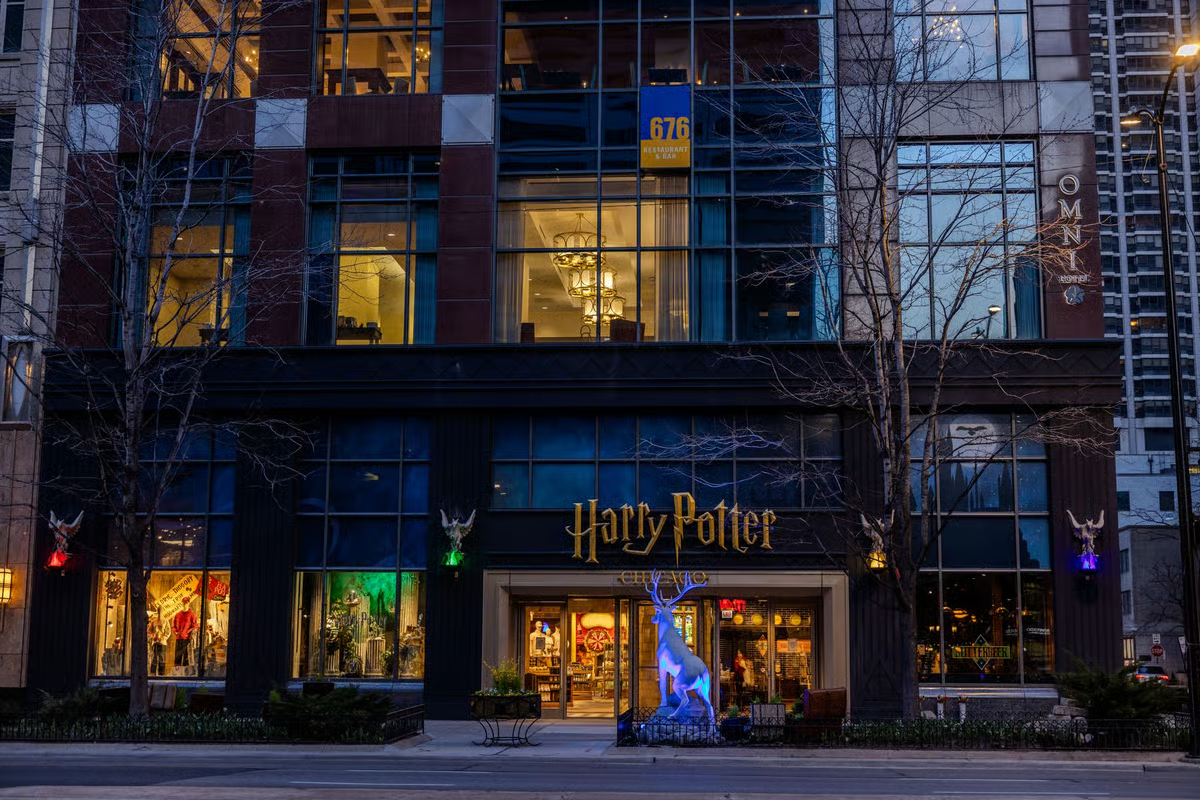
Karl Durrant, WB’s Senior Vice President of Worldwide Retail said: “Harry Potter is deeply rooted in British storytelling, and this will give fans an exciting new way to experience this magical world in the city that features so prominently in the stories. Offering a completely new retail experience for Harry Potter fans which will delight and entertain, it’s going to be very special.”
Flashing light can do more than illuminate a room. Delivered at specific rhythms and viewed through closed eyelids, it can produce vivid visual hallucinations, geometric patterns, bursts of colour and sometimes even full scenes in people with no underlying illness and no use of drugs.
These experiences are known as stroboscopic hallucinations. They offer a window into how the brain constructs perception and how conscious experience shifts when the signals reaching the visual system are altered.
Eyelids are not a blackout curtain. Even with eyes closed, light can pass through and reach the retina, the light-sensitive layer at the back of the eye. If that light flashes at particular rates, it can nudge brain rhythms into the same timing as the light, so the brain’s natural electrical activity begins to synchronise with the external flicker.
Advertisement
This becomes especially pronounced when the flashing frequency overlaps with the brain’s resting rhythms, roughly eight to 12 hertz, or eight to 12 flashes per second. In this “sweet spot”, large groups of brain cells fire in sync, and that coordinated activity spreads across visual areas at the back of the brain.
The brain then interprets these patterns as meaningful experience. When the signal is strong and structured enough, perception can emerge even without an external scene.
Often, people see simple hallucinations: geometric patterns, kaleidoscopic colour shifts, spirals, lattices, tunnels or cobweb-like grids. These have been documented for well over a century and appear consistently across many people. Because they arise from the visual system itself, similar shapes also appear in psychedelic drug experiences, migraine aura, sleep-related states and certain neurological or visual conditions.
Sometimes people report more complex hallucinations with recognisable content such as objects, places or landscapes. In these cases, the brain appears to impose familiar meaning on an unusually powerful visual signal, organising abstract input into something coherent.
From a neuroscience perspective, this is what makes these experiences useful. Hallucinations reveal how the visual brain constructs reality and what happens when the balance between sensory input and internal expectations shifts. Vision is not a passive recording process. The brain continuously interprets, fills in and predicts. Hallucinations show what perception can look like when those internal processes temporarily dominate.
A brief history
Stroboscopic hallucinations have been described scientifically since at least 1819, when the Czech anatomist Jan Evangelista Purkyně reported patterned visuals induced by candlelight flickering through moving fingers held in front of closed eyes.
In the 1960s, the phenomenon entered popular culture through the “Dreamachine”, created by artist Brion Gysin and mathematician Ian Sommerville. A lightbulb inside a rotating cardboard cylinder cut with shapes produced flicker rates that reliably induced hallucinatory imagery in people sitting with closed eyes. Gysin imagined it replacing television, with people gathering to generate inner imagery rather than watch programmes. That never happened, but it captured how immersive these experiences can be.
More than 40,000 people took part. Many drew what they had seen afterwards, generating over 10,000 images. That created an unusual scientific opportunity. Laboratory studies of hallucinations typically involve small samples. Here, we had thousands of visual reports.
Working with colleagues, we used machine learning tools to group the drawings by shared visual features such as symmetry, repetition and curved shapes. This allowed us to identify familiar pattern types already described in scientific research, as well as a wider range of geometric forms that have received less attention.
Advertisement
People’s inner visuals are not random. Similar patterns appear again and again across different people, suggesting they reflect shared features of how the human visual system is organised.
Therapeutic
Following reports of improved wellbeing after Dreamachine sessions, we began investigating whether controlled stroboscopic stimulation might have therapeutic potential, including for depression. Research on psychedelic-assisted therapy, where substances such as psilocybin are used in carefully supervised clinical sessions with psychological support, suggests that aspects of the experience itself, such as feelings of awe or shifts in self-perception, can predict later clinical improvement.
Because stroboscopic stimulation can induce some of these features without medication, it raises the possibility of a more accessible approach.
Advertisement
I am currently involved in a study exploring whether this kind of stimulation can be used safely in people with depression. Initial findings are encouraging, but the research is still at an early stage and focused on safety rather than effectiveness.
Stroboscopic stimulation is also being explored in other areas. In Alzheimer’s disease, for example, researchers are investigating whether synchronising brain activity at specific frequencies might influence processes linked to the disease. Clinical trials are under way, though the field is still developing.
The main medical risk associated with strobe exposure is a photosensitive epileptic seizure. Only a small proportion of people with epilepsy are photosensitive, but the risk is not zero. Responsible research groups and public installations screen participants and use established safety procedures.
Advertisement
Some people may experience milder effects, including headaches or discomfort, particularly if they are sensitive to bright light. A small number report little or no visual effect at all.
The broader scientific interest lies in what these experiences reveal about conscious perception. How the brain produces a unified experience of the world remains one of neuroscience’s most challenging questions. By studying simpler visual components such as colour, symmetry and movement, researchers can begin to unpack how experience arises.
Altering visual input in a controlled way allows us to observe how the mind constructs reality. That helps us understand not just hallucinations, but normal conscious experience itself.
Advertisement
Strange Health is hosted by Katie Edwards and Dan Baumgardt. The executive producer is Gemma Ware, with video and sound editing for this episode by Anouk Millet. Artwork by Alice Mason.
Listen to Strange Health via any of the apps listed above, download it directly via our RSS feed or find out how else to listen here. A transcript is available via the Apple Podcasts or Spotify apps.
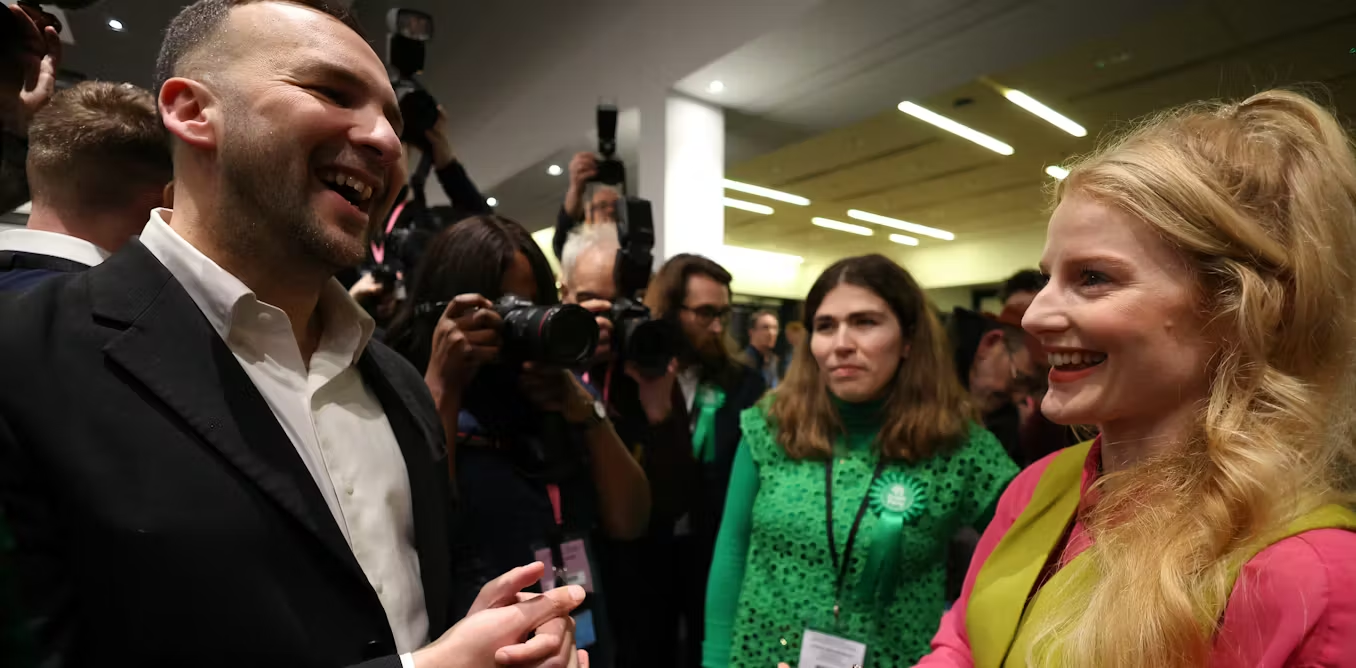
Hannah Spencer’s win in the Gorton and Denton parliamentary byelection was a momentous victory for the Green party. The party’s first-ever byelection win overturned a large Labour majority and put the general election winners into third place, behind Reform UK.
The Greens are eager to position it as a sign of things to come, particularly in the May elections. Here’s what voter trends in Gorton and Denton can tell us about what’s to come.
Voters continue to turn away from the two main parties
Voters are looking for alternatives to the two main parties. Labour’s vote share halved in Gorton and Denton compared to the general election. With a much smaller 2024 base to start from, the Conservatives went from nearly 8% of votes to fewer than 2%, losing their deposit.
This follows a trend we’re seeing at almost every election, regardless of type or location. In the 2025 local elections, fewer than 40% of incumbents from the two main parties held their seats – a figure that had previously never been below 70%. In council byelections, both Reform and the Greens are fielding candidates in more areas, and taking both vote share and seats from the Conservatives and Labour. Labour and the Conservatives are the only two parties with fewer MPs than they started this parliament with.
Advertisement
Voters deciding late
Constituency opinion polls in the run-up to byelection day showed Labour, Reform and the Greens neck and neck.
But a more striking feature of these polls was how many voters had not yet made up their minds. Even in the final week, an Omnisis poll found that 31% of people who said they would vote were still undecided, more than the reported support for Labour (18%), the Greens (22%) or Reform (20%).
This is an unusually high level of uncertainty so late in a campaign. In normal elections, the rate of undecided voters is typically lower by the eve of polling day. Here, nearly a third of voters were still making up their minds. This compares to 12% two days before the general election, which was itself considered high.
Late-deciding women may have swayed the outcome
High numbers of undecideds may partially explain the late swing to the Greens. We know that women are more likely than men to respond “don’t know” to vote intention questions and to decide later in the campaign. At the same time, there is a gender gap in party support: Reform performs better among men, while the Greens tend to perform better among women, particularly among younger voters.
Advertisement
Levels of undecidedness between men and women differed, with 18% of men reporting they were undecided relative to 36% of women in the Omnisis poll. There were also more men than women, by ten percentage points, saying they would not vote. If those undecided women were less inclined to support Reform and more open to supporting the Greens, then late-deciding voters may well have tipped the balance.
Green party supporters preparing to deliver leaflets in Gorton and Denton. Adam Edwards/Alamy
Undecided women are less likely to think that any party represents their policy priorities well. This is particularly unlikely to have played out well for Reform – the party has expressed support for taxing women without children more and repealing the Equality Act.
This contest is a reminder that women voters may prove decisive when large numbers of people are still making up their minds. With the next general election still some way off, and current levels of undecidedness in the electorate high, this is something parties would do well to keep in mind.
Turnout doesn’t always fall
This byelection was the second in the past six months where voters have turned out in higher-than-expected numbers. The Caerphilly Senedd byelection in October 2025 also saw unusually high turnout of 50.4%, a 6.1 point increase on the 2021 Senedd election.
Advertisement
Ahead of election day in Caerphilly, polls had Reform on 42% (up from 1.7% in 2021), Plaid Cymru on 38% (up from 28.4%), and Labour on 12% (down from 46% in 2021). On election day itself, Plaid took the seat from Labour with 47.4% of the vote, to Reform’s 36%, with Labour falling to third place on 11% of the vote.
In Gorton and Denton, the 2024 general election turnout was the 32nd-lowest across the country, at just 47.8% But it fell only 0.3% at this byelection. Taken together, these two contests suggest we may be seeing the beginnings of an electoral trend.
In both cases, voters opted for a party positioned to Labour’s left as the most credible option for stopping Reform. With Reform’s overwhelming success in the local elections in England last year and continued strong headline polling figures, it is possible that we are beginning to see an anti-Reform mobilisation effect. Rather than staying home, voters on the left may be turning out in greater numbers than we would otherwise expect, to back whichever party is best placed locally to prevent a Reform win.
The Labour government has responded to their decline in national opinion polls by positioning themselves against Reform in key areas such as immigration. Yet, with evidence that British politics is developing left v right bloc-style voting, Labour might be unwise to ignore the threat from its own side of the ideological spectrum.
We already saw early signs of this in the 2024 general election itself, when some of Labour’s largest drops in support came in progressive, urban constituencies where the Greens also increased their support.
Some in the party have already taken this lesson from Gorton and Denton, while others, including the prime minister, are counting on the Greens not having the same campaigning resources for general elections.
If women who are answering “don’t know” to polls follow the Gorton and Denton trend, they may be leaning more towards Green than the headline vote intention figures suggest. This should be ringing alarm bells for Labour. The Greens came second in 40 seats at the 2024 general election – all of those were seats Labour won.
Advertisement
Moreover, if Reform are motivating both their supporters and their opposition to the polls, the Greens may be rising as Labour’s alternative on the Left. This was one seat with its own context, so it’s difficult to apply nationally. But we could see a scenario in May where both Reform and the Greens combined overtake the Conservatives and Labour.
The United States names four of the six service members who died in the drone strike on the second day of the conflict with Iran, as countries across the Middle East are hit in the attacks
23:43, 03 Mar 2026Updated 23:47, 03 Mar 2026
The United States has released the names of four of the six service members who have died in the conflict with Iran. The Pentagon said they died in a drone strike in Kuwait.
All four Army Reserve soldiers died on Sunday, March 1 when a drone hit a command centre in Port Shuaiba, Kuwait.
Ensure our latest headlines always appear at the top of your Google Search by making us a Preferred Source. Click here to activate or add us as your Preferred Source in your Google search settings.
Iran has retaliated by striking key sites across the Middle East, closing major airports, damaging famous buildings and causing panic across the region.
The Associated Press reported that all were assigned to the 103rd Sustainment Command in Des Moines, lowa.
Four of the six service members have been named as:
Advertisement
Capt. Cody A. Khork, 35, of Winter Haven, Florida
Sgt. 1st Class Noah L. Tietjens, 42, of Bellevue, Nebraska
Sgt. 1st Class Nicole M. Amor, 39, of White Bear Lake, Minnesota
Spc. Declan J. Coady, 20, of West Des Moines, lowa
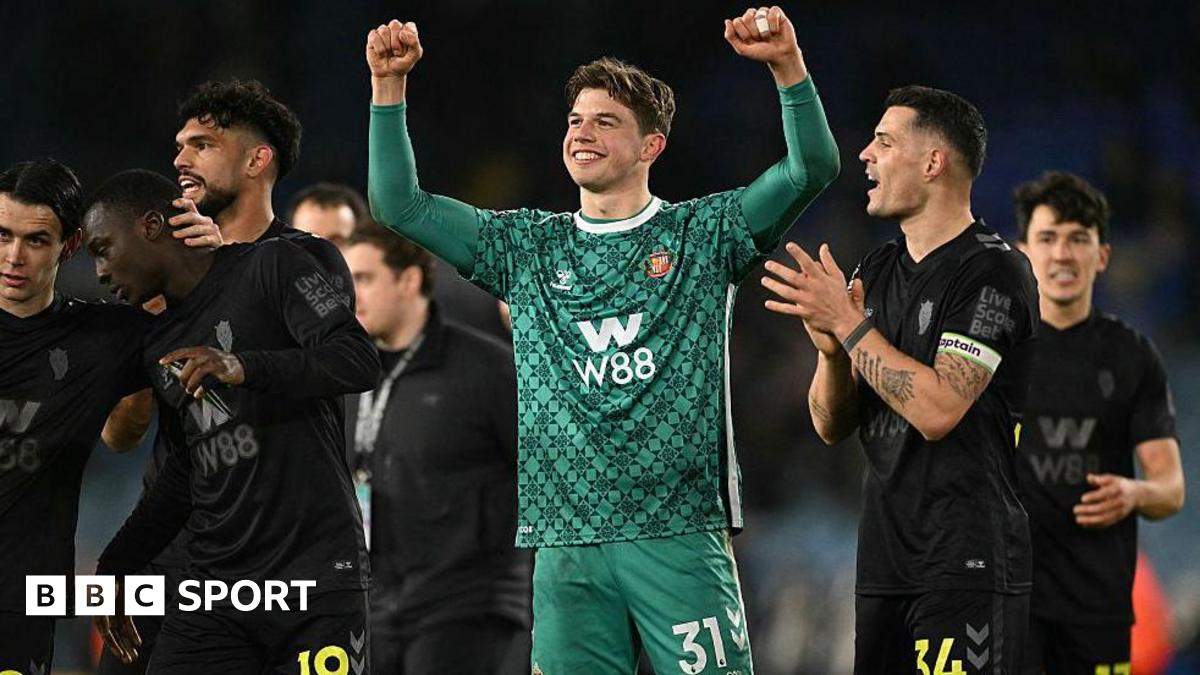
A key part in Sunderland‘s impressive season has been Granit Xhaka.
The former Arsenal midfielder was one of a number of summer signings the Black Cats made, but has arguably been the most influential, with his experience and leadership key in many games.
Having recently returned from injury, Xhaka started on the bench against Leeds before being introduced just before the hour mark – and it was no coincidence Sunderland improved, having been second best until that point.
The 33-year-old provided a calming influence as his side ground out a first away success since October through Habib Diarra’s penalty, helping them navigate 12 tense minutes of injury-time too.
Advertisement
Xhaka told TNT Sports afterwards: “We spoke at the beginning of the season, our target was 40 points, we achieved 40 points and now we want more because the hunger is big.
“We need to stay humble. We know where we come from. Our target was 40 points. When you achieve the first one, you want more. The hunger is here. We are taking it game by game, let’s see where we get.”
As well as Xhaka, head coach Regis le Bris deserves huge credit.
The Frenchman has overseen some impressive results, the victory at Leeds included. He set them up to frustrate Leeds, but also make the most of the few attacking situations that came their way.
Advertisement
This was just the fifth Premier League game this season a team has won with just one shot on target, with Sunderland now accounting for two of those.
“We don’t know if it will be enough but it’s a good target,” Le Bris said on reaching 40 points.
“With nine more games to play we want to stay ambitious. The next target is 43, let’s be prepared for that. Let’s keep going.”
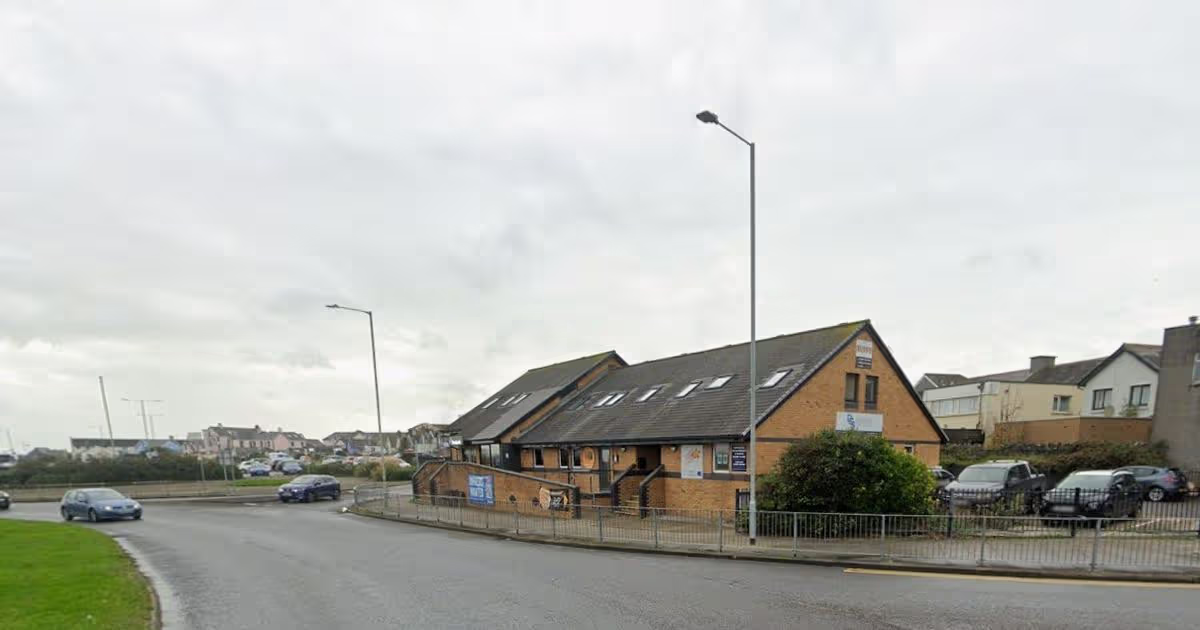
The site is also home to a Domino’s Pizza outlet and tanning salon
Plans to create a new sauna and wellness centre in the seaside town of Porthcawl have been handed in to Bridgend County Borough Council. If approved they could see the new centre created close to the entrance of the town in a mixed-use development off the Portway, Porthcawl.
Advertisement
The building is currently home to a Domino’s Pizza outlet and tanning salon as well as office spaces.
The proposal was submitted to the council in February 2026 for the site located close to the Hillsboro car park, and just a stone’s throw away from the town’s Sandy Bay Beach.
Developers say they are requesting a change of use to part of the ground floor from offices to a sauna and wellness centre, complete with a sauna, ice baths and shower facilities.
It is noted that while there will be “minor internal layout alterations” at the site, there will be no external alterations made to the property. Make sure you never miss Wales’ biggest updates by getting our daily newsletter.
Advertisement
It also added that while planning permission has been granted for the first floor to be converted into four residential apartments, this has not yet been implemented and is not currently intended to be implemented.
The plans for the new facility will now go before the council’s planning department for a decision in the coming months.
Its submission comes just weeks after a mobile sauna located on Rest Bay was forced to close temporarily after the council rejected a retrospective planning application for it to operate there.
Advertisement
The council refused the application on the grounds that it was “unacceptable in principle”.
Owners of the popular Hikitalo sauna said they were “heartbroken” and would look to appeal the local authority’s decision for the idyllic site overlooking the sea. You can read more about that here.
Ensure our latest news and sport headlines always appear at the top of your Google Search by making us a Preferred Source. Click here to activate or add us as Preferred Source in your Google search settings.
Advertisement
Do you think you’re paying too much council tax this year?
Do you think you’re paying too much council tax this year?
A disjointed messaging effort appears to be hindering the administration’s ability to sell the war to the American people though, as polling indicates that a majority of Americans do not yet understand why the U.S. is at war with Iran now — or simply do not accept the White House’s reasoning.
On Tuesday, the president offered his longest remarks to date on the matter. At a bilateral meeting with Germany’s chancellor, he claimed without any proof that Iranian forces were preparing to attack U.S. forces before the U.S. or Israel launched any attacks at all.
“We were having negotiations with these lunatics, and it was my opinion that they were going to attack first,” said the president. “They were going to attack if we didn’t do it. They were going to attack first, I felt strongly about that.”
Advertisement
That explanation directly contradicted what Secretary of State Marco Rubio said to reporters a day earlier. Rubio, speaking ahead of a briefing with congressional leadership, said Monday that an imminent Israeli attack forced the U.S. to act in order to prevent retaliatory strikes against American forces.
Donald Trump broke with Marco Rubio on Tuesday and said that the U.S. did not attack based on imminent Israeli action (AFP via Getty Images)
“We knew that there was going to be an Israeli action. We knew that that would precipitate an attack against American forces, and we knew that if we didn’t preemptively go after them before they launched those attacks, we would suffer higher casualties,” said Rubio on Monday.
The administration’s explanations for why it launched such a massive military campaign have shifted rapidly since the first strikes took place Saturday morning. The reasons have ranged from a necessity to deal with a reconstructed Iranian nuclear weapons program to longer-held frustrations that Iran was building up its ballistic weapons stockpile and refusing to address it with negotiators. Then Rubio’s assertion on Monday that Israel planned to launch its own military action before the president made his decision was shot down by Trump a day later.
Advertisement
“Based on the way that the negotiations was going, I think that they were going to attack first. And I didn’t want that to happen,” Trump told reporters Tuesday. “So if anything, I might have forced Israel’s hand. But Israel was ready and we were ready.”
U.S. Secretary of State Marco Rubio told reporters on Monday that an imminent Israeli strike necessitated U.S. action to prevent retaliatory strikes against U.S. assets (Reuters)
Many retaliatory Iranian strikes have taken place in the days since, and six U.S. service members are confirmed dead as the conflict has exploded across the region. Numerous countries across the Gulf region have been targeted by Iranian strikes, including Qatar, Oman, the UAE and even Cyprus as U.S., Israeli and NATO targets have come under drone and missile attack.
Explosions rang out Tuesday in Tehran and in Lebanon, where Israel retaliated against Hezbollah. And the American embassy in Saudi Arabia and the U.S. consulate in the United Arab Emirates were attacked by Iranian drones. Meanwhile, Iran has fired dozens of ballistic missiles at Israel, though most of it has been intercepted. Still, 11 people in Israel have been killed since the conflict began, the Associated Press reported.
Advertisement
But four days in, the White House continues to provide a limited picture of the conflict’s possible resolution, similar to how the Trump administration offered a murky view of it’s plan for dealing with the remainder of Venezuela’s government in the wake of the raid to capture Nicolas Maduro. Trump has said that he is not ready to negotiate with Iran, in a post on Truth Social ,and on Tuesday told reporters that he has no idea who will take over the government after U.S. strikes killed the most likely candidates.
“Most of the people we had in mind [to lead Iran] are dead,” he said. “Pretty soon we’re not going to know anybody.”
The president was frank about the lack of certainty surrounding Iran’s future leadership, admitting that the “worst case” scenario “is we do this and then somebody takes over who is as bad as the previous person.”
He added that “five years” from now, the U.S. could be looking back and realizing that his actions were a mistake.
Advertisement
“That could happen. We don’t want that to happen.”
His secretary of Defense was far more optimistic about the prospect for positive regime change on Monday, at an early-morning press conference at the Pentagon — his first in months.
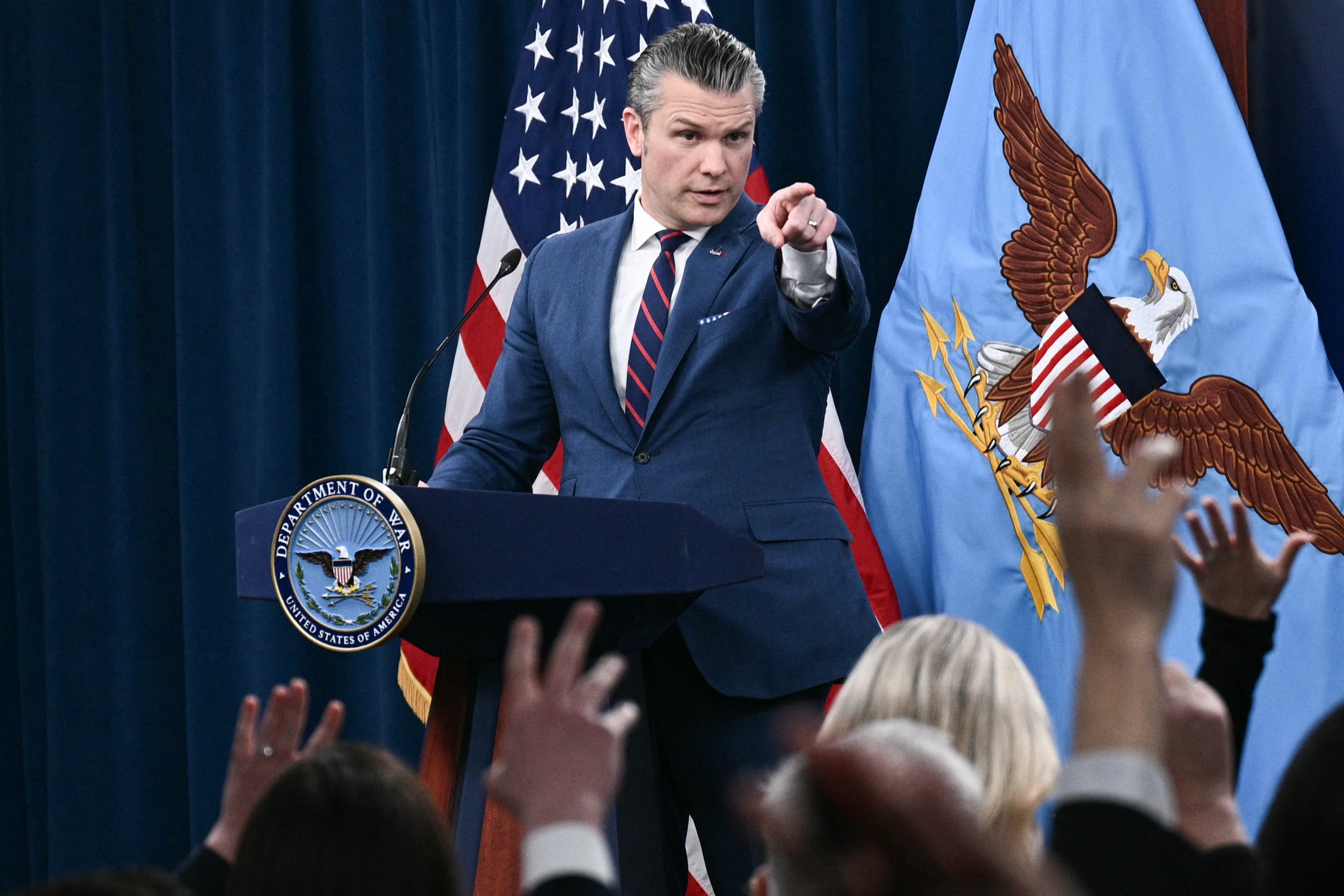
US Defense Secretary Pete Hegseth takes questions during a press conference on US military action in Iran, at the Pentagon in Washington, DC, on March 2, 2026. (AFP via Getty Images)
“This is not a so-called regime change war, but the regime sure did change, and the world is better off for it,” he said.
Advertisement
If there’s one common thread linking the reasonings provided by various Trump administration figures, it’s the threat that Iran’s ballistic missile program presented and the idea that it would soon reach a “point of no return”, where efforts to dislodge it or Iran’s nuclear sites wouldn’t be feasible.
That explanation has been overshadowed by the drumbeat of war Trump himself has encouraged for months, and initial statements in the wake of the strikes from White House officials blaming the supposed imminent threat of an Iranian nuclear program which they angrily claimed in 2025 to have obliterated and set back by years.
Polling shows that Americans largely disapproved of the idea of going to war with Iran in the days leading up to the strikes, following Trump’s threats to do so in January over Tehran’s violent and sometimes deadly suppression of protesters around the country. Thousands are confirmed to have been killed after security forces and militias put down a round of demonstrations sparked by plunging currency values.
That same polling now shows that Americans are similarly unconvinced by the evolving rationalizations put forward by the administration over the course of Saturday to Tuesday.
Advertisement
A Reuters/Ipsos poll over the weekend found that only a quarter of Americans approved of the U.S. airstrike campaign while disapproval was much higher, at 43 percent. In that same poll, nearly one in four Republicans said that Trump was too hasty to use military force and deploy U.S. service members abroad.
Adding to the list of uncertain terms of Trump’s war with Iran, the White House and sympathetic members of Congress briefed by the administration on its plans have not completely ruled out American boots on the ground in Iran, only saying a “large-scale” force will not be deployed.
In fact, Trump told the New York Post this week, that he was not ruling out the possibility of sending in troops. “I don’t have the yips with respect to boots on the ground — like every president says, ‘There will be no boots on the ground.’ I don’t say it,” Trump told the outlet. “I say ‘probably don’t need them,’ (or) ‘if they were necessary.’”
On Monday, CNN published a poll which found that 6 in 10 respondents believed the president lacked “a clear plan for handling the situation” while a slightly higher amount, 62 percent, said that he should get congressional approval before launching further strikes.
Advertisement
As Trump and his allies hurtle towards the midterms, the ability of the White House to get its story straight and bring the war to a close could be key to averting a devastating political division that puts him on the wrong side of independents and even members of his own base.
Study in the British Medical Journal looks at metabolic health of 23,000 participants and how our blood sugar is impacted by sleep
Scientists have analysed what is the optimum amount of sleep needed for good blood sugar control.
Advertisement
Previous studies have found that sleep duration is strongly linked with the risk of insulin resistance which is the precursor for type 2 diabetes. A study of 23,000 Americans looked at their sleep and estimated glucose disposal rate (eGDR) to examine insulin resistance. This is calculated by examining a person’s blood sugar levels after fasting, their waist circumference and their blood pressure.
The optimal length of sleep was seven hours and 19 minutes for avoiding insulin resistance, they found. Any more or less had an impact on eGDR. It also suggested that catching up on sleep at the weekend may actually be detrimental to a person’s health.
Ensure our latest headlines always appear at the top of your Google Search by making us a Preferred Source. Click here to activate or add us as your Preferred Source in your Google search settings.
Professor Hui Shi, of Nantong University in China, said: “These correlational findings suggest that sleep patterns, particularly weekend recovery sleep, may be relevant for metabolic regulation in diabetes.”
According to the NHS, the average amount of sleep needed by adults is seven to nine hours each night, while children need around nine to thirteen hours. But the more sleep you get is not necessarily better for you.
Insulin resistance is the primary driver behind poor blood sugar control. When cells resist insulin, they fail to absorb glucose efficiently, causing sugar to build up in the bloodstream. This leads to higher blood sugar levels which can progress to prediabetes and then type 2 diabetes.
Advertisement
People involved in the new study reported an average of seven and a half hours of sleep in the week. Half said that they also had catch-up sleep at the weekend. For those sleeping less than the optimal amount during the week, one to two hours of weekend catch-up sleep was associated with higher eGDR.
And those sleeping more than the optimal weekday sleep, as well as more than two hours of weekend catch-up sleep, had a lower eGDR – indicating a greater risk of insulin resistance.
The study, published in the journal BMJ Open Diabetes Research and Care, concluded that weekend catch up sleep is “beneficial only in moderation and specifically for those with weekday sleep debt, whereas it may be detrimental for those who already sleep sufficiently”.
Researchers said there was a “bidirectional relationship” with sleep and metabolism. Prof Shi added: “This creates a potential vicious cycle wherein metabolic dysregulation disrupts normal sleep patterns, and the resultant abnormal sleep (including extended duration) further aggravates metabolic health.”
Advertisement
The British Heart Foundation recommends getting seven to nine hours of sleep per night. Getting too little sleep can be bad for us but getting too much can be a sign of poor health.
The NHS website says regular exercise and a good diet can also improve sleep. It states: “A good sleep routine should include having a set time to start winding down – and a way to relax is important too. Going to bed and getting up at fixed times is another good sleep habit. Ideally, a sleep routine should be the same every day, including weekends.”
The uplift comes amid renewed debate over youth employment and Labour’s pledge to scrap age bands in the wage system – a commitment Prime Minister Keir Starmer has insisted will be honoured.
Chancellor Rachel Reeves added: “There are more people in work than there were this time a year ago.
“But I do recognise that there are challenges, particularly around young people leaving school, college and university, the Covid generation of young people who did miss out on so much during those years.
Advertisement
“As a Government, we are determined to do everything we can to support them.”
Her comments come as figures from the Office for National Statistics show unemployment among 16 to 24-year-olds rose to 16.1% in the three months to December at the highest level since early 2015.
What changes from April 2026?
National Living Wage (21 and over)
Rising 4.1% from £12.21 to £12.71 per hour
Worth around £900 extra per year for a full-time worker
Expected to benefit approximately 2.4 million low-paid workers
National Minimum Wage (18–20-year-olds)
Increasing 8.5% from £10 to £10.85 per hour
Equivalent to around £1,500 extra annually for a full-time worker
Narrows the gap with the adult rate as part of plans to phase out age bands
National Minimum Wage (16–17-year-olds)
Apprentice rate
Increasing 6% from £7.55 to £8 per hour
Applies to apprentices under 19, or those 19 and over in the first year of their apprenticeship
After turning 19 and completing year one, apprentices must receive the age-appropriate minimum wage
Workers are legally entitled to at least the National Minimum Wage depending on their age and stage of apprenticeship.
Business groups have warned the increases will add further pressure to struggling firms
Andy Slee, chief executive of the Society of Independent Brewers and Associates (SIBA), said: “Cost of living pressures are very real for people and we all want to see living standards rise.
Advertisement
“However, the responsibility of delivering wage increases are most felt by small businesses including small independent breweries who are already facing significant pressures.
“Brewing is a skilled job and we want to encourage more young people to enter the sector, but continuing to close the aged based pay gap does not take account of the additional training and development that young people need.”
Tamsin Powell, consumer finance expert at Creditspring, added: “An increase to the minimum wage will be welcomed by many workers across the UK, particularly those on lower incomes.
“However, while pay rises sound positive on paper, they don’t always translate into real financial gains once inflation and benefit tapering are factored in.
Advertisement
“Some employers may also struggle to absorb higher wage costs, meaning we could see knock-on effects like reduced working hours or slower recruitment.
“For households already battling high living costs, this could mean that the benefits of a pay rise are quickly eroded.
“Boosting wages is a vital part of improving financial resilience, but it has to be paired with policies that ensure those gains aren’t lost to higher prices or reduced employment opportunities.”
How to check your pay to make sure you are being paid the correct wage
Andrew Bartlett, chief executive of Advice Direct Scotland, urged young workers to check their entitlements.
“Every penny counts, and young Scots should check their payslips to make sure they’re getting the right National Minimum Wage,” he said.
“This is your hard-earned money, so don’t let employers allow it to slip through the cracks.
“If you’re under 23, it’s also worth checking if you have an unclaimed Child Trust Fund.
Advertisement
Recommended reading:
“These tax-free savings accounts could give you a financial boost as you step into adulthood.
“Too many young workers don’t realise they’re being underpaid, and it’s vital to know your rights.”
With wage floors rising across every age bracket, April 2026 marks one of the most significant annual increases in recent years – delivering a pay boost for millions, while reigniting debate over jobs, costs and Labour’s longer-term ambition to create a single adult minimum wage.
The Northern Echo understands that the roller is not from Lidl directly and that the company is still awaiting the planning decision on its proposals for a new store.
The ground rollers spotted on site (Image: THE NORTHERN ECHO)
The derelict site, which formerly housed the Marton Hotel and Country Club, has stood empty for years. The hotel closed down in 2017 and a major fire destroyed the landmark building in June 2019.
Marton Country Club, Middlesbrough after the fire
Further progress is now being made in the endeavour to build a new Lidl in Marton.
It was reported in summer 2024 that Lidl would be launching a public consultation over proposals to build a store on the site.
Advertisement
There are currently two Lidl branches in Middlesbrough, on Newport Road and Cargo Fleet Lane.
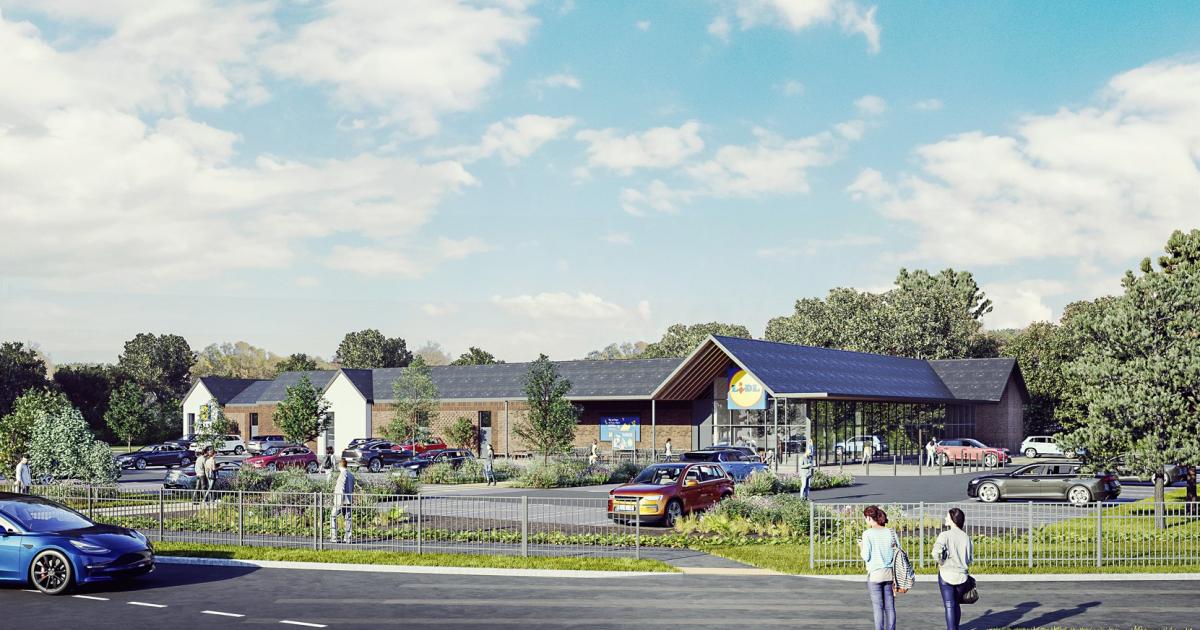
The proposed new Lidl site in Marton, Middlesbrough (Image: LIDL)
The supermarket chain is also seeking permission to build a store on the site of the former Northern School of Art, on the corner of Green Lane and Roman Road in Linthorpe.
It is hoped that a decision on Lidl’s wider proposals for the Marton site will be made later this year, alongside an outcome on its Linthorpe ambitions.