

Business
How the Baby Boomer Exit Is Reshaping Business Ownership


For decades, baby boomer founders have been the quiet backbone of the private economy. They built manufacturing firms, regional retailers, logistics operators, service businesses and family brands that now sit at the heart of local communities and national supply chains.
Many of them started with little more than grit, long hours and a stubborn refusal to fail. Now that generation is stepping back, and the scale of what is changing is far bigger than most founders are willing to admit.
Across the UK, the United States, Europe and even Asia and Africa, millions of business owners are approaching retirement at the same time. These are not micro side projects. They are established, revenue-generating enterprises with loyal customers, experienced teams and decades of operational knowledge. Collectively, they represent trillions in enterprise value. Research from McKinsey has described the coming ownership shift as one of the largest intergenerational transfers of private business assets in modern economic history.
The transition is happening whether founders feel ready or not. The only variable left is whether it will be controlled or forced. Some founders will pass the business to their children. Others will sell to management teams or outside buyers. Many are still undecided. What is becoming increasingly clear is that the baby boomer exit may reshape private ownership more profoundly than any trend seen in the past half-century.
The Ownership Cliff Facing Baby Boomer Founders
Demographics are not subtle. In the United States alone, members of the baby boomer generation are now entering their late seventies and early eighties, marking a demographic turning point that has direct implications for business ownership and continuity.
In the UK, a significant share of SME owners are now over the age of 55. Similar patterns are visible in the United States and across Europe. In some sectors, particularly traditional retail, light manufacturing and professional services, ownership is heavily concentrated in the baby boomer generation. This creates what can fairly be described as an ownership cliff.
Within the next decade, a large proportion of privately held firms will require some form of leadership transition. For many founders, the business has been their primary asset, identity and life’s work. Unlike listed corporations, these firms do not have automatic succession pipelines. The transfer of ownership is personal, emotional and often underprepared.
The economic implications are substantial. If transitions are structured well, businesses continue operating, employees retain jobs and local economies remain stable. If transitions are delayed or poorly managed, firms can stagnate, lose competitiveness or be forced into distressed sales. In extreme cases, profitable businesses simply close because there is no clear successor.
This shift reaches far beyond small family shops. It touches manufacturing firms, logistics operators, regional retailers and service companies that anchor entire local economies. UK wealth managers increasingly refer to this as part of the “Great Wealth Transfer,” a multi-trillion pound shift in private assets expected over the coming decades.
The scale of baby boomer ownership means succession planning is no longer a private family issue. It is a macroeconomic force influencing employment, capital flows and regional growth.
The ownership cliff is not about age alone. It is about timing. Many founders are reaching a point where energy, appetite for risk and willingness to reinvest in digital transformation begin to change. Without a clear transition plan, the business can drift precisely when markets demand adaptation.
The Heir Gap – When the Next Generation Says No
The simplest succession story is the most traditional one: the founder steps aside and a son or daughter takes over. In practice, it is rarely that straightforward. At the same time, retirement itself is becoming less predictable. Recent reporting from Business Insider highlights how many baby boomers are delaying retirement altogether, either by choice or necessity. This extends the timeline of ownership decisions and often leaves succession conversations unresolved for longer than planned.
A growing number of second-generation heirs are choosing different paths. Some pursue corporate careers in technology, finance or consulting. Others build ventures of their own rather than inherit existing structures. For many, the family firm represents responsibility without autonomy, legacy without creative control. This creates what might be called an heir gap.
Founders who assumed that “one of the kids will take it” often discover that interest is lukewarm at best. The next generation may respect the business but feel unprepared to lead it, particularly if it operates in a sector facing digital disruption. In some cases, the perceived burden of preserving a parent’s life work outweighs the attraction of ownership.
At the same time, expectations between generations can diverge sharply. Baby boomers often built businesses through intuition, relationships and incremental growth. Their children have been shaped by data-driven decision-making, global competition and digital-first thinking. Without clear alignment, even willing successors can struggle to bridge operational styles.
The heir gap does not automatically signal decline. In some cases, it opens the door to structured management buyouts or external leadership. In others, it prompts founders to modernise governance, clarify ownership structures and professionalise operations before transition. What it does signal is that succession can no longer be assumed. It must be designed.
The baby boomer exit is therefore not simply about retirement. It is about whether the next generation, whether family or external, is ready and willing to carry forward what has been built.
When the Next Generation Steps In – Five Succession Patterns
Succession does not follow a single script. In some businesses, transition is gradual and carefully staged. In others, it coincides with strategic reinvention. What links successful handovers is not the surname of the successor, but the structure of the transition and the clarity of the mandate. Across markets, several patterns are emerging.
Dyson – Gradual Integration of Second-Generation Leadership (UK)
At Dyson, succession has taken the form of structured integration rather than abrupt replacement. Sir James Dyson remains closely associated with the company’s engineering identity, but over time his son, Jake Dyson, has taken on increasing responsibility within innovation and product development. The transition has not been framed as a departure from the founder’s vision, but as an extension of it.
This gradual approach allows knowledge transfer without destabilising brand continuity. The company’s shift toward software integration, robotics and connected home technologies reflects a generational layering rather than a break. Authority is expanded incrementally, signalling to employees and markets that succession can be evolutionary rather than disruptive.
Westmorland Family – Retail Reinvented (UK)
The Westmorland Family, operators of Tebay Services and other premium motorway locations, provide a mid-market example of generational transition. Founded by the Dunning family, the business has seen leadership pass to Sarah Dunning, who has overseen its evolution beyond traditional roadside retail.
Under second-generation leadership, the focus has moved toward experience-led positioning, regional sourcing and brand differentiation. Rather than compete on scale alone, the company emphasised quality and authenticity, strengthening margins in a highly standardised sector. The succession coincided with a reframing of the business model, demonstrating how a leadership shift can align with strategic repositioning rather than simple continuity.
Mitchells Family Stores – Relational Retail in a Digital Age (USA)
Mitchells Family Stores in Connecticut represent a third-generation retail business navigating digital transformation while preserving a strong relational culture. The company’s identity has long been built on personal service and customer relationships, values embedded by earlier generations.
As leadership has transitioned, digital tools have been integrated into that relational model rather than replacing it. E-commerce platforms, CRM systems and data-driven inventory management have strengthened operational efficiency without abandoning customer-centric traditions. The transition illustrates how generational change can modernise infrastructure while retaining cultural DNA.
Olmed – Regulated Retail and Digital Acceleration (Poland)
In Central Europe, succession dynamics are unfolding within regulated sectors as well as consumer-facing brands. Olmed, a family-founded healthcare retailer in Poland, represents a mid-market example of second-generation leadership aligned with digital expansion. Under new leadership, the company has grown from approximately 70 million PLN in annual turnover to nearly 300 million PLN over several years.
Operating within EU and national pharmacy regulations, the business has combined compliance discipline with digital infrastructure development. Logistics integration, online platform optimisation and transparent product information have supported expansion without compromising regulatory standards. The case illustrates how generational transition in tightly supervised industries can coincide with accelerated scaling rather than operational drift.
Across these examples, succession is not a ceremonial event. It is a structural process. Whether gradual, strategic or transformative, the common thread is intentional design. Where leadership change is planned and authority clearly defined, generational transition can become a catalyst for renewal rather than a moment of instability.
Hoshino Resorts – Modernising Tradition (Japan)
Japan faces one of the most acute business succession challenges globally, with a large proportion of SMEs led by ageing founders. Hoshino Resorts offers an example of structured generational leadership within this broader context. Yoshiharu Hoshino took over the family hospitality business and transformed a collection of traditional inns into a modern, scalable hospitality brand.
The transition combined respect for heritage with disciplined expansion. Standardised operational models, brand segmentation and international growth were layered onto a legacy rooted in local hospitality culture. In a country where many family businesses close due to lack of successors, Hoshino illustrates how structured succession can unlock scale rather than simply preserve tradition.
The Overlooked Opportunity – Buying from a Boomer
While much of the conversation around succession focuses on family transition, an equally significant opportunity lies elsewhere. For ambitious managers, operators and would-be founders, the baby boomer exit represents a rare entry point into established businesses with existing revenue, teams and customers.
Not every founder has a willing heir. Many would prefer to see their company continue under responsible stewardship rather than close or be absorbed by a faceless consolidator. This creates space for structured transactions that are often more flexible than traditional acquisitions.
Vendor financing is one such model. Instead of requiring full upfront capital, the buyer agrees to pay the founder over time, often through staged payments funded by future cash flow. Earn-out structures can align incentives, tying part of the purchase price to performance targets. In some cases, the seller remains as an advisor or non-executive chair for a defined transition period, preserving institutional knowledge while allowing operational authority to shift.
For the buyer, this reduces the capital barrier to entry. For the seller, it can provide continuity, income stability and the reassurance that the business will not be dismantled immediately after sale. Structured correctly, succession without a family heir does not signal decline. It can mark the start of a new chapter under disciplined leadership.
In a business culture obsessed with start-up mythology, this route remains comparatively underexplored. Building from zero is not the only route into entrepreneurship. Acquiring a profitable, cash-generating firm from a retiring owner may, in many cases, offer a more resilient foundation. For a generation of operators seeking ownership without venture capital dependency, the boomer exit may represent one of the decade’s most overlooked strategic openings.
The Strategic Risk of Waiting Too Long
If a structured transition can unlock value, a delayed transition can quietly erode it.
Founder dependency is one of the most common structural vulnerabilities in privately held firms. When strategic decisions, client relationships and operational knowledge remain concentrated in a single individual, succession becomes harder with each passing year. Potential successors, whether family members or external buyers, inherit not only a business but a personality-centred system.
Valuations can also suffer when succession planning is deferred. Global surveys by PwC consistently show that family businesses without formal succession plans face higher valuation discounts and greater transition friction during ownership change. Buyers discount uncertainty. A business without clear governance, documented processes or a visible leadership pipeline will often command lower multiples than one with established management depth. What appears stable from the inside can look fragile from the outside.
Talent retention presents another risk. Senior managers may hesitate to commit long term if ownership transition is unclear. Ambitious employees may leave in anticipation of instability. Over time, operational discipline can weaken, particularly if the founder reduces day-to-day involvement without formally delegating authority.
In the worst cases, succession becomes reactive rather than planned. Health events, sudden retirement or external shocks can force rushed exits at suboptimal valuations. Waiting too long rarely preserves optionality. More often, it narrows it.
Preparing for a Controlled Handover
A controlled handover begins long before the founder steps aside. Effective succession is less about a ceremonial transfer of title and more about structural readiness.
First, timelines must be formalised. Even if retirement remains several years away, clarity around intended transition windows allows successors and management teams to prepare. Ambiguity breeds speculation; defined horizons create stability.
Second, ownership and governance should be separated where possible. Clear delineation between shareholder rights and executive authority reduces friction during leadership change. Advisory boards, non-executive directors or formalised reporting structures can introduce continuity beyond any single individual.
Third, financial and operational transparency matters. Clean accounts, documented processes and modernised systems increase both internal confidence and external valuation. Digital infrastructure, particularly in customer management, supply chain visibility and data reporting, reduces reliance on informal knowledge held only by the founder.
Finally, successors must be granted a genuine mandate. Whether family member, management team or external buyer, new leadership requires room to adapt strategy to contemporary market realities. Preservation of legacy should not preclude necessary innovation.
The baby boomer exit is not merely a demographic milestone. It is a strategic inflexion point. Managed deliberately, it can sustain jobs, preserve regional enterprises and create new ownership pathways. Managed passively, it risks dissolving decades of accumulated value. In the end, age is inevitable. Whether value survives the transition depends on whether succession is treated as a strategy early or ignored until circumstances dictate the terms.



Seeking Alpha’s transcripts team is responsible for the development of all of our transcript-related projects. We currently publish thousands of quarterly earnings calls per quarter on our site and are continuing to grow and expand our coverage. The purpose of this profile is to allow us to share with our readers new transcript-related developments. Thanks, SA Transcripts Team

Cathie Wood’s ARK sells Roku stock, buys Alibaba and Biotech
Business
Is Abu Dhabi Airport Open? International Airport Partially Reopens Amid Ongoing Middle East Conflict
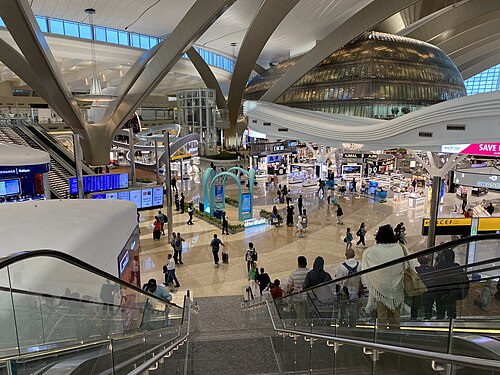
ABU DHABI — Zayed International Airport (AUH), the primary hub for Abu Dhabi and home to Etihad Airways, has partially resumed operations as of March 2, 2026, following a temporary closure triggered by escalating military conflict in the region involving U.S., Israeli and Iranian forces.
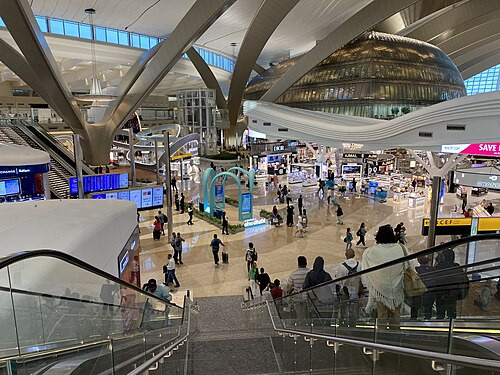
The airport, also known as Abu Dhabi International Airport, reopened in a limited capacity starting Monday evening, allowing select exceptional, repatriation, cargo and repositioning flights to operate under strict coordination with UAE authorities and airlines. However, the vast majority of scheduled commercial flights remain suspended, with Etihad Airways extending its halt on regular passenger services until 2:00 p.m. UAE time on Wednesday, March 4 (some reports indicate Thursday, March 5, reflecting fluid updates).
The partial resumption follows a full airspace closure imposed by the UAE General Civil Aviation Authority (GCAA) on March 1 amid Iranian missile and drone retaliatory strikes in response to prior U.S.-Israeli actions. Debris from intercepted projectiles reportedly caused minor damage at AUH and nearby sites, including an embassy complex, though no major structural impacts or casualties were detailed at the airport itself.
Abu Dhabi Airports, the operator, confirmed the phased reopening in statements on its website and social media, emphasizing that “passengers are advised not to travel to the airport unless they hold a confirmed ticket and have been explicitly advised by their airline to do so.” Access remains restricted to confirmed travelers only, with safety as the top priority. The official Zayed International Airport site displays prominent warnings urging travelers to check airline updates before heading to the facility.
Etihad Airways, the dominant carrier at AUH, reiterated that all scheduled commercial flights to and from Abu Dhabi are suspended through at least mid-afternoon Wednesday. The airline has operated a limited number of repatriation flights since March 2 to assist stranded passengers, with destinations including Paris, Amsterdam, Mumbai, Cairo and London Heathrow. At least 15 such flights departed Monday, per flight-tracking data, but normal schedules are not expected to resume imminently.
“Some repositioning, cargo and repatriation flights may operate in coordination with UAE authorities and subject to strict operational and safety approvals,” Etihad stated. The carrier has issued free rebooking options for affected passengers with tickets issued before February 28 for travel up to March 7, allowing changes to Etihad-operated flights through March 18.
Broader UAE aviation remains heavily disrupted. Neighboring Dubai International (DXB) and other regional hubs like Doha and Bahrain have seen similar partial resumptions, but with more than 90% of scheduled flights canceled in recent days, according to FlightAware and Cirium data. Over 12,300 cancellations across seven major Middle East airports have been recorded since late February, stranding hundreds of thousands of travelers globally.
The conflict’s impact on aviation stems from closed or restricted airspace over Iran, Iraq, Syria and parts of the Gulf, forcing rerouting and heightening risks from potential debris or miscalculation. Defense systems intercepted multiple threats over UAE territory, contributing to the initial shutdown. Flightradar24 and other trackers show sparse activity at AUH on March 3, with most boards listing cancellations.
Travelers face significant challenges. Airlines including Emirates (primarily Dubai-based) and flydubai have resumed limited services for priority repatriations, but advise against heading to airports without direct confirmation. Government advisories from various countries urge citizens to monitor alerts, with some issuing heightened warnings for the region.
The disruption ranks among the most severe for global travel since the COVID-19 pandemic, rivaling past events like the 2010 Eyjafjallajökull eruption or 2014 MH17 incident in scope. Major carriers beyond the Gulf — such as British Airways, Aegean and others — have canceled or suspended services to affected destinations through early March.
Abu Dhabi Airports and the GCAA continue coordinating with international bodies to assess when fuller operations can resume. No specific timeline for normal commercial service has been provided, with decisions tied to ongoing security evaluations and airspace clearances.
Passengers with upcoming travel to or through AUH should:
– Check flight status directly on airline websites or apps (etihad.com for Etihad).
– Contact carriers for rebooking, refunds or accommodation under passenger rights.
– Avoid traveling to the airport without explicit airline approval to prevent congestion and security issues.
– Monitor official sources like zayedinternationalairport.ae or adairports.ae for updates.
As the situation evolves rapidly amid geopolitical developments, aviation experts stress patience and flexibility. The partial reopening offers limited relief for stranded individuals, but full normalcy at Abu Dhabi International Airport depends on de-escalation and restored airspace safety.
For real-time flight information, consult tools like Flightradar24 or airline hotlines. The airport’s focus remains on safe, controlled operations during this unprecedented period.
Business
Dow Jones Futures Plunge Over 700 Points as Middle East Conflict Escalates, Oil Prices Surge

NEW YORK — Dow Jones Industrial Average futures tumbled sharply in pre-market trading on March 3, 2026, with contracts dropping as much as 772 points or 1.6%, signaling a potential open well below 49,000 as geopolitical tensions in the Middle East intensified and oil prices continued their dramatic rally.
Futures tied to the blue-chip index hovered around 48,200-48,300 levels in early Asian and European sessions before deepening losses toward the U.S. open, reflecting renewed risk aversion amid fears that the U.S.-Israel strikes on Iran could prolong regional instability and disrupt global energy supplies. The March 2026 E-mini Dow contract traded near 48,265, down about 680 points or 1.39% in one snapshot, with intraday lows dipping toward 47,950 before partial recoveries.

The sell-off erased much of Monday’s modest equity rebound, when the Dow Jones Industrial Average closed down just 0.15% at around 48,978, while the S&P 500 and Nasdaq eked out small gains. On Tuesday, broader futures followed suit: S&P 500 contracts fell 1.5-1.8% near 6,790-6,800, and Nasdaq 100 futures slid 2.0-2.3%, underscoring pressure on growth stocks sensitive to higher borrowing costs and energy inflation.
The primary driver remained the escalating conflict, now in its fourth day. U.S. and Israeli forces conducted fresh airstrikes on Iranian targets overnight, prompting Tehran to vow attacks on any vessels attempting to transit the Strait of Hormuz — the chokepoint for roughly 20% of global oil flows. Iranian state media claimed the strait was effectively closed, with threats to target ships, sending shockwaves through commodity markets.
Brent crude, the global benchmark, surged more than 6-9% in recent sessions, trading near $79-$83 per barrel — levels not seen since mid-2024 or earlier highs. West Texas Intermediate climbed toward $72-$73, up around 8-9% intraday at peaks. The spike stemmed from production halts by some Middle Eastern producers, halted tanker traffic and fears of sustained supply disruptions, even as Iran ranks as OPEC’s fourth-largest producer.
“This is a classic flight to safety amid uncertainty,” one strategist noted in a client update. “Oil’s rapid ascent is reigniting inflation concerns just as markets were pricing in potential Fed easing. If the conflict drags on, it could force higher-for-longer rates and crimp economic growth.”
Treasury yields rose in tandem, with the 10-year note climbing above 4% in spots, reflecting bets on persistent price pressures. Gold futures extended gains as a hedge, while the U.S. dollar strengthened against major currencies.
Energy and defense sectors offered relative bright spots. Stocks like Exxon Mobil, Northrop Grumman and Palantir Technologies saw pre-market strength in prior sessions, with gains of 1-6% amid bets on elevated oil demand and increased military spending. However, broader equities faced headwinds, particularly in consumer discretionary and tech, where higher fuel costs erode margins and valuations compress.
The Dow futures retreat follows a volatile stretch for the index. Year-to-date performance has been mixed, with the blue chips showing resilience earlier in 2026 through rotation into value and cyclical names. Yet the latest catalyst has accelerated a defensive posture, with the VIX fear gauge elevated and volatility spiking across asset classes.
Analysts cautioned that while the immediate reaction appears measured compared to past geopolitical shocks, prolonged escalation poses risks. Tehran’s threats to the Strait of Hormuz could sustain oil above $80, complicating the soft-landing narrative that supported stocks through much of the prior year. Federal Reserve policymakers, already navigating hotter inflation data, may face added pressure to delay rate cuts.
Investors awaited further developments, including any diplomatic breakthroughs or additional military updates. U.S. officials signaled strikes could continue for weeks, while global shipping rates surged to all-time highs on rerouting and insurance concerns.
For traders, key levels to watch include Dow futures support near 48,000 and resistance around the prior close. A de-escalation signal could spark a rebound, but sustained oil elevation keeps caution dominant.
The episode highlights markets’ sensitivity to energy geopolitics in 2026. As the conflict unfolds, Dow futures serve as a real-time barometer of risk sentiment, balancing growth optimism against immediate inflationary and supply threats.
Market participants are urged to monitor official channels for updates, with trading likely to remain choppy through the session.

Prices rallied as much as 3.8% in London before paring some gains. QatarEnergy halted the production of aluminium and some chemicals, as it grappled with the consequences of Iranian attacks that forced the shutdown of its major liquefied natural gas plant.
QatarEnergy holds a 50% stake in Qatalum, which is a major regional producer of the metal alongside joint-venture partner Norsk Hydro ASA. Hydro subsequently said the specific implications for aluminium production at Qatalum are currently unclear and Hydro is seeking to obtain more information. Copper fell more than 2% in London.
Iran has stepped up its response to US-Israeli attacks by targeting US allies, and President Donald Trump has said there is no fixed timeline for his military action. The State Department urged Americans to leave countries across the Middle East, citing “serious safety risks” amid dangers from the war.
Qatar’s announcement adds to signs of growing stress for producers in the region and their customers in markets spanning Asia, Europe and the US. Orders to withdraw aluminum from warehouses tracked by London Metal Exchange more than doubled to 86,025 tons on Tuesday, as traders brace for widespread disruptions to supplies.

Emirates Global Aluminum — the UAE’s top producer — acknowledged delays to its exports and said it may draw on stockpiles outside the region to meet customer demands. Hydro had said on Monday that Qatalum was weighing contingencies to avoid disruptions to deliveries.
Rio Tinto Group on Monday withdrew an initial offer to supply Japanese customers for second-quarter supply, as the hostilities threatened to raise regional fees. The US Midwest premium — a key benchmark for American manufacturers — on Monday rose 1.4% to $1.055 a pound, just below the mid-February record of $1.065. Goldman Sachs Group Inc. said it sees “substantial upside” to premiums in Europe — a major market for the Gulf producers — after levels there reached the highest since 2022 last week.
 Agencies
But there’s also a risk that protracted hostilities could hurt major economies and fuel a downturn in metals demand.
“Pricing reflects the competing forces of short-term geopolitical risk premiums versus concerns that sustained energy inflation could weaken global industrial demand,” analysts from CreditSights wrote in an emailed note.
Trump said the US had planned for four to five weeks of military action, but could go longer, even as Defense Secretary Pete Hegseth dismissed the idea of an “endless war.” Any prolonged conflict could leave aluminum smelters in countries like the United Arab Emirates and Saudi Arabia starved of raw materials and unable to export metal.
The Middle East accounts for about a fifth of production outside China. Most of the metal produced in the Gulf states is exported, largely through the Strait of Hormuz that’s all but shut down as a trade route in the aftermath of the attacks. And while smelters will have stockpiles of raw materials like bauxite and alumina, production cuts may be necessary if those start to dwindle.
“Although Middle Eastern smelters may have close to one month of feedstock inventory, they may already be forced to cut production if the war drags on for around two weeks,” said Zhang Meng, an analyst with Shandong Aize Business Information Consulting Co. “They need to plan ahead, rather than waiting until all inventories are exhausted and then shutting down in a panic.”
Shipowners and insurers are already reluctant to deal with shipments to the Gulf, and many ports are closed in the region, Zhang added.
A month of fully lost production — together with spiking energy costs in Europe — could see aluminum prices shoot up to $3,600 a ton, according to Goldman Sachs. The bank’s base case is still for aluminum to average $3,150 in the first half of the year.
Aluminum buyers were already facing tight supply this year after various production curtailments and trade dislocations, and with China’s producers close to a government-imposed cap on the size of its industry. The planned mothballing of a large smelter in Mozambique has added to supply concerns in 2026, and prices are now up 22% from a year ago.
Aluminum prices were 2% higher at $3,259.00 a ton as of 12:18 p.m. local time on the LME, after earlier hitting $3,315 a ton. Copper was 2.0% lower at $12,845.50 a ton, as all metals except aluminum declined.

Former Qatari Prime Minister Sheikh Hamad Bin Jassim Al Thani joins ‘Mornings with Maria’ to react to Iran’s strikes on GCC nations, warning Tehran has “lost friends” and saying the attacks could push Gulf states closer to the US.
U.S. stocks fell on Tuesday as investors eye growing tensions in the Middle East and their potential effects on inflation and global trade.
The Dow Jones Industrial Average fell 403.51 points, or 0.83%. The Dow was down 1,278 points, or 2.6%, at the worst levels of Tuesday’s trading session.
The Nasdaq Composite and S&P 500 dropped 1.02% and 0.94%, respectively.
Investors feared that the higher oil prices could fuel inflation and complicate central bank policy decisions already strained by tariff-driven price increases.
US ‘SITTING ON SIGNIFICANT PROVEN RESERVES’: ANALYST SAYS AMERICA CAN WITHSTAND IRAN ENERGY SHOCK

Traders work on the floor at the New York Stock Exchange in New York City, on March 3, 2026. (Brendan McDermid/Reuters)
International benchmark Brent crude was up more than 4% at $81 a barrel on Tuesday, while West Texas Intermediate crude climbed over 4% to $74 per barrel.
Oil prices eased on Tuesday after President Donald Trump said he had ordered the U.S. International Development Finance Corporation to provide political risk insurance and financial guarantees for maritime trade traveling the Gulf, adding that the U.S. Navy could begin escorting oil tankers through the Strait of Hormuz if necessary.
“No matter what, the United States will ensure the FREE FLOW of ENERGY to the WORLD. The United States’ ECONOMIC and MILITARY MIGHT is the GREATEST ON EARTH,” Trump wrote in a Truth Social post.
Tehran’s threat to attack any vessel attempting to transit the Strait of Hormuz, combined with production halts by several Middle Eastern oil and gas producers, has driven up global shipping rates and prices of crude and natural gas.
The strait, a critical choke point, carries roughly one fifth of the world’s total oil consumption.
The 10-year Treasury yield touched its highest level in more than a week and investors pushed back expectations for a 25-basis-point interest rate cut by the Federal Reserve to September from July, according to LSEG-compiled data.
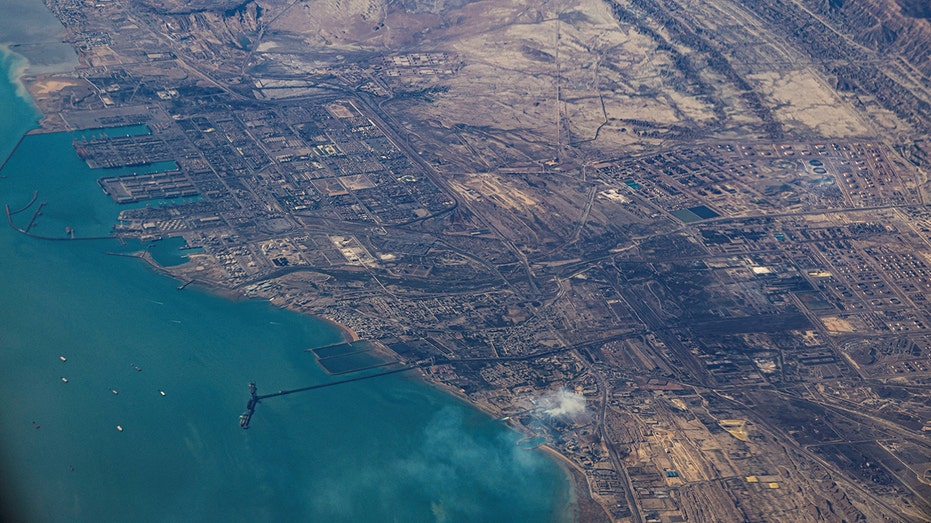
An aerial view of Port of Fujairah, United Arab Emirates, in the Strait of Hormuz, Dec. 10, 2023. (Reuters)
OIL MARKETS ON EDGE AS IRAN MOVES TO RESTRICT VITAL STRAIT OF HORMUZ SHIPPING LANE, REPORT SAYS
“Investors worry about additional inflation coming down the road. The main concern is that (oil prices) goes to over $100 a barrel and stays there,” said Robert Pavlik, senior portfolio manager at Dakota Wealth.
| Ticker | Security | Last | Change | Change % |
|---|---|---|---|---|
| I:DJI | DOW JONES AVERAGES | 48501.27 | -403.51 | -0.83% |
| SP500 | S&P 500 | 6816.63 | -64.99 | -0.94% |
| I:COMP | NASDAQ COMPOSITE INDEX | 22516.690852 | -232.17 | -1.02% |
GET FOX BUSINESS ON THE GO BY CLICKING HERE
Reuters contributed to this report.

A single lucky ticket sold in Arkansas matched all six numbers to win the estimated $251 million Powerball jackpot in Monday night’s drawing, ending a rollover streak and resetting the prize pool to $20 million for the next contest.

The winning numbers for the March 2, 2026, drawing were **2, 17, 18, 38, 62**, with the red Powerball **20**. The Power Play multiplier was **2x**, boosting non-jackpot prizes for players who opted in.
According to the official Powerball website and multiple state lottery reports, the jackpot-winning ticket was purchased in Arkansas. The winner has not yet come forward publicly, and the Arkansas Scholarship Lottery has not released details on the retailer or specific location of the sale as of Tuesday afternoon. Winners typically have 180 days to claim prizes in most jurisdictions, with anonymity options varying by state.
The jackpot carried an estimated cash value of $118 million before taxes. Powerball prizes are paid as an annuity over 30 years or a lump-sum cash option, which is reduced by federal withholding and potential state taxes. Arkansas does not impose a state lottery tax on winnings, though federal taxes apply.
The March 2 drawing marked the first jackpot win since late January, when a North Carolina player claimed $209.3 million. The prize had climbed steadily through rollovers, drawing excitement nationwide as it approached the quarter-billion mark. Pre-drawing estimates hovered around $249 million to $251 million, with the final figure settling at $251 million based on ticket sales.
Powerball drawings occur every Monday, Wednesday and Saturday at 10:59 p.m. ET from the Florida Lottery draw studio. The game is played in 45 states, Washington, D.C., Puerto Rico and the U.S. Virgin Islands.
Beyond the jackpot, the drawing produced other notable winners. One ticket in Puerto Rico matched the five white balls plus the Power Play for a $2 million prize (Match 5 + Power Play). Additional Match 5 winners without Power Play earned $1 million each, though none were reported in that category for this draw.
Lower-tier prizes included:
– Match 4 + Powerball: $50,000 (5 winners nationwide)
– Match 4: $100 (256 winners)
– Match 3 + Powerball: $100 (624 winners)
– Match 3: $7 (16,371 winners)
With the Power Play 2x multiplier, many prizes doubled for participants who added the $1 option.
The odds of winning the Powerball jackpot remain long at approximately 1 in 292.2 million. However, the overall odds of winning any prize are about 1 in 24.9.
This win comes amid a strong year for multi-state lotteries. Powerball and Mega Millions have produced several nine-figure jackpots in 2026, fueling player participation and retailer traffic. The game’s structure — with a $2 base ticket price, optional Power Play for $1 more, and jackpots starting at $20 million — continues to attract millions of entries per drawing.
The identity of the Arkansas winner may remain private for some time. Many large-prize claimants delay public announcements to consult financial advisors, attorneys and tax professionals. In states allowing anonymity, winners can often claim through trusts.
Arkansas Lottery officials confirmed the ticket’s validity and said procedures for verification are underway. Once claimed, the prize will be disbursed after required withholdings.
For the next drawing on Wednesday, March 4, the estimated jackpot resets to $20 million, with a cash value of about $9.4 million. Players are reminded to check tickets promptly, as unclaimed prizes eventually fund state programs like education in participating jurisdictions.
Powerball tickets must be purchased before local cutoff times, typically 7 p.m. to 10 p.m. depending on the state. Quick Picks remain the most popular method, accounting for the majority of jackpot wins historically.
As news of the Arkansas win spread, social media buzzed with congratulations and speculation. Some players shared near-misses, while others vowed to keep playing despite the long odds.
The March 2 result underscores Powerball’s allure: a life-changing sum from a modest wager. For one fortunate Arkansan, that dream became reality overnight.
The jackpot cycle now begins anew, with eyes on future rollovers that could push prizes higher. Until then, the latest winner holds the spotlight in lottery lore.
Tesla Inc. (NASDAQ: TSLA) shares closed at $403.32 on March 2, 2026, up 0.20% or $0.81 from the prior session, capping a resilient performance despite broader market volatility tied to Middle East tensions and surging oil prices.
The electric vehicle and AI pioneer opened at $390.60, ranged from a low of $388.25 to a high of $404.54, and traded on volume of nearly 55 million shares. After-hours trading saw a dip to around $397-$393, with pre-market indications on March 3 pointing to a lower open near $390-$394 amid risk-off sentiment in tech-heavy names.
Tesla’s market capitalization hovered near $1.51 trillion, reflecting its status as one of the world’s most valuable companies. The stock has shown volatility in early 2026, trading within a 52-week range of $214.25 to $498.83 — the peak hit in late 2025. Year-to-date, shares have gained modestly from earlier lows, supported by optimism around autonomy milestones despite softer core automotive metrics.
The latest trading session unfolded against a backdrop of geopolitical escalation, with U.S. and Israeli strikes on Iran driving oil higher and pressuring growth stocks. Tesla, sensitive to energy costs and consumer sentiment, navigated the environment with relative stability, buoyed by ongoing developments in Full Self-Driving (FSD) and robotics.
Tesla’s FSD (Supervised) system surpassed 8.4 billion cumulative miles driven worldwide, nearing CEO Elon Musk’s 10 billion-mile threshold viewed as critical for advancing toward unsupervised autonomy. The fleet added roughly 1 billion miles in the first 50 days of 2026, accelerating data collection for neural network improvements. Tesla expanded supervised FSD testing to Abu Dhabi under regulatory oversight, marking progress in global deployment.
In autonomy news, Tesla’s limited robotaxi service — launched in Austin, Texas, in January 2026 with no safety drivers in modified Model Y vehicles — continues to scale modestly. The company aims to expand unsupervised rides to additional U.S. markets in the first half of 2026, with Cybercab production starting at Giga Texas. Musk has described initial output as “agonizingly slow” before ramping, with volume targeted later in the year. Optimus humanoid robot production is expected to remain limited through 2026, though mass scaling could begin by year-end.
These initiatives underpin Tesla’s valuation premium. Trading at a forward price-to-earnings ratio exceeding 370 based on 2026 estimates, the stock reflects bets on high-margin AI and robotics revenue offsetting automotive headwinds. Analysts project 2026 vehicle deliveries around 1.77 million, an 8% increase from 2025’s 1.636 million, though consensus remains cautious on core EV margins amid competition and pricing pressures.
Tesla’s fourth-quarter 2025 results, released in late January 2026, showed production of over 434,000 vehicles and deliveries of 418,000 — up 3% sequentially but down year-over-year in some segments. Annual 2025 deliveries totaled 1.636 million, with energy storage deployments hitting a record 46.7 GWh. Revenue declined modestly to around $94.83 billion for the year, marking the first annual drop, but energy generation and storage grew robustly with higher margins.
Capital expenditures are set to surge to more than $20 billion in 2026, funding new factories, AI infrastructure and robotics. Management has shifted focus from aggressive vehicle growth targets — withdrawing prior 20 million annual delivery goals by 2030 — toward autonomy and energy as key drivers.
Analyst views remain polarized. Consensus 12-month price targets cluster around $396-$421, implying limited near-term upside from current levels, though bullish voices like Wedbush’s Dan Ives see potential to $600 on robotaxi optionality. Bears, including GLJ Research, cite declining automotive margins and competition, with targets as low as $25.
Technical analysts highlight key levels: support near $390 and resistance around $418, with some noting channel patterns on weekly charts. Prediction markets on platforms like Polymarket show active wagering on March 3 closes, reflecting trader interest in short-term moves.
Tesla’s trajectory in 2026 hinges on execution in autonomy. Robotaxi expansion to more cities, FSD adoption growth (with 1.1 million paid subscribers) and Optimus progress could catalyze rallies, while delays or regulatory hurdles pose risks. Energy storage remains a bright spot, with Megapack deployments supporting diversified revenue.
Investors monitor upcoming catalysts, including potential Q1 2026 delivery updates and earnings around late April. Amid macroeconomic uncertainty, Tesla’s blend of EV leadership, AI ambition and energy growth keeps it a focal point for market participants.
As shares hover near $400, the stock embodies the tension between near-term automotive challenges and long-term transformative potential in autonomy and robotics.
Unleash Prosperity co-founder Stephen Moore discusses the affordability crisis in blue cities and President Donald Trump’s tariffs on ‘The Bottom Line.’
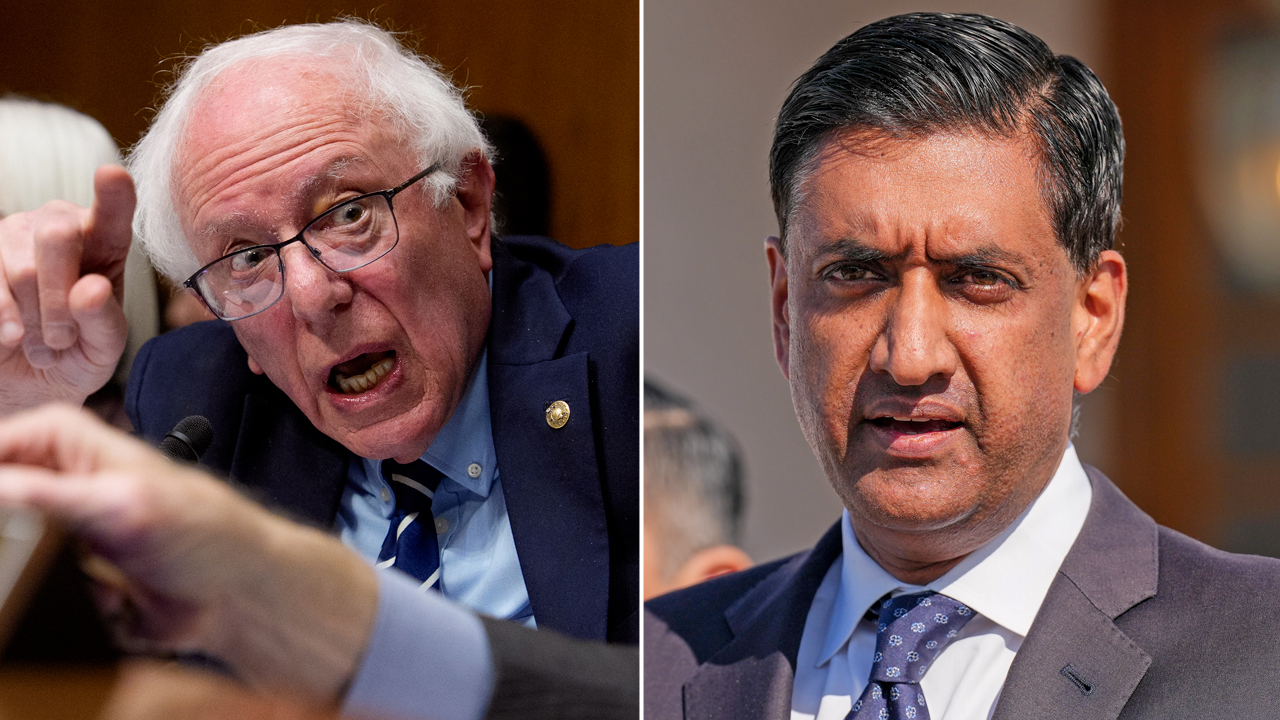
Progressive lawmakers Sen. Bernie Sanders, I-Vt., and Rep. Ro Khanna, D-Calif., are targeting the billionaire class with a massive new tax proposal that seeks to seize trillions from the nation’s wealthiest individuals to fund a sweeping government spending spree.
Announced Monday, the “Make Billionaires Pay Their Fair Share Act” targets 938 individuals, including titans like Elon Musk and Jeff Bezos, for an estimated $4.4 trillion over the next decade — a move Sanders claims is necessary to fix a “corrupt tax code” that has seen wealth redistributed from the bottom 90% to the top 1%.
“At a time of unprecedented income and wealth inequality, this legislation demands that the billionaire class in America finally pay their fair share of taxes so that we can create an economy that works for all of us, not just the 1%,” Sanders said in a press release. “We can no longer tolerate a corrupt tax code that enables billionaires to pay a lower tax rate than the average worker.”
WALL STREET SOUTH EXPANSION: MANDARIN ORIENTAL ANCHORS NEW ‘BILLIONAIRE CORRIDOR’ IN WEST PALM BEACH
“We have a deep economic divide in this country. On one side, places like Silicon Valley are generating extreme wealth. On the other side, families are struggling to cover the cost of health care, housing, and basic needs. We can tax billionaires a modest amount to make sure everyone has a fair chance while keeping our innovative engine,” Khanna said in the same press release.
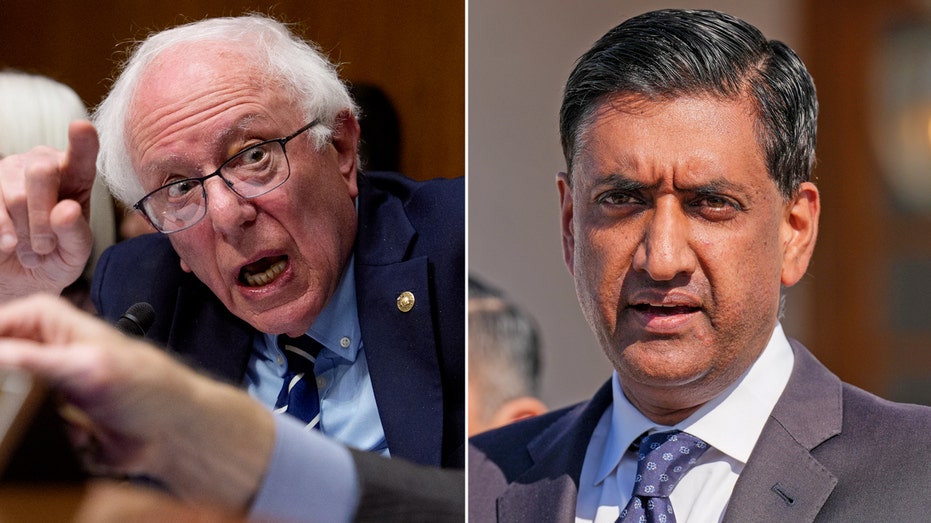
Sen. Bernie Sanders, I-Vt., and Rep. Ro Khanna, D-Calif., are teaming up to propose a federal, annual 5% wealth tax on America’s billionaires. (Getty Images)
The core of the proposal is a direct 5% annual wealth tax on assets, not just income, exceeding $1 billion. Sanders and Khanna project the bill to raise $4.4 trillion in revenue over 10 years.
The measure would direct new tax revenue toward one-time $3,000 payments for individuals in households earning $150,000 or less, meaning a family of four could receive up to $12,000.
The legislation cites several high-profile figures to illustrate its reach: Elon Musk would owe $42 billion, Mark Zuckerberg could pay $11 billion and Jeff Bezos would owe an approximate $11 billion.
Unleash prosperity co-founder Steve Moore and Heritage Foundation chief economist EJ Antoni discuss Bernie Sanders’ push for a billionaire tax in California on ‘The Bottom Line.’
The $4.4 trillion in estimated revenue is earmarked for a massive expansion of the federal safety net and public infrastructure, including a more than $1 trillion Medicare and Medicaid expansion, building affordable homes, capping childcare costs and establishing a minimum $60,000 salary for public school teachers.
“To accept this revenue estimate as credible, you must believe that a 5% annual wealth tax on billionaires—on their investments and their closely-held businesses—will have no economic ramifications worth mentioning,” Tax Foundation senior fellow Jared Walczak wrote in a post on X.
GET FOX BUSINESS ON THE GO BY CLICKING HERE
O’Leary Ventures Chairman Kevin O’Leary joins ‘Varney & Co.’ to weigh in on California’s proposed billionaire tax, the growing wealth exodus from blue states and why America is falling behind China in the AI power race.
Senate Republican leader John Thune, R-S.D., did not immediately respond to Fox News Digital’s request for comment.
“Enough is enough,” Sanders continued in his statement. “Billionaires cannot have it all. It is time to enact a wealth tax on billionaires and use this revenue to address some of the major crises facing working families, the children, the elderly, the sick and the most vulnerable.”

AI Panic Has Crushed Accenture – And Created An Opportunity

2026 Arnold Palmer Invitational odds, predictions, field: PGA picks this week from 10,000 simulations

SIVGA SV021 Pro Review: Carved to Impress, But Is the Tuning?

Dirty Money Remix – Jey Bless , Neiram, Murder (Video Oficial)


-

 Politics5 days ago
ITV enters Gaza with IDF amid ongoing genocide
-

 Fashion4 days ago
Weekend Open Thread: Iris Top
-

 Politics17 hours ago
Alan Cumming Brands Baftas Ceremony A ‘Triggering S**tshow’
-

 Tech3 days ago
Unihertz’s Titan 2 Elite Arrives Just as Physical Keyboards Refuse to Fade Away
-

 NewsBeat6 days ago
Cuba says its forces have killed four on US-registered speedboat | World News
-
Sports4 days ago
The Vikings Need a Duck
-
 NewsBeat3 days ago
Dubai flights cancelled as Brit told airspace closed ’10 minutes after boarding’
-

 NewsBeat2 days ago
‘Significant’ damage to boarded-up Horden house after fire
-
 NewsBeat6 days ago
Manchester Central Mosque issues statement as it imposes new measures ‘with immediate effect’ after armed men enter
-
 NewsBeat4 days ago
The empty pub on busy Cambridge road that has been boarded up for years
-

 NewsBeat3 days ago
Abusive parents will now be treated like sex offenders and placed on a ‘child cruelty register’ | News UK
-

 Entertainment2 days ago
Baby Gear Guide: Strollers, Car Seats
-

 Business6 days ago
Discord Pushes Implementation of Global Age Checks to Second Half of 2026
-

 Business5 days ago
Only 4% of women globally reside in countries that offer almost complete legal equality
-
 Tech5 days ago
NASA Reveals Identity of Astronaut Who Suffered Medical Incident Aboard ISS
-
 NewsBeat3 days ago
Emirates confirms when flights will resume amid Dubai airport chaos
-
Politics3 days ago
FIFA hypocrisy after Israel murder over 400 Palestinian footballers
-

 Crypto World5 days ago
From Crypto Treasury to RWA: ETHZilla Retreats and Relaunches as Forum Markets on Nasdaq
-

 NewsBeat1 day ago
Is it acceptable to comment on the appearance of strangers in public? Readers discuss
-

 Tech3 days ago
Viral ad shows aged Musk, Altman, and Bezos using jobless humans to power AI