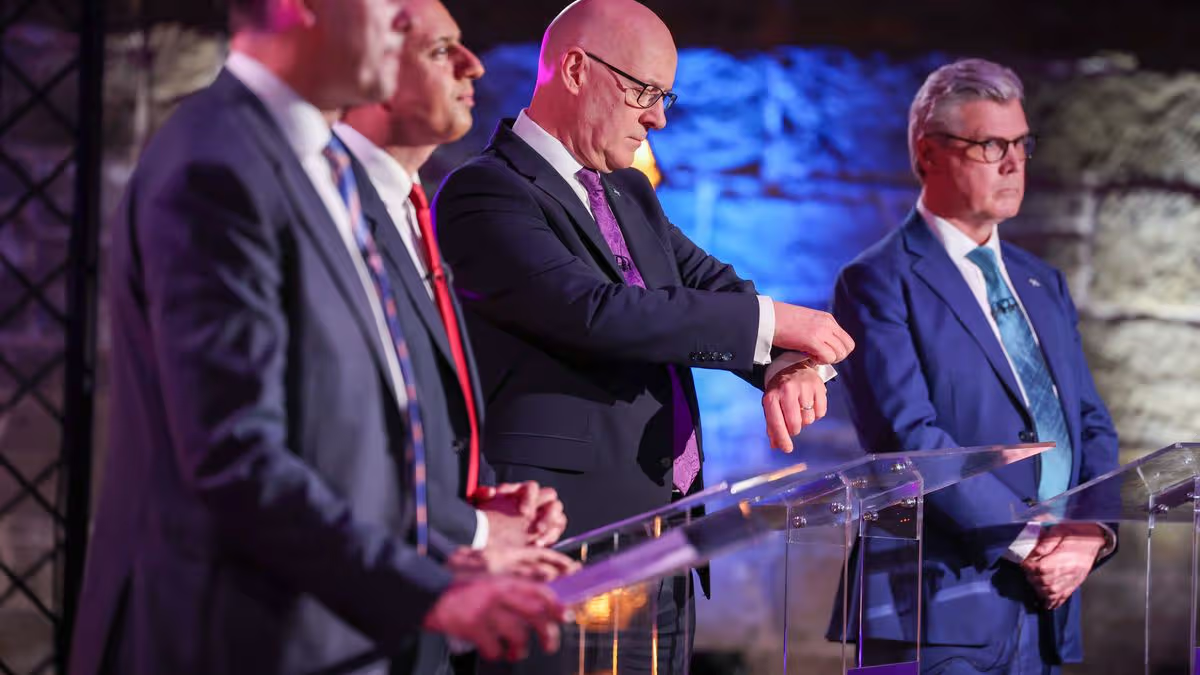


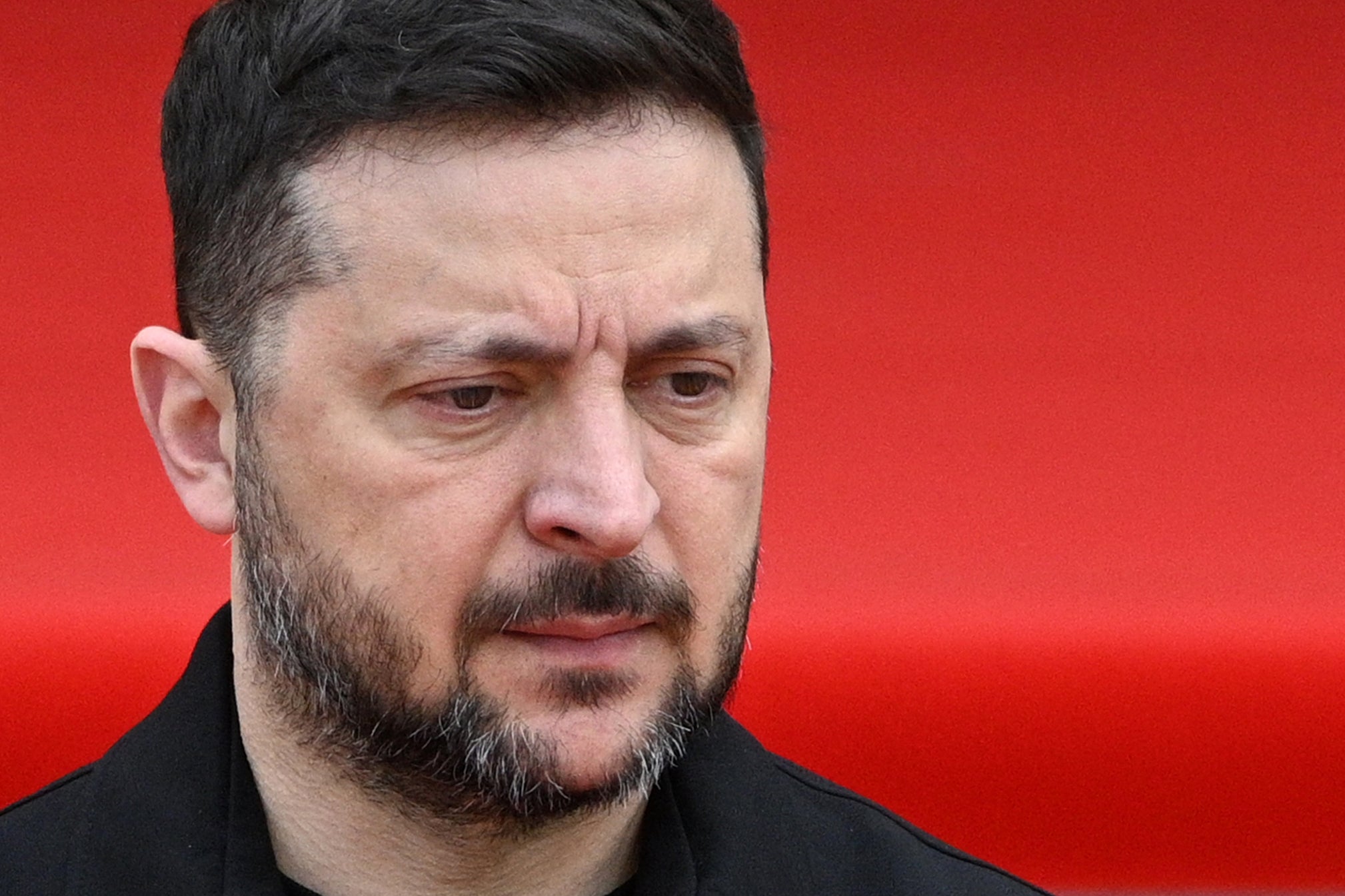

Today, President Trump has publicly criticised Keir Starmer saying “This is not Winston Churchill we’re dealing with”.
The comments came during a press conference at the White House alongside the German Chancellor Friedrich Merz. President Trump said he was “not happy with the UK” because of the initial refusal from London to let Washington use the British base at Diego Garcia in the Indian Ocean during its first strikes on Iran.
It comes as the UK government has announced it is sending “helicopters with counter drone capabilities” and a warship to the region, after attacks on it’s base in Cyprus. Financial markets have also reacted to the uncertainty with oil and gas prices rising, and share prices down.
Advertisement
Adam and Chris are joined by Jane Corbin, Panorama Film Maker and Dharshini David Deputy Economics Editor.
You can now listen to Newscast on a smart speaker. If you want to listen, just say “Ask BBC Sounds to play Newscast”. It works on most smart speakers.
You can take part in the Newscast census here – https://bbc.in/newscastcensus
You can now listen to Newscast on a smart speaker. If you want to listen, just say “Ask BBC Sounds to play Newscast”. It works on most smart speakers.
Advertisement
You can join our Newscast online community here: https://bbc.in/newscastdiscord
Get in touch with Newscast by emailing newscast@bbc.co.uk or send us a WhatsApp on +44 0330 123 9480.
New episodes released every day. If you’re in the UK, for more News and Current Affairs podcasts from the BBC, listen on BBC Sounds: https://bbc.in/4guXgXd
Newscast brings you daily analysis of the latest political news stories from the BBC. The presenter was Adam Fleming. It was made by Jack Maclaren with Shiler Mahmoudi and Kris Jalowiecki. The social producer was Sophie Millward. The technical producer was Jack Graysmark. The assistant editor is Chris Gray. The senior news editor is Sam Bonham.
The Travel Alliance believes widening pavements, introducing cycle parking, and improving pedestrian crossings will help the city centre
A coalition of groups have called for improvements to be made to roads and pavements in Cambridge city centre after funds were left unspent. The Cambridgeshire Sustainable Travel Alliance has said there is “no evidence of any progress” made by the Greater Cambridge Partnership (GCP) to better travel around the city.
Advertisement
After proposals for road charging in Cambridge were abandoned in 2023, the GCP said it wanted to take some of its work towards improving the city centre and deliver “quick wins” for the area. Local campaigning groups sent suggestions in 2024 to the GCP for the upgrades including better pavements and pedestrian crossings as well as additional cycle parking.
The Travel Alliance has said over £12.25 million remains unspent by the GCP with the city being an often “hostile” environment for those trying to travel around, which makes the area “far less pleasant and safe than it should be”. The group has said the GCP’s Interim Director Peter Blake revealed work is on hold, as it is waiting for the outcome of the Combined Authority’s Greater Cambridge Transport Strategy.
Cambridgeshire Sustainable Travel Alliance Campaign Officer Sarah Hughes said: “Other UK cities, such as Leicester and Bradford, have recently taken bold action to transform public spaces, greatly improve the pedestrian experience and ensure access to central areas by cycling and public transport is easy and safe. The GCP should not pass up this opportunity to improve Cambridge’s central streets to the benefit of everyone who spends time there.”
The Travel Alliance has argued many improvements in the city “would be local in nature and independent of longer term strategic decision”. The group believes a few improvements such as widening pavements and providing more space for passengers waiting at bus stops are “all measures that can and should progress now”.
Advertisement
The Travel Alliance is “urging” the GCP to “ensure that the £12.25 million set aside for this work is not diverted to other GCP programmes”, ahead of its meeting on Thursday, March 5. The group believes funding should be allocated for the Civic Quarter design team to create a plan on how to improve the city centre.
Isobel Wade, Greater Cambridge Partnership Programme Director, said: “The Cambridgeshire and Peterborough Combined Authority are currently developing the Greater Cambridge Transport Strategy, with support from us at the Greater Cambridge Partnership and our colleagues at the County, City and District councils, to improve our transport network.
“We’re keen that any work we do in the city centre is aligned with the transport strategy, to ensure we make the most impact with the funding we have.
“We’re actively working with our colleagues in the City Council on the Civic Quarter Project on proposals for transport interventions that will help how the city centre functions.”
Community group rep tells City Hall that there is “confusion and distress among volunteers and local residents”
A petition to stop Botanic Gardens meadow and community garden being dug up for a GAA pitch has received 350 signatures in two days, as locals continue to criticise what they consider to be underhand decision making by Belfast Council.
Advertisement
The campaign to stop the Botanic Field being dug up and fenced off from local residents and the wider public reached a new stage this week, as a new petition and leafleting campaign was launched in the area, as local community groups went to City Hall to air their concerns.
Local opposition is mounting against a council decision, made in highly unusual circumstances, which would get rid of community gardens, a wildflower meadow, and Queens University environmental research plots for a fenced-off GAA pitch, potentially for an astroturf or 3G pitch. Locals believe an open space of rich biodiversity, cherished by locals and open around the clock, will be dug up and closed off to the wider public for exclusive use for sports groups based over a mile away.
Locals also complain the council decision came out of the blue, with no trailing or local consultation, and the whole question of the Botanic Fields use appears shrouded in secrecy in council meetings and minutes of committees.
While Sinn Féin and the SDLP say there is room for both a pitch and the community gardens in the meadow, some locals have described the offer as “disingenuous,” because at the same time council officials have asked the Friends of the Field community group if it would consider relocating. No site plans or illustrations have been provided to the community group to prove how the meadow could house the community garden as well as a new GAA pitch.
GAA pitches are significantly larger than soccer pitches, and regularly have double the surface area. Calculations made by some locals indicate that there would not be room for a standard GAA pitch and the community garden.
Belfast Council erected GAA goalposts and sanded some holes in the field for temporary use just before the coronavirus>Covid pandemic, and these were taken down after a few months. No consultation has been made with the local community on the field’s use as a permanent GAA pitch.
Advertisement
The decision for the pitch was made on February 13th at a special meeting of the full Belfast Council, during an exchange between the Sinn Féin Party Group Leader Ciaran Beattie and the DUP Party Group Leader Sarah Bunting about the general council pitches strategy. No mention was made about the Botanic field in the exchange, or during the whole meeting.
The move appears to have blindsided the rest of the chamber, and caused confusion to onlookers who were unsure what had actually happened in terms of decision making. At least one official has described the decision making as “unusual.”
The “Save Botanic Meadow” petition on Change.org and leaflet campaign was started on Sunday March 1. The petition amassed 350 signatures in its first two days.
The campaign organisers say the meadow is “a cherished place of beauty, respite and relaxation.” They add: “Each day hundreds of us enjoy it as an unspoilt green space to walk, cycle, meet friends and exercise. Belfast City Council has approved plans to develop Botanic Meadow into a permanent sports pitch.
Advertisement
“The decision was taken without public consultation and conducted under a sub-committee’s “restricted business,” that is, avoiding transparency or accountability. This petition is to call on the council to reverse this decision as a matter of urgency.
“The development would destroy the natural habitat of countless species of grasses, wildflowers, insects, birds and wild animals, including protected species. The associated light pollution would threaten nocturnal wildlife, including bats. And replacing the newly-restored ponds and grasslands with fenced pitches and spectator areas would increase flooding risk, including further down the River Lagan.”
They add: “The riches of Botanic Meadow are not just for the local community. Since 2022, it has been part of an international project (“Upsurge”) on nature-based urban solutions to managing rapid climate change. This has funded community and research gardens on the site in order to inform sustainable urban planning for the benefit not just of Belfast but cities around the world.”
At the full Belfast Council meeting on Monday, local community groups were in the chamber as representatives from Friends of the Field and the Stranmillis Neighbourhood Association were allowed time for deputations.
Advertisement
Alicia Mulholland from Friends of the Field told the chamber: “We are a vibrant cross-community group committed to caring for our shared green space, supporting biodiversity, promoting health and wellbeing, and strengthening community connections in our area. For us, and for many, the open and accessible field at Lower Botanic Gardens is like having a small piece of the countryside in the lively heart of South Belfast, with room to roam and play and connect with nature.
“It provides peaceful respite from the surrounding hustle and bustle, and even opportunity to stargaze on a clear night. Consequently, from 2020, Friends of the Field have set out to protect and enhance the area for all who benefit from it.
“This has been achieved to date through the development of a wildflower meadow, biodiversity recording, a wetlands restoration project, litter picking, habitat monitoring, and of course the community garden.”
She added: “We are here today because our experience thus far has highlighted serious issues with communication and engagement. First, there has been a lack of coherent and targeted stakeholder engagement. We have learned about key developments through social media and the press, rather than through direct communication as a clearly identifiable community stakeholder.
Advertisement
“Announcements about site selection appeared publicly, without prior participation with our group, despite the direct implication for our space and our work.”
She added: “Speaking as a neighbour of Botanic Gardens, and as a member of both friends of the Field and Stranmillis Neighbourhood Association, I can tell you that nobody knocked our door prior to decisions being made about the Botanic site.”
She said: “We were told by elected representatives that the community garden would not be affected by pitch development, yet subsequently, a Belfast City Council agent asked whether we would consider relocation. Such conflicting narratives have caused confusion and distress among volunteers and local residents.”

A proposal by Alliance Councillor Tara Brooks, to defer the council decision specifically on the Botanic site for further information, was deemed “incompetent” by Chief Executive John Walsh at the meeting, after Sinn Féin raised a standing order.
Advertisement
Councillor Brooks said: “I can’t see how it is possible to have both functions on the site, and we can’t jazz-hands our way out of this by making vague promises to everyone who has worked on or used the wildflower meadow, the research garden or the Friends of the Fields gardens.
“We owe residents more than wishful thinking. If both can genuinely exist on the site, let’s see the plan. If they can’t, let’s say so, plainly. Until then, we just should pause, consult properly and treat this project with the time and consideration it deserves.”
Want to see more of the stories you love from Belfast Live? Making us your preferred source on Google means you’ll get more of our exclusives, top stories and must-read content straight away. To add Belfast Live as a preferred source, simply click here.
All four Army Reserve soldiers died on Sunday, March 1 in a drone strike on a command centre in Port Shuaiba, Kuwait, amid escalating Middle East conflict
The United States has identified four of the six service members who died in a drone attack in Kuwait amid the escalating confrontation with Iran.
Advertisement
All four Army Reserve personnel were killed on Sunday, March 1, when a drone struck a command facility at Port Shuaiba, Kuwait.
Israel and the US launched coordinated attacks on multiple strategic Iranian locations on Saturday, 28th February. During the weekend offensive, Iran’s then supreme leader, Ayatollah Ali Khamenei, was killed.
Ensure our latest stories always appear at the top of your Google Search by making us a Preferred Source. Click here to activate or add us as your Preferred Source in your Google search settings.
Iran has retaliated with strikes throughout the Middle East, triggering widespread alarm across the region.
Advertisement
The Associated Press confirmed that all were attached to the 103rd Sustainment Command based in Des Moines, Iowa.
Four of the six service members have been identified as:
Capt. Cody A. Khork, 35, of Winter Haven, Florida
Sgt. 1st Class Noah L. Tietjens, 42, of Bellevue, Nebraska
Sgt. 1st Class Nicole M. Amor, 39, of White Bear Lake, Minnesota
Spc. Declan J. Coady, 20, of West Des Moines, lowa
Reuters news agency published the following casualty figures based on data from the respective nations as of 3rd March, though had not independently confirmed these fatalities:
Iran: 787 people killed, according to the non-profit humanitarian organisation Iranian Red Crescent Society. It remained unclear whether the figure encompassed Islamic Revolutionary Guard Corps military losses.
Israel: 10 civilians killed, according to Israel’s ambulance service Magen David Adom. The Israel Defense Forces has reported no military casualties.
Advertisement
Lebanon: 50 people killed, according to Lebanon’s health ministry Bahrain: The interior ministry reported one fatality.
Kuwait: According to Kuwait’s health and foreign ministries, three individuals lost their lives.
Oman: Reuters reported one death.
United Arab Emirates: The UAE’s defence ministry confirmed three fatalities.
Advertisement
US military: U.S. Central Command reported six US service members’ deaths.
Work to upgrade the East Coast Main Line is taking place at sites between York and Newcastle every weekend in March.
There will also be signal testing on the southern part of the line in Hertfordshire next Sunday (March 15), affecting services between Peterborough and London King’s Cross.
Rail replacement services will be in place for train services from York to and from Darlington and Durham over the four weekends.
Advertisement
The rail replacement services will connect passengers travelling to or from Darlington and Durham with trains at either York or Newcastle.
Network Rail said passengers are “advised to allow extra time to complete their journeys”.
An hourly rail service will run during the work using a diversion route to connect customers between York, Northallerton and Newcastle, via Sunderland, Network Rail said.
The rail operator said trains will still be running for “most passengers” travelling through the North East.
Advertisement
Recommended reading:
Network Rail said the work includes the renewal of more than 3.8km of track, as well as new switches and crossings at three locations.
Work will also be carried out on the £140 million Darlington station upgrade which will also see overhead line equipment installed as the project nears completion, it said.
Gunnar Lindahl, joint operations director for Network Rail and LNER, said the East Coast Main Line upgrades will “keep trains running safely and reliably for the millions of passengers who depend on the route”.
Advertisement
“We appreciate this work does mean changes to weekend services, and we’re grateful to passengers for their patience while we complete these upgrades,” he said.
Rising demand, rota gaps and growing patient acuity have left many services under severe strain.
The Royal College of Physicians is today calling for urgent action to stabilise and support Northern Ireland’s overstretched physician workforce.
Advertisement
The RCP has published a new briefing report calling for system-wide action and warning that without reform the health service risks losing a generation of future doctors.
The new report, Turning the tide: Supporting Northern Ireland’s physician workforce, draws on evidence from a high-level roundtable convened by the RCP in November 2025, bringing together doctors, system leaders and policymakers from across Northern Ireland.
It highlights four critical areas requiring immediate action: workforce pressures and morale, training bottlenecks, system pressures including corridor care and the need to value and invest in clinical leadership.
Advertisement
The RCP is calling for a series of practical reforms, including expansion of training places and redesign of recruitment processes to reflect medical school growth and better support retention in Northern Ireland and support resident doctors with better supervision, fair access to training and flexible, modern career pathways including non-traditional and portfolio roles.
There are also calls for the development of structured career pathways and leadership opportunities for SAS and locally employed doctors; action to tackle corridor care through system-wide discharge planning, intermediate care and the expansion of ambulatory and community car; greater support for generalist practice and value-based care and meaningful investment in clinical leadership development across all career grades.
The RCP says that rising demand, rota gaps and growing patient acuity have left many services under severe strain.
Resident doctors and consultant physicians have described unsafe workloads, erosion of goodwill and growing exhaustion, while specialist, specialty and associate specialist and locally employed doctors reported inconsistent career progression and a lack of recognition despite their expanding role in delivering frontline care.
Advertisement
RCP president Professor Mumtaz Patel said: “Doctors in Northern Ireland are clear about both the scale of the challenge and the solutions needed. This is not about a lack of commitment or capability – it’s about creating a system that values its people, supports training and enables high-quality, dignified patient care. With the right action now, we can turn the tide.”
The briefing also raises serious concerns about escalating competition ratios for internal medicine training (IMT), which mean many doctors are unable to secure training posts in Northern Ireland.
Roundtable participants warned that this threatens the long-term consultant pipeline, with one participant saying: ‘We risk losing an entire generation of our future physicians if this does not change.’
Clinicians further described the ethical and emotional toll of delivering care in overcrowded hospitals, where prolonged delays to discharge and insufficient community capacity have normalised corridor care.
Advertisement
The report argues that these pressures cannot be solved by hospitals alone and calls for a renewed focus on generalist practice, multidisciplinary working and community-based models of care.
Alongside these system challenges, the RCP highlights the critical importance of investing in clinical leadership. Doctors across all career stages reported taking on leadership responsibilities without protected time, training or recognition, undermining both morale and service improvement.
Dr Sean Coghlan, chair of the RCP Student and Foundation Doctor Network, and a foundation doctor working in Belfast, said: “As a foundation doctor in Northern Ireland, it often feels like we’re working flat out just to keep services safe, with little time or certainty about our future training.
“We want to stay and build our careers here, but we need fair access to training, proper support and a system that values us if we’re going to be able to deliver the care our patients deserve.”
Advertisement
The RCP says it will continue to work with colleagues across Northern Ireland to champion the perspectives of resident, SAS and consultant physicians, and to support reforms in medical training, workforce planning and the culture of medicine.
In response, the Department of Health said it is very aware of the pressures on the HSC system and of the need, not simply to do more of the same, but to reset the approaches to delivering care.
A DoH spokesperson added: “We are committed to working jointly with Trusts and the Northern Ireland Medical and Dental Training Agency to improve the training experience and to develop non-traditional career pathways.
“A workshop is being organised to explore these ideas together with the opportunities afforded by the impending Medical Training (Prioritisation) Bill and the recent work to reduce agency/locum spend.”
Advertisement
Want to see more of the stories you love from Belfast Live? Making us your preferred source on Googlemeans you’ll get more of our exclusives, top stories and must-read content straight away. To add Belfast Live as a preferred source, simply click here.
Molineux has seen as many Premier League wins in the past five days as it had in the previous 10 months. But through its history, it can’t have seen many more dramatic than this.
Make no mistake, Wolves were well worth the three points here. At 1-1, they pushed for a winner and got their reward, albeit with a slice of luck with the deflection off Joe Gomez.
“This is Liverpool Football Club – never mind this position you’re in, any time you beat them, you’ve got to enjoy the moment,” said Edwards.
“They’re an amazing football club with an amazing manager and loads of great players. So it was a big, big night for us.”
Advertisement
The Wolves head coach joked afterwards that he had injured himself when sprinting down the touchline after his team’s late winner.
“What we’re trying to do is improve,” he added. “We’re trying to build some momentum. We know the position we’re in. I know I’ve lost myself in that moment there. People might think we’re bottom of the league but you saw the energy around this place. You have to enjoy it. We’re trying to turn things around.
“There is a belief that we are going in the right direction. Whatever happens until the end of that 38th game, we’ll just keep fighting.”
With victories against Aston Villa and Liverpool in their past two Premier League games, Wolves are the first bottom-placed side to beat two teams in the top five in a single season since West Brom in 2017-18, and the first to ever do so in consecutive matches.
Advertisement
While Liverpool are fighting for Champions League football, Wolves are fighting against the impossible and sit 11 points from safety with eight games remaining.
This result, in all likelihood, will ultimately have no impact on their future in the Premier League, but Rodrigo Gomes, the scorer of their first goal on Tuesday, is keeping the faith.
“We know we are in a tough position,” he told BBC Sport. “It’s very difficult but we need to keep believing. If it is possible, we need to keep believing.
“Now we need to work, game by game and not think ‘if we win this game or this game, we avoid relegation’. Game by game, working like this every week then maybe – we will see.”
Advertisement
As one Wolves fan told BBC Sport on his way out of Molineux: “It’s crazy how we are where we are in the table.”
For a side and fanbase who have endured plenty this season, this was a night they will not forget in a hurry.
And they get the opportunity to try to do it all again when Liverpool return on Friday in the FA Cup.
A man convicted of fatally shooting a police officer with his own service weapon during a traffic stop was executed Tuesday evening in Florida. Billy Leon Kearse, 53, became the third person put to death by the state this year, following a record 19 executions in 2025.
Kearse was pronounced dead at 6:24 p.m. at Florida State Prison near Starke, after receiving a three-drug injection. He had been condemned for the 1991 killing of Fort Pierce Police Officer Danny Parrish.

Court records detail that Officer Parrish had stopped Kearse in January 1991 for driving the wrong way on a one-way street. When Kearse failed to produce a valid driver’s license, Parrish ordered him out of his vehicle and attempted to handcuff him, leading to a struggle.
During the altercation, Kearse seized Parrish’s firearm and fired 14 times, striking the officer nine times in the body and four times in his body armor, according to prosecutors. A taxi driver, hearing the shots, used the officer’s radio to call for help. Parrish died after being rushed to a hospital. Police subsequently used license plate information, which Parrish had relayed during the stop, to arrest Kearse at his home.
Advertisement
Besides the three Florida executions to date this year, Texas and Oklahoma have each executed one person each so far in 2026 (AP Photo/Curt Anderson)
Kearse was initially convicted of first-degree murder and robbery with a firearm and sentenced to death in 1991. The Florida Supreme Court later found the trial court failed to give jurors certain information about aggravating circumstances and ordered a new sentencing. Kearse again drew the death penalty in 1997.
A total of 47 people were executed in the U.S. in 2025. Florida led the way with a flurry of death warrants signed by Republican Gov. Ron DeSantis, far outpacing Alabama, South Carolina and Texas which each held five executions last year. The 19 Florida executions that year outstripped the previous high totals of eight in both 1984 and 2014.
Besides the three Florida executions to date this year, Texas and Oklahoma have each executed one person each so far in 2026.
Advertisement
Two more Florida executions are scheduled soon, starting with Michael Lee King on March 17 for the 2008 kidnap and killing of a mother of two. Former police officer James Duckett is set to be executed March 31 for the 1987 killing of an 11-year-old girl.
All Florida executions are carried out via lethal injection using a sedative, a paralytic and a drug that stops the heart, according to the Department of Corrections.
Hours before Tuesday’s execution, the U.S. Supreme Court rejected Kearse’s final appeal without comment. And last week, the Florida Supreme Court denied appeals filed by Kearse
A car and train collided on the crossing. Sadly, a person died, and another person suffered minor injuries.
British Transport Police attended the incident. A BTP spokesperson said: “BTP were called at around 10.15am this morning to reports of a collision involving a train and a car at Dimmocks Cote level crossing in Ely.
“Officers responded alongside paramedics, and sadly, a person has been pronounced dead at the scene. Enquiries are ongoing to identify the person and inform their next of kin. Another person is receiving treatment for minor injuries.
“Enquiries are ongoing to establish the full circumstances of what happened. Any witnesses who haven’t already spoken to police are asked to text BTP on 61016 quoting the reference 198 of March 3.”
Advertisement
Cross Country confirmed it was one of its trains involved in the crash. A Cross Country spokesperson said: “We are aware of an incident this morning involving one of our trains at a level crossing near Ely, where one person has sadly died at the scene.
“Our priority is the safety of colleagues and passengers, and we are working with emergency services and Network Rail to manage the situation safely and support those onboard. Train services between Cambridge and Ely are expected to be severely disrupted. Please check your journey with National Rail Enquiries before travelling.”
There is still major disruption on the railway, with no trains expected to run between Cambridge and Ely until 9pm. The affected trains are CrossCountry, Greater Anglia and Great Northern.
On the National Rail website, it said: “A collision at a level crossing between Waterbeach and Ely means that all lines between these stations are closed. As a result, no trains will run between Cambridge North and Ely.
Advertisement
“Therefore, there is no direct train route between Cambridge and Ely. Train services will be revised to terminate and start at different stations. Waterbeach will not be served by train.
“Rail replacement buses are running between Cambridge, Cambridge North and Ely. Please note, Greater Anglia services are still able to run between London Liverpool Street and Cambridge North, if you’re travelling between Cambridge and Cambridge North, you can still continue your journey by train.”
Three US F-15E fighter jets were shot down over Kuwait in the early hours of Monday (March 2) in an apparent friendly fire incident during Operation Epic Fury, the joint US-Israel campaign against Iran.
All six crew members ejected safely and are in a stable condition – but “safely” is a relative term when you’re being blasted out of a stricken aircraft travelling at combat speed.
Decisions to eject are not taken lightly, but often only a few seconds are available to make that call – one that sets off a chain of events subjecting the body to some of the highest G-forces (the effect of acceleration on the body) a human can withstand. Waiting too long can be deadly. Some studies suggest delays are linked to death rates of up to 23%.
Fighter pilots can withstand up to 9G with the help of anti-G equipment, but even that can only be sustained briefly. Ejection from a fighter jet generates forces far beyond that. (To put the forces involved in context, most people lose consciousness at around 5G, because gravity’s effect surpasses the heart’s ability to pump blood to the brain.)
Advertisement
The seat is launched clear of the aircraft and then propelled upward to ensure enough altitude for a parachute to deploy safely, accelerating the occupant at up to 200m per second squared – roughly 20 times the force of gravity.
When used within the recommended parameters – the right speed, altitude and attitude (the aircraft’s angle or position in the air) – modern ejection seats show a greater than 95% survival rate.
Modern seats are known as “zero-zero”, meaning they can technically be used even if the aircraft is stationary on the ground. But low-altitude ejections below 500ft (152m) reduce survival to around 50%.
The ejection is just the beginning
Surviving the ejection is no guarantee of walking away uninjured. A large review of the evidence found major injuries occur in just under 30% of ejections, affecting the spine, limbs, head and chest.
Advertisement
Spinal fractures are the most common, occurring in as many as 42% of ejections, with the vertebrae at T12 and L1 (the lowest vertebra of the mid-back and uppermost vertebra of the lower back) accounting for nearly 40% of spinal fractures in a group of German aircrew.
The cushioning discs between the vertebrae absorb the same forces and can compress sharply, similar to the way the spine naturally squashes down during the day, causing most people to lose up to 20mm in height through normal daily compression.
The direction of ejection also matters. In normal flight, positive G-forces press the pilot into the seat, causing blood to move toward the lower body. Negative G occurs when the aircraft accelerates downward relative to the pilot, such as during a dive or when flying upside down, driving blood toward the head instead.

Ejecting under these conditions has been linked to eye injuries, probably caused by rapid pressure changes in the delicate blood vessels of the eye, and can result in temporary blindness lasting months.
Advertisement
Once outside the aircraft, the crew is hit by “windblast” – a violent rush of air caused by the jet’s speed. This can reach 600 knots in some circumstances, and there are recorded instances of ejection above the speed of sound.
At those speeds, masks and equipment can be ripped away – a serious problem at altitude, where oxygen masks are essential. Their loss can trigger hypoxia – a lack of oxygen that affects thinking and decision-making – reducing the crew member’s ability to manage their own survival.
High altitude also brings the risk of hypothermia and frostbite, depending on the location and conditions.
Fragments of the cockpit canopy can become embedded in exposed soft tissue – the neck is particularly vulnerable – while in more severe cases, aircraft parts or missile shrapnel can cause penetrating trauma to the liver, lungs and other structures, requiring emergency surgery.
Advertisement
If the parachute deploys successfully, the opening shock – the sudden deceleration as the canopy fills – can itself break ribs and dislocate shoulders, as well as cause injuries to the perineum (the area between the legs) from the harness. Around 49% of injuries in parachuting occur at landing, with the feet accounting for one-third of all injuries.
The opening shock. Alexis Lloret/Shutterstock.com
For those who land in trees rather than on the ground, the danger does not end there. Being suspended in a harness for any length of time carries the risk of suspension trauma – sometimes called “harness hang syndrome” – where blood collects in the legs and struggles to return to the heart and brain, leading to unconsciousness and, in some cases, death.
Recovery time for those who do come through it varies widely. Studies show that return to flying duties can take anywhere from one week to six months, depending on the severity of the injuries sustained.
Ejection remains far safer than attempting to survive a crash. For the six F-15E crew members recovering in Kuwait, surviving the ejection was only the first challenge.