

Business
Is Abu Dhabi Airport Open? International Airport Partially Reopens Amid Ongoing Middle East Conflict

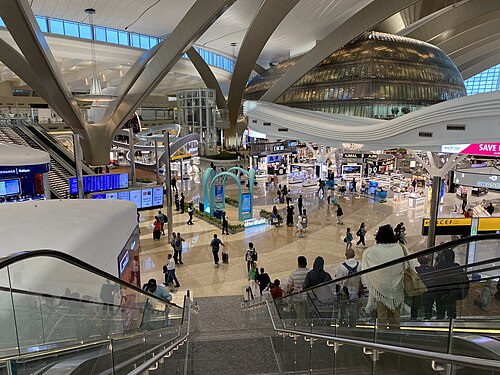
ABU DHABI — Zayed International Airport (AUH), the primary hub for Abu Dhabi and home to Etihad Airways, has partially resumed operations as of March 2, 2026, following a temporary closure triggered by escalating military conflict in the region involving U.S., Israeli and Iranian forces.
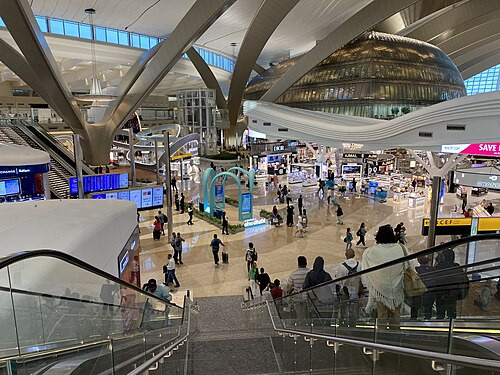
The airport, also known as Abu Dhabi International Airport, reopened in a limited capacity starting Monday evening, allowing select exceptional, repatriation, cargo and repositioning flights to operate under strict coordination with UAE authorities and airlines. However, the vast majority of scheduled commercial flights remain suspended, with Etihad Airways extending its halt on regular passenger services until 2:00 p.m. UAE time on Wednesday, March 4 (some reports indicate Thursday, March 5, reflecting fluid updates).
The partial resumption follows a full airspace closure imposed by the UAE General Civil Aviation Authority (GCAA) on March 1 amid Iranian missile and drone retaliatory strikes in response to prior U.S.-Israeli actions. Debris from intercepted projectiles reportedly caused minor damage at AUH and nearby sites, including an embassy complex, though no major structural impacts or casualties were detailed at the airport itself.
Abu Dhabi Airports, the operator, confirmed the phased reopening in statements on its website and social media, emphasizing that “passengers are advised not to travel to the airport unless they hold a confirmed ticket and have been explicitly advised by their airline to do so.” Access remains restricted to confirmed travelers only, with safety as the top priority. The official Zayed International Airport site displays prominent warnings urging travelers to check airline updates before heading to the facility.
Etihad Airways, the dominant carrier at AUH, reiterated that all scheduled commercial flights to and from Abu Dhabi are suspended through at least mid-afternoon Wednesday. The airline has operated a limited number of repatriation flights since March 2 to assist stranded passengers, with destinations including Paris, Amsterdam, Mumbai, Cairo and London Heathrow. At least 15 such flights departed Monday, per flight-tracking data, but normal schedules are not expected to resume imminently.
“Some repositioning, cargo and repatriation flights may operate in coordination with UAE authorities and subject to strict operational and safety approvals,” Etihad stated. The carrier has issued free rebooking options for affected passengers with tickets issued before February 28 for travel up to March 7, allowing changes to Etihad-operated flights through March 18.
Broader UAE aviation remains heavily disrupted. Neighboring Dubai International (DXB) and other regional hubs like Doha and Bahrain have seen similar partial resumptions, but with more than 90% of scheduled flights canceled in recent days, according to FlightAware and Cirium data. Over 12,300 cancellations across seven major Middle East airports have been recorded since late February, stranding hundreds of thousands of travelers globally.
The conflict’s impact on aviation stems from closed or restricted airspace over Iran, Iraq, Syria and parts of the Gulf, forcing rerouting and heightening risks from potential debris or miscalculation. Defense systems intercepted multiple threats over UAE territory, contributing to the initial shutdown. Flightradar24 and other trackers show sparse activity at AUH on March 3, with most boards listing cancellations.
Travelers face significant challenges. Airlines including Emirates (primarily Dubai-based) and flydubai have resumed limited services for priority repatriations, but advise against heading to airports without direct confirmation. Government advisories from various countries urge citizens to monitor alerts, with some issuing heightened warnings for the region.
The disruption ranks among the most severe for global travel since the COVID-19 pandemic, rivaling past events like the 2010 Eyjafjallajökull eruption or 2014 MH17 incident in scope. Major carriers beyond the Gulf — such as British Airways, Aegean and others — have canceled or suspended services to affected destinations through early March.
Abu Dhabi Airports and the GCAA continue coordinating with international bodies to assess when fuller operations can resume. No specific timeline for normal commercial service has been provided, with decisions tied to ongoing security evaluations and airspace clearances.
Passengers with upcoming travel to or through AUH should:
– Check flight status directly on airline websites or apps (etihad.com for Etihad).
– Contact carriers for rebooking, refunds or accommodation under passenger rights.
– Avoid traveling to the airport without explicit airline approval to prevent congestion and security issues.
– Monitor official sources like zayedinternationalairport.ae or adairports.ae for updates.
As the situation evolves rapidly amid geopolitical developments, aviation experts stress patience and flexibility. The partial reopening offers limited relief for stranded individuals, but full normalcy at Abu Dhabi International Airport depends on de-escalation and restored airspace safety.
For real-time flight information, consult tools like Flightradar24 or airline hotlines. The airport’s focus remains on safe, controlled operations during this unprecedented period.


Respected Australian sports broadcaster Dennis Cometti has died age 76.

Fidelity Profit Soared Last Year Amid Bull Market for Stocks

BE Semiconductor Industries: Fundamentals Tracking In The Right Direction

The NACC handed over gold bars worth 1.5 billion baht, equivalent to 20,976 baht in weight, to the Ministry of Finance after a Supreme Court ruling related to tax fraud.
Key Points
- On February 27, 2026, Surapong Intharathaworn, Secretary-General of Thailand’s National Anti-Corruption Commission, transferred gold bars valued at 1.5 billion baht to the Ministry of Finance, following a Supreme Court ruling confirming the gold belonged to a former Revenue Department chief involved in tax fraud.
- The NACC found that Satit Rungkasiri improperly accumulated wealth through gold purchases from Hua Seng Heng Commodities Co., Ltd. The gold was ruled as the state’s property due to its ill-gotten nature.
- This case is linked to a 4-billion-baht tax fraud investigation implicating at least 10 individuals, including civil servants. Satit Rungkasiri was sentenced to prison, and the gold bars are now officially part of the nation’s assets, concluding the high-profile investigation.
Handing Over of Gold Bars
On February 27, 2026, Surapong Intharathaworn, Secretary-General of Thailand’s National Anti-Corruption Commission (NACC), presented 20,976 baht of gold bars worth 1.5 billion baht to the Ministry of Finance. This handover was mandated by a Supreme Court ruling in case 1256/2567, which confirmed that the gold belonged to the former chief of the Revenue Department. The bars were seized as a result of a major tax fraud investigation, demonstrating the government’s commitment to combat corruption and uphold lawful conduct in public service.
Background on the Tax Fraud Case
The NACC’s previous investigation revealed that Satit Rungkasiri, while serving as director-general of the Revenue Department, had amassed wealth through improper means, particularly through the purchase of gold bars from Hua Seng Heng Commodities Co., Ltd. These assets were classified as ill-gotten gains and were ultimately ruled by the court to belong to the state. This case is part of a broader 4-billion-baht tax fraud investigation implicating at least 10 individuals, including both civil servants and private sector members. Previously, Rungkasiri had been sentenced to prison for his involvement in the fraudulent activities.
Closure of the Case
With the formal transfer of the gold bars, this high-profile case reaches its conclusion, officially adding the bars to the nation’s assets. This event signifies a critical step in demonstrating the government’s efforts to address corruption within its ranks and reaffirms the judicial system’s role in holding individuals accountable. The NACC’s actions reflect a robust approach to ensuring public trust and fostering integrity across governmental operations, illustrating Thailand’s commitment to tackling corruption proactively.
Source : NACC returns 1.5 billion baht in gold seized from tax fraud case to Ministry of Finance
Other People are Reading

Overview The ASEAN region is currently undertaking a massive overhaul of its energy systems to balance rapid economic growth and rising energy demand with the urgent need for deep decarbonization. To achieve a just and responsible energy transition, Southeast Asian nations must address a significant investment gap and the “energy trilemma” of security, affordability, and sustainability.
Key Points
- ASEAN is the world’s fourth-largest energy consumer, with energy demand and carbon emissions both growing at an annual rate of 3%, which is significantly higher than the global average.
- The region faces a massive investment gap, requiring an estimated $150 billion annually in clean energy funding by 2030, while currently attracting only about $30 billion per year.
- Geographical and economic vulnerabilities, such as exposure to rising sea levels and agricultural dependence, make the transition to resilient, low-carbon power systems an urgent necessity.
- The transition is complicated by “young” coal fleets and a grid infrastructure originally designed for conventional thermal power rather than intermittent renewable energy.
- Targeted funding and concessional finance mechanisms, such as the Just Energy Transition Partnership (JETP), are needed to de-risk unattractive investment areas like the early retirement of coal plants.
- Regional policy alignment regarding carbon taxes and sustainable activity taxonomies is essential to create a stable environment for international investors.
- Technology transfer in areas such as carbon capture (CCUS), green hydrogen, and smart grids is critical for modernization.
- A “just” transition must include workforce reskilling and community engagement to ensure that those dependent on the coal economy are not left behind during the shift.
- The “ASEAN Leaders for Just Energy Transition” community, facilitated by the World Economic Forum, has issued a Shared Aspirations Statement to provide a unified voice for the region’s specific challenges and priorities.
ASEAN faces a critical energy transition, aiming for deep decarbonization despite surging demand and significant funding gaps. The region, a major energy consumer, is highly vulnerable to climate change, necessitating an urgent overhaul of its power sector. Key challenges include economic development goals, a young coal fleet, and infrastructure limitations. To succeed, ASEAN requires an estimated $150 billion annually in clean energy investment. Success hinges on mobilizing funds, fostering extensive regional and global collaboration, and aligning policies. A just transition also involves reskilling the workforce and ensuring community buy-in for long-term benefits.
Other People are Reading

Stocks are recovering from early lows as losses moderate, even as crude maintains its geopolitical risk premium following the weekend’s events.
In morning trading, the S&P 500 was down 0.3%. The Dow was down 136 points, or 0.3%. The Nasdaq fell 0.2%. All three indexes were down by more than a percent at the open.
Brent crude prices are hovering around $78.30 a barrel, largely unchanged from prior highs.

Form 4 ATI Inc For: 3 March

Acumen Pharma chief legal officer Meisner sells $28k in shares

Operator
Good day, everyone, and welcome to Cricut Fourth Quarter 2025 Earnings Conference Call. [Operator Instructions] Please note, this conference is being recorded.
Now, it’s my pleasure to turn the call over to the Senior Vice President and Head of Investor Relations, Jim Suva. Please proceed.
Jim Suva
Senior Vice President of Finance, Treasurer & Investor Relations
Thank you, operator, and good afternoon, everyone. Thank you for joining us on Cricut’s Fourth Quarter 2025 Earnings Call.
Please note that today’s call is being webcast and recorded on the Investor Relations section of the company’s website. A replay of the webcast will also be available following today’s call. For your reference, accompanying slides used on today’s call, along with a supplemental data sheet, have been posted to the Investor Relations section of the company’s website, investor.cricut.com.
Joining me on the call today are Ashish Arora, Chief Executive Officer; and Kimball Shill, Chief Financial Officer. Today’s prepared remarks have been recorded, after which Ashish and Kimball will host live Q&A.
Before we begin, we would like to remind everyone that our prepared remarks contain forward-looking statements, and management may make additional forward-looking statements, including statements regarding our strategies, business, expenses, tariffs, capital allocation and results of operations in response to your questions. These statements do not guarantee future performance, and therefore, undue reliance should not be placed upon them.
These statements are based on current expectations
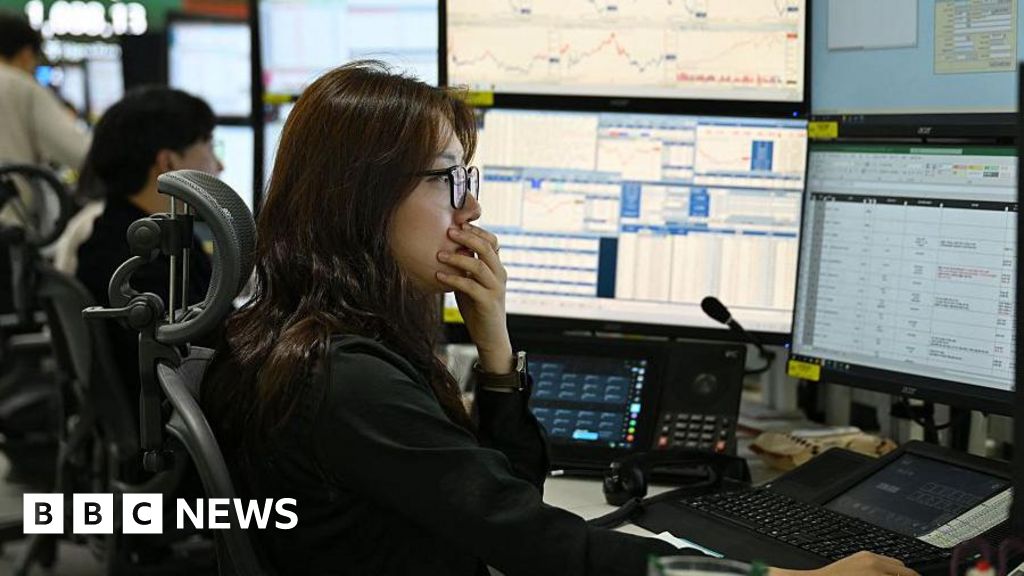
The conflict in the Middle East has rattled financial markets and global energy prices have soared.

IEEE’s 2026 Annual Election Begins on 17 August

Pegou todo meu dinheiro #ironia

World’s biggest astronomy camera seeks to answer pressing questions about the universe


-

 Politics5 days ago
ITV enters Gaza with IDF amid ongoing genocide
-

 Politics20 hours ago
Alan Cumming Brands Baftas Ceremony A ‘Triggering S**tshow’
-

 Fashion4 days ago
Weekend Open Thread: Iris Top
-

 Tech3 days ago
Unihertz’s Titan 2 Elite Arrives Just as Physical Keyboards Refuse to Fade Away
-

 NewsBeat6 days ago
Cuba says its forces have killed four on US-registered speedboat | World News
-
Sports4 days ago
The Vikings Need a Duck
-
 NewsBeat3 days ago
Dubai flights cancelled as Brit told airspace closed ’10 minutes after boarding’
-

 NewsBeat3 days ago
‘Significant’ damage to boarded-up Horden house after fire
-
 NewsBeat6 days ago
Manchester Central Mosque issues statement as it imposes new measures ‘with immediate effect’ after armed men enter
-
 NewsBeat4 days ago
The empty pub on busy Cambridge road that has been boarded up for years
-

 NewsBeat3 days ago
Abusive parents will now be treated like sex offenders and placed on a ‘child cruelty register’ | News UK
-

 Entertainment2 days ago
Baby Gear Guide: Strollers, Car Seats
-

 Business6 days ago
Discord Pushes Implementation of Global Age Checks to Second Half of 2026
-

 Business5 days ago
Only 4% of women globally reside in countries that offer almost complete legal equality
-
 Tech5 days ago
NASA Reveals Identity of Astronaut Who Suffered Medical Incident Aboard ISS
-
 NewsBeat3 days ago
Emirates confirms when flights will resume amid Dubai airport chaos
-
Politics3 days ago
FIFA hypocrisy after Israel murder over 400 Palestinian footballers
-

 Crypto World5 days ago
From Crypto Treasury to RWA: ETHZilla Retreats and Relaunches as Forum Markets on Nasdaq
-

 NewsBeat2 days ago
Is it acceptable to comment on the appearance of strangers in public? Readers discuss
-

 Tech3 days ago
Viral ad shows aged Musk, Altman, and Bezos using jobless humans to power AI