

Crypto World
Will XRP price rally as it eyes breakout above descending trendline?

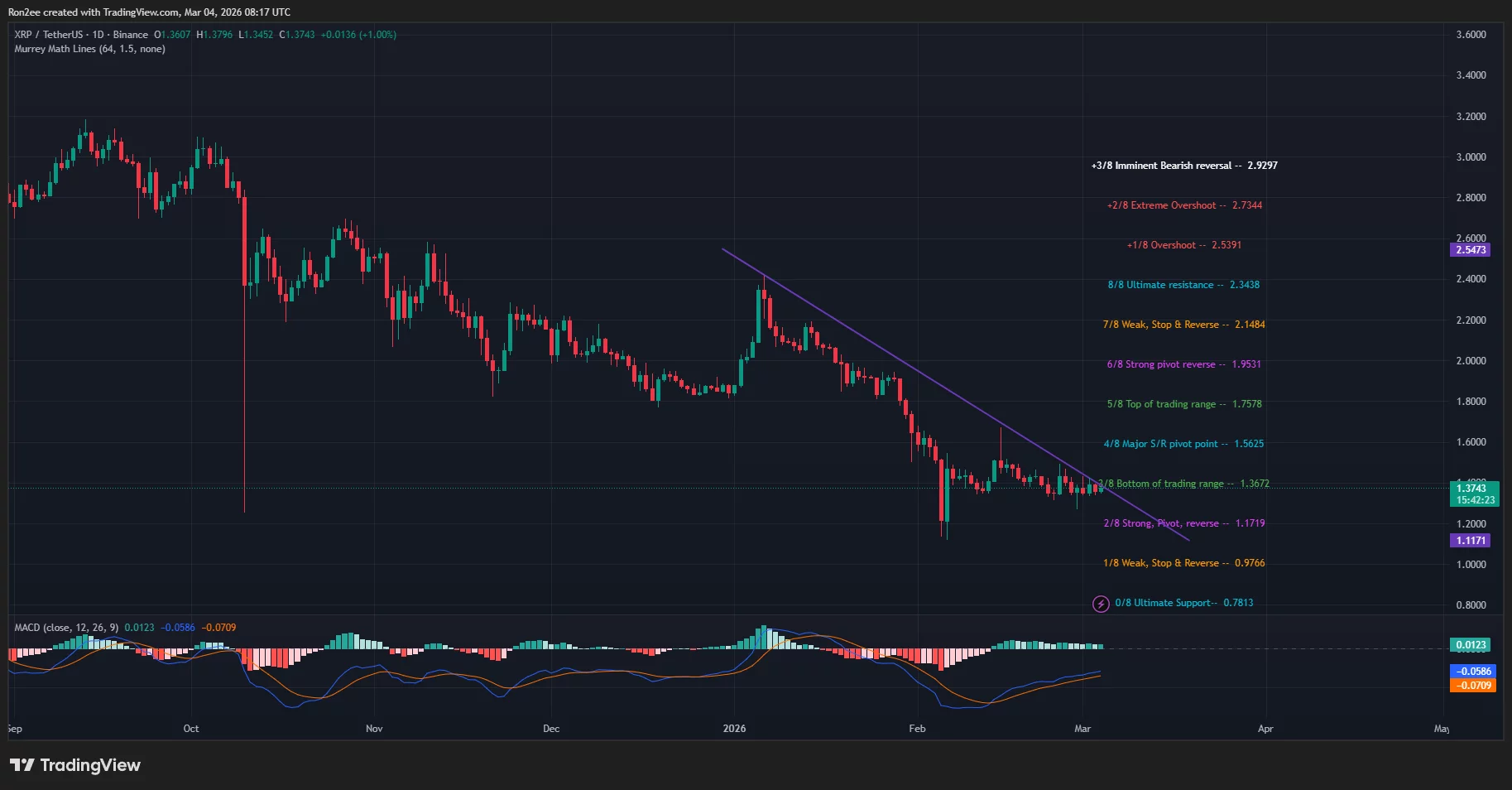
XRP price is close to confirming a breakout from a multi-week descending trendline that could potentially kickstart an uptrend over the coming sessions.
Summary
- XRP price has fallen 43% from its yearly high amid a sector-wide downturn.
- XRP is close to breaking above a descending trendline resistance on the daily chart.
XRP (XRP) price has dropped nearly 17% from mid-February and nearly 43% from its year-to-date high of $2.39.
XRP has mirrored Bitcoin’s recent move lower, as the bellwether slipped beneath several key support levels while investor appetite for risk assets remained subdued amid rising macroeconomic and geopolitical uncertainty.
XRP price has also been in a downtrend as funding rates softened, while the forced unwinding of leveraged long positions accelerated the drop beyond what spot selling alone would have caused.
The lack of institutional inflows since the beginning of this year also played a part in dampening investor demand for the token this year. SoSoValue data shows that the U.S. spot XRP ETFs drew in $88 million over the past three months, far under the $1.16 billion recorded in the November to December period.
On the daily chart, XRP price is close to breaking out from a descending trendline that has been acting as a dynamic resistance level since early January. A successful breakout from the pattern has historically been followed by significant bullish momentum.
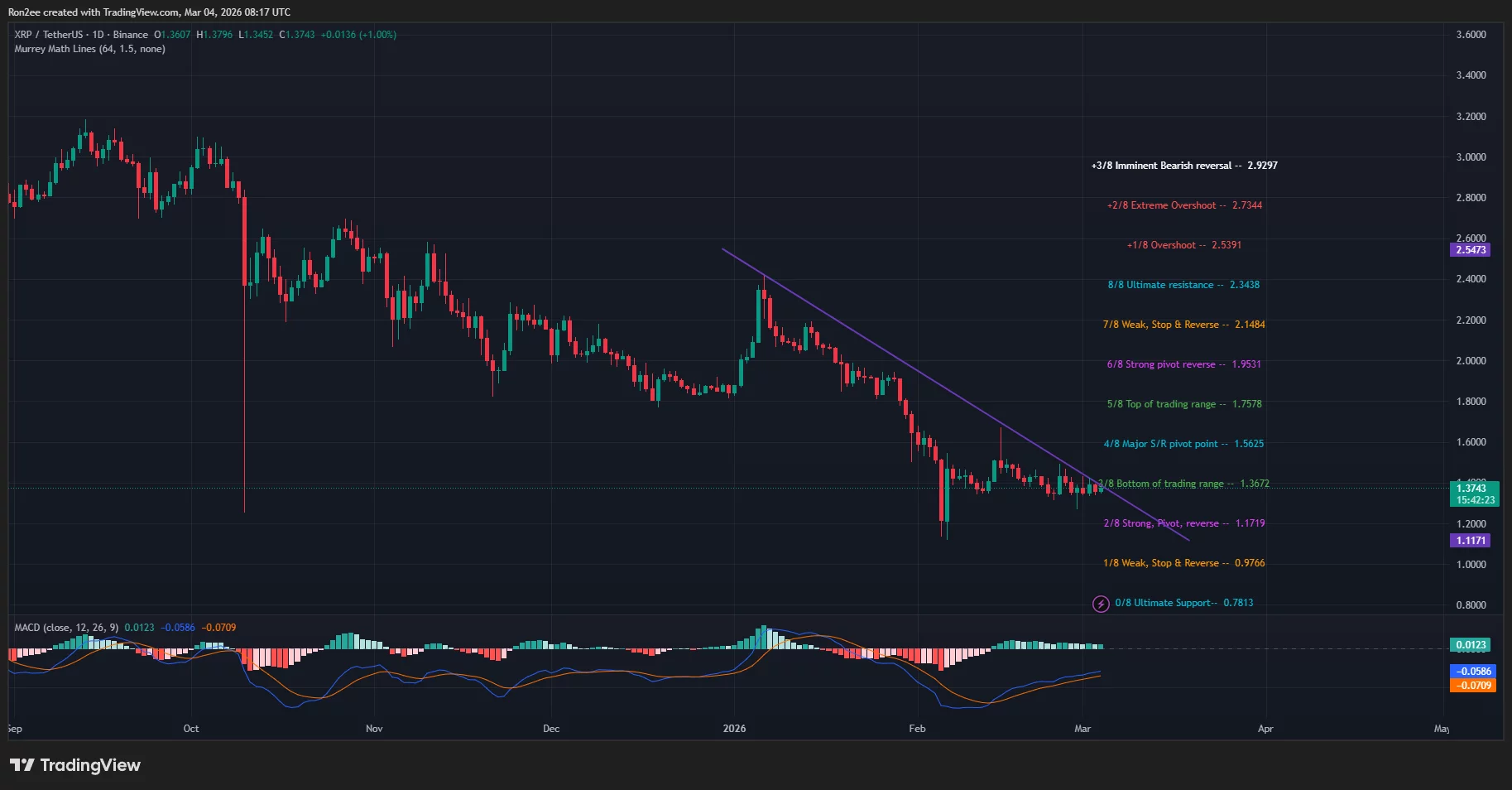
At press time, XRP price was trading at $1.36, close to breaking out of the pattern. Notably, $1.36 also marks the bottom of the trading range in Murrey Math lines. The line is considered a key support level for price reversals.
A breakout from this key psychological level could trigger a sharp rally to $1.75, where the top of the trading range for Murrey lines lies, or even to the strong pivot reverse point at $1.95.
On the contrary, failure to break the resistance could extend the downtrend over the coming weeks, potentially towards the strong pivot reverse of the Murrey lines at $1.17, where bulls could look to re-establish a floor.
Nevertheless, concerns tied to the situation in the Middle East remain a key factor weighing on risk appetite at the moment. Although the volatility seen over the weekend has eased somewhat over the past 48 hours, traders are still likely to stay cautious until clearer signs of de-escalation begin to emerge.
Disclosure: This article does not represent investment advice. The content and materials featured on this page are for educational purposes only.


Leopold Aschenbrenner, a former OpenAI researcher who departed the lab’s superalignment cadre to launch the San Francisco‑based hedge fund Situational Awareness LP, has steered his portfolio toward the AI compute backbone. The latest 13F filing for Q4 2025 reveals a dramatic scale‑up: the fund reports about $5.52 billion in US equity exposures across 29 positions, up from a few hundred million dollars at the start of 2025. Rather than chasing consumer AI software, the strategy bets on the infrastructure that powers the AI boom—power plants, data centers, and the hardware that underpins high‑end computation. The concentration is clear: a small cadre of AI infrastructure names and energy plays that the fund believes will capture the surge in demand for AI workloads.
Key takeaways
- The Q4 2025 13F shows Situational Awareness with roughly $5.52 billion in US equity holdings across 29 positions, signaling a deliberate tilt toward AI infrastructure and energy‑intensive compute.
- Top holdings include CoreWeave, Bloom Energy, Intel, Lumentum, and Core Scientific, reflecting a strategy anchored in data center capacity and related hardware ecosystems.
- The amended Schedule 13D reveals a 9.4% stake in Core Scientific, amounting to 28,756,478 shares with shared voting and disposition power, indicating a levered view on the company’s expansion into AI hosting and HPC environments.
- Beyond pure mining, the fund has increased exposure to Bitcoin miners and energy players such as IREN, Cipher Mining, Riot Platforms, Bitdeer, and Applied Digital, signaling a broader bets on AI compute throughput via specialized energy infrastructure.
- Aschenbrenner’s strategy also includes a noted short in Infosys, reflecting a view that large‑language model adoption and AI coding tools could pressure traditional outsourcing software services models.
Tickers mentioned: $BTC
Market context: The shift underscores a growing convergence between crypto mining and AI compute ecosystems, where megawatt‑dense sites and long‑term data‑center arrangements are increasingly treated as scarce, high‑value assets in the new compute economy.
Sentiment: Neutral
Price impact: Neutral. The moves reflect strategic positioning in a sector undergoing structural changes rather than immediate price catalysts.
Trading idea (Not Financial Advice): Hold. The cross‑section of AI infrastructure and mining assets suggests exposure to broader compute demand, but the concentration in a handful of names warrants careful risk management.
Market context: The AI compute narrative is evolving from a focus on chip supply and software models to ownership of the physical and energy assets that enable massive data‑center deployments. The post‑halving environment has encouraged miners to pivot toward hosting AI workloads, recasting megawatts and data‑center capacity as strategic assets rather than mere hash rate capacity.
Why it matters
The portfolio strategy signals a shift in how investors view AI reverberations across sectors. By placing heavy bets on AI infrastructure players like CoreWeave and Bloom Energy, the fund aligns with the premise that the next era of AI growth will be defined by the reliability and scalability of compute foundations. CoreWeave, a major AI cloud firm, has pursued long‑term HPC hosting contracts, reinforcing the idea that enterprise‑grade compute capacity will anchor AI deployment for years to come. That dynamic is echoed in the fund’s positioning around Core Scientific and other miners‑turned‑infrastructure operators, highlighting a broader trend where mining assets are repurposed as high‑density compute farms capable of supporting AI workloads.
Moreover, the mix of energy‑oriented firms with traditional chip and optics players points to a convergence of energy efficiency, power reliability, and advanced hardware as the bedrock of AI scalability. The emphasis on Bloom Energy and similar energy infrastructure names acknowledges that the economics of AI compute increasingly hinge on dependable, low‑cost power and resilient facilities. In this context, the bitcoin ecosystem—often used as a proxy for large‑scale, independent energy demand—appears intertwined with broader infrastructure plays, rather than living in its own isolated corner of markets. Bitcoin (CRYPTO: BTC) remains a barometer for how much compute demand miners can leverage, particularly as large data centers seek to optimize energy intensity and uptime amid rising competition for grid capacity.
The presence of a substantial Core Scientific stake via an amended Schedule 13D demonstrates the degree to which the fund leverages governance and ownership rights to influence a company’s expansion into AI hosting and HPC. This move aligns with a broader industry pattern where miners diversify beyond hashing to become multipurpose data‑center operators that can monetize surplus capacity across AI workloads, rendering traditional hash rate metrics less decisive in evaluating value creation.
Finally, the Infosys short reflects an acceleration of AI coding tools and large‑language models that, in the hedge fund’s view, could erode the traditional outsourcing model long relied upon by software services giants. If AI tools increasingly curtail demand for routine outsourcing tasks, equities tied to that segment may face new headwinds, even as AI infrastructure assets benefit from expanding compute demand. The net effect is a nuanced stance: bets that the core compute economy—powered by energy, data centers, and HPC—will drive durable value, tempered by selective shorts on areas perceived as vulnerable to AI displacement.
What to watch next
- Next 13F filing cycles (early 2026) to reveal whether the $5.5B positioning is sustained or expanded across additional AI infrastructure names.
- Any new or amended Schedule 13D/13G disclosures around Core Scientific or other holdings, signaling shifts in control or strategy.
- Updates on long‑term HPC contracts and data‑center expansions tied to CoreWeave and similar operators, which would validate the thesis of AI hosting as a growth engine.
- Further moves in mining‑to‑infrastructure transitions, including additional energy‑asset investments from the broader field, and how such moves interact with regulatory and grid‑capacity constraints.
- Regulatory or policy developments affecting large‑scale AI compute deployments and crypto mining operations, which could influence capital flows into AI infrastructure equities.
Sources & verification
- Situational Awareness 13F Filing, Q4 2025 — 13f.info
- Amended Schedule 13D for Core Scientific — filing PDF
- Fortune profile on Leopold Aschenbrenner and the fund’s size — fortune.com
- Hut 8 research/coverage on AI data center pivot and compute revenue — cointelegraph.com
- CoreWeave and AI data center partnerships — cointelegraph.com
Market reaction and key details
Situational Awareness has built a narrative around a recalibration of AI investment risk, moving from a focus on peak‑AI software potential to the tangible, capital‑intensive backbone that makes AI feasible at scale. The 13F results highlight how a single fund can tilt an entire sub‑sector toward a handful of strategic names, elevating the importance of long‑term contracts, energy reliability, and data‑center capacity in determining which players benefit most from the AI era. While the broader market continues to wrestle with volatility and regulatory questions, the fund’s emphasis on compute infrastructure—paired with a measured portfolio tilt toward miners pivoting to AI hosting—illustrates a disciplined approach to navigating the evolving landscape of AI, crypto, and high‑performance computing.
What to watch next


Crypto exchange Kraken has become the first digital asset company to secure access to the Federal Reserve’s core payments infrastructure.
This marks a watershed moment in the integration of crypto into the U.S. financial system, even as the exchange eyes a public listing.
Kraken Becomes First Crypto Firm to Win Access to Fed’s Core Payments System
According to a report by The Wall Street Journal, Kraken’s Wyoming-chartered banking arm, Kraken Financial, has been granted a so-called “master account” at the Federal Reserve.
The approval gives the firm direct access to the same payment rails used by thousands of U.S. banks and credit unions to move money across the financial system.
The move allows Kraken Financial to settle U.S. dollar transactions directly through the Fed’s infrastructure, rather than relying on intermediary banks.
Notably, the firm will not receive the full suite of services traditional banks enjoy, such as earning interest on reserves held at the central bank.
Still, the approval represents a significant breakthrough for an industry that has long struggled to access core banking plumbing.
“This is a watershed milestone in the history of digital assets,” WSJ reported, citing Senator Cynthia Lummis, a vocal advocate for crypto innovation.
From Wyoming Bank Charter to Fed Master Account: Kraken’s Long March Toward Wall Street Legitimacy
The development builds on groundwork laid in 2020, when Kraken became the first digital asset company in U.S. history to receive a bank charter recognized under federal and state law.
The firm obtained a Special Purpose Depository Institution (SPDI) charter from Wyoming. This enabled it to offer regulated deposit-taking, custody, and fiduciary services tailored to blockchain companies.
“Our vision is to become the world’s trusted bridge between the crypto economy of the future and today’s existing financial ecosystem,” Kraken said at the time.
Access to a Fed master account significantly advances that vision.
Direct settlement capability could allow Kraken to handle transactions more quickly and seamlessly for institutional clients and professional traders. This reduces counterparty risk and operational friction.
The approval also lands at a politically favorable moment. Under President Donald Trump, who has pledged to make the U.S. the “crypto capital of the world,” regulatory attitudes toward digital assets have shifted markedly compared to prior years.
Now, there are more industry-friendly appointments and legislative momentum around crypto frameworks.
What It Means for Kraken’s Prospective IPO
Strategically, the milestone could strengthen Kraken’s positioning ahead of a widely anticipated initial public offering.
The exchange has been expanding aggressively, completing six acquisitions in roughly a year. The company is reportedly targeting a $500 million raise at a valuation of around $15 billion.
Direct access to the Fed’s payments system enhances Kraken’s institutional credibility at a pivotal time.
For prospective IPO investors, the combination of a bank charter, expanding product suite, and now direct integration with U.S. monetary infrastructure may make the exchange’s public debut more compelling.
Still, questions remain over whether quick acquisition-driven growth translates into durable revenue momentum.
Notwithstanding, with Fed access secured, Kraken has undeniably crossed a line that crypto firms have spent years trying to reach. It has brought digital assets one step closer to the heart of the U.S. financial system.
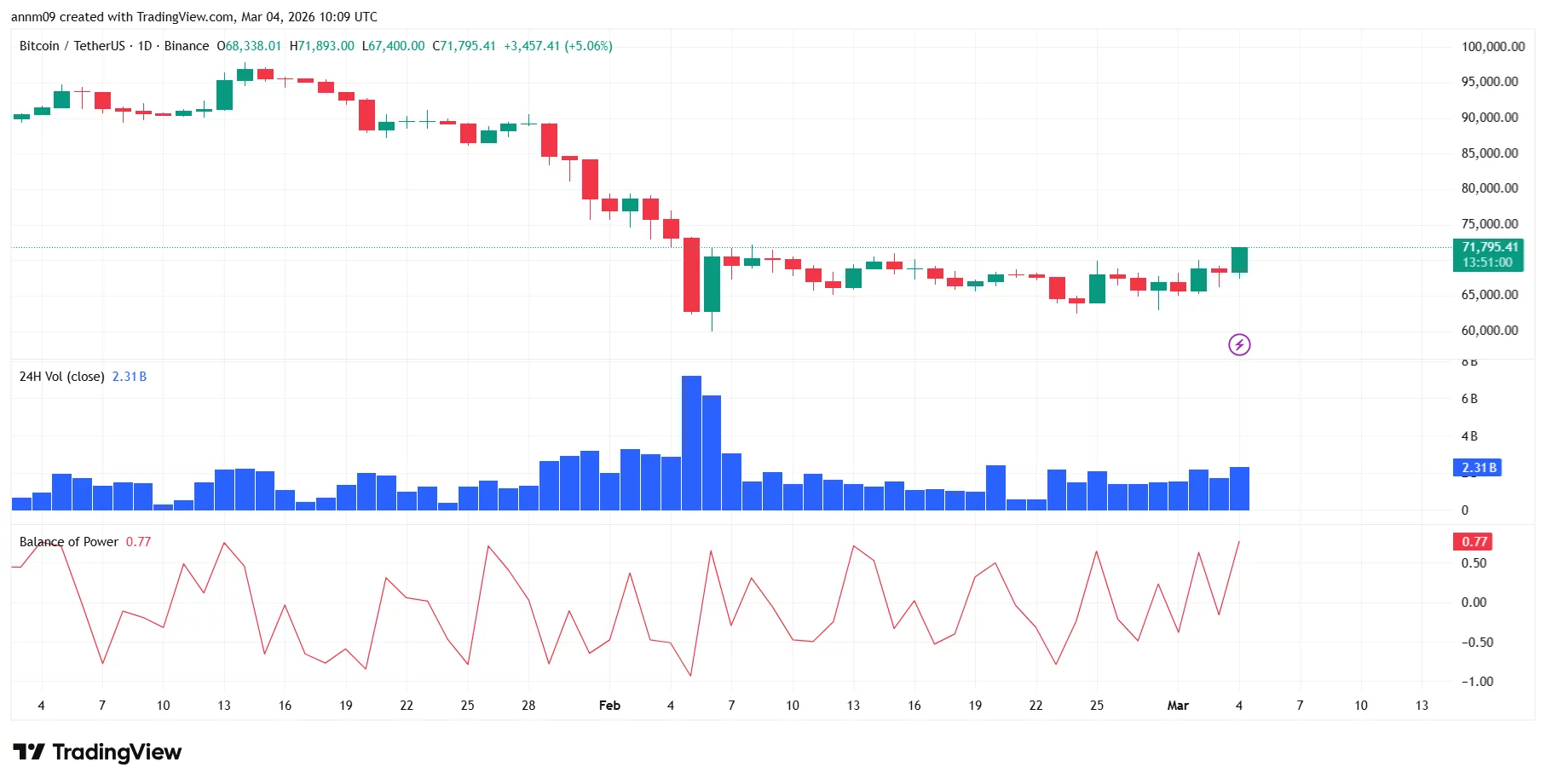
Bitcoin price pushed back above $71,000 on Wednesday, defying geopolitical jitters tied to escalating Middle East tensions and a spike in global oil prices, as on-chain data suggests selling pressure may be drying up.
Summary
- Bitcoin rose above $71,000, gaining over 5% and challenging the upper end of its recent consolidation range.
- Exchange inflows dropped to 28,235 BTC, a level historically linked to reduced selling pressure and potential accumulation phases.
- Technical indicators such as Balance of Power turning positive suggest short-term buyer momentum is strengthening.
Bitcoin seller exhaustion? Exchange flows fall to near-cycle lows
According to analysis from CryptoQuant, the recent military intervention in Iran sent shockwaves through energy markets, with WTI crude jumping above $75 and Brent topping $82 after successive 6% gains. While the broader macro backdrop remains fragile and the bear market structure technically intact, Bitcoin has shown notable relative strength.
At the time of the CryptoQuant assessment, Bitcoin (BTC) was trading near $68,637 and approaching what analysts describe as an accumulation zone. A key metric backing that thesis is Exchange Inflow, the amount of BTC transferred to exchanges, often a precursor to selling.
Historically, readings below 40,000 BTC have coincided with weak selling pressure and market bottoms, while levels above 90,000 BTC have marked cycle tops.
On March 3, 2026, exchange inflows registered just 28,235 BTC, dramatically lower than prior cycle highs that ranged between 97,587 BTC and 134,619 BTC. The subdued inflow suggests sellers may be exhausted, even as global instability persists.
Bitcoin price action and key levels
Based on the attached daily chart, Bitcoin is currently trading around $71,795 after posting a strong green daily candle, up more than 5%. The move follows a sharp correction from late January highs near $95,000, with price finding a local bottom in early February around the $63,000–$65,000 region.
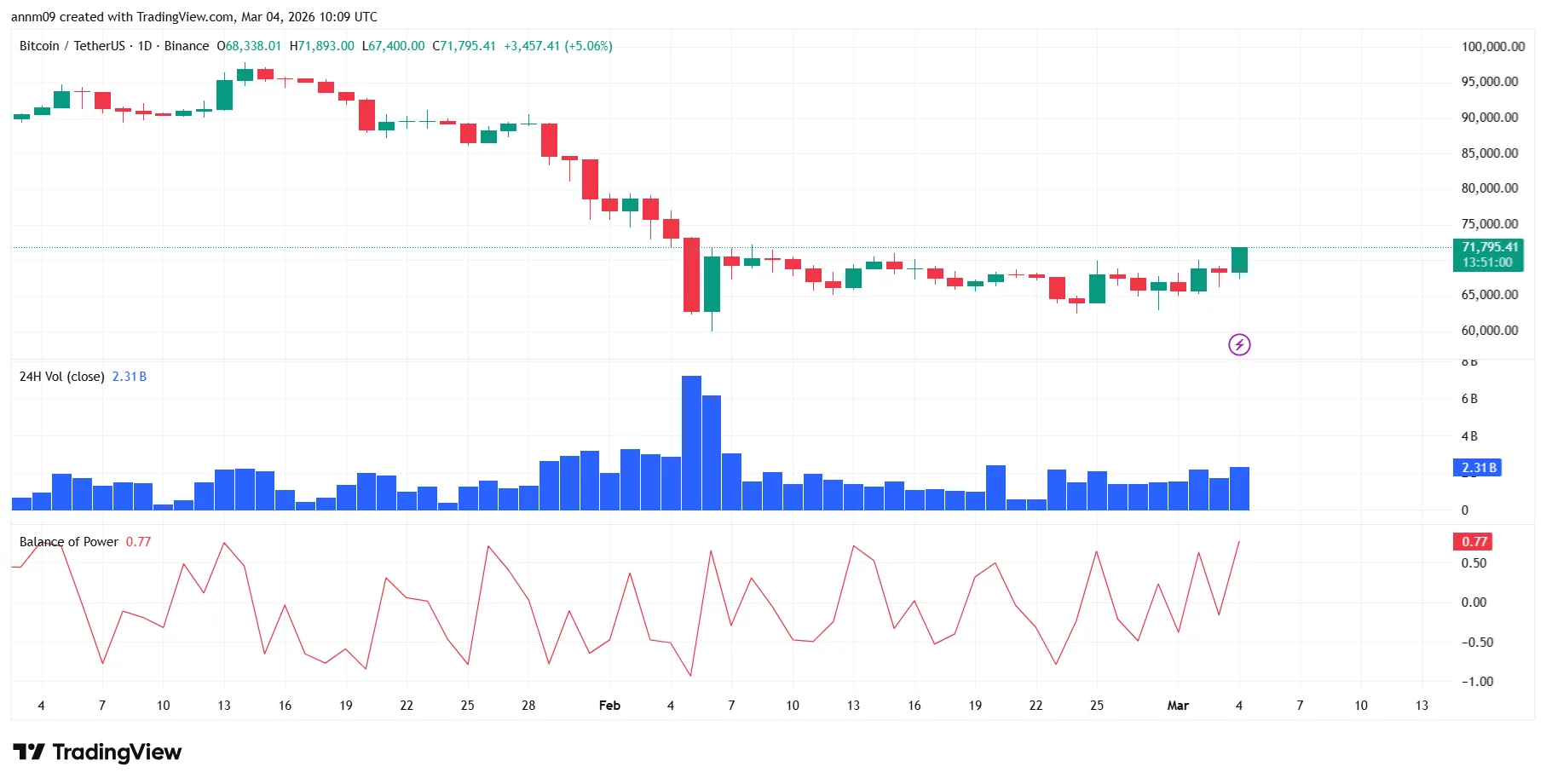
Since that capitulation-style drop, Bitcoin has been consolidating in a broad range between roughly $65,000 support and $72,000 resistance. The recent breakout attempt above $71,000 puts price back near the upper boundary of this consolidation band.
Immediate resistance now sits around $72,000–$73,000, followed by the heavier supply zone near $78,000–$80,000, where prior breakdown momentum accelerated. On the downside, first support lies at $68,000, with stronger structural support near $65,000.
A loss of that level would reopen the path toward the February low near $63,000.
Volume has picked up modestly on the recent rebound, though it remains below the spike seen during the early February sell-off.
Meanwhile, the Balance of Power indicator has turned positive, currently reading around 0.77, signaling buyers are gaining short-term control after weeks of sideways churn.
While the broader macro picture remains uncertain, Bitcoin’s ability to rally through geopolitical stress, combined with low exchange inflows, suggests the market may be transitioning from distribution to early-stage accumulation.
A decisive daily close above the $72,000–$73,000 zone would strengthen the case for a broader recovery attempt.
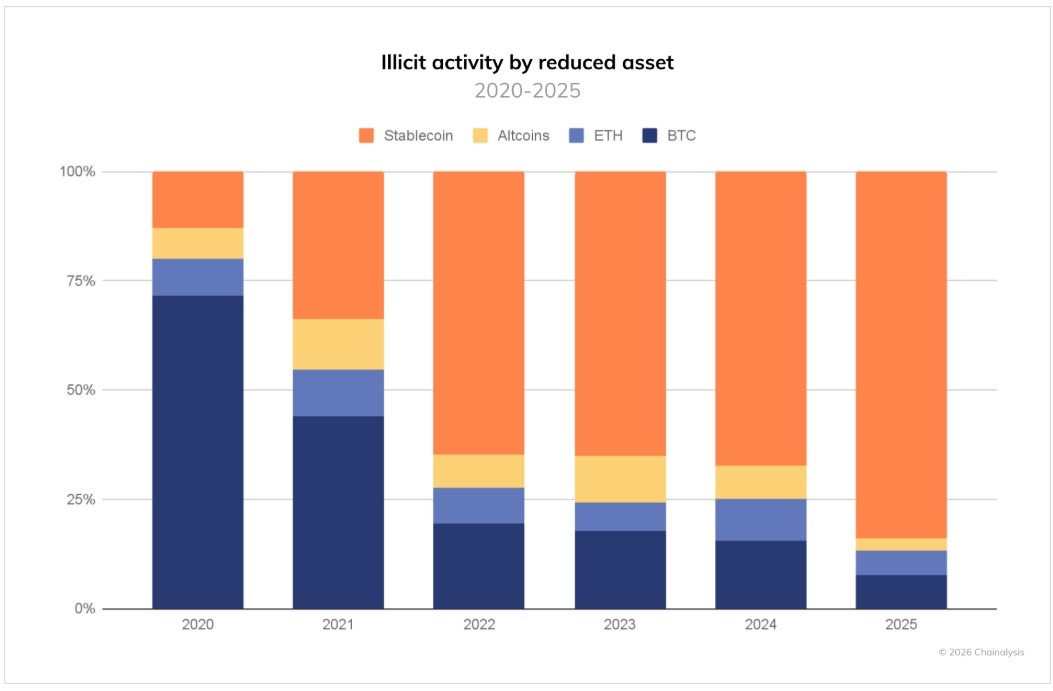
Peer-to-peer transfers made through self-custody crypto wallets are a key weak point in the stablecoin ecosystem because they can take place without a regulated intermediary, the Financial Action Task Force (FATF) said in a new report urging countries to tighten oversight as stablecoins spread into payments and cross-border transfers.
In its targeted report on stablecoins, unhosted wallets and P2P transactions, the global anti-money laundering watchdog said transactions conducted directly between users through unhosted wallets can occur without regulated intermediaries such as exchanges or custodians.
The FATF said this structure can create gaps in Anti-Money Laundering (AML) oversight because the transactions occur outside entities required to monitor activity and report suspicious transfers. The report highlighted growing regulatory attention on stablecoins as their use expands across trading, payments and cross-border transfers.
The watchdog called on jurisdictions to assess the risks created by stablecoin arrangements and apply “proportionate” mitigation measures, which can include enhanced monitoring when self-custody wallets interact with regulated platforms and clearer AML and counterterrorism financing obligations for entities involved in issuing and distributing stablecoins.
P2P stablecoin transfers seen as regulatory blind spot
The FATF said P2P transfers via self-custody wallets represent a “key vulnerability” because they can bypass AML controls typically enforced by regulated intermediaries.
These transfers occur directly between users without the involvement of virtual asset service providers (VASPs) or financial institutions subject to compliance obligations, potentially limiting authorities’ ability to detect suspicious activity.
Related: Stablecoins, sanctions and surveillance: Why 2025 reshaped crypto’s regulatory reality
The FATF noted that transactions on public blockchains remain traceable because activity is recorded on-chain. However, the pseudonymous nature of wallet addresses can make attribution more difficult.
Related: France arrests six suspects over crypto ransom kidnapping of magistrate
Illicit activity accounts for only 1% of the total crypto transaction volume
On Jan. 9, blockchain analytics firm Chainalysis found that illicit crypto addresses received at least $154 billion in 2025, with stablecoins accounting for 84% of illicit transaction volume.
The FATF reiterated the stat in its report, emphasizing the current usage of stablecoins in illicit transactions.

Chainalysis said illicit activity remains a small share of total on-chain volume, even as absolute dollar totals rose.
In the same report, Chainalysis said illicit transactions accounted for less than 1% of the total crypto transaction volume.
Magazine: Hong Kong stablecoins in Q1, BitConnect kidnapping arrests: Asia Express


OKX has just introduced a native AI layer on OnchainOS, its developer-focused onchain platform, designed to enable AI agents to act autonomously on blockchain networks.
The layer bridges traditional decentralized tooling with machine-native automation for trading, wallet management, payments and market data access.
More on OnchainOS
OnchainOS is the onchain toolkit and execution environment built by OKX’s Web3 team, intended to support developers and automated agents across multiple blockchain networks.
The platform ties together wallets, real-time market data, trading interfaces, and programmable execution in a single framework that AI agents can call into.
Unlike basic smart contract SDKs or standalone APIs, the goal of this AI layer is to let agents perform entire workflows (from reading prices to executing transactions) without developers wiring together separate components. It unifies familiar building blocks such as wallet infrastructure, liquidity routing, and onchain data feeds into a cohesive execution stack.
OKX says OnchainOS already supports more than 60 blockchain networks and aggregates liquidity across 500+ decentralized exchanges (DEXs), all while sitting on proven infrastructure that handles billions of API calls and high volumes of trading activity.
What the AI Layer Offers Developers and Agents
The new capabilities are grouped into a set of core modules that developers can build with:
- Wallet functionality: Agents can query balances, send transactions, and retrieve cross-chain history.
- Autonomous payments: Using the x402 pay-per-use protocol, agents can initiate and settle transactions without manual intervention and, in certain cases, with zero gas costs on OKX’s X Layer.
- Smart trading: Aggregated routing across hundreds of DEXs enables agents to source best prices for swaps and execute trades.
- Structured market data: Real-time onchain data feeds covering tokens, transfers, trades, and account information help agents decide when and how to act.
- DApp Connect: Direct integration of OKX Wallet into any decentralized app, expanding connectivity options.
These building blocks are designed to work together so that simple instructions can produce complex autonomous results. For example, an agent connected to OnchainOS could be instructed in plain language to swap ETH for USDC if a price threshold is reached, handling everything from price monitoring to execution onchain without further human input.
Multiple Access Paths for Builders
OKX offers three main ways developers and teams can integrate with OnchainOS:
- AI Skills: Agents interact through human-friendly descriptions of what they want to do, bypassing low-level API wiring.
- MCP (Model Context Protocol): A direct connection between OnchainOS and AI agent frameworks or LLM applications, meaning models like Claude Code, Cursor or OpenClaw can call onchain functionality natively.
- Open API: For developers who want detailed programmatic control, direct RESTful access to every capability is available.
Why Is This Big
Agents capable of autonomously operating onchain promise to reduce manual overhead for trading, arbitrage, portfolio rebalancing and data-driven decisions. While AI wallets today might handle simple tasks like sending tokens or checking prices, OnchainOS focuses on orchestrating multi-step workflows that combine market insight with execution logic – all within a unified system.
This could accelerate experimentation in algorithmic trading, liquidity management strategies, onchain risk monitoring, or dynamic portfolio rules – areas where developers have previously had to piece together separate APIs and feeds.
The Broader Context
The launch comes amid a period of growing interest in the mix of AI and blockchain. Coverage on this upgrade noted that the AI layer builds on OKX’s existing wallet and DEX infrastructure, pulling everything into a single execution framework for agents operating cross-chain.
OnchainOS’ scalability and reliability metrics, such as sub-100ms response times and sustained throughput at scale, are highlighted by OKX as foundational to supporting autonomous operations over time.
What’s Next?
OKX says OnchainOS with the new AI layer is available now to developers worldwide. Documentation and starter guides have been published to help builders deploy their first AI agents and decentralized applications using the toolkit.
TLDR
- The precious metal plunged almost 5% before staging a 2% recovery as bargain hunters stepped in
- Dollar strength, with gains of approximately 1.5% this week, is limiting gold’s upward momentum
- Geopolitical tensions between the US and Iran are boosting safe-haven flows while simultaneously elevating crude prices
- Higher energy costs are intensifying inflation concerns, dampening prospects for Federal Reserve monetary easing
- Market participants now see 80% probability of multiple rate reductions this year, down from complete certainty of two cuts just days ago
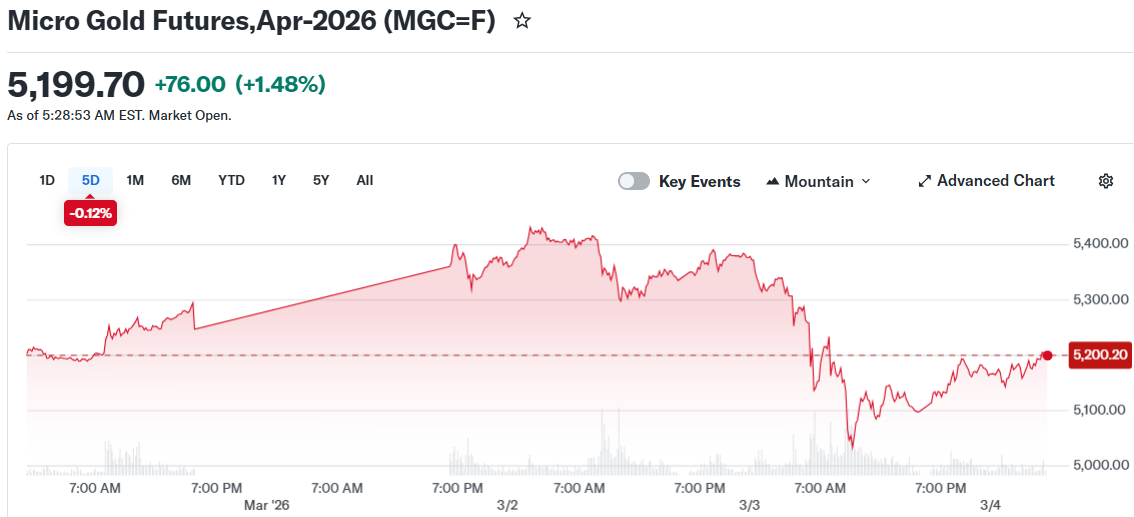
The gold market experienced dramatic volatility as prices plummeted on Tuesday before staging a notable recovery Wednesday morning, with market participants balancing geopolitical risk appetite against greenback appreciation.
Spot gold advanced 1.6% to reach $5,171.89 per ounce during late London trading hours. This rebound followed a substantial 4.5% decline in the prior session, marking one of the most significant single-day retreats in recent trading history.
The yellow metal reached unprecedented heights above $5,595 per ounce during the final weeks of January. Year-to-date gains have approached 20%.
The previous session’s downturn resulted from a significant rally in the US Dollar Index, which climbed nearly 1.5% across two trading days to touch six-week peaks. Dollar appreciation typically pressures gold valuations by making the commodity costlier for international purchasers.
Portfolio rebalancing also contributed to selling pressure, as certain investors liquidated gold holdings to offset deficits elsewhere in their investment allocations.
Silver experienced an even sharper correction, falling over 8% Tuesday before rebounding 4.1% to $85.38 during Wednesday’s session. Platinum decreased 10% before recovering 2.8% to settle at $2,148.50 per ounce.
Iran Conflict Drives Safe-Haven Demand
The US-Israeli military operations against Iran have entered their fifth consecutive day. Israeli forces conducted additional strikes on Tehran Tuesday, targeting a facility in Qom where religious leaders had assembled to select a replacement for Supreme Leader Ayatollah Ali Khamenei, as reported by Israel’s Kan News. Iran’s semi-official Mehr news agency acknowledged the strike but indicated the structure was vacant during the attack.
The escalating conflict has created turbulence across worldwide financial markets and sustained elevated investor anxiety. Concerns regarding expanded regional destabilization continue mounting as Iran has threatened retaliation following American military actions against Iranian-affiliated installations.
Shipping activity through the Strait of Hormuz, a critical chokepoint handling approximately one-fifth of global oil and natural gas transport, has ground nearly to a standstill. President Trump announced the US would supply naval protection and insurance coverage for oil vessels navigating the strategic waterway, though maritime industry representatives characterized the solution as incomplete.
Rising Oil Prices Complicate Rate Cut Expectations
Elevated crude prices are intensifying inflation projections. This development is reducing the likelihood that central banking institutions, particularly the Federal Reserve, will implement rate reductions in the near term.
Market participants currently assign 80% probability to multiple quarter-point Fed rate cuts materializing this year. Just last Friday, financial markets had fully incorporated expectations for two rate reductions.
Elevated interest rate environments present challenges for gold since the asset generates no yield.
According to CFTC records, money managers’ net bullish positions in gold have declined since late January to approach decade-low levels. Market analysts suggest this diminished positioning may establish a floor for potential price declines.
In China, government PMI statistics indicated manufacturing sector contraction, while independent survey data revealed better-than-anticipated expansion, creating contradictory indicators from the planet’s second-largest economy.
Remember: Preserve all tokens like [[EMBED_0]], [[IMG_0]], [[LINK_START_0]], [[LINK_END_0]], [[SCRIPT_0]], [[FIGURE_0]] etc. exactly as they appear. These are placeholders for embeds, images, and links that must not be changed.


TLDR
- Adidas projected 2026 operating profit of €2.3 billion, falling short of the €2.72 billion analyst consensus estimate
- The sportswear giant faces approximately €400 million in combined pressures from U.S. tariffs and foreign exchange challenges
- Shares declined approximately 7–8% during Frankfurt trading session after the guidance release
- 2025 fiscal year performance was robust — operating profit surged 54% to €2.06 billion alongside record-breaking revenue of €24.8 billion
- Bjorn Gulden’s tenure as CEO was extended until 2030, while the company announced plans to raise dividends by 40% to €2.80 per share
Adidas posted impressive 2025 numbers, but the market’s focus has shifted forward — and the outlook has left shareholders disappointed.
The German athletic apparel giant announced record annual revenue of €24.8 billion, representing approximately 5% growth, while net income jumped 75% to reach €1.34 billion. Operating profit climbed 54% to €2.06 billion, significantly exceeding the company’s initial guidance range of €1.7–1.8 billion from the beginning of last year.
When adjusted for currency fluctuations, revenue expanded 13%, with double-digit percentage increases recorded across every market and distribution channel. The company’s gross margin strengthened by 0.8 percentage points, reaching 51.6%.
The fourth quarter also demonstrated strength. Currency-neutral revenue increased 11% to €6.1 billion, with the direct-to-consumer segment posting double-digit growth throughout all geographic regions. Gross margin expanded by 1 percentage point to 50.8%, while operating profit more than doubled, hitting €164 million.
So what triggered the 7–8% share price decline?
The answer lies in forward guidance. Adidas projected 2026 operating profit at approximately €2.3 billion — substantially below the Visible Alpha analyst consensus estimate of €2.72 billion. RBC Capital Markets analyst Piral Dadhania characterized this as suggesting a 15% consensus earnings reduction “at face value.”
Tariffs and Currency Take a Bite
The company identified a combined €400 million challenge stemming from U.S. tariff policies and adverse foreign exchange fluctuations. Adidas produces a significant portion of its merchandise in Asian nations now facing U.S. import duties, creating greater exposure compared to certain competitors. Additionally, a strengthening euro relative to the dollar has diminished the value of international earnings.
Deutsche Bank characterized the guidance for operating income and profit margins as “slightly weaker-than-expected.”
The implied operating margin for 2026 — approximately 8.5–8.8% — would fall short of Adidas’s own 10% medium-term objective, according to RBC’s analysis.
Regarding revenue, Adidas forecasted currency-neutral growth in the high-single-digit percentage range for 2026, representing roughly €2 billion in additional sales. North America and Greater China are anticipated to drive growth, with low-double-digit percentage expansion projected for both markets.
Mid-Term Outlook Offers Some Comfort
Adidas also unveiled a multi-year strategic plan, projecting high-single-digit revenue growth and mid-teens operating profit compound annual growth rate (CAGR) spanning 2026–2028.
Morgan Stanley observed that this type of medium-term guidance is “relatively rare” and indicated it serves to “soften the blow” of the near-term shortfall. With shares trading at approximately 13x 2026 earnings when results were announced, the investment bank adopted a more constructive perspective on the broader trajectory.
The company also proposed raising its dividend by 40% to €2.80 per share — signaling confidence in cash flow generation despite near-term challenges.
CEO Bjorn Gulden’s contract received an extension through 2030. RBC described this as “reassuring,” highlighting his comprehensive knowledge of the sports industry. Gulden, who assumed leadership in 2023 following the controversy surrounding the Ye collaboration, has consistently exceeded the guidance targets he established at the beginning of each fiscal year.
Adidas also revealed intentions to appoint Nassef Sawiris as chairman.
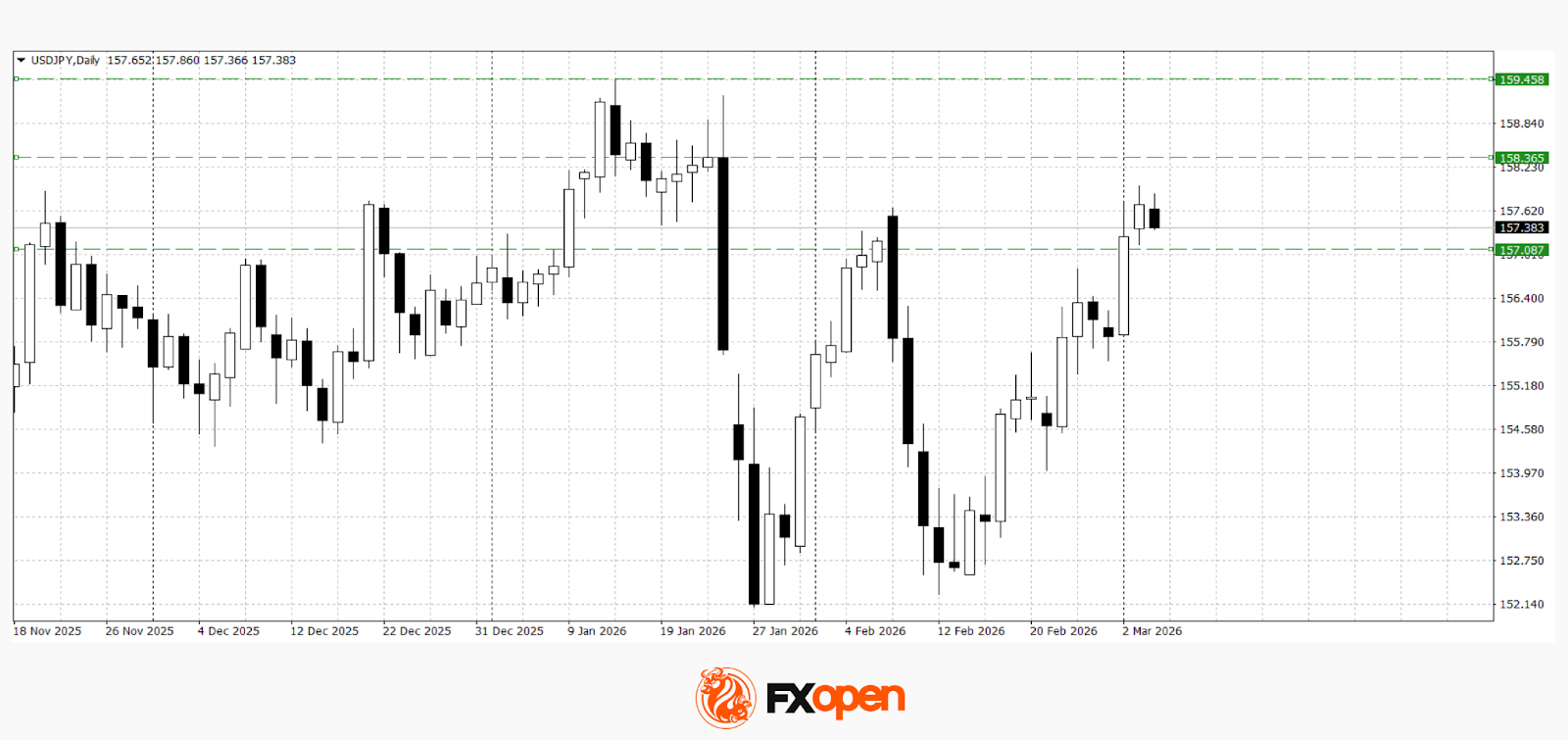
The dollar strengthened as geopolitical tensions in the Middle East intensified. Heightened uncertainty traditionally boosts demand for safe-haven assets and dollar liquidity, supporting the US currency against a range of peers. An additional factor remains the resilience of US macroeconomic indicators, which limits expectations of an imminent easing of the Federal Reserve’s monetary policy.
Amid the escalation of the conflict, investors are reducing risk exposure and reallocating capital into more defensive instruments. As a result, volatility has increased and capital inflows into dollar-denominated assets have strengthened, while traditional safe-haven currencies are showing a mixed reaction.
USD/JPY
The USD/JPY pair maintains its upward structure and is approaching the year’s highs in the 158.40–159.50 range. Despite the yen’s status as a “safe-haven asset”, the dollar retains the advantage due to higher US Treasury yields and stable expectations regarding the Federal Reserve’s policy rate. Should geopolitical tensions continue to intensify, a spike in volatility and a sharp correction towards 157.00 are possible; however, momentum currently remains on the dollar’s side.
Key events for USD/JPY:
- today at 15:15 (GMT+2): US ADP non-farm employment change;
- today at 16:45 (GMT+2): US services sector business activity index;
- today at 17:00 (GMT+2): US ISM non-manufacturing PMI.
USD/CHF
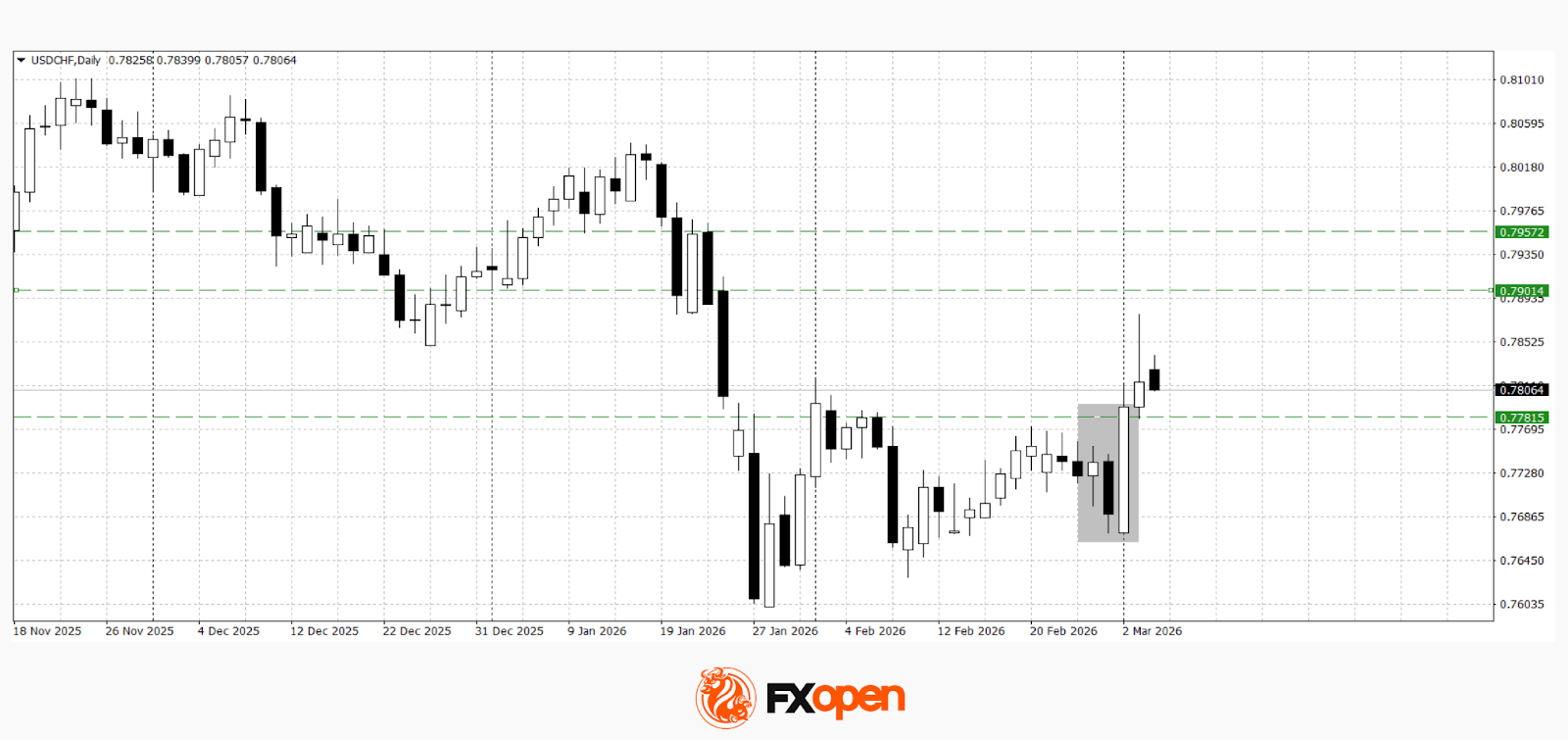
The USD/CHF pair is showing moderate dollar strength, although price action remains relatively restrained due to the Swiss franc’s “safe-haven” status. Nevertheless, technical analysis of USD/CHF suggests potential upside towards 0.7900–0.7950, as a “bullish engulfing” pattern has formed and been confirmed on the daily timeframe. The bullish scenario would be invalidated by a confident move below 0.7780.
Key events for USD/CHF:
- today at 09:30 (GMT+2): Switzerland consumer price index;
- today at 11:30 (GMT+2): Swiss National Bank press conference;
- tomorrow at 10:00 (GMT+2): Switzerland unemployment rate (seasonally adjusted).
Trade over 50 forex markets 24 hours a day with FXOpen. Take advantage of low commissions, deep liquidity, and spreads from 0.0 pips (additional fees may apply). Open your FXOpen account now or learn more about trading forex with FXOpen.
This article represents the opinion of the Companies operating under the FXOpen brand only. It is not to be construed as an offer, solicitation, or recommendation with respect to products and services provided by the Companies operating under the FXOpen brand, nor is it to be considered financial advice.
US spot Bitcoin ETFs posted mixed trading flows on Tuesday, reflecting a nuanced backdrop for the U.S. ETF market as investors weighed short-term liquidity against broader risk-off sentiment. Data from SoSoValue showed that overall spot BTC ETFs drew a net inflow of $225.2 million, highlighting sustained appetite for direct exposure to the benchmark cryptocurrency even as the sector remains choppy. The standout contributor was iShares Bitcoin Trust (IBIT), which logged substantially larger inflows, helping offset redemptions across other products. The week’s numbers come as crypto traders monitor a delicate balance between inflows, price action, and evolving macro risk signals.
The latest weekly snapshot reveals that IBIT brought in about $322.4 million in fresh funds, while competing vehicles posted smaller outflows: Fidelity Wise Origin Bitcoin Fund (FBTC) shed roughly $89.3 million, and Grayscale Bitcoin Trust ETF (GBTC) reduced by about $28.2 million. Those figures helped shape a broader trend in the sector: inflows across the board still exist, but buyers must contend with a spectrum of product-specific dynamics and issuer strategies that influence demand on a week-to-week basis. The net effect was a positive tilt for spot BTC, even as the distribution of flows across issuers remained uneven.
aggregating data from Farside, the week’s tally lifted total ETF inflows to $683.3 million, following last week’s $787.3 million, marking the first stretch of positive flows after five consecutive weeks of outflows that had drained nearly $4 billion from the sector. In other words, while the broader ETF complex remains choppy, a subset of products continues to attract fresh capital, underscoring a segmented demand pattern rather than a unanimous bet on spot BTC exposure.
Investors have shown caution in the current environment, with market sentiment reflecting geopolitical concerns that have weighed on risk appetite. The broader crypto market has endured a period of uncertainty, and Bitcoin’s price action over the past week has been modest but persistent. CoinGecko tracks Bitcoin’s price trajectory, noting that the asset advanced about 5.4% over the last seven days, a gain that has helped stabilize some investors’ expectations even as overall sentiment remains tenuous.
Ether fund flows turn negative amid market uncertainty
Across the broader suite of crypto-linked ETFs, Ether (ETH) funds moved into negative territory, registering about $10.8 million in net outflows. The shifting fortunes of ETH-focused products reflect a risk-off tilt that tends to nudge investor capital away from second-largest asset classes when macro headlines or flow dynamics shift abruptly.
Meanwhile, other tokens found pockets of support. XRP (CRYPTO: XRP) funds recorded inflows of roughly $7.5 million, while Solana (CRYPTO: SOL) funds attracted about $1 million. These modest, yet positive, numbers hint at targeted demand for specific layer-1 and smart-contract ecosystem tokens, even as larger market participants remain selective about the broader risk profile in the current environment.
The mixed picture across ETFs comes as geopolitical frictions in the Middle East weigh on investor sentiment, a headwind that has kept risk assets sensitive to headline risk and macro shifts. The Crypto Fear & Greed Index, a gauge of market sentiment, dipped to 10 on Wednesday after a brief uptick to 14, signaling persistent concern among traders about near-term price direction and liquidity conditions.
Industry voices continue to frame the debate around Bitcoin’s medium-term potential. Notably, Ray Dalio, the American billionaire and head of Bridgewater Associates, reiterated cautions about Bitcoin on the All-In Podcast, arguing that Bitcoin’s privacy features, potential quantum risks, and relatively small market size constrain its appeal as a form of money. “I think Bitcoin has received a lot of attention, but as a form of money, it’s small compared with gold. There is only one gold,” he remarked, underscoring a skeptical view of Bitcoin’s monetary role in a diversified portfolio.
But the rebuttal from Bitcoin proponents was swift and sharp. Matt Hougan, chief investment officer at Bitwise, countered the critique with a message of long-term opportunity. In an X post, he framed the current critiques as part of Bitcoin’s evolving story, arguing that the very factors some critics point to—privacy, scalability, and market size—are precisely the issues that, in time, could unlock greater adoption and price discovery. “Some hear criticism; I hear opportunity,” Hougan wrote, later adding: (blockquote) “These are the reasons Bitcoin is 4% the size of gold. If these critiques did not exist, Bitcoin would already be around $750,000 per coin. I invest in Bitcoin in part because I am confident these things will change over time.” (blockquote)
Market context
The inflows into spot BTC ETFs come amid a broader layer of caution in crypto markets, where liquidity has sometimes tightened even as certain products attract fresh capital. The latest movements suggest a nuanced demand environment: investors are buying targeted exposure via IBIT while other ETF products experience outflows, a pattern that may reflect issuer-specific strategies, product design, and perceptions of regulatory clarity. The weekly data align with a transitional moment for crypto ETFs, as participants weigh macro signals alongside ongoing debates about market structure, custody, and the evolving regulatory landscape.
Overall, the week’s flow story mirrors a market that is neither bullishly insistent nor narrowly bearish, but rather focused on selective exposures and risk management in the face of a mixed macro backdrop. The BTC price rally, while meaningful, has not translated into a universal reallocation of risk toward crypto assets, suggesting that investors are evaluating spot exposure within a broader, multi-asset framework rather than chasing a single narrative.
Why it matters
For investors, the evolving ETF landscape matters because it shapes how accessible crypto exposure is in traditional portfolios. The outsize influence of IBIT on inflows demonstrates that the equity ETF ecosystem can steer capital toward digital assets, especially when other products experience withdrawals. The divergence between IBIT’s inflows and outflows elsewhere also highlights how issuer dynamics, fund structure, and liquidity provision can influence the speed and direction of capital flows into crypto markets.
From a market-building perspective, these flows contribute to price discovery mechanisms by providing more on-exchange visibility for spot BTC exposure. They also signal to market participants that there remains a persistent demand for regulated, transparent access to cryptocurrency markets—a factor that could shape future product development and regulatory dialogue. Yet the concurrent outflows in ETH ETFs and persistent caution about macro risk emphasize that the crypto ecosystem remains highly mosaic, with different tokens and vehicles trading on their own set of fundamentals and investor appetites.
For builders and researchers, the data underline the importance of robust analytics around ETF performance and issuer behavior. The fact that inflows are not evenly distributed across products suggests that investors are weighing product design, cost structures, and track records when deciding where to allocate. This could influence the way new spot BTC funds are pitched and the type of liquidity arrangements that underpin these products, particularly as the market contends with ongoing questions about custody and settlement in regulated environments.
What to watch next
- Upcoming weekly ETF flow reports from SoSoValue and Farside to see if IBIT’s momentum persists or if redemptions reemerge in other issuers.
- Next price action for Bitcoin following inflow spikes, with monitoring of the 7–14 day horizon to assess whether flows translate into sustained price gains.
- ETF-specific inflow changes for Ether, XRP, and Solana to understand whether ETH outflows reverse or persist and whether selective demand broadens beyond BTC.
- Updates to market sentiment gauges, including the Crypto Fear & Greed Index, to gauge whether risk appetite improves alongside price movements.
- Public commentary and regulatory developments related to spot BTC ETFs and broader crypto market structure to assess potential implications for future flows.
Sources & verification
- SoSoValue data on US spot Bitcoin ETF inflows and outflows.
- Farside data detailing ETF flows by issuer (IBIT, FBTC, GBTC).
- CoinGecko price data for Bitcoin’s seven-day performance.
- Alternative.me Crypto Fear & Greed Index readings.
- All-In Podcast interview with Ray Dalio and related commentary.
- Matt Hougan’s X post defending Bitcoin and outlining long-term opportunities.
- Jane Street-linked discussion referenced in the Magazine feature.
What the numbers say about the market’s current state
In a week characterized by mixed ETF flows and cautious sentiment, the crypto market continues to demonstrate resilience in some segments while showing fragility in others. The surge in spot BTC ETF inflows driven by IBIT indicates that demand for regulated, on-exchange exposure remains a meaningful driver of liquidity. Yet the broader pattern—outflows in Ether funds, mixed signals from major asset classes, and a Fear & Greed Index pinned in the lower echelons—suggests that confidence is not universally restored. As market participants weigh these dynamics, performance will likely hinge on the interplay between issuer strategies, macro headlines, and the ongoing discourse around crypto market infrastructure and governance. The environment remains one of careful repositioning, rather than a decisive reallocation, as investors aim to balance risk, diversification, and potential upside in a still-evolving regulatory landscape.
Key figures and next steps
With IBIT leading the charge on spot BTC inflows and last week’s overall inflow tally signaling a potential shift after a prolonged period of outflows, market observers will be watching whether this week’s numbers sustain the momentum or fade as macro headlines shift. The spread between inflows and outflows across competing BTC ETFs highlights a nuanced market where product design and issuer behavior can materially influence capital allocation. As always, traders should balance the pursuit of structured exposure with an awareness of broader risk signals, including price action and sentiment proxies like the Fear & Greed Index.
XRP has faced a period of sideways momentum over the past month, with its price consolidating between key levels. This range-bound movement suggests that the altcoin has been struggling to break free from the pressure that led to its current consolidation.
Given the ongoing market conditions, XRP could face further decline before any potential recovery.
XRP Faces Extreme Pressure
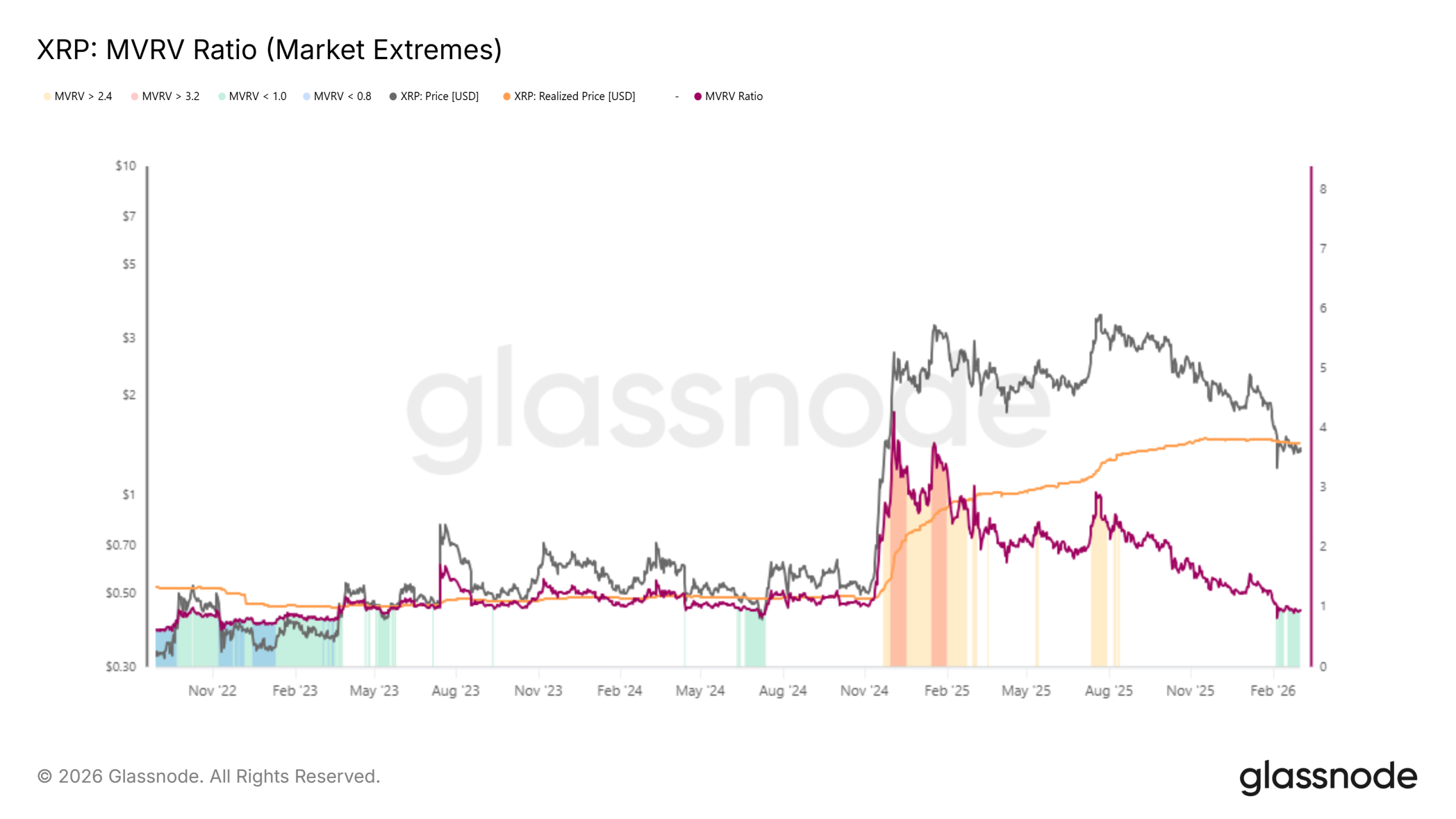
The MVRV Extreme Ratio, which measures the relationship between market value and realized value, indicates that XRP is undervalued and under pressure. Currently, the MVRV has been below 1.0 for approximately 15% of trading days, signaling a lack of positive momentum.
Historically, this metric has either led to short-term recoveries or worsened the situation further, potentially driving XRP to new lows. Based on current trends, XRP may face the latter scenario, with continued downward pressure.
Want more token insights like this? Sign up for Editor Harsh Notariya’s Daily Crypto Newsletter here.
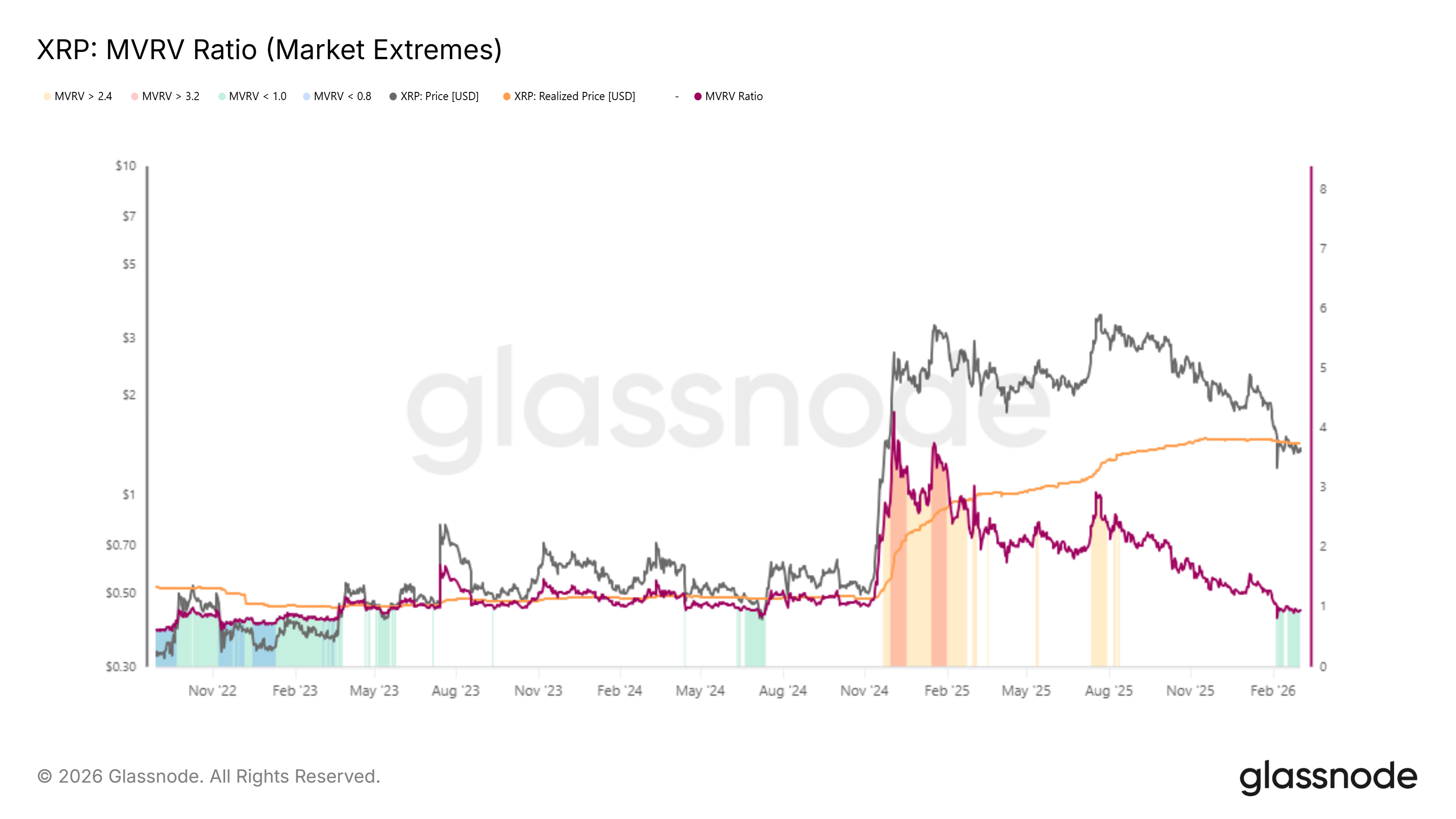
In this context, the low MVRV ratio suggests that investors are hesitant to drive the price upward, and the market sentiment around XRP remains weak. Unless a significant catalyst emerges, the undervaluation reflected by this metric could continue to suppress XRP’s price in the near term.
XRP is also facing a shift in macro momentum, as the overall market sentiment appears to be turning bearish. The exchange net position change highlights an increase in selling pressure, with a decline in buying momentum.
As exchanges begin to register more inflows than outflows, the shift from buying to selling could signal that a downturn is imminent for XRP. This change in dynamics could put further strain on the altcoin, as it struggles to maintain upward momentum.
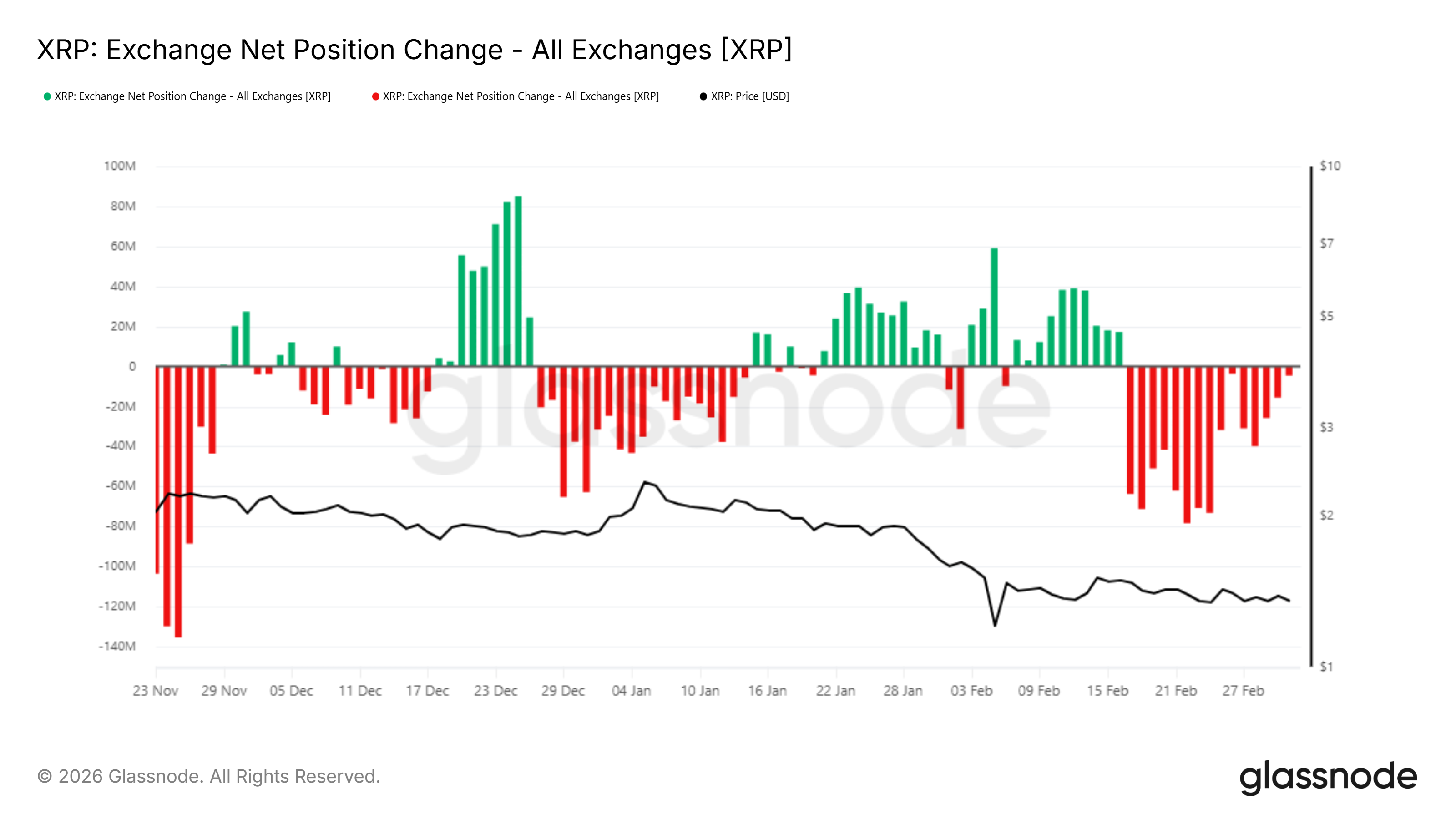
As buying slows down and selling picks up, XRP could see its price slip further. This shift in the macro momentum highlights the current market instability, which could contribute to a prolonged downtrend for XRP in the coming months.
XRP Price May Struggle To Recover
At the time of writing, XRP is trading at $1.35, caught within a range between $1.34 and $1.47. The downtrend that has persisted since the beginning of the year remains intact, with the cryptocurrency struggling to break free from the range. This resistance at $1.47 has proven difficult to overcome, while support at $1.34 has been tested multiple times.
Given the current market conditions and the pressure indicated by the MVRV ratio and macro momentum, XRP faces a bearish outlook in the short term. The price could break through the $1.34 support level, potentially falling to $1.21. This would signal a deeper decline and extend the ongoing downtrend, increasing the pressure on the altcoin.
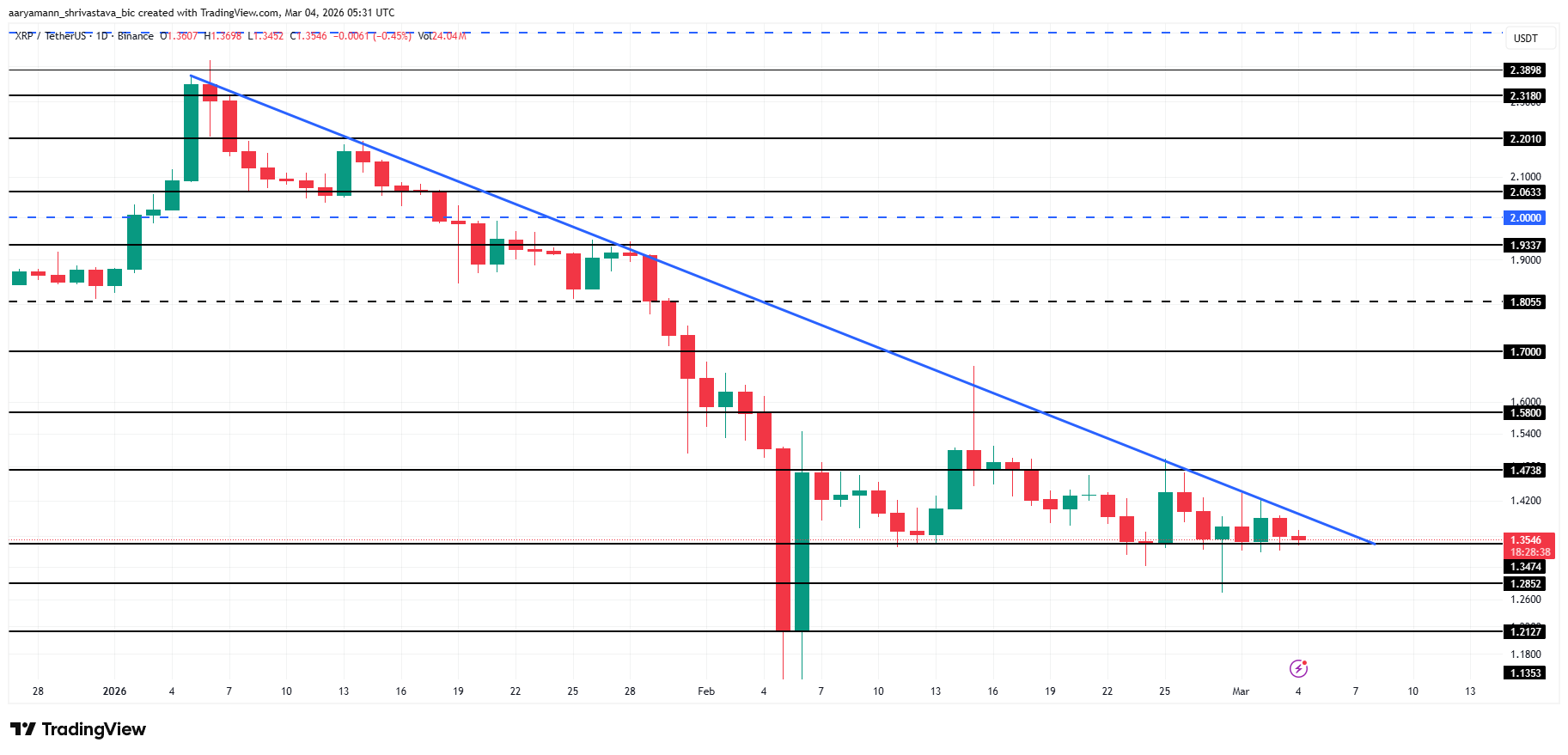
However, if XRP holders manage to find support from investors and buying momentum resumes, the altcoin could break through the $1.47 resistance level. A move above this level could propel XRP to $1.58, invalidating the bearish outlook and signaling the potential for a reversal. If XRP manages to sustain upward momentum, it could eventually target $1.70, marking a complete shift in market sentiment.

DUP and Sinn Fein block ’emergency’ motion in ‘NI’s worst pothole council’

Bayer Aktiengesellschaft 2025 Q4 – Results – Earnings Call Presentation (OTCMKTS:BAYRY) 2026-03-04

Ex-OpenAI Researcher Hedge Fund Bets Big on BTC Miners in SEC Filing


-

 Politics5 days ago
ITV enters Gaza with IDF amid ongoing genocide
-

 Politics1 day ago
Alan Cumming Brands Baftas Ceremony A ‘Triggering S**tshow’
-

 Fashion5 days ago
Weekend Open Thread: Iris Top
-

 Tech3 days ago
Unihertz’s Titan 2 Elite Arrives Just as Physical Keyboards Refuse to Fade Away
-

 NewsBeat6 days ago
Cuba says its forces have killed four on US-registered speedboat | World News
-
Sports4 days ago
The Vikings Need a Duck
-
 NewsBeat4 days ago
Dubai flights cancelled as Brit told airspace closed ’10 minutes after boarding’
-
 NewsBeat7 days ago
Manchester Central Mosque issues statement as it imposes new measures ‘with immediate effect’ after armed men enter
-

 NewsBeat3 days ago
‘Significant’ damage to boarded-up Horden house after fire
-
 NewsBeat4 days ago
The empty pub on busy Cambridge road that has been boarded up for years
-

 NewsBeat4 days ago
Abusive parents will now be treated like sex offenders and placed on a ‘child cruelty register’ | News UK
-

 Business6 days ago
Discord Pushes Implementation of Global Age Checks to Second Half of 2026
-

 Entertainment2 days ago
Baby Gear Guide: Strollers, Car Seats
-

 Business6 days ago
Only 4% of women globally reside in countries that offer almost complete legal equality
-
 Tech5 days ago
NASA Reveals Identity of Astronaut Who Suffered Medical Incident Aboard ISS
-
Politics3 days ago
FIFA hypocrisy after Israel murder over 400 Palestinian footballers
-
 NewsBeat3 days ago
Emirates confirms when flights will resume amid Dubai airport chaos
-

 Crypto World6 days ago
From Crypto Treasury to RWA: ETHZilla Retreats and Relaunches as Forum Markets on Nasdaq
-

 NewsBeat2 days ago
Is it acceptable to comment on the appearance of strangers in public? Readers discuss
-

 Tech3 days ago
Viral ad shows aged Musk, Altman, and Bezos using jobless humans to power AI