

Politics
Rafe Fletcher: Britain needs muscular citizenship

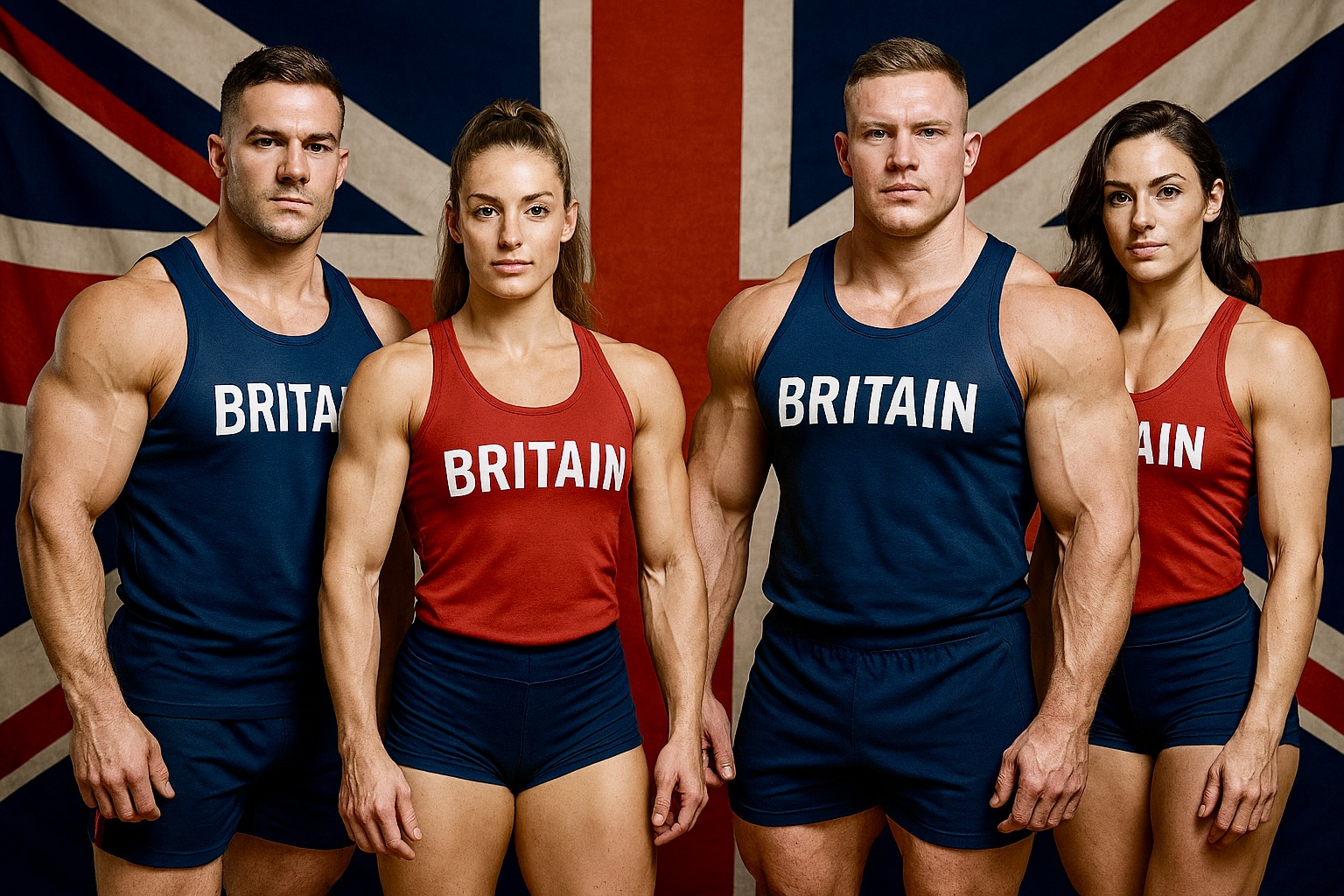
Rafe Fletcher is the founder of CWG.
My memories of Japan are coloured by British triumphalism. In 2019, I was in Oita to see England thrash Australia in the Rugby World Cup. And last November, I saw Oasis play to a sell-out crowd in Tokyo.
Touring acts are more welcome than those putting down permanent roots. Japan’s foreign resident population is growing and, at four million, now constitutes around three percent of the population. They are readily identifiable in such an ethnically homogeneous country.
Japan’s new Prime Minister Sanae Takaichi, who models herself on Britain’s own Iron Lady, won a landslide victory last month. She is pro-market and firm on immigration. But, as yet, her latter stance is heavier on rhetoric than policy. Because Japan is in a precarious position. How does it balance public demand to retain a clear national identity with the structural challenges of the world’s oldest population? Barring a sudden reproductive resurgence or a robotics revolution, foreign workers have to fix lopsided demographics.
Japan is an outlier because national identity is so intertwined with ethnicity. But the subject is nonetheless getting a bit more mainstream in Britain. Elon Musk recently swung behind Rupert Lowe’s splinter group Restore, because it takes predictions of a white British minority seriously. Nigel Farage’s caution about who that conversation encourages seemingly lost him the prospect of Musk’s backing.
Polite conversation avoids the topic because Britain’s demographic transformation was unplanned.
In 1945, Britain was almost as ethnically uniform as contemporary Japan. Politicians did not anticipate that post-war immigration from the Caribbean and South Asia would change that. It was then imagined as a temporary response to acute labour shortages. In 1956, debates in the House of Lords still referred to Commonwealth arrivals as “visitors”. The historian Colin Holmes notes that migrants largely shared that impression, writing in John Bull’s Island that they viewed themselves as “temporary labourers or sojourners…hoping to return home with needed capital.”
Social change was an unintended consequence of addressing economic needs. That does not make it inherently good or bad. But it suggests the country never really confronted what British identity meant once it could no longer be assumed. The familiarity of language and looks is easier to grasp than values when it comes to creating a sense of belonging.
That search for shared values is made harder by what Suella Braverman condemns as the “casual, anything-goes approach to culture and identity”. Nebulous catch-all appeals to “tolerance”, or worse, “diversity”, are flimsily ascribed as defining national characteristics. It lacks any active sense of participation. It undervalues Britain by negating any real commitment to it.
It’s here, of course, that I must go back to Asia to suggest a different way of doing things. In Singapore, my immigration status is made very apparent. There is little sensitivity in designating Employment Pass (EP) holders like me as “foreigner” in official correspondence. Singapore’s foreign population is substantial – constituting almost two million of its six million population – but clearly delineated. We are not part of the civic realm and have no access to state-funded services.
There is a route to deeper integration through Permanent Residency (PR). But there are strict qualifying criteria and even successful applicants do not gain permanent rights. PR holders must renew their status every five years. It can be revoked for criminal misconduct or a deemed lack of economic contribution. Increased civic status also comes with accompanying responsibilities. Most notably, your male offspring will be subject to compulsory National Service at 18.
Every year, around 25,000 PRs go one step further and obtain citizenship. There is no explicitly ethnic aspect to this. But it’s generally recognised that it follows founding Prime Minister Lee Kuan Yew’s strategy of pursuing a certain demographic equilibrium. He pledged that Singapore would always be majority Chinese with smaller Malay and Indian minorities. New citizenships broadly preserve that balance.
Speaking at Imperial College in 2002, Lee argued that Britain’s lack of similar micromanagement breeds an ailing society. He said that importing workers without any plan for uniting races or cultures led to ghettoisation. Something that was evident only last week as the Greens won in Gorton and Denton by appealing to extranational affiliations in the Middle East.
But such technocratic planning is not possible in Britain. The Home Secretary Shabana Mahmood revealed in November that the previous government’s attempt to fill between 6,000 and 40,000 jobs in the health and care sector led to the arrival of 616,000 individuals between 2022 and 2024. If Britain is overshooting those targets by 1,400 percent, it is unlikely to fare too well with strategically planned quotas.
The more pertinent lesson lies in what Lee observes Britain has lost since 1945: “that quiet pride and self-confidence, that national cohesiveness that marked out the British people after victory in World War Two.”
It stems from insecurity in what being British really means. It is no longer something simply inherited nor is it anything easily articulated. Restoring confidence instead requires a sense of reciprocity. Singapore does this well in its prohibition of dual citizenship and enforcement of National Service. It forces citizens to actively participate and forego any other national loyalties.
Britain, by contrast, asks very little of its people. Even though it’s to my advantage, I’m always astonished at the treatment of Brits abroad. As Dubai expats discover now, we retain full access to state services without any of the onerous tax implications. Similarly, it allows its passport to be part of an international portfolio – somewhere to hedge your bets rather than commit.
And it offers few binding experiences to really bring an increasingly diverse population together. Unfortunately it came towards the back end of his premiership but a similar national service scheme was one of Sunak’s brighter ideas, particularly when university increasingly looks an imprudent bet.
Britain needs a more muscular vision of identity rooted in commitment. Pride cannot reside only in the vestiges of cultural triumphs abroad. It must inspire loyalty at home too.

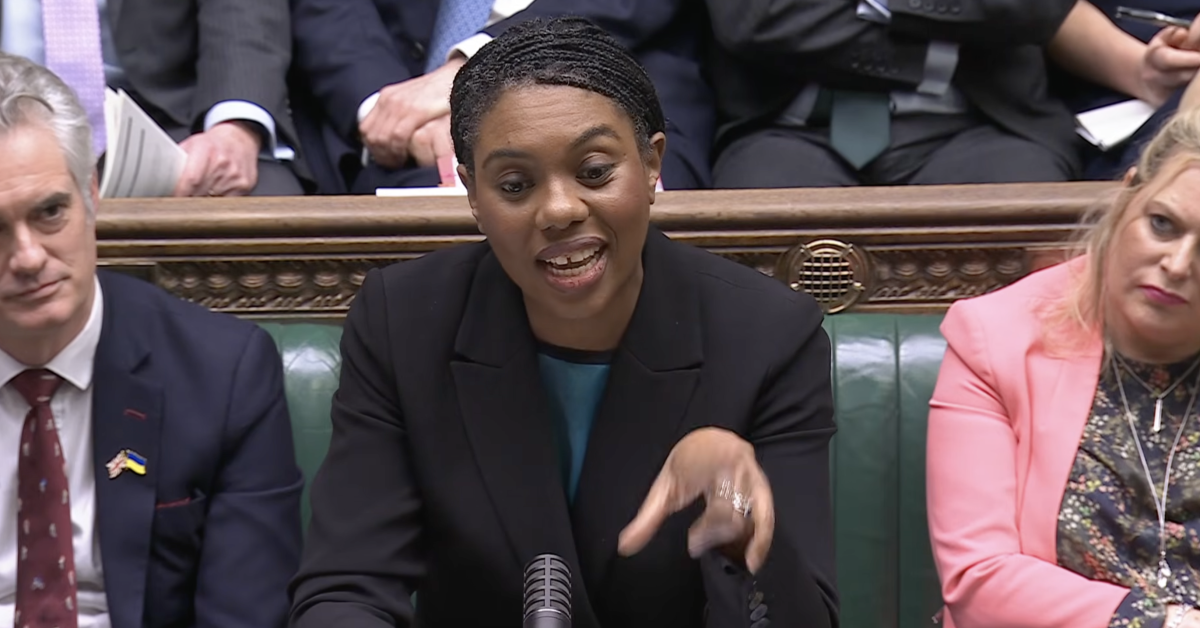
The post PMQs: Badenoch “The PM is catching arrows not dealing with the archers” appeared first on Conservative Home.
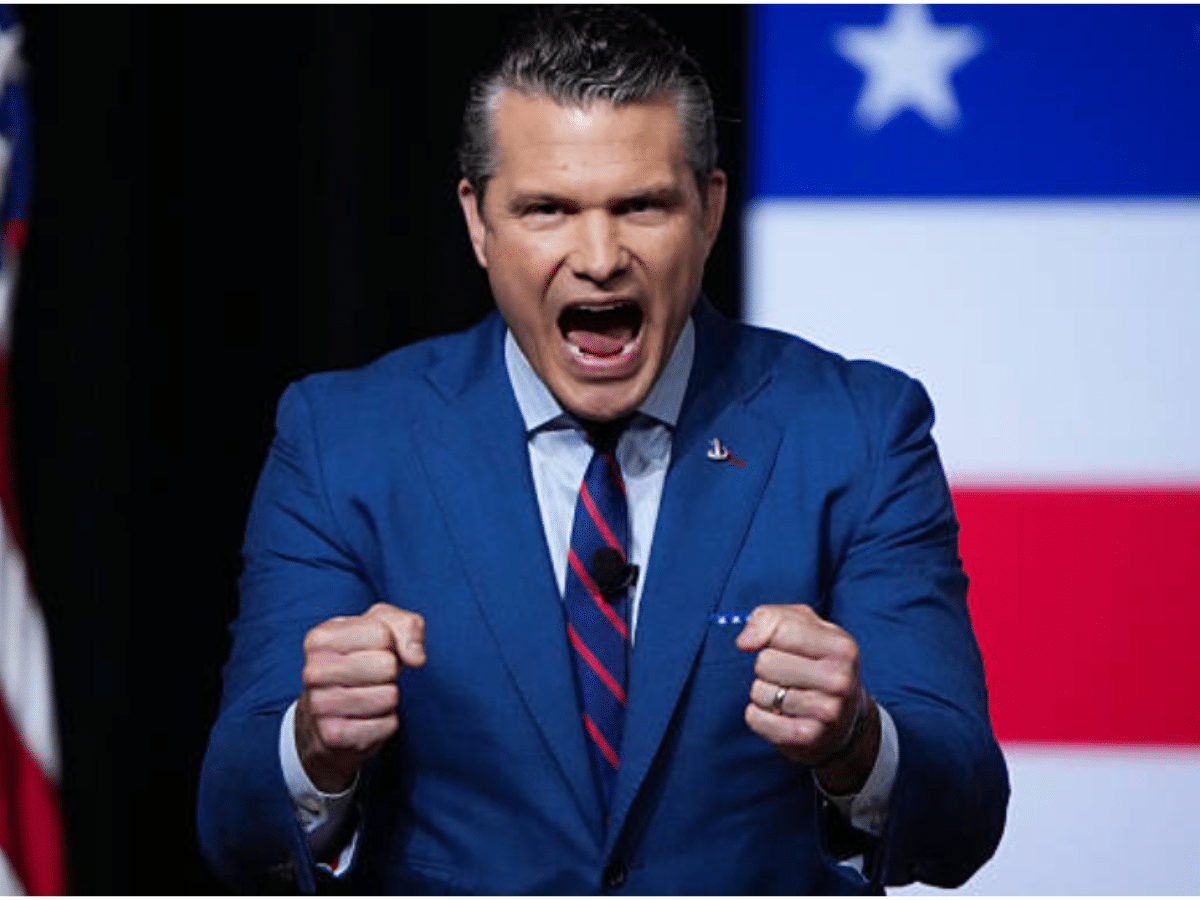
Commanders at more than 30 US military locations have told their troops that the US is attacking Iran to cause “armageddon” and hasten the second coming of Jesus – passing on an apparent message from deranged defence secretary Pete Hegseth.
The message includes a combat unit commander telling unit non-commissioned officers – sergeants and corporals – that US president Donald Trump is:
anointed by Jesus to light the signal fire in Iran to cause Armageddon and mark his return to Earth.
Hesgeth leading ‘Christian’ charge
According to the Military Religious Freedom Foundation (MRFF), in just a three-day period from the start of the illegal US-Israel attacks on Iran, MRFF has been “inundated” by more than 110 complaints from various units across thirty different bases in every branch of the US military about this messaging.
Hegseth reportedly attends, at least weekly, a White House ‘bible study’ led by a Zionist ‘pastor’ who insists the US must support Israel no matter what.
The news has horrified many US Christians as well as the rest of the right-thinking world. Baptist News Global covered the revelations and noted MRFF’s disgust with the bloodthirstiness of the so-called ‘Christian nationalism‘ Hegseth and his ilk espouse:
These calls have one damn thing in freaking common: Our MRFF clients (service members who seek MRFF aid) report the unrestricted euphoria of their commanders and command chains as to how this new ‘biblically-sanctioned’ war is clearly the undeniable sign of the expeditious approach of the fundamentalist Christian ‘end times’ as vividly described in the New Testament book of Revelation,” Weinstein said.
Many of their commanders are especially delighted with how graphic this battle will be zeroing in on how bloody all of this must become in order to fulfill and be in 100% accordance with fundamentalist Christian end-of-the-world eschatology.
A horror show run by paedophiles, fanatics and heretics who threaten the world and feed on the innocent: the US government under Donald Trump (and not only his administration).
Featured image via the Canary

More exclusive footage from Skwawkbox sources on the ground in Qatar shows the scale of Iran’s retaliatory barrage on US military facilities in the Qatari capital – and the number of interceptors the US base there is burning through in an attempt to stop them:
Thousands of migrant workers are trapped in Qatar and neighbouring states. They have little prospect of repatriation despite the danger the US and Israel have created for those in Gulf states through their reckless and illegal imperialist war on Iran.
Featured image via the Canary
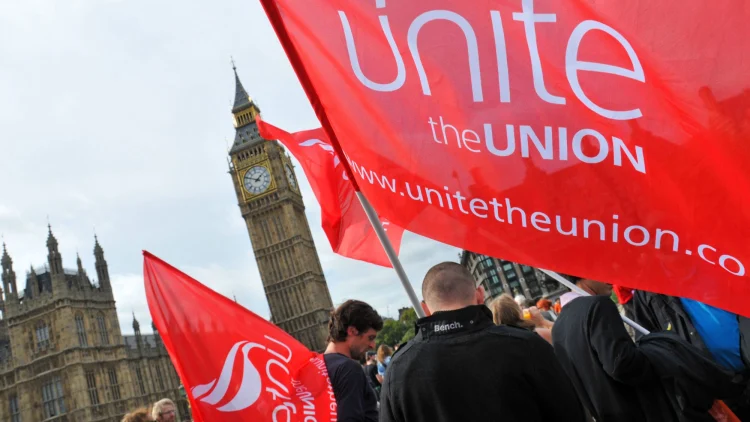

Unite, one of the UK’s biggest trade unions, has carried out a survey of parliamentary staff on the pay offer for 2026-27 (Alamy)

3 min read
Parliamentary staff have overwhelmingly rejected a pay offer that falls below the salary increase awarded to MPs, according to a trade union survey.
The Independent Parliamentary Standards Authority (IPSA) announced on Monday that MPs’ basic salary will rise by 5 per cent to £98,599 a year from April, while also aiming to move towards a salary of around £110,000 by the end of the Parliament, due in 2029. The MPs’ pay decision for 2026-27 includes a 1.5 per cent benchmarking adjustment, as well as a 3.5 per cent cost-of-living increase.
However, MPs’ staff are only being offered an ‘optional’ 3.5 per cent pay increase, despite months of lobbying by the trade union and some MPs for a substantial rise in staffing budgets due to low pay and unsustainable workloads.
In a survey of parliamentary staff by trade union Unite, seen by PoliticsHome, 91.5 per cent of respondents said they would reject the 3.5 per cent automatic pay uplift for staff salaries for 2026-27. Only 4.6 per cent of the more than 600 respondents voted to accept the offer, while 3.8 per cent abstained.
Parliamentary staffers told PoliticsHome on Monday that there was widespread “fury” over the proposals, with one saying that IPSA “treats MPs’ staff with total contempt”.
The Speakers Committee on IPSA are meeting later on Wednesday afternoon, with trade unions hoping to get the chance to challenge the IPSA budget. The committee technically has the power to veto or amend the budget, though this power has not been exercised before.
Trade unions representing parliamentary staff are hopeful that IPSA will come back to the table with a new offer.
In an email to staff on Tuesday morning, Unite asked all parliamentary staff – including non-members – to fill in the survey and “join the union to challenge this injustice and ensure a fair pay settlement”. The union recommended that respondents reject the 3.5 per cent offer.
A spokesperson for the Unite Parliamentary Staff Branch said the survey of MPs’ staff showed the “widespread outrage at yet another year of real terms pay cuts”.
“Offering staff a pay rise less than MPs and lower than inflation is nothing short of an insult,” they said, demanding that IPSA explain why the larger uplift applied to MPs would not apply to staff “who carry the bulk of the work and absorb the worst pressures of the job”.
Parliamentary staff have had a 14.6 per cent real-terms pay cut since 2020, based on RPI, with many caseworkers earning little more than the minimum wage.
“Our offices are chronically under-resourced, with staff often required to work unpaid overtime, provide practical and emotional support for constituents facing difficult situations, and support MPs in high-pressure situations,” the spokesperson continued.
“Our jobs are fundamentally insecure, yet our pay and pensions lag far behind those of comparable jobs in the civil service and local government.
“We are proud of the work we do to serve our communities and support our MPs, but stress and burnout are at an all-time high. If we want a thriving democracy, we need to start by paying the people who make it work fairly.”
IPSA does not have the power to set exactly how much a member of MPs’ staff should be paid; instead, it is proposing an automatic 3.5 per cent pay uplift for all staff, funded by a 5 per cent increase to staffing budgets, and an increase of at least 5 per cent to the minimum of each pay band. In practice, this could mean some staff salaries could rise by more than 9 per cent.
However, MPs have the authority to block their staff from receiving the 3.5 per cent pay rise. PoliticsHome understands some parliamentarians, including Labour MPs, signed to prevent their staff from getting pay uplifts last year.
Politics
Mark Yale: From Disraeli to to the present there is an important legacy of ‘One Nation’ thinking

Mark Yale is a Conservative activist and Treasurer of One Nation Conservative Network, a new grassroots movement supporting pragmatic, inclusive centre-right politics.
“Progress must be extended and accelerated not by subordinating the individual to the authority of the State, but by providing the conditions in which no one shall be precluded by poverty, ignorance, insecurity, or the selfishness of others from making the best of the gifts with which Providence has endowed him” – 1945 Conservative Manifesto
It is easy to think that One Nation Conservatism is a new phenomenon because of its association with the post-Thatcher shift towards the centre led initially by Sir John Major and more recently Lord Cameron. However, as the quote shows, the Conservative Party has a strong and long history of standing on a centre-right, pragmatic platform.
This tradition was carried forward in the post-war period by figures such as Rab Butler, whose role in shaping the 1944 Education Act and accepting much of the post-war settlement reflected a practical commitment to social reform within a Conservative framework.
At its core, One Nation Conservatism is about ensuring that opportunity is widely and fairly shared, that economic freedom is balanced with social responsibility, and that everyone has a stake in the nation’s success. It is not about ideological purity, but rather the practical goal of governing effectively for the whole nation.
Today, the country is increasingly facing social division and a growing gap between the experiences of those doing well economically and those less well. A good example of this is that the ability to get on the housing ladder is becoming increasingly defined by whether parents or grandparents are able to help financially. As a result of this growing economic divide, there is a risk that we return to the two-nation society that Benjamin Disraeli wrote about in his novel Sybil.
It is easy to claim that we have tried this type of Conservatism and that it failed – evidenced by the defeat we suffered at the 2024 general election.
But this is not a fair criticism. Analysis from Lord Ashcroft after the general election showed that the number one reason people stopped voting Conservative was that we had lost the people’s trust. Why we lost the people’s trust is easily explained by the other reasons highlighted by those asked; “Conservative government had not been competent”, “Partygate and other scandals”, and “The Liz Truss mini-budget of 2022”.
None of those reasons are linked to the ideological direction of the party, but rather our ability to do what a government should be doing – delivering for voters, improving the country and improving individuals’ circumstances.
There has been much discussion about what the future direction of the Conservative Party should be. Narrowing our appeal by rejecting policy or ideas from the traditional centre-right and shunning those who are nearer the centre is a mistake and will only make being re-elected harder.
The party is better when it is a broad church with mass appeal. Polling for Prosper UK by More in Common identified millions of voters in the centre ground who feel that they are politically homeless and that no party represents them.
So why would we want to ignore this mass of potential voters?
Those who identify as traditional centre-right or as a One Nation Conservative are pragmatic and recognise the centre has shifted, in particular on immigration, and are not trying to remould the party in our image or reject the concerns of certain voters, but rather ensure it remains a broad church, with both sides being listened to.
To help maintain this tradition within the party, a new grassroots initiative – the One Nation Conservative Network – has been established. It wants to help ensure the party remains a broad church through a focus on the grassroots, activists and councillors, and supporting candidates during election campaigns. Additionally, we want to bring One Nation Conservative ideas outside of Westminster and show how they can benefit voters at a local level.
One Nation Conservatism plays an important role in ensuring that the party remains rooted in its historic mission to govern responsibly and for the whole nation. From Disraeli’s warning of a divided society to the principles set out in the 1945 manifesto, the Conservative tradition has long recognised the importance of social responsibility.
At a time of economic uncertainty and social division such as we are currently experiencing, accommodating this strand of Conservatism will help ensure that the party speaks not only to one section of the country, but the whole country.

Sir David Beckham has posted a birthday tribute to his eldest son Brooklyn.
For the last few months, the Beckham family have been at the centre of no end of headlines about a family feud, with Brooklyn finally breaking his silence on the matter back in January.
In a lengthy string of social media posts, he confirmed he was no longer on speaking terms with his parents, Sir David and Victoria Beckham, accusing them of “performative” and “controlling” behaviour over the course of his “entire life”.
The football legend has not spoken publicly about the family fall-out, but on Wednesday morning, posted a brief message in honour of Brooklyn’s birthday.
Alongside a tearful emoji, Sir David commented that Brooklyn is “27 today”, writing: “Happy birthday Bust… we love you.”
His post was accompanied by a candid snap of Brooklyn as a baby, posing in a swimming pool with his mum and dad.

The day after Brooklyn’s initial social media post, Sir David made an appearance at the World Economic Forum in Davos, Switzerland, where he swerved questions about his family drama.
During a subsequent interview, he made a timely comment social media use among young people, noting: “I’ve tried [with‘ my children to educate them. They make mistakes. Children are allowed to make mistakes. That’s how they learn.
“That’s what I try to teach my kids. But you know, you have to sometimes let them make those mistakes as well.”
In the weeks before Brooklyn spoke out, it had been reported in the press that Sir David and Victoria had unfollowed their eldest son on Instagram, to which his brother Cruz Beckham made a public statement in response.
“My mum and dad would never unfollow their son,” Cruz insisted. “Let’s get the facts right.”
He then alleged: “They woke up blocked… as did I.”
Meanwhile, a representative for the former Spice Girls star also told People magazine around that time that it was “not true” that she and her husband had unfollowed Brooklyn.
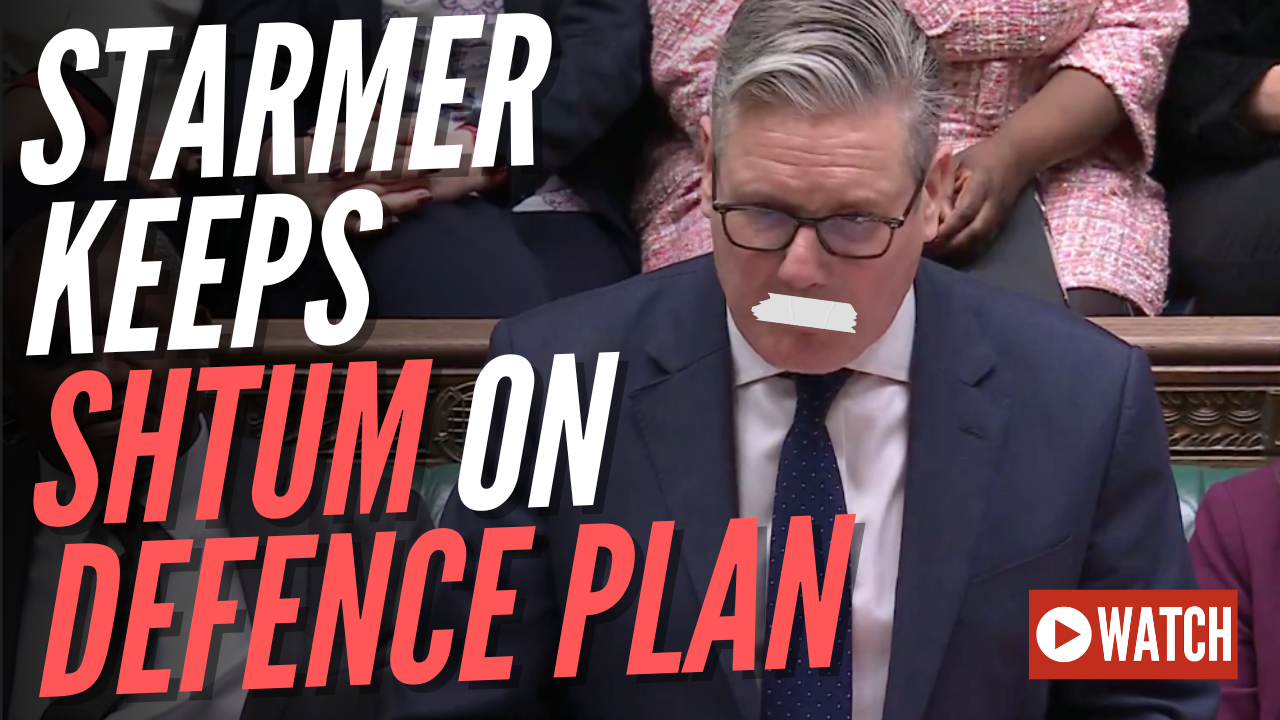
Starmer, red as a beetroot, with no explanation for the delayed Defence Investment Plan. This was supposed to have been published last autumn. Have they lost it down the back of the sofa?

In a strange turn of events, it seems Israel has realised that international law does, in fact, exist.
BREAKING: There is growing suspicion that Iran used cluster munitions in their attacks against Israel.
A clear war crime. pic.twitter.com/TbXOMkzVpp
— Eyal Yakoby (@EYakoby) March 1, 2026
Technically, the 2008 Convention on Cluster Munitions (CCM) prohibits the use, production, stockpiling or transfer of cluster munitions and requires states to ensure that they claim no further victims.
However, neither Israel nor the US signed the CCM. That might have something to do with them being some of the biggest producers of the weapon. Obviously, the law isn’t important when there is money to be made.
Hey, Eyeball – remember when the United Nations tried to ban cluster munitions and the US and Israel fought against it?
Good times. https://t.co/L3z3cCeEBP
— 99% Johnny Graz (@jvgraz) March 1, 2026
According to Oxford Public International Law:
if widely implemented and adhered to, the CCM will dramatically decrease the harm to civilians caused by cluster bombs both during and after armed conflicts.
Of course, knowing what we know about Israel, it has no intention of minimising civilian casualties
Israel playing the victim
But no matter whether they are illegal or not, Israel does not get to play the victim now that another country decides to play them at their own game.
We have to remember, this is after Israel fired more than a million cluster bombs into Lebanon:
— melissa “cancelled student debt” byrne (@mcbyrne) March 2, 2026
Killed thousands of Palestinian children:
You have no right of mentioning war crimes after killing 200.000 children in Gaza.
Stfu
— Parody Jeff (@BackupJeffx) March 1, 2026
Used white phosphorus on Gaza:
Israel has always used white phosphorus on Gaza.
And look who is talking about war crimes. https://t.co/pAej5Sid2y pic.twitter.com/y4yzLBKj5X
— The Saviour (@TheSaviour) March 1, 2026
Zionists who used internationally banned white phosphorus on the children of Gaza to burn them alive are now complaining about war crimes https://t.co/EUFHTbltiO
— Fiza (@fizakkhann) March 2, 2026
Bombed schools, hospitals, health workers and journalists.
Bombing a school in Iran while calling them war criminals is peak Israel. https://t.co/BGVTegFsuF
— Walter Masterson (@waltermasterson) March 2, 2026
The country that would never “bomb a hospital” is bombing hospitals again.
Israel only feels alive when it kills.
Israel only feels safe when it’s hated. https://t.co/5w3IZiLhUC
— Bashar Zapen (@BasharZapen) March 3, 2026
Whilst creating and upholding a system of apartheid for years.
It’s one rule for Israel (and the US) and one rule for everyone else.
the absurdity of these pro-genocide propagandists suddenly caring about “war crimes” isn’t an accident. they know what they’re doing. they just believe that israel should be allowed to commit crimes nobody else can https://t.co/KleJmuBYYC
— matt (@mattxiv) March 2, 2026
Of course, Israelis want to talk about the law now bombs are dropping on Tel Aviv.
Oh Israelis wanna talk about the law now https://t.co/Qpe6Hq9CS8
— James🔻 (@GoodVibePolitik) March 1, 2026
They had zero sympathy when the IDF was carpet bombing Gaza.
International Law died under the rubble in Gaza, and these zionist rats genuinely think they have the right to speak https://t.co/DY9JeUBaEg
— 📕 (@SwampCommunist) March 2, 2026
MAN WHO HAS BEEN SLAPPING PEOPLE IN THE BACK OF THE HEAD FOR YEARS REPORTEDLY VERY ANGRY HE HAS BEEN SLAPPED IN THE BACK OF THE HEAD https://t.co/ozrI5VgGAK
— AWSTEN KNIGHT (@awsten) March 2, 2026
Even Mark Carney, the Canadian Prime Minister, agreed that the US and Israel were breaking international law. But of course, because it’s the US and Israel, he’s going to look the other way.
Asked about the illegality of the US-Israeli attack on Iran, Carney admits that “it appears that these actions are inconsistent with international law,” while simultaneously reaffirming that he supports it “in context.” This is not a principled foreign policy, it is a total mess. pic.twitter.com/sjBuhDevZq
— Canadians for Justice and Peace in the Middle East (@CJPME) March 3, 2026
Israelis are partying in bomb shelters. Do the people in Gaza, Lebanon, or Iran have bomb shelters? Do they fuck.
Look at this. It’s worse than fiction. They truly don’t care what goes on outside.
And how could they? They’ve had a genocide in their backyard for years now. https://t.co/TDAxXgwGNG
— Shaun King (@shaunking) March 3, 2026
We have watched Israel commit war crime after war crime for two years. The terrorist state expects us to livestream babies being burnt alive, hospitals getting bombed, and journalists running from bullets and look the other way. Meanwhile, they want us to pay attention and join their cries of ‘international law’ when a couple of buildings get hit in Tel Aviv? Or when things don’t quite go their way?
If Israel wants to fuck around, they’re going to find out. And we are not going to have sympathy for them when they do find out.
Featured image via Al Jazeera English/ YouTube.
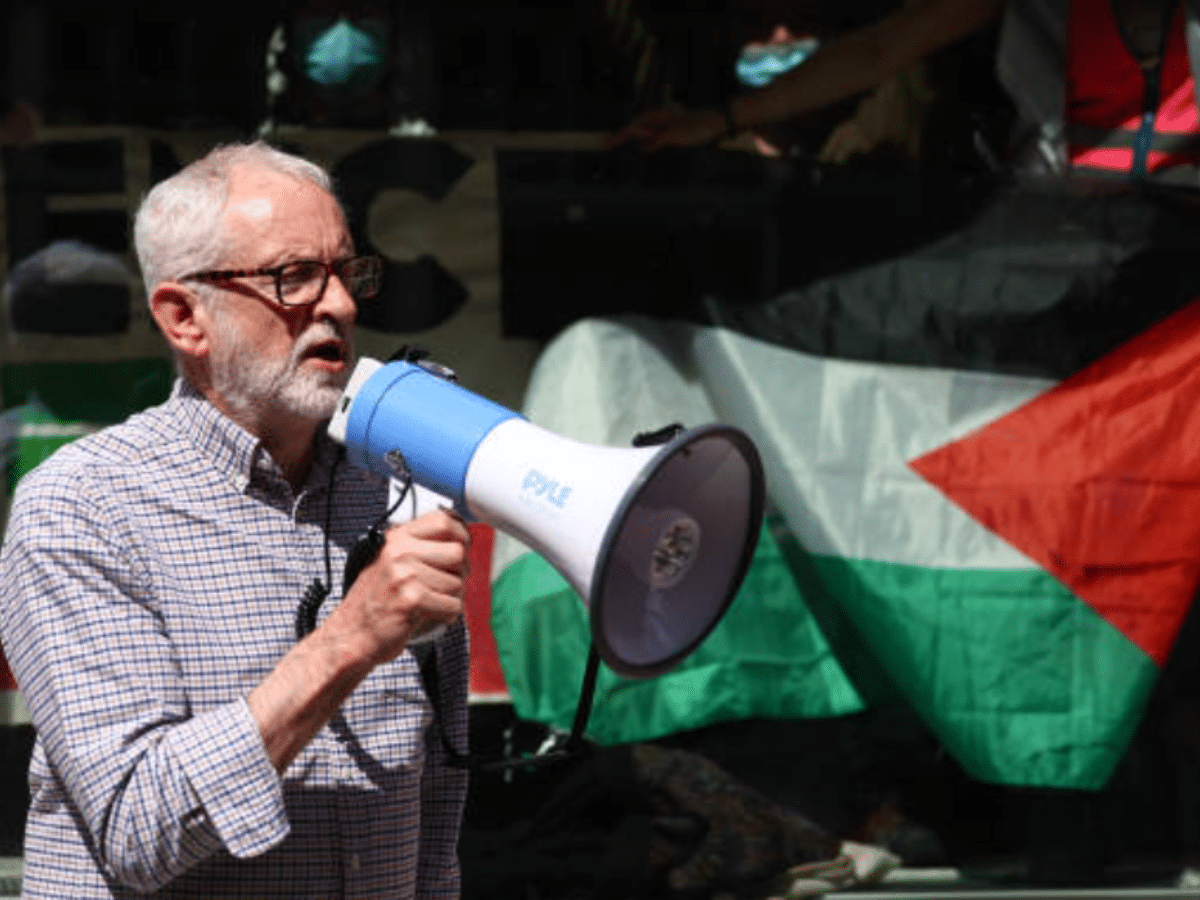
Independent MP Jeremy Corbyn has tabled a Presentation Bill today titled the Military Action (Parliamentary Approval) Bill. The bill would require MPs to exercise stronger oversight over how foreign states use UK military bases.
The MP for Islington North has spoken up against the US-Israel war since it began. He provided a damning statement on 2nd March regarding the UK PM’s inability to stand up to Trump, seen below:
Allowing British bases to be used in an illegal war of aggression is a catastrophic and historic mistake.
Britain has been dragged into another war because our Prime Minister would rather appease Donald Trump than stand up for international law.
War is not a game. This…
— Jeremy Corbyn (@jeremycorbyn) March 2, 2026
Statement in full:
Allowing British bases to be used in an illegal war of aggression is a catastrophic and historic mistake.
Britain has been dragged into another war because our Prime Minister would rather appease Donald Trump than stand up for international law.
War is not a game. This shameful decision makes Britain complicit in the devastating consequences ahead – and jeopardises the safety of us all.
Corbyn gets cross-party support from Labour and Green Party
This bill comes as we understand the US have far more presence in the UK via military bases than was previously known. This has raised concerns about the UK becoming a vassal state for Trump and the US, who are now working in tandem with Israel in its illegal bombing campaign on Iran. So far, almost 800 people have been killed in Iran, with more people murdered in Israel’s bombing of Lebanon.
Today parents in Iran buried 165 children killed in the attack on a girls’ primary school by the United States and Israel.
From Gaza to Iran, this is what “liberation” by the West looks like. pic.twitter.com/6LDE0lYkdO
— Zarah Sultana MP (@zarahsultana) March 3, 2026
Rogue states
Corbyn has tabled the bill following Keir Starmer’s clear, public commitment to allow the US to use UK military bases in US and Israel’s illegal war on Iran for ‘defence’ purposes.
Because these two rogue states break international law daily, we must apply rigorous oversight and scrutinise government decisions that make us complicit in a war of aggression on Iran.
The full title of the bill is:
Bill to require parliamentary approval for the deployment of UK armed forces and military equipment for armed conflict; to require parliamentary approval for the granting of permission by Ministers for use of UK military bases and equipment by other nations for armed conflict; to require the withdrawal of that permission in circumstances where parliamentary approval is not granted; to provide for certain exemptions from these requirements; to make provision for retrospective parliamentary approval in certain circumstances; and for connected purposes.
The bill is supported by 11 co-sponsors, from Labour, Green Party and Independents:
- Diane Abbott
- Bell Ribeiro-Addy
- Brian Leishman
- John McDonnell
- Adnan Hussain
- Ayoub Khan
- Richard Burgon
- Kim Johnson
- Apsana Begum
- Ellie Chowns
- Hannah Spencer
Your Party MP Zarah Sultana was not contacted to support the bill, hence her name is not included. However, she has also been outspoken against imperial aggression being seen to batter Iran, and the weak, spineless behaviour on show by Starmer and co:
I asked the Prime Minister how much he enjoys being Donald Trump’s poodle.
He didn’t answer. pic.twitter.com/hzBjAJ1o84
— Zarah Sultana MP (@zarahsultana) March 2, 2026
Proving it is indeed possible, Sultana referred to Spain’s principled decision to kick out the US military:
CC: @Keir_Starmer
Look, it is possible to not be Donald Trump’s poodle. https://t.co/cC3L1vtqN4
— Zarah Sultana MP (@zarahsultana) March 2, 2026
Featured image via the Canary
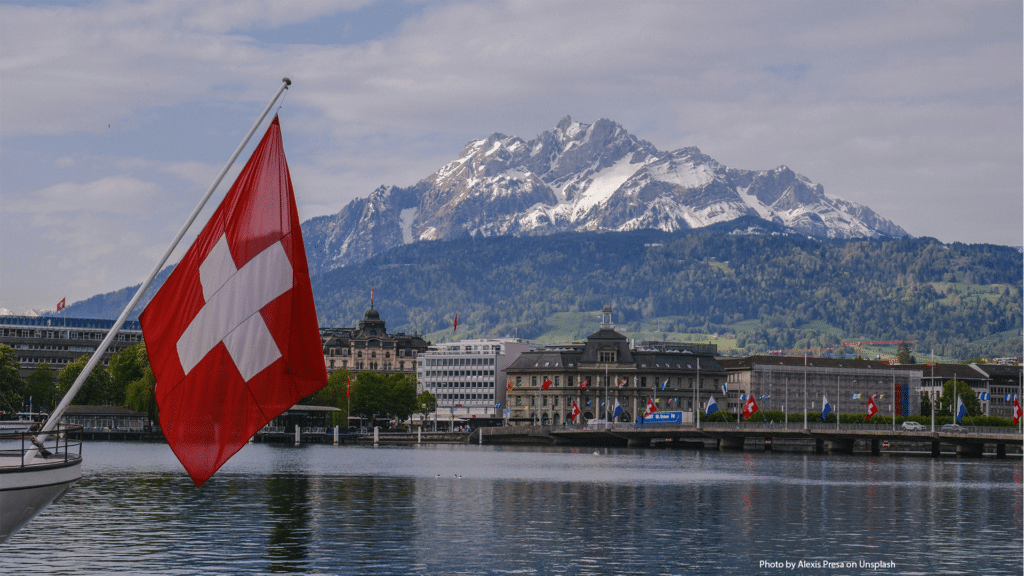
Astrid Epiney explains how the agreements that underpin Switzerland’s relationship with the European Union work, as well as the advantages and tradeoffs.
Switzerland is not a member state of the European Union. However, it is deeply connected to the Union and its member states, especially those neighbouring it. So, economically speaking, Switzerland is one of the states most “integrated” into the internal market, and the EU is by far Switzerland’s most important economic partner.
The basis for this special relationship is about 140 international treaties between Switzerland and the EU, the so-called “Bilateral Agreements” being of special importance. While the “Bilaterales I” (entered in force in 2002) mainly concern the participation of Switzerland in parts of the internal market (including free movement of persons), the “Bilaterales II” (signed in 2004) deal also with other topics, in particular the Schengen/Dublin-association on migration and police cooperation. Since these important treaties provide for participation of Switzerland in parts of the EU acquis, they also contain mechanisms for their updating when the relevant EU law is modified. However, the treaties do not contain a dispute settlement mechanism, and as far as the agreements concerning participation in the internal market are concerned, updating is possible (and has happened hundreds of times in the past around 25 years) but is not dynamic; in the sense that the parties may decide not to update an agreement.
The current package of agreements being negotiated between Switzerland and the European Union (“Bilaterales III”), signed on 2 March 2026, modifies the institutional aspects of four agreements covering trade, land and air transport and free movement of persons. These aspects are very important for the European Union, which considers that participation in parts of the internal market must be accompanied by an alignment with the concerned EU law and its developments, and by a mechanism for dispute settlement. However, these aspects are also of a certain interest for Switzerland, since there are advantages for the smaller partner if the relationship is shaped by law rather than by politics.
The new package now provides for dynamic alignment of the agreements with the development of EU law, accompanied by safeguards that reflect Swiss realities, such as labour market needs, public service obligations, special provisions for land transport or high standards in areas like animal welfare.
Specifically, every time a legal act integrated into an agreement with Switzerland is about to be modified, Switzerland is informed and Swiss experts participate in the preparation of such modification (‘decision-shaping’). After the adoption of the act at EU level, the joint committee (composed of the representatives of the parties) takes a decision to update the agreement as fast as possible in order to align it with the development of EU law. This highlights that the alignment is not ‘automatic’, since a decision of the joint committee is necessary in any case.
From the point of view of Swiss law, every decision of the joint committee is viewed as a new international treaty. So, the Swiss representative may approve such a decision only if the requirements of national law are fulfilled. This is a serious limitation: the national Parliament may have to adopt – before deciding on the alignment – a new national law which may also be subject to a referendum. But it is also possible that the government may have already decided not to allow the Swiss representative to approve a certain alignment in the joint committee, which may constitute a breach of the obligations laid down in the agreements. The agreements address this possibility explicitly: in the case that Switzerland refuses to update an agreement and an arbitral tribunal has stated that this refusal constitutes a breach of Switzerland’s relevant obligation, the European Union may take – only in the scope of the agreements on the internal market – ‘compensatory measures’, which have to be proportionate.
In addition to this principle of dynamic alignment, the agreements provide for dispute settlement by an arbitral tribunal which must refer a question to the European Court of Justice (CJEU) if the decision of the dispute depends on the interpretation of a notion of EU law integrated into one of the agreements. The CJEU, however, is competent only to interpret EU law; the final decision on the dispute has to be rendered by the arbitral tribunal (the parallels to the preliminary rulings of the ECJ are evident).
To sum up: the relationship between Switzerland and the EU is a very special one. It has not emerged overnight but is the result of more than 50 years of pragmatic cooperation, beginning with the Free Trade Agreement of 1972, and shaped afterwards following the Swiss people and cantons’ rejection of membership in the European Economic Area. The Bilateral Agreements in general and the agreements providing for integration into parts of the internal market especially have to be seen in this context. Switzerland and the European Union agreed on a package of treaties which now shall be developed and stabilised by the “Bilaterales III”, which took around ten years of negotiations.
For both sides, it has advantages and trade-offs. But in my view the most important aspect is that it shows that participation of a third country in parts of the internal market is possible but demands certain institutional arrangements. At the same time, the agreements with Switzerland also illustrate that special provisions (e.g. concerning the ‘refusal’ of dynamic alignment or the numerous safeguards) can be negotiated. The ‘Swiss model’ may be of a certain interest for other third countries, bearing always in mind the special relationship and history of the agreements and the necessity of agreeing with the European Union on the concrete setting.
But there remains a significant hurdle: will bilaterales III be accepted by the Swiss people? There will be a referendum on the agreements, and the challenge will be to explain the advantages and – given the important relationship with the EU – the necessity of adhering to the compromise found.
By Astrid Epiney, Professor of European Law and Director of the Institute for European Law, the University of Fribourg.

Scalper bots are now scraping DDR5 memory supply chains as AI data centers consume more RAM

Inside France’s first LGBTQIA+ senior living residence
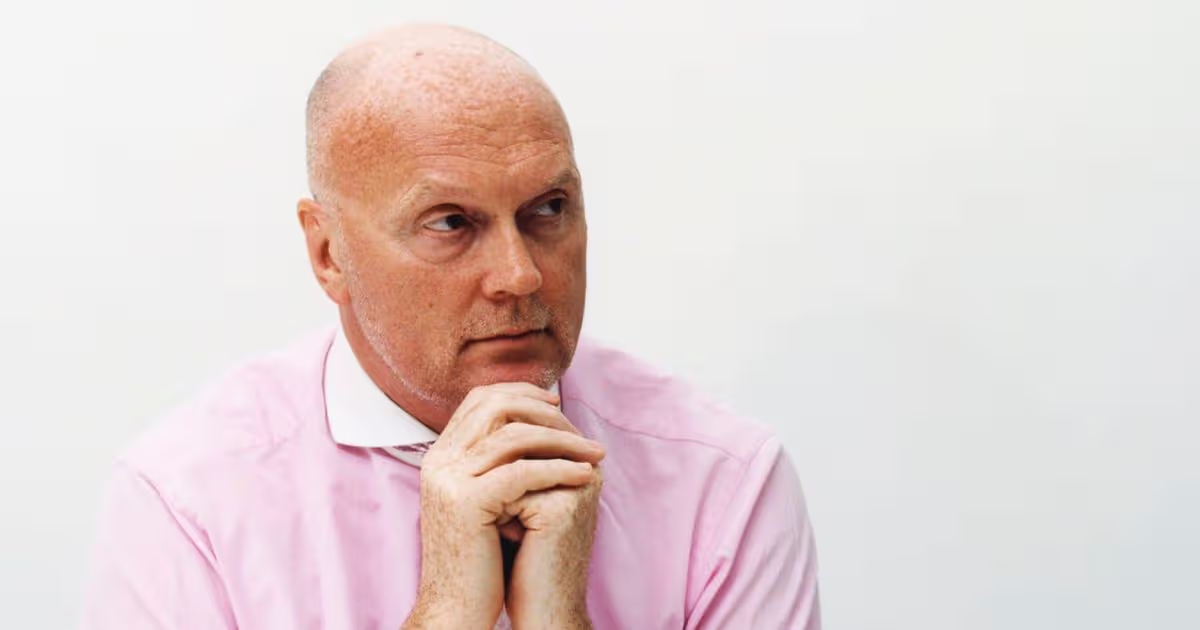
Asda chair Allan Leighton says government ‘more and more difficult’ to deal with


-

 Politics6 days ago
ITV enters Gaza with IDF amid ongoing genocide
-

 Politics1 day ago
Alan Cumming Brands Baftas Ceremony A ‘Triggering S**tshow’
-

 Fashion5 days ago
Weekend Open Thread: Iris Top
-

 Tech3 days ago
Unihertz’s Titan 2 Elite Arrives Just as Physical Keyboards Refuse to Fade Away
-

 NewsBeat7 days ago
Cuba says its forces have killed four on US-registered speedboat | World News
-
Sports4 days ago
The Vikings Need a Duck
-
 NewsBeat4 days ago
Dubai flights cancelled as Brit told airspace closed ’10 minutes after boarding’
-
 NewsBeat7 days ago
Manchester Central Mosque issues statement as it imposes new measures ‘with immediate effect’ after armed men enter
-

 NewsBeat3 days ago
‘Significant’ damage to boarded-up Horden house after fire
-
 NewsBeat4 days ago
The empty pub on busy Cambridge road that has been boarded up for years
-

 NewsBeat4 days ago
Abusive parents will now be treated like sex offenders and placed on a ‘child cruelty register’ | News UK
-

 Business6 days ago
Discord Pushes Implementation of Global Age Checks to Second Half of 2026
-

 Entertainment2 days ago
Baby Gear Guide: Strollers, Car Seats
-

 Business6 days ago
Only 4% of women globally reside in countries that offer almost complete legal equality
-
 Tech5 days ago
NASA Reveals Identity of Astronaut Who Suffered Medical Incident Aboard ISS
-
Politics4 days ago
FIFA hypocrisy after Israel murder over 400 Palestinian footballers
-
 NewsBeat3 days ago
Emirates confirms when flights will resume amid Dubai airport chaos
-

 Crypto World6 days ago
From Crypto Treasury to RWA: ETHZilla Retreats and Relaunches as Forum Markets on Nasdaq
-

 NewsBeat2 days ago
Is it acceptable to comment on the appearance of strangers in public? Readers discuss
-
 Tech3 days ago
Viral ad shows aged Musk, Altman, and Bezos using jobless humans to power AI