Connect with us

Business

Metro Bank profit hits 15-year high as SME lending surges

Published

on

Business Live

Shares soared as FTSE 250 lender swung to £98m profit

A general view of a Metro Bank in Sheffield.

A Metro Bank branch in Sheffield(Image: PA)

Metro Bank has returned to the black as the firm’s shift towards small business lending delivered a boost in revenue.

Advertisement

The FTSE 250 lender posted a pre-tax profit of just over £98m – a 15-year peak and significant turnaround from losses of £14m the previous year.

The reversal arrived as Metro recorded 67 per cent growth in new corporate, commercial and small and medium-sized enterprise (SME) lending – a sector the bank has targeted as central to its recovery plan.

Shares in the company climbed as much as seven per cent following the announcement to 122.36p. Over the past 12 months, the stock has gained more than 40 per cent.

Turnover at the firm increased 16 per cent to just above £585m as lending in the group’s focus segment expanded 56 per cent year-on-year to £5.2bn, as reported by City AM.

Advertisement

Metro is amongst several banks that have moved into the SME lending market amid a retreat from industry heavyweights, with the sector typically delivering higher margins for lenders as they can command elevated interest rates.

The segment also emphasises relationship-building with businesses compared to lending to large corporations, which can seek the most competitive debt globally.

“We are capturing market share in our target segments and have a deep pipeline of attractive lending opportunities,” said Daniel Frumkin, Metro’s chief executive.

He noted that the bank’s emphasis on the “execution of our strategy and pivot to high margin business” had contributed to a surge in profits whilst reducing expenses.

Advertisement

Operating costs plummeted seven per cent year-on-year to £473m, surpassing previous predictions of a four to five per cent decrease.

The bank has outlined plans for its return on tangible equity – a crucial measure of profitability – to more than double from the current level of 6.4 per cent over the forthcoming 6 months and nearly triple over 18 months.

The lender is also anticipated to greatly benefit from the alterations to the MREL regime announced in Rachel Reeves’ regulatory reforms at Mansion House last year.

Established in the aftermath of the 2008 financial crisis, minimum requirement for own funds and eligible liabilities (MREL) rules impose strict tailored requirements for banks with assets between £15-25bn. The Bank of England is poised to raise the threshold following consultation.

Advertisement

Metro has been reclassified as a transfer firm under the system, a move that liberates the bank’s balance sheet with reduced costs. The company stated it unlocks “significant capacity for growth”.

Continue Reading
Click to comment

Leave a Reply

Your email address will not be published. Required fields are marked *

Business

Trump sides with crypto in battle with banks over stablecoin yield

Published

on

Trump sides with crypto in battle with banks over stablecoin yield

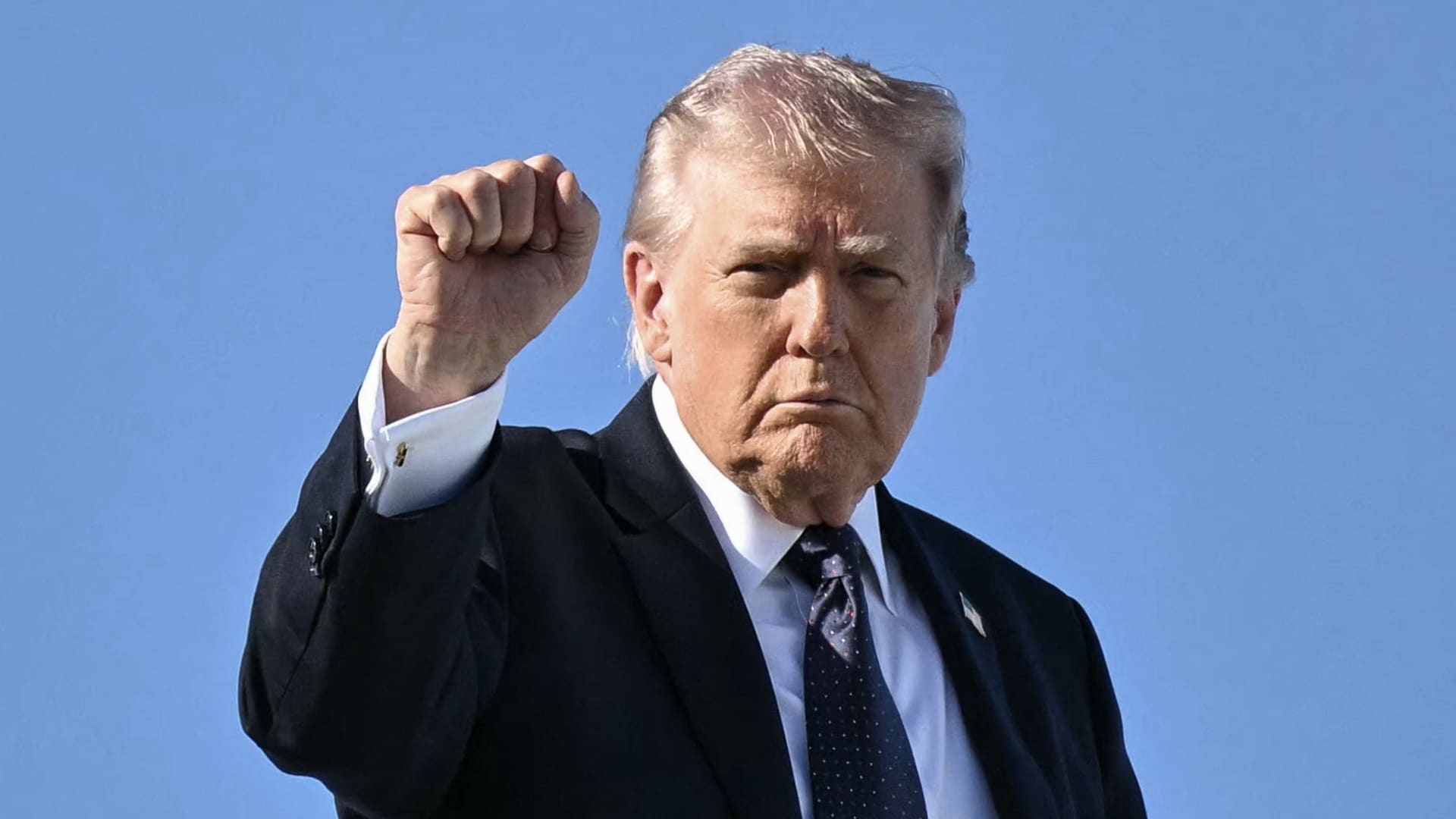
US President Donald Trump boards Air Force One before departing Palm Beach International Airport in West Palm Beach, Florida, on March 1, 2026, on his way back to Washington, DC.

Mandel Ngan | Afp | Getty Images

President Donald Trump has thrown his support behind crypto firms in their high-stakes battle with U.S. banks over whether they can offer interest-like returns on stablecoins.

Advertisement

Trump, in a social media post late Tuesday, ratcheted up pressure on banks to relent on the stablecoin yield issue.

That’s the key point of contention holding up passage in Congress of the Clarity Act, which is a companion bill to the Genius Act approved last year, setting up a framework for regulated stablecoins.

“The Genius Act is being threatened and undermined by the Banks, and that is unacceptable,” Trump said in his post. “They need to make a good deal with the Crypto Industry because that’s what’s in best interest of the American People.”

Coinbase shares surged as much as 11% in early trading Wednesday, while shares of JPMorgan Chase and Bank of America fell less than 1%.

Advertisement

While Trump’s decision to back the crypto industry could sway members of his Republican Party in the GOP-led Congress, it’s unclear whether his support is enough to ensure the bill’s passage. The move also raises fresh questions over potential conflict of interests, as the president and his family have reportedly generated hundreds of millions of dollars in wealth from interests in firms including the crypto platform World Liberty Financial.

The dispute between the industries centers on whether crypto firms like Coinbase can offer yields on stablecoins. While crypto companies see it as a consumer-friendly innovation that will let people earn money on their idle funds, banks have warned that the competing product could siphon trillions of dollars from their industry.

$6.6 trillion threat?

Executives from JPMorgan and Bank of America, the two largest American lenders by assets, have cited a Treasury study that indicated that banks could lose up to $6.6 trillion in deposits if stablecoins offered a yield.

That could destabilize some banks, especially smaller ones, and remove a source of funding for loans to businesses across the country.

Advertisement

Allowing the less-regulated crypto industry to behave like quasi-banks could heighten systemic risk, banks argue. Crypto firms say that the risks are contained and that stablecoins backed by Treasuries will boost demand for U.S. debt.

“It can’t be, you have these people doing one thing without any regulation, and these people doing another,” JPMorgan CEO Jamie Dimon told CNBC’s Leslie Picker on Monday. “If you do that, the public will pay. It will get bad.”

In recent months, the president has hosted a series of White House meetings between the two sides in hopes of brokering a deal, but the banks haven’t relented, according to people with knowledge of the gatherings.

Now, he is explicitly putting his weight behind crypto.

Advertisement

“Americans should earn money on their money,” Trump said in the post. “This industry cannot be taken from the People of America when it is so close to becoming truly successful.”

‘Full of s–t’

That phrasing is similar to language that Coinbase CEO Brian Armstrong has used in interviews. Coinbase is the largest U.S. crypto platform and provides yield to members through what critics in the banking industry call a “loophole” in current regulations.

Armstrong, seen by banks as their main adversary in this dispute, met with Trump at the White House shortly before his social media post Tuesday, according to a person with knowledge of the meeting. That detail was reported earlier by Politico.

Both banks and crypto firms have reasons to support passage of the Clarity Act, but it’s unclear whether that will happen, given the disagreement. Earlier this year, Trump attempted to pressure banks to cap credit card interest rates, but the industry had enough support among both Republicans and Democrats to ward off that threat.

Advertisement

Tensions between Armstrong and banking CEOs have climbed since the Coinbase CEO has publicly called out banks for their opposition to stablecoin yields.

In January, Dimon reportedly told Armstrong he was “full of s–t” at a chance interaction at the World Economic Forum in Davos, Switzerland.

Continue Reading

Business

Woori Financial Group files 2025 audit reports for Woori Bank

Published

on


Woori Financial Group files 2025 audit reports for Woori Bank

Continue Reading

Business

Sebi revises reporting norms for AIFs, introduces annual activity report

Published

on

Sebi revises reporting norms for AIFs, introduces annual activity report
Capital markets regulator Sebi has overhauled the regulatory reporting framework for Alternative Investment Funds (AIFs), introducing a comprehensive annual reporting requirement and reducing the frequency of detailed quarterly filings.

In a circular issued on March 4, the regulator said AIFs are currently required to submit activity reports on a quarterly basis within 15 calendar days from the end of each quarter, in a format hosted by the Indian Venture and Alternate Capital Association (IVCA).

Sebi noted that the reporting format had been reviewed to incorporate changes made to the AIF Regulations and related circulars.

The move is also aimed at improving ease of doing business and reducing compliance costs. The regulator said the frequency of submitting reports had been reviewed in consultation with the Standards Forum of AIFs, and that a Sebi-constituted working group.

Advertisement

Under the revised framework, AIFs will now be required to submit a comprehensive Annual Activity Report at the end of March each financial year. The report must be filed online on the Sebi Intermediary Portal (SI Portal) within 30 calendar days from the end of March. The first annual report will cover the year ending March 2026 and must be submitted by May 31.


In addition, AIFs will continue to submit a limited Quarterly Activity Report in a revised format within 15 calendar days from the end of each quarter. The first such quarterly report under the new system will be for the quarter ending June 2026. However, no separate quarterly submission will be required for the March quarter, as the annual report will include those data points.
The revised reporting formats will be made available on the IVCA website within three days of the circular’s issuance, and the association will assist AIFs in understanding the new requirements and resolving reporting-related issues. The changes come into force with immediate effect.

Continue Reading

Business

Target carrying out major changes to cereal aisle

Published

on

Target carrying out major changes to cereal aisle

Retailer to carry cereals made without certified synthetic colors.

Continue Reading

Business

Is Cairo International Airport Open? Airport Remains Open Amid Regional Chaos, But Faces Mass Cancellations

Published

on

Song Ping

CAIRO — Cairo International Airport (CAI) continues to operate normally despite widespread aviation turmoil across the Middle East triggered by the ongoing U.S.-Israeli military actions against Iran, authorities and flight tracking data confirmed Wednesday.

The airport’s official website and live flight information boards showed active arrivals and departures throughout the early hours of March 4, 2026, with flights landing from destinations like Jeddah, Paris, Algiers, and Madinah, and others scheduled or on time to various points including Riyadh, Istanbul, and London. Egypt’s Civil Aviation Ministry and airport operators have maintained that Egyptian airspace remains open, with Cairo serving as a key hub for diverted international flights and limited regional connectivity.

Cairo International Airport

However, the facility has not escaped the ripple effects of the five-day-old conflict. On March 3, Cairo recorded at least 72 flight cancellations and around 60 delays, totaling more than 130 disruptions in a single day, according to aviation reports and passenger accounts. EgyptAir, the national carrier, extended its indefinite suspension of services to 13 regional destinations, including Dubai, Doha, Beirut, Abu Dhabi, Sharjah, Kuwait, Bahrain, Amman, Dammam, Baghdad, Erbil, Muscat, and Qassim. This marks one of the most extensive route groundings in the airline’s recent history, stranding thousands and severely impacting connections to Gulf hubs.

Major international carriers like Emirates and Qatar Airways remained effectively grounded for operations from Cairo, with no flights to or from their primary bases in Dubai and Doha due to airspace restrictions in the UAE and Qatar. Travelers attempting to reach or depart via these routes faced significant challenges, with many rebooking options limited or unavailable. EgyptAir offered flexible rebooking without change fees for affected passengers until mid-March, urging them to contact the airline directly.

The disruptions stem from a cascade of airspace closures and restrictions across neighboring countries. Large swaths of airspace over Iran, Iraq, Israel, Jordan, Lebanon, Bahrain, Kuwait, Qatar, the UAE, Oman, and Saudi Arabia remained off-limits or heavily restricted, according to updated advisories from the European Union Aviation Safety Agency (EASA) and other authorities. These measures, extended through at least March 6 in some cases, forced rerouting, diversions, and outright cancellations globally, with Cairo absorbing some overflow as a relatively stable gateway.

Advertisement

Egypt’s Ministry of Civil Aviation placed all airports on high alert starting late February, with Minister Sameh El-Hefny personally inspecting Cairo’s operations room and crisis management center. Contingency plans ensured continued functionality, including handling diverted flights — 12 international arrivals were rerouted to Cairo on March 1 alone, with additional diversions to Sphinx, Hurghada, Sharm El-Sheikh, and other facilities. The ministry emphasized maximum readiness to safeguard air safety amid the escalation.

U.S. and other Western embassies advised heightened caution for citizens in the region, though Egypt has not been directly targeted. The U.S. State Department urged Americans to depart the broader Middle East where possible, but noted limited flight options complicating exits. Egypt’s tourism sector, particularly Red Sea resorts like Hurghada and Sharm El-Sheikh, reported operational continuity at local airports despite delays and reduced international access.

Flight tracking platforms like Flightradar24, FlightAware, and the airport’s own portal displayed ongoing activity Wednesday morning local time, with dozens of flights marked as landed, on time, or scheduled across Terminals 1, 2, and 3. Weather conditions at CAI remained favorable, with light winds and clear visibility contributing to smooth ground operations where flights were able to proceed.

The situation highlights Cairo’s strategic role as Egypt maintains open skies while much of the Gulf faces paralysis. Analysts noted that while the airport itself is not closed, effective connectivity to key regional and global networks has been severely curtailed, leading to an “operational nightmare” for passengers and airlines. Some experts predicted gradual resumption of limited services if de-escalation occurs, but warned of prolonged volatility.

Advertisement

Passengers are advised to check directly with airlines, monitor official airport channels, and allow extra time for potential changes. Cairo Airport Company continues to update flight status in real time, with dedicated support teams assisting affected travelers.

As the conflict enters its sixth day, Cairo International Airport stands as one of the few major Middle Eastern hubs maintaining core operations, though heavily impacted by the surrounding chaos. Authorities reiterated commitments to safety and continuity, urging calm amid uncertainty.

Continue Reading

Business

Government launches gender pay gap and menopause action plans ahead of International Women’s Day 2026

Published

on

Government launches gender pay gap and menopause action plans ahead of International Women’s Day 2026

The Government has unveiled new gender pay gap and menopause action plans designed to help women thrive in the workplace, as ministers seek to shift the focus from transparency to tangible change ahead of International Women’s Day 2026.

From April, employers with more than 250 staff will be encouraged to publish detailed action plans outlining how they intend to reduce their gender pay gap and support employees experiencing menopause. The initiative forms part of a broader strategy to improve women’s economic participation, boost productivity and address the financial pressures that disproportionately affect women and families.

The measures were formally launched by Bridget Phillipson, Secretary of State for Education and Minister for Women and Equalities, who said the plans marked a renewed commitment to ensuring women can progress and prosper at work.

“This International Women’s Day, we are celebrating all that women bring to our proud nation, as well as committing to giving back to them,” Phillipson said. “Too many women are still not paid fairly, held back at work due to inconsistencies in support, or find common sense adjustments for their health needs overlooked or dismissed.”

The new action plans are voluntary at this stage, with ministers pledging to work collaboratively with businesses to share best practice and encourage widespread adoption before any compulsory framework is introduced. The Government has positioned the initiative as part of its wider economic agenda, arguing that improving workplace equality is essential to unlocking growth.

Advertisement

Alongside the action plans, ministers have highlighted other measures aimed at easing cost-of-living pressures, including a £117 reduction in average energy bills from April, expansion of free childcare provision, a rail fare freeze and a continued cap on prescription charges below £10.

The Women’s Business Council, which is working closely with the Government on the scheme, said the plans could help break down persistent structural barriers. Mary Macleod, chair of the council, described the initiative as an opportunity to boost both equality and economic performance.

“These measures have the power not only to increase the number of women in the workforce, but to drive productivity and innovation,” she said. “Equality isn’t just the right thing to do – it is a vital driver for economic growth.”

A central element of the programme is a renewed focus on menopause support. Government figures indicate that one in ten women who worked during the menopause have left a job because of their symptoms. Ministers argue that clearer workplace policies and practical adjustments could help retain experienced employees and reduce economic losses linked to workforce exits.

Advertisement

Mariella Frostrup, the Government’s Menopause Employment Ambassador, said employers must recognise the scale of the issue. “Menopause affects millions of women at the height of their careers,” she said. “When employers take meaningful steps to support women through menopause, they are protecting their workforce and strengthening their business.”

Campaigners have cautiously welcomed the announcement, while calling for stronger enforcement in the future. Penny East, chief executive of the Fawcett Society, said the action plans should represent a move from reporting disparities to addressing them.

“Large employers must not simply publish data; they must now take action to improve workplace cultures and practices,” she said. “This is a rare opportunity to strengthen women’s participation in the workforce, and the plans must therefore be ambitious, measurable and enforceable.”

The action plans sit within the framework of the Employment Rights Act 2025, which includes new protections against workplace sexual harassment and enhanced rights for pregnant workers and women returning from maternity leave.

Advertisement

The Government has signalled that over the coming year it will consult on how to move from voluntary measures to a more structured, mandatory regime. In the meantime, ministers will work with expert groups, including the Women’s Business Council and the Invest in Women Taskforce, to encourage employers to adopt comprehensive and accountable policies.

With the gender pay gap in the UK still standing at 12.8 per cent overall, according to recent figures, the success of the initiative will be judged on whether it delivers measurable improvements in pay equity, retention and career progression for women across sectors.


Amy Ingham

Amy is a newly qualified journalist specialising in business journalism at Business Matters with responsibility for news content for what is now the UK’s largest print and online source of current business news.

Advertisement

Continue Reading

Business

Investors’ wealth erodes by Rs 16.32 lakh cr in two days as West Asia turmoil intensifies

Published

on

Investors' wealth erodes by Rs 16.32 lakh cr in two days as West Asia turmoil intensifies
Equity investors became poorer by Rs 16.32 lakh crore in the two-day fall in the stock market after the conflict involving the US, Israel and Iran escalated significantly.

On Wednesday, the 30-share BSE Sensex tumbled 1,122.66 points or 1.40 per cent to settle at 79,116.19. During the day, it crashed 1,795.65 points or 2.23 per cent to 78,443.20. Since Friday, the BSE benchmark has lost 2,171 points or 2.67 per cent amid the onset of hostilities between Iran and the US-Israel since February 28.

The market capitalisation of BSE-listed companies eroded by Rs 16,32,428.12 crore to Rs 4,47,18,243.15 crore (USD 4.85 trillion) since Friday last week. Equity markets were closed on Tuesday for Holi.

“Markets traded with a negative bias on Wednesday, extending their recent corrective trend amid weak global cues and persistent geopolitical concerns. Investor sentiment remained fragile amid weak global signals, elevated crude oil prices and lingering uncertainty around geopolitical developments. Continued foreign institutional selling and currency volatility further dampened confidence,” Ajit Mishra, SVP Research, Religare Broking, said.

Advertisement

Brent crude, the global oil benchmark, jumped 1.63 per cent to USD 82.73 per barrel.


From the Sensex pack, Tata Steel tanked 6.76 per cent, followed by Larsen & Toubro (4.53 per cent). Bajaj Finance, UltraTech Cement, NTPC, InterGlobe Aviation, Bajaj Finserv and Hindustan Unilever were also among the laggards.
Bharti Airtel, Infosys and Tech Mahindra were the gainers.The BSE smallcap select index tumbled 2.42 per cent and midcap select index dropped 2.10 per cent.

Among sectoral indices, metal plunged 4 per cent, BSE PSU Bank (3.50 per cent), industrials (3.29 per cent), realty (3.16 per cent), commodities (3.12 per cent), capital goods (2.64 per cent), power (2.59 per cent), services (2.25 per cent) and energy (2.23 per cent).

A total of 3,245 stocks declined, while 1,053 advanced and 135 remained unchanged on the BSE.

Asian markets ended with deep cuts. South Korea’s Kospi tumbled 12 per cent. Japan’s Nikkei 225, Shanghai’s SSE Composite index and Hong Kong’s Hang Seng index also ended significantly lower.

Advertisement
Continue Reading

Business

Supercar brakes firm Surface Transforms loses biggest customer and hires restructuring advisers

Published

on

Business Live

Manufacturer that had received Combined Authority backing says news has “material impact” on its ability to trade

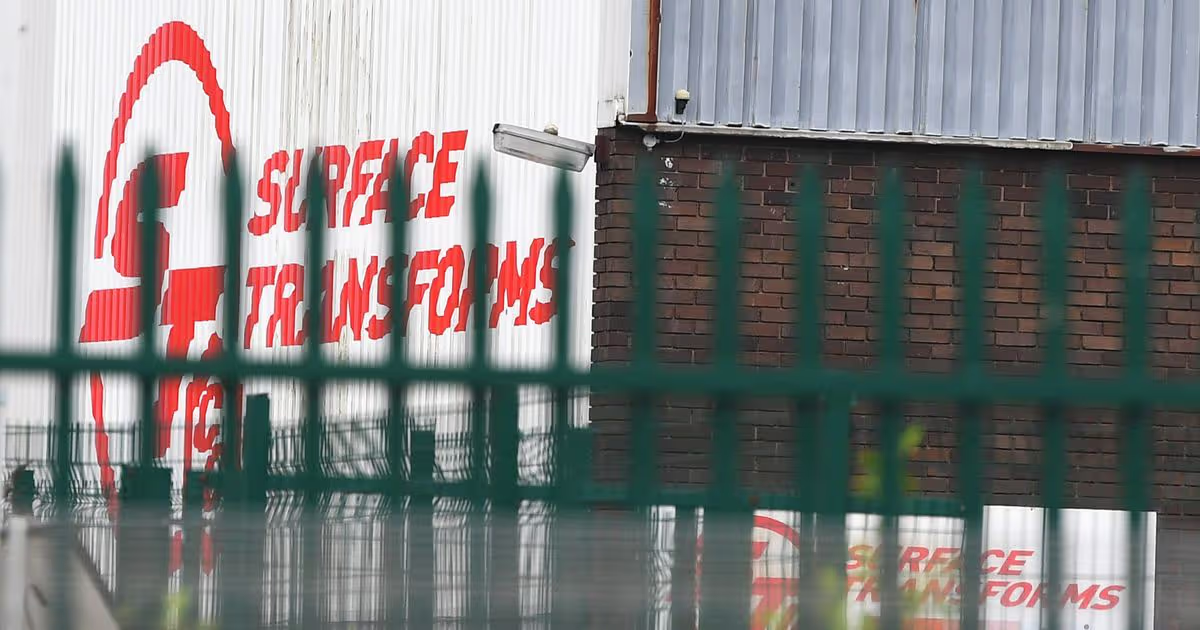
Surface Transforms is a carbon ceramic brake manufacturer based in Kirkby

Surface Transforms is based in Kirkby(Image: Liverpool Echo)

A Knowsley supercar brake specialist that two years ago received a £13.2m loan through Liverpool City Region Combined Authority has lost its biggest customer and is appointing restructuring advisers – meaning its share price plunged more than 90%.

Surface Transforms, based in Kirkby, told the Stock Exchange on Tuesday afternoon that General Motors (GM), which last year provided 84% of its revenues and has also provided the company with millions of pounds of support, has decided to change its brake disk supplier.

Advertisement

Its statement said: “The company has not yet had the opportunity to speak directly with GM about the termination, but the loss of this contract has a material impact on the company’s ability to trade and as a result the Directors intend to immediately engage corporate restructuring advisers to protect stakeholder’s interests.”

Surface Transforms said GM was “re-sourcing its supply of brake disks with effect from 31st March 2026”. It added: “GM is the Company’s most significant customer and in FY 2025 formed £15.3m (84%) of revenues and 85% of discs sold and was under contract until 2030. Additionally, since November 2024 GM has provided the Company with operational support and financial assistance including advance payments of £14.4m.”

The company said it would give further updates to the market “as appropriate”. But its share price fell by as much as 94% on Tuesday afternoon to just 0.12p per share.

Surface Transforms develops and makes carbon ceramic brakes for high-performance cars. It says its technology offers “weight savings of up to 70% compared to iron brakes”.

Advertisement

Liverpool City Region Combined Authority announced in December 2023 that Mayor Steve Rotheram’s Urban Development Fund – itself part funded by the European Regional Development Fund (ERDF) – was offering a £13.2m loan to Surface Transforms. It said the loan would “enable the company to invest in new manufacturing facilities to increase its production capacity and meet the growing demand for its products”.

At the time, Mr Rotheram said: “Our area is fortunate to be home to an abundance of world class manufacturers to rival anywhere in the world. It’s their distinctive capabilities and strengths that help to set our region apart from the rest, with industry leading businesses like Surface Transforms on our doorstep.

“This investment we’re making will be transformational in helping them to scale-up their operations – and create quality, highly-skilled jobs and training opportunities for local people. We’re showing the difference that devolution makes by helping local businesses to not only fulfil their potential but to ensure that our area remains at the forefront of manufacturing innovation. It’s local people that stand to benefit with jobs, training and apprenticeship opportunities.”

Also at the time, Kevin Johnson, CEO of Surface Transforms, said: “We are delighted to have secured this capital expenditure loan, which will enable us to execute our strategic growth plans and further strengthen our position as a leader in carbon fibre reinforced ceramic automotive brake discs.”

Advertisement

In its most recent detailed annual report, issued in June 2025 to cover the 2024 financial year, Surface Transforms said it had borrowed £5.1m of the potential £13.2m available, with a remaining undrawn commitment of £8.1m available until December 31, 2025. But it said that “drawdowns have continued into 2025, and the company expects the full £13.2m facility to be fully utilised by the end of the year.”

The report also said the covenants of the loan had been breached in December 2024 and that “this position remained unrectified in March 2025”. It added: “However, the LCA (Combined Authority) have been willing to waive the December breach in recognition of its temporary nature ahead of a much-improved long term outlook and it is anticipated that further waivers will be given in 2025 until revised covenants are agreed”.

It added that management was “confident that the unwavering support from the LCA will continue”.

The share price of Surface Transforms plunged more than 90% on March 3, 2026, after it announced it had lost its biggest contract. Screengrab from the London Stock Exchange website

The share price of Surface Transforms plunged more than 90% on March 3, 2026, after it announced it had lost its biggest contract (Image: London Stock Exchange)

In its most recent trading update in January, Surface Transforms said revenues for 2025 stood at £18m, up from £8.2m in 2024. It said revenues in the second half of the year stood at £9.9m, up from £8.1m in the first half of 2025.

Advertisement

It reported an operating loss of £8.7m, much lower than the £23.4m reported in 2024. And it said it expected to report revenues of £27m in 2026.

In a Stock Market statement at the time, the company said: “FY25 has been a transformative year, marked by substantial progress in scaling production and improving processes. The business has moved meaningfully closer to substantial and profitable operations, with materially higher output and revenues. Demand for our product remains strong. While challenges persist, customers are encouraged by the improvements underway. Cash remains tight but manageable.”

A Combined Authority spokesperson said last night: “We are aware of the situation and are in dialogue with the company to fully understand the current position. It would not be appropriate to make any further comment at this time.”

Advertisement
Continue Reading

Business

Vistry Group CEO Greg Fitzgerald to retire as UK housebuilder reports 9% output fall

Published

on

Business Live

UK’s second-biggest housebuilder sees homes built drop to 15,658 amid Budget uncertainty

CGI of a development of 688 new houses in Longbridge by Vistry

A 2025 CGI of a development of 688 new houses in Longbridge by Vistry

The chief executive of the UK’s second-largest housebuilder is stepping down as the firm grapples with declining revenue and output triggered by uncertainty surrounding last year’s November Budget.

Advertisement

Vistry’s boss Greg Fitzgerald announced he will retire in May and attributed the speculation preceding the Budget for weakened performance during the second half of the year.

Pre-tax profit rose marginally – consistent with Vistry’s projections – by two per cent to £269m, whilst revenue dropped by four per cent to £4.2bn for the year ending December 2025.

Fitzgerald stated the company’s financial results were “in line with guidance…despite continued challenges in the Open Market and the uncertainty created by the November Budget.”

The FTSE 250-listed group constructed 15,658 homes last year, representing a nine per cent decline from 2024, as reported by City AM.

Advertisement

The business underperformed expectations during the third and fourth quarters of last year owing to Budget postponements, according to its results.

However, Vistry expressed support for the government’s planning system reforms, which it believes will enable housebuilders to achieve Labour’s objective of constructing 1.5m homes before the next election.

Whilst the company acknowledged market conditions remain “challenging” and geopolitical developments may introduce “uncertainty”, it described itself as “cautiously optimistic” regarding growth this year. Announcing his retirement, Fitzgerald said: “It is an exciting time for Vistry as it focuses on addressing the chronic affordable housing shortage.

“After over 45 years in the sector, it is the right time for me to retire and I am confident that Vistry will go from strength to strength well into the future.”

Advertisement

Discussing the group’s performance last year, he said: “Vistry delivered one in seven of the country’s affordable homes last year, which demonstrates the crucial role the business plays, and will continue to play, in building the homes the UK so desperately needs.”

Vistry’s rival Barratt Redrow, the nation’s largest housebuilder by volume, appointed a new chief executive on Wednesday. The FTSE 100 company announced former infrastructure boss Dean Banks will take the top job, as the housebuilder works to restore investor confidence following last month’s dividend reduction which caused its share price to fall.

Continue Reading

Business

The Fictional K-Pop Sensation Blurring Lines Between Animation and Reality

Published

on

Rosé and Bruno Mars Reflect on 'APT.' Grammy Snub, Pizza

LOS ANGELES — HUNTR/X, the powerhouse girl group at the heart of Netflix’s animated blockbuster “KPop Demon Hunters,” has transcended its fictional origins to become one of 2025-2026’s most talked-about musical acts. Voiced and performed by real-life artists EJAE, Audrey Nuna, and Rei Ami, the trio has racked up billions of streams, award wins, and live performances, proving that a made-for-movie band can dominate charts and culture. Here are 10 essential things to know about HUNTR/X as the project continues to evolve in early 2026.

KPop_Demon_Hunters

1. **Fictional Origins in a Hit Animated Film**
HUNTR/X debuted in the Netflix and Sony Pictures Animation film “KPop Demon Hunters,” released June 20, 2025. The story follows Rumi (voiced by Arden Cho, sung by EJAE), Mira (May Hong/Audrey Nuna), and Zoey (Ji-young Yoo/Rei Ami) — global K-pop superstars by day who secretly battle demons to protect humanity and maintain a magical barrier called the Honmoon. Their music powers the narrative, using songs to reinforce the barrier against supernatural threats, including rival demon boy band Saja Boys.

2. **Real-Life Voices Behind the Phenomenon**
The singing voices — EJAE (lead vocalist and songwriter for Rumi), Audrey Nuna (Mira), and Rei Ami (Zoey) — are established independent artists who brought authenticity to the tracks. EJAE, known for her powerful vocals, leads many anthems; Audrey Nuna adds soulful depth; and Rei Ami infuses pop-rap energy. Their collaboration created a cohesive sound blending K-pop, R&B, and pop elements that resonated far beyond the screen.

3. **Breakout Hit “Golden” Makes History**
The soundtrack single “Golden” became a cultural juggernaut, topping the Billboard Hot 100 and amassing over 1.49 billion streams on platforms like Spotify. In early 2026, it made history as the first K-pop-associated song to win a Grammy, taking Song of the Year at the 2026 ceremony. The track’s triumphant lyrics about rising above challenges mirrored the film’s themes and fueled massive fan engagement.

4. **Live Performances and Award Show Dominance**
HUNTR/X crossed into reality with live appearances by EJAE, Audrey Nuna, and Rei Ami. They performed “Golden” at major events including the 2026 Grammys red carpet interviews, BRIT Awards, BAFTAs, and even a halftime show at the AFC Women’s Asian Cup. These high-profile slots solidified their status, with fans treating them as a legitimate group separate from the film.

Advertisement

5. **Soundtrack Success and Chart Impact**
The full “KPop Demon Hunters” soundtrack, featuring tracks like “How It’s Done,” “Takedown,” and group anthems, topped charts globally. Songs received heavy rotation on playlists, with monthly listeners for HUNTR/X exceeding 39 million on Spotify. The project’s music has been praised for its confident production and empowering messages, appealing to both animation fans and K-pop enthusiasts.

6. **Fandom and Cultural Reach**
Officially dubbed “Hunters,” the fandom adopted purple as an unofficial color. Online communities on Reddit, X, and TikTok exploded, with discussions ranging from lore analysis to calls for HUNTR/X to become a permanent real-world act. The group’s success blurred fiction and reality, inspiring fan art, covers, and mashups that kept momentum alive months after the film’s streaming debut.

7. **Sequel in Development for 2029**
Netflix confirmed talks for a “KPop Demon Hunters” sequel targeting a 2029 release. The follow-up would reunite HUNTR/X for new adventures, building on the first film’s box-office and streaming triumph. Producers have teased expanded storylines, more music, and deeper exploration of the characters’ dual lives.

8. **Merchandise, Official Channels, and Fan Engagement**
An official HUNTR/X website (huntrix.ca) offers merchandise, while YouTube channels and Spotify artist pages host content like lyric videos and behind-the-scenes clips. The group maintains a strong digital presence, with fans streaming the soundtrack and engaging in viral challenges tied to songs like “Golden.”

Advertisement

9. **Addressing AI Rumors and Authenticity Debates**
Early speculation questioned whether vocals used AI enhancement, sparked by the polished production. Rei Ami publicly clapped back, defending the human effort behind the tracks. Discussions highlighted the project’s soulful execution versus “AI slop,” reinforcing that HUNTR/X represents genuine artistry from talented performers.

10. **A Milestone for Fictional Acts in Pop Culture**
HUNTR/X exemplifies how animated projects can launch real musical careers. From Grammy wins to award show stages, the trio’s journey shows the power of cross-media storytelling in the streaming era. As fans await sequel news and potential new music, HUNTR/X stands as proof that great songs — fictional or not — can conquer the world.

The project’s ongoing impact underscores a shift where virtual idols and animated stars compete with traditional acts. With awards hardware, chart records, and a dedicated global following, HUNTR/X continues to hunt success well into 2026.

Advertisement

Continue Reading

Trending

Copyright © 2025