

Crypto World
Market infrastructure firms warn tokenized securities face higher costs, split liquidity without interoperability



The world’s largest market infrastructure operators are warning that tokenized securities will struggle to scale unless the industry agrees on how blockchains and traditional finance systems connect.
In a joint white paper, the Depository Trust and Clearing Corporation (DTCC), Euroclear and Clearstream, working with Boston Consulting Group, argued that “interoperability is a prerequisite for digital asset security (DAS) adoption at scale.” Without it, they wrote, assets risk being trapped on isolated networks, leaving “operational costs high” and liquidity fragmented as trading volumes grow.
The group stopped short of endorsing any single technology. Instead, it framed the problem as structural. Dozens of public and permissioned blockchains now host pilots and live products. Each uses its own standards, smart contract logic and settlement design. That diversity, the paper says, makes integration harder and increases operational and regulatory risk.
The authors rejected the idea that one dominant ledger will emerge. The operating model, they said, is shifting toward a “network-of-networks, with standards, gateways, and regulated service providers” linking digital and traditional systems. In that environment, assets must move across platforms while preserving what the paper calls “the asset’s integrity, ownership rights and lifecycle, with full legal and regulatory compliance.”
They summarized the goal in a short phrase: “same asset, same rights, same outcome.”
The warning comes as tokenization gains ground in repo markets and pilot programs across the U.S. and Europe. While onchain securities remain small compared with global equity and FX markets, the paper notes that large-scale infrastructure is already in motion, including more than $300 billion in daily repo activity across major platforms.
Still, many workflows depend on legacy rails. Tokenized bonds may trade on-chain, but cash often settles through real-time gross settlement systems or bank payment networks. Custodians and central securities depositories still maintain books of record. The paper assumes this coexistence will last for years.
The framework also extends beyond technical bridges. Interoperability, the authors argued, must cover assets and liabilities, ownership recognition, lifecycle events, ledger finality and legal enforceability. Without alignment across those layers, cross-chain or cross-border transactions may require extra reconciliation steps that erode promised efficiency gains.
The group called on regulators and market participants to develop working groups focused on governance, standards and resilience. “Collective action today will shape resilient markets tomorrow,” the paper states.
That push comes as major Wall Street firms argue tokenization could reshape financial markets by enabling 24/7 trading, faster settlement and more efficient use of collateral. Executives at large banks and asset managers have said blockchain-based rails may eventually reduce back-office costs and free up capital tied up in multi-day settlement cycles. Some have described tokenized assets as a path toward more integrated global markets, where cash and securities move in near real time.
The paper does not dispute that vision. Instead, it suggests that achieving it depends less on launching new chains and more on aligning the rules that govern them.


Tokenized equities are gaining traction on crypto trading venues as MEXC deepens its collaboration with Ondo Finance, expanding on-chain access to mainstream U.S. stocks. In a March 3 update, the exchange said it would list 17 additional spot tokenized stock pairs and seven new tokens tied to defense and energy firms, all trading against USDT on its platform. The underlying equities remain held in regulated trust accounts and are subject to quarterly audits, designed to mirror ownership of the corresponding shares. The expansion marks the ninth wave of listings since the product’s initial rollout in September 2025, underscoring the accelerating push into tokenized traditional assets.
Key takeaways
- The MEXC–Ondo Finance partnership adds 17 new tokenized stock pairs and seven defense/energy-linked tokens, broadening on-chain exposure to U.S. equities.
- Tokens are issued as ERC-20 assets on Ethereum and trade against USDT (CRYPTO: USDT) pairs on the exchange, with the underlying shares held in regulated trusts and audited quarterly.
- Trading fees for the 17 new pairs are waived for the first 30 days, a post-launch incentive designed to spur onboarding and liquidity.
- Among the newly listed tokens are representations tied to Lockheed Martin (EXCHANGE: LMT), RTX (EXCHANGE: RTX), ConocoPhillips (EXCHANGE: COP) and Occidental Petroleum (EXCHANGE: OXY); withdrawals for the new tokens are set to commence on March 5.
- This expansion continues a multi-month cadence of tokenized-equity launches, illustrating sustained interest from exchanges in on‑chain access to traditional assets.
Tickers mentioned: $LMT, $RTX, $COP, $OXY, $USDT
Sentiment: Neutral
Price impact: Neutral. The piece centers on new listings and fee waivers rather than explicit price movements or market reactions.
Market context: Tokenized equities are increasingly appearing across crypto venues as platforms seek to bridge traditional asset access with on-chain infrastructure, even as regulatory guidance remains nuanced in the United States. The trend is underscored by multiple exchanges expanding their tokenized stock catalogs and by ongoing industry chatter about how on-chain representations can coexist with conventional securities frameworks.
Why it matters
The MEXC–Ondo Finance collaboration is emblematic of a broader push to tokenize traditional assets and to deliver them in a blockchain-native format. By representing ownership of real shares as ERC-20 tokens, the partners aim to offer investors near-instant settlement, programmable governance features, and 24/7 trading availability across global markets. The underlying shares are held in regulated trust accounts and are subject to quarterly third-party audits, offering a degree of regulatory comfort that is often cited as a barrier in earlier tokenized-stock experiments.
Significantly, the expansion includes defense and energy sector equities. The addition of tokens tied to Lockheed Martin, RTX, ConocoPhillips and Occidental Petroleum alongside broader tech, healthcare and financials exposure broadens the potential use cases for tokenized assets—from hedging and diversification to access for non-traditional audiences who prefer crypto-friendly platforms. For participants, the ability to trade tokenized stock pairings against USDT on an exchange known for its liquidity could reduce the friction and settlement times historically associated with traditional stock trading venues.
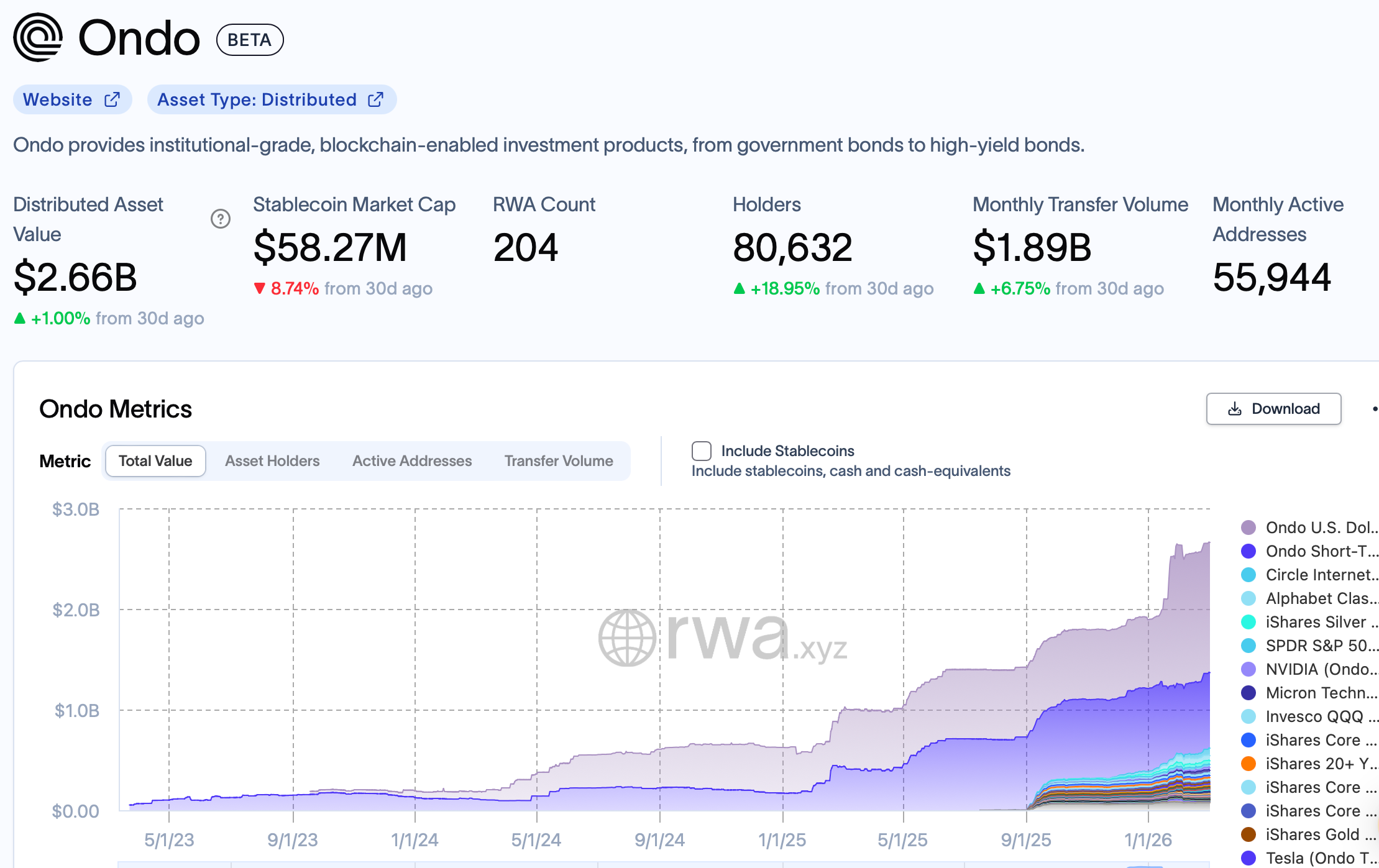
Ondo Finance’s role as the on-chain issuer remains central. Based in New York, Ondo focuses on bringing traditional financial assets on-chain, and its current asset base totals around $2.66 billion in tokenized value. This scale underscores the practical viability of maintaining regulated custody and audits while delivering on-chain representations. The partnership’s track record—nine expansions since the product’s September 2025 launch—signals a deliberate strategy to normalize tokenized equities as a complement to, rather than a replacement for, conventional stock markets. In the broader market, such expansions occur amid rising interest in tokenized assets, even as market participants monitor regulatory developments and the potential implications for liquidity, custody, and investor protections.
Additionally, the initiative sits within a backdrop of exchanges experimenting with tokenized-stock pipelines beyond the United States. Other platforms have rolled out tokenized stock trading or perpetual futures tied to US-listed equities, illustrating a growing ecosystem of on-chain representations that appeal to crypto-native traders seeking cross-asset exposure. The combination of regulated custody, periodic audits and 30-day fee waivers creates a practical path for onboarding new users who may be evaluating the stability and reliability of tokenized equities as part of diversified crypto portfolios.
What to watch next
- Withdrawals for the seven new tokenized equities, including LMT, RTX, COP and OXY, begin on March 5, opening the door for user-access and potential liquidity ramps.
- The ongoing cadence of tokenized-equity expansions—now at nine total—could foretell further category diversification, including additional sectors or international listings.
- Regulatory developments in the U.S. and elsewhere could influence product design, custody standards, and eligibility for retail participation in tokenized securities.
- Any updates on trading volumes, liquidity metrics, or auditing cadence could shape investor confidence and platform competitiveness relative to other tokenized-equity offerings.
Sources & verification
- PR Newswire: MEXC and Ondo Finance expand tokenized stock partnership with 17 new spot pairs and zero-fee trading (March 3)
- Newswire Canada: MEXC partners with Ondo Finance to launch tokenized U.S. equities in defense and energy sectors (seven new equities)
- RWA.xyz: Ondo platform data showing tokenized asset totals
- CoinMarketCap: Exchange data corroborating MEXC’s ranking and activity
- Cointelegraph coverage on related tokenized-equity developments (Kraken) for context on industry movements
Expanded tokenized equities deepen MEXC-Ondo collaboration
On March 3, MEXC, a centralized crypto exchange founded in 2018, announced a widened on-chain representation of U.S. equities through its partnership with Ondo Finance. The update confirms 17 additional tokenized stock pairs and seven new tokens connected to the defense and energy sectors. Trading occurs as ERC-20 tokens on Ethereum and exchanges against USDT (CRYPTO: USDT) pairs on the platform, with the underlying shares held in regulated trust accounts and subjected to quarterly audits to help ensure parity with the actual securities. The issuance framework emphasizes custody and compliance, distinguishing it from more speculative on-chain assets by anchoring tokens to registered equities.
The new batch expands a product line that Ondo and MEXC have iterated since September 2025, reflecting a deliberate effort to scale tokenized equities across multiple sectors. The seven defense- and energy-linked tokens—led by shares tied to major names such as Lockheed Martin, RTX, ConocoPhillips and Occidental Petroleum—underscore a broadening approach to sectoral diversification. Investors will see these tokens trade on the same venue as other tokenized assets, with withdrawals scheduled to start on March 5, a procedural milestone that enables on-exchange redemption and on-platform liquidity adjustments. The first appearances of these equities are designed to resemble the same ownership logic that governs traditional shares, backed by regulated custody, audit regimes and outside oversight.
From a structural standpoint, Ondo Finance positions itself as a New York–based firm focused on bringing traditional assets on-chain. Its portfolio footprint—about $2.66 billion in tokenized value—serves as a crucial reference point for the perceived reliability of tokenized equities in live markets. By modularizing the tokenization process (ERC-20 representations) and integrating with established exchanges that already handle high trading volumes, the collaboration aims to deliver familiar equity exposure through the lens of decentralized finance rails. While the technology stack enables on-chain settlement and programmable features, the governance and compliance layers remain anchored in traditional regulatory or custodial frameworks, an arrangement designed to reassure participants wary of unregulated digitized securities.
For observers, the expansion highlights a broader trend: crypto venues are increasingly courting mainstream assets via tokenization, even as the regulatory climate remains a work in progress. The combination of regulated trust custody, periodic audits, and time-bound promotional incentives (such as 30-day trading-fee waivers) signals a practical approach to onboarding a broader audience—investors who want the flexibility and 24/7 access of crypto platforms while still acknowledging the underlying equity rights. In this evolving landscape, the MEXC–Ondo collaboration stands as a notable example of how traditional finance and blockchain-enabled markets are converging, with the potential to redefine liquidity access and cross-asset trading strategies for retail and institutional participants alike.


Almost four months have passed since the devastating disassembly of a DeFi daisy chain, which saw the value of the so-called “yield vault” sector drop by over $4 billion.
Since then, many of the “risk curators” involved have kept a low profile, while others are keen to rebuild confidence.
Last week, it became clear that one such curator hadn’t managed to weather the storm.
MEV Capital dissolves
Last week, The Big Whale reported that MEV Capital would be taken over by one of its partners, Belem Capital. Citing DeFiLlama figures, the article highlights an 80% drop in MEV Capital’s assets under management, dropping from $1.5 billion to $300 million.
The drop-off was sparked by the firm’s exposure to looped-leverage yield strategies involving deUSD, which depegged in early November in response to the collapse of Stream Finance (not, as the article claims, in the infamous October 10 market crash).
Elixir announced it would discontinue deUSD shortly thereafter.
MEV Capital’s CEO Laurent Bourquin, “seems to have abruptly stepped back,” according to the article.
Additionally, asset tokenization platform Midas Capital disclosed that it had “concluded all business” with MEV Capital, handing management of mMEV and mevBTC to RockawayX.
DeFi’s ‘risk curator reckoning’
In late October, worries began to circulate over the integrity of a number of high-yield vault tokens across the DeFi sector.
Days later, one of these risk curators, Stream Finance, collapsed spectacularly after admitting it had lost $93 million. With the quality of its backing exposed, Stream’s vault token, xUSD, lost 75% of its value.
Other assets in the “daisy chain” of recursive lending followed suit, notably Elexir’s deUSD.
The resulting domino effect saw a scramble to unwind leverage across a handful of projects. In all, almost half of the sector’s $10 billion in total value locked was wiped out over the following month.
It’s since recovered slightly, sitting at around $6 billion.
Some handled it better than others, with users often waiting weeks with no news. Risk curator Re7 Labs even made legal threats to a self-styled “whistleblower” who had publicly complained on behalf of depositors.
‘Any curators reading these reports?’
November’s yield vault apocalypse hinged on recursive lending and borrowing of vault tokens between interconnected projects.
More sustainable projects, however, went unscathed. They’ve increasingly leaned into “institutional-grade” offerings of on-chain, but somewhat more tangible, real world assets (RWA).
The aforementioned Midas Capital tokenizes off-chain funds such as Fasanara’s F-ONE (as mF-ONE), for example. These come with regular reporting on the state of off-chain assets.
However, some remain unconvinced, asking “any curators reading these reports?” in response to Midas’ recent disclosure of an inaccuracy in their mF-ONE reporting. Another X user called the reporting “trash,” pointing to delays and missing information.
It should be noted that both accounts are contributors at Yearn, a fully on-chain yield aggregator platform.
Read more: Yearn hacker loses $2.4M of $9M loot as tokens burned from wallet
Off-chain risk, now on-chain
DeFi is often seen as plenty risky enough, but it’s certainly not immune from outside risks.
A detailed December report from curator Steakhouse Financial drew attention to a 2% drop in Midas-tokenized fund mF-ONE, in line with the real-world version.
The dip wasn’t enough to cause any mF-ONE collateralized positions to be liquidated, but still raised eyebrows as a novel asset class in DeFi.
Last week, risk management firm Chaos Labs revisited the episode, pointing to “a bankrupt auto-parts supplier” as the source of the shortfall.
It makes the case that “yield is risk,” and that “off-chain doesn’t mean safe by default.”
Steakhouse, whose high-yield vault is exposed to mF-ONE, said the post contained “inaccuracies and selective presentations” and accused Chaos Labs of “plagiarismgooning and fudmaxxing.”
Founder of Steakhouse, Sébastien Derivaux, insisted that mF-ONE is “fit for high yield vaults as collateral.”
Worth it?
The mechanics of bringing RWAs into DeFi are complex. They also make adhering to the maxim “don’t trust, verify,” reliant on issuers’ reporting on off-chain assets.
Even stranger, their use as collateral may even see lenders receiving lower yield than the collateral itself. Whilst assuming both counterparty and underlying asset risk.
Got a tip? Send us an email securely via Protos Leaks. For more informed news and investigations, follow us on X, Bluesky, and Google News, or subscribe to our YouTube channel.
Crypto exchange MEXC has expanded its tokenized equities offering through its partnership with Ondo Finance, listing new onchain representations of US stocks that trade against Tether on its platform.
According to company announcements this week, the expansion includes 17 newly listed tokenized stock pairs and seven additional tokens tied to US defense and energy companies.
The tokens are issued as ERC-20 assets on Ethereum and trade against Tether (USDT) pairs on the exchange. The underlying shares are held in regulated trust accounts and subject to quarterly third-party audits, with the tokens designed to represent ownership of the corresponding underlying equities.
A March 3 announcement introduced 17 additional tokenized stock pairs spanning sectors such as technology, healthcare and finance.
Trading fees for the 17 newly listed tokenized stock pairs will be waived for the first 30 days. The companies did not disclose the names of the individual companies included in the batch.
A separate release on Wednesday added seven tokenized equities tied to defense and energy companies, including Lockheed Martin (LMT), RTX (RTX), ConocoPhillips (COP) and Occidental Petroleum (OXY). Withdrawals for the newly listed tokens are scheduled to begin March 5.
The partnership builds on a series of tokenized equity listings MEXC has introduced with Ondo Finance since launching the product in September 2025. The 17 new pairs are the ninth expansion of the offering.
MEXC is a centralized cryptocurrency exchange founded in 2018 and offering spot and derivatives trading for digital assets. According to CoinMarketCap data, it is the ninth-largest exchange by spot trading volume.
Ondo Finance is a New York–based blockchain company that focuses on bringing traditional financial assets onchain through tokenization. At the time of writing, assets issued through Ondo total about $2.66 billion in tokenized value, according to RWA.xyz data.

Related: Kraken debuts tokenized stock perpetual futures for non-US traders
Crypto exchanges move to tokenize assets
The race among crypto exchanges to tokenize stocks has been gaining momentum.
In June, more than 60 tokenized equities became available on exchanges including Kraken and Bybit through Backed Finance’s xStocks product. The lineup included major companies such as Apple, Amazon, Nvidia, Tesla, Meta and Netflix.
Gemini has also moved into the sector through a partnership with Dinari. In July, the exchange said customers in the European Union could trade a growing list of tokenized US stocks on its platform, including shares tied to companies such as Exxon, Sony, BlackRock and Visa.
To be sure, tokenized equities remain largely unavailable to US users as the industry awaits clearer regulatory guidance for blockchain-based securities.
In the meantime, several exchanges are expanding into traditional equities through brokerage-style services. In April, Kraken said it would begin offering trading in about 11,000 US-listed stocks and exchange-traded funds as part of a phased rollout across the United States.
Over the past few months, Coinbase and Bitpanda have also announced stock trading features that allow users to buy and sell equities alongside cryptocurrencies on the same platforms.
Magazine: Bitcoin may face hard fork over any attempt to freeze Satoshi’s coins

“With each ETF that’s gone live, the money’s a lot more sticky,” in the words of Canary Capital’s CEO Steven McClurg.
This idea represents one of the clearest takeaways from Consensus Hong Kong this year: we’ve finally reached the era of long-term allocation.
Consensus Hong Kong 2026 (Feb 10-12, 2026) brought 11,000 registered attendees from 122+ countries and regions to the Hong Kong Convention and Exhibition Centre. Senior leadership made up a significant share of the audience, along with allocators, operators, and infrastructure builders.
“Digital Assets. Institutional Scale.” was reflected in the programming, and met well on the ground. Panels centered on institutional adoption, stablecoin infrastructure, and the architecture of internet capital markets. There was also a visible attempt to connect blockchain infrastructure with AI agents and robotics, but even those discussions returned to the same constraint: execution and reliability.
What stood out early was how consistently conversations returned to market infrastructure. Across the Future of Finance Summit, the Global Bitcoin Summit, and the Advanced Trading track, it’s clear that the next phase in Web3 is about proving it can operate at scale, under real capital, without breaking.

Sticky money, soft regulation and a dominant U.S. narrative
McClurg used Canary’s own XRP product to illustrate what he meant by ‘stickier’ capital.
“We launched an XRP ETF last year, and even on the biggest down days of the market, we were still getting inflows – meaning that people see an opportunity, they’re buying it.”
Of course, if capital continues to flow in during drawdowns, the market dynamic changes.
The mood at Consensus was the product of such a change, beginning in earnest with the SEC’s approval of spot Bitcoin ETFs in January 2024. Naturally, once exposure could be accessed through a familiar asset, things were shaken up.
As ETF pipelines expanded in the U.S., so did the institutional looking glass. Liquidity quality started to matter more than raw volume, hedging tools became part of the discussion, and market structure moved from the periphery to the center.
Regulation came up repeatedly in Hong Kong, but in a specific tone.
McClurg described the U.S. shift as real, though not fully codified into statute.
“Most of it’s happened, but it’s soft regulation… not necessarily laws that are being passed. It’s via executive orders. It’s via appointments.”
In other words, posture and precedent are shaping the environment as much as formal legislation.
That aligns with developments in Washington since early 2025: executive actions outlining national digital asset frameworks and a reshaped SEC leadership publicly signaling a more workable approach to crypto oversight.
The result is a market that feels more procedural and predictable. That’s what institutions require before size follows – a topic also well discussed at Consensus’ “The Regulatory Shift” panel at the Convergence Stage.
Institutional anxiety about whether the infrastructure is real
Volatility no longer seems to scare serious allocators. At the event, this idea felt like a misconception for the first time.
Cory Loo, Head of APAC at Douro Labs and lead for APAC business development for Pyth Network, commented on this point:
“Institutions understand volatility. What still quietly worries them is whether crypto’s infrastructure and business models are actually institutional-grade – not in marketing language, but in measurable terms. They want to see real revenue, real customers, real compliance, real uptime.”
The hesitation, in his view, is that parts of the industry can still look larger than they are: activity that appears significant on the surface, but doesn’t hold up when institutions pressure-test durability, unit economics, and operational maturity.
That framing matched the agenda-level emphasis at Consensus. The “Advanced Trading” programming was positioned around liquidity mechanics, security considerations, and a shifting regulatory landscape, including the role of cross-chain solutions and emerging protocols in making markets more transparent and efficient.
It felt as though being ‘institutional-grade’ has become a default requirement for projects in the space. Uptime, incident response, governance, and compliance aren’t secondary concerns anymore.
That is also why infrastructure providers that can point to hard usage metrics have gained an edge in these conversations. Pyth Network, for instance, publicly says it has integrated 600+ protocols across 100+ blockchains and delivers thousands of price feeds, with a growing share tied to real-world assets.
Self-custody, the education gap, and why aggregation is becoming the default
One of the more useful signals at Consensus came from Andrey Fedorov, CMO & CBDO of STON.fi Dev, in an exclusive interview with BeInCrypto. He spoke to a product-design tradeoff, where DeFi teams either optimize for user acquisition speed or for principles that hold up when capital and scrutiny arrive:
“We could grow faster if we compromised on custody. But then we wouldn’t be building DeFi infrastructure – we’d be building another fintech layer.”
As more regulated capital comes into the market, the bar rises for what counts as acceptable custody, acceptable risk, and acceptable operational responsibility. A self-custody-first posture is not always the easiest route to distribution, but it seems from the event that that’s what the industry is focusing on building.
Fedorov also put a spotlight on an interesting adoption blocker:
“If someone loses their seed phrase, we can’t restore access. We don’t have it. We’ve never had it. But quite often users still come to us expecting support, like they would from a bank or centralized exchange.”
Essentially, the industry is still training users to understand what self-custody means. It’s clear that work on education is part of the cost of building non-custodial systems at scale.
Fedorov came prepared with a solution, however – distribution and aggregation:
“Make things easier for those who don’t want to think about technical stuff. Get wider distribution by integrating into all the apps. And aggregate liquidity from multiple blockchains, not just one. That’s the roadmap. Now it’s about scaling it.”
That’s also exactly how Consensus framed advanced trading this year – with cross-chain solutions and new protocols positioned as drivers of efficiency and accessibility.
Here, in STON.fi’s case, we could highlight Omniston, which the team positions as a liquidity aggregation protocol designed for TON, connecting multiple liquidity sources through a single integration.
Hong Kong’s welcomes institutional scale, with training wheels
Of course, many of the conference’s institutional conversations centered on the U.S. ETFs, precedent, and what McClurg called “soft regulation”. However, Consensus Hong Kong also had a clear local narrative running through the main stage. Hong Kong wants to be a global hub for digital assets, but it wants that growth routed through licensing, investor protection, and risk management.
In his opening address, John Lee (Chief Executive of the Hong Kong SAR) pitched Hong Kong’s approach as deliberately “steady and sustainable,” pointing to an actively built regulatory framework and a policy direction aimed at turning Web3 potential into real financial-market outcomes.
This all became a little more concrete in remarks by Paul Chan (Financial Secretary), who laid out what the government sees as the major institutional-facing trends: tokenization of real-world assets moving from proof-of-concept to deployment; deeper interaction between TradFi and DeFi (with DeFi also facing growing regulatory pressure); and the accelerating overlap between AI and digital assets, including early ‘machine economy’ concepts where autonomous systems transact on-chain.
Consensus 2026 proved that capital is willing to engage, but it demands environments where rules are legible, and intermediaries are accountable.
Stablecoins and tokenization
Lee also tied Hong Kong’s “hub” ambition directly to its new stablecoin regime. He pointed to the Stablecoins Ordinance and said the HKMA was already processing applications, with the first batch of fiat-referenced stablecoin issuer licences expected “within the next month.”
Eddie Yue, the HKMA’s Chief Executive, separately told lawmakers the first batch is expected in March 2026, and that only a “very small number” of licences will be granted initially. The emphasis is on use cases, risk controls, AML, and reserve backing.
Chan used his keynote to explain what this approach means for institutions. Tokenization is moving from proof-of-concept to deployment, led by on-chain versions of familiar instruments such as government bonds and money market funds.
He supported that framing with local metrics. These included Hong Kong’s tokenized green bond programme, banks holding over HK$14 billion in digital assets under custody by the end of 2025, and tokenized deposits reaching HK$29 billion.
Separately, a main stage conversation on RWA tokenization brought together senior leaders from Securitize, Ondo, and J.P. Morgan’s Kinexys dove deep into how Real World Assets are increasingly being treated as part of familiar institutional categories.
From the event, it was clear that payments, settlement, and regulated issuance are now the main competitive arena. Even the “Machine Economy” discussions (AI agents, robotics, on-chain execution) kept coming back to licensed issuers, enforceable AML and controls, and auditability, among other things.
Risk appetite is back, but it’s not unconditional
The simplest way to describe where the market is heading is that institutional adoption is becoming a procurement game. The checks are on compliance posture, governance, uptime, incident response, and whether the business model survives scrutiny once you strip out cyclical volume.
Two signals made the direction clear. The agenda leaned hard into market structure (liquidity, security, regulation, and cross-chain execution) and made the point that enterprise-grade crypto infrastructure only works with regulatory backing, with Hong Kong’s stablecoin licensing push as the clearest example.
Indeed, risk appetite is returning, but it’s conditional. Capital will move faster when the foundations behave predictably. After all, that’s what makes crypto legible to investment committees and survivable under stress.
Looking ahead to Consensus Miami (May 5-7, 2026), the agenda is set to dive further into stablecoins, tokenization, capital markets, and regulation, with dedicated programming for Bitcoin (including mining and institutional strategy) plus formats like Wealth Management Day, Stablecoin University, PitchFest, and the Hackathon.
Centralized exchanges (CEXs) still command the lion’s share of crypto liquidity. However, the balance of power is beginning to tilt as decentralized exchanges (DEXs) have doubled their spot market share over the past two years while expanding their presence in perpetual futures fivefold.
The data signals that on-chain trading is no longer a niche alternative. Rather, it is emerging as a structural competitor to centralized venues.
DEXs Gain Ground: Hyperliquid, Uniswap, and PancakeSwap Break into Top 10 Exchanges
According to the 2026 CEX & DEX Trading Activity Report from CoinGecko, CEXs processed nearly $80 trillion in spot and perpetual trading volume in 2025 alone. While this highlights their continued dominance, DEX adoption is also accelerating fast.
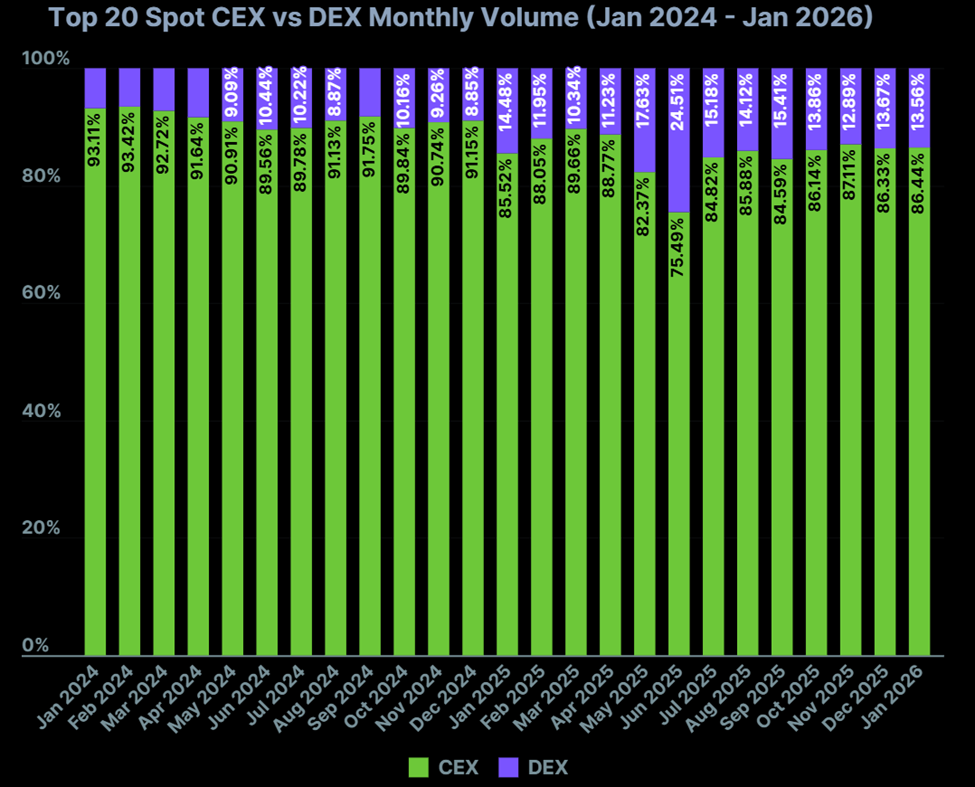
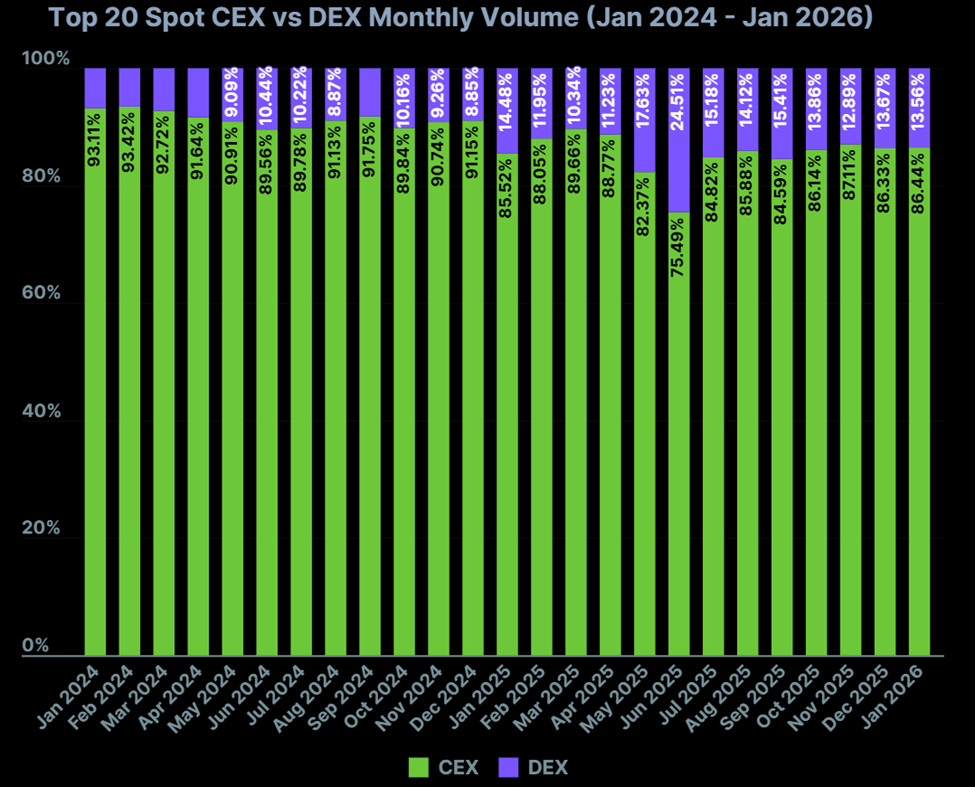
DEX spot market share rose from 6.9% in January 2024 to 13.6% in January 2026. In absolute terms, monthly DEX spot volume more than doubled, climbing from $95.86 billion to $231.29 billion.
At its peak in June 2025, DEXs accounted for 24.5% of spot trading activity. According to the report, this milestone was driven partly by Binance Alpha 2.0 routing trades through PancakeSwap.
While that spike proved temporary, DEX share has remained consistently above 10% since early 2025. This suggests that demand for on-chain execution is stabilizing rather than fading.
Still, centralized platforms continue to anchor liquidity, maintaining more than $1 trillion in monthly spot volume throughout the period.
Perpetuals: A Breakout Moment for DEXs wit Hyperliquid In the Lead
The perpetual futures market expanded 75% in two years, growing from $4.14 trillion in January 2024 to $7.24 trillion in January 2026. Within that growth, DEXs made their most dramatic gains.
- Perp DEX volume surged eightfold from $81.7 billion to $739.5 billion
- This lifted market share from 2.0% to 10.2%.
In other words, one in every ten dollars traded in crypto perpetuals now flows through decentralized infrastructure.
A key driver was the breakout performance of Hyperliquid, which became the only DEX to rank among the Top 10 perps exchanges.
Within six months between August 2025 and January 2026, Hyperliquid recorded $1.59 trillion in cumulative trading volume. This placed it alongside long-established centralized giants.
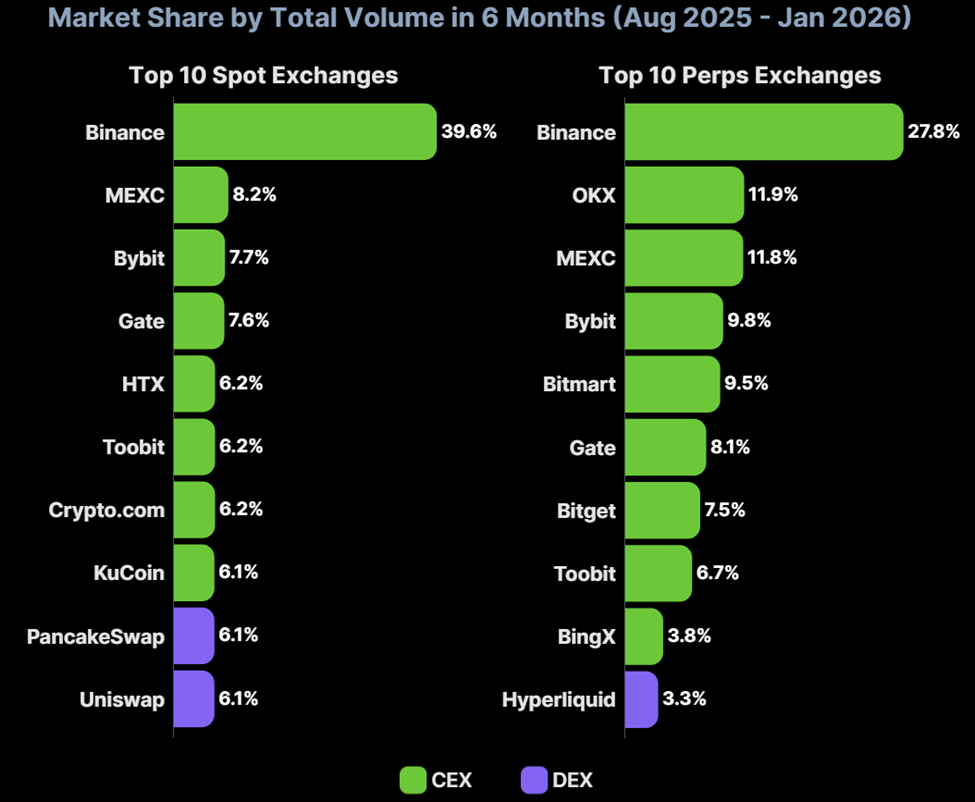
On the spot side, Uniswap and PancakeSwap also entered the Top 10 exchanges by volume, each surpassing $0.5 trillion in six-month cumulative trading activity.
Just a few years ago, the idea of multiple DEXs ranking among the industry’s largest exchanges would have seemed improbable.
Token Listings Reveal Structural Divide
The report also highlights stark differences in token coverage. Among centralized platforms, MEXC and Gate.io led listings with 1,281 and 1,273 tokens, respectively, over 13 months. They averaged just under 100 new listings per month.
Yet this represented only 0.01% of the 24.04 million tokens created during that period.
By contrast, Uniswap alone listed 13.69 million tokens, reflecting the permissionless nature of decentralized infrastructure.
This points to a fundamental divergence, where CEXs curate scarcity whereas DEXs scale abundance.
$2.4 Billion in Security Losses
Notwithstanding, the fast growth has not come without cost. Crypto exchanges recorded more than $2.4 billion in hack-related losses in just over a year.
Centralized venues accounted for over $2 billion, with 71% stemming from a single exploit at Bybit in February 2025.
DEXs experienced smaller aggregate losses, with the largest exploit totaling $223 million. This was typically tied to smart contract vulnerabilities and oracle manipulation.
The broader takeaway from CoinGecko’s report is that while CEXs remain dominant, decentralized competitors are closing the gap across both spot and derivatives markets.
With DEX market share above 10% and institutional-grade on-chain platforms emerging, the shift toward decentralized liquidity is becoming measurable.
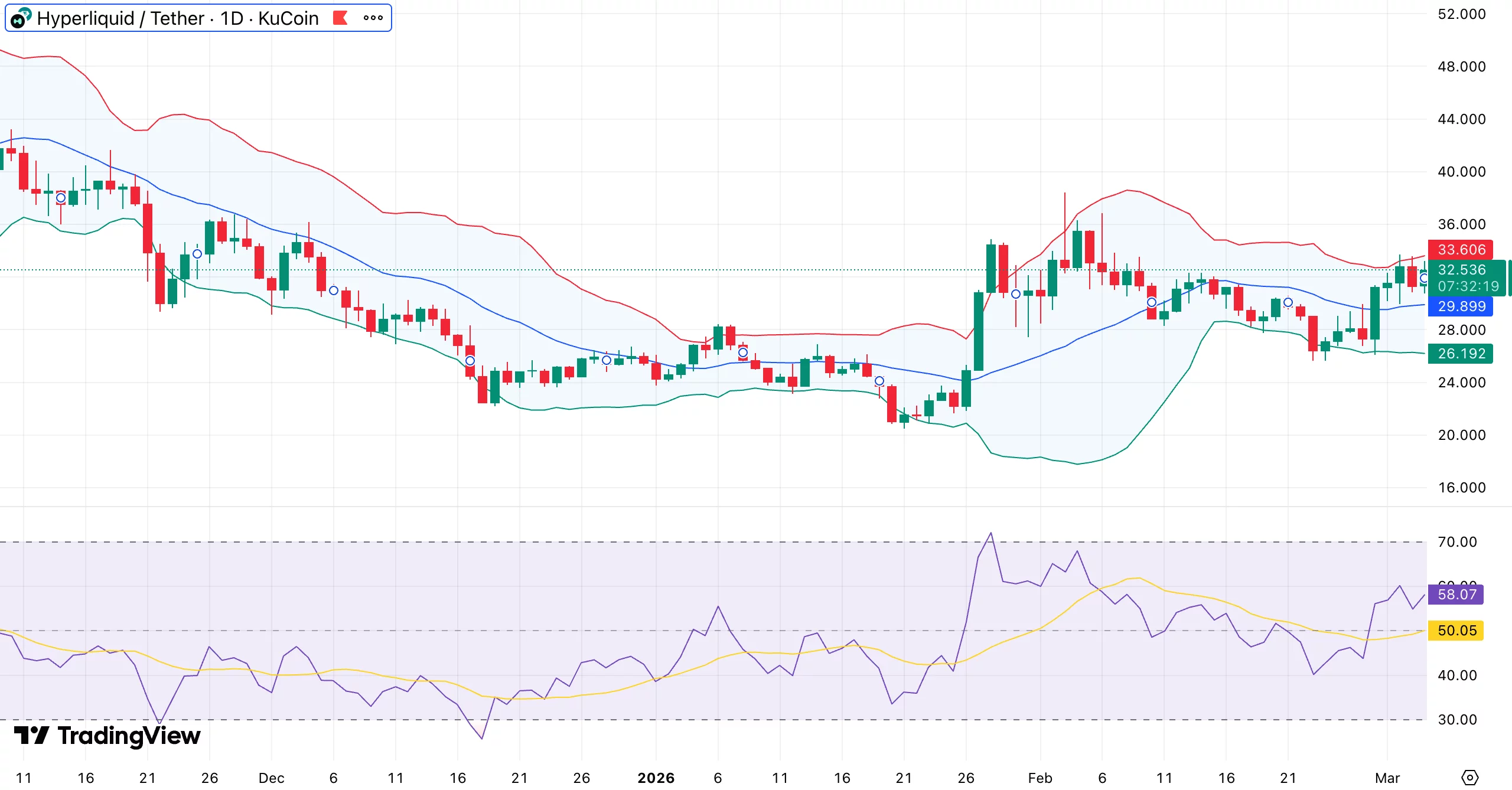
Hyperliquid flashes a bullish MACD crossover near $33 resistance, setting up a potential breakout as traders weigh momentum against looming token unlock risks.
Summary
- Hyperliquid price trades at $32.63 near weekly highs as MACD flips bullish.
- Price tests $33–$34 resistance with RSI strengthening above 50.
- Break above $34 targets $36, while loss of $30 risks a pullback toward $29.
Hyperliquid (HYPE) is trading at $32.63 at press time, up 1.5% in the past 24 hours and hovering near the top of its weekly range between $26.22 and $33.33.
Despite the broader market downturn, HYPE has held up well. The token is up 16% over the past week and nearly 100% over the past year. It still trades about 44% below its September 2025 all-time high of $59.30.
According to CoinGlass data, derivatives volume fell 15% to $1.48 billion, while open interest edged up 1.2% to $1.29 billion, suggesting traders are cautiously adding exposure.
MACD crossover shifts short-term momentum
The daily chart shows a fresh bullish signal. The MACD line has crossed above the signal line for the first time in several sessions, and the histogram has turned positive. Momentum is building, though confirmation is still needed.
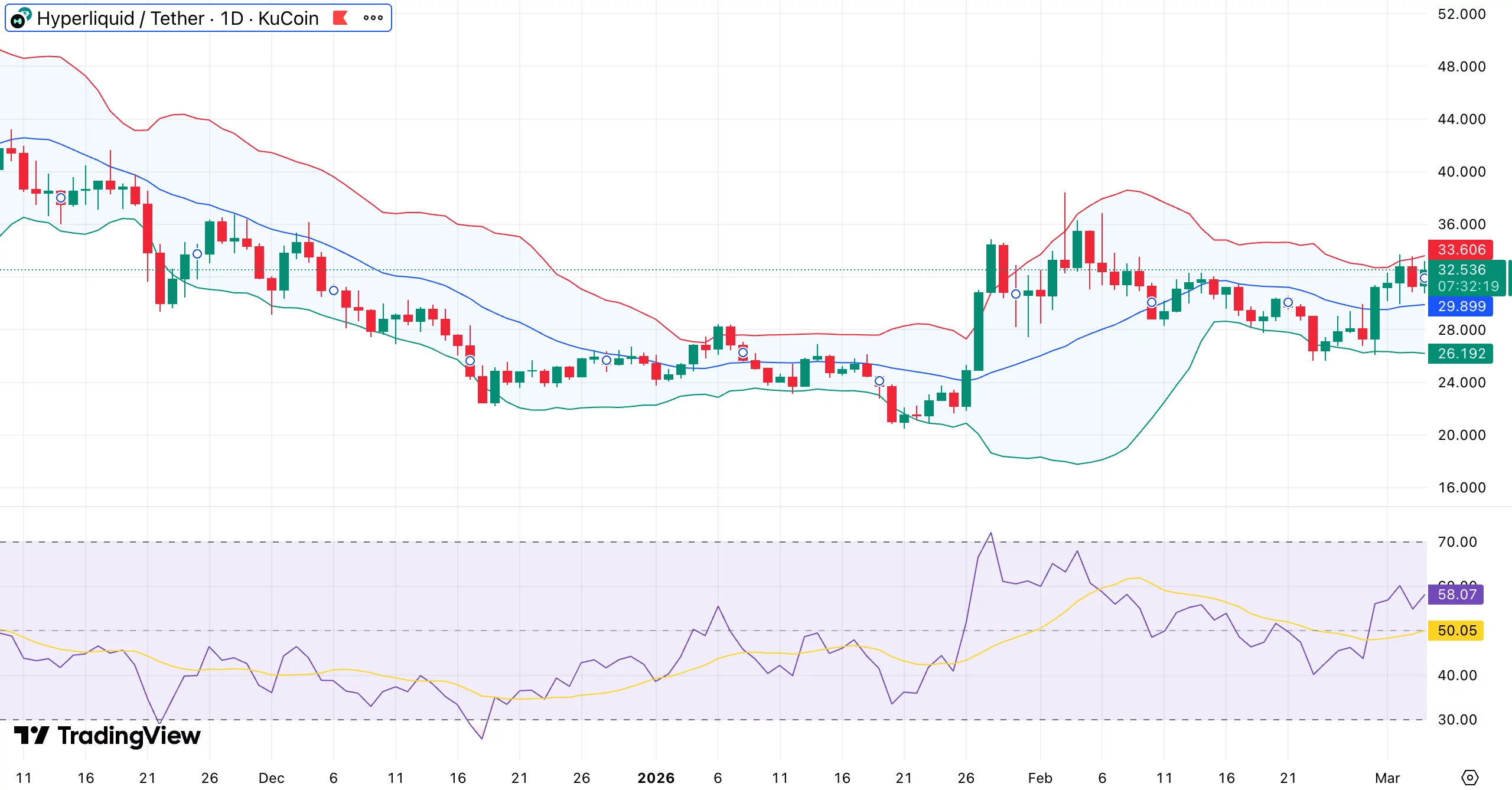
Price remains above the mid-Bollinger Band, which aligns with the 20-day moving average. The bands are starting to widen after a period of compression. When volatility expands alongside a bullish crossover, follow-through often occurs.
RSI has climbed back above 50 and continues to trend higher without entering overbought territory. Buyers appear to be regaining control, and there is still room for upside if momentum holds.
Structurally, HYPE is forming higher lows after its late-February dip. Price is now pressing against the $33–$34 resistance zone.
Hyperliquid price short-term outlook
Near-term expectations are split. If HYPE consolidates above $30, analysts see room for a push toward $35 and possibly $38–$40 later in March, especially if overall market sentiment improves.
Failure to maintain the $27–$30 support range could expose $22–$23, and if selling picks up speed, there is a greater risk toward $18–$21. The broader pattern of lower highs has not been fully invalidated.
Fundamentally, new activity may be sparked by the impending HIP-4 upgrade, which adds outcome trading features. Tokenomics are still promising, with daily buybacks and aggressive fee burns reducing the amount in circulation.
That said, a scheduled 9.92 million token unlock on March 6 may add short-term pressure, especially if broader crypto markets weaken.
For now, the MACD crossover has tilted short-term momentum upward. A clean break above $34 would strengthen the bullish case, while a rejection there could keep price locked in a volatile range.
Crypto World
Bitcoin Price News: BTC Volatility Drives Interest in Alts Like Pax Gold and DeepSnitch AI, Iranian Crypto Outflows Surge 700% After US-Israeli Airstrikes

Reports indicate that crypto outflows of the Nobitex exchange in Iran increased by over 700% to over half a million dollars in minutes after US-Israeli airstrikes. The withdrawals reached over $3 million in an hour, indicating possible capital flight despite internet disruptions
Meanwhile, Bitcoin price news reveals that bulls have forced a rebound from the $63K region after a recent decline fueled by tensions in the Middle East. In other news, DeepSnitch AI (DSNT) has successfully captured market momentum, raising more than $1.84M in funding.
With its live AI tools and 100X projection, the project could be the best crypto investment for both traders and investors. Those who buy at the current price of $0.04228 could see 100X returns once the price skyrockets.
Iran sees massive spike in crypto outflows following military strikes
Per reports, Iran’s crypto outflows have increased following the recent US-Israeli airstrike. According to blockchain analytics company Elliptic, there has been a 700% increase in withdrawals of the largest Iranian exchange, Nobitex.
The report added that over half a million dollars were withdrawn from the platform, and the figure reached almost $3 million in an hour. Elliptic also claimed that a large portion of the crypto was transferred to foreign exchanges.
This could be an indication of capital flight as uncertainty increased. Nevertheless, the outflows decreased as Iran started to block internet connections on a large scale.
Bitcoin price news: Two coins leading despite broader market volatility
1. DeepSnitch AI (DSNT): The 100X unicorn savvy investors are accumulating
DeepSnitch AI is an intelligence platform designed to give you a competitive edge in the 2026 market. By utilizing a network of five AI agents, the platform monitors real-time “alpha” signals, tracks whale movements, and identifies emerging trends before they hit the mainstream. Currently in Stage 6 of its presale, the price of the DSNT token has surged by 180% to a price of 0.04228.
Also, more than $1.84M has been raised from investors, signalling high trust. DeepSnitch AI’s recently launched live platform features a smooth, dark-themed interface that serves as a unified command center for its core tools.
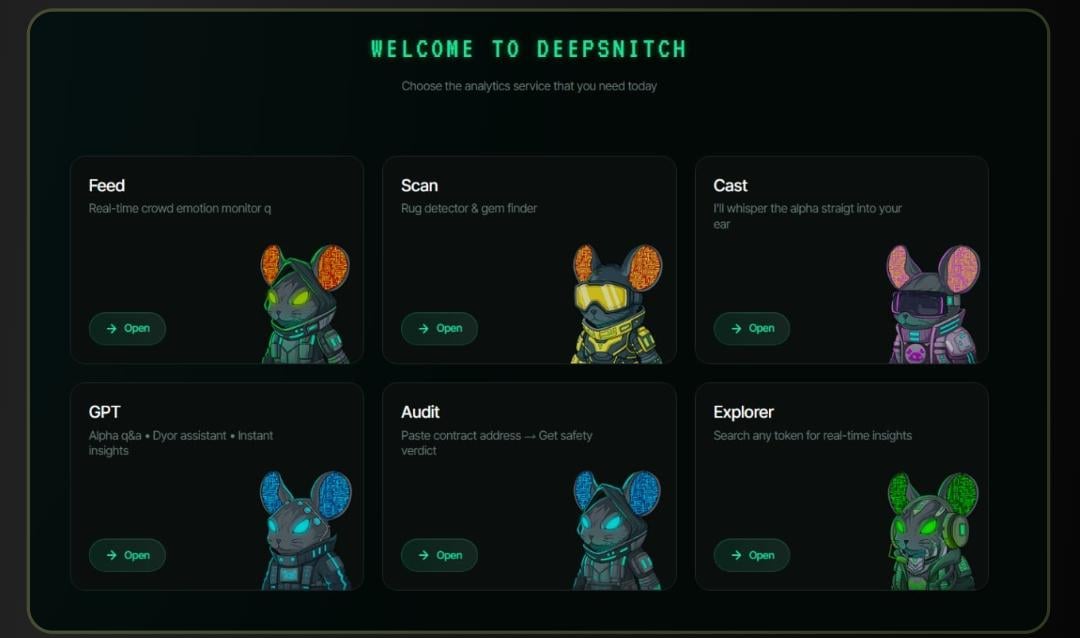
This dashboard organizes the ecosystem into six accessible areas: Feed, Scan for finding gems and detecting rug pulls, Cast, GPT for interactive research, Audit for instant contract safety verdicts, and Explorer.
According to the latest rumours in the market, DeepSnitch AI might launch on exchanges very soon. Those who join the presale now could be among the top gainers if the price skyrockets by 100X. The longer you wait, the less your profit margin, as prices are increasing very fast. So, you might want to take action now.
2. Bitcoin price news
According to Bitcoin breaking news today, the BTC price has dropped to the $68K region. As of March 3, the Bitcoin price was trading at $68,714 with a gain of 6.9% on the weekly chart.
Bitcoin price news shows the flagship cryptocurrency has failed to reclaim the $70K region due to high volatility. Nevertheless, Rekt Fencer notes that those waiting for BTC to drop to $45-$55K will be disappointed.
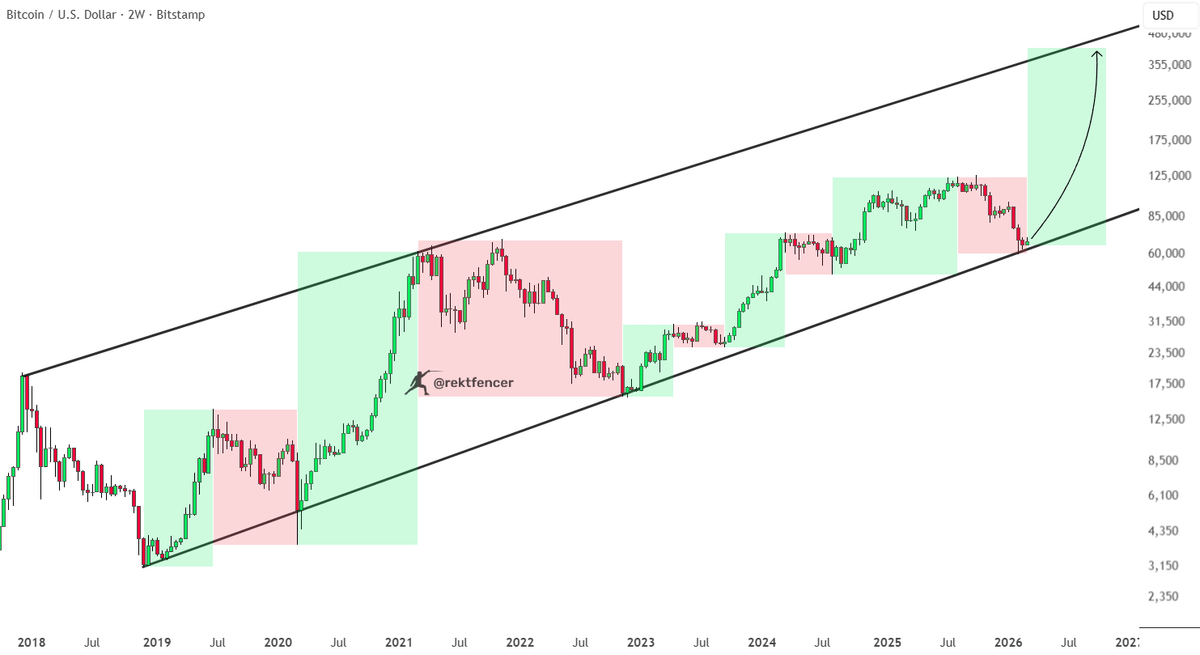
He forecasts that the Bitcoin price might “go much harder,” soaring past $125K in the coming months. For now, Bitcoin price news shows that BTC is consolidating below $70K.
3. Pax Gold price prediction
Pax Gold is one of the top altcoins gaining attention in the market right now as more users switch towards gold and gold-backed assets. Pax Gold capitalized on the high interest, rising to a peak of $5,532.
However, the Pax Gold price retraced to $5,101 on March 3, likely due to an increase in selling pressure. Still, the Pax Gold price might revisit the level in the coming days if market sentiment improves. The price of Pax Gold might soar to $8,997 in the coming months.
The bottom line
In summary, the Bitcoin price news reveals that bulls are holding well despite the ongoing volatility in the market. Also, DeepSnitch AI is gaining more ground in the crypto space, raising more than $1.84M in funding.
Many traders who have seen the massive boom in the AI sector below AI-based projects like DeepSnitch AI might spark the 2026 bull run. As a result, they are piling into DeepSnitch AI and buying millions of coins.
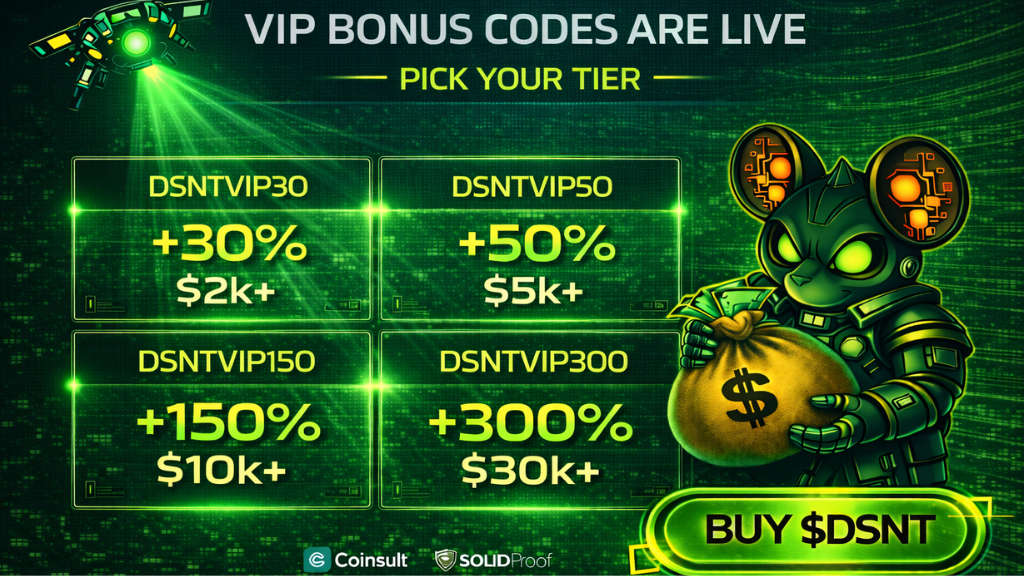
DeepSnitch AI is currently priced at $0.04228 and is expected to skyrocket by 100X very soon. The best decision might be to get in now and use the bonus codes to get more DSNT coins, as prices could skyrocket anytime from now.
Visit the official website for more information, and join X and Telegram for community updates.
FAQs
1. Is Bitcoin expected to rise in price?
Bitcoin price news shows it has been consolidating below $70K. Nevertheless, BTC market headlines reveal that Rekt Fencer believes the flagship cryptocurrency might soar past $125K soon. This is an increase of 83% from the current price. Meanwhile, DeepSnitch AI could give higher returns of over 100X based on its presale growth, low market cap, and clear utility.
2. What is the latest Bitcoin price news?
According to Bitcoin breaking news today, the BTC price has stabilized at above $68K following a drop to $63K. In other news, DeepSnitch AI is in the sixth round of its crypto presale. It has already raised more than $1.84M, which is an indicator that investors have confidence in its potential.
3. Why is the Bitcoin price dropping?
The sudden drop in Bitcoin’s price can be explained by macro-driven BTC moves, as traders react to geopolitical tensions in the Middle East. Given this bearish scenario, savvy investors are moving to DeepSnitch AI. This presale unicorn is expected to rise by 100X soon, which makes it a good crypto investment.
Disclaimer: This is a Press Release provided by a third party who is responsible for the content. Please conduct your own research before taking any action based on the content.

Bitcoin ETFs have attracted nearly $1.5 billion in inflows since last week.
Crypto markets rallied sharply on Wednesday as global markets bounced back despite the ongoing conflict in the Middle East. Stocks and precious metals gained while oil and natural gas dipped slightly.
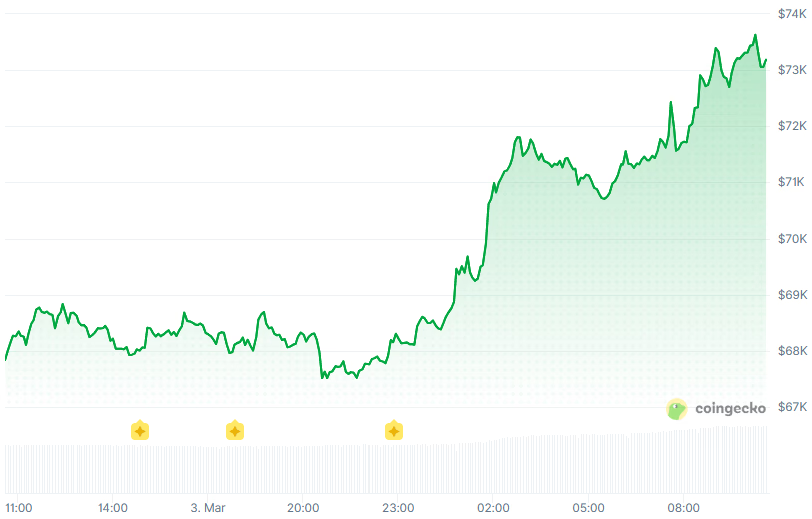
Bitcoin (BTC) is trading at around $73,500, up 8% over the past 24 hours and marking a four-week high for the world’s largest cryptocurrency. Meanwhile, ETH and SOL surged 9% to about $2,140 and $91, respectively, and BNB is up 4% on the day.

The overall crypto market capitalization climbed nearly 6% to $2.54 trillion, according to Coingecko.
Investor sentiment is being buoyed by upbeat U.S. economic data. Earlier today, ADP reported that the private sector added more jobs than expected in February. Additionally, the ISM services index rose to 56.1 in February, indicating that the non-manufacturing sector remains resilient. The S&P 500 and the Nasdaq gained around 1% and 1.8%, respectively, while gold and silver posted modest gains.
Almost all of the Top 100 digital assets posted gains over the last 24 hours.
Top gainers include Dogecoin (DOGE), SKY, and Ethereum (ETH), which rallied 14%, 10%, and 9%, respectively.
Near Protocol (NEAR) is today’s biggest loser, falling 5%.
Around 129,000 leveraged traders were liquidated for $530 million in the past 24 hours, according to CoinGlass. Bitcoin accounted for $293 million, while ETH positions made up $126 million. Notably, more than 80% of liquidations involved short positions.
Bitcoin exchange-traded funds (ETFs) recorded $225 million in inflows on Tuesday, marking a second day of gains. This brings inflows to nearly $1.5 billion since last week.


As artificial intelligence reshapes everything from finance to cybersecurity, the Ethereum Foundation (EF) is carving out a strategy for how the world’s second-largest blockchain fits into that future.
Instead of trying to fuse blockchains and AI at the level of raw computation — something Ethereum was never designed to handle — the EF sees the network playing a different role: acting as a coordination and verification layer in an increasingly AI-mediated world.
Davide Crapis, the AI lead at the EF, argues that the motivation is as philosophical as it is technical. More and more digital activity is being handled by AI systems, whether it’s answering questions, executing trades, screening applications or writing software. If those systems are controlled by centralized entities, the values that underpin much of the crypto movement — decentralization, self-sovereignty, censorship resistance and privacy — could erode.
“If AI doesn’t have the properties we care about — self-sovereignty, censorship resistance, privacy — and then we use AI for everything, basically no one has those properties anymore,” he said to CoinDesk in an interview at NEARCON 2026.
In that sense, Ethereum’s AI push is less about competing with OpenAI or Google on model size and more about ensuring that as AI becomes the interface to the internet, it doesn’t quietly recentralize power.
The EF’s strategy rests on two broad fronts. The first is what Crapis calls decentralized AI coordination. As autonomous AI agents — software programs capable of carrying out tasks on their own — become more common, they will need ways to identify themselves, build trust and exchange payments. Ethereum, he argues, is well-suited to provide that infrastructure.
“Ethereum functions as a public, governance-less verification layer for AI,” he said.
In practical terms, that means the heavy computing work of AI remains off-chain, on traditional servers. But Ethereum can help agents discover one another through public registries, assess reputation through transparent histories, route payments and anchor cryptographic proofs that verify outcomes. Crapis likens it to a decentralized version of Google Reviews combined with payment rails.
The EF has been involved in developing standards to formalize this ecosystem, including a protocol for agent identity and trust, known as ERC-8004. According to Crapis, these standards are gaining traction beyond Ethereum, signaling that the coordination layer for AI agents may become blockchain-based even if the AI itself is not.
The second focus area centers on bringing Ethereum’s core principles — such as privacy, openness, censorship resistance, and security — into the world of AI. Crapis refers to this effort internally as “Props AI,” shorthand for the values the Ethereum ecosystem has historically prioritized.
Privacy is a major part of that conversation. Interacting with centralized AI services can gradually generate detailed user profiles based on queries, usage patterns and behavior.
From Ethereum’s perspective, the challenge is to design AI systems that allow users to retain greater control over their data and identity. One approach is to encourage more AI processing to occur locally on users’ devices whenever possible, reducing the amount of information that needs to be sent to centralized servers.
The broader goal is to ensure that as AI becomes embedded in everyday digital interactions, individuals still retain meaningful control over their data and how it is used, rather than handing that power entirely to large platforms.
“We want to create a world where users retain as much data and power as possible,” Crapis said. “We just don’t give it to operators.”
Security concerns also underpin the strategy. As AI systems grow more capable, they are likely to automate and scale cyberattacks in ways that strain existing defenses. Crapis predicts a near future in which AI systems can convincingly impersonate humans, undermining traditional authentication methods.
“We will probably see hacks orchestrated by AI,” he said. “The old security models break when AI can impersonate a human.”
In that environment, cryptographic keys may become more important. Control of a private key is mathematically verifiable and does not depend on human judgment. Crapis frames Ethereum’s long-term role in stark terms.
“In a world where AI is in the wild, we want Ethereum to be the place with the big lock,” he said. “If I have the keys, I still have power.”
Crapis described the AI initiative that the EF is doing as one of several major priorities rather than the dominant one. Still, the move reflects a growing recognition within the crypto industry that AI will shape the next phase of the internet. If that future is mediated by intelligent agents rather than human clicks, the question becomes who controls the rails those agents run on.
Ethereum’s bet is that even if it doesn’t power the brains of AI, it can help govern the environment in which those brains operate, anchoring identity, coordinating payments and preserving user control.
Read more: Ethereum Foundation Starts New AI Team to Support Agentic Payments


The move expands Backpack’s existing partnership with Robert Leshner’s tokenization firm.
Centralized exchange (CEX) and wallet app Backpack announced today, March 4, that it will offer early access to initial public offerings on-chain in partnership with Superstate.
Currently, Backpack is offering users access to a waitlist for the new offering. The exchange — which was founded by former employees of the now defunct FTX and Alameda — said in its announcement that it’s providing access to IPO shares “prior to open market trading.”
The IPO shares will be available on the Solana blockchain and give traders direct ownership of equity, the firm noted in its announcement.
The move expands on Backpack’s existing partnership with Superstate, the tokenization firm founded by Compound co-founder Robert Leshner. The two firms previously announced that Backpack had integrated Superstate’s on-chain equity platform Opening Bell to let the CEX’s users trade on-chain versions of U.S. Securities and Exchange Commission (SEC)-registered stocks, as The Defiant reported.
Superstate first announced back in December that it will let companies issue new shares directly on-chain, on both Ethereum and Solana.

Linux Fu: The USB WiFi Dongle Exercise

Neighbours heard screams and noises on night Natalie McNally died, trial hears
Form 8K COMM 2013-CCRE12 Mortgage Trust For: 4 March


-

 Politics6 days ago
ITV enters Gaza with IDF amid ongoing genocide
-

 Politics1 day ago
Alan Cumming Brands Baftas Ceremony A ‘Triggering S**tshow’
-

 Fashion5 days ago
Weekend Open Thread: Iris Top
-

 NewsBeat7 days ago
Cuba says its forces have killed four on US-registered speedboat | World News
-

 Tech4 days ago
Unihertz’s Titan 2 Elite Arrives Just as Physical Keyboards Refuse to Fade Away
-
Sports5 days ago
The Vikings Need a Duck
-
 NewsBeat4 days ago
Dubai flights cancelled as Brit told airspace closed ’10 minutes after boarding’
-

 NewsBeat3 days ago
‘Significant’ damage to boarded-up Horden house after fire
-
 NewsBeat7 days ago
Manchester Central Mosque issues statement as it imposes new measures ‘with immediate effect’ after armed men enter
-
 NewsBeat4 days ago
The empty pub on busy Cambridge road that has been boarded up for years
-

 NewsBeat4 days ago
Abusive parents will now be treated like sex offenders and placed on a ‘child cruelty register’ | News UK
-

 Entertainment2 days ago
Baby Gear Guide: Strollers, Car Seats
-

 Business7 days ago
Discord Pushes Implementation of Global Age Checks to Second Half of 2026
-

 Business6 days ago
Only 4% of women globally reside in countries that offer almost complete legal equality
-
 Tech5 days ago
NASA Reveals Identity of Astronaut Who Suffered Medical Incident Aboard ISS
-
 NewsBeat3 days ago
Emirates confirms when flights will resume amid Dubai airport chaos
-
Politics4 days ago
FIFA hypocrisy after Israel murder over 400 Palestinian footballers
-

 Crypto World6 days ago
From Crypto Treasury to RWA: ETHZilla Retreats and Relaunches as Forum Markets on Nasdaq
-

 NewsBeat2 days ago
Is it acceptable to comment on the appearance of strangers in public? Readers discuss
-

 Tech3 days ago
Viral ad shows aged Musk, Altman, and Bezos using jobless humans to power AI