We’ve noted repeatedly how Trump FCC boss Brendan Carr has been abusing the FCC’s “equal opportunity” (or “equal time”) rule to try and threaten daytime and late night talk shows with government retribution if they refuse to enthusiastically coddle Republicans.
Late night shows had historically been exempt from the dated rules, which required that any airing of a political candidate on “publicly owned” airwaves is countered with the appearance from a candidate from the opposing party. But Carr isn’t interested in equilibrium; he’s interested abusing FCC authority to try and silence critics of Donald Trump and his increasingly unpopular policies.
But folks have increasingly noted that Brendan Carr doesn’t appear to have any interest in enforcing the same standard on radio, where (especially on AM), listeners are constantly served up a lopsided dose of race-baiting agitprop pretending to be news. When he’s been asked about this inconsistency, Carr has been painfully and curiously vague:
“In a press conference after the FCC’s February 18 meeting, Deadline reporter Ted Johnson asked Carr why he has not expressed “the same concern about broadcast talk radio as broadcast TV talk shows.”
The Deadline reporter pointed out that “Sean Hannity’s show featured Ken Paxton in December.” Paxton, the Texas attorney general, is running for a US Senate seat in this year’s election. Carr claimed in response that TV broadcasters have been “misreading” FCC precedents while talk radio shows have not been.
Advertisement
“It appeared that programmers were either overreading or misreading some of the case law on the equal-time rule as it applies to broadcast TV,” Carr replied. “We haven’t seen the same issues on the radio side, but the equal-time rule is going to apply to broadcast across the board, and we’ll take a look at anything that arises at the end of the day.”
It’s of course far worse on the radio side, which has been utterly dominated by outright right wing propaganda since the early 90s. And he will, of course, not be “taking a look at anything that arises,” because, again, he’s not remotely interested in abusing this rule consistently because he’s an authoritarian hack.
“Carr’s claim that TV but not radio broadcasters have misread FCC precedents is “a bunch of nonsense,” said Gigi Sohn, a longtime lawyer and consumer advocate who served as counselor to then-FCC Chairman Tom Wheeler during the Obama era. Carr “was responding to criticism from people like Sean Hannity that the guidance would apply to conservative talk radio just as much as it would to so-called ‘liberal’ TV,” Sohn told Ars. “It doesn’t matter whether a broadcaster is a radio broadcaster or a TV broadcaster, the Equal Opportunities law and however the FCC implements it must apply to both equally.”
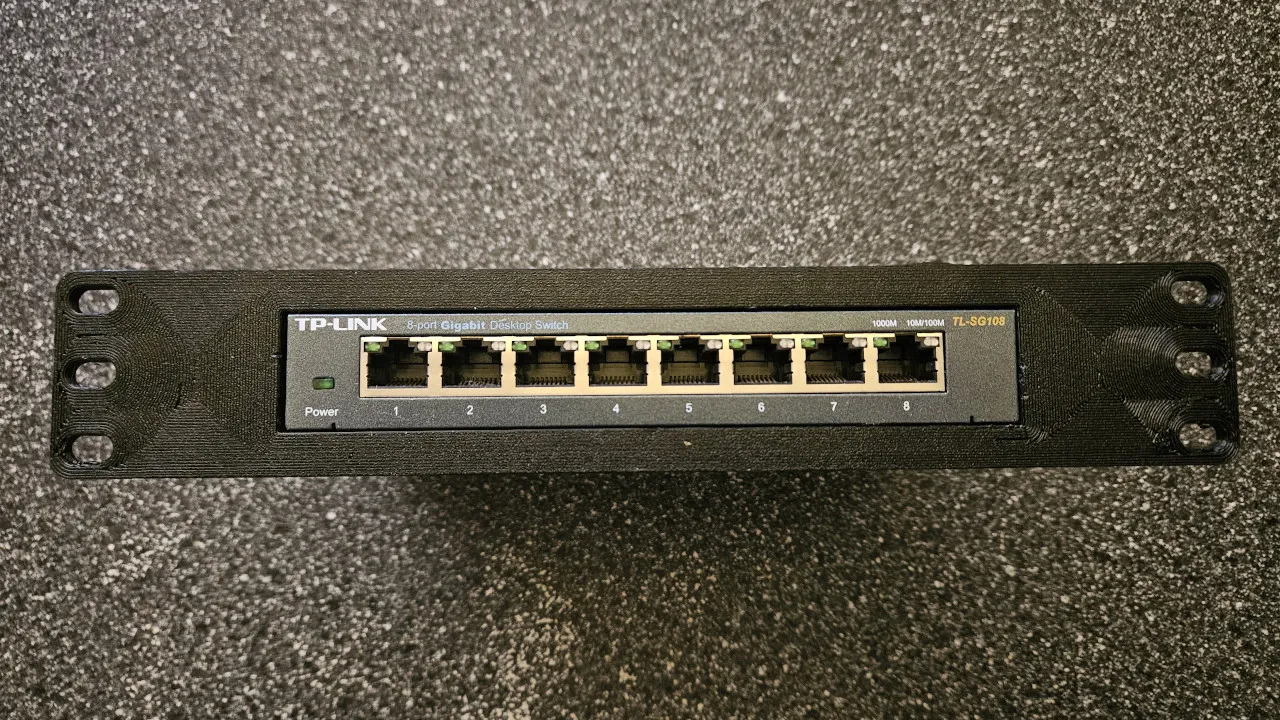
Sometimes, as hackers and makers, we can end up with messy lashed-together gear that is neither reliable nor tidy. Rackmounting your stuff can be a great way to improve the robustness and liveability of your setup. If you find this appealing, you might like CageMaker by [WebMaka].
This parametric OpenSCAD script can generate mounts for all kinds of stuff. Maybe you have a little network switch that’s just a tangle of wires on your desk, or a few pieces of audio gear that are loosely stacked on top of each other and looking rather unkempt. It would be trivial with this tool to create some 3D printed adapters to get all that stuff laced up nice and neat in a rack instead.
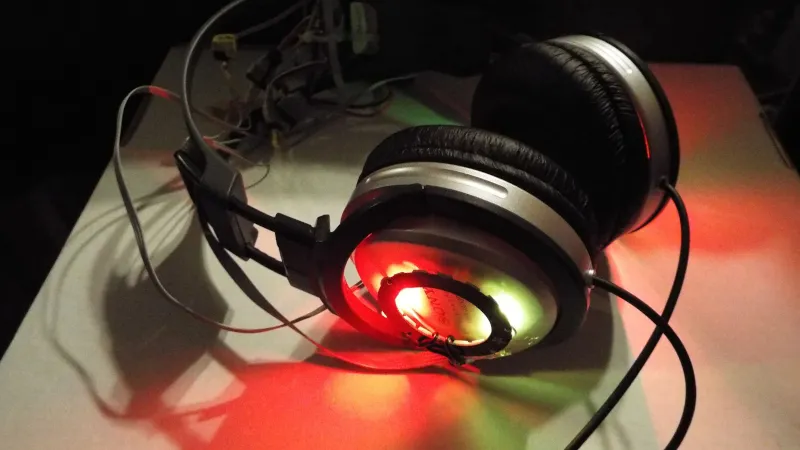
Noise cancelling headphones are a great way to insulate yourself from the bustle of the city, but due to their power requirements, continuous use means frequent recharging. [Alessandro Sgarzi] has an elegant and unique solution — powering the noise cancelling electronics by harvesting energy from the ambient noise of the city via a sheet of piezoelectric film.
This impressive feat is achieved using a LTC3588-1 power harvesting IC and a pair of supercapacitors, while an STM32L011K4T6 microcontroller processes the input from a MEMS microphone and feeds a low-power class D amplifier. This circuit consumes an astounding 1.7 nW, a power that a noisy city is amply able to supply. Audio meanwhile comes via a traditional 3.5 mm connector, which we are told is the cool kids’ choice nowadays anyway.
We like this project, and since it’s part of our 2026 Green Powered Challenge, it’s very much in the spirit of the thing. You’ve just got time to get your own entry in, so get a move on!
Looking for the most recent Wordle answer? Click here for today’s Wordle hints, as well as our daily answers and hints for The New York Times Mini Crossword, Connections, Connections: Sports Edition and Strands puzzles.
On the latest episode of TechCrunch’s Equity podcast, Kirsten Korosec, Sean O’Kane, and I did our best to round up all the latest OpenAI news. While the company’s latest acquisitions seem to be classic acqui-hires, Sean suggested they also address “two big existential problems that OpenAI is trying to solve right now.”
First, with the team behind personal finance startup Hiro, the company may be hoping to come up with a product that has “more hooks than just a chatbot, and maybe something worth paying more for.” And with new media startup TBPN, OpenAI could be looking to “better shape its image in the public eye, which lately has not been great.”
Read a preview of our conversation, edited for length and clarity below.
Advertisement
Anthony: [We have] two deals that are worth mentioning, one is that OpenAI acquired this personal finance startup called Hiro. And that comes after another deal that was literally announced when we were recording our last episode of Equity, so we didn’t get to talk about it: OpenAI had also acquired TBPN — a business talk show, like a new media company.
And I think both of these deals are pretty small compared to the scale of OpenAI. These are not things that people expect to really change the course of their business or anything like that, but they’re interesting because it suggests that there’s still this [attitude of,] “Let’s try out different things.”
Especially [with] the TBPN deal […] particularly at this time when it feels like OpenAI, from all the reporting we’re reading, is also trying to really refocus on making ChatGPT and its GPT models really competitive in an enterprise context with programmers.
Techcrunch event
Advertisement
San Francisco, CA | October 13-15, 2026
Is running a tech talk show, should that really be on the to-do list?
Advertisement
Kirsten: No, this should not be on the to-do list. That’s it.
I do want to mention Hiro because to me, that’s an interesting one, because Julie Bort, our venture editor, super talented, she wrote about this and was I think the first to write about it. She dug in a little bit and basically this looks like an acqui-hire. The company is folding. They basically said, “By this date, you won’t be able to access this anymore.”
This is a personal finance startup. And they only launched two years ago. So this absolutely is about getting talent on board. So I’m very curious to see if OpenAI is going to be just absorbing them into the ether at OpenAI, or if they’re actually interested in some sort of personal finance product that they want to work on. To me, it’s not really clear.
Sean: I think you look at both of these as acqui-hires to a certain extent. I mean, the TBPN acquisition, allegedly they are going to retain their editorial independence on the show that they make every day. And all respect to those guys who’ve put that out there and gotten it off the ground so quickly and grown it into what it has become.
Advertisement
I think any person who follows the media should have a healthy dose of skepticism that when you acquire something like that and you put the people who make the show under the org of the public policy people and comms or marketing adjacent people higher up at the company making the acquisition, that you could have good questions about whether or not saying “editorial independence” is enough. It’s not an incantation that just works.
But you know, what’s interesting to me about these two, while they are similar in their acqui-hire-ness, I think they both represent two major problems that OpenAI is facing.
One is Hiro. OpenAI has a very successful product in ChatGPT. As far as whether or not that will actually ever make them enough money to become a sustainable business that’s not raising the largest private rounds in the world, ever, to keep things going, is a big question. And they also seem to be struggling to keep up on the enterprise side of things where the real money seems to be, so bringing in a team like this seems like taking a shot at, “What else can we do?”
The guy who founded Hiro seems to have a serial entrepreneur streak of creating consumer apps, and so this seems to me like a bet on them being able to come up with something else that may have more hooks than just a chatbot, and maybe something worth paying more for.
Advertisement
And then TBPN is an acquisition made to help better represent what the company does and better shape its image in the public eye, which lately has not been great and certainly is under more questions now than just a few weeks ago, because Ronan Farrow just led a report at The New Yorker that dropped suspiciously right around the time that this and a couple other announcements from OpenAI came out last week.
I think those are two big existential problems that OpenAI is trying to solve right now.
Kirsten: So the thing that you didn’t say is, there’s Anthropic kind of looming in — not in the shadows, I mean, they’re very much taking up a lot of space here — but they’re having a lot of success on the enterprise side of things.
It feels like these guys are competitors and they also feel like very different companies in a lot of ways. Anthony, I’m wondering if you see them as direct competition to OpenAI? Or [are they] just finding their stride in enterprise and in a way, these two companies are clearly going to coexist and they’re really not directly competing with each other — maybe on talent, but not necessarily as we initially thought of them?
Advertisement
Anthony: I think they’re directly competing with each other. There’s definitely a scenario where if AI as an industry, as a technology, is as successful as its proponents hope for, they could both be very successful companies, they could just be the one and two. And the success of one does not necessarily mean that the other will just fade into obscurity.
And again, none of this is official, but there’s just been a lot of reporting around how it seems like OpenAI, more than anyone, is obsessed with and upset about Anthropic’s rise.
Our reporter Lucas [Ropek], he did a great piece over the weekend about the HumanX conference, where he was talking to everyone there and they’re sort of like, “Yeah, ChatGPT is fine, too,” but like they were all about Claude Code. And I think that is exactly what OpenAI is worried about.
Because again, in theory, there could be many other opportunities for generative AI, but it feels like the big growth area, the area where the most money is and where they could at least see a path to having a sustainable business in the future, is in these enterprise and coding tools.
Very few of us actually like doing the laundry. Nevertheless, it has to be done. It doesn’t help that there’s now a big debate about front-load efficiency vs. top-load machines. If you’re on the side of the front-loaders and are in the market for a new one, Consumer Reports has a model you might want to consider. Its testing ranks the LG Signature WM9900HSA as the best option money can buy. The machine pairs a 5.8-cubic-foot mega capacity with advanced automation features to help make everybody’s least-favorite chore a little less time-consuming.
Its AI Wash 2.0 system uses built-in sensors to automatically select the best wash settings based on fabric texture and load size. The washer’s TurboWash 360° technology uses five high-pressure jets to handle large loads in less than half an hour, as well. Beyond marketing hype, Consumer Reports has real first-hand experience to back it up. Their testing methodology looks at washer performance using stained fabric swatches and repeated cycle analysis. And in Consumer Reports’ experiments on the WM9900HSA, the LG front-load washer consistently outperformed other top washing machine brands.
Advertisement
Why not everybody loves the LG Signature front-load machine
Beyond its speed and intelligence, the LG Signature front-load washer model WM9900HSA also uses an “ezDispense” automatic detergent system. All you have to do is fill up the reservoirs, and you can enjoy up to 20 to 36 cycles before you need to refill again. The machine is smart enough to know the correct amount of detergent and softener to dispense for each load. It’ll even send you an alert to your phone when you’re running low. Like plenty of other LG smart appliances, you also get an LCD touchscreen.
Advertisement
But looking beyond what Consumer Reports says, real-world customer feedback isn’t exactly overwhelming in its praise. It’s currently at a 3.8 out of 5 on LG’s website based on 57 reviews, many of which are incentivized. Users do have nice things to say about the washer’s large capacity and reliable cleaning, but others say the “ezDispense” feature is a headache. Clearly, even though LG ranks as the best front-load washer brand based on Consumer Reports’ survey data, individual customer experiences are going to vary.
Get caught up on the latest technology and startup news from the past week. Here are the most popular stories on GeekWire for the week of April 12, 2026.
Amazon paid about $1.8 billion last year to Blue Origin, the aerospace company owned by its founder and board chair Jeff Bezos — nearly triple the amount the year before — as shareholders weigh a proposal citing his business interests outside Amazon as potential conflicts of interest. … Read More
The students in a computer science class at the Global Idea School, an independent, non-profit elementary school in Redmond, Wash., learned vibe coding through GitHub Spark and built a Braille 3D Generator, a tool that turns text into printable, tactile 3D Braille models in seconds. Read More… Read More
OpenAI’s chief revenue officer touted the AWS alliance as a key enterprise growth driver, saying that the Microsoft relationship has constrained the company’s reach into big business. … Read More
Amazon’s deal for satellite operator Globalstar doesn’t just bulk up Amazon Leo — it brings Apple along for the ride, with a long-term agreement to power iPhone and Apple Watch satellite features. … Read More
Anoop Gupta is stepping down as CEO of SeekOut, the Bellevue-based recruiting startup he co-founded in 2017, handing the reins to enterprise software veteran Sean Thompson. … Read More
Seattle customer engagement startup Ambassador has acquired the operating assets of Tacoma-based programmatic ad platform Humming, part of a roll-up strategy that anticipates a larger shakeout among startups as major AI platforms expand their capabilities. … Read More
Seattle Mayor Katie Wilson raised the possibility of a moratorium on new data centers in the city, following a report that four companies have approached Seattle City Light about building five large-scale facilities. … Read More
As someone who has worked from home for the last 15 years, there aren’t many things more frustrating than my internet connection going down in the middle of a workday. Sure, my kids act like it’s the end of the world when it happens after school, when they’re trying to unlock some forbidden fruit on Roblox or whatever, but that’s nothing compared to the internal rage I feel when I see my camera feed stuttering on a video call.
My current Internet Service Provider (ISP) has gotten more reliable, but there was a period of time when I’d complained about them so much on Twitter that I had four technicians and their boss randomly show up at my house, asking if they could run a brand new service line in a bid to fix my issues.
Those improvements aside, it’s not perfect. My connection still drops from time to time.
Advertisement
Article continues below
I’ve tinkered with backup internet solutions over the years, and even considered signing up for Starlink as a secondary provider at one point.
But most of the backup internet solutions offered by firewalls or Wi-Fi systems aren’t seamless, requiring you to connect your router to your phone’s hotspot, which then broadcasts mobile data throughout your home’s network.
Advertisement
That’s not an ideal solution when I’m on a video call, for example. My home office is nowhere near my router, so I’d have extended downtime while I move closer, connect my router to the hotspot, and by then, the call was either over or my regular connection had returned.
Then I found Eero Signal
I currently use one of Eero’s mesh Wi-Fi systems, so when Eero announced its latest product, the $99 Eero Signal, my interest was piqued.
Sign up for breaking news, reviews, opinion, top tech deals, and more.
Advertisement
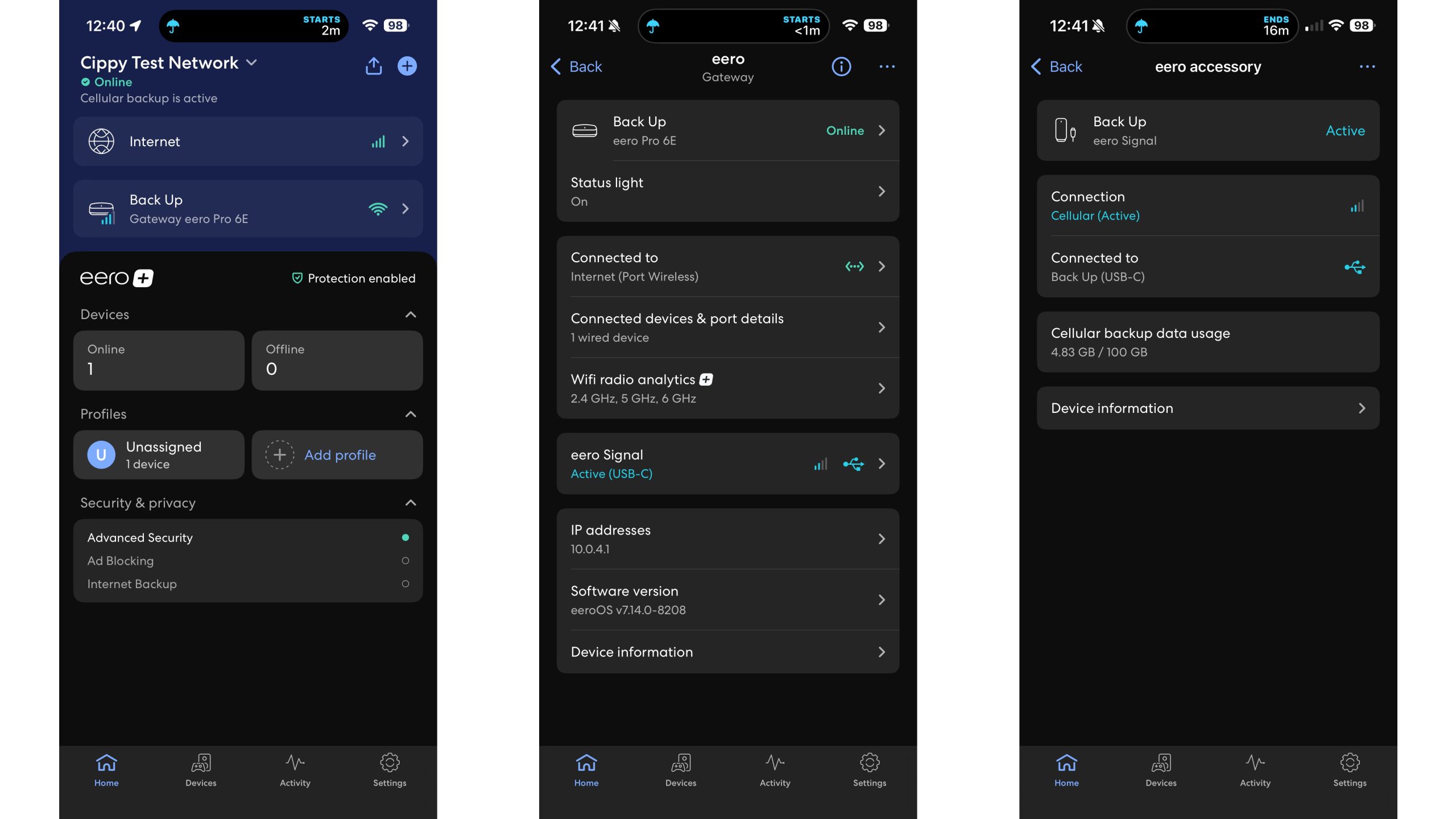
The small device that looks like a wireless charging stand for your phone connects to a compatible Eero router. When your main internet connection drops, your Eero system automatically switches to the LTE connection that Signal provides. (There’s a 5G model coming later this year that I’d instantly upgrade to.)
I’ve had Signal set up and running in my house for several weeks now, and I have to admit — I’m smitten. It’s perfectly picked up where my service provider has let me down.
Setup was easy, and it has deep controls
(Image credit: Future/Jason Cipriani)
After unboxing the Signal and a 45W power adapter, I immediately connected it to my Eero system and the included power supply. The rest of the process required a few taps on my phone, adding the device to my home system, ensuring I was on an Eero Plus plan for the cellar portion, and I was up and running.
Advertisement
Eero offers two plans. You can pay $99.99 a year for 10 GB of data per month, while $199.99 gets you 100 GB of data per month through Signal’s connection.
To test Signal, all I had to do was temporarily disconnect the wired internet connection going to my Eero system, and it switched over to Signal almost immediately.
Seamless backup internet achieved.
Advertisement
The last step to complete setup was to go through the list of devices in the Eero app, approving or forbidding access to data when Signal is active. It’s a quick and easy way to ensure that your work laptop or home alarm system and cameras stay connected to the internet during an outage, but stopping your streaming devices from eating into your data allotment.
Recent maintenance put Eero Signal to the test
(Image credit: Future/Jason Cipriani)
My home network setup is complex, and beyond the previously mentioned video calls for work being a priority, so too is all of the self-hosted websites and services I have running, including personal and business websites from my basement. When my sites go down, I get sad. I don’t like being sad.
But since installing Eero Signal, my sites have had virtually zero downtime due to a lack of internet.
Advertisement
The reliability and speed of Signal was put to the test a couple of weeks ago when my internet service provider announced routine maintenance in my area that’d take my connection offline all day.
Bring it on, I said to myself as I read the email.
The morning of the scheduled downtime, while I was out of town and away from the house, I received an alert that my connection had dropped and my network switched over to Signal and then… nothing. I didn’t get an alert that any of my sites were down, and I could pull up a live stream of my Ring security cameras.
Several hours later, I received another alert that the work was done for the day, but they were unable to finish everything, and expected a prolonged outage the next day.
Advertisement
The second day came and went much like the first — Signal kicked in and took over, providing data to my home’s network and self-hosted services, all the while I was able to call into a Teams meeting. The Signal’s LTE connection is averaging 50 Mbps down and 10 Mbps up for me, which isn’t super fast compared to my standard connection, but it’s enough for short periods..
(Image credit: Future/Jason Cipriani)
Internet outages are a thing of the past
(Image credit: Future/Jason Cipriani)
I’d become so accustomed to dealing with sporadic internet outages that I didn’t realize how much time I spent worrying about it. Then again, being connected to the internet during the day is how I do my job, and without it, I’m not very productive, so it makes sense.
It also makes sense that after setting up Signal and realizing it delivers on its promise, I’ve felt relieved. A couple of months ago, those messages alerting me of upcoming maintenance would have stressed me out for days.
Advertisement
Instead, all I did was get excited because it was going to be a stress test for Signal — and it passed, easily.
That relief alone is worth the cost. Now I can spend that energy on something productive.
Despite the months-long feud between Anthropic and the Pentagon, the National Security Agency is using the AI company’s new Mythos Preview, according to Axios, which spoke to two sources with knowledge of the matter. Anthropic announced Mythos Preview at the beginning of April, describing it as a general-purpose language model that is “strikingly capable at computer security tasks.” But back in February, Trump ordered all government agencies to stop using Anthropic’s services after the company refused to budge on certain safeguards for military uses during contract talks.
The news comes days after Anthropic CEO Dario Amodei met with White House chief of staff Susie Wiles and other officials, reportedly to discuss Mythos. The White House later said the meeting on Friday was “productive and constructive,” though President Trump said he had “no idea” about it when asked by reporters, Reuters reports. According to Axios’ sources, the NSA is one of the roughly 40 organizations Anthropic gave access to Mythos Preview, and one said it’s “being used more widely within the department” too.
Looking for the most recent Strands answer? Click here for our daily Strands hints, as well as our daily answers and hints for The New York Times Mini Crossword, Wordle, Connections and Connections: Sports Edition puzzles.
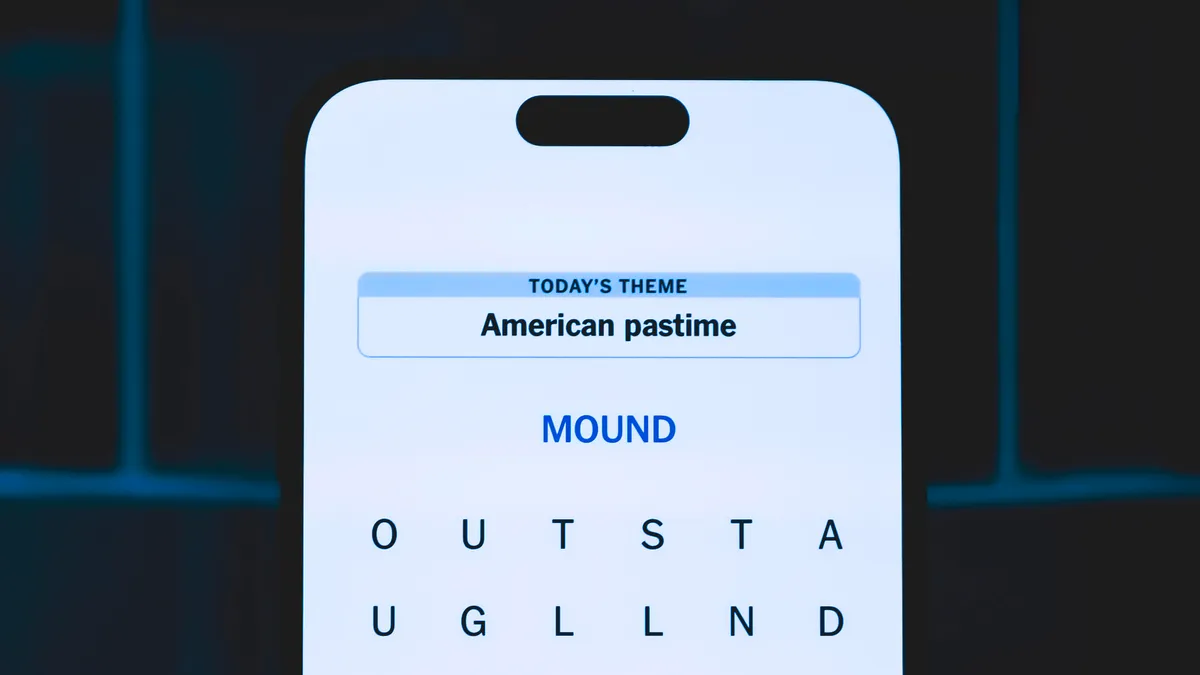
Today’s NYT Strands puzzle offers an interesting mix of words, and they all begin with the same two letters. Some of the answers are difficult to unscramble, so if you need hints and answers, read on.
If that doesn’t help you, here’s a clue: Shimmery.
Clue words to unlock in-game hints
Your goal is to find hidden words that fit the puzzle’s theme. If you’re stuck, find any words you can. Every time you find three words of four letters or more, Strands will reveal one of the theme words. These are the words I used to get those hints but any words of four or more letters that you find will work:
These are the answers that tie into the theme. The goal of the puzzle is to find them all, including the spangram, a theme word that reaches from one side of the puzzle to the other. When you have all of them (I originally thought there were always eight but learned that the number can vary), every letter on the board will be used. Here are the nonspangram answers:
GLOW, GLEAM, GLINT, GLITTER, GLISTEN, GLIMMER
Today’s Strands spangram
The completed NYT Strands puzzle for April 20, 2026.
NYT/Screenshot by CNET
Today’s Strands spangram is CATCHTHELIGHT. To find it, start with the C that’s three letters to the right on the bottom row, and wind up.
A growing wave of online voices warning about the dangers of artificial intelligence—often dubbed “AI doom influencers” – is reshaping how the public and policymakers view the technology. According to a report by The Washington Post, these influencers, including researchers, tech leaders, and content creators, are increasingly highlighting worst-case scenarios, from mass job loss to existential risks posed by advanced AI systems.
While critics argue that some of this messaging borders on alarmism, the conversation is no longer confined to speculation. Real-world developments in AI are beginning to mirror some of the concerns being raised, blurring the line between hype and legitimate risk.
When Warnings Meet Reality
The rise of AI-focused fear narratives comes at a time when companies are rapidly advancing the capabilities of large language models and autonomous systems. These tools are already reshaping industries, automating tasks, and influencing decision-making at scale.
Adding to the urgency is the emergence of highly advanced systems like Anthropic’s experimental model, often referred to as “Mythos.” According to industry discussions, Anthropic has reportedly deemed the system too powerful for a full public release. Instead, access is being restricted to a small group of trusted partners, including defence and financial institutions, and even then, only with prior government approval.
Advertisement
Unsplash
This cautious rollout reflects growing concern within the industry itself. In the UK, reports suggest that government bodies have held internal meetings to assess the implications of such advanced AI systems. Canada has also issued statements acknowledging the potential risks associated with increasingly capable AI technologies.
In India, companies like Paytm’s parent entity and Razorpay have echoed similar concerns, describing the current moment as a potential turning point for how AI is governed and deployed.
Why The Debate Matters
The conversation around AI safety is no longer theoretical. For years, researchers have warned about risks such as bias, misinformation, loss of human control, and unintended consequences from highly autonomous systems.
What’s changing now is the scale and immediacy of these concerns. As AI systems become more powerful, the gap between research warnings and real-world applications is shrinking. This has given more weight to voices calling for caution, even if some messaging appears exaggerated.
At the same time, the rise of “doom influencers” highlights a broader issue: how to communicate risk responsibly without causing unnecessary panic.
Advertisement
What It Means For Users And Industry
For everyday users, the growing focus on AI risks may lead to more transparency, stricter regulations, and safer products in the long run. However, it could also slow down innovation or create confusion around what AI can and cannot do.
Unsplash
For companies and governments, the challenge lies in balancing progress with precaution. The restricted rollout of systems like Mythos suggests that even leading AI developers are grappling with this balance.
What Comes Next
As AI continues to evolve, discussions around safety, regulation, and ethics are expected to intensify. Governments may introduce stricter oversight, while companies could adopt more controlled deployment strategies for advanced systems.
The rise of AI doom narratives may be partly driven by fear, but it is also being shaped by real technological breakthroughs. The question now is not whether AI poses risks, but how those risks are understood – and managed – before the technology moves even further ahead.














































You must be logged in to post a comment Login