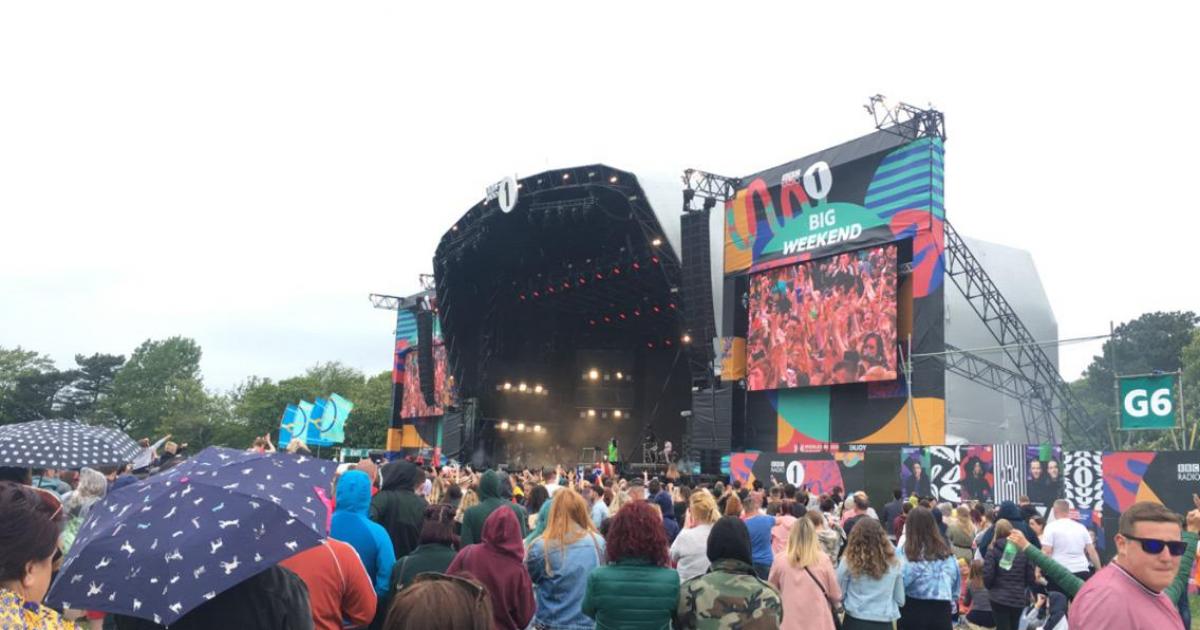
The countdown continues for Sunderland’s biggest music event of the year – Radio 1’s Big Weekend.
Parts of the venue have already been fenced off and works are underway to bring the event to life, which is set to see some of the biggest names in music descend on our region.
This week, the BBC have confirmed how you can buy tickets for the weekend.
Advertisement
Here’s everything you need to know.
When is BBC Radio 1’s Big Weekend?
Radio 1’s Big Weekend will take place over three days – May 22, 23 and 24.
Where is it being held?
The Big Weekend is being held at Herrington Park, in Sunderland this year. If you aren’t familiar of where that is, the park can be found opposite iconic landmark Penshaw Monument.
The last time it was held in the region was in 2019, in Middlesbrough, and it was held in Herrington Park in 2005.
Advertisement
Headliners back then included the Foo Fighters and The Black Eyed Peas.
How much are tickets?
Ticket prices have this week been confirmed – here’s how much you’ll need to pay to get in.
Friday
General admission – £34.50
VIP admission – £86.00
Advertisement
Saturday
General admission – £44.50
VIP admission – £106.00
Sunday
General admission – £44.50
VIP admission – £106.00
Advertisement
Where can I buy tickets?
The tickets will be available to buy via Ticketmaster, and you can find the ticket link by going on the BBC website.
When do they go on sale?
The ticket sale dates are staggered.
Tickets for Friday, 22 May will go on sale at 9am on Friday (March 6).
Tickets for Saturday and Sunday (May 23 and 24) will go on sale on March 11.
Advertisement
Are tickets allocated by region?
Yes – the BBC say they have been put into three ‘pots’.
The first pot, which is 30% of tickets, are allocated to Sunderland residents.
A further 60% are for the wider North East including County Durham, Newcastle, Gateshead and Northumberland.
Then, the final 10% will be available to the rest of the UK.
Advertisement
Can I go to all three days?
No. It has been confirmed that you can’t buy tickets for all three days.
You can buy a maximum of two tickets per person per day.
You are allowed to go on Friday and either Saturday or Sunday, but not both.
Are there age restrictions?
Yes, there are age restrictions.
Advertisement
You can only attend on Friday if you are 18 or over.
No restrictions are placed on Saturday or Sunday, but anyone aged 15 or under must be accompanied by an adult at all times.
What is the line-up?
Unfortunately, a full line up for the three day event has not yet been revealed.
Previous headliners have included the likes of Sam Fender, The 1975, Harry Styles and Billie Eilish.
The scale of the dredging campaign in Whitby Harbour is set to be accelerated after restrictions were relaxed by the government’s Marine Management Organisation (MMO).
Dredging removes silt and sand at the bottom of harbours to help ensure they remain operational.
Chris Bourne, North Yorkshire Council’s head of harbours and coastal infrastructure, said: “We’ve been somewhat hampered by the conditions that are attached to the dredging licence around the quantities that can be removed and also an exclusion area around Endeavour Wharf.
Advertisement
“We’ve been working very, very hard to try to remove or relax those conditions and I’m pleased to say that last week the MMO did agree to remove the 5,000 tonne limit per month on dredging.
“So that does mean we can achieve more dredging and get the harbour dredging subject to the weather and sea conditions.”
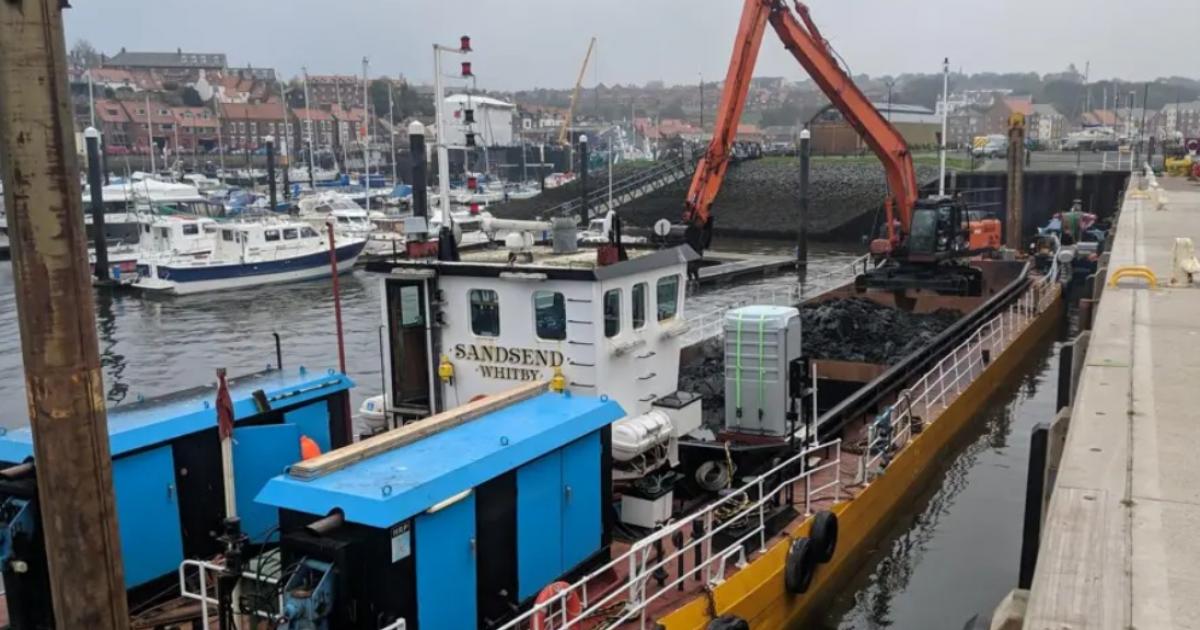
Last summer, the council announced it would resume dredging in Whitby with its vessel Sandsend, after securing a new licence.
The authority previously said it was “regrettable that the dredging licence was allowed to expire”.
Advertisement
Dredging work has also been undertaken by the council in Scarborough.
According to the Environment Agency, dredging and desilting can have “serious and long-lasting negative impacts on the environment”.
“For example, it can damage or destroy fish spawning grounds and make river banks unstable,” the agency said.
Speaking at a meeting in Whitby on March 2, Mr Bourne said: “Dredging is without a doubt the most important thing in both of the harbours.
Advertisement
“There was no dredging for a period of years, and it proved almost impossible to secure the dredging licences.
“We’ve now managed to secure them, and we’re managing to remove some of the associated conditions with those, so dredging is ongoing now in Whitby, and it will be in Scarborough as well.”
Mr Bourne said that following the completion of the dredging campaign in Whitby, the council’s dredger, Sandsend, will go to Scarborough, after which it will return to Whitby for a second campaign.
“Dredging will be ongoing throughout this year,” he added.
She fled the scene, leaving another of her neighbours, who was her passenger, with numerous life changing injuries
A woman who crashed a car while drunk, left her passenger with life changing injuries. Martyna Bryniak, 38, crashed her neighbour’s car into trees in Goldhay Way, Peterborough, after taking it without permission on March 9 last year.
Advertisement
She fled the scene, leaving her passenger with numerous life changing injuries, including shattered bones in her leg. Bryniak was arrested at her home in Hinchcliffe after she was identified as the driver.
She failed the initial breath test and provided an evidential sample which revealed she was over the legal limit of alcohol.
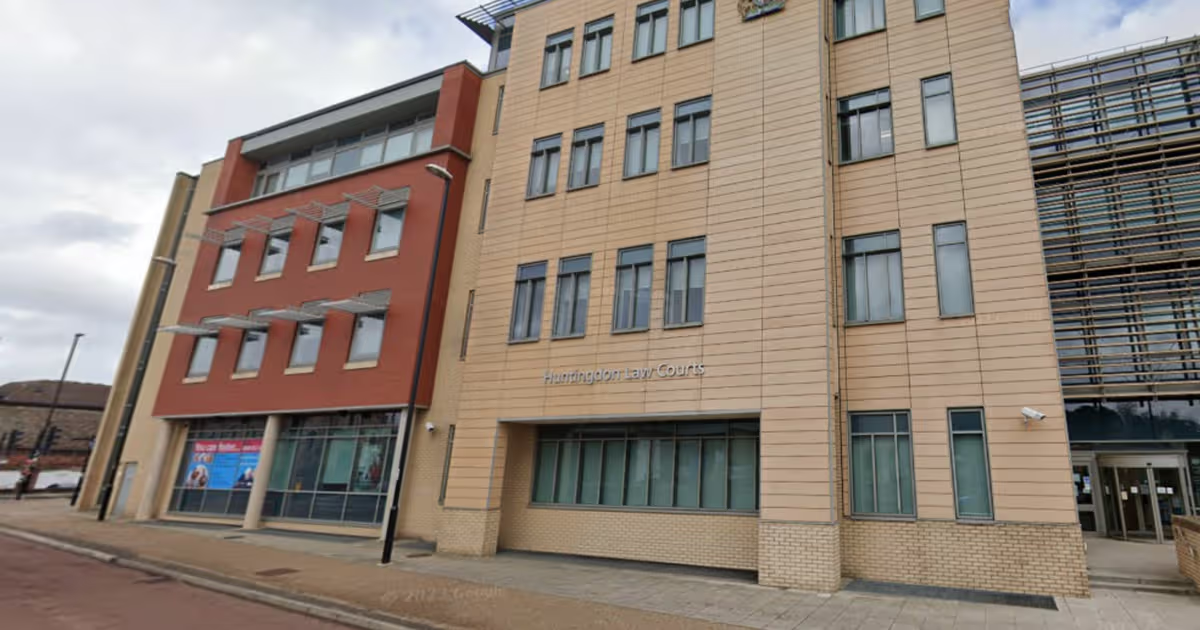
Bryniak pleaded guilty to drink driving, causing serious injury by dangerous driving, aggravated vehicle taking and driving without insurance. The 38-year-old appeared at Huntingdon Law Courts on Thursday (February 26), where she was handed a two-year driving ban and sentenced to 21 months in prison, suspended for two years.
The court also ordered Bryniak to pay £5000 in compensation, complete a 15-day rehabilitation activity requirement, and 100 hours of unpaid work.
Advertisement
According to Cambridgeshire Police, the judge, in sentencing, said the devastation and damage was “all caused by your decision to put your foot on the pedal that took you both on that journey.”
Sergeant Ben Chance, who investigated, said: “Bryniak made the choice to not only get behind the wheel of a car without permission, but also knowing she was under the influence of alcohol.
“Her actions have had a significant impact – physically, emotionally, and financially – on the lives of the victim and the victim’s family.”
As an 11-year-old, travelling over from Denmark, Osula had won a soccer school skills competition at Manchester United and this was the football of the playground with a storyline to match.
The noise when the ball nestled in the net almost blew the roof off St James’ Park. As did the roar at the final whistle.
“He had one moment to show his speed and his legs,” Eddie Howe, the Newcastle head coach, said. “It’s a remarkable goal and that is his strength, his speed with the ball. He asked for 10 extra balls after training yesterday to practice that exact finish. He scored eight out 10 and delivered when it mattered most. That was not an easy finish.”
Advertisement
A team under pressure after three successive home defeats in the league; a team, with their backs against the wall during a really challenging period in their season delivered a remarkable victory.
It will silence any talk Howe no longer commands the respect of the dressing room. They gave everything they had to him and each other. To a man they were superb, sharp, aggressive and bold, with 11 men on the pitch and even more so with ten.
“We needed that, we know we did,” said Howe. “We have been in a difficult run in the league, we have found ways to lose games that we shouldn’t but tonight we refused to stop believing we could win this game. That is the biggest compliment I can pay the players. The collective mentality to defend our goal, it was a big step up.”
There is something about adversity, that burning sense of injustice that brings out the best in Newcastle. And this was a performance fuelled by defiance and anger.
Advertisement
Having looked the more dangerous side for most of the first half, the home crowd and players were incensed when Jacob Ramsey was dismissed, shown a second yellow card for simulation in the first minute of added time.
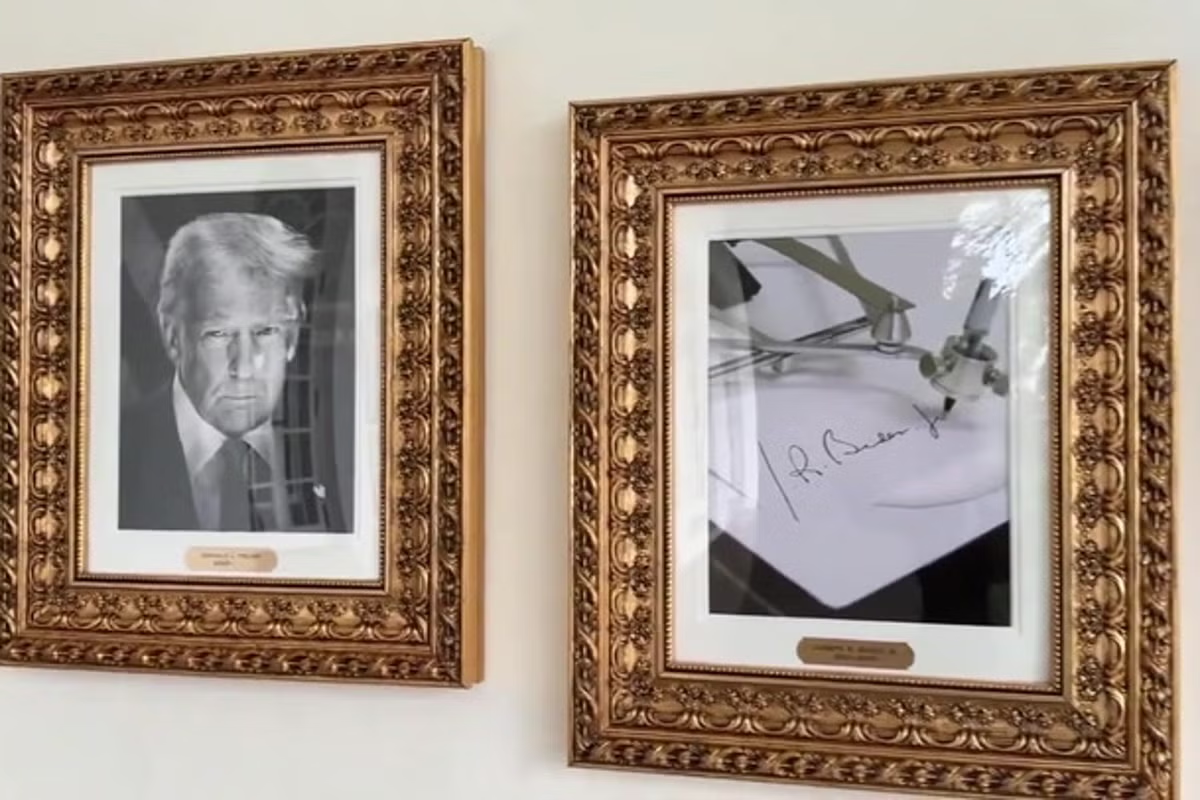
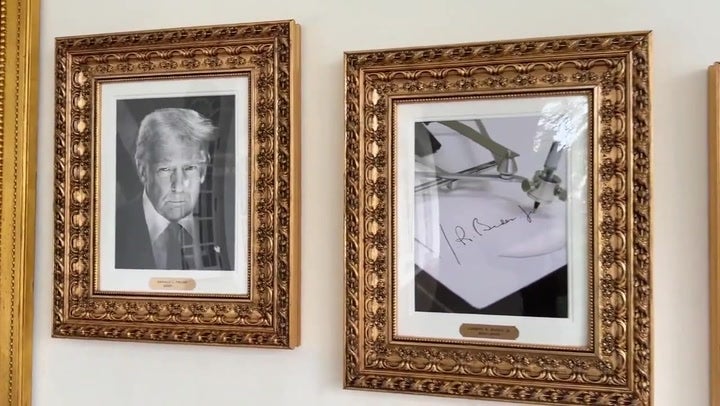
The Justice Department has reportedly abandoned a prospective case about the Biden administration’s use of an autopen, which President Donald Trump and his Republican allies have long alleged were part of a cover-up meant to hide his predecessor’s cognitive decline.
Veteran prosecutors were skeptical of the case to begin with and were unsure of what crime former President Joe Biden or his aides could be charged with committing, The New York Times reports, citing three unnamed people briefed on the probe.
The abandoned investigation, which began in 2025, marks the latest stumble in the president’s campaign to launch high-profile federal investigations against his political rivals.
Biden has said he “made every decision” under scrutiny by his critics, though he used an autopen, which are common for government officials, to sign some documents.
The Justice Department has reportedly dropped a potential case into the Biden administration’s use of an autopen, the latest failure in the president’s attempts to launch federal cases against his political enemies (The White House)
A Republican-led House report released in October claimed the autopen allegations ranked among the “greatest scandals” in American presidential history, though it conceded that “not one of the Committee’s 14 witnesses” did “admit that they ever had a concern about President Biden being in cognitive decline.”
The Constitution doesn’t require a pardons be in writing or be directly signed by the president, according to legal scholars.
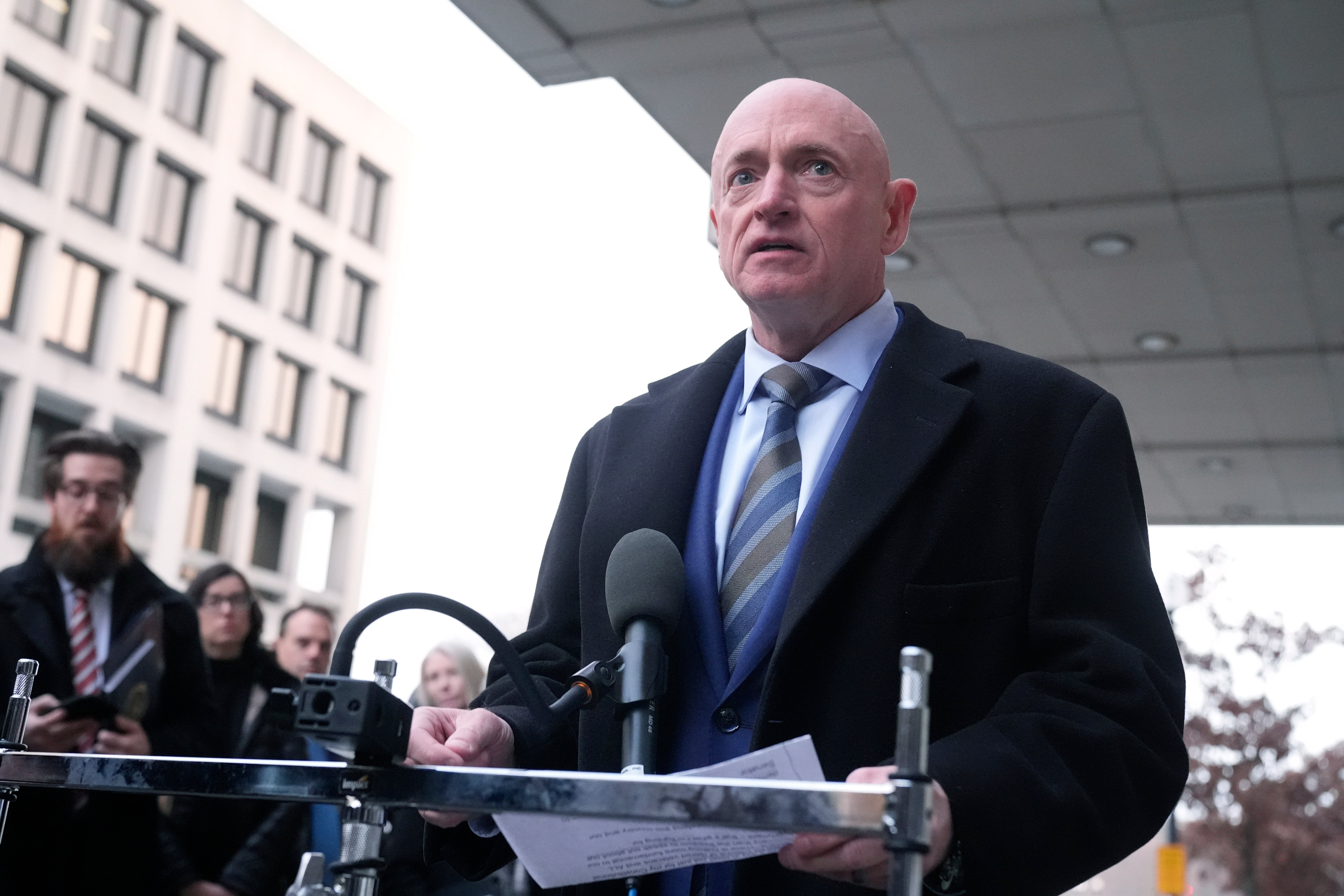
The DOJ also reportedly failed to secure an indictment against a group of lawmakers, including Sen. Mark Kelly of Arizona (pictured), who took part in a video encouraging military members to ignore ‘illegal’ orders (Copyright 2026 The Associated Press. All rights reserved.)
A former prosecutor who once worked in the U.S. attorney’s office has called Pirro’s failure to win a grand jury indictment, a rarity in federal court, a major shock.
“The average person doesn’t appreciate how stunning,” the official told Politico.
“The rules are skewed so heavily in favor of the prosecutor that it’s almost comical,” they added. “But the public is essentially saying, ‘We do not trust you. We are skeptical of you.’”
Advertisement
In Minnesota, meanwhile, the administration’s handling of the investigation into an ICE agent fatally shooting Renee Good in Minneapolis in January has prompted multiple federal prosecutors to resign.
British passengers and hundreds of other holidaymakers are stranded on six cruise ships in Dubai and Abu Dhabi after missiles were intercepted nearby during the Iran-US conflict.
Simon Hamalienko, Peter Hennessy and Liam Doyle
00:12, 05 Mar 2026Updated 00:16, 05 Mar 2026
British holidaymakers and hundreds of other travellers have been plunged into a cruise nightmare after their liner became stranded in the crisis-hit Middle East.
Ensure our latest headlines always appear at the top of your Google Search by making us a Preferred Source. Click here to activate or add us as Preferred Source.
Those passengers have since described the chaos unfolding on their cruise liners, including hearing “loud bangs” as missiles are intercepted in close proximity.
Speaking to CNN, Lesley Ballantyne, from Scotland, revealed that she and her husband woke one morning aboard the ship to find an emergency alert flashing on their mobile phones. She explained that the message had instructed them to “seek immediate shelter in the closest secure building” due to the imminent threat, reports the Daily Star.
She informed the broadcaster that, whilst her husband noticed nothing when glancing out of the window that morning, the couple subsequently “heard some loud bangs” and had “seen some missiles being intercepted from the ship”. The safety warning reached them on Saturday, and as of 4 March, the couple along with thousands of other passengers remain stuck aboard the vessel when it should be continuing its voyage around the Middle East.
Their cruise ship, the MSC Euribia, was meant to be following a route that would take it through to Europe later this year.
To access the open waters, it would have needed passage through the Strait of Hormuz, the waterway off Iran’s southern coast that serves as the only maritime route linking the Persian Gulf to the Gulf of Oman and onwards to the open sea.
Advertisement
Iran, however, has warned that it would prevent ships from passing through the strait during the ongoing conflict, with the regime even threatening to “burn every ship”. Cruise companies have confirmed passengers will stay on their ships whilst the hostilities continue, stating they are closely monitoring the situation.
One person stranded on the Euribia, an unnamed user posting in a Facebook group for the cruise ship, stated they were “constantly hearing explosions” from their position in Dubai. A further Italian passenger noted that the atmosphere remains “calm”, adding that travellers are permitted to leave the vessels but have been urged to “stay inside for the time being”.
She wrote: “The situation is calm, there’s a possibility to go out but the recommendations are to stay inside for the time being.”
Advertisement
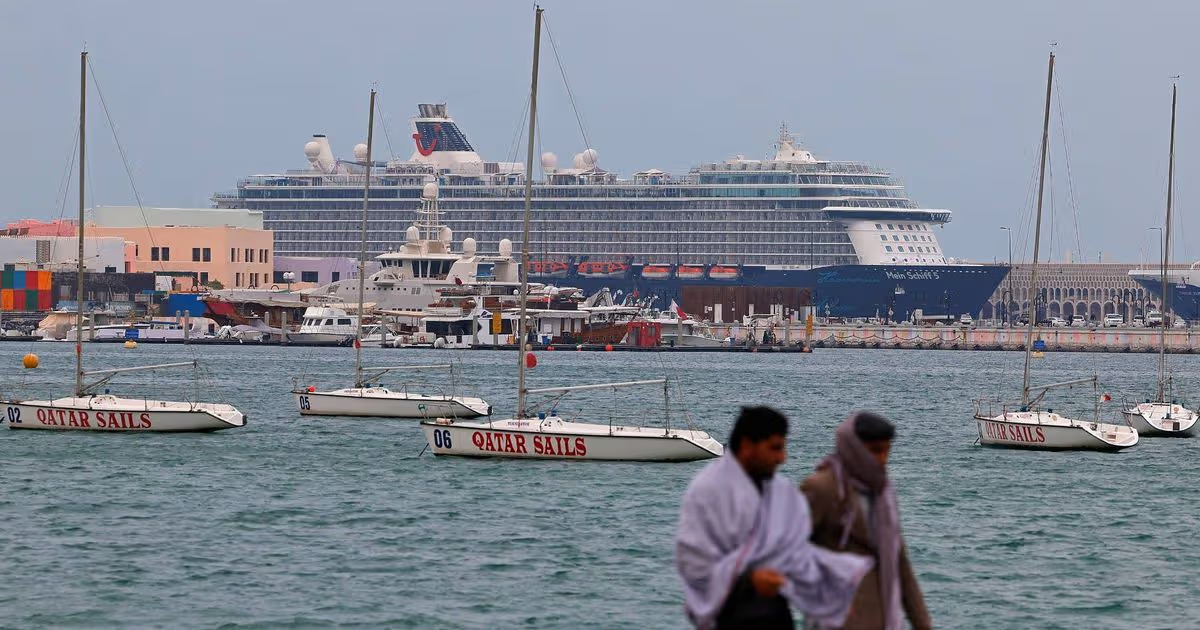
A number of other ships remain stranded alongside the Euribia, among them the Celestyal Discovery in Dubai, its sister vessel the Celestyal Journey, currently moored in Doha, along with two TUI cruise ships — the Mein Schiff 5 in Doha and the Mein Schiff 4 in Abu Dhabi.
TUI Cruises confirmed in a statement released earlier today that approximately 218 passengers from the Mein Schiff 4 have departed on a specially arranged Emirates flight bound for Munich.
Former Celtic striker Chris Sutton said of Nygren on Sky Sports: “What a strange player. He can go missing in midfield but comes up with goals.”
Just as well given Daizen Maeda is still looking like a shadow of the player who lit up Scottish football last season, January loan signings Tomas Cvancara and Junior Adamu have yet to fully impress and Kelechi Iheanacho has disappeared from view despite his return from injury.
Nygren is not one of the title winners Tierney talked about in Celtic’s squad, but the 24-year-old Sweden midfielder is doing more than most to make sure he gets that league winners’ medal.
Former Celtic midfielder Scott Allan enthused on BBC Radio Scotland’s Sportsound: “The impact substitutes you’ve seen at the weekend, you’ve seen it again tonight with Benjamin Nygren and James Forrest linking up.
Advertisement
“Lovely tee-up from Forrest and Nygren just finishes – we’ve seen that time and time again and he’s had a real impact in this team.”
Indeed, Nygren has found the net three times and provided one assist in his latest four Premiership games – and his 15 goals are more than any other Celtic player in the league this season.
“I know Nygren gives up certain parts of the game, but what he does do is he gets into the box and gets on the end of things,” Allan said.
“I felt his overall play in the game was really good, played some lovely through balls, always looked like he was going to be a threat round about that 18-yard box and he was the difference again tonight.”
Advertisement
His manager was similary enthusiastic.
“He’s doing something that is the most difficult thing in the game – to score goals -and he’s popped up again with what proved to be the winning goal,” O’Neill said.
“Substitutes in recent weeks have made big contributions to us, so that’s important for us.”
A new podcast titled Beware Book revisits a string of brutal murders in Glasgow between 1991 and 2005, including the 2005 murder of 27-year-old Emma Caldwell
A new Rayo Original Podcast, Beware Book, revisits a series of brutal murders that shocked Glasgow between 1991 and 2005 and asks a haunting question – why have so many of the victims still not seen justice?
Advertisement
Over 14 years, eight women involved in prostitution were mercilessly killed, and at least four of those cases remain unsolved today – Diane McInally’s, Karen McGregor’s, Leona McGovern’s and Jacqueline Gallagher’s cases.
The killings happened during a turbulent chapter in the city’s history. Glasgow was grappling with soaring unemployment, high crime rates and the tightening grip of heroin addiction. The women, many already living on the margins of society, were left particularly vulnerable. Due to their distrustful of the authorities and fearing for their safety, they relied heavily on one another.
To try to protect themselves, they recorded warnings about violent or suspicious clients in a battered leather journal that became known among them as the ‘Beware Book’.
Now, journalists Collette McGonigle and Callum McQuade of Clyde 1 revisit these tragic stories that devastated families, re-examining the investigations and asking difficult questions about whether opportunities were missed and whether prejudice may have shaped how the cases were handled at the time.
Advertisement
The most high-profile case – the murder of Emma Caldwell – was finally solved in 2024, when Iain Packer was convicted, 19 years after her death. After covering the trial Collette and Callum revisited the other unsolved killings, questioning whether they were investigated thoroughly and without prejudice, and whether opportunities to catch Emma’s killer earlier were missed.
The podcast will feature deeply personal interviews with the victims’ loved ones, many speaking publicly for the first time. As well as a former investigating officer, who will share his thoughts on where the Beware Book might be today.
Listeners will also hear from Iain Packer’s earliest known victim and from former officers who all believe the full extent of his violent past is only now coming to light.
Advertisement
The series highlights the struggles faced by women on the margins and the failures of a justice system that often overlooked them.
“At its heart, Beware Book is about restoring dignity to women whose lives were often reduced to headlines,” the journalists say. “It’s about amplifying the voices of families who feel forgotten by the justice system.”
The podcast will examine whether renewed attention could finally bring answers forward and some measures of peace to those left behind.
The first two episodes of Beware Book will be available from March 23, with a new episode released every Monday for five weeks. The podcast is available on the Rayo app, Apple Podcasts, Amazon Music, Spotify, or wherever you get your podcasts from March 23.
Coroner Loretta Nolan called for swimming lessons to be made a formal part of the curriculum at secondary school level
A coroner has called for regular inspections to be carried out on the accessibility of lifebuoys after an inquest heard friends of a teenager who got into difficulty while swimming in the Grand Canal could not untie a lifebuoy from its stand to assist in attempts to rescue him.
Advertisement
A sitting of Kildare Coroner’s Court heard Max O’Connor (15) from Newcastle, Co Dublin drowned while swimming in the canal at the 13th Lock between Ardclough and Celbridge, Co Kildare on May 11, 2024.
The coroner, Loretta Nolan, issued a number of riders to her verdict after hearing evidence from several eyewitnesses about the inability of other teenagers to remove a lifebuoy from its stand.
Dr Nolan said she would write to Waterways Ireland to alert them of her recommendation that lifebuoys should be both available and accessible.
The coroner acknowledged that there is a problem with vandalism of the lifesaving equipment but stressed that there was a need to “get the balance right” in terms of making them accessible.
She said it was important for anyone considering getting into water to help another to be able to access lifebuoys for their own personal safety.
Dr Nolan also called for swimming lessons to be made a formal part of the curriculum at secondary school level.
The coroner, who revealed she had lifeguard qualifications herself, noted that transition year students do some lifeguard training in association with Water Safety Ireland.
Advertisement
She observed that it would be good for all post primary students to have the knowledge of what to do if they found themselves in similar situations.
The inquest heard evidence from six teenagers who were with the deceased at the time of the fatal incident.
They told the coroner how two groups of friends from different schools had met up and decided to go swimming in the Grand Canal near the Cliff at Lyons country retreat.
Advertisement
The inquest heard that Max – a 3rd Year student at Coláiste Chilliain in Clondalkin, Dublin – had gone to the canal on his e-scooter with a speaker to play music.
The teenagers described how some of them were jumping in and out of the canal but Max had originally indicated he was not going to go in the water.
Another friend said he and Max had jumped into the water together after others had been diving into the canal for about 30 minutes.
He raised the alarm just after 5pm after realising that his friend was not getting out of the water.
Advertisement
One witness said he would have advised the deceased not to go in the water if he had realised he could not swim.
The teenager recalled seeing Max was drowning when he saw him trying to swim to the surface with air bubbles coming out of his mouth. He said he jumped back into the water and both were reaching out to try and grab hold of each other.
The witness said he tried to hold onto a chain to go deeper but “we were out of reach of each other.”
Advertisement
He added: “Everyone loved Max. He was a good friend and a friendly guy.”
He described the deceased as “very funny” and “gentle.”
“We’ll all miss Max. He’ll never be forgotten,” he concluded.
Another youth who dived into the canal to try and rescue Max said his friend looked like he was panicking in the water.
Advertisement
The witness said he and another swimmer had grabbed the deceased by the arms but were unable to pull him up.
“He was struggling and panicking,” the teenager recalled.
He said others were screaming at them to get out of the water which was estimated to be 15-20 foot deep where the group were swimming.
One girl fought back tears as she described how they struggled to remove the lifebuoy off its stand.
Advertisement
Another boy described trying to kick at the lifebuoy’s stand to try and break it as its rope was “wrapped around a pole” and could not be removed.
A woman living near the lock, Maeve Boylan, described how she was originally wary of the group of teenagers as she had experience of some groups being “trouble” but had observed how they seemed “calm and friendly.”
Ms Boylan said she realised that there was a bit of panic among them at one stage and realised a short time later what had happened when she heard someone shout out that someone was missing.
Advertisement
She told the inquest that she had spent 20 minutes on a 999 call to emergency services, while she had also got a key to open the lock to drain the water from the area where the group were swimming.
Ms Boylan said she was frustrated at not being able to do anything further to help and at realising that they were not going to be able to save the victim.
An aunt of the deceased, Joanne Moore, gave evidence of formally identifying her nephew’s body to gardaí.
Dr Nolan said the results of a postmortem showed that Max had died from drowning.
Advertisement
She said toxicology reports had corroborated the evidence of the witnesses that the deceased had not consumed any alcohol or drugs.
Returning a verdict of accidental death, Dr Nolan also recommended that counselling should be provided to Max’s friends, if they had not already received it.
The coroner said she would be writing to the different schools attended by the witnesses about her belief that counselling would be beneficial for them.
“It’s an experience that most people don’t experience thankfully,” she observed.
Ahead of International Women’s Day on March 8, more than 60 stars, including Hollywood actresses Cate Blanchett, Gillian Anderson and Keira Knightley, have joined global feminist organisation The Circle’s funding appeal, #MakeAStandfor1in3, to help tackle gender-based violence.