Communities across several Midwestern and Southern states participated in statewide tornado drills Wednesday, March 4, 2026, sounding outdoor warning sirens, activating NOAA Weather Radio alerts, and urging residents to practice sheltering procedures as part of annual Severe Weather Preparedness Week efforts.
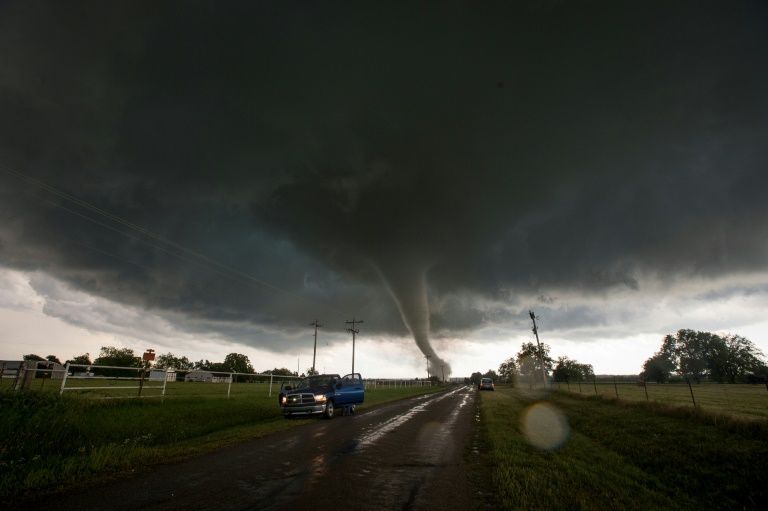
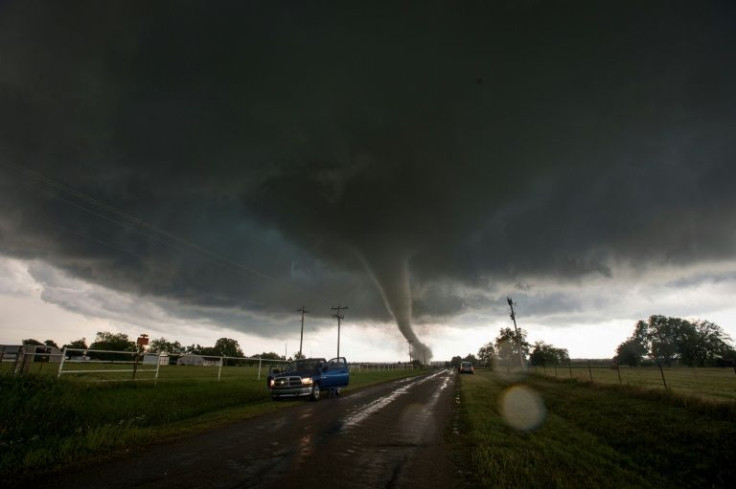
Vehicles stop on the side of a road as a tornado rips through a residential area after touching down south of Wynnewood, Oklahoma on May 9, 2016
The coordinated exercises, organized by the National Weather Service (NWS) in partnership with state emergency management agencies, aimed to test communication systems, reinforce safety protocols, and build readiness ahead of the peak tornado season that typically ramps up in spring and summer.
In **Missouri**, the statewide drill occurred at 11 a.m. local time, with outdoor sirens sounding in participating counties and NOAA Weather Radios broadcasting a Routine Weekly Test (RWT) code to signal the start. Missouri State Emergency Management Agency officials emphasized practicing sheltering plans at home, work, or school. The drill replaced regularly scheduled siren tests in some areas, such as Boone County, where sirens activated as part of the exercise. Residents were encouraged to move to interior rooms on the lowest level, away from windows, treating the alert as a real tornado warning.
**Kansas** held its drill at 10 a.m. CST (11 a.m. in far eastern parts), with sirens blaring across counties including Riley, Sedgwick, and Shawnee. The NWS issued an RWT via NOAA radios, and local emergency managers activated outdoor warning systems. Officials stressed reviewing severe weather plans during the week of March 2-6, designated Severe Weather Preparedness Week, with Wednesday focused on tornado safety. Residents, schools, and businesses were asked to practice “Duck and Cover” or move to designated safe spots as if an actual warning were in effect.
**Kentucky** conducted its annual statewide tornado drill at 10:07 a.m. EST (9:07 a.m. CST), with Lexington Emergency Management and other local agencies participating. Sirens sounded in participating communities, and the NWS broadcast test messages. The exercise fell during Kentucky’s Severe Weather Awareness Week (March 1-7), highlighting the state’s vulnerability to tornadoes, particularly in spring. Officials urged families and workplaces to practice immediate sheltering actions.
Advertisement
**North Carolina** joined with a drill at 9:30 a.m., activating the State Emergency Alert System and broadcasting via local radio stations and NOAA Weather Radio. Cumberland County and Raleigh-area officials encouraged participation, advising people to head to interior lowest-level rooms away from windows when the alert sounded.
**Illinois** held its drill March 3 around 10 a.m. CST, with a focus on communication testing through RWT codes rather than full siren activation in some areas, though many local systems participated.
Other states scheduled similar events in coming weeks or months. South Carolina’s statewide drill is set for March 11 at 9 a.m., Indiana for March 10 at about 10:15 a.m. Eastern, and Virginia for March 10 at 9:45 a.m.
The drills come amid growing emphasis on preparedness as climate patterns contribute to more frequent and intense severe weather events. The NWS notes that tornadoes can strike with little warning, making advance practice critical. Key safety messages repeated across states include:
Advertisement
– Seek shelter in a basement or interior room on the lowest floor. – Avoid windows, doors, and exterior walls. – Use helmets or protective headgear if available. – Have a family plan, including multiple ways to receive alerts (NOAA radio, apps, TV/radio). – Distinguish between a watch (conditions favorable for tornadoes) and a warning (tornado sighted or indicated by radar — take action immediately).
Participation was voluntary but strongly encouraged for schools, businesses, and households. Many agencies provided resources like printable preparedness packets, safety checklists, and online guides to help residents develop or refine plans.
In Missouri and Kansas, the drills aligned with broader Severe Weather Preparedness Week themes: Monday for planning and alerts, Tuesday for lightning and flood safety, Thursday for hail and wind, and Friday for recovery. Officials noted that practicing during controlled drills builds muscle memory, potentially saving lives when real threats emerge.
No major disruptions were reported from the exercises, though some areas postponed regular monthly siren tests to coincide with the statewide events. Weather permitting was a common caveat, with agencies ready to reschedule if actual severe weather threatened.
Advertisement
As spring approaches, meteorologists warn that tornado activity often peaks from April through June in the central U.S. The drills serve as a timely reminder to review emergency kits, designate safe rooms, and stay informed through multiple channels.
Residents who missed the drills or want more information can visit local NWS offices, state emergency management websites, or Ready.gov for tornado safety resources. Officials stress that preparation today can make the difference in tomorrow’s storm.
Morgan Stanley Private Wealth Management’s Chris Toomey shares his thoughts on the future of investment in artificial intelligence and compares the market now to the end of the 20th Century on ‘Barron’s Roundtable.’
Morgan Stanley, one of the world’s largest investment banks, is cutting 3% of its workforce, roughly 2,500 employees, across all business divisions.
The job cuts impacted Morgan Stanley’s three major divisions — investment banking and trading, wealth management and investment management — but not its financial advisors, FOX Business confirmed.
Advertisement
The cuts were based on business priorities, location strategy and individual performance, and the bank plans on adding resources in other areas. The layoffs were first reported by The Wall Street Journal.
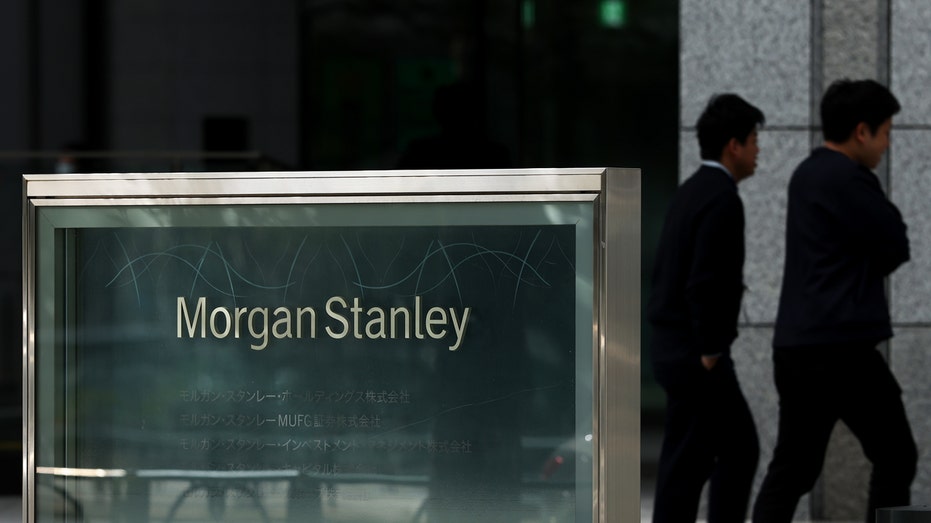
Morgan Stanley’s job cuts impacted its investment banking, trading, wealth management and investment management divisions. (Kiyoshi Ota/Bloomberg via Getty Images / Getty Images)
Last week, Block said it was slashing nearly half of its workforce — more than 4,000 jobs — as the payments firm works to embed AI throughout its operations.
CEO Jack Dorsey said the company planned to enact a single round of large cuts instead of a series of smaller workforce reductions to give the company more room for growth as it adapts to the AI era.
Advertisement
The investment banking giant Morgan Stanley is reportedly cutting approximately 2,500 jobs, or about 3% of its workforce. (Gabby Jones/Bloomberg via Getty Images / Getty Images)
T-Mobile US, Inc. (TMUS) Morgan Stanley Technology, Media & Telecom Conference 2026 March 4, 2026 7:50 PM EST
Company Participants
Srinivasan Gopalan – CEO, President & Director
Conference Call Participants
Advertisement
Benjamin Swinburne – Morgan Stanley, Research Division
Presentation
Benjamin Swinburne Morgan Stanley, Research Division
Advertisement
Okay. Hello, everybody. I’m Ben Swinburne, Morgan Stanley’s telecom and media analyst. For important disclosures, please see the Morgan Stanley research disclosure website at morganstanley.com/researchdisclosures. Excited to welcome back to the conference, but for the first time up on stage the CEO of T-Mobile, Srini Gopalan. Srini, thank you so much for coming.
Srinivasan Gopalan CEO, President & Director
Thanks for having me here, Ben. And before we get started, I’m supposed to draw our attention to that safe harbor statement, which I think has disappeared now. Yes.
Advertisement
Benjamin Swinburne Morgan Stanley, Research Division
There it is.
Advertisement
Srinivasan Gopalan CEO, President & Director
With that in mind, especially the forward-looking statements.
Advertisement
Question-and-Answer Session
Benjamin Swinburne Morgan Stanley, Research Division
All right, we’ll do that. So what I think we’re basically, what, just over 4 months into your tenure as CEO. Business is obviously performing well. Maybe talk a little bit about your strategic priorities for the company. What are you and the team really focused on right now at T-Mobile?
Advertisement
Srinivasan Gopalan CEO, President & Director
So look, where we are today, we’re a great business. And the foundation of that has been differentiation. And that’s most visible when you look at our NPS, right? Our NPS is 20%, 25% higher than anyone in the industry. And the source of that differentiation and the foundation we’re building on is the fact that we have the best network, which hasn’t always been true, but is today, the best value and the best experience. And that fundamentally is our differentiation. So when customers come to us, they don’t need to make a trade-off, right? They get all
After three straight sessions of relentless selling, Indian equity markets are grappling with heightened volatility and fragile sentiment. As benchmark indices struggle to find their footing, investors are turning to technical charts for signs of stability — or further weakness.
In a conversation with ET Now, Rohit Srivastava, Founder, Strike Money Analytics & Indiacharts offered a nuanced view of the current setup, suggesting that while the breakdown is technically significant, extreme short-term oversold readings could pave the way for a temporary rebound.
“So, well, the breakdown that we have seen would open up potential downside, but what is also happening simultaneously is that the market is becoming oversold on an extremely short-term basis and, in fact, I would say, very oversold. So, this is giving us a feeling that we may be at a point where we can get some bounce back or some relief rally in the market. I am not sure whether it will last beyond a day or two or a couple of days, so it might just be a counter-trend move within the entire structure but definitely it will bring some relief or some hope when it happens,” Srivastava said.
According to him, the charts are hinting at the possibility of a rebound in the near term, particularly in the NIFTY 50 and the NIFTY Bank.
Advertisement
“So, my sense is that you can get a Nifty bounce back from here to retest not just 24,600 that was the critical breakdown point, but even maybe try to push above that towards 25,000 again — that is what the market may attempt to do. Something similar on Bank Nifty would mean closer to 60,000 and at that point then we will judge again whether another leg down can really start,” he noted.
Live Events
Importantly, Srivastava cautioned against aggressive selling at current levels, especially given the extent of recent declines. “So, we do not really want to sell into the panic today because we are already into the third day of continuous selling and somewhere that is getting us to a very-very short-term oversold point. We will reconsider the overall picture once we get that bounce. A lot will depend, of course, on the geopolitical situation also changing, but that is what the technical setup is telling us right now.”
VIX Spike: Panic or Precursor?
Another focal point for traders has been the sharp surge in the India VIX, often referred to as the market’s fear gauge. After hovering in double digits just days ago, the index has spiked over 20%, climbing to the 21 mark — a move that reflects mounting anxiety.
Addressing the surge, Srivastava pointed to historical precedents.
“So, we have seen many spikes in the VIX ending at close to around 22 in the last 12 months and there are some more serious ones whenever there has been some kind of issue — whether it was elections, whether it was the rupee depreciation. We have also seen it go towards 30 at some points of time. So, these are regions where the VIX does reach a point where we can say that people are getting overly concerned or there is excessive pessimism either closer to 22, but I would say closer to around 30 is a better point.”
Advertisement
He added that while the current levels suggest heightened concern, they may not yet signal peak panic.
“If you really get close to 30, then I would be a little more optimistic on the market having priced in a maximum panic kind of situation. But that has not happened yet, so we will continue to watch how the VIX unfolds in the short term. But again 21, 22 is a level that we did pull back from a couple of times in say August of 2024, also in November of 2024 and also last year in April when you had the tariffs applied, we had seen VIX spike to around 23 and we are currently at 21, so two-three points and you are within that range. To go beyond that, of course, the situation has to get worse than what it already is.”
Tactical Patience Advised
For now, the technical landscape suggests a market caught between structural weakness and short-term exhaustion. A relief rally could emerge as oversold conditions unwind, but sustainability will hinge on broader triggers — including geopolitical developments and volatility trends.
Until then, seasoned observers are advising restraint rather than reaction, especially when fear-driven selling risks locking in losses just as the market nears short-term extremes.
The MPC cut the policy rate to 1% to ease financial conditions, support SMEs, and anchor inflation expectations, citing fragile growth, downside inflation risks, tighter SME credit, and emphasizing structural reforms beyond monetary policy.
MPC Cuts Policy Rate to 1.0% to Ease Financial Conditions
The Monetary Policy Committee (MPC) voted 4-2 to reduce the policy rate from 1.25% to 1.0% aiming to ease financial burdens on SMEs and households, anchor medium-term inflation expectations, and support business adaptation amid global uncertainties. The two dissenting members preferred to maintain the 1.25% rate, considering it appropriate given current economic conditions. The MPC views the new 1% rate as sufficient, emphasizing the importance of preserving remaining policy space during high uncertainty and highlighting that structural challenges require policy measures beyond interest rate adjustments.
Economic Outlook and Inflation Risks
The MPC regards the Thai economy as fragile, projecting growth near 2.0% YOY in 2026-27, below potential growth of 2.7%. Inflation faces downside risks due to lower energy prices and government subsidies, with headline inflation expected to return to the target range’s lower bound later than previously anticipated. Trade uncertainty remains due to fluctuating U.S. tariffs, while the risk of fiscal delays has diminished with improving government formation prospects.
Challenges Facing SMEs and Financial Stability Concerns
SMEs continue to face tight financial conditions with rising loan costs and baht appreciation impacting exporters’ profits. Despite policy rate cuts, micro-SME loan rates have increased due to higher credit risks and constrained lending. The MPC will monitor low-rate environment risks, noting increased risk-taking behavior and potential credit misallocation but sees no immediate threat. Monetary policy alone cannot resolve Thailand’s structural growth challenges, requiring complementary economic and financial reforms.
The US stock market rebounded Wednesday from two days of punishing swings after oil prices stopped spiking and reports gave encouraging updates on the economy.
SCB EIC raises Thailand’s 2026 economic growth forecast to 1.8% due to improved exports and private investment. However, growth remains below potential amid geopolitical and domestic challenges.
SCB EIC has raised its economic growth forecast for Thailand in 2026 to 1.8%, up from the previous estimate of 1.5%. This revision reflects improved export performance and increased private investment driven by a global economic recovery, particularly in AI technology and electronic goods. Despite this positive outlook, Thailand’s overall economic growth remains below its potential due to ongoing geopolitical tensions and structural challenges within the country.
Private sector investments are beginning to pick up, aided by foreign direct investment and a rebound in construction activities. However, government spending may slow down after significant economic stimulus in the last quarter of 2025. The Bank of Thailand is expected to reduce its policy rate to 1% to support economic activities, particularly among vulnerable households and SMEs.
Globally, SCB EIC anticipates a 2.7% growth in 2026, primarily driven by investments in AI and digital goods, which mitigate geopolitical pressures. While monetary policy remains accommodative, inflation risk persists, particularly in the U.S. As such, global financial conditions might stabilize but are unlikely to ease significantly given the inflationary pressures in various nations.
Australia’s consumer watchdog has warned upgrades to major national airports, including Perth, run the risk of driving airfares skyward in the years ahead.
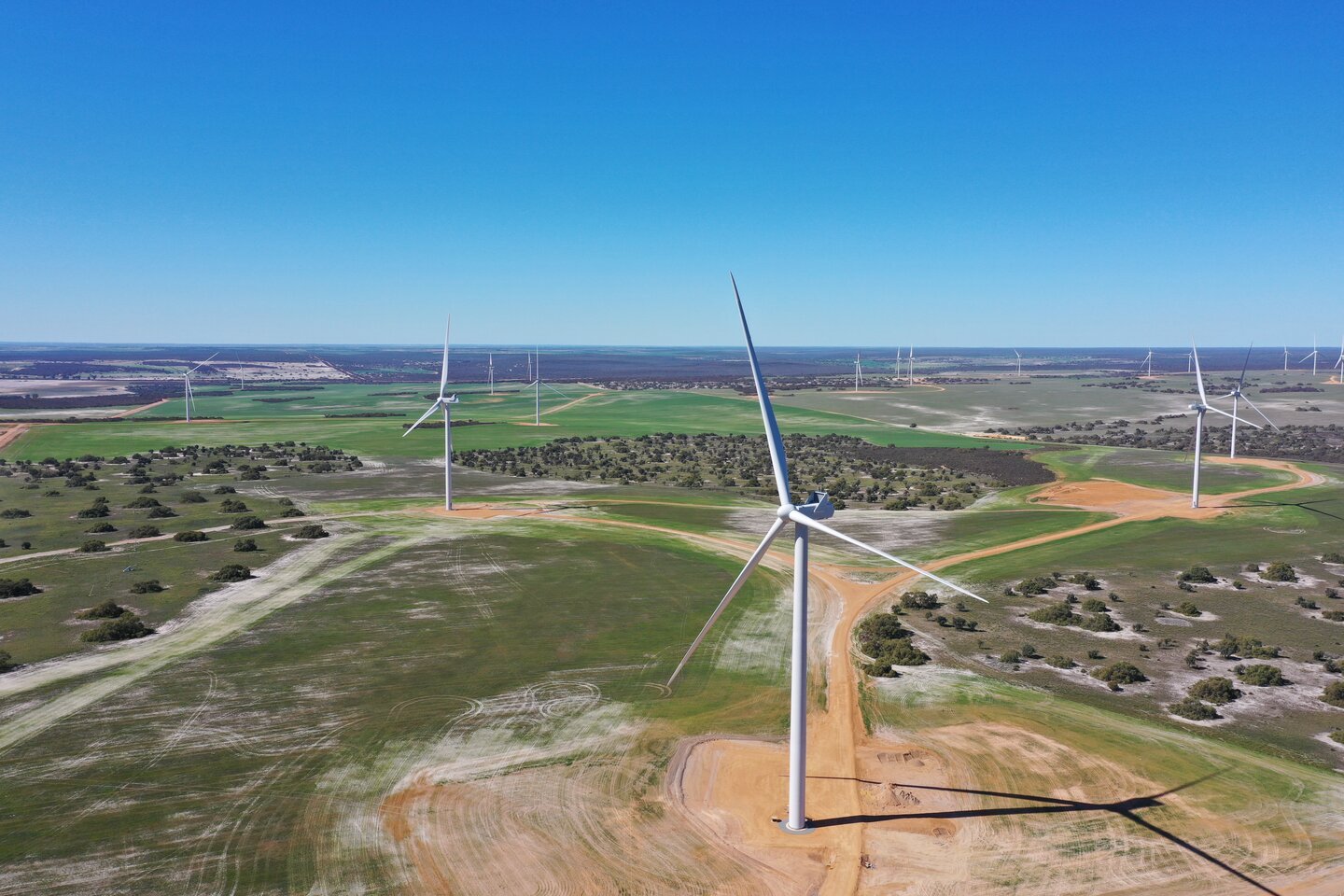
A bid to triple the size of a $66 million hydrogen facility proposed for the Shire of Coorow has been unanimously approved by the Regional Development Assessment Panel.