

Crypto World
Swiss Lawmakers Warn UBS Over Ermotti’s Role in $26B Capital Reform Battle


TLDR:
- Swiss lawmakers warned UBS to reduce CEO Ermotti’s public profile amid the capital reform lobbying row.
- Finance Minister Keller-Sutter rejected a cross-party compromise proposal, deepening the two-year standoff.
- UBS’s board is in talks with Ermotti about extending his tenure past his planned April 2027 departure date.
- UBS has identified internal successors including Iqbal Khan, Robert Karofsky, Ivanovic, and Bea Martin.
UBS has been advised to dial back its lobbying campaign against Swiss government capital reform plans. Swiss lawmakers privately warned the bank to reduce CEO Sergio Ermotti’s public profile in opposing the changes.
The government is seeking to raise UBS capital requirements by up to $26 billion. The standoff has now stretched nearly two years, and a recent compromise proposal was firmly rejected.
Meanwhile, the bank’s board is actively exploring an extension of Ermotti’s tenure beyond April 2027.
Swiss Lawmakers Push Back on UBS Lobbying Strategy
UBS’s aggressive campaign against capital reforms has drawn notable criticism from Swiss parliamentarians. Lawmakers warned the bank that its current approach was working against its own cause.
One lawmaker acknowledged that many in parliament actually agree with UBS on a key point of contention. Even so, Ermotti’s public statements were described as unhelpful to the broader negotiation process.
A cross-party group of Swiss politicians presented a set of compromise proposals back in December 2025. Those proposals were widely regarded as a potential turning point in the prolonged dispute.
However, Finance Minister Karin Keller-Sutter rejected the compromise proposals entirely. That rejection effectively closed a door many had believed was starting to open.
The relationship between UBS leadership and Keller-Sutter has since deteriorated further. A member of Switzerland’s upper house privately advised the bank to reconsider its lobbying strategy.
The parliamentarian singled out Ermotti’s public-facing statements as a specific concern. Those statements, lawmakers argued, were hardening positions rather than encouraging dialogue.
Despite these warnings, UBS has shown no sign of pulling Ermotti back from the public stage. One person familiar with the bank’s lobbying efforts said reducing his profile was not being considered.
UBS publicly confirmed that Ermotti would remain Group CEO until at least early 2027. The bank maintained its position on capital reform remains both justified and well-founded.
Ermotti’s Tenure Extension Enters Board-Level Discussions
UBS’s board of directors is now open to keeping Ermotti in his role beyond his planned exit. The board has entered talks with Ermotti about staying past his originally planned April 2027 departure.
The aim is for him to lead the bank until there is greater certainty around its capital position. A final decision on whether he remains beyond that date has not yet been made.
Ermotti, who is 65, initially planned to step down once the Credit Suisse integration was complete. He returned to lead UBS in 2023 following the state-orchestrated takeover of Credit Suisse.
He had previously stated he would lead the bank until “at least” late 2026 or early 2027. Swiss newspaper NZZ was the first to report UBS was exploring an extended tenure for him.
The board has identified a shortlist of potential successors within the bank. Among those being considered are wealth management co-heads Iqbal Khan and Robert Karofsky.
Asset management chief Aleksandar Ivanovic and Chief Operating Officer Bea Martin are also on the list. UBS confirmed the board would evaluate both internal and external candidates when the time comes.
UBS noted the Credit Suisse integration would be substantially complete by end of 2026. The bank said it was premature to discuss a specific timeline for Ermotti’s departure.
There remains considerable work ahead in preparing the bank for its next strategic phase. The ongoing capital reform dispute continues to shape UBS’s leadership planning in meaningful ways.

Crypto World
Bitcoin Outflows Hit 28,700 BTC: Is the Bitfinex Transfer Distorting the Market Signal?
TLDR:
- Bitcoin recorded its largest single-day outflow since November 2025, totaling 28,700 BTC across exchanges.
- Bitfinex alone accounted for 24,627 BTC of the total outflow, dropping reserves from 431,767 to 407,140 BTC.
- A single transaction moved 23,588 BTC to a newly created wallet, pointing to a possible internal treasury operation.
- Analysts urge caution as the outflow data may not reflect true accumulation without an official statement from Bitfinex.
Bitcoin outflows across major exchanges surged recently, reaching 28,700 BTC in a single day—the highest recorded since November 2025.
The bulk of this movement came from Bitfinex, where reserves dropped sharply within a short window. While such outflows are traditionally seen as a sign of accumulation, this event carries a distinct characteristic.
Market analysts are currently calling for caution before treating this data as a clear directional signal.
Bitcoin Outflows Reach Highest Point Since November 2025
The 28,700 BTC net outflow recorded across exchanges is not a routine figure. It marks the largest single-day outflow seen in several months.
Data shared by analyst Darkfost on X pointed to this unusual spike. The numbers quickly caught the attention of traders watching on-chain metrics.
According to Darkfost’s post, large Bitcoin outflows from exchanges often suggest accumulation behavior. Investors withdrawing BTC from platforms typically plan to hold rather than sell.
This reduces the available supply on trading venues over time. Historically, such patterns have been associated with periods of price strength.
The trend of moving Bitcoin off exchanges has appeared at various points in past market cycles. Reduced exchange reserves have often preceded upward price movement in those periods.
On-chain analysts widely reference this relationship. The pattern carries a reputation as a positive market signal.
However, this event does not fit neatly into that historical framework. The outflow was not distributed across many exchanges, as would be expected.
Instead, it was concentrated almost entirely on one platform. That concentration shifts the analysis considerably.
Single Bitfinex Transaction Raises Questions About Market Interpretation
Bitfinex saw its reserves fall from 431,767 BTC to 407,140 BTC within a very short period. That represents an outflow of roughly 24,627 BTC from the exchange alone.
This single platform accounted for the majority of the total outflow. The scale and speed of the movement stood out to on-chain analysts.
Within that movement, 23,588 BTC were transferred in a single transaction to a newly created wallet address. A single-block transfer of that size to a fresh address is uncommon in regular user activity.
Such transactions more closely resemble internal treasury operations or wallet restructuring. Exchanges carry out these moves for security or operational management purposes.
As of the time of writing, Bitfinex had issued no public statement about the transaction. Without official confirmation, analysts are working from observable on-chain data alone.
The characteristics of the transaction point more toward a platform-led operation. A newly created destination address and single-block execution are consistent with exchange-managed transfers.
Because of this, Bitcoin outflow data from this event may not reflect genuine accumulation activity. The actual market effect could be far smaller than the raw numbers suggest.
Analysts recommend waiting for further clarity before drawing any conclusions. Additional confirmation is needed before investors adjust their positions based on this data.


Analyst EGRAG says only a weekly close above a certain level would flip XRP’s long-running descending channel bullish.
XRP is attempting to push above the 200 EMA and the $1.55 level, a move that market analyst EGRAG CRYPTO says would signal short-term strength if confirmed with a weekly close.
Despite the attempted rally, the token remains trapped inside a descending channel that has defined its price action for months, leaving the broader trend corrective until a breakout above $2.20 flips the structure bullish.
XRP Tests 200 EMA
In a post published on X on March 4, EGRAG CRYPTO said XRP is “pushing above 200 EMA” but warned that the price is still trading inside a descending channel on the weekly timeframe.
According to their breakdown, a weekly close above $1.55 would weaken the current downward trajectory, while a close above $2.20 would invalidate the bearish structure and open the path toward $2.70 to $3.60.
If XRP fails to reclaim $1.55, the analyst outlined a move toward $1.26, with a possible sweep of macro support between $0.95 and $0.85. In a separate post, they assigned a 55% to 65% probability to a deeper sweep and a 35% to 45% chance of an early breakout reclaim.
“Structure > Emotion,” they wrote, arguing that the descending channel still defines the trend. The technical standoff comes at a time when derivatives and spot activity are contracting. Analyst Amr Taha previously noted that XRP futures open interest had dropped 70% since October 2025, falling to $203 million.
Binance open interest slipped below $270 million, levels last seen in April 2025 before a major rally. Historically, such resets have coincided with local bottoms as leverage is cleared out, though they do not guarantee a rebound.
You may also like:
Price Action Reflects Fragile Recovery
At the time of writing, data from CoinGecko showed that XRP had gained about 4% in the last 24 hours and roughly 3% over the past week, bouncing from a recent low near $1.27.
Even so, the token remains down more than 12% over 30 days and about 40% across the past year. Furthermore, it is still more than 61% below its July 2025 all-time high of $3.65.
The recent rebound has occurred within a 24-hour range between $1.34 and $1.42, with market capitalization holding near $86 billion.
For now, the weekly close relative to $1.55 is the immediate focus. A decisive break above $2.20 would alter the chart structure described by EGRAG, while rejection below the 200 EMA will keep the descending channel intact and leave lower supports in play.
Binance Free $600 (CryptoPotato Exclusive): Use this link to register a new account and receive $600 exclusive welcome offer on Binance (full details).
LIMITED OFFER for CryptoPotato readers at Bybit: Use this link to register and open a $500 FREE position on any coin!
Crypto World
SKY jumps nearly 10% after governance vote slows new token creation while buybacks tighten supply


SKY, the native token of DeFi platform Sky (formerly Maker), climbed nearly 10% after the protocol executed a governance proposal that slowed how quickly new tokens are created through staking rewards, expanded its lending system around the USDS stablecoin, and kept up a large buyback program that is pulling tokens out of the market.
The governance proposal, which passed Feb. 27 and was executed March 2, introduced several changes across the Sky Protocol, including adjustments to staking rewards and the onboarding of new credit infrastructure designed to expand the reach of its USDS stablecoin ecosystem.
One of the most closely watched changes involved staking rewards – the rate at which new coins are issued as a return for locking up existing holdings in the protocol.
Slower supply growth
The proposal “normalized” the so-called SKY staking emissions by setting the distribution at roughly 838.18 million tokens over the next 180 days, representing a reduction of about 161.82 million tokens compared with the previous schedule. Lower emissions can reduce dilution pressure, a factor traders often watch closely when evaluating governance tokens.
At the same time, the protocol has been steadily repurchasing its own token through an automated buyback program funded with USDS. According to Sky’s dashboard, the system has spent roughly $114.5 Million buying back about 1.83 billion SKY tokens so far.
The purchases occur in small transactions throughout the day, typically around $10,000 per trade, creating a steady bid in the market. In total, the program is currently removing roughly 3.6 million SKY tokens from circulation each day.
Combined with the emissions adjustment, the buybacks have tightened the token’s effective supply. Data from the protocol indicates that roughly 67% of SKY is currently staked, leaving a smaller portion actively trading in the market.
The governance proposal also approved new infrastructure to expand credit markets around the protocol. Two new “Launch Agents” were onboarded to help deploy credit and manage liquidity infrastructure connected to the USDS stablecoin system.
Industry trend
Across the crypto market, a growing number of protocols are shifting toward token models built around buybacks and lower emissions, replacing the inflation-heavy incentive systems that dominated early DeFi.
In the past, many protocols distributed large amounts of newly minted tokens to attract liquidity providers, traders, and governance participants. While those incentives helped bootstrap networks, they also created persistent selling pressure as recipients often sold rewards into the market.
More recently, protocols have begun moving in the opposite direction. Rather than issuing more tokens, some are using protocol revenue to repurchase tokens on the open market or reduce emissions altogether.
Hyperliquid offers a recent example. The decentralized exchange allocates a portion of trading fees to buy and burn its HYPE token. When trading activity surged last week, the protocol generated more than $13 Million in weekly fees, allowing roughly $9 Million worth of tokens to be burned over seven days.
Other projects are pursuing similar approaches. Solana-based Jupiter voted in February to eliminate net new emissions for its JUP token in 2026, preventing additional supply from entering circulation. Meanwhile, derivatives protocol dYdX approved a plan allocating 75% of protocol revenue toward token buybacks.
The shift reflects a broader effort to tie token demand more directly to protocol activity while limiting dilution for existing holders.
Crypto venture capital giant Andreessen Horowitz is doubling down on crypto despite a major market downturn, seeking $2 billion for a new crypto fund.
A16z Crypto, the blockchain arm of venture capital firm Andreessen Horowitz, is raising a fifth fund focused on crypto with plans to close by mid-2026, according to Fortune, citing anonymous sources on Wednesday.
The latest round is significantly smaller than its previous $4.5 billion fund from 2022, but the company has shifted to a shorter fundraising cycle to remain flexible to ever-changing crypto narratives.
The move comes amid a crypto bear market that has seen more than $2 trillion wiped from total market capitalization since its peak of around $4.4 trillion in early October.
A16z crypto chief Chris Dixon’s Web3 philosophy envisioned a decentralized internet with applications built on blockchains, according to his 2024 book, “Read Write Own.”
But many of those investments have not panned out, notably decentralized X (Twitter) competitor Farcaster, which returned $180 million to investors after selling off its infrastructure in January.
Crypto VCs exploring non-crypto tech
Wall Street crypto buffs have narrowed their focus lately toward stablecoins, real-world asset tokenization, and financial products, with many venture capitalists following that shift. Others have started to look towards other areas of technology.
Co-founder of venture firm Multicoin Capital, Kyle Samani, stepped down in February to “explore new areas of technology,” such as AI, longevity, and robotics.
Meanwhile, crypto venture firm Paradigm is expanding into artificial intelligence and robotics with its latest fund seeking to raise $1.5 billion, as reported in late February.
Related: Crypto slides, but tokenized RWAs and VC push ahead
A16z raised over $15 billion in January to invest in companies and technologies it deemed critical to secure America’s future, mentioning AI and crypto and including technologies in “key areas that generate human flourishing,” such as biology, health, defense, public safety, education, and entertainment.
A16z sees opportunity in AI, crypto in 2026
A16z recently highlighted crypto and AI as major themes for 2026, stating that it expected AI to automate cybersecurity work, AI models to become app stores, privacy to become the “most important moat in crypto,” prediction markets to get “bigger, broader, and smarter,” and stablecoins to become more intertwined with traditional banking and finance.
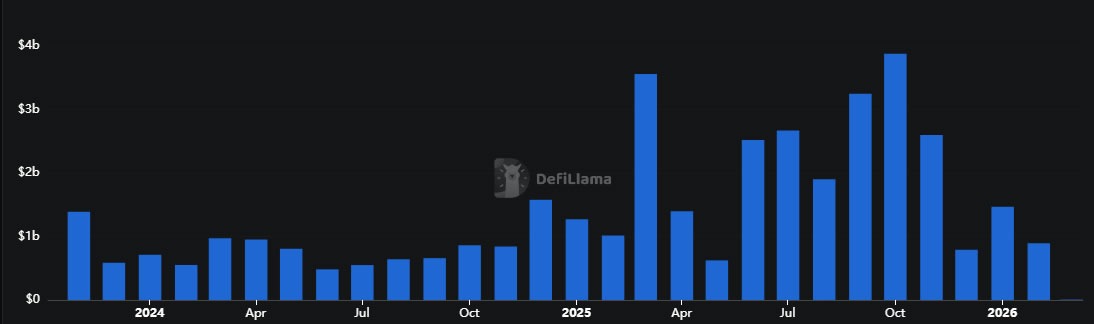
According to DeFiLlama’s fundraising aggregator, crypto startups raised $895 million in February, down almost 40% from the $1.47 billion raised the previous month and marginally less than the $1 billion raised in February 2025.

Magazine: 6 massive challenges Bitcoin faces on the road to quantum security
As the crypto mining industry grows rapidly in 2026, more miners are seeking to join pools that aim to improve efficiency and potential profitability. Given the number of mining pools in this industry, it can be difficult to choose the right one for your needs and strategy.
Among the many mining pools available, ViaBTC stands out as a global leader, providing miners with the tools, features, and services they need to run their operations more smoothly. Over the years, ViaBTC has become a top choice for both experienced and novice miners. It leads the industry through its strong technical support and excellent user experience. This article will outline three major reasons why you should consider mining your cryptocurrencies with ViaBTC in 2026.
1. ViaBTC’s Pool Makes Mining Profitable and Predictable
ViaBTC is a top mining pool that provides regular payouts and powerful tools to manage, track, and optimize miners’ operations. It supports PoW coins like BTC, LTC, ZEC, DOGE, and others.
As a platform that prioritizes user experience, ViaBTC’s pool function offers a full set of tools to meet miners’ needs. Its main functions can be grouped into mining, revenue management, automation, and asset control.
Here are the core functions of the ViaBTC mining pool:
Auto Conversion: As the name implies, Auto Conversion allows miners to automatically convert supported coins they mine, like BCH, LTC, etc, into another selected digital asset like BTC or USDT on an hourly basis.
This function helps miners to:
- Reduce exposure to price volatility
- Lock in profits more efficiently
- Simplify asset management, the need for exchanges
Revenue Sharing: This feature enables miners to automatically and proportionally distribute mining earnings across multiple ViaBTC accounts.
This function helps miners to:
- Manage payments efficiently for mining farms or group operations
- Split rewards fairly between miners
- Ensure transparency and timely revenue distribution
Auto Withdrawal: The Auto Withdrawal pool function automatically sends mining rewards to a designated wallet once a preset balance threshold is reached.
This function helps miners to:
- Get faster access to funds
- Improve cash-flow management
- Lower risk of keeping large balances idle
2. ViaBTC’s Mining Pool Helps Generate More Revenue
Mining profitability isn’t just about running powerful rigs; it’s also about knowing how to manage and distribute your rewards to generate more revenue or maximize income. ViaBTC provides a suite of built-in tools and payment systems that help miners get the most out of every unit of hashrate.
Flexible Payout Methods
ViaBTC supports several payout models, allowing miners to choose the one that fits their strategy.
- Pay Per Share (PPS): Provides consistent, predictable payouts even if blocks are not found immediately.
- Pay Per Share Plus (PPS+): This follows the normal PPS payout method but includes transaction fees from blocks as rewards.
- Pay Per Last N Shares (PPLNS): Rewards miners based on long-term contribution, which can yield higher payouts over time.
- Full Pay Per Share (FPPS): This pays miners per share and includes a portion of transaction fees to provide more stable earnings.
- SOLO Mining: Miners attempt blocks independently while using ViaBTC’s infrastructure.
Automated Revenue Tools
The aforementioned tools, such as Auto Withdrawal, Revenue Sharing, and Auto Conversion, help miners maximize revenue while reducing operational overhead.
Monitoring and Optimization
ViaBTC’s dashboard provides detailed insights into mining performance and profitability.
This function helps miners generate revenue by:
- Providing real-time hashrate tracking to identify underperforming machines
- Alerts for connectivity issues or drops in performance
- Profitability comparison across multiple coins.
Mining Calculator
The ViaBTC mining calculator is a powerful tool that estimates potential profits before committing resources to mining a coin. It ensures miners allocate efficiently, avoid low-profit mining, and help maximize return on investment.
3. ViaBTC’s Latest Functions Let Miners Operate More Efficiently than Ever
Mining success in 2026 now depends significantly on automation and intelligent management. ViaBTC
provides a list of new functions that help miners increase efficiency, reduce costs, and optimize operations.
Smart Mining:
ViaBTC introduced Smart Mining to automatically redeploy miners’ hashrates to higher-return mining assets based on real-time mining revenue. This reduced the need for constant manual switching.
Integrated Wallet and Asset Management:
ViaBTC’s wallet accounts allow miners to:
- Store mined assets securely
- Convert between cryptocurrencies
- Manage funds without third parties
- Trade and distribute earnings inside an ecosystem
Advanced Monitoring and Control:
ViaBTC supports:
- Performance alerts and notifications
- Multiple accounts and worker management
- Revenue sharing for partnerships.
Conclusion:
The question in 2026 is no longer whether to join a mining pool, but which pool offers the best tools and services for long-term success. ViaBTC stands out from the rest of the mining pools in the space by making mining predictable, expanding revenue opportunities with flexible payouts, and simplifying operations through its latest mining features.
Disclaimer: The opinions and views expressed in this article are for informational and educational purposes. It does not constitute any form of investment or financial advice.


a16z crypto, the crypto-focused venture capital arm of Andreessen Horowitz, is reportedly seeking about $2 billion for its fifth crypto fund.
The raise arrives as the broader crypto market endures a downturn, with venture capital firms also facing mounting pressure.
a16z Crypto Dials Down Fund Size with Blockchain-Focused Round for 2026
According to Fortune, the firm aims to close the round by the end of the first half of 2026. This fifth fund will exclusively focus on blockchain investments.
The latest fund is significantly smaller than a16z crypto’s fourth $4.5 billion fund. BeInCrypto reported in 2022 that the fund was split into $1.5 billion for seed and $3 billion for venture investments.
However, this time, a16z crypto is opting for a shorter fundraising cycle to better capitalize on the fast-changing trends within the crypto space.
Follow us on X to get the latest news as it happens
In 2018, a16z crypto launched its first $300 million fund and has since become an active player in the market. Data from CryptoRank showed that in Q4 2025, it backed Kalshi and invested $50 million in the Solana staking protocol Jito. This year the firm invested in Babylon, Kairos, and Talos.
As a Tier 1 investor with a 22.08x retail ROI, a16z holds 187 investments averaging $10-20 million per round, building one of the most extensive portfolios in crypto venture capital.
The firm’s investment focus includes artificial intelligence (27.78%), prediction markets (16.67%), and API and developer tools (11.11% each), among other categories.
a16z is not the only firm raising capital. Just last month, Dragonfly Capital closed a $650 million fund. This showed an ongoing institutional appetite for crypto venture investing.
Crypto Venture Capital Funds Encounter ‘Identity Crisis’ Amid Market Struggles
The broader cryptocurrency market has faced challenges, continuing the decline that began in October. Bitcoin (BTC) is down by 16.7% year-to-date, despite a recent bounce-back. Other major large-cap assets have also experienced struggles.
This downturn has extended its effects to digital asset treasuries, crypto equities, and even venture capital funds. Bloomberg reported in early February that crypto-focused venture capital funds are grappling with what is described as “an identity crisis.”
According to the report, crypto-native funds were shifting their focus toward higher-performing sectors, such as stablecoin infrastructure and on-chain prediction markets. Some were also branching into adjacent industries like fintech and artificial intelligence (AI).
“Web3 as a category is largely uninvestable for now. People have moved on from NFTs, gaming, and the next incremental DeFi platform built for its own sake. Even crypto-native VCs with dry powder are pivoting hard toward fintech and stablecoin plays, and prediction markets. Everything else is struggling to get attention,” Santiago Roel Santos, founder and chief executive officer of crypto private equity firm Inversion, said.
Yet, a16z’s ongoing commitment suggests the firm believes there are opportunities for long-term value creation in the current environment.
Whether the latest efforts mark a floor for crypto venture or simply a consolidation among the sector’s most durable players, the answer will depend in large part on whether the current market downturn produces the kind of breakout companies that justify the capital committed during it.
Subscribe to our YouTube channel to watch leaders and journalists provide expert insights

An international, cross-border operation led by the U.S. Federal Bureau of Investigation (FBI) and Europol has dismantled LeakBase, one of the internet’s most active hubs for cybercrime. The coordinated takedown targeted a forum that facilitated the sale of stolen data and cybercrime services, drawing more than 142,000 registered members and generating extensive activity with over 215,000 posts. Officials described the operation as one of the largest takedowns of its kind, underscoring the global reach of digital criminal marketplaces and the growing cooperation among law enforcement agencies to disrupt them. The action culminated in simultaneous actions across 14 countries on March 3 and 4, with authorities replacing the site with seizure notices and collecting critical data for evidence.
Key takeaways
- LeakBase hosted a large community of cybercriminals, with 142,000+ members and more than 215,000 posts before the takedown.
- The operation ran on March 3–4 and involved synchronized actions by law enforcement across 14 countries, including warrants, arrests, and site seizures.
- Authorities replaced LeakBase with seizure banners and gathered user data, posts, and IP logs to support prosecutions and future investigations.
- U.S. and international agencies emphasized that the platform served as a conduit for stolen credentials, financial data, and other sensitive information.
- The case sits within a broader pattern of increased leakage and credential exposure affecting the crypto ecosystem, prompting ongoing scrutiny of security practices across exchanges and wallets.
Tickers mentioned: $BTC, $ETH, $COIN
Market context: The takedown aligns with a heightened global emphasis on cross-border cybercrime investigations and the crypto sector’s momentum toward stronger protection of customer data and infrastructure resilience amid rising leakage incidents.
Why it matters
The LeakBase operation highlights the persistent threat posed by large online crime forums that streamline the sale of stolen data, including credentials and financial information. While no specific crypto accounts were cited in the immediate statements, the incident fits a troubling trend in which attackers leverage leaked data to perpetrate social engineering, targeted phishing, and account takeovers within crypto ecosystems. A Justice Department briefing noted that the takedown disrupts a major international platform used by cybercriminals to monetize stolen information, thereby reducing the pool of readily available data for criminals who aim to compromise wallets, exchanges, or payment networks. The broader implication is a push for more proactive security measures across crypto service providers and financial platforms alike, as well as greater transparency around the provenance of user data and the steps required to protect it.
The crackdown also serves as a reminder of prominent, previously shuttered marketplaces, such as Raidforums, whose shutdown in 2022 and subsequent data revelations underscored how leaked information can ripple through the crypto space. In that prior case, exposed data included tens or hundreds of thousands of records tied to crypto-wallet users, illustrating how platform safeguards and user due diligence intersect with criminal risk. Although the LeakBase action did not explicitly cite a crypto-specific breach, the interconnected nature of cybercrime means that leaked credentials and payment details can be repurposed for fraudulent activities across exchanges, wallets, and custodial services. This dynamic has kept the security posture of several platforms under closer scrutiny and spurred calls for enhanced multi-factor authentication, better anomaly detection, and tougher access controls across the board.
From a policy perspective, the operation reinforces the value of international cooperation in cybercrime investigations. Law enforcement officials engaged in search warrants and arrests across eight distinct jurisdictions, reinforcing that cyber threats do not respect borders. While the immediate focus was on dismantling a criminal forum, the long-term effect is a broadened mandate for cross-jurisdictional data sharing, real-time intelligence collaboration, and more aggressive enforcement against online marketplaces that facilitate illicit activity. In crypto markets, where user trust hinges on verifiable security practices, the incident reinforces the imperative for exchanges and wallets to invest in better credential protection, phishing resistance, and response playbooks that can quickly isolate compromised accounts and limit damage.
In parallel, security researchers note that the human factor remains a primary vector for breaches. The narrative surrounding leaked data—whether from exchanges or support channels—underscores how social engineering and insider risk can undermine even the most robust technical defenses. As security teams evaluate their incident response plans, the LeakBase takedown offers a concrete case study in how coordinated, multinational action can disrupt criminal networks, while also raising questions about the balance between takedowns and safeguarding legitimate users who may be affected by seizures and account suspensions.
What to watch next
- Official statements and charging documents from the Department of Justice and participating jurisdictions outlining specific prosecutions and charges related to LeakBase users and operators.
- Updates on any additional seizures, arrests, or indictments tied to the operation, including cross-border investigations into connected forums or marketplaces.
- Post-takedown data disclosures or advisories from impacted platforms or security firms detailing how compromised data was used and what remediation steps were taken.
- Regulatory or policy developments aimed at tightening cybercrime cooperation, data protection standards, and credential theft prevention within crypto exchanges and wallet providers.
Sources & verification
- U.S. Department of Justice press release on the dismantlement of LeakBase and related law enforcement actions (official source)
- Statement from the FBI Cyber Division confirming the takedown and evidentiary preservation (official source)
- Ledger data leak reference tied to Raidforums and its historical impact on crypto-users’ data exposure
- Cointelegraph reporting on Coinbase breach activities and related social engineering risk
LeakBase takedown and the global hunt for cybercrime marketplaces
An international coalition spearheaded by the FBI and Europol orchestrated a landmark takedown of LeakBase, a sprawling cybercrime forum that served as a marketplace for stolen data, hacking tools, and illicit services. The operation, conducted across March 3 and 4, mobilized authorities in 14 countries, signaling both the scale of the network and the depth of international cooperation now applied to cybercriminal infrastructure. After the seizures, authorities replaced the site with seizure banners and initiated the collection of logs, messages, and user data to support ongoing investigations and potential prosecutions. The operation marks a notable milestone in the fight against online marketplaces that enable financial fraud, credential theft, and targeted scams across digital ecosystems.
Officials stressed that the dismantled platform operated as a conduit for the theft and monetization of sensitive personal, banking, and account data. The DOJ’s Criminal Division emphasized that these networks typically enable numerous downstream crimes, including social engineering campaigns that exploit exposed data to manipulate victims or extract money. In the context of the crypto space, where custody and access rely on credentials and reputation, the disruption of such forums is seen as a meaningful step toward reducing the pool of readily available information criminals can weaponize to compromise exchanges, wallets, and accounts.
While the primary focus of the LeakBase takedown was not a single cryptoasset, the ripple effects touch a sector already grappling with credential leakage and social engineering. The broader security environment remains fragile, with past incidents linked to data exposures and compromised customer information that can be weaponized against crypto holders. The operation’s multinational scope highlights a shift toward more aggressive, coordinated enforcement that crosses legal jurisdictions, a development welcomed by security professionals who argue that collaboration is essential to disrupt criminal ecosystems that thrive on anonymity and scale.
Looking ahead, investigators will parse through seized data to map relationships between users, trace stolen credentials, and identify potential targets across financial platforms. The case may yield further charges and unravel ancillary networks that connect LeakBase to other forums or marketplaces. As the crypto sector continues to push for stronger security controls and better data hygiene, this takedown provides a real-world demonstration of how law enforcement, policy, and industry players can align to curb cybercrime’s reach while preserving legitimate users’ trust in digital asset ecosystems.
Crypto World
Crossover Markets Closes $31M Series B at $200M Valuation With Tradeweb Leading the Round
TLDR:
- Crossover Markets closed a $31M Series B round at a $200M valuation, led by Tradeweb Markets.
- Tradeweb will route institutional spot crypto orders to CROSSx using algorithmic order-routing tech.
- CROSSx has matched over $50 billion in notional volume across 12 million trades since its launch.
- Investors include Ripple, Virtu Financial, Wintermute Ventures, XTX Markets, and DRW Venture Capital.
Crossover Markets has closed a $31 million Series B funding round at a $200 million valuation. Tradeweb Markets led the round, joined by DRW Venture Capital, Illuminate Financial, Ripple, Virtu Financial, Wintermute Ventures, and XTX Markets.
The investment strengthens CROSSx, an execution-only cryptocurrency electronic communication network. Through the deal, Tradeweb will route institutional spot crypto orders to the platform.
This partnership reflects the growing convergence between traditional finance and digital asset trading infrastructure.
Tradeweb Partnership Brings Institutional Crypto Access to Global Clients
Tradeweb plans to connect its global clients to Crossover’s institutional spot crypto liquidity. It will use its algorithmic order-routing technology to direct trades to CROSSx.
This move marks Tradeweb’s formal entry into institutional crypto markets. The integration combines CROSSx’s microsecond matching speed with Tradeweb’s established global distribution network.
Crossover Markets CEO Brandon Mulvihill welcomed the development with a clear statement of intent.
“We are pleased to announce our Series B financing and are grateful to both our existing and new investors, whose support is a testament to the transformative role CROSSx is playing in the digital asset ecosystem.” — Brandon Mulvihill, Co-Founder and CEO, Crossover Markets
Mulvihill further noted that institutions are demanding speed, transparency, and efficiency similar to traditional markets. He added that few Wall Street leaders understand those standards better than Tradeweb.
Combining CROSSx’s single-digit microsecond matching with Tradeweb’s global reach marks a significant step forward. He also stressed that clear separation of duties remains fundamental to sound market structure.
Tradeweb CEO Billy Hult echoed that view, framing the deal as a natural progression.
“This collaboration marks Tradeweb’s entry into institutional crypto, a natural next step in our multi-asset strategy. Institutional investors are increasingly turning to crypto to express macro views and manage risk in a 24/7 global market.” — Billy Hult, CEO, Tradeweb
Hult added that as adoption grows, markets now require trusted, institutional-grade infrastructure. The planned integration aims to extend Tradeweb’s electronic execution standards into the crypto space.
Clients can expect the liquidity, transparency, and discipline Tradeweb is known for delivering. That commitment aligns directly with what CROSSx was built to provide.
Crossover also shared its excitement across social media, reinforcing the milestone.
“This milestone marks the continued convergence of traditional finance and digital assets.” — Crossover Markets (@crossover_mkts)
Proceeds to Fund Technology Growth and Expanded Global Operations
Crossover Markets will direct funding toward enhancing its core technology infrastructure. Additionally, the company plans to expand its global operations and deepen institutional integrations.
Since launching, CROSSx has matched over $50 billion in notional trading volume. The platform now supports nearly 100 live participants across 12 million completed trades.
Crossover Markets also highlighted participation from firms like Virtu Financial and XTX Markets. These traditional finance players bring regulatory expertise and disciplined risk management to the table.
Their involvement helps bridge conventional capital markets with cryptocurrency trading infrastructure. Together, they strengthen the institutional credibility of the CROSSx platform.
Crypto-native firms Ripple and Wintermute Ventures also joined the round as participants. Their inclusion reflects confidence from within the digital asset community itself.
CROSSx supports low-latency execution, advanced order types, and FIX protocol connectivity. These features cater directly to institutional participants requiring reliable, professional-grade trading tools.
With this financing in place, Crossover Markets is now better positioned to lead institutional crypto trading. The company aims to solidify CROSSx as the venue of choice for digital asset execution.
As traditional and crypto markets continue merging, Crossover Markets stands at the center of that shift.
US technology giants have signed a White House pledge to cover the power costs of their artificial intelligence data centers, which the Trump administration says will prevent consumers from paying higher utility bills.
The non-binding “Ratepayer Protection Pledge” was signed by Amazon, Google, Meta, Microsoft, OpenAI, Oracle and xAI on Wednesday, promising the companies would “build, bring, or buy” the energy needed to build and operate data centers and would not pass on costs to consumers.
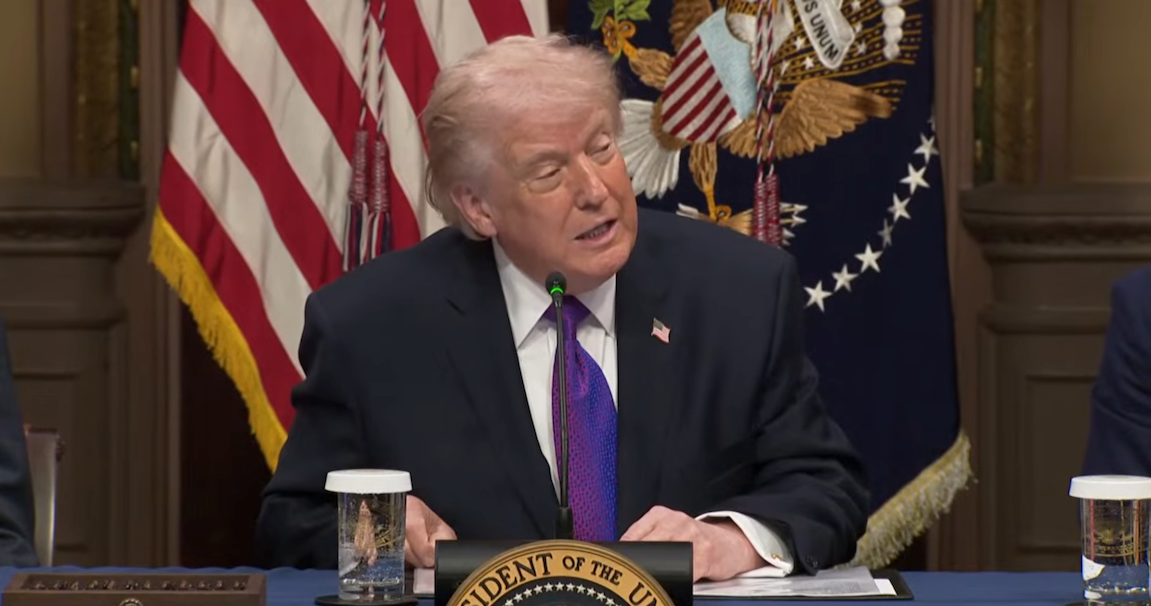
“The data centers […] need some PR help,” US President Donald Trump said at a roundtable attended by government officials and representatives from Big Tech firms.
“People think that if a data center goes in, their electricity prices are going to go up, and that’s not happening. It’s not going to happen — and for the areas where it did happen, it won’t happen anymore,” he added.
Data centers are cropping up across the US amid an AI boom, with the power-hungry technology exceeding the available capacity in some parts of the country, according to a Harvard Kennedy School report from February.

The report said that data centers could demand up to 12% of all US electricity consumption by 2028. US Energy Information Administration data show that residential energy prices increased 6% in 2025 and are expected to continue rising through 2027 and 2028.
Voters concerned about bills ahead of midterms
Trump announced the pledge in his State of the Union address, and it comes ahead of the midterm elections in November, where voters are concerned about cost-of-living pressures and the impact of AI data centers on the energy grid.
“Some centers were rejected by communities for that, and now I think it’s going to be just the opposite,” Trump said, referring to data centers canceled after locals opposed the projects.
Related: Mining companies move deeper into AI, HPC as MARA may sell Bitcoin
The pledge promises that companies will pay for all new power infrastructure required for their data centers and will pay the cost for the infrastructure and power brought online, whether they use it or not.
The companies also promised to hire locally, offer skill development programs and make their backup generators available to the grid to prevent power shortages.
It’s not clear how Big Tech will be held to its promises, and the White House did not share how it would ensure the companies follow through on the pledge.
AI Eye: IronClaw rivals OpenClaw, Olas launches bots for Polymarket

A coalition of tech companies and law enforcement, including Coinbase, has dismantled the core infrastructure of Tycoon 2FA, a major phishing-as-a-service platform that offered tools to bypass multi-factor authentication.
Europol announced Wednesday that Microsoft helped block 330 domains linked to the platform, while law enforcement seized additional key infrastructure.
Financial tracing was also a key aspect. Coinbase said it assisted by tracing blockchain-related transactions funding Tycoon 2FA, which helped identify the phishing platform’s alleged administrator and buyers.
“Taking Tycoon’s core infrastructure offline cuts off a major pipeline for credential theft and initial access, and forces criminals to rebuild, retool, and take on more risk,” Coinbase added.

Phishing scams were flagged as the second-largest threat in 2025 by blockchain security firm Certik, costing crypto investors $722 million across 248 incidents. A PeckShield spokesperson told Cointelegraph on Monday that phishing remains a “persistent threat” in 2026.
Tycoon tools used to bypass multi-factor authentication
Tycoon’s toolkit included spoofed landing pages designed to steal user credentials on legitimate websites. It also captured session cookies and tokens, allowing attackers to bypass MFA protections, according to Coinbase.
Generally, when a user logs in using MFA, the system generates a session token. The token acts as proof of authentication and is stored in the user’s browser. If a hacker steals the token, they can use it to fool the system and bypass MFA.

“That combination, high-fidelity lures plus session-token theft, turns phishing into a reliable on-ramp for bigger crimes like account takeovers, business email compromise, invoice fraud, and follow-on social engineering,” Coinbase added.
One of the largest scam platforms in the world
Tycoon has been active since at least 2023, according to Steven Masada, assistant general counsel at Microsoft’s Digital Crimes Unit. By mid-2025, Tycoon accounted for 62% of phishing attempts Microsoft blocked, including over 30 million emails in a single month.
Related: Traveling? ‘Evil Twin’ WiFi networks can steal crypto passwords
“That placed Tycoon 2FA among the largest phishing operations globally,” he added. “By lowering the technical barrier to entry, it allowed criminals with limited expertise to run sophisticated impersonation campaigns.”
Masada said industries from healthcare to education fell victim to Tycoon 2FA, resulting in rerouted invoices, stolen sensitive data, locked networks and disruptions to patient care.
“Taking this infrastructure offline cuts off a major pipeline for account takeovers and helps protect people and organizations from follow‑on attacks such as data theft, ransomware, business email compromise, and financial fraud.”
Magazine: Would Bitcoin really be at $200K if not for Jane Street? Trade Secrets

Built Around the Working Technologist

Bitcoin Outflows Hit 28,700 BTC: Is the Bitfinex Transfer Distorting the Market Signal?

Sanju Samson: Will he miss T20 World Cup semi-final vs England over a possible ban? | Cricket News


-

 Politics6 days ago
ITV enters Gaza with IDF amid ongoing genocide
-

 Politics2 days ago
Alan Cumming Brands Baftas Ceremony A ‘Triggering S**tshow’
-

 Fashion5 days ago
Weekend Open Thread: Iris Top
-

 Tech4 days ago
Unihertz’s Titan 2 Elite Arrives Just as Physical Keyboards Refuse to Fade Away
-
Sports5 days ago
The Vikings Need a Duck
-
 NewsBeat5 days ago
Dubai flights cancelled as Brit told airspace closed ’10 minutes after boarding’
-

 NewsBeat4 days ago
‘Significant’ damage to boarded-up Horden house after fire
-
 NewsBeat5 days ago
The empty pub on busy Cambridge road that has been boarded up for years
-

 NewsBeat4 days ago
Abusive parents will now be treated like sex offenders and placed on a ‘child cruelty register’ | News UK
-

 Entertainment3 days ago
Baby Gear Guide: Strollers, Car Seats
-
 Tech6 days ago
NASA Reveals Identity of Astronaut Who Suffered Medical Incident Aboard ISS
-

 Business6 days ago
Only 4% of women globally reside in countries that offer almost complete legal equality
-
 NewsBeat4 days ago
Emirates confirms when flights will resume amid Dubai airport chaos
-
Politics4 days ago
FIFA hypocrisy after Israel murder over 400 Palestinian footballers
-
 Crypto World6 days ago
From Crypto Treasury to RWA: ETHZilla Retreats and Relaunches as Forum Markets on Nasdaq
-

 NewsBeat3 days ago
Is it acceptable to comment on the appearance of strangers in public? Readers discuss
-

 Tech4 days ago
Viral ad shows aged Musk, Altman, and Bezos using jobless humans to power AI
-

 Business7 days ago
World Economic Forum boss Borge Brende quits after review of Jeffrey Epstein links
-

 Video7 days ago
Xii English top Selected mcq “Money Madness” Board Exam 2026, #chseodisha #hksir #mychseclass
-

 Video3 days ago
How to Build Finance Dashboards With AI in Minutes