Connect with us

Business

From Endeavour Mining to Mansa Resources, a Builder Returns to the Frontier

Published

on

From Endeavour Mining to Mansa Resources, a Builder Returns to the Frontier

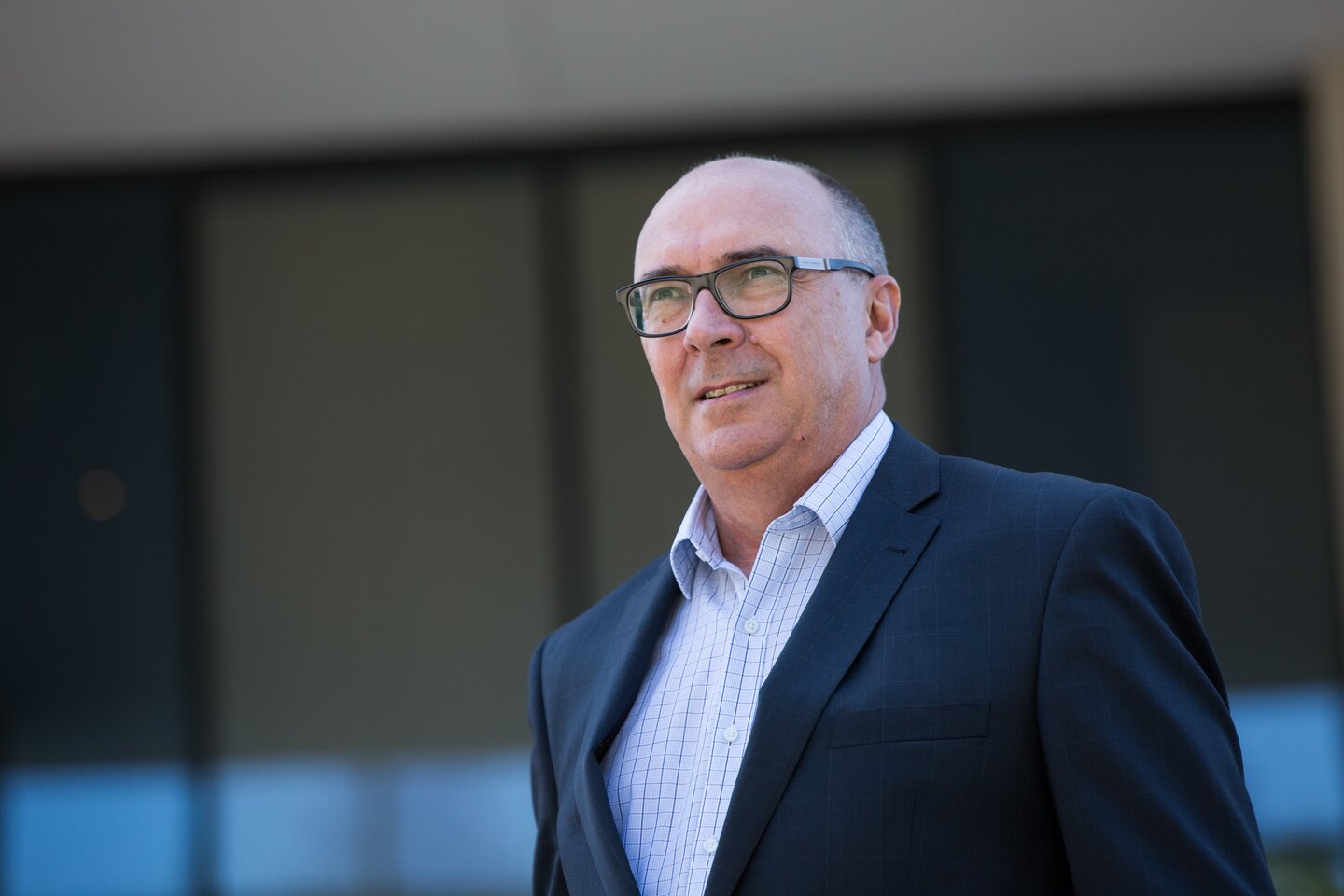
When Sébastien de Montessus was appointed chief executive of Mansa Resources, a newly launched mining company backed by succesfull West African entrepreneur, Idrissa Nassa (Coris Bank), the move carried a familiar logic.

After nearly a decade spent transforming Endeavour Mining into one of the world’s ten largest gold producers, de Montessus is returning to what has long defined his career: building scale, discipline and credibility in frontier markets where volatility is the rule rather than the exception.

His nomination at Mansa marks the opening of a new chapter, but it is one deeply anchored in the managerial philosophy and operating model he refined during his years at Endeavour. For investors and industry observers, the appointment is less a leap into the unknown than a continuation of a method — one that has already reshaped West Africa’s mining landscape once.

A reputation built through diverse experiences, further honed at Endeavour Mining

When de Montessus took the helm of Endeavour Mining in 2016, the company was a modest mid-tier gold producer with limited visibility beyond specialist investors. Its asset base was fragmented, its growth story uncertain, and its operational execution exposed to the risks that have long deterred international capital from African mining.

Over the following eight years, that profile changed dramatically. Endeavour became West Africa’s largest gold producer, with annual output exceeding one million ounces and a portfolio spanning Côte d’Ivoire, Burkina Faso and Senegal. It entered the FTSE 100 in 2021, a rare achievement for a company whose assets were entirely African.

Advertisement

The transformation was not driven by aggressive leverage or speculative expansion. Instead, Sébastien de Montessus imposed a tightly defined investment framework. Each mine would need to demonstrate a life of more than ten years, annual production above 200,000 ounces and a disciplined cost structure capable of generating cash flow across commodity cycles. Growth was a consequence of quality, not its substitute.

That discipline translated into execution. With his team, Flagship projects such as the Houndé mine in Burkina Faso and the Ity CIL expansion in Côte d’Ivoire were delivered ahead of schedule and under budget — outcomes that remain exceptions rather than norms in the global gold sector. Selective acquisitions, notably of Semafo and Teranga Gold, consolidated high-quality assets along the Birimian greenstone belt, reinforcing Endeavour’s regional coherence without undermining financial stability. What distinguished these transactions was not only their industrial logic, but their timing. Both were executed during the Covid-19 pandemic, a period when most mining operators were singularly focused on business continuity, supply-chain resilience and workforce protection — challenges that were arguably more acute for extractive industries than for many other sectors. At a moment when peers were retrenching, Endeavour pursued external and organic growth simultaneously, integrating new assets while maintaining uninterrupted operations across its existing portfolio. The ability to balance acquisition-driven expansion with operational stability under unprecedented global disruption underscored the managerial discipline that defined de Montessus’s tenure.

Operational rigour in complex environments

What distinguished de Montessus’s tenure was not only scale, but predictability. Under his leadership, Endeavour built a reputation for doing what it said it would do — a currency of rare value in emerging-market mining.

From the outset of his tenure in 2016, Sébastien de Montessus also moved early on issues that would later become central to the industry. On security, he acted well before the terrorist risk in parts of the Sahel was widely acknowledged by most mining operators. While peers largely framed security around asset protection and gold theft, Endeavour broadened its risk assessment early, recruiting specialised profiles and investing in appropriate capabilities to protect personnel, assets and business continuity as regional threats evolved.

Advertisement

Labour relations proved another source of operational stability. In a sector where strikes are a common means of negotiation, Endeavour experienced no site-level work stoppages during his tenure — an uncommon outcome in African mining. This reflected a sustained social dialogue and an effort to align interests, notably through a group-wide incentive system linked to production and cost performance and extended to all employees, from entry-level roles to site management.

Health and safety were treated as foundational rather than procedural. In a high-risk industry, management emphasis was placed on leadership behaviour and field presence, reinforcing the view that safety performance was inseparable from operational excellence.

Exploration success reinforced that credibility. By concentrating on well-understood geological corridors in West Africa, Endeavour added millions of ounces to its resource base at discovery costs among the lowest in the industry. The strategy illustrated a recurring theme in de Montessus’s approach: focus on depth rather than dispersion, and on repeatable processes rather than one-off bets.

Alongside operations, corporate governance was professionalised. Reporting standards were aligned with international expectations, environmental and social programmes expanded, and community investment became a structural component of project development. Endeavour’s evolution helped challenge long-standing investor scepticism about African-based miners, demonstrating that scale, governance and operational discipline could coexist on the continent.

Advertisement

The end of a chapter — and the opening of another

De Montessus’s departure from Endeavour in early 2024 followed an internal dispute that was ultimately resolved through an agreement between the company and its former chief executive. While the episode closed a significant chapter, it did little to diminish the industrial legacy of his tenure. The portfolio structure, operating culture and regional footprint he established remain central to Endeavour’s strategy today.

His appointment at Mansa Resources should therefore be read not as a reinvention, but as a redeployment of experience. Mansa, backed by Africaninvestors and positioned as a long-term mining platform, enters the market at a moment when capital discipline, geopolitical awareness and operational credibility are again at a premium.

Behind Mansa Resources stands Idrissa Nassa, one of West Africa’s most discreet but consequential business figures. Best known as the founder and chief executive of Coris Bank International, Nassa has built his influence far beyond finance, assembling a diversified portfolio that spans banking, mining, energy distribution and trade. His trajectory — from modest beginnings in the markets of Ouagadougou to boardrooms in Abidjan, Dakar and London — reflects a methodical form of entrepreneurship rooted in capital discipline and local anchoring.

In recent years, he has accelerated strategic acquisitions, including assets divested by international groups, positioning African-controlled capital at the centre of sectors long dominated by foreign operators. For Mansa, Nassa provides not only financial backing but a long-term industrial vision: one that views mining not as an isolated extractive activity, but as part of a broader ecosystem linking finance, infrastructure and regional development.

Advertisement

Mansa Resources: ambition shaped by experience

Although still in its early stages, Mansa has set out an ambition that resonates with de Montessus’s track record: to build a diversified mining company rooted in Africa, capable of developing assets responsibly and competitively over the long term.

The context is markedly different from that of 2016. Commodity markets are more volatile, financing conditions tighter, and geopolitical scrutiny of critical resources more intense. At the same time, African governments are increasingly assertive about local value creation, governance and environmental standards.

For Sébastien de Montessus, these constraints are not unfamiliar. His career has been defined by navigating precisely these tensions — between risk and discipline, growth and restraint, frontier opportunity and institutional expectations. At Mansa, the challenge will be to apply that same operating logic from the ground up, rather than at the scale of an established producer.

A leadership style shaped by finance and execution

Trained in corporate finance, de Montessus has consistently approached mining as an industrial business rather than a speculative pursuit. Capital allocation, cost control and long-term asset quality have taken precedence over headline growth. That mindset has often set him apart in a sector prone to cyclical exuberance.

Advertisement

At Endeavour, it enabled the company to grow through cycles without compromising balance-sheet resilience. At Mansa, it is likely to influence how projects are selected, financed and sequenced — favouring clarity of execution over speed.

For investors, the significance of his nomination lies less in immediate production targets than in governance and credibility. In frontier mining, leadership track record often matters as much as geology. De Montessus brings with him a reputation forged in one of the most demanding operating theatres in the industry.

His legacy at Endeavour Mining is also measurable in what has — and has not — changed since his departure. The portfolio structure he assembled remains largely intact, and the operational framework he imposed continues to underpin the company’s performance. While the sharp rise in gold prices — which have more than doubled from their lows during his tenure — has lifted valuations across the sector, the structural fundamentals at Endeavour were laid earlier: long-life assets, disciplined capital allocation, and a coherent regional focus. The architecture he put in place has proved durable, suggesting that the model was not cyclical, but structural.

That durability reflects a management philosophy he once summarised internally in a simple principle: clarity of strategy, accountability in execution, and alignment between capital and operations. Colleagues describe a leader who prefers forward motion to preservation, who challenges organisational inertia and expects teams to evolve rather than defend precedent. That restlessness has often been an engine of growth — though, in highly structured public companies, such momentum can sometimes create friction at board level. Those who worked with him note that he is not inclined to manage by consensus alone; he is known to push for change when he believes the industrial logic demands it.

Advertisement

At Mansa Resources, that appetite for movement will operate within a different ownership structure. Alongside the backing of Idrissa Nassa, the shareholder base includes Orion Resource Partners, the US-based mining investment fund known for its highly selective approach to capital deployment. Orion’s due diligence processes — extending beyond assets to management teams — are regarded in the industry as among the most rigorous. Their decision to support Mansa reflects a calculated confidence not only in the geological prospects ahead, but in the leadership tasked with executing them.

A return to first principles

The appointment of Sébastien de Montessus as CEO of Mansa Resources signals a return to first principles: disciplined growth, regional focus and operational realism. If his years at Endeavour Mining demonstrated how a mid-tier producer could become a global contender, Mansa represents an opportunity to apply those lessons from inception.

In a mining industry once again forced to confront its own excesses, his trajectory offers a reminder that scale is built not through bold promises, but through consistency. For de Montessus, Mansa is not a departure from that philosophy — it is its logical continuation.

Advertisement

Continue Reading
Click to comment

Leave a Reply

Your email address will not be published. Required fields are marked *

Business

Pop-up restaurant planned for vacant Clifton Village site empty since 2021

Published

on

Business Live

Developers preparing permanent redevelopment plans for the Bristol location

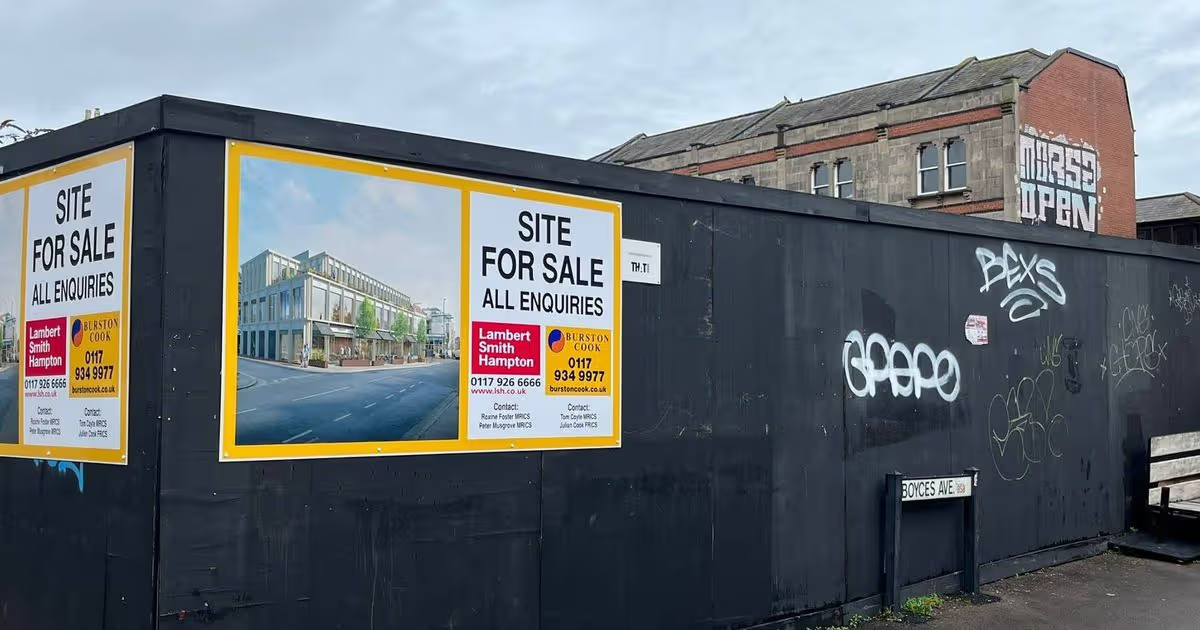
The vacant site in Clifton Village, Bristol

The vacant site in Clifton Village, Bristol(Image: Bristol Live)

A site in the middle of Clifton Village that has been unused for years could soon welcome a ‘temporary pop-up restaurant’ – with the developers who’ve acquired the site preparing proposals for a permanent structure there by year’s end.

The location was formerly a small parade of shops between Clifton Down Avenue and the Clifton Arcade, and subsequently housed an ice rink for several winters during the 2010s. In 2021, the structures there were knocked down and for the past five years it’s sat empty and cordoned off, despite a series of plans to construct offices, flats and retail units there.

Now, a fresh developer named Speare Developments says it has a new vision for its future which they aim to unveil later this year, but in the interim, it has lodged a planning application for a temporary ‘pop-up’ eatery to occupy the space.

Should this receive approval it’s anticipated to operate for a couple of years, whilst Speare attempts to secure planning consent for its long-term proposals, reports Bristol Live.

Advertisement

“This site has been derelict for too long,” a representative for Speare Developments said. “A pop-up restaurant presents an exciting opportunity to bring the site to life and improve its appearance whilst we develop permanent plans.

“We want the site to be open and active again, not fenced off and forgotten. There’s still a long way to go. As with any brownfield site, there are complex technical constraints that have the potential to affect the viability of a temporary scheme, but we are working through them.

“With that being said, we are serious about making this area better and we’re excited to explore Clifton’s strong identity as we prepare plans for the site’s long-term future.”

An artist's sketch of the planned temporary pop-up restaurant in the heart of Clifton Village

An artist’s sketch of the planned pop-up restaurant in the heart of Clifton Village(Image: Speare Developments)

Speare said the restaurant would be ‘designed to complement Clifton Village’s tapestry of independent traders’. “Speare Developments has been actively engaging with local businesses to understand how a new restaurant could work collaboratively with the existing community,” the representative said.

Advertisement

“Whilst the name and the operator are yet to be finalised, the pop-up restaurant is expected to operate for approximately two years while plans for the permanent development are formed and a planning application is decided.

“Long-term plans are expected to include a residential-led scheme with a mixture of ground floor commercial uses.”

Continue Reading

Business

Developer plans townhouses for $2.9m Karrinyup site

Published

on

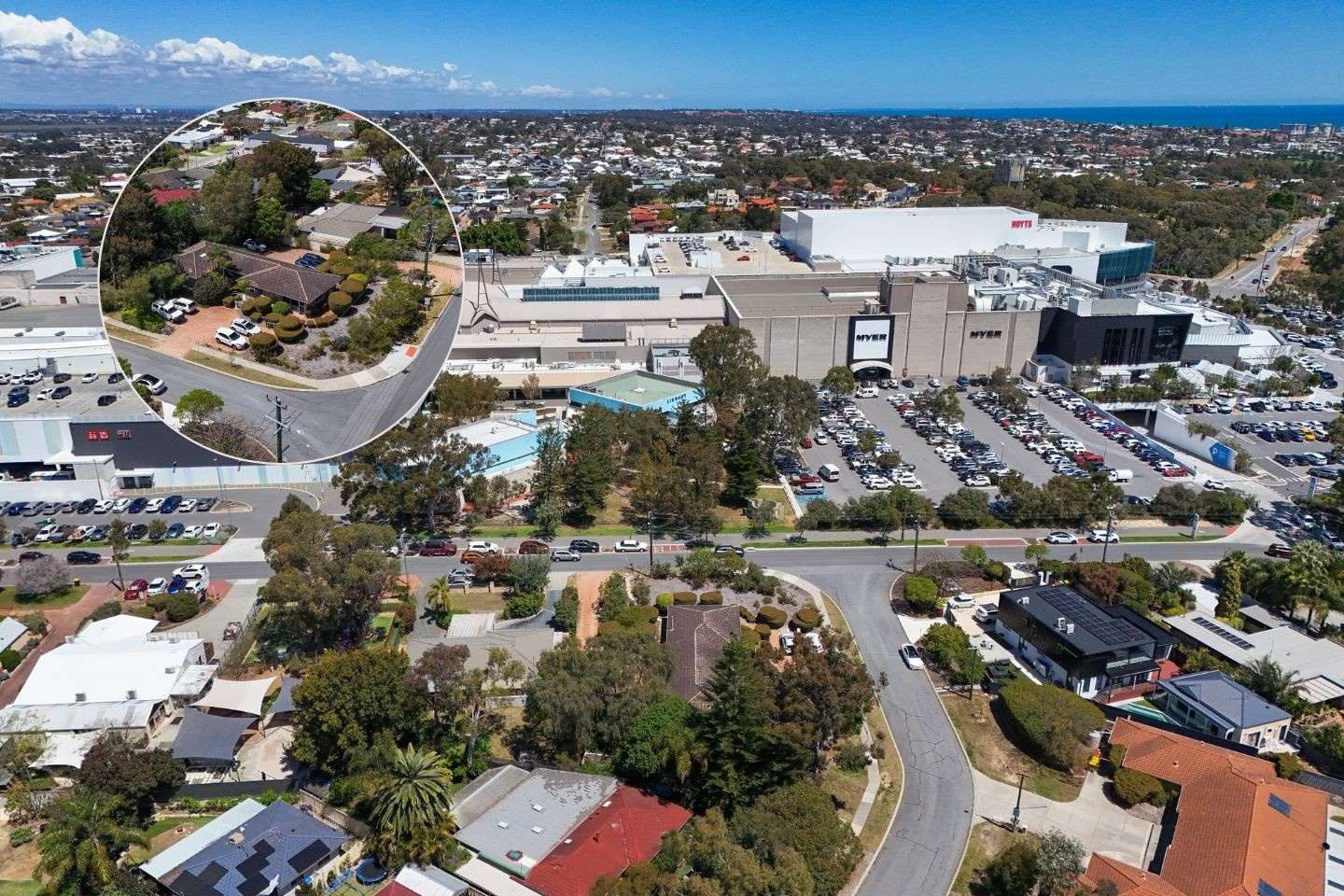
Developer plans townhouses for $2.9m Karrinyup site

A local developer is hoping to transform the former medical practice after purchasing the property for $2.85 million.

Continue Reading

Business

Avoid big bets, protect portfolios amid geopolitical tensions: Analysts

Published

on

Avoid big bets, protect portfolios amid geopolitical tensions: Analysts
Mumbai: The sharp decline in Indian equities of late has shifted the conversation among wealth advisors from chasing returns to protecting portfolios.

Advisors say the immediate priority is defence as geopolitical tensions cloud the near-term outlook for markets.

“Events are unfolding, and it is difficult to predict how things will pan out over the next few days. Investors should work towards protecting their portfolios, and not make aggressive equity bets, but have a wait-and-watch approach,” says Juzer Gabajiwala, director, Ventura Securities.

Geopolitical tensions have dragged the Nifty 50 down 7% from its February 3 peak of 26,341. Over three months, the index is lower by 4.4%, though it still shows a 9.6% gain over the past year.

Advertisement
Avoid Big Bets, Protect Portfolios Analysts Advise Caution Amid Geopolitical HeatAgencies

Money Plan Investors needing funds within 6 months may consider exiting now; Fresh investments should be guided by disciplined asset allocation

Financial planners caution investors against making hasty lump-sum allocations to equities, noting that the duration of the conflict and its potential impact on oil prices remain uncertain.


“Historically, it has been seen that the impact of oil and geopolitical issues could take anywhere between 1-6 months to settle down, and for the markets to come back to normal,” says Vishal Dhawan, founder, Plan Ahead Wealth Advisors.
Dhawan says investors with near-term liquidity needs should review their portfolios carefully. “Those who need liquidity within the next six months could exit right now, while those who have a year could wait for some time before withdrawing money,” he says. While some wealth managers see opportunity in the correction, they emphasise that any fresh investments should be guided by disciplined asset allocation.

“The current shake-up offers a good entry point,” says Nirav Karkera, head of Research, Fisdom. He recommends sticking to asset allocation and adding to large-cap oriented funds in a staggered manner over the next three months.

Some advisors say corrections can also be an opportunity to rebalance portfolios back to the intended asset allocation if equity exposure has drifted higher after the long market rally.

Diversification, advisors say, remains the bedrock of portfolio protection during periods of volatility.

Advertisement

“Debt acts as a cushion against an equity market downturn, while gold acts as a portfolio stabiliser and defensive asset,” said Karkera.

For equity enthusiasts, investors could go for large-cap-oriented funds rather than taking aggressive exposure to more volatile segments of the market.

Continue Reading

Business

West Asia tensions rattle capital goods stocks; L&T, KEC slide

Published

on

West Asia tensions rattle capital goods stocks; L&T, KEC slide
ET Intelligence Group: The stocks of engineering and capital goods companies having exposure to the West Asia are under pressure since February 27 amid the conflict between Iran and Israel. The BSE Capital Goods index has fallen by nearly 4% in three trading sessions to March 04, driven by concerns over possible cancellations of projects in the region that may shrink the order book and limit the revenue visibility or delays in order execution thereby eroding profitability.

Among these stocks, Larsen and Toubro has fallen sharply by over 9% in the said period given its significant exposure to the West Asia countries. As of December 2025, the company had an outstanding order book worth ‘7.3 lakh crore. Of this, ‘2.7 lakh crore or 37% was from West Asia compared with 21% three years ago. In addition, the region accounted for 76% of the international orders in the latest December quarter. Over the past three years, size of the order book from the region has grown at a faster rate. Between December 2022 and December 2025, the West Asia order book grew at a compounded annual growth rate (CAGR) of 49.5% compared with 23.8% for the total order book.

West Asia Tensions Rattle Cap Goods Stocks; L&T, KEC SlideAgencies

BSE Capital Goods index down 4% in 3 sessions, fear of regional project cancellations grow

In West Asia, L&T has major contracts in Saudi Arabia in areas including hydrocarbons and power transmission and distribution. “While it is difficult to assess the current situation, we estimate that L&T’s core earnings will be negatively impacted by 11-12% for FY27 and FY28, assuming a three-month execution delay and low order inflow mainly in the hydrocarbon segment,” mentioned Emkay Global Financial Services in a report.

KEC International is another company likely to be affected by the conflict as it draws an estimated 20% of its nearly ‘37,000 crore worth of outstanding order book from the region. According to Emkay, KEC’s factories in the United Arab Emirates (UAE) are shut amid the conflict, implying a revenue hit of ’50 crore per day. Assuming a three-month delay in execution, the broking firm estimates 3-4% hit on earnings for FY27 and FY28. KEC’s stock has lost nearly 9% since February 26.

Advertisement

In the case of Kalpataru Projects International, the impact is expected to be limited since its current project in the region is in the final stage. The company has bid for five projects in the region as of December and their awarding may be delayed due to the current situation thereby reducing revenue visibility.


Among other companies, Engineers India (EIL) has exposure to West Asian markets with consultancy assignments. “Escalation in regional tensions could delay fresh project awards, elongate tender finalization timelines, and moderate consultancy inflows in the near term,” stated PL Capital in a report. The stock has lost nearly 9% in the past three trading sessions.

Continue Reading

Business

Thick revealed as Screenwest chair

Published

on

Thick revealed as Screenwest chair

Senior resources sector figure Phil Thick has been appointed chair of Screenwest effective immediately, succeeding John Driscoll after his seven-year tenure.

Continue Reading

Business

Negative Breakout: These 7 stocks cross below their 200 DMAs

Published

on

The Economic Times

In the Nifty500 pack, seven stocks’ close prices crossed below their 200 DMA (Daily Moving Averages) on March 4, according to stockedge.com’s technical scan data. Trading below the 200 DMA is considered a negative signal because it indicates that the stock’s price is below its long-term trend line. The 200 DMA is used as a key indicator by traders for determining the overall trend in a particular stock. Take a look:

Continue Reading

Business

Best Mother of the Bride Dresses for Spring, Summer, Fall & Winter

Published

on

Best Mother of the Bride Dresses for Spring, Summer, Fall & Winter

Weddings are full of emotion, detail, and that delicious feeling of celebration — and you, as the mother of the bride, get to look radiant while feeling comfortable and confident.

Whether you’re leaning toward a timeless champagne mother of the bride dresses or exploring other silhouettes, I’m here to walk with you through season-by-season picks, styling tips, and what to watch for so you look — and feel — like the most proud, stylish version of yourself. Ready? Let’s go.

Why champagne works all year

A champagne mother of the bride dress is a quietly glamorous choice: neutral enough to coordinate with many palettes, but warm and luminous enough to photograph beautifully. Champagne works especially well when you want elegance that doesn’t compete with the bride’s gown. If you love a soft metallic glow, consider champagne for its versatility — it reads romantic in spring, luminous in summer, cozy against fall tones, and refined in winter. Fun fact: many retailers offer extensive champagne collections, from chiffon two-pieces to sequin-embellished gowns, giving you lots of ways to interpret the hue. Mondressy.

Spring: light fabrics, pastels, and floral details

In spring we want airiness and a gentle color. Think chiffons, organza overlays, and soft lace — fabrics that move with you during outdoor photos and feel light when the day warms up. Pastel tones and floral motifs are current favorites for spring MOB looks, and silhouettes like tea-length A-lines or three-quarter sleeve sheath dresses strike a lovely balance between formal and comfortable. When choosing, ask: will the ceremony be outdoors or in a chilly chapel? Layering with a delicate bolero or a matching jacket is a smart move.

What to try: chiffon A-line with a lightweight jacket, or a tea-length lace dress in blush or champagne with minimal jewelry. Pro tip: choose breathable linings to avoid overheating.

Advertisement

Summer: breathable silhouettes and sun-smart choices

Summer weddings call for cool, breathable choices. Flowing silhouettes, sleeveless or cap-sleeve designs, and fabrics like chiffon and silk blends will keep you comfortable for cocktail hours and long photo sessions. If your venue is a beach or garden, lighter hems and breathable fabrics are your best friends. Also consider practical details: a dress with pockets (yes, please) or a modest slit for comfortable walking.

What to try: a sleeveless sheath or an A-line chiffon dress in a light champagne or soft coral. Bring a stylish wrap for evening photos when temperatures dip.

Fall: jewel tones, texture, and rich fabrics

For fall, the season loves depth: richer colors (think emerald, burgundy, deep navy) and textured fabrics like velvet, heavier lace, or satin. Sequins and subtle metallic thread can look seasonally perfect, especially for evening celebrations. If you prefer champagne, pair it with warm accessories — bronze or cognac shoes, a velvet clutch, or a statement shawl — so the look reads autumnal and intentional. Many stylists recommend considering the wedding’s color story and matching the dress’s warmth to the palette.

What to try: a long-sleeve satin dress, or a champagne gown with beaded detail and a tailored jacket.

Advertisement

Winter: glamour, coverage, and festive touches

Winter weddings invite more formality: full-length gowns, sleeves, and luxe embellishment. A champagne mother of the bride dress with sequins, beading, or a coordinating cape can be spectacular for an evening winter affair. Consider fabrics with a little more weight and structure, and don’t be afraid of drama — velvet trims, embellished collars, and metallic accents look right at home with twinkling lights and candlelit venues.

What to try: a floor-length champagne gown with a matching embellished jacket or a cape detail for warmth and visual interest.

Silhouettes that flatter most body types

You and I both know fit is everything. While trends come and go, some silhouettes reliably flatter many shapes:

  • A-line: gently cinches at the waist and flows over hips — a perennial favorite.
  • Sheath: sleek and modern; great for taller frames or intimate venues.
  • Empire waist: sits under the bust and skims the body — wonderful for comfort and movement.
  • Two-piece sets or dress-and-jacket combos: perfect for coverage and for mixing/separating pieces in photos.

Don’t forget tailoring. A simple hem or nip-in at the waist can make an off-the-rack dress look custom-made.

Fabrics, finishes, and practical details to check

When you try dresses, check the lining, sleeve construction, and closures. Breathable linings, cleanly finished seams, and comfortable sleeve openings make a big difference on the day. If you plan to dance, make sure you can sit, bend, and move without tension across the shoulders. Fabrics to consider by season:

Advertisement
  • Spring/summer: chiffon, organza, lightweight lace.
  • Fall/winter: satin, crepe, velvet, heavier lace.
  • Year-round: crepe and structured chiffon are versatile choices.

Accessorizing: the cherry on top

Shoes, clutches, and jewelry transform your dress. For a champagne dress, I love warm metals — rose gold or soft gold — and pearls for timeless elegance. A statement brooch on a jacket or a silk scarf can personalize your look. If the bride has a defined color palette, ask to coordinate rather than match — complementary is kinder than identical.

Final checklist before you say “yes”

  • Does it fit well when you sit, walk, and hug?
  • Is the fabric climate-appropriate for the venue and season?
  • Do you feel like you’re in it — not like you’re wearing someone else’s outfit?
  • Can it be tailored if needed?
  • Do your shoes and accessories work for standing and dancing?

Where to start shopping

If you want a great starting point, look for curated champagne and MOB collections where you can compare styles and fabrics in one place — many stores now group options by color and occasion for convenience. For example, there are extensive champagne collections that showcase everything from chiffon two-pieces to sequined gowns, giving you a quick way to envision seasonal looks.

Continue Reading

Business

Norsk Hydro’s Qatar Aluminum Plant to Shut Down After Iran Attacks Cut off Gas Supply

Published

on

Norsk Hydro’s Qatar Aluminum Plant to Shut Down After Iran Attacks Cut off Gas Supply

Norwegian aluminum producer Norsk Hydro NHY 4.94%increase; green up pointing triangle said its Qatari smelter is shutting down after its joint-venture partner stopped supplying gas amid attacks from Iran.

QatarEnergy, the state-owned petroleum company of Qatar and Norsk Hydro’s partner on aluminum joint venture Qatalum, on Monday stopped production of liquefied natural gas after attacks against its energy facilities, and on Tuesday said it is halting the production of some downstream products in the country, including aluminum as well as urea, polymers and methanol.

Copyright ©2026 Dow Jones & Company, Inc. All Rights Reserved. 87990cbe856818d5eddac44c7b1cdeb8

Continue Reading

Business

Brokerage Regulator Finra Is Considering Changing Its Arbitration Rules. It Wants Public Feedback.

Published

on

Brokerage Regulator Finra Is Considering Changing Its Arbitration Rules. It Wants Public Feedback.

Brokerage Regulator Finra Is Considering Changing Its Arbitration Rules. It Wants Public Feedback.

Continue Reading

Business

Opinion: Holy smokes, this tax has run out of puff

Published

on

Opinion: Holy smokes, this tax has run out of puff

OPINION: Tax increases just tinker around the edges when spending cuts are what’s needed.

Continue Reading

Trending

Copyright © 2025