Connect with us

Business

Extreme Networks, Inc. (EXTR) Presents at Morgan Stanley Technology, Media & Telecom Conference 2026 Transcript

Published

on

OneWater Marine Inc. (ONEW) Q1 2026 Earnings Call Transcript

Extreme Networks, Inc. (EXTR) Morgan Stanley Technology, Media & Telecom Conference 2026 March 4, 2026 5:35 PM EST

Company Participants

Kevin Rhodes – Executive VP of Finance & CFO

Conference Call Participants

Advertisement

Meta Marshall – Morgan Stanley, Research Division

Presentation

Meta Marshall
Morgan Stanley, Research Division

Advertisement

I’m going to read some disclosures that you’ve heard many times. For important disclosures, please see the Morgan Stanley research disclosure website at morganstanley.com/researchdisclosures. If you have any questions, please reach out to your Morgan Stanley sales representative. We’re delighted to have Extreme Networks here today, Kevin Rhodes, CFO. We also have Stan Kovler in the audience. And then myself, I’m Meta Marshall. I cover networking here at Morgan Stanley.

So Kevin, thanks so much for being here today.

Kevin Rhodes
Executive VP of Finance & CFO

Advertisement

Good to see you again.

Question-and-Answer Session

Advertisement

Meta Marshall
Morgan Stanley, Research Division

You recently rolled out some impressive targets at your Analyst Day calling for share gains in the market. which we’ll dive into in a minute. Can you just kind of refresh everybody here on Extreme’s value proposition and kind of the key verticals that you serve?

Kevin Rhodes
Executive VP of Finance & CFO

Advertisement

Sure, sure. Happy to. And by the way, at the Analyst Day, I would say that was a good day for us to roll out for the next several years what we are going to achieve 10% growth on the revenue side, 20% growth on the bottom line side. And we’ve been executing pretty well, right? 7 quarters in a row of growth as a company. And so that was a meaningful kind of event for us to talk to investors about what we’re trying to do.

From a market perspective, as you can probably appreciate, we’re on the wired and wireless

Advertisement
Continue Reading
Click to comment

Leave a Reply

Your email address will not be published. Required fields are marked *

Business

Pvt lenders to log higher liquidity coverage ratios gains on wholesale deposits

Published

on

Pvt lenders to log higher liquidity coverage ratios gains on wholesale deposits
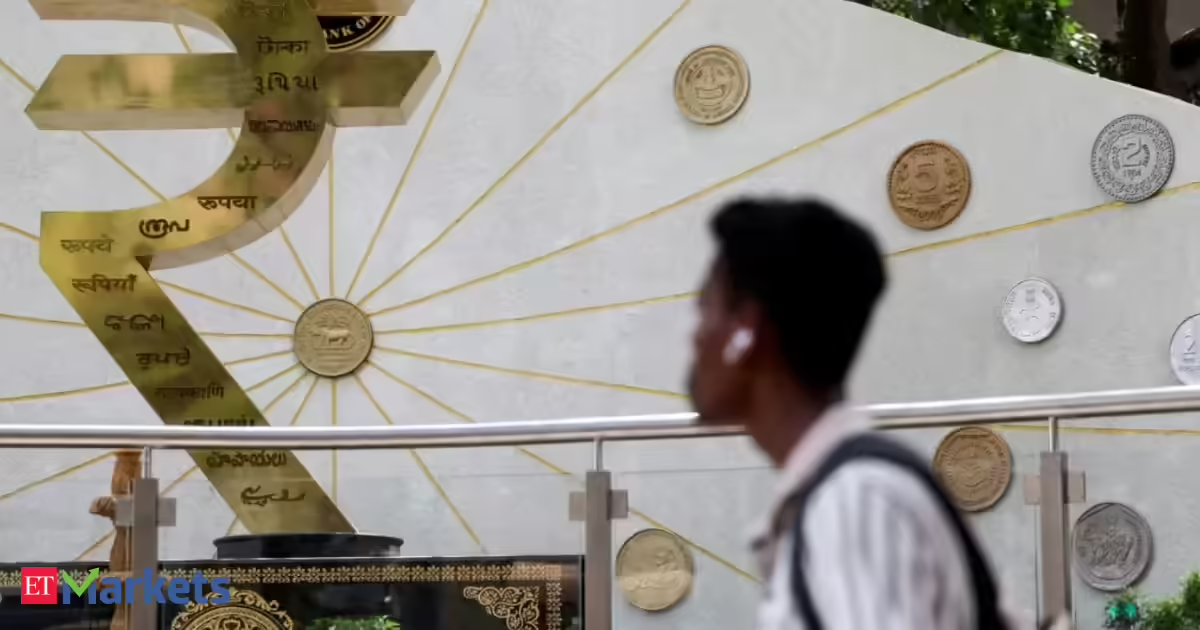
Mumbai: Banks with a larger pool of wholesale deposits, predominantly private sector lenders, are set to see an improvement in their liquidity coverage ratios (LCR) when the revised norms take effect on April 1.

Under the new norms, wholesale deposits, particularly funds from trusts, partnerships and limited liability partnerships (LLPs), will attract lower run-off factors from FY27, reducing the assumed outflows in a stress scenario.

By contrast, lenders with a heavier reliance on retail deposits, largely public sector banks, would see a relatively smaller benefit from the changes to the run-off assumptions, experts said.

“The reduction in the run-off factor from April 2026 is driven towards deposits of trusts, partnerships and LLPs, which had a higher runoff. Different banks will have varying shares of these deposits, and therefore, will benefit accordingly, but benefits to public sector banks may be lower than private sector banks,” said Alok Singh, head of treasury at CSB Bank.

Advertisement

In the new norms that RBI released in April 2025, trusts, partnerships, LLPs will attract a lower run-off rate of 40% against 100% currently. The central bank said the estimated net impact of these measures will improve the LCR of banks, at the aggregate level, by around 6 percentage points.


LCR for HDFC Bank and ICICI Bank stands at 116% and 126%, respectively. Of the total deposits, HDFC Bank has 83% of wholesale deposits and 17% of retail deposits, positioning it to gain from the upcoming LCR changes. While ICICI bank did not disclose the exact wholesale-retail deposit share in their investor presentation, its share of CASA deposits, which are largely retail is at 40%.
SBI and Bank of Baroda, the top two PSU banks have a LCR of 125% and 116%, respectively. SBI has a CASA share of 41%, while Bank of Baroda has a CASA share of 38%.

Continue Reading

Business

India’s fear gauge logs sharpest spike since Covid shock in 2 days

Published

on

India's fear gauge logs sharpest spike since Covid shock in 2 days
Mumbai: India’s fear gauge for equity assets logged its steepest advance since the first Covid shutdown week six years ago, with the volatility index, or the VIX, cumulatively climbing nearly 50% in two trading days through this truncated work week.

The fear gauge is now at its highest level in 10 months and analysts warn that such huge jumps do not bode well for the markets, and any pullbacks in such times could be temporary, until geopolitical conflicts are resolved.

The India VIX ended 23.4% higher on Wednesday at 21.14, after leaping another 25% on Monday, in the two days after the US and Israel launched attacks on Iran on Saturday. The VIX is now at its highest level since May 2025. The benchmark Nifty 50 also ended at 24,480.50, down 1.55%, after dipping as much as 2.2% during Wednesday’s trading.

Indian markets were closed on Tuesday, March 3 on account of Holi.

Advertisement
India’s Fear Gauge Logs Sharpest Spike Since Covid Shock in 2 DaysAgencies

VIX CLIMBS NEARLY 50% Equity markets likely to stay under pressure in the near term and any pullback is expected to be temporary until conflicts are resolved, say analysts

Somil Mehta, head of retail research at Mirae Asset Sharekhan said the recent spike in volatility underscores the prevailing uncertainty and risk aversion in the markets. “A rise in the volatility index reflects higher expected market volatility over the next 30 days, which we are seeing due to the ongoing hostilities involving the US, Israel, and Iran,” he said.


A key risk for India is from the closure of the Strait of Hormuz, a critical route for global oil supplies. A prolonged closure could increase India’s import bill, fuel inflationary pressures and trigger a flight to safe-haven assets such as gold and the US dollar, which in turn, may put additional pressure on the rupee, Mehta said.
“We are seeing a sharp rise in volatility this week, with both the India VIX and the CBOE Volatility Index moving higher, which reflects rising geopolitical tensions and increasing uncertainty across global markets,” said Nilesh Jain, head of derivatives and technical research, Centrum Broking. “This could keep equities under pressure in the near term.” In the current truncated trading week, the India VIX has already moved up by over 48%, its highest level since the week of March 13, 2020, when volatility had increased by more than 100% after the announcement of the pandemic.

The CBOE VIX, which measures volatility based on S&P 500 options, is also up 19% this week.

Jain said with the VIX holding above 20, traders should remain cautious. “Given the recent gap-down openings and sharp declines, traders may avoid aggressive day trading and large index positions for now,” he said. “While the market appears oversold, any rebound could be a short-lived relief rally until tensions ease.”

Mehta also advises traders and short-term participants to remain cautious until there is greater clarity. “Investors may consider hedging their portfolios via buying puts for the stocks, while traders can use short-term pullbacks as opportunities to initiate short positions in relatively weaker stocks or sectors, until more clarity emerges,” he said.

Advertisement
Continue Reading

Business

At Close of Business podcast March 5 2026

Published

on

At Close of Business podcast March 5 2026

Jack McGinn speaks to Tom Zaunmayr about the planned return of an historic WA mine.

Continue Reading

Business

Geopolitics, crude risk and the IT conundrum: Sridhar Sivaram on why investors may need to stay selective

Published

on

Geopolitics, crude risk and the IT conundrum: Sridhar Sivaram on why investors may need to stay selective
Rising geopolitical tensions in West Asia have once again brought uncertainty to global markets, forcing investors to reassess risks tied to energy supplies, currency volatility and capital flows. While Indian equities have shown resilience so far, market participants caution that the real impact could depend on how long the conflict persists and how energy markets react.

Speaking to ET Now, Sridhar Sivaram from Enam Holdings said the biggest concern is the potential disruption to energy flows from the Gulf Cooperation Council (GCC) region, a crucial economic partner for India.

“Yes, if at all any of us knew where and how it will end, one is only hoping that this ends fast and it does not prolong for too long because unlike the Russia-Ukraine war which was more in the hinterland and it was literally landlocked, did not affect too many people apart from little bit of European impact. This has impact on crude. I mean, we import almost 50% of our crude from the GCC countries and a large part of our LNG imports come from there. Remittances come from there. So, this has a larger impact if this continues for a longer period of time. So, one would only hope that this gets resolved faster and does not prolong as long. But if it does prolong, then we do have an issue.”

He added that the current situation is unlikely to return to complete normalcy immediately and that energy prices may remain elevated in the near term. “The general view is that this does not prolong for too long and some sort of normalcy will come back. I do not think this will be 100% normalcy. So, it does have an impact. I do not see crude come back to the 60 handle in a hurry. Maybe it will come back once all the production comes back. So, in the short term, it is a negative for India, that is how I would put it. But our markets have corrected. So, I guess a lot of it is already priced in.”

Advertisement

Currency pressure has also become a talking point, with the rupee breaching the 92-per-dollar mark recently. Sivaram believes foreign institutional investors (FIIs) have been reducing exposure to India partly due to better earnings opportunities across Asia. “So, one of the reasons for FIIs selling and in the last 18 months more so is because Asia is going through, I would say, an earnings super cycle. So, this year Korea will have… the market will have a 100% earnings growth. Even the likes of Taiwan will have say 25% to 30% growth and this is broadly the AI related because the chips and the DRAMs are in short supply. But even China earnings growth is somewhere in the 15% to 18% bracket.”


India, on the other hand, has struggled with slower profit growth over the past year and a half. “So, I think that is the challenge that India has struggled with single-digit earnings growth for the last 18 months. We think that earnings growth for the next year which is FY27 which starts from 1st April right now, we could come closer to the 15% handle, which is a good news. But when you compare it with Asia, when I speak to my ex-colleagues and friends in New York, they say 15 is great but your valuations are 20 times whereas Taiwan, Korea, China are almost at single digit. So, that is the challenge.”
According to Sivaram, the relative attractiveness of other Asian markets could delay a meaningful return of foreign capital to India. “Korea has had lot of volatility, but that market is still up 30% for the year. Year to date it is up 30%. So, those are the challenges we are facing. It will take some time for the FIIs to come back, that is my view.”From a macroeconomic perspective, the broader concern lies in India’s heavy dependence on the Gulf region for energy imports, remittances and trade. Sivaram pointed out that the economic linkages extend beyond oil alone. “It is very difficult to exactly pinpoint what the impact could be. As I said, if this prolongs for more than a month or say two months, then we have a massive impact. The broad view is this does not happen, but we do have an impact. As I said that if we are importing 50% of our crude from GCC, almost 30% or 40% of our LNG comes from this area, 50% of remittances come from this area, so we have multiple macro touch points which come from the GCC countries.”

He noted that even though the conflict involves only a few countries, its economic impact spreads across the entire region. “So, unfortunately this has impacted the entire GCC, that is the sad part that even though the war is between two countries or two-and-a-half countries, it has impacted the entire GCC nation. So, it will be foolish to think that this will have no impact.”

In the near term, companies with exposure to the Middle East may face earnings uncertainties. “There will be significant impact fact in this quarter because number of companies export a lot of reasonable percentage to this region. So, we will have to wait and see how this plays out. But my view is that it will settle down in a quarter’s time. So, I am not saying like this is a screaming buying opportunity or something. You have to be very selective.”

Despite geopolitical risks, Indian benchmark indices have held up relatively well over the past year, although the broader market has been under pressure. Sivaram said headline indices can sometimes mask underlying weakness. “So, actually, the Nifty masks the problem that we have in the broader market. I mean, all of us know that the broader market has seen significant pain. So, the Nifty also has been helped by a few sectors here and there.”

Advertisement

Looking ahead, he believes earnings growth could recover partly because of a favourable base effect. “I do think that the next year we will see 15% growth because we have a very low base effect. We all had single-digit earnings growth for almost six to eight quarters now. So, it does flip because our base is low. So, there is opportunity. I am just saying that one has to be stock specific.”

One sector where Sivaram remains cautious is information technology. The sharp correction in IT stocks has sparked debate about whether the sector now offers value, but he believes structural challenges remain. “So, I have to say that in our own firm, we have differing views and these are my personal views. And I have been very negative on IT for over two years for exactly this reason that the AI impact and my broad view is, it is not like these companies are going to die tomorrow. Their revenues are going to become zero. The terminal value is eroding. So, it is a PE derating event which a lot of people are missing.”

He compared the situation to the transformation seen in the media industry over the past decade. “I give example of the media sector. Go back 10 years and see the large media companies and the view was OTT will not affect them. Are these companies still existing? Yes. Are they making profits? Yes. But the profit growth is flat for the last five years. Their PEs are single digit. So, this is a derating event.”

Sivaram also highlighted the broader implications of the shift towards artificial intelligence for India’s technology sector and employment landscape. “This is a problem not only for the IT sector, it is a problem for the larger employment related stuff because total number of employees in this segment. You are not hiring people. It has a second derivative impact which is much larger.”

Advertisement

While AI has become a major investment theme globally, he believes India currently lacks a clear opportunity for investors looking to participate in the trend. “I do not think we have a clear AI play. I mean, that is the ground reality. No FII is coming to India to play the AI trade. The AI trade as far as Asia or emerging market is concerned is in Korea, Taiwan and their earnings are real.”

For now, the message for investors appears to be one of caution rather than panic. With geopolitical risks, global competition for capital and sector-specific challenges all at play, the market may continue to reward careful stock selection rather than broad-based buying.

Continue Reading

Business

Why Only One Port Supports 4K Displays, Faster Data Speeds

Published

on

MacBook Neo’s Hidden USB-C Limitation

Apple’s new MacBook Neo may look simple on the outside, but its USB-C ports function very differently. The budget-friendly laptop includes two USB-C ports, yet only one supports high-speed data transfers and external display connectivity, a distinction that can prevent frustration when connecting accessories.

Different USB-C Speeds on the MacBook Neo

While both ports use the USB-C design, they operate at different speeds, per MacRumors. The left USB-C port supports USB 3 data transfer speeds of up to 10 Gb/s, making it ideal for high-performance devices like external SSDs, docking stations, and displays.

The right USB-C port, located closer to the trackpad, uses USB 2 technology, limiting transfer speeds to 480 Mb/s. This slower port works well with basic peripherals such as keyboards, mice, and charging cables, but it is not suitable for high-bandwidth tasks.

External Display Support Limited to Left Port

Apple confirms that external displays only function through the left USB-C port. Connecting a monitor to the right port will not produce a video signal.

Advertisement

MacOS helps avoid confusion for those who are asking. As technology journalist John Gruber of Daring Fireball notes, the operating system alerts users if a display is connected to the wrong port and directs them to the correct one.

Display Capabilities and Pricing

Despite being an entry-level laptop, the MacBook Neo supports a single external display at up to 4K resolution and 60Hz when using the left USB-C port. This makes it suitable for productivity, content creation, and multitasking.

Pre-orders for the MacBook Neo are now open, with pricing starting at $599 in the United States. College students can take advantage of a discounted price of $499. The device officially launches on Wednesday, March 11.

If MacBook Pro is very far from your usual spending, going with this option will thank your wallet later. However, as mentioned above, you need to consider if its limitations won’t hinder your productivity.

Advertisement

Originally published on Tech Times

Continue Reading

Business

Stem, Inc. (STEM) Q4 2025 Earnings Call Transcript

Published

on

OneWater Marine Inc. (ONEW) Q1 2026 Earnings Call Transcript

Q4: 2026-03-04 Earnings Summary

EPS of -$2.11 misses by $0.15

 | Revenue of $47.20M (-15.41% Y/Y) beats by $7.81M

Stem, Inc. (STEM) Q4 2025 Earnings Call March 4, 2026 5:00 PM EST

Company Participants

Erin Reed – Head of Investor Relations
Arun Narayanan – CEO & Director
Brian Musfeldt – Chief Financial Officer

Advertisement

Conference Call Participants

Justin Clare – ROTH Capital Partners, LLC, Research Division

Advertisement

Presentation

Operator

Greetings. Welcome to Stem’s Fourth Quarter 2025 Results Conference Call. [Operator Instructions] Please note, this conference is being recorded.

I will now turn the conference over to Erin Reed, Head of Investor Relations. Thank you. You may begin.

Advertisement

Erin Reed
Head of Investor Relations

Thank you, operator. This is Erin Reed, Head of Investor Relations at Stem. We welcome you to our fourth quarter and full year 2025 earnings call. Before we begin, please note that some of the statements we will be making today are forward-looking. These statements involve risks and uncertainties that could cause our results to differ materially from those projected in these statements. We, therefore, refer you to our latest 10-K and other SEC filings and supplemental materials, which can be found on our IR website.


Our comments today also include non-GAAP financial measures. Additional details and reconciliations to the most directly comparable GAAP financial measures can be found in our fourth quarter and full year 2025 earnings release, which is on our website. Arun Narayanan, CEO; and Brian Musfeldt, CFO, will start the call today with prepared remarks, and then we will take your questions. With that, I will turn the call over to Arun.

Advertisement

Arun Narayanan
CEO & Director

Thank you, Erin. Good afternoon, everyone, and thank you all for joining us today. I am pleased to be speaking with you 1 year after assuming the role of CEO, and I could not be more proud of what the Stem team has accomplished over the past 12 months, best-in-class execution, unwavering commitment to our

Advertisement
Continue Reading

Business

Primark names Eoin Tonge as permanent chief executive

Published

on


Primark names Eoin Tonge as permanent chief executive

Continue Reading

Business

Pop-up restaurant planned for vacant Clifton Village site empty since 2021

Published

on

Business Live

Developers preparing permanent redevelopment plans for the Bristol location

The vacant site in Clifton Village, Bristol

The vacant site in Clifton Village, Bristol(Image: Bristol Live)

A site in the middle of Clifton Village that has been unused for years could soon welcome a ‘temporary pop-up restaurant’ – with the developers who’ve acquired the site preparing proposals for a permanent structure there by year’s end.

The location was formerly a small parade of shops between Clifton Down Avenue and the Clifton Arcade, and subsequently housed an ice rink for several winters during the 2010s. In 2021, the structures there were knocked down and for the past five years it’s sat empty and cordoned off, despite a series of plans to construct offices, flats and retail units there.

Now, a fresh developer named Speare Developments says it has a new vision for its future which they aim to unveil later this year, but in the interim, it has lodged a planning application for a temporary ‘pop-up’ eatery to occupy the space.

Should this receive approval it’s anticipated to operate for a couple of years, whilst Speare attempts to secure planning consent for its long-term proposals, reports Bristol Live.

Advertisement

“This site has been derelict for too long,” a representative for Speare Developments said. “A pop-up restaurant presents an exciting opportunity to bring the site to life and improve its appearance whilst we develop permanent plans.

“We want the site to be open and active again, not fenced off and forgotten. There’s still a long way to go. As with any brownfield site, there are complex technical constraints that have the potential to affect the viability of a temporary scheme, but we are working through them.

“With that being said, we are serious about making this area better and we’re excited to explore Clifton’s strong identity as we prepare plans for the site’s long-term future.”

An artist's sketch of the planned temporary pop-up restaurant in the heart of Clifton Village

An artist’s sketch of the planned pop-up restaurant in the heart of Clifton Village(Image: Speare Developments)

Speare said the restaurant would be ‘designed to complement Clifton Village’s tapestry of independent traders’. “Speare Developments has been actively engaging with local businesses to understand how a new restaurant could work collaboratively with the existing community,” the representative said.

Advertisement

“Whilst the name and the operator are yet to be finalised, the pop-up restaurant is expected to operate for approximately two years while plans for the permanent development are formed and a planning application is decided.

“Long-term plans are expected to include a residential-led scheme with a mixture of ground floor commercial uses.”

Continue Reading

Business

Developer plans townhouses for $2.9m Karrinyup site

Published

on

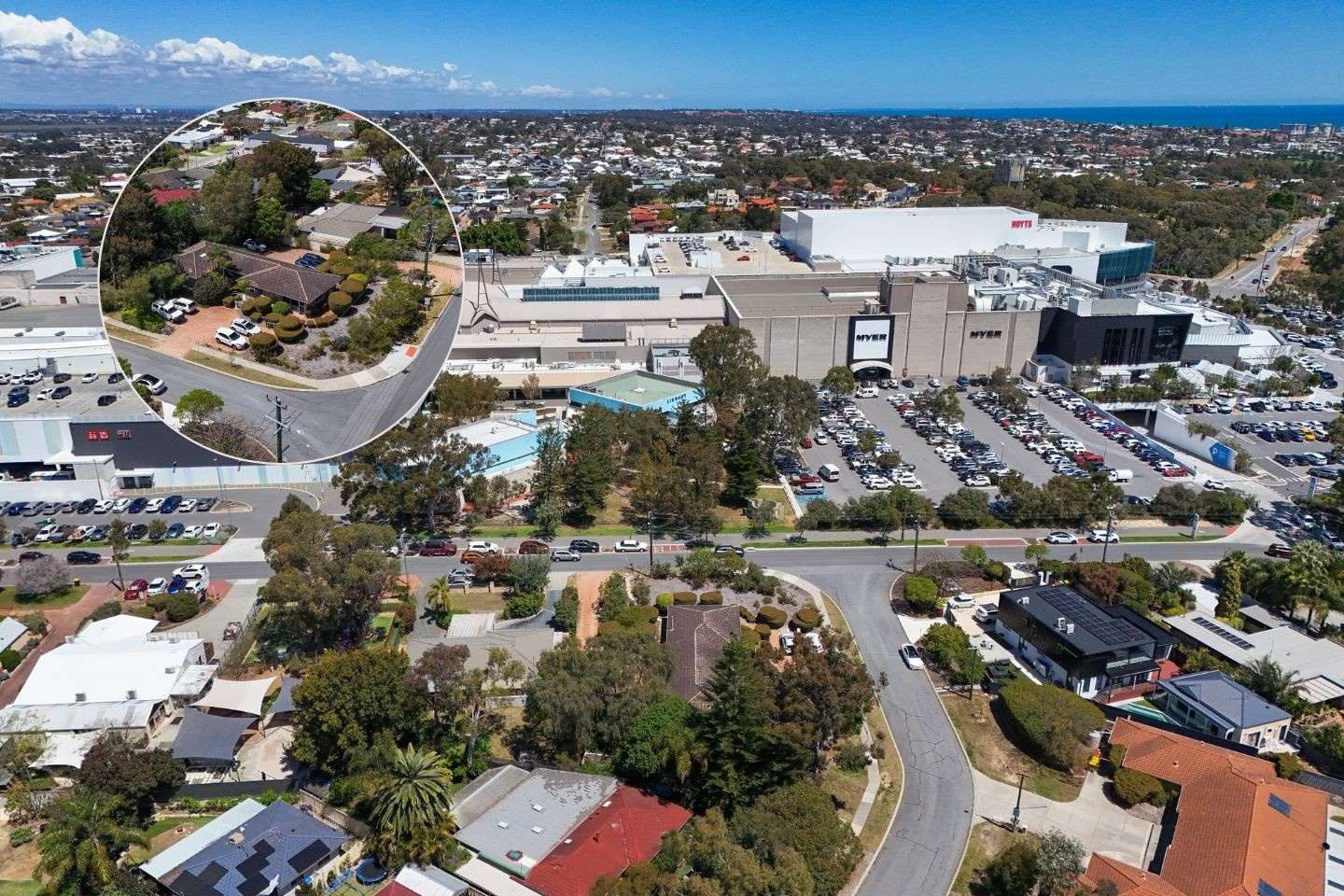
Developer plans townhouses for $2.9m Karrinyup site

A local developer is hoping to transform the former medical practice after purchasing the property for $2.85 million.

Continue Reading

Business

Avoid big bets, protect portfolios amid geopolitical tensions: Analysts

Published

on

Avoid big bets, protect portfolios amid geopolitical tensions: Analysts
Mumbai: The sharp decline in Indian equities of late has shifted the conversation among wealth advisors from chasing returns to protecting portfolios.

Advisors say the immediate priority is defence as geopolitical tensions cloud the near-term outlook for markets.

“Events are unfolding, and it is difficult to predict how things will pan out over the next few days. Investors should work towards protecting their portfolios, and not make aggressive equity bets, but have a wait-and-watch approach,” says Juzer Gabajiwala, director, Ventura Securities.

Geopolitical tensions have dragged the Nifty 50 down 7% from its February 3 peak of 26,341. Over three months, the index is lower by 4.4%, though it still shows a 9.6% gain over the past year.

Advertisement
Avoid Big Bets, Protect Portfolios Analysts Advise Caution Amid Geopolitical HeatAgencies

Money Plan Investors needing funds within 6 months may consider exiting now; Fresh investments should be guided by disciplined asset allocation

Financial planners caution investors against making hasty lump-sum allocations to equities, noting that the duration of the conflict and its potential impact on oil prices remain uncertain.


“Historically, it has been seen that the impact of oil and geopolitical issues could take anywhere between 1-6 months to settle down, and for the markets to come back to normal,” says Vishal Dhawan, founder, Plan Ahead Wealth Advisors.
Dhawan says investors with near-term liquidity needs should review their portfolios carefully. “Those who need liquidity within the next six months could exit right now, while those who have a year could wait for some time before withdrawing money,” he says. While some wealth managers see opportunity in the correction, they emphasise that any fresh investments should be guided by disciplined asset allocation.

“The current shake-up offers a good entry point,” says Nirav Karkera, head of Research, Fisdom. He recommends sticking to asset allocation and adding to large-cap oriented funds in a staggered manner over the next three months.

Some advisors say corrections can also be an opportunity to rebalance portfolios back to the intended asset allocation if equity exposure has drifted higher after the long market rally.

Diversification, advisors say, remains the bedrock of portfolio protection during periods of volatility.

Advertisement

“Debt acts as a cushion against an equity market downturn, while gold acts as a portfolio stabiliser and defensive asset,” said Karkera.

For equity enthusiasts, investors could go for large-cap-oriented funds rather than taking aggressive exposure to more volatile segments of the market.

Continue Reading

Trending

Copyright © 2025