Connect with us

Business

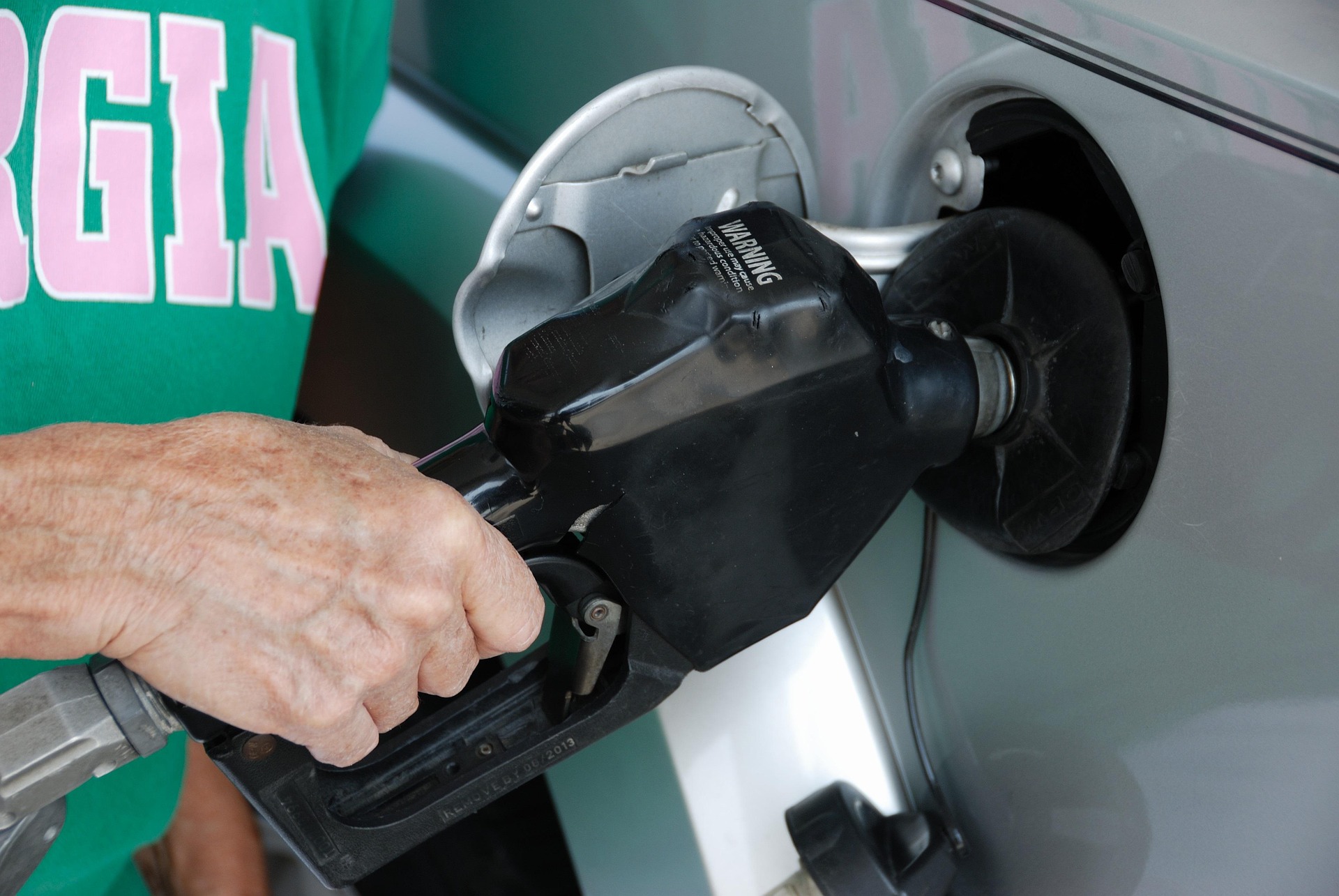
Oil Prices Surge in Australia Amid Middle East Conflict, Driving Petrol Pump Pain for Motorists

Published

on

Oil Prices Surge in Australia Amid Middle East Conflict, Driving

CANBERRA, Australia — Oil prices have spiked sharply in global markets due to escalating conflict in the Middle East, pushing Australian petrol prices higher and raising concerns about inflation and household budgets as the nation grapples with supply vulnerabilities.

Brent crude, the international benchmark most relevant to Australian imports, traded around US$78 to US$80 per barrel in early March 2026 trading, up significantly from mid-US$60s levels seen in late 2025 and early this year. West Texas Intermediate hovered above US$70. The surge follows U.S. and Israeli military actions against Iran, disrupting key shipping routes like the Strait of Hormuz and injecting a geopolitical premium into energy markets.

Oil Prices Surge in Australia Amid Middle East Conflict, Driving
Oil Prices Surge in Australia Amid Middle East Conflict, Driving Petrol Pump Pain for Motorists

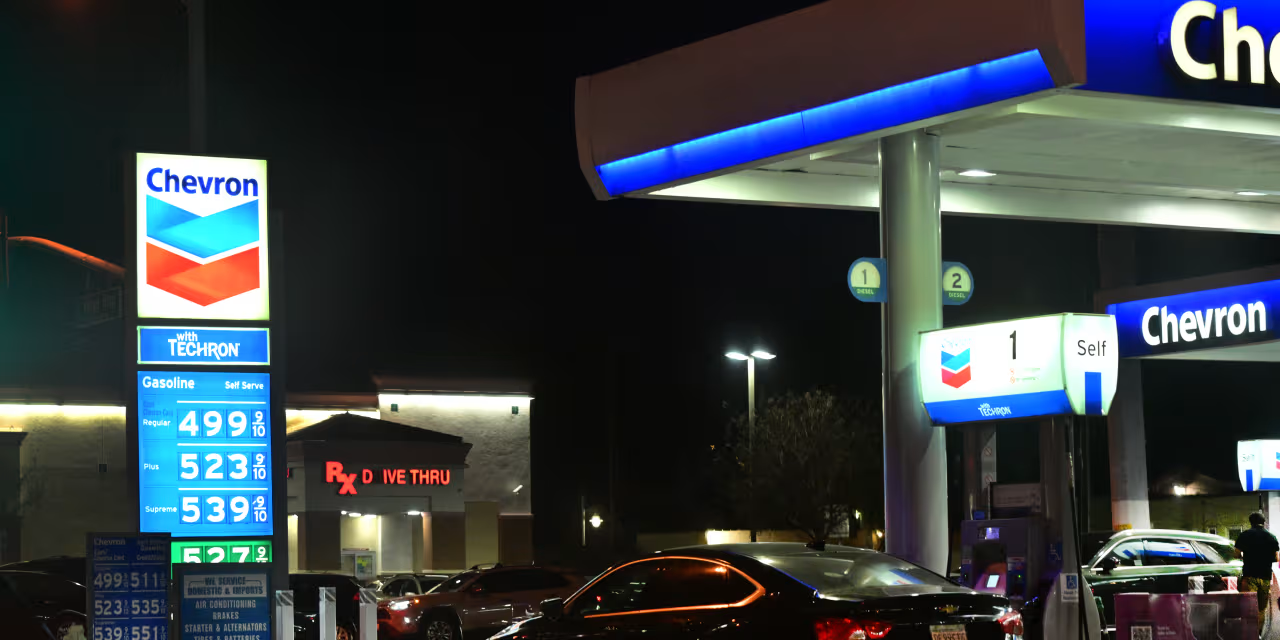
In Australia, which imports more than 90% of its crude oil and refined fuels, the impact has been swift. National average retail prices for unleaded 91-octane petrol stood at approximately 172.9 Australian cents per liter in the week ending Feb. 22, according to the Australian Institute of Petroleum (AIP). However, city-specific figures show higher levels amid the ongoing cycle and recent volatility: Sydney around A$1.98 per liter, Melbourne A$2.08, and Brisbane A$2.02 as of early March. Some stations in major cities reported unleaded prices exceeding A$2.13 per liter, with diesel averages around 180.3 cents per liter nationally.

Analysts warn of further increases. A common rule of thumb holds that every US$10 rise in crude adds roughly 10 Australian cents per liter at the pump. With Brent jumping from around US$67 in late February to near US$80, motorists could face hikes of 10-20 cents per liter in the short term, and potentially up to 40 cents in extreme scenarios if disruptions persist. Compare the Market spokesperson Chris Ford noted that a 30% increase from current levels could push unleaded 91 past A$2.50 per liter in some regions, costing A$125 to fill a 50-liter tank.

The Australian Institute of Petroleum’s weekly report for the week ending March 1, 2026, highlighted rising international crude and petrol import prices supplied by Argus Media. Retail prices reflect a combination of global benchmarks, the Australian dollar exchange rate, excise taxes, and local competition cycles that see prices swing weekly in cities like Sydney, Melbourne, and Brisbane.

Advertisement

Geopolitical tensions have amplified risks. The conflict has raised fears of prolonged supply interruptions through critical chokepoints, prompting warnings from the Reserve Bank of Australia Governor Michele Bullock. She described a “live” chance of an interest rate hike at the March meeting, citing prolonged oil price spikes as a threat to inflation control and economic growth. Bullock noted that elevated energy costs could prove stubborn, complicating the central bank’s efforts to tame inflation.

Australia’s fuel security adds urgency. The nation maintains stocks equivalent to only about 36-90 days of supply in some assessments, well below the International Energy Agency’s 90-day target for members. Recent reports indicate petrol reserves have dipped low, heightening vulnerability to shocks. Experts like those from NRMA and Compare the Market have urged motorists not to panic but to fill up strategically, as prices could climb 6-10% or more depending on developments.

ASX-listed energy companies have benefited from the rally. Woodside Energy shares rose 6.15% to A$30.05, up nearly 30% year-to-date, while Santos climbed 5.62% to A$7.14, gaining about 16% in 2026. The broader market felt pressure, with the S&P/ASX 200 dropping amid global uncertainty, though energy stocks provided some offset.

Household impacts extend beyond the pump. Higher fuel costs feed into transport, goods delivery, and inflation. Commonwealth Bank analysts warned of economic “consequences” from sustained spikes, including threats to growth. Diesel sales have surged due to increased home deliveries and logistics demand, while sales of E10 ethanol blends and LPG have declined.

Advertisement

The government has monitored the situation closely. FuelWatch in Western Australia advised Perth and Mandurah motorists to fill up before expected rises, with average unleaded projected to hit 188.6 cents per liter from March 4, and some brands reaching 213.9 cents. Low-price options remained available below 155 cents at select sites.

Longer-term trends show volatility. Brent averaged in the mid-US$60s for much of late 2025, far below 2022 peaks above US$100. The current rally marks the highest levels since mid-2022, driven by supply fears rather than demand surges. OPEC+ decisions, non-OPEC production, and global economic outlook will influence whether the spike proves temporary or entrenched.

Motorists can mitigate costs by using apps like FuelWatch or PetrolSpy to find cheapest stations, timing fills during low-cycle periods, and considering fuel-efficient vehicles. Electric vehicle adoption continues to grow as an alternative amid rising liquid fuel prices.

As the Middle East situation evolves, oil and petrol prices remain fluid. Analysts monitor for de-escalation, which could unwind premiums quickly, or further escalation that sustains higher levels. For now, Australian drivers face elevated costs at the bowser, a direct echo of distant geopolitical events reshaping daily life and the economy.

Advertisement
Continue Reading
Click to comment

Leave a Reply

Your email address will not be published. Required fields are marked *

Business

Trump Orders Tanker Insurance and Escorts as Oil Surges

Published

on

Trump Orders Tanker Insurance and Escorts as Oil Surges

Trump Orders Tanker Insurance and Escorts as Oil Surges

Continue Reading

Business

Most Restaurants Grow Sales by Raising Prices. These 3 Relied on Foot Traffic.

Published

on

Most Restaurants Grow Sales by Raising Prices. These 3 Relied on Foot Traffic.

Most Restaurants Grow Sales by Raising Prices. These 3 Relied on Foot Traffic.

Continue Reading

Business

RFK Jr criticized for questioning safety of high-sugar Dunkin’, Starbucks drinks

Published

on

RFK Jr criticized for questioning safety of high-sugar Dunkin', Starbucks drinks

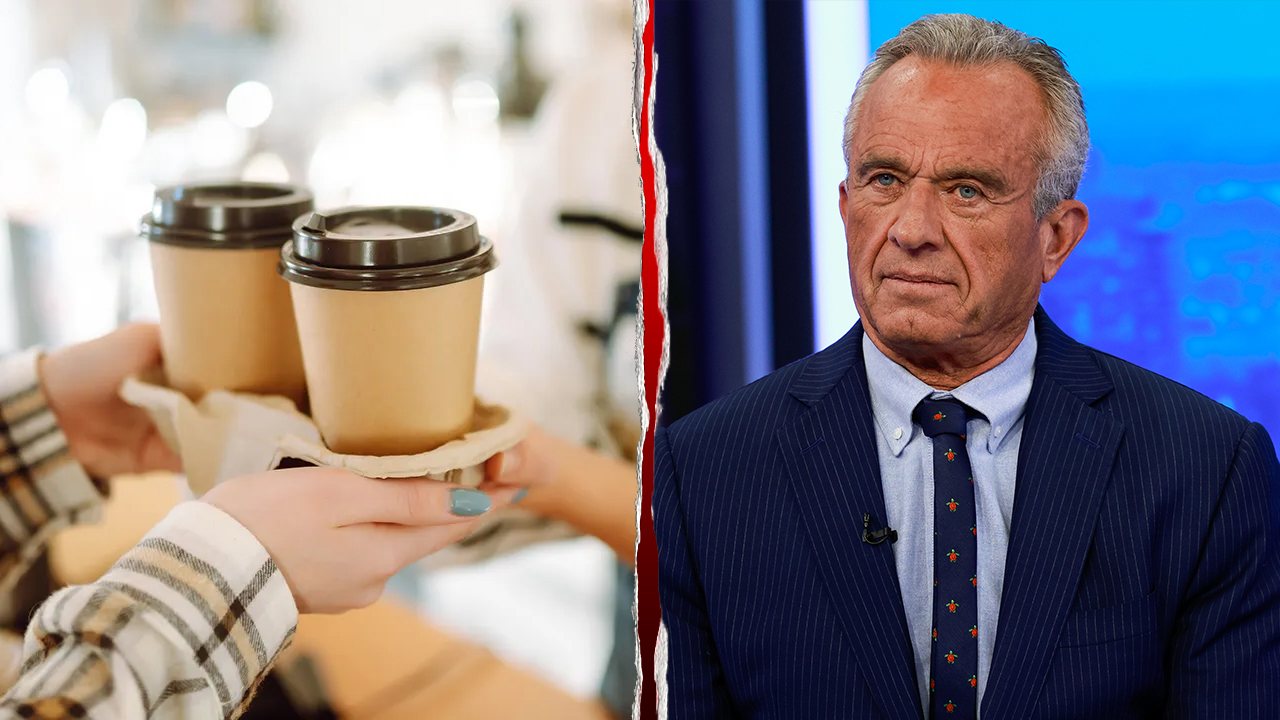
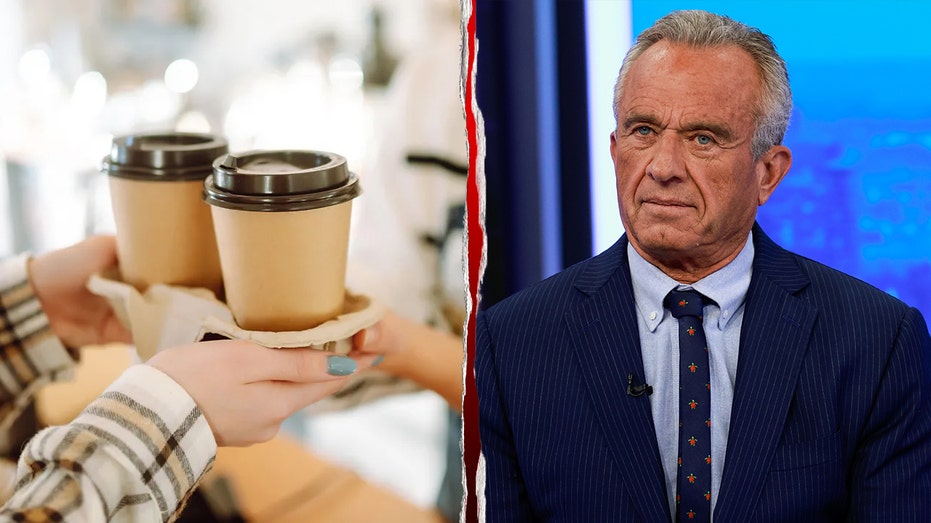
Health Secretary Robert F. Kennedy Jr. ignited widespread backlash online after questioning whether high-sugar iced coffee drinks sold at Dunkin’ and Starbucks are safe – and the governor of Massachusetts was among the pushback.

Kennedy said during an “Eat Real Food” rally in Austin, Texas, on Feb. 26, “We’re going to ask Dunkin’ Donuts and Starbucks, ‘Show us the safety data that show that it’s OK for a teenage girl to drink an iced coffee with 115 grams of sugar in it.”

Advertisement

“I don’t think they’re gonna be able to do it,” he added.

The remarks quickly drew a response in Massachusetts, where Dunkin’ was founded and is considered a cultural staple.

STARBUCKS TO OPEN NEW OFFICE IN NASHVILLE, MOVE SOME JOBS FROM SEATTLE

Health and Human Services Secretary Robert F. Kennedy Jr. raised concerns about sugary beverages during an Austin, Texas, rally on Feb. 26, 2026. (Jason Mendez/Getty Images; iStock / Getty Images)

Massachusetts Gov. Maura Healey took to X on Wednesday to defend the iconic New England beverage, posting an image of a flag displaying the slogan, “Come and take it.”

Advertisement

While some users on X criticized Healey, arguing that she should promote healthier food standards, others rallied behind the governor amid concerns the administration could target their favorite drinks.

“Maybe this regime needs to remember we take drinks VERY SERIOUSLY in New England,” one user wrote, alongside an image depicting the 1773 Boston Tea Party.

Others swapped the “Don’t tread on me” motto with, “Donut tread on me.”

BURGER KING MAKES CHANGES TO SIGNATURE WHOPPER FOR FIRST TIME IN NEARLY A DECADE

Advertisement
New Dunkin' ad creates backlash on TikTok

Health Secretary Robert F. Kennedy Jr. referenced Dunkin’ while discussing potential scrutiny of high-sugar beverages. (Paul Weaver/SOPA Images/LightRocket via Getty Images / Getty Images)

The Department of Health and Human Services did not immediately respond to FOX Business’ request for comment on whether the administration plans to carry out its demands and restrict beverages at Dunkin’ or other coffee chains

Dunkin’ and Starbucks did not immediately respond to FOX Business’ request for comment.

MAHA Action, a nonprofit organization dedicated to the “Make America Healthy Again” movement, said in a statement after the event that Kennedy announced the closure of a loophole in the “Generally Recognized As Safe” (GRAS) food ingredient approval program, a long-standing regulatory pathway that allows companies to self-certify certain ingredients as safe.

“Companies including Dunkin’ Donuts and Starbucks will be required to produce safety data they were supposed to have maintained. The reforms aim to ensure American foods follow the highest safety and nutritional standards globally,” the group said.

Advertisement
Starbucks

Health and Human Services Secretary Robert F. Kennedy Jr. suggested that companies such as Dunkin’ and Starbucks may need to demonstrate the safety of certain high-sugar drinks under stricter federal scrutiny. (Zhang Peng/LightRocket via Getty Images / Getty Images)

Kennedy began pushing to reform the GRAS system soon after his appointment and confirmation, according to The Boston Globe, which noted that the category was created so companies would not have to apply for approval to use common ingredients.

However, over time, the system has expanded to include thousands of new ingredients, including those used in ultra-processed foods, the newspaper reported.

CLICK HERE TO GET FOX BUSINESS ON THE GO

The renewed focus on sugary beverages comes as Kennedy has launched a broader effort to overhaul the nation’s food supply.

Advertisement
Continue Reading

Business

DOT approves American Airlines flights to Venezuela after 5 years

Published

on

DOT approves American Airlines flights to Venezuela after 5 years

American Airlines is set to resume nonstop flights to Venezuela after the U.S. Department of Transportation (DOT) approved the carrier’s request Wednesday, making it the first U.S. airline to restore service between the two countries since 2019.

The airline told FOX Business the flights will be operated by Envoy, a wholly owned subsidiary of American Airlines, with nonstop service from Miami to Caracas and Maracaibo, Venezuela.

Advertisement

The approval follows President Donald Trump’s January directive to reopen commercial airspace over Venezuela after the Federal Aviation Administration issued an emergency order barring U.S. civil flight operations in the country’s airspace. Transportation Secretary Sean Duffy later rescinded the order at the president’s direction.

Trump asked the DOT to lift the restrictions following a discussion with Venezuela’s acting president, Delcy Rodríguez.

AIRLINES CANCEL FLIGHTS, ISSUE TRAVEL WAIVERS OVER MIDDLE EAST UNREST

American Airlines plane departs Los Angeles

American Airlines is set to resume nonstop service between Miami and Venezuela after the U.S. Department of Transportation approved the carrier’s request on March 4, 2026, marking the first time a U.S. airline has restored flights to the country sinc (Kevin Carter/Getty Images / Getty Images)

The Transportation Security Administration was in Caracas last week reviewing airport security procedures, a necessary step to resume flights, sources told Reuters.

Advertisement

The airline announced in late January that it intended to reconnect with Venezuela, just weeks after the U.S. conducted strikes in the country and captured dictator Nicolás Maduro.

“We have a more than 30-year history connecting Venezolanos to the U.S., and we are ready to renew that incredible relationship,” Nat Pieper, American’s Chief Commercial Officer, said in a statement at the time. “By restarting service to Venezuela, American will offer customers the opportunity to reunite with families and create new business and commerce with the United States.”

TRAVELERS STRANDED IN DUBAI PAYING HUGE SUMS TO FLEE ON PRIVATE CHARTER FLIGHTS AMID OPERATION EPIC FURY

American Airlines

The U.S. Department of Transportation approved American Airlines’ request to operate flights to Caracas and Maracaibo, Venezuela, following the lifting of a yearslong restriction on U.S. carriers. (DANIEL SLIM/AFP via Getty Images)

American began operating in Venezuela in 1987 and was the largest U.S. airline in the country before all air service was suspended in 2019.

Advertisement

The DOT said the order is valid for two years. 

An American Airlines passenger plane is parked at a gate at Ronald Reagan Washington National Airport.

An American Airlines passenger plane is parked at a gate at Ronald Reagan Washington National Airport on August 24, 2025, in Arlington, Virginia.  (DANIEL SLIM/AFP  / Getty Images)

In December, the State Department added Venezuela to its “Do Not Travel” advisory list, which remains in effect.

CLICK HERE TO GET FOX BUSINESS ON THE GO

FOX Business has reached out to the Department of Transportation and the State Department for comment.

Advertisement

FOX Business’ Daniella Genovese and Reuters contributed to this report.

Continue Reading

Business

Pvt lenders to log higher liquidity coverage ratios gains on wholesale deposits

Published

on

Pvt lenders to log higher liquidity coverage ratios gains on wholesale deposits
Mumbai: Banks with a larger pool of wholesale deposits, predominantly private sector lenders, are set to see an improvement in their liquidity coverage ratios (LCR) when the revised norms take effect on April 1.

Under the new norms, wholesale deposits, particularly funds from trusts, partnerships and limited liability partnerships (LLPs), will attract lower run-off factors from FY27, reducing the assumed outflows in a stress scenario.

By contrast, lenders with a heavier reliance on retail deposits, largely public sector banks, would see a relatively smaller benefit from the changes to the run-off assumptions, experts said.

“The reduction in the run-off factor from April 2026 is driven towards deposits of trusts, partnerships and LLPs, which had a higher runoff. Different banks will have varying shares of these deposits, and therefore, will benefit accordingly, but benefits to public sector banks may be lower than private sector banks,” said Alok Singh, head of treasury at CSB Bank.

Advertisement

In the new norms that RBI released in April 2025, trusts, partnerships, LLPs will attract a lower run-off rate of 40% against 100% currently. The central bank said the estimated net impact of these measures will improve the LCR of banks, at the aggregate level, by around 6 percentage points.


LCR for HDFC Bank and ICICI Bank stands at 116% and 126%, respectively. Of the total deposits, HDFC Bank has 83% of wholesale deposits and 17% of retail deposits, positioning it to gain from the upcoming LCR changes. While ICICI bank did not disclose the exact wholesale-retail deposit share in their investor presentation, its share of CASA deposits, which are largely retail is at 40%.
SBI and Bank of Baroda, the top two PSU banks have a LCR of 125% and 116%, respectively. SBI has a CASA share of 41%, while Bank of Baroda has a CASA share of 38%.

Continue Reading

Business

India’s fear gauge logs sharpest spike since Covid shock in 2 days

Published

on

India's fear gauge logs sharpest spike since Covid shock in 2 days
Mumbai: India’s fear gauge for equity assets logged its steepest advance since the first Covid shutdown week six years ago, with the volatility index, or the VIX, cumulatively climbing nearly 50% in two trading days through this truncated work week.

The fear gauge is now at its highest level in 10 months and analysts warn that such huge jumps do not bode well for the markets, and any pullbacks in such times could be temporary, until geopolitical conflicts are resolved.

The India VIX ended 23.4% higher on Wednesday at 21.14, after leaping another 25% on Monday, in the two days after the US and Israel launched attacks on Iran on Saturday. The VIX is now at its highest level since May 2025. The benchmark Nifty 50 also ended at 24,480.50, down 1.55%, after dipping as much as 2.2% during Wednesday’s trading.

Indian markets were closed on Tuesday, March 3 on account of Holi.

Advertisement
India’s Fear Gauge Logs Sharpest Spike Since Covid Shock in 2 DaysAgencies

VIX CLIMBS NEARLY 50% Equity markets likely to stay under pressure in the near term and any pullback is expected to be temporary until conflicts are resolved, say analysts

Somil Mehta, head of retail research at Mirae Asset Sharekhan said the recent spike in volatility underscores the prevailing uncertainty and risk aversion in the markets. “A rise in the volatility index reflects higher expected market volatility over the next 30 days, which we are seeing due to the ongoing hostilities involving the US, Israel, and Iran,” he said.


A key risk for India is from the closure of the Strait of Hormuz, a critical route for global oil supplies. A prolonged closure could increase India’s import bill, fuel inflationary pressures and trigger a flight to safe-haven assets such as gold and the US dollar, which in turn, may put additional pressure on the rupee, Mehta said.
“We are seeing a sharp rise in volatility this week, with both the India VIX and the CBOE Volatility Index moving higher, which reflects rising geopolitical tensions and increasing uncertainty across global markets,” said Nilesh Jain, head of derivatives and technical research, Centrum Broking. “This could keep equities under pressure in the near term.” In the current truncated trading week, the India VIX has already moved up by over 48%, its highest level since the week of March 13, 2020, when volatility had increased by more than 100% after the announcement of the pandemic.

The CBOE VIX, which measures volatility based on S&P 500 options, is also up 19% this week.

Jain said with the VIX holding above 20, traders should remain cautious. “Given the recent gap-down openings and sharp declines, traders may avoid aggressive day trading and large index positions for now,” he said. “While the market appears oversold, any rebound could be a short-lived relief rally until tensions ease.”

Mehta also advises traders and short-term participants to remain cautious until there is greater clarity. “Investors may consider hedging their portfolios via buying puts for the stocks, while traders can use short-term pullbacks as opportunities to initiate short positions in relatively weaker stocks or sectors, until more clarity emerges,” he said.

Advertisement
Continue Reading

Business

At Close of Business podcast March 5 2026

Published

on

At Close of Business podcast March 5 2026

Jack McGinn speaks to Tom Zaunmayr about the planned return of an historic WA mine.

Continue Reading

Business

Geopolitics, crude risk and the IT conundrum: Sridhar Sivaram on why investors may need to stay selective

Published

on

Geopolitics, crude risk and the IT conundrum: Sridhar Sivaram on why investors may need to stay selective
Rising geopolitical tensions in West Asia have once again brought uncertainty to global markets, forcing investors to reassess risks tied to energy supplies, currency volatility and capital flows. While Indian equities have shown resilience so far, market participants caution that the real impact could depend on how long the conflict persists and how energy markets react.

Speaking to ET Now, Sridhar Sivaram from Enam Holdings said the biggest concern is the potential disruption to energy flows from the Gulf Cooperation Council (GCC) region, a crucial economic partner for India.

“Yes, if at all any of us knew where and how it will end, one is only hoping that this ends fast and it does not prolong for too long because unlike the Russia-Ukraine war which was more in the hinterland and it was literally landlocked, did not affect too many people apart from little bit of European impact. This has impact on crude. I mean, we import almost 50% of our crude from the GCC countries and a large part of our LNG imports come from there. Remittances come from there. So, this has a larger impact if this continues for a longer period of time. So, one would only hope that this gets resolved faster and does not prolong as long. But if it does prolong, then we do have an issue.”

He added that the current situation is unlikely to return to complete normalcy immediately and that energy prices may remain elevated in the near term. “The general view is that this does not prolong for too long and some sort of normalcy will come back. I do not think this will be 100% normalcy. So, it does have an impact. I do not see crude come back to the 60 handle in a hurry. Maybe it will come back once all the production comes back. So, in the short term, it is a negative for India, that is how I would put it. But our markets have corrected. So, I guess a lot of it is already priced in.”

Advertisement

Currency pressure has also become a talking point, with the rupee breaching the 92-per-dollar mark recently. Sivaram believes foreign institutional investors (FIIs) have been reducing exposure to India partly due to better earnings opportunities across Asia. “So, one of the reasons for FIIs selling and in the last 18 months more so is because Asia is going through, I would say, an earnings super cycle. So, this year Korea will have… the market will have a 100% earnings growth. Even the likes of Taiwan will have say 25% to 30% growth and this is broadly the AI related because the chips and the DRAMs are in short supply. But even China earnings growth is somewhere in the 15% to 18% bracket.”


India, on the other hand, has struggled with slower profit growth over the past year and a half. “So, I think that is the challenge that India has struggled with single-digit earnings growth for the last 18 months. We think that earnings growth for the next year which is FY27 which starts from 1st April right now, we could come closer to the 15% handle, which is a good news. But when you compare it with Asia, when I speak to my ex-colleagues and friends in New York, they say 15 is great but your valuations are 20 times whereas Taiwan, Korea, China are almost at single digit. So, that is the challenge.”
According to Sivaram, the relative attractiveness of other Asian markets could delay a meaningful return of foreign capital to India. “Korea has had lot of volatility, but that market is still up 30% for the year. Year to date it is up 30%. So, those are the challenges we are facing. It will take some time for the FIIs to come back, that is my view.”From a macroeconomic perspective, the broader concern lies in India’s heavy dependence on the Gulf region for energy imports, remittances and trade. Sivaram pointed out that the economic linkages extend beyond oil alone. “It is very difficult to exactly pinpoint what the impact could be. As I said, if this prolongs for more than a month or say two months, then we have a massive impact. The broad view is this does not happen, but we do have an impact. As I said that if we are importing 50% of our crude from GCC, almost 30% or 40% of our LNG comes from this area, 50% of remittances come from this area, so we have multiple macro touch points which come from the GCC countries.”

He noted that even though the conflict involves only a few countries, its economic impact spreads across the entire region. “So, unfortunately this has impacted the entire GCC, that is the sad part that even though the war is between two countries or two-and-a-half countries, it has impacted the entire GCC nation. So, it will be foolish to think that this will have no impact.”

In the near term, companies with exposure to the Middle East may face earnings uncertainties. “There will be significant impact fact in this quarter because number of companies export a lot of reasonable percentage to this region. So, we will have to wait and see how this plays out. But my view is that it will settle down in a quarter’s time. So, I am not saying like this is a screaming buying opportunity or something. You have to be very selective.”

Despite geopolitical risks, Indian benchmark indices have held up relatively well over the past year, although the broader market has been under pressure. Sivaram said headline indices can sometimes mask underlying weakness. “So, actually, the Nifty masks the problem that we have in the broader market. I mean, all of us know that the broader market has seen significant pain. So, the Nifty also has been helped by a few sectors here and there.”

Advertisement

Looking ahead, he believes earnings growth could recover partly because of a favourable base effect. “I do think that the next year we will see 15% growth because we have a very low base effect. We all had single-digit earnings growth for almost six to eight quarters now. So, it does flip because our base is low. So, there is opportunity. I am just saying that one has to be stock specific.”

One sector where Sivaram remains cautious is information technology. The sharp correction in IT stocks has sparked debate about whether the sector now offers value, but he believes structural challenges remain. “So, I have to say that in our own firm, we have differing views and these are my personal views. And I have been very negative on IT for over two years for exactly this reason that the AI impact and my broad view is, it is not like these companies are going to die tomorrow. Their revenues are going to become zero. The terminal value is eroding. So, it is a PE derating event which a lot of people are missing.”

He compared the situation to the transformation seen in the media industry over the past decade. “I give example of the media sector. Go back 10 years and see the large media companies and the view was OTT will not affect them. Are these companies still existing? Yes. Are they making profits? Yes. But the profit growth is flat for the last five years. Their PEs are single digit. So, this is a derating event.”

Sivaram also highlighted the broader implications of the shift towards artificial intelligence for India’s technology sector and employment landscape. “This is a problem not only for the IT sector, it is a problem for the larger employment related stuff because total number of employees in this segment. You are not hiring people. It has a second derivative impact which is much larger.”

Advertisement

While AI has become a major investment theme globally, he believes India currently lacks a clear opportunity for investors looking to participate in the trend. “I do not think we have a clear AI play. I mean, that is the ground reality. No FII is coming to India to play the AI trade. The AI trade as far as Asia or emerging market is concerned is in Korea, Taiwan and their earnings are real.”

For now, the message for investors appears to be one of caution rather than panic. With geopolitical risks, global competition for capital and sector-specific challenges all at play, the market may continue to reward careful stock selection rather than broad-based buying.

Continue Reading

Business

Why Only One Port Supports 4K Displays, Faster Data Speeds

Published

on

MacBook Neo’s Hidden USB-C Limitation

Apple’s new MacBook Neo may look simple on the outside, but its USB-C ports function very differently. The budget-friendly laptop includes two USB-C ports, yet only one supports high-speed data transfers and external display connectivity, a distinction that can prevent frustration when connecting accessories.

Different USB-C Speeds on the MacBook Neo

While both ports use the USB-C design, they operate at different speeds, per MacRumors. The left USB-C port supports USB 3 data transfer speeds of up to 10 Gb/s, making it ideal for high-performance devices like external SSDs, docking stations, and displays.

The right USB-C port, located closer to the trackpad, uses USB 2 technology, limiting transfer speeds to 480 Mb/s. This slower port works well with basic peripherals such as keyboards, mice, and charging cables, but it is not suitable for high-bandwidth tasks.

External Display Support Limited to Left Port

Apple confirms that external displays only function through the left USB-C port. Connecting a monitor to the right port will not produce a video signal.

Advertisement

MacOS helps avoid confusion for those who are asking. As technology journalist John Gruber of Daring Fireball notes, the operating system alerts users if a display is connected to the wrong port and directs them to the correct one.

Display Capabilities and Pricing

Despite being an entry-level laptop, the MacBook Neo supports a single external display at up to 4K resolution and 60Hz when using the left USB-C port. This makes it suitable for productivity, content creation, and multitasking.

Pre-orders for the MacBook Neo are now open, with pricing starting at $599 in the United States. College students can take advantage of a discounted price of $499. The device officially launches on Wednesday, March 11.

If MacBook Pro is very far from your usual spending, going with this option will thank your wallet later. However, as mentioned above, you need to consider if its limitations won’t hinder your productivity.

Advertisement

Originally published on Tech Times

Continue Reading

Business

Stem, Inc. (STEM) Q4 2025 Earnings Call Transcript

Published

on

OneWater Marine Inc. (ONEW) Q1 2026 Earnings Call Transcript

Q4: 2026-03-04 Earnings Summary

EPS of -$2.11 misses by $0.15

 | Revenue of $47.20M (-15.41% Y/Y) beats by $7.81M

Stem, Inc. (STEM) Q4 2025 Earnings Call March 4, 2026 5:00 PM EST

Company Participants

Erin Reed – Head of Investor Relations
Arun Narayanan – CEO & Director
Brian Musfeldt – Chief Financial Officer

Advertisement

Conference Call Participants

Justin Clare – ROTH Capital Partners, LLC, Research Division

Advertisement

Presentation

Operator

Greetings. Welcome to Stem’s Fourth Quarter 2025 Results Conference Call. [Operator Instructions] Please note, this conference is being recorded.

I will now turn the conference over to Erin Reed, Head of Investor Relations. Thank you. You may begin.

Advertisement

Erin Reed
Head of Investor Relations

Thank you, operator. This is Erin Reed, Head of Investor Relations at Stem. We welcome you to our fourth quarter and full year 2025 earnings call. Before we begin, please note that some of the statements we will be making today are forward-looking. These statements involve risks and uncertainties that could cause our results to differ materially from those projected in these statements. We, therefore, refer you to our latest 10-K and other SEC filings and supplemental materials, which can be found on our IR website.

Our comments today also include non-GAAP financial measures. Additional details and reconciliations to the most directly comparable GAAP financial measures can be found in our fourth quarter and full year 2025 earnings release, which is on our website. Arun Narayanan, CEO; and Brian Musfeldt, CFO, will start the call today with prepared remarks, and then we will take your questions. With that, I will turn the call over to Arun.

Advertisement

Arun Narayanan
CEO & Director

Thank you, Erin. Good afternoon, everyone, and thank you all for joining us today. I am pleased to be speaking with you 1 year after assuming the role of CEO, and I could not be more proud of what the Stem team has accomplished over the past 12 months, best-in-class execution, unwavering commitment to our

Advertisement
Continue Reading

Trending

Copyright © 2025