In response, the school has allocated part of its budget towards further staff training and equipment for allergies. “It’s a small amount to have them there and make sure everyone is safe,” said Houghton, who meets in-person with parents of children with allergies to ensure a personalised medical plan is in place.
The council described the designs as ‘bland’ and ‘repetitive’
Plans to build nearly 30 homes in a small village with “limited services” have been refused. The Cambridge Housing Society submitted plans to East Cambridgeshire District Council to build 27 affordable homes on land west of Ely Road in Little Thetford.
The homes proposed were 23 rented and four shared ownership homes. These included: six one-bed flats, three one-bed bungalows, seven two-bed houses, a pair of two-bed houses, four two-bed bungalows, four three-bed houses and one four-bed house.
Advertisement
The housing association said the plans provide “100% affordable housing” with a “balanced mix” of “high quality” homes. These plans have now been refused by the council.
In stating its decision for refusal, the council said that the “affordable housing need for Little Thetford had been assessed and met through a previously approved scheme”.
The council added: “The application site is adjacent to Little Thetford, however, the village has very limited services and facilities, resulting in residents having to leave the village for the majority of their daily needs.”
The council also said the plans would cause “harm to the character” of the area. The designs of the homes were also seen as “repetitive and bland”, and would bring “poor quality design into the countryside”.
Advertisement
For anyone who may have moved to these homes, the council thought they would be affected by noise. There was also not enough information on how highways would be affected, as well as “insufficient” information on the watercourse.
Initially after the plans were submitted, they received 48 public comments and these were all objections. On resident in Dewsbury Gardens a junction at the front of the village was “dangerous enough”, and adding more traffic would make it “even more dangerous”.
Another person in Watsons Lane believed there wasn’t a “need” for the homes. One resident in Chapel Close mentioned that the village had “very limited amenities” and an “unreliable bus service”.
They added: “With the addition of 27 dwellings and 61 parking spaces within the development this would cause significant congestion to an already dangerous junction which has visibility constraints.”
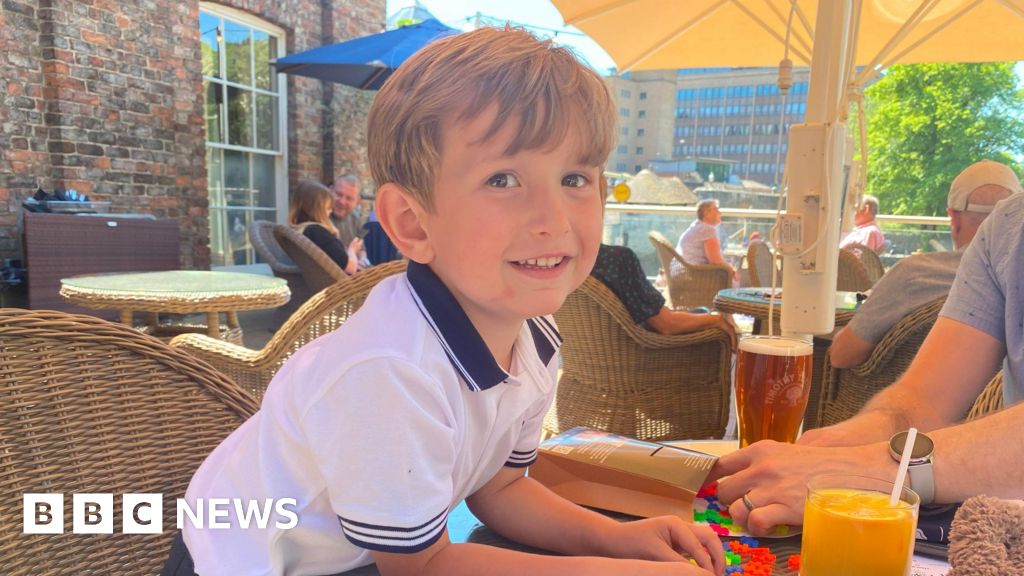
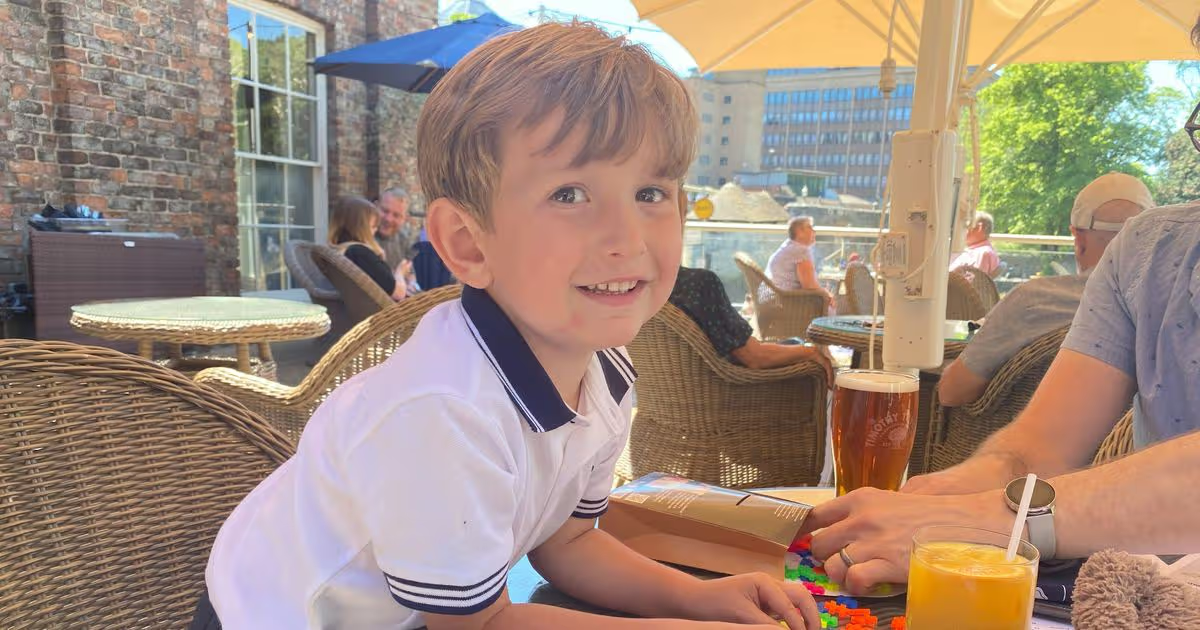
A five-year-old boy from Cambridgeshire died after an allergic reaction at school in December 2021. His mother has welcomed new government requirements for mandatory allergy training and adrenaline pens in schools.
Katie Green and Jasmine Norden Press Association Education Correspondent
08:00, 05 Mar 2026
A mother, whose five-year-old son tragically passed away following an allergic reaction at school, has expressed her support for new measures aimed at safeguarding children with allergies.
Helen Blythe, whose son Benedict died at Barnack Primary School, near Peterborough, in 2021, said that the new requirements will make it “less likely for other families to go through what we’ve been through”.
The government has unveiled statutory requirements for schools, replacing the previous non-statutory guidance on protecting children with allergies. Under the proposed measures, currently under consultation, schools will be required to provide mandatory allergy awareness training for all staff, keep spare allergy pens on hand for emergencies, and establish comprehensive plans to support children with medical conditions.
Advertisement
These requirements, set to be implemented in September, follow campaigning efforts by the National Allergy Strategy Group and families, including Helen and Peter Blythe. The guidance will stipulate that schools should have individual healthcare plans for pupils with medical conditions.
For instance, a child with epilepsy should have a plan detailing seizure types and emergency procedures. Speaking to the Press Association, Mrs Blythe said: “This is something we’ve campaigned for for a long time as a family. It’s been a hard campaign, both work-wise and emotionally.
“These measures will make it less likely for other families to go through what we’ve been through. And for Benedict his memory will be etched into the history books and into time.
“We’ve always said that his life mattered and his death should matter too. And in this it does, it’s his legacy, and that means a lot.”
Advertisement
The Blythe family have been campaigning for the introduction of Benedict’s Law to mandate allergy safety in schools for four years. The new protections were not in place when Benedict joined his school, Mr and Mrs Blythe said.
Minister for early education Olivia Bailey said: “No parent should have to send their child to school worried that a life-threatening allergic reaction won’t be handled swiftly. We have listened to the families and organisations who have campaigned tirelessly on this issue, and we are acting.
“These new requirements will give parents the confidence that every school has the training, the plans and the equipment in place to keep their child safe.”
Benedict died following accidental exposure to cow’s milk protein at his school. An inquest found the school didn’t follow all the measures in place to prevent the fatal anaphylactic reaction, and that there were risks of contamination and delays in administering an adrenaline pen.
Advertisement
A prevention of future deaths report said initial investigations into Benedict’s death focused on him having eaten a McVitie’s biscuit that he had brought in from home on the day he collapsed. It was later established that the biscuit was not the cause of Benedict’s anaphylactic reaction, and an inquest concluded that he had likely been given cow’s milk protein in his bottle during break time.
In her report, coroner Elizabeth Gray stated that the failure to retain Benedict’s vomit or preserve evidence at the scene meant samples could not be tested, which could have helped to identify what caused Benedict’s reaction at an earlier stage.
Paul Whiteman, general secretary of the school leaders’ union NAHT, welcomed the new guidance, but emphasised that schools need funding to ensure they have the staffing capacity to fulfil duties and can provide specialist health support where necessary.
He added that some specialist health support, where more complex provision is required, cannot be delegated to school staff even with training, and schools need clarification about what to do in these situations.
Advertisement
He said: “Expecting schools to stock ‘spare’ adrenaline auto-injectors for use in emergency situations appears a sensible step, as is training staff to use them effectively. However, the government need to be confident that there are sufficient stocks maintained across the country to ensure each setting can keep a sufficient share of adrenaline auto-injectors.”
Colin McCourt, 41, has three children who he cares for on a fixed arrangement but says dating him isn’t “impossible”.
A man says women want to date a “hot single dad” – until they realise his kids come “first”.
Advertisement
Colin McCourt, 41, says many women like the idea of dating a devoted father but struggle with the reality of his rigid childcare schedule.
The single dad-of-three has revealed the “hard truths” of dating him – and says it’s not “impossible” but “organised, structured and child-first”.
But he says he’ll always have full snack cupboard, and will always take the bins out without being asked.
Colin, a team manager from Glasgow, said: “People don’t expect it to be this structured.
Advertisement
“They think you’ll just work around things.
“But you’re not just dating me, you’re dating a court calendar organised by someone in a suit I can’t afford.
“I’d rather someone know the hard truths straight away.
“Dating me isn’t impossible. It’s just organised, structured and child-first.
“And if someone understands that, then it can actually be something really solid.”
Colin shares care of his three children – aged four, seven and nine – on a fixed arrangement.
Advertisement
Some weeks he has them for three days, other weeks for six, leaving limited and often late-night windows to meet someone new.
He said: “I could meet at 8:45pm on a Tuesday, but I’m not free Friday nights. There’s only so much you can build through voice notes and the odd coffee squeezed into a gap.”
He says spontaneity – often seen as a cornerstone of romance – simply isn’t realistic.
Colin said: “Spontaneous plans are adorable. But I need at least a weeks notice.
Advertisement
“People will say, ‘let’s just go away this weekend,’ and I can’t. My life doesn’t work like that.”
One of the biggest hurdles, he says, is finding someone whose availability aligns with his.
He said: “You have to find someone whose weekends line up with yours.
“If they don’t, you probably can’t switch them. There’s a lot of time, money and legal structure that goes into having that routine.”
Advertisement
Colin is also firm about boundaries when it comes to introducing a partner to his children.
“Someone might say, ‘I’ll come on the school run with you,’ but that’s not a cute date idea,” he said.
Advertisement
“That’s weird if you want to do that when we have just met – that bit is the Champions League of dating, that won’t come for a long time.
“How is picking up my kids a cute date idea? It’s not.
“If you’re seeing someone every other weekend, and I have been seeing them for three months, then I have only seen them six times. That isn’t that much time at all.”
He insists the restrictions aren’t about putting a partner second, but about protecting his children.
Advertisement
He said: “It’s not that I’m choosing someone else over you, I’m choosing my children first. And I’d expect the same from anyone I date if they had kids too.
“I date mainly single mums, so they don’t find it difficult as they understand the process.
“I think its more a problem for them when I move something for the kids when its not my weekend – maybe the mum was ill or something – and they tell me I shouldn’t be doing it and it’s not my responsibility.
“But it is, they are my kids.
Advertisement
“It is so difficult to date as a single dad because when you have been in relationship for a long time and then going out and being free to date and choose who you like – you have to figure out what you want.
“Even if you have done healing and therapy, finding what you are looking for is really difficult and finding someone to match that and find a similar person on your journey.”
Colin says he also feels there’s an added layer of judgement attached to being a single father.
He said: “The perception is that single dads must have done something wrong.
Advertisement
“There’s this assumption that we caused the break-up or walked away. That’s not always the case.
“Some of us were left. Some relationships just don’t work out.”
Originally moving to Glasgow to be with his former partner, Colin says the end of the relationship left him isolated.
He said: “My family don’t live in Glasgow. I work from home and I don’t have many friends around me.
Advertisement
“When the kids are with me, I’m busy and focused. When they’re not, the house is quiet. That’s when the isolation hits.”
He admits he has questioned who would want to date a single dad-of-three with such a tight schedule.
Colin said: “You do think, ‘Who is going to want this type of man?’
“But the reality is, we are men who show up for their kids. Not every single dad is the problem.”
Advertisement
Now, Colin hopes that by being upfront about the challenges, he can manage expectations from the start.
Get more Daily Record exclusives by signing up for free to Google’s preferred sources. Click HERE
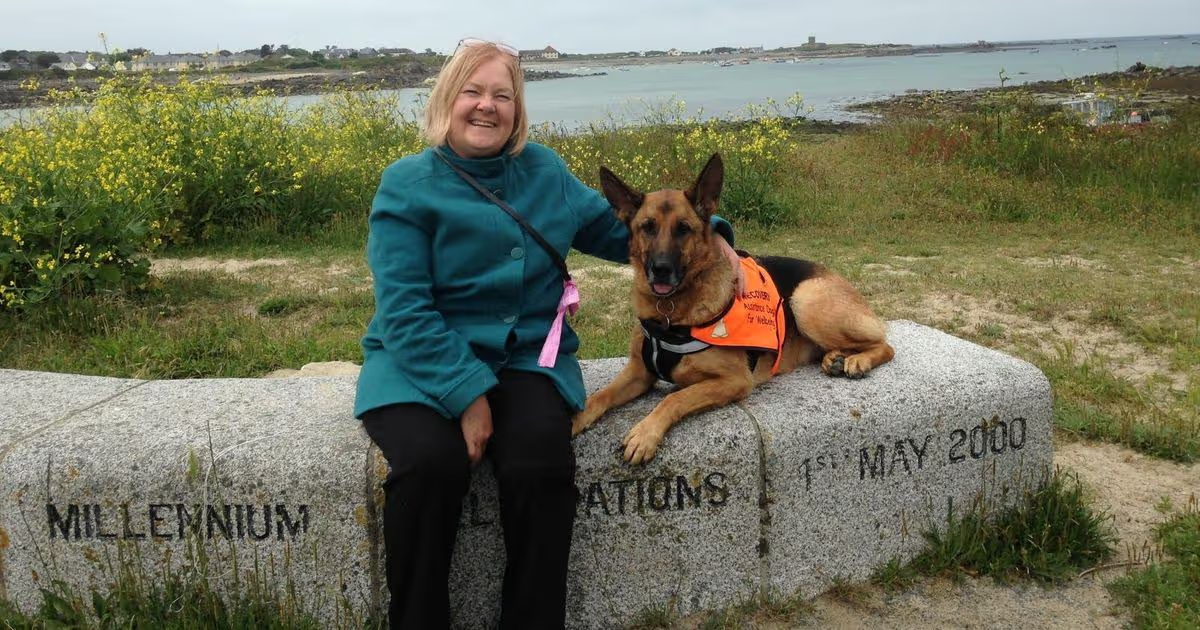
Colleen Ferguson says she knew something was wrong when German Shepherd Inca started obsessively smelling her breath before frowning
Howard Lloyd Regional content editor
08:34, 05 Mar 2026
A woman says her dog saved her life – after sniffing her breath. Colleen Ferguson, 70, says she first suspected something might be wrong when her German Shepherd Inca started obsessively smelling her breath.
After weeks of the then two-year-old pet sniffing at her mouth and frowning, Colleen visited her GP to get her teeth checked out and some tests done – which all came back negative. However, Inca, who was bought to practise competitive obedience, would not stop the habit, so a few months later she decided to pay for a full body scan just in case.
Advertisement
Colleen, from Headcorn, Kent, then received a call from her doctor to say that there was a “golf ball-sized tumour” in her left lung, which was later revealed to be stage one cancer. The mum-of-two says it was a total shock, as she had just expected Inca’s sniffing was related to her gluten intolerance, and that maybe the dog was sensing some bowel or gut differences.
The former science and maths teacher said: “Her behaviour towards me changed, she just started homing in on my mouth. Every time she could get a sniff of my mouth she would frown.
“She just had this focused intent on my mouth, and you couldn’t push her away until you had done an outbreath. When she got that she would give me such a look and walk away. In no way did I expect lung cancer at all. It was such a shock because I am a non-smoker, and because I taught biology, I was very anti-smoking.
Advertisement
“I had absolutely no symptoms at all apart from being tired, but I thought that was just because I was coming up to 60 and still working with teenagers.”
Luckily, there was a cancellation on the waiting list, so Colleen was able to have surgery to remove her tumour later that year, in June 2015, and she didn’t need any further treatment. Just over 10 years later, she is now trying to make the most of her life, quitting her teaching job to do a master’s in creative writing and becoming a published author.
The mum believes that her life was saved by her beloved dog, and she doesn’t know how she would have fared if they hadn’t caught it so early. She said: “The surgeon said to me at the time ‘we never catch it at stage one, your dog has saved your life. Now go away and do what you want.’
Advertisement
“I was just so lucky. Every day is special with her. To catch it at stage one is just remarkable. I don’t know how I would have survived with radiotherapy and chemotherapy. She saved me a lot of fuss.
“It was meant to be. I often think of the chance that she is the one I picked, and how easily it could have been a different dog. I nearly got a golden retriever. What if I hadn’t got her and it had gotten to stage four?
“She needs celebrating and people need telling to listen to your dog. They tell you a lot more subtle signals than people realise.”
Inca, now 13, has since been trained as a recovery assistance dog to help Colleen as she started to have panic attacks and anxiety following the health scare. The author says that having the support of her dog has hugely helped her, and all she suffers with now is a small amount of breathlessness.
She said: “Wherever I am she is there. Dogs give us a lot more comfort than we realise. I was very scared. Especially when they said it was first stage cancer, because I didn’t know when that would change. I didn’t sleep very well at all once I was given the diagnosis.
“It is that horrible fear, and I think that is how I got the anxiety and loss the confidence to go out and about which Inca gave me back.”
The Iranian regime has announced the closure of the strait of Hormuz and threatened to target ships attempting to transit the narrow waterway. Some have already been damaged. While this could seriously harm global energy supply and raise costs, the consequences actually extend far beyond these markets.
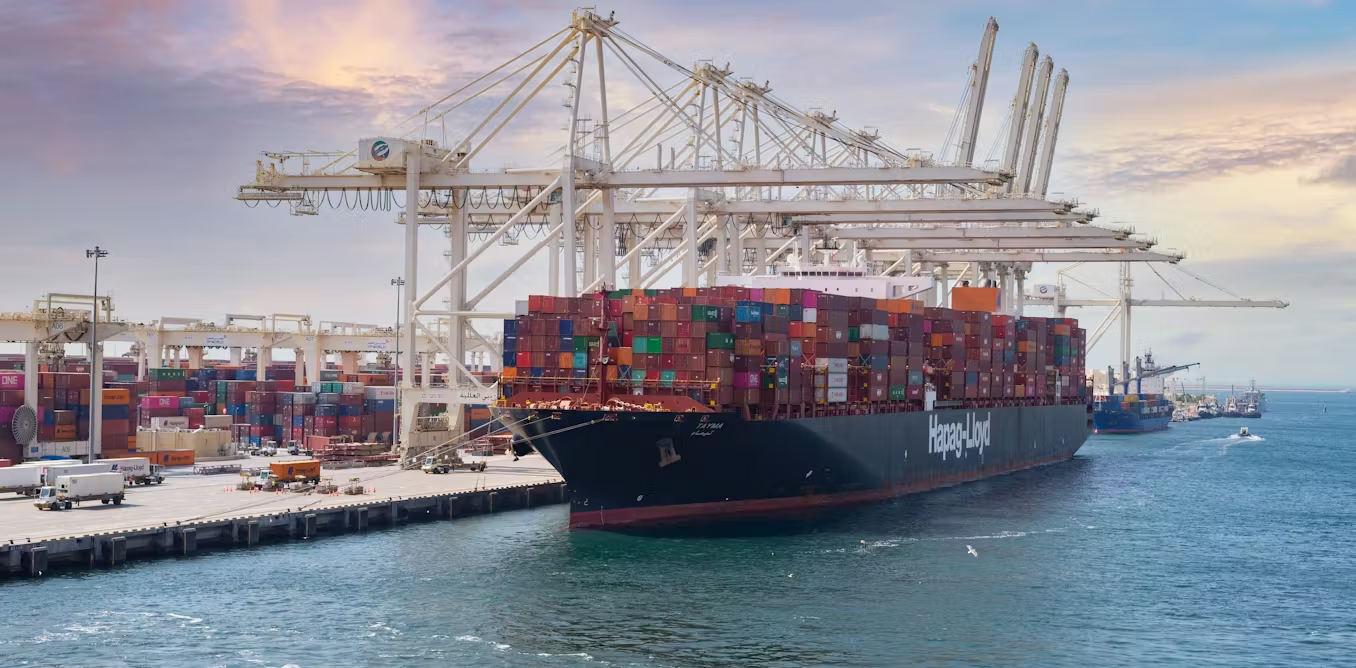
The strait of Hormuz, which sits to the south of Iran and connects the Persian Gulf with the Arabian Sea, is one of the most critical chokepoints for international trade. More than 30,000 ships, carrying around 11% of global seaborne trade by volume, transit the strait each year. And around 34% of seaborne oil exports and 19% of seaborne natural gas shipments also pass through it.
However, oil and gas are not the only commodities moving through the strait. The Gulf region serves as a major hub for the transfer of containers carrying consumer goods, particularly between Asia and Europe.
Alongside Jebel Ali in the United Arab Emirates – the world’s ninth-largest container port – the region handles more than 26 million containers annually, around 80% of which are transhipment (cargo containers being transferred between vessels). It is estimated that more than 150 ships, with a combined capacity of about 450,000 containers, are stranded in the region.
Advertisement
Food and agriculture supply is at risk
The strait of Hormuz is central to the global fertiliser trade. More than 30% of urea – the most widely used nitrogen fertiliser produced from natural gas – is exported from Gulf countries by sea.
Urea prices rose by about 14% on March 2 compared with the previous day. Fertilisers account for a significant share of production costs in many agricultural products, just over a third each for both corn and wheat, for example. When increasing fertiliser prices combine with rising energy costs, producing important crops becomes more expensive.
So the availability of agricultural output and food products could also be affected by the crisis. In addition to potential fertiliser shortages, disruptions to shipping may hit supplies. Perishable goods transported in refrigerated containers are already at risk of spoilage as container ships remain stranded near the strait.
Gulf countries face particularly high risks because many depend heavily on imported food. In Qatar, for example, more than 90% of food is imported, with the vast majority arriving by sea. With flights not fully operating across the region, food availability could become a growing concern. Food by road freight from Turkey may provide an emergency alternative, but capacity would be limited and costs significantly higher than maritime transport.
Beyond the region, consumer prices may also rise. Higher energy costs are likely to be a major driver, although the overall impact will depend on how long the crisis lasts and what happens to those energy prices in the meantime. Brent crude oil prices increased from about US$72 (£54) before the strikes began to around US$79 as of March 4 – compared with roughly US$66 one month earlier.
A 2023 analysis by the European Central Bank suggested that inflation in Europe could rise by 0.8 points if a third of oil and gas supplies passing through the strait of Hormuz were disrupted. In the current situation, almost all shipping traffic through the strait has been halted.
The price of consumer goods could also be affected by the disruptions. Shipping costs have already increased for containerised shipments to the region, with major container lines imposing war risk surcharges ranging from US$1,500 to US$4,000 per container. For context, the typical cost of moving a container from Shanghai to Europe is around US$2,700-US$3,600 including freight and port cargo handling charges.
Advertisement
Similar surcharges are also applied to shipments between other regions not using strait of Hormuz, as leading container lines bypass the Suez canal, which links the Red Sea and the eastern Mediterranean. Instead, they reroute vessels around the Cape of Good Hope off the southern tip of Africa.
This strategy was also adopted during the Red Sea crisis in late 2023, when Houthis in Yemen (backed by Iran) began seizing and attacking passing ships. Freight costs increased by 250% in the first few months of the crisis.
Overall freight rates – the price companies pay to transport goods – may once again increase globally as shipping capacity shrinks. Increases could be limited this time though, because the container sector was actually facing an overcapacity issue.
Advertisement
But perhaps surprisingly, higher shipping costs do not necessarily translate into large increases in consumer prices. For many products, maritime transport accounts for as little as 0.35% of the final retail price. But delayed shipments and unreliable transit times may instead create logistical challenges, including higher inventory costs and temporary shortages of essential goods, which can affect consumers more.
A prolonged crisis, combined with vessels rerouting around the Cape of Good Hope, could intensify pressures on consumer prices, logistics and production costs, and the availability of food and other consumer goods. It’s a reminder that regional tensions happening in strategic locations like the strait of Hormuz have global consequences for consumers.
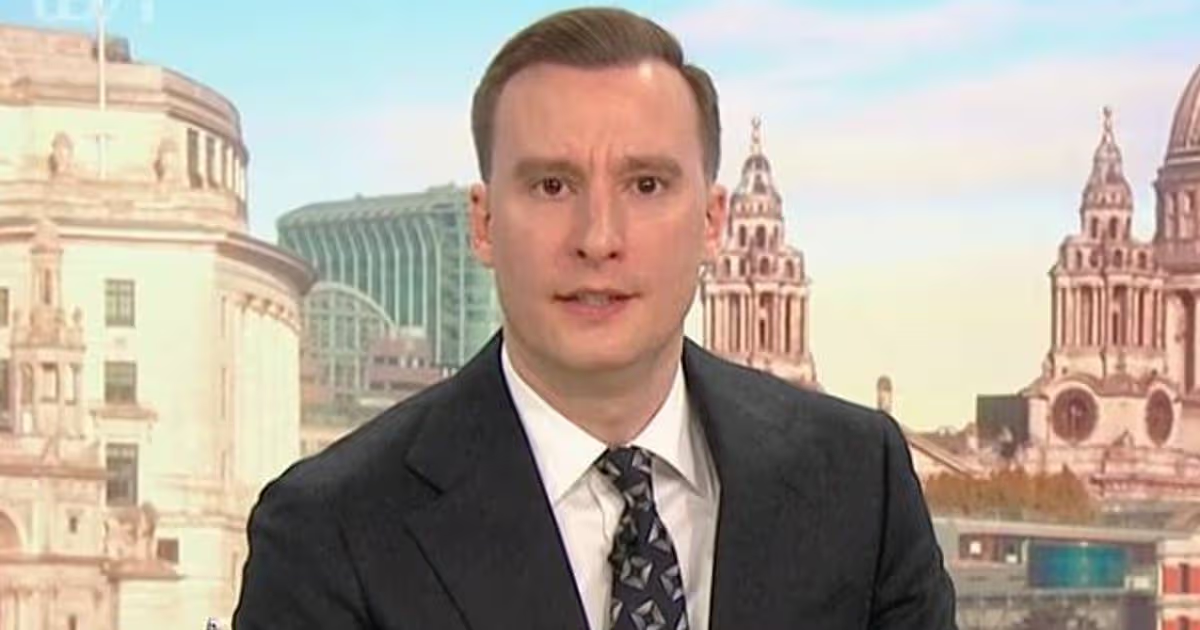
The programme’s viewers were thrilled to see Paul fill in, with numerous people posting their responses on X (formerly Twitter). “#GMB Quality this morning with @PaulBrandITV. Praise be!” one person wrote.
Another contributed: “Nice to see Paul on GMB today,” whilst a third stated: “Paul and Kate!” reports the Mirror.
A fourth fan mirrored the feeling, commenting: “Yay happy to see Paul this morning.”
Advertisement
This isn’t the first time that Paul has stepped in to present the popular programme, as he previously fronted the show alongside Susanna Reid in November 2025, after Richard Madeley called in unwell. He’s also appeared in the studio to share results from multiple ITV investigations.
Paul notably started his career as a production journalist at ITV Wales. He served as a reporter, before becoming a political correspondent for ITV Yorkshire and ITV Tyne Tees and Border.
He subsequently covered politics for Good Morning Britain, and joined the network ITV News team in 2016. Having spent several years working as a political correspondent, Paul was appointed UK Editor of ITV News in 2021. He has also fronted the ITV News at Ten, as well as hosting a programme on LBC radio.
Elsewhere on this morning’s GMB, Paul and Kate provided updates on the continuing Middle East crisis, following US and Israeli strikes on Iran over the weekend.
Advertisement
Reports are now emerging that the first rescue flight scheduled to repatriate stranded British nationals from the Middle East this morning has yet to depart.
The aircraft, chartered by the British government, was originally set to leave Oman last night, carrying some of the most vulnerable passengers, including the sick and elderly. It is now understood that the plane will not land back in the UK until considerably later today.
Reporter Nick Dixon, broadcasting live from Heathrow Airport, said: “A lot of confusion surrounding this flight… It appears it has been delayed until much later today. As I say, it’s quite a confusing picture. We’re trying to get some sort of clarification from the Foreign Office.
Advertisement
“But for now at least, it seems that the hundreds of passengers who would have been boarding that flight are now still stuck in the Middle East.”
Good Morning Britain airs weekdays on ITV1 and ITVX at 6am
For the latest showbiz, TV, movie and streaming news, go to the new Everything Gossip website
Action, hope and humanity will be at the heart of a major global gathering to address environmental and social urgencies. Leading voices in sectors including environment, sustainability, clean energy and biodiversity will converge at the ChangeNOW 2026 summit to discuss concrete solutions to keep climate action on track.
In a world facing a multitude of pressures – with seven of the nine planetary boundaries identified by the scientific community already breached – this year’s edition of ChangeNOW uses the planetary boundaries framework not only as a scientific warning, but as a lens for economic and political decision-making.
“In a world shaped by planetary limits, the question is not whether to act, but how,” says Santiago Lefebvre, founder and CEO of ChangeNOW. “How can we keep our societies running within the Earth’s boundaries and without losing our freedom and sovereignty? ChangeNOW brings together science, business, political and civil leadership to structure concrete action.”
Advertisement
This meeting of brilliant minds will see groups including entrepreneurs, NGOs, corporates, investors, policy makers, talent and more help spotlight innovative, yet entirely achievable, resolutions to some of the planet’s biggest challenges. While 36 international delegations will be part of discussions including those on European sovereignty, international climate governance and cross-border cooperation.
Here, we break down exactly what to expect from this monumental event — and explain how you can be a part of the action.
What is ChangeNOW?
While ChangeNOW is a year-round social enterprise, focusing on how to effectively accelerate environmental and social transition, much of the hard work culminates in the annual ChangeNow summit — the world’s largest event dedicated to solutions for the planet.
Advertisement
Like its 2025 predecessor, this year’s summit will be held at the iconic Grand Palaisin Paris — a symbolic nod to the city where the Paris Agreement was negotiated and adopted in 2015. The event is often seen as the precursor to the upcoming COP negotiations.
Known as ‘the most impactful event on the planet’, ChangeNOW will run from March 30th to April 1st, hosting 140 countries, 40,000 attendees, 10,000 companies, 1,200 investors and 1,000 journalists.
Grouped into thematic zones such as food, health, agriculture, cities, circular economy, fashion and biodiversity, it will showcase 1,000 sustainable solutions that respond to major environmental or social challenges — all selected for their strong positive impact and their potential to be deployed on a large scale.
In addition, there will be over 50 workshops, an extensive program of talks from global thought leaders and a wide range of networking opportunities including ice-breaker sessions, 1:1 meetings and open meet-ups by sector or region. The summit is a thriving hub for collaboration and has seen numerous impactful partnerships being created.
Advertisement
With previous success stories including Slovenian startup PlanetCare teaming up with the French Ministry of Ecological and Social Transition to change policy and prevent the pollution of 500 tons of plastic microfibres. The Blue Ocean Partners collaborating with Swen Capital Partners led to millions of pounds being raised to invest in innovations to regenerate ocean health, and the French and Kenyan Red Cross joined forces to launch the Women Social Entrepreneurship Institute — after connecting with innovators and investors at the expo.
Who is taking part?
The ChangeNOW summit will host over 500 visionary speakers including scientists, activists, public leaders, business actors and celebrities — across five conference stages and a pitch stage. The voices will unite to address topics such as emissions mitigation, nature-based solutions and the already visible impacts of climate change.
Among the first announced speakers is Laurent Fabius, President of COP21 and former President of the French Constitutional Council, who will speak on the theme of information and governance. Representatives from the United Nations will include Melissa Fleming, the Under-Secretary-General for Global Communications and Diana Ürge-Vorsatz, Vice-Chair of the IPCC.
Advertisement
Big name speakers include the scientist who developed the planetary boundaries framework, Johan Rockström, who is Director of the Potsdam Institute for Climate Impact Research, economist Kate Raworth, who is the founder of the Doughnut Economics Action Lab, and actor, screenwriter and producer, Matt Damon, who will join the conference as a virtual speaker to discuss his expertise on water and sanitation issues —in his position as co-founder of asset manager WaterEquity and the NGO Water.org.
Other notable speakers include Ilwad Elman, Chief Operating Officer at the Elman Peace Centre, Rob Hopkins, Founder of the Transition Movement and Sandrine Dixson-Declève, Honorary President of the Club of Rome and Executive Chair of Earth4All.
The ChangeNOW summit will host a hugely diverse variety of talks, with the first morning alone covering topics as wide ranging as ‘Environmental Intelligence’, ‘How to Organise Collective Action’ and ‘Making Nature Protection Sexy’.
Can the general public attend?
Advertisement
ChangeNOW 2026 is a vibrant place to learn and be inspired, with plenty of opportunities for the general public to get involved. Join activities on Wednesday 1st April, when the general public can explore the exhibitors showcasing their innovative solutions in the Grand Palais nave and attend any of the conferences that day.
Attendees can also enjoy the impactful and sustainable artworks on display in the 15 artistic capsules, and let the kids join the fun and learning through the Families for Change program — note visitors under 18 can book a ticket for free.
Wednesday is also the day of the Impact Job Fair, where 500 recruiters offering 600 plus jobs, and over 15 training providers, will help those looking for their next meaningful job or training opportunity.
For all those who want to come together to build a better world, book your ChangeNOW 2026 ticket here.
The First Minister turned interviewer to encourage more migrant women to come forward and have their stories heard and preserved.
Michelle O’Neill takes part in migrant women’s heritage project
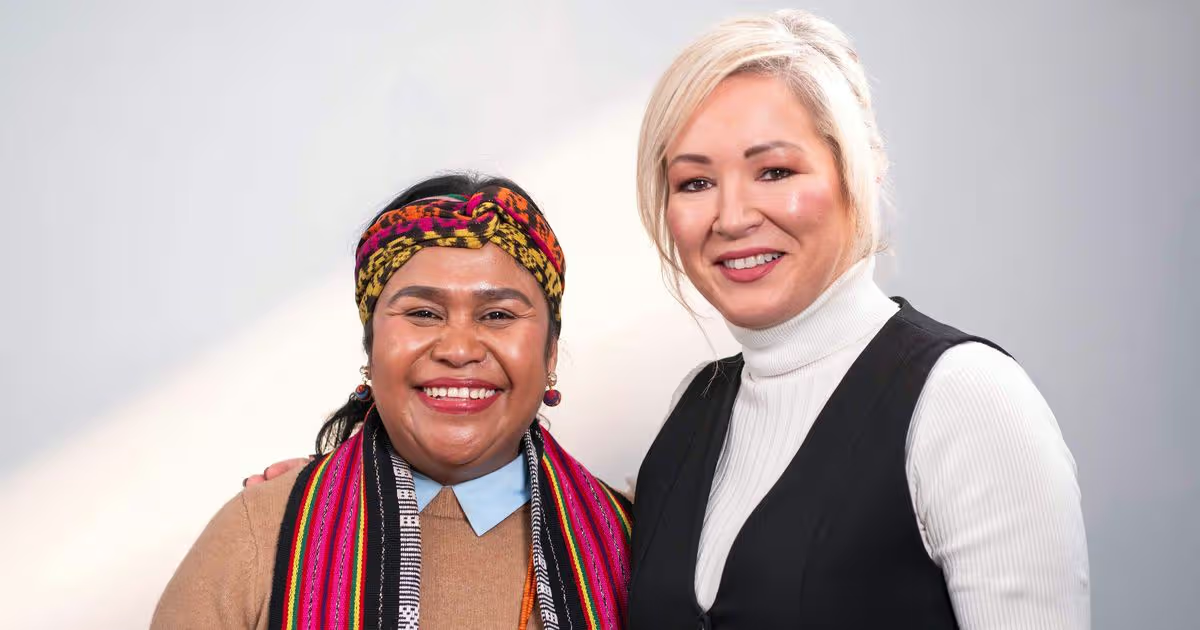
Michelle O’Neill has stepped behind the microphone for a change to capture the powerful life story of a migrant mother who moved to Dungannon more than 14 years ago.
Ahead of International Women’s Day, the First Minister interviewed Domingas Gusmão for Heritage Journeys: Voices of Migrant Women in Mid Ulster, an initiative led by First Steps Women’s Centre in Dungannon, which has been funded by a £231,000 award from The National Lottery Heritage Fund.
The project is preserving the stories of 100 migrant women who have made Mid Ulster their home and contributed to life in the area between 2000 and 2024, through interviews and cultural material which will then be archived at the Linen Hall Library in Belfast, as a legacy for future generations.
Having lived in Mid Ulster all her life and, as MLA for the area, the First Minister agreed to the role of interviewer to encourage more migrant women to come forward and have their stories heard and preserved.
The interview with Domingas, a mother of three originally from East Timor, was recorded at Michelle O’Neill’s constituency office in Cookstown, Co Tyrone.
Domingas came to Dungannon 14 years ago to join her husband, who was working at Moy Park. All three of Domingas’s children were born in Northern Ireland.
During the emotional interview, the two women connected over motherhood and family, before the First Minister explored with Domingas the challenges she faced in adapting to a new country and whether she felt part of the community.
Advertisement
Domingas said: “Not everybody accepts and understands what we’ve been facing. We’re not here just for fun or a holiday. They wonder why we’re here. We want to give our children the best life.
“We want to contribute to life here. We have to ignore it. We have to control how we react, and it’s often better not to do anything.”
Following up, the First Minister asked: “Is that something that concerns you all the time? Are you worried about hate and racism?” Domingas told her: “Even if it happens somewhere else, I can feel afraid to go out. I have younger kids, and it concerns me, but I am lucky, and my neighbourhood is amazing.”
In the interview, Domingas also tells the First Minister about missing her family, including her father, who is now seriously unwell. She has not seen him since returning home briefly in 2017 because she cannot afford the trip back.
In another moving moment, Domingas, spoke of the joy she felt when her son, who has autism, first called her “mummy” at the age of five.
Now settled in Dungannon, Domingas describes Mid Ulster as home, and emphasised the importance of finding support through the First Steps Women’s Centre, where she attended classes and gradually built confidence and fluency in English.
Advertisement
Alongside raising her family, she continues to practise traditional music, cooking, and crafts from East Timor and has established a small business creating and selling her hand-crocheted items.
In closing the interview, Michelle O’Neill told Domingas: “I can say to you, as your First Minister, I want to build a society and a home for everybody that’s inclusive, where everybody is welcome, and where we celebrate our difference and our diversity, and that we all recognise we are stronger for it.”
The recording also captured the moment Domingas gifted the First Minister a hand-crocheted red-and-green table centrepiece, which the First Minister said she would be proud to use on her table on Christmas Day. Domingas also crocheted a gift for Deputy First Minister, Emma Little Pengelly.
Domingas added: “It meant a great deal to me to be interviewed by our First Minister and local MLA. I am used to seeing her on television being interviewed, so to suddenly have her asking about my life was very special.
“She really put me at ease, and I was surprised by how many shared experiences we had around things like getting lists of jobs to do after school when we were children, and raising teenage children. I feel privileged to be part of this project and of First Steps Women’s Centre in Dungannon.
“Knowing my story, and the stories of so many other women of my generation, will be preserved in The Linen Hall Library, so that my children and grandchildren can one day hear about our journeys to make a home in Mid Ulster, means a great deal to me.”
Ms O’Neill said of her turn behind the microphone: “I don’t think I’ll be stepping behind the microphone permanently, but it has been such an enjoyable privilege to be able to explore Domingas’ journey to Mid Ulster with her and to hear about all the fears and hopes she had and has.
Advertisement
“Domingas and her family are valuable members of our society in Mid Ulster, and our community is better and more diverse as a result.
“I urge any woman from another country who has come to live in Mid Ulster to get in touch with First Steps Women’s Centre in Dungannon to ensure their stories are also recorded and stored for future generations.
“I wish everyone the best of luck in gathering and treasuring these valuable oral histories, which are a vital part of life here and which deserve to be celebrated.”
Want to see more of the stories you love from Belfast Live? Making us your preferred source on Googlemeans you’ll get more of our exclusives, top stories and must-read content straight away. To add Belfast Live as a preferred source, simply click here.
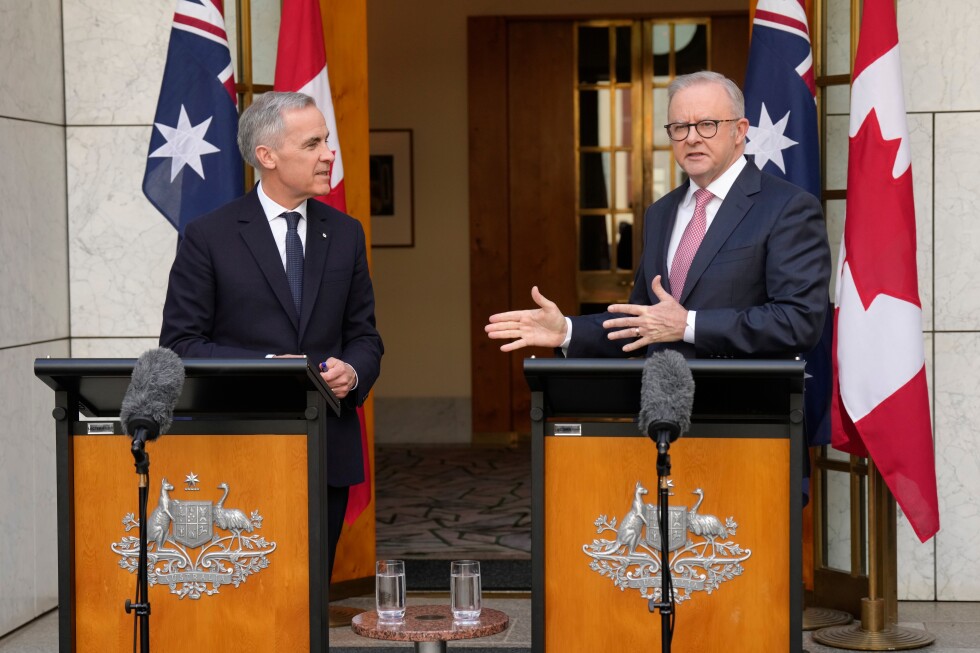
MELBOURNE, Australia (AP) — The Canadian and Australian prime ministers on Thursday called for a de-escalation of the Iran war but added the Iranians must never gain a nuclear weapon.
Canada’s Mark Carney and his Australian counterpart Anthony Albanese discussed the war during their meeting in Australia’s capital, Canberra.
The meeting came after news that a U.S. submarine sank an Iranian warship in the Indian Ocean and Turkey said NATO defenses intercepted a ballistic missile launched from Iran before it entered Turkey’s airspace.
“We want to see a broader de-escalation of these hostilities with a broader group of countries than just the direct belligerents involved,” Carney said at a press conference with Albanese.
Advertisement
“We stress that that cannot be achieved unless we’re in a position that Iran’s ability to acquire a nuclear weapon, develop a nuclear weapon, and to export terrorism, is ended. So that process must lead to those outcomes,” Carney added.
He said the six-nation Gulf Cooperation Council, which were “showing tremendous restraint,” should become involved in the de-escalation process.
Albanese said: “The world wants to see a de-escalation and wants to see Iran cease to spread the destinations of its attacks.”
“We’re seeing Gulf states, that have not been involved, attacked across the board, including the attacks on civilian and tourist areas as well. But we also want to see the objectives achieved. I want to see the possibility of Iran getting a nuclear weapon removed once and for all,” Albanese said.
Advertisement
Questioned by a reporter, Carney could not rule out the Canadian military ever becoming involved in the conflict.
“You’ve asked a fundamental hypothetical in a conflict that can spread very broadly,” Carney said.
“So one can never categorically rule out participation. We will stand by our allies when it makes sense,” he added.
Carney is in Australia on a trade-focused, three-nation visit that began in India last week. He addressed the Australian Parliament on Thursday and will fly to Japan on Friday.