Connect with us

Tech

Jensen Huang Says Nvidia Is Pulling Back From OpenAI and Anthropic

Published

on

An anonymous reader quotes a report from TechCrunch: At the Morgan Stanley Technology, Media and Telecom conference in downtown San Francisco Wednesday, Nvidia CEO Jensen Huang said his company’s recent investments in OpenAI and Anthropic are likely to be its last in both, saying that once they go public as anticipated later this year, the opportunity to invest closes. It could be that simple. While firms sometimes pile into companies until practically the eve of their public debut in search of more upside, Nvidia is minting money selling the chips that power both companies — it’s not like it needs to goose its returns by pouring even more money into either one.

Nvidia, for its part, isn’t offering much more on the matter. Asked for comment earlier today following Huang’s remarks, a spokesman pointed TechCrunch to a transcript from the company’s fourth-quarter earnings call, where Huang said all of Nvidia’s investments are “focused very squarely, strategically on expanding and deepening our ecosystem reach,” a goal its earlier stakes in both companies have arguably met. Still, a few other dynamics might also explain the pullback, including the circular nature of these arrangements themselves. […] Meanwhile, Nvidia’s relationship with Anthropic has looked fraught in its own right. Just two months after Nvidia announced a $10 billion investment in November, Anthropic CEO Dario Amodei took the stage at Davos and, without naming Nvidia directly, compared the act of U.S. chip companies selling high-performance AI processors to approved Chinese customers to “selling nuclear weapons to North Korea.” Ouch. […]

Where that leaves Nvidia is holding stakes in two companies that, at this particular moment, are pulling in very different directions, and potentially dragging customers and partners along for the ride. Whether Huang saw any of this coming, given Nvidia’s web of partnerships, is impossible to know. But his stated reason on Wednesday for likely pulling the plug on future investments — that the IPO window closes the door on this kind of deal — is hard to square with how late-stage private investing actually works. What’s looking more probable is that this is an exit from a situation that has gotten really complicated, really fast.

Source link

Advertisement
Continue Reading
Click to comment

Leave a Reply

Your email address will not be published. Required fields are marked *

Tech

FCC Approves Cox, Charter Merger On Condition They Promise To Be More Racist

Published

on

from the merge-ALL-the-things! dept

Hey look everyone! More of that famous populism Trump rode into power on!

The Trump FCC has announced they’re rubber stamping the approval of a merger between two of the nation’s biggest cable companies (Charter, Cox), creating the biggest cable company in the U.S. Struggling Americans were surely clamoring in support of their local shitty cable company getting even bigger, right?

As a condition of the deal, the two companies have promised to be more racist and sexist. More specifically, they’ve promised the FCC they’ll eliminate already fairly pathetic corporate programs acknowledging that systemic racism and sexism exist. The FCC posted this handy infographic on social media that breaks down all of their lies about the deal in an easily digestible way:

Literally none of those claims are true. These deals never result in any of these benefits. There’s more than forty years of concrete evidence proving it. Consolidation across U.S. telecom has consistently resulted in spotty service, high prices, and routinely abysmal customer service.

Cox and Charter don’t directly compete, but their large scale, size, and political influence ensures they’ll have more power than ever to lobby against robust competition more generally.

Advertisement

Remember when Charter was caught creating a fake consumer group to undermine community-owned broadband access in Maine? Or that time New York State regulators found the company was so shitty, and lied so often, that they almost resorted to kicking them out of the state? If you liked that sort of thing, you can now expect more of it, better resourced, at scale. Very exciting!

The debt from the kinds of deals is also always predominately paid off by labor and consumers in the form of mass layoffs and higher prices. These deals never meaningfully serve the public interest, but our captured regulators, consolidated telecoms, and shitty press work together to help pretend otherwise.

The FCC explains the “DEI” provisions this way in their news release:

“Charter has committed to new safeguards to protect against DEI discrimination and has reaffirmed the merged entity’s commitment to equal opportunity and nondiscrimination. Specifically, Charter commits to recruiting, hiring, and promoting individuals based on the factors that matter most: skills, qualifications, and experience.”

You’re not told what these “safeguards” actually are. Just that Cox and Charter won’t try to give minorities or women a leg up in country full of systemic hatred and intolerance because that might be unfair to a dude.

Advertisement

The Trump administration has repeatedly tried to insist that simply acknowledging that systemic racism and sexism exists — or doing literally anything about it — is somehow discriminatory to white men. This is diseased white supremacist thinking; the sheer delusional hubris to think this way, let alone integrate this ignorance into already problematic pro-monopoly policy, is the mind garbage of simpletons.

If you pop around and read the news coverage of this deal (see: this piece from Reuters or this piece at CNN), you’ll notice the consolidated corporate press helps sell the lie that more consolidation somehow serves the public interest. These kinds of stories will parrot the companies’ claims, ignore their history of monopolistic predation, and even downplay the mandated racism as a droll policy bullet point.

CNN author Jordan Valinsky even went so far as to write this sentence with a straight face:

“The transaction is contingent on regulatory approval and could be a litmus test for President Donald Trump’s views on major companies combining.”

Trump’s FCC has rubber stamped every single shitty telecom merger that has crossed its desk. We know Trump loves harmful consolidation, provided he can personally get something from it. A cornerstone of GOP policy has been to coddle monopoly power for literally fifty fucking years! Across every industry in America. None of this is really up for debate. Any “litmus” test was failed long ago.

Advertisement

It’s important to really stop and recognize the way the press routinely normalizes corruption and gives Trump Republicans policy credibility in areas like antitrust that they never had to actually earn. Because there’s just generally so much going on, this merger will largely be ignored. And when the layoffs and higher prices arrive later this year or early next, press and policy folks will be nowhere to be found.

If this country is going to have any sort of real future, it has to seriously come to grips with the fact that it’s broadly too corrupt to function in the public interest (across government, media, policy, and culturally). If future federal and state governments don’t make antitrust and corruption reform a central pillar of all policy in every sector, we’re quite literally cooked.

Filed Under: antitrust, brendan carr, broadband, cable, consolidation, dei, fcc, media, mergers, racism

Companies: charter, cox

Advertisement

Source link

Continue Reading

Tech

A Live ISO For Those Vibe Coding Experiments

Published

on

Vibe coding is all the rage at the moment if you follow certain parts of the Internet. It’s very easy to dunk upon it, whether it’s to mock the sea of people who’ve drunk the Kool-Aid and want the magic machine to make them a million dollar app with no work, or the vibe coded web apps with security holes you could drive a bus through.

But AI-assisted coding is now a thing that will stick around whether you like it or not, and there are many who want to dip a toe in the water to see what the fuss is about. For those who don’t quite trust the magic machines in their inner sanctum, [jscottmiller] is here with Clix, a bootable live Linux environment which puts Claude Code safely in a sandbox away from your family silver.

Physically it’s a NixOS live USB image with the Sway tiling Wayland compositor, and as he puts it: “Claude Code ready to go”. It has a shared partition for swapping files with Windows or macOS machines, and it’s persistent. The AI side of it has permissive settings, which means the mechanical overlord can reach parts of the OS you wouldn’t normally let it anywhere near; the point of having it in a live environment in the first place.

Advertisement

We can see the attraction of using an environment such as this one for experimenting without commitment, but we’d be interested to hear your views in the comments. It’s about a year since we asked you all about vibe coding, has the art moved forward in that time?

Source link

Advertisement
Continue Reading

Tech

Amazon makes a new bet on healthcare AI, rivaling Microsoft in the doctor’s office

Published

on

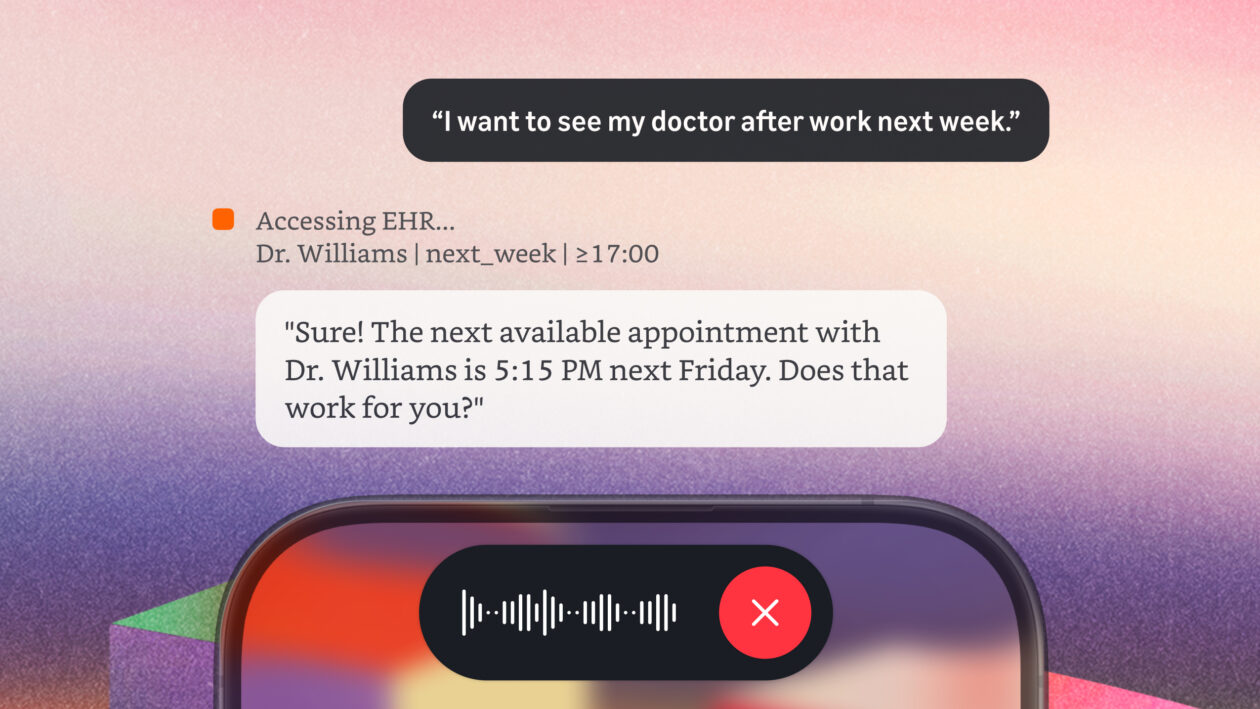
Amazon Connect Health uses natural language to schedule appointments, accessing the health record system in real time. (Amazon Image)

Amazon Web Services is expanding into AI for healthcare, launching a new agentic system that can handle patient calls, document clinical visits and automatically generate billing codes. 

Amazon Connect Health, announced Thursday morning, is the first industry-specific extension of the cloud giant’s Amazon Connect system for call centers, which crossed the milestone of a $1 billion annual revenue run rate last year.

It will compete in part with rival Microsoft, which acquired Nuance for $19.7 billion in 2022 and has embedded its DAX Copilot ambient documentation tool into major electronic health record systems. AI scribe startups have raised hundreds of millions of dollars to automate clinical documentation.

Amazon is pitching Amazon Connect Health as a broader solution that spans the full healthcare workflow, from the initial phone call through the post-visit billing code.

The idea is to “not provide just point solutions, point tools, or a collection of capabilities, but think end-to-end about what is the customer problem, and how can we solve it,” said Rajiv Chopra, AWS vice president of Health AI and Life Sciences, in an interview this week.

Advertisement

Early users of the technology include UC San Diego Health, which handles 3.2 million patient interactions annually; One Medical, the Amazon-owned primary care practice that has used the ambient documentation capabilities across a million visits; and Netsmart, which provides EHR software to more than 1,300 community-based healthcare organizations.

Amazon’s move could double as a litmus test for AI adoption in healthcare, where institutions have traditionally been slow to adopt new technology.

A randomized trial published in the New England Journal of Medicine AI in December found that ambient AI documentation (the AI startup Abridge) reduced clinician burnout and cut documentation time by 30 minutes per day per provider. However, hospitals continue to cite concerns about data privacy, the difficulty of integrating AI tools into existing workflows, and unclear return on investment.

Amazon’s new product has five core capabilities: automated patient verification, intelligent appointment scheduling, pre-visit summaries for clinicians, ambient documentation that transcribes and drafts clinical notes during the visit, and automated medical coding for billing.

Advertisement

It integrates natively with Epic, the largest U.S. electronic health records system, and connects to other EHRs through data integration partners. It also connects to AWS HealthLake, Amazon’s cloud-based health data repository, which is getting new agentic capabilities to convert records into standard formats.

Amazon Connect Health comes from AWS’s Applied AI Solutions group, led by Senior Vice President Colleen Aubrey, which is focused on building finished applications for specific industries rather than selling raw cloud infrastructure and tools to developers. 

Aubrey, who previously built Amazon’s advertising business, said at AWS re:Invent in December that her team is putting “agentic AI at the heart of everything we do,” describing the technology as “AI teammates” that can work autonomously on behalf of businesses.

Healthcare is the first vertical to get a purpose-built Connect product, but Aubrey signaled that more are in the works. Separately, the group oversees Amazon’s Just Walk Out retail technology and is developing agentic AI tools for supply chain planning and life sciences.

Advertisement

Amazon Connect Health is available in preview starting Thursday.

Source link

Continue Reading

Tech

AI is teaching teen boys about love

Published

on

It’s not necessarily the guys you might expect, Apollo Knapp told me.

These are 6-foot-tall high-school athletes, guys who are social and popular. “They’re the type of people that are friends with everybody, who get dapped up in the hallway every two feet,” said Knapp, an 18-year-old high school senior in Ohio and a board member at sexual violence prevention nonprofit SafeBAE.

But at his school, these are the guys using AI to help them talk to girls. They’ll paste their texts into ChatGPT for feedback before sending, he said. Or, they’ll send their own photos to ChatGPT and ask, “am I cute?” Or, they’ll simply ask for moral support when they’re “too scared, maybe, to confront women.”

Girls and non-binary teens don’t need to lean on ChatGPT as much, Knapp said; they’re more likely to have a circle of friends ready and willing to workshop their texts. But guys are more isolated, socialized to believe it’s weak to talk about their feelings.

Advertisement

Worse, they’ve grown up on a steady diet of media telling them that “if you say the wrong thing” to a girl, “she’s going to accuse you of something,” Knapp said. Even if those messages aren’t accurate, they get inside teen boys’ heads, making them feel like they have to screen everything through ChatGPT to make sure it’s okay.

The drift of boys and young men away from everyone else in American society has been an enduring theme of the last few years. The fear is that guys, especially straight guys, are getting sucked into manosphere podcasts and becoming more and more alienated from the girls and women they, in theory, want to date. This is an oversimplified narrative, and there’s reason to hope that boys and men are more connected, and more interested in connection, than their most unpleasant listening material might suggest.

But in talking to teens and experts about AI and relationships, I did get the sense that boys need better outlets for their feelings than we’re giving them. And while ChatGPT might help some kids in some circumstances, teens of all genders need a more reliable support system — one that doesn’t require an electricity-guzzling data center to answer a question.

After all, Knapp said, “what’s going to happen if you don’t have power, and you have a girlfriend?”

Advertisement

Teens are using AI for dating. The question is how.

It’s hard to know exactly how many young people are talking to ChatGPT about relationship problems, since research on youth and AI is in its infancy. In one recent Pew survey, 57 percent of teens said they had used AI “to search for information,” while 12 percent said they’d used the tools “to get emotional support or advice.” It’s possible to imagine dating inquiries falling in either category.

Anecdotally, experts and teens alike say young people are turning to ChatGPT with everything from low-stakes questions about texting to serious concerns about what might constitute sexual assault.

Val Odiembo, 19, mentors their fellow college students about healthy relationships. As a peer educator, they’re used to getting questions like, “what do I do when my girlfriend says this?” or “is this consent?”

Advertisement

But recently, those questions have been tapering off. Odiembo, a nursing student and SafeBAE board member, thinks students are now asking ChatGPT, instead.

“I’ve had my students say to me, ‘I asked Chat what I should say to this boy,’” Odiembo told me. When that happens, “I die a little bit inside.”

Some young people are using chatbots “to test out being flirty or being romantic or being a little bit sexy and seeing how the chatbot responds to that,” Megan Moreno, a professor of pediatrics at the University of Wisconsin Madison who studies technology and adolescent health, told me.

That kind of experimentation may be more common among boys, who generally engage in more risky behavior online than girls, Moreno said.

Advertisement

Using technology to experiment with flirting and romance isn’t new. Millennial teens turned to chat rooms and AOL Instant Messenger for this purpose. This could be risky — my classmates spent a lot of time catfishing each other avant la lettre — or outright dangerous if teens ended up chatting with adults.

But, as Moreno points out, at least the people you were chatting with online were real humans who could tell you to go away if you said something too gross.

Chatbots, by contrast, “are programmed to be incredibly receptive and sycophantic,” Moreno said. “Even if you say something incredibly inappropriate, the chatbot is going to respond in a way that reinforces that.”

That’s even more problematic when the subject is sexual violence. Young people are increasingly turning to chatbots after sexual encounters to ask if they might have committed assault, Drew Davis, director of strategic initiatives at SafeBAE, told me. The responses he’s seen have sometimes been unhelpful, he said, emphasizing legal defenses or providing reassurances instead of discussing accountability.

Advertisement

SafeBAE is developing an interactive tool that helps young people think about sexual situations that may have been confusing for them, such as those in which both parties were drinking, and connects them with resources to help them take responsibility and apologize if needed.

The goal is “giving them language, giving them tools to be able to do this, that’s not coming from AI,” Davis said. “It’s connecting them with other people.”

Why teens are going to AI in the first place

It’s possible to imagine AI pushing young people even farther apart from one another than they already are. The big question is whether kids are using AI to practice having human relationships or to replace those relationships, Moreno said. In one recent survey, one in five high-school students said they or someone they knew had been in a romantic relationship with an AI.

Advertisement

It’s not hard to see why teenagers (or adults, for that matter) might be drawn to a voice that always has answers but never criticizes. When talking about thorny issues like sex and consent, “I think there’s a lot of shame,” Odiembo said. Teens “feel comfortable going to AI, because AI won’t judge them.”

But some teens also see value in the inevitable challenge and friction of human relationships.

“You need to be called out occasionally,” Knapp, the Ohio senior, said. “That’s how humans evolve.”

Some experts believe that with better guardrails — like a willingness to say, “hey, don’t talk to me like that!” — AI could still be a helpful partner for teens learning to talk to each other. For example, a chatbot could be trained to help kids with social skills. Part of me wonders how much less awkward my adolescence might have been if I’d been able to workshop my jokes with a bot before taking them to the crucible of middle-school homeroom.

Advertisement

It’s also worth noting that AI models are constantly changing and, in some ways, improving. After I talked to the SafeBAE team, I tested ChatGPT and Google Gemini by pretending to be a teenage boy concerned he’d crossed a line with a girl. Both models did a decent job, at least on first response, posing follow-up questions about the situation and encouraging me to take responsibility.

But the young people I spoke with for this story don’t want better chatbots; they want to see humans get better, instead. They want teachers who are better-trained to discuss difficult issues like consent and assault. They want coaches and other adults who can model healthy masculinity for boys, rather than reinforcing stereotypes. And for all teens, they want supportive places to open up about feelings and relationships, some of the messiest and most important aspects of human life.

“I wish people were a little more comfortable having uncomfortable conversations,” Odiembo said.

Families continue to report disturbing conditions at the Texas immigration center where 5-year-old Liam Conejo Ramos was held, including a worm in a child’s food, water that causes rashes and stomachaches, and staff withholding medical care.

Advertisement

Teens and tweens want to see more depictions of “fathers enjoying parenting” and “fathers showing love to kids” in movies and TV, according to a recent UCLA survey. In this, as in all things, the answer is Bluey.

The New York Times did a deep dive into AI slop videos aimed at kids. It is unclear as yet whether endless clips of adult mammals hatching out of eggs are harmful for children, but they are certainly bizarre.

My older kid is currently obsessed with the Ham Helsing series, graphic novels about a pig who hunts vampires.

After I wrote about kids’ recent obsession with the phrase “chicken banana,” one reader wrote in to let me know about a much earlier coinage. “Perhaps it’s my age (almost 80), but as teenagers, my age group regularly heard a jingle for Chiquita Bananas,” he wrote. “We naturally corrupted Chiquita banana into ‘chicken banana.’”

Advertisement

“Sorry to crush the illusion of today’s uniqueness of Chicken Banana, but we ancient folks were using the term ‘chicken banana’ a l-o-n-g time ago,” he added.

As always, if you have a question or want to share a story about kids today or in the past, you can reach me at anna.north@vox.com.

Source link

Advertisement
Continue Reading

Tech

Amazon’s Bahrain Data Center Targeted By Iran For US Military Support

Published

on

Iranian state media said on Wednesday that it targeted Amazon’s data center in Bahrain due to the company’s support of the U.S. military. The drone strike that occurred on Sunday disrupted core cloud services and caused “prolonged” outages. Two data centers in the UAE were also damaged by drone strikes. CNBC reports: All of the facilities remain offline, according to the Amazon Web Services health dashboard. The attack in Bahrain was launched “to identify the role of these centers in supporting the enemy’s military and intelligence activities,” Iran’s Fars News Agency said on Telegram.

In addition to structural damage, the data centers also experienced power disruptions and some water damage after firefighters worked to put out sparks and fire. Some popular AWS applications experienced “elevated error rates and degraded availability” due to the incident. AWS advised cloud customers to back up their data, consider migrating their workloads to other regions and direct traffic away from Bahrain and the UAE.

Source link

Continue Reading

Tech

Ford Just Settled A Big Question About The 2027 Bronco

Published

on


It may not feel like it, but 2026 marks a full half-decade since the sixth-generation Ford Bronco officially entered production for the 2021 model year. Ford’s new Bronco brought back a legendary nameplate and put one of the most hyped up and anticipated SUVs of the 21st century into customers’ hands. Going back to our first, hands-on experience with the reborn Bronco back in 2021, the retro-styled 4×4 has very much delivered on the hype.

Over the subsequent model years, Ford has continuously tweaked and updated the Bronco, adding new trims and new packages to keep it fresh. That said, an increasing number of fans and enthusiasts have begun to speculate whether a substantially changed, new, and improved version of the Bronco might be on the way soon.

Advertisement

The speculation makes sense, as five model years is when one usually starts looking for big updates and redesigns. Despite talk of a redesigned or refreshed Bronco, a Ford engineer told The Drive in February 2026 that the SUV won’t be getting a major refresh or design anytime soon. Instead, the current Bronco will receive continued improvements, including one “obvious,” but yet to be disclosed, upgrade for 2027.

Advertisement

Could a V8 or hybrid Bronco be coming soon?

Apart from incremental updates and unique appearance packages, the biggest change to the Bronco lineup as of 2026 came in 2022, when Ford added the wider and more powerful Bronco Raptor to the lineup. So what kind of other “obvious” changes and additions could Ford make to the current Bronco platform before moving on to a new generation?

In other markets like China, Ford has already introduced Bronco-branded EVs and hybrids, which share similar styling and naming but are not the same vehicle as the Bronco sold in America. Given Ford’s big push toward hybrid tech, a plug-in version of the American Bronco that uses both electric and gasoline power could be a very real possibility — and potentially take market share left from the now-discontinued Jeep Wrangler 4XE.

However, Ford could also go the other way, taking another page from Jeep and doing a proper, V8-powered Bronco to compete with the Wrangler 392. Initially, Ford’s position was that the Bronco didn’t need a V8, but aftermarket companies have already shown the possibilities of a 5.0 Coyote-powered Bronco with their own swap kits. Whether this could be pulled off from the factory remains to be seen, but Ford already did a similar move with the F-150 Raptor, responding to customer demand by releasing the V8-powered Raptor R. Either option makes a lot of sense for the Bronco, but right now it’s unclear if and when these options could arrive.

Advertisement

Don’t fix what isn’t broken

It’s easy to see why Ford hasn’t introduced any major changes to the resurrected Bronco over its first five years. Yes, the initial hype and insane dealer markups of the launch period may have faded, but Bronco demand remains very strong, with 2025 being the best sales year yet for the model.

Another thing that the Bronco has going for it in terms of longevity is its decidedly simple, ’60s-flavored design. Five years later, the Bronco still looks unique compared to other SUVs on the road, and its purposely boxy, old-school character is simply less prone to feeling outdated compared to other designs.

Advertisement

Naturally, Ford been leaning into this vintage appeal with special-edition models like the heavily retro 2024 Bronco Heritage Edition. Thus, even when Ford does get around to fully redesigning the current Bronco for a new generation, which might come toward the end of the 2020s, we don’t expect it to stray too far from the core design and character that made the revived Bronco such a hit.


Advertisement

Source link

Continue Reading

Tech

Washington state lawmakers target data center sales tax breaks to help plug $2B budget gap

Published

on

Inside an Amazon data center. (AWS Photo / Noah Berger)

Washington lawmakers are considering ending a sales tax break for data center owners when they replace equipment, a move that would take effect July 1, 2026, and apply statewide. While Senate Bill 6231 would retain the sales tax break granted to new data centers, it specifically targets the “refurbishment” cycle of existing facilities.

As the state scrambles to fill a roughly $2 billion budget deficit, the state’s Department of Revenue estimates this change could generate $63.1 million in the current biennium and $143.9 million for the 2027-29 period.

“We have to make a lot of hard choices this year as we try to balance the budget,” said Sen. Noel Frame, D-Seattle, sponsor of the legislation.

SB 6231 was recently approved by the House, with four Democrats joining all of the Republicans in opposing the measure.

During its first Senate committee hearing on Wednesday, a coalition of data center interests, unions, and rural business representatives warned of potential economic fallout. They argued that if data centers avoid or leave the state, local tax coffers and job markets would suffer.

Advertisement

In 2023, data centers directly provided nearly 9,000 jobs, plus 39,000 indirect jobs in Washington, according to a PwC report commissioned by the Data Center Coalition. The sector generated $1.8 billion in state and local tax revenue.

Maintaining those economic contributions, however, depends on a constant cycle of infrastructure investment, industry advocates said. Dan Diorio, vice president of state policy for the Data Center Coalition, testified that the equipment inside these centers is typically replaced every three to five years.

“By taking away the refurbishment exemption, the bill will impair the ability of data center companies and their tenants to upgrade servers and energy infrastructure with the most modern and efficient technology,” Diorio said.

This legislative push comes amid a national surge in data center regulation. Driven by the artificial intelligence boom, elected officials and their communities are increasingly raising concerns over higher electrical bills and strained water supplies due to the facilities’ massive power and cooling needs.

Advertisement

Earlier this week, Microsoft and other industry proponents successfully defeated a high-profile data center bill in Washington that aimed to protect ratepayers from utility hikes and increase environmental transparency.

Governor Bob Ferguson included the elimination of the data center refurbishment tax break in his supplemental budget proposal and SB 6231 was requested by the state’s Office of Financial Management.

With the legislative session nearing its conclusion, the bill faces a March 12 deadline for approval.

Source link

Advertisement
Continue Reading

Tech

Best Gravel Running Shoes (2026): Salomon, Adidas, Nike

Published

on

A fairly new brand, Mount to Coast’s running shoe line up currently consist of the T1 ($180), which is a full-on trail shoe, and the H1, a lower-lugged versatile road to trail shoe that definitely fits the gravel shoe mold. The supercritical midsole—a material made by pumping gas into the foam as it’s being formed—is made from 100 percent renewable materials. Sometimes “sustainable” midsoles underperform against their petrochemical-based rivals, but this PEBA-like foam serves up a good energy and a lively, fun ride that strides seamlessly from road to light trails.

It’s not as cushioned as the Salomon Aero Glide 4 GRVL, but you get a regular cushioned daily trainer energy with grip that makes it easy to transition from road miles to off-road terrain. The 2 mm lugs grip well on wet roads, hardpack dry dirt, and gravel, but they won’t handle mud, steep, and slippery or very soft terrain as well as your deeper-lugged traditional trail running shoes.

The H1 is also brilliantly light, which is something that trail and gravel shoes sometimes struggle with and makes the road performance even better. Finally, the H1 has a unique dual-lacing setup that combines regular lacing and quick lacing to help you adjust lockdown separately in forefoot and mid foot. In theory, this is a good thing if your feet swell during ultras and you need more room as the run goes on, but I found it a bit fiddly and it won’t be everyone’s cup of tea.

Specs
Weight 8.5 oz
Heel-to-toe drop 6 mm
Lug depth 2 mm

Source link

Advertisement
Continue Reading

Tech

Running Video Through A Guitar Effects Pedal

Published

on

Guitar pedals are designed to take in a sound signal, do fun stuff to it, and then spit it out to your amplifier where it hopefully impresses other people. However, [Liam Taylor] decided to see what would happen if you fed video through a guitar pedal instead. 

The device under test is a Boss ME-50 multi-effects unit. It’s capable of serving up a wide range of effects, from delay to chorus to reverb, along with compression and distortion and a smattering of others. [Liam] hooked up the composite video output from an old Sony camcorder from the 2000s to a 3.5 mm audio jack, and plugged it straight into the auxiliary input of the ME-50 (notably, not the main guitar input of the device).

The multi-effects pedal isn’t meant to work with an analog video signal, but it can pass it through and do weird things to it regardless. Using the volume pedal on the ME-50 puts weird lines on the signal, while using a wah effect makes everything a little wobbly. [Liam] then steps through a whole range of others, like ring modulation, octave effects, and reverb, all of which do different weird things to the visuals. Particularly fun are some of the periodic effects which create predictable variation to the signal. True to its name, the distortion effect did a particularly good job of messing things up overall.

Advertisement

It’s a fun experiment, and recalls us of some of the fantastic analog video synths of years past. Video after the break.

Advertisement

Source link

Continue Reading

Tech

Amazon's latest round of layoffs hits its robotics unit

Published

on


The division that was axed on Tuesday is responsible for designing robots and other conveyances, primarily in warehouses, writes Reuters.
Read Entire Article
Source link

Continue Reading

Trending

Copyright © 2025