Connect with us

Business

Airlines hit by jet fuel price surge as Iran conflict disrupts global supply

Published

on

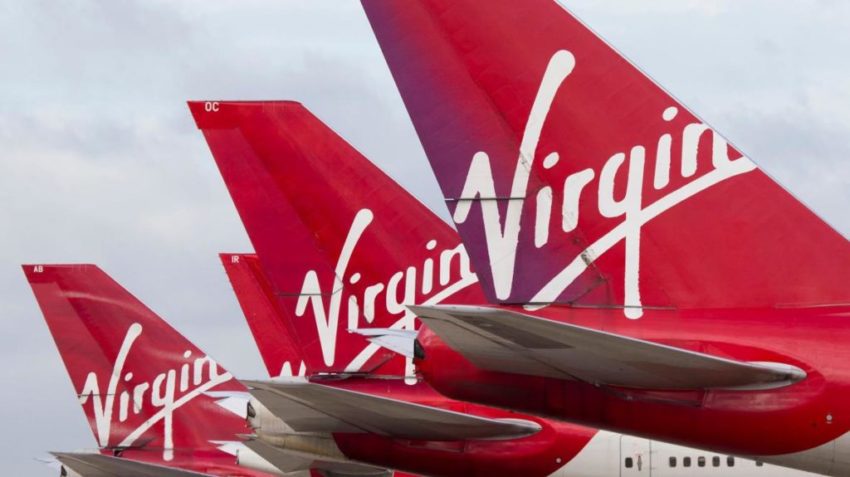
Virgin Planes

Airlines are facing a sharp rise in operating costs after jet fuel prices surged to their highest level in more than three years amid escalating conflict in the Middle East, raising fears of prolonged disruption to global energy supplies.

The price of aviation kerosene in European markets has climbed to levels not seen since the shortages triggered during the Covid-19 pandemic, placing immediate pressure on airline margins and sending aviation stocks lower.

The spike has been particularly severe because jet fuel prices have moved far beyond the rise in crude oil prices. Brent crude has climbed by more than 10 per cent this week to around $78.60 per barrel and is roughly 20 per cent higher than it was a fortnight ago. However, the cost of jet fuel delivered to airlines has risen significantly faster, creating an unprecedented gap between aviation fuel and crude oil benchmarks.

According to commodity pricing specialists Argus Media, the cost of jet fuel physically supplied to airlines has increased by about 23 per cent over the past week alone. The price is now 48 per cent higher than last Friday and has surged by 68 per cent over the past month.

Market participants have described trading conditions as highly unstable. Analysts said the jet fuel market had entered a period of extreme volatility as traders struggled to price in the risks created by military tensions in the Gulf.

Advertisement

Amaar Khan, an analyst at Argus Media, said the current market dynamics were extraordinary. Even though supply risks linked to the conflict are real, he said traders believed the current price spike had become detached from normal supply-and-demand fundamentals. One trader described the situation as “absolute chaos”, noting that “no fundamentals can explain these prices”.

The aviation sector’s exposure to the Middle East has amplified the shock. European airlines depend heavily on jet fuel imports from the Gulf region, with a significant share of those shipments passing through the Strait of Hormuz, one of the world’s most critical maritime energy corridors.

Industry data suggests that at least 40 per cent of Europe’s jet fuel imports last year originated from the Middle East Gulf region and travelled through the strait. Kuwait alone accounted for a substantial portion of these supplies and remains Europe’s largest single supplier of aviation fuel.

The Strait of Hormuz has effectively become a flashpoint for global energy markets after Iran imposed a blockade in response to military attacks carried out by the United States and Israel. The narrow waterway, which sits between Iran and the United Arab Emirates, serves as the primary export route for oil and gas shipments from the Persian Gulf.

Advertisement

Any sustained disruption to traffic through the strait could severely restrict global fuel supplies, particularly for jet fuel, which is already in tight supply across Europe.

Analysts warned that while European refineries could increase their production of jet fuel to offset some of the disruption, they would struggle to replace Gulf imports entirely if the conflict continued.

Argus noted that Europe’s aviation fuel market had already become structurally tighter in recent years due to rising travel demand following the pandemic recovery. With refiners operating near capacity, there is limited scope to increase output quickly enough to compensate for any prolonged interruption to Gulf shipments.

At the same time, the cost of transporting fuel from alternative regions has also risen sharply. Freight rates for tanker shipments have surged as insurers raise premiums on vessels travelling through conflict-affected waters, making imports from other regions significantly more expensive.

Advertisement

The result has been a dramatic increase in jet fuel prices relative to crude oil. Aviation fuel is now trading at almost double the price of Brent crude, a differential that analysts say has never previously been recorded.

For airlines, the timing of the price spike is particularly challenging because fuel typically represents between 25 and 35 per cent of operating costs. Even short-term volatility can therefore have a significant impact on profitability.

Shares of European airline groups have already reacted to the rising costs and growing uncertainty surrounding Middle Eastern airspace.

International Airlines Group has seen its share price fall about 16 per cent from the record high it reached last week when it reported strong annual results. The airline group, which owns carriers including British Airways, Iberia and Aer Lingus, faces both higher fuel costs and operational disruptions on long-haul routes through the region.

Advertisement

Budget airline easyJet has also seen its shares fall around 6 per cent this week. The carrier does not operate routes directly in the Middle East but remains vulnerable to rising fuel costs across the industry. Its stock had already been under pressure, declining roughly 15 per cent since the start of the year.

Meanwhile Wizz Air warned that the conflict could cut €50 million from its annual profits due to cancelled regional flights and adverse movements in fuel and currency costs. The airline has said the combined impact could push it into a full-year loss, with its shares dropping about 20 per cent over the past week.

Airlines have sought to protect themselves from fuel volatility through hedging strategies that lock in fuel purchases months or even years in advance. These hedges can soften the immediate impact of price spikes but cannot fully shield carriers if elevated costs persist for a prolonged period.

Europe’s largest airline by passenger numbers, Ryanair, recently confirmed that it has forward-purchased approximately 80 per cent of its jet fuel requirements at an average price of $67 per barrel through to March 2027.

Advertisement

International Airlines Group has also hedged a large portion of its future fuel consumption, locking in prices for around 62 per cent of its fuel needs for 2026.

Similarly, easyJet said it has hedged about 62 per cent of its fuel requirements for the upcoming summer season at an average price of $68.80 per barrel.

While these measures provide some protection against sudden spikes, analysts warn that sustained price increases would still filter through into airline costs over time as hedges expire and new contracts are negotiated.

Industry observers say the key factor determining how severe the crisis becomes will be the duration of the disruption to Gulf energy flows and whether shipping through the Strait of Hormuz can resume safely.

Advertisement

If the blockade persists or the conflict spreads further across the region, aviation fuel prices could remain elevated for months, forcing airlines to absorb higher costs or pass them on to passengers through higher ticket prices.

For now, airlines and investors alike are watching energy markets closely as geopolitical tensions continue to ripple through the global aviation industry.


Jamie Young

Jamie Young

Jamie is Senior Reporter at Business Matters, bringing over a decade of experience in UK SME business reporting.
Jamie holds a degree in Business Administration and regularly participates in industry conferences and workshops.

When not reporting on the latest business developments, Jamie is passionate about mentoring up-and-coming journalists and entrepreneurs to inspire the next generation of business leaders.

Advertisement

Continue Reading
Click to comment

Leave a Reply

Your email address will not be published. Required fields are marked *

Business

US trade court orders tariff refunds in setback for Trump administration

Published

on

US trade court orders tariff refunds in setback for Trump administration

A trade court has cleared the way for businesses to receive refunds for tariffs that the Supreme Court struck down last month.

Continue Reading

Business

Walmart recalls 40,000+ bike helmets over safety standard violations

Published

on

Walmart recalls 40,000+ bike helmets over safety standard violations

More than 40,000 bicycle helmets sold at Walmart are being recalled by the U.S. Consumer Product Safety Commission because they violate federal safety standards and pose a “serious risk of injury or death” from head injuries.

Todson Inc., a bicycle wholesaler in Massachusetts, is recalling 40,245 Concord-branded 360 Degree Rechargeable Light-Up bike helmets after federal safety officials said the helmets failed to comply with mandatory retention system and positional stability requirements. 

Advertisement

“The helmets can fail to protect the user in the event of a crash,” the company said.

The recall, which was announced on Feb. 26, involves large-size helmets with a black exterior, built-in LED lighting system, black straps and buckle, and a black plastic adjustment knob at the back.

DANGEROUS TIKTOK TREND LEAVES BOY BADLY BURNED AS DOCTORS ISSUE WARNING

A black helmet is packaged with a tag that reads "E-Bike Certified Helmet."

The Concord bicycle helmets, recalled by Todson, violate federal safety standards and may not stay securely in place during an accident, raising the risk of severe or fatal head injuries. (Consumer Product Safety Commission)

“Concord” is printed on the rear of the helmet.

Advertisement

The helmets were sold at Walmart stores nationwide and online at Walmart.com from January 2025 through September 2025 for about $30.

Buyers are being urged to immediately stop using the recalled helmets and contact Todson for a full refund.

CALIFORNIA WOMAN HOSPITALIZED WITH CHEMICAL BURNS AFTER PORTABLE CHARGER EXPLODES WHILE SLEEPING

A graphic that reads "LOT #, MODEL #, REF #, LOCATION" points to a tag inside of a black bicycle helmet.

The recalled Concord bicycle helmets can be identified by a sticker on the inside of the product. (Consumer Product Safety Commission)

“Consumers should destroy the recalled helmets by cutting the straps off the helmets. Consumers can send photos of the helmet with the straps cut off to 360concordhelmet@todson.com to obtain a refund,” Todson said.

Advertisement

No injuries have been reported.

BEEF STICKS FOOD PRODUCT RECALLED FOR ‘PIECES OF METAL’ FOUND INSIDE

The back of a black helmet in front of a white background.

Todson has issued a recall for its Concord bicycle helmets after tests found they can fail to properly protect riders during a crash. (Consumer Product Safety Commission)

CLICK HERE TO DOWNLOAD THE FOX NEWS APP

The company also warned consumers not to throw the helmet’s lithium-ion battery in the trash or standard recycling bins because of the risk of fire

Advertisement

Consumers should contact their local household hazardous waste facility for proper disposal guidance.

Continue Reading

Business

Fall in Welsh business confidence shows new Lloyds research

Published

on

Business Live

The level of confidence amongst Welsh firms is lower than for the UK as a whole.

(Image: PA)

Business confidence in Wales fell in February according to the latest business barometer from Lloyds.

Companies in Wales reported lower confidence in their own business prospects month-on-month, down three points at 35%. When taken alongside their optimism in the economy, down five points to 22%, this gives a headline confidence reading of 29% ( compared to 32% in January). Anything above a zero reading is positive and anything below negative.

Advertisement

Looking ahead to the next six months, Welsh businesses identified their top target areas for growth as investing in their team, for example through training (71%), evolving their offering, for instance by introducing new products or services (52%) and entering new markets (29%).

For the UK as a whole business confidence was unchanged since January at 44%.

READ MORE: Car insurance to loans group Admiral post record profitsREAD MORE: Deloitte appoints new senior partner for the South West and Wales

Firms’ confidence in their own trading prospects fell six points to 53%, but their optimism in the wider economy rose eight points to 36%.

Advertisement

London was the most confident UK nation or region in February (59%), followed by the north east (58%) and Northern Ireland (58%).

The construction sector saw strong gains in overall confidence. In February, confidence was up 14 points to 60%, with manufacturing also seeing a boost, up five points to 37%. Confidence for retail and service sector firms softened slightly, each down two and three points respectively.

Nathan Morgan, area director for Wales at Lloyds, said: “While business confidence dipped this month, we know Welsh businesses are continuing to press ahead with their growth strategies.

“Whether their plans are to upskill their teams, enter new markets or diversify product and service offerings, we’ll continue to be ready to provide our support.”

Advertisement

Hann-Ju Ho, senior economist, Lloyds Commercial Banking, said: “It’s encouraging to see optimism in the wider economy returning, although with a small reduction in firms’ confidence in their own trading prospects. The majority of the survey results were collected following the Bank of England’s close decision to hold interest rates at its February meeting, signalling potential easing ahead, which may have alleviated business concerns, including those around cost pressures. While the rise in pricing expectations to a six month high may indicate firms are looking to rebuild their margins in 2026.

“It’s also great to see confidence increase for manufacturers and construction firms as they are key for UK growth.”

Continue Reading

Business

Home sellers are re-listing properties at the fastest pace in a decade

Published

on

Home sellers are re-listing properties at the fastest pace in a decade

A “For Sale” sign outside a house in the Capitol Hill neighborhood of Washington, DC, US, on Tuesday, Aug. 12, 2025.

Al Drago | Bloomberg | Getty Images

The all-important spring housing market is off and running, and while the pace isn’t expected to be strong, there are signs of optimism, at least among sellers. Some who gave up last year are jumping back in.

Advertisement

Nearly 45,000 homes that were delisted last year were relisted for sale in January, according to Redfin, a real estate brokerage. That is the highest January figure since Redfin began tracking this metric a decade ago and represents a record 3.6% of homes that were on the market in January.

The January figures come as Redfin reported a record number of sellers pulling their homes off the market last September. Close to 85,000 sellers delisted, up 28% from September 2024. Higher mortgage rates last year, still-high home prices and growing uncertainty in the economy sidelined buyers last fall, taking sellers out of the driver’s seat, where they had been in the years during and just after the pandemic.

Get Property Play directly to your inbox

CNBC’s Property Play with Diana Olick covers new and evolving opportunities for the real estate investor, delivered weekly to your inbox.

Subscribe here to get access today.

Advertisement

Ashley Rummage, a real estate agent in Raleigh, North Carolina, in response to CNBC’s fourth-quarter Housing Market Survey, said in December that more sellers were being asked for concessions, and some just refused.

“A lot of sellers I’ve encountered and worked with have just thrown their hands up in the air and said, ‘If we can’t get what we want for our house right now, or what we think is it’s worth, then we’re gonna go ahead and take it off to market and try again, maybe in the spring,’” Rummage said.

The overall inventory of homes for sale nationally is higher than it was a year ago, but the gains are plateauing, according to Realtor.com. Active listings were up 7.9% in February, year-over-year, but that number has been shrinking for nine straight months. Listings are still down 17% from 2019, pre-pandemic.

“Inventory has improved for more than two years, but the momentum has faltered in recent months,” said Danielle Hale, chief economist, Realtor.com. “Supply gains have been concentrated in the South and West and skewed toward homes priced below $500,000. While the Northeast and Midwest have seen growth, they remain significantly undersupplied.”

Advertisement

With rates now hovering near four-year lows, Hale said, a key question is whether this “thaw” spurs more buyers or more sellers. Mortgage rates have climbed slightly higher in recent days, due to the ongoing war with Iran and renewed fears over inflation.

Continue Reading

Business

Catalina Crunch adds new products

Published

on

Catalina Crunch adds new products

One product was previously limited edition.

Continue Reading

Business

No HPAI vaccine yet, but research continues

Published

on

No HPAI vaccine yet, but research continues

Grant recipients shared their innovative approaches to managing the current HPAI outbreak.

Continue Reading

Business

CrowdStrike Holdings, Inc. (CRWD) Presents at Morgan Stanley Technology, Media & Telecom Conference 2026 Transcript

Published

on

OneWater Marine Inc. (ONEW) Q1 2026 Earnings Call Transcript

Q4: 2026-03-03 Earnings Summary

EPS of $1.12 beats by $0.02

 | Revenue of $1.31B (23.32% Y/Y) beats by $7.98M

CrowdStrike Holdings, Inc. (CRWD) Morgan Stanley Technology, Media & Telecom Conference 2026 March 5, 2026 10:45 AM EST

Company Participants

Burt Podbere – Chief Financial Officer

Advertisement

Conference Call Participants

Meta Marshall – Morgan Stanley, Research Division

Advertisement

Presentation

Meta Marshall
Morgan Stanley, Research Division

All right. Welcome, everybody. We’re going to have a great act to follow here with CrowdStrike, but I’ll read the disclosures first. If any research disclosures that you’re interested in, please see morganstanley.com/researchclosures, or reach out to your sales representative. Delighted to have CrowdStrike here, Burt Podbere, CFO.

Advertisement

Question-and-Answer Session

Meta Marshall
Morgan Stanley, Research Division

Maybe to kick off. We just had Sam on stage. How do you think about everything that Sam said, and how it relates to kind of all the security we’re going to need to protect against that?

Advertisement

Burt Podbere
Chief Financial Officer

Meta, you said it right, they’re going to need security. And we’re here to help. Look, we have a partnership with OpenAI and others. And we’re really excited about what we can do together. And we don’t comment on who our customers are. But certainly, we have a lot of interactions with Sam and the team. So we’re excited to see what the future holds.

Advertisement

Meta Marshall
Morgan Stanley, Research Division

All right. Perfect. All right. We’re going to put on as good of a show. All right.

Burt Podbere
Chief Financial Officer

Advertisement

I’m here to help.

Meta Marshall
Morgan Stanley, Research Division

Exactly. So you reported very strong fiscal Q4 earnings on Tuesday this week. There were a lot of highlights. We saw EDR reaccelerate, continued strong growth across multiple growth pillars, strong traction with Flex. What were some of the most encouraging signs for you versus kind of expectations you had coming into the quarter?

Advertisement
Continue Reading

Business

HeyNu launches flagship protein bars

Published

on

HeyNu launches flagship protein bars

The bars are formulated with plant-based protein. 

Continue Reading

Business

Better’s new ChatGPT app targets lenders Rocket and UWM

Published

on

Better’s new ChatGPT app targets lenders Rocket and UWM

Vishal Garg, Better.com

Source: Better.com

The online mortgage platform Better has partnered with OpenAI to launch an app within ChatGPT that the companies said will dramatically reduce the time it takes to underwrite a mortgage or home equity loan, CNBC has learned exclusively.

Advertisement

The app, to be announced later Thursday, takes Better’s mortgage engine and combines it with OpenAI’s models to speed up the underwriting process for loan officers working at banks, mortgage brokers and fintech firms, Better CEO Vishal Garg said in an interview.

“Taking the mortgage underwriting process, which so many of us have experienced personally, from 21 days to as little as 47 seconds and enabling it via ChatGPT is a huge unlock for everyone,” Giancarlo Lionetti, OpenAI’s chief commercial officer, said in a statement provided to CNBC. “OpenAI is proud to partner with Better to build technology that revolutionizes the mortgage industry and makes it cheaper, faster, and easier for American families to finance a home.”

For decades, creating a mortgage has been one of the most time-consuming corners of American finance, with lenders relying on dozens of steps that can take weeks to complete. After the 2008 financial crisis, big banks like JPMorgan Chase receded from the U.S. mortgage market, leading to the rise of non-bank players including Rocket Mortgage and United Wholesale Mortgage.

Now, in an era where the leading artificial intelligence firms are targeting inefficiencies across the corporate landscape, it’s possible that AI agents could reshape a U.S. home-loan market that originates more than $1 trillion in mortgages a year.

Advertisement

Garg said the new app is part of Better’s pivot from being primarily a lender to consumers to also becoming a “mortgage-as-a-service” tech platform for other mortgage players.

The companies are taking direct aim at the dominant mortgage players by enabling competitors to move faster, Garg said. According to Better, lenders can save 21 days of time on average, reducing the costs to underwrite loans and ultimately saving consumers money as well.

“AI is now doing mortgages,” Garg said. “Rocket, UWM, Pennymac, a bunch of guys that are large public companies, make their money by effectively charging a tax of one and half percent to underwrite mortgages. … That’s $20 billion that’s paid by the American public in a typical year.”

OpenAI’s models, fed with Better’s mortgage data, save time by simultaneously running parallel workflows on dozens of checkpoints, including appraisals, title reports, income, credit reports and other metrics, Garg said.

Advertisement

“It’s not a simple tool call. It’s a multiple tool call with a super long, extended logic tree and a very large context window,” Garg said.

Continue Reading

Business

BOJ Governor Sticks to Rate-Hike Stance Amid Iran Tensions

Published

on

BOJ Governor Sticks to Rate-Hike Stance Amid Iran Tensions

TOKYO—Bank of Japan Gov. Kazuo Ueda reaffirmed his commitment to further interest-rate increases amid deepening concerns over instability in the Middle East.

“While we intend to carefully monitor the impact of the situation in the Middle East, we believe it is appropriate to continue raising the policy rate and adjusting the degree of monetary accommodation if the economy and prices improve in line with our quarterly outlook,” Ueda said at a parliamentary session Wednesday.

Copyright ©2026 Dow Jones & Company, Inc. All Rights Reserved. 87990cbe856818d5eddac44c7b1cdeb8

Continue Reading

Trending

Copyright © 2025