

Politics
South East Water fined in damning Ofwat judgement


On 5 March, Ofwat proposed a fine of over £22m to lax water firm South East Water. The news comes on the heels of an investigation into the companies repeated failures across 2020-2023.
These supply disruptions affected upwards of 286,000 people. Often, customers were left without running water, meaning they were unable to bathe, clean dishes, or even flush the loo.
However, the fine isn’t a done deal just yet. Ofwat is running a customer consultation on the fine until 13 April. If you want to have your say, follow the link here.
South East Water ‘failed to plan sufficiently’
The report itself was damning, finding that South East Water:
failed to plan sufficiently, learn from incidents and conduct root cause analysis to maintain resilience within its water supply system, and was therefore unable to cope during periods of high demand or extreme weather. The company also failed to maintain key infrastructure such as service reservoirs, boreholes and major pipes.
Taken together, these issues meant that South East Water’s was more likely to fail in the face of both freeze-thaw events and long dry periods.
Ofwat accused the water firm of lacking organisation, responding slowly to key issues, and failing to learn from previous mistakes. Worse still, the water watchdog stated that:
South East Water has not taken ownership of these issues and as a result, supply interruptions are still happening too often. Our proposed enforcement order sets out the steps we expect the company to take, including senior management responsibility to fix the problems to prevent them from happening again.
‘Significant failings’
Given the severity of the issues, the full fine that Ofwat is proposing is £22.46m. That’s equal to 8% of the South East Water’s annual turnover.
The maximum penalty which the regulator could impose is equal to 10% of a company’s turnover. In South East Water’s case, this would run a bill of just over £28m.
Ofwat’s consultation for customers and stakeholders is already open. After it closes on 13 April 2026, Ofwat will weigh the responses and make its final decision.
Chris Walters, Ofwat’s interim CEO, said:
South East Water’s significant failings caused major disruption and had a huge impact on thousands of its customers. Not only did the company fail in its duty to provide a water supply to meet the demands of its customers, but it also fell short when it came to providing support for customers who lost their supply. They must do better.
This investigation gets to the heart of the company’s supply resilience problems. We want to see South East Water take more responsibility and get on with fixing things for its customers.
Legal challenge
Funding body the Utilities Trust of Australia currently owns a 50% share of South East Water, along with a group of other pension and investment funds.
South East Water has already filed for a judicial review in response to Ofwat’s proposed fine. The water firm also requested an injunction, although the court swiftly rejected the plea.
Of course, given that the fine was issued for failures back in 2020-2023, it hasn’t taken into account any of the company’s more-recent massive fuckups. Back in December 2025, the Canary reported that:
Only last week, 6,500 properties were without water. Whilst the company restored the supply on Friday, January 16, it then left a further 5,500 homes without water on Sunday evening. This was due to a treatment works fault, a power outage and two burst mains – all at the same time.
And then again, on 19 January:
Over the last few weeks, South East Water left customers across Kent without water on several occasions.
Only last week, 6,500 properties were without water. Whilst the company restored the supply on Friday, January 16, it then left a further 5,500 homes without water on Sunday evening. This was due to a treatment works fault, a power outage and two burst mains – all at the same time.
Adding insult to injury, South East Water had the nerve to claim that they’ll have to increase customers’ water bills. That’s in spite of Ofwat’s ban on further price hikes, which the company have appealed against.
Meanwhile, the water supplier’s profits have continued to climb. South East Water reported profit before tax of £18.2m for the six months up to October 2025, up from £2.6m the previous year.
To put that another way, South East Water are still failing to fix their mistakes, demanding that customers pay more, and raking in over £15m profit increases.
Further investigation
As such, Ofwat has already launched a new investigation of the supply interruptions in November and December 2025, and January 2026. The watchdog stated that:
This investigation will determine whether the company complied with its customer-focused licence condition, which requires companies to provide a high level of support to customers when issues arise. This licence condition was introduced in February 2024.
However, as the failures from 2020 have made abundantly clear, the threat of fines hasn’t been nearly enough to make South East Water mend its ways. This company is doing less than the bare minimum, leaving customers without water, and letting its infrastructure go to ruin.
And it’s still turning a massive profit.
This is privatisation in action – a system that allows companies to extract money from customers who literally have no other choice. The system is, and has always been, wide open to abuse. We can’t allow this to stand – we must call to end the failed experiment that is privatisation.
Featured image via the Canary


The dire consequences of Britain’s student-loan racket are no longer a secret. They have become a major talking point in recent weeks. Contrary to the claims of UK chancellor Rachel Reeves, the system is anything but ‘fair and reasonable’. Equally unfair is the graduate-jobs crisis. Youth unemployment in London has now reached 18 per cent, while in the UK as a whole, it hit an 11-year high at the end of 2025. To complete the trifecta, there is the less tangible (but equally pressing) matter of how graduates are treated while navigating the job market.
Ironically, those tasked with graduate employment (typically human-resources departments) preach inclusivity, respectful workplace behaviour and ‘people-centricity’. To examine whether these values are put into practice, I’ll walk you through a typical graduate recruitment process – though calling it a ‘process’, which implies some kind of structure and eventual conclusion, is generous.
First, you’ll submit your application. On many job descriptions, you see the ominous phrase ‘minority groups encouraged to apply’, which seems to be a heavy hint that if you’re white, straight and male you probably shouldn’t bother. You are asked to trawl through various questions about your ethnicity, sexual orientation and religion. I’ve known people to lie about their sexuality, and even their ethnicity, with one friend from the Mediterranean claiming to be mixed race.
If they pass this racial screening, graduates are invited to submit CVs and cover letters, which are frequently written by AI. This is hardly a moral failing, given that they are then read by AI and ultimately rejected by AI. So-called human resources have engineered a system that is, in practice, the least-human process imaginable.
The lucky few are then instructed to complete ‘assessments’. Since companies tend to use the same assessment providers, the good news is that you have likely completed them before. Maths graduates from top universities must do maths assessments. Everyone is made to complete personality tests. Occasionally, you play games involving stopping stopwatches at designated times. The value of your academic record, even for those with strong academic records, is zero.
A tiny percentage will then reach the ‘interview’ stage. But no, this is not an interview in the traditional sense. Instead, you answer five questions to your laptop camera while eyeing up the recording of yourself, which are then submitted to be ‘reviewed’ (usually by AI again). If you do speak to a human, it will rarely be in person, but online.
Now you are firmly ‘in the process’. You have submitted a CV, a cover letter, your family and sexual history, a nervy, stuttering video of yourself and, perhaps three months in, you might even have spoken to a real person. But you’re not quite finished yet. Months later still, you might hear you have reached another stage. Though more likely, you will never hear from the company again – or else receive a letter informing you of your rejection, with little explanation as to why. I still receive the occasional rejection email, despite having not submitted a job application since September.
One friend woke up on the day of his final-round interview to be told that the position no longer existed. The same friend reached an assessment centre, only to find every interview slot booked up. He was informed that no more would be added. Another graduate told me he reached the final interview stage only to be ghosted. Two months later, he received an email explaining that the role had been removed. Such stories are common. Most out-of-work graduates have many.
Senior management has handed too much power to HR departments, which have created processes that are automated, outsourced and designed to minimise difficult decision-making. HR is the fastest-growing industry in the UK, and much of that growth resides in what David Graeber called ‘bullshit jobs’. If HR ‘executives’ create months-long processes with eight different stages, they can justify hiring more HR ‘executives’ to help run them. Their inefficiency is self-rewarding.
This experience, compounded by a regressive student-loan system and a failing graduate-job market, will have tangible consequences for politics. If the Labour government refuses to address these concerns, young people will only continue to abandon traditional parties for those that promise real, radical change. No one should be surprised when the reckoning comes.
Jake Weston works on comms and press at the Academy of Ideas. This is an edited version of a piece that appeared on the Academy of Ideas Substack.
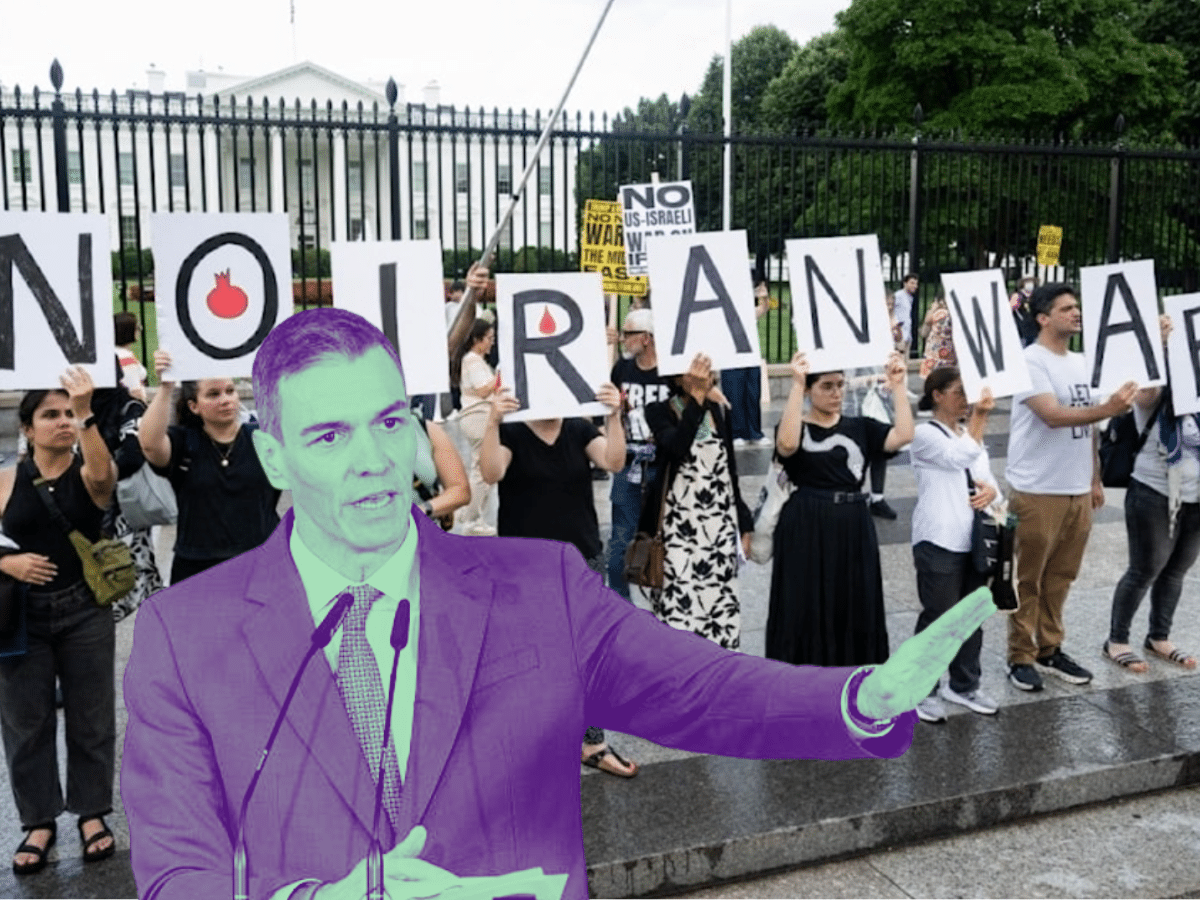
Spanish prime minister Pedro Sánchez has responded firmly after US president Donald Trump threatened to cut all trade with its European ally. Sánchez made his opposition to the illegal US-Israeli assault on Iran clear, saying:
one can be against a hateful regime… and at the same time be against an unjustified, dangerous military intervention outside of international law.
Sánchez, undeterred by Trump’s latest tantrum, has asserted that his country will not bow or change its stance even as the US presses down harder.
Same players, another dirty war
Sánchez made a clear call for peace and compliance with international law, highlighting the devastation of the US-led 2003 invasion of Iraq, Russia’s 2022 invasion of Ukraine, and Israel’s genocide in Gaza. Expressing no love for Iran’s government, Sánchez nonetheless insisted:
The question is whether we are in favour of peace and international legality…
You cannot answer one illegality with another, because that is how the great catastrophes of humanity begin.
He also suggested that Trump may be using the illegal assault on Iran as a distraction from his failures elsewhere, saying:
Governments are here to improve people’s lives, to provide solutions to problems, not to make people’s lives worse. And it is absolutely unacceptable for those leaders who are incapable of fulfilling that mission to use the smoke of war to hide their failure and fill the pockets of a select few, the usual suspects – the only ones who win when the world stops building hospitals to make missiles.
Trump’s words and policies aren’t impressing ordinary people in Spain either. A recent poll, for example, showed that 77% of the Spanish population dislikes Trump.
What a beautiful day to wake up in Spain.
For the first time in a very long time, I’m seeing people from the left and the right come together for one reason: hating Trump.Thank you, Pedro Sánchez 🌹 https://t.co/aE3InZXY2x
— Leyla Hamed (@leylahamed) March 4, 2026
The spectre of the invasion of Iraq
Spain has also been overwhelmingly critical of the fallout from the calamitous US invasion of Iraq. Commenting on its aftershocks in Europe, Sánchez said the invasion had made people’s lives “more insecure” and left them “worse” off.
At the time of the invasion 23 years ago, Spain’s conservative government joined the “coalition of the willing” (the main force that enabled the illegal offensive), contributing 1,300 troops. Due to the backlash at home, the Spanish conservatives lost the 2004 general election to the Spanish Socialist Workers’ Party.
The President of Spain is correct.
This is leadership.
We should be pushing for peace – and not jumping into another illegal war. https://t.co/e1KyBTtGp1
— Zack Polanski (@ZackPolanski) March 4, 2026
‘We’re not going to be complicit in something that’s bad for the world simply to avoid reprisals’
Spanish Prime Minister Pedro Sanchez has warned that the war with Iran risked playing ‘Russian roulette’ with the lives of millions.
Sanchez was responding after President Trump… pic.twitter.com/mXY7AAR27H
— Channel 4 News (@Channel4News) March 4, 2026
Spain’s position on Iran is clear — the same stance we have taken on Ukraine & Gaza.
No to breaches of intrl law, which protects us all, especially civilians.
We reject the idea that the world can solve its problems through bombs.
Let us not repeat past mistakes.
NO TO WAR https://t.co/Fkcm4RPo1L
— Embassy of Spain UK (@EmbSpainUK) March 4, 2026
Spain: a voice for peace
The Spanish government is not perfect – no government is. But during Israel’s genocide in Gaza, it has been one of the few European countries with the common decency to:
In fact, as Trump was having a tantrum over its opposition to the illegal assault on Iran, Spain reportedly participated in a Hague Group emergency meeting on Wednesday 4 March discussing accountability measures against Israel for its war crimes.
The Hague Group has been the political silver lining of the past year. May this mark the start of a new, DECOLONISED MULTILATERALISM: where every state is equal, sovereignty is respected, and human rights are upheld consistently and universally, not cherrypicked when convenient. https://t.co/NPR0gYkAr8
— Francesca Albanese, UN Special Rapporteur oPt (@FranceskAlbs) March 4, 2026
While the US and Israel attack Iran with European support, over 40 states are meeting in The Hague today to coordinate the enforcement of international law for Palestine.
They are aiming to end the era of impunity👇 pic.twitter.com/YsRzNFUXt1
— Declassified UK (@declassifiedUK) March 4, 2026
In the midst of the US-Spain spat, French leader Emmanuel Macron and European Council president António Costa expressed solidarity with Spain. And it’s clear that there’s broad support for Sánchez’s position in Europe.
Pedro Sánchez and his government have our full support. Spain chose dignity and international law over yet another illegal war launched by Trump and Netanyahu.⁰⁰The Socialist government blocked U.S. warplanes from using Spanish military bases to launch attacks in the Middle… pic.twitter.com/FFpj63Ucp4
— S&D Group (@TheProgressives) March 4, 2026
Full European🇪🇺 solidarity with Spain🇪🇸. #Trump #Sanchez https://t.co/fQORSA2pdf
— Enrico Letta (@EnricoLetta) March 4, 2026
Spain approved an arms embargo on Israel.
Spain call out Trump for breaking international law.
Spain realise war will be devastating.
Spain shows the sort of international leadership a left wing party in government should provide. https://t.co/SrNW2onFM6
— Brian Leishman (@BrianLeishmanMP) March 3, 2026
As other European countries oscillate between lukewarm statements and indifference, it’s clear that the world sorely needs more politicians like Pedro Sánchez – and fewer like Donald Trump.
Featured image via the Canary
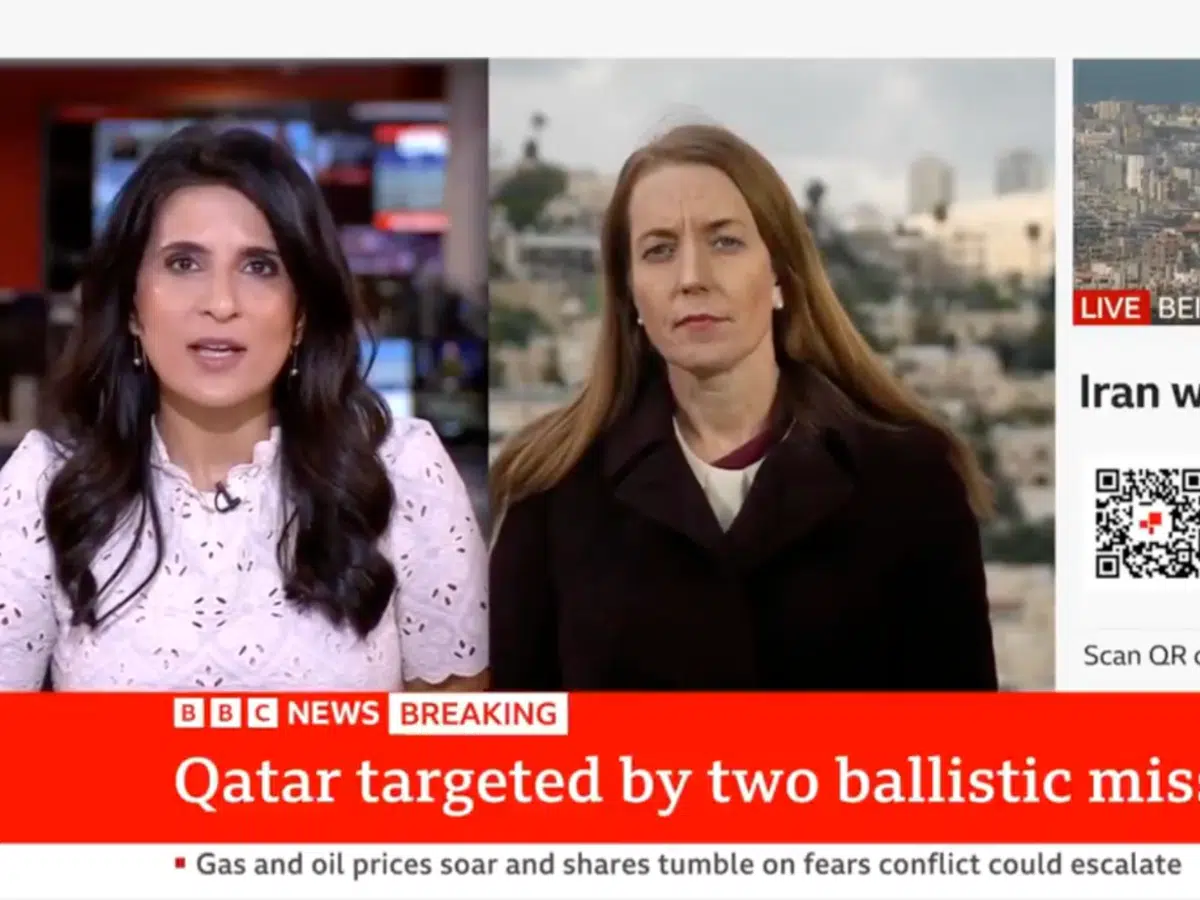
The BBC has faced accusations of “war propaganda” over the illegal and unprovoked US-Israeli attacks on Iran, which have killed over a thousand people since Saturday 28 February.
Having spent over two years putting out pro-Israel propaganda amid the apartheid state’s genocide in Gaza, the British state broadcaster doesn’t exactly hide its pro-establishment bias. But author Trita Parsi directly called its Iran coverage out after a report only selected pro-war Iranian voices. As he said:
Those views exist. But when you ONLY air those voices, you are doing war propaganda.
I was on BBC last night, following a clip with voices from Iran. All the selected voices welcomed war, saying they cheered every time they heard an explosion.
Those views exist. But when you ONLY air those voices, you are doing war propaganda.
And I told BBC that live on air. pic.twitter.com/ZCsy3qKOC2
— Trita Parsi (@tparsi) March 3, 2026
Israel has also invaded Lebanon during the latest offensive, killing 50 people and injuring hundreds more. And on that front, the BBC‘s propaganda has also faced criticism:
The @BBCNews has become an accomplice not only to genocide in Gaza but now also the project for Greater Israel. This report @YolandeKnell is a disgrace, and sanitises the invasion of a sovereign country & the trashing of international law. Orwell will be spinning in his grave https://t.co/pV25KZXH5A
— William Dalrymple (@DalrympleWill) March 3, 2026
As Saul Staniforth pointed out, the start of one answer sums up the BBC‘s role as a PR outlet for Israel:
So, the Israeli military said…
Yolande Knells reporting over the last 2+ years captured in a single 13 second clip. pic.twitter.com/zw62jNe39l
— Saul Staniforth (@SaulStaniforth) March 4, 2026
Elsewhere, more independent media has exposed the illegal US-Israeli actions for the dangerously destructive farce they are:
When the world seems impossibly grim, @PrivateEyeNews always helps… pic.twitter.com/vs8Clf2hy8
— William Dalrymple (@DalrympleWill) March 4, 2026
And as Steve Howell insisted, the UK doesn’t have to – and should not – participate:
Radical idea: Let’s close ALL overseas bases and invest in health, education and housing.
Having these bases, and letting US bombers use them, only makes us a target and risks dragging us into Washington’s wars.
It costs £billions and contributes nothing to our own defence. 1/2 pic.twitter.com/1rFDdAqHMr
— Steve Howell (@FromSteveHowell) March 3, 2026
Your Party’s Jeremy Corbyn, meanwhile, has called for parliament to ensure such a decision isn’t just in the hands of the corrupt, pro-Israel cabinet:
I have tabled a Bill to require Parliamentary approval for the foreign use of British military bases.
We must learn the lessons of the past — and stop our Prime Minister from dragging Britain into another catastrophic, illegal war. pic.twitter.com/ZSfHM2fKp8
— Jeremy Corbyn (@jeremycorbyn) March 4, 2026
Spain has also been showing that there is another way:
Spain’s position on Iran is clear — the same stance we have taken on Ukraine & Gaza.
No to breaches of intrl law, which protects us all, especially civilians.
We reject the idea that the world can solve its problems through bombs.
Let us not repeat past mistakes.
NO TO WAR https://t.co/Fkcm4RPo1L
— Embassy of Spain UK (@EmbSpainUK) March 4, 2026
The world, Europe, and Spain have faced this critical moment before. In 2003, a few irresponsible leaders dragged us into an illegal war in the Middle East that brought nothing but insecurity and pain.
Our response then must be our response now:
NO to violations of…
— Pedro Sánchez (@sanchezcastejon) March 4, 2026
Don’t let the BBC push us to another costly, devastating quagmire
Commentators have emphasised how expensive the US-Israeli assault on Iran is, and how much more expensive it could get:
According to the Iran Cost Ticker, Trump and Israel’s war on Iran has already cost US taxpayers more than $2bn!
It’s been three days…https://t.co/tCn3BhSuJb
— Trita Parsi (@tparsi) March 3, 2026
Iran’s cheap drones can quickly deplete expensive US-made weapons. The outcome of the war may be determined by which side’s weapons last longer. Read more: https://t.co/r5oEfpFqTZ
📷️: Fatemeh Bahrami/Anadolu/Anadolu pic.twitter.com/WKSPZIpFd9
— Bloomberg (@business) March 3, 2026
Just remember that it took 3.5 trillion dollars and 20 years to replace the Taliban with the Taliban. Let that sink in.. https://t.co/EXX9hVa85g
— Mark Seddon (@MarkSeddon1962) March 3, 2026
In the US, even Democrats (who have enabled Israel’s genocide) have read the room and spoken out. They know how unpopular the offensive already is, and they have spoken out en masse:
Just so we’re clear, the number of Americans who approve of Trump’s Iran war is 27%.
So we’re also clear, the number of Americans who approved of the Vietnam War at its end in 1973-4 was 29%.
— Rick Wilson (@TheRickWilson) March 3, 2026
Today, Congress was finally briefed on Trump’s war of choice in Iran.
Even behind closed doors, they couldn’t get their story straight.
But one thing is clear: they don’t have a clue what the end game is, and it sure as hell isn’t making America safer. pic.twitter.com/8foSSDwNKT
— Senator Chris Van Hollen (@ChrisVanHollen) March 4, 2026
🚨 Senator Elizabeth Warren just walked out of the classified Iran briefing:
“I was worried before. I’m more worried now.”
Then she said the quiet part loud:
“It is so much worse than you think.”
No plan. Illegal war. Based on lies. No imminent threat.
That’s not the… pic.twitter.com/cPELx6jRre— Brian Allen (@allenanalysis) March 4, 2026
Trump is lying.
I serve on the Intel & Armed Services Committees.
There’s no intelligence that Iran posed an imminent threat to the U.S. or the American people. pic.twitter.com/GQ6cxyuMk4
— Rep. Jason Crow (@RepJasonCrow) March 3, 2026
Yes, I said this. And after a one-hour classified briefing where I learned absolutely nothing I didn’t already know about the administration’s ever-changing rationalizations for this war of choice, I stand by the statement. We are being fed piles of bullshit by a war-hungry… https://t.co/Rg96RPWB8P
— Rep. Jared Huffman (@JaredHuffman) March 4, 2026
Countless Democratic officials have raised their concerns about the assault.
In the UK, meanwhile, US-Israeli terror is also unpopular. And if we want to avoid further entanglement in another costly, devastating quagmire, we need to raise our voices so loudly that the establishment – including the BBC – can’t ignore us.
Featured image via Saul Staniforth

The consumer landscape has transformed dramatically over the past decade as health consciousness moved from a niche concern to a mainstream priority. Today’s consumers scrutinise ingredient lists, demand transparency about sourcing and production methods, and willingly pay premiums for products perceived as healthier, more natural, or better aligned with wellness goals. This shift presents both enormous opportunities and significant challenges for businesses across sectors, particularly in the FMCG industry, where product reformulation, marketing pivots, and supply chain adjustments are required to meet evolving consumer expectations.
Understanding this trend requires recognising that it extends well beyond simple preference changes. Health-conscious consumption reflects deeper cultural shifts around personal responsibility for wellbeing, distrust of traditional food systems, and the influence of social media in the spread of nutrition information and misinformation alike. Businesses that successfully navigate these waters do so by genuinely responding to legitimate consumer concerns rather than simply capitalising on trends through superficial marketing adjustments.
The Drivers Behind Health-Conscious Consumption
Several converging factors explain why health consciousness has intensified so dramatically. The obesity epidemic and rising chronic disease rates have made the connection between diet and health impossible to ignore. Consumers increasingly understand that daily food and beverage choices accumulate into significant long-term health impacts. This awareness drives them toward products they perceive as supporting rather than undermining their health.
Information accessibility via smartphones and social media means consumers can instantly research ingredients, compare products, and access nutrition expertise (genuine or otherwise) that previous generations lacked. Whilst this democratisation of information creates problems when misinformation spreads, it fundamentally empowers consumers to make more informed choices and hold brands accountable for claims.
The wellness industry’s explosive growth has normalised conversations about nutrition, supplements, and lifestyle choices that were once confined to specific subcultures. What was alternative or fringe twenty years ago is now mainstream, with concepts like plant-based eating, intermittent fasting, and gut health microbiome optimisation discussed routinely in popular media and everyday conversation.
Younger consumers, particularly Millennials and Gen Z, have grown up with unprecedented awareness of health, sustainability, and corporate practices. Their expectations for transparency and authenticity differ markedly from those of previous generations, and their purchasing power continues to grow as they age into their peak earning years. Brands targeting long-term success must adapt to preferences this demographic considers non-negotiable.
What Health-Conscious Actually Means to Consumers
The term “health-conscious” encompasses diverse, sometimes contradictory priorities across consumer segments. Some prioritise reducing calories and managing weight. Others focus on specific nutrients, such as protein or fibre. Many seek to avoid particular ingredients, including artificial additives, refined sugars, or specific allergens. An increasing segment prioritises “clean” ingredients, often defined more by what’s absent (no artificial colours, preservatives, or unpronounceable chemicals) than what’s present.
Plant-based and alternative proteins have expanded from niche vegetarian products to mainstream categories as consumers reduce their consumption of animal products for health, environmental, and ethical reasons. Functional foods and beverages promising specific health benefits beyond basic nutrition represent one of the fastest-growing segments, with products offering gut health support, immune boosting, stress reduction, or cognitive enhancement commanding premium prices.
Sugar reduction has become perhaps the most universal health-conscious priority, with consumers actively seeking lower-sugar alternatives across categories from beverages to snacks to condiments. However, they’re simultaneously suspicious of artificial sweeteners, creating complex reformulation challenges for manufacturers trying to reduce sugar without triggering concerns about synthetic ingredients.
Understanding these diverse priorities matters because there’s no single “health-conscious consumer.” Successfully navigating this landscape requires segmentation strategies that speak to different health priorities rather than attempting a one-size-fits-all healthy positioning.
Reformulation Challenges and Opportunities
Product reformulation to meet health-conscious demand involves substantial technical and financial challenges. Removing or reducing ingredients that consumers now avoid often affects taste, texture, shelf life, or production economics in ways that require significant investment in research and development. Sugar provides not just sweetness but also texture, bulk, and preservation functions that replacement ingredients must somehow replicate.
Natural preservatives typically cost more and are less effective than synthetic alternatives, putting pressure on supply chains and potentially increasing food waste. Plant-based proteins often require extensive processing to achieve textures and flavours comparable to animal proteins, sometimes resulting in highly processed products marketed as “natural” despite lengthy ingredient lists.
Despite these challenges, reformulation creates competitive advantages for brands that execute it successfully. Early movers in reducing sugar, removing artificial ingredients, or developing compelling plant-based alternatives have captured significant market share from competitors slower to adapt. The premium pricing that health-positioned products command can offset higher ingredient costs whilst improving margins.
Successful reformulation requires transparency about changes. Consumers respond better to brands that explain the rationale for reformulation and acknowledge that recipes might differ from original versions than to silent changes that loyal customers notice and interpret as cost-cutting rather than health improvement.
Marketing and Communication Strategies
Marketing to health-conscious consumers requires authenticity that goes beyond claims on packaging. Today’s consumers research brands, read reviews, and share experiences on social media, meaning that marketing messages unsupported by actual product quality or corporate practices get exposed quickly.
Transparency has become table stakes. Consumers want to understand ingredient sourcing, production methods, and the reasoning behind formulation choices. Brands succeeding in this environment provide detailed information readily, rather than hiding behind vague “proprietary blend” language or making unsubstantiated claims.
Certifications from credible third parties carry significant weight. Organic certification, non-GMO verification, fair trade status, and similar credentials signal that external organisations have verified claims rather than relying on self-assertion. The proliferation of certifications creates both opportunities and confusion, but established marks from respected organisations continue driving purchase decisions.
Storytelling that connects products to broader values resonates strongly. Brands that communicate not just what their products are but why they exist and what values guide their decisions build emotional connections that pure nutrition messaging cannot achieve. The most successful health-conscious brands inspire loyalty not just through superior formulations but through alignment with consumer values.
Distribution and Retail Considerations
Where products sell matters as much as what they contain. Natural food retailers and specialist health stores once dominated sales of health-conscious products, but mainstream grocery retailers have dramatically expanded these categories as demand has grown. This mainstreaming creates opportunities for volume growth whilst requiring brands to compete in more crowded retail environments.
E-commerce has become crucial for health-conscious brands, particularly smaller players who struggle to secure shelf space in conventional retail. Direct-to-consumer models allow brands to tell their stories more fully, build customer relationships, and capture margins that retail distribution would otherwise consume. Subscription models work particularly well for health-conscious products as consumers commit to ongoing purchases of products integrated into their daily routines.
Retail placement within stores affects perception. Products positioned in health or wellness sections signal their health orientation, but may miss mainstream shoppers who don’t visit those sections. Placement in conventional categories alongside traditional products normalises health-conscious alternatives whilst reaching broader audiences, but may dilute the health positioning that attracts core consumers.
Balancing Health Claims with Regulatory Compliance
The enthusiasm for health-conscious products has attracted regulatory attention as authorities work to prevent misleading claims and protect consumers from pseudoscience. Regulations govern what health claims products can make, what substantiation is required, and how benefits can be communicated.
Navigating this regulatory landscape requires careful compliance work. Claims must be accurate, substantiated by appropriate evidence, and not misleading, even if technically true. The boundary between permissible marketing and prohibited health claims varies by jurisdiction and product category, requiring expertise to avoid violations that could result in enforcement action, product recalls, or reputational damage.
Some brands push regulatory boundaries, making aggressive health claims that attract consumer interest but risk regulatory challenges. Others take conservative approaches, focusing on ingredient transparency and letting consumers draw their own conclusions about health benefits. The optimal strategy depends on risk tolerance, regulatory expertise, and brand positioning.
The Future of Health-Conscious Consumption
Health-conscious consumption shows no signs of declining. If anything, the trend continues to accelerate as younger consumers with strong health priorities represent a growing share of the market. Successful businesses will continue adapting by genuinely improving product health profiles, communicating transparently about ingredients and sourcing, and building brands around authentic values rather than opportunistic trend capitalisation.
The brands that will thrive are those that treat health-conscious demand not as a temporary trend to exploit but as a permanent shift in consumer expectations requiring fundamental business model adaptation. In markets where health consciousness has become the norm rather than the exception, this is simply smart business rather than niche positioning.
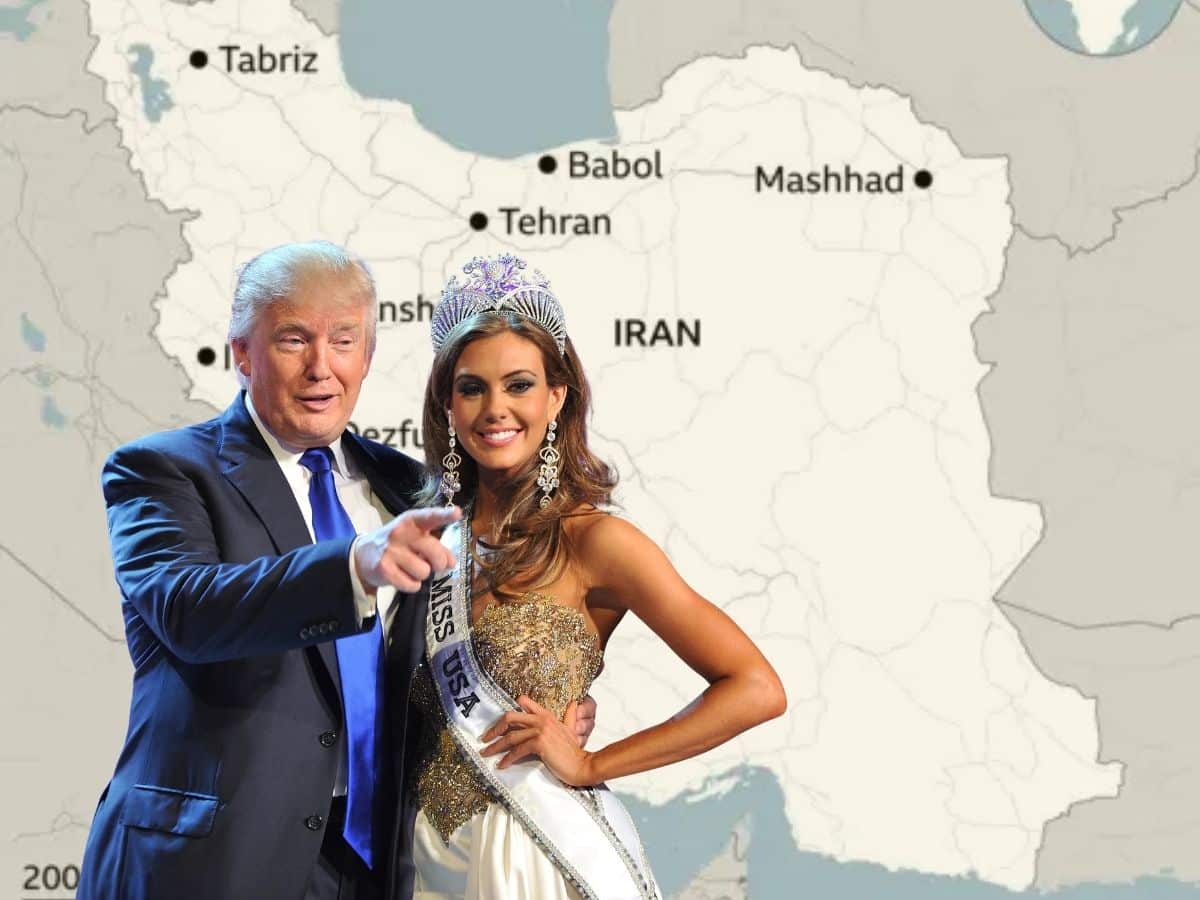
Deranged and arrogant US president Donald Trump has demanded personal control over the choice of Iran’s ‘next’ leader.
Trump, who joined Israel in launching an illegal war on Iran on 28 February with the assassination of Iranian leader Ali Khamenei, has said publicly that he “refuses to accept” a successor for Khamenei who would “continue Khamenei’s policies”. In other words, one who would continue to resist Israel’s regional hegemony instead of capitulating like rebranded ISIS killer Ahmed al-Sharaa in Syria.
Trump went on:
They are wasting their time. Khamenei’s son [frontrunner Mojtaba Khamenei] is a lightweight. I have to be involved in the appointment, like with Delcy [Rodriguez] in Venezuela. Khamenei’s son is unacceptable to me. We want someone that will bring harmony and peace to Iran.
The idiot wants to ‘pick’ the new Supreme Leader as if it’s some beauty pageant.
Trump has continued to claim that Venezuela’s Rodriguez is now collaborating with him. However, Rodriguez insists that the Bolivarian revolution continues. She is considered an entrenched opponent of US domination — the old Venezuelan US puppet regime killed her father — and Trump’s posturing appears to be propaganda to cover the failure of his abduction of Nicolas Maduro to topple Maduro’s government.
Trump’s arrogance in assuming he can murder Iranians then decide who leads them is doubly arrogant given the Iranian military’s claim to have inflicted a loss of hundreds of sailors in a strike on a US aircraft carrier, and the massive damage Iran has inflicted on US military and commercial interests and its Israeli ally.
But if there’s anything Trump is known for beyond narcissism and Epstein-recorded paedophilia, it’s arrogance. So of course it’s no surprise.
Featured image via the Canary

The pro-Israel donor jokes write themselves.
Miriam Adelson, the billionaire casino magnate and Republican mega-donor has poured over $100 million into Trump’s campaigns, effectively purchased the U.S. ambassador to Israel and the move of the American embassy to Jerusalem.
In October 2025, Donald Trump stood before the Israeli parliament- the Knesset and delivered a shockingly honest insight into how foreign policy actually gets made.
Gesturing toward Miriam Adelson in the gallery, he bragged about moving the U.S. embassy to Jerusalem, then openly detailed how the billionaire casino magnate and her late husband Sheldon would simply call and request White House meetings.
He said:
Speaking in Israel, Trump suggests he moved the embassy to Jerusalem as a promise to the Adelsons, who he says have paid more visits to the White House than anyone he can think of.
He then says he asked Miriam if she loves Israel or America more and she refused to answer. Insane pic.twitter.com/jg9VXciRgg
— Keith Woods (@KeithWoodsYT) October 13, 2025
Featured image via the Canary

A man nicknamed “Nasty” has been convicted of murder for delivering the blow that killed “bright” and “bubbly” Zahwa Mukhtar, 27, on a night out. Duane Owusu, 36, pleaded not guilty to both murder and manslaughter, claiming he shoved Zahwa with an open hand rather than a clenched fist and didn’t mean to hurt her.
He told jurors he acted in defence of other women they were with after several altercations between them and Zahwa on a car journey from Stoke Newington, east London, towards Dagenham last August.
Meanwhile,the prosecution called Owusu’s “assault” an “act of pure aggression”.
The jury sided with the prosecution returning an unanimous guilty verdict for murder after nearly 12 hours, following a two-week trial at The Old Bailey.
Detective Chief Inspector Phil Clarke, from Specialist Crime North, said:
Our thoughts today are with Zahwa’s family, who have demonstrated great dignity and patience after losing their daughter in such horrendous circumstances.
CCTV footage collected by the investigation team painted a damning picture of Owusu’s guilt. The evidence revealed him to be a remorseless killer, who acted with callous disregard towards his victim.

Zahwa suffered unsurvivable head injuries, the court heard.
Summarising the evidence, Judge Richard Marks KC described how Zahwa was struck by Owusu at the side of her neck “his arm coming almost in line with his head”.
He said:
She fell backwards on the ground, landing on her back, her arms flailing, making no attempt to break her fall.
She suffered a fractured skull and a bleed on the brain “which led to her tragic and untimely death”, Judge Marks said.
He went on to say the “traumatic brain injury” Zahwa sustained would not have been “survivable”, according to expert medical evidence given in the trial.
Zahwa Mukhtar was “kind and loving”
Known as “Zee” within east London’s Deaf community, Zahwa was a much-loved member of Hackney Deaf Club and a keen volunteer, including at Glastonbury music festival.
She became deaf in one ear after contracting meningitis at age three.
Henrietta Paget KC, prosecuting, described the financial assistant as “bright, bubbly, enthusiastic and very eager to learn”, during the opening of the murder trial.
A statement released by her “heartbroken” family last year said: “Zahwa was a kind and loving person with high aspirations in life and her presence brought warmth to those around her.
“She was dearly loved by her family and friends.”
In the early hours of Saturday 16 August 2025, Zahwa was killed outside Chadwell House care home by a single strike to the neck.
Once police officers had finished a nearly hour-long stop and search of Owusu and his five friends nearby, Zahwa was eventually found unresponsive at 5.31am.
Passersby who alerted police thought she was either drunk or had fallen asleep. Zahwa was pronounced dead at the scene within an hour of being discovered.
Speaking to Owusu, Ms Paget said:
You had lost your temper with Ms Mukhtar and was intent on giving her a beating. You kicked her and the second kick was aimed at her face. You missed because Ms Winter had arrived.
I suggest you were out of control and you wanted to do Ms Mukhtar some real damage. I suggest that your actions on that video had nothing to do with defending yourself or anybody else. This assault was an act of pure aggression.
How the night unfolded
Zahwa Mukhtar happened to meet Owusu and his group in Hackney a few hours earlier when the Mercedes he was in pulled into Palatine Road, near The Pubb. They continued to socialise in the street, taking nitrous oxide using balloons. The witnesses had taken other drugs that night, such as ecstasy, and had been drinking alcohol.
A toxicology report found Zahwa was two-times the legal drink driving limit when she died, which is 80mg of alcohol per 100ml of blood, and there was a small amount of cocaine in her blood.
Despite objections from best friends, Paige Allen and Abigail Winter, Zahwa got into the overcrowded car going back to Dagenham.
Fights erupted between all three women and verbal insults were exchanged. Tensions spilled outside of the car once before in Chadwell Heath before stopping outside the care home.
Inside the vehicle, Zahwa had allegedly threatened to harm the women and was seen scrolling through her contacts. Owusu started to think “the worst”, he told jurors when giving evidence.
Then Zahwa started filming from the back of the car. The video lasted just a few seconds.
Judge Marks said:
Ms Mukhtar started the video function on her mobile phone to which others in the car took exception and it was that, you may think, which finally triggered the tragic events which then rapidly unfolded.
Owusu demanded Zahwa leave the parked car and threw out her phone as bait so she’d leave. She refused and gripped on to his clothes, the court heard.
The judge continued:
She then ended up outside the car through the rear passenger door, ending up on her bottom…There followed two kicks from the defendant. The first as he’s in the process of getting out of the vehicle, followed by the second
Ms Paget rubbished Owusu’s claims that Zahwa fell from his lap instead of being pushed or he tried to sweep her legs away from the Mercedes rather than stamping down at her.
She stated Owusu had launched a “callous attack” and showed Zahwa “utter contempt”.
Owusu, of Althorne Way, Dagenham, will be sentenced on 12 March.
Featured image via Facebook

In an interview with BBC Newsnight, the Cypriot government have challenged the UK government’s response to drone strikes on the airbase on Monday 2nd March. The drone attack targeted an RAF base in Cyprus, RAF Akrotiri, a couple of days after US-Israel’s initial strikes on Iran on Saturday.
The base has long faced scrutiny for its involvement in Israel’s genocide on Gaza. Now it appears to be at odds with the British government, as Healey scrambles to address the collateral damage borne as a result of the US and Israel waging an illegal war of aggression on Iran.
Cyprus criticises UK response to drone strikes ahead of Healey visit https://t.co/GKukqNN9Z8
— BBC News (UK) (@BBCNews) March 5, 2026
Cyprus: “Disappointed”
Cypriot High Commissioner to the UK Dr Kyriacos Kouros spoke to BBC Newsnight and said Cypriots were “disappointed” with the quality of information the UK government shared with residents. Kouros said people in Cyprus were left “scared” and would “expect more” from the UK, adding that he would be grateful if UK Prime Minister Keir Starmer “paid attention to their worries”.
Home Office Minister Alex Norris told the BBC today that the UK was “resolute” in its commitment to protect our interests in the region and that “significant” efforts are being put into strengthening defensive capabilities in the Eastern Mediterranean.
According to the BBC:
Norris told BBC Breakfast on Thursday that defensive systems set up in the eastern Mediterranean have had a “really significant impact in recent days”.
The UK has announced that British warship HMS Dragon – which has air defence capabilities – will be deployed to Cyprus, although it is not due to sail until next week.
“We are absolutely resolute in protecting the nation’s interests – and that’s what we’re doing and we’re working of course with our partners of which Cyprus is obviously a really close one,” Norris said.
Following the drone attack at the weekend, Cyprus was quick to criticise Starmer’s government. They even refused to rule out going back to the table in deciding how the base can be used:
Cyprus today suggested that poor communication by the U.K. government led to the drone attack on the British airbase in Akrotiri, and didn’t rule out renegotiating the use of the base.https://t.co/x9EhthLcQs
— POLITICOEurope (@POLITICOEurope) March 2, 2026
UK Defence Secretary John Healey arrived in Cyprus today to meet with his counterparts and discuss potential UK air defence support:
BREAKING: Defence secretary John Healey has met with his Cypriot counterpart to discuss air defence support from the UK.
@AliBunkallSKY reports from Akrotiri, Cyprus ⬇️https://t.co/zXdxAhODKf📺 Sky 501, Virgin 602, Freeview 233 and YouTube pic.twitter.com/qiEor0pnAQ
— Sky News (@SkyNews) March 5, 2026
“Strictly humanitarian role”
Our own Joe Glenton wrote about the issues being brought to surface between the UK and Cypriot counterparts. As divides are growing and consent on the island appears to be diminishing, Glenton wrote:
UK PM Keir Starmer effectively announced to parliament on 2 March that the UK would be a party to the war. He tried to insist the UK’s role would be defensive – but said the US would use British bases to hit Iran.
The UK has two bases in Cyprus at Akrotiri and Dhekelia. Britain has used the bases to launch hundreds of spy flights over Gaza over the course of Israel’s genocide against the Palestinians.
Letymbiotis said the UK had failed to take into account Cyprus’s wish to be a humanitarian hub. He added that the UK had communicated poorly.
The damage inflicted is reported to be a little more than ‘minimal’, as the UK government have sought to convince the wider public. However, it also appears the attack was towards US military on the island. Simply highlighting the threat inherent in our support of the US-Israel flagrantly breaking international law:
🚨 SCOOP: Photo of damage to secret US spy site on RAF Akrotiri.
The drone hit a hangar for US U-2 spy planes on Operation Olive Harvest
Is this “minimal” as per John Healey?
UK Home Sec Yvette Cooper claimed the drone hit the runway. Not true.https://t.co/RsWYSDy9De
— Jerome Starkey (@jeromestarkey) March 5, 2026
RAF Akrotiri has long faced criticism for its use in the mass murder and suffering of Palestinians in Gaza. Declassified UK’s Matt Kennard has investigated the flights from the base since the genocide began:
Labour sent this UK spy plane over Gaza for Israel yesterday
I propose we use same Shadow R1 (ZZ419) to take Starmer, Lammy, Healey, Sunak, Shapps, Cameron to The Hague when they are charged for Gaza war crimes
We should fly them from RAF Brize Norton via RAF Akrotiri on Cyprus pic.twitter.com/oPZcSk9Kl3
— Matt Kennard (@kennardmatt) July 24, 2025
Careful the company you keep
This escalating military situation has a common thread weaving throughout. This can be seen in the reports of attacks on Gulf states and those against the UK military base in Cyprus. Choosing to be bedfellows with genocidal war criminals and the compromised US president have understandably made those territories fair game in the eyes of Iran.
Under international humanitarian law, Iran’s response may be valid. After all, military bases that play a direct and active role in military operations against Iran may be considered legitimate military targets. Nevertheless, any attack by Iran must still comply with the principles of distinction, proportionality, and necessity.
However, the British government’s spineless refusal to prioritise international law is dangerous. It cannot be understated that our stance is making us a villain on the world stage.
Therefore, it cannot be clearer: breaking ties with the US and Israel will ultimately be safer for all involved.
Featured image via the Canary

Some Kurdish factions are going to start a popular uprising in Iran – least, that’s what Trump hopes – reimagining them as guerrilla shock troops for his aerial war against Iran. The CIA may have been organising them for months to storm Iran’s ramparts. The internet is abuzz with these rumours, so let’s unpack some of them.
Firstly, their accuracy so far is tenuous – something we’re accustomed to. In a fast-paced, rapidly globalising war mired in inaccuracy, rumour, propaganda, and outright bullshit, it’s becoming increasingly difficult to separate the wheat from the chaff.
The furore started with a CNN report by war correspondent Clarissa Ward, aired on 4 March. It’s worth noting that, in recent years, Ward has faced criticism over the veracity of reporting on Gaza and Syria.
CNN‘s piece opened with a weighty claim:
The CIA is working to arm Kurdish forces with the aim of fomenting a popular uprising in Iran, multiple people familiar with the plan told CNN.
The Trump administration has been in active discussions with Iranian opposition groups and Kurdish leaders in Iraq about providing them with military support.
The source? Well, they were on many occasions, they were literally just – nameless “sources”. And some key claims weren’t even attributed to ofifical agencies such as the CIA – but we appreciate these are “state secrets.”
The article, which can be accessed here, also claims that:
CIA support for Iranian Kurdish groups began several months before the war, one of the sources and a senior Kurdistan Regional Government official said.
A unnamed Kurdish official…well that narrows it down.
The anonymisation of security and military sources is, in itself, not uncommon. But CNN’s core assertions have been picked apart by journalists, experts and politicians with extensive knowledge of Kurdish politics.
Are they coming or not?
As rumours proliferate, journalist Mark Ames asked:
Never seen a covert CIA separatist military operation so heavily advertised as it’s happening, as widely and loudly as they can PR it. You’d almost think CIA was running a deception operation here, to stoke IRI paranoia and get them to massacre local Kurdshttps://t.co/Q00UC4isOM
— Mark Ames (@MarkAmesExiled) March 4, 2026
And he might have a point. It’s worth noting here that this isn’t the first time US President Donald Trump has publicly announced ‘covert’ operations.
He did the same ahead of the 3 January raid in Caracas, Venezuela.
Trump announced CIA were deploying inside Venezuela on 15 October 2025. https://t.co/7RZ8MMvr3x pic.twitter.com/YIqxZcMW1w
— the great Keithulhu (@jjgjourno) January 4, 2026
We can’t know if this was the US Yapper-in-Chief Trump running his mouth, again, or part of a planned strategy or a veiled threat. Nor do we know how Trump’s announcement was received by the CIA itself.
On X, the questions multiplied, with Journalist Afshin, engaging in on-the-ground fact checking efforts.
I spoke with four Iranian Kurdish officials, and they denied the report that any ground offensive started. https://t.co/EFPIDurpFa
— Afshin Ismaeli (@Afshin_Ismaeli) March 4, 2026
Wladimir van Wilgenburg, a Dutch reporter specialising in Kurdish affairs, suggested that while some Kurds have stated they may fight, mobilisation hadn’t commenced.
I spoke to senior PJAK official, who denied this.
“I think they are wrong when they say that we have already started the war now, but we are preparing for the right opportunity.” https://t.co/RjavebKOPs
— Wladimir van Wilgenburg (@vvanwilgenburg) March 4, 2026
Another Middle East-based US journalist Matthew Petti exposes similar gaps in US media coverage of Trump’s Kurdish shock troops.
Every American outlet is reporting based on “administration sources” that the Kurdish offensive has started while journalist who’s plugged into Kurdistan is denying it. Something’s up.
— Matthew Petti (@matthew_petti) March 4, 2026
So what is happening?
As one X wit put it, we’re faced with:
Schrödinger’s Kurdish militia
— Daniel Bordman (@DanielBordmanOG) March 4, 2026
Meanwhile ex-CIA director Mike Pompeo — who made unverified and inflammatory claims about Mossad being among the protestors during the January uprising in Iran — said:
The Kurds have been invaluable partners to the US in the fight against terrorism in the Middle East. It makes perfect sense for us to work with them to unseat this evil dictatorship. https://t.co/fTYeysSrfw
— Mike Pompeo (@mikepompeo) March 4, 2026
Anyone with the slightest knowledge of America’s long history of using and discarding the Kurds, like some burner phone, might disagree with Pompeo’s post.
As Drop Site News reporter Alexis Daloumis was not convinced that the Kurds were about to pull the trigger:
🚨NEW from @Dropsite: Kurdish, Iranian sources reject claims of incursion
Multiple media reports, including some citing anonymous U.S. officials, have indicated that Kurdish militants have now crossed from Iraq into Iran in order to seize Kurdish territory and spark an uprising.…
— Drop Site (@DropSiteNews) March 4, 2026
Drop Site News speculates that:
These reports may be aimed at sparking an uprising that is not yet happening. Reporters for CNN, Axios, and the Economist, some of whom are well sourced with the U.S. security establishment, have been leading sources of the claims. U.S. and Israeli officials have made no secret that they want to create conditions for an internal uprising to implement their regime change agenda on the ground.
Kurdish Peace Institute director Meghan Bodette was not convinced either:
The KDP and the PUK are, and I cannot stress this enough, never going to invade Iran. Let’s not comment on this if we can’t find Erbil on a map. https://t.co/cY9EXu3HUS
— Meghan Bodette (@_____mjb) March 5, 2026
Bodette also tweeted a useful explainer thread of Kurdish politics:
🧵Kurdish regional politics explainer, from someone who is based in the region and can speak the language.
— Meghan Bodette (@_____mjb) March 5, 2026
Breaking Points presenter Krystal Ball had a similar view, warning of ‘psy-ops’:
Very important reminder to beware of all the many psyops we are already being subjected to. https://t.co/JPW42zfBuU
— Krystal Ball (@krystalball) March 5, 2026
Ryan Grim, from Drop Site News, warned that the suggestion of Kurdish uprising might be a ploy to drag Iranian forces in a particular direction.
This is precisely what the CIA was hoping to provoke by leaking reports of an uprising and invasion that isn’t happening https://t.co/i9jNvcBmQ5
— Ryan Grim (@ryangrim) March 4, 2026
Commenting on those strikes, Erbil-based member of Iraq’s Kurdistan Democratic Party (KDP), Hemn Hawrami said:
Reports about the Kurdistan Region of Iraq or the Iraqi Kurds being a part of a plan to arm & support the Iranian Kurdish opposition to cross the borders into Iran 4 an arm struggle is incorrect & false. We are not a part of this war & our goal is to preserve, maintain peace and security of our region & beyond.
In the meantime we condemn these unjustifiable attacks on Kurdistan & call on the international community to help us and stop this aggression and protect our region.
Adam Weinstein, deputy director of the Middle East program at the Quincy Institute, commenting on the pitfalls of a possible Kurdish-led revolt in Iran said:
An ethnic-based insurgency, however, is unlikely to attract broad support across Iran’s population. It will also raise immediate alarm in Ankara. Turkey has long opposed U.S. cooperation with Kurdish armed groups in Syria and will certainly view the emergence of a U.S.-backed Kurdish militant foothold inside Iran with equal concern.
Extreme caution advised
Misinformation, disinformation, and the language of ‘false flags’ and ‘psy-ops’ have become ubiquitous — especially on social media. The Canary previously wrote that there’s a delicate balance to be struck between citing and challenging state sources, especially “anonymous” security sources:
Anything uttered by unnamed ‘security sources’ must be taken with extreme caution.
We must always ask a crucial question when confronted with seductive ‘insider’ information:
It might not be the case here, but one of the key media stories of the War on Terror era is that journalists often fail to ask the key question: Why are spies telling me this?
The warning is clear:
Don’t be bedazzled, mainstream media journos. Intelligence agents, agencies and their spokespeople are not your friends. Contest everything they say.
Additionally, we should remember that Kurds in Iraq, Syria, Iran, and Turkey and a broader diaspora (who should never be flattened into a single political bloc) are once again caught up in an imperialist war they did not choose.
Let’s recall the US and Israel attacked Iran first on 28 February without provocation. Iran was offering unprecedented concessions in negotiations at the time. The Pentagon has since stated there was no imminent threat from Iran. And the UN’s atomic watchdog, the IAEA, has said there is no evidence Iran was developing a nuclear weapon.
States, corporations, and political groups—all of them, even those we might feel some misguided affinity for—lie and deceive in peacetime, and even more so during war. In a situation as explosive as the one the US and Israel have thrust the world into, reporters have to take extra caution.
Anything can be newsworthy, even a rumour, but the basic rule still stands: if you can’t prove it, don’t report it as fact.
Featured image via the Canary

La Liga has launched an official investigation into allegations that Elche player Rafa Mir directed a racist remark at Espanyol’s Moroccan player Omar El Helali during their La Liga match on Sunday evening.
El Helali informed the referee that Mir had racially abused him, saying, “you came here on a dingy,” a phrase with obvious racist connotations.
Following El Helali’s complaint, the referee immediately activated the anti-racism protocol and temporarily halted play.
The referee included the incident in his official match report, prompting La Liga to refer the case to the relevant disciplinary bodies for review.
Espanyol’s stance
A source at the Spanish club added that midfielder Urco was next to Al-Hilali and heard the remark attributed to Rafa Mir.
The source also indicated that Al-Hilali trained normally the following day and is in good condition, emphasizing that the club fully supports its player.
As the BBC reported:
Espanyol later posted a picture of 22-year-old Spain-born Morocco international El Hilali on social media with the message “with you”.
The Moroccan Federation’s stance
Following the incident, the Moroccan Football Federation issued an official statement declaring its full support for Al-Hilali, considering what happened a “blatant violation of fair play principles.”
The Moroccan Federation is monitoring the investigations launched by La Liga to ensure the player receives justice and legal redress.
As of now, no official penalty has been issued. Spanish press reports indicate that the case has been referred to the Competition Committee and the Anti-Violence and Discrimination Committee, with a decision expected in the coming days.
The case is now before La Liga’s disciplinary bodies, with anticipation surrounding the nature of the decision, especially given the increasing strictness within Spanish football regarding discrimination and racism in stadiums.
Featured image via the Canary

Six Flags sells 7 parks to EPR Properties for $331M
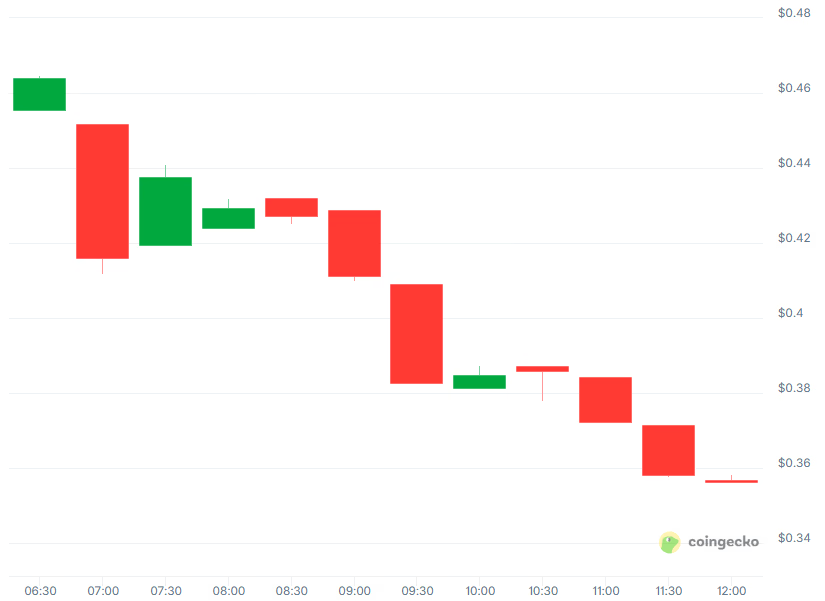
BNB-based Prediction Market Opinion Launches Token

Mathew Knowles Clarifies Response About Tina Knowles (WATCH)


-

 Politics7 days ago
ITV enters Gaza with IDF amid ongoing genocide
-

 Politics2 days ago
Alan Cumming Brands Baftas Ceremony A ‘Triggering S**tshow’
-

 Fashion6 days ago
Weekend Open Thread: Iris Top
-

 Tech5 days ago
Unihertz’s Titan 2 Elite Arrives Just as Physical Keyboards Refuse to Fade Away
-
Sports6 days ago
The Vikings Need a Duck
-
 NewsBeat5 days ago
Dubai flights cancelled as Brit told airspace closed ’10 minutes after boarding’
-

 NewsBeat5 days ago
Abusive parents will now be treated like sex offenders and placed on a ‘child cruelty register’ | News UK
-
 NewsBeat5 days ago
The empty pub on busy Cambridge road that has been boarded up for years
-

 NewsBeat4 days ago
‘Significant’ damage to boarded-up Horden house after fire
-

 Tech14 hours ago
Bitwarden adds support for passkey login on Windows 11
-

 Entertainment3 days ago
Baby Gear Guide: Strollers, Car Seats
-
 Tech6 days ago
NASA Reveals Identity of Astronaut Who Suffered Medical Incident Aboard ISS
-

 Business7 days ago
Only 4% of women globally reside in countries that offer almost complete legal equality
-
 Sports2 hours ago
499 runs and 34 sixes later, India beat England to enter T20 World Cup final | Cricket News
-
Politics5 days ago
FIFA hypocrisy after Israel murder over 400 Palestinian footballers
-
 NewsBeat4 days ago
Emirates confirms when flights will resume amid Dubai airport chaos
-

 NewsBeat3 days ago
Is it acceptable to comment on the appearance of strangers in public? Readers discuss
-

 Crypto World7 days ago
From Crypto Treasury to RWA: ETHZilla Retreats and Relaunches as Forum Markets on Nasdaq
-

 Tech5 days ago
Viral ad shows aged Musk, Altman, and Bezos using jobless humans to power AI
-

 Video3 days ago
How to Build Finance Dashboards With AI in Minutes