

Politics
Mahmood’s immigration plans will lead to more homelessness


Today, 5 March, home secretary Shabana Mahmood delivered a speech on immigration to left-leaning think tank the Institute for Public Policy Research. She sought to argue for the ‘Labour case’ for gutting the UK asylum system.
In amongst the now-typical guff about public fear over ‘uncontrolled’ immigration, Mahmood also slipped in a new escalation of her party’s racist anti-immigrant turn. Namely, if an asylum seeker works illegally, or otherwise breaks the law, Labour plans to remove support payments and turn them out of their accommodation.
Because a sudden increase in now-homeless asylum seekers will definitely reduce public fear.
Removing support
In amongst her boasts about Labour’s new visa pause and degrading refugee protections to a temporary status, Mahmood explained her newest plans:
So this government will today introduce new, secondary legislation which will remove the duty to provide asylum support, replacing it with a power to do so.
Those who require it, and play by the rules, will rightly continue to receive asylum support. But those who do not will have their support removed.
The generosity of the British people will become conditional on those seeking asylum following the law, living by our rules, and not working illegally.
Taxpayer-funded accommodation will be reserved for those who have no right to work, and will otherwise be destitute.
For context, we might want to take a look at why those asylum seekers are working illegally. After all, the home secretary has been banging on about how generous the government is with its handouts.
According to charity the Refugee Council:
Most people seeking asylum are living in poverty and experience poor health and hunger. Many families are not able to pay for the basics such as clothing, powdered milk and nappies.
Almost all people seeking asylum are not allowed to work and are forced to rely on state support—this is as little as £6.43 a day to live on.
So, asylum seekers will now be faced with a choice between trying to survive well below the poverty line in government accommodation, or turning to illegal work and potentially being thrown out altogether.
It obviously won’t work
Accordingly, the Refugee Council pointed out that this would lead to an increase in rough sleeping. As such, the cost of the accommodation would simply be shifted to local councils and the health service. This seems obvious, given that if you take away people’s homes, they become homeless people.
The charity’s director of external affairs, Imran Hussain, suggested that making asylum decisions faster would be “far more effective” in slashing costs. Again, this makes sense, given that, as Mahmood highlighted:
Last year alone, £4 billion was spent on asylum accommodation.
If only something could be done to make temporary asylum accommodations into a short-term solution, ay?
However, Labour aren’t actually looking to fix the UK’s broken asylum system. Rather, they’re trying to appear ‘tough on immigration’ in a futile attempt to court the far-right.
Mahmood had the gall to state that:
And when fearful, people turn inwards. Their vision of this country narrows. Their patriotism turns into something smaller, something darker; an ethno-nationalism emerges. The idea of a greater Britain gives way to the lure of a littler England. And other voices […] take hold.
As if her party isn’t blatantly capitulating to that nationalism by joining in far-right rhetoric.
Swinging for the Greens
Speaking of which, the home secretary also used her speech as an opportunity to take another swing at the Greens. Because, you know, Labour genuinely have no other plan after getting their ass handed to them in Gorton and Denton.
A Green Party spokesperson pointed out that Mahmood was:
deliberately misrepresenting Green Party Policy and reducing it to cheap soundbites.
Now, the government’s website removes inter-party attacks from its records of officials’ speeches. This leaves us with some terribly on-the-nose lines like:
Our asylum system is [political content redacted].
It also means that we have to rely on the BBC for the content of the redactions. Fortunately, the state broadcaster informs us that:
Mahmood will use the speech to step up her attacks on the Greens, accusing the party of wanting to create “a world without borders” and calling for “the most expensive and expansive migration policies anywhere in the world”.
Hope is dangerous
The faithful stenographer of the state also helpfully points out that the Green website says it will “treat all migrants as if they are citizens” and “dismantle the Home Office”. It conveniently left out the other half of Mahmood’s creative quote:
The Green Party wants to see a world without borders, until this happens the Green Party will implement a fair and humane system of managed immigration where people can move if they wish to do so.
Fuck them for wanting to work toward a better world, am I right?
Mahmood’s speech today showed two things quite clearly. First and foremost, there is no depth to which Labour won’t stoop in order to try to woo the right.
And second, Labour is clearly rattled. Gorton and Denton shook them to the core, and they have no answers. The coming months will see more of this rightward swerve, and more desperate attacks on the left-wing alternative. And, just like the rest of Labour’s new plans – they won’t work.
Featured image via the Canary


The post Will Britain <em>ever</em> stop the rape gangs? appeared first on spiked.
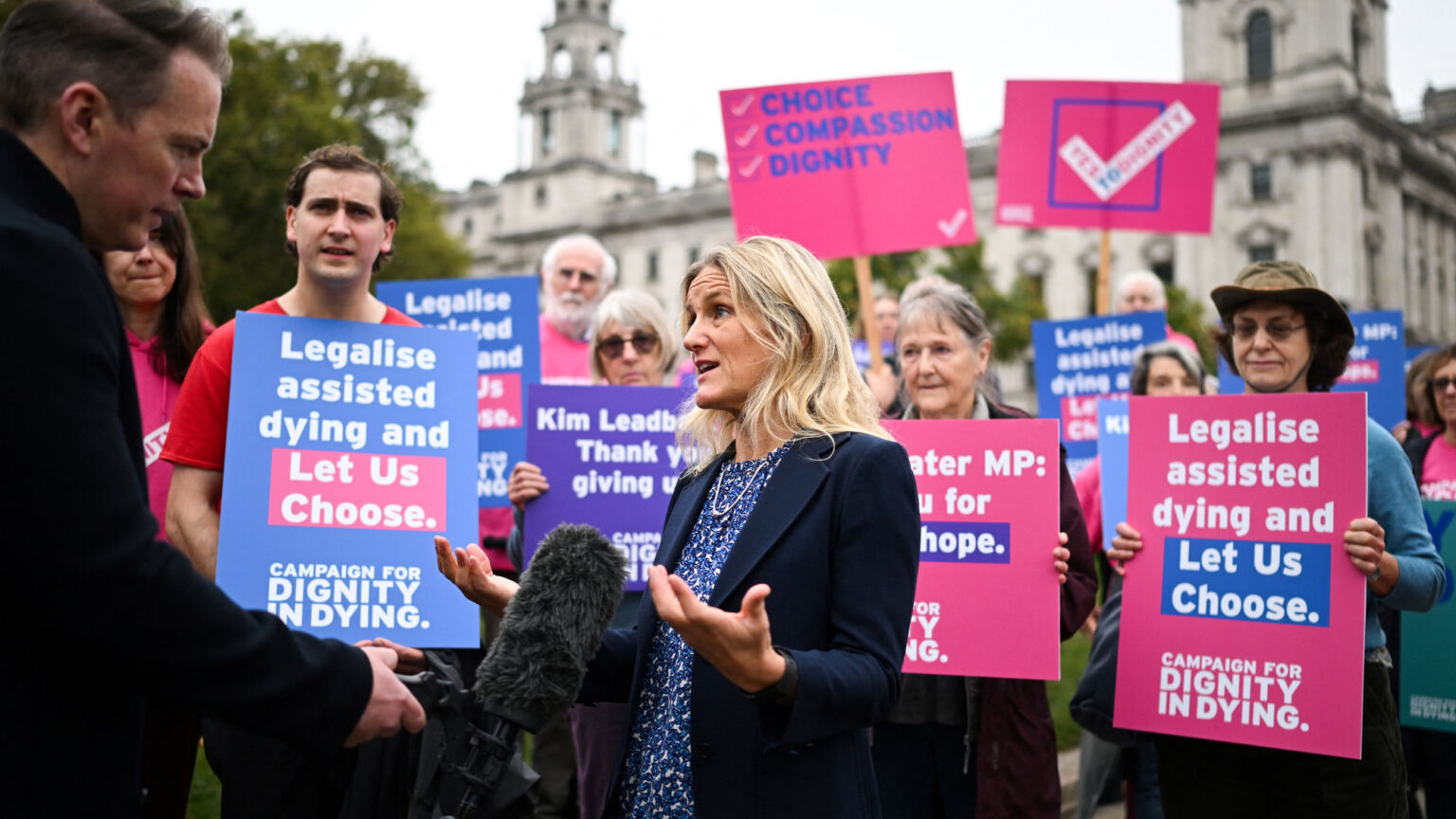
The Terminally Ill Adults (End of Life) Bill is on its last legs. Having been voted through by the House of Commons at second reading in November 2024 with a majority of 55, it was approved at a third reading in June 2025 with a reduced majority of just 23. It is now in the House of Lords, with little hope of progressing any further.
According to Lord Falconer, the bill’s sponsor in the Lords, 1,253 amendments have been tabled by peers. There remain over 850 left to debate. With only five allocated days left before the next parliamentary recess, there is almost no hope of getting through them. Last week, the Labour government refused to allocate more time before the bill’s May deadline, effectively signing its death warrant.
What went wrong? Ultimately, the bill’s advocates made a major strategic error. Their plan was (and always has been) to push through the legislation with as little debate and discussion as possible. They wanted to – dishonestly – represent this monumental legal change as a simple act of compassion, affecting only a handful of people who are in pain, already on death’s door and who merely wish to speed up the process. The issue is, of course, much more complex, and the pro-suicide forces have been hoist by their own petard in their attempts to pretend otherwise.
The first way they attempted to pull the wool over the eyes of the public was in trying to brand assisted suicide as ‘assisted dying’. Whenever it is pointed out that ingesting poison with the intent of ending one’s life cannot honestly be described as anything other than suicide, the bill’s supporters have no answer to this except to say that it is ‘deeply offensive’, ‘stigmatising’ and ‘derogatory’.
Avoiding debate has been the modus operandi of the bill’s proponents from the outset. The Labour Party did not include assisted suicide in its General Election manifesto. Instead, then opposition leader Keir Starmer ‘made a promise’ to the terminally ill television personality, Esther Rantzen, that he would provide ‘time for a debate’. Then, when Labour MP Kim Leadbeater came top of the ballot for private members’ bills in September 2024, there was pressure on her to drop her interest in puppy smuggling, and to use her position instead to push assisted suicide. Private members’ bills are allocated far less time for debate than government bills, which are generally introduced by a minister and prioritised above others. Unlike government bills, they can fall if time runs out.
Even the way Leadbeater introduced the bill did not allow for much scrutiny. As Ruth Fox and Matthew England of the Hansard Society observed: ‘The bill is unusually long for a [private members’ bill], spanning 32 pages of legal text, comprising 43 clauses and six schedules, and with financial and other consequences for the NHS and the court system’. Two impact assessments – of 24 and 150 pages respectively – were released on Friday 2 May 2025 – the same day as a momentous by-election result. The intention was clearly that as few people should read them as possible.
At the outset, pro-assisted suicide organisations like Dignity in Dying argued that MPs, even if they weren’t certain about all elements of the bill, should support it on the basis that scrutiny in the House of Lords would improve it. ‘Meaningful second-chamber oversight still to come’, they assured MPs. ‘With specialist expertise amongst its membership, and additional committees engaging in the process, there’s a robust safeguard phase ahead, ensuring that the final legislation is refined, balanced, and workable.’
Now that these ‘experts and specialists’ are scrutinising the bill in the Lords, assisted-suicide proponents have changed their tune. ‘A handful of hardline opponents in parliament’s unelected chamber’, they complain, are now ‘filibustering’ the bill.
Once again, the language here is deceptive. ‘Filibustering’ is what US senator Strom Thurmond did when, in 1957, he set a record for speaking for 24 hours and 18 minutes to try (unsuccessfully) to stop the passage of the Civil Rights Act. The average speaking time on the assisted-dying bill, in contrast, is less than five minutes. Instead, peers are, as the normally pro-assisted death Times noted this week, trying ‘to clarify the shockingly woolly language’ of the bill.
The arrogance and incompetence of pro-suicide lobby has not healped either. Leadbeater and her supporters in the Commons unconvincingly recycled stock phrases from Dignity in Dying, while failing to address genuine concerns. In the Lords, Falconer and others have brushed away warnings about the bill expressed by medical colleges like the Royal College of Psychiatrists and the Royal College of Physicians, along with the British Geriatrics Society, Liberty and even the Lords Delegated Power Committee. They have preferred to treat any criticism and scrutiny as part of a plot to stop the legislation. As Lord Toby Young noted in the Telegraph, ‘Falconer is more of a demolition expert than a bridge builder’.
In the end, the whole mess must be laid at Keir Starmer’s feet. It is he who at first pushed the bill and, like so many of his other policies, has dropped it as opposition has got louder.
There is no point in keeping this bill, already on artificial life support, alive. It deserves to die. To paraphrase Oscar Wilde on the death of Little Nell, one must have a heart of stone to hear about the death of this bill and not laugh.
Kevin Yuill is emeritus professor of history at the University of Sunderland and CEO of Humanists Against Assisted Suicide.
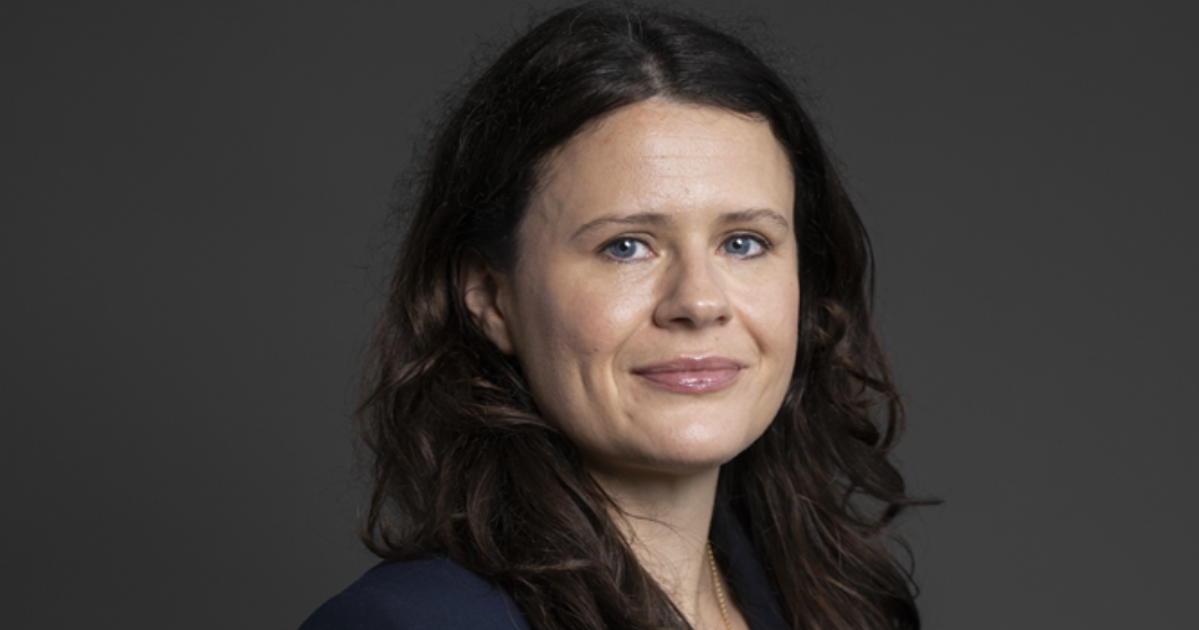
A Labour MP whose husband was arrested on suspicion of spying for China has resigned from the party.
Joani Reid said she was “voluntarily” suspending herself after discussions with the government chief whip.
Her move comes a day after her husband, lobbyist and former Labour adviser David Taylor, was arrested along with two other men on suspicion of assisting a foreign intelligence service.
Reid, the MP for East Kilbride and Strathaven, has denied any wrongdoing.
In a statement, she said: “This week has been the worst of my life. The shock of recent days has been difficult for me and my family.
“I want to reiterate something very important: I am not under investigation by the police and no accusations have been against me. I have done nothing wrong.
“I love my country. To serve the people of East Kilbride and Strathaven as their MP and the Labour Party has been – and continues to be – the privilege of my life.
“I understand that speculation and gossip is fevered at a time like this. I do not want the circumstances that I and my family find ourselves in to be a distraction for this government, of which I am proud and in whom I believe.
“I also do not want my children – who have nothing to answer for and who deserve privacy and compassion – to find themselves subject to intrusion.
“Following discussions with the chief whip, I am voluntarily suspending myself from the whip this evening and will not sit as a Labour MP until internal investigations are concluded.”
A Labour Party spokesperson said: “Joani Reid has agreed to fully co-operate with the Labour Party’s investigation into these matters.”

The dire consequences of Britain’s student-loan racket are no longer a secret. They have become a major talking point in recent weeks. Contrary to the claims of UK chancellor Rachel Reeves, the system is anything but ‘fair and reasonable’. Equally unfair is the graduate-jobs crisis. Youth unemployment in London has now reached 18 per cent, while in the UK as a whole, it hit an 11-year high at the end of 2025. To complete the trifecta, there is the less tangible (but equally pressing) matter of how graduates are treated while navigating the job market.
Ironically, those tasked with graduate employment (typically human-resources departments) preach inclusivity, respectful workplace behaviour and ‘people-centricity’. To examine whether these values are put into practice, I’ll walk you through a typical graduate recruitment process – though calling it a ‘process’, which implies some kind of structure and eventual conclusion, is generous.
First, you’ll submit your application. On many job descriptions, you see the ominous phrase ‘minority groups encouraged to apply’, which seems to be a heavy hint that if you’re white, straight and male you probably shouldn’t bother. You are asked to trawl through various questions about your ethnicity, sexual orientation and religion. I’ve known people to lie about their sexuality, and even their ethnicity, with one friend from the Mediterranean claiming to be mixed race.
If they pass this racial screening, graduates are invited to submit CVs and cover letters, which are frequently written by AI. This is hardly a moral failing, given that they are then read by AI and ultimately rejected by AI. So-called human resources have engineered a system that is, in practice, the least-human process imaginable.
The lucky few are then instructed to complete ‘assessments’. Since companies tend to use the same assessment providers, the good news is that you have likely completed them before. Maths graduates from top universities must do maths assessments. Everyone is made to complete personality tests. Occasionally, you play games involving stopping stopwatches at designated times. The value of your academic record, even for those with strong academic records, is zero.
A tiny percentage will then reach the ‘interview’ stage. But no, this is not an interview in the traditional sense. Instead, you answer five questions to your laptop camera while eyeing up the recording of yourself, which are then submitted to be ‘reviewed’ (usually by AI again). If you do speak to a human, it will rarely be in person, but online.
Now you are firmly ‘in the process’. You have submitted a CV, a cover letter, your family and sexual history, a nervy, stuttering video of yourself and, perhaps three months in, you might even have spoken to a real person. But you’re not quite finished yet. Months later still, you might hear you have reached another stage. Though more likely, you will never hear from the company again – or else receive a letter informing you of your rejection, with little explanation as to why. I still receive the occasional rejection email, despite having not submitted a job application since September.
One friend woke up on the day of his final-round interview to be told that the position no longer existed. The same friend reached an assessment centre, only to find every interview slot booked up. He was informed that no more would be added. Another graduate told me he reached the final interview stage only to be ghosted. Two months later, he received an email explaining that the role had been removed. Such stories are common. Most out-of-work graduates have many.
Senior management has handed too much power to HR departments, which have created processes that are automated, outsourced and designed to minimise difficult decision-making. HR is the fastest-growing industry in the UK, and much of that growth resides in what David Graeber called ‘bullshit jobs’. If HR ‘executives’ create months-long processes with eight different stages, they can justify hiring more HR ‘executives’ to help run them. Their inefficiency is self-rewarding.
This experience, compounded by a regressive student-loan system and a failing graduate-job market, will have tangible consequences for politics. If the Labour government refuses to address these concerns, young people will only continue to abandon traditional parties for those that promise real, radical change. No one should be surprised when the reckoning comes.
Jake Weston works on comms and press at the Academy of Ideas. This is an edited version of a piece that appeared on the Academy of Ideas Substack.
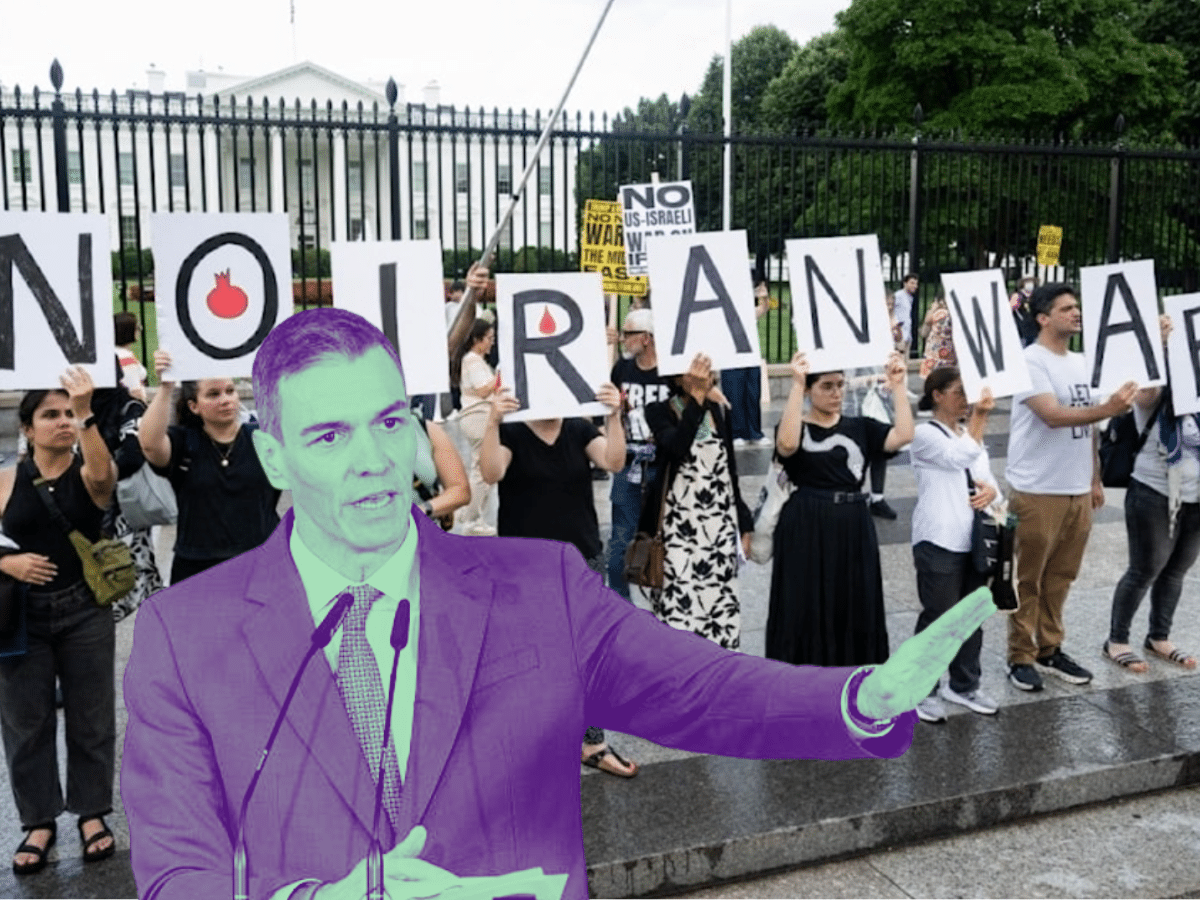
Spanish prime minister Pedro Sánchez has responded firmly after US president Donald Trump threatened to cut all trade with its European ally. Sánchez made his opposition to the illegal US-Israeli assault on Iran clear, saying:
one can be against a hateful regime… and at the same time be against an unjustified, dangerous military intervention outside of international law.
Sánchez, undeterred by Trump’s latest tantrum, has asserted that his country will not bow or change its stance even as the US presses down harder.
Same players, another dirty war
Sánchez made a clear call for peace and compliance with international law, highlighting the devastation of the US-led 2003 invasion of Iraq, Russia’s 2022 invasion of Ukraine, and Israel’s genocide in Gaza. Expressing no love for Iran’s government, Sánchez nonetheless insisted:
The question is whether we are in favour of peace and international legality…
You cannot answer one illegality with another, because that is how the great catastrophes of humanity begin.
He also suggested that Trump may be using the illegal assault on Iran as a distraction from his failures elsewhere, saying:
Governments are here to improve people’s lives, to provide solutions to problems, not to make people’s lives worse. And it is absolutely unacceptable for those leaders who are incapable of fulfilling that mission to use the smoke of war to hide their failure and fill the pockets of a select few, the usual suspects – the only ones who win when the world stops building hospitals to make missiles.
Trump’s words and policies aren’t impressing ordinary people in Spain either. A recent poll, for example, showed that 77% of the Spanish population dislikes Trump.
What a beautiful day to wake up in Spain.
For the first time in a very long time, I’m seeing people from the left and the right come together for one reason: hating Trump.Thank you, Pedro Sánchez 🌹 https://t.co/aE3InZXY2x
— Leyla Hamed (@leylahamed) March 4, 2026
The spectre of the invasion of Iraq
Spain has also been overwhelmingly critical of the fallout from the calamitous US invasion of Iraq. Commenting on its aftershocks in Europe, Sánchez said the invasion had made people’s lives “more insecure” and left them “worse” off.
At the time of the invasion 23 years ago, Spain’s conservative government joined the “coalition of the willing” (the main force that enabled the illegal offensive), contributing 1,300 troops. Due to the backlash at home, the Spanish conservatives lost the 2004 general election to the Spanish Socialist Workers’ Party.
The President of Spain is correct.
This is leadership.
We should be pushing for peace – and not jumping into another illegal war. https://t.co/e1KyBTtGp1
— Zack Polanski (@ZackPolanski) March 4, 2026
‘We’re not going to be complicit in something that’s bad for the world simply to avoid reprisals’
Spanish Prime Minister Pedro Sanchez has warned that the war with Iran risked playing ‘Russian roulette’ with the lives of millions.
Sanchez was responding after President Trump… pic.twitter.com/mXY7AAR27H
— Channel 4 News (@Channel4News) March 4, 2026
Spain’s position on Iran is clear — the same stance we have taken on Ukraine & Gaza.
No to breaches of intrl law, which protects us all, especially civilians.
We reject the idea that the world can solve its problems through bombs.
Let us not repeat past mistakes.
NO TO WAR https://t.co/Fkcm4RPo1L
— Embassy of Spain UK (@EmbSpainUK) March 4, 2026
Spain: a voice for peace
The Spanish government is not perfect – no government is. But during Israel’s genocide in Gaza, it has been one of the few European countries with the common decency to:
In fact, as Trump was having a tantrum over its opposition to the illegal assault on Iran, Spain reportedly participated in a Hague Group emergency meeting on Wednesday 4 March discussing accountability measures against Israel for its war crimes.
The Hague Group has been the political silver lining of the past year. May this mark the start of a new, DECOLONISED MULTILATERALISM: where every state is equal, sovereignty is respected, and human rights are upheld consistently and universally, not cherrypicked when convenient. https://t.co/NPR0gYkAr8
— Francesca Albanese, UN Special Rapporteur oPt (@FranceskAlbs) March 4, 2026
While the US and Israel attack Iran with European support, over 40 states are meeting in The Hague today to coordinate the enforcement of international law for Palestine.
They are aiming to end the era of impunity👇 pic.twitter.com/YsRzNFUXt1
— Declassified UK (@declassifiedUK) March 4, 2026
In the midst of the US-Spain spat, French leader Emmanuel Macron and European Council president António Costa expressed solidarity with Spain. And it’s clear that there’s broad support for Sánchez’s position in Europe.
Pedro Sánchez and his government have our full support. Spain chose dignity and international law over yet another illegal war launched by Trump and Netanyahu.⁰⁰The Socialist government blocked U.S. warplanes from using Spanish military bases to launch attacks in the Middle… pic.twitter.com/FFpj63Ucp4
— S&D Group (@TheProgressives) March 4, 2026
Full European🇪🇺 solidarity with Spain🇪🇸. #Trump #Sanchez https://t.co/fQORSA2pdf
— Enrico Letta (@EnricoLetta) March 4, 2026
Spain approved an arms embargo on Israel.
Spain call out Trump for breaking international law.
Spain realise war will be devastating.
Spain shows the sort of international leadership a left wing party in government should provide. https://t.co/SrNW2onFM6
— Brian Leishman (@BrianLeishmanMP) March 3, 2026
As other European countries oscillate between lukewarm statements and indifference, it’s clear that the world sorely needs more politicians like Pedro Sánchez – and fewer like Donald Trump.
Featured image via the Canary
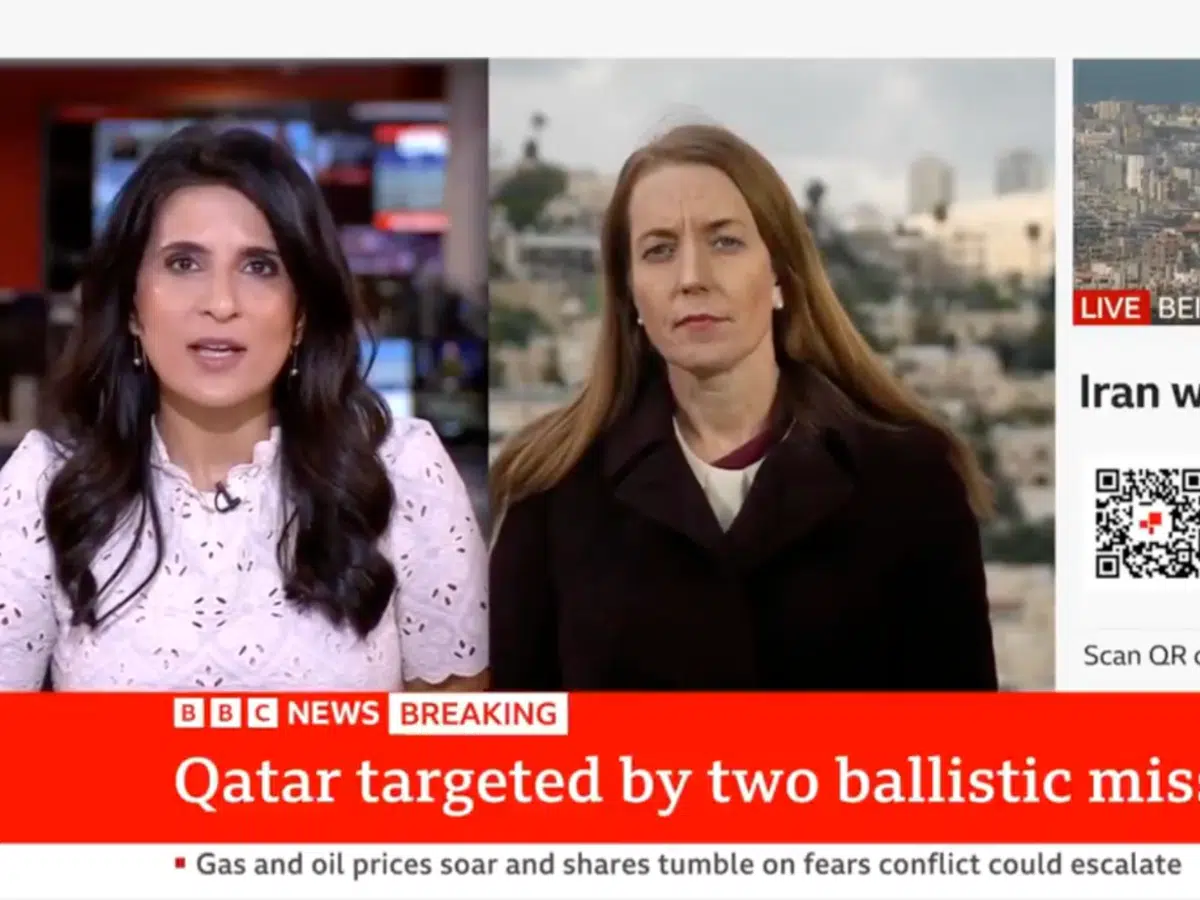
The BBC has faced accusations of “war propaganda” over the illegal and unprovoked US-Israeli attacks on Iran, which have killed over a thousand people since Saturday 28 February.
Having spent over two years putting out pro-Israel propaganda amid the apartheid state’s genocide in Gaza, the British state broadcaster doesn’t exactly hide its pro-establishment bias. But author Trita Parsi directly called its Iran coverage out after a report only selected pro-war Iranian voices. As he said:
Those views exist. But when you ONLY air those voices, you are doing war propaganda.
I was on BBC last night, following a clip with voices from Iran. All the selected voices welcomed war, saying they cheered every time they heard an explosion.
Those views exist. But when you ONLY air those voices, you are doing war propaganda.
And I told BBC that live on air. pic.twitter.com/ZCsy3qKOC2
— Trita Parsi (@tparsi) March 3, 2026
Israel has also invaded Lebanon during the latest offensive, killing 50 people and injuring hundreds more. And on that front, the BBC‘s propaganda has also faced criticism:
The @BBCNews has become an accomplice not only to genocide in Gaza but now also the project for Greater Israel. This report @YolandeKnell is a disgrace, and sanitises the invasion of a sovereign country & the trashing of international law. Orwell will be spinning in his grave https://t.co/pV25KZXH5A
— William Dalrymple (@DalrympleWill) March 3, 2026
As Saul Staniforth pointed out, the start of one answer sums up the BBC‘s role as a PR outlet for Israel:
So, the Israeli military said…
Yolande Knells reporting over the last 2+ years captured in a single 13 second clip. pic.twitter.com/zw62jNe39l
— Saul Staniforth (@SaulStaniforth) March 4, 2026
Elsewhere, more independent media has exposed the illegal US-Israeli actions for the dangerously destructive farce they are:
When the world seems impossibly grim, @PrivateEyeNews always helps… pic.twitter.com/vs8Clf2hy8
— William Dalrymple (@DalrympleWill) March 4, 2026
And as Steve Howell insisted, the UK doesn’t have to – and should not – participate:
Radical idea: Let’s close ALL overseas bases and invest in health, education and housing.
Having these bases, and letting US bombers use them, only makes us a target and risks dragging us into Washington’s wars.
It costs £billions and contributes nothing to our own defence. 1/2 pic.twitter.com/1rFDdAqHMr
— Steve Howell (@FromSteveHowell) March 3, 2026
Your Party’s Jeremy Corbyn, meanwhile, has called for parliament to ensure such a decision isn’t just in the hands of the corrupt, pro-Israel cabinet:
I have tabled a Bill to require Parliamentary approval for the foreign use of British military bases.
We must learn the lessons of the past — and stop our Prime Minister from dragging Britain into another catastrophic, illegal war. pic.twitter.com/ZSfHM2fKp8
— Jeremy Corbyn (@jeremycorbyn) March 4, 2026
Spain has also been showing that there is another way:
Spain’s position on Iran is clear — the same stance we have taken on Ukraine & Gaza.
No to breaches of intrl law, which protects us all, especially civilians.
We reject the idea that the world can solve its problems through bombs.
Let us not repeat past mistakes.
NO TO WAR https://t.co/Fkcm4RPo1L
— Embassy of Spain UK (@EmbSpainUK) March 4, 2026
The world, Europe, and Spain have faced this critical moment before. In 2003, a few irresponsible leaders dragged us into an illegal war in the Middle East that brought nothing but insecurity and pain.
Our response then must be our response now:
NO to violations of…
— Pedro Sánchez (@sanchezcastejon) March 4, 2026
Don’t let the BBC push us to another costly, devastating quagmire
Commentators have emphasised how expensive the US-Israeli assault on Iran is, and how much more expensive it could get:
According to the Iran Cost Ticker, Trump and Israel’s war on Iran has already cost US taxpayers more than $2bn!
It’s been three days…https://t.co/tCn3BhSuJb
— Trita Parsi (@tparsi) March 3, 2026
Iran’s cheap drones can quickly deplete expensive US-made weapons. The outcome of the war may be determined by which side’s weapons last longer. Read more: https://t.co/r5oEfpFqTZ
📷️: Fatemeh Bahrami/Anadolu/Anadolu pic.twitter.com/WKSPZIpFd9
— Bloomberg (@business) March 3, 2026
Just remember that it took 3.5 trillion dollars and 20 years to replace the Taliban with the Taliban. Let that sink in.. https://t.co/EXX9hVa85g
— Mark Seddon (@MarkSeddon1962) March 3, 2026
In the US, even Democrats (who have enabled Israel’s genocide) have read the room and spoken out. They know how unpopular the offensive already is, and they have spoken out en masse:
Just so we’re clear, the number of Americans who approve of Trump’s Iran war is 27%.
So we’re also clear, the number of Americans who approved of the Vietnam War at its end in 1973-4 was 29%.
— Rick Wilson (@TheRickWilson) March 3, 2026
Today, Congress was finally briefed on Trump’s war of choice in Iran.
Even behind closed doors, they couldn’t get their story straight.
But one thing is clear: they don’t have a clue what the end game is, and it sure as hell isn’t making America safer. pic.twitter.com/8foSSDwNKT
— Senator Chris Van Hollen (@ChrisVanHollen) March 4, 2026
🚨 Senator Elizabeth Warren just walked out of the classified Iran briefing:
“I was worried before. I’m more worried now.”
Then she said the quiet part loud:
“It is so much worse than you think.”
No plan. Illegal war. Based on lies. No imminent threat.
That’s not the… pic.twitter.com/cPELx6jRre— Brian Allen (@allenanalysis) March 4, 2026
Trump is lying.
I serve on the Intel & Armed Services Committees.
There’s no intelligence that Iran posed an imminent threat to the U.S. or the American people. pic.twitter.com/GQ6cxyuMk4
— Rep. Jason Crow (@RepJasonCrow) March 3, 2026
Yes, I said this. And after a one-hour classified briefing where I learned absolutely nothing I didn’t already know about the administration’s ever-changing rationalizations for this war of choice, I stand by the statement. We are being fed piles of bullshit by a war-hungry… https://t.co/Rg96RPWB8P
— Rep. Jared Huffman (@JaredHuffman) March 4, 2026
Countless Democratic officials have raised their concerns about the assault.
In the UK, meanwhile, US-Israeli terror is also unpopular. And if we want to avoid further entanglement in another costly, devastating quagmire, we need to raise our voices so loudly that the establishment – including the BBC – can’t ignore us.
Featured image via Saul Staniforth

The consumer landscape has transformed dramatically over the past decade as health consciousness moved from a niche concern to a mainstream priority. Today’s consumers scrutinise ingredient lists, demand transparency about sourcing and production methods, and willingly pay premiums for products perceived as healthier, more natural, or better aligned with wellness goals. This shift presents both enormous opportunities and significant challenges for businesses across sectors, particularly in the FMCG industry, where product reformulation, marketing pivots, and supply chain adjustments are required to meet evolving consumer expectations.
Understanding this trend requires recognising that it extends well beyond simple preference changes. Health-conscious consumption reflects deeper cultural shifts around personal responsibility for wellbeing, distrust of traditional food systems, and the influence of social media in the spread of nutrition information and misinformation alike. Businesses that successfully navigate these waters do so by genuinely responding to legitimate consumer concerns rather than simply capitalising on trends through superficial marketing adjustments.
The Drivers Behind Health-Conscious Consumption
Several converging factors explain why health consciousness has intensified so dramatically. The obesity epidemic and rising chronic disease rates have made the connection between diet and health impossible to ignore. Consumers increasingly understand that daily food and beverage choices accumulate into significant long-term health impacts. This awareness drives them toward products they perceive as supporting rather than undermining their health.
Information accessibility via smartphones and social media means consumers can instantly research ingredients, compare products, and access nutrition expertise (genuine or otherwise) that previous generations lacked. Whilst this democratisation of information creates problems when misinformation spreads, it fundamentally empowers consumers to make more informed choices and hold brands accountable for claims.
The wellness industry’s explosive growth has normalised conversations about nutrition, supplements, and lifestyle choices that were once confined to specific subcultures. What was alternative or fringe twenty years ago is now mainstream, with concepts like plant-based eating, intermittent fasting, and gut health microbiome optimisation discussed routinely in popular media and everyday conversation.
Younger consumers, particularly Millennials and Gen Z, have grown up with unprecedented awareness of health, sustainability, and corporate practices. Their expectations for transparency and authenticity differ markedly from those of previous generations, and their purchasing power continues to grow as they age into their peak earning years. Brands targeting long-term success must adapt to preferences this demographic considers non-negotiable.
What Health-Conscious Actually Means to Consumers
The term “health-conscious” encompasses diverse, sometimes contradictory priorities across consumer segments. Some prioritise reducing calories and managing weight. Others focus on specific nutrients, such as protein or fibre. Many seek to avoid particular ingredients, including artificial additives, refined sugars, or specific allergens. An increasing segment prioritises “clean” ingredients, often defined more by what’s absent (no artificial colours, preservatives, or unpronounceable chemicals) than what’s present.
Plant-based and alternative proteins have expanded from niche vegetarian products to mainstream categories as consumers reduce their consumption of animal products for health, environmental, and ethical reasons. Functional foods and beverages promising specific health benefits beyond basic nutrition represent one of the fastest-growing segments, with products offering gut health support, immune boosting, stress reduction, or cognitive enhancement commanding premium prices.
Sugar reduction has become perhaps the most universal health-conscious priority, with consumers actively seeking lower-sugar alternatives across categories from beverages to snacks to condiments. However, they’re simultaneously suspicious of artificial sweeteners, creating complex reformulation challenges for manufacturers trying to reduce sugar without triggering concerns about synthetic ingredients.
Understanding these diverse priorities matters because there’s no single “health-conscious consumer.” Successfully navigating this landscape requires segmentation strategies that speak to different health priorities rather than attempting a one-size-fits-all healthy positioning.
Reformulation Challenges and Opportunities
Product reformulation to meet health-conscious demand involves substantial technical and financial challenges. Removing or reducing ingredients that consumers now avoid often affects taste, texture, shelf life, or production economics in ways that require significant investment in research and development. Sugar provides not just sweetness but also texture, bulk, and preservation functions that replacement ingredients must somehow replicate.
Natural preservatives typically cost more and are less effective than synthetic alternatives, putting pressure on supply chains and potentially increasing food waste. Plant-based proteins often require extensive processing to achieve textures and flavours comparable to animal proteins, sometimes resulting in highly processed products marketed as “natural” despite lengthy ingredient lists.
Despite these challenges, reformulation creates competitive advantages for brands that execute it successfully. Early movers in reducing sugar, removing artificial ingredients, or developing compelling plant-based alternatives have captured significant market share from competitors slower to adapt. The premium pricing that health-positioned products command can offset higher ingredient costs whilst improving margins.
Successful reformulation requires transparency about changes. Consumers respond better to brands that explain the rationale for reformulation and acknowledge that recipes might differ from original versions than to silent changes that loyal customers notice and interpret as cost-cutting rather than health improvement.
Marketing and Communication Strategies
Marketing to health-conscious consumers requires authenticity that goes beyond claims on packaging. Today’s consumers research brands, read reviews, and share experiences on social media, meaning that marketing messages unsupported by actual product quality or corporate practices get exposed quickly.
Transparency has become table stakes. Consumers want to understand ingredient sourcing, production methods, and the reasoning behind formulation choices. Brands succeeding in this environment provide detailed information readily, rather than hiding behind vague “proprietary blend” language or making unsubstantiated claims.
Certifications from credible third parties carry significant weight. Organic certification, non-GMO verification, fair trade status, and similar credentials signal that external organisations have verified claims rather than relying on self-assertion. The proliferation of certifications creates both opportunities and confusion, but established marks from respected organisations continue driving purchase decisions.
Storytelling that connects products to broader values resonates strongly. Brands that communicate not just what their products are but why they exist and what values guide their decisions build emotional connections that pure nutrition messaging cannot achieve. The most successful health-conscious brands inspire loyalty not just through superior formulations but through alignment with consumer values.
Distribution and Retail Considerations
Where products sell matters as much as what they contain. Natural food retailers and specialist health stores once dominated sales of health-conscious products, but mainstream grocery retailers have dramatically expanded these categories as demand has grown. This mainstreaming creates opportunities for volume growth whilst requiring brands to compete in more crowded retail environments.
E-commerce has become crucial for health-conscious brands, particularly smaller players who struggle to secure shelf space in conventional retail. Direct-to-consumer models allow brands to tell their stories more fully, build customer relationships, and capture margins that retail distribution would otherwise consume. Subscription models work particularly well for health-conscious products as consumers commit to ongoing purchases of products integrated into their daily routines.
Retail placement within stores affects perception. Products positioned in health or wellness sections signal their health orientation, but may miss mainstream shoppers who don’t visit those sections. Placement in conventional categories alongside traditional products normalises health-conscious alternatives whilst reaching broader audiences, but may dilute the health positioning that attracts core consumers.
Balancing Health Claims with Regulatory Compliance
The enthusiasm for health-conscious products has attracted regulatory attention as authorities work to prevent misleading claims and protect consumers from pseudoscience. Regulations govern what health claims products can make, what substantiation is required, and how benefits can be communicated.
Navigating this regulatory landscape requires careful compliance work. Claims must be accurate, substantiated by appropriate evidence, and not misleading, even if technically true. The boundary between permissible marketing and prohibited health claims varies by jurisdiction and product category, requiring expertise to avoid violations that could result in enforcement action, product recalls, or reputational damage.
Some brands push regulatory boundaries, making aggressive health claims that attract consumer interest but risk regulatory challenges. Others take conservative approaches, focusing on ingredient transparency and letting consumers draw their own conclusions about health benefits. The optimal strategy depends on risk tolerance, regulatory expertise, and brand positioning.
The Future of Health-Conscious Consumption
Health-conscious consumption shows no signs of declining. If anything, the trend continues to accelerate as younger consumers with strong health priorities represent a growing share of the market. Successful businesses will continue adapting by genuinely improving product health profiles, communicating transparently about ingredients and sourcing, and building brands around authentic values rather than opportunistic trend capitalisation.
The brands that will thrive are those that treat health-conscious demand not as a temporary trend to exploit but as a permanent shift in consumer expectations requiring fundamental business model adaptation. In markets where health consciousness has become the norm rather than the exception, this is simply smart business rather than niche positioning.

Deranged and arrogant US president Donald Trump has demanded personal control over the choice of Iran’s ‘next’ leader.
Trump, who joined Israel in launching an illegal war on Iran on 28 February with the assassination of Iranian leader Ali Khamenei, has said publicly that he “refuses to accept” a successor for Khamenei who would “continue Khamenei’s policies”. In other words, one who would continue to resist Israel’s regional hegemony instead of capitulating like rebranded ISIS killer Ahmed al-Sharaa in Syria.
Trump went on:
They are wasting their time. Khamenei’s son [frontrunner Mojtaba Khamenei] is a lightweight. I have to be involved in the appointment, like with Delcy [Rodriguez] in Venezuela. Khamenei’s son is unacceptable to me. We want someone that will bring harmony and peace to Iran.
The idiot wants to ‘pick’ the new Supreme Leader as if it’s some beauty pageant.
Trump has continued to claim that Venezuela’s Rodriguez is now collaborating with him. However, Rodriguez insists that the Bolivarian revolution continues. She is considered an entrenched opponent of US domination — the old Venezuelan US puppet regime killed her father — and Trump’s posturing appears to be propaganda to cover the failure of his abduction of Nicolas Maduro to topple Maduro’s government.
Trump’s arrogance in assuming he can murder Iranians then decide who leads them is doubly arrogant given the Iranian military’s claim to have inflicted a loss of hundreds of sailors in a strike on a US aircraft carrier, and the massive damage Iran has inflicted on US military and commercial interests and its Israeli ally.
But if there’s anything Trump is known for beyond narcissism and Epstein-recorded paedophilia, it’s arrogance. So of course it’s no surprise.
Featured image via the Canary

The pro-Israel donor jokes write themselves.
Miriam Adelson, the billionaire casino magnate and Republican mega-donor has poured over $100 million into Trump’s campaigns, effectively purchased the U.S. ambassador to Israel and the move of the American embassy to Jerusalem.
In October 2025, Donald Trump stood before the Israeli parliament- the Knesset and delivered a shockingly honest insight into how foreign policy actually gets made.
Gesturing toward Miriam Adelson in the gallery, he bragged about moving the U.S. embassy to Jerusalem, then openly detailed how the billionaire casino magnate and her late husband Sheldon would simply call and request White House meetings.
He said:
Speaking in Israel, Trump suggests he moved the embassy to Jerusalem as a promise to the Adelsons, who he says have paid more visits to the White House than anyone he can think of.
He then says he asked Miriam if she loves Israel or America more and she refused to answer. Insane pic.twitter.com/jg9VXciRgg
— Keith Woods (@KeithWoodsYT) October 13, 2025
Featured image via the Canary

A man nicknamed “Nasty” has been convicted of murder for delivering the blow that killed “bright” and “bubbly” Zahwa Mukhtar, 27, on a night out. Duane Owusu, 36, pleaded not guilty to both murder and manslaughter, claiming he shoved Zahwa with an open hand rather than a clenched fist and didn’t mean to hurt her.
He told jurors he acted in defence of other women they were with after several altercations between them and Zahwa on a car journey from Stoke Newington, east London, towards Dagenham last August.
Meanwhile,the prosecution called Owusu’s “assault” an “act of pure aggression”.
The jury sided with the prosecution returning an unanimous guilty verdict for murder after nearly 12 hours, following a two-week trial at The Old Bailey.
Detective Chief Inspector Phil Clarke, from Specialist Crime North, said:
Our thoughts today are with Zahwa’s family, who have demonstrated great dignity and patience after losing their daughter in such horrendous circumstances.
CCTV footage collected by the investigation team painted a damning picture of Owusu’s guilt. The evidence revealed him to be a remorseless killer, who acted with callous disregard towards his victim.

Zahwa suffered unsurvivable head injuries, the court heard.
Summarising the evidence, Judge Richard Marks KC described how Zahwa was struck by Owusu at the side of her neck “his arm coming almost in line with his head”.
He said:
She fell backwards on the ground, landing on her back, her arms flailing, making no attempt to break her fall.
She suffered a fractured skull and a bleed on the brain “which led to her tragic and untimely death”, Judge Marks said.
He went on to say the “traumatic brain injury” Zahwa sustained would not have been “survivable”, according to expert medical evidence given in the trial.
Zahwa Mukhtar was “kind and loving”
Known as “Zee” within east London’s Deaf community, Zahwa was a much-loved member of Hackney Deaf Club and a keen volunteer, including at Glastonbury music festival.
She became deaf in one ear after contracting meningitis at age three.
Henrietta Paget KC, prosecuting, described the financial assistant as “bright, bubbly, enthusiastic and very eager to learn”, during the opening of the murder trial.
A statement released by her “heartbroken” family last year said: “Zahwa was a kind and loving person with high aspirations in life and her presence brought warmth to those around her.
“She was dearly loved by her family and friends.”
In the early hours of Saturday 16 August 2025, Zahwa was killed outside Chadwell House care home by a single strike to the neck.
Once police officers had finished a nearly hour-long stop and search of Owusu and his five friends nearby, Zahwa was eventually found unresponsive at 5.31am.
Passersby who alerted police thought she was either drunk or had fallen asleep. Zahwa was pronounced dead at the scene within an hour of being discovered.
Speaking to Owusu, Ms Paget said:
You had lost your temper with Ms Mukhtar and was intent on giving her a beating. You kicked her and the second kick was aimed at her face. You missed because Ms Winter had arrived.
I suggest you were out of control and you wanted to do Ms Mukhtar some real damage. I suggest that your actions on that video had nothing to do with defending yourself or anybody else. This assault was an act of pure aggression.
How the night unfolded
Zahwa Mukhtar happened to meet Owusu and his group in Hackney a few hours earlier when the Mercedes he was in pulled into Palatine Road, near The Pubb. They continued to socialise in the street, taking nitrous oxide using balloons. The witnesses had taken other drugs that night, such as ecstasy, and had been drinking alcohol.
A toxicology report found Zahwa was two-times the legal drink driving limit when she died, which is 80mg of alcohol per 100ml of blood, and there was a small amount of cocaine in her blood.
Despite objections from best friends, Paige Allen and Abigail Winter, Zahwa got into the overcrowded car going back to Dagenham.
Fights erupted between all three women and verbal insults were exchanged. Tensions spilled outside of the car once before in Chadwell Heath before stopping outside the care home.
Inside the vehicle, Zahwa had allegedly threatened to harm the women and was seen scrolling through her contacts. Owusu started to think “the worst”, he told jurors when giving evidence.
Then Zahwa started filming from the back of the car. The video lasted just a few seconds.
Judge Marks said:
Ms Mukhtar started the video function on her mobile phone to which others in the car took exception and it was that, you may think, which finally triggered the tragic events which then rapidly unfolded.
Owusu demanded Zahwa leave the parked car and threw out her phone as bait so she’d leave. She refused and gripped on to his clothes, the court heard.
The judge continued:
She then ended up outside the car through the rear passenger door, ending up on her bottom…There followed two kicks from the defendant. The first as he’s in the process of getting out of the vehicle, followed by the second
Ms Paget rubbished Owusu’s claims that Zahwa fell from his lap instead of being pushed or he tried to sweep her legs away from the Mercedes rather than stamping down at her.
She stated Owusu had launched a “callous attack” and showed Zahwa “utter contempt”.
Owusu, of Althorne Way, Dagenham, will be sentenced on 12 March.
Featured image via Facebook

New leadership structure set for Ferrero Group

Is Ethereum Waking Up? Binance ETH Turnover Hits 6-Month High as Volatility Returns

Will Britain ever stop the rape gangs?


-

 Politics7 days ago
ITV enters Gaza with IDF amid ongoing genocide
-

 Politics3 days ago
Alan Cumming Brands Baftas Ceremony A ‘Triggering S**tshow’
-

 Fashion6 days ago
Weekend Open Thread: Iris Top
-

 Tech5 days ago
Unihertz’s Titan 2 Elite Arrives Just as Physical Keyboards Refuse to Fade Away
-
Sports6 days ago
The Vikings Need a Duck
-
 NewsBeat5 days ago
Dubai flights cancelled as Brit told airspace closed ’10 minutes after boarding’
-

 NewsBeat5 days ago
Abusive parents will now be treated like sex offenders and placed on a ‘child cruelty register’ | News UK
-
 NewsBeat5 days ago
The empty pub on busy Cambridge road that has been boarded up for years
-

 NewsBeat4 days ago
‘Significant’ damage to boarded-up Horden house after fire
-

 Tech14 hours ago
Bitwarden adds support for passkey login on Windows 11
-

 Entertainment4 days ago
Baby Gear Guide: Strollers, Car Seats
-
 Tech6 days ago
NASA Reveals Identity of Astronaut Who Suffered Medical Incident Aboard ISS
-
 Sports3 hours ago
499 runs and 34 sixes later, India beat England to enter T20 World Cup final | Cricket News
-

 Business7 days ago
Only 4% of women globally reside in countries that offer almost complete legal equality
-
Politics5 days ago
FIFA hypocrisy after Israel murder over 400 Palestinian footballers
-
 NewsBeat4 days ago
Emirates confirms when flights will resume amid Dubai airport chaos
-

 NewsBeat3 days ago
Is it acceptable to comment on the appearance of strangers in public? Readers discuss
-

 Crypto World7 days ago
From Crypto Treasury to RWA: ETHZilla Retreats and Relaunches as Forum Markets on Nasdaq
-

 Tech5 days ago
Viral ad shows aged Musk, Altman, and Bezos using jobless humans to power AI
-
 Video3 days ago
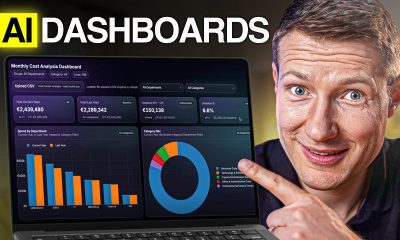
How to Build Finance Dashboards With AI in Minutes