

Crypto World
Crypto Crime Hits Record $154 Billion as Sanctioned States Turn to Blockchain

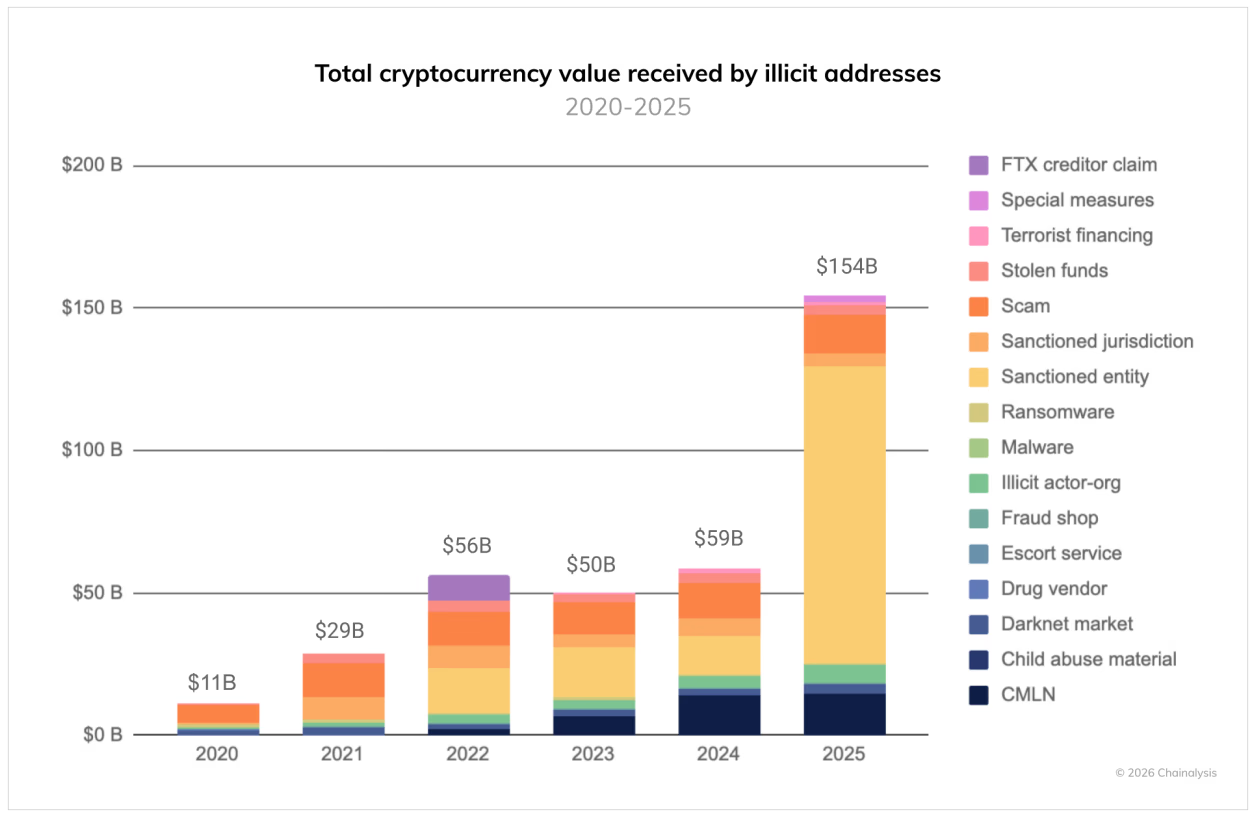
Funds flowing to sanctioned entities jumped 694% year over year, making sanctions evasion the fastest-growing category of crypto crime.
Illicit cryptocurrency activity surged to a record $154 billion in 2025, driven largely by a sharp increase in sanctions evasion by nation-states using blockchain networks, according to a new report from blockchain analytics firm Chainalysis.
The report finds that funds flowing to sanctioned entities jumped 694% year over year, making sanctions evasion the fastest-growing category of crypto crime.

But even excluding sanctioned activity, 2025 would still mark a record year for illicit on-chain transactions as criminal activity rose across most categories, Chainalysis said.
Despite the surge in illicit volumes, crypto crime still represents less than 1% of total crypto transaction activity, the report notes, underscoring how criminal use remains small relative to the broader ecosystem.
Nation-States Move On-Chain
The most striking development is the growing involvement of governments and state-aligned actors in crypto crime infrastructure.
Chainalysis says sanctioned jurisdictions increasingly use digital assets to bypass financial restrictions and move funds globally. Russia, for example, launched a ruble-backed token called A7A5, which transacted over $93 billion in less than a year and was used to facilitate sanctions evasion.
Meanwhile, North Korea remained the most prolific state-linked hacking group, stealing roughly $2 billion in crypto during 2025, including a nearly $1.5 billion exploit of the Bybit exchange, the largest digital asset theft on record.
Iranian networks have also increasingly used crypto to facilitate oil sales, arms procurement, and money laundering, moving more than $2 billion through wallets tied to sanctioned entities, according to the report.
Together, these trends signal a shift in the crypto crime landscape from isolated cybercriminals to state-aligned financial ecosystems operating on-chain.
Stablecoins Dominate Illicit Transactions
Stablecoins have become the primary vehicle for illicit crypto activity.
According to Chainalysis, 84% of illicit crypto transaction volume now involves stablecoins, reflecting their growing role across the broader crypto economy due to their price stability and cross-border usability.
The shift mirrors the wider market, where stablecoins increasingly serve as the core settlement asset for trading, payments, and international transfers.
Chinese Laundering Networks Expand Rapidly
Another key finding is the rise of Chinese-language money laundering networks (CMLNs), which have emerged as a central hub in the global crypto crime ecosystem.
These networks provide “laundering-as-a-service” infrastructure, processing funds from scams, hacks, and sanctions-related activity. Chainalysis estimates they now account for about 20% of known illicit crypto laundering flows, handling billions of dollars annually.
The networks operate through a variety of mechanisms—including money mule networks, informal over-the-counter brokers, gambling platforms, and discounted “Black U” markets for illicit stablecoins—often coordinating activity through Telegram marketplaces.
Scams Become Industrialized
Fraud remains one of the largest categories of crypto crime. Chainalysis estimates scammers received at least $14 billion in crypto in 2025, with the figure potentially exceeding $17 billion as additional illicit addresses are identified.
Impersonation scams surged the fastest, rising more than 1,400% year over year, as criminals increasingly use AI tools and phishing-as-a-service infrastructure to scale attacks.
These operations have become highly professionalized, with separate vendors providing phishing kits, victim databases, messaging tools, and laundering services.
A More Professionalized Illicit Ecosystem
Taken together, the findings point to a crypto crime landscape that is becoming more structured and industrialized.
State actors, organized crime groups, and specialized service providers now operate large-scale on-chain infrastructure, offering everything from laundering services to cyberattack tools.
While blockchain transparency still allows investigators to trace many of these activities, Chainalysis warns that the increasing intersection of geopolitics, cybercrime, and crypto finance raises the stakes for regulators and law enforcement.
“On-chain illicit activity is increasingly interwoven with sophisticated, state-aligned ecosystems that exploit crypto’s global reach,” the report notes, highlighting how crypto is reshaping the financial infrastructure used by both criminals and sanctioned states



The U.S. Federal Reserve and other regulators told bankers that they need to maintain the same amount of capital to back tokenized securities as they do regulator securities.
“The technologies used to issue and transact in a security do not generally impact its capital treatment,” according to the agencies, also including the Office of the Comptroller of the Currency and the Federal Deposit Insurance Corp. The three sent a new frequently-asked-questions document on Thursday to the banks they regulated.
The legal rights to owners of securities are meant to be the same whichever way the securities transact, and the regulators say the capital should also be the same. The assets themselves may also be used as financial collateral in the same way that securities are, the agencies clarified, “subject to the same haircuts applicable to the non-tokenized form of the security.”
Banks and other financial firms are required by their regulators to maintain capital as a cushion against financial distress, setting aside certain levels of liquid assets to be able to protect themselves and their customers. Setting the same standard for both forms of securities ownership means the crypto-linked assets won’t face more stringent treatment.
The same capital treatment also applies whether the tokens are issued on permissioned or permissionless blockchains, the regulators said, and that technology-neutral approach holds true for the capital tied to derivatives that reference tokenized securities, as well.
Tokenization of securities is a rising segment of crypto activity, in which such assets as stocks, bonds and real estate can be represented in a token issued on a blockchain. The U.S. Securities and Exchange Commission is also working on policies to direct how the tokens are handled.
Capital requirements represent a core compliance demand in the banking business, and clarity on such aspects of crypto capital further advances the assets into melding with U.S. banking. Though U.S. bank watchdogs were hesitant in recent years to embrace crypto and blockchain technology, the incoming leaders appointed during the administration of President Donald Trump last year have made it a special point to champion pro-crypto moves.

TLDR:
- SoFiUSD is the first stablecoin issued by a U.S. nationally chartered and insured deposit bank on a public chain.
- BitGo’s Stablecoin-as-a-Service platform powers SoFiUSD’s minting, burning, and institutional distribution.
- Both SoFi Bank and BitGo Bank & Trust are OCC-regulated, creating a dual-compliance framework for the token.
- The GENIUS Act passage enabled the legal foundation for SoFiUSD’s launch as a bank-issued stablecoin product.
SoFi Bank has launched SoFiUSD, a U.S. dollar-pegged stablecoin running on a public, permissionless blockchain. It is the first stablecoin issued by a nationally chartered and federally insured U.S. bank.
BitGo Bank & Trust, is providing the infrastructure behind the token. The move comes following the passage of the GENIUS Act, which opened clearer regulatory pathways for bank-issued stablecoins.
BitGo Powers Stablecoin Issuance for a Chartered U.S. Bank
BitGo is delivering this through its Stablecoin-as-a-Service platform.
The platform handles technology and operational infrastructure for SoFi Bank’s minting and distribution process. BitGo Bank & Trust is itself OCC-regulated. Both institutions operate under the same regulatory framework, which forms the backbone of the compliance model.
According to the official announcement, BitGo will also work with select payments providers, market participants, and exchanges.
This is designed to expand institutional reach for SoFiUSD. The token targets banks, fintechs, and enterprise treasury operations specifically. It is not positioned as a retail consumer product.
SoFiUSD is pegged 1:1 to the U.S. dollar. Third-party auditors will provide regular attestations to confirm reserve backing. BitGo’s smart contract infrastructure handles minting, burning, and transaction controls. The setup mirrors compliance-first architectures used in traditional finance.
SoFi’s crypto distribution team described SoFiUSD as critical financial infrastructure.
The token is aimed at institutions seeking settlement efficiency around the clock. It targets a specific gap in global treasury operations. Traditional banking rails still close on weekends and holidays.
SoFiUSD Aims to Bridge Regulated Banking and Blockchain Settlement Rails
The GENIUS Act passage has created new legal clarity for bank-issued stablecoins. SoFiUSD is the first product to market under this emerging framework.
BitGo’s infrastructure was built to support large-scale institutional asset flows. That makes SoFiUSD more aligned with wholesale finance than consumer crypto.
The partnership structure keeps regulatory accountability central. Both SoFi Bank, N.A. and BitGo Bank & Trust answer to the OCC. That dual-regulated relationship distinguishes SoFiUSD from stablecoins issued by non-bank entities.
It also positions the token as a potential model for future bank-issued digital currencies.
BitGo has described its Stablecoin-as-a-Service offering as purpose-built for institutions requiring regulatory trust alongside technical capability.
The infrastructure supports 24/7 onchain liquidity. That addresses a longstanding limitation for corporate treasurers managing cross-border payments. Real-time settlement across time zones has historically required multiple intermediaries.
SoFiUSD’s blockchain deployment on a permissionless public chain is notable. Most bank-adjacent digital assets have launched on private or permissioned networks.
This approach increases transparency and external auditability. It also allows third-party integration without requiring special access or agreements.
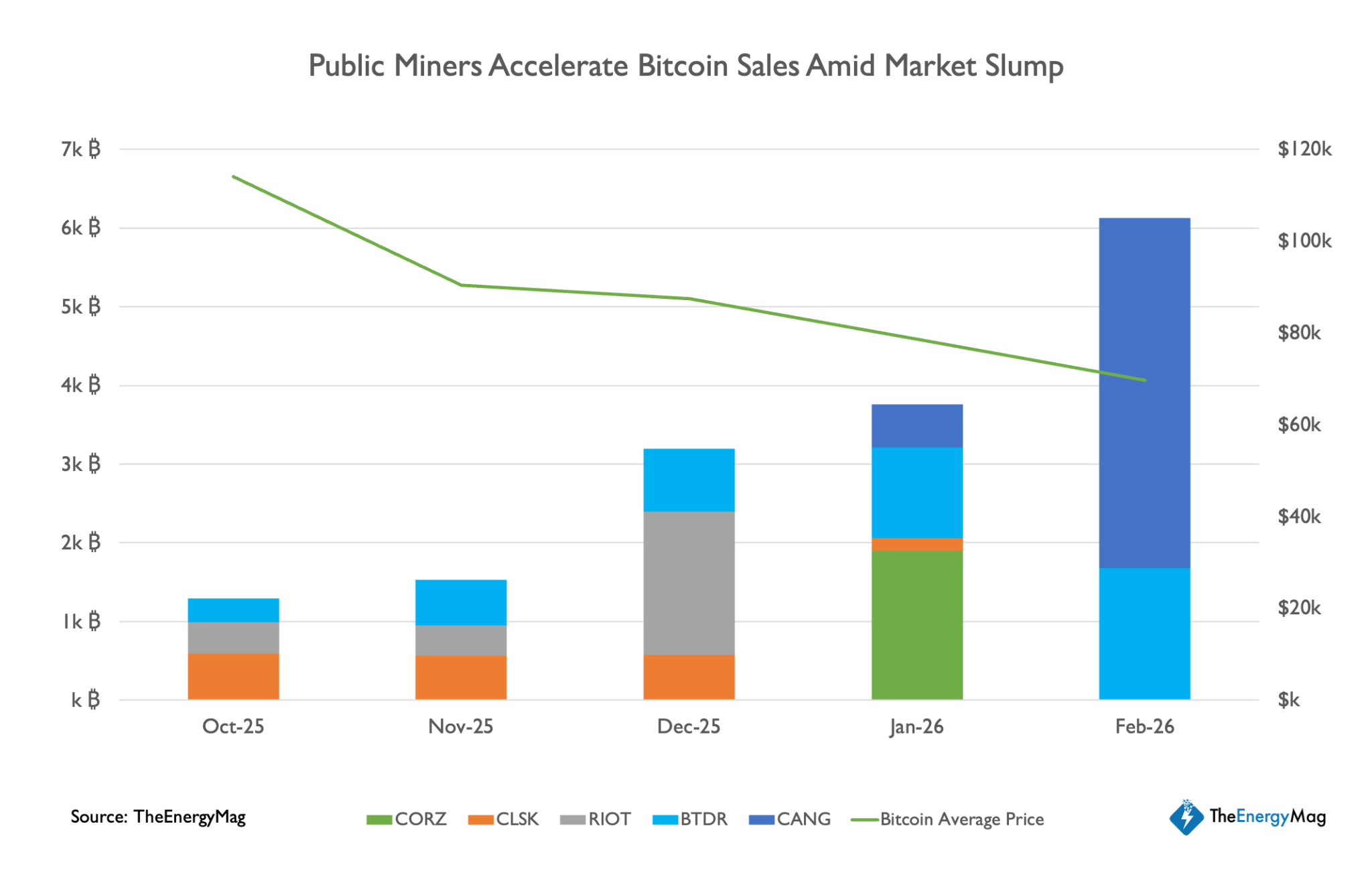
Bitcoin mining companies have offloaded a sizable portion of their Bitcoin reserves in recent months, signaling a shift away from the self-treasury strategy that dominated the industry during the 2024–2025 market upcycle.
According to TheEnergyMag’s Miner Weekly newsletter, publicly listed miners have sold more than 15,000 Bitcoin (BTC) since October. That month marked the market’s peak before a historic flash crash triggered widespread deleveraging across the industry.
Several large miners contributed to the sell-off. The newsletter highlighted Cango’s February sale of 4,451 BTC, equal to roughly 60% of its reserves, as well as Bitdeer, which reportedly liquidated its entire Bitcoin treasury last month.
It also pointed to Riot Platforms’ multiple BTC sales in December and Core Scientific’s plan to sell roughly 2,500 BTC during the first quarter.

MARA Holdings, the largest publicly traded Bitcoin mining company, drew attention this week after updated regulatory filings indicated it may both buy and sell Bitcoin to maintain flexibility and optionality.
Markets initially focused on the potential for sales, prompting vice president Robert Samuels to clarify the company’s position that the filing allows flexible sales but does not signal a majority liquidation.
MARA currently holds more than 53,000 BTC, making it the second-largest public corporate holder of Bitcoin, behind Michael Saylor’s Strategy.
Related: Bitcoin mining’s 2026 reckoning: AI pivots, margin pressure and a fight to survive
Mining companies shift strategy as margins tighten
Bitcoin miners’ recent sales mark a sharp departure from earlier cycle trends, when many companies adopted a de facto “treasury strategy” by holding a larger share of their self-mined BTC on their balance sheets.
At the time, research from Digital Mining Solutions and BitcoinMiningStock.io suggested the holding pattern reflected expectations of further price appreciation. It also coincided with efforts by several miners to strengthen their financial footing while expanding into adjacent businesses such as AI infrastructure, high-performance computing and data center services.
Industry conditions have deteriorated since October, however, with some observers describing the current environment as the harshest margin squeeze on record for mining companies.
The pressure has begun to show on balance sheets. CleanSpark, for example, repaid its Bitcoin-backed credit line in full, a move the company said was aimed at reducing financial risk amid tightening industry margins.
Related: American Bitcoin boosts hashrate with 11,298 new mining machines
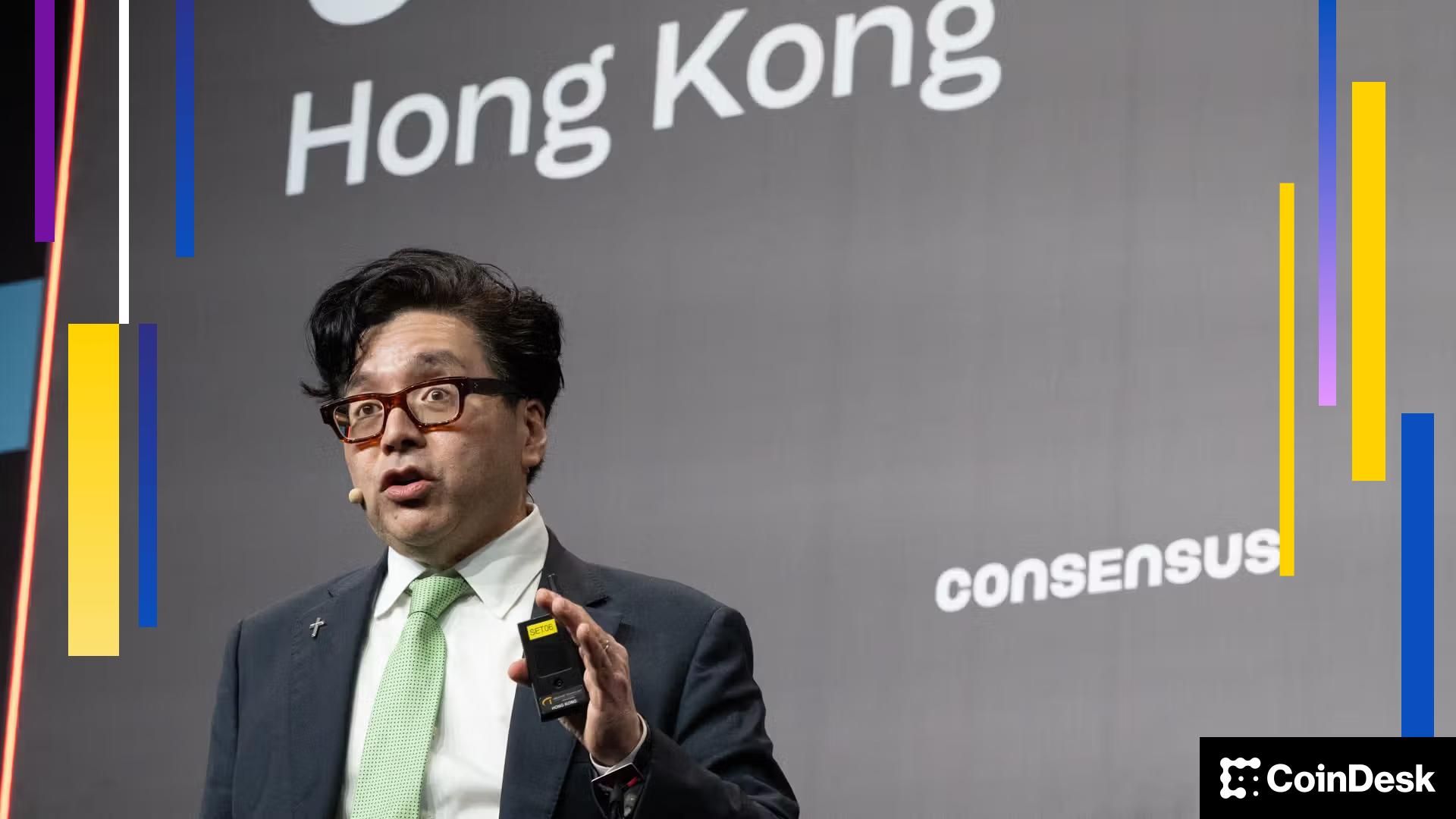
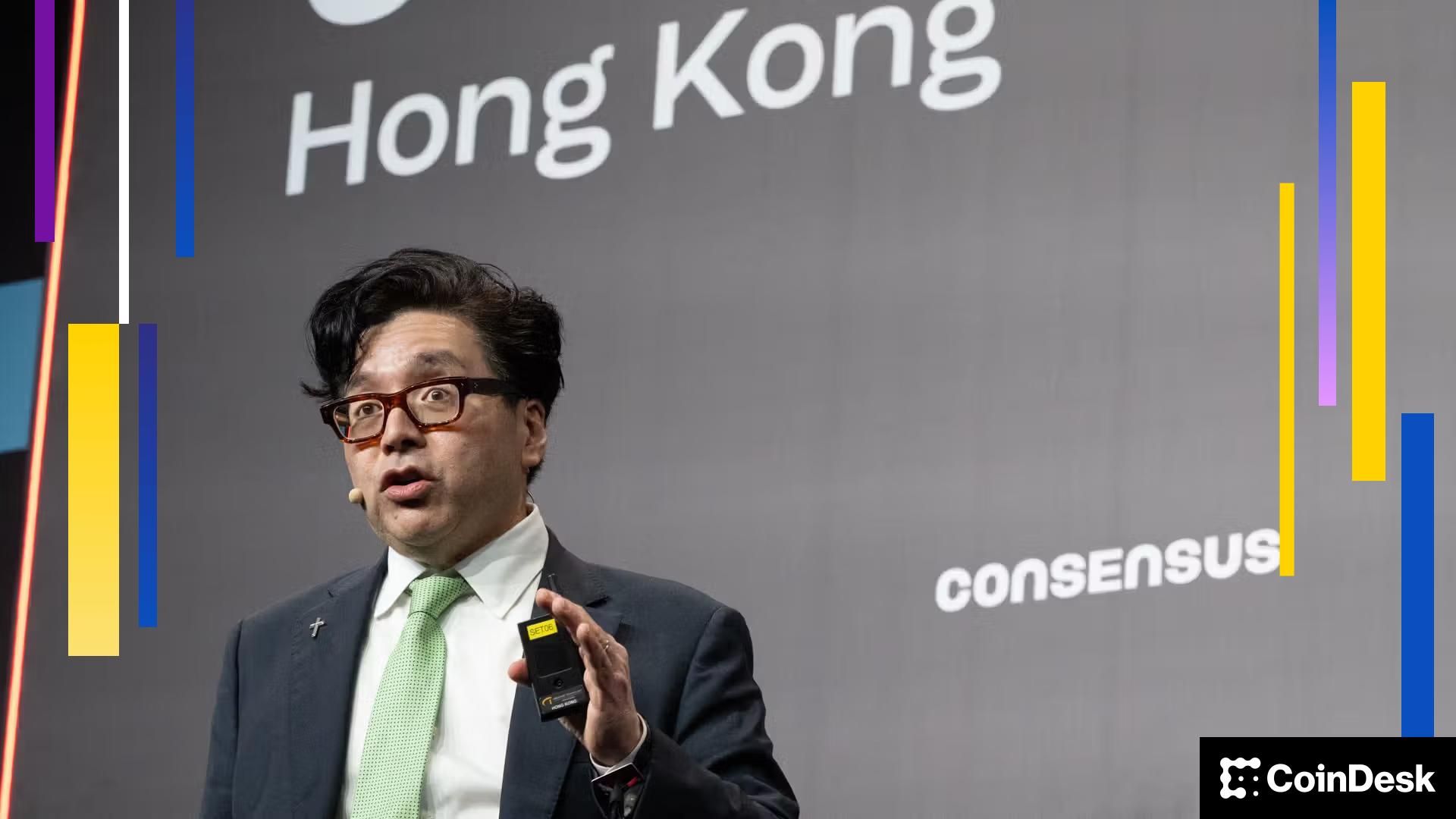
Short seller Culper Research is betting against ether (ETH) and ETH-linked stocks such as BitMine (BMNR), arguing that the network’s economics deteriorated following Ethereum’s latest network upgrade.
The firm said in a Thursday report that the December 2025 upgrade dubbed Fusaka flooded the network with excess blockspace and has “impaired ETH tokenomics.” That drove transaction fees sharply lower. Because validators earn part of their income from those fees, the drop has reduced staking yields.
That dynamic could create a negative feedback loop, the report said, where declining validator yields reduce staking demand and network security.
The report also highlighted that Ethereum co-founder Vitalik Buterin sold nearly 20,000 ETH, worth around $40 million at current prices, this year, citing data from blockchain sleuth Lookonchain.
“Vitalik is selling, while bulls like Tom Lee are clueless as to ETH’s new reality,” the report said. “We’re with Vitalik.”
The report pushes back on bullish claims from Lee, chairman of Ethereum-centric treasury firm BitMine, who has pointed to rising transaction counts and active addresses as evidence of stronger network fundamentals.
Culper said those metrics are misleading. Its analysis claimed a significant share of the activity surge stems from address poisoning attacks, a scam tactic where attackers send small transactions to trick users into copying malicious wallet addresses. Culper estimated Ethereum fees have dropped roughly 90% since the upgrade.
“By Lee’s own logic, if utility is NOT going up, then ETH is in a death spiral,” the report said. “This is exactly what we believe is happening.”
The short thesis also targeted BitMine (BMNR), one of the largest corporate buyers of ether.
Since July, the company has accumulated roughly 4.4 million ETH as part of its treasury strategy. With ether prices down significantly from recent highs, those holdings are estimated to be 45% underwater, with BitMine sitting on roughly $7.4 billion in unrealized losses, DropsTab data shows.
BitMine did not return a request for comment by press time.
Read more: Vitalik Buterin reveals his bold new plan to fix Ethereum’s scaling problem
Meanwhile, some market observers believe PI could eventually explode above $1.
The cryptocurrency market continues its impressive recovery, with Pi Network’s PI stealing the show with an impressive 15% daily surge.
However, certain factors suggest that its price could soon turn downward again.
Time to Cool Off?
PI is the best-performing top-100 cryptocurrency today (March 5), with its valuation soaring to a three-week high of $0.20 (per CoinGecko data). Its market capitalization exceeded $1.9 billion, thus making it the 43rd-largest digital asset.
Perhaps the most likely catalyst fueling the rally is the broader revival of the cryptocurrency sector. Bitcoin (BTC) briefly rose to almost $74,000, Ethereum (ETH) neared $2,200, while well-known altcoins like Monero (XMR), Aster (ASTER), and Toncoin (TON) have jumped by 6-7% on a 24-hour scale.
PI’s pump also coincides with the latest updates announced by the Core Team. As CryptoPotato reported, the protocol v19.9 migration was successfully completed. The next version is v20.2, and it is expected to be released before Pi Day 2026 (March 14).
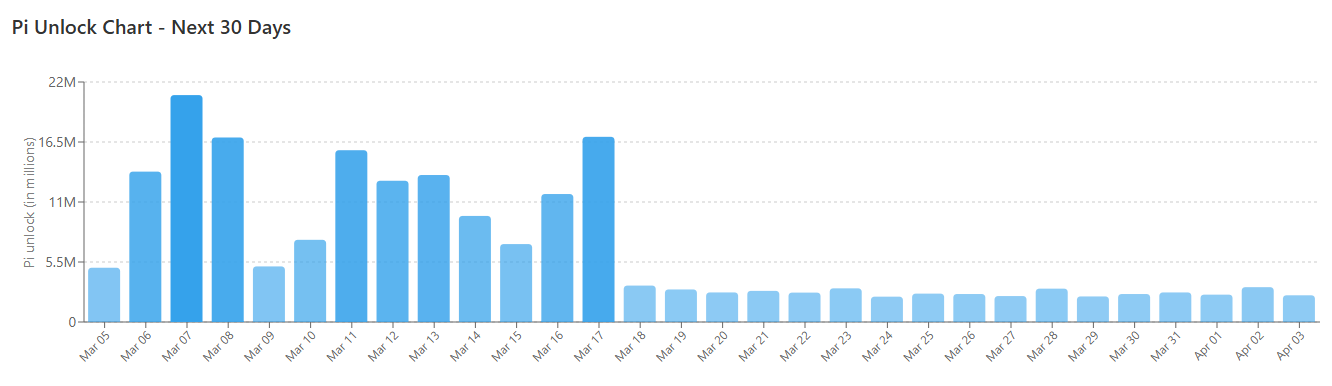
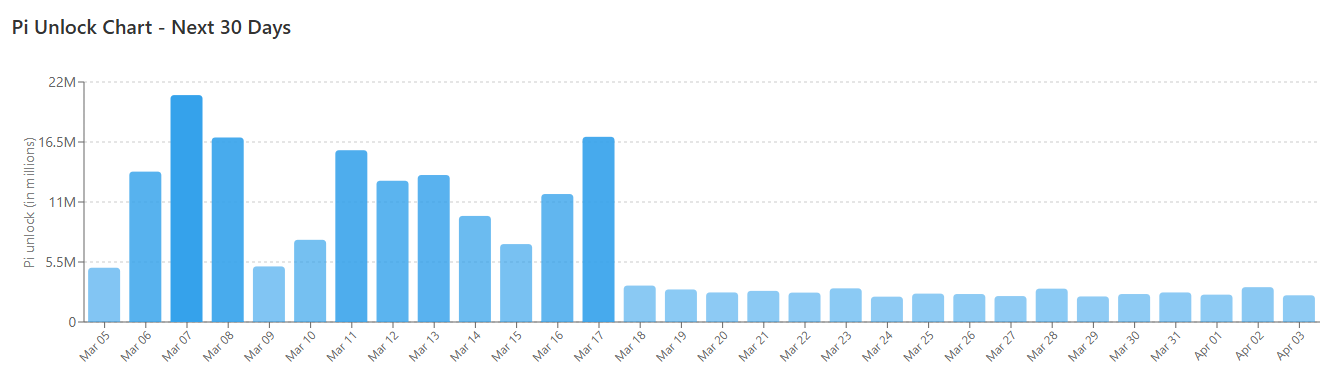
The upcoming token unlocks, though, indicate that PI may not be out of the woods yet. Data shows that a substantial amount of coins will be freed up in the coming days: a development that doesn’t guarantee a price decline but increases immediate selling pressure. March 7 is scheduled as the record day, when almost 21 million PI will be released.
The second bearish factor is the rising supply stored on exchanges, now sitting at roughly 365.5 million coins. Such a shift from self-custody toward centralized platforms is often interpreted as a pre-sale step.
You may also like:

Last but not least, we will touch upon PI’s Relative Strength Index (RSI). The technical analysis tool measures the speed and magnitude of the latest price changes and is used by traders to identify trend reversals. It runs from 0 to 100, and ratios above 70 signal that the asset has entered overbought territory and could be on the verge of a pullback. As of press time, PI’s RSI stands at around 72.

How About Further Gains?
Some market observers expect PI’s rally to continue in the short term. X user ALTS GEMS Alert predicted that the price might soar above $0.30 should it hold the key level around $0.19.
“Momentum building… breakout could send it much higher,” they added.
Whale Hunter forecasted that PI will move “small by small,” starting at $0.20, then $0.40, and eventually exploding to $0.70 and beyond $1. “That’s how crypto works. Finally, you are X5 to X10 profit,” they suggested.
Meanwhile, there has been growing speculation that the leading crypto exchange Kraken might list Pi Network’s native cryptocurrency on Pi Day. Such a move would increase liquidity, improve availability, strengthen its reputation, and potentially support a positive price reaction.
Binance Free $600 (CryptoPotato Exclusive): Use this link to register a new account and receive $600 exclusive welcome offer on Binance (full details).
LIMITED OFFER for CryptoPotato readers at Bybit: Use this link to register and open a $500 FREE position on any coin!
Disclaimer: Information found on CryptoPotato is those of writers quoted. It does not represent the opinions of CryptoPotato on whether to buy, sell, or hold any investments. You are advised to conduct your own research before making any investment decisions. Use provided information at your own risk. See Disclaimer for more information.
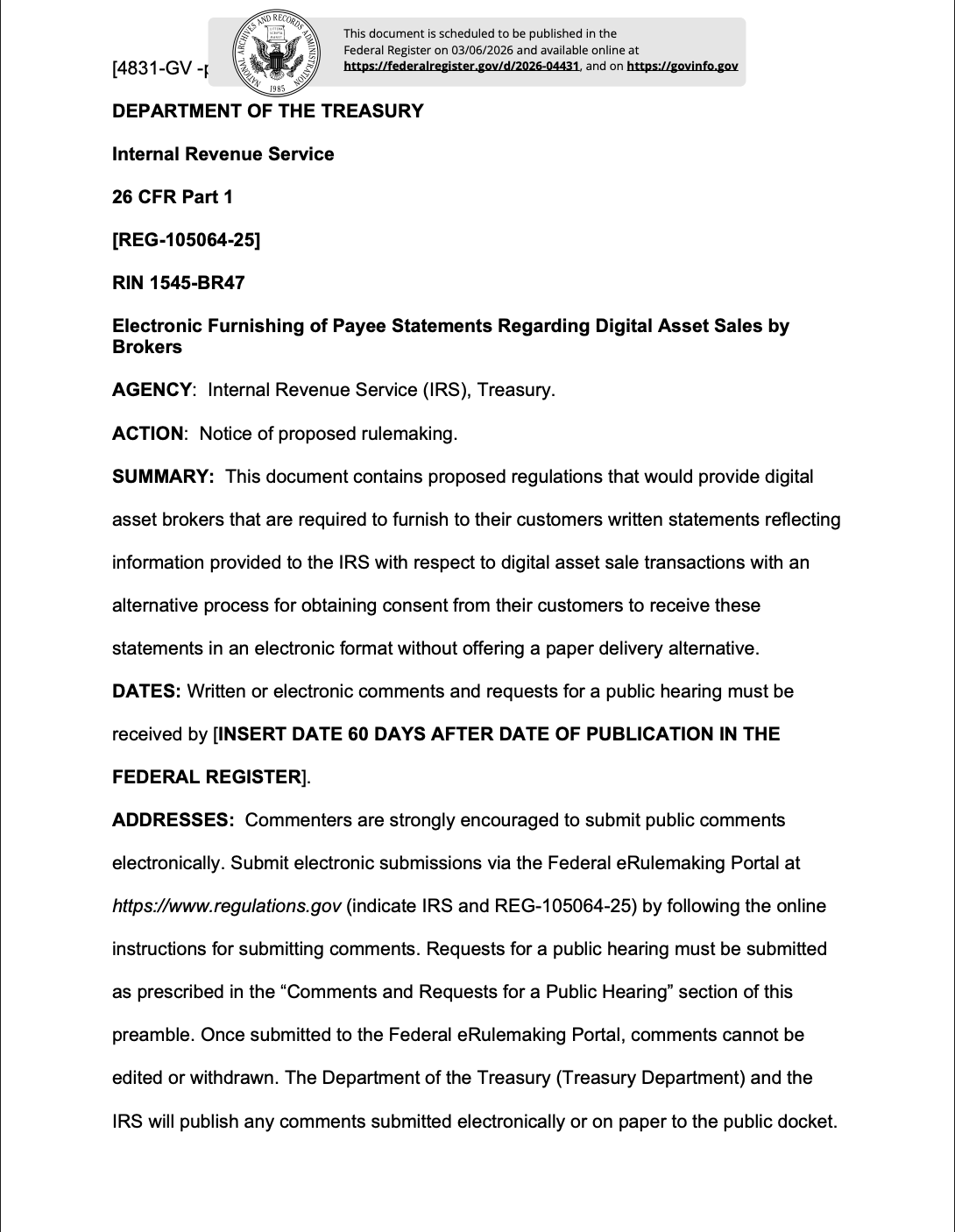
The US Internal Revenue Service (IRS) is seeking to require electronic delivery of tax forms to crypto exchange users.
Under the current rules, exchanges are required to provide paper copies of tax form 1099-DA, the IRS tax form used to document crypto transactions from a centralized exchange or broker, if users request paper forms.
The proposed new rules, slated to be published on Friday, remove this requirement and allow brokers to “terminate” their relationships with existing clients if they refuse electronic delivery of tax forms.
Additionally, the IRS proposal would also prohibit users from retroactively revoking consent for electronic forms.

The IRS requires all broker-dealers, platforms providing crypto services to users like exchanges, to report user proceeds from each transaction and to provide users with Form 1099-DA, detailing their transaction history for the tax season.
However, the exchanges are not required to track cost basis for the 2025 tax year; tracking cost basis, or the price paid for each investment purchase, is the investor’s responsibility. The IRS outlined the reporting requirements for brokers:
“Brokers required to make these returns must include identifying information of the customer, such as the customer’s name and tax identification number (TIN), and such other relevant information, including the gross proceeds from the transaction.”
One in five Americans, or about 55 million individuals, hold digital assets in the US, according to the National Cryptocurrency Association (NCA), a crypto advocacy group.

Tax compliance was one of the biggest impediments to adopting crypto, with 10% of the 54,000 respondents in the NCA survey citing digital asset taxes as an issue.
More than one-third of the respondents indicated that they wanted more education on the tax implications of digital assets, according to the NCA.

Related: Crypto lobby Blockchain Association pitches tax plan to Congress
Concerns resurface after Trump killed the controversial “DeFi broker rule,”
In December 2024, the IRS issued a rule classifying all front-end services, including decentralized exchanges (DEX) and decentralized finance (DeFi) platforms, as broker-dealers, subjecting them to tax reporting requirements.
This meant that DeFi platforms would have to collect know-your-customer (KYC) information and report proceeds from user sales to the IRS.
US President Donald Trump signed a resolution in April 2025 that killed the DeFi broker rule, which was well-received by the crypto industry.
However, crypto industry executives have sounded the alarm about ambiguous language in the stalled CLARITY market structure bill that could force KYC reporting requirements onto DeFi platforms and limit activity in the nascent sector.
Magazine: Clarity Act risks repeat of Europe’s mistakes, crypto lawyer warns
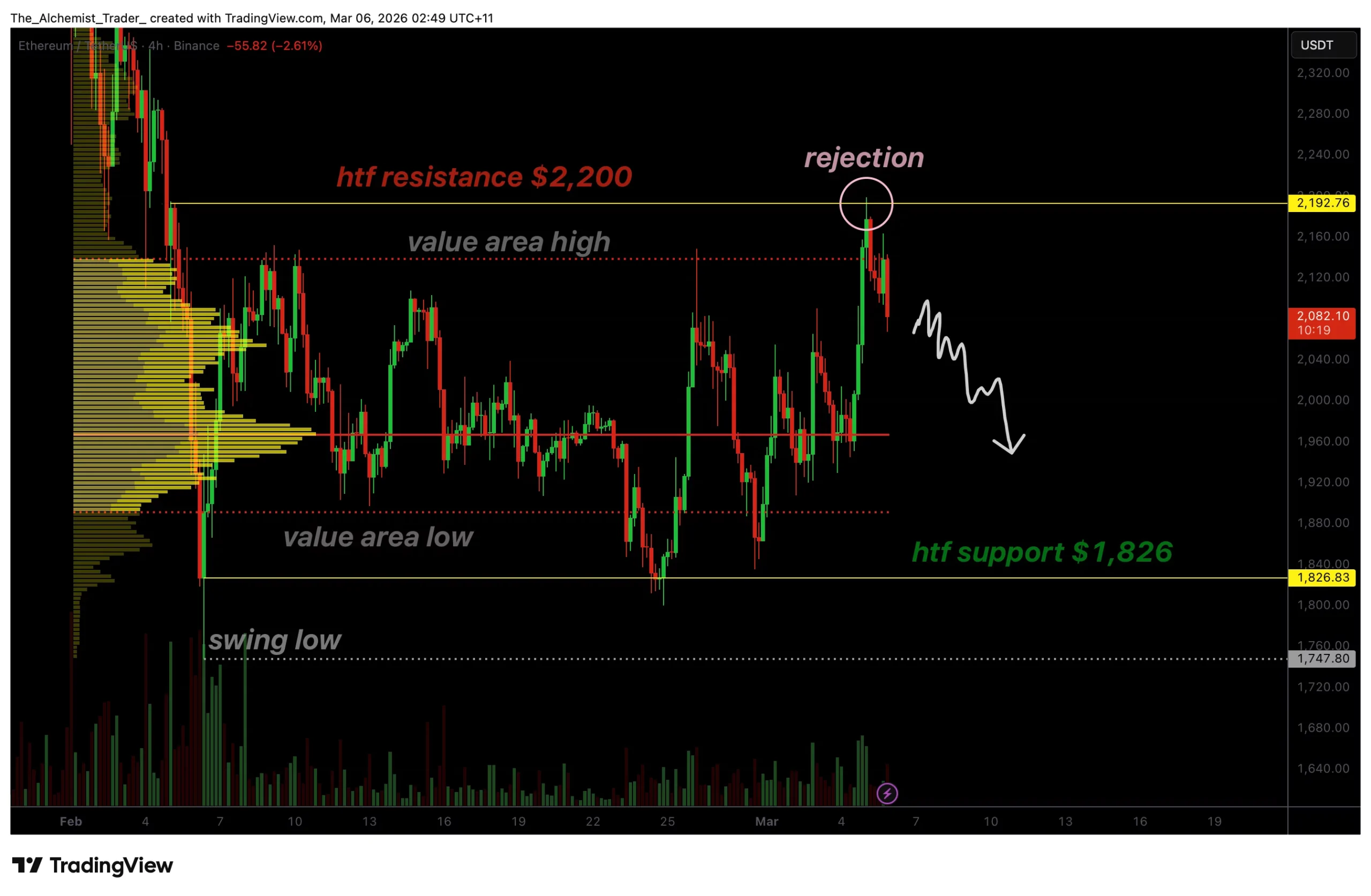
Ethereum price has rejected the $2,200 resistance level after failing to sustain momentum above a key value area high. The rejection increases the probability of a rotational move toward lower support as bearish pressure begins to build.
Summary
- Resistance Rejection: Ethereum rejected the $2,200 level and closed below the value area high.
- Range Structure: Price remains trapped within a broader consolidation range.
- Downside Target: A rotational move toward the $1,826 support level is possible if resistance holds.
Ethereum’s (ETH) recent price action has shown clear signs of weakness after the asset attempted to reclaim the $2,200 resistance level but failed to hold above it. The rejection from this area has reinforced the broader range-bound structure that has been developing over recent sessions.
With price now trading back below the value area high, the market is beginning to show signals that a rotational move toward lower support may occur if selling pressure continues.
Ethereum price key technical points
- Key Resistance: $2,200 rejection confirms strong overhead supply.
- Value Area Structure: Price closed below the value area high, signaling weakening momentum.
- Technical Target: Potential rotation toward the $1,826 support level.
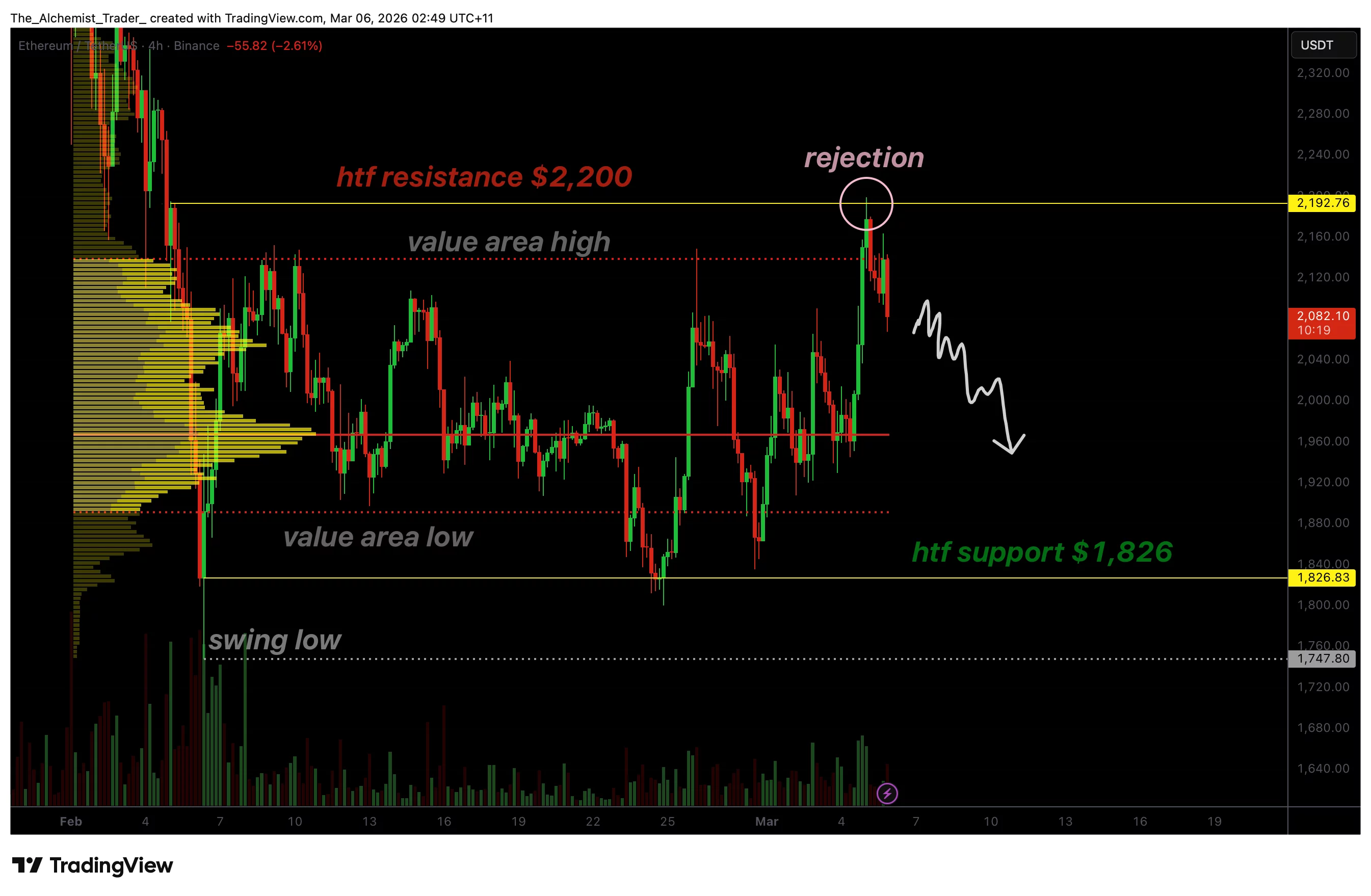
Ethereum recently approached the $2,200 region, which has acted as a strong resistance level within the current trading structure. This area coincides closely with the value area high, a key technical zone derived from the volume profile that often acts as a pivot for price direction.
When Ethereum briefly traded near this region, buyers failed to generate enough momentum to sustain a breakout. Instead, the market printed a clear rejection and quickly moved back below the level.
This rejection is technically significant because it confirms that the upper boundary of the current trading range remains intact. The value area high often acts as a distribution zone where selling pressure emerges, and the inability for price to hold above this level indicates that market participants may still be favoring a range-bound structure rather than a breakout continuation.
With the rejection confirmed through a close below the value area high, the probability of a rotational move within the established range increases. In range-bound environments, price typically oscillates between the value area high and value area low while searching for liquidity at both extremes. In this case, the lower support around $1,826 becomes the next logical technical magnet for price action.
Meanwhile, broader discussions within the ecosystem continue after Vitalik Buterin recently described Ethereum as part of a wider network of “sanctuary technologies,” open-source systems designed to protect freedom, privacy, and resilience in an increasingly uncertain world.
Market structure also supports the potential for a downward rotation. Ethereum has repeatedly struggled to establish higher highs above the $2,200 region, suggesting that buyers are losing control at this level. Without a strong influx of bullish volume to reclaim resistance, price is more likely to revisit lower liquidity zones where demand may re-enter the market.
Additionally, the proximity between the value area high and the broader range resistance strengthens the case for rejection. When multiple technical levels align in the same region, the probability of price reacting to that zone increases significantly, which likely contributed to the sharp rejection seen in recent candles.
Although Ethereum recently rebounded above the $2,000 psychological support level amid improving market sentiment and a large purchase of over 50,000 ETH by Bitmine, the confluence of resistance overhead continues to limit upside momentum.
If Ethereum continues to print multiple closes below the value area high, the market may gradually rotate toward the lower boundary of the range. Such movements are common in consolidation environments, where price action shifts between support and resistance until a decisive breakout eventually occurs.
What to expect in the coming price action
As long as Ethereum remains below the $2,200 resistance and continues closing below the value area high, the probability favors a rotational move toward the $1,826 support level.
A reclaim of the resistance zone would invalidate this bearish outlook, but until then, the broader market structure suggests that downside pressure may persist within the current trading range.

Bitcoin (CRYPTO: BTC) miners faced a dual dynamic in February: cash-flow optimization through asset sales alongside aggressive capacity expansion to support AI-enabled data-center workloads. CleanSpark reported selling 553 BTC from its February production for roughly $36.6 million while mining 568 BTC during the month. By month-end, the company held 13,363 BTC in treasury and had just closed a second Texas campus that adds 300 megawatts of ERCOT-approved power capacity, broadening its footprint in a grid operated by the Electric Reliability Council of Texas. CleanSpark’s deployed fleet tallied 235,588 mining machines, delivering a peak hashrate of 50 EH/s and averaging 43.2 EH/s, underscoring the industry’s push toward scale to support denser, power-hungry operations.
Year-to-date, the miner reported 1,141 BTC produced through February, with 1,086 BTC of its holdings posted as collateral or receivable in connection with derivatives transactions, illustrating how mining revenue is increasingly hedged to manage price volatility and financing risk. The company framed this as part of a broader strategy to monetize power-dense assets beyond traditional crypto mining, aligning with a trend among miners to repurpose infrastructure for AI-friendly workloads and high-performance computing, as noted in industry analyses linked to the sector’s evolving business model.
As of the filing, CleanSpark’s stock was down about 7.5% on the day, while the sector-tracking CoinShares Bitcoin Mining ETF (EXCHANGE: WGMI) was down 6.4%, reflecting a broader risk-off tone in crypto equities on the publication date.
Miners sell off Bitcoin in 2026
CleanSpark is not alone in liquidating portions of its Bitcoin holdings to fund infrastructure expansion and AI-oriented data-center projects. Riot Platforms disclosed that it sold 1,818 BTC in December for about $161.6 million as part of a strategy to monetize energy and data-center assets while supporting AI workloads; the company reported holdings of 18,005 BTC as of Dec. 31, down from 19,368 BTC a month earlier, after producing 460 BTC during December. The move highlighted a broader shift across the sector toward leveraging hardware and data-center capacity for non-cryptocurrency applications.
In February, Bitdeer confirmed it liquidated its entire corporate Bitcoin treasury, producing 189.8 BTC during the period and selling the full amount along with an additional 943.1 BTC drawn from its existing reserves. The scale of these sales illustrates a mounting effort among miners to fund ongoing expansions and diversify revenue streams amid tight capital conditions and rising power costs.
Meanwhile, Core Scientific reported during its fourth-quarter earnings call on March 2 that it sold roughly 1,900 BTC for about $175 million in January, reducing its holdings to fewer than 1,000 BTC. In a separate move, the company announced a $500 million credit facility from Morgan Stanley to finance infrastructure capable of supporting high-density computing workloads, including AI and high-performance computing (HPC). The financing underscores how mining companies are increasingly balancing productive capacity with strategic investments in AI-ready data-center capabilities to capture new demand streams.
On the speculative front, MARA Holdings, the second-largest corporate Bitcoin treasury holder with 53,822 BTC, faced chatter about potential sales of its reserves. However, MARA’s investor-relations vice president, Robert Samuels, pushed back on X, saying the treasury strategy remained intact and unchanged. The market will be watching whether this resilience holds as macro conditions, energy prices, and the evolving regulatory landscape shape miners’ treasury management decisions in the months ahead.
Across the industry, the emphasis on powering AI and HPC workloads is driving a broader redefinition of mining infrastructure. Operators are pursuing power-dense facilities, optimized cooling, and robust electrical grids to support large-scale data processing, while balancing the volatility of Bitcoin prices with hedging strategies and longer-term capital investments. The tension between selling to fund growth and preserving Bitcoin holdings for balance-sheet resilience remains a central theme for miners navigating 2026’s mixed liquidity environment and the ongoing wave of AI-driven demand for compute power.
Why it matters
February’s disclosures paint a picture of miners simultaneously expanding physical footprints and trimming balance-sheet exposure through cash sales. The rapid deployment of additional Texas capacity, alongside continued production, demonstrates the sector’s commitment to scale despite a volatile price backdrop. For investors, the mix of reported BTC production, treasury holdings, and collateralized positions signals an industry that is increasingly integrating mining with broader data-center strategies and AI-capable operations, potentially affecting long-term profitability and cash-flow stability.
The trend toward monetizing dense data-center capacity beyond traditional mining could alter the competitive landscape. As AI and HPC workloads demand reliable, cost-efficient electricity and cooling, miners with expansive power portfolios may gain leverage in power markets and grid interactions. This could influence not just individual company valuations but also the resilience of crypto mining as a capital-intensive, infrastructure-driven business model, particularly in states like Texas where regulatory and market frameworks continue to evolve to accommodate large-scale digital infrastructure.
From a market structure perspective, the activity underscores the close relationship between crypto cycles, energy markets, and financial hedging. The fact that several operators are combining asset sales with debt facilities and non-crypto revenue streams indicates a maturing sector that is learning to weather volatility by diversifying revenue and stabilizing capital expenditure. For builders and developers, the move toward AI-ready data centers signals opportunities to repurpose existing sites or accelerate new builds in power-rich regions, while for regulators, it raises considerations about grid reliability, energy pricing, and the environmental footprint of intensive compute operations.
What to watch next
- CleanSpark’s next quarterly and monthly updates to confirm ongoing production volumes, treasury changes, and any further capacity additions in Texas.
- Public disclosures from Riot Platforms, Bitdeer, and Core Scientific on their 2026 treasury strategy, financing arrangements, and any additional asset sales or hedging activities.
- The utilization and performance of Morgan Stanley’s $500 million facility at Core Scientific, including milestones for deploying AI/HPC workloads on new infrastructure.
- Industry-wide capacity additions beyond 300 MW Texas expansions and any regulatory developments affecting energy-intensive mining and data-center operations in ERCOT and other jurisdictions.
- BTC price trajectories and macro liquidity conditions that influence mining profitability, treasury management, and investor sentiment toward mining equities and related ETFs.
Sources & verification
- CleanSpark February 2026 operational update detailing BTC production and treasury changes, including 13,363 BTC in treasury and 300 MW Texas campus expansion.
- ERCOT and Texas campus capacity information corroborating the 300 MW expansion and grid context.
- Riot Platforms’ December 2025 sale of 1,818 BTC for about $161.6 million and holdings of 18,005 BTC as of Dec 31, plus 460 BTC produced in December.
- Bitdeer’s February 2026 liquidation of its entire corporate treasury and 189.8 BTC produced, plus 943.1 BTC sold from reserves.
- Core Scientific’s January 2026 sale of approximately 1,900 BTC for $175 million and the announcement of a $500 million Morgan Stanley facility to fund AI/HPC infrastructure.
- MARA Holdings’ balance-sheet context and public comments from Robert Samuels on X addressing treasury strategy.
Bitcoin miners expand capacity as cashing out accelerates in 2026


The global fintech applied to become a federally regulated, FDIC-insured bank, while the crypto infra firm is looking to become a national bank trust.
Two crypto-adjacent firms just applied to be federally regulated banks in the United States.
Today, Revolut — a UK-headquartered, retail-focused global neobank that offers crypto trading — announced it has officially filed for a national bank charter in the U.S. as part of its strategic push to expand financial services in the United States.
Just yesterday, March 4, digital asset infrastructure company, zerohash, announced that it has applied for a national trust bank charter in the U.S.
Both firms applied to the U.S. Office of the Comptroller of the Currency (OCC), and the charters would let them operate across all U.S. states. Revolut is also applying to the Federal Deposit Insurance Corporation (FDIC), as it seeks to be full-service, federally regulated bank in the U.S.
Revolut also announced today that it has appointed a new U.S. CEO, Cetin Duransoy.
Zerohash, which specializes in settlement services for digital assets and stablecoins, is seeking an OCC National Trust Bank license, which would restrict the firm to custody and trust services. The firm’s chief legal and compliance officer said in the release:
“Applying for a National Trust Bank Charter is a natural next step in offering robust global licensing coverage and continuing to expand our product offering.”
Zerohash’s press release also notes that the trust bank charter will let the firm “expand its services offerings under a federal framework, including those activities that fall under the GENIUS Act.”
A Growing Trend
Though it’s generally known as a fintech and neobank, Revolut has rapidly expanded its offerings into digital assets, adding crypto trading as early as 2017.
The trend of crypto-native and crypto-friendly firms pursuing traditional banking licenses is driven by a dual need for regulatory compliance and the desire to expand service offerings within the traditional financial system.
Since last year, several major crypto firms — including Ripple, Paxos and Circle — applied for national bank and national trust bank charters in the U.S.
Last week, Crypto.com received conditional approval from the OCC to establish its national trust bank, as The Defiant reported.
This article was generated with the assistance of AI workflows.


Analysts say high exchange turnover often reflects traders repositioning portfolios quickly during periods of rising volatility.
Ethereum (ETH) trading activity on Binance has jumped dramatically, with around 29.6 million ETH changing hands on the exchange over the past 30 days, the highest turnover recorded since September 2025.
The spike suggests traders are cycling the same supply through the market at a faster pace as volatility returns and derivatives positioning shifts.
Binance ETH Turnover Climbs
Data shared by Arab Chain on March 5 shows the 30-day Ethereum exchange liquidity ratio on Binance has climbed to 8.47. The metric compares the amount of ETH traded during a set period with the total supply available on the exchange.
Binance currently holds around 3.5 million ETH in exchange reserves, yet trading volume during the last month reached almost 29.6 million ETH. That means the same coins have been traded multiple times within a relatively short period.
According to Arab Chain, high turnover levels often appear during periods when traders actively reposition portfolios or when price volatility increases.
“Historically, high turnover rates have often coincided with increased market liquidity and faster asset movement between wallets and exchanges, reflecting heightened risk appetite among traders,” noted Arab Chain.
The latest reading is the highest since September last year, a period that also saw strong price swings in the market.
Presently, ETH has climbed past the $2,000 level, gaining about 4.6% in the last 24 hours. On longer timeframes, the asset is up about 2% in the past week and just over 6% in the last two weeks, although it remains about 9% lower over the last 30 days.
You may also like:
Shifting Market Behavior
Alongside the spike in spot turnover, derivatives indicators point to changes in trading behavior across both Ethereum and Bitcoin. This is according to market analyst Moreno, who noted that net taker volume in derivatives markets has started to move back into positive territory after months of aggressive selling.
Net taker volume measures the difference between traders placing market buy orders and those executing market sells, which helps show who is actively pushing prices. Per the analyst, when the metric flips positive after a long stretch of negative readings, the first phase often reflects short covering and the unwinding of hedge positions rather than fresh long-term demand.
Ethereum’s derivatives activity can also appear distorted because the asset is widely used as collateral in decentralized finance strategies. Many traders hold spot ETH while at the same time shorting perpetual futures contracts to maintain delta-neutral positions, which creates persistent selling pressure in derivatives markets.
Another signal of demand came from the Coinbase premium for both Bitcoin and Ethereum. According to analyst CW, the premium is positive, suggesting buyers on the U.S. exchange are paying slightly higher prices than global markets.
Combined with rising exchange turnover and shifting derivatives flows, the data shows traders are becoming more active again as Ethereum holds above the $2,000 level.
Binance Free $600 (CryptoPotato Exclusive): Use this link to register a new account and receive $600 exclusive welcome offer on Binance (full details).
LIMITED OFFER for CryptoPotato readers at Bybit: Use this link to register and open a $500 FREE position on any coin!

Kristi Noem Misled Congress About Corey Lewandowski’s Role In DHS Contracts

XRP I TOLD YOU!!! Morgan Stanley FLIPPED THE SWITCH!

Israelis back war with Iran despite uncertainty and fatigue


-

 Politics7 days ago
ITV enters Gaza with IDF amid ongoing genocide
-

 Politics3 days ago
Alan Cumming Brands Baftas Ceremony A ‘Triggering S**tshow’
-

 Fashion6 days ago
Weekend Open Thread: Iris Top
-

 Tech5 days ago
Unihertz’s Titan 2 Elite Arrives Just as Physical Keyboards Refuse to Fade Away
-
Sports6 days ago
The Vikings Need a Duck
-
 NewsBeat5 days ago
Dubai flights cancelled as Brit told airspace closed ’10 minutes after boarding’
-

 NewsBeat5 days ago
Abusive parents will now be treated like sex offenders and placed on a ‘child cruelty register’ | News UK
-
 NewsBeat5 days ago
The empty pub on busy Cambridge road that has been boarded up for years
-

 NewsBeat4 days ago
‘Significant’ damage to boarded-up Horden house after fire
-

 Tech15 hours ago
Bitwarden adds support for passkey login on Windows 11
-

 Entertainment4 days ago
Baby Gear Guide: Strollers, Car Seats
-
 Sports4 hours ago
499 runs and 34 sixes later, India beat England to enter T20 World Cup final | Cricket News
-
 Tech6 days ago
NASA Reveals Identity of Astronaut Who Suffered Medical Incident Aboard ISS
-
Politics5 days ago
FIFA hypocrisy after Israel murder over 400 Palestinian footballers
-
 NewsBeat5 days ago
Emirates confirms when flights will resume amid Dubai airport chaos
-

 NewsBeat3 days ago
Is it acceptable to comment on the appearance of strangers in public? Readers discuss
-

 Crypto World7 days ago
From Crypto Treasury to RWA: ETHZilla Retreats and Relaunches as Forum Markets on Nasdaq
-

 Tech5 days ago
Viral ad shows aged Musk, Altman, and Bezos using jobless humans to power AI
-

 Video3 days ago
How to Build Finance Dashboards With AI in Minutes
-

 Business2 days ago
Guthrie Disappearance Enters Fifth Week as Family Visits Memorial