Connect with us

Business

US trade court orders tariff refunds in setback for Trump administration

Published

on

US trade court orders tariff refunds in setback for Trump administration

A trade court has cleared the way for businesses to receive refunds for tariffs that the Supreme Court struck down last month.

Continue Reading
Click to comment

Leave a Reply

Your email address will not be published. Required fields are marked *

Business

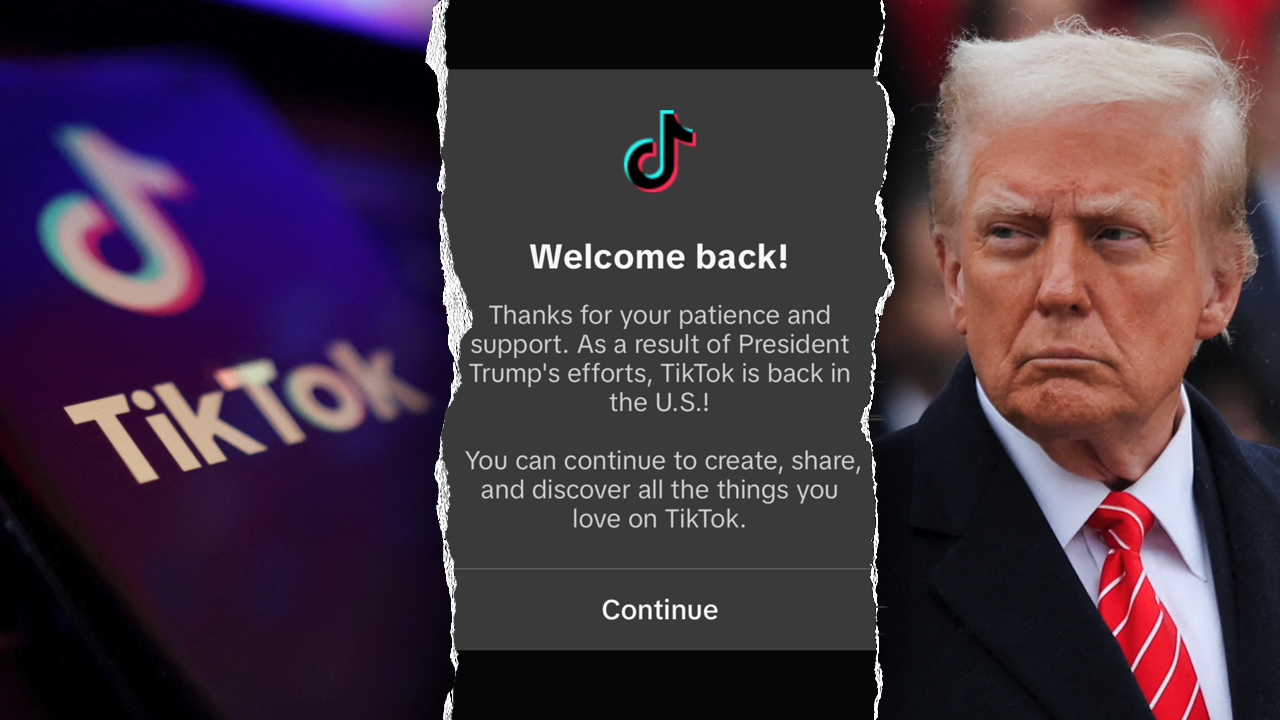
Trump, Bondi sued by shareholders over alleged TikTok deal law violations

Published

on

Trump, Bondi sued by shareholders over alleged TikTok deal law violations

President Donald Trump and Attorney General Pam Bondi on Thursday were sued over their handling of the TikTok deal that was finalized in January, according to a petition filed by two shareholders in competing tech firms.

The plaintiffs argued that Trump approved a joint venture that failed to fully sever the app’s operational ties to China, granted several unlawful extensions and that Bondi failed to investigate the alleged breaches as required by the Protecting Americans from Foreign Adversary Controlled Applications (PAFACA) Act, which mandated TikTok to divest from its Chinese parent company, ByteDance, by early 2025.

Advertisement

The petition was filed by Zhaocheng Anthony Tan, a shareholder in Alphabet, and Garrett Reid, a shareholder in Meta Platforms, who said the TikTok deal also led to declines in Meta and Google stock.

“For the law to mean something, it must be followed, even—perhaps especially—by the President,” the lawsuit, filed by the Public Integrity Project, stated. “Respondents have violated the statute and subverted the will of Congress. Petitioners bring this case to ensure that such violations, and such subversion, do not continue.”

TIKTOK AVOIDS US BAN BY FINALIZING HISTORIC TRUMP-BACKED AMERICAN MAJORITY OWNERSHIP DEAL

A split of TikTok and Trump

Trump in January backed the launch of The Joint Venture LLC, a seven-member majority-American board that enabled TikTok to keep operating in the U.S. (Getty Images)

Under the current agreement, TikTok was spun off into a separate U.S.-owned entity to remain operational in the country, satisfying an executive order issued by Trump on Sept. 25 of last year. The majority American-owned joint venture gives U.S. entities an 80.1% stake, while parent company ByteDance retains 19.9%.

Advertisement

“In short, under the announced deal, ByteDance would still control all the essential elements of TikTok,” the lawsuit said. “Such a deal would subvert the very purpose of the TikTok Law, as ByteDance could continue to push Chinese propaganda and censor the content it does not like, exactly the harm that the law was intended to prevent.”

TIKTOK REACHES AGREEMENTS ON NEW US JOINT VENTURE WITH CLOSING SET FOR 2026

Pam Bondi

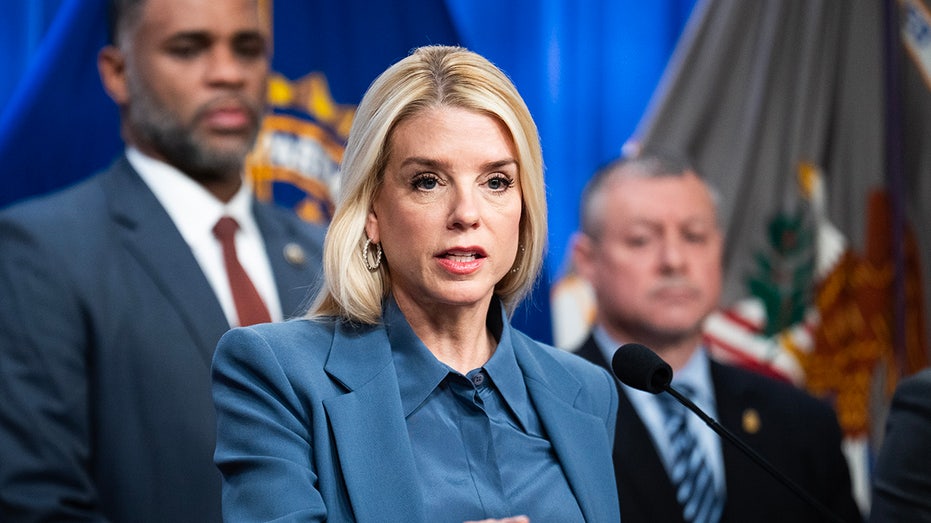
Attorney General Pam Bondi conducts a news conference at the Department of Justice on Thursday, Dec. 4, 2025. (Tom Williams/CQ-Roll Call, Inc via Getty Images)

According to the lawsuit, the American entity of TikTok does not actually own the app’s algorithm but instead collaborates with ByteDance, violating the statutory ban on algorithmic cooperation. While ByteDance retains ownership and licensing of the algorithm, TikTok U.S. will only “retrain, test, and update” it using U.S. user data.

The U.S. entity’s budget, legal compliance and commercial activity will also be overseen by ByteDance CEO Shou Chew, who will sit on the board of directors for TikTok U.S., creating another operational relationship that the lawsuit alleges is prohibited.

Advertisement

The petition further alleges that Trump violated PAFACA, which allows the president to grant only a one-time extension of no more than 90 days, and only with the necessary certifications to Congress. Trump reportedly approved five separate extensions — lasting 75, 75, 90, 90, and 120 days — far exceeding the statutory limit.

The petition alleges that Trump unlawfully directed Bondi not to investigate or enforce any violations of PAFACA, in direct violation of the act.

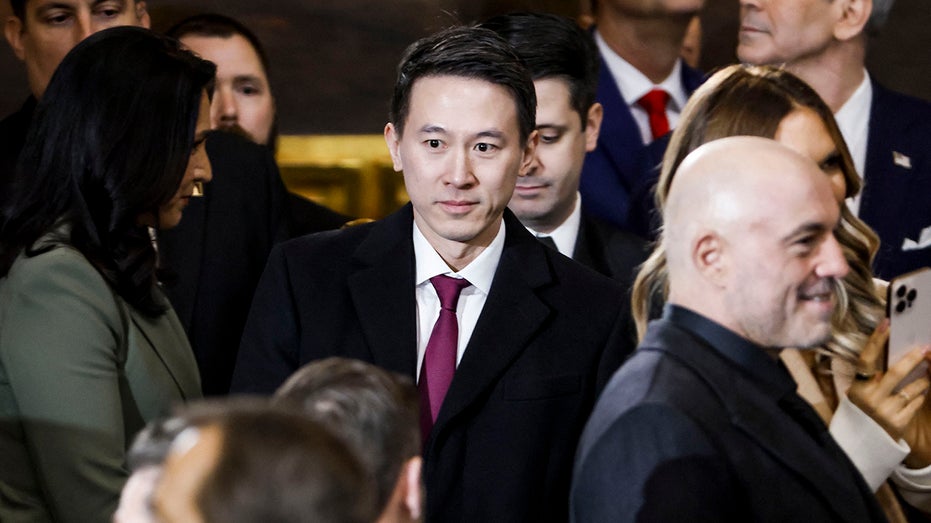
Shou Zi Chew (C), the CEO of TikTok, arrives to attend Donald Trump's inauguration as the next U.S. president in the rotunda of the U.S. Capitol in Washington, D.C., on Jan. 20, 2025.

Shou Zi Chew (C), the CEO of TikTok, arrives to attend Donald Trump’s inauguration as the next U.S. president in the rotunda of the U.S. Capitol in Washington, D.C., on Jan. 20, 2025. (Shawn Thew/POOL/AFP via Getty Images)

GET FOX BUSINESS ON THE GO

The lawsuit claims that Trump’s actions financially harmed investors in TikTok’s competitors. The plaintiffs noted that when the deal was made in January, Alphabet’s stock immediately dropped from $330.84 to $328.43.

Advertisement

Similarly, Meta stock fell from $760.66 to $748.91 during the initial framework announcement in September 2025, as it became apparent that the law might not be enforced.

Continue Reading

Business

States sue Trump over new ‘unlawful’ global tariffs

Published

on

States sue Trump over new 'unlawful' global tariffs

According to the lawsuit, which is led by New York, California, Oregon and Arizona, the Trump administration’s imposition of tariffs also violates the US Constitution because Congress, not the president, has the power to impose sweeping tariffs, which are taxes on imports.

Continue Reading

Business

Docebo Inc. (DCBO:CA) Presents at Morgan Stanley Technology, Media & Telecom Conference 2026 Transcript

Published

on

OneWater Marine Inc. (ONEW) Q1 2026 Earnings Call Transcript

Q4: 2026-02-27 Earnings Summary

EPS of $0.61 beats by $0.12

 | Revenue of $85.98M (4.21% Y/Y) beats by $704.65K

Docebo Inc. (DCBO:CA) Morgan Stanley Technology, Media & Telecom Conference 2026 March 5, 2026 12:15 PM EST

Company Participants

Brandon Farber – Chief Financial Officer

Advertisement

Conference Call Participants

Josh Baer – Morgan Stanley, Research Division

Advertisement

Presentation

Josh Baer
Morgan Stanley, Research Division

Right. Before we begin, for important disclosures, please see the Morgan Stanley research disclosure website at www.morganstanley.com/researchdisclosures. And if you have any questions, please reach out to your Morgan Stanley sales representative.

My name is Josh Baer, software analyst here at Morgan Stanley. Thrilled to have Docebo’s CFO, Brandon Farber, here. Thank you so much for joining us.

Advertisement

Brandon Farber
Chief Financial Officer

No problem.

Advertisement

Question-and-Answer Session

Josh Baer
Morgan Stanley, Research Division

Brandon, as a bit of an intro and for those newer to the story, I was hoping you could provide a little bit of an overview of Docebo’s key products and use cases. Who are your customers? What type of value do you bring to your customer base?

Advertisement

Brandon Farber
Chief Financial Officer

Yes. So at its core, Docebo is an AI learning platform. So customers typically come to us, and the core purchase is our learning management system. And alongside of that, we have modules that we patch along such as content, communities, advanced analytics. And recently, which I’m sure we’re going to talk more about is we became a multiproduct company for the first time.

We acquired a company called 365Talents that is more in the skills intelligence category. So for the first time ever, Docebo is going to market with 2 different products. From a use case perspective, we track about 12 different use cases, but if I could just simply break it down, it’s really 2 main categories. It’s the internal use case, which is your classic use cases that have been around since the beginning of time. It’s your

Advertisement
Continue Reading

Business

Container Shipping Companies Halt Bookings, Divert Vessels Due to Middle East Risks

Published

on

Container Shipping Companies Halt Bookings, Divert Vessels Due to Middle East Risks

Container shipping companies have begun halting bookings and diverting vessels as they respond to the increasing security risk in the Middle East.

Hapag-Lloyd HLAG -1.76%decrease; red down pointing triangle said Wednesday that it has suspended all bookings to and from the Upper Gulf region due to the current operational and security constraints in the area.

Copyright ©2026 Dow Jones & Company, Inc. All Rights Reserved. 87990cbe856818d5eddac44c7b1cdeb8

Continue Reading

Business

Burgum optimistic on Venezuela energy partnership with America

Published

on

Burgum optimistic on Venezuela energy partnership with America

Interior Secretary Doug Burgum told FOX Business in an exclusive interview from Venezuela on Wednesday that the relationship between the U.S. and the South American country is moving at “Trump speed,” as their new energy partnership is on track to a “golden age of abundance.”

Burgum told FOX Business that “you can’t argue with geography,” as American companies are showing they want to invest in Venezuela. He said this would have positive impacts on energy affordability in the U.S. and job creation in both the U.S. and Venezuela.

Advertisement

“If you’re shipping oil to a Gulf of America refinery, it’s five days [from Venezuela]. They were shipping some of their product for 40 days around the world,” he said of Venezuela. “It is so beneficial to both the U.S. and Venezuela for us to have a tight synergistic partnership around energy and around minerals just like we did 25 years ago.”

“This literally could be one of the richest countries in the world, and to have them as our friend, our ally and our trading partner, that is absolutely terrific,” Burgum said, noting that the relationship is what the U.S. needs to keep energy prices down for Americans.

VENEZUELA RELEASES ALL KNOWN AMERICAN DETAINEES FOLLOWING MADURO CAPTURE AND GOVERNMENT TAKEOVER

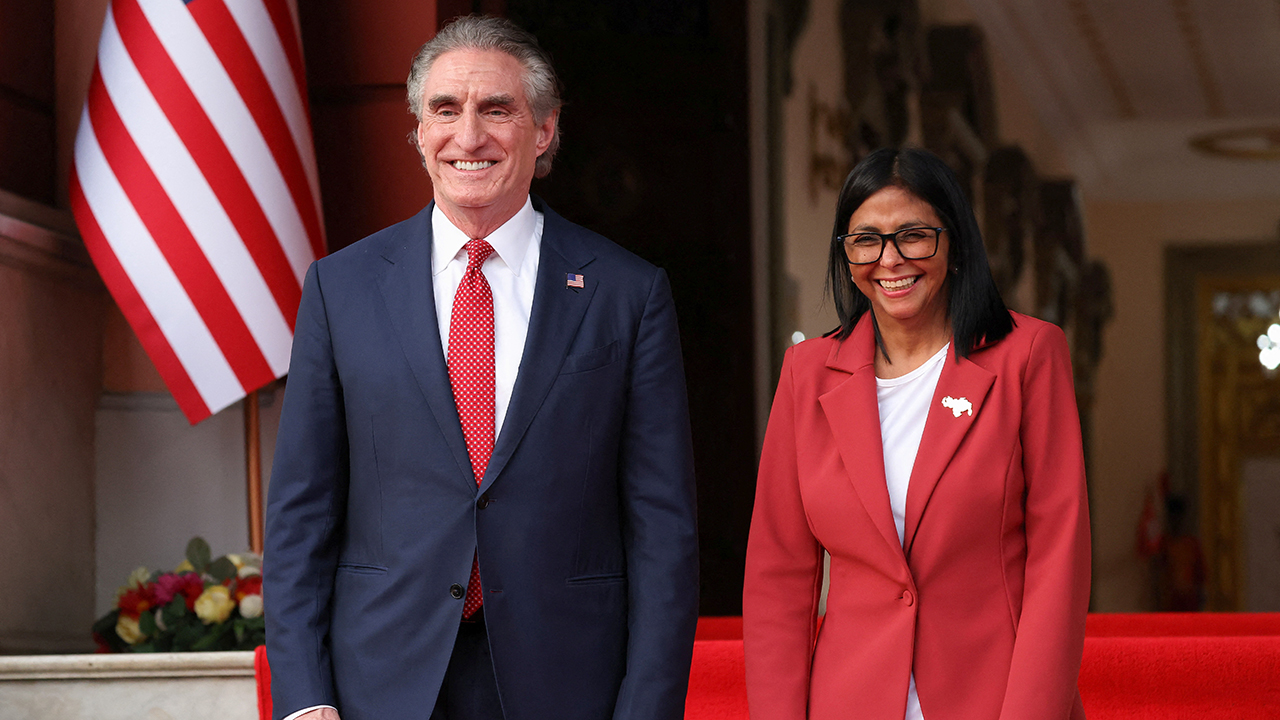
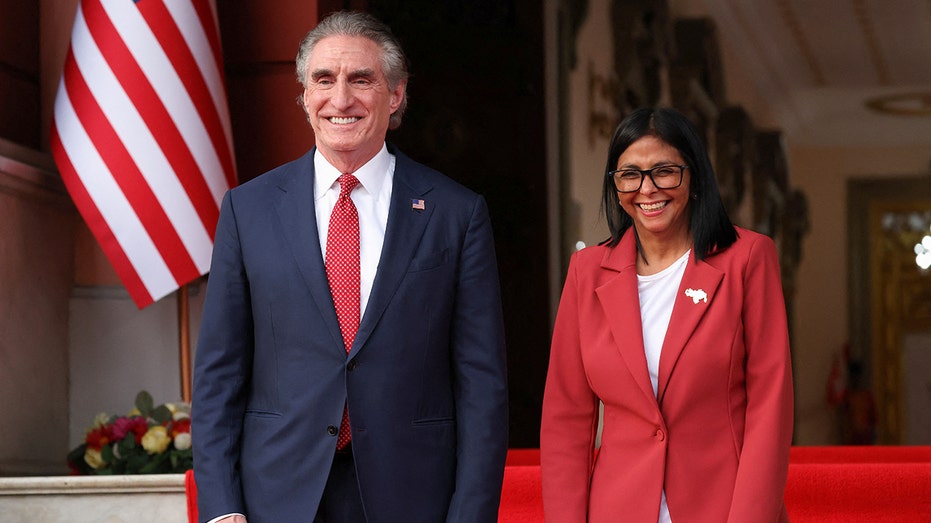
Doug Burgum and Delcy Rodriguez

Venezuela’s interim President Delcy Rodriguez and Interior Secretary Doug Burgum deliver statements at Miraflores Palace, in Caracas, March 4, 2026. (Reuters/Leonardo Fernandez Viloria)

Burgum said he is optimistic after meeting with Venezuela’s leadership and companies.

Advertisement

“When the U.S. is entering a gold age under President Trump, allies like Venezuela become a strong partner, our economies get back to the way they used to be integrated, they can ride right on our coattails and have their own golden age of abundance,” he said.

Doug Burgum

Interior Secretary Doug Burgum in Caracas, Venezuela, March 4, 2026. (Reuters/Leonardo Fernandez Viloria)

Burgum was meeting with oil and gas executives, including Chevron and Shell, along with Venezuelan business leaders during his trip to highlight critical mineral partnerships.

TRUMP SIGNALS LONG ROAD AHEAD IN VENEZUELA IN HIS BOLDEST INTERVENTIONIST MOVE YET

On Thursday, Shell signed a Memorandum of Understanding with the Venezuelan government to start liquified natural gas (LNG) production in the Dragon gas field.

Advertisement

Two American service companies, KPR and Baker, and one Venezuelan company, Vepica, will also sign onto the memorandum, so work can begin on oil and natural gas production.

Industrial oil processing equipment and storage tanks stand at the Cerro Negro heavy-oil upgrader facility.

The heavy oil upgrader facility in the Orinoco Oil Belt near Cerro Negro, Venezuela, Dec. 4, 2004. (Ed Lallo/Getty Images)

A senior administration official told FOX Business the LNG from Venezuela could eventually help support power to Europe

The Trump administration wants to expand access to oil production in the country, ultimately changing the course of global energy supply chains and reducing reliance on China.

Burgum’s visit comes weeks after the Trump administration completed its first sale of Venezuelan oil, valued at $500 million.

Advertisement

The deal comes after Trump announced interim authorities in Venezuela would be turning over between 30 million and 50 million barrels of sanctioned oil to the U.S., worth about $2.8 billion at current market prices.

GET FOX BUSINESS ON THE GO BY CLICKING HERE

Venezuela holds more than 300 billion barrels of proven oil reserves, nearly quadruple those of the U.S.

Fox News Digital’s Anders Hagstrom and Fox Business’ Ed Lawrence contributed to this report.

Advertisement
Continue Reading

Business

Social media trial judge blocks Meta from introducing plaintiff’s additional trauma claims

Published

on

Social media trial judge blocks Meta from introducing plaintiff’s additional trauma claims

The judge in the bellwether social media trial in Los Angeles barred Meta’s defense from introducing a document where the plaintiff said she had suffered “sexual abuse during childhood.”

The exchange happened after the jury and plaintiff’s witness, psychiatrist Dr. Kara Bagot, were dismissed for the day. Meta lawyer Paul Schmidt took to the lectern to ask Judge Carolyn Kuhl about an exhibit he wanted to introduce to the court.

Advertisement

The document was a housing application from the plaintiff, a 20-year-old female identified in court as Kaley G.M. She had filled the application out after her mom evicted her from their shared home. When asked in the application if she had suffered any “traumatic circumstances or events” in her life, she wrote: “exposure to neglect, emotional, physical and sexual abuse during childhood.”

MARK ZUCKERBERG FACES JURY IN LANDMARK TRIAL OVER ALLEGED YOUTH HARM LINKED TO SOCIAL MEDIA

Attorney Paul Schmidt walks outside a courtroom in California.

 Meta’s lawyer, Paul Schmidt, outside the courtroom in California. (Mike Blake/Reuters)

“This happened in the family, but she wasn’t asked to elaborate,” said Schmidt to the judge. Schmidt wanted to introduce the application, which was filled out in May 2024 – after her lawsuit was filed – to show that Kaley did not list “social media addiction” as one of her traumas.

Schmidt offered to redact “sexual abuse” from the document because it hasn’t been discussed or brought up at the trial in any of her extensive medical records, which number over 200. He said that the other traumas – neglect, emotional and physical abuse – are all backed up in the previous testimonies.

Advertisement

APPLE IMPLEMENTING AGE VERIFICATION TOOL TO ENSURE USERS ARE 18 AND UP FOR SOME APPS

Kuhl asked to see the application and scoffed, telling Schmidt, “It looks like she’s lying here. She’s bringing up autism, she’s bringing up sexual abuse that never happened,” said Kuhl.

It has not been discussed by either the plaintiff or defense in court if Kaley experienced sexual abuse or if she had lied about experiencing sexual abuse. Autism has been discussed in her records, but she was never diagnosed with it.

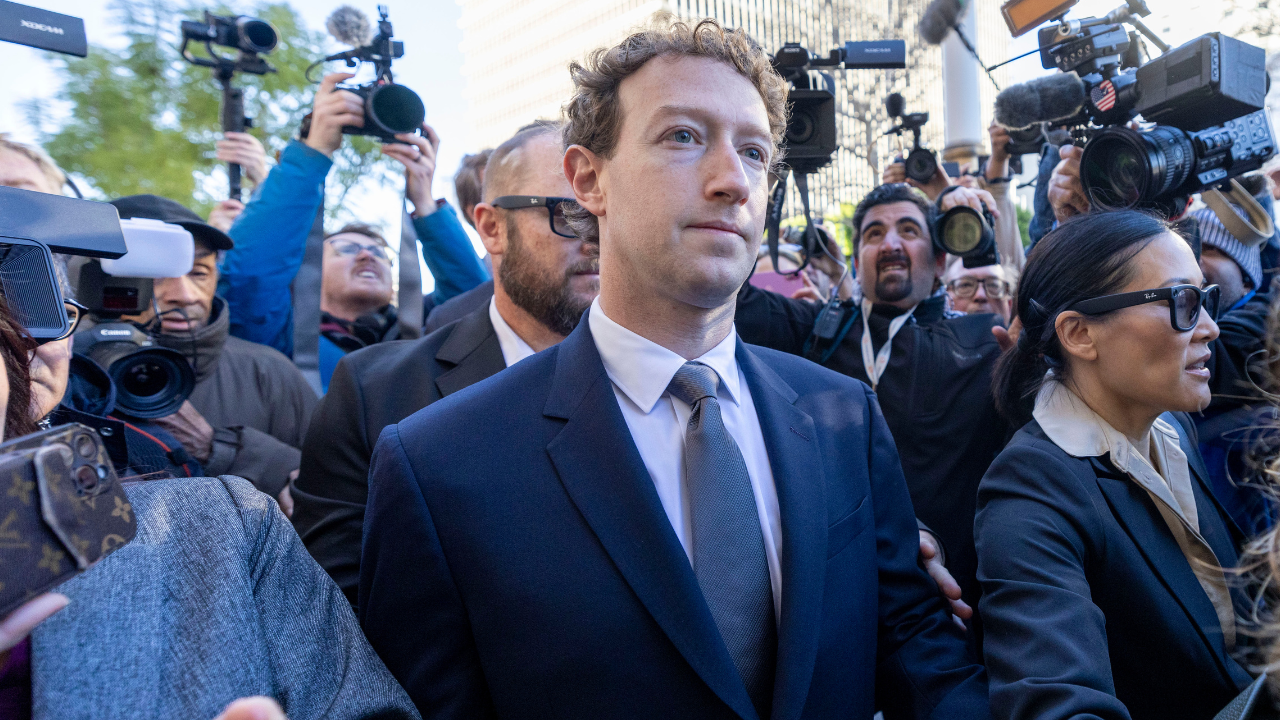
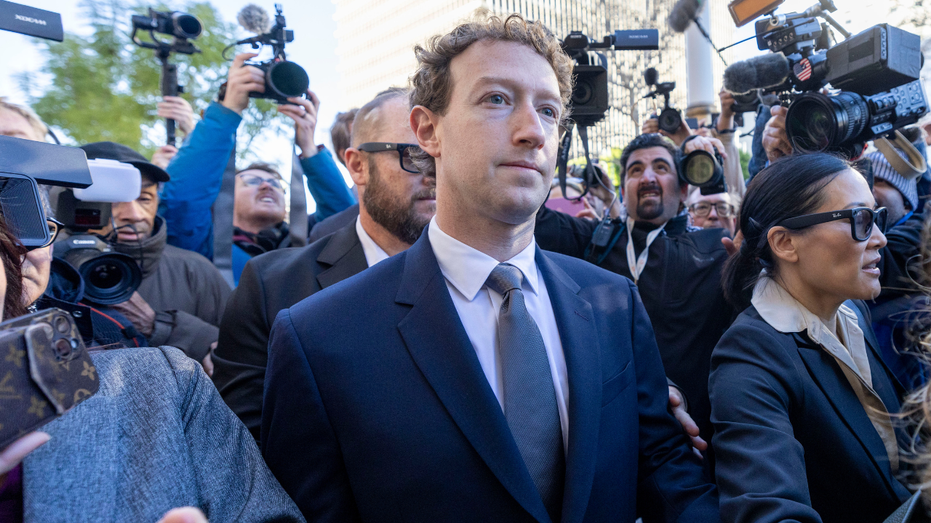
Meta CEO Mark Zuckerberg is seen arriving in at a court in Los Angeles to stand trial over a social media lawsuit.

Meta CEO Mark Zuckerberg arrives at the Los Angeles Superior Court at United States Court House on Feb. 18, 2026, in Los Angeles, California. (Jill Connelly/Getty Images)

Kuhl asked if there was any evidence of sexual abuse. Schmidt said he didn’t know where Kaley got that from, as it wasn’t explored in her deposition.

Advertisement

“In this document, she’s exaggerating. Common logic says she’s got to find a place to go, she’s trying to convince [the housing] that she’s an abused child so they can help her,” said Kuhl. “She’s making it as ’that’ as possible.”

Schmidt disagreed with Kuhl’s take on the exhibit, saying he only wanted to bring up the traumas that she’s previously testified to.

META RESEARCHER WARNED OF 500K CHILD EXPLOITATION CASES DAILY ON FACEBOOK AND INSTAGRAM PLATFORMS

“I don’t know how you don’t get a sense of the document that I get. As a judge who sat in child abuse courts, sometimes kids do that,” said Kuhl.

Advertisement

Schmidt told the court he would drop the request and Kuhl thanked him.

Also discussed after the jury was dismissed was the issue of time left for both sides to present their case. Kuhl determined before the trial that each side would get 40 hours to make their case, which includes all direct and re-direct examinations. Currently, the plaintiff attorneys, specifically lead counsel Mark Lanier, have 5 hours and 56 minutes left. The defense, which includes both Meta and Google, has 11 hours and 11 minutes left.

Mark Lanier walks outside a courthouse in California.

Mark Lanier, the main plaintiff’s lawyer, walks outside the court in California. (Mike Blake/Reuters)

Lanier still has additional witnesses to call, including Meta whistleblower Arturo Bejar. Schmidt and the defense team seemed to be in control of their time left until the testimony of Bagot, who they have spent a considerable amount of time cross-examining.

Bagot will be on the stand for her fifth day on Thursday, which Lanier admits is unusual. Kuhl has also grown weary of how long she’s been on the stand.

Advertisement

“I want to say something to everyone about where this is going. Overnight, think to yourselves, ‘Have I asked this question before?’ Look at the jurors and ask yourself if they’ve got the picture,” Kuhl said.

Ticker Security Last Change Change %
META META PLATFORMS INC. 660.57 -7.16 -1.07%
GOOGL ALPHABET INC. 300.88 -2.25 -0.74%

Kuhl opined that if one of the sides runs out of time and doesn’t have a chance to cross-examine, that could open the door for an appeal.

“The appellate court in our state court system hasn’t spoken to the great issue of the time limit,” said Kuhl. “If we say this is the clock, and it was set when we had no idea what it was going to look like, and all of a sudden a side can’t cross-examine, what are they going to say about this?”

GET FOX BUSINESS ON THE GO BY CLICKING HERE

Advertisement

She expressed optimism the sides would get it done.

“Don’t worry. Don’t fight about it. You are all close. You will get this done.”

Continue Reading

Business

Anthropic labelled a supply chain risk by Pentagon

Published

on

Anthropic labelled a supply chain risk by Pentagon

The supply chain risk designation of the artificial intelligence firm is a first for a US company.

Continue Reading

Business

Amazon down for thousands of users in US, Downdetector shows

Published

on

Amazon down for thousands of users in US, Downdetector shows


Amazon down for thousands of users in US, Downdetector shows

Continue Reading

Business

Gap (GAP) Q4 2025 earnings

Published

on

Gap (GAP) Q4 2025 earnings

Pedestrians in the snow at Times Square during a winter storm in New York, US, on Sunday, Feb. 22, 2026.

Bloomberg | Bloomberg | Getty Images

Historic winter storms and subsequent store closures weighed on Gap’s performance during its holiday quarter and contributed to worse-than-expected results at its portfolio of brands, the retailer said Thursday. 

Advertisement

Cold weather, snow and ice throughout much of the U.S. in January led to about 800 temporary store closures at the storms’ peak, contributing to a miss on comparable sales for Old Navy and mixed companywide results, the retailer said. 

“Old Navy and all the brands were actually trending better heading into that weather disruption,” said finance chief Katrina O’Connell. “The good news is the trends recovered immediately after those storms passed.” 

Across the business, which includes Old Navy, Banana Republic, Athleta and Gap’s namesake banner, the retailer reported mixed fiscal fourth quarter results – missing expectations on the bottom line and meeting consensus on revenue. 

Here’s how the retailer did compared with what Wall Street was anticipating, based on a survey of analysts by LSEG:

Advertisement
  • Earnings per share: 45 cents vs. 46 cents expected
  • Revenue: $4.24 billion vs. $4.24 billion expected

The company’s reported net income for the three-month period that ended Jan. 31 was $171 million, or 45 cents per share, compared with $206 million, or 54 cents per share, a year earlier. During the quarter, Gap’s gross margin was weighed down by tariffs and fell to 38.1%, slightly worse than analysts expected, according to StreetAccount. 

Sales rose to $4.24 billion, up about 2% compared to $4.15 billion a year earlier. 

Gap’s guidance was largely in line with expectations, but failed to exceed consensus. For the current quarter, it’s expecting revenue to rise between 1% and 2%, compared to expectations of 2%, according to LSEG. 

For the full year, the company is expecting sales to grow between 2% and 3%, in line with expectations of 2.5% growth, according to LSEG. Given a $313 million positive legal settlement Gap saw during the current quarter, it issued an adjusted full-year earnings per share outlook. The company said its expecting adjusted earnings per share to be between $2.20 and $2.35, compared to expectations of $2.32, according to LSEG. 

Gap did not factor recent changes to tariffs into its outlook because the company believes it’s “premature to plan for a change” as the situation continues to evolve, said O’Connell. Given how much of a hit Gap took from President Donald Trump’s global tariffs, which were struck down by the U.S. Supreme Court last month, Gap could issue stronger guidance in the coming quarter because the newly enacted 15% tariff is slightly below the previous rates for many countries.

Advertisement

“If the [current] Section 122 tariffs were to stay in place for the year or expire in July, it should lead to a more favorable outcome versus the outlook we provided today,” said O’Connell. “If 15% were the rate that would stay in place for the balance of the year, that rate is slightly below the current IEEPA rates that are contemplated in our plans, so that could give us a modest benefit to operating income if that scenario were to play out.” 

Gap’s choppy results come just over two years into CEO Richard Dickson’s turnaround plan and analysts begin to expect more from the apparel giant. Now that the company has improved profitability, returned to growth and amassed a staggering $3 billion cash pile, Dickson said he’s ready to turn to the next phase of the plan, which is about “building momentum.” 

“Our primary focus is going to be on growing our core apparel business, and we’re going to do this through continuous improvement,” said Dickson. “This has all been driven by disciplined execution, which we need to continue to do with better product, better marketing and better storytelling and that’s not easy, but we’re proving that that muscle is getting stronger and stronger now.” 

In the meantime, Gap is also turning its sights on growth opportunities for the company, including its expansion into beauty and accessories and its fashion and entertainment platform through the recent appointment of a chief entertainment officer. He said the ventures will begin to really scale next year. 

Advertisement

Here’s a closer look at how each brand performed: 

Old Navy

Gap’s largest and most important brand saw sales rise 3% to $2.3 billion, with comparable sales also up 3%, well below analyst consensus of 4.3%, according to StreetAccount. Despite the miss, Gap said Old Navy’s “price value equation is resonating with consumers” and it’s continuing to win over shoppers across a wide range of income levels. 

Gap

The brightest spot of Gap’s quarter came from its namesake banner, which saw sales rise 8% to $1.1 billion with comparable sales up 7%, far ahead of expectations of 4.6%, according to StreetAccount. Under Dickson, the brand has worked to regain its cultural relevance and is winning over a wide range of generations, including younger, Gen Z shoppers. 

Banana Republic

The safari-chic workwear brand posted its third straight quarter of positive comparable sales, which were up 4%, beating expectations of 2.5%. Sales rose 1% to $549 million, reflecting progress in both marketing and product assortment. “Men’s just continues to build momentum. Key items like the traveler pant, our cashmere program, really fantastic outerwear that’s been driving the performance, particularly in the quarter,” said Dickson. “Women’s performance is becoming much more consistent. We’ve had strength in denim skirts and sweaters and as we enter 2026, Banana is really starting to find its momentum.”

Advertisement

Athleta 

The athleisure brand saw another quarter of sagging sales, with revenue down 11% to $354 million and comparable sales down 10%. In some ways, the drop reflects an overall sluggish athletic apparel market, but the company has also had a number of strategic missteps, including targeting the wrong customer and offering products that failed to land. Under the brand’s new CEO, Dickson said Athleta has been working on revamping the assortment, bringing back customer favorites and dialing up innovation. 

Continue Reading

Business

The Trade Desk Stock Surges 19% in Volatile Session on OpenAI Partnership Reports Amid Ad-Tech Recovery Hopes

Published

on

Australia's Top 10 Companies Holding Bitcoin: A Growing Corporate Treasury

Shares of The Trade Desk Inc. rocketed higher in early Friday trading, gaining nearly 19% as reports of potential partnership discussions with OpenAI fueled optimism in the beleaguered ad-tech sector. The rally provided a sharp contrast to the stock’s steep declines earlier in 2026, driven by softer guidance and competitive pressures.

The Trade Desk
The Trade Desk

The Trade Desk (NASDAQ: TTD) traded around $29.90 to $30.00 by mid-morning Eastern Time, up approximately $4.73 to $4.81 or 18.8% to 19.1% from Thursday’s close of $25.17. The stock opened near $31.49, hit an intraday high of $32.90, and dipped to a low of about $29.51 to $29.71. Volume surged dramatically, exceeding 40 million shares in early sessions—well above recent averages—as traders reacted swiftly to the news.

The catalyst stemmed from reports that The Trade Desk held talks with OpenAI about partnering in ad sales, potentially integrating the AI leader’s capabilities into programmatic advertising workflows. Speculation suggested such a collaboration could enhance targeting, creative generation, and campaign optimization on The Trade Desk’s platform, particularly in connected TV (CTV) and open internet channels. Shares popped as much as 22% in some snapshots, with after-hours moves earlier pushing levels toward $27.50 before Friday’s momentum carried higher.

The move marked a dramatic rebound for a stock that has faced intense selling pressure in 2026. Year-to-date, TTD has declined significantly before this session, with shares down over 30% at points amid broader ad-tech challenges. The 52-week range spans a low of $21.08—touched recently—and a high of $91.45 from mid-2025. Market capitalization stood near $13 billion to $13.5 billion, reflecting the volatility.

Recent headwinds trace to the company’s fourth-quarter 2025 earnings released late February. Revenue rose 14% year-over-year to $846.8 million, beating estimates of $841.9 million, while adjusted EPS of $0.59 aligned with consensus. Adjusted EBITDA reached $400.3 million, surpassing forecasts. Excluding political ad spend, growth appeared stronger at around 19%.

Advertisement

However, first-quarter 2026 guidance tempered enthusiasm. The company projected revenue of at least $678 million—implying roughly 10% growth—and adjusted EBITDA around $195 million, down from the prior year’s $208 million. Analysts cited pressures in advertiser categories like automotive and consumer packaged goods, alongside competition from walled gardens and macroeconomic caution.

The outlook prompted widespread analyst downgrades and price target cuts in late February. Firms slashed targets sharply, with some dropping to the low $20s from prior highs in the $50s to $90s. Consensus now hovers around $32.95 to $33, implying modest upside from pre-rally levels but still reflecting caution on near-term execution.

Despite the pullback, The Trade Desk maintains strengths in independent demand-side platform leadership. Its focus on CTV, audio, and retail media continues to drive adoption, with initiatives like the Ventura Ecosystem enhancing impression quality and advertiser control. Partnerships and data integrations position the company to capture share in an evolving digital ad landscape increasingly influenced by AI.

Broader market context added layers to Friday’s action. While geopolitical tensions and oil price surges pressured equities overall, ad-tech and growth names showed selective resilience on company-specific catalysts. The Dow and S&P 500 traded mixed to lower, but speculative and tech-adjacent stocks reacted to headline momentum.

Advertisement

Options activity spiked, with call volume elevated and bullish positioning evident in short-dated contracts. Traders appeared to bet on continued follow-through if partnership details materialize or if upcoming data reinforces recovery signals.

Wall Street remains divided. While recent cuts reflect execution risks and decelerating growth—from mid-20s percentages in prior years to teens now—some analysts highlight long-term potential in AI-enhanced advertising and open internet gains. Earnings estimates for fiscal 2026 project EPS around $2.06 to $2.08, up from prior years, though revisions have trended lower.

The Trade Desk’s next major update arrives with first-quarter results expected in May 2026. Investors will seek clarity on guidance delivery, CTV momentum, and any AI or partnership progress. Management has emphasized platform independence and transparency as competitive edges amid industry consolidation.

Friday’s surge illustrates the stock’s high-beta nature and sensitivity to catalysts in a volatile environment. After months of underperformance, the OpenAI-related speculation injected fresh hope for a turnaround, though sustainability hinges on fundamentals amid macro and competitive challenges.

Advertisement

As U.S. markets progressed, TTD held strong gains near $30, with volume remaining elevated. The session served as a reminder of how quickly sentiment can shift in ad-tech, balancing cautious outlooks with potential for explosive upside on positive developments.

Continue Reading

Trending

Copyright © 2025