

Business
From Pop Icon to Recent Legal Troubles in 2026


Britney Spears, the pop superstar whose career has spanned more than two decades of chart-topping hits, personal triumphs and public battles, remains one of entertainment’s most enduring figures. As of early March 2026, the 44-year-old singer faces fresh headlines following an arrest on suspicion of driving under the influence, adding another chapter to her complex post-conservatorship life. Here are 10 key things to know about Britney Spears today.

AFP / LEE CELANO
1. **Enduring Pop Legacy**
Spears burst onto the scene in 1998 with “…Baby One More Time,” selling over 30 million copies worldwide and sparking the late-1990s teen-pop explosion. Her catalog includes nine studio albums, with classics like “Toxic,” “Oops!… I Did It Again” and “Womanizer” earning her a spot among the best-selling female artists ever, with more than 150 million records sold globally.
2. **Conservatorship Battle and Freedom**
From 2008 to 2021, Spears lived under a court-ordered conservatorship that controlled her personal and financial affairs amid mental health struggles. The arrangement ended in November 2021 after public protests and her testimony detailing abuse claims. The #FreeBritney movement galvanized fans worldwide, marking a pivotal victory for artist rights.
3. **Post-Conservatorship Memoir**
In 2023, Spears released “The Woman in Me,” a bestselling memoir detailing her conservatorship experiences, family dynamics and Hollywood pressures. The book sold millions of copies and sparked renewed interest in her story, including discussions of an upcoming biopic adaptation.
4. **Music Catalog Sale**
In early 2026, Spears sold rights to her music catalog to publisher Primary Wave in a deal reportedly worth around $200 million. The transaction provided financial security while allowing her to step back from active music management. She has not released new music since 2016’s “Glory,” though fans speculate about future projects.
5. **Vow Against U.S. Performances**
In January 2026, Spears posted on Instagram that she “will never perform in the U.S. again because of extremely sensitive reasons.” She cited personal factors without elaboration but expressed hope for future shows in the United Kingdom and Australia, possibly alongside her son Jayden James, whom she praised as a “huge star” in music.
6. **Teases of International Comeback**
Despite her U.S. performance stance, Spears has hinted at a return to the stage abroad “very soon.” Fans have fueled 2026 comeback rumors through social media, interpreting cryptic posts and throwback photos as signs of new music or limited international dates. No official announcements have confirmed tours or albums as of March 2026.
7. **Recent DUI Arrest**
On March 4, 2026, Spears was arrested by California Highway Patrol in Ventura County on suspicion of driving under the influence. Records show the incident occurred late Wednesday evening; she was cited and released early Thursday morning. Spears is scheduled to appear in Ventura County Superior Court on May 4, 2026. Details of the charge and any potential outcomes remain pending.
8. **Family Focus and Personal Life**
Spears shares two sons, Sean Preston and Jayden James, with ex-husband Kevin Federline. She has spoken openly about motherhood challenges and her evolving relationship with her children. Recent posts highlight support for her son’s music career and personal reflections on faith, fear and spiritual growth.
9. **Social Media Presence**
Spears remains active on Instagram, where she shares dance videos, personal thoughts and family moments with millions of followers. Her posts often blend vulnerability, humor and defiance, addressing past traumas while embracing independence. In early 2026, she discussed spiritual awakenings and admiration for figures like Madonna.
10. **Ongoing Cultural Impact**
Spears continues to influence pop culture, with her story inspiring documentaries, books and advocacy for mental health and conservatorship reform. Rumors of a biopic based on her memoir persist, and her catalog’s enduring popularity keeps hits in rotation. Despite challenges, including the recent arrest, Spears’ resilience resonates with fans who view her as a symbol of survival and artistic freedom.
The March 2026 arrest marks Spears’ latest brush with legal issues, drawing renewed media attention amid her post-conservatorship era. Authorities have released limited details, and Spears has not publicly commented on the incident as of early Friday. Her team did not immediately respond to requests for statement.
Fans continue to monitor her social media for updates, balancing concern with support. Spears’ journey—from teen idol to outspoken advocate—remains compelling, with 2026 shaping up as a year of personal reflection rather than confirmed professional returns.
As legal proceedings approach in May, Spears’ story underscores the complexities of fame, recovery and privacy in the public eye.

Business
Atea Pharmaceuticals, Inc. 2025 Q4 – Results – Earnings Call Presentation (NASDAQ:AVIR) 2026-03-05


Seeking Alpha’s transcripts team is responsible for the development of all of our transcript-related projects. We currently publish thousands of quarterly earnings calls per quarter on our site and are continuing to grow and expand our coverage. The purpose of this profile is to allow us to share with our readers new transcript-related developments. Thanks, SA Transcripts Team

NSE’s Nifty rose 285 points, or 1.2%, to close at 24,765. BSE’s Sensex gained 899 points, or 1.1%, to end at 80,015. Both indices had fallen close to 2.7% in the past two trading sessions of the truncated week, with the military conflict in West Asia deepening the risk-off mood. Indian markets had remained shut on Tuesday on account of Holi.
Elsewhere in Asia, Japan rose 1.9%, China advanced 0.6%, Hong Kong gained 0.3%, South Korea jumped 9.6% and Taiwan rose 2.6%.
“The sharp rally in the second half of the session was driven by expectations of potential de-escalation in geopolitical tensions,” said Aamar Deo Singh, senior vice president of research at Angel One.
Technical indicators were also oversold, which added to the day’s rebound. “The pullback was primarily a textbook mean-reversion event driven by deeply oversold technicals and a violent short-covering squeeze in the derivatives segment,” said Bhavya Shah, technical research analyst at Stoxbox.

Shah said based on intraday price action, the index consolidated through the first-half of the session before breaking out past 2:15 PM, which triggered cascading stop-losses for intraday bearish bets.
The Nifty India Volatility Index, or VIX-popularly known as the market’s fear gauge- cooled 15.5% to 17.86 on Thursday after rising more than 50% earlier this week. Broader market indices outperformed the benchmarks on Thursday, with Nifty Midcap 150 gaining 1.5% and Nifty Smallcap 250 rising 1.4%. Of the total 4,397 stocks traded on BSE, 2,749 advanced and 1,515 declined.
FPIs net sold shares worth ₹3,752.5 crore, while domestic institutional investors were buyers worth ₹5,153 crore.
Analysts are hesitant to conclude that the recovery is permanent. “The near-term outlook remains highly volatile with a sell-on-rise underlying bias,” said Shah. “Traders should not conflate a short squeeze with a new bull phase.”
He said traders should watch the resistance level of 24,850 on the Nifty, below which the index is likely to see a resumption of the prevailing downtrend toward 24,300.

Financial services firms across the Asia Pacific are facing a critical inflection point in 2026, as regulators across the region accelerate efforts to address the growing risks posed by artificial intelligence, digital assets, and financial crime, according to Deloitte’s Asia Pacific Financial Regulatory Outlook 2026, published by the firm’s Asia Pacific Centre for Regulatory Strategy (ACRS).
Key takeaways
- Financial services firms in the Asia Pacific must move from reactive compliance to proactive regulatory leadership, especially as AI and digital assets reshape the industry faster than existing frameworks can keep up.
- Regulatory fragmentation across the region is no longer sustainable, as financial risks in AI, digital assets, and financial crime are global by nature and demand cross-border coordination.
- Boards and senior executives that treat emerging threats like financial crime and AI governance as back-office issues rather than strategic priorities risk being caught ofguard in an increasingly complex regulatory environment.
The report, developed in collaboration with Deloitte counterparts across EMEA and the Americas, offers one of the most comprehensive analyses of the regional regulatory environment to date, and its findings carry urgent implications for board members and senior executives across the financial sector.
AI and Technology Top the Regulatory Agenda
Artificial intelligence has moved from emerging technology to core operational infrastructure across the region’s financial institutions, embedding itself in credit decisions, fraud detection, and customer onboarding systems. Regulators, however, are struggling to keep pace.
The Deloitte report identifies AI governance as one of the defining regulatory challenges of the year, warning that firms without robust explainability standards and model risk frameworks face growing exposure as oversight frameworks tighten across multiple markets.
Digital Assets Enter the Regulatory Mainstream
Once dismissed as speculative, digital assets have secured a permanent place in the regulatory conversation across the Asia Pacific.
The 2026 outlook dedicates a full chapter to the sector, reflecting the rapid maturation of licensing regimes, custody standards, and cross-border frameworks across the region. Firms that have yet to develop a clear regulatory strategy for digital assets are running out of time to do so.
Financial Crime Risks Grow Alongside Innovation
As financial institutions adopt new technologies and expand into digital markets, regulators are raising expectations around financial crime compliance.
The report warns that the surface area for illicit activity grows in parallel with innovation, placing renewed pressure on firms to treat anti-money laundering and financial security as frontline strategic priorities rather than back-office functions.
The Deloitte report concludes that the financial services industry across the Asia Pacific must adapt and innovate to meet the evolving needs of its stakeholders and contribute to the region’s long-term success.
Other People are Reading

GameStop Corp. shares traded in a narrow range early Friday, maintaining levels around $24 as investors digested ongoing speculation about a major acquisition and awaited the retailer’s quarterly earnings report later this month. The meme-stock favorite has shown resilience in recent sessions despite broader market pressures from geopolitical tensions and rising energy costs.

GETTY IMAGES NORTH AMERICA / SPENCER PLATT
GameStop (NYSE: GME) was changing hands at approximately $23.91 to $24.10 in pre-market and early U.S. trading, up modestly from Thursday’s close of $23.87. The stock opened around $23.80 to $23.95 in the prior session, with intraday action ranging from a low of $23.77 to a high of $24.23. Volume stood at roughly 1.2 million to 3.5 million shares in recent days, below the elevated levels seen during past meme-driven surges but consistent with current retail interest.
The company’s market capitalization hovered near $10.7 billion to $10.8 billion, with about 448 million shares outstanding. Year-to-date performance remains mixed, with GME up slightly over the past 12 months but well below its 52-week high of $35.81 reached in May 2025. The 52-week low sits at $19.93, underscoring the stock’s volatility tied to both fundamentals and social-media sentiment.
Recent momentum stems largely from CEO Ryan Cohen’s aggressive push to reposition GameStop beyond traditional video game retail. Cohen, who also serves as chairman, has made multiple insider purchases this year, including a notable 500,000-share buy in January at around $21.12, boosting his stake to approximately 9.2%. Those moves coincided with reports of GameStop exploring “very big” acquisitions of publicly traded companies, with speculation centering on potential targets like eBay to transform the retailer into a broader consumer conglomerate.
Analysts and market watchers have interpreted Cohen’s strategy as an attempt to leverage the company’s substantial cash position—bolstered by prior equity raises—to pivot away from declining physical sales amid the shift to digital gaming. GameStop ended recent periods with billions in cash reserves, providing firepower for deals that could reshape its growth narrative. However, skeptics point to execution risks, noting the retailer’s ongoing challenges in adapting to industry changes.
Options activity has remained moderately bullish in recent sessions, with call volume occasionally elevated as traders position for potential catalysts. Some commentary highlights similarities between Cohen’s approach and value-oriented investors, though the stock’s meme heritage continues to attract speculative flows.
GameStop faces a key milestone with its fiscal fourth-quarter earnings expected around March 24 or 25, 2026, including a conference call the following day. Expectations center on revenue trends, store optimization efforts—including recent closures—and progress on digital and collectibles initiatives. Analysts project modest improvements in margins but remain cautious on top-line growth given competitive pressures from online platforms and streaming services.
The broader video game industry outlook provides some tailwinds, with projections for U.S. spending to rise about 3% to $62.8 billion in 2026, according to Circana estimates. Yet GameStop’s brick-and-mortar focus leaves it vulnerable to sector shifts, prompting ongoing store rationalization.
Social-media sentiment, once dominated by “Roaring Kitty” (Keith Gill) posts that sparked massive rallies in 2021 and 2024, has quieted in early 2026. No major recent activity from influential figures has emerged, though retail forums continue to monitor Cohen’s moves closely. Past episodes demonstrated how quickly sentiment can shift, driving short squeezes and dramatic price swings.
Wall Street coverage remains limited and bearish on fundamentals, with consensus price targets well below current levels—around $13.50 in some snapshots—reflecting doubts about sustainable profitability. The stock trades at elevated multiples relative to earnings, with attention focused on balance-sheet strength rather than traditional retail metrics.
Broader market dynamics also weigh on GME. With equity indices sensitive to oil price surges and Middle East developments, growth-oriented and speculative names like GameStop can face headwinds from risk-off moves. Energy stocks have outperformed amid geopolitical premiums, while consumer discretionary names grapple with affordability concerns.
GameStop’s history as a meme stock continues to define its trading profile. The 2021 squeeze, fueled by retail coordination against short sellers, propelled shares from single digits to triple-digit peaks before sharp corrections. Subsequent episodes in 2024, tied to Gill’s re-emergence and position disclosures, delivered brief surges but faded without lasting fundamental change.
Investors now eye whether Cohen’s acquisition ambitions can deliver a lasting re-rating or if volatility persists amid uncertain retail prospects. The upcoming earnings will offer clues on cash deployment, cost controls and any deal progress.
For now, GME holds firm in the low-to-mid $20s, supported by insider confidence and cash reserves but capped by skepticism over long-term viability. Traders brace for potential headline-driven moves, particularly around earnings or acquisition announcements.
As markets open fully in the U.S. session, GameStop shares show modest early gains, reflecting cautious optimism amid a landscape dominated by macro and sector-specific challenges.

An American Airlines pilot gave a rousing pre-flight speech to passengers encouraging civility and decency while onboard. (Anna Maltezos via Storyful)
If you blast a video without headphones on a United flight, you could lose your seat.
United Airlines confirmed to FOX Business that it updated its Contract of Carriage to add headphone language under Rule 21, or the airline’s “Refusal of Transport” section, giving the carrier authority to deny boarding or remove passengers who fail to use headphones while listening to audio or video content.
The new language places the headphone requirement alongside other behaviors that can result in removal, including refusal to follow crew instructions and disruptive conduct.
“The Contract of Carriage was updated Feb. 27 to add the headphone language,” a United spokesperson told FOX Business. “We’ve always encouraged customers to use headphones when listening to audio content – and our Wi-Fi rules already remind customers to use headphones. With the expansion of Starlink, it seemed like a good time to make that even clearer by adding it to the contract of carriage.”
LAS VEGAS HOTEL-CASINO THAT CLOSED DURING COVID AND NEVER REOPENED IS DEMOLISHED

United Airlines is now enforcing what was once considered etiquette onboard its flights, using headphones while listening to audio or visual content. (iStock / iStock)
While most airlines encourage headphone use as a courtesy, United’s decision to embed the requirement within its formal refusal policy elevates what was once considered etiquette into enforceable contract language.
The timing coincides with the airline’s rollout of Starlink satellite internet service, which is expected to increase device use during flights.
Delta Air Lines tells passengers on its website, “For the comfort of everyone around you, please use earbuds or headphones with any personal electronic device during your flight.”
AMERICA’S AIRPORT AFFORDABILITY GAP: CITIES WHERE TRAVEL COSTS ARE CRUSHING FAMILIES
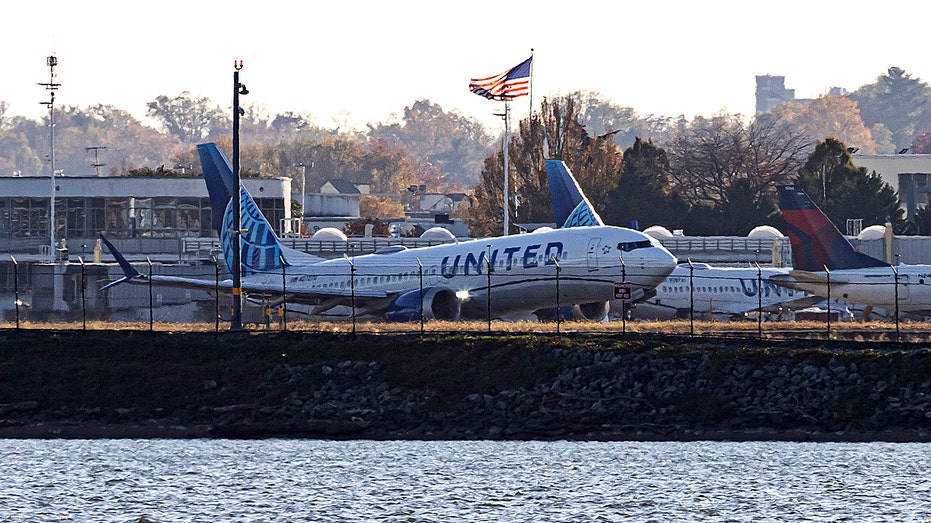
United Airlines Boeing 737 MAX 8 aircraft spotted departing from LaGuardia Airport in New York City on Nov. 8, 2024. (Nicolas Economou/NurPhoto / Getty Images)
Southwest Airlines states that “Headphones are required whenever a passenger is listening to any audio,” though neither carrier publicly frames the rule within refusal-of-transport language.
United did not indicate how frequently the provision has been enforced, but its placement under its “Refusal of Transport” makes clear that passengers who refuse to comply could face denial of boarding at the gate or removal from the aircraft.
The update follows years of mounting frustration over in-flight speakerphone and video use, a tension captured in a viral 2023 clip taken on an American Airlines flight.
AIRLINES CANCEL FLIGHTS, ISSUE TRAVEL WAIVERS OVER MIDDLE EAST UNREST

An interior view of a B737 MAX airplane seen at Dallas-Forth Worth International Airport in Dallas, Texas. (COOPER NEILL/AFP via Getty Images / Getty Images)
In the video, an American Airlines pilot delivered a blunt pre-flight message to passengers.
“The social experiment on listening to videos on speaker mode and talking on a cellphone on speaker mode, that is over — over and done in this country,” the pilot said. “Nobody wants to hear your video. … Use your AirPods, use your headphones, whatever it is. That’s your business.”
The speech drew applause from passengers and reignited debate over basic travel courtesy in confined spaces.
Etiquette expert and author of “Was it Something I Said?” Alison Cheperdak told FOX Business the policy reflects broader calls for civility.
“While in a perfect world people would know not to use speaker phone or listen to content without headphones in confined public spaces, this is a move in the right direction,” Cheperdak said. “The policy encourages kindness and consideration.”
United Airlines is now the first carrier to make clear that cabin courtesy is no longer just being polite, but a condition of carriage.
Goldman Sachs CEO Surprised by Stock Market Reaction to Iran. He’s Not Wrong to Worry.
Business
Prestige Consumer Healthcare Inc. (PBH) Presents at J.P. Morgan 2026 Global Leveraged Finance Conference – Slideshow
Prestige Consumer Healthcare Inc. (PBH) Presents at J.P. Morgan 2026 Global Leveraged Finance Conference – Slideshow

Major U.S. stock indexes retreated Thursday as renewed escalation in the U.S.-Israel conflict with Iran drove oil prices higher, stoking fresh investor concerns over energy costs, inflation risks, and global growth headwinds.
The Dow Jones Industrial Average declined about 350 points, or 0.75%, to trade around 47,450 during midday action, after touching lows near 47,300 earlier. The S&P 500 slipped roughly 0.6% to hover near 6,420, while the Nasdaq Composite eased 0.4% into the low 22,000s, paring some initial drops but holding negative amid broad risk aversion.
Prior Session Rebound
This pullback largely offset Wednesday’s recovery, when the Dow added around 220 points, or 0.47%, closing near 47,800 to end a short two-day skid. The S&P 500 climbed 0.7% to about 6,460, and the Nasdaq rose 1.1% toward 22,200, supported by a brief oil pullback and economic prints that bolstered hopes for Federal Reserve rate-cut flexibility.
Oil and Geopolitical Driver
Thursday’s downturn linked straight to Middle East flare-ups, with the conflict hitting day six amid Iranian warnings on Strait of Hormuz shipping. No full tanker halts materialized, but reports of delayed transits and spiking insurance rates propelled crude futures up 3-4%, pressuring industrials and consumer stocks while lifting energy shares modestly.
Volatility Gauge
Traders adjusted after midweek bets on U.S. naval protection or quiet diplomacy lost steam against blockade rhetoric. The CBOE Volatility Index (VIX) stayed above 18, down from prior spikes near 22, reflecting ongoing caution short of outright fear.
Sector Rotations
Defensive positioning dominated. Cyclicals like industrials and materials weighed on the Dow, as firms sensitive to fuel costs faced headwinds. Tech megacaps provided some ballast but couldn’t stem overall declines. The Russell 2000 fell 0.9%, prolonging its choppy run.
Inflation Policy Risks
Beyond stocks, oil’s advance—with WTI approaching $76 and Brent in the low $80s from recent sessions—revived inflation worries, potentially crimping the Fed’s easing cycle. Policymakers have highlighted energy as a key monitor, with sustained crude jumps risking a shift from rate cuts if price pressures build.
Earnings and Corporate Snapshot
Mixed corporate signals emerged as earnings tapered off. Energy outfits gained on higher realizations, while defense names saw mild bids from tensions. Consumer discretionary trailed amid pump-price strains, and clean energy stayed tentative despite niche spotlight.
Economic Calendar Ahead
Focus sharpened on Friday’s data, led by nonfarm payrolls to test labor strength. Jobless claims, Challenger cuts, and trade prices could also sway views, with forecasts for 160,000-180,000 jobs and steady 4.1% unemployment.
| Index | Thursday Change | Approximate Close | Key Driver |
|---|---|---|---|
| Dow | -350 pts (-0.75%) | ~47,450 | Oil escalation, industrials drag |
| S&P 500 | -0.6% | ~6,420 | Risk-off rotation |
| Nasdaq | -0.4% | Low 22,000s | Tech resilience insufficient |
| Russell 2000 | -0.9% | N/A | Small-cap volatility |
Weekly Volatility Context
The week’s swings spotlight headline sensitivity. The Dow dropped roughly 600 points across three prior sessions before Wednesday’s lift, mirroring rapid responses to Iran news. History shows events like the 2022 Ukraine crisis often yield short dips followed by rebounds without major disruptions.
Hormuz Stakes
This round stands apart due to the Strait’s role in 20% of world oil. Banks like Goldman Sachs lifted short-term WTI outlooks to the high $70s on risk overlays, without extreme calls. Extended strains could pinch profits, spending, and the S&P 500’s 8-10% year-to-date rise.
Bond and Haven Moves
Yields edged up, with the 10-year Treasury near 4.05% versus recent sub-4% dips, as inflation tempered cut bets. Gold held above $2,700 an ounce for safety, while bitcoin eased under $95,000 with risk peers.
Volume and Flows
Energy rose 1.5-2%, financials mixed, utilities cushioned losses. Volumes swelled 15-20% over norms, heavy in futures and hedges.
Retail Tie-In
GameStop traded flat near $24, propped by cash and buyout talk per separate reports, as retail broadly eyed cost squeezes.
Technical Outlook
Volatility persists ahead. De-escalation hints might spark snaps higher; Hormuz flares could extend weakness. S&P support eyes 6,350-6,400, resistance 6,500 in its oil-shadowed monthly band.
Year-to-Date Backdrop
From early-2026 S&P lows near 6,000, indexes built on AI momentum and cuts but now grapple war overlays. National gas averages near $3.15 per AAA erode purchasing power.
Sector Winner-Loser Balance
Producers thrive, but airlines, logistics, and makers suffer. Refiners gain on spreads; chemicals cite costs. Europe’s Stoxx 600 (-0.8%) and Japan’s Nikkei (-1.2%) synced lower.
Trading Close Notes
Afternoon action steadied sans breakout, volumes hinting defense. Payrolls and diplomacy loom for Friday.
Historical Precedent
This dip aligns with shock absorption patterns, banking U.S. production buffers. Oil momentum and Hormuz watch keep nerves taut.
President Trump’s team signals energy security focus, possibly tapping reserves, layering policy angles. Fuel impacts heighten voter awareness.

Earnings call transcript: Cooper Companies beats Q1 2026 EPS estimates, stock dips

Stocks seesawed early Wednesday as the market tried to process reports about the possibility that Iranian officials have reached out to the CIA.
Some investors’ hopes for a quick end to the conflict surged after the New York Times reported that operatives from Iran’s Ministry of Intelligence had initiated talks with the Central Intelligence Agency about how to bring an end to the conflict.
An Iranian news agency then reported that the ministry had denied the Times report.

Trump gets data center companies to pledge to pay for power generation

US V Iran: Formula 1 On Edge, Financial Burden Awaits? | First Sports With Rupha Ramani

Ukraine peace talks could be postponed for ‘a while’ due to Iran war | World News


-

 Politics7 days ago
ITV enters Gaza with IDF amid ongoing genocide
-

 Politics3 days ago
Alan Cumming Brands Baftas Ceremony A ‘Triggering S**tshow’
-

 Fashion6 days ago
Weekend Open Thread: Iris Top
-

 Tech5 days ago
Unihertz’s Titan 2 Elite Arrives Just as Physical Keyboards Refuse to Fade Away
-
Sports6 days ago
The Vikings Need a Duck
-

 NewsBeat5 days ago
Abusive parents will now be treated like sex offenders and placed on a ‘child cruelty register’ | News UK
-
 NewsBeat5 days ago
Dubai flights cancelled as Brit told airspace closed ’10 minutes after boarding’
-
 NewsBeat5 days ago
The empty pub on busy Cambridge road that has been boarded up for years
-

 NewsBeat4 days ago
‘Significant’ damage to boarded-up Horden house after fire
-

 Tech18 hours ago
Bitwarden adds support for passkey login on Windows 11
-

 Entertainment4 days ago
Baby Gear Guide: Strollers, Car Seats
-
 Sports6 hours ago
499 runs and 34 sixes later, India beat England to enter T20 World Cup final | Cricket News
-
 Tech7 days ago
NASA Reveals Identity of Astronaut Who Suffered Medical Incident Aboard ISS
-
Politics5 days ago
FIFA hypocrisy after Israel murder over 400 Palestinian footballers
-
 NewsBeat5 days ago
Emirates confirms when flights will resume amid Dubai airport chaos
-

 NewsBeat3 days ago
Is it acceptable to comment on the appearance of strangers in public? Readers discuss
-

 Tech5 days ago
Viral ad shows aged Musk, Altman, and Bezos using jobless humans to power AI
-

 Video4 days ago
How to Build Finance Dashboards With AI in Minutes
-

 Business2 days ago
Guthrie Disappearance Enters Fifth Week as Family Visits Memorial
-
 Crypto World5 days ago
US Judge Lets Binance Unregistered Token Class Action Proceed