It’s the dawn of a new era in Formula One, with sweeping rules changes for the 2026 season that could set a hard reset for the field.
• The cars are slightly slimmer. • Active aerodynamics will allow drivers to toggle between corner mode and straight mode, essentially replacing the drag reduction system (DRS) that could only be activated under certain conditions, with something available at more points along the track, and for all drivers on every lap. • Battery management — when to harvest, and when to deploy overtake or boost mode for extra power — will also be crucial.
On top of these changes, Cadillac has joined as an 11th constructor while Sauber has completed its transformation into Audi’s factory team. Red Bull and sibling team Racing Bulls are now using their own in-house power units through a partnership with Ford, as Honda has now linked up with Aston Martin. Alpine has also joined the likes of McLaren and Williams as Mercedes customers.
There wasn’t a free-agent frenzy during the off-season, although there are a few notable moves. Familiar faces Valtteri Bottas and Sergio Perez have rejoined the grid with Cadillac. Isack Hajdar earned a promotion from Racing Bulls to Red Bull, with Yuki Tsunoda sticking around as a reserve driver. Filling Hajdar’s old seat at Racing Bulls is Arvid Lindblad, who is the lone rookie to start the season.
Advertisement
Will all of this lead to a change of the guard or a shuffling of the deck? Pre-season testing saw the usual suspects at the top of the speed charts, but we will not know the pecking order for sure until the lights go out for this weekend’s Australian Grand Prix (late Saturday or early Sunday, depending on your time zone).
Here are some storylines to follow as the season gets underway in Melbourne.
Does Mercedes have the new car to beat?
George Russell and Kimi Antonelli were among the fastest in pre-season testing and logged the most miles. Although they struggled with their practice starts compared to Ferrari, they can overcome that with performance and reliability.
Advertisement
While McLaren has two No. 1s potentially stealing points from each other, Russell is the clear top driver at Mercedes, for now at least. Antonelli is moving into his sophomore season, so don’t be surprised if he begins to make a bigger push. The 19-year-old had consistency issues during his rookie year, but he scored his maiden podium at the Canadian GP and added another third-place finish in Las Vegas.
It wouldn’t be the first time Mercedes has been the big winner from rule changes. They absolutely nailed the configurations for 2014, leading to eight straight constructors’ championships and seven drivers’ titles. There was also 2009 when Mercedes-powered Brawn GP swept both titles, with Jenson Button winning six of the first seven races and holding on through the second half of the year.
Can McLaren repeat as champions?
McLaren is looking to keep the good times rolling. Lando Norris became the first McLaren driver to win the drivers’ title since 2008, and the team repeated as constructors’ champion for the first time since 1991.
Advertisement
McLaren’s reign could be short with the new regulations hitting the refresh button. Until we actually see how each team performs in a race setting, McLaren is still the king until proven otherwise. If Mercedes is earning rave reviews for its power unit, its No. 1 customer will certainly reap the benefits.
Although Norris was crowned champion, teammate Oscar Piastri led the points for a chunk of the season before slipping to third by the end of the year. McLaren was unwilling to choose a favourite, opting to let the drivers settle things on the track — “papaya rules” — even if it would have cost them the drivers’ championship.
Norris and Piastri are back on even ground, with a new season and a clean slate in the standings. Expect “papaya rules” to remain in place unless one of them gives McLaren boss Zak Brown and team principal Andrea Stella a reason to change their minds.
Will Red Bull return to the top?
Advertisement
Max Verstappen came oh so close to clinching a fifth consecutive drivers’ championship last season, winning the final three races and closing within two points of snatching the title from Norris.
Verstappen has been outspoken about his dislike of the new car, likening it to “Formula E on steroids.” It’s not like Verstappen hasn’t overcome challenges before. He called his car a monster in previous years and tamed that beast. He’ll be fine. It’s his new teammate Hadjar who you might have to be worried about.
The second Red Bull car is more cursed than starting in net for the Edmonton Oilers, with Pierre Gasly, Alex Albon, Sergio Perez, Liam Lawson and Tsunoda all falling out of favour. Hadjar now steps up after a promising rookie season with sibling team Racing Bulls, finishing 12th in the standings and scoring a podium finish at the Dutch GP.
Red Bull finished third in the constructors’ championship last season, with Verstappen accounting for 93.3 per cent of the team’s points. Sure, he accumulated more points than Ferrari’s Charles Leclerc and Lewis Hamilton combined, but to overcome McLaren and Mercedes, he can’t do it alone and needs Hadjar’s help.
Advertisement
Is this the year for Ferrari?
The hope that next season will be the season for Ferrari is always strong, even though the team hasn’t won the constructors’ title since 2008 or the drivers’ title since Kimi Raikkonen in 2007.
The start of a new era also brings extra optimism, but think back to 2022 when Ferrari looked like the team to beat out of the gate with Leclerc winning two of the first three races. That was before Red Bull found its wings and absolutely dominated, leaving Ferrari in the dust as they failed to keep pace.
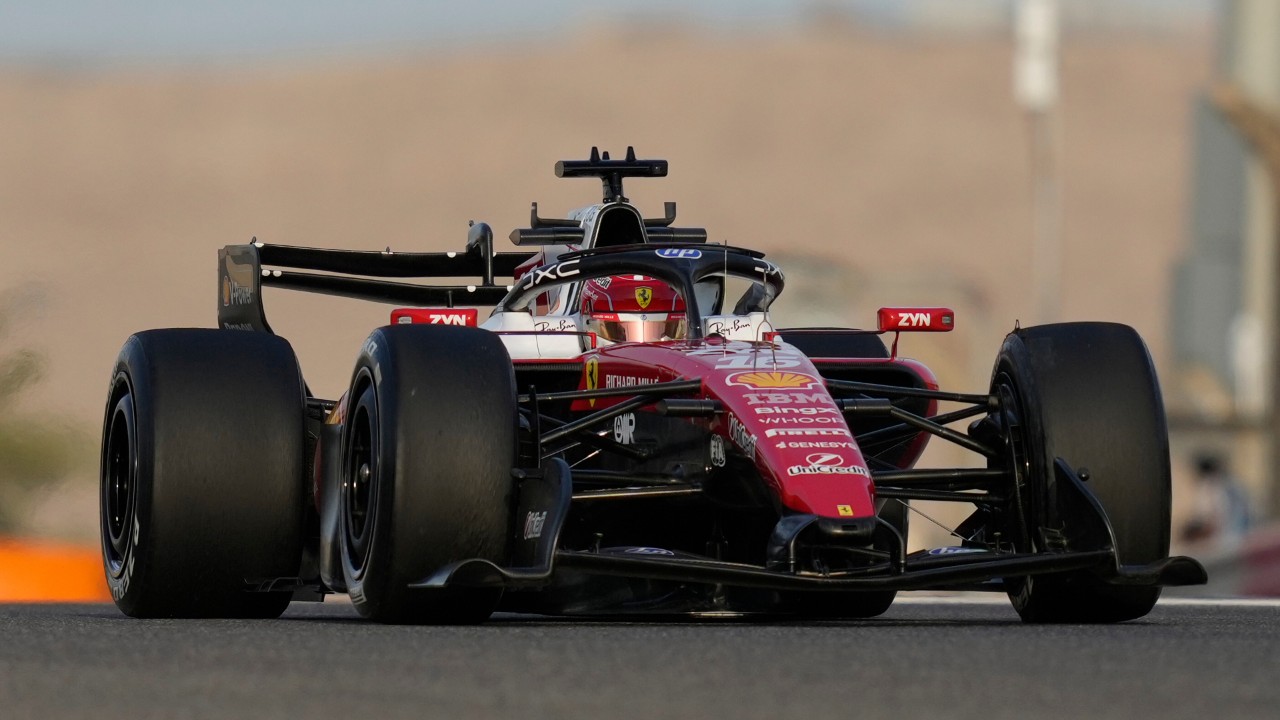
Leclerc topped the charts to finish pre-season testing in Bahrain, and Ferrari’s practice starts were drawing attention, so maybe there is ground for hope this time. Just forgive us if we’re a little sceptical.
Advertisement
Questions also continue to surround Hamilton after the winningest driver in F1 history went winless during his first season with Ferrari. Hamilton didn’t even place on the podium once. Sure, Hamilton was victorious during the sprint in China, but the team’s double disqualification after the actual race overshadowed that result. Hamilton finished sixth in the standings, 86 points behind his teammate Leclerc and only six points ahead of Antonelli, his successor at Mercedes.
The irony of F1 is that your teammate is also your greatest rival. They’re the ones in equal machinery and your closest comparable. Hamilton outscored Leclerc only three times (out of 24 GPs) last season. That wouldn’t be so bad if they were first and second in the standings, but they were fifth and sixth.
It’s the year of the horse in the Chinese zodiac, but will 2026 be the year of the prancing horse?
What’s going on with Aston Martin?
Advertisement
Canadian billionaire Lawrence Stroll has made his intentions clear since acquiring Aston Martin to turn the team into a powerhouse. Stroll has spared no expense, bringing in the legendary Adrian Newey, who was responsible for designing championship-winning cars at Williams, McLaren and Red Bull, funding a new wind tunnel and switching from being a Mercedes customer to essentially a Honda factory team as the lone outfit on the grid with their power units.
The first sign of trouble came in pre-season testing when driver Lance Stroll told formula1.com that their car was “four seconds off the top teams, four-and-a-half seconds” and teammate Fernando Alonso added they were “a little bit on the back foot.”
As bad as that was, it’s actually way worse. Newey told reporters ahead of the Australian GP that Alonso said he will not be able to do more than 25 laps without risking nerve damage, with Stroll putting that number at 15. That’s not good for business, or for anyone, when not only do your drivers think they will not be able to finish the race, but your car could cause permanent injury.
“That vibration (from Honda’s power unit) into the chassis is causing a few reliability problems,” Newey said. “Mirrors falling off the car, tail lights falling off, that sort of thing, which we are having to address. But the much more significant problem with that is that that vibration is transmitted ultimately into the driver’s fingers.”
Advertisement
We should have seen this coming. The last time Alonso drove a Honda-powered car was with McLaren in the mid-2010s. The “McHonda” was a complete failure, one that the two-time world champ dubbed in an infamous on-track outburst as a “GP2 engine,” comparing it to the feeder series. Alonso’s teammates during those years were Stoffel Vandoorne (Aston Martin’s current reserve driver) and Jenson Button (who was recently hired as a team ambassador). The F1 stars are aligned.
The 44-year-old Alonso deserves better as he enters his 23rd season in F1. To put that in perspective, roughly one-third of the grid — Piastri, Antonelli, Oliver Bearman, Gabriel Bortoleto, Franco Colapinto, Hadjar, Lawson and Lindblad — weren’t born yet when Alonso made his F1 debut. More mind-blowing: Lindblad wasn’t even alive when Alonso won his last world title.
What are the expectations for Cadillac?
Here comes a new challenger: Cadillac enters the field as the first new F1 team since Haas in 2016. Expectations should be cautiously optimistic.
Advertisement
Cadillac is completely fresh, so think of them like an expansion franchise. It’s going to take time and growing pains before they get up to speed (pardon the pun). What does help is they’ll be using Ferrari power units for the near future rather than their own out-of-the-box contraption – although that also depends on the reliability of Ferrari’s power units. The team plans to deploy its own power unit by 2029.
Cadillac will start with veteran drivers Bottas and Perez — both proven winners with their past teams. Neither raced in F1 last year and may have something to prove. Keep in mind, Perez struggled during his final year at Red Bull, while Bottas failed to score a single point with Sauber in 2024.
The first goal should be not finishing last (which might not be difficult given Aston Martin’s current status), and then take it from there.
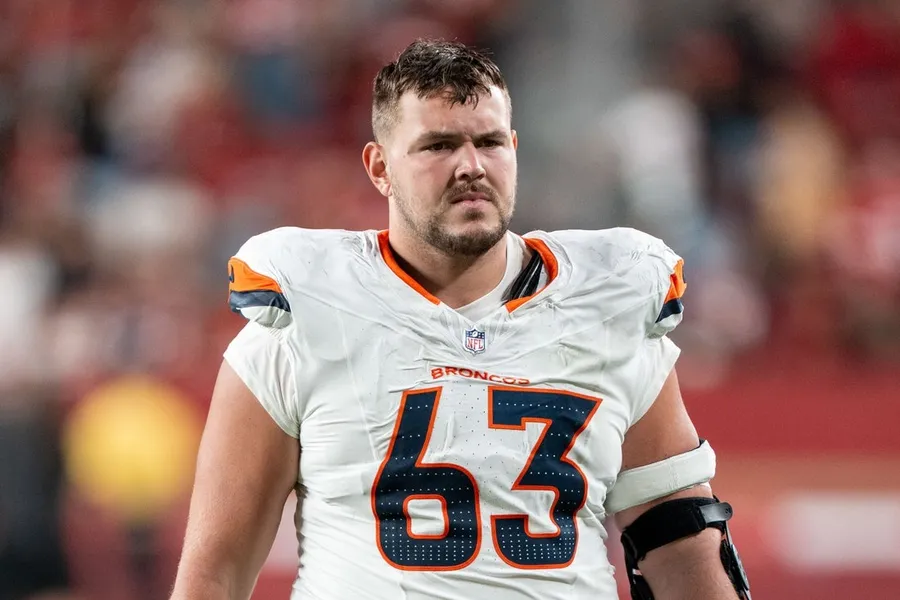
August 9, 2025; Santa Clara, California, USA; Denver Broncos offensive tackle Alex Palczewski (63) after the game against the San Francisco 49ers at Levi’s Stadium. Mandatory Credit: Kyle Terada-Imagn Images
The Denver Broncos agreed to terms on a two-year contract with offensive lineman Alex Palczewski, NFL Network reported on Thursday.
Palczewski, 26, started 10 of the 17 regular-season games he played last season — replacing injured starter Ben Powers at left guard. He played on 58% (665) of the offensive snaps. He was to become a restricted free agent with the end of the league year next week.
Undrafted out of Illinois in 2023, Palczewski signed with Denver but was injured and did not appear in a game that season. He has played in 31 games and made 13 starts, including three in 2024 at right tackle in place of the injured Mike McGlinchey.
Minnesota Vikings running back Aaron Jones (33) secures a reception during first-half action at Tottenham Hotspur Stadium in London, United Kingdom, as the Vikings faced the New York Jets on Oct. 6, 2024. Jets linebacker Quincy Williams (56) closes in while Jones turns upfield during the international regular-season matchup. Mandatory Credit: Kirby Lee-Imagn Images.
The Minnesota Vikings will reportedly release Aaron Jones next week if it cannot find a trade partner — it probably won’t find a trade partner — meaning the 31-year-old will need a new employer. According to Bleacher Report, that team should be the Washington Commanders.
Washington’s depth chart, Dan Quinn’s style, and Jones’ skill set line up if Minnesota indeed chooses a clean break this offseason.
The Commanders have Jacory Croskey-Merritt tentatively on deck for RB1, but Jones would provide solid depth.
Advertisement
Washington’s Backfield Could Open the Cleanest Lane for Jones
Jones is on the cusp of finding his third NFL squad.
A Washington Commanders helmet rests along the sideline during first-half action at FedExField in Landover. The NFC matchup on Dec. 18, 2022, featured Washington hosting an afternoon contest as players moved through early possessions, with the burgundy-and-gold helmet sitting near the bench area during the opening stages of the game. Mandatory Credit: Brad Mills-Imagn Images.
BR: Best Fit for Jones Is WAS
Jones will be a salary cap casualty for the Vikings, and BR’s Alex Kay sized up the best landing spots for those style players in free agency.
On Jones, Kay explained the Washington fit, “Jones would fit well with the Washington Commanders as an early-down, tone-setting rusher who can identify holes and hit them with power, generating consistent offense and moving the chains.”
Advertisement
“The Commanders may have Jacory Croskey-Merritt in the mix, but the breakout rookie is best deployed as a dynamic change-of-pace option who can provide the lightning to Jones’ thunder in a backfield platoon.”
Another Vikings personality recently joined the Commanders: coach Daronte Jones, who got his first crack at an NFL defensive coordinator job this season in the nation’s capital.
Kay added about Jones, “Washington was missing a competent running mate for Croskey-Merritt last year, having traded Brian Robinson Jr. before the 2025 season kicked off and subsequently losing Austin Ekeler to a season-ending injury in Week 2. Jones would be an ideal starter who could handle approximately 10 touches a game to keep defenses honest and set the table for Croskey-Merritt home runs.”
A Signing Fitting Washington’s M.O.
Advertisement
In 2024, Washington — out of nowhere — raced to the NFC Championship, led by rookie passer Jayden Daniels. How’d they do it? Well, Daniels’s efficiency paved the way, but after him, the heavy-hitters were largely older veterans.
The Commanders have a knack for acquiring older players — they’re not afraid of it — evidenced by Bobby Wagner, Austin Ekeler, Frankie Luvu, and Marshon Lattimore, to name a few. This is what Washington does when it needs roster depth.
Crosky-Merritt is, of course, still quite young, but as a stabilizer, Jones would do the trick, as he’ll turn 32 in December.
Other Fits?
Advertisement
Considering his history and current roster situations, several teams could be potential destinations for Aaron Jones.
Pittsburgh seems like a natural fit. The Steelers are now led by Mike McCarthy, Jones’s former head coach in Green Bay. Adding to the familiarity, the new PIT offensive coordinator, Brian Angelichio, previously coached tight ends for the Vikings, and Frank Cignetti Jr., a senior offensive assistant for the Steelers, once served as the Packers’ quarterbacks coach in 2018, working with Aaron Rodgers, who is also a former teammate of Jones and may be the Steelers’ QB1 again in 2026.
Minnesota Vikings running back Aaron Jones (33) celebrates after a touchdown run against the Chicago Bears during third-quarter action at U.S. Bank Stadium in Minneapolis. The NFC North showdown on Dec. 16, 2024, saw Jones break into the end zone before celebrating with energy as Minnesota extended momentum in front of the home crowd. Mandatory Credit: Jeffrey Becker-Imagn Images.
Furthermore, with running back Kenneth Gainwell entering free agency, Pittsburgh has an opening for a veteran presence in its backfield. The Steelers’ existing familiarity with Jones could facilitate a smooth transition.
Jacksonville also presents an appealing option. With Travis Etienne, their current RB1, likely seeking a new contract elsewhere, the Jaguars might elevate Bhayshul Tuten after his promising rookie season in 2025. Behind Tuten, LeQuint Allen Jr. lacks significant experience, leaving the offense in need of a proven veteran like Jones. Grant Udinski, Jacksonville’s offensive coordinator, previously worked with Jones as Minnesota’s assistant quarterbacks coach in 2024. Jacksonville’s need for a reliable runner and the potential for available touches alongside Tuten make it an attractive destination for Jones.
Finally, a return to Green Bay remains a possibility. After seven seasons with the Packers, Jones has a strong connection with the fans. Should he seek a new team, the Packers could bring him back as the RB2 behind Josh Jacobs. The familiarity between Jones and the organization would make this reunion a straightforward move.
Advertisement
The Vikings’ Plan without Jones
Jordan Mason is tentatively in line to assume RB1 duties for the 2026 Vikings, but it’s early in the process. From free agency, Minnesota could ink the aforementioned Etienne, Kenneth Walker III, or Rico Dowdle — the big-name options.
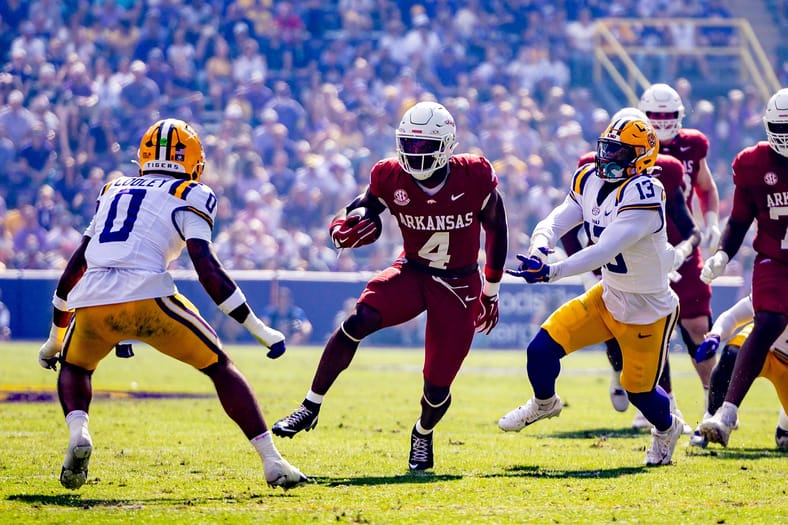
Arkansas Razorbacks running back Mike Washington (4) charges forward with the ball as LSU Tigers safety Tamarcus Cooley (0) closes in during first-half action at Tiger Stadium. The SEC matchup on Nov. 15, 2025, featured Washington pushing through traffic while Arkansas tried to move the chains in Baton Rouge. Mandatory Credit: Stephen Lew-Imagn Images.
In the draft, assuming Notre Dame’s Jeremiyah Love flies off the board before pick No. 18 — he probably will — men like Jadarian Price (Notre Dame), Emmett Johnson (Nebraska), Jonah Coleman (Washington), Nick Singleton (Penn State), and Mike Washington Jr. (Arkansas) will be available between Round 2 and 4.
In all likelihood, Minnesota will grab a rookie runner this go-round. They haven’t drafted a productive one since the days of Dalvin Cook and Alexander Mattison, and that was in 2017 and 2019, respectively.
The Vikings will face the Commanders at U.S. Bank Stadium in 2026.
Minnesota Vikings linebacker Jonathan Greenard (58) watches from the sideline during the second half against the New York Giants at MetLife Stadium in East Rutherford. The Week 1 matchup on Sep. 8, 2024, featured Greenard observing the defensive unit between series as Minnesota battled New York in a tightly contested season opener. Mandatory Credit: Vincent Carchietta-Imagn Images.
The Minnesota Vikings do not have a pressing urge to trade outside linebacker Jonathan Greenard, and he may stay put when it’s all said and done. That’s the word from ESPN’s Adam Schefter on Thursday after news broke that Greenard could be shipped elsewhere this offseason.
Greenard’s pressure rates stayed strong in 2025, and the Vikings now weigh extension cost against possible draft-pick value.
Greenard’s guaranteed money ran out in 2025, and, in theory, the Vikings could trade him for a handsome draft pick if they don’t have the cash in the budget for a long-term extension.
Advertisement
Greenard’s Market Value vs. Minnesota’s Cap Situation
More context on the new Greenard rumor mill.
Minnesota Vikings linebacker Jonathan Greenard (58) celebrates after recording a sack against the Chicago Bears during second-quarter action at Soldier Field. The NFC North matchup on Nov. 24, 2024, featured Greenard bursting through the protection and bringing down the quarterback as Minnesota’s defense applied pressure in Chicago. Mandatory Credit: Daniel Bartel-Imagn Images.
Schefter: Vikings Don’t Want to Trade Greenard but It May End That Way
Foremost, “half the league” is reportedly interested in Greenard, as NFL teams are always in the market for top-tier pass rushers, especially those that also defend against the run. That’s Greenard.
Schefter also said about the Greenard trade sweepstakes on The Pat McAfee Show Thursday, “I think that there’s a case where I don’t think the Vikings really want to deal him, but it’s one of those cases where, if there’s a team that offers enough to go get him, and I think it would be a Day Two pick, so a second or a third, I think Minnesota, because of the financial questions and issues there, is gonna have to consider.”
Advertisement
“My guess is, in the end, when these things usually happen, when you hear about a player that a team is open to trading, when there have been discussions, when that happens like usually a trade happens, so I would say it’s probably more likely than not, but Minnesota knows how good he is, and I can tell you, isn’t going to be thrilled about giving him up.”
The verdict: Minnesota doesn’t want to lose Greenard but might have to because of the financial crunch created by former general manager Kwesi Adofo-Mensah.
The Compensation
The translation of Schefter’s comments — a Day Two pick — means the Vikings want nothing less than a 2nd- or 3rd-Round pick for Greenard. The Chicago Bears just shipped 28-year-old wide receiver D.J. Moore and a 5th-Round pick to the Buffalo Bills for a 2nd-Rounder. Anything is possible in the current climate.
Advertisement
What Greenard won’t fetch? A 1st-Rounder. He’ll turn 29 this year, and an EDGE rusher who just logged 3 sacks in 12 games is not worth 1st-Round capital in the eyes of general managers.
However, in theory, Minnesota could send Greenard and its 18th overall pick to a team with a Top 10 draft pick, and boom, the Vikings could select a blue-chip player. That’s on the table.
Two months ago, Greenard was whispered as a theoretical trade piece in a deal for Joe Burrow, though that was just fan fiction. Perhaps if Burrow personally requested a trade in the coming days or weeks, the Vikings could send multiple 1st-Rounders and Greenard to Cincinnati for Burrow.
Overall, expect something in the ballpark of a 3rd-Rounder if Minnesota is forced to trade Greenard.
Advertisement
Greenard’s Body of Work in MIN
In 2025, Greenard earned a 74.2 Pro Football Focus grade, a respectable mark for an EDGE defender. Despite missing five games, he ranked 17th in quarterback hurries and 31st in total pressures, demonstrating his ability to consistently disrupt the pocket.
However, his sack production presented a different picture. Greenard recorded the aforementioned 3 sacks in 12 games, a pace of just four over a full season. This represented a significant drop-off for a starting EDGE rusher, particularly one coming off a Pro Bowl season. Vikings fans often noted Greenard’s near misses, observing that he often beat blockers and forced errant throws but struggled to finish plays.
Now, the Vikings’ front office faces a crucial question: was 2025 an outlier, or a sign of declining performance? If Greenard rebounds and returns to double-digit sack production, a contract extension would be warranted, as a pass rusher with his disruptive capabilities is a valuable asset to any defense.
Advertisement
Minnesota Vikings defenders Jonathan Greenard and Harrison Phillips celebrate after sacking Houston Texans quarterback C.J. Stroud at U.S. Bank Stadium in Minneapolis. The play on Sep. 22, 2024, came during a late defensive surge as Minnesota’s front generated pressure and reset near the line of scrimmage following the stop. Mandatory Credit: Jeffrey Becker-Imagn Images.
Alternatively, if the front office believes the decreased sack numbers indicate a deeper issue, trading Greenard for a 2nd- or 3rd-Round pick becomes a viable option. This would allow Dallas Turner to step into a larger role, while the team could add a veteran rotational outside linebacker through free agency, potentially targeting players like Arden Key or Von Miller.
Championship-caliber teams typically prioritize accumulating pass rushers rather than shedding them, as pressure on opposing quarterbacks is absolutely essential for defensive success. The Vikings moving on from a proven disruptor would signal a strong belief in the existing talent on the roster: Turner and Andrew Van Ginkel.
Parallels to the Danielle Hunter Situation
About 5-6 years ago, Minnesota encountered this precise situation. Danielle Hunter had signed a sweet extension in 2018, and by 2020, the deal felt outdated. Hunter held out for money, and the Vikings eventually met him halfway by adding more guaranteed cash to his contract.
Los Angeles Chargers quarterback Justin Herbert (10) runs with the football as Minnesota Vikings linebacker Jonathan Greenard (58) closes in during first-half action at SoFi Stadium. The interconference matchup on Oct. 23, 2025, showed Herbert scrambling away from pressure while Greenard pursued from the defensive front. Mandatory Credit: Gary A. Vasquez-Imagn Images.
Greenard’s deal — $19 million per year — was fair in 2024. Now, the best players at Greenard’s position earn $46 million annually. The Vikings must decide if paying Greenard between $27 million and $30 million — his market value — is wise for roster construction when Turner is hungry to start.
And thanks to Schefter, it is known that they prefer not lose Greenard.
Confederation of African Football has said it will reveal the host country for the 2026 Women’s Africa Cup of Nations within the next 48 hours.
The announcement comes after weeks of uncertainty about where the tournament will take place. Morocco was earlier chosen to stage the competition, but reports have suggested the North African country may no longer be fully ready to organise the event.
CAF communications officer Luxolo September shared the update on social media on Wednesday. He explained that the football body has been holding several meetings over the issue.
Advertisement
He wrote that CAF would soon communicate its decision on the situation and added that the matter is receiving urgent attention from the organisation’s leadership.
For more than six weeks, doubts have surrounded the hosting plans for the tournament. Morocco was expected to organise the competition for the third straight time after previously staging the event.
However, fresh speculation started after the 2025 Africa Cup of Nations earlier this year. That competition ended with controversy, as some teams raised concerns about officiating decisions during matches involving the host nation.
Advertisement
Although CAF president Patrice Motsepe earlier stated that Morocco would host the 2026 tournament, the absence of a formal confirmation afterwards has increased uncertainty among football stakeholders.
Meanwhile, South Africa has openly said it is ready to step in if Morocco decides to withdraw from hosting duties. The country’s Sports Minister, Gayton McKenzie, recently criticised Morocco and accused the country of creating problems for CAF over the tournament.
The delay has also raised concerns among participating teams, including defending champions Nigeria Super Falcons, who are preparing to defend their title after beating Morocco in the last final.
With the planned kick-off in April drawing closer, CAF’s expected announcement is hoped to bring clarity for teams, organisers and broadcasters after weeks of speculation about the tournament’s host.
The hosts are coming into the game on the back of a 2-2 draw away to Poland, also in the qualifiers. They went behind to Ewa Pajor’s 24th-minute strike but drew level through Veerie Buurman in the 44th minute. Jill Roord put the Netherlands ahead two minutes into the second half, but Paulina Tomasiak equalized with six minutes left in regulation time.
Thanks for the submission!
Advertisement
Ireland, meanwhile, let a lead slip with 19 minutes to go in a 2-1 defeat at home to France. They went into the break in the lead thanks to Katie McCabe’s 12th-minute strike. Melvine Malard equalized in the 71st minute before completing the comeback eight minutes later.
Advertisement
The loss left The Girls in Green at the foot of Group 2 after one game with zero points. The Netherlands are third.
Netherlands Women vs Ireland Women Head-to-Head and Key Numbers
The Netherlands are unbeaten in three head-to-head games, winning twice.
This will be their first meeting since April 2018, when the Netherlands claimed a 2-0 away win in a 2019 Women’s World Cup qualifier.
Ireland’s last six games have produced three goals or more, with each of the last four head-to-head games having witnessed goals at both ends.
The Netherlands have scored at least two goals in four of their last six games.
The Netherlands remained in 11th spot in the last FIFA Women’s World rankings. Ireland are 27th.
Ireland Women form guide: L-W-L-W-L Netherlands Women form guide: D-W-W-W-D
Netherlands Women vs Ireland Women Prediction
The Netherlands did not have the best start to their World Cup qualification charge. But they are the firm favorites to claim maximum points here and rekindle their quest to qualify for a fourth successive World Cup.
The Republic of Ireland, meanwhile, made their World Cup debut at the last tournament in 2023 and will be looking to make it consecutive Mundials. They have alternated between a loss and a victory across their last five games, and fans will hope this trend continues.
We are backing the home side to claim a comfortable victory with goals at both ends.
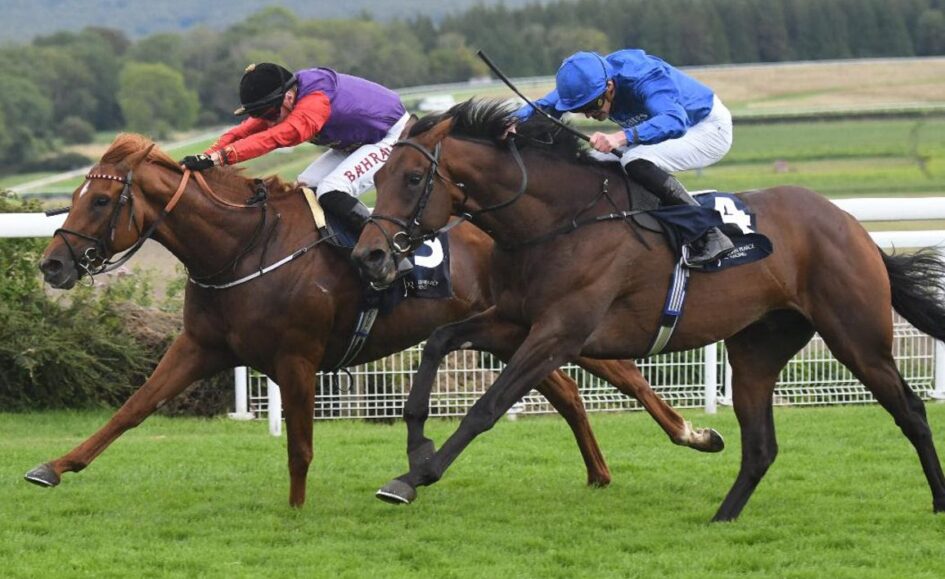
Flemington’s Australian Cup Prelude trails behind the day’s prominent fixtures in significance, though it might spotlight contenders for greater achievements later on.
In Saturday’s 2000m showdown, Ciaron Maher intends to debut two gallopers from abroad – Augustus and Desert Hero.
Having already raced locally, Desert Hero journeyed from the UK with William Haggas to contest last year’s Sydney Autumn Carnival.
In comparison, the German-bred Augustus was last victorious at Hamburg in the middle of last year and is co-owned by Australian Bloodstock, who previously sourced Melbourne Cup winners Protectionist and Gold Trip to Australia.
Advertisement
Maher commented that Augustus somewhat resembles Gold Trip, securing his debut Melbourne Cup win in 2022.
“He flicks his action a little bit like Gold Trip,” Maher said.
“He’s got good, strong formlines coming across.
We opted not to bring him out in quarantine. We opted to give him a break and let him furnish and he’s certainly done that.
Advertisement
I think he’s come up super.”
Augustus prepared via a jump-out and 1500m trial ahead of his Saturday reappearance, partnered by Mark Zahra.
“Mark rode him the other day at Caulfield (Heath) and he liked what he felt,” Maher said.
“I think Flemington will suit, a big, open galloping track. I think he will be a horse we will see more of in these better staying races.”
Advertisement
Augustus faces a limited autumn program under Maher before spring pursuits such as the Caulfield Cup and Melbourne Cup pair.
“He’ll probably have a couple of runs and whether he goes to Queensland, we’ll work that out with the Australian Bloodstock boys, but he’s impressed me with what I’ve seen,” Maher said.
Post his April Randwick start, Desert Hero showed once more, fourth in Caulfield Heath’s 1500m trial with Augustus second.
Maher revealed Desert Hero received an extended holiday after Sydney, spending time in New Zealand.
Advertisement
“He’s got a good solid base. He prepped up over in New Zealand,” Maher said.
“He had a long break, which I think he needed and he’s come up well also.
He’s been out of form for a little while, so he needs to find form, but looking at the way he is, he should hit the line well also.”
Find competitive betting sites offering racing odds for the Australian Cup Prelude.
The second round of the 2026 Arnold Palmer Invitational begins Friday morning, March 6, at Bay Hill in Orlando, Fla. You can find full Arnold Palmer Invitational tee times for Friday’s second round at the bottom of this post.
Featured tee time for Round 2
Scottie Scheffler was asked about his slow starts to tournaments this season in his pre-tournament press conference at the Arnold Palmer Invitational. He was quick to remind reporters that in four starts, he’s really only had three bad rounds.
That tracks when you look at Scheffler’s record heading into Bay Hill. In addition to his American Express victory, the World No. 1 has two other top-4 finishes. His worst result is a T12. Not bad.
And Scheffler looked strong to start his opening round on Thursday as he vies for his third-career Arnold Palmer victory. The four-time major champion made two birdies over his first four holes in Round 1.
Advertisement
Scheffler will get his second round started on Friday at 1:30 p.m. ET alongside Russell Henley.
You can watch Friday’s second round of the 2026 Arnold Palmer Invitational from 2-6 p.m. ET on Golf Channel. PGA Tour Live on ESPN+ will provide exclusive streaming coverage starting at 7:30 a.m. ET on Friday, as well as featured group and featured hole coverage all day.
Check out the complete Round 2 tee times and pairings for the Arnold Palmer Invitational.
There is no settled case law, or the golf-history equivalent, for the exact definition of the Big Three. Harry Vardon, J.H. Taylor, James Braid: a threesome for the ages. Arnold, Big Jack, Gary Player, the same. And then (of course) this trio: Dr. George Franklin Grant; Dr. Cary Middlecoff; Dr. Howdy Giles. Another Big Three, at least under the popular game-show category Notable Golfing Dentists.
Dr. Grant invented the wooden golf tee (U.S. patent number 638,920).
Dr. Middlecoff won two U.S. Opens and one Masters tournament.
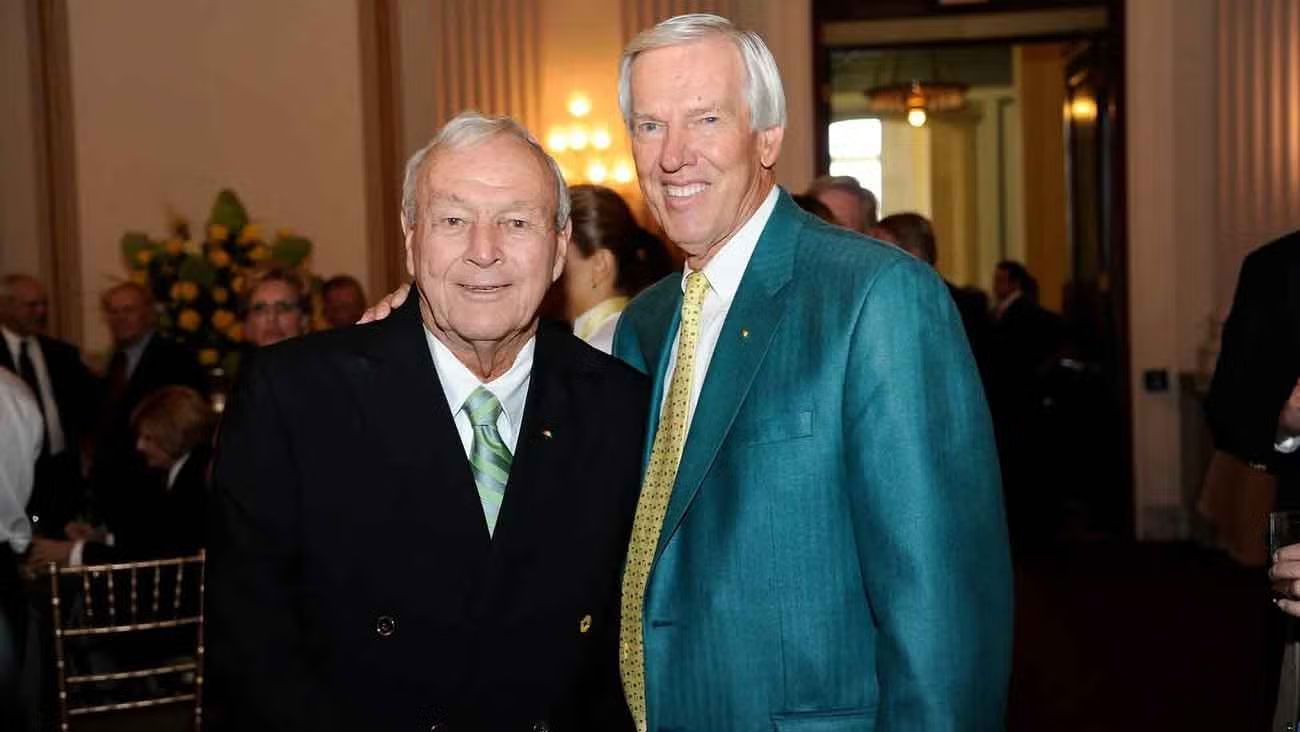
Dr. Giles was Arnold Palmer’s dentist and unofficial photographer.
Advertisement
Howdy Giles took thousands and thousands of photographs of Arnold over the years. The basement of his home in Wilmington, Del., was a sort of Arnold Palmer museum, and the house itself (per Arnold’s longtime aide-de-camp, Doc Giffin) was done in Early, Middle and Late Palmer. Howdy didn’t push Wake Forest, Arnold’s alma mater, on his two daughters — but they did wind up there. Howdy had a ball marker made out of one of Arnold’s old gold fillings. It hardly needs to be said that Howdy published a book called “The King and I: An Unlikely Journey from Fan to Friend.”
Golf has lost a true original. Howdy died last month at age 84. This is the first Arnold Palmer Invitational without him.
Forgive the personal intrusion here: On a weekday in May in 1987, early in my nine-year stint as a reporter at the Philadelphia Inquirer, I visited the Chester Valley Golf Club, where a senior event was being played. Arnold was 57, silver-haired and tan, baking in the afternoon sun as he sat on a golf cart behind the driving range, chatting casually with a couple people. I was loitering with intent. A man, unknown to me but seeing my press button, asked me if I wanted to interview Arnold Palmer.
That would be swell.
Advertisement
I fumbled my way through the interview. I wrote up something. I drove to New York City and had what turned into my first date with the woman who became my wife. I know exactly what I wore, interviewing Arnold that afternoon and then at dinner, because of Howdy. Howdy made the introduction, then took a photo of me interviewing Arnold. Later, with no advance notice, Howdy printed up the photo and mailed it to me. As I type this, that photo, and a matchbook from the Lion’s Rock (316 E. 77th Street), are on my desk. I remain stunned by his generosity and effort.
Over the past nearly 40 years, I saw Howdy dozens of times. On several occasions, when Arnold was coming to greater Philadelphia for a banquet dinner or to greater Wilmington to have his teeth checked, Howdy brought me in. Howdy was a part-owner of a restaurant called Stanley’s Tavern in Wilmington, and I once had meal with Arnold and Howdy there. When Arnold flew into the Wilmington on a new plane, Howdy invited me to come for a look-see.
Arnold gave me a tour of the plane. He noted the cashmere blankets on each seat that, Arnold said, he got for his wife, Winnie. When I left Arnold and Howdy that afternoon, I must have noted that my wife and I were looking to buy a new (that is, new to us) car. Arnold, devoted to Cadillacs for reasons both personal and professional, said, “Well, I hope it will be a G.M. product.” You can’t buy a moment like that. Howdy made it possible.
Howdy, as all true originals do, made a lot of his own moments. I recall being greenside on Father’s Day at Baltusrol in 1993 when Lee Janzen won the U.S. Open. When the putt dropped, there were four people on the green: Janzen, Payne Stewart, their caddies. Then came a fifth — Howdy, camera in hand. He was so earnest, unassuming and nice nobody could ever say no to him.
Advertisement
I just went to look at the USGA’s highlight reel from that Sunday, available on YouTube, hoping I might see a glimpse of Howdy. I didn’t, but Arnold, the longtime and ultimate USGA ambassador, opens the show by offering some straight-to-the-camera welcoming remarks, in that foghorn voice. Howdy was a USGA rules official. They were both members at Pine Valley. Howdy once showed me a Golf Digest cover from 1957 that showed Arnold in full smile. “I shaved this tooth down a little bit,” Howdy said, pointing to a dangler. “It had a little bit of a fang to it.”
Howdy, a competitive swimmer at the University of Delaware, fell into Arnold’s spell through the magic of TV in the 1960s. To the amusement of his fellow dental-school students at Temple University in Philadelphia in the late 1960s, Howdy started buying his clothes out of the Arnold Palmer line at the legendary Philadelphia department store, Wanamakers. (A quote with legs from Howdy: “They’d say, ‘Hey, what’s with all the Palmer gear?’ But who has the last laugh now?”) When they were dating, Carolyn Boddorff gave her boyfriend a set of Arnold Palmer clubs. Needless to say, they had a long and happy marriage. (The two daughters married Arnold-o-philes; the four grandchildren are all getting inculcated.) When Howdy joined Bay Hill in the mid-1970s and met Arnold’s dentist, Benny Tacke, Howdy said it would be his dream to be Arnold Palmer’s dentist. “Arnie’s a lousy patient,” Dr. Tacke said. “When I die, you can have him.” Two years later, Dr. Tacke died and Dr. Giles had a new patient.
The last time I saw Howdy at Bay Hill was during the 2024 tournament, the Arnold Palmer Invitational. Carolyn had died three years earlier and Arnold had died a half-decade before that. Howdy, curiously, had developed the same kind of walk that Arnold had when he was in his early 80s, where the left shoulder dips left on the left step and the right shoulder dips right on the right. He was warm and engaging as always but time had taken its toll. He had lost his two great partners.
Howdy once described the first time he played with Arnold at Howdy’s home course, the Wilmington Country Club, mid-spring, 1976:
Advertisement
“Sixteenth hole, par 5, 603 yards. The caddie bets Arnie that he can’t get home in two. The bet is for a beer. Arnie hits driver, driver, chips in with a sand wedge from 15 yards off the green for a three. Gets a six-pack for the caddie and signs the cans. Budweiser. Shoots 67. Amazing. My idol comes to Wilmington to play golf and have his teeth checked. He stays at our home and I drive him to the airport. As he flew off in his jet, I had tears in my eyes.”
Maybe you’ve seen the photo of Arnold that adorns cans and jugs of the AriZona Arnold Palmer half-and-half concoction. Arnold is maybe staring off at a distant green that just might be reachable. He’s well into his senior career. The old caddies had their own nickname for Arnold, Bull, for his flaring nostrils, particularly in the heat of battle. They’re on full display in this Howdy Giles snap for posterity. Do you think Howdy asked for anything, for the use of this photo? There’s not a chance.
Arnold once introduced Howdy to George H.W. Bush. Arnold said, “Mr. President, I want you to meet Howdy Giles, my dentist, my photographer and my good friend.”
“Oh sure,” President Bush said. “We were talking about you at dinner last night.”
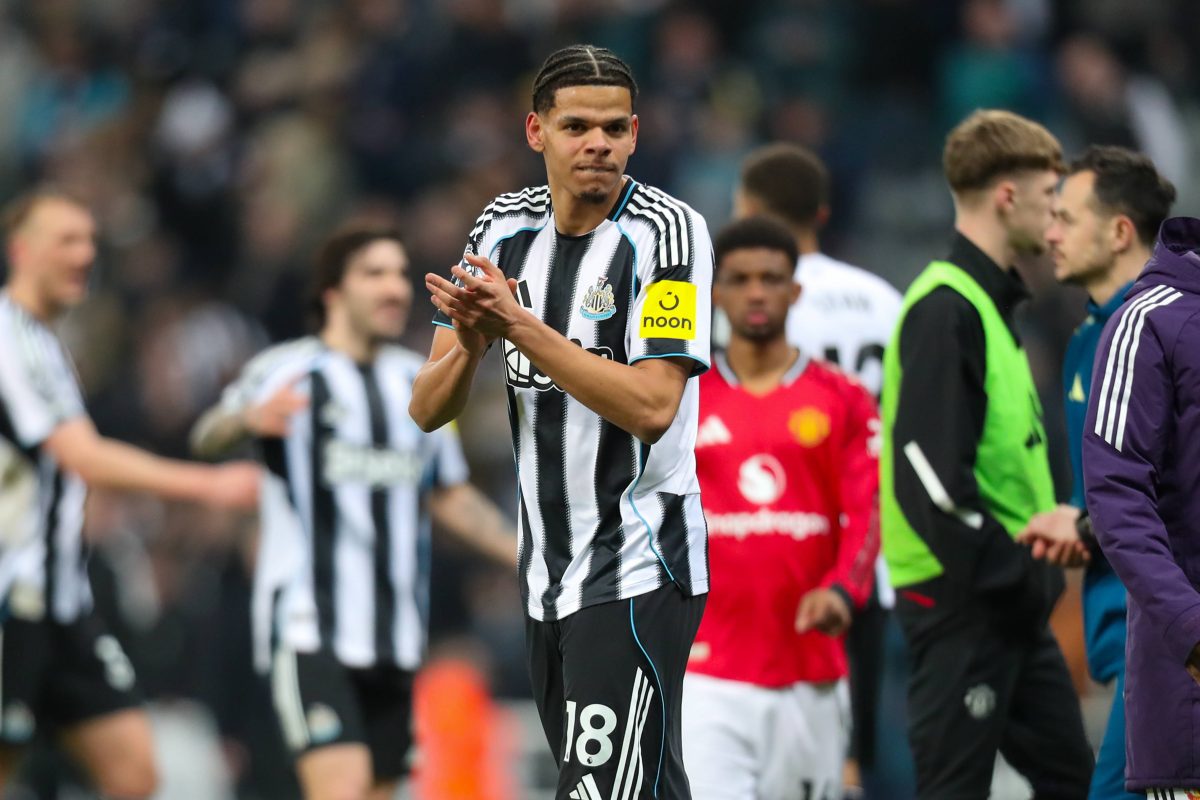
Newcastle United’s striker William Osula stole the show last night against Manchester United, not just on the pitch but in the kitchen too.
The 22-year-old came off the bench to curl a stunning goal past Manchester United’s keeper and secure a win for the home side. But Osula’s Nigerian roots shone off the pitch, too. A video has surfaced showing him making Ogbono soup from scratch, a traditional South-Eastern Nigerian dish made from ground wild African mango seeds.
Teammate Joe Willock also shared in the feast, praising Osula’s cooking skills as they enjoyed the meal together. Fans were quick to celebrate not only his goal but his mastery of the popular Nigerian soup.
Advertisement
Osula, who calls himself a ‘naija boy’ and even speaks a bit of pidgin, seems to be winning hearts both on and off the field.
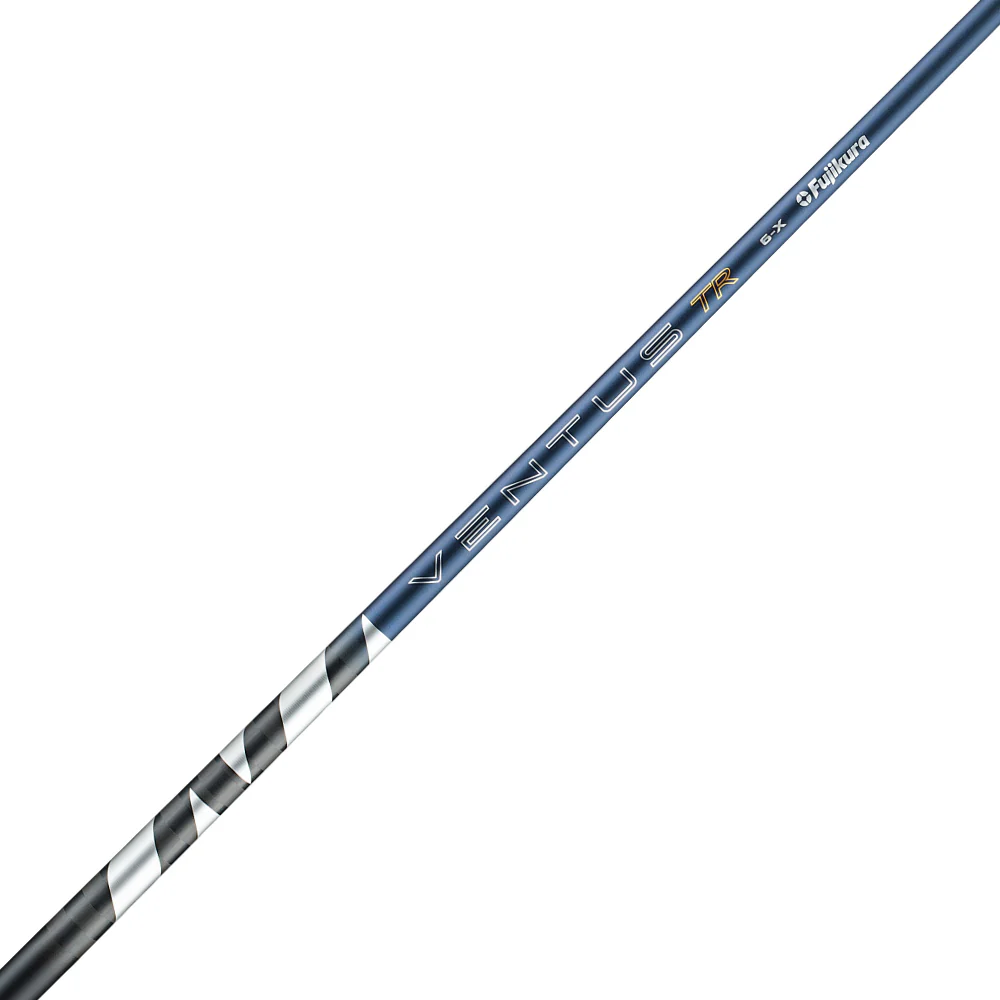
Fujikura’s new Ventus TR Blue with VeloCore+ launched on worldwide tours in mid-January, but it’s already found its way into the bag of PGA Tour pros.
Danny Walker and Kensei Hirata were some of the earliest adopters of the new shaft. More recently, Harry Hall and Rafael Campos added it to the bag. That doesn’t include the numerous players testing the new shaft (like Nicolai Hojgaard).
While it might seem quiet so far, Fujikura Tour rep Marshall Thompson says the new TR Blue is actually ahead of schedule compared to the rollout of the first Ventus shafts to get VeloCore+ two years ago. A lot of that had to do with timing.
Advertisement
“It’s much better. It’s much more received,” Thompson told GOLF. “When we launched [the previous one] it was the middle of the year, the middle of July. A lot of guys aren’t really doing testing, and a lot of guys by July are already locked in for the year.”
This time, Fujikura launched the new shaft in January, right when pros were figuring out their bags with a deluge of new products from the OEMs.
That’s led to the quicker adoption, but there’s still probably more to come.
“These rollouts always take some time,” Thompson said. “There are shafts that I build up for certain players where I think it’s got a really good chance of going in, and then I don’t see it for five weeks. Then all of a sudden that player brings it out of the garage and says, ‘Okay, now I’m ready to actually take it to the course.’”
Advertisement
Thompson pointed to the 2024 rollout of the first Ventus with VeloCore+ as appearing slow, but now dozens of players have the updated versions, including U.S. Open winner J.J. Spaun and recent converts like Min Woo Lee and Tony Finau.
And while the name is the same as its predecessor, switching into the new version might not exactly be plug-and-play. Thompson said the Fuji team knew how good the original Ventus TR line was and wanted to improve it without straying too far.
By adding VeloCore+ to the shaft, the new TR Blue has an increased torsional stability (a resistance to twisting), which promotes stability throughout the shaft and center-face contact.
Advertisement
Fujikura 2026 Ventus TR Blue Wood Shaft (Velocore+)
That additional stability meant engineers could reorient the Spread Tow fabric in the handle section of the shaft — the material that differentiates the Ventus and Ventus TR lines — to make the handle stiffer.
The result is a slightly stiffer handle with a slightly softer mid-section while retaining the same ultra-stiff tip. Thompson said they’ve noticed the tighter handle allows players to feel like they can go after the ball a bit more, while the softer mid creates a smoother feel throughout the swing.
That’s led to much tighter downrange dispersion for many players.
“When I can see 60 to 70 percent of players gaining and standard deviations getting tighter across the board, I know we’ve got a really good shaft,” Thompson said.
Advertisement
In my own personal testing, my first experience with the new TR Blue+ was on a day when I couldn’t find the face to save my life with my OG TR Blue gamer. We switched to the new shaft and instantly the sound changed, and I was finding the middle of the face with ease. On a Foresight GC Quad, I recorded a shot exactly out of the middle of the face.
Thompson feels confident about the rollout, especially this season, where the new drivers from the OEMs are more competitive than ever. There’s still plenty of testing going on.
“Even on tour, these non-contract guys still have four or five headcovers in the bag and they’re trying different options,” he said. “And we’re already into the Florida swing.”