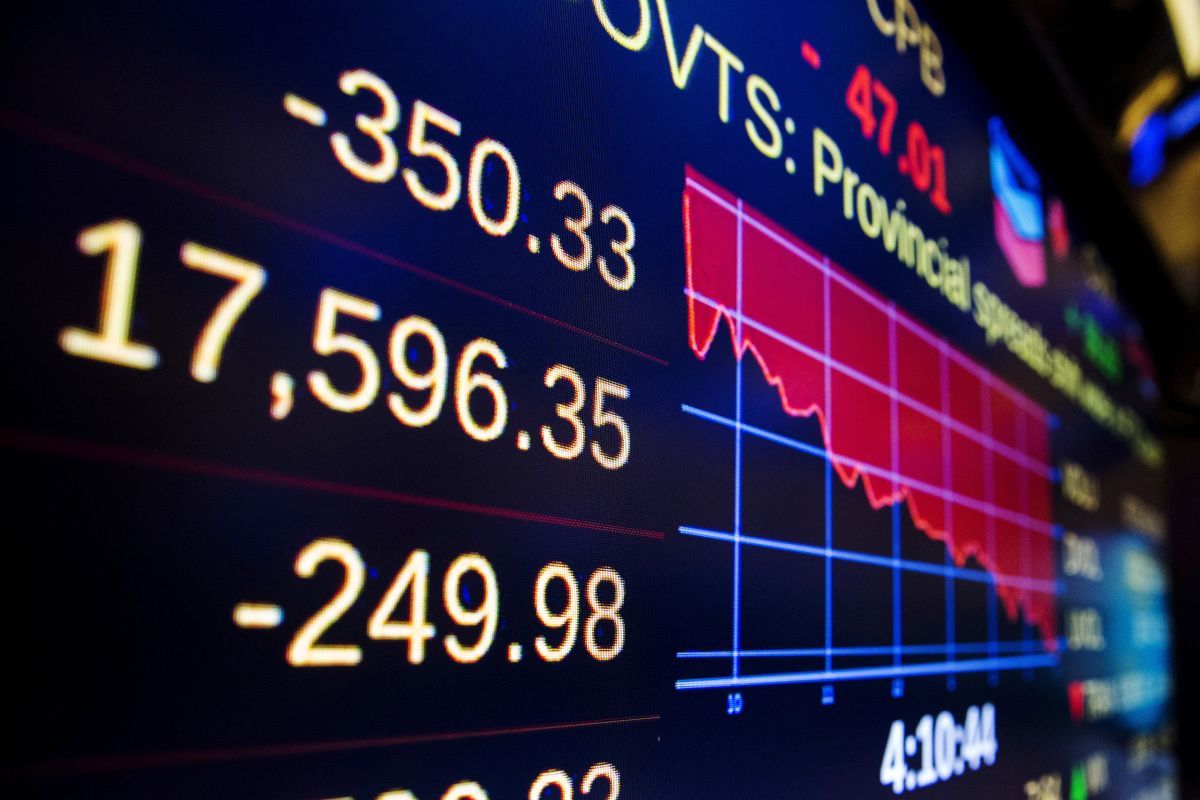
Major U.S. stock indexes retreated Thursday as renewed escalation in the U.S.-Israel conflict with Iran drove oil prices higher, stoking fresh investor concerns over energy costs, inflation risks, and global growth headwinds.
The Dow Jones Industrial Average declined about 350 points, or 0.75%, to trade around 47,450 during midday action, after touching lows near 47,300 earlier. The S&P 500 slipped roughly 0.6% to hover near 6,420, while the Nasdaq Composite eased 0.4% into the low 22,000s, paring some initial drops but holding negative amid broad risk aversion.
Prior Session Rebound
This pullback largely offset Wednesday’s recovery, when the Dow added around 220 points, or 0.47%, closing near 47,800 to end a short two-day skid. The S&P 500 climbed 0.7% to about 6,460, and the Nasdaq rose 1.1% toward 22,200, supported by a brief oil pullback and economic prints that bolstered hopes for Federal Reserve rate-cut flexibility.
Oil and Geopolitical Driver
Thursday’s downturn linked straight to Middle East flare-ups, with the conflict hitting day six amid Iranian warnings on Strait of Hormuz shipping. No full tanker halts materialized, but reports of delayed transits and spiking insurance rates propelled crude futures up 3-4%, pressuring industrials and consumer stocks while lifting energy shares modestly.
Volatility Gauge
Traders adjusted after midweek bets on U.S. naval protection or quiet diplomacy lost steam against blockade rhetoric. The CBOE Volatility Index (VIX) stayed above 18, down from prior spikes near 22, reflecting ongoing caution short of outright fear.
Sector Rotations
Defensive positioning dominated. Cyclicals like industrials and materials weighed on the Dow, as firms sensitive to fuel costs faced headwinds. Tech megacaps provided some ballast but couldn’t stem overall declines. The Russell 2000 fell 0.9%, prolonging its choppy run.
Inflation Policy Risks
Beyond stocks, oil’s advance—with WTI approaching $76 and Brent in the low $80s from recent sessions—revived inflation worries, potentially crimping the Fed’s easing cycle. Policymakers have highlighted energy as a key monitor, with sustained crude jumps risking a shift from rate cuts if price pressures build.
Earnings and Corporate Snapshot
Mixed corporate signals emerged as earnings tapered off. Energy outfits gained on higher realizations, while defense names saw mild bids from tensions. Consumer discretionary trailed amid pump-price strains, and clean energy stayed tentative despite niche spotlight.
Economic Calendar Ahead
Focus sharpened on Friday’s data, led by nonfarm payrolls to test labor strength. Jobless claims, Challenger cuts, and trade prices could also sway views, with forecasts for 160,000-180,000 jobs and steady 4.1% unemployment.
| Index |
Thursday Change |
Approximate Close |
Key Driver |
| Dow |
-350 pts (-0.75%) |
~47,450 |
Oil escalation, industrials drag |
| S&P 500 |
-0.6% |
~6,420 |
Risk-off rotation |
| Nasdaq |
-0.4% |
Low 22,000s |
Tech resilience insufficient |
| Russell 2000 |
-0.9% |
N/A |
Small-cap volatility |
Weekly Volatility Context
The week’s swings spotlight headline sensitivity. The Dow dropped roughly 600 points across three prior sessions before Wednesday’s lift, mirroring rapid responses to Iran news. History shows events like the 2022 Ukraine crisis often yield short dips followed by rebounds without major disruptions.
Hormuz Stakes
This round stands apart due to the Strait’s role in 20% of world oil. Banks like Goldman Sachs lifted short-term WTI outlooks to the high $70s on risk overlays, without extreme calls. Extended strains could pinch profits, spending, and the S&P 500’s 8-10% year-to-date rise.
Bond and Haven Moves
Yields edged up, with the 10-year Treasury near 4.05% versus recent sub-4% dips, as inflation tempered cut bets. Gold held above $2,700 an ounce for safety, while bitcoin eased under $95,000 with risk peers.
Volume and Flows
Energy rose 1.5-2%, financials mixed, utilities cushioned losses. Volumes swelled 15-20% over norms, heavy in futures and hedges.
Retail Tie-In
GameStop traded flat near $24, propped by cash and buyout talk per separate reports, as retail broadly eyed cost squeezes.
Technical Outlook
Volatility persists ahead. De-escalation hints might spark snaps higher; Hormuz flares could extend weakness. S&P support eyes 6,350-6,400, resistance 6,500 in its oil-shadowed monthly band.
Year-to-Date Backdrop
From early-2026 S&P lows near 6,000, indexes built on AI momentum and cuts but now grapple war overlays. National gas averages near $3.15 per AAA erode purchasing power.
Sector Winner-Loser Balance
Producers thrive, but airlines, logistics, and makers suffer. Refiners gain on spreads; chemicals cite costs. Europe’s Stoxx 600 (-0.8%) and Japan’s Nikkei (-1.2%) synced lower.
Trading Close Notes
Afternoon action steadied sans breakout, volumes hinting defense. Payrolls and diplomacy loom for Friday.
Historical Precedent
This dip aligns with shock absorption patterns, banking U.S. production buffers. Oil momentum and Hormuz watch keep nerves taut.
President Trump’s team signals energy security focus, possibly tapping reserves, layering policy angles. Fuel impacts heighten voter awareness.