


Connect with us

Business

Global Market Today | Asian stocks drop as war drags on, crude oil falls

Published

on

Global Market Today | Asian stocks drop as war drags on, crude oil falls
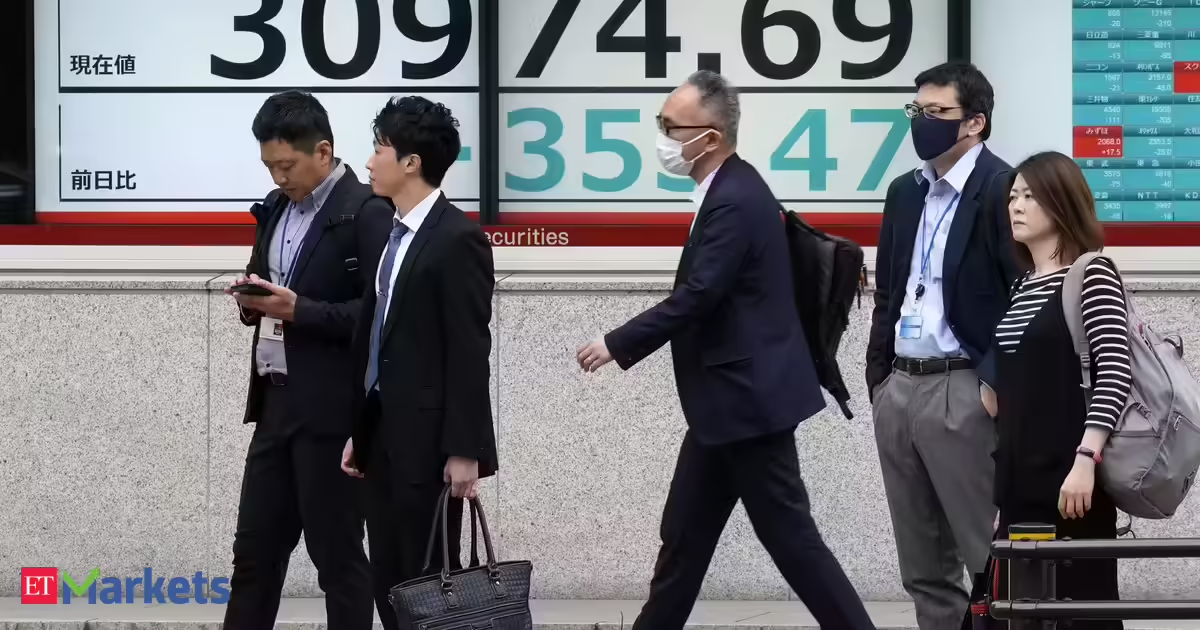
Asian equities fell on Friday, leaving markets on track for their steepest weekly loss in six years as the protracted Middle East conflict and renewed Iranian strikes drove a broad retreat in risk assets. Oil edged lower at the open.

Stocks fell in Japan and Australia, pulling the broader MSCI Asia Pacific Index down 0.5%. The gauge has declined about 7% since the war began. Treasuries dropped and the dollar gained during the US session, with the currency set for its best week since 2024. US equity gauges also dropped Thursday, although they were off the session lows.

Attention was mostly on oil, with West Texas Intermediate crude dropping as much as 2.5% to almost $79 a barrel on Friday. That came after the Trump administration was weighing a range of options for addressing the spike in oil and gasoline prices amid the war in Iran, Interior Secretary Doug Burgum said. Still, oil is headed for the biggest weekly surge since 2022.

The ongoing US-Israeli offensive against Iran has jolted global energy markets, pushing US crude to multi-year highs amid concerns that disruptions through the Strait of Hormuz may constrain supplies. The conflict is already unsettling flows to key buyers, with top importer China moving to conserve fuel, heightening inflation risks and market volatility if the fighting persists.

Advertisement

“What matters now is whether the war will last days, weeks, or longer,” said Marco Oviedo, senior strategist at XP Investimentos. The possibility that the conflict doesn’t last long “remains the base case, and that the US is winning the battle. But Iran’s refusal to back down is keeping things tense.”


Iran launched a fresh wave of missile and drone strikes across the Gulf on Thursday evening, with attacks reported in the United Arab Emirates, Bahrain, Qatar and Kuwait. Iranian Foreign Minister Abbas Araghchi told NBC News that his country hadn’t asked for a ceasefire and had no intention of negotiating.
However, the US remains defiant. Trump told Axios he should be involved in selecting a successor, the outlet reported, citing an interview with the president.

Continue Reading
Click to comment

Leave a Reply

Your email address will not be published. Required fields are marked *

Business

Form 144 Delek US Holdings For: 6 March

Published

on


Form 144 Delek US Holdings For: 6 March

Continue Reading

Business

Hotspur Press set for demolition this year under new scheme

Published

on

Business Live

Developers commit to ‘faithful reproduction of the former mill facades’

How The Hotspur Press could look under new plans drawn up by Manner after the June 2025 fire

How The Hotspur Press could look under new plans drawn up by Manner after the June 2025 fire(Image: Manner)

Hotspur Press is set to be completely demolished after an inferno raged through the Georgian mill last June, developers have announced.

Advertisement

Manner had planning permission to build a 35-storey student accommodation block around the mill’s facades when disaster struck last summer, but its building attempts were held up by a bid to list the building and the company’s multiple changes to planned cladding panels. In January, the developers revealed revised plans for the site, promising to ‘replicate’ the original structure and incorporate ‘any materials that can be reused’.

On Thursday (March 5), Manchester council recommended the project be given planning permission, but confirmed ‘as a result of the fire, the mill facades cannot be retained and would be demolished and reconstructed in a replicated form’ with the same dimensions ‘but with new materials’.

A spokesperson for Manner ‘welcomed the recommendation for approval and the opportunity to bring forward our revised plans for the regeneration of The Hotspur Press’.

They added: “Our updated planning application sets out a regeneration scheme that remains true to our original vision, following the setback of the devastating fire the building suffered in 2025. While it is not possible to safely retain the remaining structure, we are committed to a faithful reproduction of the former mill facades.

Advertisement
Plans for a new public square around Hotspur Press remain unchanged.

Plans for a new public square around Hotspur Press remain unchanged(Image: Manner)

“This approach will ensure the historic significance of The Hotspur Press can be appreciated by Manchester’s residents, while bringing it back into productive use for the first time in nearly two decades and delivering the site’s wider regeneration plans.”

Manner previously said it hoped to start demolition and the rebuild at some point in 2026.

The Georgian mill had been subject to numerous redevelopment attempts since it closed as a printing press in 1996, including a 2020 bid to convert it into private flats which came to nothing, despite being awarded planning permission.

A 619-student accommodation tower will now be built on the Cambridge Street site, which will be clad in bronze, following multiple changes to the scheme by Manner before the fire started. After initially proposing brick cladding, it asked for permission to switch to silver material, and then bronze.

Advertisement

Changes further delayed building beginning after an application to list the building in 2025 held up the process until January 2025, when Culture Secretary Lisa Nandy rejected the bid.

The proposal will be debated by Manchester’s planning committee at 2pm on Thursday, March 12. You can watch it online here.

To find all the planning applications, traffic diversions, road layout changes, alcohol licence applications and more in your community, visit the Public Notices Portal.


Advertisement
Continue Reading

Business

PayPal: Cheap For Good Reason (Rating Downgrade)

Published

on

PayPal: Cheap For Good Reason (Rating Downgrade)

PayPal: Cheap For Good Reason (Rating Downgrade)

Continue Reading

Business

RVT CEF: Expensive Small-Cap Income Fund (Rating Downgrade) (NYSE:RVT)

Published

on

RVT CEF: Expensive Small-Cap Income Fund (Rating Downgrade) (NYSE:RVT)

This article was written by

Financial analyst by day and a seasoned investor by passion, I’ve been involved in the world of investing for over 15 years and honed my skills in analyzing lucrative opportunities within the market.I specialize in uncovering high quality dividend stocks and other assets that offer potential for long term-growth that pack a serious punch for bill-paying potential. I use myself as an example that with a solid base of classic dividend growth stocks, sprinkling in some Business Development Companies, REITs, and Closed End Funds can be a highly efficient way to boost your investment income while still capturing a total return that follows traditional index funds. I created a hybrid system between growth and income and manage to still capture a total return that is on par with the S&P.
Analyst’s Disclosure: I/we have no stock, option or similar derivative position in any of the companies mentioned, and no plans to initiate any such positions within the next 72 hours. I wrote this article myself, and it expresses my own opinions. I am not receiving compensation for it (other than from Seeking Alpha). I have no business relationship with any company whose stock is mentioned in this article.

Seeking Alpha’s Disclosure: Past performance is no guarantee of future results. No recommendation or advice is being given as to whether any investment is suitable for a particular investor. Any views or opinions expressed above may not reflect those of Seeking Alpha as a whole. Seeking Alpha is not a licensed securities dealer, broker or US investment adviser or investment bank. Our analysts are third party authors that include both professional investors and individual investors who may not be licensed or certified by any institute or regulatory body.

Advertisement
Continue Reading

Business

Politics And The Markets 03/06/26

Published

on

OneWater Marine Inc. (ONEW) Q1 2026 Earnings Call Transcript

This is the forum for daily political discussion on Seeking Alpha. A new version is published every market day.

Please don’t leave political comments on other articles or posts on the site.

The comments below are not regulated with the same rigor as the rest of the site, and this is an ‘enter at your own risk’ area as discussion can get very heated. If you can’t stand the heat… you know what they say…

More on Today’s Markets:

Advertisement

Leadership upheaval at the U.S. Department of Homeland Security intensified Thursday after President Donald Trump removed Kristi Noem as secretary and said he would nominate Sen. Markwayne Mullin as her replacement. The shift could influence billions of dollars in federal security, border enforcement and defense-related spending.

Roughly 20 million barrels per day of petroleum liquids pass through the Strait of Hormuz, making it the world’s second-largest oil transit chokepoint. Any prolonged disruption could have significant implications for global energy markets and inflation.

Crude oil extended gains Thursday as the U.S.-Israel war on Iran entered its sixth day, with global supply threatened by attacks against critical infrastructure and shipping traffic through the Strait of Hormuz almost fully stopped, trapping ~20% of the world’s daily oil consumption.

‘Trump Always Chickens Out’ “applies when Trump on his own decides e.g. if tariffs are 50% or 0% instantaneously,” Kolanovic said. Trump’s Liberation Day tariff announcement last year drove a sharp market selloff, before a rebound took hold about a week later when the White House paused the harsher tit-for-tat tariffs (while keeping a baseline tariff). The TACO

Continue Reading

Business

Metal shares surge as West Asia conflict fuels global aluminium price spike

Published

on

Metal shares surge as West Asia conflict fuels global aluminium price spike
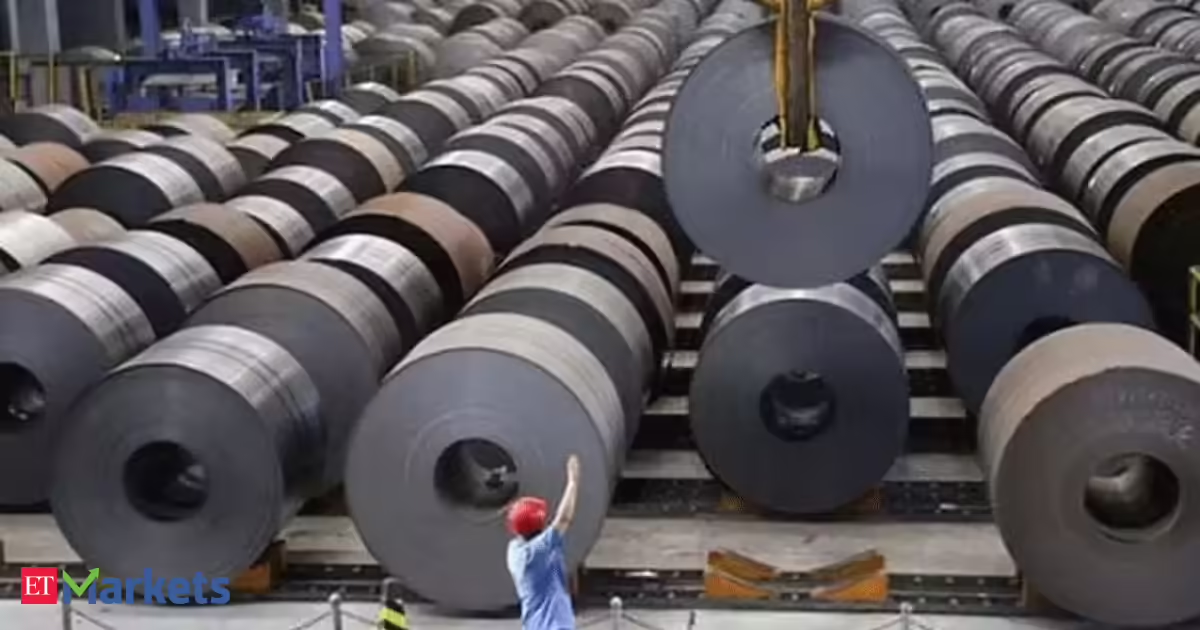
Mumbai: Metal stocks emerged among the top gainers in Thursday’s market rebound, led by aluminium manufacturers as supply disruptions following the closure of the Strait of Hormuz – a key transit route off Iran’s coast used to ship oil, gas, and other products from the Gulf region- amid the West Asia conflict are seen pushing up prices.

National Aluminium Co jumped 6.6% Thursday. Hindalco, Lloyds Metals, and Welspun Corp gained over 3% each, while JSW Steel and NMDC rose 2.9% and 2.4%, respectively.

The Nifty Metal Index gained 2.3%, while the benchmark Nifty rose 1.2% on Thursday. All constituents of the metal index ended higher except Steel Authority of India.

“Base metal prices have risen after the closure of the Strait of Hormuz, which implies supply constraints,” said Jateen Trivedi, VP Research Analyst – Commodity and Currency, LKP Securities. “Shipments through this sea route have declined, and the situation remains critical.”

Advertisement
Supplies Go Cold, Metals Blow HotAgencies

Stocks gain upto 6% led by aluminium players; Any rally to be violent & volatile, warn analysts

West Asia accounts for around 8% of global aluminium capacity. It is heavily reliant on the Strait of Hormuz for both metal exports and alumina imports, with key producers, including Saudi Arabia, the UAE and Bahrain, according to ING.


The closure of Qatalum’s aluminium mine operations in Qatar has been a key concern over potential supply shortages. Given the widening West Asia conflict, Aluminium Bahrain, which runs one of the world’s largest smelters, warned customers on Wednesday that it had halted shipments, stoking supply concerns, according to a Reuters report.
“This has played out during the Russia-Ukraine war in 2022 when Russian mines were closed due to the conflict and sanctions,” said Trivedi.Aluminium prices rose nearly 1% on Thursday but later erased gains to trade 0.8% lower. So far in March, base metal prices have jumped 5.2%

“Higher aluminium prices indicate improved realisations and translate into better earnings for these companies, which has boosted share prices,” said Vyom Chheda, Research Analyst, StoxBox. Although aluminium prices have moved higher in the last couple of sessions, bearish investor sentiment over the past two sessions outweighed the gains expected from higher base metal prices, Chheda said.

Over the past month, the Nifty Metal Index has climbed 1.1%, while the benchmark Nifty has dropped 3.4%. Trivedi said aluminium prices are expected to move in the broad range of $3100–$3500 in the near term, with sharp swings anticipated.

“Metal stocks are expected to inch higher; however, the rally is expected to be violent and volatile,” said Trivedi, whose top picks are Hindalco and Nalco. If Tata Steel and JSW Steel fall 5–10%, they are also attractive bets, said Trivedi. In 2026, the Nifty Metal Index has surged 7.1%, while the benchmark Nifty has tumbled 5.3%. “The rally in metal stocks is expected to continue as demand remains robust and supply is expected to remain capped in the near term,” said Chheda. “Hindustan Zinc and Nalco are the top bets in the sector,” he said.

Advertisement
Continue Reading

Business

Vor Biopharma Inc. (VOR) Presents at TD Cowen 46th Annual Health Care Conference Transcript

Published

on

OneWater Marine Inc. (ONEW) Q1 2026 Earnings Call Transcript

Conference Call Participants

Yaron Werber – TD Cowen, Research Division

Presentation

Advertisement

Yaron Werber
TD Cowen, Research Division

Okay. Well, good morning, everybody, and thank you so much for joining us for the 46th Annual TD Cowen Healthcare Conference. I’m Yaron Werber from the biotech team, and it’s really a great pleasure to have with us today Vor Therapeutics and Jean-Paul Kress, the Chief Executive Officer.

Vor telitacicept is a BAFF/APRIL inhibitor with really promising data in both Phase III in gMG and Sjögren’s. The gMG data is going to come midyear and first patient in for the Phase III global Sjögren’s study is going to be by the end of the first half of this year. We’ve written extensively about both opportunities. gMG looks really promising based on the data, and we’re equally to, frankly, even more excited about Sjögren’s, which is frankly a big white space.

So Jean-Paul, thanks so much for joining us. We appreciate it. We’ll do a presentation and then Q&A.

Advertisement

Jean-Paul Kress
Chairman & CEO

Thank you, Yaron, and good morning, everyone.

Advertisement

Yaron Werber
TD Cowen, Research Division

Very pleased to be here and to update you — presentation. Just trying to retreat the slides. So very pleased to be here and to tell you about our progress at Vor Bio. Thank you. I’ll be making forward-looking statements during this presentation. This is our disclosure slide.

At Vor, our ambition is to significantly improve the standard of care in autoimmune disease. And for doing that, in 2025, in June, we in-licensed one of the most exciting opportunities in autoimmune, a late-stage asset called telitacicept. Telitacicept comes from the China biotech innovation engine. It’s RemeGen, our partner there, who has

Advertisement
Continue Reading

Business

Apple Unveils Affordable MacBook Neo, iPhone 17e and M5-Powered Laptops

Published

on

Apple's iPhone 18 Pro Max

Apple kicked off March 2026 with a flurry of announcements over three days, revealing a lineup of more accessible devices alongside performance upgrades for professionals and creators. The week-long push, culminating in in-person “Special Apple Experience” sessions in New York, London and Shanghai on March 4, delivered seven new products aimed at broadening appeal while advancing on-device AI capabilities.

iPhone 17e
iPhone 17e

The announcements began March 2 with the iPhone 17e, a refreshed entry-level smartphone starting at $599. It features the A19 chip for faster performance, doubled base storage of 256GB, MagSafe wireless charging support, a 48MP Fusion camera with 2x optical-quality telephoto, 4K Dolby Vision video and Ceramic Shield 2 for enhanced durability. The 6.1-inch Super Retina XDR display includes improved scratch resistance and reduced glare. Satellite connectivity for Emergency SOS, Roadside Assistance, Messages and Find My remains standard. Available in black, white and soft pink, pre-orders opened March 4 with availability starting March 11.

On March 3, Apple refreshed its tablet and MacBook lines. The iPad Air received an M4 chip upgrade, boosting power for demanding tasks and enabling fuller Apple Intelligence integration. It retains the familiar design with Wi-Fi 7 support and improved battery life.

The MacBook Air lineup adopted the M5 chip, delivering faster processing and efficiency in the popular thin-and-light form factor. Starting at $1,099 — a slight increase from prior models — the update emphasizes everyday performance with enhanced AI features.

The biggest professional leap came with new 14-inch and 16-inch MacBook Pro models equipped with M5 Pro and M5 Max chips. Apple touted breakthrough on-device AI performance — up to 4x faster than the previous generation and 8x over M1-era devices — thanks to a new CPU with the world’s fastest core, next-generation GPU with per-core Neural Accelerators and higher unified memory bandwidth. SSD speeds doubled in some configurations, with base storage at 1TB for M5 Pro and 2TB for M5 Max. Additional upgrades include N1 wireless chip for Wi-Fi 7 and Bluetooth 6, up to 24 hours of battery life, Liquid Retina XDR display with nano-texture option, Thunderbolt 5 ports, 12MP Center Stage camera, six-speaker audio and macOS Tahoe enhancements. Available in space black and silver, pre-orders began March 4 with shipping March 11.

Advertisement

The capstone arrived March 4 during the “Special Apple Experience,” where Apple introduced the MacBook Neo — a new $599 entry-level laptop powered by the A18 Pro chip originally debuted in iPhone 16 models. Positioned below the MacBook Air, the Neo targets budget-conscious users and Windows switchers with solid performance in a compact design. It launched in four colors, emphasizing affordability without major compromises on build quality or ecosystem integration. Hands-on sessions in the three cities allowed media to test the device, sparking early praise for its value proposition.

Apple also refreshed its Studio Display lineup after four years. The standard model gained updates for better color accuracy and connectivity, while a new Mini LED-equipped Studio Display XDR offers higher brightness — up to 2,000 nits — 120Hz refresh rates and pro-grade features starting around $3,299.

The week’s reveals reflect Apple’s strategy to expand accessibility amid competitive pressures in smartphones and laptops. By introducing lower-price options like the iPhone 17e and MacBook Neo, the company aims to capture more first-time buyers and budget segments while reinforcing premium tiers with M5 advancements. Apple Intelligence features, now more deeply integrated across devices, received subtle boosts through faster silicon.

Pre-orders for most products opened March 4, with general availability March 11 across more than 70 countries and regions. Analysts noted strong early demand, particularly for the Neo and iPhone 17e, as consumers seek value in a high-inflation environment.

Advertisement

The March blitz contrasts with a quieter start to 2026 following the AirTag 2 launch in January. It positions Apple for a robust year, with further updates expected at WWDC in June. The focus on affordability and AI performance underscores efforts to maintain ecosystem loyalty while attracting new users.

As devices roll out, attention turns to real-world reviews and sales figures. Early indications suggest the strategy resonates, blending innovation with accessibility in a competitive tech landscape.

Advertisement
Continue Reading

Business

Asian Currencies Slide as Iran Conflict Escalates

Published

on

Asian Currencies Slide as Iran Conflict Escalates

Bangkok, March 6, 2026 — Rising tensions between the U.S., Israel, and Iran have rattled Asian financial markets, sending regional currencies and stocks sharply lower while oil prices surged.

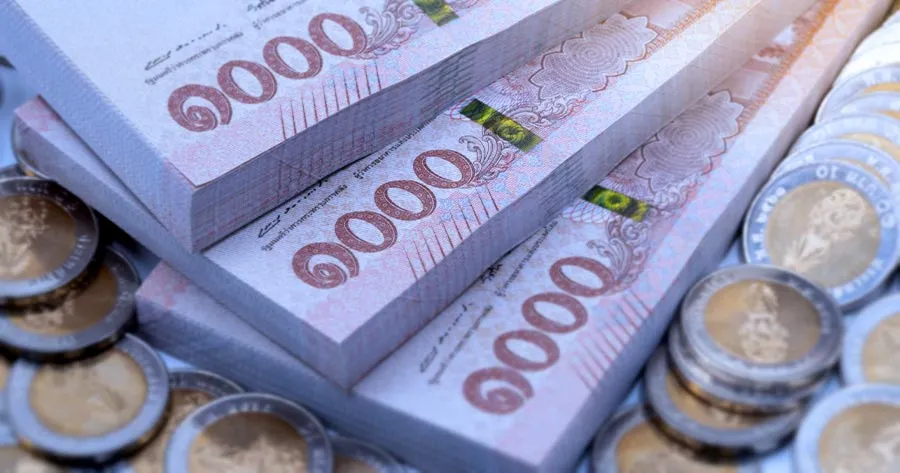
  • Currency Pressure: The South Korean won briefly weakened past 1,500 per dollar for the first time since 2009. Japan’s yen fell nearly 1%, undermining its traditional safe-haven appeal. Other regional currencies, including the Singapore dollar, Thai baht, Philippine peso, Indonesian rupiah, and Malaysian ringgit, also faced selling pressure.

  • Equity Markets: Japan’s Nikkei dropped more than 700 points in a single session, extending losses of over 3,300 points compared to last week. South Korea’s KOSPI and Australia’s benchmark index also declined, reflecting investor unease.
  • Oil Surge: The closure of the Strait of Hormuz pushed Brent crude above $80 per barrel, nearly 20% higher than last week, intensifying inflation concerns across Asia.

Investor Flight to Safe-Haven Assets

Investors moved into safe-haven assets such as the U.S. dollar, gold, and Swiss franc. Bond yields rose above 4% as markets priced in higher inflation risks. This shift in investor sentiment reflects growing concerns over economic uncertainty and potential volatility in equity markets. Meanwhile, central banks face increasing pressure to address inflationary pressures, which could further influence monetary policy decisions and market dynamics.

Economic Outlook

Analysts warn that import-dependent economies — including Japan, South Korea, Taiwan, Singapore, and Hong Kong — are particularly vulnerable to rising energy costs. Central banks across Asia face a policy dilemma: balancing inflationary pressures with slowing growth. This challenge is further compounded by geopolitical tensions and supply chain disruptions, which exacerbate inflationary trends. Policymakers are tasked with implementing strategies that mitigate economic strain while ensuring long-term stability. Some nations may resort to subsidies or alternative energy investments, but such measures come with fiscal trade-offs that could strain public finances.

Advertisement
Continue Reading

Business

China Lowers GDP Growth Target for 2026

Published

on

China Lowers GDP Growth Target for 2026

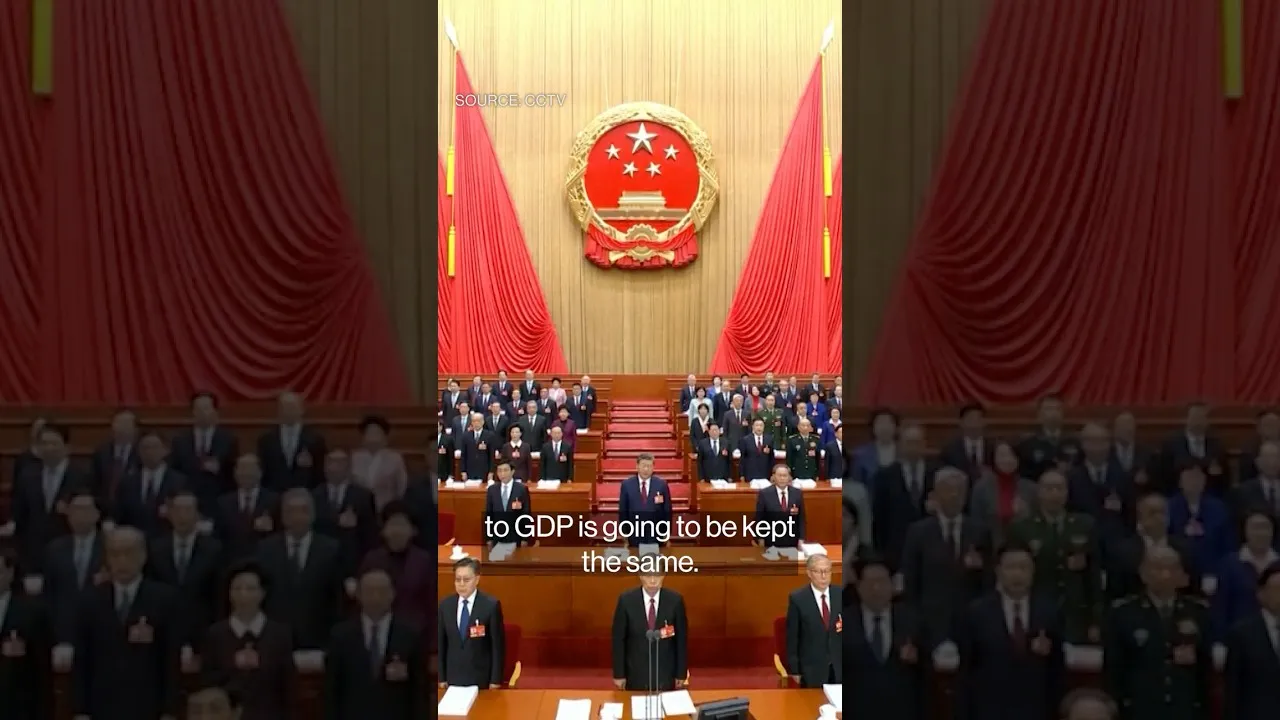
China has announced its most modest growth target in over 30 years, aiming for 4.5% to 5% this year. The cautious goal reflects economic uncertainties, including global tensions and domestic challenges. Authorities are balancing stimulus measures with risk management, signaling a pragmatic approach to sustaining economic stability amidst ongoing uncertainties.


China has announced a reduction in its GDP growth target for 2026, signaling a shift toward more sustainable and balanced economic development. The new target reflects cautious optimism as the country navigates ongoing global uncertainties, such as supply chain disruptions and geopolitical tensions. By lowering its growth expectations, Beijing aims to prioritize quality over quantity, focusing on innovation, environmental protection, and social stability.

This adjustment indicates China’s recognition of the challenges posed by the transition away from export-driven growth to domestic consumption and technological advancement. Experts suggest that a more modest target will help manage market expectations and reduce economic volatility. It also aligns with the country’s broader goals of building a resilient economy capable of long-term sustainable growth.

Advertisement

Overall, China’s decision to soften its GDP growth target demonstrates a strategic approach to economic planning. By emphasizing stability and structural reforms, the country hopes to ensure steady progress without overextending its resources. This move signals a mature phase of development, prioritizing resilience over aggressive expansion.

source

Advertisement
Continue Reading

Trending

Copyright © 2025