Kayleigh Mckenna flew to Turkey for a nose job to fix her deviated septum
A mum is warning people not to get surgery in Turkey. It comes after a ‘botched’ £4,500 op left her with a ‘piggified’ nose that she said doesn’t work.
Advertisement
Kayleigh Mckenna flew to Turkey for a nose job to fix her deviated septum which she was ‘massively insecure’ about and a breast reduction because it was ‘massively cheaper’ than in the UK. The 35 year old says she came across a clinic online and ‘thought she’d done all the right research’.
However, the surgery in October 2024, which was meant to last around seven hours, allegedly took ten and she left ‘screaming in pain’ afterwards, before she said she developed blood circulation issues in her breasts. Days later, she says her left nostril was ‘completely blocked up’ and she says the surgeon had to remove a blood clot and take out her splints a day earlier than planned.
After returning home, she says she was ‘devastated’ when doctors took blood tests and a scan revealed that her septum was still deviated. The mum of three said she was forced to visit a UK clinic in December 2024 to get her stitches removed as they were causing sinus infections.
However, more than a year on, she says she’s been left feeling ‘piggified’ with a ‘collapsed and wonky’ nostril that is ‘non-functional’ and says she is forced to buy nasal spray every week just to be able to breathe.
Advertisement
Jessica shared photos of what she says happened to her. One shows Jessica illustrating how she says she has to pull her nostril to the side as it is ‘the only way she can breathe properly’.
Now she says she has to decide whether to fork out £9,000 for a private op or risk minor surgery on the NHS that might not help. Jessica says she ‘regrets’ the op and warns others against getting procedures done abroad.
Jessica, a maternity healthcare support worker who lives in Swindon, Wiltshire, said: “I’m absolutely devastated and traumatised. They’ve completely botched my nose and it’s now non-functional.
Advertisement
“I wanted the septum corrected but I also wanted the look to be different. It’s something I’ve never liked. I’ve been massively insecure about it and I thought it’d be a nice confidence boost. I was due to get it fixed in the UK but obviously the wait list was quite long. At the same time I went to Turkey I had a breast reduction as I thought I’d just kill two birds with one stone.
“It was massively cheaper than the UK. I thought I’d done all the right research. I checked the surgeon out and looked at reviews. Nothing could change my mind so I booked and paid the deposit.”
Jessica said she booked the procedures over WhatsApp and was told she would be able to return home after six days.
However, after arriving in Turkey, she said the consultant said she needed to stay for an extra day but she couldn’t change her flights. After the surgery, she says she developed blood circulation issues in her right breast and says the surgeon was forced to remove a blood clot in her left nostril, which she says was preventing her from breathing.
Advertisement
Jessica said: “When I got into the operating room it was so scary. It was the scariest thing I’ve ever done. My husband was in the hotel room waiting for me the whole time. He actually thought I’d died or something.
“When I came out of theatre eventually I was screaming in pain. Every time I tried to move my leg it was causing me intense pain. I was so worried. One of my hands swelled up and I felt really dizzy and that the room was spinning and I was hallucinating.
“[A couple of days later] all I remember saying to [the surgeon] was ‘I can’t breathe out of my nose’. It felt worse and completely blocked up on one side. He got the blood clot out of the nostril and because he knew I was flying home a day earlier he had to take the splints out a day early.
“Really that should’ve probably been left in another day. When he pulled the splints out of each nostril I remember his assistant said to him ‘too soon’. From then I still had a plaster on my nose and I was still struggling with the breathing side of things more.”
Advertisement
After flying back home she said she went to hospital days later where she says she was given blood thinners. She says a scan found that her nose was still deviated. Despite messaging the Turkish aftercare team to complain she claims she was just told to wear nasal retainers while it healed.
She says she was forced to visit a UK clinic in December to have stitches in her nostril and breasts removed after she kept getting sinus infections. She says ear, nose and throat (ENT) surgeons have now declared her nose as ‘non-functional’ and she says she is forced to buy nasal spray every week to be able to breathe.
Jessica said: “Now we’re a year and a bit on and I’ve been seen by ENT here a couple of times now and they’ve said my nose is non-functional and basically collapsed inside. I regret having surgery. It’s affecting my mental health and confidence when I look in the mirror. When I first had it done I was crying every single day.
“It feels like they’ve just done a quick fix. It feels like they haven’t touched the inner part where it was deviated. They’ve just done something to the end of it and made it go up slightly and sort of piggified, which has not done anything to the function of it and if anything made it worse.
Advertisement
“It looks collapsed and completely different to the other one. My nose in pictures looks slightly wonky. To breathe properly I have to pull my nostril to one side and I can breathe better.
“I’m having to buy nasal spray every week, which is a cost I shouldn’t have to do. Sometimes my nose can be continuously dripping or it’s completely blocked up so I can’t breathe.
“I still have to sleep with the plastic retainers every night and if I don’t sleep with them in the left nostril sticks to my nose so it completely shuts. I could stop breathing in my sleep. In the mornings when I wake up my nose is blocked but nothing can come out. I have to try to blow it.
“Where the left side is slightly smaller in the nose it’s very hard getting anything up there to clean my nose out which is why I have to use the spray.”
Advertisement
Jessica claims the Turkish clinic is refusing to send her medical records over and despite them offering to do another surgery she vows to never go back. Now she urges people to ‘pay that extra’ for plastic surgery to avoid getting it done abroad.
Jessica said: “It makes me feel like I’d never go to Turkey again. I messaged the clinic saying I’m not happy and I will be taking this further. I’ve got a right to my medical records form when the surgery was done and they’re now ignoring me.
“I said ‘I don’t want to come back, I’ve lost complete trust in you guys and there’s no way I’d come back’. Even if I did, I certainly shouldn’t have to pay for anything.
“If you want something done, pay that extra and get it done in your own country.”
The UK Health Security Agency (UKHSA) has issued an alert to parents over an illness that ‘spreads faster than the common cold’ and is ‘a lot more serious’.
Advertisement
In a post on X, formerly Twitter, it said: “Remember believing the wildest playground rumours? Sadly, measles spreads even faster than the gossip. Keep your child protected by staying up to date with their vaccines.”
The update continues: “Playground rumours spread fast, but playground illnesses spread faster. Illnesses like measles can spread a lot faster than the common cold, and are a lot more serious.
“Make sure your child is up to date with their vaccines.” Initial symptoms of measles include a runny or blocked nose, a high temperature, a cough, sneezing, and red, sore, watery eyes.
Content cannot be displayed without consent
A rash typically emerges a few days afterwards, beginning on the face and behind the ears before spreading across the rest of the body. The rash’s spots are occasionally raised and join together to form blotchy patches, and they’re not usually itchy.
Advertisement
The rash appears brown or red on white skin and may be more difficult to spot on brown or black skin. NHS guidance adds: “It’s unlikely to be measles if you’ve had both doses of the MMRV or MMR vaccine or you’ve had measles before.”
Request an urgent GP appointment or contact NHS 111 if:
you suspect you or your child may have measles
your child is under a year old and has come into contact with someone who has measles
you’ve been in close contact with someone who has measles and you’re pregnant or have a weakened immune system
you or your child have not had measles or two doses of either the MMRV or MMR vaccine and you (or your child) have been in close contact with someone with measles
you or your child have a high temperature that has not come down after taking paracetamol or ibuprofen
you or your child have difficulty breathing – you may feel more short of breath than usual
your baby or young child is not feeding well, or taking less feeds or fluids than usual
you or your child are peeing less than usual (or your baby has fewer wet nappies)
you or your child feels very unwell, or you’re worried something is seriously wrong
Measles can spread to others easily. Call your GP surgery before attending.
They may suggest a phone consultation or make arrangements for you to visit a section of the surgery where you’re kept separate from others.
Iran’s foreign ministry said it would defend its homeland as the Islamic Revolutionary Guard Corps initiated counterattacks, launching drones and missiles at Israel. Further strikes were launched at US military installations in countries including Bahrain, Kuwait, UAE and Qatar.
The spiralling conflict has now spread beyond the region, dragging in Azerbaijan, Sri Lanka, and Turkey amid fears that the major conflict could drag on for weeks.
It follows weeks of pressure from Trump on Tehran to make a deal to constrain its nuclear programme. In the lead-up to the strikes, Washington built up a significant fleet of warships near Iran.
Advertisement
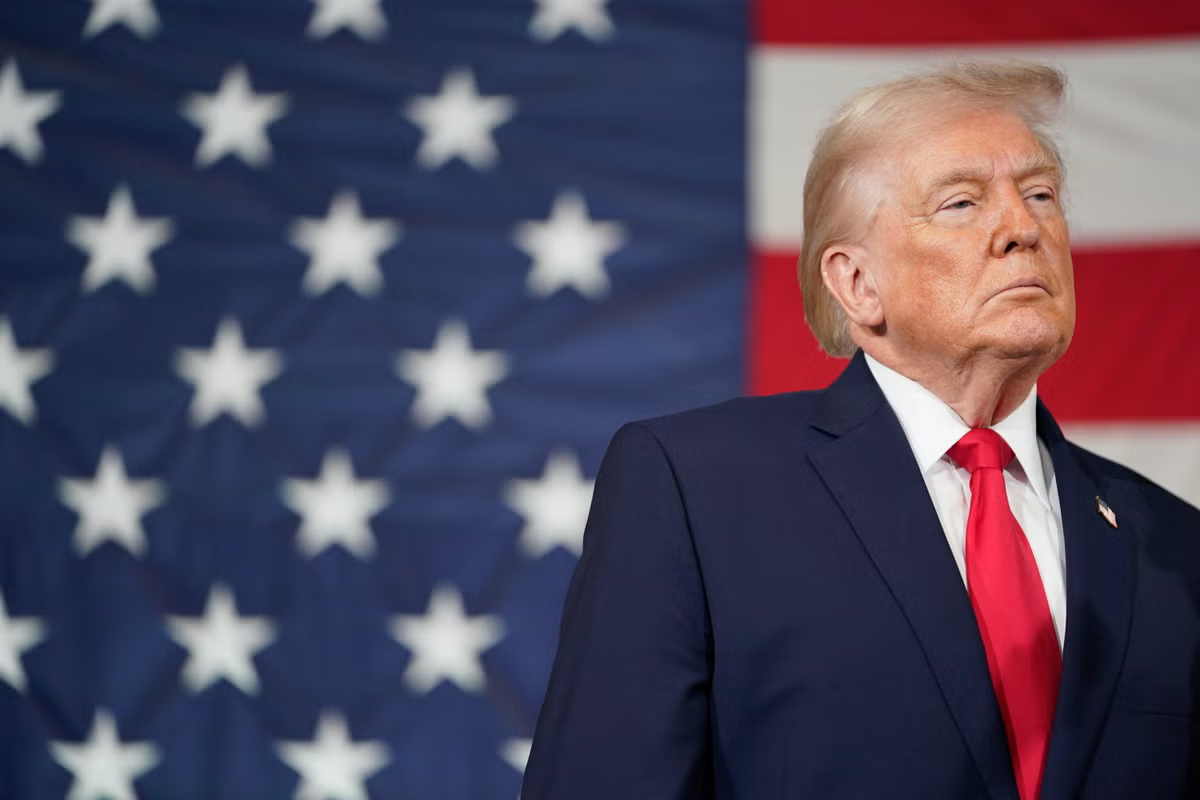
The US and Israel attacked Iran Saturday in what Donald Trump said was an operation to remove the threat of Iran developing a nuclear weapon (PA Wire)
The aircraft carrier USS Abraham Lincoln and three guided-missile destroyers arrived in January to bolster the number of warships in the region. The world’s largest aircraft carrier, the USS Gerald R Ford, and four accompanying destroyers were also dispatched from the Caribbean.
28 Feb: Ayatollah’s compound was one of the first targets
Advertisement
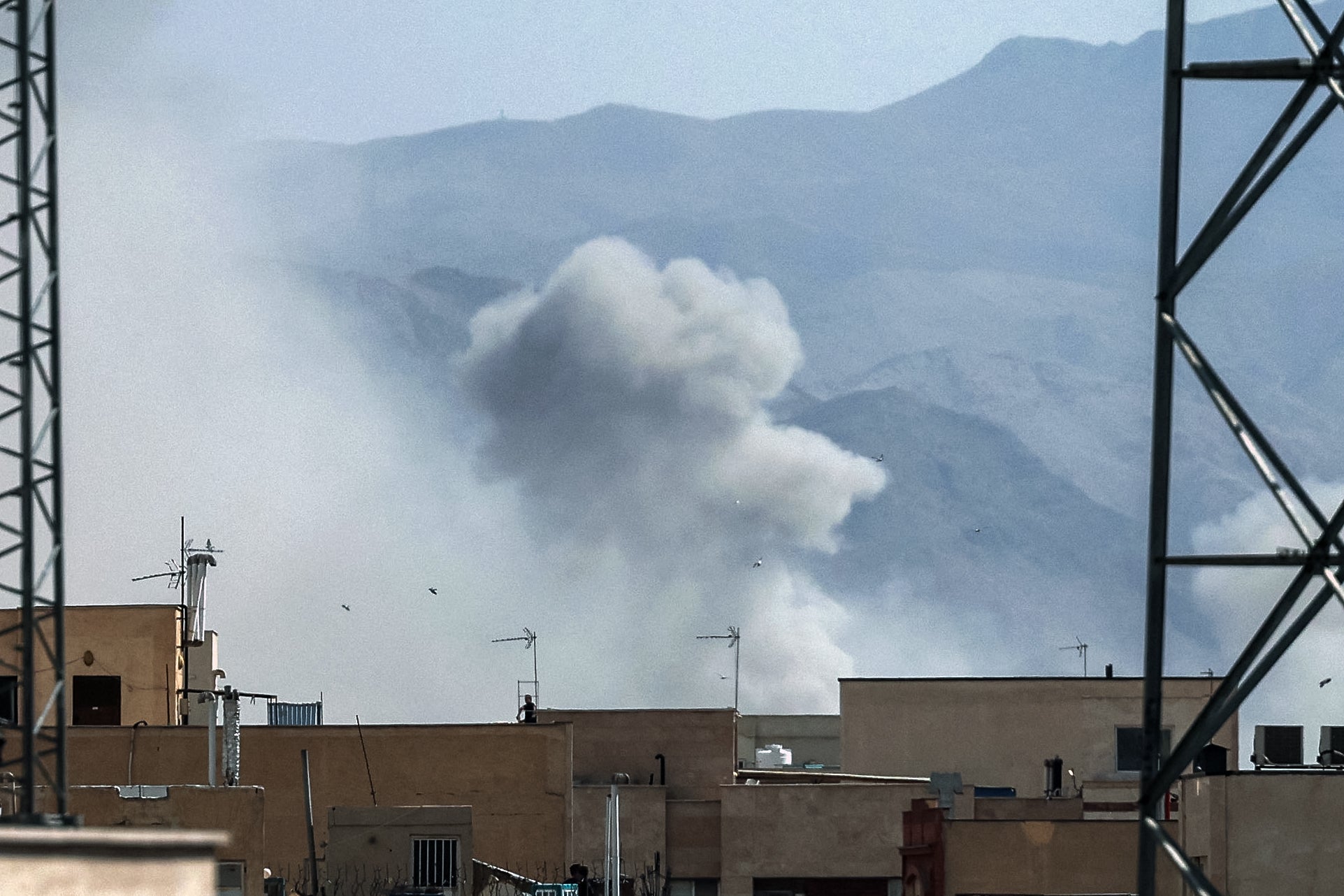
Israel announced it had launched an attack on Iran shortly after explosions were heard in Tehran on Saturday morning. One of the first strikes hit near the offices of Supreme Leader Ayatollah Ali Khamenei. It wasn’t immediately clear where Khamenei was at the time, as he hadn’t been seen for days.
Iranian foreign minister Abbas Araghchi told NBC Newsthat Khamenei and president Masoud Pezeshkian were alive “as far as I know” – though President Trump later said the Ayatollah had died in the attacks. This was then confirmed by Iran state media later on.
Israeli defence minister Israel Katz said the attacks had been conducted “to remove threats”. Sirens were heard across Israel to warn the public about possible incoming missile strikes.
Advertisement
The strikes came after Trump pressured Tehran for a deal to constrain its nuclear programme (AFP via Getty)
Iran strikes back at Israel and US bases
Later on Saturday, Bahrain said a missile attack targeted the US Navy’s 5th Fleet headquarters in the island kingdom. Witnesses heard sirens and explosions in Kuwait, home to US Army Central. Explosions could also be heard in Qatar, where Al Udeid Air Base hosts thousands of service members.
Iraq and the United Arab Emirates closed their airspace, and sirens sounded in Jordan.
An apartment building in northern Israel was damaged and shrapnel fell in multiple sites, according to media and police. But Lieutenant Colonel Nadav Shoshani said there had been no significant hits in Israel and rescue services said there were no injuries reported from missile barrages across the country.
Advertisement
Iranian-backed Houthis in Yemen, meanwhile, have vowed to resume attacks on Red Sea shipping routes and on Israel, according to two senior Houthi officials who spoke on condition of anonymity.
28 Feb: Trump tells Iranians to topple their government
It took over an hour for Trump to make an official announcement on the US involvement in what he termed “major combat operations”.
In an eight-minute video on social media, Trump indicated the US was striking for reasons far beyond the nuclear programme, listing grievances stretching back to the beginning of the Islamic Republic following a revolution in 1979 that turned Iran from one of America’s closest allies in the Middle East into a fierce foe.
Advertisement
Trump told Iranians to take cover but urged them to later rise up and topple the Islamic leadership.
“When we are finished, take over your government,” Trump said. “It will be yours to take. This will be probably your only chance for generations.”
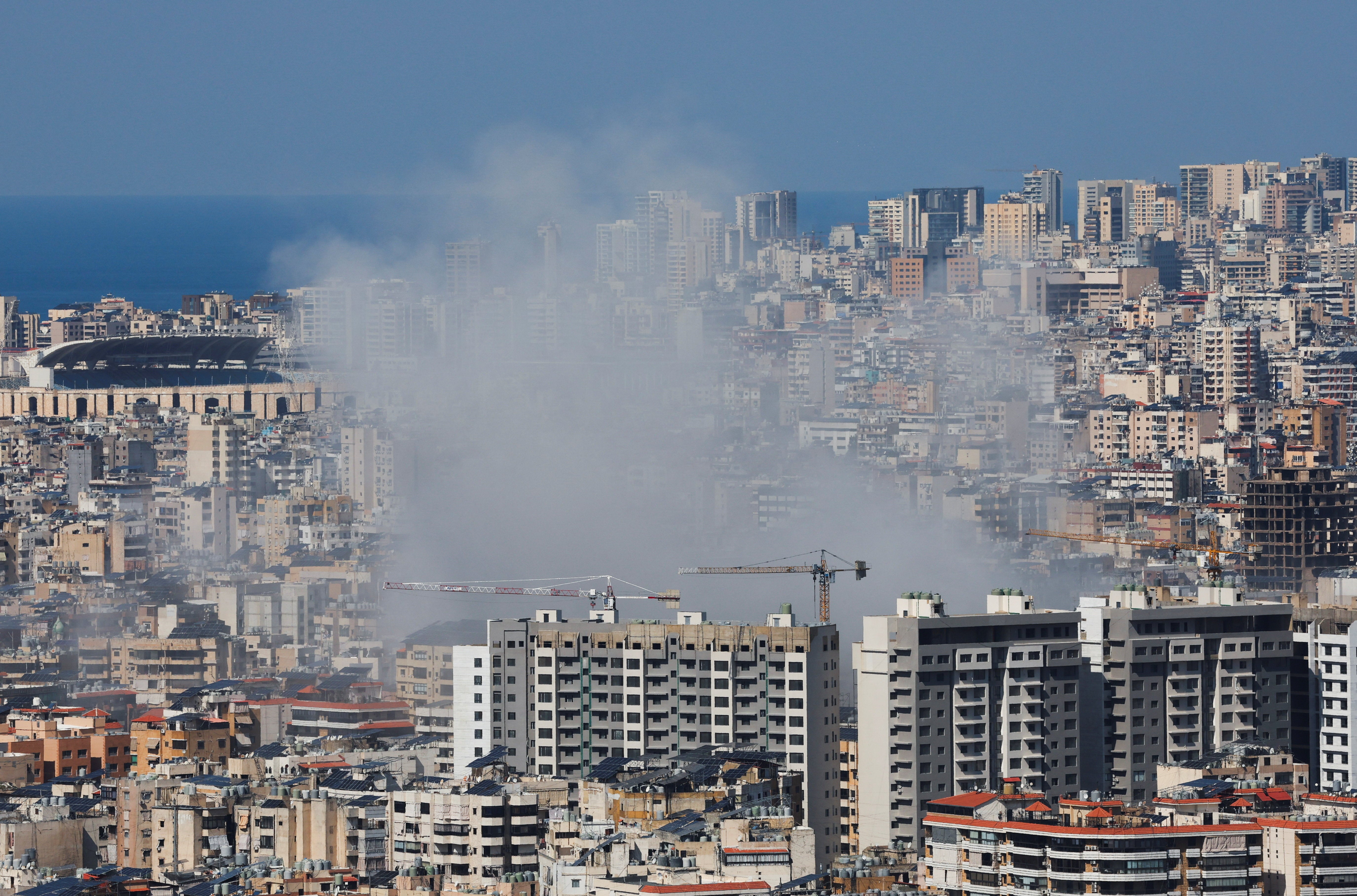
Smoke rises after an Israeli strike on Beirut’s southern suburbs, following an escalation between Hezbollah and Israel on Monday (Reuters)
28 Feb: Fighting grounds flights and disrupts commercial air travel
Advertisement
The fighting has disrupted air travel in the region.
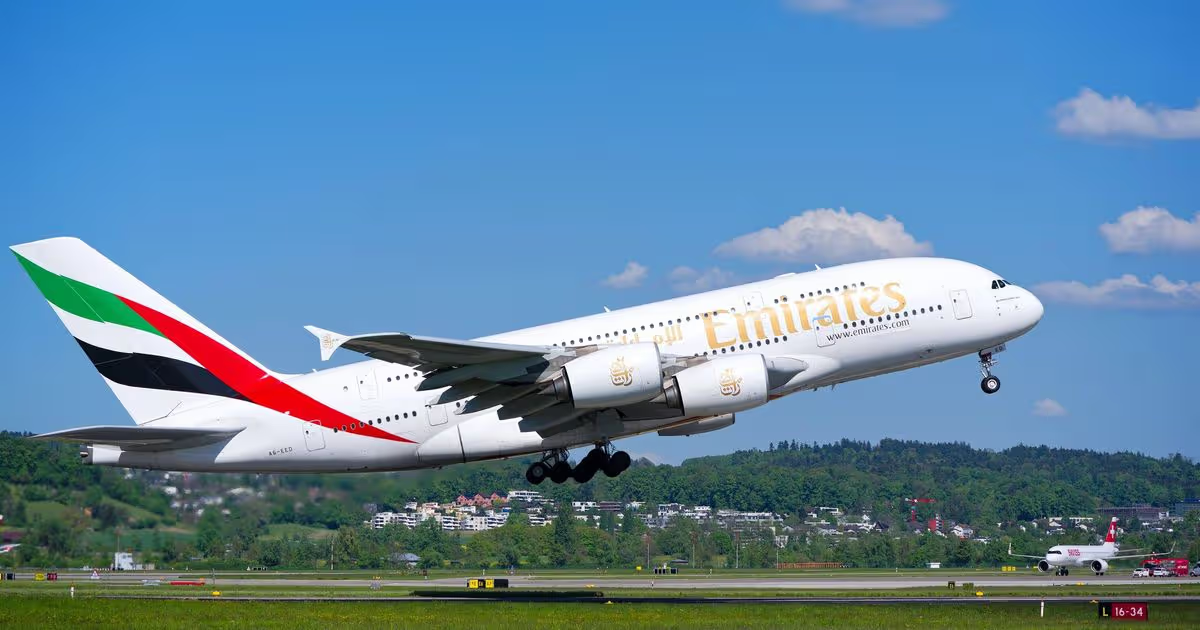
Israel and the UAE, home to both the long-haul carriers Emirates and Etihad, closed their airspace Saturday. Qatar Airways Group said it has temporarily cancelled flights to and from Doha because Qatari airspace also was closed.
Planes en route to Israel were rerouted to other airports.
Virgin Atlantic cancelled its flight from London’s Heathrow Airport to Dubai and said it would avoid flying over Iraq, meaning flights to and from India, the Maldives, Dubai and Riyadh could take slightly longer. Virgin Atlantic said all flights would carry appropriate fuel in case they need to reroute on short notice.
Advertisement
Turkish Airlines said on X that flights to Lebanon, Syria, Iraq, Iran and Jordan will be suspended until Monday and flights to Qatar, Kuwait, Bahrain, the United Arab Emirates and Oman will be suspended on Saturday.
Dutch airline KLM previously said it was suspending Tel Aviv flights starting Sunday.
1 March: UK gives US permission to use RAF bases
Meanwhile, at the end of the weekend, Sir Keir Starmer dramatically changed his mind over giving the Americans permission to use RAF bases in Cyprus to tackle the growing threat from Iran.
Advertisement
In a late statement on Sunday evening, the prime minister insisted he was giving permission for the “limited specific defensive purpose” of defending UK and US allies across the Middle East as Iran continues to lash out.
It follows defence secretary John Healey revealing that two Iranian missiles were aimed in the direction of Cyprus where the UK has bases.
Mr Trump later said he was disappointed in the delay over the decision from Sir Keir.
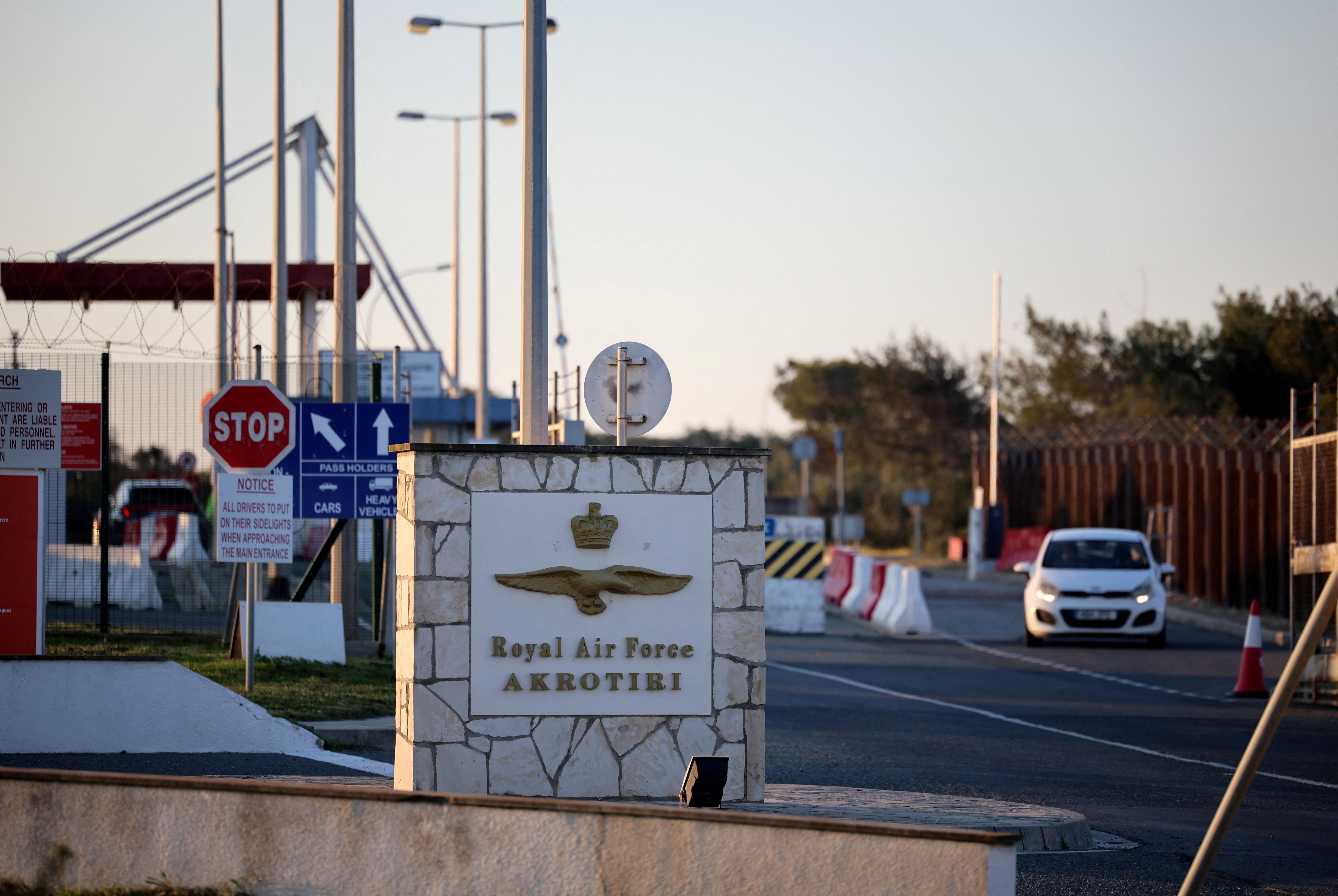
A drone hit the British RAF Akrotiri base in Cyprus on Sunday with two more intercepted on Monday. Sir Keir Starmer said this was “not in response to any decision that we have taken” but was launched before Britain’s announcement that it would allow America to use its bases.
Advertisement
Speaking in the House of Commons on Monday afternoon, Sir Keir defended the UK’s “deliberate” decision not to join in with the wave of strikes by the US and Israel on Iran at the weekend, saying: “It is my duty to judge what is in Britain’s national interest. That is what I’ve done, and I stand by it.”
2 March: War widens to include Tehran-backed militias
Iran and Iranian-backed militias have fired missiles at Israel and Arab states, reportedly hitting the American embassy compound in Kuwait, while Israel and the United States pounded targets in Iran as the war in the Middle East expanded on Monday.
The Iranian Red Crescent Society said the US-Israeli airstrike campaign has killed 555 people so far in Iran so far.
Advertisement
As the American and Israeli airstrikes continued, top Iranian security official Ali Larijani vowed on X that “we will not negotiate with the United States”.
Blasts were reported in Jerusalem, Dubai, Abu Dhabi in UAE, Doha in Qatar, and Manama in Bahrain as the conflict entered its third day.
The entrance of RAF Akrotiri, a British sovereign base in Cyprus, which was hit by an unmanned drone (Reuters)
2 March: US embassy ‘hit in Kuwait’ as American death toll rises
Advertisement
Smoke was seen rising from the vicinity of the US embassy in Kuwait, according to witnesses, and the US consulate urged Americans to “not come to the embassy”.
Three American troops were killed and five are seriously injured, the US military said, confirming its first casualties in the conflict. A fourth American service member was confirmed dead later on Monday.
President Trump has suggested the conflict with Iran could go on for the next four weeks after the US president earlier said that operations are “ahead of schedule”.
The chaos of the conflict was further highlighted on Monday when the US military said Kuwait had shot down three American F-15E Strike Eagles during a friendly fire incident. US Central Command said all six pilots ejected safely and are in a stable condition.
Advertisement
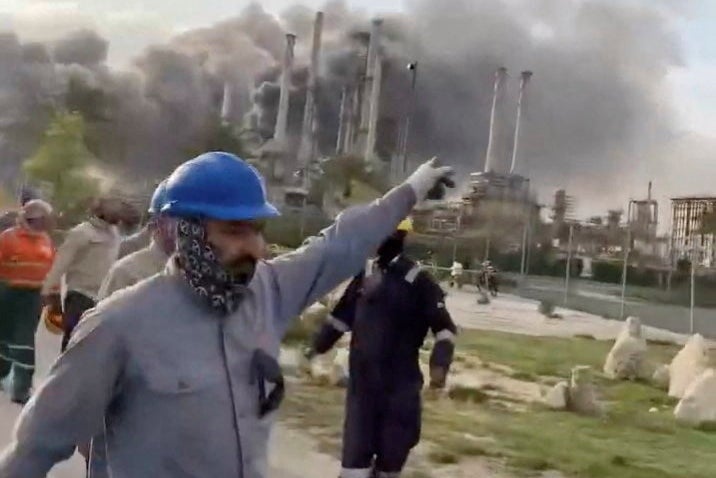
Workers evacuate the area around Saudi Aramco’s Ras Tanura oil refinery as smoke rises following a reported Iranian drone strike in Ras Tanura, Saudi Arabia, on Monday (Social media)
2 March: Israel and Lebanon’s Hezbollah exchange fire
Meanwhile, Israel launched a wave of missile and drone attacks on Hezbollah-controlled southern suburbs of Beirut in Lebanon on Monday and ordered evacuations.
Israeli defence minister Israel Katz has warned that Lebanon’s Hezbollah chief Naim Qassem is now a “target for elimination”.
Advertisement
It comes after the group fired at Israel in retaliation for killing Iran’s supreme leader.
3 March: Death toll continues to climb as fears of protracted regional war grow
The Iranian Red Crescent Society said on Tuesday the US-Israeli operation has killed at least 555 people. In Israel, where several locations were hit by Iranian missiles, 11 people were killed. Israel’s retaliatory strikes against Hezbollah killed 52 people in Lebanon. The US military has now confirmed six deaths of American service members. Three people were killed in the United Arab Emirates, and one each in Kuwait and Bahrain.
The latest death tolls come a day after US defense secretary Pete Hegseth said the conflict “is not endless” as he held the Trump administration’s first news briefing since strikes were launched on Saturday. He insisted Iran “had a gun to our head” as he defended the joint US-Israeli attacks that sparked the widening conflict, amid growing concerns it could spiral into a protracted regional war.
Advertisement
The UAE, Kuwait, Bahrain, Qatar, Jordan, Oman and Saudi Arabia are now among the nations struck in retaliatory attacks.
And president Trump warned later on Monday that the worst is yet to come. “We haven’t even started hitting them hard,” he told CNN. “The big wave hasn’t even happened. The big one is coming soon.”
Israeli prime minister Benjamin Netanyahu, meanwhile, claimed he and Mr Trump are saving the world from the threat of Iran.
The conflict is already having a global economic impact with oil prices shooting up in response to the crisis.
Advertisement
The crash of a US F-15E Strike Eagle fighter jet in Kuwait on the third day of Iranian strikes against countries in the region that host US bases (UGC)
3 March: US embassy in Saudi Arabia hit as Israel ramps up operations in Lebanon
Iran struck the US embassy in Saudi Arabia’s capital with a drone early on Tuesday as it kept hitting targets around the region. The US State Department ordered the evacuation of non-emergency personnel and family in Kuwait following the attack there, as well as Bahrain, Iraq, Qatar and Jordan as a precaution.
Meanwhile, Israel and the US continued to pound Iran with airstrikes on Tuesday, targeting nuclear facilities and missile infrastructure in particular.
Advertisement
In Lebanon, Israel launched more strikes on Hezbollah, the Iran-backed militia group, and said its soldiers are “operating in southern Lebanon”. Explosions could be heard and smoke seen in a southern suburb of Beirut.
4 March: War spreads beyond Middle East
Iran was forced to deny attacking Turkey after a ballistic missile entered the Nato country’s airspace, threatening to further spread the conflict beyond the Middle East.
It was the first time Nato air defences were used since the conflict in the Middle East began, raising significant fears of a major expansion in the war.
Advertisement
US-Israeli strikes on Iran, and Israeli strikes on Lebanon, continue into their fifth day. Images showed buildings reduced to rubble in Beirut by huge Israeli strikes, which by Wednesday had killed dozens of people.
Elsewhere, a US submarine sank an Iranian warship off Sri Lanka, killing at least 87 people.
CENTCOM said in a statement it had “struck or sunk to the bottom of the ocean” more than 20 Iranian ships, including the warship sunk off Sri Lanka in the first such action by a US submarine since World War Two.
5 March: Azerbaijan dragged into the conflict
Advertisement
As Iran, Israel and the US traded strikes for a sixth day, another country was dragged into the war.
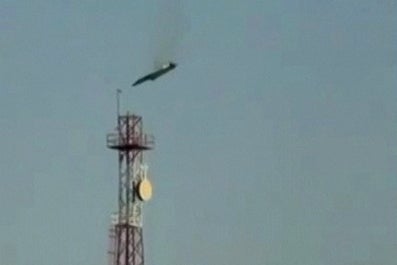
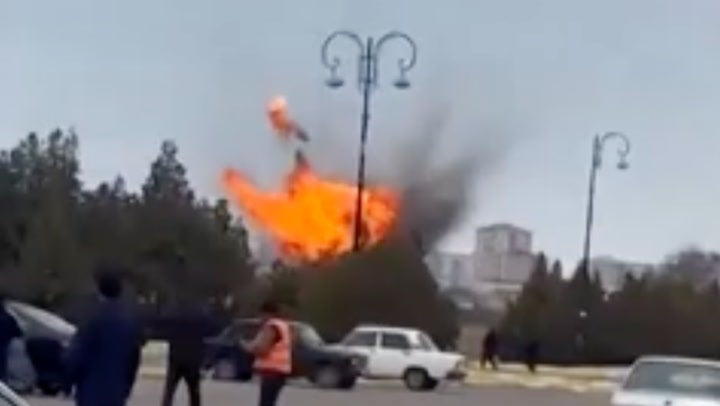
Azerbaijan accused Iran of firing drones at its territory and ordered its southern airspace closed for 12 hours. Two drones landed on an airport and near a school, and Azerbaijan’s government warned the attack would “not remain unanswered”.
A drone strikes an airport in Azerbaijan (Social media)
Meanwhile, Sri Lanka has started offloading the 208-member crew of a second Iranian vessel off its coast on Thursday, President Anura Kumara Dissanayake said, a day after Wednesday’s attack by the US on an Iranian warship.
Advertisement
In Iran, at least 1,230 people have been killed, according to the Iranian Red Crescent Society, including 175 schoolgirls and staff killed at a primary school in Minab in the country’s south on the first day of the war.
6 March: Israeli attacks on Lebanon intensify again
Israel said it has launched a “wave of airstrikes targeting Hezbollah” in Beirut’s southern suburbs, where it instructed thousands of people to evacuate.
Explosions and flashes lit up the night sky over Beirut’s southern suburbs. The Israeli military said it had carried out 26 waves of strikes overnight in the southern suburbs, saying targets included Iran-backed Hezbollah militia command centres and weapons storage facilities.
Advertisement
The Lebanese health ministry has reported 123 people have been killed and another 683 wounded as a result of Israeli attacks this week. There have been no reported fatalities in Israel as a result of Hezbollah attacks.
Meanwhile, Iranian forces said Kheibar missiles were fired toward Tel Aviv on Friday as part of the 21st wave of its “Operation True Promise 4″. In a statement, the IRGC said the wave began with a combined missile and drone operation targeting sites in the heart of Tel Aviv.
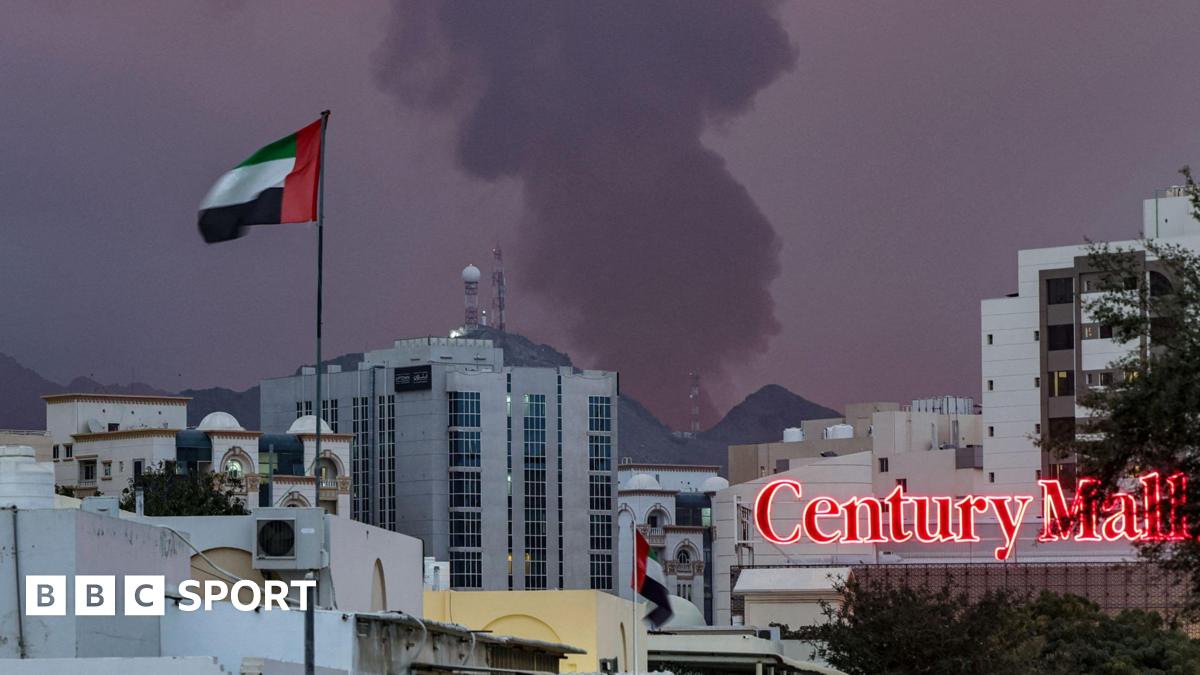
Anger among the players reached boiling point when an ATP representative sent an email informing them that a chartered flight out of the Middle East was being arranged – but would cost them $5,000 (£3,750) each.
Prize money for winning the Fujairah tournament would have been almost $9,500 (£7,100). Losing in the first-round would have been $600 (£470).
After players made the situation public, the ATP said it would cover the cost of the chartered flight, which went to Milan via a stop in Egypt.
Sharipov was not able to fly to Italy because he does not have a European visa.
Advertisement
Disembarking in Egypt was an option, but meant leaving his luggage – including the racquets, kit and equipment which are his livelihood – with no guarantee when he would be reunited with it.
The 23-year-old felt he had no option but to stay in the UAE and search for alternatives.
“The ATP knew I could not travel to Europe so I think they should have said ‘we will sort something out for you’,” Sharipov told BBC Sport.
“They did not do this. They just said ‘there is a flight that you cannot make’. That’s really bad in my view.”
Advertisement
McCabe was able to leave on Tuesday, managing to book on to the first flight back to Sydney.
“It was a bit of a shock that the ATP didn’t support us with the flights getting out of there. We were left to our own devices,” said 22-year-old McCabe.
“As soon as we heard we needed to pay five grand everyone was pulling their hair out.”
The pair say those who arranged their own flights will not be reimbursed by the ATP. They have also been told players will receive no compensation in the absence of prize money.
LONDON (AP) — London police say four men have been arrested on suspicion of aiding Iran by spying on the Jewish community.
In a statement Friday, the Metropolitan Police said the suspects, one Iranian and three dual British-Iranian nationals, were taken into custody on suspicion of assisting a foreign intelligence service. The men are suspected on spying on locations and individuals.
Police said the men, aged 22, 40, 52 and 55, were arrested at addresses in and around north London shortly after 1 a.m. and that searches are ongoing at the addresses as well as other properties nearby.
Six other men were also arrested in Harrow, west London, on suspicion of assisting an offender and have been taken into custody, the force said.
Advertisement
“We understand the public may be concerned, in particular the Jewish community, and as always, I would ask them to remain vigilant and if they see or hear anything that concerns them, then to contact us,” said Commander Helen Flanagan, who is in charge of counterterrorism policing in London.
McLaren’s Oscar Piastri topped the timesheets at the end of the first day of practice for the 2026 season, with Britain’s title favourite George Russell third fastest, just behind Mercedes team-mate Kimi Antonelli.
The pace was a reversal from the first session of the day when all four Mercedes-powered teams – Mercedes, McLaren, Alpine and Williams – struggled for some reason. A sign, perhaps, of just how sensitive and capricious these new power units can be. And how track-specific. Mercedes team principal Toto Wolff admitted FP1 had been a “difficult, challenging” session.
By the time second practice came around, Mercedes had sorted out their issues from FP1, which apparently concerned the recharging of the battery.
Advertisement
Piastri’s quickest lap of 1min19.729sec was two tenths quicker than Antonelli’s fastest lap, with Russell a further tenth behind. Ferrari’s Lewis Hamilton and Charles Leclerc, who had gone quickest in FP1, were fourth and fifth fastest, just ahead of Red Bull’s Max Verstappen.
McLaren’s reigning world champion Lando Norris endured a difficult day. Norris only managed seven laps in FP1 before retiring with a gearbox issue. And he found himself over a second off the pace of his team-mate Piastri in FP2.
At least he is not driving an Aston Martin. One day after team principal Adrian Newey admitted his drivers were worried about the possibility of “permanent nerve damage” in their fingers due to the violence of the vibrations emanating from Aston Martin’s Honda power unit, Fernando Alonso failed to make it out of the garage at all in FP1 while Lance Stroll managed just three laps.
The Aston pair fared slightly better in FP2, managing 18 and 13 laps respectively. But they were still slowest of all the drivers to set a lap, five and six seconds off Piastri’s pace respectively.
Advertisement
Newey admitted in a press conference between sessions that the team had just two “operational batteries” left for the entire weekend – the two in the cars – having brought four with them.
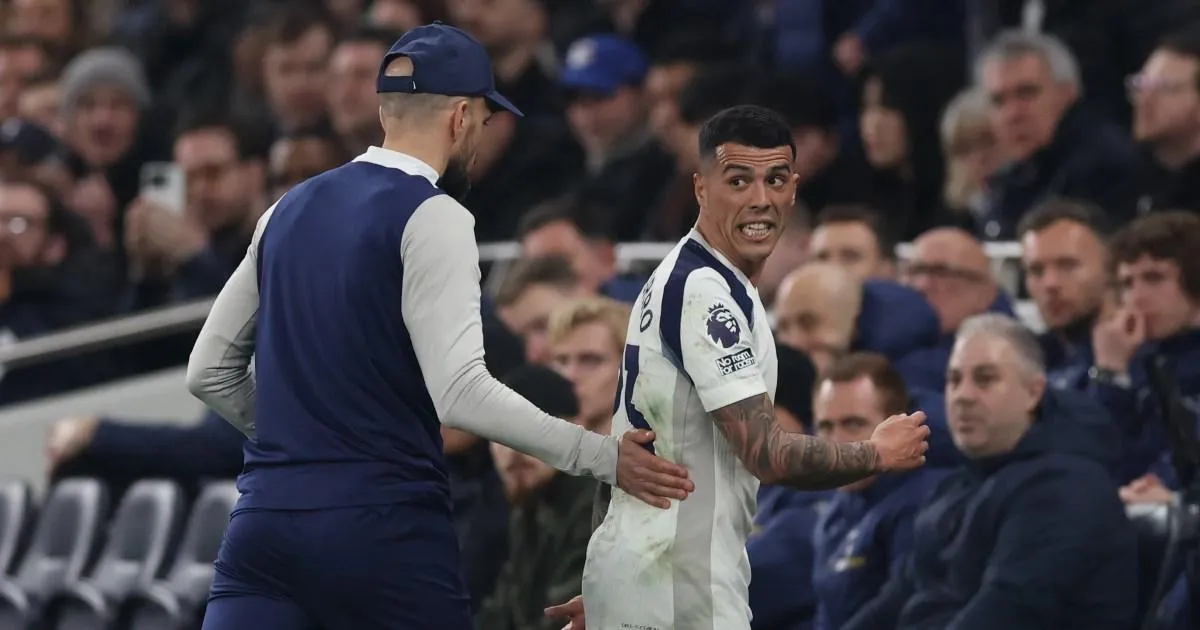
Porro came off after 73 minutes with the game effectively over (Picture: Getty)
Tottenham star Pedro Porro ‘smashed everything’ in frustration as he was subbed off in the defeat to Crystal Palace on a humiliating night for the north London club.
Home fans were left in disbelief on Thursday night as their relegation fears suddenly became very real. Spurs took the lead through Dominic Solanke but a collapse sparked by Micky van de Ven’s red card saw Palace score three times in 12 minutes.
Spurs remain without a win since the turn of the year and are on a miserable 11-match winless run – the club’s longest spell without a victory since 1935.
As Tottenham tried in vain to get back into the game, Igor Tudor brought on Xavi Simons after 73 minutes, replacing Porro, who had been wearing the captain’s armband following van de Ven’s dismissal.
Advertisement
The Spainard reacted furiously to the decision, shouting at the fourth official while ignoring Tudor on the touchline.
A member of the Tottenham backroom staff approached him to usher him towards the bench with Porro seen smacking on the seats and throwing a water bottle in the dugout before the camera cuts back to the match action.
Former goalkeeper Joe Hart, well positioned in the gantry as part of TNT Sport’s coverage saw more madness unfold, telling viewers: ‘He’s smashed everything as he’s gone onto the bench and given the fourth official a real earful.
Your football fix
Metro‘s Head of Sport James Goldman delivers punchy analysis, transfer talk and his take on the week’s biggest stories direct to your inbox every week.
Porro was seen smacking seats and throwing water bottles (Picture:Getty)
Porro had ‘a real head loss’ (Picture: Getty)
‘It’s a real head loss. He’s obviously an emotional character, there is fire that runs through him and that’s sometimes how he gets the best out of himself.
‘But you also need to control that. He’s such an important player for Tottenham now.’
Advertisement
With nine games, Tottenham are now just a point above the relegation zone in 16th ahead of Nottingham Forest and West Ham United in 17th and 18th respectively.
A huge win for West Ham at Fulham midweek closed the gap for the Hammers.
Spurs are back in action on 15 March away to Liverpool before they host Nottingham Forest in a huge relegation scrap the following week.
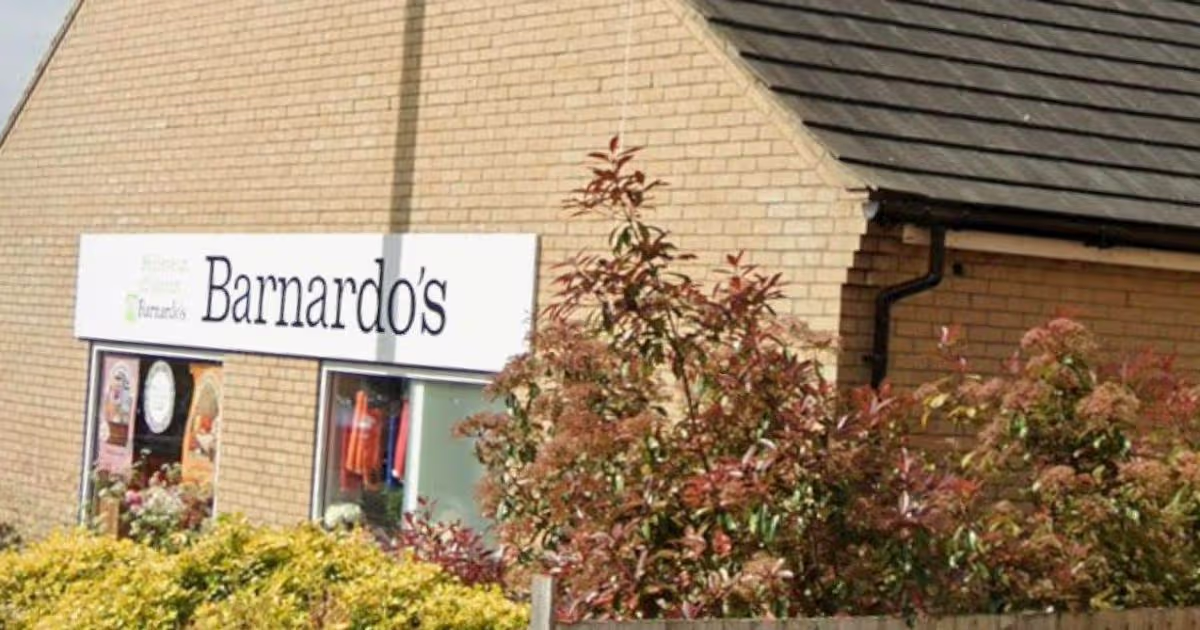
A high street shop in a Cambridgeshire town is set to close this month. The Barnardo’s branch in March has announced that it will close on March 21.
Advertisement
The team which runs the charity shop wrote in a post on Facebook: “Thank you to everyone who has supported us over the years. We have loved being part of the local community and will miss seeing you all.
“We’d love to see you in store before we close, with some great bargains available too.”
Barnardo’s has a 30 per cent off sale until it closes. The charity has more than 600 shops across the UK, with the proceeds going towards caring for vulnerable children.
March has seen a few businesses close their doors over the last few years. Clarks shoe shop and Tesco Express closed in 2024.
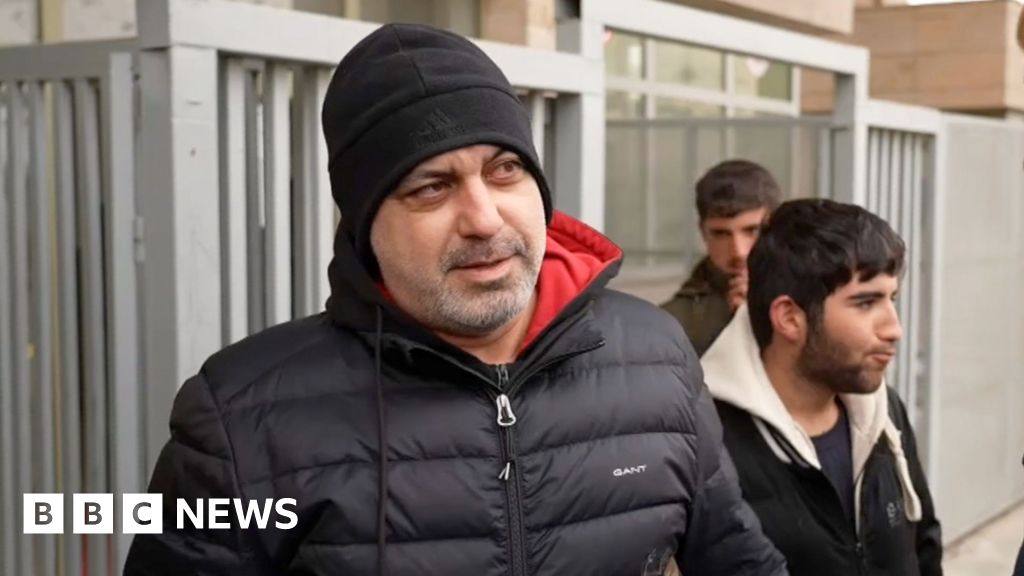
The border separating Iran and Turkey is one of the few ways journalists have been able to speak to people coming out of Iran, with those leaving telling the BBC they feel unsafe and scared.
Hundreds escaping the war are passing through that border, but a few are going back into the country.
Commander Helen Flanagan, Head of Counter Terrorism Policing London, said: “We understand the public may be concerned, in particular the Jewish community, and as always, I would ask them to remain vigilant and if they see or hear anything that concerns them, then to contact us.”
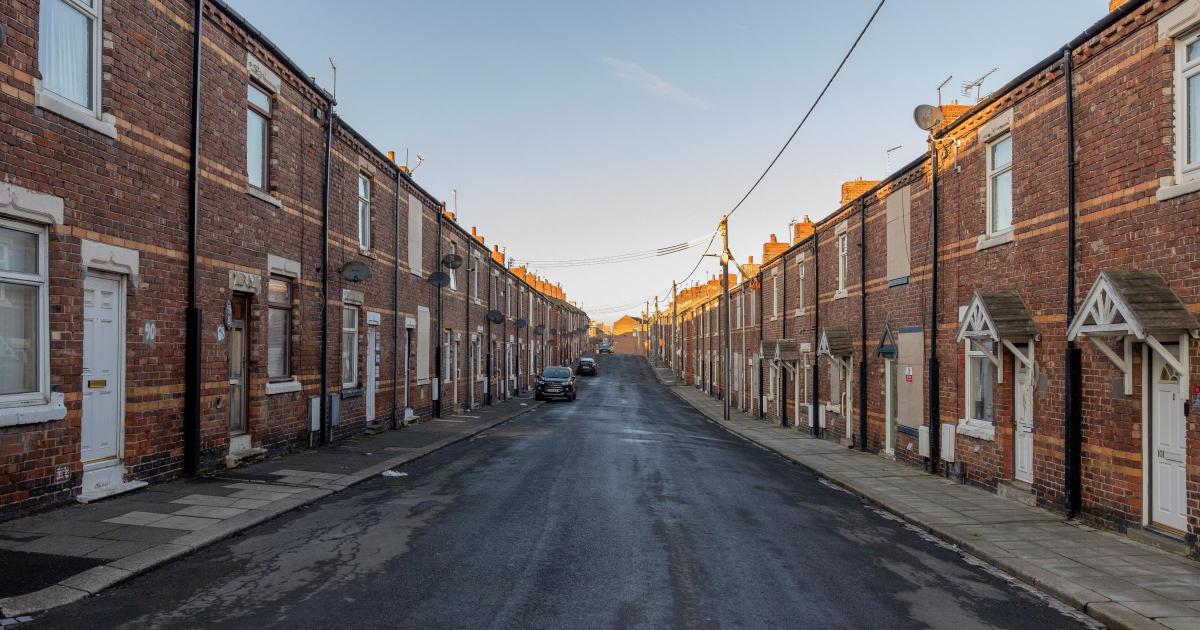
The use of a compulsory purchase order (CPO), if used, would allow the authority to buy up the land and remove a number of remaining residents along streets marked for demolition.
This comes after plans to flatten a total of 112 homes across three streets to build 105 in their place in the former mining town were given the green light in December last year.
Residents in Horden’s numbered Third and Fifth Streets opposed to the planned demolition. (Image: ANDY FUTERS)
The £10.7m plans would see Third and Fifth Street reduced to rubble and the former Fourth Street site developed into two, three, and four-bed homes and two-bed bungalows.
However, the plans were made subject to a legal challenge earlier this year by a group of Horden residents who are fiercely opposed to the plans, meaning the council have paused progress.
Advertisement
But the authority says it wants to “work with residents” to bring the development to life, and emphasised an order such as a CPO to remove residents would not be taken lightly.
Mike Allum, Durham County Council’s strategy and delivery manager, said: “We’re very ambitious about doing everything we can to make our council area a great place to live, work, visit and invest and that is why we have committed £10m, alongside the North East Combined Authority, for new housing in Horden.
“Due to a legal challenge to our planning consent, our timeline is currently on hold, but we want to deliver this housing by working with residents.
“This includes seeking to buy their properties through negotiation, compensating them and offering them support in finding new homes.
Advertisement
“Use of compulsory purchase powers would always be a last resort.”
As reported, residents in line to lose their homes due to the plans served the council with a challenge on January 23.
The council said it will “review and consider this challenge” – but a decision has not yet been reached.
One resident involved in the battle is Ray Bellingham, 68, who, alongside sister Moira, has lived in their Third Street home since they were children.
Advertisement
He is hoping the legal challenge can overturn the council’s plans in their entirety, as the siblings “don’t want to move”.
He told The Northern Echo earlier this year: “It has been non-stop all the time.
“If other people were in the same position as us, they would realise what pressure we are under. We are trying to save our homes.
“Other people are not in the position of having bulldozers take their homes away from them.”
Advertisement
Moira previously told the Echo: “They can send the bulldozer straight through the house and I’ll still be stood there.