

Crypto World
Strategic Roadmap to Successful Metaverse Gaming Platform Development

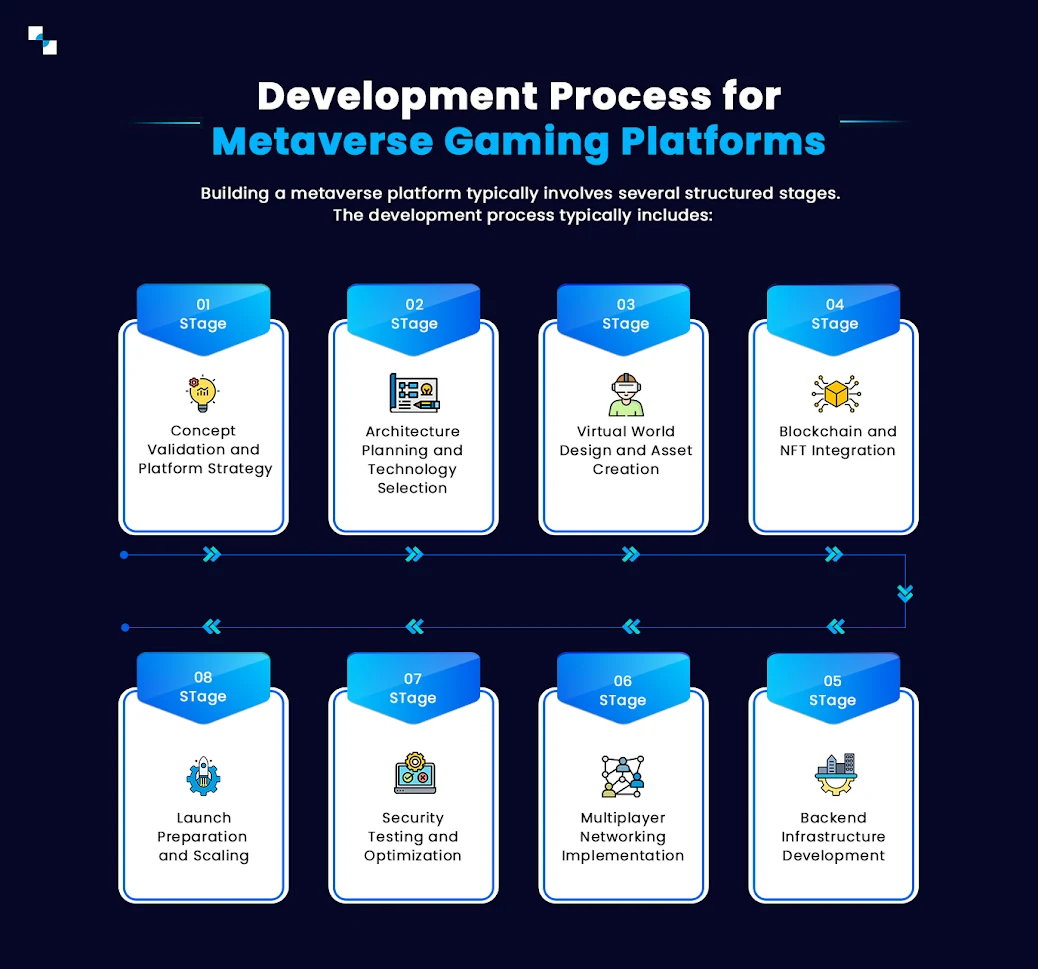
AI Summary
- The blog post discusses the shift in the gaming industry towards metaverse gaming platforms, which offer persistent virtual ecosystems where players interact, trade assets, and participate in shared economies.
- Unlike traditional games, metaverse platforms operate as continuous worlds that evolve even when players are offline.
- The post details the key characteristics and components of metaverse gaming platforms, including the necessary technology stack for development.
- It emphasizes the importance of NFT integration, infrastructure requirements, monetization strategies, and enterprise use cases for metaverse platforms.
- The post also explores emerging trends in metaverse gaming platform development, such as interconnected ecosystems, AI-driven environments, creator economies, cross-platform accessibility, and tokenized digital ownership.
The gaming industry is moving beyond standalone titles toward persistent virtual ecosystems. Modern players expect digital ownership, interconnected worlds, and evolving economies that extend far beyond a single gameplay session. This shift is driving demand for metaverse gaming platform development.
Unlike traditional games, metaverse gaming platforms operate as persistent digital environments where users interact, trade assets, build communities, and participate in shared economies. These platforms require robust infrastructure, carefully designed architecture, and secure systems for asset ownership.
For enterprises and gaming studios entering this space, building a metaverse gaming platform is not simply about creating a game. It involves designing scalable ecosystems that support thousands or even millions of users interacting in real time.
Understanding the architecture and NFT integration behind these platforms is essential for building sustainable metaverse ecosystems.
Why Metaverse Gaming Platforms Are Different from Traditional Games
Traditional games are typically session-based experiences. Players log in, complete objectives, and exit the game environment. Metaverse gaming platforms, however, function as persistent worlds that continue evolving even when individual players are offline.
This difference introduces new technical requirements.
Metaverse platforms must support continuous interactions between users, assets, and virtual environments. They also enable economic activities such as asset trading, virtual land ownership, and NFT-based collectibles.
As a result, the development approach shifts from building isolated game mechanics to designing interconnected digital ecosystems. Key characteristics of metaverse gaming platforms include:
- Persistent virtual environments
- Player-driven economies
- Digital asset ownership
- Social interaction layers
- Interoperable game assets
- Continuous platform evolution
These features require specialized metaverse gaming platform architecture capable of supporting complex interactions at scale.
Core Components of a Metaverse Gaming Platform
A successful metaverse gaming platform is built on multiple interconnected systems working together to support gameplay, economy, and infrastructure. Important components include:
1. Virtual World Engine
This is the environment where players interact. It includes world-building tools, physics engines, and rendering systems that create immersive digital spaces.
2. Multiplayer Interaction Systems
Metaverse platforms must support thousands of concurrent users interacting within the same environment. Real-time networking infrastructure ensures smooth communication between players and servers.
3. Asset Management Systems
Digital items such as avatars, skins, equipment, and virtual land must be securely stored and transferable between players.
4. Economy and Marketplace Infrastructure
Virtual marketplaces enable players to trade assets, purchase upgrades, and participate in digital economies.
5. Identity and Authentication Systems
User identity management is critical for secure ownership of assets and personalized gameplay experiences.
Each of these components contributes to the stability and scalability of a metaverse gaming platform.
Metaverse Gaming Platform Architecture
Building a scalable metaverse platform requires layered architecture designed to manage both gameplay and blockchain interactions. A typical metaverse gaming platform architecture includes the following layers:
1. Experience Layer
This is the player-facing interface that includes:
- Game clients (mobile, PC, web)
- User interface systems
- Avatar customization
- Social interaction features
It is responsible for delivering immersive gameplay and seamless user interaction.
2. Game Logic Layer
The game logic layer controls gameplay mechanics, rule enforcement, and interaction logic. This includes:
- Quest systems
- Progression mechanics
- Player interactions
- Game physics
- Event triggers
Efficient game logic design ensures fair gameplay and consistent performance.
3. Blockchain Integration Layer
Blockchain infrastructure enables secure digital ownership within the metaverse ecosystem. Key components include:
- Smart contracts for asset ownership
- NFT minting systems
- Token-based reward mechanisms
- Wallet integration
This layer ensures that digital assets remain transparent, verifiable, and transferable.
4. Data and Infrastructure Layer
The infrastructure layer supports scalability and performance through systems such as:
- Distributed databases
- Cloud hosting environments
- Real-time communication servers
- Load balancing systems
Without reliable infrastructure, metaverse platforms cannot support large-scale user activity.
Planning to Build a Futuristic Metaverse Gaming Platform?
Technology Stack Used in Metaverse Gaming Platform Development
Metaverse gaming platform development requires a combination of game engines, blockchain infrastructure, cloud systems, and real-time networking technologies. The technology stack must support persistent virtual worlds, large-scale user interactions, and secure digital asset ownership. Choosing the right stack directly affects platform performance, scalability, and long-term sustainability. Below are the major technology layers commonly used in metaverse game development.
1. Game Engine and Rendering Layer
Game engines power the virtual environment, physics systems, and real-time graphics rendering of the metaverse platform. Common engines used include:
- Unity – widely used for cross-platform metaverse environments
- Unreal Engine – ideal for high-fidelity immersive worlds
- WebGL-based engines – used for browser-accessible metaverse platforms
These engines enable the creation of interactive environments, avatar systems, and multiplayer experiences across multiple devices.
2. Blockchain Infrastructure Layer
Blockchain technology enables decentralized ownership and secure asset management within metaverse ecosystems. Some of the commonly used blockchain networks include:
- Ethereum – widely adopted for NFT ecosystems
- Polygon – lower transaction costs for gaming platforms
- BNB Chain – scalable infrastructure for Web3 gaming
- Avalanche – high-performance blockchain for gaming ecosystems
These networks support smart contracts, NFT minting systems, and tokenized digital economies.
3. NFT and Digital Asset Layer
NFT standards define how digital assets are created, stored, and traded within the metaverse platform. Typical implementations include:
- ERC-721 for unique NFT assets
- ERC-1155 for semi-fungible game items
- NFT metadata storage systems for asset attributes
- Decentralized storage solutions such as IPFS
This layer enables players to own and trade digital assets securely.
4. Backend Infrastructure Layer
Metaverse platforms rely on robust backend systems that support real-time player interactions and persistent environments. Important infrastructure components include:
- Cloud computing platforms (AWS, Azure, Google Cloud)
- Real-time multiplayer servers
- Distributed databases
- Content delivery networks (CDNs)
- Microservices architecture
These systems ensure stable performance even when thousands of users interact simultaneously.
5. Wallet and Identity Integration
Wallet systems allow players to authenticate, store assets, and perform transactions within the metaverse ecosystem. Typical integrations include:
- MetaMask
- WalletConnect
- Phantom
- Custodial wallet systems for simplified onboarding
Wallet integration must be designed carefully to ensure secure and frictionless user experiences.
6. Analytics and Economy Monitoring
Metaverse gaming platforms generate large volumes of behavioral and economic data. Analytics systems help developers monitor platform performance and maintain balanced digital economies. Analytics tools are used to track:
- Player behavior patterns
- Asset trading activity
- Token circulation
- Gameplay engagement metrics
- Economic inflation within virtual marketplaces
These insights help developers continuously optimize gameplay mechanics and platform stability.
Why Technology Stack Decisions Matter
A poorly designed technology stack can lead to performance issues, security vulnerabilities, and limited scalability. Metaverse platforms must support persistent environments and complex interactions, making architecture decisions critical from the earliest development stages.
Experienced teams specializing in metaverse gaming platform development carefully evaluate technology choices based on platform requirements, scalability goals, and user experience considerations.
Selecting the right combination of game engines, blockchain networks, and backend infrastructure ensures that metaverse platforms remain stable as user communities grow.
NFT Integration in Metaverse Games
NFT integration in metaverse games plays a central role in modern platform development. NFTs allow players to own, trade, and transfer digital assets independently of centralized control. NFTs can represent various in-game elements such as:
- Character skins
- Weapons and equipment
- Virtual land parcels
- Unique collectibles
- Avatar identities
These assets can be bought, sold, or traded in decentralized marketplaces, creating real economic value within the game ecosystem.
From a development perspective, NFT integration requires careful planning to ensure that assets remain secure, scalable, and user-friendly. Smart contracts must be designed to prevent exploits, while wallet integration must be seamless for players unfamiliar with blockchain technology.
When implemented correctly, NFT systems enable sustainable digital economies within metaverse platforms.
Infrastructure Requirements for Persistent Virtual Worlds
One of the biggest challenges in metaverse gaming platform development is supporting persistent environments that remain active at all times. Infrastructure requirements typically include:
- High-performance cloud hosting
- Real-time communication servers
- Distributed storage systems
- Scalable database architecture
- Network latency optimization
These systems must handle large volumes of player interactions while maintaining stable performance. Metaverse platforms also require analytics pipelines to monitor user behavior, economic activity, and gameplay performance. This data helps developers optimize the platform and maintain balanced digital economies.
Want to Turn Your Game Idea Into a Metaverse Gaming Platform?
Monetization and Digital Asset Economy
Metaverse gaming platforms introduce new monetization opportunities that extend beyond traditional in-game purchases. Some of the common revenue models include:
- NFT asset sales
- Virtual land ownership
- Marketplace transaction fees
- Token-based reward systems
- Subscription or access models
Unlike conventional monetization models, metaverse economies are often partially controlled by the community, creating dynamic market behavior within the platform. Designing sustainable economic systems is one of the most complex aspects of metaverse platform development.
Enterprise Use Cases for Metaverse Gaming Platforms
While the term “metaverse gaming” often evokes images of entertainment-focused virtual worlds, enterprises are increasingly exploring metaverse platforms as interactive environments for engagement, branding, and digital commerce.
Metaverse gaming platforms combine immersive gameplay with persistent digital environments, making them valuable tools for organizations seeking new ways to interact with audiences. Common use cases include:
1. Virtual Brand Worlds
Brands are launching immersive environments where users can explore virtual spaces, interact with branded experiences, and purchase digital collectibles.
These environments often function as digital extensions of real-world brands and communities.
2. Community-Driven Gaming Platforms
Gaming studios and startups are using metaverse platforms to create persistent worlds where communities can participate in events, competitions, and social activities. Players become long-term participants rather than temporary users.
3. NFT Asset Ecosystems
NFT-enabled metaverse platforms allow players to own unique digital items such as:
- Character skins
- Equipment
- Vehicles
- Virtual land
- Event access passes
These assets often have real-world trading value and can be transferred across marketplaces.
4. Virtual Economies and Creator Ecosystems
Some metaverse gaming platforms enable users to create and sell content within the virtual world. Players can design custom assets, build environments, and monetize their creations, creating self-sustaining digital economies.
For enterprises and studios, these models unlock new revenue streams and deeper engagement with user communities.
5. Security and Asset Protection
Security becomes a critical priority because players own digital assets with real value. Hence, metaverse gaming platforms must implement:
- Smart contract auditing
- Anti-cheat systems
- Fraud detection mechanisms
- Secure wallet integrations
- Data encryption protocols
A single vulnerability in smart contracts or infrastructure can compromise the entire digital economy of the platform. Professional metaverse game development teams incorporate security practices throughout the development lifecycle.
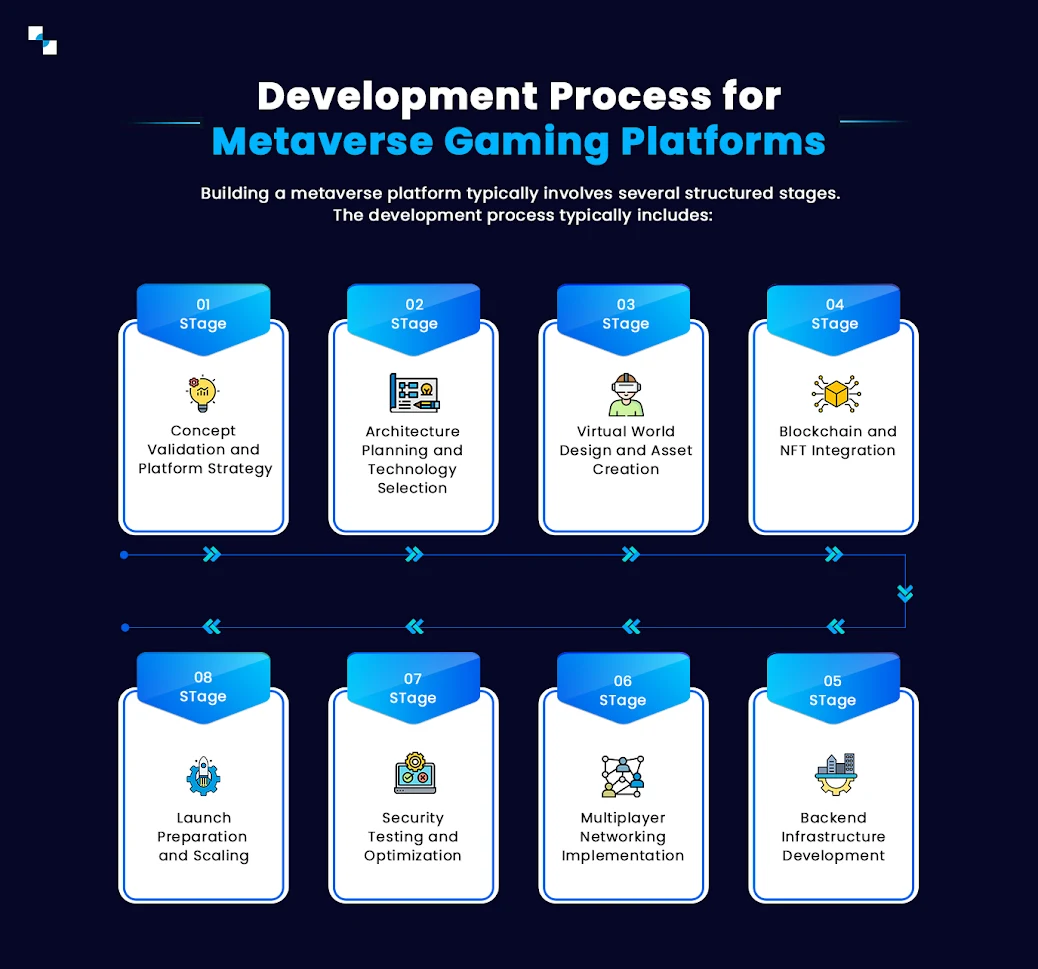
The Future of Metaverse Gaming Platform Development
Metaverse game development is still evolving. However, several emerging trends are shaping the next generation of virtual worlds.
1. Interconnected Metaverse Ecosystems
Future platforms are likely to enable interoperability between different metaverse environments, allowing assets and avatars to move across virtual worlds. This will create larger, interconnected digital ecosystems.
2. AI-Driven Virtual Environments
Artificial intelligence is increasingly being used to enhance player experiences through dynamic NPCs, personalized gameplay environments, and adaptive virtual worlds. AI systems can help maintain engagement within persistent digital spaces.
3. Creator Economy Expansion
User-generated content is expected to become a major component of metaverse gaming platforms. Players will be able to create, sell, and monetize digital assets within platform marketplaces.
4. Cross-Platform Accessibility
Metaverse platforms will continue expanding across devices including:
- Mobile devices
- Desktop systems
- VR headsets
- XR environments
Cross-platform accessibility will help metaverse platforms reach broader audiences.
5. Tokenized Digital Ownership
NFTs and blockchain-based identity systems will continue to shape how players own and manage digital assets. These systems allow players to maintain control over their virtual identities and possessions across platforms.
As technology continues evolving, metaverse gaming platforms are expected to become more immersive, interoperable, and economically sophisticated. Organizations investing in metaverse gaming platform development today are positioning themselves at the forefront of this transformation.
Partnering with a top-rated metaverse gaming platform development company like Antier brings several years of experience and technological expertise to the table, ensuring successful results.
Why Businesses Partner with a Professional Metaverse Game Development Company
Metaverse gaming platform development involves multiple technical disciplines, starting from real-time networking to blockchain infrastructure. Most enterprises lack the internal teams required to manage these complexities.
Antier, an experienced metaverse game development company, allows businesses to access specialized expertise in architecture design, blockchain integration, and large-scale platform deployment. Antier’s professional development team helps organizations reduce technical risk while accelerating time-to-market.
For enterprises exploring the metaverse opportunity, partnering with experienced developers can make the difference between launching a basic virtual environment and building a fully functional digital economy.
Frequently Asked Questions
01. What distinguishes metaverse gaming platforms from traditional games?
Metaverse gaming platforms are persistent virtual environments that evolve continuously, allowing users to interact, trade assets, and participate in shared economies, unlike traditional games which are session-based and end when players log off.
02. What are the key characteristics of metaverse gaming platforms?
Key characteristics include persistent virtual environments, player-driven economies, digital asset ownership, social interaction layers, interoperable game assets, and continuous platform evolution.
03. What are the core components necessary for a successful metaverse gaming platform?
Core components include a virtual world engine, which encompasses world-building tools, physics engines, and rendering systems to create immersive digital experiences, along with interconnected systems that support gameplay, economy, and infrastructure.


TLDR
- On March 4, Morgan Stanley submitted Amendment No. 1 to its S-1 registration form with the SEC for a spot Bitcoin ETF
- Named the Morgan Stanley Bitcoin Trust, the product is slated to trade on NYSE Arca following regulatory clearance
- Bitcoin holdings will be secured through Coinbase Custody’s offline cold storage infrastructure, while BNY Mellon manages cash assets
- Bitcoin pricing will be determined using the CoinDesk Bitcoin Benchmark 4PM NY Settlement Rate
- Authorized participants can create and redeem shares using either cash or Bitcoin
Wall Street veteran Morgan Stanley has advanced its efforts to introduce a spot Bitcoin exchange-traded fund. The financial institution submitted an amended registration filing to the U.S. Securities and Exchange Commission on March 4.
JUST IN: 🇺🇸 Morgan Stanley issues new SEC filing for a spot Bitcoin ETF, announcing Coinbase and BNY Mellon as the custodians 👀 pic.twitter.com/52UCwS7geu
— Bitcoin Magazine (@BitcoinMagazine) March 4, 2026
The proposed product, termed the Morgan Stanley Bitcoin Trust, aims to mirror Bitcoin’s market price without pursuing additional returns.
Morgan Stanley Investment Management, operating as a division of the parent company, serves as the delegated sponsor and will oversee the trust’s operational management.
The initial filing was submitted to the SEC in January 2026, concurrent with a separate application for a Solana-focused ETF. This March revision provides enhanced structural information regarding the Bitcoin-based investment vehicle.
The filing specifies that the trust will operate without leverage, derivatives, or comparable instruments. Its sole function will be holding Bitcoin and establishing daily share valuations through a designated pricing index.
Custody and Storage
Asset protection responsibilities fall to two separate entities. Coinbase Custody Trust Company will maintain Bitcoin reserves in offline cold storage facilities, ensuring private keys remain isolated from internet connectivity to mitigate hacking risks.
The Bank of New York Mellon assumes the role of cash custodian and administrative overseer. While FDIC insurance doesn’t cover either custodian, private insurance coverage exists, though it’s distributed among multiple clients.
Bitcoin valuation for the trust relies on the CoinDesk Bitcoin Benchmark 4PM NY Settlement Rate. This index aggregates transaction data from prominent Bitcoin spot trading platforms.
How Shares Will Work
Share creation and redemption processes involve authorized participants—financial entities that facilitate ETF market liquidity.
These participants may contribute cash or Bitcoin to receive share baskets. The redemption mechanism operates inversely. Coinbase Inc. functions as the prime execution agent handling Bitcoin transactions related to these activities.
Trading is anticipated to commence on NYSE Arca following SEC review completion and registration statement effectiveness.
Morgan Stanley joins an expanding roster of established financial institutions pursuing regulated Bitcoin investment vehicles.
No specific launch timeline appears in the bank’s filing. The trust awaits formal SEC registration approval before proceeding.
Coinbase maintains two distinct functions within the fund structure—custody services via Coinbase Custody Trust Company and trade execution through Coinbase Inc.
The amendment emphasizes the trust’s passive investment approach, explicitly avoiding market timing strategies or short-term Bitcoin price speculation.
Key Takeaways
-
Federal judge orders immediate freeze on 70.6 Bitcoin connected to BlockFills platform
-
Dominion Capital initiates legal action seeking recovery of 70.6 BTC from BlockFills
-
Crypto trading platform prevented from moving 70.6 Bitcoin during ongoing litigation
-
BlockFills confronts mounting challenges following 70.6 BTC asset freeze order
-
Restraining order on 70.6 Bitcoin amplifies difficulties for embattled crypto firm
A federal judge in the United States has issued an order preventing BlockFills from transferring 70.6 Bitcoin as the cryptocurrency trading platform faces a significant legal challenge. The restraining order immobilizes these digital assets while Dominion Capital pursues its claims through the judicial system. This development compounds existing difficulties for BlockFills, which recently suspended customer withdrawals and experienced substantial financial setbacks.
Judge Issues Temporary Restraining Order on Bitcoin Holdings
Federal Judge Mary Kay Vyskocil granted a temporary restraining order specifically targeting 70.6 Bitcoin under BlockFills’ control. The judicial directive prohibits any movement or international transfer of these cryptocurrency holdings. Additionally, the court mandated complete segregation between client funds and company assets, along with comprehensive documentation of all Dominion Capital positions.
Dominion Capital submitted its legal complaint on February 27 through the Southern District of New York. The filing alleges that BlockFills improperly held onto client cryptocurrency and mixed various account balances to cover trading deficits. Based on these allegations, the judge authorized the asset freeze to safeguard the 70.6 Bitcoin from potential dispersal.
This temporary restriction continues in force until the court conducts its next scheduled hearing. BlockFills must furnish complete documentation showing where the 70.6 Bitcoin is held and its current condition. The platform faces a March 17 deadline for its official response unless the court modifies the timeline.
Crypto Platform Struggles with Financial Pressures
The cryptocurrency exchange suspended all customer withdrawals starting February 11 following intense market turbulence that depleted available liquidity. Company officials attributed the operational difficulties to Bitcoin’s decline approaching $60,000 levels. The withdrawal suspension, however, triggered increased examination of the platform’s financial oversight and asset management practices.
Company assessments indicated losses reaching approximately $75 million throughout the market downturn period. Institutional customers began questioning whether their deposited assets maintained full backing on the exchange. The controversy surrounding the 70.6 Bitcoin surfaced during this turbulent financial episode.
Significant personnel shifts occurred as co-founder Nicholas Hammer departed from his position as chief executive. Joseph Perry took over leadership responsibilities on an interim basis while the organization worked toward operational stability. Financial restructuring advisors have cautioned that bankruptcy proceedings may become necessary without swift financial improvement.
Asset Dispute Highlights Systemic Industry Challenges
Dominion Capital aims to reclaim the 70.6 Bitcoin that it maintains was improperly withheld by the trading platform. The court’s restraining order guarantees these Bitcoin holdings remain secured pending judicial examination of competing ownership assertions. This legal safeguard maintains the contested cryptocurrency intact throughout the litigation process.
The platform provided services to approximately 2,000 institutional clients, including hedge funds and investment management firms. Trading volume exceeded $60 billion throughout 2025 according to company figures. Nevertheless, operational breakdowns have sparked wider concerns regarding asset safekeeping and corporate disclosure practices.
This legal proceeding underscores persistent vulnerabilities within centralized cryptocurrency lending and exchange operations. Litigation involving substantial digital asset reserves continues influencing regulatory and oversight conversations. Resolution of the frozen 70.6 Bitcoin situation awaits forthcoming court proceedings and financial transparency reports.


A U.S. federal judge has temporarily frozen crypto assets linked to institutional trading platform Blockfills as part of an ongoing legal dispute with investment firm Dominion Capital.
Summary
- A federal judge issued a temporary restraining order preventing Blockfills from moving Bitcoin allegedly belonging to Dominion Capital.
- Dominion claims the platform commingled and used customer funds to cover operational losses, creating a $77M balance-sheet shortfall.
- The ruling comes after the firm halted withdrawals and reported heavy lending losses amid broader market stress.
Court steps in after Blockfills withdrawal halt, freezes 70 BTC
In a temporary restraining order issued by the U.S. District Court for the Southern District of New York, the court barred Blockfills from transferring or disposing of roughly 70.6 Bitcoin allegedly belonging to Dominion Capital, while the case proceeds.
The order was granted after Dominion filed a complaint accusing Blockfills of misappropriating and commingling customer funds, then refusing to return assets after halting withdrawals earlier this year.
According to the filing, Dominion had held about 70.55 BTC and a small cash balance on the platform. The firm claims it was unable to access the funds after Blockfills suddenly suspended withdrawals in early February 2026.
Dominion further alleges that Blockfills admitted during internal client meetings that customer assets had been commingled on a single balance sheet and used to cover operational costs and trading losses, leaving the company with a balance sheet shortfall of about $77 million by the end of 2025.
Judge Mary Kay Vyskocil granted the emergency order after Dominion argued there was a risk the assets could be moved or depleted before the court could fully review the case. The ruling prevents Blockfills from transferring the disputed Bitcoin or moving related assets outside the United States until further proceedings are held.
The legal action comes amid mounting stress for the Chicago-based crypto brokerage. Earlier reports indicated the firm suffered roughly $75 million in lending losses during the recent market downturn, prompting leadership changes and discussions about a potential sale or rescue financing.
The temporary restraining order will remain in place until a court hearing determines whether a longer-term injunction should be issued as the lawsuit moves forward.
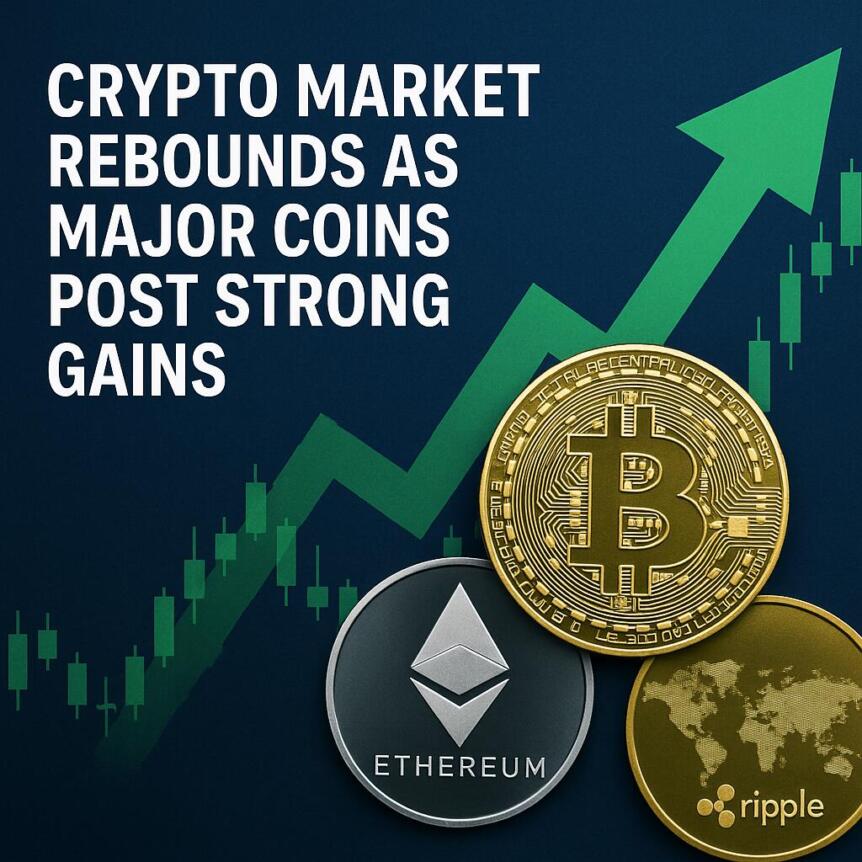
Key Highlights
- Bitcoin climbs to $71,926 as crypto market posts solid gains today.
- Ethereum trades above $2,099 with a 5% daily surge amid strong activity.
- XRP price rises to $1.41 as altcoins follow broader market gains.
- Solana breaks $90 with a 4% daily increase amid global optimism.
- Dogecoin jumps 6.5%, leading meme coins in today’s crypto rally.
Bitcoin Shows Strong Recovery
BITCOIN JUST HIT $74,000 🚀 pic.twitter.com/VFJ2pF2XA5
— Ash Crypto (@AshCrypto) March 4, 2026
Bitcoin, the leading cryptocurrency, is currently valued at $71,926. The coin rose by 3.8% in a single day as market confidence returned. Weekly performance shows a modest recovery of 6% despite monthly losses.
Background context shows Bitcoin experienced a multi-week slump due to global uncertainties. The coin had dipped below key psychological levels before this surge. This rebound is the first major uptick after consecutive weeks of declines.
Market observers note that Bitcoin continues to attract attention amid regulatory news. Although some experts label the gain a short-term surge, the market reaction remains positive. The coin’s resilience strengthens confidence in digital asset markets.
Ethereum Posts Gains Above $2,000
Ethereum is currently trading at $2,099, marking a daily rise of 5%. Weekly performance shows a 2.16% increase while the monthly trend remains negative at 9%. Trading volumes surged to $33.12 billion, reflecting high market activity.
The recovery follows broader crypto market improvements and optimism around regulatory clarity. Ethereum has remained one of the top-performing altcoins despite past volatility. Investors increasingly view ETH as a key asset in decentralized finance applications.
Analysts highlight that Ethereum’s network upgrades support the coin’s recovery. Strong developer activity and DeFi demand contribute to renewed interest. The altcoin remains a major driver of daily market sentiment.
XRP Rebounds to $1.41
XRP recorded a 3% daily gain, reaching $1.41 amid market optimism. Weekly and monthly performance remain slightly negative at 2.5% and 12%, respectively. The altcoin has regained momentum following earlier declines.
XRP’s recovery is influenced by easing geopolitical tensions and growing hopes for regulatory clarity. Trading activity also increased as global market sentiment improved. The coin maintains strong interest among retail and institutional participants.
Observers note that XRP remains a major player in cross-border transactions. Ripple’s ongoing partnerships support the coin’s market relevance. Market dynamics indicate potential for continued short-term gains.
Solana Climbs Above $90
Solana is trading at $90.5, reflecting a 4% daily increase and a 2% weekly gain. The token has experienced a 14% monthly decline, yet today’s surge signals market recovery. Trading volumes also indicate heightened investor interest.
The coin’s growth aligns with easing global tensions and positive market sentiment. Solana remains a leader in high-speed blockchain applications. Developers continue to expand Solana’s ecosystem, driving investor confidence.
Analysts highlight that the token’s network activity supports the recent price movements. Solana’s technical upgrades contribute to its resilience amid market fluctuations. The asset continues to draw attention as a high-growth altcoin.
Dogecoin Leads Meme Coin Gains
Dogecoin surged by 6.5% to $0.0957, outperforming other meme tokens today. Weekly and monthly performances remain negative at 4% and 11%, respectively. The coin regained traction amid broader crypto market improvements.
Dogecoin’s growth coincides with renewed optimism in retail cryptocurrency markets. Social media buzz and market sentiment continue to support price movements. Despite past volatility, DOGE remains a prominent meme-based digital asset.
Observers note that Dogecoin benefits from both mainstream interest and speculative activity. The coin’s unique appeal and community support boost daily trading momentum. DOGE remains among the most watched assets in today’s rally.
Drivers Behind Today’s Market Rally
The crypto market recovery is attributed to easing geopolitical tensions, regulatory clarity, and positive policy signals. Reports of potential US-Iran peace talks eased global uncertainty. Additional support comes from calls for passage of the CLARITY Act.
The US SEC has submitted new interpretive guidance on cryptocurrency regulation. The paper clarifies how federal securities laws may apply to digital assets. Proposals include frameworks for crypto prediction markets and broader compliance measures.
Overall, the combination of positive geopolitical signals and regulatory clarity supported gains across major cryptocurrencies. Market participants reacted swiftly, boosting trading volumes and asset prices. The rally reflects renewed confidence in the digital asset space.


The previous plans laid out by the country’s central bank indicated that it wanted to form the fund from crypto seizures.
A month after the initial reports emerged that Kazakhstan’s central bank plans to invest in cryptocurrencies, governor Timur Suleimanov provided further details today that actually differ slightly from the initial idea.
As reported by Reuters, the governor of the central bank said during a briefing on interest rates that the entity is “currently developing a list of instruments in which we will invest. This includes not only cryptocurrency itself.”
“These include shares of high-tech companies related to cryptocurrencies and digital financial assets, index funds and other instruments that exhibit similar dynamics to crypto assets.”
The report states that the portfolio of up to $350 million will be formed from other current investments, such as gold and foreign exchange reserves.
Deputy Chair Aliya Moldabekova explained that the investments will begin in April-May. However, she disclaimed that they do not plan “any large investment in cryptocurrencies,” before adding:
“We are currently selecting companies that deal with digital assets. For example, those involved in cryptocurrency infrastructure. We are currently in the process of selecting such companies.”
Reuters noted that the central bank holds over $69 billion worth of gold and foreign exchange reserves as of February 1, while its national fund held around $65 billion worth of assets.
It’s worth noting that Kazakhstan has mulled a similar fund for some time, but a previous report on the matter claimed it would also use “crypto seized by law enforcement agencies” to create a digital asset stockpile.
Binance Free $600 (CryptoPotato Exclusive): Use this link to register a new account and receive $600 exclusive welcome offer on Binance (full details).
LIMITED OFFER for CryptoPotato readers at Bybit: Use this link to register and open a $500 FREE position on any coin!

The latest streak of inflows in US spot Bitcoin exchange-traded funds (ETFs) was interrupted by fresh outflows as the BTC price dipped below $71,000 on Thursday.
Spot Bitcoin (BTC) ETFs saw $228 million in net outflows on Thursday, ending the three-day inflow streak of about $1.1 billion, according to SoSoValue data.
While weekly inflows still held at $917.3 million heading into Friday’s session, year-to-date net outflows rose to around $900 million. Cumulative inflows in 2026 so far amount to $3.58 billion, while cumulative outflows total $4.49 billion.
Total assets under management remained above $90 billion after reclaiming the threshold earlier this week.

According to Farside data, BlackRock’s iShares Bitcoin Trust ETF (IBIT) led outflows with $89 million, followed by Fidelity’s Wise Origin Bitcoin Fund (FBTC) at $48 million and the Bitwise Bitcoin ETF (BITB) at $46 million.
The slip in spot Bitcoin ETFs came as analysts pointed to BTC’s relief rally facing headwinds amid a persisting bear market.
Related: Bitcoin is forming a bottom as the 4-year cycle ends: VanEck CEO
According to CryptoQuant, Bitcoin’s rally above $73,000 was “likely just a relief rally” rather than the start of a new bull phase. The observation aligns with the analysts’ previous forecasts that BTC could fall below $60,000 amid the ongoing crypto winter.
Solana ETFs hold strong despite 57% price drop since launch
Negative sentiment hit altcoin ETFs, with Ether (ETH) funds posting $91 million in outflows. XRP (XRP) and Solana (SOL) also saw minor outflows of $6 million and $5 million, respectively.
Notably, Solana ETF outflows marked the first losses since early February, while year-to-date inflows have totaled roughly $200 million. In comparison, XRP has seen $86 million in inflows.

Solana’s ETFs have accumulated $1.5 billion in cumulative inflows despite a 57% drop in SOL’s price since the launch of spot ETFs in July, Bloomberg ETF analyst Eric Balchunas said in a post on X.
“Yet they managed to not only accumulate $1.5 billion in flows but not really give any of it up,” Balchunas said, adding that many institutions have increased exposure to Solana in the fourth quarter of 2025. “Both are really good signs for the future,” he added.
Magazine: Would Bitcoin really be at $200K if not for Jane Street? Trade Secrets
Crypto markets demonstrated fragility on Friday, with bitcoin trading narrowly above a psychological level of support at $70,000.
The largest cryptocurrency broke above this level on Wednesday, rising to as high as $74,000 before failing to capitalize on a lower-liquidity zone above, and falling back alongside U.S. equities.
The intensifying war in the Middle East pushed oil to a new cycle high of $85 per barrel. Brent crude has risen roughly 42% since the start of the year. The surge in energy costs, alongside growing uncertainty around Iran, has prompted traders to reassess the inflation outlook in Europe, with money markets now even pricing the possibility of a European Central Bank rate increase by year-end — a sharp reversal from expectations for rate cuts in 2025.
Higher interest rates would typically weigh on bitcoin and the broader crypto market, as investors shift toward safer assets that offer attractive yields without the volatility associated with risk assets.
The altcoin market has also shown signs of weakness over the past week according to Santiment’s social volume tracker, which indicates that social media sentiment for the speculative market is nearing rock bottom.
Derivatives positioning
- The market is consolidating as bitcoin open interest (OI) rises to $16.16 billion from $15 billion last week, indicating a return of speculative interest.
- While retail funding remains stable in the 0%-to-10% range, Binance has flipped to -2.5%, signaling a localized surge in short hedging.
- Three-month basis is holding at 2.7%, a sign that institutional conviction remains soft.
- The options market has shifted toward cautious optimism. The 24-hour call volume split has tightened to 51/49 and the one-week 25-delta skew has cooled to 8% (from 15%), significantly lowering the cost of downside protection.
- While longer-dated implied volatility (IV) remains stable near 50%, the near-term has spiked into sharp backwardation, a signal that traders are pricing in an immediate, high-impact volatility event before a return to mid-term growth.
- Coinglass data shows $257 million in 24-hour liquidations, with a 70-30 split between longs and shorts. BTC ($121 million), ETH ($51 million) and others ($15 million) were the leaders in terms of notional liquidations.
- The Binance liquidation heatmap indicates $71,600 as a core liquidation level to monitor, in case of a price rise.
Token talk
- Decentralized finance (DeFi) tokens MORPHO and JUP led Friday’s selloff, losing between 2% and 3% since midnight UTC as traders rotated out of speculative tokens back into dollars.
- OKX’s native OKB token was the top gainer in the past 24 hours, rising by 23% after trading giant Intercontinental Exchange (ICE) signed a deal with the exchange to introduce tokenized stocks and crypto futures products.
- There were also substantial gains for KITE and RIVER, each rising around 15% in the past 24 hours to continue their impressive starts to the year.
- Privacy tokens continued to lose ground with zcash (ZEC) and decred (DCR) dropping 6% in the past 24 hours and the downturn accelerating since midnight UTC.
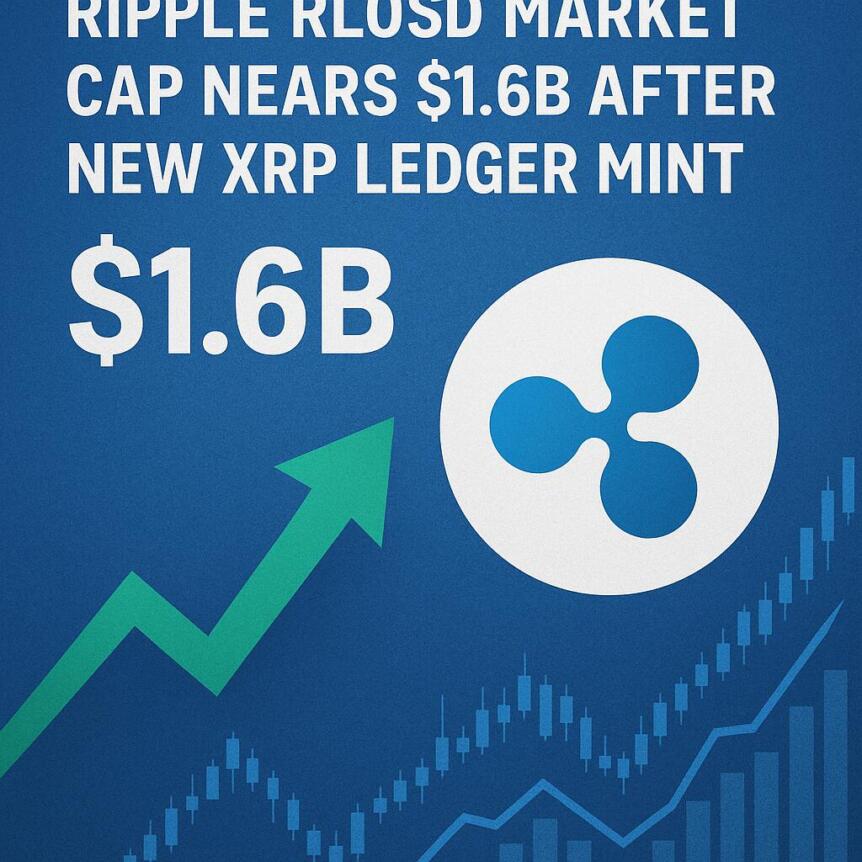
Ripple’s stablecoin RLUSD is moving closer to a major market capitalization milestone as new token issuance continues to expand its supply. Market data shows the stablecoin currently holds a valuation of $1.58 billion.
The figure places RLUSD only slightly below the $1.6 billion mark following a fresh mint of 10 million tokens on the XRP Ledger earlier today. Consequently, the new issuance has pushed the asset closer to another growth milestone in a short period.
Stablecoin Ranks Among Largest Digital Assets
The rising valuation has strengthened RLUSD’s position within the broader cryptocurrency market. According to current market rankings, the asset now stands as the 52nd largest cryptocurrency by market capitalization.
Additionally, RLUSD has climbed to become the 12th largest stablecoin in circulation. The rapid growth reflects increased activity within Ripple’s stablecoin strategy as the company continues expanding liquidity across its network.
Dominant Stablecoins Continue to Lead Market
Despite RLUSD’s recent growth, the stablecoin market remains heavily concentrated around two major players. Tether’s USDT leads the sector with a market capitalization exceeding $183 billion.
Circle’s USDC follows with roughly $77 billion in circulation. Together, they control a large share of global stablecoin liquidity and maintain a significant lead over newer entrants attempting to build market share.
Corporate Stablecoins Compete for Market Share
Beyond the two largest issuers, several projects compete in a fragmented mid-tier market. PayPal’s PYUSD currently leads regulated corporate stablecoins with a market capitalization of about $4.19 billion.
Newer projects, including Falcon USD and Global Dollar, also sit slightly ahead of RLUSD with valuations around $1.73 billion and $1.72 billion, respectively. Moreover, these tokens highlight increasing competition among corporate-backed digital dollars.
The expansion of RLUSD has allowed the token to move ahead of several established stablecoins. The asset now ranks above Binance’s BFUSD, which holds about $1.31 billion in market value.
Additionally, RLUSD has surpassed Tron’s USDD, which currently stands near $712 million. Consequently, the stablecoin has strengthened its position among mid-tier dollar-pegged assets in the global crypto market.
February Minting Strategy Accelerates Growth
Ripple increased supply aggressively throughout February as the company pushed additional liquidity into circulation. Over roughly three weeks, the RLUSD treasury minted nearly 75 million tokens.
The activity included a 30 million token issuance on February 9, followed by another 20 million minted on February 19. Moreover, Ripple later recorded its largest single-day mint with 69 million RLUSD issued to support expanding distribution channels.
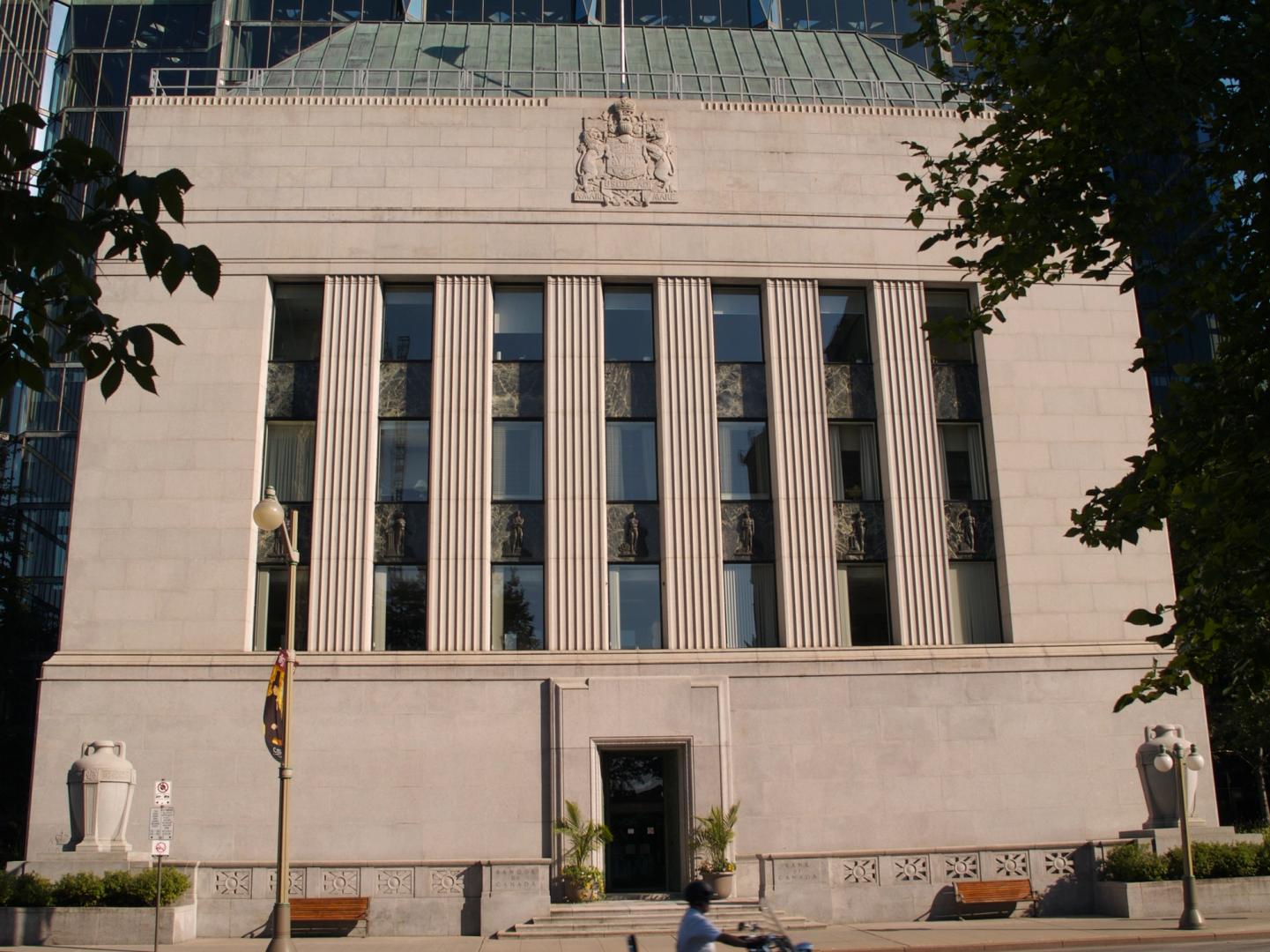
The Bank of Canada said it completed an experiment testing how tokenized bonds can move through financial markets in conjunction with a group of the country’s largest lenders.
The government’s Export Development Canada issued a C$100 million ($73 million) security with a maturity of less than three months, which was sold to a closed group of investors.
The test, known as Project Samara, also involved RBC Dominion Securities, RBC Investor Services Trust and the TD Securities division of Toronto-Dominion Bank. The group tested how bonds issued by EDC can be created, traded and settled using distributed ledger technology.
The platform, operated by RBC, supported the full lifecycle of a bond transaction. The bond was issued in tokenized form on the ledger, allowing participants to submit bids, process coupon payments, redeem bonds and trade on secondary markets through the same system.
The experiment also tested digital settlement using tokenized versions of wholesale Canadian dollars created and managed by the Bank of Canada. These digital funds moved on the same ledger as the bonds, allowing transactions to settle within the platform.
In its November budget, the federal government signaled plans to introduce legislation governing Canadian-dollar-backed stablecoins, with oversight expected to involve the Bank of Canada and rules focused on reserve backing, redemption policies and risk management.
Last month, the country’s investment regulator, CIRO, introduced a digital asset custody framework aimed at strengthening how crypto assets are held by trading platforms, tightening standards to reduce risks such as hacking, fraud and insolvency following past industry failures.
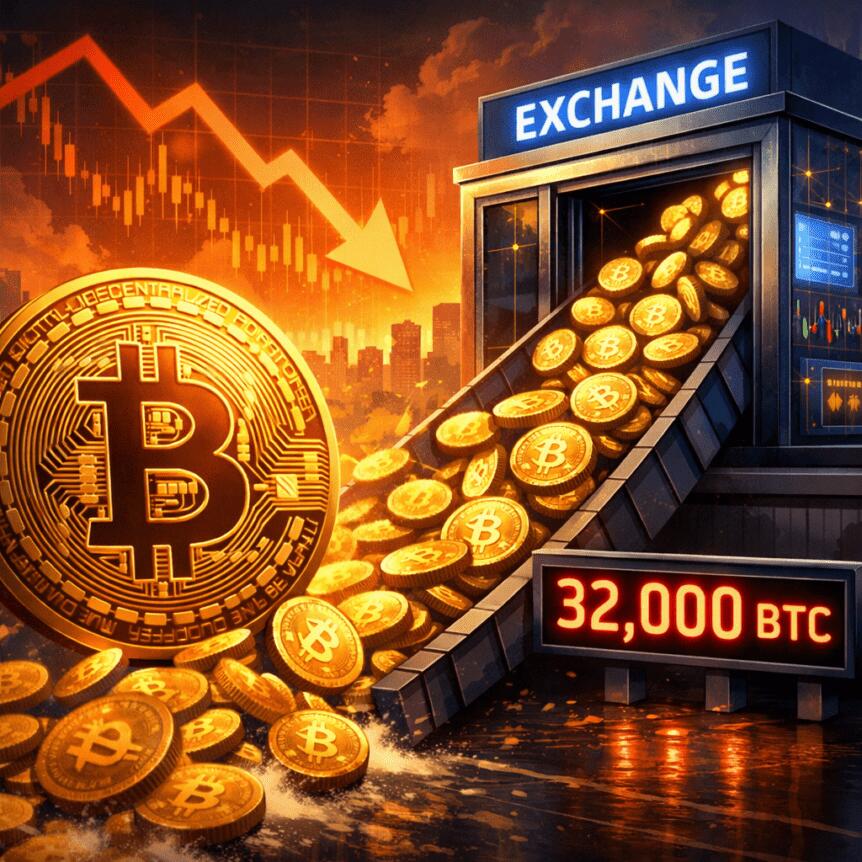
Bitcoin (CRYPTO: BTC) on-chain indicators are again drawing scrutiny as market watchers weigh the possibility of renewed accumulation. On Wednesday, exchange withdrawals surged to roughly 32,000 BTC, amounting to about $2.26 billion at prevailing prices, according to CryptoQuant data. For the week, total outflows approached 47,700 BTC — a top-tier figure over the past 12 months — with Bitfinex accounting for a sizable share, marking its largest daily outflow since June 2025. Analysts note that stablecoin flows moving into exchange wallets alongside BTC exiting venues fit a familiar pattern associated with dip-buying and repositioning into custody. While not a guarantee, the on-chain signals sketch a scenario in which institutions or large players are quietly accumulating.
Key takeaways
- Wednesday’s BTC withdrawals neared 32,000 coins, translating to roughly $2.26 billion, signaling potential large-scale buying pressure.
- Bitfinex recorded the largest daily BTC outflow since June 2025, estimated around 25,000 BTC.
- For the week through Friday, exchange netflows were negative on each trading day, totaling about 47,700 BTC, a setup some analysts consider bullish if the trend persists.
- Stablecoin activity moving to exchange wallets while BTC leaves suggests buyers are funding new positions rather than selling into the sell-side pressure.
- If netflows stay negative for another 3–5 days with no major re-entries to exchanges, the signal could qualify as “sustained accumulation,” though confirmation requires continued data.
Tickers mentioned: $BTC
Market context: The ongoing on-chain dynamics arrive amid a liquidity backdrop where traders watch risk sentiment and macro factors that influence crypto flows. Historically, sizable negative netflows indicate a reduction in immediate selling pressure on the spot market, which can support price stability or upside pressure when buyers resume activity. In this instance, the combination of large outflows and corresponding stablecoin inflows to exchanges aligns with a careful buildup rather than a rush to exit positions, underscoring how on-chain signals can precede a price response in a market sensitive to custody movements and liquidity shifts.
Why it matters
The significance of the latest data lies in the potential shift in supply dynamics. When coins depart exchanges and move toward cold storage or custodial wallets, the immediate availability of BTC for sale on spot markets contracts, which can ease selling pressure and tilt the balance toward upward price discovery if demand re-emerges. Analysts emphasize that sustained negative netflow — where more BTC leaves exchanges than re-enters — has historically coincided with periods of constructive price action, especially when accompanied by continued liquidity withdrawal from active venues.
The discussion around the anomalous 32,000 BTC outflow centers on its typical interpretation: moves associated with large spot purchases, followed by transfers to cold custody. Adler’s analysis notes that while a portion of spikes might reflect internal custody movements, the broader pattern often signals accumulation at the current price ranges. In early March 2026, a sizable liquidity inflow to exchanges — about $1.1 billion — preceded a shift in netflow dynamic, after which the net outflow eased but remained negative. The takeaway for market participants is that these sequences are not standalone events; they form part of a broader on-chain narrative about how big players manage risk, positioning, and custody as price cycles unfold.
For traders and institutions, the takeaway is to monitor whether the negative netflow persists. If the trend holds for several days, the market could be reading an elongated phase of demand absorption. Yet, even with a bullish tilt suggested by on-chain flows, price action remains contingent on broader macro cues, risk appetite, and the pace at which new buyers step in to support levels around key price anchors like $70,000. The data points themselves are descriptive — they don’t guarantee a rally — but they do illuminate where selling pressure is thinning and where buyers might be accumulating in anticipation of a future price move.
What to watch next
- Watch the next 3–5 days of net BTC exchange flows to confirm whether the negative trend persists without a substantial re-entry to exchanges.
- Monitor large transfers to cold storage or custodial services that could corroborate the hypothesis of accumulation.
- Track BTC price behavior near the $70,000 level and observe whether on-chain demand translates into sustained price support.
- Maintain awareness of additional data from CryptoQuant and CoinGlass for corroborating trends in exchange balances and netflow momentum.
Sources & verification
- CryptoQuant data on exchange netflow totals and the 32,000 BTC outflow observed on Wednesday.
- CoinGlass data confirming Bitfinex’s outflow magnitude and the weekly netflow pattern.
- Axel Adler Jr.’s analysis linking the spike to potential large spot purchases and custody movements.
- Related charts and analytical notes referenced in the article, including the linked external analysis pages.
On-chain signals point to a large BTC accumulation as exchange outflows spike
Bitcoin (CRYPTO: BTC) on-chain signals are again in focus as a wave of exchange withdrawals adds a layer of intrigue to market positioning. The data trail points to a notable transfer dynamic: a substantial portion of BTC was moved off exec-friendly venues on a single day, with Bitfinex at the center of the action. The near-32,000 BTC outflow on Wednesday stands out even within a week of elevated activity, and it coincides with stablecoin flows that move in step with the BTC exodus. Taken together, the indicators align with a familiar playbook in which buyers signal their intent by removing coins from exchanges and placing them in custody, potentially positioning for a liquidity-constrained move higher.
The analysis cites two pivotal observations: first, the single-day outflow magnitude around 32,000 BTC, and second, the week’s cumulative outflows near 47,700 BTC — figures that mark a notable milestone in the last year’s on-chain activity. The heavy involvement of Bitfinex, recorded as the exchange with the most pronounced outflow on the day, underscores the role of large venues as conduits for significant repositioning. In early March 2026, a separate liquidity event — a green bar representing roughly $1.1 billion in inflows to exchanges — was followed by a shift in netflow readings, moving to a negative but less extreme level as market participants reassessed risk and liquidity posture. The sequence implies a potential end-to-end cycle: exchanges see inflows or outflows, funds move to custody, and then the market adjusts to a thinner spot supply.
Analysts emphasize a key caveat: the observed spike is an anomalous one-day signal that warrants confirmation over several days of data. As Adler notes, the association between such spikes and large transfers to cold storage is common, but not universal. The larger question is whether the ongoing pattern of negative netflows can endure long enough to qualify as sustained accumulation. If the netflow remains negative for three to five more days without a surge of coins returning to exchanges, market observers will treat the trend as a reinforcing bullish signal — one that suggests demand is outweighing selling pressure at a time when liquidity dynamics are being recalibrated by custodial movements and macro sentiment.
On the price front, the narrative remains tethered to a price environment around $70,000, where buyers historically have shown resilience during episodes of improved on-chain conviction. While the data points do not guarantee an immediate uplift, they contribute to a broader chorus of signals that influence risk appetite and liquidity provisioning across spot markets. For investors, the takeaway is not certainty but a nuanced view: on-chain behavior is supporting a case for cautious optimism, contingent on continued outflows and the absence of a rapid re-entry of coins to exchanges.
For readers following the story closely, the implication is clear: the market is watching on-chain signals as a proxy for demand and supply. The presence of large outflows from exchanges, together with stablecoin inflows into exchange wallets, underscores a demand-side readiness among buyers who may be quietly building positions in anticipation of a future price move. The ongoing conversation around custody, liquidity, and risk sentiment will likely be amplified as data from CryptoQuant and CoinGlass continue to illuminate how these patterns evolve in the days ahead. The eventual confirmation or refutation of sustained accumulation will hinge on the persistence of negative netflows and the absence of renewed exchange-based selling pressure.

Luckiest Kid #memes #lucky #kids #money

Review: Macbeth at Octagon Bolton is bold and challenging

Morgan Stanley Files Updated SEC Amendment for Spot Bitcoin ETF Launch


-

 Politics3 days ago
Alan Cumming Brands Baftas Ceremony A ‘Triggering S**tshow’
-

 Fashion7 days ago
Weekend Open Thread: Iris Top
-

 Tech5 days ago
Unihertz’s Titan 2 Elite Arrives Just as Physical Keyboards Refuse to Fade Away
-

 NewsBeat6 days ago
Abusive parents will now be treated like sex offenders and placed on a ‘child cruelty register’ | News UK
-
 NewsBeat6 days ago
Dubai flights cancelled as Brit told airspace closed ’10 minutes after boarding’
-
Sports6 days ago
The Vikings Need a Duck
-
 NewsBeat6 days ago
The empty pub on busy Cambridge road that has been boarded up for years
-

 NewsBeat5 days ago
‘Significant’ damage to boarded-up Horden house after fire
-

 Tech1 day ago
Bitwarden adds support for passkey login on Windows 11
-

 Entertainment4 days ago
Baby Gear Guide: Strollers, Car Seats
-
 Sports18 hours ago
499 runs and 34 sixes later, India beat England to enter T20 World Cup final | Cricket News
-
Politics5 days ago
FIFA hypocrisy after Israel murder over 400 Palestinian footballers
-
 NewsBeat5 days ago
Emirates confirms when flights will resume amid Dubai airport chaos
-

 NewsBeat4 days ago
Is it acceptable to comment on the appearance of strangers in public? Readers discuss
-

 Tech5 days ago
Viral ad shows aged Musk, Altman, and Bezos using jobless humans to power AI
-

 Video4 days ago
How to Build Finance Dashboards With AI in Minutes
-

 Business2 days ago
Guthrie Disappearance Enters Fifth Week as Family Visits Memorial
-
 Crypto World5 days ago
US Judge Lets Binance Unregistered Token Class Action Proceed
-
 NewsBeat4 days ago
Ukraine-Russia war latest: Belgium releases video showing forces boarding Russian shadow fleet oil tanker
-

 Fashion5 days ago
On the Scene at the 57th Annual NAACP Image Awards: Teyana Taylor in Black Ashi Studio, Colman Domingo in Yellow Sergio Hudson, Chloe Bailey in Christian Siriano, and More!