








Connect with us

Business

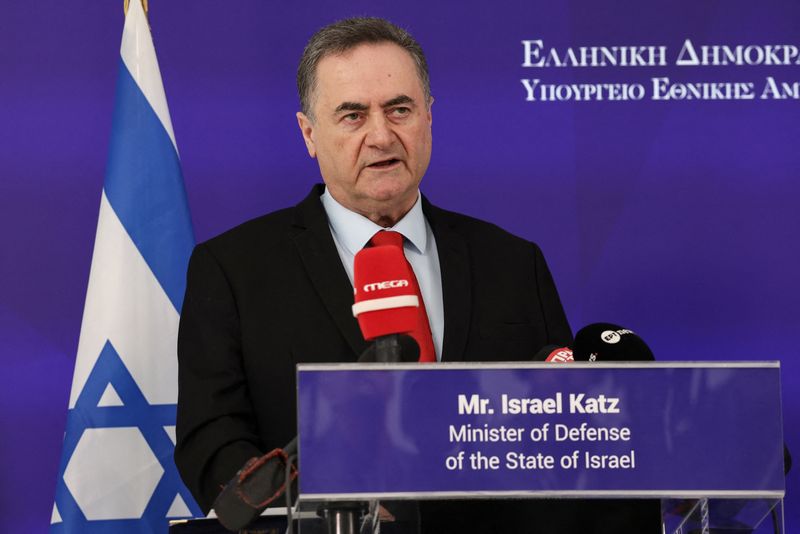
Israel decided to kill Khamenei in November, defence minister says

Published

on

Israel decided to kill Khamenei in November, defence minister says
Continue Reading
Click to comment

Leave a Reply

Your email address will not be published. Required fields are marked *

Business

IMI plc (IMIUY) Q4 2025 Earnings Call Transcript

Published

on

OneWater Marine Inc. (ONEW) Q1 2026 Earnings Call Transcript

Roy Twite
CEO & Director

Good morning, everyone, and welcome to IMI’s 2025 Full Year Results Presentation. I am joined here today by our CFO, Luke Grant. Together, we will take you through another year of strong strategic and financial progress. And I would like to begin by thanking all of our people for their tremendous contribution.

The execution of our growth strategy is creating significant value for shareholders, and it was another strong performance in 2025. We have now delivered 5 consecutive years of mid-single-digit organic revenue growth and supported by the delivery of our financial framework, we are compounding earnings growth. We delivered 5% organic sales growth and 8% organic adjusted operating profit in 2025 and achieved a 20% operating margin for the first time.

It was another year of strong cash generation, and we are committed to deploying this capital for growth and to enhance shareholder returns. Organic investment is at record levels, and I am pleased to be announcing a GBP 500 million share buyback alongside a proposed 10% increase to the final dividend.

Advertisement

We expect to deliver our sixth consecutive year of mid-single-digit organic growth in 2026. And based on current market conditions, full year adjusted basic EPS is expected to be between 136p and 142p.

IMI has

Advertisement
Continue Reading

Business

(VIDEO) Shohei Ohtani Crushes Grand Slam in Japan’s Dominant WBC Opener Against Chinese Taipei

Published

on

A scandal involving baseball's biggest star, the Los Angeles Dodgers Shohei Ohtani, has clouded the US opening of the MLB season

Shohei Ohtani wasted no time asserting his dominance on the international stage, blasting a grand slam in the second inning to ignite Japan’s explosive offense in a commanding 13-0 victory over Chinese Taipei on Friday, March 6, 2026, at Tokyo Dome. The defending champions opened their 2026 World Baseball Classic Pool C campaign with a rout, showcasing the firepower that made them favorites to repeat as titleholders.

A scandal involving baseball's biggest star, the Los Angeles Dodgers Shohei Ohtani, has clouded the US opening of the MLB season
Shohei Ohtani
AFP

Ohtani, the Los Angeles Dodgers superstar serving as designated hitter (not pitching per team agreement), set the tone early. In the first inning, he doubled to right field off Taipei starter Hao-Chun Cheng. Then, in the second, with the bases loaded — thanks to singles by Munetaka Murakami, Shugo Maki and Sosuke Genda — Ohtani crushed a 2-1 curveball deep to right field for his grand slam. The shot gave Japan an immediate 4-0 lead and sparked a historic 10-run frame, the most runs scored in a single inning in WBC history.

The Dodgers two-way phenom finished 3-for-4 with five RBIs, adding a single later that drove in another run. His performance electrified the capacity crowd at Tokyo Dome, where fans waved Japanese flags and chanted his name throughout. The grand slam — a towering drive estimated at 368 feet — came amid high expectations for Ohtani, who helped Japan win the 2023 WBC with a dramatic final out against Mike Trout.

Japan’s offense exploded from there. Masataka Yoshida tripled home a run in the same inning, and additional hits from Seiya Suzuki, Kazuma Okamoto and others piled on. By the end of the second, Japan led 10-0. The barrage continued with more runs in later frames, including RBIs from Yuki Wakatsuki and others, pushing the total to 13. Chinese Taipei managed just three hits and no runs against a stingy Japanese pitching staff led by Yoshinobu Yamamoto and relievers.

The mercy rule loomed but was not invoked, as the game continued to full length despite the lopsided score. Japan’s pitching held Taipei scoreless, with strong relief work preserving the shutout. The victory improved Japan’s record to 1-0 in Pool C, while Chinese Taipei dropped to 0-2 after an earlier loss to Australia.

Advertisement

Ohtani’s grand slam highlighted his readiness for the tournament. Speaking pre-game, he emphasized a “less is more” approach for defending champions, focusing on execution over flash. His early heroics validated that mindset, putting pressure on Pool C rivals Australia, Korea and Czechia.

The win reinforces Japan’s status as a powerhouse, blending MLB stars like Ohtani, Yamamoto and Suzuki with NPB standouts. Chinese Taipei, despite a competitive roster, struggled against elite pitching and committed errors that fueled Japan’s rally.

As Pool C play continues, Japan eyes a strong run toward the quarterfinals. Ohtani’s milestone moment — his first grand slam in WBC play — sets a high bar for the defending champs in their quest for back-to-back titles.

The Tokyo Dome crowd’s energy and Ohtani’s star power made the opener a spectacle, reminding the baseball world why the WBC captivates globally. With Japan rolling early, the path to another championship looks promising.

Advertisement

Continue Reading

Business

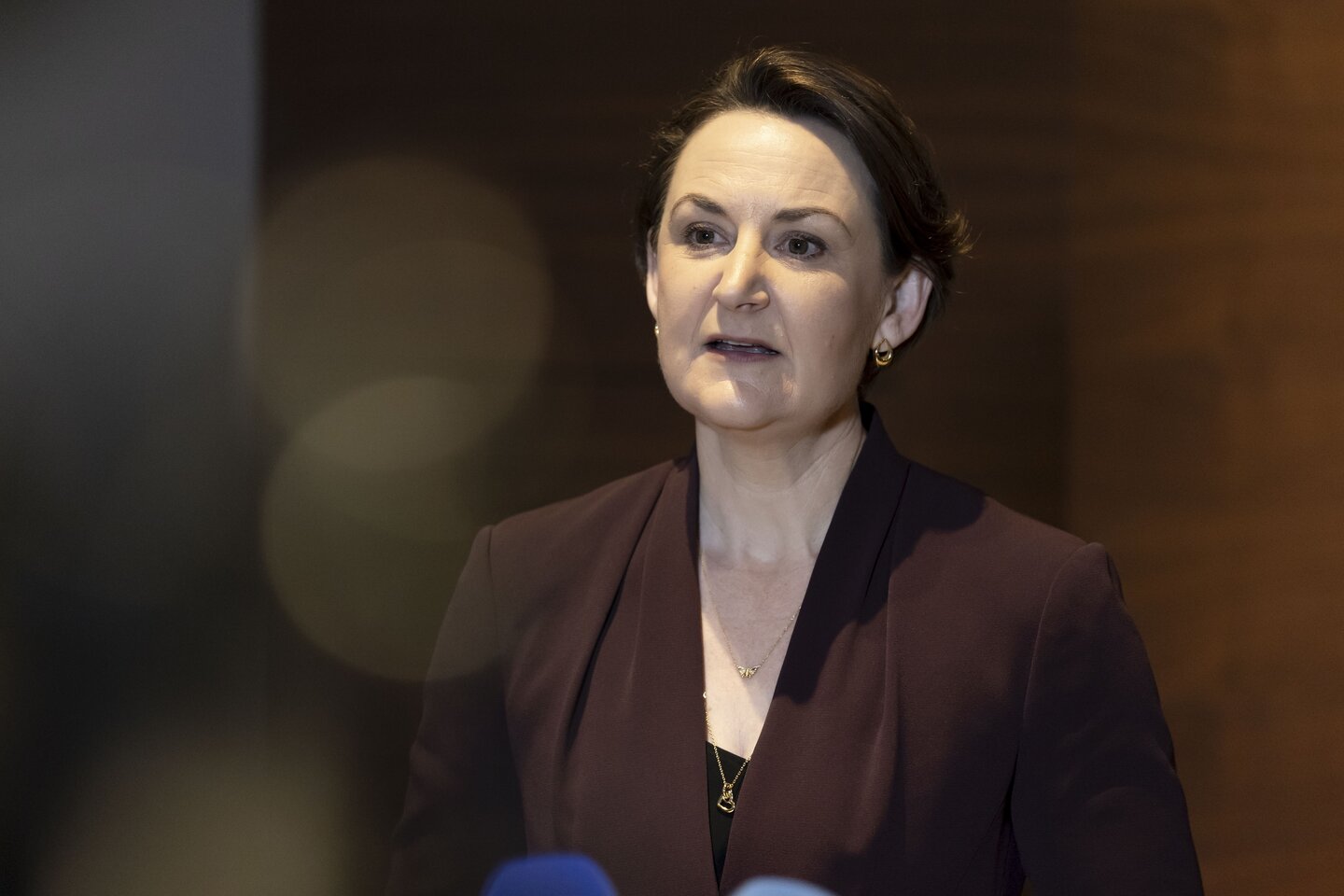
Sanderson backtracking on coal: Thomas

Published

on

Sanderson backtracking on coal: Thomas

The state opposition has accused the government of backtracking on its coal power phase out target, following comments by the energy minister to ABC Perth this morning.

Continue Reading

Business

BofA cuts Nexi stock rating on weak results, softer outlook

Published

on


BofA cuts Nexi stock rating on weak results, softer outlook

Continue Reading

Business

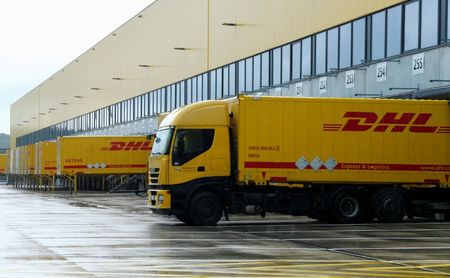
DHL shares up after Barclays upgrade to “overweight,” PT raised by 26%

Published

on


DHL shares up after Barclays upgrade to “overweight,” PT raised by 26%

Continue Reading

Business

Frasers Group builds 6% stake in Puma as Mike Ashley targets turnaround at struggling sportswear brand

Published

on

Frasers Group builds 6% stake in Puma as Mike Ashley targets turnaround at struggling sportswear brand

Mike Ashley’s retail empire has added another high-profile investment to its portfolio after Frasers Group quietly built a near 6 per cent stake in the German sportswear brand Puma.

Regulatory filings on the German stock exchange revealed that the owner of Sports Direct, Flannels and House of Fraser now controls a 5.77 per cent holding in Puma. The disclosure triggered an immediate reaction in the market, sending Puma’s shares up almost 10 per cent as investors interpreted the move as a potential vote of confidence in the struggling brand.

The investment makes Frasers Group the second-largest shareholder in Puma, just weeks after the Chinese sportswear giant Anta Sports agreed to acquire a 29.1 per cent stake in the business for €1.5 billion from the French billionaire Pinault family.

Frasers’ position has reportedly been assembled through a series of put option agreements linked to Puma shares, a financial strategy that allows the group to build exposure to the company without immediately purchasing large blocks of stock in the open market.

The move highlights Frasers’ increasingly active role as a strategic investor in global fashion and retail brands. Founded by Mike Ashley in 1982, the group has built a reputation for taking minority stakes in companies and using its influence to push for operational or strategic changes.

Advertisement

Although Ashley stepped down from day-to-day leadership in 2022, the business is now run by his son-in-law, Michael Murray, who has continued the strategy of investing in key partners and competitors across the retail sector.

Puma is already a major supplier of trainers and sportswear to Sports Direct, Frasers’ flagship retail chain. Strengthening its shareholding could give the British retailer additional influence in the brand’s future strategy and product development.

The investment comes at a turbulent moment for Puma, which has struggled to keep pace with rivals such as Nike and Adidas.

The company issued several profit warnings last year and has been undergoing a restructuring programme aimed at restoring profitability and rebuilding its brand position in the global sportswear market.

Advertisement

Earlier this year, Puma reported a record annual loss of €645.5 million and declining sales, forcing the company to scrap its dividend and announce plans to cut around 900 jobs as part of its turnaround effort.

The restructuring is being led by the company’s new chief executive, Arthur Hoeld, who has signalled that the brand needs to fundamentally rethink its product strategy and global positioning.

Hoeld has acknowledged that demand for Puma footwear has weakened significantly in recent years and said the company must take a “hard look at ourselves” as it attempts to recover market share.

Like many consumer brands, Puma has also been hit by broader macroeconomic pressures. Slowing consumer demand in the United States, geopolitical uncertainty and trade tensions have all contributed to a challenging environment for global retail companies.

Advertisement

Tariffs introduced during the presidency of Donald Trump have added additional costs to international supply chains, while weakening consumer confidence has weighed on discretionary spending.

Despite these pressures, Puma’s share price has begun to recover after falling to a near ten-year low of around €15 late last year. The stock recently closed at €22.62, helped by renewed investor interest following the Anta investment and Frasers’ latest move.

Frasers’ stake in Puma is the latest example of the group’s aggressive investment strategy across the retail and fashion sector.

In recent years the company has accumulated significant stakes in several major brands and retailers, including Hugo Boss, where it holds roughly a 25 per cent stake, Asos, Boohoo Group and Mulberry.

Advertisement

The group has frequently used these stakes to exert pressure on management teams and influence strategic decisions.

A long-running dispute with Boohoo, for example, saw Frasers attempt to install Mike Ashley as chief executive and block the company’s efforts to rebrand its holding entity as Debenhams.

Similarly, Frasers has recently increased its position in Asos and voted against all board resolutions at the online retailer’s annual general meeting, signalling dissatisfaction with its performance and strategy.

The new investment by Frasers comes shortly after Anta Sports’ landmark purchase of a 29.1 per cent stake in Puma from the Pinault family, which had been the sportswear company’s largest shareholder for many years.

Advertisement

Anta said the deal was part of its broader strategy to expand its portfolio of international brands and strengthen its position in the global sportswear market.

The company described the acquisition as a “major step forward in our single-focus, multi-brand globalisation strategy”, although it said it had no immediate plans to launch a full takeover bid for Puma.

Founded in 1991, Anta has grown rapidly into one of the world’s largest sportswear groups and already owns several global brands, including outdoor apparel company Jack Wolfskin.

With Anta and Frasers now holding significant stakes, analysts expect the ownership structure of Puma to come under increasing scrutiny.

Advertisement

The presence of two powerful strategic shareholders could reshape the company’s direction, particularly if they push for changes to product development, distribution strategies or management structures.

For Frasers, the investment reinforces its broader strategy of building influence across the global retail ecosystem, strengthening relationships with key brands while positioning itself to benefit from any recovery in the sportswear market.

Whether the stake leads to deeper collaboration with Puma or more active shareholder involvement remains to be seen, but the move signals that Mike Ashley’s retail empire is continuing to expand its influence well beyond Britain’s high street.


Jamie Young

Jamie Young

Jamie is Senior Reporter at Business Matters, bringing over a decade of experience in UK SME business reporting.
Jamie holds a degree in Business Administration and regularly participates in industry conferences and workshops.

When not reporting on the latest business developments, Jamie is passionate about mentoring up-and-coming journalists and entrepreneurs to inspire the next generation of business leaders.

Advertisement

Continue Reading

Business

Algonquin Power stock edge up on Q4 beat despite below expectation 2027 guide

Published

on


Algonquin Power stock edge up on Q4 beat despite below expectation 2027 guide

Continue Reading

Business

Wales must make productivity the North Star of economic policy

Published

on

Business Live

Entrepreneurship has to stop being a warm paragraph at the back of an economic strategy and become a national mission.

The next Welsh Government will be decided at the polls in May.(Image: WalesOnline/ Rob Browne)

Since devolution, Wales has never been short of economic strategies, but what we have lacked is a government that turns policy into outcomes such as higher productivity, higher wages, and more growing firms.

Over the next few weeks, political parties will reveal their plans, and yet there is already an uncomfortable truth behind the Senedd election debate if previous manifestos are anything to go by: we can keep announcing new initiatives and calling them “economic action”, or we can finally build something that makes a difference.

Advertisement

So, what should a manifesto for the Welsh economy look like if we were serious about changing the trajectory rather than managing decline?

READ MORE: Admiral staff to receive £1,800 in free shares after record profit performanceREAD MORE: Business body CBI Wales appoints new chair

First, Wales must make productivity the North Star of economic policy. Every programme should pass a simple test: how does it raise output per hour, and how will we measure it? If it can’t answer that, it should not be supported. We should also publish a monthly “Welsh economic scoreboard” because if you can’t see it, you can’t manage it, and if you never publish it, you don’t really intend to be held accountable for it.

Second, entrepreneurship has to stop being a warm paragraph at the back of an economic strategy and become a national mission. Wales won’t build resilience and prosperity without more people starting firms, more firms getting through the hard early years, and far more firms growing into large employers. That means a pipeline designed around the founder journey of starting, surviving and scaling.

Advertisement

Third, Wales needs to simplify the business journey by creating a single front door that actually works and stops entrepreneurs from spending time navigating programmes instead of building businesses. Start by taking the Development Bank of Wales, which has largely failed to make a real difference, and integrating its debt functions into Business Wales as was originally intended, so there is one joined-up journey from diagnosis to support to finance.

Fourth, as in other small, competitive economies such as Finland, Wales needs an Innovation, Growth and Export Agency (or as part of a wider economic development body) that behaves like an economic actor rather than a grant office. Its job should be to connect the chain from productivity diffusion (helping firms adopt better tools and processes) to commercialisation (turning ideas into products), to export and scaling (turning products into global revenues). It should also house a £200m Wales Growth Capital Fund for equity and patient finance, with independent governance and transparent reporting.

Fifth, we must be honest about the role of universities as major employers and significant economic actors. That means committing to employer-led placements, diffusion of innovation into SMEs and a serious pipeline for spinout firms. In addition, as this column has been arguing for over two decades, we need to lobby hard to ensure Wales gets its fair share of UK research and innovation funding, which could be worth hundreds of millions of pounds to the Welsh economy every year.

Sixth, skills policy must be rebuilt around jobs and wages rather than enrolments and “delivery”. We need employer-led pathways, including more apprenticeships aligned to the missions we are backing, short conversion routes into growth roles, and management capability support so firms can actually scale. But there is a point many manifestos avoid because it is politically awkward: that for a large share of Welsh households, the barrier to progressing in work isn’t motivation or training but childcare. If Wales wants higher participation and progression, especially for women, childcare must be treated as economic infrastructure rather than a separate social policy conversation.

Advertisement

Seventh, you can’t scale if you can’t get space, power, and permissions, and that means fast-tracking employment sites with published targets and a national business premises plan that expands affordable small units, maker space, and light industrial capacity where demand is strongest. It also means recognising the importance of housing because if workers can’t live near the jobs we are trying to create, then growth sites fail before they start.

Eighth, procurement should be treated as a growth policy as the public sector is one of Wales’ biggest levers but is often designed in ways that favour incumbency and complexity. We need “first customer” routes for SMEs, challenge-led procurement that buys solutions not paperwork, and a Made in Wales supply-chain deal where major contracts are broken into SME-accessible lots where value-for-money holds.

Ninth, net zero should be treated as an economic advantage, not just a target and for many firms, energy is now a competitiveness issue. A serious plan would prioritise measures with clear payback, including large-scale energy efficiency for SMEs, smarter energy management, and targeted support for energy-intensive sectors, alongside “decarbonisation-ready” industrial estates where shared infrastructure lowers costs. If we want net zero to stick politically, it has to make Wales cheaper to build and run.

Tenth, Wales should stop talking about tourism only in terms of visitor numbers and start designing a high-quality tourism economy that raises incomes. That means backing businesses that increase value per visitor through better accommodation, better experiences, better food and drink, and attractions that extend the season rather than relying on a few summer months.

Advertisement

Finally, town centres need an enterprise strategy, not nostalgia, as too much regeneration policy is still based on trying to recreate a retail model that has moved on. Wales should make it easier to start and trade locally, not only by reviewing business rates, but also by simplifying change-of-use, granting rapid pop-up and test-trade permissions, offering time-limited rate relief for new trading businesses, and creating “start-up streets” with flexible leases and shared services.

Hopefully, those political parties vying for the votes of employers and employees in Wales will stop repeating the same old policies and instead build an economy that delivers for the people of Wales. But most important of all, the next government must put Welsh businesses at the heart of every decision being made and do everything possible to give them the competitive advantage they should be getting from the devolution dividend.


Continue Reading

Business

Thailand Enhances Support for Tourists Amid Regional Travel Challenges

Published

on

Thailand Enhances Support for Tourists Amid Regional Travel Challenges

The Tourism Authority of Thailand is monitoring Middle East unrest, prioritizing tourist safety, and coordinating support measures such as flexible policies and improved airport assistance to maintain confidence in Thailand.


Key Points

  • The Tourism Authority of Thailand (TAT) is working with government and private sectors to monitor the Middle East situation and support tourists facing travel disruptions. Safety and well-being are prioritized, with TAT as the main communication hub.

  • Local tourism associations have introduced flexible policies, special rates, and enhanced information services to aid affected travelers. Airports of Thailand (AOT) has improved assistance at airports, providing information and coordinating with airlines.
  • Proactive measures are being implemented to mitigate tourism impacts, including stimulating domestic tourism and enhancing international connectivity. Travelers should check flight statuses with airlines and seek assistance from the AOT Contact Center, TAT Call Center, or Tourist Police hotline.

The Tourism Authority of Thailand (TAT), together with government agencies and private-sector partners, is closely monitoring developments in the Middle East and coordinating support for tourists affected by flight or travel disruptions.

TAT Governor Thapanee Kiatphaibool emphasized that Thailand prioritizes the safety and well-being of all tourists, and confirmed that tourism stakeholders are working together to support travelers affected by unrest in the Middle East. TAT serves as the main communication channel, providing accurate information to operators and visitors, particularly through regional offices in Phuket, Krabi, and Phang Nga.

Local tourism associations and hotel groups in these provinces have introduced measures such as flexible rescheduling and cancellation policies, special rates for extended stays, and enhanced information services. These actions demonstrate the industry’s commitment to supporting visitors and maintaining confidence in Thailand as a high-quality destination.

Relevant agencies have also implemented operational measures. Airports of Thailand Public Company Limited (AOT) has enhanced passenger assistance at airports by providing additional information, distributing drinking water to waiting passengers, and coordinating with airlines to manage affected flights.

Advertisement

In addition to immediate assistance, the government is implementing proactive policies to address potential tourism impacts. Short-term measures aim to stimulate domestic tourism and sustain economic activity. At the same time, long-term strategies focus on strengthening Thailand’s position as a secondary aviation hub to improve international connectivity and resilience.

Travelers planning to visit the Middle East or nearby regions should check flight status directly with airlines. For further assistance, contact the AOT Contact Center at 1722, the TAT Call Center at 1672 Travel Buddy, or the Tourist Police hotline at 1155.

Source : Thailand Strengthens Tourist Assistance Amid Regional Travel Disruptions

Advertisement
Continue Reading

Business

Lenders lift mortgage rates as Iran war hits borrowing costs

Published

on

Lenders lift mortgage rates as Iran war hits borrowing costs

Nationwide, HSBC and Coventry Building Society are all putting some mortgage rates up.

Continue Reading

Trending

Copyright © 2025