

Business
FTSE 100 today: Stocks open higher as Middle East conflict keeps markets on edge





Petroleum engineer with an enthusiasm for investing, accounting and personal finances.
Analyst’s Disclosure: I/we have no stock, option or similar derivative position in any of the companies mentioned, and no plans to initiate any such positions within the next 72 hours. I wrote this article myself, and it expresses my own opinions. I am not receiving compensation for it (other than from Seeking Alpha). I have no business relationship with any company whose stock is mentioned in this article.
Past performance is not an indicator of future performance. This post is illustrative and educational and is not a specific offer of products or services or financial advice. Information in this article is not an offer to buy or sell, or a solicitation of any offer to buy or sell the securities mentioned herein. Information presented is believed to be factual and up-to-date, but we do not guarantee its accuracy and it should not be regarded as a complete analysis of the subjects discussed. ll expressions of opinion reflect the judgment of the authors as of the date of publication and are subject to change.
Seeking Alpha’s Disclosure: Past performance is no guarantee of future results. No recommendation or advice is being given as to whether any investment is suitable for a particular investor. Any views or opinions expressed above may not reflect those of Seeking Alpha as a whole. Seeking Alpha is not a licensed securities dealer, broker or US investment adviser or investment bank. Our analysts are third party authors that include both professional investors and individual investors who may not be licensed or certified by any institute or regulatory body.

Starbucks Corporation (NASDAQ: SBUX) has emerged from a period of stagnation with clear signs of a recovery, as the coffee giant’s “Back to Starbucks” turnaround plan—spearheaded by CEO Brian Niccol—begins to show tangible results in early 2026. Shares of the company closed at $97.71 on Friday, March 6, 2026, reflecting investor optimism fueled by the company’s first signs of U.S. transaction growth in two years.

For shareholders who weathered a volatile 2025, the start of 2026 has been marked by a return to stability and a focus on operational discipline. Despite mixed financial reports in the first quarter of the 2026 fiscal year, the market is increasingly viewing Starbucks as a stock in the midst of a successful pivot.
The “Back to Starbucks” Strategy: Early Wins
When Brian Niccol assumed leadership, his “Back to Starbucks” initiative was designed to strip away corporate complexity and refocus on the customer experience. The Q1 2026 results released in late January provided the first real evidence that this shift is working.
- Transaction Growth: For the first time in eight quarters, Starbucks reported an increase in U.S. comparable transactions. This indicates that the core customer base, which had drifted away due to long wait times and inconsistent service, is returning.
- Global Sales Momentum: Starbucks posted a 4% increase in global comparable store sales, surpassing analyst expectations. This growth was consistent across major markets, including the U.S., China, and the U.K.
- Green Apron Service: The successful rollout of the “Green Apron” service standard has reportedly reduced average wait times in drive-thrus and cafes to under four minutes, a critical metric for maintaining throughput during peak morning hours.
Financial Snapshot: Navigating Headwinds
While top-line growth is positive, the road to profitability remains complex. In Q1 2026, Starbucks reported:
- Consolidated Revenue: Up 6% to $9.9 billion.
- EPS Miss: GAAP earnings per share (EPS) of $0.26 and non-GAAP EPS of $0.56, with the latter falling slightly short of the $0.59 estimate by analysts.
- Margin Pressure: Operating margins contracted by approximately 180 to 290 basis points. The company cited labor investments—hiring more staff to support the “Back to Starbucks” initiative—and inflationary pressures from coffee pricing and tariffs as the primary drivers of this contraction.
“We are turning around the top line, and the earnings growth will follow,” Niccol stated during the Q1 earnings call, signaling that the current margin compression is a deliberate trade-off for long-term customer retention.
Institutional Sentiment and Analyst Outlook
Wall Street’s reaction to the progress has been cautiously optimistic. Earlier this week, Guggenheim raised its price target for SBUX from $90 to $95, maintaining a “Neutral” rating. The firm acknowledged the strength of the turnaround but highlighted that the current stock valuation—trading at a premium P/E ratio exceeding 80—already accounts for much of the expected operational improvement.
Institutional sentiment remains mixed. According to recent SEC filings, some large funds like Orion Portfolio Solutions trimmed their holdings by about 5.3%, while others, including Vanguard, have modestly increased their stakes. Currently, roughly 72% of the company is held by institutional investors, suggesting that while “smart money” is not panic-selling, it is watching the next few quarters closely to ensure margin expansion actually materializes.
Strategic Outlook: The China Pivot and Future Growth
A significant factor for investors to monitor in 2026 is the classification of Starbucks’ retail operations in China as “held for sale.” This transition to a joint venture structure is expected to streamline the company’s global portfolio and reduce long-term depreciation costs.
Looking ahead for the remainder of fiscal 2026, management has provided the following guidance:
- Comp Sales Growth: Targeting 3% or better globally and in the U.S.
- Expansion: Plans to open 600 to 650 net new coffeehouses worldwide.
- Cost Efficiency: The company has identified $2 billion in cost-saving opportunities over the next two years, specifically targeting procurement efficiencies and administrative overhead.
The Bottom Line for Investors
Starbucks is no longer the high-growth tech-like stock of the 2010s; it is currently a “transformation play.” The success of the stock in 2026 will likely hinge on whether management can balance the cost of labor investments with the need for margin expansion.
Investors are currently betting that Brian Niccol’s reputation—forged during his time transforming Chipotle—will hold true here. As Starbucks continues to focus on throughput, menu innovation, and its record-breaking 35.5-million-member rewards program, the company appears well-positioned to stabilize its market share in an increasingly competitive coffee landscape.
Investors are concerned about the fates of multiple experimental drugs for hard-to-treat diseases following a string of recent rejections from the U.S. Food and Drug Administration.
The FDA in the past year has denied or discouraged the applications of at least eight drugs, according to RTW Investments, including a gene therapy for Huntington’s disease from UniQure, a gene therapy for Hunter syndrome from Regenxbio and a drug for a blood condition from Disc Medicine. The agency initially refused to review Moderna‘s flu shot before reversing course.
In each case, the FDA took issue with the evidence the companies were using to support their applications. Some of the studies didn’t test the drugs against a placebo. Some companies didn’t directly measure the drug’s efficacy, instead relying on other factors like biomarkers to predict how well the treatment might work.
And in every case, the companies have accused the FDA of reversing its previous guidance. That’s making investors wary that a more unpredictable FDA could jeopardize the future of other treatments for hard-to-treat diseases.
“What investors and key stakeholders are hoping to see from the FDA is consistency, and it does feel that that seems to be lacking at the moment,” said RBC Capital Markets analyst Luca Issi.
In recent years, the FDA appeared willing to accept drugs for rare diseases that showed promise in less rigorous studies than the gold standard randomized, double-blind placebo controlled trials. That meant helping bring treatments more quickly to patients who have conditions where time passing could mean the loss of functions like walking or talking, or even death. It also drew controversy from critics who said that policy brought false hope to patients.
The FDA’s recent decisions has left investors wondering whether the agency’s bar has changed for other drugs in the pipeline. In the case of UniQure, the FDA asked the company to run a new study that directly compares its treatment to placebo. UniQure said that contradicts the agency’s past guidance that the company could seek approval with trial data that compared UniQure’s treatment to an external database of people with Huntington’s disease.
One former FDA official who spoke to CNBC on the condition of anonymity to speak freely called this the worst type of regulatory uncertainty, because companies say they are being told one thing then experiencing another.
In a statement, an FDA spokesperson said there was “no regulatory uncertainty,” adding the agency “makes decisions based on the evidence, but does not make assurances about outcomes.” The spokesperson said the FDA is “conducting rigorous, independent reviews and not rubber-stamping approvals.”
Analysts point to several other companies they’re watching, including Dyne Therapeutics, which is advancing a drug for Duchenne muscular dystrophy; Taysha Gene Therapies, which is developing a gene therapy for Rett syndrome; Wave Life Sciences, which is working on a treatment for a liver condition; and Lexeo Therapeutics, which is developing a gene therapy for Friedreich Ataxia. All of those companies’ stocks are down this year.
A Dyne spokesperson said the company has maintained a frequent, positive and collaborative dialogue with a consistent set of reviewers over the past 18 months, and that it’s confident in its development strategy and path forward based on the strength of its clinical results, rigor of its trial design and continued engagement with the FDA. Taysha, Wave and Lexeo declined to comment.
One looming decision that Stifel analyst Paul Matteis is tracking is a drug candidate from Denali Therapeutics for Hunter syndrome, a rare disease that causes physical defects like hearing loss and joint problems, as well as cognitive issues. The company’s application for accelerated approval relies on a trial that wasn’t randomized and data showing the drug decreases levels of a biomarker associated with the condition.
To Matteis, the dataset is harder to argue with than UniQure’s, and there’s not much risk with the technology used.
“So if they don’t approve that, I don’t know,” Matteis said. “I mean, I already think there’s been a pretty significant change in the regulatory standard of rare disease, but if they don’t approve Denali, if I was at a company I’d almost be saying to myself, ‘Can we really be confident in running an open-label study?’”
In a statement to CNBC, Denali Therapeutics CEO Ryan Watts said the company continues having constructive discussions with the FDA, and it’s confident in the strength of the data package it submitted. The FDA delayed its review of the application by three months and is now expected to decide by April 5.
Some investors feel a clash between the flexibility FDA leaders like Commissioner Marty Makary are pledging publicly and the recent decisions the agency has made, said RBC Capital Markets’ Issi. That’s leading some to discount the probability of success for companies whose paths to the market rely on some level of flexibility in the data the agency will accept, said Stifel’s Matteis.
For companies whose data are straightforward, the path looks clear, said Christiana Bardon, managing partner of MPM BioImpact. The question to her is how much the FDA should accelerate the process to bring drugs to patients as rapidly as possible for diseases with massive unmet needs.
One senior FDA official, speaking to reporters Thursday on the condition of anonymity to speak freely, said the FDA hasn’t changed its position that biomarkers reasonably likely to predict efficacy can and will get accelerated approval, and that non-randomized data can get full approval. To this official, the bar is clear.
“If you make a treatment for Alzheimer’s or Huntington’s, and you take someone who’s severely ill and you give them that therapy, and they start doing better immediately and dramatically,” the official said. “You take someone in a nursing home with Alzheimer’s, and then they walk out of it, or somebody with end-stage Huntington’s, and they suddenly have no symptoms of Huntington’s, you will get a full regulatory approval with two or three patients.
“We only ask for randomized data when a condition is heterogeneous, when the will to believe is strong, when the therapy is invasive or potentially harmful, when the effect size is difficult to detect, and when the possibility you are fooling yourself is high,” the official added.
Rep. Kevin Kiley, R-Calif., criticized California’s ‘devastating’ proposed wealth tax and how it will affect the state’s residents on ‘The Evening Edit.’
A group of tech industry leaders and self-described “radical centrists” are vowing to push back on left-leaning policies in California that are causing an exodus among wealthy entrepreneurs and businesses from the Golden State.
The New York Post reported that the group held an event attended by about 350 people in Mountain View, California, that featured elected officials, including San Jose Mayor Matt Mahan, San Francisco District Attorney Brooke Jenkins, tech industry leaders and hundreds of attendees who want to challenge the progressive tilt of the state’s policies.
The meeting comes as several prominent wealthy entrepreneurs have left California to avoid a proposed 5% one-time wealth tax on billionaires who were California residents at the start of this year, with the tax due next year. Meta CEO Mark Zuckerberg, Google co-founders Larry Page and Sergey Brin, Oracle founder Larry Ellison and PayPal co-founder Peter Thiel are among those who have moved assets or relocated from California.
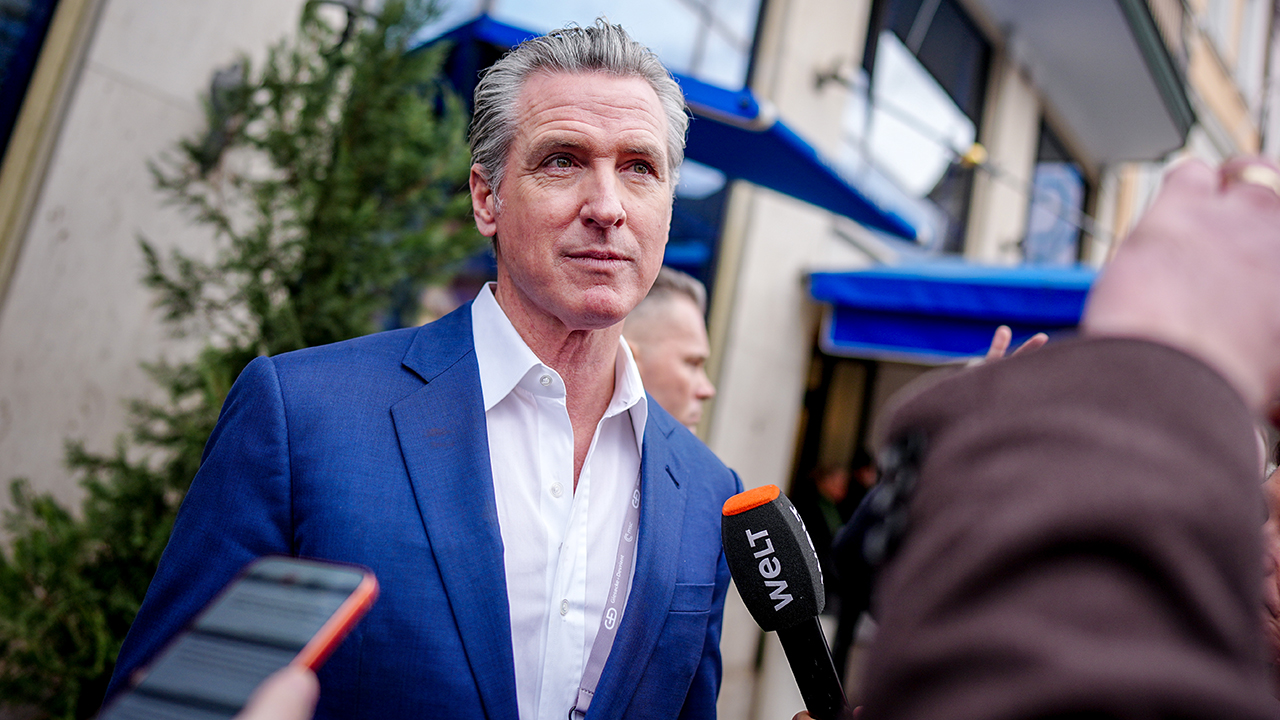
Business leaders who are spearheading the group urged those in attendance not to give up on California by leaving and instead push back on left-leaning policies by electing more moderate politicians.
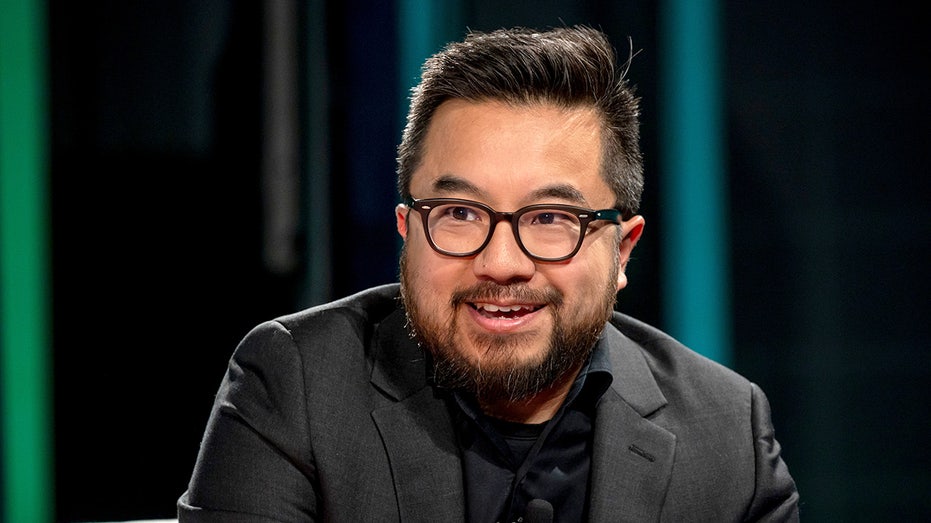
Y Combinator CEO and founder Garry Tan launched “Garry’s List” to educate voters about California politics. (David Paul Morris/Bloomberg via Getty Images)
“Some people have decided to leave our state as some kind of heroic thing. Like, ‘I’m going to Florida,’” Ripple Chairman Chris Larsen said at the event, according to the Post’s report. “That is not brave. That’s surrender. So, let’s get involved. Let’s take back our state.”
Larsen said the group needs to “fight on par with the unions when they’re proposing stupid job-killing ideas like the San Francisco CEO tax.”
He also called out Democratic politicians who are competing to become the party’s nominee for California governor, including former Democratic presidential primary candidate Tom Steyer, Rep. Eric Swalwell and former Rep. Katie Porter for supporting the union-backed CEO tax.
O’LEARY BLASTS CALIFORNIA WEALTH TAX AS ‘BAD MANAGEMENT,’ CALLS ON RESIDENTS TO ‘HIRE’ NEW LEADERS

Policies such as the San Francisco CEO tax and a proposed wealth tax targeting billionaires have sparked pushback from California centrists. (Justin Sullivan/Getty Images)
He said it’s “really disappointing,” and it reflects the pressure that labor unions have put on the state’s elected officials. Larsen added that while the group isn’t anti-union, it aims to balance labor’s ability to influence elected officials.
Y Combinator CEO Garry Tan hosted the event after he launched “Garry’s List” last month to serve as a “citizen’s union” to support centrist candidates in California who are supportive of policies to improve the state’s schools and addressing issues related to housing and public safety.
Tan criticized Steyer, saying he’s attempting to “buy the governor’s mansion to raise your taxes,” and praised Mahan as the “next governor of California.”
TOP DEMS SANDERS AND REICH RAMP UP BILLIONAIRE TAX PUSH, SAY WEALTHY HAVE ‘ADDICTION’ TO GREED
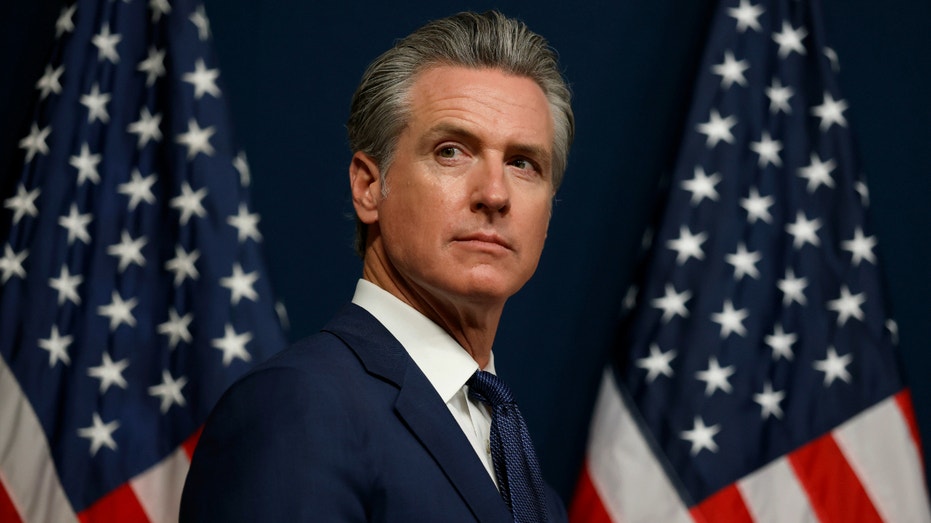
The hotly contested Democratic primary to replace Gov. Gavin Newsom will be a flashpoint for the brewing battle between centrists and progressives. (Justin Sullivan/Getty Images)
The Post’s report noted that Garry’s List is focusing on voter education efforts through a blog Tan writes with the assistance of AI. Tan launched the site criticizing anti-growth policies, wealth taxes and a strike by San Francisco teachers.
Garry’s List is one of several groups that have been formed in an effort to stem the leftward lurch of California’s politics.
A group called Grow California was created by Larsen and Tim Draper, which will spend about $40 million to support “pragmatic” candidates focused on addressing issues like the cost of living.
GET FOX BUSINESS ON THE GO BY CLICKING HERE
Another group called Building a Better California was launched by former Google CEO Eric Schmidt, venture capitalist Michael Moritz and other tech leaders. It has raised over $45 million to help advance initiatives to reform tax policy and spur development.

Online businesses in the UK are expected to move quickly. New tools, AI systems and cloud services appear almost daily, and companies that hesitate risk falling behind competitors.
At the same time, the regulatory landscape is becoming more demanding, forcing businesses to slow down and consider compliance before rolling out new features.
This tension is particularly critical for the backbone of the British economy. UK SMEs numbered 5.49 million in 2024, representing 99.8% of all private sector businesses. These smaller entities often lack the dedicated legal departments and compliance officers that their blue-chip counterparts possess, yet they are held to similar standards regarding data protection, financial reporting, and operational resilience. The conflict between the need for speed and the requirement for safety has become the defining operational struggle of 2026.
The UK’s Expanding Online Regulations
Recent legislation shows how much the environment is changing. New duties under the Online Safety Act came into force in January 2026, placing stronger obligations on digital platforms to monitor toxic content, carry out formal risk assessments and document how their services manage online safety. For companies building social platforms, messaging tools or recommendation systems, compliance can no longer be treated as an afterthought.
The Data (Use and Access) Act 2025 is being phased in across 2025 and 2026. The law introduces new frameworks around smart data sharing, digital identity and updated rules for how organisations handle personal data. While parts of the reform are designed to support innovation, they also add new governance and reporting requirements that businesses must keep up with.
Similar pressures can be seen in highly regulated digital industries such as online gambling. Recent UK reforms have introduced stronger affordability checks, forcing operators to redesign payment systems, onboarding processes and promotional tools to remain compliant. Additionally, new LCCP SR Code 5.1.1 rules on promotions ban “mixed‑product” offers such as “bet on sports, get free spins,” and cap wagering requirements on bonuses; these apply to sports‑betting promos.
However, this also shows that the competitive environment in online marketplaces may also change as a result of regulatory tightening. Many globally based platforms operate under various legal frameworks and so offer larger betting markets or fewer product limitations and are not subject to the country’s self-exclusion program (source: https://www.gamblinginsider.com/uk/non-gamstop-betting-sites). UK-licensed operators must adjust to stake limits, affordability checks, and tougher advertising guidelines. This leads to a scenario where customer choice and product design are influenced by regulatory protections. In actuality, it draws attention to the continuous conflict between preserving a competitive atmosphere that still encourages innovation and safeguarding users through regulation.
While these measures are intended to strengthen consumer protection, they also showhow digital businesses must constantly adapt their technology and product design to operate within evolving legal frameworks.
Taken together, these changes illustrate the balancing act facing many digital firms. Innovation is still encouraged, but it now happens within a much denser network of rules covering data use, online safety and consumer protection.
Rising Compliance Costs Challenge Small Business Scalability
The administrative burden placed on growing companies has moved from a periodic annoyance to a constant operational drag. Before, compliance was often a box-ticking exercise conducted annually, but today’s digital-first environment demands continuous monitoring. Regulations such as the Digital Operational Resilience Act (DORA) and strict ICO data enforcement mean that businesses must constantly prove their cyber posture.
This redirects critical resources away from research and development. It forces founders to choose between hiring a new developer to build features or a compliance manager to ensure those features do not violate emerging protocols.
Nowhere is this contention more apparent than in the government’s own incentive schemes designed to foster growth. While tax reliefs are intended to fuel innovation, the complexity of accessing them has created a barrier for many legitimate businesses. For the 2022-2023 tax year, 62,015 SMEs made R&D tax relief claims, with the majority coming from information & communication and manufacturing sectors.
However, the administrative layers added to prevent fraud have inadvertently slowed down the funding cycle for honest innovators. When the cost of compliance begins to approach the value of the incentive itself, businesses naturally pull back on the risky, forward-thinking projects that the economy desperately needs to thrive.
Strategies For Maintaining Agility Amidst Bureaucratic Constraints
To survive heavy regulation, successful SMEs are changing how they view compliance. Rather than treating it as a final hurdle to clear before launch, forward-thinking leaders are integrating “compliance by design” into their workflows. This involves using automated regulatory technology (RegTech) that can monitor data flows and report anomalies in real-time, effectively outsourcing the heavy lifting to software.
By automating the evidence-gathering process, businesses can free up their human talent to focus on creative problem-solving and strategic growth, ensuring that innovation continues despite the red tape.
The relationship between large enterprises and their smaller suppliers will most likely dictate the pace of digital adoption. Large corporations are increasingly pushing their own regulatory obligations down the supply chain, demanding that their vendors meet the same high standards they do.
New regulations mean SMEs must provide real-time security evidence to larger clients, moving beyond annual audits to 24/7 resilience demonstrations by 2026. For the UK’s small business community, the path forward involves embracing these standards not as burdens, but as quality markers that can unlock lucrative contracts in a risk-averse world.

What does it mean to build a life around ideas instead of outcomes?
For Mara Naaman, it means choosing process over praise. It means writing, teaching, and thinking in ways that resist shortcuts. And it means leading in a field where cultural work still matters.
Naaman is an independent scholar, writer, and editor based in New York. She is a former professor of Comparative Literature and Arabic at Williams College. She is also at work on a novel.
But her path to this point did not follow a straight line.
Early Life and Education: From Dance to Arabic Literature
Mara Naaman was born in Oakland, California. She grew up in Michigan with a single mother who painted at night. She is an only child. Her grandparents were Iraqi immigrants. Family gatherings were filled with Iraqi cousins, large tables of food, and stories.
Art came early.
She trained seriously as a dancer through high school and college. She attended Interlochen Arts Academy, a boarding school for the performing arts. There, she studied dance and won a Young Artists Award in creative writing.
The shift from dance to literature was gradual, not dramatic.
“I don’t like to think in terms of success or outcomes,” Naaman says. “Being invested in process means being able to learn for the sake of our own enlightenment.”
At Wesleyan University, she majored in English, while continuing to dance. She began studying Arabic. She wrote her senior thesis on Magical Realism in Arabic Literature and graduated with honors in 1996.
That decision shaped the rest of her career.
She later entered a PhD program in Arabic Literature at Columbia University. She lived in Cairo for several years. She traveled across the Middle East to deepen her language skills. Her dissertation focused on literary representations of downtown Cairo. It received high honors in 2008.
Today, she is also pursuing an MFA in Creative Writing at the City College of New York.
Academic Career: Teaching, Research, and Leadership
After completing her PhD, Naaman built a strong academic career.
She served as Assistant Professor of Comparative Literature and Arabic at Williams College from 2007 to 2014. She also held roles at Columbia University, Hofstra University, and New York University. From 2015 to 2017, she worked as Associate Director of Programs at the Modern Language Association in New York.
In 2022, she received a University of Chicago Outstanding Educator Award.
Her research focuses on contemporary Arabic and American cultural production. She also studies gender and working-class identity. Her work connects literature to daily life. It asks how cities, labor, and identity shape the stories we tell.
“I consider myself a culture worker,” she says. “What we contribute to this world, how we treat others, and human connection are what’s most important.”
That mindset guides both her scholarship and her teaching.
She does not frame education as a race. She sees it as immersion.
“Thinking beyond a ‘success mindset’ means fully immersing ourselves in our lives,” she explains. “It means seeking fulfillment and a sense of purpose.”
Fulbright Scholar and Global Experience in Cairo
Naaman’s career includes several major fellowships. She was a Fulbright IIE Scholar in Cairo from 2006 to 2007. She also earned multiple fellowships through Columbia University, including a President’s Fellowship and a FLAS Fellowship in Arabic.
Her time in Cairo was not just academic. It was lived experience.
She studied at the Center for Arabic Study Abroad at The American University in Cairo. She walked the streets she later wrote about in her dissertation. She observed how literature reflects real neighborhoods and real lives.
That mix of scholarship and lived context defines her work.
She does not separate theory from experience.
“Being who I want to be in the world means a willingness to embrace uncertainty,” she says. “To accept that the world is tragic and that I am deeply flawed but to still go on seeking inspiration and trying to be a force for good.”
Writing, Process, and Life in New York
Today, Naaman lives in New York with her husband and two children. She balances teaching, writing, and family life.
Her routines are simple.
“Write lists, look at my calendar, keep screen time to a minimum,” she says.
She runs. She practices yoga. She cooks when time allows. She reads widely. She is a member of the Association of Writers and Poets.
When asked what keeps her going, she points to her mother.
“I remember how much my mother has had to fight to survive all her life,” she says. “I keep reading.”
Her focus now includes fiction. She is working on a novel while continuing her scholarly and editorial work. The move toward creative writing feels like a return, not a pivot. After all, she began as a dancer and a young writer.
Why Mara Naaman’s Work Matters Today
In a culture driven by metrics and visibility, Naaman offers a different model of leadership.
She resists efficiency language. She questions the idea that worth equals output. She encourages students and readers to slow down and think deeply.
“Being ‘success-oriented’ distracts us from what is most important,” she says. “The journey matters.”
Her influence spans classrooms, conferences, and cultural institutions. She has trained students in Arabic language and literature. She has shaped programs at the Modern Language Association. She continues to publish, teach, and write fiction.
Naaman’s leadership is quiet but steady. It is rooted in human connection. It is grounded in scholarship. And it is shaped by a belief that culture is not a luxury. It is essential.
In her words, “What we create and how we treat others are what’s most important.”
That idea defines her career. And it may define her legacy.

The future of Corey Lewandowski, the controversial senior advisor to the Department of Homeland Security (DHS), remains in flux following President Donald Trump’s decision this week to remove Kristi Noem as the agency’s secretary.

The departure of Noem, the first cabinet-level shake-up of Trump’s second term, has sent shockwaves through the department and raised immediate questions about the standing of her closest aides. While the White House has announced that Oklahoma Republican Sen. Markwayne Mullin will be nominated to succeed Noem, official word on the status of Lewandowski—who served as an unpaid special government employee (SGE) and Noem’s top aide—has yet to be finalized.
A Tumultuous Tenure Ends
President Trump announced on social media Thursday that he was replacing Noem, citing a desire for new leadership while also thanking her for her service. Noem, who has been at the center of the administration’s aggressive immigration and deportation agenda, is slated to transition to a newly created role as a “special envoy for The Shield of the Americas,” a security initiative the administration plans to unveil in the coming days.
Noem’s tenure, which began in January 2025, was marked by intense scrutiny. Her final week as secretary included two days of grueling testimony before the Senate Judiciary Committee, where she faced sharp, bipartisan criticism regarding the management of her department, including the handling of a $220 million advertising campaign and allegations of mismanagement within Immigration and Customs Enforcement (ICE).
The “Shadow” Role of Corey Lewandowski
Throughout Noem’s time at DHS, Lewandowski’s presence was a frequent flashpoint for congressional investigators and internal critics. Despite holding a position as an unpaid advisor rather than a traditional political appointee, reports from ProPublica and other news outlets indicated that Lewandowski exerted significant influence over department operations.
Internal DHS records reviewed by investigators revealed that Lewandowski frequently signed off on multimillion-dollar equipment contracts and policy changes, appearing to wield authority that went well beyond the typical scope of an informal advisor. His unusual status as an SGE allowed him to retain outside interests while serving in a de facto leadership role, leading to ongoing clashes with oversight committees who questioned the transparency of his influence.
Reports also emerged of a strained internal culture, with allegations of berating staff and the use of polygraph tests to enforce loyalty. Furthermore, rumors regarding a personal relationship between Noem and Lewandowski persistently circulated, further fueling the political pressure surrounding the pair. Both Noem and Lewandowski have consistently dismissed those allegations.
Transition and Lingering Questions
Following the announcement of Noem’s removal, Lewandowski reportedly told reporters that “no decisions have been made” regarding his own future at the department. However, multiple sources close to the administration suggest his departure is imminent, as the transition to the incoming secretary, Sen. Mullin, is expected to include a broader assessment of the agency’s leadership team.
The nomination of Mullin, a fierce defender of the president’s agenda, is viewed by political analysts as a strategic effort to stabilize a department that has been mired in controversy and stalled by a congressional funding deadlock. Democrats in Congress, who have been vocal in their opposition to the department’s direction under Noem, welcomed her firing while signaling that significant policy shifts remain their primary objective for the incoming leadership.
“Secretary Noem’s tenure at DHS was a trainwreck marked by mismanagement,” U.S. Sen. Jack Reed (D-RI) said in a statement following the announcement. “Her departure is overdue, but it doesn’t solve the deeper problems at Trump’s DHS.”
Looking Toward the Senate
The confirmation of Sen. Mullin will now become the administration’s immediate priority. While Republicans hold the majority, the nomination is expected to be a contentious focal point on Capitol Hill, as lawmakers look to exert more control over the department’s controversial immigration enforcement operations.
For now, the hallways of the DHS headquarters in Washington remain in a state of transition. As the agency prepares for a change at the top, the uncertainty surrounding Lewandowski serves as a coda to a tenure defined as much by internal turmoil as it was by the administration’s sweeping policy goals.


Ex-Walmart US chief gives first take on supermarket chain’s business strategy.


Three new product lines are available for babies and children.

TOKYO — The 2026 World Baseball Classic (WBC) began in emphatic fashion at the Tokyo Dome on Friday, as defending champion Japan signaled its intent for a repeat title with a commanding 13-0 mercy-rule victory over Chinese Taipei.

In front of a sold-out crowd of 42,414, the contest quickly evolved into a showcase for global superstar Shohei Ohtani. The Los Angeles Dodgers designated hitter, who famously closed out the 2023 tournament by striking out his then-teammate Mike Trout, proved once again that he thrives under the brightest international lights.
An Explosive Second Inning
The decisive moment of the night arrived in the top of the second inning, which saw Japan erupt for 10 runs—a staggering display of efficiency that all but ended the competitive phase of the matchup.
After Chinese Taipei starter Hao-Chun Cheng loaded the bases, Ohtani stepped to the plate with two outs. He connected on a hanging curveball, driving it deep over the right-field wall for a grand slam. The blast sent the Tokyo Dome into a frenzy and served as the centerpiece of a record-setting inning that effectively buried the opposition.
By the time the inning concluded, Ohtani had already recorded a double in his first at-bat and a stinging single later in the second, finishing his night 3-for-5 with five RBIs. He fell just a triple shy of hitting for the cycle, a testament to his dominance in a game that was called after seven innings due to the tournament’s 10-run mercy rule.
Pitching Prowess and Defensive Stability
While the offense grabbed headlines, Japan’s pitching staff was equally surgical. Yoshinobu Yamamoto, the 2025 World Series MVP, took the mound for his first start of the 2026 season. Though he battled minor command issues—walking three batters and leaving the game in the third inning after 53 pitches—he surrendered no hits.
Yamamoto and a trio of relievers—Shoma Fujihira, Hiroya Miyagi, and Koki Kitayama—combined to hold Chinese Taipei to just a single hit throughout the entire evening. The lone hit, a loopy single into right field by Yu Chang in the sixth inning, offered a brief moment of respite for the visitors, but the Japanese defensive unit remained unfazed.
“It was a complete team effort,” Japan manager said after the game. “We wanted to set the tone early, and the players executed the game plan perfectly.”
A Mountain to Climb for Chinese Taipei
For Chinese Taipei, the loss compounds a difficult start to the tournament. Having fallen to Australia 3-0 in their opener on Thursday, the team now faces an uphill battle to advance out of the highly competitive Pool C.
The disparity in the score reflected the gap between the two programs; while Japan utilized its depth of MLB talent and elite domestic stars, Chinese Taipei struggled to find an answer for the relentless offensive pressure. They will look to regroup quickly as they prepare for their next matchup against the Czech Republic.
Looking Ahead: The Rivalry Continues
With the tournament’s round-robin phase now fully underway, Japan turns its attention to the next marquee matchup in Pool C. On Saturday, they will face arch-rival South Korea in a game that historically carries massive implications for the tournament bracket and national pride.
For fans in Tokyo and beyond, Friday’s performance was more than just a victory; it was a statement. With Ohtani leading the charge and a pitching staff that appears to be in mid-season form, the path to the 2026 WBC title remains firmly centered on the Samurai Japan squad.
As the tournament shifts to venues across the Americas—including Houston, San Juan, and Miami—the pressure will only increase. But for one night in Tokyo, the spotlight belonged to Ohtani and a Japanese team that looks ready to defend its crown.

USWNT keep experimenting ahead of SheBelieves finale

You can’t see this tiny sensor with your eyes, but it can solve processor heating woes

He Owes $500 Million?Shannon Sharpe EXPOSES Floyd Mayweather’s Financial Trouble#boxing#boxingshorts


-

 Politics4 days ago
Alan Cumming Brands Baftas Ceremony A ‘Triggering S**tshow’
-

 Tech6 days ago
Unihertz’s Titan 2 Elite Arrives Just as Physical Keyboards Refuse to Fade Away
-

 NewsBeat6 days ago
Abusive parents will now be treated like sex offenders and placed on a ‘child cruelty register’ | News UK
-
Business6 hours ago
Form 8K Entergy Mississippi LLC For: 6 March
-
 NewsBeat6 days ago
Dubai flights cancelled as Brit told airspace closed ’10 minutes after boarding’
-
Sports7 days ago
The Vikings Need a Duck
-
 NewsBeat6 days ago
The empty pub on busy Cambridge road that has been boarded up for years
-

 NewsBeat5 days ago
‘Significant’ damage to boarded-up Horden house after fire
-

 Tech2 days ago
Bitwarden adds support for passkey login on Windows 11
-

 Entertainment5 days ago
Baby Gear Guide: Strollers, Car Seats
-
 Sports1 day ago
499 runs and 34 sixes later, India beat England to enter T20 World Cup final | Cricket News
-
Politics6 days ago
FIFA hypocrisy after Israel murder over 400 Palestinian footballers
-
 NewsBeat5 days ago
Emirates confirms when flights will resume amid Dubai airport chaos
-

 NewsBeat4 days ago
Is it acceptable to comment on the appearance of strangers in public? Readers discuss
-

 Tech6 days ago
Viral ad shows aged Musk, Altman, and Bezos using jobless humans to power AI
-

 Video4 days ago
How to Build Finance Dashboards With AI in Minutes
-

 Fashion5 days ago
On the Scene at the 57th Annual NAACP Image Awards: Teyana Taylor in Black Ashi Studio, Colman Domingo in Yellow Sergio Hudson, Chloe Bailey in Christian Siriano, and More!
-

 Business3 days ago
Guthrie Disappearance Enters Fifth Week as Family Visits Memorial
-
 Crypto World6 days ago
US Judge Lets Binance Unregistered Token Class Action Proceed
-
 NewsBeat5 days ago
Ukraine-Russia war latest: Belgium releases video showing forces boarding Russian shadow fleet oil tanker