

Crypto World
Vancouver’s Bitcoin Reserve Faces City Bureaucrats’ Pushback


Vancouver’s financial staff have recommended against establishing a dedicated Bitcoin reserve, arguing the move would breach the Vancouver Charter and advising the council to drop the proposal. In a March 2 motions update, Colin Knight, who heads the Finance and Supply Chain Management department, stated that Bitcoin (CRYPTO: BTC) cannot be held as an allowable investment for the city. The recommendation comes after Mayor Ken Sim had floated the idea in 2024 as part of a broader effort to diversify reserves and embrace digital assets. Although the proposal previously cleared the council with bipartisan support, staff now say a pragmatic path forward is to merge the initiative with related workstreams and defer a formal decision until the March 10 council meeting. The context is further colored by ongoing debates about Bitcoin’s role as an inflation hedge and the asset’s recent price gyrations.
Key takeaways
- Vancouver staff concluded Bitcoin cannot be considered an allowable municipal investment under the Vancouver Charter, effectively blocking a dedicated Bitcoin reserve.
- The original proposal, spearheaded by Mayor Ken Sim in late 2024, aimed to diversify the city’s reserves and position Vancouver as a Bitcoin-friendly city; it had received council support in earlier votes.
- The strategy’s momentum faced a heads-up from macro-market dynamics, with Bitcoin’s inflation-hedge narrative challenged as the asset’s price retreated from its peak in 2025.
- Staff recommended folding the Bitcoin reserve idea into other priorities, with a final decision expected at the March 10 council meeting.
- Analysts remain divided on Bitcoin’s near- to mid-term role as a treasury hedge, with some staying bullish while others caution against relying on the narrative amid volatility.
Tickers mentioned: $BTC
Market context: The Vancouver staff decision reflects the tension between public-treasury policy constraints and the evolving crypto market narrative. While some policymakers and economists have highlighted Bitcoin as a potential inflation hedge, municipal treasuries must operate within charter provisions and risk frameworks. The discussion in Vancouver mirrors broader debates about whether public funds should allocate to volatile digital assets, especially as BTC has experienced pronounced drawdowns after a multi-year rally.
Why it matters
The case unfolding in Vancouver highlights how municipal governance intersects with crypto asset policy. If a major metropolis cannot classify Bitcoin as an allowable investable asset, it signals the seriousness of charter constraints that curb public exposure to asset classes with inherently high volatility and regulatory uncertainty. For investors and builders in the crypto space, the outcome may affect the tempo of public-sector pilots or pilot-like programs in other jurisdictions, nudging cities to pursue more conservative treasury strategies or to explore non-custodial partnerships and educational initiatives rather than direct holdings.
From a market perspective, the incident underscores that Bitcoin’s appeal as a potential hedge is not static. While proponents have described BTC as “digital gold” due to its capped supply, the asset has weathered tough macro conditions, with price action testing the resilience of the inflation-hedge thesis. In recent cycles, price volatility has intensified discussions about whether institutions and public bodies should treat BTC as a long-duration store of value or a speculative instrument. The Vancouver update underscores a broader caution that policy decisions can lag or diverge from rapid shifts in market sentiment, potentially shaping how future public-sector experiments with digital assets are framed.
For city staff and policymakers, the decision sets a precedent on how to reconcile long-term financial resilience with legal and governance constraints. Proponents argued that diversifying reserves could help counter inflationary pressures and preserve purchasing power, but skeptics pointed to charter limits, risk tolerance, and the need for clear governance frameworks. This tension—between ambition for innovative treasury tools and the discipline of municipal finance rules—will likely inform future discussions in Vancouver and similar jurisdictions as crypto assets remain part of the broader policy conversation.
What to watch next
- March 10 council vote: whether to drop the Bitcoin reserve motion entirely or to flesh out a merged initiative that remains within charter constraints.
- Any formal amendments to Vancouver’s investment policy or treasury framework that could reflect a more nuanced approach to digital assets without direct holdings.
- Subsequent clarifications from city staff on the precise language of “allowable investments” under the Vancouver Charter and how it applies to digital assets.
- Public and expert commentary on Bitcoin’s ongoing role as an inflation hedge in the context of municipal-level risk management.
- Broader municipal-stewardship experiments with crypto assets in other Canadian cities, which could foreshadow a wider policy trajectory if Vancouver’s stance evolves.
SOURCES & verification
- Vancouver City Council motions update report dated March 2, linked in the council documentation
- The late-2024 motion introduced by Mayor Ken Sim titled “Preserving the City’s Purchasing Power Through Diversification of Financial Reserves — Becoming a Bitcoin-Friendly City”
- Cointelegraph coverage on Vancouver’s Bitcoin-friendly city initiative and subsequent council vote
- Cointelegraph reporting on Bitcoin’s inflation-hedge narrative and price movements referenced in the discussion
Bitcoin’s change of course in municipal finance
The Vancouver episode provides a focused lens on how public funds intersect with crypto policy. The staff’s conclusion—that Bitcoin cannot be classified as an allowable investment under the Vancouver Charter—does not erase the underlying questions about digital assets’ place in government balance sheets. It signals a move toward caution, prioritization, and policy alignment over rapid adoption of new asset classes in municipal reserves. While the market continues to debate Bitcoin’s long-term role as an inflation hedge, public finance remains anchored in governance, risk tolerance, and legal frameworks that govern how treasury assets are defined, managed, and reported.
What to watch next
As Vancouver prepares for its March 10 council session, observers will look for whether staff’s recommendations are accepted as-is or if the motion is redesigned to fit within the city charter while preserving the broader objective of financial resilience. The outcome could influence similar deliberations in other jurisdictions, where the balance between innovation and prudence remains a central theme in the governance of public funds and digital assets.
What to watch next
- March 10 council meeting: final decision on the merged approach or outright dismissal of the Bitcoin reserve proposal.
- Clarifications on allowed investments under the Vancouver Charter and potential policy updates to treasury guidelines.
- Public communication from the city explaining how any future exploration of digital assets would be conducted with safeguards and reporting standards.


A Seattle judge sentenced Nevin Shetty, the former chief financial officer of a local startup, to two years in prison after a jury found him guilty of wire fraud tied to a covert crypto venture. Prosecutors say Shetty secretly moved around $35 million of company funds to a cryptocurrency platform he controlled as a side business, channeling the money into high-yield DeFi lending protocols in 2022. The transfers went undetected by executives and the board until a market downturn exposed the scheme. Indicted in May 2023 and convicted on four counts in November 2025, Shetty was ordered to repay the stolen funds and will face three years of supervised release after serving his sentence. The case unfolds amid a wider crypto winter and the Terra ecosystem crash in 2022, which underscored the sector’s volatility and governance risks.
Key takeaways
- The CFO allegedly diverted approximately $35 million from a Seattle startup to a crypto platform he controlled as a side business in 2022, moving funds to HighTower Treasury before a market downturn.
- Initial returns appeared promising, with about $133,000 earned in the first month, but those gains were short-lived as the Terra-related downturn and broader market conditions reversed the position, leading to a near-total loss by May 13, 2022.
- The misappropriation remained hidden from the board and executives until the scheme’s exposure during market stress, after which Shetty was terminated from the company.
- Shetty was indicted in May 2023 and later found guilty on four counts following a nine-day jury trial in November 2025, marking a high-profile enforcement action in crypto-related corporate fraud.
- The sentence requires repayment of the stolen funds and imposes three years of supervised release in addition to the two-year prison term, highlighting consequences for fraud in crypto-enabled ventures.
- Contextual factors include the Terra ecosystem collapse in 2022 and the broader regulatory and enforcement environment surrounding crypto-related misconduct and corporate governance.
Market context: The case arrived amid heightened regulatory scrutiny of crypto-related fund movements and DeFi activity, with investors and policymakers watching closely how startups manage corporate assets in a volatile market. The Terra meltdown in 2022 contributed to a period of risk-off sentiment, while high-profile incidents such as the FTX collapse underscored the need for stronger governance, disclosure, and accountability when crypto instruments intersect with corporate funds.
Why it matters
The court outcome reinforces the fundamental principle that corporate funds, even when they move through crypto channels, remain subject to fiduciary duties and return obligations. For startups, the Shetty case underscores the imperative of robust internal controls, independent oversight, and clear separation between business operations and personal crypto ventures. When executives borrow or divert company capital into volatile DeFi strategies, the risk is not only financial losses but potential legal exposure for fraud and embezzlement. The decision serves as a cautionary milestone for small firms navigating the frontier between traditional corporate finance and rapidly evolving crypto instruments.
Beyond the specific individuals involved, the episode sheds light on governance gaps in early-stage tech firms that experimentally engaged crypto funding or DeFi strategies. While diversification and alternative funding channels can offer value, misalignment between management incentives and shareholder interests can lead to scenarios where value is eroded swiftly as markets turn. The Terra-related downturn of 2022, which contributed to the decline in crypto asset valuations, framed a period in which the line between investment strategy and personal venture became dangerously blurred for some executives.
From a policy perspective, the case accentuates the ongoing need for clear reporting requirements, enhanced internal audit capabilities, and accountability mechanisms when corporate leaders pursue crypto opportunities with corporate money. It also highlights the legal framework surrounding wire fraud prosecutions in cases where crypto assets and DeFi activities are used to enrich private interests at the expense of a company and its stakeholders.
For investors and prosecutors alike, the story underlines a broader truth about the crypto era: enthusiasm for new financial rails must be matched by stringent governance, transparent disclosures, and rigorous risk management to protect both enterprises and their communities. The legal resolution in this instance may influence how similar cases are pursued, particularly where cross-currents of corporate finance, DeFi yield farming, and market volatility intersect.
Video coverage and trial glimpses are available here: YouTube video.
Additional context around related cases and the evolving enforcement landscape can be found in prior reporting on the matter, including official statements and analyses tied to the indictment and subsequent verdict.
Note: The developments sit alongside broader industry events, such as the FTX collapse and ongoing appellate proceedings related to that case, which illustrate the persistent risk environment in crypto markets and the judiciary’s role in resolving disputes that straddle traditional finance and decentralized finance.
What to watch next
- Post-sentencing restitution: monitoring how the court enforces repayment of the $35 million or facilitates recovery from related assets.
- Appeals and potential changes in the case record: any appellate filings or rulings that could modify the outcome or sentence.
- Regulatory and governance reforms at startup and corporate venture levels to prevent similar misappropriations.
- Impact on HighTower Treasury and any related platforms as new compliance and risk controls are evaluated.
Sources & verification
- Department of Justice press release: Former CFO sentenced to two years in prison for $35 million theft from a Seattle tech firm. https://www.justice.gov/usao-wdwa/pr/former-cfo-sentenced-two-years-prison-35-million-theft-start-tech-firm
- DOJ press release: Indictment for wire fraud related to diverted funds to a cryptocurrency venture (May 2023). https://cointelegraph.com/news/former-cfo-indicted-for-diverting-35m-to-cryptocurrency-venture
- Official court and docket coverage referenced in contemporaneous reporting and subsequent verdict details. https://cointelegraph.com/news/ftx-sam-bankman-fried-returns-court-appeal
Gavel falls on former CFO who siphoned funds into DeFi bets
A Seattle startup’s former chief financial officer, Nevin Shetty, faced a judicial reckoning after prosecutors alleged a calculated scheme to divert company funds into a cryptocurrency venture that operated on the side. In 2022, according to the Department of Justice, Shetty covertly redirected roughly $35 million from the startup’s coffers to a crypto platform he controlled, channeling the money into DeFi lending protocols touted as high-yield investments. The funds were placed on HighTower Treasury, a platform described in court filings as a vehicle for his personal crypto ambitions rather than a legitimate corporate treasury tool. The maneuver proceeded without board or executive oversight, and the board only became aware of the transfer when market volatility exposed the hidden accounts.
Initial performance figures painted a misleading picture. The government noted that Shetty supposedly earned about $133,000 in the first month from these crypto wagers, a figure that many investors would consider a disproportionate return relative to risk. Yet the 2022 market environment—framed in part by a downturn in Terra-linked assets—quickly eroded the value of the crypto positions. By mid-May 2022, authorities said, the investments had collapsed toward zero, erasing the apparent early gains and triggering questions about the source and stewardship of the funds.
According to DOJ filings, Shetty did not disclose the transfers to the startup’s leadership or its board, effectively isolating the activity from proper governance channels. After the initial losses became evident, he disclosed the situation to two other executives and was subsequently fired from his role. The subsequent legal process unfolded over years, culminating in a nine-day jury trial that ended in November 2025 with a four-count conviction on wire fraud charges. The court ordered Shetty to repay the $35 million and imposed three years of supervised release beyond the two-year prison sentence.
The case sits within a broader arc of crypto-focused enforcement that has defined much of the industry’s recent history. It occurred in the wake of the Terra ecosystem’s dramatic downturn in 2022, a sequence of events that rattled investor confidence and intensified scrutiny of how crypto investments intersect with corporate capital. The trial and its outcome also align with ongoing enforcement actions that accompanied the FTX collapse, a watershed event that reshaped public and regulatory expectations for crypto exchanges, corporate risk disclosures, and the accountability of executives who oversee digital asset ventures.
For readers tracking the legal and regulatory environment around crypto, the Shetty case underscores a persistent risk: when corporate resources are funneled into personal crypto ventures, the consequences extend beyond financial losses, potentially triggering criminal charges, restitution requirements, and long-term reputational damage. It serves as a reminder that governance frameworks, internal controls, and transparent reporting remain essential as startups navigate an industry characterized by rapid innovation and heightened volatility.
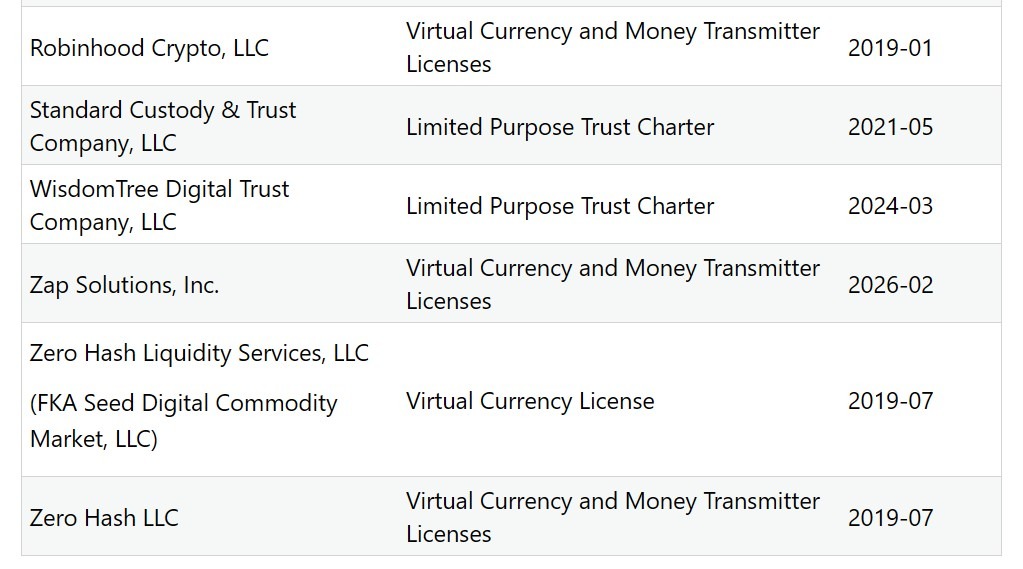
Payments company Strike received a virtual currency license and a money transmitter license (MTL) from the New York State Department of Financial Services (NYDFS), allowing the company to offer its Bitcoin services to residents and businesses in New York.
Granted in February, the approvals authorize Zap Solutions, Inc., which does business as Strike, to operate under New York’s digital asset regulatory framework, the company said in a Thursday release.
New York residents can now use Strike to buy and sell Bitcoin (BTC), set recurring or price-targeted purchases and convert direct-deposited paychecks into Bitcoin. The platform also allows users to pay bills from Bitcoin balances and withdraw funds to self-custody wallets.
“Receiving our BitLicense is a defining milestone for Strike,” founder and CEO Jack Mallers said in a statement, adding that the approval allows the company to expand its Bitcoin-based financial services in a major financial market.

A BitLicense allows companies to conduct digital currency business with New York residents, but does not by itself authorize nationwide operations.
Companies looking to operate across the US must typically obtain MTLs in other states as well.
Related: MoonPay to operate in all 50 US states after NY BitLicense approval
The framework requires companies to maintain capital reserves, implement Anti-Money Laundering (AML) controls and undergo regular regulatory examinations.
NY approvals remain a key step for US crypto companies
The approvals are another step in Strike’s US expansion, with New York’s stringent licensing framework often serving as a benchmark for crypto companies seeking regulated market access.
Others holding BitLicenses in New York include MoonPay, Coinbase, eToro, Robinhood and Circle, according to NYDFS records.
New York regulators have also taken enforcement action against license holders. In 2024, Genesis Global Trading agreed to surrender its BitLicense and pay an $8 million penalty to the regulator after investigators found failures in its AML and cybersecurity programs.
In 2025, Adrienne Harris, former superintendent of the New York State Department of Financial Services, said the state has an “outsized role to play” in the crypto ecosystem and that lawmakers frequently consult the regulator when drafting digital asset legislation.
Magazine: What’s a ‘Network State’ and are there real-life examples? Big Questions

TLDR:
- Binance processed over 71,000 law enforcement requests in 2025, helping seize $752 million in illicit assets worldwide.
- Exposure to illicit wallets on Binance dropped nearly 97% between January 2024 and July 2025, per blockchain analytics data.
- Hexa Whale and Blessed Trust were offboarded following proactive internal investigations, not media pressure or regulatory orders.
- Binance denied WSJ claims of 2,000 Iranian-linked accounts, linking the allegation to its ongoing VPN circumvention detection efforts.
Binance has formally responded to a February 24, 2026 letter from U.S. Senator Richard Blumenthal of the Permanent Subcommittee on Investigations.
The exchange giant directly challenged allegations drawn from recent media reports by the New York Times, Fortune, and the Wall Street Journal.
In its response, the company defended its compliance program, disputed claims about Iranian user accounts, and addressed the treatment of former employees. The letter was published publicly on March 6, 2026.
Compliance Record and Enforcement Cooperation
The company stated that it has invested hundreds of millions of dollars building its compliance infrastructure. Over 1,500 specialists currently work across sanctions, counter-terrorism financing, and financial crime investigations.
Binance also deploys more than 25 advanced monitoring tools for transaction screening and behavioral analytics.
In 2025, the exchange processed more than 71,000 law enforcement requests globally. Over the past three years, it also assisted in seizing more than $752 million in illicit assets, with nearly $579 million recovered for U.S. agencies. These figures reflect a broad commitment to supporting law enforcement operations worldwide.
Richard Teng, Binance’s CEO, addressed the matter publicly on social media. He wrote, “We’ve voluntarily responded to Senator Blumenthal’s inquiry which raises false and defamatory allegations reported by the WSJ.” He further noted that the company’s response was meant to protect its more than 300 million users.
Additionally, blockchain analytics data showed that Binance’s exposure to illicit wallets dropped from 0.284% to just 0.009% of total exchange volume between January 2024 and July 2025.
That represents a decrease of nearly 97% over the period. Exposure to major Iranian crypto exchanges also fell by 97.3% in two years, from $4.19 million to $110,000.
The response also referenced the T3 Financial Crime Unit, which froze over $300 million in its first year of operation alone. This network operates in real time and acts before tainted funds can move further in the system.
Hexa Whale, Blessed Trust, and Employee Matters
Regarding the two entities named in the Senator’s letter, Binance clarified that both investigations began following law enforcement inquiries.
In April 2025, law enforcement flagged wallet addresses with potential terrorist financing ties. Binance then launched a comprehensive internal review that went beyond the original request. Hexa Whale was subsequently offboarded on August 13, 2025.
Similarly, the Blessed Trust investigation began in summer 2025 after a separate law enforcement request. After a thorough source of funds analysis, Binance offboarded the entity in January 2026. The company stated that no Binance account had transacted directly with an Iran-based entity in either case.
On the Iranian account allegation, the company was direct. The WSJ claim that Binance identified 2,000 Iranian-linked accounts was described as false.
The company suspects the claim relates to its ongoing efforts to detect VPN circumvention rather than any confirmed Iranian user base. All users must complete mandatory identity verification to use the platform.
On employee matters, the company confirmed that some compliance staff had recently left. Most departures were voluntary resignations.
One employee was terminated for leaking internal user data, not for raising compliance concerns. The company stated clearly that no workers were dismissed for escalating issues internally.
Binance closed its response by affirming its continued commitment to compliance improvements, law enforcement cooperation, and user protection across the global crypto ecosystem.
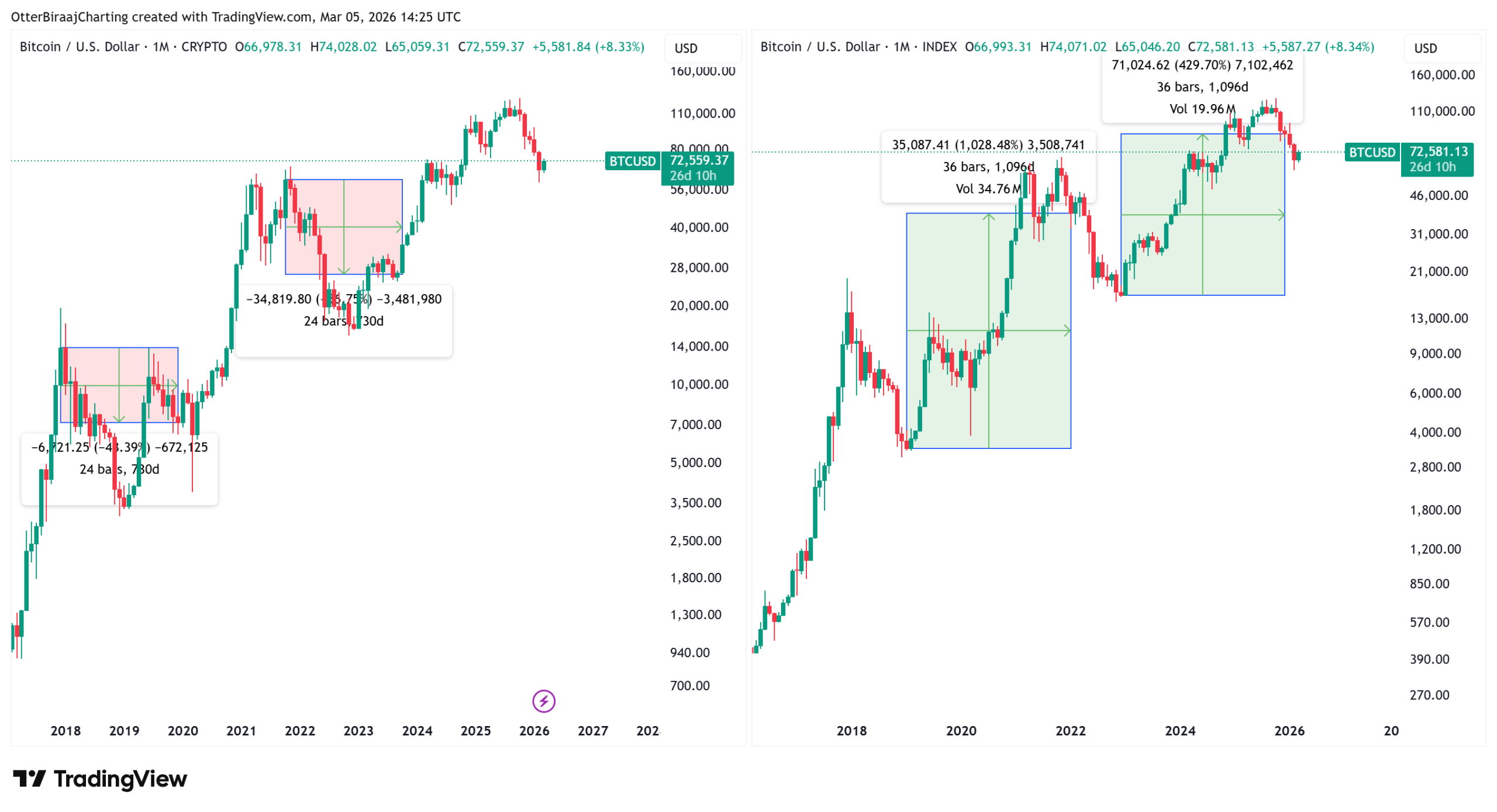
Bitcoin (BTC) gets a bad name among some investors due to its steep double-digit drawdowns that punish late buyers, but data suggests the outcome can change with time.
Since 2017, investors who bought BTC near the market highs faced losses of about 40%–50% in the next two years, but data shows many of those positions turned profitable when held for longer than three years.
By contrast, entries near bear-market lows have historically produced triple-digit percentage returns over similar two to three-year periods. Onchain valuation metrics further help explain where these stronger accumulation zones tend to appear.
Bitcoin cycle data reveals how entry timing affects gains
Bitcoin’s (BTC) long-term performance appears volatile across the shorter two-year holding period. The cycle comparisons show a massive change when the positions extend to three years.
Investors who bought near the 2017 market peak faced a 48.6% loss after two years during the 2018 bear market. Extending the holding period to three years turned that position into a 108.7% gain.

A similar trajectory appeared in the next market cycle. Buyers entering near the 2021 high recorded losses of 43.5% after two years. By the third year, the same entry produced a 14.5% profit.
The entries near bear-market lows generated far larger gains. Buying close to the 2019 bottom produced returns of 871% after two years and 1,028% after three years.
The 2022 cycle low followed a comparable path. Buy positions initiated near that period generated roughly 465% returns after two years and about 429% after three years.

Together, the data highlighted a consistent pattern. Two-year windows expose investors to large drawdowns when entries occur near cycle highs. Three-year holding periods historically move most entries into positive territory, while bottom entries capture the strongest price expansion in both holding periods.
Related: These 4 Bitcoin charts say BTC price is forming a bottom
BTC realized price zones guide bottom entries
BTC’s onchain valuation metrics help identify where these bottom entries have historically occurred.
Bitcoin’s realized price measures the average acquisition price of coins based on their last onchain movement. Deeper drawdowns frequently extend toward the shifted realized price, which smooths the metric forward and highlights the stronger value zones.

These bands have identified long-term accumulation ranges since 2015. Bitcoin’s realized price currently sits near $55,000, while the shifted realized price is around $42,000.
Since 2015, Bitcoin’s realized price bands have repeatedly coincided with the cycle lows, with the price recoveries from these zones initiating multi-year rallies.
The behavior connects closely with the earlier return data. Investors who accumulated near bear-market lows typically entered while the price traded around or below these valuation bands.
Institutional research also highlighted the role of longer holding periods. Bitwise chief information officer Matt Hougan cited a study showing that adding Bitcoin to a traditional 60/40 portfolio increased cumulative and risk-adjusted returns in every three-year period studied. The win rate is 93% across two-year periods, with a roughly 5% allocation producing the strongest balance.
A separate Bitwise review of Bitcoin data from July 2010 through February 2026 showed the probability of loss falls to 0.7% when BTC is held for three years. The risk drops to 0.2% over five years and reaches zero across ten-year holding periods.
The shorter horizons carry more uncertainty. Day traders historically faced a 47.1% chance of losses, while the one-year holding periods still showed a 24.3% probability of being underwater.
Related: Bitcoin bears ‘annihilated’ as analysis sees $65K support test next
This article does not contain investment advice or recommendations. Every investment and trading move involves risk, and readers should conduct their own research when making a decision. While we strive to provide accurate and timely information, Cointelegraph does not guarantee the accuracy, completeness, or reliability of any information in this article. This article may contain forward-looking statements that are subject to risks and uncertainties. Cointelegraph will not be liable for any loss or damage arising from your reliance on this information.
A code dispute has surfaced between Curve Finance and PancakeSwap over the use of StableSwap technology.
Summary
- Curve Finance says PancakeSwap copied parts of its StableSwap code without permission, calling it a license violation.
- PancakeSwap responded that its team is reaching out to Curve to discuss the matter.
- Both sides signaled they prefer cooperation and possible licensing over a legal dispute.
Curve Finance (CRV) has publicly accused PancakeSwap (CAKE) of copying parts of its code without permission.
The allegation was posted on X on March 6. Curve claimed PancakeSwap used code from its StableSwap implementation without following the license terms.
Dispute over StableSwap code
In the post, Curve directly addressed PancakeSwap and said the exchange copied its code “without asking,” which it described as a violation of the software license.
Curve said the issue is both legal and technical. According to the team, similar situations in the past created problems for projects that reused the code without proper handling.
The post included a screenshot that appeared to highlight parts of the code in question. Curve suggested the file attribution listed PancakeSwap as the author even though the logic originated from Curve’s StableSwap system.
StableSwap is one of Curve’s main innovations. The automated market maker model is designed to allow low-slippage swaps between stablecoins and other tightly pegged assets. It uses a specialized mathematical formula that blends constant-product and constant-sum curves to keep prices stable during trades.
The system is widely used across decentralized finance. Curve’s smart contracts are open source, but the license requires proper attribution and compliance with the terms.
PancakeSwap response and possible resolution
PancakeSwap responded shortly after the post. The exchange said its team would contact Curve directly to discuss the matter. Curve welcomed the response and said it would prefer co-operation over conflict.
“Better to be friends and build together,” Curve wrote in a follow-up message.
The issue appears connected to PancakeSwap’s recent “Infinity StableSwap” upgrade announced earlier in March. The update brings better pricing for stablecoin swaps, with lower slippage and dynamic fees.
Curve cautioned that there may be technical risks if StableSwap code is copied directly or improperly modified. Forks of comparable systems in earlier DeFi projects occasionally encountered vulnerabilities or exploits due to improper code implementation.
As of right now, it appears that both teams are open to discussing a solution. Curve noted that PancakeSwap could still obtain a proper license and collaborate if it wants to use the technology without legal issues.
Global headlines may be dominated by reports of conflict, but crypto is holding steady. According to projections generated by Perplexity, holders of XRP, SOL, and SHIB could still see significant gains this year.
Many say that geopolitical risk may already have been priced into markets after Donald Trump’s previous warnings about possible U.S. military escalation involving Greenland and Iran earlier this year.
With uncertainty still lingering, we examine how realistic Perplexity’s projections are.
XRP ($XRP): Perplexity Projects a Potential 7x Surge by Year-End
In a recent update, Ripple reaffirmed that XRP ($XRP) plays a central role in the XRP Ledger’s (XRPL) growth into a global payments infrastructure designed for enterprise use.
XRP enables near-instant settlement and extremely low transaction fees, positioning the network to capture two rapidly expanding sectors in crypto: stablecoins and tokenized real-world assets.
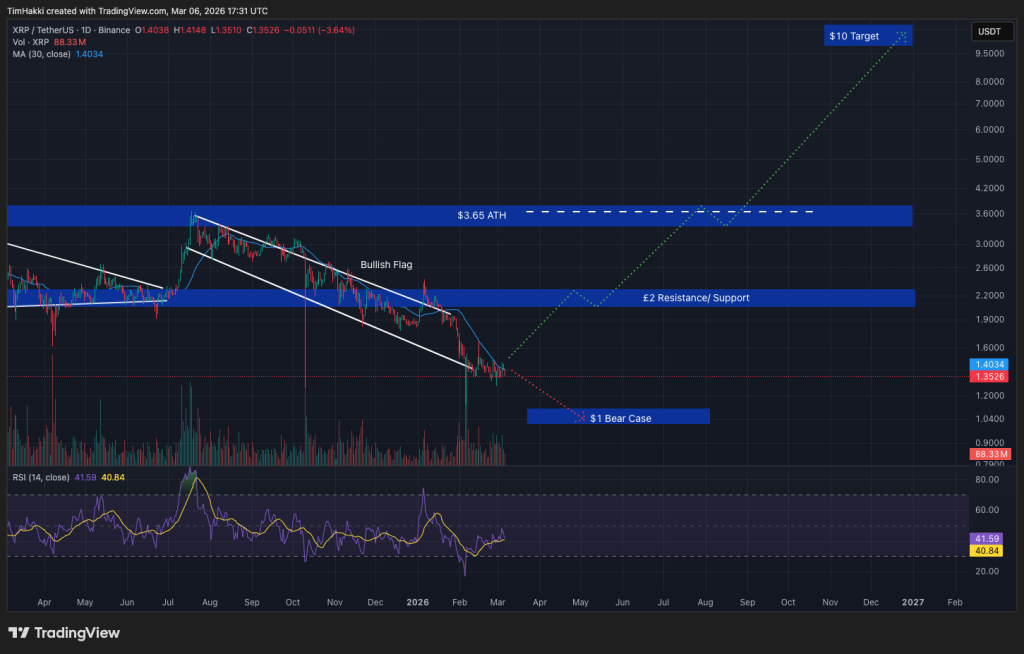
With XRP currently trading close to $1.36, Perplexity AI predicts the asset could potentially climb to around $10 in 2026, representing a little over sevenfold return for current HODLers.
XRP’s relative strength index (RSI) currently sits near 42, while price movement has begun stabilized around its 30-day moving average, suggesting perhaps the extended consolidation period is nearing its end.
Several catalysts could further strengthen XRP’s outlook, including rising institutional demand following the launch of U.S.-listed XRP exchange-traded funds, Ripple’s expanding network of international partnerships, and comprehensive crypto legislation (the CLARITY Act) in the United States.
Solana (SOL): Could Solana Soon Hit $700?
Solana ($SOL) currently secures around $6.7 billion in total value locked and has a market capitalization of $48 billion.
Institutional interest increased after the introduction of Solana-based exchange-traded funds by prominent asset managers such as Bitwise and Grayscale.
However, SOL crashed toward the end of 2025 and spent much of February trading below the $100 mark.
Perplexity sees Solana rising from $84 today to approximately $700 by Christmas. That would give 8x returns and price Solana more than double it’s January 2025 ATH of $293 recorded.
Moreover, major asset managers like Franklin Templeton and BlackRock have begun issuing tokenized assets on Solana.
Shiba Inu (SHIB): Perplexity Forecasts a Potential 2,000% Rally
Originally launched in 2020 as a tongue-in-cheek Dogecoin challenger, Shiba Inu ($SHIB) has since developed into a broader ecosystem with a market capitalization of $3.2 billion.
Currently around $0.000005359, Perplexity’s analysis suggests that a decisive breakout above the $0.000025–$0.00003 resistance range could trigger strong upward momentum. Under that scenario, SHIB could potentially climb toward $0.00008 before the end of the year.
Such a move would represent gains of roughly 15x, or around 1,400%, bringing it a hair’s breadth beneath its October 2021 ATH of $0.00008616.
Beyond its meme coin reputation, the project has introduced practical utility through Shibarium, its Ethereum Layer-2 scaling solution. Shibarium delivers faster transactions, lower fees, enhanced privacy features, and improved developer tools for building decentralized applications.
Maxi Doge: Emerging Meme Coin Aims for Rapid Growth
Perplexity’s projection of a potential 14x surge for Shiba Inu reflects expectations that a new meme coin cycle could accompany the next crypto bull market. However, projects at earlier stages often present even greater growth potential.
One project gaining attention is Maxi Doge ($MAXI), which has already raised $4.7 million through its ongoing presale as early investors accumulate what some believe could become the next Shiba Inu.
Maxi Doge is the loud, louche and degenerate distant cousin to Dogecoin, embracing a comic marketing approach inspired by the chaotic enthusiasm of the 2021 meme coin boom.
MAXI is an ERC-20 asset on Ethereum’s proof-of-stake network, giving it a significantly smaller environmental footprint compared with Dogecoin’s proof-of-work system.
Early participants in the presale can currently stake MAXI for yields reaching up to 67% APY. These rewards gradually decrease as more tokens enter the staking pool.
The token is currently priced at $0.0002807 during the latest presale phase, with automatic price increases scheduled at each new funding milestone. Investors can purchase the token using supported wallets such as MetaMask and Best Wallet.
Stay updated through Maxi Doge’s official X and Telegram pages.
Visit the Official Maxi Doge Website Here
The post Perplexity AI Predicts the Price of XRP, Solana and Shiba Inu by The End of 2026 appeared first on Cryptonews.
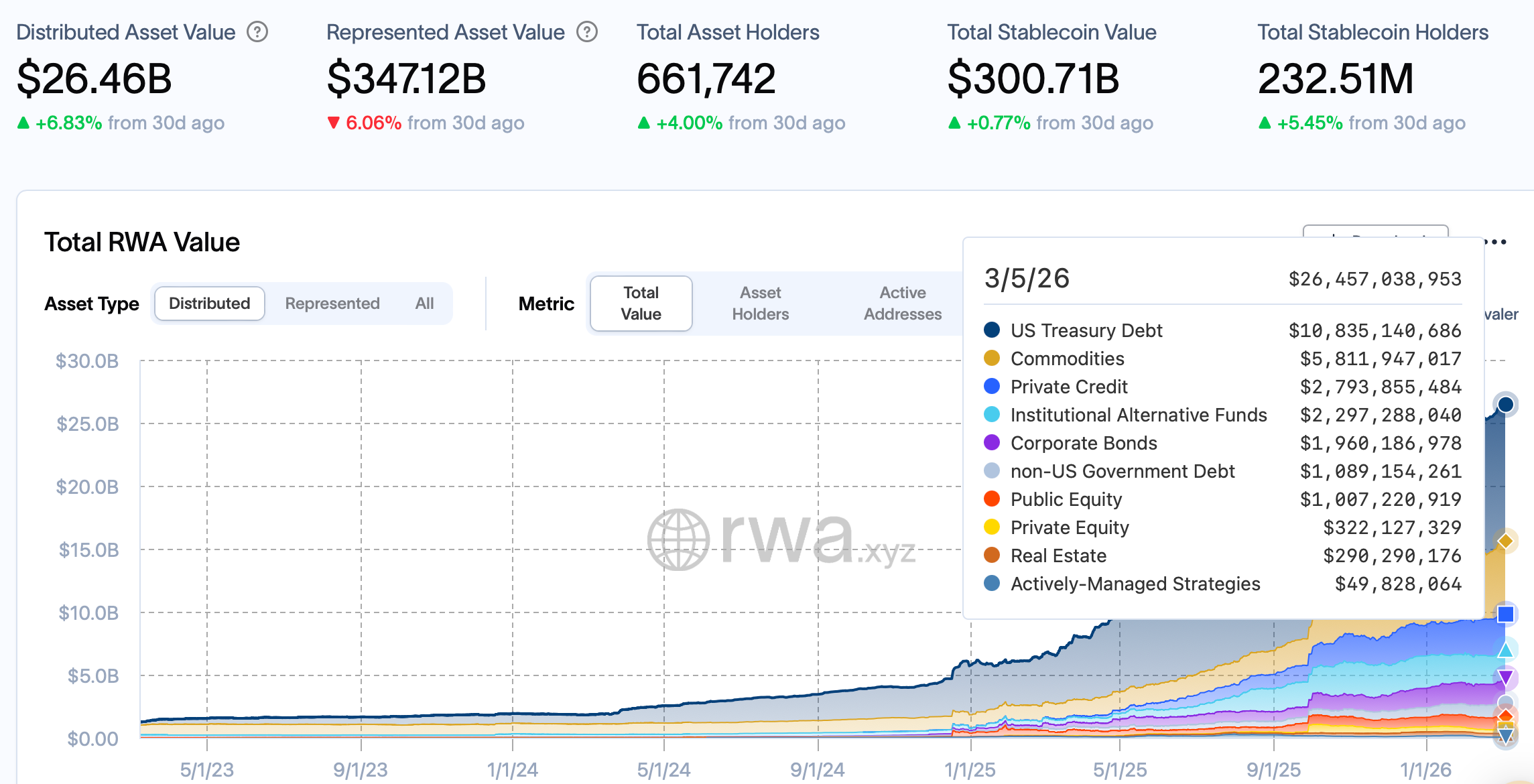
Kraken’s tokenized equities platform xStocks has launched xChange, an onchain trading engine designed to facilitate trading of tokenized stocks across the Ethereum and Solana networks.
According to the company, the system supports trading of more than 70 tokenized equities backed 1:1 by underlying shares held in custody, with prices intended to track the corresponding public market stocks.
The launch adds new trading infrastructure for tokenized equities, part of the broader tokenized real-world asset market that aims to bring traditional financial instruments such as stocks onto blockchain-based trading systems.
Kraken launched xStocks in June, offering tokenized versions of publicly traded companies issued by Backed Assets, though the products are not available to users in the United States, the United Kingdom or other restricted jurisdictions.
Since then, the platform has recorded $3.5 billion in onchain transaction volume and about $25 billion in total trading volume across exchanges, with about $225 million in tokenized assets held across about 80,000 blockchain wallets, according to company data.
The move from Kraken comes days after the exchange said its banking unit, Kraken Financial, had been granted a limited-purpose master account by the Federal Reserve Bank of Kansas City, giving it direct access to the Fedwire payments network used by banks and credit unions.
Related: Kraken introduces fixed-rate crypto loans for its Pro users
Traditional and crypto exchanges build rails for tokenized stocks
Kraken is not alone in exploring infrastructure for tokenized securities, as both crypto exchanges and traditional market operators experiment with ways to bring stocks onto blockchain-based trading systems.
In December, Coinbase announced that it plans to launch Coinbase Tokenize, an institutional platform designed to support the issuance and management of tokenized real-world assets, including equities.
About a month later, the owner of the New York Stock Exchange, Intercontinental Exchange, said it is developing a platform to support trading of tokenized securities, including stocks and exchange-traded funds.
The proposed system would combine the exchange’s existing matching engine with blockchain-based settlement infrastructure and could support round-the-clock trading with near-instant settlement, potentially using stablecoins instead of the current one-day settlement cycle in US equity markets.

The London Stock Exchange Group has also said it is developing blockchain-based infrastructure intended to support the trading and settlement of tokenized securities such as equities and bonds.
Nasdaq, meanwhile, has proposed integrating tokenized versions of stocks and exchange-traded products into its existing trading infrastructure, a change that could increase liquidity for tokenized securities if approved by regulators.
Magazine: The debate over Bitcoin’s four-year cycle is over: Benjamin Cowen
Oil’s violent intraday squeeze is colliding with fragile crypto risk sentiment, setting up a tense weekend for Hyperliquid oil perps and broader macro-linked digital assets.
Summary
- WTI crude spiked 13% intraday, pushing toward the key $90 level per barrel.
- The move comes as rate-cut expectations firm and crypto trades lower across majors.
- Hyperliquid oil perps now sit at the crossroads of an energy shock narrative and a tired crypto risk complex.
WTI crude’s surge to around $89.21 per barrel, a 13% intraday jump is a full-blown squeeze into a psychologically loaded $90 handle, leading to what analysts say could be a $100 or even $200 barrel price as the war with Iran rages on.
Coupled with that, WTI has ripped to fresh highs with daily relative strength index (RSI) pushing above +88, a momentum extreme ZeroHedge notes hasn’t been seen since the Kuwait War, as crude rockets through resistance on Iran‑linked supply fears and panic‑level volatility. That combo – geopolitics, stretched positioning, and technicals at blow‑off levels – is exactly what’s now bleeding into Hyperliquid perps, Polymarket oil markets, and, by extension, the entire crypto macro trade.
The immediate backdrop is a macro tape increasingly conditioned on Federal Reserve cuts later this year, with multiple officials signaling openness to easing if data cooperates and market pricing in a non-trivial probability of a June cut. In that context, oil ripping higher injects an inflationary tail-risk back into the narrative right as investors were starting to price a smoother disinflation glide path.
Oil and the broader crypto market
Crypto is not trading in a vacuum here. Majors like BTC (BTC), ETH (ETH), and BNB (BNB) are flashing red, with BTC around $68,446.80, ETH near $1,981.04, and BNB at $631.50, all down between roughly 3–5% on the day. Even HYPE (HYPE), a proxy for appetite around Hyperliquid’s ecosystem, is off about 2.62% at $29.81. In a classic macro playbook, higher oil plus fading momentum in crypto raises the probability of a broader de-risking if energy stays bid into next week.
Hyperliquid oil-linked futures volume surges
Hyperliquid has already shown what an Iran weekend looks like in the perps tape. During the first wave of strikes last weekend, the exchange saw nearly 17 million dollars in oil derivatives volume and roughly 148 million dollars in gold trading in a single weekend session, pushing total 24‑hour commodity turnover close to 200 million dollars while COMEX and CME were dark. Subsequent reports put open interest in Hyperliquid’s CL USDC oil perpetuals above 50 million dollars and highlighted gold and silver perps turning into a de facto 24/7 macro hedge, with some instruments briefly trading above 5,400 dollars per ounce as traders rushed to price Iran risk before legacy benchmarks reopened.
For Hyperliquid traders running oil perps into the weekend, the setup is binary and unforgiving. On one side, if $90 breaks and holds, you are effectively long an inflation scare that could bleed into rates, equities, and high-beta crypto, with oil longs and defensive tokens outperforming.
On the other, if this move is an overextended squeeze driven by positioning and thin liquidity, mean reversion early next week could crush late longers while offering crypto a brief relief window as real-yield fears ebb. With Fed expectations fragile, upcoming data and any geopolitical headlines around supply will matter more than usual.
Oil’s spike is not just about Fed cuts and positioning; it is about Iran risk bleeding into the tape. A widening U.S.–Israel confrontation with Tehran and shipping disruptions around the Strait of Hormuz have injected a hard geopolitical premium into crude, with analysts warning that up to a third of global seaborne supply and a fifth of LNG flows sit in the crosshairs if transit is impaired. Even before WTI flirted with $90, oil had been grinding higher on fears of supply shocks and potential blockage scenarios, keeping prices elevated despite otherwise comfortable inventories. For Hyperliquid oil perps, that means you are no longer just trading a chart; you are implicitly taking a view on whether Iran risk escalates into a genuine supply event or fades back into background noise as flows normalize.
Polymarket oil market opportunities?
Polymarket’s crude oil markets are already trying to price that regime shift in real time, with contracts on where CL settles by month‑end and whether oil prints specific upside targets effectively encoding crowd probabilities on an Iran‑driven spike. As of March 26, Polymarket traders are pricing $150 barrel oil at 9%, while bettors see a $100 barrel at 71%.
Crypto World
Coinbase Prime Integrates Regulated Futures and Cross-Margin Trading for Institutional Crypto
TLDR:
- Coinbase Prime now offers 20+ CFTC-regulated futures contracts with 24/7 trading through Coinbase Financial Markets.
- Unified cross-margin allows institutions to manage spot and futures exposures within one single capital framework.
- Assets are secured under Coinbase’s NYDFS-regulated custodian, keeping all trading within a fully regulated structure.
- Coinbase’s Deribit acquisition moves the platform closer to one unified exchange for spot, futures, and options.
Coinbase Prime has taken a major step forward in institutional crypto infrastructure. The platform announced integrated regulated futures trading and unified cross-margin functionality across spot and derivatives markets.
Through Coinbase Financial Markets, its CFTC-regulated futures commission merchant, institutions now access over 20 futures contracts.
These include perpetual-style products with round-the-clock trading availability. The launch positions Coinbase Prime as a full-service, regulated prime brokerage built specifically for institutional-grade digital asset operations.
Unified Cross-Margin Reshapes Capital Management for Trading Desks
Traditionally, spot and futures trading required separate collateral pools and independent risk systems. That separation often created inefficiencies for institutional trading desks managing complex multi-market strategies. Coinbase Prime now brings both under one capital framework through unified cross-margin.
With this setup, institutions can evaluate spot and futures exposures together within a single portfolio view. Capital moves more freely across strategies, while risk is monitored holistically across the entire platform.
This is particularly useful for basis trading, where hedged positions can benefit from more efficient margin treatment.
Coinbase Institutional shared the development on X, stating that Prime is now “the most comprehensive operating system for institutional crypto.”
The post noted that institutions can now “trade, finance, and manage assets within a regulated full-service crypto prime brokerage framework.”
Prime’s deterministic risk model also allows trading desks to calculate margin requirements before execution. That transparency reduces reliance on opaque margin engines that have historically complicated pre-trade planning for institutions.
Regulated Infrastructure Brings Futures Directly Into the Prime Workflow
Futures access through Coinbase Financial Markets, a CFTC-regulated FCM, is now embedded directly into the Prime workflow.
Institutions no longer need separate platforms to access derivatives markets. Execution, custody, and risk management now operate within a single environment.
Assets remain secured within Coinbase’s NYDFS-regulated qualified custodian throughout the trading lifecycle. This structure allows institutions to operate within a fully regulated framework while accessing both spot and derivatives markets simultaneously.
Beyond futures, Coinbase Prime also covers financing, lending, and operational infrastructure at institutional scale.
The platform is designed so trading desks no longer need to coordinate across fragmented or self-assembled systems.
Coinbase’s recent acquisition of Deribit, the world’s leading crypto options exchange, further broadens this ecosystem.
The goal is a single platform where institutions can access spot, futures, perpetuals, and options together. That consolidated model reflects Coinbase Institutional’s broader objective of building what it describes as an “Everything Exchange” for professional market participants.
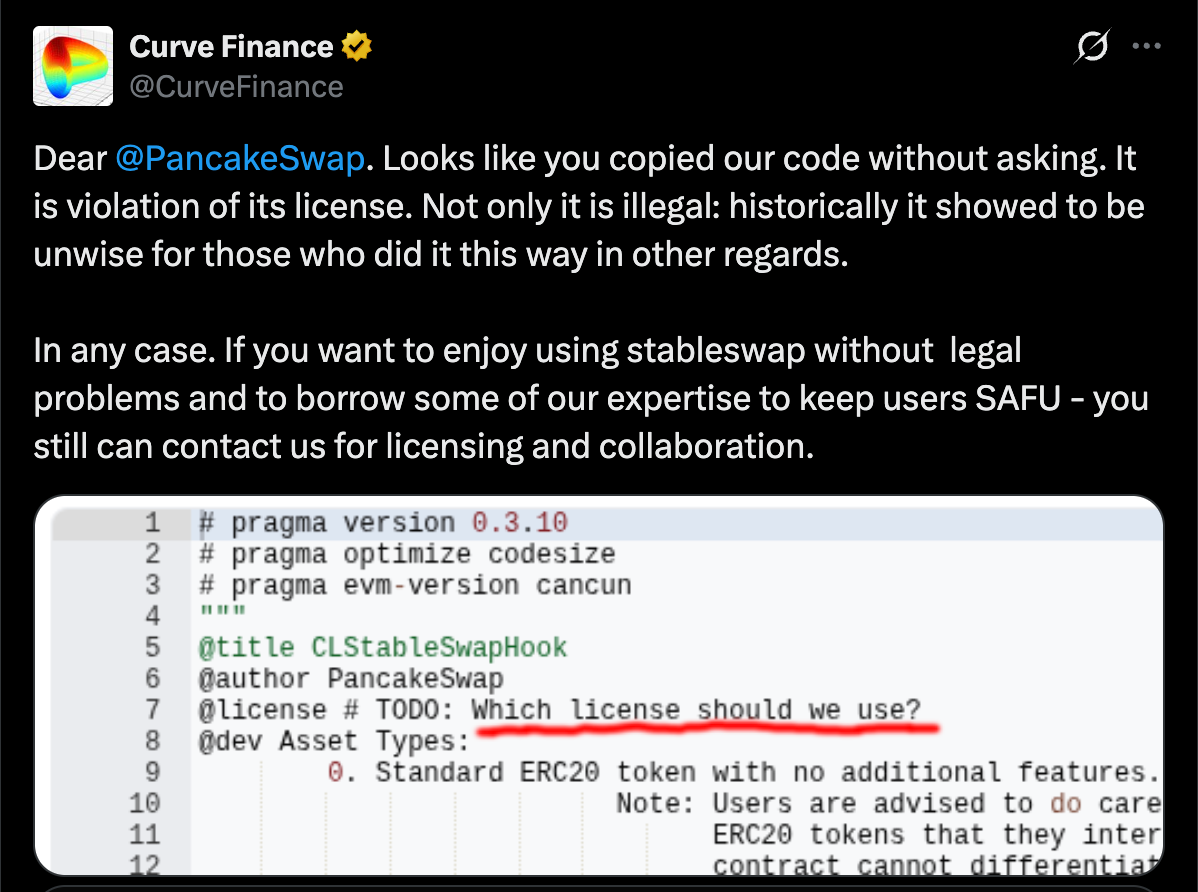
The team behind the Curve Finance decentralized finance (DeFi) platform accused the PancakeSwap decentralized exchange (DEX) of using its code without the proper licensing.
The code is tied to the “StableSwap” feature used for swapping stablecoins and “tightly-pegged” assets on PancakeSwap Infinity, the latest version of the PancakeSwap DEX.
“If you want to enjoy using stableswap without legal problems and to borrow some of our expertise to keep users SAFU, you still can contact us for licensing and collaboration,” the Curve team said on X.

In a separate post, Curve said “deep stableswap expertise” is needed to safely integrate swap features, and cited the 2022 hack of the Saddle Finance DEX and the $116 million hack of DeFi protocol Balancer in 2025 as examples of swap-based code exploits.
The PancakeSwap team said it would reach out to Curve Finance to discuss the issue. “Indeed, better to be friends and build together,” the Curve team responded.
Cointelegraph reached out to both teams but did not receive a response by the time of publication.
The incident highlights the potential cybersecurity and legal issues that arise in decentralized finance as projects and protocols continue to iterate on products and expand features.
Related: Curve founder says DeFi must ditch token emissions for real revenue
PancakeSwap Infinity launches and goes cross-chain
PancakeSwap Infinity launched on the Arbitrum network and BNB Chain in April 2025, following the integration of one-click, cross-chain swaps that allow users to move digital assets between blockchain protocols.
The updated DEX introduced “hooks,” smart contract plug-ins that customize parameters for liquidity pools, including dynamic fee structuring, tailored rebates and onchain limit orders that execute when preset conditions are met.

The upgrade also lowered pool creation fees by up to 99% and was built to accommodate different liquidity strategies, according to PancakeSwap.
In July 2025, PancakeSwap Infinity launched on Base, an Ethereum layer-2 (L2) scaling network, and touted up to 50% cheaper trading fees when Ether (ETH), the native token of the Ethereum layer-1 blockchain network, was traded against ERC-20 tokens.
ERC-20 is the token standard for most assets minted on Ethereum, including the gas and governance tokens of Ethereum L2s, memecoins, and other projects issuing tokens on Ethereum.
Magazine: MakerDAO’s plan to bring back ‘DeFi summer’ — Rune Christensen
Form 4 AleAnna Inc For: 6 March

Young and the Restless Next Week: Jack Reconnects with Former Flame & Matt’s Threatening Comeback

Fully charged: Meet the local leader energizing the Pacific Northwest battery boom


-

 Politics4 days ago
Alan Cumming Brands Baftas Ceremony A ‘Triggering S**tshow’
-

 Tech6 days ago
Unihertz’s Titan 2 Elite Arrives Just as Physical Keyboards Refuse to Fade Away
-

 NewsBeat6 days ago
Abusive parents will now be treated like sex offenders and placed on a ‘child cruelty register’ | News UK
-
Business9 hours ago
Form 8K Entergy Mississippi LLC For: 6 March
-
 NewsBeat6 days ago
Dubai flights cancelled as Brit told airspace closed ’10 minutes after boarding’
-
Sports7 days ago
The Vikings Need a Duck
-
 NewsBeat6 days ago
The empty pub on busy Cambridge road that has been boarded up for years
-

 NewsBeat5 days ago
‘Significant’ damage to boarded-up Horden house after fire
-

 Tech2 days ago
Bitwarden adds support for passkey login on Windows 11
-

 Entertainment5 days ago
Baby Gear Guide: Strollers, Car Seats
-
 Sports1 day ago
499 runs and 34 sixes later, India beat England to enter T20 World Cup final | Cricket News
-
Politics6 days ago
FIFA hypocrisy after Israel murder over 400 Palestinian footballers
-

 Fashion5 hours ago
Weekend Open Thread: Ann Taylor
-
 NewsBeat6 days ago
Emirates confirms when flights will resume amid Dubai airport chaos
-

 NewsBeat4 days ago
Is it acceptable to comment on the appearance of strangers in public? Readers discuss
-

 Tech6 days ago
Viral ad shows aged Musk, Altman, and Bezos using jobless humans to power AI
-

 Video5 days ago
How to Build Finance Dashboards With AI in Minutes
-

 Fashion5 days ago
On the Scene at the 57th Annual NAACP Image Awards: Teyana Taylor in Black Ashi Studio, Colman Domingo in Yellow Sergio Hudson, Chloe Bailey in Christian Siriano, and More!
-

 Business3 days ago
Guthrie Disappearance Enters Fifth Week as Family Visits Memorial
-
 NewsBeat5 days ago
Ukraine-Russia war latest: Belgium releases video showing forces boarding Russian shadow fleet oil tanker