The landscape of professional leadership in 2026 has shifted from purely technical competence to a more holistic “Executive Presence.”
For the SME community, where the founder or director is often the primary face of the brand, maintaining a high level of personal presentation is not a matter of vanity; it is a strategic business requirement.
In high-stakes negotiations and investor pitches, the confidence projected by a leader often serves as a silent proxy for the stability and health of their organization.
To maintain this edge, business leaders are increasingly applying the same data-driven, ROI-focused logic to their health and grooming as they do to their quarterly balance sheets. This pragmatic approach involves identifying high-efficiency solutions that yield consistent results with minimal disruption to a demanding schedule. As a director’s time is their most valuable asset, the shift toward clinical, evidence-based self-care has become the new corporate standard for personal maintenance.
Addressing common signs of aging is a key component of this long-term branding strategy. For many men in leadership roles, hair density is a significant factor in maintaining a youthful and authoritative silhouette. Consequently, many executives are moving toward advanced pharmaceutical interventions, such as a dutasteride hair loss treatment, which offers a more potent and comprehensive biochemical block than traditional first-generation options. By sourcing these treatments through professional online prescribing channels, busy directors can manage their long-term aesthetic health with the same efficiency and privacy they expect in their professional lives.
Advertisement
The Business Case for Personal Resilience
In the competitive UK market, personal resilience is often equated with professional endurance. According to a recent feature in Forbes, the concept of “identity security” is expanding beyond digital data to encompass the physical and mental integrity of a company’s key stakeholders. A leader who proactively manages their health and appearance signals a level of discipline and foresight that translates well to operational management.
Furthermore, the “halo effect” in business suggests that individuals perceived as being well-maintained are often subconsciously attributed with higher levels of intelligence and leadership capability. In a world of snap judgments and digital-first interactions, the visual components of leadership—vitality, grooming, and poise—act as immediate trust signals. For the SME director, investing in these areas is a pragmatic move to secure a competitive advantage in any room they enter.
Strategic Healthcare Integration for SMEs
The rise of digital healthcare has revolutionized how company directors manage their well-being without sacrificing time in the boardroom. The ability to consult with clinical experts and manage prescriptions online fits perfectly into the lifestyle of a modern entrepreneur. This “efficiency-first” healthcare model ensures that preventative and restorative treatments are integrated seamlessly into a leader’s workflow.
As reported by the BBC, the increasing reliance on digital infrastructure has made specialized services more accessible than ever, allowing for a higher degree of personalization in medical care. For the business professional, this means access to the latest clinical developments without the friction of traditional clinic visits.
Advertisement
Preventative Skincare: Implementing a high-performance routine that counters the oxidative stress of high-pressure environments.
Nutritional Discipline: Focusing on bio-available supplements that support cognitive function and physical vitality.
Telehealth Efficiency: Leveraging online prescribing to save time while maintaining strict professional standards of care.
Performance Pillar
Strategic Objective
ROI for the Leader
Physical Vitality
Maintaining high energy for long-form negotiations.
Increased productivity and stamina.
Aesthetic Health
Sustaining a youthful, authoritative professional brand.
Enhanced trust and social influence.
Mental Clarity
Stress management and cognitive optimization.
Improved decision-making under pressure.
Digital Healthcare
Streamlined access to professional medical advice.
Time-saving and increased privacy.
The ROI of Long-Term Self-Investment
Every investment made by a director should be measured against its ability to sustain and grow the business. When you view your personal health and appearance through this lens, the “cost” of high-end grooming and healthcare is easily justified by the “value” of sustained professional influence. A leader who is at the peak of their physical and aesthetic game is simply better equipped to handle the volatility of the modern business world.
In 2026, the SME community is defined by its ability to adapt and lead. By embracing a strategic and pragmatic approach to self-maintenance, you ensure that your personal brand remains as resilient and innovative as your business. This is not about fighting the passage of time; it is about managing it with the same level of strategic rigor you apply to your annual growth targets.
Ultimately, your executive presence is an asset that requires regular maintenance and smart investment. By staying informed about the latest medical and lifestyle developments, you can ensure that you are always presenting the most capable and confident version of yourself to the market. This commitment to excellence in all areas of life is what distinguishes a successful director from a truly impactful leader.
Establishing a routine that prioritizes clinical efficacy and time-efficiency is the ultimate tactical move for the modern founder. By making these smart adjustments to your personal care strategy today, you are effectively future-proofing your most important business asset: yourself.
MOUNTAIN VIEW, Calif. — Launched in August 2025, the Google Pixel 10 Pro marked Google’s tenth-generation flagship push, arriving with the Tensor G5 chip, refined AI features, a brighter display and improved camera capabilities. Now, in March 2026—roughly seven months after release—the device has settled into real-world use, with reviewers and users offering long-term assessments on whether it justifies its $999 starting price amid competition from Samsung’s Galaxy S26 series, Apple’s iPhone 17 lineup and even discounted older Pixels.
Google Pixel 10 Pro
The Pixel 10 Pro (and its larger sibling, the 10 Pro XL) debuted with modest evolutionary upgrades over the Pixel 9 Pro: a 6.3-inch LTPO OLED display (up to 3,300 nits peak brightness), 16GB RAM, storage options up to 1TB, a 50MP main camera with enhanced computational photography, a 48MP ultrawide and 48MP 5x telephoto lens supporting up to 100x Pro Res Zoom (via AI assistance), and a 4,870mAh battery. It runs Android 16 out of the box, with seven years of OS and security updates promised.
Early reviews praised the phone’s polished software, class-leading cameras and seamless integration of Gemini-powered AI tools like Camera Coach (real-time photography tips), Auto Best Take and advanced editing features. Six months later, long-term tests largely echo that sentiment: the Pixel 10 Pro remains one of the best compact flagships, excelling in photography, clean Android experience and daily reliability.
Mark Ellis Reviews, after six months with the standard Pixel 10 (sharing much of the Pro’s DNA), called it “still a brilliant phone” with a “superb camera system” including 5x optical zoom and a “super clean operating system.” The reviewer highlighted its appeal for iPhone switchers, noting Google’s intuitive yet quirky Android 16 implementation. YouTube channels like those reviewing the Pro XL after six months described it as “easy to love” and “the most polished Pixel yet,” praising fluid performance, no overheating issues (a past Tensor complaint), useful AI features and top-tier photos.
The Guardian dubbed the Pixel 10 Pro “one of the very best smaller phones,” lauding its pocketable size, stunning screen, cutting-edge AI and top-spec cameras. EFTM’s review echoed this, awarding it high marks for excellent photos via computational photography, buttery-smooth software and helpful AI, calling it “Google’s best but in a smaller package.”
Advertisement
Battery life holds up well in extended tests—lasting all day with moderate use—while the Tensor G5 delivers smooth performance without the thermal throttling seen in earlier generations. Qi2 magnetic wireless charging (via Pixel Snap accessories) adds convenience, and the display’s high brightness shines outdoors.
Yet not all feedback is glowing. Some reviewers argue the upgrades feel incremental. Tom’s Guide, after two months, expressed regret over upgrading from the Pixel 9 Pro, calling the 10 Pro a “textbook example of an iterative upgrade” with little to justify the switch if you already own the predecessor. Android Faithful’s review titled it “a great phone you can probably skip,” suggesting the Pixel 9 Pro remains viable for another year with similar hardware and six more years of support.
Android Police defended Google’s 2025 success, noting sales growth, smooth Tensor G5 operation and strong recommendations for Android newcomers. Reddit threads and user impressions vary: many hail it as “one of the best phones on the market” for its useful AI, no overheating and stellar cameras, while others critique average charging speeds or video performance lagging behind Samsung.
Compared to rivals in March 2026, the Pixel 10 Pro stands out for photography enthusiasts and those prioritizing clean software and AI smarts over raw specs. Its 100x Pro Res Zoom (AI-enhanced) outperforms the Pixel 9 Pro’s 30x Super Res Zoom in detail at extreme ranges, though hardware remains similar. Versus Samsung’s Galaxy S26 Ultra or iPhone 17 Pro Max, it trades raw power for Google’s ecosystem perks and natural-looking photos.
Advertisement
Pricing remains steady at $999 for the base 128GB model (up to $1,449 for 1TB), with frequent carrier deals, trade-ins and discounts bringing effective costs lower. The Pixel 9 Pro often sells for less on the secondary market, making it a compelling alternative for budget-conscious buyers.
Who should buy the Pixel 10 Pro in 2026?
Photography lovers seeking best-in-class stills and AI editing tools.
Android purists wanting stock-like software with seven years of updates.
With ongoing Pixel Feature Drops adding new capabilities and Android 16 QPR updates rolling out, the Pixel 10 Pro ages gracefully. In March 2026, it remains a top recommendation for most users seeking a premium, AI-forward Android experience—especially if camera quality and software purity top your list.
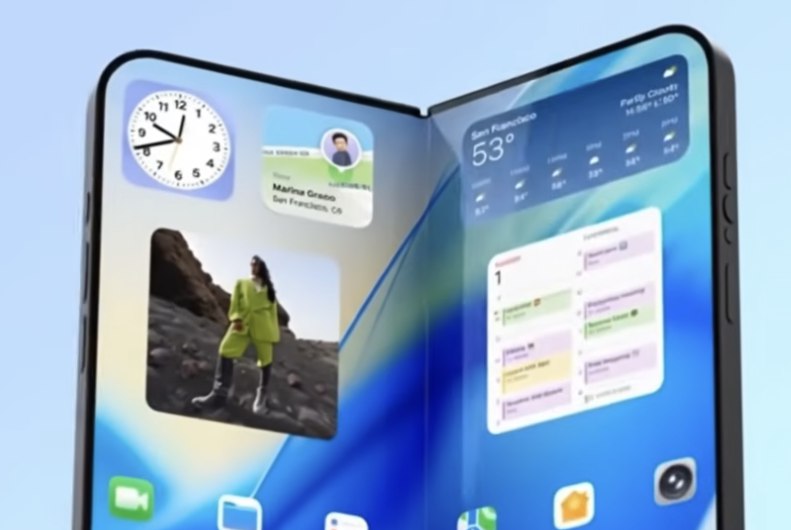
CUPERTINO, Calif. — As March 2026 unfolds, speculation around Apple’s long-awaited foldable iPhone—often dubbed the iPhone Fold—intensifies, with supply-chain reports, analyst predictions and leaks pointing to a potential debut later this year. After years of persistent rumors dating back over a decade, credible sources increasingly converge on a fall 2026 launch, likely alongside the iPhone 18 Pro and Pro Max models, marking Apple’s first entry into the foldable smartphone market dominated by Samsung, Google and others.
iPhone Foldable
The device, expected to feature a book-style design that unfolds into a tablet-like screen, represents a significant shift for Apple, which has historically prioritized refinement over rushing into emerging categories. Analysts and insiders describe the iPhone Fold as a premium, high-end offering designed to wow loyal fans while addressing longstanding foldable pain points like visible creases and durability.
Development Status and Timeline
Multiple reports confirm Apple has advanced beyond prototypes. As early as July 2025, leaks indicated a first production prototype existed, followed by engineering validation testing (EVT) phases by late 2025. Foxconn, Apple’s primary manufacturing partner, reportedly entered the New Product Introduction (NPI) stage in early 2025 and is gearing up for mass production in the second half of 2026—potentially starting as soon as mid-year (June-July) to support a September unveiling.
Supply-chain watcher Ming-Chi Kuo reiterated in early March 2026 that the foldable targets a late-2026 release, with mass production kicking off in the second half. Bloomberg’s Mark Gurman has echoed this, suggesting a fall 2026 launch window, though some earlier predictions allowed for a 2027 slip due to design decisions like hinge mechanics. Recent updates, however, show momentum: Apple is stockpiling components, and mass production timelines align with traditional iPhone cycles.
A notable wrinkle emerged from Nikkei Asia and other Asian reports: Apple may alter its 2026 lineup strategy due to production constraints, memory shortages and focus on premium devices. The company could prioritize the iPhone 18 Pro, Pro Max and iPhone Fold for September 2026, delaying the base iPhone 18 to early 2027. This shift underscores the foldable’s importance—Apple views it as a flagship innovation capable of driving upgrades.
Advertisement
Design and Key Specs
Leaks paint a picture of a premium book-style foldable (horizontal unfold, unlike clamshell flips). Key rumored features include:
Crease-Free Display — A major breakthrough: the inner screen (around 7.8-8 inches) reportedly eliminates visible creases through advanced panel tech from Samsung Display, including Color Filter on Encapsulation (CoE) for slimmer, brighter and more efficient panels. Outer cover display is expected around 5.5-6 inches.
Battery — A massive 5,500mAh capacity, surpassing even the iPhone 17 Pro Max’s 5,088mAh, to support the larger unfolded form factor and power-hungry multitasking.
Processor — Likely an A20-series chip (or variant), optimized for AI tasks, multitasking and efficiency in a foldable chassis.
Durability and Hinge — Optimized hinge design keeps costs down (average selling price ~$70-80), with emphasis on robustness to meet Apple’s standards—no compromises on premium feel.
Other Features — Expected to include advanced cameras (potentially four-lens setup), improved Apple Intelligence integration, and seamless iOS adaptations for folded/unfolded modes (hints of fold-specific software already exist in current iOS builds).
The design prioritizes Apple’s ecosystem strengths: fluid transitions between phone and tablet modes, enhanced productivity and entertainment without the durability trade-offs plaguing competitors.
Pricing and Market Expectations
Pricing remains a focal point, with estimates ranging from $1,800-$2,500, potentially making it Apple’s most expensive iPhone ever. Analyst Ming-Chi Kuo suggested hinge cost reductions could improve margins or slightly lower retail price, but the consensus leans toward premium positioning—$2,000+ to reflect exclusivity and advanced tech. Some predict Apple aims for 8-10 million units in the first year, with ambitions to double in 2027, signaling expectations of strong demand among loyalists eager for a “must-have” innovation.
Challenges and Competition
Apple enters a mature foldable market where Samsung’s Galaxy Z Fold series, Google’s Pixel Fold and others have iterated for years. Competitors like Samsung continue pushing boundaries (e.g., tri-fold concepts), but Apple’s delayed entry allows time to observe flaws—durability, crease visibility, software optimization—and deliver a polished product. A clamshell “iPhone Flip” remains in development but appears delayed to 2027 or later, with the book-style Fold taking priority.
Critics question whether the high price and niche appeal will drive mass adoption, especially amid economic pressures and competition from affordable Android foldables. Yet Apple’s ecosystem lock-in, brand loyalty and marketing prowess could spark a significant upgrade cycle—some forecasts predict 10% overall iPhone sales growth in 2026 if the Fold lands well.
Advertisement
Outlook
As leaks accelerate—prototypes, renders and component stockpiles—expect more concrete details in coming months. If mass production begins mid-2026, major reveals (design, specs) could surface by summer, building hype for a September event. The iPhone Fold promises to redefine Apple’s smartphone lineup, blending phone convenience with tablet productivity in a crease-free package.
For now, the rumor mill churns: Apple’s foldable is no longer “if” but “when”—and 2026 appears increasingly likely. Fans and analysts watch closely as Cupertino prepares what could be its boldest iPhone evolution in years.
I’ve been researching companies in-depth for over a decade, from commodities like oil, natural gas, gold and copper to tech like Google or Nokia and many emerging market stocks, which I believe could help me provide useful content for readers. After writing my own blog for about 3 years, I decided to switch to a value investing-focused YouTube channel, where I researched hundreds of different companies so far. I would say my favorite type of company to cover are metals and mining stocks, but I am comfortable with several other industries, such as consumer discretionary/staples, REITs and utilities.
Analyst’s Disclosure: I/we have no stock, option or similar derivative position in any of the companies mentioned, but may initiate a beneficial Long position through a purchase of the stock, or the purchase of call options or similar derivatives in GAP over the next 72 hours. I wrote this article myself, and it expresses my own opinions. I am not receiving compensation for it (other than from Seeking Alpha). I have no business relationship with any company whose stock is mentioned in this article.
Seeking Alpha’s Disclosure: Past performance is no guarantee of future results. No recommendation or advice is being given as to whether any investment is suitable for a particular investor. Any views or opinions expressed above may not reflect those of Seeking Alpha as a whole. Seeking Alpha is not a licensed securities dealer, broker or US investment adviser or investment bank. Our analysts are third party authors that include both professional investors and individual investors who may not be licensed or certified by any institute or regulatory body.
International Business Machines Corporation (IBM) Morgan Stanley Technology, Media & Telecom Conference 2026 March 3, 2026 11:30 AM EST
Company Participants
Robert Thomas – Senior VP of IBM Software & Chief Commercial Officer
Conference Call Participants
Advertisement
Erik Woodring – Morgan Stanley, Research Division
Presentation
Erik Woodring Morgan Stanley, Research Division
Advertisement
Well, let’s get started, guys. Thank you very much for joining us. Welcome to day 2 of the flagship TMT Conference. My name is Erik Woodring. I lead the U.S. IT hardware coverage here. I am delighted to be joined by Rob Thomas, IBM’s Head of Software and Chief Commercial Officer. But before we get started, I just need to read this disclosure statement. I need to mention that important disclosures can be found at the Morgan Stanley research disclosure website at www.morganstanley.com/researchdisclosures. If you have any questions, please reach out to your Morgan Stanley sales representative.
So Rob, thank you very much for joining us today.
Robert Thomas Senior VP of IBM Software & Chief Commercial Officer
Advertisement
Thanks for having me. Great to be with you.
Question-and-Answer Session
Advertisement
Erik Woodring Morgan Stanley, Research Division
So I think the best place to start maybe is just better understand how to think about the key drivers of growth for IBM. So exiting 2025, 3 of your 4 software subsegments were growing double digits. Mainframe had a record year, helping to offset maybe more tepid growth in services. So taking a step back as we think over kind of the medium term and beyond, what are the key growth drivers as we think about the IBM model? And let’s start from there.
Robert Thomas Senior VP of IBM Software & Chief Commercial Officer
Advertisement
So maybe go back to 2020 when Arvind Krishna took over. He had the insight that we can be uniquely
The proposed IPO is a combination of a fresh issue of 2 crore equity shares and an offer for sale (OFS) of up to 65 lakh shares by promoters Anil Jain and Shrenik Jain, according to the draft red herring prospectus (DRHP) filed on Friday.
The company plans to utilise the fresh issue proceeds to the tune of Rs 200 crore to support working capital requirements and a portion would be used for general corporate purposes.
Founded in 2012 in Mumbai, the company began operations as a business-to-business (B2B) supplier of gold jewellery. It has since expanded its presence in Bengaluru through a partnership with Ratnaakar Gold.
Advertisement
Sunil Gold India designs and supplies handcrafted gold jewellery, specializing in contemporary, heritage and temple-inspired designs, along with other traditional styles.
Live Events
It primarily serves the domestic market and supplies jewellery to customers across eight states and one union territory in India. It also exports to the United Arab Emirates and Singapore, with a significant share of revenue coming from repeat orders from existing clients. In FY25, the company processed around 504.58 kg of gold. Its revenue stood at Rs 521 crore.
The company plans to list its shares on BSE and NSE. Unistone Capital is the sole book-running lead manager to the issue.
Global oil prices could soar to as high as $150 per barrel if the escalating conflict in the Middle East disrupts energy supplies from the Gulf, Qatar’s Energy Minister Saad al-Kaabi warned, cautioning that such a surge could deal a severe blow to the global economy. In an interview with the Financial Times, al-Kaabi said a prolonged war in the region could force Gulf energy exporters to shut down production within weeks.
He also noted that even if hostilities were to end immediately, it could still take “weeks to months” for Qatar to restore normal delivery cycles after an Iranian drone strike on the country’s largest liquefied natural gas facility.
This comes as Israel, the US and Iran continue to trade strikes for an eighth straight day. Just last week, before the conflict erupted, crude was hovering around $62 per barrel. By Friday, however, U.S. crude futures had spiked as much as 12% amid fears of supply disruptions before trimming some gains. Brent crude settled at $92.69 per barrel, up $7.28, or 8.52%, while West Texas Intermediate (WTI) jumped $9.89, or 12.21%, to close at $90.90 per barrel.
Markets have been rattled as the escalating conflict in the Middle East has disrupted shipping and energy exports through the crucial Strait of Hormuz. This narrow chokepoint between Iran and Oman normally carries around one-fifth of the world’s crude oil and liquefied natural gas supplies.
India imports the majority of its crude oil requirements, and about half of those imports pass through the Strait of Hormuz. Roughly 2.6 million barrels per day of India’s oil flows through the corridor. The Middle East takes 17% of India’s goods exports, on par with the US and the EU, supplies 55% of its crude oil, and accounts for 38% of worker remittances, which amounted to $45 billion in FY24 alone, according to calculations by global brokerage firm Jefferies.For equity markets, a spike toward $150 oil would likely trigger a broad risk-off reaction. Higher energy costs raise input prices for companies, compress corporate margins and weaken consumer spending.
Historically, sectors such as aviation, paints, chemicals and logistics tend to face the most pressure when oil prices surge sharply. At the same time, upstream oil producers and energy companies typically benefit from higher crude prices.
Short-term price spikes triggered by geopolitical tensions often reverse if supply routes reopen quickly. However, a sustained disruption to Gulf exports could push global markets into a period of higher inflation, weaker growth and increased volatility.
Advertisement
How will the Indian stock market open on Monday?
The Indian equity markets are likely to begin the upcoming week on a cautious note as global risk sentiment has deteriorated sharply. The current trend in GIFT Nifty, which closed around the 24,300 level, indicates a bearish undertone compared with the previous Nifty close near 24,450, Hariprasad K of Livelong Wealth said.
This combination of macroeconomic uncertainty and geopolitical risk is likely to influence market sentiment in the near term. Unless there is a positive development in the Middle East conflict that brings crude oil prices lower, Indian markets could witness continued volatility.
From a technical perspective, Pravesh Gour of Swastika Investmart said that Nifty is taking support near 24,300 but remains highly volatile. On the upside, the 24,900 to 25,000 range is expected to act as an immediate supply zone, where selling pressure could emerge if the index attempts a recovery. On the downside, 24,300 remains the first key support, and if the index slips below this level, 23,800 will be the next important support area that traders will closely monitor.
(Disclaimer: Recommendations, suggestions, views and opinions given by the experts are their own. These do not represent the views of The Economic Times)