

Business
FDA reversals on UniQure, Moderna approvals worry investors

Investors are concerned about the fates of multiple experimental drugs for hard-to-treat diseases following a string of recent rejections from the U.S. Food and Drug Administration.
The FDA in the past year has denied or discouraged the applications of at least eight drugs, according to RTW Investments, including a gene therapy for Huntington’s disease from UniQure, a gene therapy for Hunter syndrome from Regenxbio and a drug for a blood condition from Disc Medicine. The agency initially refused to review Moderna‘s flu shot before reversing course.
In each case, the FDA took issue with the evidence the companies were using to support their applications. Some of the studies didn’t test the drugs against a placebo. Some companies didn’t directly measure the drug’s efficacy, instead relying on other factors like biomarkers to predict how well the treatment might work.
And in every case, the companies have accused the FDA of reversing its previous guidance. That’s making investors wary that a more unpredictable FDA could jeopardize the future of other treatments for hard-to-treat diseases.
“What investors and key stakeholders are hoping to see from the FDA is consistency, and it does feel that that seems to be lacking at the moment,” said RBC Capital Markets analyst Luca Issi.
In recent years, the FDA appeared willing to accept drugs for rare diseases that showed promise in less rigorous studies than the gold standard randomized, double-blind placebo controlled trials. That meant helping bring treatments more quickly to patients who have conditions where time passing could mean the loss of functions like walking or talking, or even death. It also drew controversy from critics who said that policy brought false hope to patients.
The FDA’s recent decisions has left investors wondering whether the agency’s bar has changed for other drugs in the pipeline. In the case of UniQure, the FDA asked the company to run a new study that directly compares its treatment to placebo. UniQure said that contradicts the agency’s past guidance that the company could seek approval with trial data that compared UniQure’s treatment to an external database of people with Huntington’s disease.
One former FDA official who spoke to CNBC on the condition of anonymity to speak freely called this the worst type of regulatory uncertainty, because companies say they are being told one thing then experiencing another.
In a statement, an FDA spokesperson said there was “no regulatory uncertainty,” adding the agency “makes decisions based on the evidence, but does not make assurances about outcomes.” The spokesperson said the FDA is “conducting rigorous, independent reviews and not rubber-stamping approvals.”
Analysts point to several other companies they’re watching, including Dyne Therapeutics, which is advancing a drug for Duchenne muscular dystrophy; Taysha Gene Therapies, which is developing a gene therapy for Rett syndrome; Wave Life Sciences, which is working on a treatment for a liver condition; and Lexeo Therapeutics, which is developing a gene therapy for Friedreich Ataxia. All of those companies’ stocks are down this year.
A Dyne spokesperson said the company has maintained a frequent, positive and collaborative dialogue with a consistent set of reviewers over the past 18 months, and that it’s confident in its development strategy and path forward based on the strength of its clinical results, rigor of its trial design and continued engagement with the FDA. Taysha, Wave and Lexeo declined to comment.
One looming decision that Stifel analyst Paul Matteis is tracking is a drug candidate from Denali Therapeutics for Hunter syndrome, a rare disease that causes physical defects like hearing loss and joint problems, as well as cognitive issues. The company’s application for accelerated approval relies on a trial that wasn’t randomized and data showing the drug decreases levels of a biomarker associated with the condition.
To Matteis, the dataset is harder to argue with than UniQure’s, and there’s not much risk with the technology used.
“So if they don’t approve that, I don’t know,” Matteis said. “I mean, I already think there’s been a pretty significant change in the regulatory standard of rare disease, but if they don’t approve Denali, if I was at a company I’d almost be saying to myself, ‘Can we really be confident in running an open-label study?’”
In a statement to CNBC, Denali Therapeutics CEO Ryan Watts said the company continues having constructive discussions with the FDA, and it’s confident in the strength of the data package it submitted. The FDA delayed its review of the application by three months and is now expected to decide by April 5.
Some investors feel a clash between the flexibility FDA leaders like Commissioner Marty Makary are pledging publicly and the recent decisions the agency has made, said RBC Capital Markets’ Issi. That’s leading some to discount the probability of success for companies whose paths to the market rely on some level of flexibility in the data the agency will accept, said Stifel’s Matteis.
For companies whose data are straightforward, the path looks clear, said Christiana Bardon, managing partner of MPM BioImpact. The question to her is how much the FDA should accelerate the process to bring drugs to patients as rapidly as possible for diseases with massive unmet needs.
One senior FDA official, speaking to reporters Thursday on the condition of anonymity to speak freely, said the FDA hasn’t changed its position that biomarkers reasonably likely to predict efficacy can and will get accelerated approval, and that non-randomized data can get full approval. To this official, the bar is clear.
“If you make a treatment for Alzheimer’s or Huntington’s, and you take someone who’s severely ill and you give them that therapy, and they start doing better immediately and dramatically,” the official said. “You take someone in a nursing home with Alzheimer’s, and then they walk out of it, or somebody with end-stage Huntington’s, and they suddenly have no symptoms of Huntington’s, you will get a full regulatory approval with two or three patients.
“We only ask for randomized data when a condition is heterogeneous, when the will to believe is strong, when the therapy is invasive or potentially harmful, when the effect size is difficult to detect, and when the possibility you are fooling yourself is high,” the official added.

Stocks Tumble After Chaotic NFP And Oil Action – Dow Jones And U.S. Index Outlook
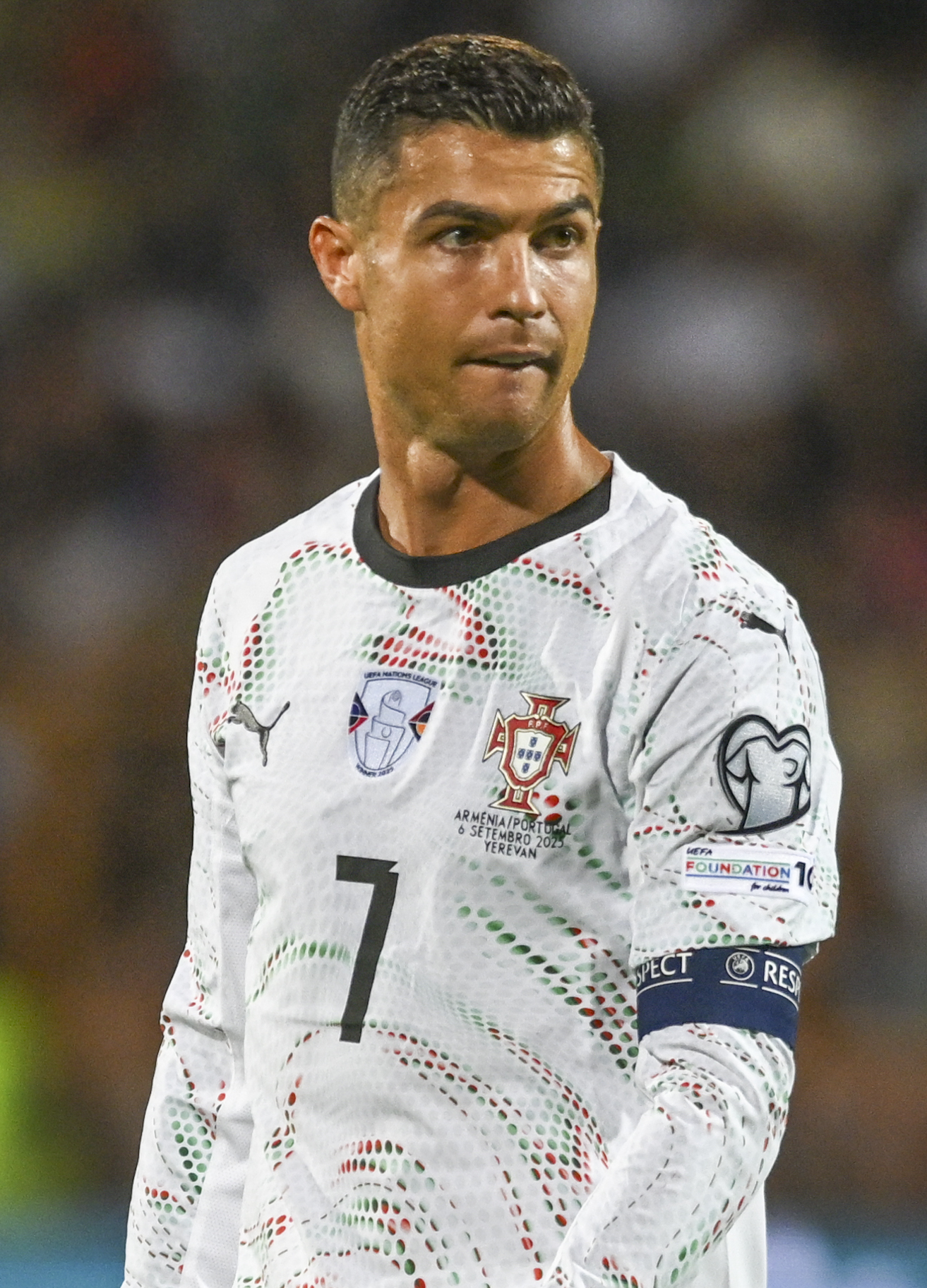
RIYADH, Saudi Arabia — Cristiano Ronaldo faces a brief but concerning spell on the sidelines after sustaining a hamstring injury during **Al-Nassr**’s Saudi Pro League victory over Al-Fayha on Saturday, March 1, 2026. The 41-year-old Portuguese forward limped off in the 81st minute of the 3-1 win, clutching his right hamstring, prompting immediate medical evaluation and rehabilitation.

Al-Nassr issued an official statement on Tuesday, March 3, confirming the diagnosis: “Cristiano Ronaldo has been diagnosed with a hamstring injury after the last game against Al Fayha. He started a rehabilitation program and will be under evaluation day by day.” The club has not provided a fixed return date, emphasizing daily assessments to monitor progress and determine his comeback timeline.
Reports from reliable sources, including transfer expert Fabrizio Romano, indicate the injury could sideline Ronaldo for **two to four weeks**. Romano noted on social media that “Cristiano Ronaldo could be OUT for up to four weeks with muscle injury,” with additional tests pending. The forward is reportedly targeting a swift return, though the severity—described in some outlets as a hamstring tendon issue or more serious than initial muscle fatigue—has prompted specialist care. Recent updates suggest Ronaldo has traveled to Madrid for advanced rehabilitation, as confirmed by Al-Nassr manager Jorge Jesus, who described the setback as “more serious than expected.”
The timing raises questions for both club and country. Al-Nassr, competing in the Saudi Pro League and other competitions, will miss Ronaldo’s goal-scoring prowess and leadership in upcoming fixtures. The team faces potential absences for league games against Neom and Al-Khaleej, and any extended recovery could impact their title chase. Earlier in 2026, Ronaldo had already missed matches amid a brief reported dispute with the club, but he returned to training and action, starting 11 games since January.
For **Portugal**, the injury casts doubt on Ronaldo’s participation in upcoming international friendlies against Mexico on March 29 and the United States on April 1. These matches serve as key preparation for the 2026 FIFA World Cup, co-hosted by the United States, Mexico, and Canada, starting June 11. Portugal coach Roberto Martinez may need to adjust plans if Ronaldo misses the final pre-tournament camp. However, medical experts and multiple reports stress the issue is not long-term, with Ronaldo expected to recover well before the World Cup. A two-to-four-week absence would position him to regain full fitness in April or May, allowing time to build match rhythm ahead of what could be his record sixth World Cup appearance.
Ronaldo, who turns 41 in February 2026, has maintained remarkable form in the Saudi Pro League despite his age. He has been a consistent starter for Al-Nassr under manager Jorge Jesus, contributing goals and assists while adapting to the demands of the league. The hamstring problem follows a season of heavy workload, including club duties and national team commitments. Earlier reports downplayed the initial discomfort as “muscle fatigue,” but further imaging revealed the true extent, leading to cautious management to avoid aggravation.
Fans and analysts express concern over the veteran’s durability, yet optimism prevails given Ronaldo’s history of resilience. The five-time Ballon d’Or winner has overcome numerous injuries throughout his career, often returning stronger. Al-Nassr and Portugal medical teams prioritize a full recovery, with day-by-day evaluations guiding his progression from rehab to light training and eventual return.
The setback underscores the physical toll on elite athletes in their 40s, even legends like Ronaldo. As he focuses on rehabilitation—potentially in Madrid for specialized treatment—supporters worldwide await updates on his status. Al-Nassr continues to dismiss speculation about his future or departure, emphasizing his commitment amid the injury management.
Should recovery align with the two-to-four-week estimate, Ronaldo could miss a handful of club matches but remain on track for international duty later in the spring. His presence remains vital for Portugal’s World Cup ambitions and Al-Nassr’s pursuit of silverware. For now, the focus stays on careful healing to ensure the iconic forward is ready when it matters most.
As the situation develops, follow official club channels and Portugal announcements for the latest. Ronaldo’s determination, paired with top-tier medical support, suggests this is a temporary hurdle rather than a threat to his enduring legacy.

Customers would have zero liability and be entitled to reversal of the transaction if the fraud occurred due to negligence of the bank or because of a third-party breach.
The regulator has proposed to place the burden of proving customer liability on banks in such cases. The directions would apply to electronic banking transactions undertaken from July 1, 2026, the draft regulations said.
 Agencies
 According to the Reserve Bank of India, nearly 65% of fraud cases involve amounts below Rs 50,000.
Compensation would be provided if the loss was established as genuine under the bank’s internal policy. The victim must report the incident both to the bank and the National Cyber Crime Helpline (1930) within five days of the fraud.

After receiving a complaint, banks must examine it, determine liability and respond to the customer within 30 days.
The draft framework sets out a compensation-sharing mechanism. For losses below Rs 29,412, where the compensation would be 85%, the RBI would provide 65%, while the customer’s bank and the beneficiary bank would contribute 10% each, it said. For losses between Rs 29,412 and Rs 50,000, the RBI would contribute Rs 19,118, while the customer’s bank and the beneficiary bank would put in Rs 2,941 each. The proposed compensation mechanism would remain in force for one year from the effective date, after which it would be reviewed, the RBI said. The aim is to gradually increase the share borne by banks and reduce or eliminate the central bank’s contribution in such instances, it said. The regulator has invited comments from stakeholders on the draft until April 6, 2026.
Negligence by a bank includes failure to put in place required security systems, send transaction alerts, provide channels to report fraud or act promptly on customer complaints. Customer negligence includes sharing credentials such as PINs, passwords or OTPs, delaying the reporting of fraud.

Form 4 BlackRock MuniYield Qual Closed III For: 6 March


Iran war enters second week as Trump demands ’unconditional surrender’

Form 4 Broadway Financial Corporation For: 6 March

Form 4 Crisp Momentum Inc For: 6 March

FDA approves Sotyktu for active psoriatic arthritis treatment

The Dow Industrials slid 1.6%, nearly 800 points, while U.S. crude jumped 8.5% to $81.01 a barrel, its highest price since July 2024 and its biggest one-day jump since 2020. Brent crude, the global benchmark, climbed above $85.

The Dow dropped 785 points, or 1.6%. A late rebound lifted the index from an 1,100-point hole. The S&P 500 fell 0.6%. The Nasdaq Composite dropped 0.3%.
West Texas Intermediate crude oil futures spiked 8.5% to $81.01 a barrel, which is its biggest one-day percentage gain since May 14, 2020, and its highest settlement since July 18, 2024, according to Dow Jones Market Data. Brent crude oil futures, the international benchmark, rose 4.9% to $85.41 a barrel.

Rachel King stays positive on Green Spaces for 2026 Randwick Guineas

How An Old Automatic Stoker Was Hacked Onto A Modern Lancashire Boiler

How people in the Gulf are reacting to the Iran war


-

 Politics4 days ago
Alan Cumming Brands Baftas Ceremony A ‘Triggering S**tshow’
-

 Tech6 days ago
Unihertz’s Titan 2 Elite Arrives Just as Physical Keyboards Refuse to Fade Away
-

 NewsBeat6 days ago
Abusive parents will now be treated like sex offenders and placed on a ‘child cruelty register’ | News UK
-
Business13 hours ago
Form 8K Entergy Mississippi LLC For: 6 March
-

 Fashion9 hours ago
Weekend Open Thread: Ann Taylor
-
 NewsBeat6 days ago
Dubai flights cancelled as Brit told airspace closed ’10 minutes after boarding’
-
Sports7 days ago
The Vikings Need a Duck
-
 NewsBeat7 days ago
The empty pub on busy Cambridge road that has been boarded up for years
-

 NewsBeat6 days ago
‘Significant’ damage to boarded-up Horden house after fire
-

 Tech2 days ago
Bitwarden adds support for passkey login on Windows 11
-

 Entertainment5 days ago
Baby Gear Guide: Strollers, Car Seats
-
 Sports1 day ago
499 runs and 34 sixes later, India beat England to enter T20 World Cup final | Cricket News
-
 NewsBeat6 days ago
Emirates confirms when flights will resume amid Dubai airport chaos
-
Politics6 days ago
FIFA hypocrisy after Israel murder over 400 Palestinian footballers
-

 NewsBeat5 days ago
Is it acceptable to comment on the appearance of strangers in public? Readers discuss
-

 Tech6 days ago
Viral ad shows aged Musk, Altman, and Bezos using jobless humans to power AI
-

 Video5 days ago
How to Build Finance Dashboards With AI in Minutes
-

 Fashion6 days ago
On the Scene at the 57th Annual NAACP Image Awards: Teyana Taylor in Black Ashi Studio, Colman Domingo in Yellow Sergio Hudson, Chloe Bailey in Christian Siriano, and More!
-

 Business3 days ago
Guthrie Disappearance Enters Fifth Week as Family Visits Memorial
-
 NewsBeat5 days ago
Ukraine-Russia war latest: Belgium releases video showing forces boarding Russian shadow fleet oil tanker