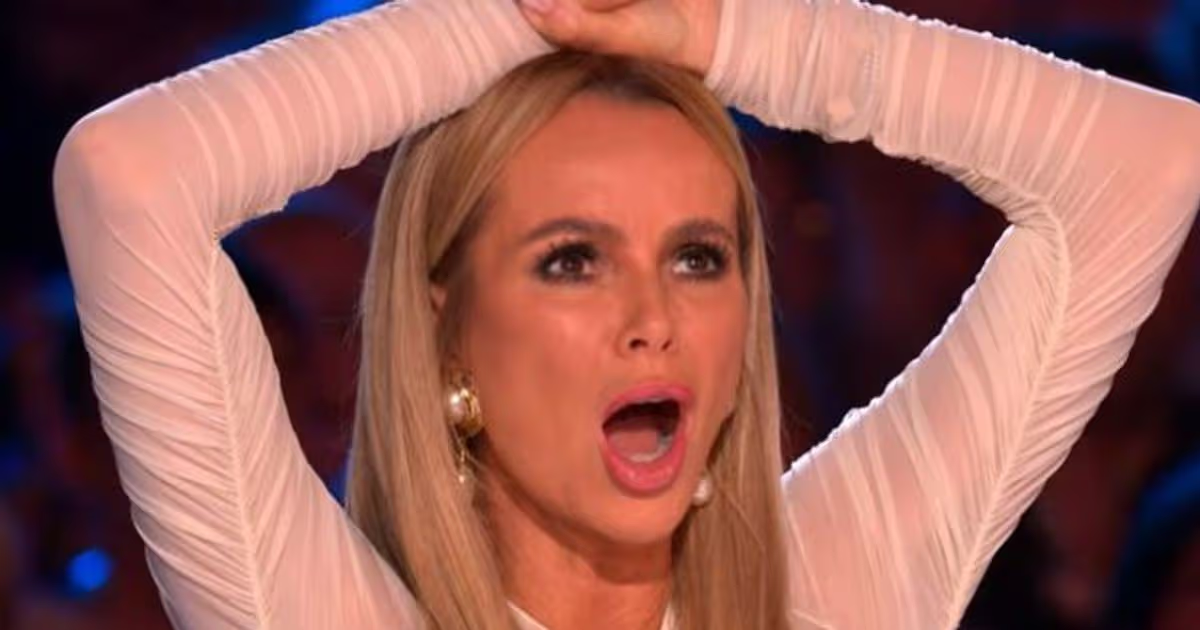
A sneak peek clip ahead of the episode shows the judges’ jaws dropping as they take in the quartet’s acrobatic act.
The hopefuls, from Tanzania, stripped down to their jeans to show off their skills on the Britain’s Got Talent stage, with the panel gripped as they pulled off intricate balancing feats.
At one point, The Rafikiz arranged themselves into a human tower, with the performer at the top on his head, balancing on his teammate’s head.
Advertisement
“That is some serious strength!” said Alesha as the audience cheered and both Amanda and KSI cried: “Oh my God!”
“What?” asked presenter Dec, who looked gobsmacked as he stood in the wings watching with presenting partner Ant.
Advertisement
“Wow!” exclaimed Ant, as the performers moved to a one-handed lift. “It’s like the Avengers or something!”
There was more to come, as one of the men clutched a stand in his mouth and lifted one of the other Rafikiz members into the air, using his teeth to hold him up.
The act received a huge cheer as they finished, with all the judges rising to their feet for a standing ovation.
Advertisement
“I am impressed!” KSI told them, as Amanda agreed: “It was so thrilling and so dangerous. I literally could not take my eyes off you.
“At the end I was covered in goosebumps. It was just amazing.”
Alesha said she “loved it”, as Simon told them: “It’s a huge yes for me. We saw an act before from Canada. Literally, he was just jumping around on the trampoline. They blamed the size of the trampoline because we said no.
Advertisement
“And you don’t have a particularly big staircase, but it doesn’t matter. Because you put on a show.”
For the latest showbiz, TV, movie and streaming news, go to the new **Everything Gossip** website
Britain’s Got Talent airs Saturday 7pm on ITV1 and ITVX
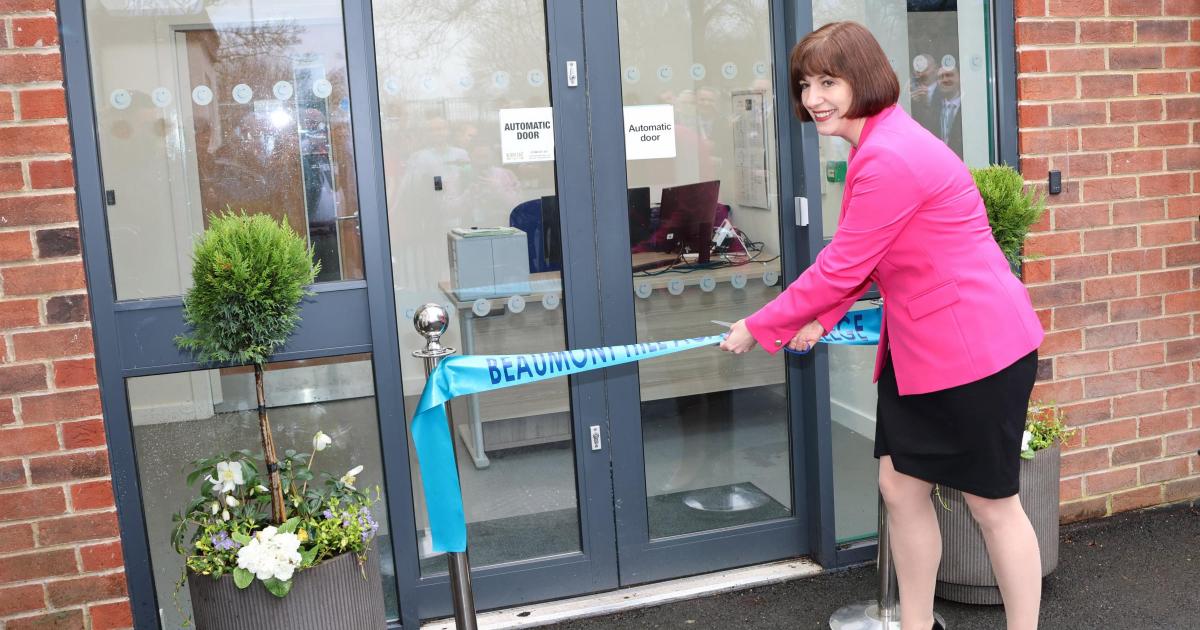
Education Secretary Bridget Phillipson cut the ribbon for the opening of executive principal Caroline Green’s Beaumont Hill Sixth-Form College, located on Salters Lane South, opposite Education Village.
In a £840k scheme by the Education Village Academy Trust, the college will introduce SEND facilities for more students up to the age of 19, as well as creating an additional four classrooms on the Education Village site to accommodate more pupils.
Bridget Phillipson, centre, with Beaumont Hill executive principal Caroline Green and principal Adrian Lynch (Image: PROVIDED)
Beaumont Hill Academy currently holds 400 pupils from 2 to 19, but new features, including more classrooms, kitchen facilities and outdoor space means that their status as one of the largest SEND facilities in the United Kingdom will only expand.
Mrs. Green said: “It has always been my dream to have such a sixth form college and now we have. Staff, students, parents and carers are very excited about the prospect.
Advertisement
“SEND is much more visible today with greater recognition and diagnosis of conditions. Better medical intervention also allows disabled students to go to school.”
Education Secretary Bridget Phillipson chats with students at Beaumont Hill Sixth Form College (Image: PROVIDED)
Mike Butler, chief executive of the Education Village Academy Trust, added that the trust as a whole is dedicated to supporting all children, and reflecting the needs of all students in Darlington.
“Our collective endeavours have always been based on human dignity, not founded on deficit,” Mr. Butler said. “This new facility strengthens our mission, reinforces our ethos and reflects our unwavering commitment to the children and young people we serve.”
With SEND children requiring more support, parents are thankful for the extra facilities that will be available as their children move through primary and secondary school.
Advertisement
Beverley Bird, a mother of a three-year-old with profound autism, said: “It is very stressful for parents as the places generally are not there which will affect children’s ability to thrive. So it is huge that we now have this provision as it takes the pressure off parents as their children can be here from aged two to 19.”
Performing the honours, Education Secretary Bridget Phillipson cuts the ribbon at the brand new Beaumont Hill Sixth Form College in Darlington (Image: PROVIDED)
The Education Secretary reinforced how important it was to make the necessary facilities available for parents of SEND children, because it is their “right” to be given access to specialist support.
Lola McEvoy, MP for Darlington, said: “To have this facility so close is wonderful. We don’t have to choose between empathy and excellence. This is proof you can have both.”
The college will offer post-16 students a range of qualifications and accreditations, including BTEC Prevocational Award and Certificates in a range of subjects, as well as AQA awards in english and maths, physical education, ICT, entry level functional skills, and more.
City of York Council refused plans for new signs and lighting on The Gillygate, in the street of the same name, saying they would clutter the outside of the listed building.
The pub’s plans stated the new fixtures were part of the redecoration of the outside of the building which was showing signs of deterioration.
It comes as a spokesperson for The Gillygate’s owners Star Pubs said they were finalising an agreement with a new licensee to take it on.
RECOMMENDED READING:
Advertisement
Plans refused by council officers would have seen a sign bearing the pub’s name replaced and a hanging sign, four boards and four outside floodlights kept in place.
Similar plans were also refused last year, with the signs currently in place installed following the approval of an application in 2013.
The latest application stated minor redecorations had been done on the inside of the Grade II-listed building which dates back to the 19th Century.
Plans stated: “We have designed the new signage scheme based on the style and locations of existing signage.
Advertisement
Proposed changes to The Gillygate pub, in Gillygate, York. Picture is from SR Signs/York Council’s planning portal, available for all LDRS partners to use.
“The new decorations will enhance the appearance of the pub and and the signs themselves will replicate the existing ones.”
But council planning officers ruled the signs would negatively impact the building and surrounding conservation area.
They stated: “High level signs like the one proposed are not supported as they would harm the architectural significance of the building and character and appearance of the area.
“The proposed floodlighting would draw further attention to the high level sign and result in further harm to the visual appearance of the listed building and conservation area.”
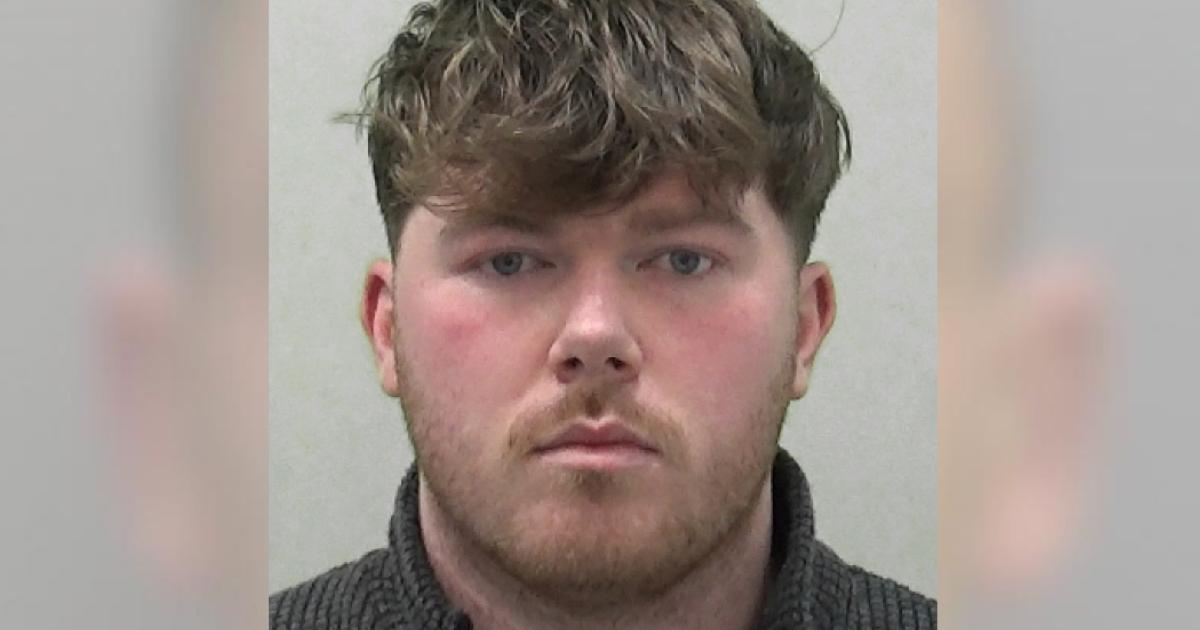
James Graham, 24, planned to meet a 14-year-old boy who he believed he had been chatting with online.
But, what the defendant did not know, was that he had actually been speaking with a decoy police officer from the North East Regional Organised Crime Unit (NEROCU), posing as the boy, as part of a wider investigation.
Newcastle Crown Court heard that Graham sent countless sexually explicit messages stating his intentions with the teenage schoolboy and even offered to supply him with drugs.
James Graham thought he was arranging to meet a 14-year-old boy for sex (Image: Northumbria Police)
When communication began, in October 2024, NEROCU officers quickly launched a specialist operation to target Graham and bring him into custody.
Advertisement
It led to his arrest on January 15 last year, and he was subsequently charged with arranging/facilitating the commission of child sex offence and attempting to engage in sexual communication with a child.
It was classed as “an attempt” as there was no actual child.
Graham, of Hovingham Gardens, Barnes, Sunderland, later pleaded guilty to all charges and yesterday (Thursday, March 5) appeared back at the court where he was sentenced by Recorder Paul Reid to a ten-month prison sentence, suspended for 18 months.
James Graham given suspended prison sentence with ten-years’ registration as a sex offender (Image: Northumbria Police)
But he was also made subject of registration as a sex offender and restrictions imposed under a Sexual Harm Prevention Order, both for ten years.
Advertisement
NEROCU Detective Constable Lee Robertson, said: “Cases like this show why our work in this area is so vital and we will continue to do all we can to help protect children from predators like Graham.
“I’d like to thank all the officers and staff involved for helping to bring Graham before the courts and as always, I’d encourage anyone who has been a victim, or who wants to talk to an officer and raise some concerns, to get in touch immediately.”
France could retain the Six Nations title with a round to spare as they take on Scotland at Murrayfield.
The defending champions have been a class apart so far in the competition, following up a significant opening-round win over Ireland with successes against Wales and Italy.
Three bonus-point wins thus far have left them top of the table with 15 points, and another victory by four tries or more would make certain of the title.
Ireland’s hard-fought win over Wales last night has left them on 14 competition points and thus unable to reach more than 19, while Scotland sit in third on 11 points as they host the defending champions.
Advertisement
Even a high-scoring, narrow defeat for Scotland, and banking two bonus points, would not be enough to keep their hopes alive if France still win with a bonus point.
France host England in Paris on Six Nations “Super Saturday” as the final round of fixtures is held next weekend.
A championship success would be their eighth since the addition of Italy to the tournament in 2000, moving clear of England as the outright most successful side in that period.
It would be a 28th crown for France overall in the competition’s long lineage.
Ever since pen was first put to paper, literary heroines have leapt off the page, often as literature’s most nuanced characters. Whether plucky and confident, pushing the boundaries of society, or increasingly empowered in their own quiet ways, it is no surprise that fictitious females reveal much about the world.
So, to celebrate International Women’s Day 2026, we’ve picked ten of our favourite literary luminaries (in no particular order) to uncover what they can teach us about living.
1. Jane Eyre (1847) by Charlotte Brontë
“I am no bird; and no net ensnares me: I am a free human being with an independent will.” So says Jane Eyre in one of literature’s most famous lines. She overcomes a dreadful childhood, impoverished circumstances and social inequality (as well as the indignity of finding out the man she loves is already married) through a strong sense of self-worth. Described throughout the novel as small and plain, Jane demonstrates an innate sense of endurance, independence and self-belief, no matter what she faces.
2. Joyce, The Thursday Murder Club (2020) by Richard Osman
Very fond of a slice of cake and known for being generous to everyone, Joyce Meadowcroft is a key narrative voice in Osman’s popular crime series. Like Miss Marple before her, Joyce has a keen sense of right and wrong, alongside razor-sharp observation skills. Not afraid to get stuck in, this 77-year-old former nurse reminds us not to underestimate older people.
3. Offred, The Handmaid’s Tale (1985) by Margaret Atwood
The dark events of The Handmaid’s Tale are recounted from the perspective of Offred, who is often considered a resigned and compliant narrator. Memories of her former life with her family, alongside the strong and often bleak narrative voice exhibited throughout, reinforce that quiet protests or simply overcoming silence can be a means of survival.
Advertisement
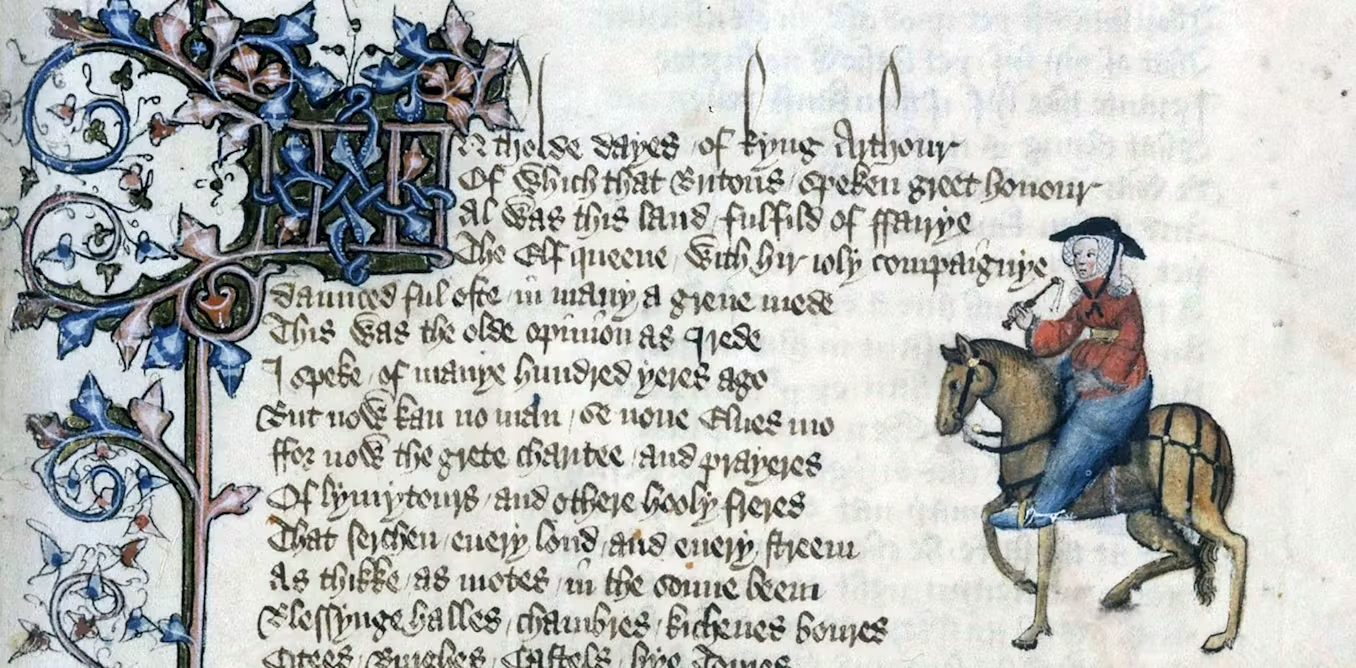
4. Wife of Bath, Canterbury Tales (c. 1400) by Geoffrey Chaucer
Recognised as the “first ordinary and real woman in English literature” by the University of Oxford’s Marion Turner, the Wife of Bath broke the mould back in 1400 by declaring that sexual freedom was a positive, and women should not be defined or constrained by their partners (five husbands in her case!). Advocating for the freedom to be (and be with) who you want, creating a 600-year legacy? Many would hope to be as influential.
5. Kahu, The Whale Rider (1987) by Witi Ihimaera
Advertisement
Named after her ancestor, an original whale rider, Kahu Paikea Apirana is our youngest protagonist. As she is female, the prejudices of society – particularly, and most poignantly, those of her influential great-grandfather – ensure she is not considered as the rightful heir to the chieftainship of her Māori community. But through her ability to communicate with whales, Kahu unites her family and the natural world. The Whale Rider is a profoundly moving story that reminds us our connection with the environment should always be harmonious.
6. Orlando (1928) by Virginia Woolf
Influenced by Shakespeare’s As You Like It, Orlando is potentially what Jeanette Winterson calls “the first English language trans novel”. Initially a 16th-century nobleman, Orlando awakes at the age of 30 in 1920s England, having been transformed into a woman. Thought to be based on Woolf’s lover and friend Vita Sackville-West, the character of Orlando reminds us that we must always be true to who we are.
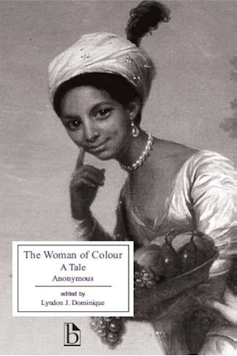
7. Olivia, The Woman of Colour: A Tale (1808), Anonymous
The protagonist of this Regency drama is the first Black heroine in a European-set novel. Facing prejudice from her English relations, Olivia firmly alters preconceived notions and stereotypes about her skin colour, intellect and background. Upon learning of her new husband’s wrongdoing (like Jane Eyre’s Rochester, he is already married), Olivia dissolves the marriage and takes her dowry home to Jamaica, where she aims to improve the lives of her countrymen. Published just a year after the 1807 abolition of the slave trade across the British Empire, Olivia inspires us to take an interest in world events, foster empathy and stand up to prejudice.
Advertisement
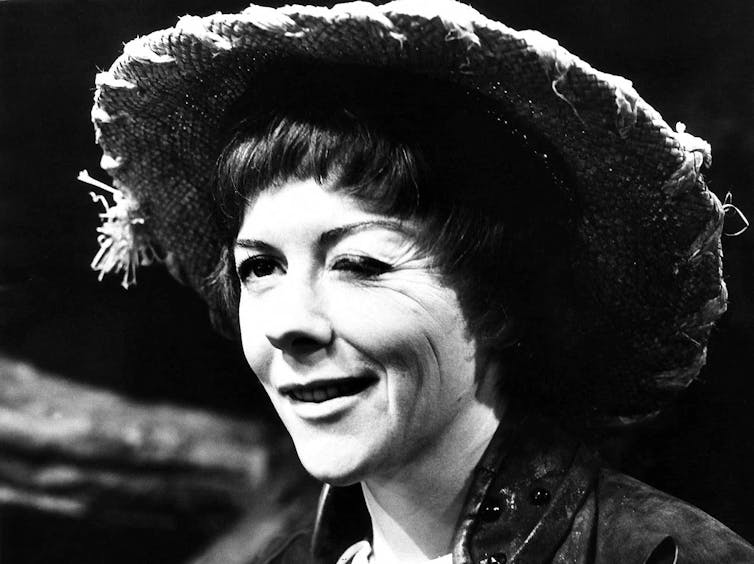
8. Rosalind, As You Like It (1600) by William Shakespeare
Perhaps Shakespeare’s best creation (overall, not just female), Rosalind has the most lines of any of his female characters. And unlike many of the Bard’s other characters, Rosalind speaks throughout the play in prose, disparaging love poetry. Even more unusually, she has the last word in delivering the epilogue. Shakespeare’s bold heroine encourages us to be unafraid to speak our own minds.
Dorothy Tutin playing Rosalind at the Royal Court Theatre in Liverpool in 1967. Trinity Mirror / Alamy
9. Eleanor, Eleanor Oliphant is Completely Fine (2017) by Gail Honeyman
Facing a consistently empty existence, Eleanor is a character facing profound loneliness. It is not until her colleague Raymond becomes a firm friend, and accepts her as she is, that Eleanor begins to recognise her isolation. This novel’s heroine prompts us to remember the human need for connection, and the importance of having understanding friends.
10. Scheherazade, One Thousand and One Arabian Nights (circa 900), folk tale
Advertisement
Complex and multilayered, the first version of Scheherazade’s tale was a manuscript found in Cairo in the 9th century. Since then, her stories have woven their way through the centuries and across continents. Scheherazade is the new bride of a vindictive sultan whose first wife was unfaithful. He vows to take revenge on womankind by taking a new virgin bride every night and executing her the next morning.
But Scheherazade’s wit, intelligence and storytelling prowess enable her to tell enthralling, unfinished tales every night. This means she stays alive for 1,001 nights, saving herself and the women of the kingdom. Patience, persistence and selfless concern for the welfare of others are all tenets this original storyteller embodies.
When Keir Starmer briefed the House of Commons on the situation in Iran, the UK’s prime minister ended with a clear message: “We all remember the mistakes of Iraq, and we have learned those lessons.”
Tony Blair’s decision to bring British forces into the Iraq war in March 2003 has long loomed over the Labour party and British foreign policy. In 2011, then prime minister David Cameron was keen to stress to parliament that any action in Libya would “not [be] another Iraq”.
Two years later, the same reassurance was provided for intervention in Syria – only this time, the Labour leader, Ed Miliband, led the opposition to block military action.
For the current prime minister, the lessons from the events of 2003 were to ensure the legality of any military intervention, and that a clear plan for the future was in place.
Advertisement
It is unsurprising that he has picked up on the question of legalities, given his previous career. However, Starmer also specifically campaigned against action in Iraq. On the eve of the war, he wrote to The Guardian warning against military action: “Engaging in armed conflict in breach of international law is a precarious business.”
In the case of Iran, legalities remain just as sticky. There was no United Nations Security Council resolution to support US-Israeli activities, and it remains unclear how the current intervention relates to individual or collective self-defence.
When Starmer decided to instigate the use of British military assets in the region, and allow the US to use British bases for actions against missile sites, the language used in his statement was careful and specific. It focused on Iran’s “indiscriminate attacks” and “unlawful strikes”, allowing the UK to argue its position under international law as acting in self-defence.
There does not appear to be a “phase 4” – a post-combat plan for Iran. Nor is it clear what the US’s objectives are before combat operations can end.
Advertisement
Donald Trump has explicitly stated that he would like to see regime change. But whether a different leadership is sufficient, or if the full roots of the Islamic Republic have to be removed, remains unknown.
Lessons from the Iraq inquiry
Iran is not Iraq. There are many key differences in their political situations, geography and people, not to mention the amount of time to plan the military operation (despite pre-deployment at the beginning of the year and assets already in the area).
There are also differences in the intelligence situations, the recent diplomatic progress that has been made over nuclear issues, and the fact that the war in Iran is not an ideological pursuit akin to the neoconservative agenda of the 2000s.
However, both wars are ones of choice, and it is clear that Starmer intends to take a different approach to Blair. He would do well to return to some of the key lessons identified by the formal inquiry into events surrounding Britain’s role in the Iraq war.
Advertisement
In 2016, the results of the public inquiry – comprising 12 volumes and 2.6 million words – were published. Inquiry chair John Chilcot’s key points (as Starmer has alluded) were that “the circumstances in which it was decided there was a legal basis for UK military action were far from satisfactory” – and that “the planning and preparations for Iraq after Saddam Hussein were wholly inadequate”.
However, more issues remain relevant today. In particular, the ongoing Operation Epic Fury is a US military operation. It will not be possible for the UK to exert any significant influence in its planning. Any participation will be – as it was in Iraq – in subordination to the US.
As the Iraq inquiry report noted: “The US and UK are close allies, but the relationship between the two is unequal.” Despite the UK providing significant military assets and personnel to Iraq, it failed to exert any significant influence on US decisions.
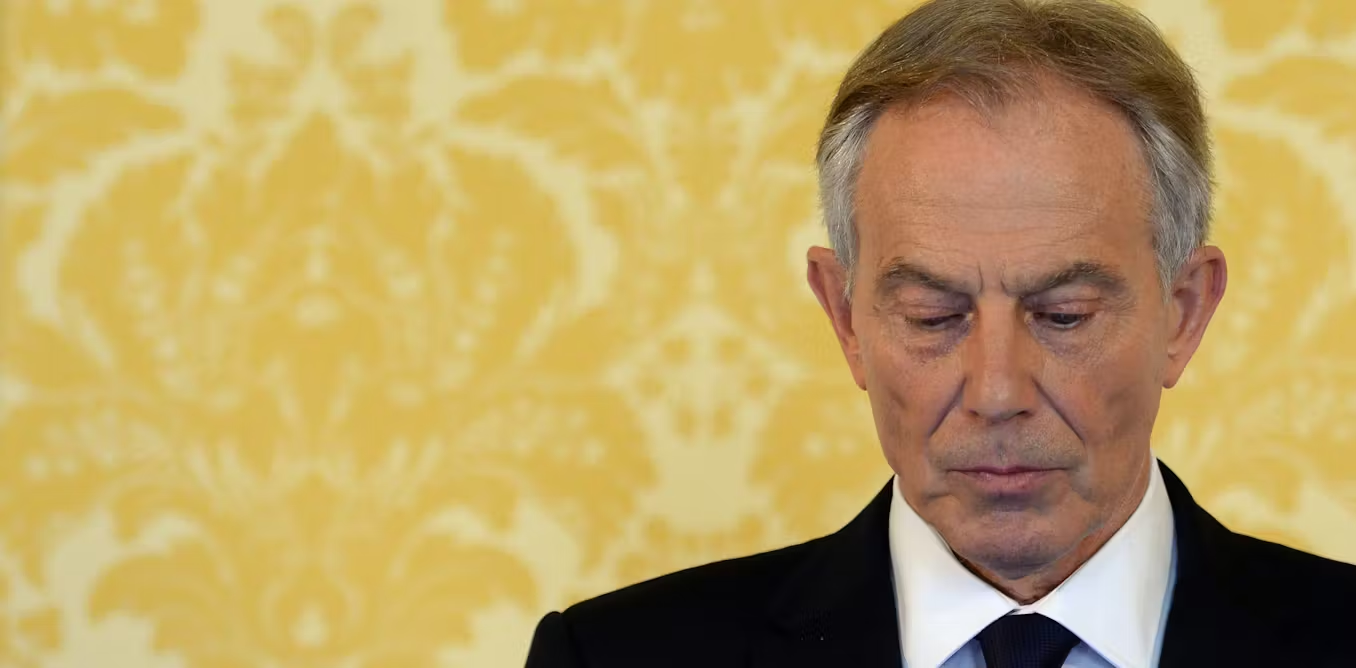
Starmer has said he remembers the ‘mistakes of Iraq’. Tolga Akmen/EPA-EFE
Chilcot also reflected on the UK-US relationship in general. He stated that prime ministers will always exercise their political judgment in how to handle the US, depending on personal relationships and the issues under discussion. He also recognised there is no standard formula for this relationship.
Advertisement
Trump has made no secret of his frustration with the prime minister, telling journalists: “This is not Winston Churchill that we are dealing with.” Nonetheless, Starmer has so far refused to be pressured into a different approach.
The prime minister would do well to remember one of Chilcot’s points: that “the UK’s relationship with the US has proved strong enough over time to bear the weight of honest disagreement. It does not require unconditional support where our interests or judgments differ.”
While this may be challenging in the short term when dealing with the Trump administration, it will remain true in the long term.
Chilcot offered one final point that rings true today: “Above all, the lesson is that all aspects of any intervention need to be calculated, debated and challenged with the utmost rigour. And when decisions have been made, they need to be implemented fully.”
Advertisement
Thus far, Starmer is following this advice, and should continue to do so.
A transmission issue means his Audi car has sparked out. And given he didn’t quite make it into the pits, he’s been wheeled away from the pits and theere’l be just nine cars in the Q3 shootout!
Kieran Jackson7 March 2026 05:56
Bortoleto stops in pit-entry
Gosh, almost a huge crash after Q2!
Advertisement
Lindblad speeds into the pit-entry, avoids teammate Lawson but Bortoleto stops in the pit-lane, having qualified P10!
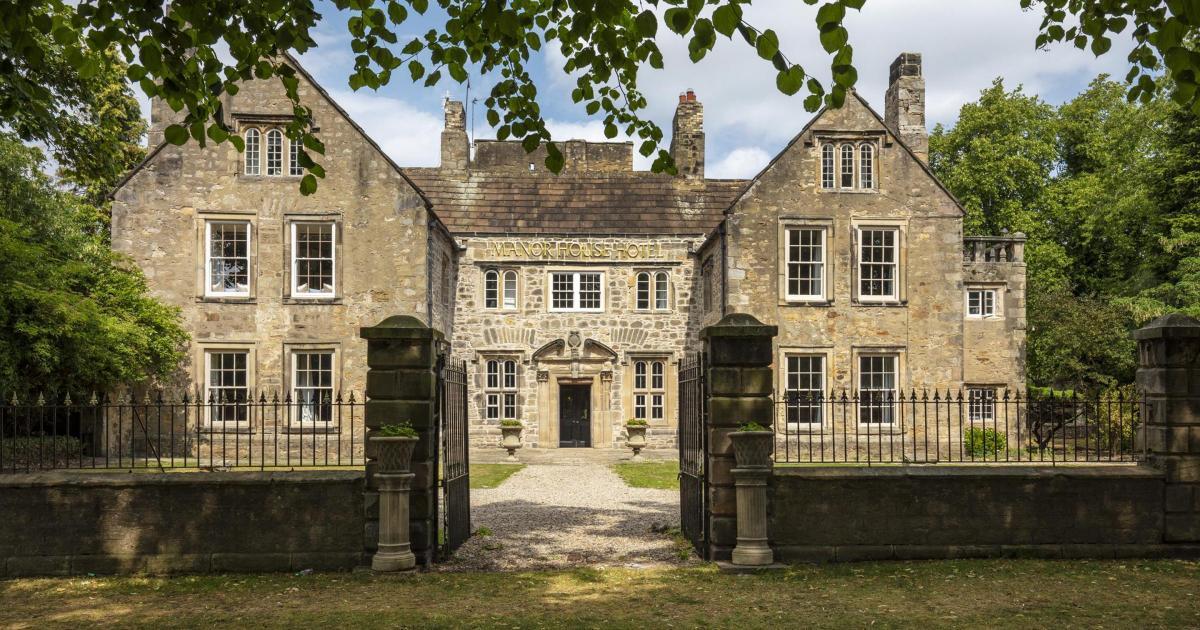
From May 10, the West Auckland Farmers & Indie Market will take place at The Manor House Hotel and Spa, running from 10am until 2pm on the second Sunday of every month.
The free, dog-friendly event will be organised by Naomi Katze of Gather North Events, who also runs the well-established Farmers and Indie Market at Middleton-in-Teesdale’s Middleton Mart.
That market, which launched in May 2024, regularly attracts about 80 traders and has built a loyal following of shoppers from across the region.
The Manor House Hotel in West Auckland (Image: file)
Now, Naomi is expanding the Gather North brand with a second monthly market – this time in West Auckland – promising the same carefully curated mix of high-quality food, drink, arts and crafts.
Advertisement
About 50 local independent businesses are expected to take part in each West Auckland event, with stalls both inside and outside the hotel grounds.
Visitors can expect everything from artisan bread, rare breed meats and fresh fish to local cheeses, seasonal fruit and vegetables, chutneys, jams and handmade pies and pastries.
There will also be sweet treats, including cakes, patisserie, chocolate and fudge, alongside vegan and gluten-free options.
Drinks producers are set to feature too, with local ales, spirits, cider and apple juice among the offerings.
Advertisement
Alongside the traditional farmers’ market produce, the ‘Indie’ collection will showcase artists, illustrators and designers, as well as handmade jewellery, ceramics, candles, textiles, woodwork and eclectic collectables.
The coffee van At Middleton-in-Teesdale Market (Image: naomi katze)
Street food and specialist barista coffee will be available, serving breakfast, brunch and lunch, while visitors are also encouraged to make use of The Manor House Hotel’s on-site café and restaurant.
Free entry and free parking will be available for all dates.
Announcing the expansion on social media, Naomi said she was “absolutely delighted” to be bringing the Gather North Farmers & Indie Market to a new location.
Advertisement
“You’ll see many of your familiar favourites, some fantastic new traders, and we’re so excited to welcome a whole new community through the doors too,” she said.
“Our same format. Our same high standards. The same, very special Gather North Events vibe, just a new location.”
The West Auckland Farmers & Indie Market will take place on:
May 10
June 14
July 12
August 9
September 13
October 11
November 8
December 6 (first Sunday of the month)
The Manor House Hotel and Spa is located in West Auckland, DL14 9HW.
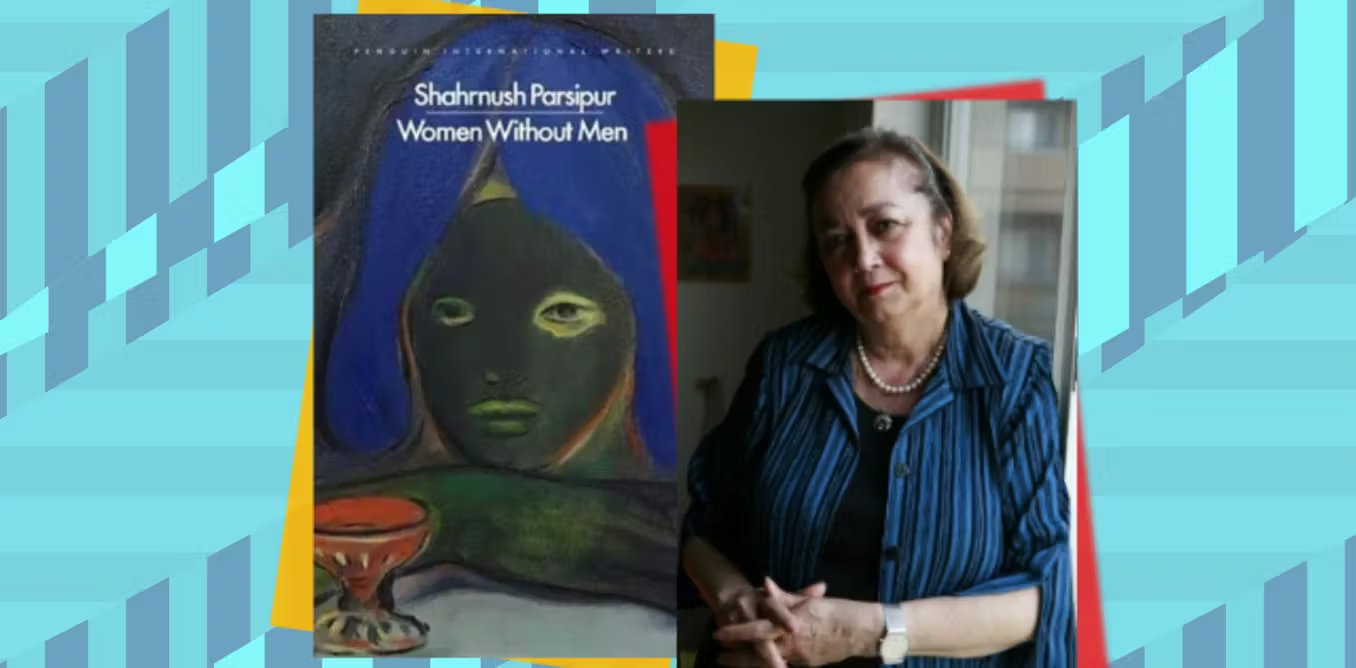
For more than three decades, Iran tried and failed to silence Women Without Men (Zanan bedun-e Mardan in Persian). Shahrnush Parsipur’s novella exposed the brutality of Iranian patriarchy with rare clarity. It did so long before global audiences recognised that violence.
Published in 1989, the book was banned almost immediately and Parsipur was imprisoned twice for writing openly about women’s sexuality and autonomy – an act of artistic courage the Islamic Republic deemed intolerable.
Women Without Men follows five women who flee violent marriages, stifling social expectations, and political chaos. Together, they build a sanctuary in a garden outside Iran’s capital, Tehran.
Advertisement
The book is now available in translation by Faridoun Farrokh in the UK for the first time. It still reads as a fierce, mystical act of feminist refusal, echoing the Woman, Life, Freedom movement – a Kurdish slogan that became a rallying cry for women’s rights when it was adopted during the 2022 Iranian protests. The book also lays bare, yet again, how violently regimes react when women claim the right to live unbounded.
When history tried to silence women but failed
Set against the turmoil of 1953, the novella unfolds in a charged political landscape. That year, a US- and UK-backed coup toppled Iran’s democratically elected prime minister, Mohammad Mosaddegh, and reinstalled the shah, Mohammad Reza Pahlavi, to protect western oil interests. That event reshaped Iran’s future and remains one of its most consequential political ruptures.
Penguin International Writers.
In the years leading up to the coup, Iranian women had been inching towards greater legal and social equality. But the political chaos and regime change set the stage for decades of instability. The tensions paved the way for the revolution 25 years later, and the Islamic Republic’s tightening grip on women’s lives. While these seismic events stay outside the novella’s frame, their presence is palpable in the background.
It is in the shadow of the 1953 coup that Parsipur exposes the intimate humiliations that patriarchy inscribes onto women’s bodies. Virginity becomes a weaponised measure of worth. Menopause is recast as an insult. Sexuality is monitored, contained and punished. Women’s desires are treated as destabilising forces that must be disciplined. Each character carries a different wound from this system.
Advertisement
Munis resists a brother who would rather kill her than allow her freedom. Faizeh absorbs the misogyny that confines her, and turns it inward. Zarrinkolah escapes a life in which her body is endlessly bought, sold and consumed. Mahdokht, pushed beyond the limits of social expectation, seeks literal rebirth as a tree. Farrokhlaqa endures an affluent marriage that strips her of dignity.
The women’s retreat to the garden outside Tehran is not an escape, but a feminist rupture that marks a refusal to live within a world that insists on defining them. It is a choice to build, however precariously, a space where those rules collapse.
Through mysticism and magical realism, the women’s transformations gain political force. Each metamorphosis becomes an act of resistance: women reclaiming autonomy, dignity and possibility in a society intent on erasing them.
Advertisement
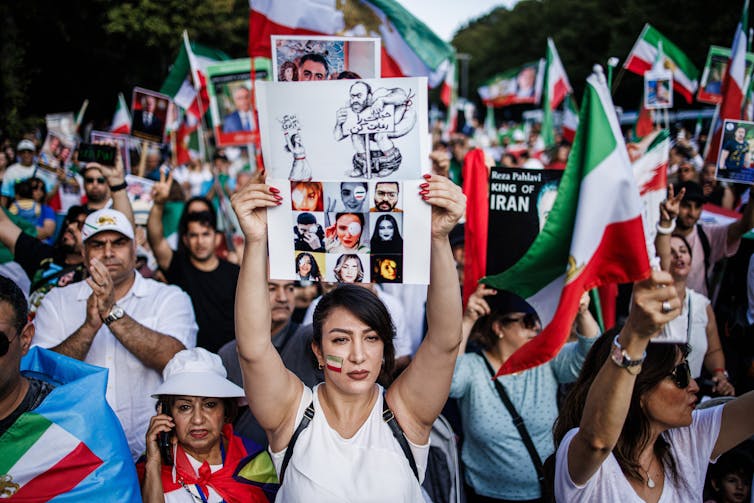
A demonstrator holds a sheet showing photos of victims at the anniversary of the death of Mahsa Jina Amini in 2023. Clemens Bilan/EPA
From 1953 to Woman, Life, Freedom
The global cry of “zan, zendegi, azadi” (Woman, Life, Freedom) carries the same insurgent energy that animates Parsipur’s Women Without Men. The slogan rose during the 2022 uprising, after the death of Mahsa Jina Amini in police custody.
The beginning of this spirit of resistance can be seen in Parsipur’s narrative, decades earlier. Her novella advanced a vision of women actively confronting and exceeding patriarchal limits decades before the slogan gained global force.
Reading the book today, it is clear how accurately Parsipur mapped the machinery of state violence, gender policing and systemic oppression – the same forces now driving women into the streets in Iran.
What anchors the novel’s contemporary relevance is its central idea: women imagining and constructing a world outside patriarchal control.
The five women of Parsipur’s story carve out a space where they are no longer defined by violence or expectation. Their garden becomes a blueprint for refusal, one that aligns directly with the ethos of Woman, Life, Freedom: not to endure patriarchy but to reject it, rewrite it, and build a life entirely beyond its reach.
Advertisement
Iran is once again engulfed in turmoil. Women Without Men enters the UK at a moment when Iranian exiles, scholars and activists are issuing urgent warnings about escalating state violence. Public awareness of the daily repression faced by Iranian women is higher than ever, and global literary circles are increasingly spotlighting works that confront authoritarianism with resistance.
In this context, the novella’s English-language publication operates as a bridge between past and present. It makes visible how the structures that constrained women’s lives in the 1950s continue to shape Iran’s political realities today.
This is not simply a reissue. The UK publication marks a hard‑won return for a work that has outlasted bans, by a writer who has survived incarceration and forced displacement. Its re‑entry into global circulation arrives precisely when its analysis of gendered domination carries heightened relevance.
A mum’s worst nightmare began when she found her daughter’s bed empty except for ransom notes – sparking days of trauma before a horrifying discovery in Shropshire
Emilia Randall GAU Writer
05:00, 07 Mar 2026
In a typical Shropshire family home, a mother’s worst fear was about to unfold.
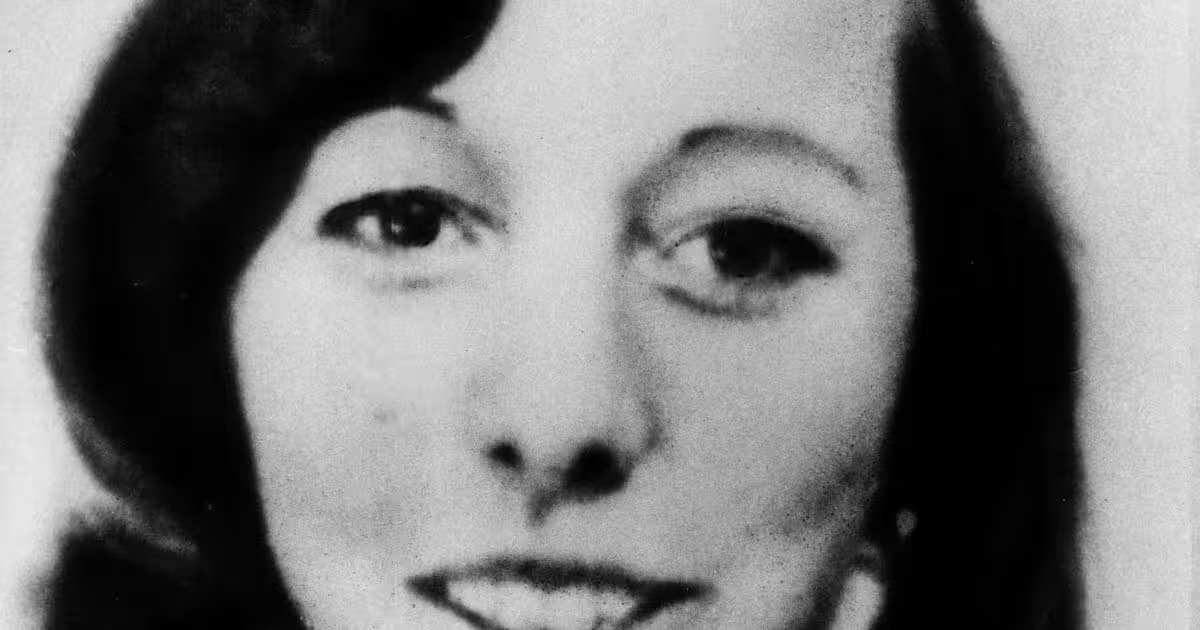
Dorothy Whittle discovered a terrifying ransom note on her daughter Lesley’s bed, marking the start of days filled with dread and distress.
Advertisement
Back in 1975, Staffordshire was held in the grip of fear by a man named Donald Nielson, who later earned the chilling label of the Black Panther. Originally a builder from Bradford, Neilson went on to commit four brutal murders.
Half a century on, the community remains haunted by these horrific killings. The abduction of Lesley Whittle has left an indelible mark on the residents of Highley, Shropshire.
On January 14, Lesley’s mother found her daughter’s bed empty. Three ransom notes were left on the bed, along with a warning not to involve the police, found in her sitting room, reports the Mirror.
The Whittles were a well-known local family, and Lesley was a cherished member of the community.
Tragically, her body was later discovered in a drainage shaft. Neilson was subsequently given four life sentences for his heinous crimes.
Andy Wright, a reporter for the Shropshire Star at the time, recalled: “People were absolutely astounded. They just couldn’t comprehend what had gone on.”
Researcher Dave Waterhouse told the BBC that it’s crucial to remember this case. He said: “Many people have actually said ‘let it lie, the past, move on’.
Advertisement
“Anybody born pre-1970 will have memories of what happened here in little old Kidsgrove. Tributes keep coming year in year out….it’s part of our local history and the impact it had is unquestionable.”
Waterhouse characterised Neilson as “very much a loner”. His mother passed away when he was 10.
He said: “He had very few friends. He went into the military, spent a couple of years there, which he loved. He was not successful in anything that he did except for burglaries – 400 burglaries and he never got caught.
Advertisement
“But he’d have every job from a taxi driver, from a joiner, from salesmen – and failed at every one.”
He noted that numerous people speculated Lesley’s mother was the intended target, rather than her daughter. He explained: “The Whittles had got a coach company – 70 coaches, based over in Shropshire at Highley and everybody in the area knew the family.
“When the father died, Lesley became known as the heiress and people knew her as that.”
Multiple mistakes occurred before Nielson’s capture. Waterhouse continued: “The first night they had to abort – there was error after error.
“The BBC released on the 20:00 GMT news on the radio that it was going to be dropped off at the Swan Centre in Kidderminster and it never happened.
“They decided to go again the next night and it was going to be a drop at Dudley Zoo but the security guard caught Neilson on the premises and that security guard was shot.
“Then that evening the rules changed. Tape recordings were sent to the Whittle family by Neilson saying the drop’s got to be tonight at Kidsgrove.”
Advertisement
Sylvia Dymond, who was attending school when Lesley died, was left devastated after police discovered the teenager’s body in the Kidsgrove woodland.
She told the BBC: “This is where as children we’d come down and play through the summer.
“We practically lived down here. It’s horrific when you think about it, because she must have been terrified.”
Advertisement
The ransom handover never happened after Neilson spotted a courting couple and fled in fear.
Waterhouse explained: “He thought he’d been betrayed. Evidence suggests he came from where he was waiting and he aborted.
“But before he aborted he came back to Lesley and threw her off the shaft.”
Neilson was ultimately apprehended after being spotted behaving suspiciously outside a post office near Mansfield, Nottinghamshire.
Advertisement
Imprisoned in July 1976 for her murder alongside three sub-postmasters, who were killed during armed robberies in Harrogate, North Yorkshire, Accrington, Lancashire and Langley in the West Midlands.
Throughout the police inquiry and subsequent trial, Neilson maintained his innocence. He died behind bars in 2011.