Can you remotely unlock an encrypted hard disk? [Jyn] needed to unlock their home server after it rebooted even if they weren’t home. Normally, they used Tailscale to remote in, but you can’t use tailscale to connect to the machine before the hard drive decrypts, right? Well, you can, sort of, and [Jyn] explains how.
The entertaining post points out something you probably knew, but never thought much about. When your Linux box boots, it starts a very tiny compressed Linux in RAM. On [Jyn’s] machine using Arch, this is the initramfs.
That’s not news, but because it is an actual limited Linux system (including systemd), you can add tools to it. In this case, adding dropbear (an ssh server) and Tailscale to the limited boot-time Linux.
Advertisement
Doing this in the most straightforward way presents several issues related to security. However, using a few configuration items, you can limit it to showing the unlock screen and nothing else.
The only limitation is that the setup, as written, will only work with an Ethernet interface. WiFi should be possible, but getting the wireless network up in this environment would likely be challenging.
In a bumper week of launches, Apple has just unveiled its latest MacBook Air series.
As the MacBook Air now sports the same M5 chip as the MacBook Pro, what really separates the laptops? Do you really need to spend more on the MacBook Pro?
To help you decide which laptop to should go for, we’ve compared the specs of the MacBook Air M5 and Pro M5 below.
We should disclaim that we’ll be looking solely at the MacBook Pro M5 specs, and not the recently announced M5 Pro or M5 Max. However, if you’re interested to learn more about the new chips in the MacBook Pro, then visit MacBook Pro M5 Pro vs M5 Max instead.
Advertisement
Keep reading to see which MacBook will likely suit your needs best. Otherwise, make sure you visit our MacBook Neo vs MacBook Air M5 guide to see whether Apple’s affordable option is a better fit for you.
Not sold on a MacBook? Our list of the best laptops from the past year has you covered.
Advertisement
Price and Availability
At the time of writing, you can pre-order the MacBook Air M5 ahead of its official launch from March 11th. Available in four colours (Sky Blue, Silver, Midnight and Starlight), the MacBook Air M5 has a starting price of £1099/$1099.
Advertisement
The MacBook Pro M5 is available in just two colours (Silver and Space Black) and has a starting price of £1699/$1699.
MacBook Air has a choice between two sizes
The MacBook Air M5 comes as either a 13- or 15-inch model, while the MacBook Pro M5 sits firmly between the two at 14-inches. Although the MacBook Air 15-inch is the largest, the heaviest of the lot is actually the MacBook Pro which weighs 1.55kg.
With this in mind, if one of the most important factors in choosing a laptop is its portability, then the MacBook Air series will likely suit you best. In fact, the 13-inch MacBook Air isn’t just the smallest of the lot, but at just 1.23kg it’s impressively lightweight too – making it easy to slip into a bag.
MacBook Air M5. Image Credit (Apple)
Advertisement
Both run on Apple’s M5 chip
As their titles suggest, Apple’s current flagship MacBook Air and MacBook Pro run on the M5 chip. While we’re yet to review the chip, Apple promises that the chip delivers “incredible performance for everything users want to tackle, from everyday productivity to creative workflows.”
Advertisement
Do keep in mind that the default 13-inch MacBook Air comes with an 8-core GPU whereas the 15-inch model and MacBook Pro have a 10-core GPU by default. You can upgrade the 13-inch to a 10-core, but this will cost an additional £100/$100.
Otherwise, the M5 chip enables the MacBook Air and MacBook Pro to run the entire Apple Intelligence toolkit too.
MacBook Pro M5 Writing Tools. Image Credit (Trusted Reviews)
MacBook Pro promises a longer battery life
The MacBook Pro not only claims a longer battery life between charges than the MacBook Air series, but it also promises faster charging too. That’s a pretty noteworthy claim, as Apple has never been a brand known for its speedy charging ability.
So, while the MacBook Air promises up to 15 hours of wireless web and up to 18 hours of video streaming, the MacBook Pro should see up to 16 hours of web and up to a whopping 24 hours of streaming too. We’re yet to put these claims to the test, but they undoubtedly sound impressive.
Advertisement
Advertisement
In addition, the MacBook Pro is fast-charge capable when paired with a 96W or higher power source. The MacBook Air, on the other hand, supports 70W instead.
Again, we’re yet to see how long the laptops really take the charge, but it’s certainly a promising upgrade.
MacBook Pro M5. Image Credit (Trusted Reviews)
MacBook Pro has more ports
Apple has taken a “less is more” approach when it comes to supplying the MacBook Air series with ports, which is undoubtedly a shame. That means both the 13- and 15-inch laptops are equipped with just two Thunderbolt 4 USB-C ports, a 3.5mm headphone jack and a MagSafe charger. This is more or less the same as the MacBook Neo, although the affordable laptop’s USB-Cs aren’t Thunderbolt 4.
Instead, the MacBook Pro is equipped with everything found on the MacBook Air plus an additional Thunderbolt 4 USB-C, a HDMI and an SDXC card slot too. It might not be as well equipped as the likes of Asus ProArt P16 or Samsung Galaxy Book 6 Pro, but it’s certainly an improvement over the MacBook Air.
Advertisement
Advertisement
MacBook Pro has a Liquid Retina XDR display
Arguably one of the main reasons to opt for the MacBook Pro is its display. While the MacBook Air’s Liquid Retina display promises up to 500 nits brightness, supports the P3 wide colour gamut and True Tone technology, the MacBook Pro’s own panel has a few extra features up its sleeve.
Firstly, the MacBook Pro sports a Liquid Retina XDR display which also supports the P3 wide colour gamut and True Tone technology. However, the panel also benefits from 3024×1964 pixels, up to 1600 nits peak HDR brightness and ProMotion technology. Essentially, this means the MacBook Pro has an adaptive 1-120Hz refresh rate which means streaming, scrolling and games look and feel smoother. The MacBook Air instead caps out at just 60Hz.
MacBook Pro M5. Image Credit (Apple)
Finally, you’ll also have the option to kit the MacBook Pro with a nano-texture coating which helps to reduce glare and reflections. Although it will cost an additional £150/$150, it’s something we would recommend investing in, as we found the coating in the MacBook Pro M4 was brilliant, and made looking at the screen for longer periods that bit easier.
Early Verdict
Judging by its specs, the MacBook Air M5 seems like a brilliant alternative to the MacBook Pro M5, for those who want a powerful laptop but for a cheaper price. However, you’ll have to keep in mind that you will miss out on the more generous port selection, a Liquid Retina XDR display and longer battery life.
We’ll update this versus once we review both the MacBook Air M5 and MacBook Pro M5.
There’s a lot to love about popcorn: the crunch, its customizable nature and especially the fact that it’s a great source of fiber. Plus, it’s even healthier if you air-pop it without using any oil. But if you, like me and don’t have a popcorn maker, you’re likely to make it in a pot on the stove.
However, the last time I made popcorn, I looked over at my air fryer and wondered if I could pop popcorn in it. When I went online to search for an answer, I couldn’t find a conclusive response, so I decided to reach out to an air fryer manufacturer and professional chefs for their expert advice.
Well, technically it can, but that doesn’t mean it should.
“At Ninja, we’re always testing the boundaries of what our technology can do, and popcorn in an air fryer is something our culinary and product development teams have explored. However, we advise against trying to make popcorn in an air fryer,” a Ninja Kitchen representative tells CNET. “Air fryers circulate heat differently than traditional popcorn makers, which means kernels don’t reach the sustained heat needed in the required time.”
Because popcorn is lightweight, Sharniquia White, chef and registered dietitian, explains that if you try to make it in an air fryer, it can fly up into the device’s heating element, get stuck near the fan, burn from uneven airflow and leave you with a frustrating amount of unpopped kernels. All cons, no pros.
Given the safety hazards and unsatisfying results, you’ll want to avoid using an air fryer for popcorn. At least until the technology catches up.
Advertisement
While air fryers such as the Ninja Crispi Pro can roast an entire chicken, they can’t pop popcorn just yet.
Ninja
Pro chefs on the best way to make popcorn
Since the air fryer is out for popcorn, I asked my chef sources for their recommendations on making the best popcorn.
White says that the stovetop wins every time if you want a fluffy texture, rich flavor and full expansion of your kernels. She provides these handy instructions for getting the best results:
Add 2-3 kernels to test if the oil is hot enough. When they pop, add ½ cup kernels.
Cover and gently shake the pot occasionally.
Remove from heat when popping slows.
You control the oil, the salt and the outcome.
However, if you make popcorn all the time, plant-based chef Shauna McQueen, MS, RD, founder of Food School, recommends purchasing a low-cost pan with a lid you can crank to move the popcorn kernels around.
“The other option is automatic and will self-stir the kernels,” McQueen adds. “I’ve used both and have had to replace both within a few years of use, but find the automatic one most convenient.”
As for the healthiest way to make popcorn…
“If you’re reaching for the air fryer because you want to use less oil, you’re thinking in the right direction,” White says. “However, an inexpensive air popper or a measured stovetop method is more reliable and safer. Popcorn is already a whole-grain, fiber-rich snack. The goal isn’t to eliminate oil entirely; it’s to be intentional about how much you use and what you add.”
Whether you pop it on the stove or buy a device that air-pops your popcorn, it’s best to avoid microwave popcorn. According to McQueen, it may contain additives like TBHQ, which is used to extend the shelf life of processed foods. While the FDA considers it safe in appropriate amounts, it has been linked to potential health issues.
Advertisement
If you want less oil on your popcorn, you may want to invest in an air popper. Or, be more intentional about the toppings you use.
Jonathan Knowles/Getty Images
The healthiest popcorn toppings
If extra flavor is what you’re after, McQueen suggests the following anti-inflammatory toppings: curry powder, cayenne, garlic powder or chili powder. For a cheesy flavor plus B-vitamins, opt for nutritional yeast. Her favorites include a curry-style popcorn made with curry powder, garlic powder and a small amount of nutritional yeast; chili powder with lime and za’atar; or everything bagel seasoning.
As for White, she likes adding smoked paprika, cinnamon with a pinch of salt, fresh lime zest and sea salt or dried dill, “for an unexpected herb twist.”
The bottom line
Though it’s tempting, you shouldn’t make popcorn in your air fryer. Instead, use what you already have on hand and prepare it on the stovetop.
Advertisement
If you can’t get enough of the stuff and make it all the time, consider these options that are under $50: a stovetop popcorn maker or an oil-free air popper.
Either way, to keep your popcorn as healthy as possible, go light on the oil, butter and salt. Personally, I’ll be topping mine with chili powder, lime and za’atar next time my popcorn craving strikes, which will likely be in a few minutes after writing this tasty piece.
There’s a reason we’re called WIRED. If there’s one thing most of today’s gadgets have in common, it’s that they typically need to be plugged in from time to time. But all those cables, cords, and wires can be tough to manage. They don’t have to end up in a tangled nest under your desk; you can bring order to the cable chaos.
As a gadget reviewer, I have more cords than most people, which is why I also have a regimented cable management strategy to keep everything orderly. Here are my tips and product recommendations for hiding those cords and power strips, and keeping your desktop tidy.
Jump To:
Planning and Prep
Advertisement
Start by surveying the scene, unplugging and untangling everything, and removing anything that doesn’t need to be there. You might be surprised to find a stray USB-B or Micro-USB you haven’t used in years in the mix. Before you get started on cable management, take a slightly damp microfiber cloth and wipe down all the surfaces and cables. Now, you can start planning routes and figuring out which cables it would make sense to bundle together.
Ideally, cables will be the exact required length, so if you have spares or you don’t mind snagging some new cables, it’s worth switching and getting as close as possible to exact lengths to reduce the excess cable you have to hide. If you have a standing desk, remember to take into account the cable length required for a standing position (trust me, dear reader, it’s no fun when you hit stand on the desk and it pulls your PC tower into the air by a DisplayPort cable that is now forever stuck in that port).
Cable Management
Tidying your tech often comes back to cable management, but there are several ways to keep those cords neatly out of sight. Many desks have channels, grommets, and power strip trays built-in, so have a quick look to make sure you’re using what’s available. Some monitor arms also have built-in cable management. You also likely have a bunch of cable ties in your junk drawer or toolbox, so gather them together.
‘Our world is full of these wild ghosts’: Werner Herzog’s new National Geographic documentary gives a rare glimpse of some of the world’s most elusive animals
When Dr Steve Boyes first saw himself in Werner Herzog’s new film Ghost Elephants at the Venice International Film Festival in August last year, he saw an intensity within himself that he didn’t always realize was there.
The conservation biologist and National Geographic Explorer has devoted the past decade of his life to finding a mysterious, elusive herd of elephants in the highlands of Angola with such dedication that it immediately caught the attention of Herzog, who has since chronicled the epic journey in a National Geographic documentary.
“Watching it I thought, ‘wow — I look completely deranged’,” Boyes told TechRadar. For the record, Boyes is anything but deranged. He was more so referring to Herzog’s filmmaking style, which often focuses on chasing what the director calls “static truth” through protagonists with obsessive, almost mythic passions.
Advertisement
Boyes fits the bill perfectly. He’s dedicated his life to pursuing these animals long believed to be a myth, and runs one of the largest land based scientific, exploration programs with National Geographic in the world.
“We’ve discovered more than 300 new species and mapped major wetlands and water systems across Africa. But despite that I still spend most of my time on expeditions sitting around fires eating rice and beans sleeping under the stars. I’m supposed to be chairman of several organizations but I always joke that I’m still working on the factory floor,” Boyes said.
Ghost Elephants | Official Trailer | National Geographic Documentary Films – YouTube
Despite not having seen may of Herzog’s acclaimed documentaries (the two biggest are Aguirre, the Wrath of God and Fitzcarraldo), Boyes immediately hit it off with the filmmaker after a meeting in “the strangest place imaginable”.
That place was a restaurant in Beverly Hills, where the two didn’t just talk about Boyes’ search for the elephants but the meaning of life, philosophy and even their personal experiences of loneliness.
Advertisement
Sign up for breaking news, reviews, opinion, top tech deals, and more.
“Eventually [Herzog] came to Namibia as a creative adviser. I’d invited him out at the last minute after we received a small grant from National Geographic. Within the first two days it became clear to everyone that he needed to tell this story himself. And then this unstoppable creative force just took over.”
One of the few Herzog documentaries that Boyes remembers most is Grizzly Man, which funnily enough follows a very similar story to his own about a conservationist that lived with wild grizzly bears on an Alaskan reserve.
It’s these stories stories centered around obsession that tend to gravitate towards Herzog in a peculiar way, Boyes reveals. “Werner has a funny way of describing how stories come to him. He says it’s like hearing a noise downstairs in your kitchen and realizing that someone has broken in and when you go down there you find four burglars and one big one runs straight at you and that’s the story you have to deal with. That’s the film you make.”
Advertisement
This intangible link also extends to Ghost Elephants, which showcases how cutting-edge tools like motion heat-sensing cameras failed where the wisdom of Indigenous master trackers succeeded.
Advertisement
“Technology is really about measurement. Cameras and acoustic sensors are measuring things. Even a photograph is just a measurement of a moment. But it’s incredibly limiting. We tried everything. Camera traps, acoustic sensors listening for elephants, drones, satellite imagery. None of it worked.
“When the master trackers joined us, everything changed. Someone like [a master tracker] interacts with an elephant footprint the way we interact with a human face. He sees a track once and then again the next day and instantly recognizes it as the same individual. Very quickly he starts naming the elephants and building stories about them,” Boyes said.
The documentary isn’t just about finding an elusive animal, it’s about spotlighting what Boyes believes is the most endangered human resource on the planet right now: traditional ecological knowledge. “Our world is full of these wild ghosts,” Boyes revealed.
Ghost Elephants will premiere on National Geographic on March 7, and be available to stream the following day on Hulu (US) and Disney+ (internationally).
And of course, you can also follow TechRadar on YouTube and TikTok for news, reviews, unboxings in video form, and get regular updates from us on WhatsApp too.
Samsung has been quietly cooking up smart glasses since 2023, and at MWC 2026 in Barcelona, executive vice president Jay Kim finally let some details slip to CNBC. Not everything — Samsung isn’t that generous — but enough to understand what the company is actually building.
Here’s the confirmed bit: the glasses will have a camera positioned at eye level. That camera feeds what you’re looking at directly to a connected Galaxy smartphone, which handles all the processing and sends useful information back to you. The glasses are the eyes; your phone is the brain.
Andy Boxall / Digital Trends
Glasses as the eyes, phone as the brain
It’s a smart way to keep the hardware light without compromising on capability, and it’s essentially the same approach Meta took with the Ray-Ban glasses — which currently own a majority of the smart glasses market, so the playbook clearly works.
What Kim wouldn’t confirm is whether the glasses have a built-in display. When pressed, he pointed to Samsung’s watches and phones for anyone needing a screen — which is about as close to a “no” as you’ll get without actually saying it.
A separate report suggests a display-equipped version might arrive in 2027, making this year’s model more of a camera-and-AI-first experience.
Advertisement
Gemini AI
Will there be a display?
The bigger pitch is what the AI actually does with what it sees. Samsung wants the glasses to catch you glancing at a restaurant menu and translate it, look at a landmark and tell you its history, or quietly handle tasks — booking, messaging, navigating — without you fishing your phone out of your pocket.
Qualcomm and Google have been in the room since 2023 helping build the chips and software to make that happen.
As for when all this actually lands, Kim said Samsung wants something out for industry this year, and Qualcomm’s Cristiano Amon echoed the same 2026 commitment at the same event. A specific date? Still anyone’s guess — but given how much Samsung showed its hand at MWC, it probably isn’t far off.
A case for the Pixel 11 Pro XL has already shown up online
We may get a bigger but thinner camera bar
These handsets could well be launching around August time
The chunky camera bar sitting around the back of Google‘s flagship Pixel phones certainly makes them stand out, but it seems there may be a design tweak on the way with the Pixel 11 series that’s expected later this year.
Case maker ThinBorne (via Android Authority) has already posted a listing for a Pixel 11 Pro XL case, which gives us some idea of what might be coming. The case design suggests the phone’s camera bar may cover a slightly larger area, and protrude a little less.
Take a peek at our Pixel 10 Pro XL review, and you’ll see the rear camera island does stick out a fair bit from the phone. That’s partly to enable features like the 5x optical zoom, but the additional thickness isn’t to everyone’s tastes.
In 2026 it appears that Google may have found a way to trim down on this protrusion without affecting the camera specs too much — although of course we don’t know yet which cameras the Pixel 11 handsets are going to be fitted with.
To be confirmed
The Pixel 10a, without a camera bar (Image credit: Google)
Bear in mind that this updated design is far from confirmed, although case makers do often get a heads up from manufacturers about the dimensions of upcoming devices, so that the cases can be ready to go on launch day.
This is almost the first Pixel 11 leak to appear, although there was talk a few months ago about changes that may be coming with the Tensor G6 chipset — the processor that’s expected to be fitted inside all of these phones.
Advertisement
If Google follows the same approach as last year, we’ll get a Pixel 11, a Pixel 11 Pro, a Pixel 11 Pro XL, and a Pixel 11 Pro Fold. The current Pixel 10 flagships were unveiled in August, so their successors are likely to appear around then as well.
Sign up for breaking news, reviews, opinion, top tech deals, and more.
We’ve also just had the launch of the mid-range Google Pixel 10a, which — like the Pixel 9a before it — eschews the classic Pixel camera bump for a flat back casing. We’ll have to wait and see which direction the Pixel design team goes in next.
Seattle-based Rad Power Bikes went bankrupt and was acquired by Life Electric Vehicles Holdings of Florida. (Rad Power Bikes Photo)
Robert Provost has big plans for Rad Power Bikes, the recently bankrupt Seattle-based electric bike maker that he thinks can reclaim its industry dominance — and grow even larger.
In an interview with GeekWire on Friday, Provost, the CEO of South Florida-based Life Electric Vehicles Holdings, Inc., laid out an ambitious roadmap to overhaul Rad following his company’s acquisition of the startup’s assets, which closed this week.
“It’s not a continuation of Rad Power, more like a phoenix,” Provost said. “The rebirth.”
Under a new corporate entity called Rad Life Mobility, owned by Life EV Holdings, Provost said offers have been extended to re-hire 95% of employees who were laid off as part the bankruptcy process. Many of them are based in the Seattle area where Rad grew over the years.
Provost said about 70 people have accepted so far and he wants to hear from anyone who may have been missed — even former employees who helped build Rad during its heyday before and during the pandemic.
Advertisement
“We acquired all the digital assets, all the tangible assets. It was up to us on the workforce, we could actually hire them or not,” he said. “So we made the decision to go ahead and hire them. They’ve done a really great job.”
Provost said Life EV added another 15 or 20 of its people to Rad Life Mobility, including a new president, Salt Lake City-based Jim Brown, a Life EV investor who has extensive automotive dealership retail experience with Larry H. Miller Automotive Group in Utah.
“Some of the front office will be in person in Utah, but we are maintaining Seattle,” Provost said.
Based in Deerfield Beach, Fla., Life Electric Vehicles Holdings — publicly traded on the OTC market as LFEV — is a micro-mobility platform company focused on acquiring and scaling established e-bike brands. In November 2023, it acquired Serial 1, the in-house electric bicycle company originally started by motorcycle maker Harley-Davidson.
Advertisement
While Rad takes on a new corporate identity, the Rad Power Bikes branding will continue on bikes, products and retail locations. And despite the struggles it encountered, Provost thinks there is still a lot of value in the brand.
“We’re all excited,” Provost said. “It was No. 1. It was the highest-valued electric-bike-only company in the U.S. Our goal is get it back to that value, if not beyond that.”
Speaking during a Zoom call from his Florida office, Provost could hardly slow down while listing all that he and Life EV hope to accomplish with Rad Life Mobility, including:
Bike assembly: Provost plans to shift Rad from a traditional overseas manufacturing model to a “just-in-time” U.S.-based assembly process to lower costs and manage inventory. While parts will still be sourced globally, final assembly will move to a 100,000-square-foot facility in the central U.S. Provost noted the company will utilize a Foreign Trade Zone (FTZ) structure to mitigate the tariff burdens that plagued previous management. “We build only a few weeks out. It’s more of a just-in-time type of production,” he said.
Distribution and logistics: Provost called the reliance on third-party logistics and the associated costs a primary reason for Rad’s previous financial struggles. “We don’t need [3PL] because we’re managing that side of it,” he said. “We clean all that up, Rad becomes immediately profitable.”
Retail stores: Seven Rad stores will remain open in the U.S., including the flagship store in Seattle’s Ballard neighborhood. Provost said he was sad to see stores close in Vancouver, B.C., and St. Petersburg, Fla., earlier this year. Re-opening in Florida is a priority and getting Vancouver back would be nice, he said, adding that opening new Rad stores in at least 24 other key U.S. markets is the goal. Provost also said previous margins “weren’t sufficient” to dealers that carried Rad bikes and a new program “will have pricing that will be very attractive to them.”
Battery replacement program: Provost said the new company will take care of customers with Rad bikes and batteries impacted by the Consumer Product Safety Commission’s warning last fall, about potential fire hazards. “We’re going to put a program in to go ahead and replace those batteries for everyone, at like a 50% discount,” he said. “We will make sure it’s a Safe Shield Battery — the newer product. It’s gonna take us a little time to get that done.”
Another acquisition: “There’s another company we’re looking at that is actually a perfect complement to Rad Power. We’re most likely going to acquire that company, in the next week or so,” Provost said, adding that he couldn’t share a name yet but that he thinks it’s a company everybody knows.
(Rad Power Bikes Photo)
Rad Power Bikes launched in 2015 with a direct-to-consumer model and sub-$2,000 e-bikes aimed at casual riders, and in short time became a high-flying startup in Seattle.
The company saw demand surge nearly 300% during the COVID-19 pandemic. Rad raised more than $300 million in 2021 and branded itself as North America’s largest e-bike seller.
Advertisement
But the momentum faded in 2022 as demand cooled and a series of missteps and macroeconomic challenges led to more than seven rounds of layoffs.
The startup, originally founded by e-bike tinkerer Mike Radenbaugh and longtime friend Ty Collins, filed for Chapter 11 bankruptcy protection in December 2025 following surprising news in November that the company was fighting for survival as it faced “significant financial challenges.”
In its bankruptcy filing, Rad revealed a steady drop in gross revenue — from $129.8 million in 2023 to $103.8 million in 2024, and $63.3 million toward the end of 2025. The company reported total liabilities of nearly $73 million, more than double its assets of $32 million.
Rad’s assets were acquired by Life EV for $13.2 million, which Provost called a deal in relation to its onetime valuation of $1.65 billion. He said that the Life EV ownership group was ready to bid higher — and it’s prepared to spend far more to revitalize the brand.
Advertisement
Backed by a group of over 200 private shareholders and “very significant entrepreneurs,” Provost described the investor group as having “extremely deep pockets.”
The new Rad will still face some of the industry issues that caught up to the old Rad, chiefly that competition is much stiffer now than it was 10 years ago and the market has become saturated with a wide variety of e-bike brands.
But Provost said the company intends to introduce new products, build up sufficient inventory, make the company profitable and get everyone from investors to employees excited again. Not to mention Rad riders.
“The most important part out of this conversation, for me, is to let the Rad community know we are there for them,” Provost said. “We are going to support them 100%.”
Developer Embark Studios has acknowledged that Arc Raiders’ Discord SDK logged more user data than intended and issued a hotfix to address the problem. The studio says Discord logging has now been disabled while the team investigates to ensure no deeper issues remain. Read Entire Article Source link
Gushi Cliff Coffee is located on a cliffside overlooking the surf pounding against the shore of Fuzhou, Fujian, in southern China. Crowds of people sit on small little platforms embedded straight into the side of the cliff, 70 meters above the thundering surf, with a view out over the water to the Taiwan Strait, where the islands of Matsu appear as a distant collection of small little lights in the night sky.
Getting to this secluded location is not easy. First, you must enroll in a guided tour that will lead you through some metal rungs and cables for around 30 minutes until, with a few butterflies in your stomach, you take the plunge and are lowered down into the lounging area via a supervised rappel. The organization will offer you with all of the appropriate equipment, including harnesses, helmets, ropes, and, of course, a safety coach who will accompany you throughout your descent. You should keep in mind that you cannot simply go into this establishment without first booking a reservation.
Gushi was founded by Xue Ke and opened in 2024, but it appears to have existed for much longer. Xue Ke was drawn to the picturesque scenery snuggled between the mountains and the river. What do you get for 398 yuan, or around $58? Well, for that price, you’ll not only get a cup of coffee, which is usually pre-brewed and ready-to-drink, but you’ll also get insurance, all of the equipment rental, a guide to teach you the ropes, and, to top it all off, a photo shoot where you can hang your legs over the edge.
People come here for the excitement and the coffee, with some even calling it a bucket-list experience, while others see it as an excellent opportunity to get the perfect photo for social media. The stats range; on any given day of the week, save for weekends and holidays. The cafe attracts thrill-seekers from all across China and beyond, and what appears to be a simple cup of coffee becomes an unforgettable experience. [Source]
Ultra-thin phones were the thing in 2025. It felt like every big player in the smartphone market wanted to show off just how much engineering wizardry they could cram into something barely thicker than a USB-C port.
But barely a year later, the tides are already shifting. Samsung revealed the S26 range last week without the rumoured upgraded Edge variant, and rumours suggest the iPhone Air won’t get an upgrade this year either (though Apple is still working on an upgrade, apparently).
Honestly, it makes sense. As lovely as these phones are to hold, they come with some very real compromises.
The big problem with ultra-thin phones
Don’t get me wrong, devices like the iPhone Air and Samsung Galaxy S25 Edge are gorgeous bits of kit. Picking one up feels like a throwback to the days when phones felt light and slim, able to slip into a pocket and practically disappear – a stark difference to most 2026 flagships.
Advertisement
In daily use, that slimness is genuinely refreshing, and the novelty never really wore off for me – but then there’s the ugly side of ultra-slims to consider.
Advertisement
Image Credit (Trusted Reviews)
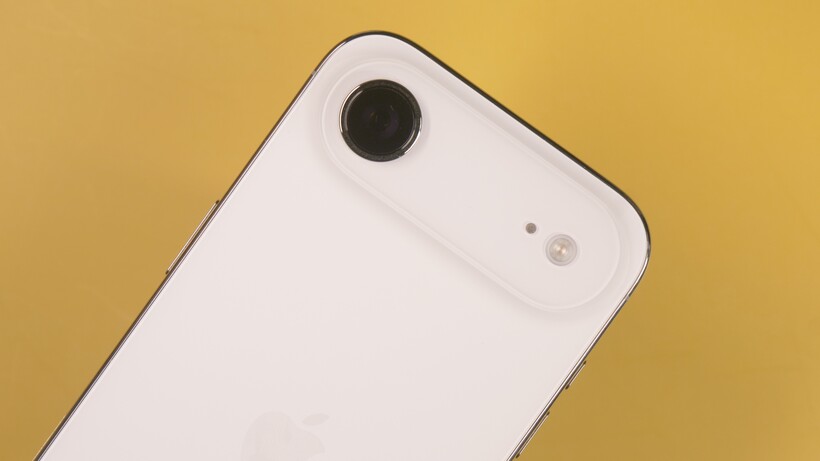
Camera hardware, for one, has generally taken a hit. The iPhone Air’s single rear camera is a perfect example; it’s fine for everyday photos, but it doesn’t exactly scream premium flagship when phones that cost hundreds less – including Apple’s own iPhone 17 – offer a wider selection of lenses.
It’s mainly down to constraints in size; telephoto lenses in particular need space to operate, something that comes at an extreme premium in ultra-thin phones.
Then there’s arguably the bigger problem, battery life. You can only fit so much cell into a wafer-thin chassis, and that results in more charging, more battery anxiety, and less of that all-day flagship confidence we’ve come to expect over the past few years.
Advertisement
Image Credit (Trusted Reviews)
That’s the trade-off; you’re paying top-tier prices for a device that, in some areas, feels like a massive step backwards. It’s a hard sell, and probably the main driver behind Samsung’s apparent abandonment of the Edge brand.
Advertisement
Tecno’s modular tech could be the fix
Then along comes Tecno at MWC 2026 that genuinely made me stop and stare.
The concept Atom device it showed off uses what it calls Modular Magnetic Interconnection tech, and at just 4.99mm thick, it’s thinner than basically anything else on the show floor.
Image Credit (Trusted Reviews)
As you’d expect, it feels stunning in the hand, and almost shockingly light. I actually assumed it was just a dummy model until I flipped the phone around and saw a fully working version of Android running on-screen.
But this isn’t just another thin phone; it’s a thin phone that can bulk up when you need it to.
Advertisement
Image Credit (Trusted Reviews)
Advertisement
Tecno’s idea is so simple that I’m kinda surprised that Samsung and Apple didn’t come up with something similar; keep the device ultra-thin, then let users attach the hardware they need when they need it.
Want a proper zoom for a day of sightseeing? Snap on a telephoto camera module. Heading out and worried about battery? Click on an integrated battery pack. There was even a dedicated microphone module with a wind shield on display, ideal for content creators.
Image Credit (Trusted Reviews)
Some accessories attach directly to the camera housing, while others snap on just below it using hidden magnets, while others utilise the POGO system at the bottom of the device. The stand at MWC had a whole ecosystem of accessories you could snap on and try, and suddenly the concept made a lot of sense.
Instead of permanently compromising the phone’s design for features you’ll only occasionally use, you pick and choose. Slim and minimal most of the time, and more feature-packed when you need it.
Image Credit (Trusted Reviews)
Advertisement
Not quite ready just yet
Of course, there’s a catch – there’s always a catch.
Advertisement
This is still very much just a concept. Tecno hasn’t confirmed any wider release plans, and the magnetic system, while clever, didn’t feel quite as secure as you’d want for everyday, on-the-go use. Stronger magnets and more refined attachments will be crucial if this is going to survive outside of a trade show demo.
Image Credit (Trusted Reviews)
But that’s the thing about concepts; they show the direction that the industry is headed. And right now, modular ultra-thin designs feel like a far more exciting direction than simply shaving off another 0.2mm and pretending the compromises simply don’t exist.
If ultra-thin phones are going to have a true resurgence, they need to stop asking us to give things up. Now we just need someone to bring it to market before the ultra-thin movement disappears entirely.