


Connect with us

NewsBeat

Iran-US war latest: Iran’s president apologises to Gulf states for attacks and rejects Trump’s call to surrender

Published

on

Iran-US war latest: Iran’s president apologises to Gulf states for attacks and rejects Trump’s call to surrender

Ayatollah Ali Khamenei’s representative denied claims that Iran attacked Azerbaijan

Earlier on Friday, Iran was accused of launching four drones across the border into the Azerbaijani exclave of Nakhchivav in which an airport terminal was hit, a drone exploded near a school, injuring civilians, and another drone was shot down, as the war in the Middle East lead to greater instability in the region.

Azerbaijan’s president Ilham Aliyev condemned the “act of terror”, demanding an explanation and apology from Tehran.

Speaking to The Independent on Saturday,  Dr Abdul Majid Hakeem Elahi said: “We never attacked Azerbaijan. This is from zionist regime. They want to bring in more difficulty in the region. And Iran, our president and a lot of officials have denied attacking Azerbaijan.”

Advertisement

 And secondly, he said, that Iran is not responsible for the war in the region, as he blamed Trump for starting the war.

“It is the US, in fact not even the US, it is president (Donald) Trump who created and initiated this war with Israel.”

Dan Haygarth7 March 2026 10:10

Advertisement

Hakeem Elahi: ‘US effectively demanding that Iran surrender its dignity’

When asked about US president Donald Trump’s claim that Washington would accept no agreement with Iran short of unconditional surrender, Dr Abdul Majid Hakeem Elahi – a representative of the killed Iranian supreme leader Ali Khamenei – said the US was effectively demanding that Iran surrender its dignity.

Speaking to The Independent, Dr Elahi rejected the idea of capitulation and insisted Iran would defend its sovereignty and independence.

“US wants Iran to submit itself unconditionally. Without anything… Trump wants Iran to submit its mines, fuel, wells and everything else.

“But if we give our dignity to you, then there is nothing. So, we will defend our dignity and ourselves and independence so no one attacks us ever again.”

Advertisement

Dan Haygarth7 March 2026 09:45

Starmer ‘right to stand up to Trump’, says Sadiq Khan

The London mayor issued a statement on social media supporting Keir Starmer.

He wrote: “Keir Starmer is right to stand up to Donald Trump over Iran.

Advertisement

“While the brutal Iranian regime should rightly be condemned and international pressure applied, this war is not the right course of action.”

Daniel Haygarth7 March 2026 09:36

India’s foreign minister confirms Iranian naval ship has docked in Kochi

India’s foreign minister said on Saturday that an Iranian naval vessel has docked in India, after a US submarine sank an Iranian warship and another vessel sought assistance from Sri Lanka.

Advertisement

Subrahmanyam Jaishankar said the IRIS Lavan is docked in southern Kochi city, after India granted permission when the vessel reported “having problems” on 1 March. “I think it was the humane thing to do,” Jaishankar said.

A US submarine sank the Iranian warship IRIS Dena off the coast of Sri Lanka on Wednesday.

Another vessel, the IRIS Bushehr, requested assistance from Sri Lanka and more than 200 sailors were brought ashore.

Both ships had previously taken part in naval exercises hosted by India, but Jaishankar said they got “caught on the wrong side of events” once the war began.

Advertisement

Dan Haygarth7 March 2026 09:17

Iran’s president apologises for attacks across the Gulf

Masoud Pezeshkian, the president of Iran (Copyright 2025 The Associated Press. All rights reserved.)

Masoud Pezeshkian apologised for Iran’s attacks on regional countries, insisting that Tehran would halt them and suggesting they were caused by miscommunication in the ranks.

Iran’s president’s statement aired after repeated attacks on morning on Bahrain, Saudi Arabia and the United Arab Emirates.

Advertisement

Pezeshkian made the statement in a pre-recorded address aired by Iranian state television.

Earlier, Iran’s UN ambassador said the country would “take all necessary measures” to defend itself.

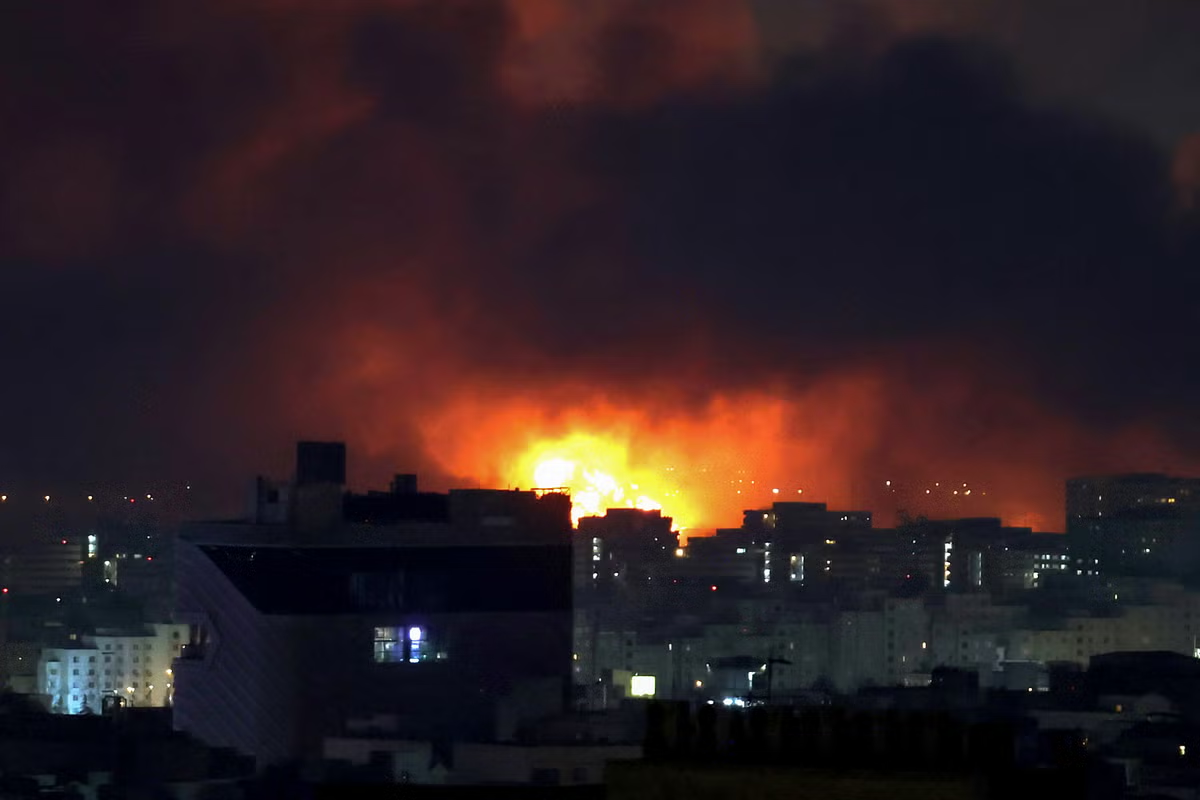
Footage showed explosions and smoke rising over western Tehran as Israel said it had begun a broad wave of strikes.

Dan Haygarth7 March 2026 09:00

Advertisement

Gulf states intercept more missiles

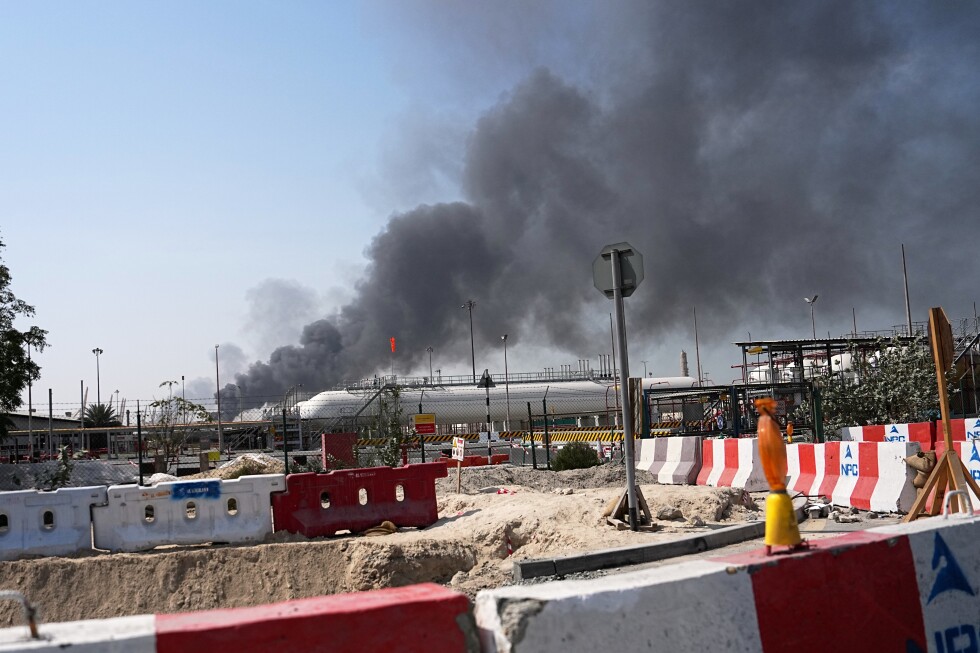
Gulf countries say they have intercepted more ballistic missiles and drones on Saturday as Iran launched another wave of retaliatory strikes.

Saudi Arabia said early Saturday it stopped four drones attacking the country’s massive Shaybah oil field, the second attack within hours.

In Dubai, people heard several blasts in the morning, with Emirati authorities saying there had been “a minor incident resulting from the fall of debris after an interception.”

Advertisement

Meanwhile, Israeli warplanes hammered Beirut and Tehran.

The death toll continued to rise on Saturday with at least 1,230 people killed in Iran, more than 200 in Lebanon and around a dozen in Israel, according to officials. Six US troops were reported killed.

Dan Haygarth7 March 2026 08:47

Advertisement

Israeli Air Force says it has ‘launched a wave of strikes’ on Iran

In a post on X at 8.21am UK time today, it wrote: “The Air Force has launched a wave of strikes targeting the infrastructure of the Iranian terror regime in Tehran and Isfahan.”

Dan Haygarth7 March 2026 08:31

Why Ayatollah Ali Khamenei’s assassination in Iran sparked protests in India – and could they spread

India’s Shia community holds tearful vigils, condolence meetings, and protests largely driven by religious solidarity to mourn the assassination of Iran’s supreme leader Ayatollah Ali Khamenei. Namita Singh reports

Advertisement

Dan Haygarth7 March 2026 08:26

‘Biggest bombing campaign’ still to come, US says

US Treasury secretary Scott Bessent said on Friday that the “biggest bombing campaign” of the war was still to come.

Israel has said that over the past week it has heavily bombed an extensive underground bunker that Iranian leaders had planned to use during the hostilities.

Advertisement

New information has surfaced suggesting that a deadly explosion at a school in the Iranian city of Minab, some 680 miles southeast of Tehran, was likely caused by US air strikes. The information included satellite images, expert analysis, a US official and public information released by US and Israeli military forces, the Associated Press reports.

Iranian state media has said more than 165 people were killed in the blast, most of them of children.

Iran has blamed Israel and the US for the explosion. Neither country has accepted responsibility, though defence secretary Pete Hegseth has said the US is investigating.

The Iranian-backed militant group Hezbollah said its fighters clashed with an Israeli force that landed late Friday in the mountains of eastern Lebanon. The Lebanese Health Ministry said at least three people were killed.

Advertisement

Israel has carried out waves of air strikes on the southern suburbs of Beirut, where Hezbollah has a large presence but which is also home to hundreds of thousands of civilians.

Lebanon’s health ministry said at least 217 people have been killed by Israeli strikes since Monday and 798 others were injured.

Dan Haygarth7 March 2026 08:17

Advertisement

Emirates resumes flight operations

The airline said on X: “Emirates will resume operations. Passengers who have confirmed bookings for this afternoon’s flights may proceed to the airport.

“This includes customers transiting in Dubai, if their connecting flight is also operating.”

Earlier this morning it had announced it was suspended all flights to and from Dubai, but these will now resume.

Dan Haygarth7 March 2026 07:59

Advertisement

Source link

Continue Reading
Click to comment

Leave a Reply

Your email address will not be published. Required fields are marked *

NewsBeat

Brendon McCullum: England coach makes ‘no apologies’ for informal environment

Published

on

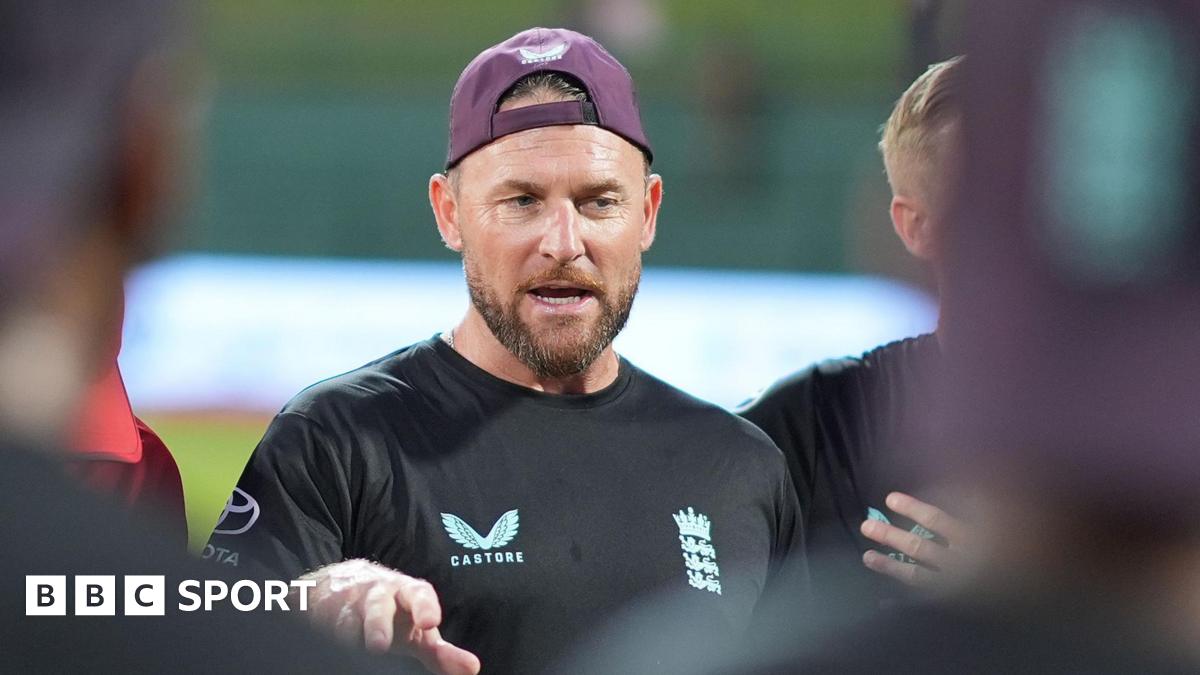
England head coach Brendon McCullum addressing players in training

A relaxed environment has been part of McCullum’s England set-up since he took over the Test side in 2022 – an attempt to relieve players of the pressures of playing international cricket.

England were accused of a lack of adequate preparation for the Ashes, playing only one warm-up match against England Lions at a club ground in Perth before the first Test.

After the Ashes it was revealed Harry Brook was punched by a nightclub bouncer the night before a one-day international in New Zealand, while a mid-series trip to Noosa was heavily scrutinised.

A review by the England and Wales Cricket Board into England’s winter is under way, the culmination of which will confirm McCullum’s future, but there have already been some changes.

Advertisement

There will be a warm-up match when they travel to Australia for the 150th anniversary Test next year and preparation matches are also likely before next winter’s other tours.

England also added fielding coach Carl Hopkinson to their set-up for the World Cup after a host of dropped catches in Australia. That addition brought greater intensity to their training to the World Cup.

McCullum will now return home to New Zealand before any formal announcement on his future is made.

“We’ll allow this period to land and you look back on the last five or six months, which has been pretty intense, and you look at what you got right, what you got wrong and start trying to work out ways you can improve on the areas that you need to,” said McCullum.

Advertisement

“That’s just doing it with a bit of sound reason and logic when your emotions are out of it.

“I make no apologies for running an informal, positive environment but to call it a casual environment is not quite fair.

“But in the end people are always going to have their views on how you go about things and that’s the role of the leader.”

Source link

Advertisement
Continue Reading

NewsBeat

‘Lots planned’ as Spark is officially in York until 2030

Published

on

'Lots planned' as Spark is officially in York until 2030

City of York Council approved Spark’s bid to stay at is site in Piccadilly for an additional five years last October.

The venue, which offers space in converted shipping containers for food and drink start ups along with events and meeting spaces, said its lease extension has now been officially signed off by the council.

A Spark spokesperson said the lease is “now signed, sealed and sorted”, as they thanked everyone who has supported the venue since it opened in 2018.

Advertisement

“This is our fourth extension from the council, but by far the longest yet,” they wrote on social media.

“We’re thankful this time for nearly five years of (hopefully) clear water ahead of us and a chance for some surety over our existence for our team and our traders.

“It feels like some kind of hard-earned acceptance from the powers that be for the value spark brings to York, and also validation for the hard work of so, so many people over the last 10 years.

“We’ve got lots planned across the next six months in terms of improvements to the venue and reinvestment in our spaces, but for now we just wanted to say a big thank you to everyone for supporting the project and turning up.”

Advertisement

How did we get here? Background to Spark’s five more years in Piccadilly

Spark first opened in 2018 and its stay in Piccadilly was previously extended in 2022.

The venue has said it plans to move to York Central eventually but this move would not be feasible until 2029 at the earliest.

Spark’s own estimates state it has supported around 65 fledgling businesses and around £5 million-a-year had been turned over there since it first launched.

The site has, however, faced backlash, including from its neighbours.

Advertisement

Objectors told the council’s meeting in October that neighbours faced the prospect of another five years of noise disturbing them despite being told the venue, which one branded a “grotesque monstrosity”, was temporary.


Recommended reading:


Twelve objections were lodged, including from people living nearby, to the council complaining about noise and smells from the venue as well as shipping containers being put in York’s historic city centre.

The council also received 11 historic complaints about noise from six different addresses since the venue opened, including two since its permission was extended in 2022.

Advertisement

Eighteen comments were lodged in support of the application, saying it was a valuable community venue that supported a variety of arts and campaigning groups alongside businesses.

Cllr Tony Clarke, Labour councillor for Guildhall which includes Spark, said it played an important social and economic role in the city but it had not been a good neighbour.

Source link

Advertisement
Continue Reading

NewsBeat

Concerns about US stockpiles of certain weapons grow during Iran war

Published

on

Concerns about US stockpiles of certain weapons grow during Iran war

WASHINGTON (AP) — The U.S. and Israeli strikes on Iran have raised concerns among Democrats and others about diminishing American stockpiles of certain weapons, illustrating a long-standing production problem that some experts say could present challenges if another conflict emerges.

The Trump administration has repeatedly said American forces have all of the weapons they need to fight the Iran war, now in its second week. President Donald Trump posted Friday on social media that several defense contractors had agreed to quadruple production of weapons “as rapidly as possible,” although he did not detail the specific systems being manufactured.

Questions about the nation’s weapons stockpiles have grown as the U.S. campaign against Iran escalates, with many Democratic lawmakers arguing that Trump is waging a “war of choice.” Missile defense systems are under the most strain, according to experts, with Patriot and Terminal High Altitude Area Defense, or THAAD, interceptors in high demand in Ukraine and Israel, respectively.

“I’m not particularly worried about us actually running out during this conflict,” said Ryan Brobst, a scholar focused on U.S. defense strategy at the Foundation for Defense of Democracies. “It’s about deterring China and Russia the day after this conflict is over.”

Advertisement

The U.S. is using both systems to take down Iranian missiles fired in retaliation for the American and Israeli attacks, but U.S. officials have said they are struggling to stop waves of drones launched by the Islamic Republic and that they are bringing in an American anti-drone system proven to work against Russian drones in Ukraine. The system known as Merops also is cheaper than firing a missile that costs hundreds of thousands of dollars at a drone that costs less than $50,000.

Pentagon says the military has ‘everything it needs’

Sean Parnell, the Pentagon’s chief spokesman, said in a statement that the U.S. military “has everything it needs to execute any mission at the time and place of the President’s choosing and on any timeline.”

Defense contractor Lockheed Martin posted on X late Friday that it had agreed to “quadruple critical munitions production” and “began this work months ago.” Trump and Lockheed did not offer a timetable of when the production increases would reach their target.

Some Democratic lawmakers, meanwhile, have questioned the long-term impact to the U.S. and its allies.

Advertisement

“We’ve been told again and again and again one reason that we can’t provide interceptors for the Patriot system or other munitions for Ukraine is that they’re in short supply,” Sen. Richard Blumenthal, D-Conn., told CNN on Thursday.

Sen. Mark Warner, D-Va., told reporters that American supplies are dwindling after the military fought the Houthi rebels in Yemen and engaged in more recent conflicts under the Republican administration. The top Democrat on the Senate Intelligence Committee did not specify what type of munitions he was referring to.

“Our munitions are low. That’s public knowledge,” Warner said. “It will require additional funding, funding where we have other domestic needs as well.”

Already in high demand

Supplies of defense interceptors are the most taxed, said Brobst, who is deputy director of the Center on Military and Political Power at the Foundation for Defense of Democracies, a hawkish Washington think tank.

Advertisement

The THAAD system is designed for defeating medium-range ballistic missiles, while the Patriot system is for taking down short-range ballistic missiles and crewed aircraft. About 25% of the entire THAAD stockpile was estimated to be used defending Israel from Iran’s ballistic missiles in the 12-day war with Iran last summer, Brobst said.

“These were already in very high demand and we had not procured enough before the conflict,” Brobst said. “And now we’ve probably used, between the two of them, probably several hundred more.”

The exact number of U.S. THAAD and Patriot systems is classified, with administration officials and Democratic lawmakers declining to offer details.

Demand for interceptors is likely falling as the U.S. and its allies take out Iran’s weapons’ capabilities, Brobst said. Gen. Dan Caine, chairman of the Joint Chiefs of Staff, told reporters this week that the number of ballistic missiles fired by Iran was down by 86% from the war’s first day.

Advertisement

Other munitions in demand include cruise missiles and precision-guided missiles, known as “standoff” weapons, Brobst said. Their stockpiles are likely healthier, and their use probably peaked at the beginning of the war as U.S. forces hit Iran’s early-warning systems, air defenses and other targets.

Defense Secretary Pete Hegseth said as much — that American forces used more “standoff munitions at the start, but no longer need to.” He told reporters Wednesday that they would be using “500-pound, 1,000-pound and 2,000-pound GPS- and laser-guided, precision gravity bombs.”

The U.S. has a healthy supply of those types of weapons, which are cheaper but require aircraft to fly closer to their targets, Brobst said.

But the U.S. military is moving to bolster its anti-drone capabilities in the region with the Merops system that flies drones against drones. It is small enough to fit in the back of a midsize pickup truck, can identify drones and close in on them, using artificial intelligence to navigate when satellite and electronic communications are jammed.

Advertisement

Root cause of the stockpile concerns

Brobst said the problem of not having enough advanced munitions, particularly interceptors, was around well before the war in Iran, though “this has definitely not made it get any better by using up these munitions.”

“Successive administrations over multiple decades did not procure sufficient quantities of these interceptors, and when that happens, companies don’t have an incentive to expand their production capacity,” Brobst said, adding that it takes “significant time” to ramp up production.

The administration in recent months has promised to boost defense spending and to speed up production, while calling on the Pentagon to call out defense contractors that underperform and insufficiently invest in building manufacturing.

Katherine Thompson, a former deputy senior adviser at the Pentagon during this Trump administration, said then-President Joe Biden had diminished some of the stockpile of interceptors by sending them to Ukraine.

Advertisement

“It was a short-term win for the Biden administration but a long-term strategic problem for the United States as a whole,” said Thompson, who left her Pentagon position in October and is now a senior fellow in defense and foreign policy studies at the libertarian Cato Institute. “I would hope that the Trump administration doesn’t make that same mistake here.”

Riki Ellison, chairman of the Missile Defense Advocacy Alliance, said the U.S. military could shift interceptors from one part of the world to another or get them from allies if needed. He also noted the Pentagon effort to get defense contractors to boost production.

“We’re moving in that direction,” Ellison said. “That’s not going to be ready next week or anything, but it’s moving.”

___

Advertisement

Associated Press writer Emma Burrows in London contributed to this report.

Source link

Advertisement
Continue Reading

NewsBeat

Why your gut microbiome and heart are closer than you think

Published

on

Why your gut microbiome and heart are closer than you think

The gut microbiome plays an important role in many aspects of health, from digestion and immune function to metabolic balance and neurological processes.

Several diseases have even been associated with changes in the microbiome’s composition, including inflammatory bowel disease, colorectal cancer, obesity and mental health disorders. As links between gut microbes and disease grow stronger, scientists are now looking at the emerging connection between the gut and the heart.

Heart disease remains the leading cause of death globally. Factors such as smoking, high blood pressure, obesity and diabetes are known to be risk factors. But researchers are increasingly finding that the balance of microbes in our gut may shape how these risks develop, and how heart disease progresses.

This newly recognised association, termed the “gut-heart axis”, has gained traction in recent years. It may help explain why diet and heart disease are so closely intertwined.

Advertisement

Large studies show that people with cardiovascular disease have distinct gut microbiome profiles compared with healthy people.

While no single “heart disease microbe” has been discovered, cardiovascular disease is consistently associated with a few key factors. These include reduced microbial diversity, loss of beneficial bacteria and an overgrowth of microbes linked to inflammation.

Microbial diversity refers to the variety and balance of different microbes living within the gut. Growing evidence suggests that a reduction in microbial diversity reflects deteriorating microbiome health, and may signal the onset of disease.

One recent paper examined the results from 67 studies that explored the gut microbiome in several cardiovascular diseases, comparing over 6,000 patients with acute coronary syndrome, atrial fibrillation, coronary artery disease, heart failure or stroke with healthy people. It showed that people with cardiovascular disease consistently had lower levels of the beneficial fibre-fermenting bacteria Faecalibacterium.

Advertisement
People with cardiovascular disease have lower levels of the beneficial gut bacteria Faecalibacterium.
PRB Arts/ Shutterstock

Microbial fingerprints of heart disease

Your gut microbes act as miniature factories that break down food components. In doing so, they produce hundreds of small molecules called metabolites, which can be taken up by other microbes or absorbed through the intestine into the blood stream. While some of these metabolites are beneficial to the body, others can be harmful in excess.

So, alongside studying what microbes are present in patients with cardiovascular disease, scientists are also looking at metabolites to understand what effect these can have on health.

One of the strongest links between the gut microbiome and heart disease involves a metabolite called TMAO (trimethylamine N-oxide). Certain gut bacteria convert nutrients found in red meat, eggs and dairy into a metabolite called trimethylamine (TMA). The metabolite is then processed by the liver and turned into TMAO.

High levels of TMAO in the blood have been associated with increased risk of heart attack, stroke and death from cardiovascular disease. Importantly, TMAO production varies between people depending on the type of microbe. This means two people can eat the same food but produce different amounts of this potentially harmful compound.

Advertisement

But not all gut-derived metabolites are harmful. Some may actually protect the heart.

A growing body of research is investigating indoles – compounds made when gut bacteria break down tryptophan. Tryptophan is an essential amino acid found in protein-rich foods such as poultry, eggs, dairy and nuts. It plays an important role in mood, sleep patterns and appetite.

The majority of tryptophan is absorbed by the body. But a small fraction of this amino acid is also broken down by gut bacteria and transformed into indole-derivatives. While some of these can contribute to inflammation under certain conditions, others appear to have powerful cardioprotective benefits.

One of the most promising is indole-3-propionate (IPA), which is thought to be produced mainly by the bacteria Clostridium sporogenes. Several studies have shown that people with higher blood levels of IPA have lower rates of type 2 diabetes and cardiovascular disease.

Advertisement

IPA also strengthens the gut barrier. This prevents harmful microbial products from leaking into the bloodstream. Research is ongoing to fully understand how and why tryptophan is broken down into beneficial or harmful metabolites.

Prevention and treatment

The discovery that our gut microbes help shape cardiovascular risk is transforming how scientists think about prevention and treatment. Researchers are now exploring how microbial “fingerprints” could one day be used in combination with known risk factors to identify people at risk, long before symptoms appear.

In the future, beneficial gut microbes (probiotics) could be used therapeutically to slow cardiovascular disease progression or eliminate microbes known to contribute to disease onset.

While this science is still emerging, it’s clear that the gut microbiome should be viewed as part of the whole body system that shapes our overall health. It points towards a powerful idea: caring for your heart may start not just with what you eat, but with how your gut microbes process it.
Advertisement

Source link

Continue Reading

NewsBeat

Canadian prime minister backs Andrew’s removal from line of succession | UK News

Published

on

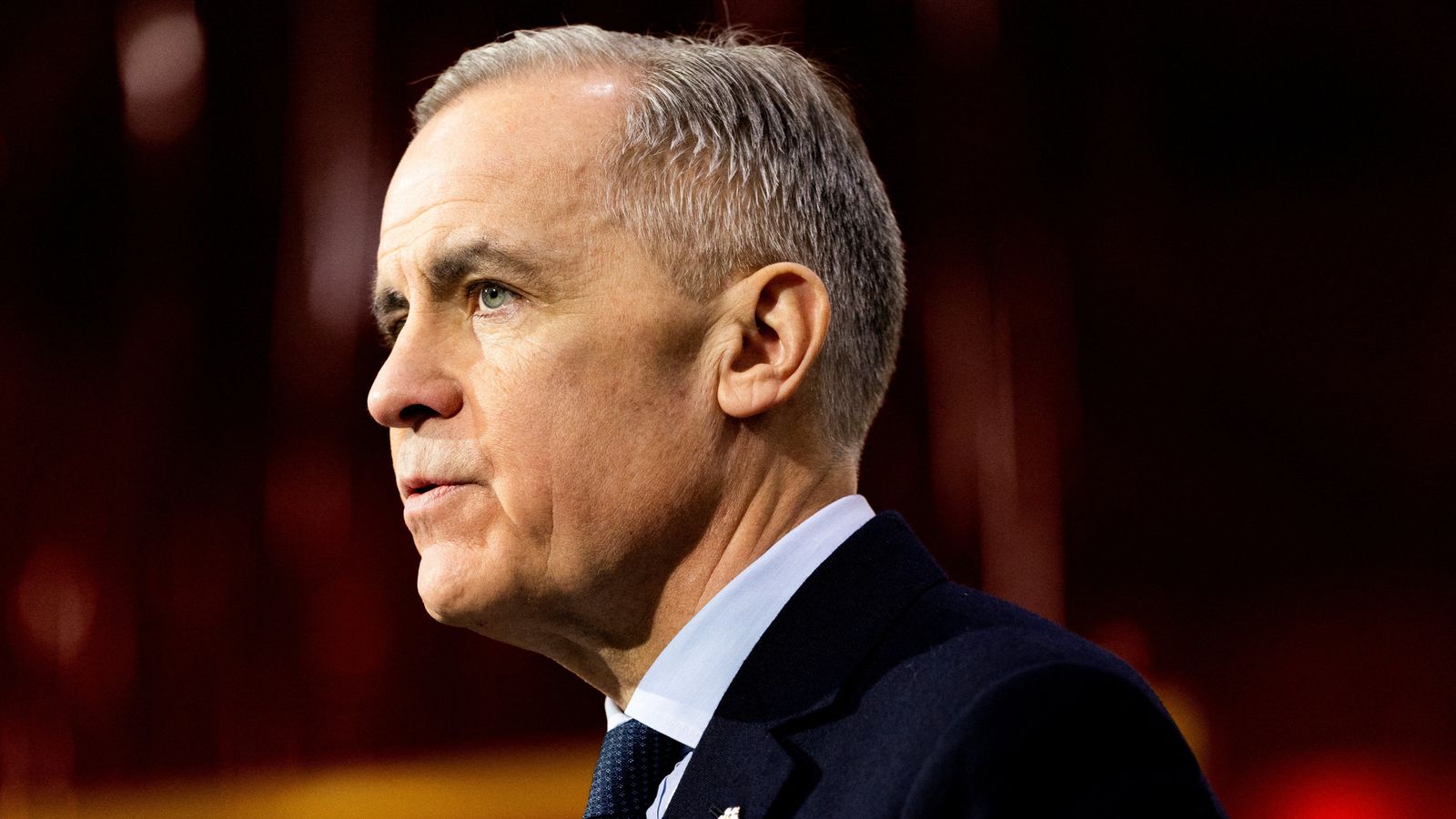
Mark Carney. Pic: Reuters

The Canadian prime minister has joined a growing list of Commonwealth leaders backing the removal of Andrew Mountbatten-Windsor from the line of succession.

Mark Carney, who previously served as the governor of the Bank of England, condemned the former prince’s behaviour as “deplorable” and said his actions “necessitate” his removal.

While the Canadian prime minister acknowledged the possibility of Andrew Mountbatten-Windsor – who is eighth in line to the throne – becoming King was small, he believed it was a “point of principle”.

The arrest of the former prince last month on suspicion of misconduct in public office reignited calls for him to be formally removed from the royal line of succession.

Advertisement

Advertisement

New Zealand would support Andrew’s removal from line of succession

Any changes to the line of succession in the UK can only be made with an act of parliament and requires the agreement of the 14 other countries that also have King Charles as head of state.

Advertisement

Mr Carney did not release a formal statement, but was responding to questions from reporters in Tokyo on the final day of his tour of Japan.

He said that even though Mountbatten-Windsor is “well down” the line of succession, the “point of principle stands”.

More on Andrew Mountbatten Windsor

Advertisement

The Canadian PM added: “I certainly think his actions are deplorable and have caused him to be stripped of his royal titles, certainly…necessitate his removal from the line of succession.”

He also said there is a process to remove someone from the line of succession, which he said should be followed.

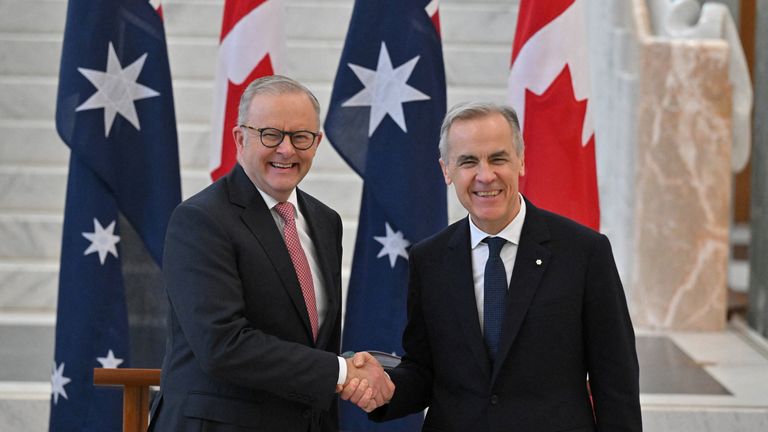
Mr Carney has become the latest leader to back that move, after Australia’s Prime Minister Anthony Albanese and New Zealand came out in support of the action in February.

Australian PM Anthony Albanese (left) and Canada's PM Mark Carney. Pic: Reuters
Image:
Australian PM Anthony Albanese (left) and Canada’s PM Mark Carney. Pic: Reuters

Read more from Sky News:
Inside bombed-out Beirut
Badenoch’s scathing attack on PM

Speaking in February, Sky’s royal commentator Alastair Bruce said the procedure would not be straightforward.

Advertisement

He said: “It takes a lot of time, and I think parliaments across the world who have the King as head of state will not be looking forward to having to find time to do this.”

The former prince is currently eighth in line after Princes William and Harry and their five children.

The ex-Duke of York gave up his royal titles in October last year after new details about his links to disgraced financier Jeffrey Epstein were released by the US Department of Justice.

Andrew Mountbatten-Windsor has always denied any wrongdoing.

Advertisement

Source link

Continue Reading

NewsBeat

Mansfield vs Arsenal FC LIVE: FA Cup latest score, match stream, goal updates and fan reaction

Published

on

Mansfield vs Arsenal FC LIVE: FA Cup latest score, match stream, goal updates and fan reaction

Manfield, coached by Nigel Clough, have giant-killing in their blood, and have already taken one Premier League scalp this season when knocking out Burnley in the previous round. Today, though, will be their biggest match in many generations. Not since 1992 have Arsenal been eliminated a team in the third tier, or lower – will The Stags make history this afternoon?

Source link

Continue Reading

NewsBeat

experts in facial recognition and AI decipher the fact from the fiction

Published

on

experts in facial recognition and AI decipher the fact from the fiction

The BBC’s conspiracy thriller drama The Capture is back for a third season. The first two series had viewers hooked with a story that intertwined police investigations, facial recognition and deepfake AI technology.

As experts in facial recognition and AI, we’re separating the fact from the fiction ahead of the new season.

Fans of The Capture will be familiar with scenes of investigators using facial recognition software to identify the people they are tracking around London – the soldier Shaun Emery (Callum Turner) in season one and the Russian mercenary Nikolai Mirsky (Jack Sandle) in season two.

Real facial recognition

Real facial recognition work involves several steps. An operator first uploads an image into facial recognition software, which searches for the presence of a face. Features are then extracted from each detected face and compared against the features of faces from a stored database. Features are things that the algorithm has identified as important for recognition decisions and are probably not describable attributes of a face as we know it (such as eyes, nose, mouth).

Advertisement

It is not feasible, nor indeed ethical, to run a facial recognition system against all images on the internet. Not least because of the technical limitations of searching for, storing and processing such a staggering amount of data. In police or intelligence settings faces are searched against specific databases and a human almost always reviews the output because algorithms are not perfect. It is crucial that human operators are trained on the strengths and limitations of these systems and have the necessary skills to review the output.

In season two of The Capture, the fictional facial recognition software company “Xanda” claims their system can “recognise a face with up to 100% accuracy … from every corner of the world with equal precision”. But they are opposed to independent testing.

The trailer for season three of The Capture.

The best facial recognition systems are now extremely accurate, under increasingly difficult image scenarios. However, accuracy and demographic differences vary widely across different systems and testing parameters. Racial bias is a genuine concern and independent testing is of paramount importance.

Advertisement

In season two, Xanda’s technology claims it can literally “unmask” a face. In reality, some algorithms compare masked to unmasked faces with high accuracy, but they cannot recover information from underneath the mask. Attempting to do so would produce inaccurate and dangerous results.

In the show, patrolling officers receive images of targets, and eyewitnesses perform identifications. This reflects a genuine use of human facial recognition in forensic operations. Most humans make errors on facial comparison tasks involving unfamiliar faces. Super-recognisers (people with a naturally high recognition ability) and trained forensic examiners are more accurate. Familiar humans (people who know the target) often make accurate identifications even in low-quality photos.

Real deepfakes

Deepfakes are digitally manipulated videos, images or voices created with AI to make it appear that someone did something that they didn’t. This technology already exists. Real examples of misuse include fake political videos, non-consensual intimate imagery, child exploitation images and fraud.

Characters in The Capture frequently mistake deepfakes as genuine sources of information. In season one, manipulated video footage causes chaos for Emery, and in season two politician Isaac Turner (Paapa Essiedu) is the subject of a rampage of manipulated footage which the public believes is real.

Advertisement

When asked how Turner sounded in a faked call, a character replied “like Isaac Turner”. This acceptance of deepfakes is realistic. Human detection accuracy is around a coin flip: a 50% chance of a correct detection in scientific studies.

In season two politician Isaac Turner (Paapa Essiedu) is the subject of a rampage of manipulated footage.
BBC/Universal International Studios/Laurence Cendrowicz

Turner’s wife (Charlie Murphy) was confused by the content of her husband’s deepfake speech, but complimented the way he spoke: “You did good though … Not what you said but the way you said it. You sounded … authoritative.” Cloned voices are typically rated positively and as more dominant than real recordings. Though in practice, deepfake videos tend not to be effective for the types of political activity depicted in the show, and manipulated imagery is not a new problem, as it suggests.

Depictions of deepfakes in The Capture involve almost instantaneous video manipulation and live broadcast. This is far from the current state-of-the-art. While the technology has improved, it is prone to producing obviously fake videos. Creating a high quality video requires a large and diverse collection of photos for the target person, along with iterative tweaks to the output. This is time consuming, and impossible to do in real-time.

Moreover, a capability that can hijack any CCTV or live TV feed and instantly play any content does not yet exist. Camera networks exist over a variety of different technical protocols, ownership arrangements, and access models. That complexity is a roadblock for the kind of point-and-click hijacking depicted in the show.

Advertisement

What next?

In season three, detective Rachel Carey (Holliday Grainger) will encounter further deceptive footage. How can she trust what she sees?

Real strategies to detect deepfakes include training humans to detect artifice, familiarity with the person depicted, and liveness checks that measure natural human responses to various changes in the scene.

In season two, Carey recognised genuine footage of Turner because he held the cross on the necklace around his neck, which his deepfake never did – idiosyncratic mannerisms may be missing in a deepfake.

Detection algorithms developed by the media forensics community and digital watermarks (“invisible” codes in imagery detectable by algorithms) are technological countermeasures that also help.

Advertisement

There are new AI techniques, such as the creation of realistic fake faces and agentic AI, where autonomous software systems perform tasks independently of human control. Will we see the face of an identity that does not exist to throw off the investigators? Could AI get out of hand and create deepfakes for its own purposes, providing a dilemma for both the good guys and the bad guys in the show?

These are the challenges we’d like to see Carey tackle, because they’re ones society will probably face in the near future.

Source link

Advertisement
Continue Reading

NewsBeat

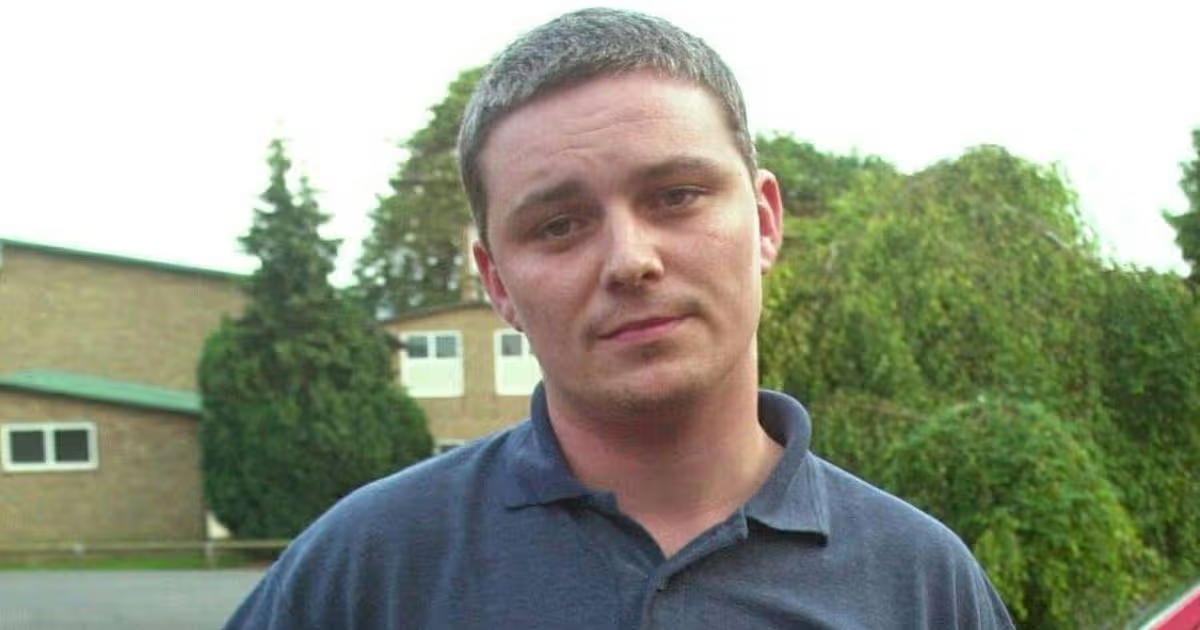
Everything we know after the death of Soham murderer Ian Huntley

Published

on

Cambridgeshire Live

Source link

Advertisement
Continue Reading

NewsBeat

Derry Girls star Nicola Coughlan has ‘no interest in body positivity’

Published

on

Derry Girls star Nicola Coughlan has 'no interest in body positivity'

The Irish actress, 39, is known for playing panicky student Clare Devlin on the Channel 4 comedy

Bridgerton star Nicola Coughlan has said she has “no interest in body positivity” and that she finds it “boring” when people talk about her size.

The Irish actress, 39, known for playing panicky student Clare Devlin on Channel 4 comedy Derry Girls, stars in the Netflix regency series Bridgerton as Penelope Bridgerton.

Despite the success of the show, she has described how disappointing it is that so many people praise her body size and talk about her weight.

Advertisement

Fronting the cover of Elle UK’s April issue, Coughlan told the magazine: “The thing I say sometimes that pisses people off is I have no interest in body positivity.

READ MORE: Unchosen teaser trailer shows NI actor Fra Fee star as escaped convict in new Netflix thrillerREAD MORE: ‘Outstanding’ comedy with How to Get to Heaven From Belfast star is a ‘must watch’

“When I was a kid growing up, I never thought about that. I didn’t look at actors and think about their bodies. So, I actually don’t care.

“There’s a lot of things I’m passionate about, it’s not one of them… That’s someone else’s thing. It’s not mine.”

Advertisement

The actress added that despite being a size 10, she will still be praised as someone who appears on screen as a plus-size actress, comments which she finds “boring”.

Speaking about the reaction to her nude scenes on the show, she said: “What was really bizarre was when I was shooting that series, I was exercising a lot because I knew I had to, so I had lost a bunch of weight – I was probably a size 10 and one of the corsets was a size 8.

“Then people talked about how I was plus size and I was like, ‘How f***** are we that I am the biggest woman you want to see on screen?’

“I remember this really drunk girl once talking to me in a bathroom being like, ‘I loved (Bridgerton) because of your body’ and started talking about my body, and I was like, ‘I want to die. I hate this so much’.

Advertisement

“It’s really hard when you work on something for months and months of your life, you don’t see your family, you really dedicate yourself and then it comes down to what you look like – it’s so f****** boring.”

Coughlan also told the magazine that she gives herself more “grace” since receiving her ADHD diagnosis.

She said: “It feels like I got the handbook to my brain that I wasn’t given when I was born.

Advertisement

“I understand things a bit better now, and I give myself a little more grace.”

Coughlan is also known for starring in the hit movie Barbie as well as Channel 4’s Big Mood, a role which secured her a Bafta nomination.

She also appeared in a National Theatre production of The Playboy Of The Western World alongside her Derry Girls co-star Siobhan McSweeney.

For all the latest news, visit the Belfast Live homepage here and sign up to our What’s On newsletter.

Source link

Advertisement
Continue Reading

NewsBeat

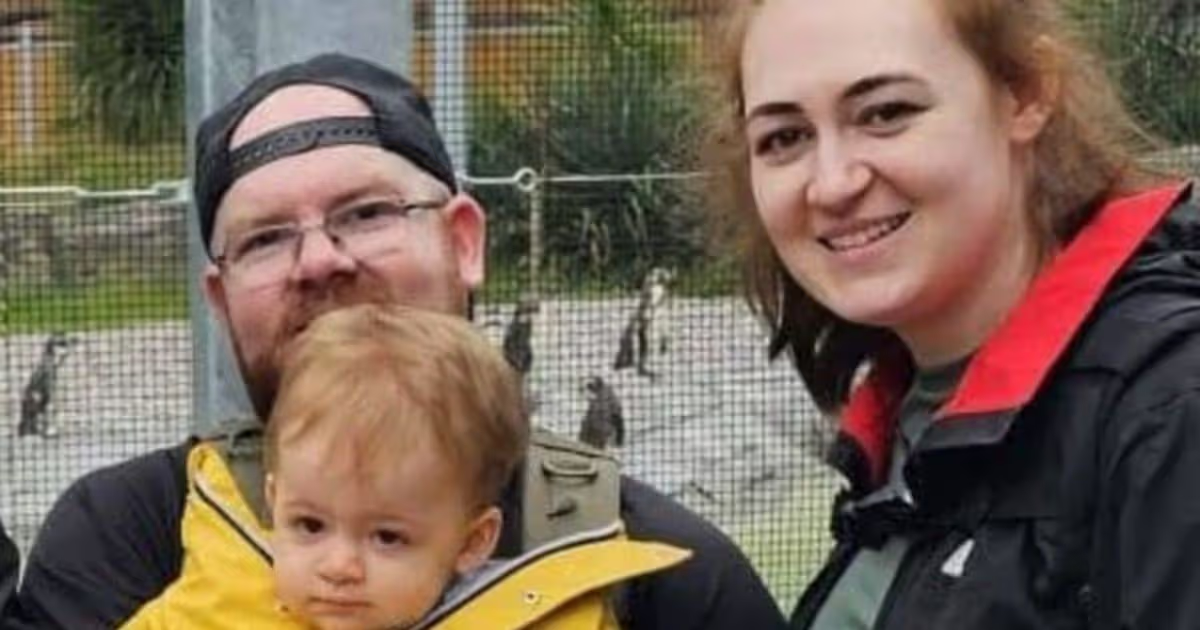
Heartbroken family pay tribute to ‘cheeky little chappy’ after toddler’s shock death

Published

on

Heartbroken family pay tribute to 'cheeky little chappy' after toddler's shock death

Adam Quirk said his son Freddie “had such a short life but he touched so many people”.

A couple have paid tribute to their 18-month-old son who died unexpectedly. Freddie Quirk, from Netherton in Merseyside, was described by his dad Adam Quirk as a boy who “loved life” despite everything that was thrown at him.

Freddie died on Monday, February 23, after his mum Abbie Quirk found him unresponsive. Paying tribute, Adam, 28, told the Liverpool ECHO: ”He was just the definition of a cheeky little chappy. He loved life. He lit up the room with his smile and loved everyone.”

Freddie was born without an anus, a condition officially called imperforate anus. This is where some babies are born without any opening for excrement to leave the body. In people with the condition the rectum (the last part of the bowel) is closed off.

Advertisement

Freddie had to have surgery when he was one day old and later had a stoma bag fitted, but Adam says his son brushed off any difficulties he faced.

He said: “He was such a strong little boy, nothing fazed him. He was climbing everywhere, running everywhere. He was just a smart, happy baby.”

Adam said: “Abbie found him on her own. I was on my way to work at the time on the train. I’d only gone one stop and I ran back. I was told Freddie had passed away on my way back.

“It’s been a shock for everybody because we weren’t expecting it. He was a bit unwell on the Sunday before he passed, but nothing out of the ordinary.

“He was vomiting a little bit, but he was still drinking. We didn’t try giving him too much food because we didn’t want him vomiting it straight back up. He was still playing with his toys and wanted to be around us, so it was nothing unusual.”

The family don’t know Freddie’s exact cause of death. Adam said: “We don’t know how he died yet. His body was only released from the coroner’s office yesterday (Tuesday, March 3). They’ve given us a timeframe of six to nine months for a bit of testing to be done.”

Throughout this time, Adam and Abbie have been supported by Alder Hey Children’s Hospital. Now Lydia Pennington, one of Abbie’s close friends, is running the Mersey Tunnel 10K later this year to raise money for the hospital’s charity.

Advertisement

A JustGiving page has raised over £1,600 so far. Adam said: “Lydia is one of Abbie’s friends from university. They actually live in Blackpool.

Advertisement

“They already said they want to do the Mersey Tunnel run and asked us if they could do some fundraising. The original target was £150 and I think that was surpassed like the first half an hour.

Abbie, 29, added: “It got raised to £500 and I think that only took another hour maybe. It’s just really heartwarming.”

Adam said: “Alder Hey, we could never, ever sing their praises enough. We got transferred from the Women’s to Alder Hey on Freddie’s first day of life when he went in for surgery.

“The nurses and doctors are absolute godsends. They made sure to sit with us when we needed it, leave us alone when we needed it. We can’t even think about how hard it would’ve been anywhere else.

Advertisement

“Freddie had such a short life, but he touched so many people and he loved everybody he met so intensely. Everyone who met him loved him.

“He had his tantrums but he loved life and loved us, loved everyone, and we loved him. We’re so incredibly lucky that we live so close to Alder Hey and we’ve had that support.

“My brother’s fiancée had an amazing idea – on Freddie’s birthday every year, July 1, we’re going to be buying presents for him as normal, but we are donating them all to Alder Hey.

Advertisement

“They’ve done so much for us, it’s only right that we do something for them. We just can’t put into words how important Alder Hey has been to us.”

Get more Daily Record exclusives by signing up for free to Google’s preferred sources. Click HERE.

Source link

Advertisement
Continue Reading

Trending

Copyright © 2025