

Business
Cody Rhodes Reclaims Undisputed WWE Championship


Cody Rhodes reclaimed the Undisputed WWE Championship on the March 6, 2026, episode of Friday Night SmackDown, defeating Drew McIntyre in a high-stakes main event that sets up a blockbuster WrestleMania 42 showdown against Randy Orton. The title switch, amid interference and intense storytelling, capped a chaotic night at the Moda Center and shifted the Road to WrestleMania narrative dramatically.

Rhodes, known as the American Nightmare, pinned McIntyre after a sequence featuring a Super Cutter followed by his signature Cross Rhodes. The victory marked Rhodes’ third reign with the prestigious title, following his earlier 2025 run and brief loss to McIntyre earlier this year. The win came after McIntyre’s interference in the Men’s Elimination Chamber match cost Rhodes a guaranteed WrestleMania spot, prompting SmackDown General Manager Nick Aldis to grant the immediate rematch.
Reports indicate WWE creative, led by Triple H, planned the change to deliver a fresh WrestleMania main event. Backstage sources confirmed Rhodes and Orton were aware of the Orton vs. Rhodes direction as early as January or February 2026, with the title drop from McIntyre designed to elevate the personal stakes. The longtime allies-turned-rivals—Rhodes mentored by Orton in Legacy—have teased tension for months, including Orton’s hesitation in past encounters and subtle mind games.
McIntyre, who won the title in a brutal Three Stages of Hell match earlier in 2026, expressed frustration post-match. Fans online debated the timing, with some praising the Rhodes-Orton draw while others felt McIntyre deserved a longer reign or a different WrestleMania path, potentially against Jacob Fatu. The interference in the title match involved Jacob Fatu, whose actions aided Rhodes and fueled speculation about Bloodline remnants or new alliances.
The episode featured other notable developments. In women’s action, Rhea Ripley appeared for a tense face-to-face with Women’s Champion Jade Cargill ahead of their WrestleMania clash. Ripley, fresh off her Elimination Chamber victory, promised to “end the era” of Cargill’s dominance, building anticipation for the high-profile matchup.
Tag team contenders were crowned as R-Truth and Damian Priest earned a shot at the WWE Tag Team Championships, defeating opponents in a hard-fought bout. Oba Femi continued his destructive run with a decisive win, solidifying his rising status on the blue brand.
The show also highlighted ongoing storylines involving Roman Reigns’ potential return or revenge angles, though no major appearance occurred. Commentary focused on the evolving Bloodline saga and how Rhodes’ win impacts broader dynamics.
Rhodes celebrated post-match, hoisting the title as confetti fell and the crowd chanted “Cody! Cody!” In a brief promo, he addressed Orton directly: “Randy, we’ve got unfinished business. At WrestleMania, the American Nightmare finishes the story—again.” Orton, who won the Elimination Chamber to earn his shot, watched from afar, smirking, setting up a personal, legacy-defining confrontation in Las Vegas.
Fan reaction was mixed but largely positive for the title change. Social media buzzed with excitement over Rhodes-Orton, with hashtags like #AllRhodesLeadToWrestleMania trending. Critics questioned the frequency of title switches on TV but acknowledged the draw of two fan-favorite legends clashing for the top prize.
WWE continues building toward WrestleMania 42, with Rhodes now positioned as champion entering the final stretch. McIntyre’s future remains unclear—rumors suggest a program with Fatu or a multi-man scenario—but the focus shifts to the epic Rhodes-Orton rematch of mentor and protégé.
As SmackDown airs on USA Network (and Netflix internationally), the blue brand delivers must-see drama weekly. With WrestleMania 42 approaching, Cody Rhodes’ championship victory ensures the Road to Las Vegas remains unpredictable and compelling.

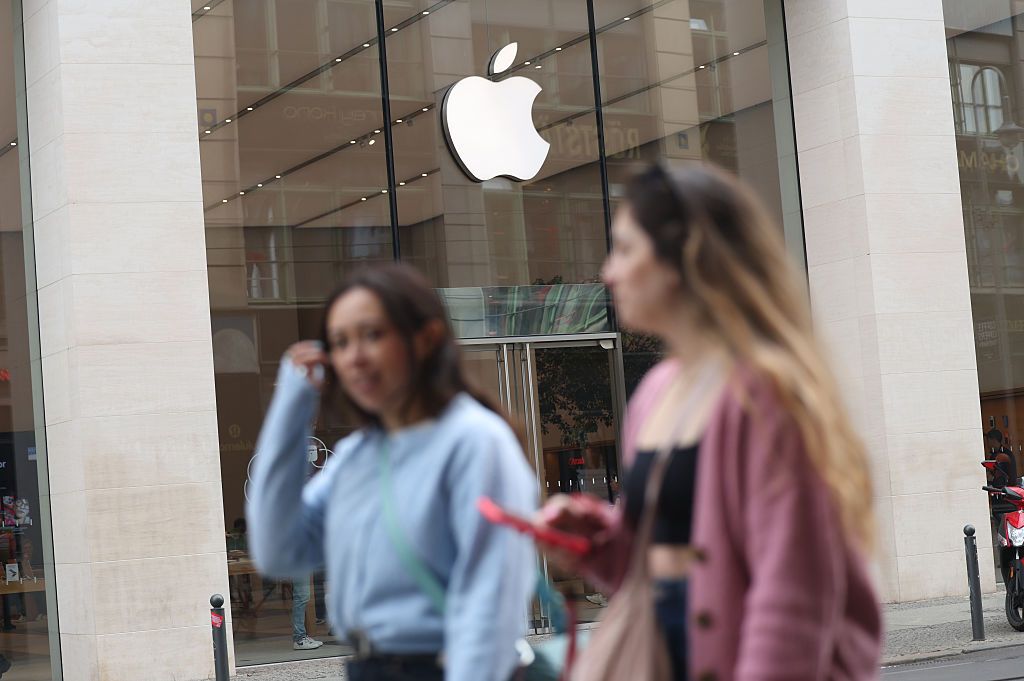
Apple Inc. shares declined modestly on March 6, 2026, closing down 2.83 points, or 1.09%, at $257.46 amid broader market pressure from escalating Middle East tensions and rising oil prices, even as the company rode enthusiasm from a flurry of new product launches earlier in the week.
The Cupertino, California-based tech giant opened at $258.63 and traded in a session range of $254.37 to $258.77. Trading volume reached about 41.1 million shares, above average as investors digested the pullback. The prior close was $260.29, reflecting a reversal from recent stability following Apple’s aggressive March announcements.
The dip aligned with weakness in major indexes, including the Nasdaq Composite, as crude oil surged on renewed Iran-related concerns potentially disrupting global supply chains. Higher energy costs could weigh on consumer spending and corporate margins, indirectly pressuring Apple’s ecosystem reliant on discretionary purchases.
Despite the day’s retreat, Apple’s fundamentals showed resilience. The stock has navigated a volatile start to 2026, down roughly 5.21% year-to-date after peaking near $285 in late 2025. Its 52-week high stands at $288.62, while the low is $169.21, highlighting strong recovery from earlier lows.
The recent product wave provided a key catalyst. Apple unveiled a series of devices in early March, including the iPhone 17e, a more affordable entry in the iPhone 17 family priced competitively with enhanced features like the A19 chip, 48MP Fusion camera, MagSafe support, and doubled base storage at 256GB. Available for pre-order starting March 4 and shipping March 11, the device targets budget-conscious consumers and emerging markets.
On March 3, Apple introduced the MacBook Air with M5 chip, emphasizing performance gains, AI capabilities via an upgraded Neural Engine, standard 512GB storage, Wi-Fi 7 via the N1 chip, and up to 18 hours of battery life. The 13- and 15-inch models arrived in fresh colors, positioning the laptop as a value leader for students, creatives, and business users.
The company also refreshed the MacBook Pro lineup with M5 Pro and M5 Max chips, delivering breakthroughs in CPU speed, GPU performance, and on-device AI—up to 4x faster than prior generations in some workloads. Higher base storage (1TB for M5 Pro, 2TB for M5 Max), Thunderbolt 5 support, and extended battery life up to 24 hours underscored Apple’s push into professional workflows.
Additional announcements included an updated iPad Air powered by M4, offering 30% better performance over M3 models, more memory, Wi-Fi 7, and enhanced iPadOS 26 features. A low-cost MacBook Neo at $599, powered by an A-series chip, targeted budget buyers and education segments, while refreshed Studio Displays, including a Mini LED XDR variant, rounded out the portfolio.
Analysts viewed the launches positively. Wedbush’s Dan Ives called Apple’s strategy “smart,” highlighting expansion into accessible price points while maintaining premium ecosystem strength. The moves aim to counter softening iPhone demand in some regions and accelerate services growth, which hit record highs in recent quarters.
Apple’s fiscal first-quarter 2026 results, reported earlier, showed revenue of $143.8 billion, up 16% year-over-year, with services contributing significantly. Guidance pointed to continued expansion, though macro headwinds like geopolitical risks and potential inflation from energy shocks loom.
Wall Street remains largely bullish. Consensus ratings favor “Buy,” with average 12-month price targets around $288 to $292, suggesting 12-15% upside from the March 6 close. Some firms have issued street-high targets, betting on AI integration across devices, robust services margins, and ecosystem lock-in.
Technical indicators show consolidation after December’s peak. The stock trades at a forward P/E near 33, reasonable given earnings growth projections. Market cap hovers above $3.8 trillion, cementing Apple’s position among the world’s most valuable companies.
A quarterly dividend of $0.26 per share remains in place, with the ex-date in early February and yield around 0.40%. The payout underscores confidence in cash flow, even as R&D spending rises on AI and silicon advancements.
Looking ahead, investors eye Apple’s April earnings for fiscal second-quarter updates. Key focuses include iPhone 17e uptake, Mac refresh traction, services momentum, and any commentary on AI features under Apple Intelligence. Geopolitical developments and Fed policy will also influence sentiment.
In Seoul, where tech stocks often track U.S. cues, local investors monitored Apple’s performance closely amid global volatility. The recent product blitz offers fresh catalysts, but near-term risks from energy-driven inflation and supply concerns persist.
Analysts like those at Wedbush and others see the dips as potential entry points, given Apple’s innovation track record and loyal user base. While external shocks dominated March 6 trading, the company’s strategic expansion into broader price tiers and AI-enhanced hardware positions it for sustained growth.
The session’s close left AAPL below recent averages, sparking debate over whether this marks a healthy pause or signals deeper caution. For now, Apple’s blend of hardware momentum and services durability provides a counterweight to macro pressures.

Get ahead of the market by subscribing to Seeking Alpha’s Wall Street Week Ahead, a preview of key events scheduled for the coming week. The newsletter keeps you informed of the biggest stories set to make headlines, including upcoming IPOs, investor days, earnings reports, and conference presentations.
The stock market was deep in the red on Friday, as the nonfarm payrolls unexpectedly contracted in February. The U.S. nonfarm payrolls: -92K vs. +60K consensus and +126K prior (revised from +130K), according to data released by the Bureau of Labor Statistics on Friday. Unemployment rate: 4.4% vs. 4.4% consensus and 4.3% prior. Oil prices topped $80/bbl on Thursday as investors weighed escalating geopolitical tensions in the Middle East and rising oil prices following military confrontations between the U.S. and Iran.
With only a few major companies reporting their earnings, investors will turn their attention to major economic indicators releasing next week. Existing home sales data for February will be released on Tuesday. CPI data for the month is due on Wednesday, with initial jobless claims data releasing on Thursday. Prelim GDP, core PCE price index and JOLTS job openings will be out on Friday.
Oracle, Adobe, and Hewlett Packard are among the companies reporting their results next week.
_______________________________________________________________
Earnings spotlight: Monday: Hewlett Packard (HPE). See the full earnings calendar.
Earnings spotlight: Tuesday: Oracle (ORCL), BioNTech (BNTX). See the full earnings calendar.
Earnings spotlight: Thursday: Adobe (ADBE), Alibaba Group (BABA). See the full earnings calendar.
Volatility watch: IREN (IREN) and Xenon Pharmaceuticals (XENE) are set up for a volatile week of trading based on options volume. The most overbought stocks per their 14-day relative strength index include White Pearl Acquisition (WPAC), Peakstone Realty Trust (PKST), and Archrock (AROC). The most oversold stocks
Business
Is Abu Dhabi Airport Open? Airport Partially Operational Amid Regional Tensions, Limited Flights Resume
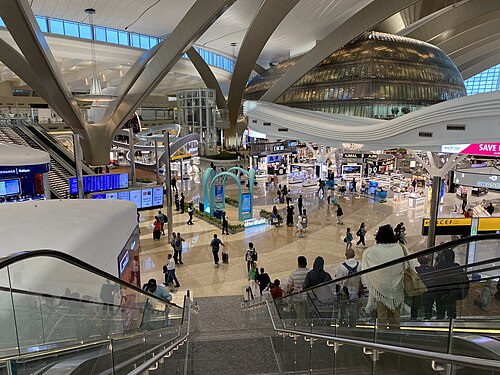
ABU DHABI, United Arab Emirates — Zayed International Airport, the primary gateway to the United Arab Emirates capital, remains partially open and operational as of March 7, 2026, following a period of significant disruptions triggered by escalating Middle East geopolitical conflicts, including U.S.-Israel military actions against Iran and related airspace restrictions.
The airport, also known as Abu Dhabi International Airport (AUH), resumed limited flight operations starting March 2, 2026, in close coordination with the General Civil Aviation Authority (GCAA), the Emergencies, Crises and Disasters Management Center – Abu Dhabi (ADCMC), and airline partners. Officials emphasized that full commercial schedules have not yet returned, with operations restricted to select flights amid ongoing regional security concerns.
Major carrier Etihad Airways, headquartered in Abu Dhabi, announced the resumption of a limited commercial flight schedule effective March 6, 2026, running through March 19. The airline is operating services to and from approximately 25 key international destinations, including Ahmedabad, Bangkok, Bengaluru, Cairo, Colombo, Delhi, Frankfurt, Hanoi, Hyderabad, Jeddah, Kuala Lumpur, London Heathrow, Madrid, Malé, Milan Malpensa, Moscow Sheremetyevo, Mumbai, New York JFK, Paris, Phuket, Riyadh, Rome, Seoul Incheon, Toronto, and Zurich.
Etihad stressed that passengers with prior bookings would be accommodated on these flights as soon as possible, while new tickets are available for purchase on its website. The airline urged travelers to check flight status directly and avoid heading to the airport without confirmed arrangements. Access remains restricted to ticketed passengers only, with security measures prioritizing safety for all.
The partial reopening follows widespread airspace closures across parts of the Middle East, beginning late February 2026 after reported strikes and retaliatory actions involving Iran. These events led to temporary suspensions of most commercial operations at Zayed International Airport from February 28 onward, stranding thousands of passengers and prompting repatriation efforts by various governments.
Abu Dhabi Airports, the operator of Zayed International, confirmed that limited services restarted as a demonstration of resilience within the emirate’s aviation ecosystem. Support networks assisted over 7,000 affected passengers during the disruption period, providing accommodations, rebooking options, and essential aid. Authorities continue monitoring the situation closely, with decisions guided by real-time security assessments.
Flight tracking platforms like Flightradar24 and FlightAware show active but reduced activity at AUH as of March 7. Live data indicates departures and arrivals to select cities, including Mumbai, London Heathrow, and Coimbatore, though many flights face delays or cancellations. Departure delay indices remain elevated, reflecting the constrained environment.
The U.S. Embassy in Abu Dhabi issued updated security alerts on March 6 and March 7, advising American citizens that limited commercial flights operate from UAE international airports, including AUH. Travelers are strongly encouraged to depart on available services if deemed safe, while avoiding the airport without confirmed bookings. The embassy noted restricted access and urged stockpiling essentials amid potential further instability.
Similar advisories from other nations highlighted land border options with Oman and Saudi Arabia, though congestion reports persist. The UAE Ministry of Interior and related agencies maintain vigilance, with air corridors designated as safe for limited use by national carriers like Etihad.
Broader regional impacts include suspensions by other airlines, though Etihad’s phased restart marks a step toward normalization. Emirates, primarily operating from Dubai, has faced its own disruptions but coordinates closely with UAE authorities. Qatar Airways and others in the Gulf region also navigated airspace challenges, with some resuming select routes.
Zayed International Airport’s official website advises passengers not to travel unless holding confirmed tickets and explicitly advised by their airline. It highlights the facility as one of the Middle East’s fastest-growing hubs, underscoring long-term ambitions despite current limitations. Features like free high-speed Wi-Fi, meet-and-assist services, and airport express shuttles to Dubai remain available for operational flights.
The airport’s infrastructure, including its modern Terminal A and advanced facilities, supports efficient handling even under constraints. Recent expansions position AUH to accommodate growing demand once full operations resume.
Analysts view the limited resumption as a positive signal of stabilization efforts by UAE authorities. However, volatility persists due to fluid geopolitical developments. Travelers worldwide, including those in Asia and Europe, monitor updates closely, with many rerouting via alternative hubs.
For real-time information, passengers should consult airline websites, flight trackers, or the official Zayed International Airport portal. The GCAA and ADCMC continue prioritizing public safety, with any further changes announced promptly.
As of late March 7 in Abu Dhabi (local time), the airport operates in a controlled, partial capacity. While not fully open to pre-disruption levels, it functions sufficiently to support essential travel and gradual recovery of connectivity.
The situation underscores aviation’s vulnerability to regional conflicts, yet also highlights coordinated responses enabling partial continuity. Stakeholders remain hopeful for broader normalization in coming weeks, contingent on de-escalation.
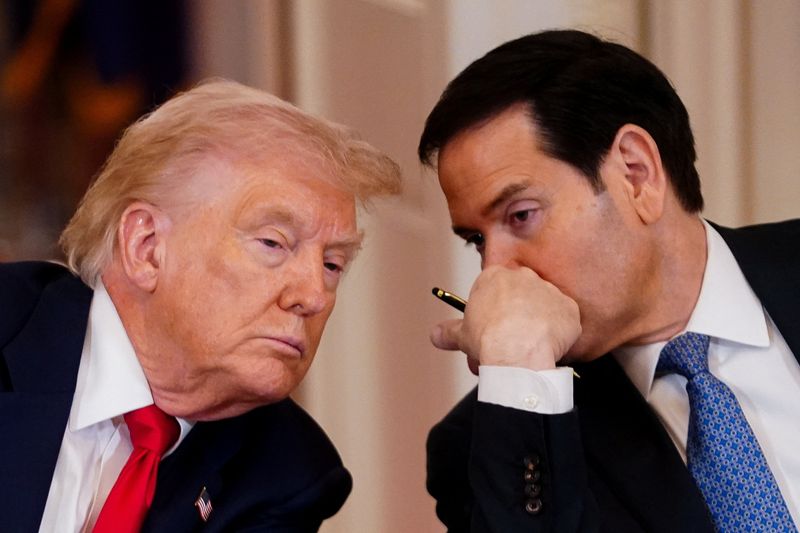

Trump says Cuba negotiating deal with him and Rubio

Most Americans will lose an hour of sleep this weekend as daylight saving time begins Sunday, March 8, 2026, at 2 a.m. local time, when clocks “spring forward” one hour to 3 a.m., extending evening daylight as spring approaches.

The biannual ritual, observed in the majority of U.S. states and territories, follows the schedule set by federal law since 2007: starting on the second Sunday in March and ending on the first Sunday in November. This year, daylight saving time will run until Nov. 1, when clocks “fall back” one hour at 2 a.m., returning to standard time.
The change, regulated by the U.S. Department of Transportation and tracked by the National Institute of Standards and Technology, aims to make better use of natural daylight during warmer months. Proponents argue it promotes energy conservation, outdoor activity, and economic benefits from extended evening light. Critics, however, point to disruptions in sleep patterns, increased accident risks in the days following the shift, and questionable energy savings in modern contexts dominated by LED lighting and electronics.
In practice, at 2 a.m. on March 8, clocks in participating areas jump ahead, meaning sunrise and sunset occur about an hour later than the day before. For example, in many northern cities, morning light will feel delayed, while evenings gain brightness well into summer. The shift lasts roughly eight months, covering about 65% of the year.
Not all areas observe the change. Hawaii and most of Arizona—including the Navajo Nation in Arizona—remain on permanent standard time. U.S. territories such as Puerto Rico, Guam, American Samoa, the U.S. Virgin Islands, and the Northern Mariana Islands also do not participate. Residents in these locations experience no clock adjustment.
Internationally, patterns vary. Canada generally aligns with U.S. dates for most provinces, though some regions differ. In Europe, daylight saving time—known as summer time—begins later, on the last Sunday in March (March 29 in 2026), with clocks advancing at 1 a.m. UTC, and ends on the last Sunday in October (Oct. 25). This creates a temporary three-week difference in time zones between North America and much of Europe after the U.S. shift.
The practice traces back to World War I, when Germany introduced it in 1916 to conserve coal. The United States followed in 1918, though it was repealed post-war before returning during World War II and later standardized under the Uniform Time Act of 1966. Extensions in 1986 and 2007 lengthened the period to its current span.
Public frustration has grown in recent years. Polls consistently show many Americans oppose the twice-yearly changes, citing health impacts like disrupted circadian rhythms, elevated heart attack and stroke risks in the spring transition, and safety concerns from drowsy drivers. Sleep experts often favor permanent standard time for better alignment with natural light cycles, while others prefer year-round daylight saving for brighter evenings.
Legislative momentum reflects this divide. The Sunshine Protection Act, reintroduced in the 119th Congress as S.29 in January 2025, seeks to make daylight saving time permanent nationwide, eliminating annual adjustments. The bill, which would advance clocks one hour from current standard time year-round, allows opt-outs for areas currently exempt. It passed the Senate unanimously in 2022 but stalled in the House.
A new proposal, the Daylight Act of 2026 (H.R. 7378), introduced in February, offers a compromise: shifting clocks forward a permanent half-hour from standard time, ending biannual changes altogether. Sponsors argue it balances morning light needs with evening benefits.
State-level action has accelerated. As of early 2026, at least 18 to 20 states have passed resolutions or laws favoring permanent daylight saving time, contingent on federal approval. Others pursue permanent standard time. In 2026 alone, 16 states introduced more than 20 related bills, ranging from full adoption of one system to pacts with neighboring states. British Columbia in Canada announced it will make March 8, 2026, its final clock change, adopting permanent daylight saving time thereafter.
Federal approval remains the hurdle. States can opt out of daylight saving time entirely—like Hawaii and Arizona—but adopting permanent daylight saving requires congressional action under the Uniform Time Act. Without it, states risk misalignment with federal standards.
Health organizations, including the American Academy of Sleep Medicine, advocate ending changes in favor of permanent standard time. Transportation and retail groups often support permanent daylight saving for perceived safety and commerce gains.
As the March 8 deadline nears, experts advise preparation: set clocks ahead Saturday night to avoid confusion Sunday morning. Smartphones and many devices update automatically, but manual checks for ovens, microwaves, and cars remain wise. Travelers crossing time zones or regions with different rules should verify schedules.
The weekend shift coincides with early spring preparations for many, from gardening to outdoor events. While the extra evening light promises more time for recreation, the immediate cost—an hour less sleep—fuels perennial calls for reform.
For now, the familiar pattern persists: spring forward March 8, fall back Nov. 1. Whether 2026 marks the last such change depends on congressional action amid growing state and public pressure.

Ian Huntley, the former school caretaker convicted of murdering two 10-year-old schoolgirls in the notorious 2002 Soham killings, has died at age 52 following a severe attack by another inmate at a high-security prison, authorities confirmed Saturday, March 7, 2026.

Huntley succumbed to his injuries in hospital early Saturday morning, more than a week after the assault on Feb. 26 at HMP Frankland in County Durham, northern England. He had been on life support since the incident, suffering significant head trauma from repeated blows with a makeshift weapon—reportedly a metal bar or spiked pole—in the prison workshop. Life support was withdrawn Friday after medical assessments indicated a vegetative state with no prospect of recovery.
Durham Constabulary issued a brief statement: “A man who was attacked at HMP Frankland in Durham last week has died in hospital this morning. Ian Huntley, 52, was taken to hospital with serious injuries following an incident in the workshop on the morning of Thursday 26 February.” The force added that inquiries continue into the circumstances.
The Prison Service and Ministry of Justice confirmed the death but provided limited details, citing an ongoing investigation. A ministry spokesperson described the Soham murders as one of Britain’s most harrowing crimes and extended sympathies to the victims’ families, stating: “Our thoughts remain with the families of Holly Wells and Jessica Chapman.”
Huntley, serving a life sentence with a minimum term of 40 years imposed in 2003, was attacked in a prison workshop where inmates undertake supervised activities. Sources told media outlets he was found lying in a pool of blood after being bludgeoned. The BBC reported that triple killer Anthony Russell, 43, is suspected of carrying out the assault, though no formal charges have been announced as of Saturday.
The attack marks the latest in a series of violent incidents involving Huntley during his incarceration. In 2005, while at HMP Wakefield, he was scalded with boiling water by convicted murderer Mark Hobson. He later sued the government over prison safety failures. Previous assaults and his high-profile status as a child killer had led to frequent moves between facilities and protective measures, though critics questioned why he was placed in a shared workshop environment.
The Soham case shocked the United Kingdom and prompted major reforms in child protection and police procedures. On Aug. 4, 2002, Huntley, then 28 and working as a caretaker at Soham Village College, lured best friends Holly Wells and Jessica Chapman into his home after they visited his girlfriend, Maxine Carr, a teaching assistant at their school. He murdered the girls—Holly by suffocation and Jessica by smothering her to silence screams—then disposed of their bodies in a remote ditch near RAF Lakenheath. He set fire to their clothing and attempted to cover up the crime by fabricating an alibi and giving media interviews as a concerned local.
Huntley’s lies unraveled quickly. Police discovered forensic evidence linking him to the girls, and he was arrested within days. Carr, who provided a false alibi claiming Huntley was with her during the abductions, was convicted of perverting the course of justice and served 21 months. Huntley’s 2003 trial at the Old Bailey captivated the nation, with graphic details emerging of his actions and attempts to mislead investigators. The jury convicted him of two counts of murder after he claimed the deaths were accidental.
The case exposed flaws in vetting procedures for school staff—Huntley had prior allegations of sexual misconduct that were not properly flagged—and led to the creation of the Independent Safeguarding Authority and enhanced Criminal Records Bureau checks. It also highlighted issues in police information-sharing, culminating in the Bichard Inquiry, which recommended sweeping changes to national police databases.
Public reaction to Huntley’s death has been mixed but largely unsympathetic. Many expressed relief on social media and in comments sections, with some calling it “poetic justice” or arguing taxpayer funds should no longer support his incarceration. Others voiced concern over prison violence, questioning whether vulnerable or high-risk inmates receive adequate protection despite their crimes.
Huntley’s former partner, Maxine Carr, released no immediate statement. The families of Holly and Jessica have maintained a low profile over the years, occasionally speaking about the enduring pain and the importance of child safety reforms.
The incident at HMP Frankland, a Category A prison housing some of Britain’s most dangerous offenders including other notorious killers, underscores persistent challenges in managing high-security facilities. Overcrowding, staffing shortages, and the risks of improvised weapons remain ongoing issues in the U.K. prison system.
As investigations proceed, Durham Police have appealed for witnesses from the workshop incident. No timeline has been given for potential charges against the alleged attacker.
Huntley’s death closes a grim chapter in one of modern Britain’s most infamous crimes, though the legacy of the Soham murders—improved safeguards for children and lessons in police accountability—endures.
Business
Thousands of Americans evacuated from Middle East on charter flights, State Department says

Thousands of Americans evacuated from Middle East on charter flights, State Department says

GUANGZHOU, China — Shares of XPeng Inc. climbed sharply on Friday, closing up 6% at $17.32 on the New York Stock Exchange, as investors positioned themselves ahead of the Chinese electric vehicle maker’s fourth-quarter 2025 earnings report scheduled for March 20.

The advance came despite recent mixed delivery figures and ongoing pressures in China’s highly competitive EV market. XPeng’s American depositary shares rose from a previous close of $16.34, with trading volume exceeding 9.5 million shares. In after-hours trading, the stock dipped slightly to around $17.20.
The rally reflects growing optimism about XPeng’s trajectory into 2026, even as short-term challenges persist. The company, known for its focus on smart electric vehicles equipped with advanced AI and autonomous driving features, has set ambitious delivery targets for the coming year while deepening partnerships that could bolster its technology edge.
XPeng’s stock has shown volatility in early 2026, hitting a 52-week low of $15.38 in early March before rebounding. The shares peaked at $28.24 in November 2025, underscoring the sector’s sensitivity to delivery reports, policy shifts and global EV demand.
Analysts are closely watching the upcoming earnings release, which will cover the October-to-December 2025 period. XPeng has guided for fourth-quarter revenues between 21.5 billion yuan and 23 billion yuan (approximately $3 billion to $3.2 billion), representing a 33.5% to 42.8% increase from the prior year. Vehicle deliveries for the quarter are projected at 125,000 to 132,000 units, up 36.6% to 44.3% year-over-year.
The company has emphasized its path toward profitability, with management previously signaling that the fourth quarter could mark a key milestone in achieving breakeven or positive results on a single-quarter basis. In the third quarter of 2025, XPeng narrowed its net loss to 380 million yuan, the lowest in five years, amid cost controls and higher-margin model sales.
Recent monthly delivery updates have presented a mixed picture. January 2026 saw 20,011 vehicles delivered, a 47% drop from December 2025 levels, influenced by seasonal factors. February figures fell 49.9% year-over-year to 15,256 units, partly due to the Lunar New Year holiday. Despite the declines, XPeng highlighted the global rollout of its P7+ model as a positive development for international expansion.
For full-year 2025, XPeng delivered 429,445 vehicles, providing a baseline for its aggressive 2026 outlook. The company aims to deliver between 550,000 and 600,000 units next year, implying 28% to 40% growth. International shipments are expected to double from about 45,000 in 2025, as XPeng pushes into markets beyond China.
A key driver of long-term optimism is XPeng’s collaboration with Volkswagen. The German automaker’s adoption of XPeng’s autonomous driving technology has been viewed as validation of its AI capabilities, though it contributed to an 8% stock drop in one recent session amid concerns over competitive dynamics.
Analysts generally maintain a positive stance. The consensus 12-month price target for XPEV stands at around $25.78, suggesting potential upside of nearly 49% from current levels, based on input from 13 analysts. Targets range from a low of $17 to a high of $34. Goldman Sachs, for instance, raised its target to $25 in late 2025, citing expected 40% revenue growth in 2026 from new model launches and contributions from the Volkswagen partnership.
XPeng plans to introduce seven new dual-energy models and three overseas-specific models in 2026, including mid- and small-sized SUVs, to broaden its portfolio and appeal to diverse customer segments.
The broader Chinese EV sector remains intense, with domestic rivals such as BYD, Li Auto and NIO vying for market share through aggressive pricing and innovation. Global factors, including supply chain issues, regulatory changes in key export markets and fluctuating demand for electric vehicles, continue to influence sentiment.
XPeng, founded in 2014 and headquartered in Guangzhou, differentiates itself through its emphasis on intelligent features, including its XNGP autonomous driving system. The company trades on both the NYSE (XPEV) and the Hong Kong Stock Exchange (9868).
Investors await the March 20 earnings call, set for 8 a.m. ET, for detailed insights into margins, cash flow and updated guidance. Management has stressed disciplined execution and technological leadership as pillars for sustainable growth amid industry headwinds.
As XPeng navigates this pivotal period, its stock performance will likely hinge on delivering against ambitious targets while managing costs in a price-sensitive market. The recent uptick suggests some investors are betting on positive surprises in the forthcoming report and stronger momentum in 2026.


Trump announces new military coalition to ’eradicate cartels’ in Western Hemisphere
Business
Palantir Technologies Stock Climbs 3% to $157 Amid Geopolitical Tensions and Strong AI Demand

Shares of Palantir Technologies Inc. rose nearly 3% on Friday, closing at $157.16 on the Nasdaq, as investors weighed the company’s explosive growth in artificial intelligence platforms against heightened geopolitical risks driving demand for its defense-focused software.

The Denver-based data analytics and AI firm saw its stock surge 2.94% from Thursday’s close of $152.67, with trading volume reaching over 74 million shares — well above its average. In after-hours trading, the shares eased slightly to around $156.60.
The advance capped a strong week for Palantir, with the stock up about 15% amid escalating tensions in the Middle East, including conflicts involving Iran, which analysts say could boost prospects for defense and intelligence contracts. The shares have rebounded sharply from earlier March lows near $133, though they remain below late-2025 peaks above $220.
Palantir, co-founded by Peter Thiel and known for its Gotham and Foundry platforms, has positioned itself as a leader in AI-driven data integration for both government and commercial clients. Its Artificial Intelligence Platform (AIP) has fueled rapid adoption, particularly in the U.S., where commercial revenue exploded in late 2025.
The rally follows Palantir’s blockbuster fourth-quarter 2025 earnings released in early February. Revenue jumped 70% year-over-year to $1.41 billion, with U.S. revenue surging 93% to $1.076 billion. U.S. commercial revenue grew an astonishing 137% year-over-year, while government revenue increased 66%.
Management issued aggressive guidance for 2026, projecting full-year revenue between $7.182 billion and $7.198 billion — implying roughly 61% growth from 2025’s estimated $4.48 billion. U.S. commercial revenue is expected to exceed $3.144 billion, representing at least 115% growth. Adjusted operating income is forecasted near $4.1 billion, with adjusted free cash flow between $3.9 billion and $4.1 billion.
Chief Executive Alex Karp hailed the results as evidence of Palantir’s unique focus on scaling AI operational leverage, describing the company as an “n of 1” in pursuing “commodity cognition” through advanced models.
Recent developments have reinforced optimism. Palantir secured a five-year blanket purchasing agreement with the U.S. Department of Homeland Security valued at up to $1 billion to deploy AI tools across agencies for case management, threat identification and logistics. The company also expanded partnerships, including with Rackspace Technology to deploy Foundry and AIP in regulated industries, and won its largest-ever U.K. defense contract.
Geopolitical factors appear to be amplifying demand. Analysts point to rising needs for AI in battlefield intelligence and national security amid global conflicts. A potential 10-year, $10 billion U.S. Army framework agreement continues to generate buzz, contributing to a record contract backlog.
Analysts remain largely bullish despite the stock’s lofty valuation — trading at around 241 times trailing earnings and 115 times forward estimates. The consensus 12-month price target stands at approximately $193 to $198, suggesting 23% to 26% upside from current levels, based on input from 28 analysts. Ratings lean toward “Moderate Buy,” with highs reaching $260 from Citi and recent upgrades including Rosenblatt’s $200 target.
Some forecasts are more ambitious. Veteran analysts highlight Palantir’s mission-critical role in defense AI, with one predicting the stock could reach $200 amid geopolitical tailwinds. Others caution that sustained execution will be key in a competitive landscape featuring players like Snowflake and Oracle.
Palantir’s commercial momentum has shifted perceptions. Once heavily reliant on government contracts, the U.S. commercial segment now drives outsized growth through AIP deployments in Fortune 500 companies. The company’s Rule of 40 score — combining revenue growth and profit margin — hit 127% recently, a rare feat at scale.
Challenges persist. High valuation leaves little room for error, and controversies around surveillance tech and public-sector contracts continue in some markets. Insider selling has occurred periodically, though it has not derailed the broader uptrend.
Investors await the next earnings update, expected in May 2026, for confirmation of guidance delivery and further AIP traction. Management has emphasized disciplined scaling and profitability as hallmarks of its strategy.
As Palantir navigates an environment of accelerating AI adoption and defense modernization, its stock performance will likely depend on converting massive backlog into recurring revenue while managing expectations in a volatile market. The recent surge suggests investors are betting on continued outperformance in both commercial and government segments through 2026.

Apple Stock Slips 1.09% as Geopolitical Jitters Offset Fresh Product Momentum

Queen Naija’s Diamond Ring Sparks Engagement Speculation

Amanda Holden hits back at listener for mentioning Phillip Schofield after on-air swipe


-

 Politics4 days ago
Alan Cumming Brands Baftas Ceremony A ‘Triggering S**tshow’
-
Business1 day ago
Form 8K Entergy Mississippi LLC For: 6 March
-

 Tech7 days ago
Unihertz’s Titan 2 Elite Arrives Just as Physical Keyboards Refuse to Fade Away
-

 NewsBeat7 days ago
Abusive parents will now be treated like sex offenders and placed on a ‘child cruelty register’ | News UK
-

 Fashion22 hours ago
Weekend Open Thread: Ann Taylor
-
 NewsBeat7 days ago
Dubai flights cancelled as Brit told airspace closed ’10 minutes after boarding’
-

 NewsBeat6 days ago
‘Significant’ damage to boarded-up Horden house after fire
-

 Tech2 days ago
Bitwarden adds support for passkey login on Windows 11
-

 Entertainment5 days ago
Baby Gear Guide: Strollers, Car Seats
-
 Sports2 days ago
499 runs and 34 sixes later, India beat England to enter T20 World Cup final | Cricket News
-
 NewsBeat6 days ago
Emirates confirms when flights will resume amid Dubai airport chaos
-
Politics7 days ago
FIFA hypocrisy after Israel murder over 400 Palestinian footballers
-

 NewsBeat5 days ago
Is it acceptable to comment on the appearance of strangers in public? Readers discuss
-

 Tech6 days ago
Viral ad shows aged Musk, Altman, and Bezos using jobless humans to power AI
-

 Video5 days ago
How to Build Finance Dashboards With AI in Minutes
-

 Fashion6 days ago
On the Scene at the 57th Annual NAACP Image Awards: Teyana Taylor in Black Ashi Studio, Colman Domingo in Yellow Sergio Hudson, Chloe Bailey in Christian Siriano, and More!
-

 Business4 days ago
Guthrie Disappearance Enters Fifth Week as Family Visits Memorial
-
 NewsBeat5 days ago
Ukraine-Russia war latest: Belgium releases video showing forces boarding Russian shadow fleet oil tanker
-
 Crypto World6 days ago
US Judge Lets Binance Unregistered Token Class Action Proceed
-

 Crypto World5 days ago
Why Nexo Is Reentering the US After the 2023 Crypto Lending Crackdown