
Politics
Give workers a “seat at the table” in future pandemic planning says TUC

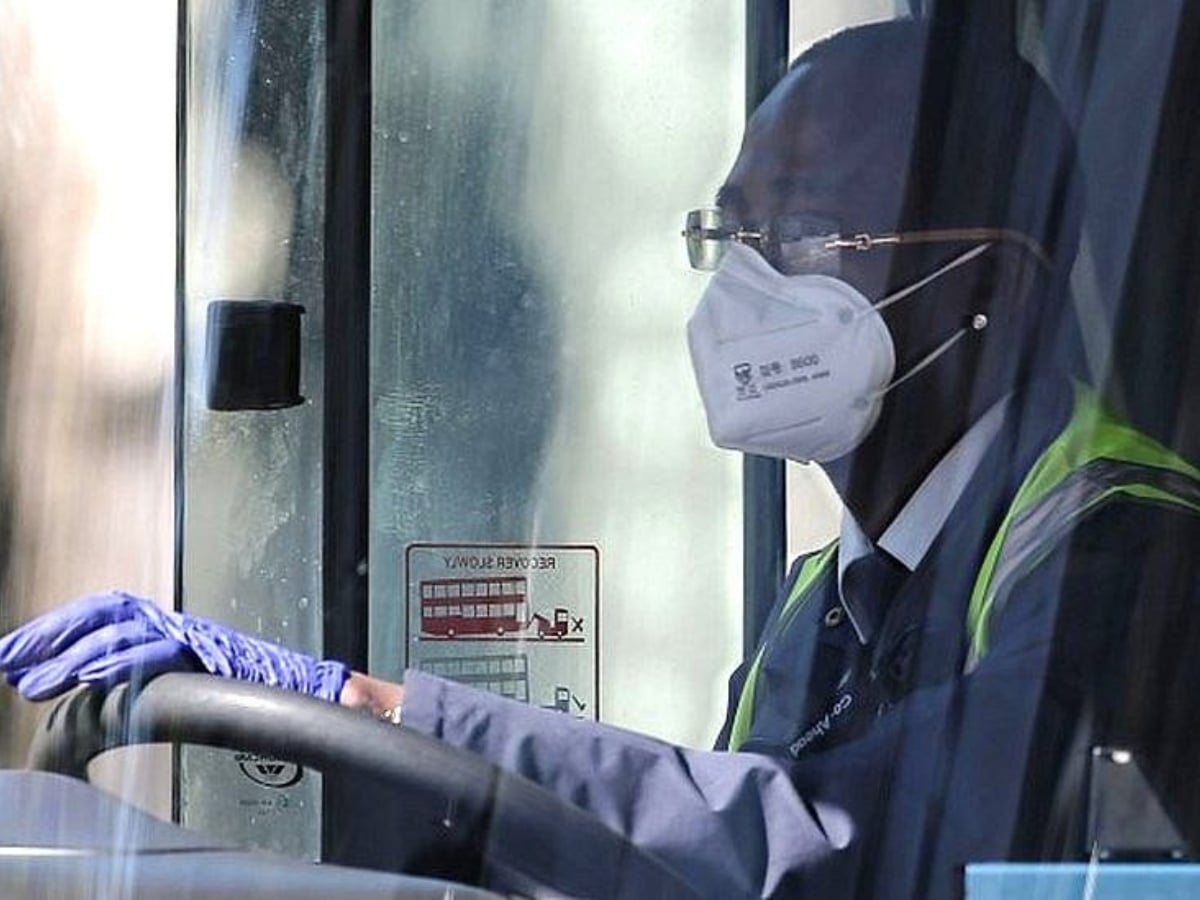
The UK Covid Inquiry came to an end on 5 March 2026. The Trades Union Congress (TUC) was a core participant in the Inquiry. It’s warning that this and future governments must learn lessons from the pandemic. They must ensure key workers and the general population have better protection in the future.
The union body paid tribute to all those who lost their lives during the pandemic. And it expressed its gratitude to key workers that kept the country going at a time of national crisis.
The TUC has set out five key recommendations to prevent the mistakes of the Covid pandemic and protect workers.
1) Stronger union voice
The Inquiry showed that involving unions in decision making, from the NHS to the design and implementation of furlough, saved lives and jobs.
The TUC is therefore calling for a more dynamic approach to social partnership. It wants to bring government, unions and employers together to design, deliver and manage responses to future pandemics.
In particular, unions’ input will be essential when designing measures to ensure better workplace safety measures and protections for workers across all sectors.
The lack of a union voice in the early days of the response to the Covid-19 pandemic meant that decisions didn’t take into account workers’ needs. This often resulted in workers having to rely on ill-fitting PPE, or work in unsafe environments.
2) Stronger enforcement
The Health and Safety Executive (HSE) is the body responsible for workplace safety. In 2021/22, its funding was 43% lower than in 2009/10 in real terms. This had caused a 35% staff number cut in the ten years leading to the Covid-19 pandemic.
This meant that there was limited inspection or enforcement – despite thousands of reported outbreaks, with many workers losing their lives. Just under 5,000 of the new ‘spot check’ visits were undertaken by contractors working to the HSE in the first eight months of the pandemic. There were only 78 enforcement notices and zero prosecutions.
The union body says that proper investment needs to go back into the HSE. This would bolster the inspection and enforcement of health and safety regulations and protect workers.
3) Stronger sick pay
The TUC says reform of statutory sick pay will be essential in preventing the spread of future pandemics.
Sick pay reforms coming into force from 6 April as part of the Employment Rights Act will mean that around 8 million workers will benefit from stronger sick pay provisions.
The experience of millions of low paid workers during the pandemic – with many having to work while infectious – demonstrates why these new rights were overdue, and why no government should now undo that vital safety net, the TUC says.
4) Stronger public services
The TUC says the pandemic revealed the dangers of under-resourcing our public services after years of significant Conservative cuts.
A decade of austerity leading up to the pandemic led the Inquiry to conclude that:
public services, particularly health and social care, were running close to, if not beyond, capacity in normal times.
The union body says that:
lessons must be learned to save lives in future.
The TUC is urging the government to continue to invest in public services and its workforce to repair and rebuild after the damage done by 14 years of Conservative government.
It says investment in the workforce is the only way to improve service quality, increase productivity and boost public sector resilience.
5) Stronger Employment Rights
Evidence the TUC gave to the inquiry illustrated how workers in insecure employment were less likely to report safety breaches. This included agency workers, those on zero hours contracts and bogus self-employment. They were more likely to work in low paid and unsafe workplaces and move between multiple jobs and workplaces. And they were less likely to access sick pay.
Insecure workers were nearly 10 times more likely to say they received no sick pay compared to secure workers.
Black and ethnic minority workers’ over-representation in these types of jobs was one reason for the disproportionate impact of the pandemic in those communities.
The experience of workers in insecure and low paid employment shows why there was such a need for the Employment Rights Act, says the TUC.
TUC general secretary Paul Nowak said:
We owe it to those who lost their lives – and to those workers who put their lives at risk – to make sure we are prepared for future pandemics.
That means giving trade unions a seat at the table in pandemic planning – and adopting a social partnership approach by bringing unions, employers and government together to keep workers safe.
And it means sustained investment in our public services to make sure they are resilient enough to cope with another pandemic.
The Conservatives took a sledgehammer to our cherished public services, leaving the NHS on its knees and struggling to cope when Covid-19 hit.
The Labour government has rightly increased health and education funding and gave many public service workers their first proper pay rise in years. But this cannot be a one off.
Covid showed us strong public services – and a properly supported workforce – are vital for the nation’s health and resilience.
On tackling the scourge of insecure work and the Employment Rights Act, Nowak added:
The government also needs to address the structural inequalities and discrimination embedded in our labour market that put so many lives at risk.
That means delivering the Employment Rights Act in full, including new laws to ban exploitative zero hours contracts and give workers a right to a contract which reflects their regular hours.
From next month, workers will be able to get sick pay from day one. This is a game changer for millions of people up and down the country, and a positive first step towards building our resilience.
Featured image via the Canary

When we look back at 2026 in the future, we’re probably going to be saying that the year belonged to Zendaya.
The woman of the hour has no fewer than three upcoming movies in the year ahead – not including one that’s in cinemas now – and she’s also set to reprise the TV role that put her on the map in the first place.
Outside of her work, she’s also been at the centre of rumours that she and her long-time partner Tom Holland quietly tied the knot in secret, after confirming last year that they were engaged.
Here’s your quick guide to everything Zendaya currently has in the pipeline, from her divisive new romantic drama to the return of Euphoria…
The Drama (in cinemas now)

Zendaya and Robert Pattinson play a couple about to celebrate their big day in The Drama.
However, the pair’s relationship slowly begins to unravel when a dark revelation about the bride-to-be’s past during a drinking game leads both of them to ask themselves some big questions.
The latest film from Sick Of Myself and Dream Scenario director Kristoffer Borgli, The Drama holds a big secret that is being kept under wraps for the time being to avoid spoilers – but the movie was already sparking backlash and debate before it had even been released, with early reviews suggesting the movie could be one of 2026’s most uncomfortable and controversial.
Euphoria (12 April)

It’s been a long time coming, but the third and final season of Euphoria is finally coming later this month.
In the final outing of Sam Levison’s acclaimed teen drama, its central characters are all grown up, but no matter how far they’ve come, there’s clearly only so far that any of them can run from their pasts.
Zendaya reprises her two-time Emmy-winning role as recovering drug addict Rue in the new episodes, which also see the return of cast members Sydney Sweeney, Hunter Schafer, Alexa Demie, Colman Domingo and recent Oscar nominee Jacob Elordi.
Meanwhile, the new season will be one of the final on-screen roles for Eric Dane, who died earlier this year at the age of 53.
The Odyssey (17 July)
Christopher Nolan is taking a big swing when it comes to his return to cinemas following the mammoth success of his Oscar-winning epic Oppenheimer.
For his latest ambitious project, he’s taking on the classic The Odyssey, marking his first time ever shooting an entire film with IMAX cameras.
The star-studded ensemble is led by Matt Damon as Odysseus, with a cast including Nolan regulars Anne Hathaway, Benny Safdie, Elliot Page and Robert Pattinson, as well as Mia Goth, Himesh Patel, Travis Scott and Oscar winners Charlize Theron and Lupita Nyong’o.
Reports have claimed that Zendaya will be playing the Greek goddess Athena, with her rumoured husband Tom Holland playing Matt Damon’s on-screen son Telemachus.
Spider-Man: Brand New Day (31 July)

Just two weeks after the long-awaited release of The Odyssey, Zendaya and Tom Holland will be reunited once again in the newest film in the Spider-Man canon Brand New Day.
Four years on from the events of No Way Home, the world has seemingly forgotten that Peter Parker ever existed, including his long-term girlfriend MJ, who a recently-released trailer revealed had moved on with someone new, much to our hero’s chagrin.
Joining Tom and Zendaya in their latest Marvel adventure will be Stranger Things star Sadie Sink, Severance favourite Tramell Tillman and MCU fixture Mark Ruffalo, playing Bruce Banner, the alias of The Incredible Hulk.
Dune: Part Three (18 December)

Rounding off a huge year for Zendaya will be the third (and final!) instalment in Denis Villeneuve’s Dune series.
Based on the novel Dune Messiah, the film will see Zendaya back with series regulars Timothée Chalamet, Florence Pugh, Javier Bardem and Rebecca Ferguson, alongside some exciting new additions.
Remarkably, Dune: Part Three will also be the Challengers star’s third time sharing the screen with Robert Pattinson in the space of a year, following The Drama and The Odyssey.

No parent wants to sit back and watch their child experience anxiety over any situation, whether it’s going to a new dance school, a football game, trying new food or meeting new kids at school.
And while most parents have the best intentions, many actually come to their child’s rescue during moments of distress – which can be hugely detrimental to their child now and as they grow up, therapists told HuffPost.
The best way to help your child grow through anxiety and learn to manage it isn’t exactly a natural instinct. Here’s what to know:
The number one way parents fuel anxiety, according to therapists
“I think, in particular with anxiety … the biggest mistake that we make as parents is that when we see anxiety in our kids, we jump straight into that ‘I want to protect this child from this experience.’ So, we go straight to protection mode,” said Cheryl Donaldson, a licensed marriage and family therapist.
Parents don’t want their kids to feel anxiety, of course, but swooping in to take them out of an anxious situation or fix it for them isn’t a way to empower kids, Donaldson noted. It’s actually doing the opposite.
Research suggests that accommodating anxiety makes it worse, said Hannah Scheuer, a licensed clinical social worker with Self Space in Washington state.
“I’m both a child and family therapist and a mom, and I’m just gonna say that watching our child struggle and suffer is one of the hardest things,” Scheuer said. “And if we accommodate and give in, we will make it worse. Accommodation is essentially allowing avoidance, and avoidance feels really, really good in the moment, even to adults.”
For instance, if your teenager is anxious about driving on the highway, avoiding it when teaching them to drive only makes the experience scarier and more stressful when they eventually have to do it.
“It just makes it worse and worse, it leads to long-term negative outcomes,” Scheuer said. “That accommodation, that saying, ‘Oh no, you don’t have to do this thing that you’re upset about or scared of,’ it does temporarily alleviate that child’s distress. Then, what it reinforces is this perception that the thing that they don’t want to do actually warrants their anxiety, and so that gives them more reason to feel the anxiety.”
“Anxiety is our body’s mechanism to tell us that we either need to act in some way … or, in the case of kids, anxiety is telling them, ‘This is a new skill I need. This is a new experience. I need more skills. I need to know how to manage this,’” Donaldson said.
It’s important to validate your child’s emotions while supporting them through anxiety
Supporting children through anxious moments takes a three-fold approach, said Laura Buscemi, a licensed professional counsellor at Thriveworks in Cherry Hill, New Jersey.
“We have to validate, we have to regulate and we have to mitigate,” she said.
Validation looks like normalising the anxiety and sharing that it’s something we all experience, Buscemi said. Regulation means helping your child learn to manage their anxiety through a variety of solutions, like breathing exercises and movement. Mitigation helps a child understand that temporary discomfort, such as facing the situation that makes them anxious, leads to long-term relief.
“Facing fears ultimately decreases them – and we prove to ourselves that things aren’t as scary as we’ve built up in our mind, or that maybe we’re just braver than it was scary,” Buscemi said.
“The research evidence does also show that what we need to do as parents is to provide support and confidence,” Scheuer noted. “What that looks like is supporting and validating the feelings while also showing confidence in their child’s ability to actually do the thing to cope with the anxiety.”
For example, if your child gets really anxious about going to football practice and has meltdowns in the car on the way to practice, a parent could say, “Wow, I hear you. I know you’re feeling really scared and upset right now, but I also know that you can do really hard things and you’re going to be OK,” Scheuer suggested.
“It’s that mix of validation of the feeling, without accommodating the anxiety and providing confidence that they can do it,” Scheuer explained. This one sentence isn’t going to erase your child’s anxiety and stop the meltdown, but as this encouragement comes up week after week, soccer will feel less and less hard for your child.
“And continuing to inspire that confidence … is going to really make a big impact, and that’s how we build resilient kids,” Scheuer said.

Justin Paget via Getty Images
Some kids (and parents) require professional support for anxiety management
Many parents will be able to manage their kids’ anxiety through different calming and exposure techniques, but some kids (and parents) may require additional support from a mental health professional – and that’s perfectly OK.
There are certain signs that a child’s anxiety requires support from a therapist or other professional.
“If the anxiety is getting in the way of them being able to be in a relationship with other kids, go to a friend’s house … being able to go to practices and do different things, you want to reach out for help,” Donaldson said.
If you notice your child frequently worrying or frequently in distress, those are also red flags.
“Also, with younger kids, they don’t really have the language to talk about anxiety, so sometimes we see it as like more physical symptoms,” Scheuer noted. This includes stomachaches, having trouble sleeping, and general restlessness.
“That is something that I would say, if that’s pretty common, maybe they need some extra support,” Scheuer said.
If therapy or counselling isn’t accessible, your child’s school should have a social worker or school counsellor who can provide support, Scheuer said. Talking to your paediatrician could also be a good idea.
Managing anxiety in kids often involves the parents, especially if the kids are younger.
“So, it’s not just saying, ‘Oh, fix the kid’s symptoms.’ It’s also … what strategies can we give to the parents to help really make sure that everybody has the tools to help this kid navigate these symptoms?” Scheuer said.
It’s also on the parents to consider how they react to anxious moments in their lives. Think about it: if mum or dad doesn’t know how to manage their own anxiety, they likely won’t be able to help their child, either.
Ask yourself what you feel when your child gets anxious. Does it make you anxious, too? If so, what do you do to calm down?
“Leading with your own leadership” is an important way to go about this, according to Donaldson. If you know deep breathing helps you feel less anxious, gently guide your child toward that. Or, if you know that getting out for a walk reduces your anxiety, gently encourage your child to try it.
“You want them to know that you’re partnering, that you have answers that are going to be really helpful for them,” Donaldson said.
If other techniques and interventions don’t work, “sometimes the kids need to go on medication,” Donaldson noted.
Watching your child experience anxiety isn’t a pleasant experience for anyone, but it helps build life skills and confidence that are tough to grow later in life. The ability to live with discomfort and manage anxiety is important throughout the lifespan, as someone takes a big test, gets their first job, experiences their first break-up, faces job rejection and more.
“I really like to emphasise with my clients that we’re trying to push through temporary discomfort to achieve long-term relief,” Buscemi said.
Help and support:
- Mind, open Monday to Friday, 9am-6pm on 0300 123 3393.
- Samaritans offers a listening service which is open 24 hours a day, on 116 123 (UK and ROI – this number is FREE to call and will not appear on your phone bill).
- CALM (the Campaign Against Living Miserably) offer a helpline open 5pm-midnight, 365 days a year, on 0800 58 58 58, and a webchat service.
- The Mix is a free support service for people under 25. Call 0808 808 4994 or email help@themix.org.uk
- Rethink Mental Illness offers practical help through its advice line which can be reached on 0808 801 0525 (Monday to Friday 10am-4pm). More info can be found on rethink.org.
There is a schoolteacher in England whose name I cannot tell you, because he was forced to change it. In March 2021, he showed his year nine class at West Yorkshire’s Batley Grammar School a caricature of the Prophet Muhammad – a reproduction of the infamous Charlie Hebdo cartoon from 2015 – as part of a lesson on blasphemy. It was five months after Samuel Paty, a French teacher who had conducted a similar lesson, was beheaded by a jihadist in a suburb of Paris. One might have expected, in the aftermath of a colleague’s decapitation, some institutional solidarity. One would have been naive.
A mob formed. Death threats followed. The Batley teacher’s children slept on mattresses on the floor in temporary accommodation. The headteacher ‘unequivocally’ apologised for the offence caused – a sentence that, if British liberalism ever requires an epitaph, would serve admirably. The teacher was suspended. He was later cleared, but it made no difference. He developed PTSD and became suicidal. When he visited a police station after relocating, officers told him he had ‘made it harder for them by moving’. Dame Sara Khan’s government-commissioned review described him as ‘totally and utterly failed’ by every institution that owed him protection. Five years on, he remains in hiding. Nobody has been arrested for threatening his life. No politician of any consequence has dared say his name.
I begin here because the government’s new 47-page cohesion strategy, Protecting What Matters, begins with him, too. It promises to ‘stand against those who try to intimidate, threaten and harass others because they are offended by so-called “blasphemy”’. It declares: ‘We do not recognise blasphemy law in the UK.’ And then, with exquisite bureaucratic care, it then constructs the apparatus of one. It builds the scaffold and hangs a sign on it reading, ‘Not A Scaffold’.
For this cohesion strategy contains Labour’s non-statutory definition of ‘anti-Muslim hostility’. On the same day it was released, communities secretary Steve Reed announced the appointment of an anti-Muslim-hostility tsar (because this is how we govern now) to ‘champion efforts across the UK to tackle hostility and hatred directed at Muslims and those perceived to be Muslim’. Four million pounds have been committed to the task.
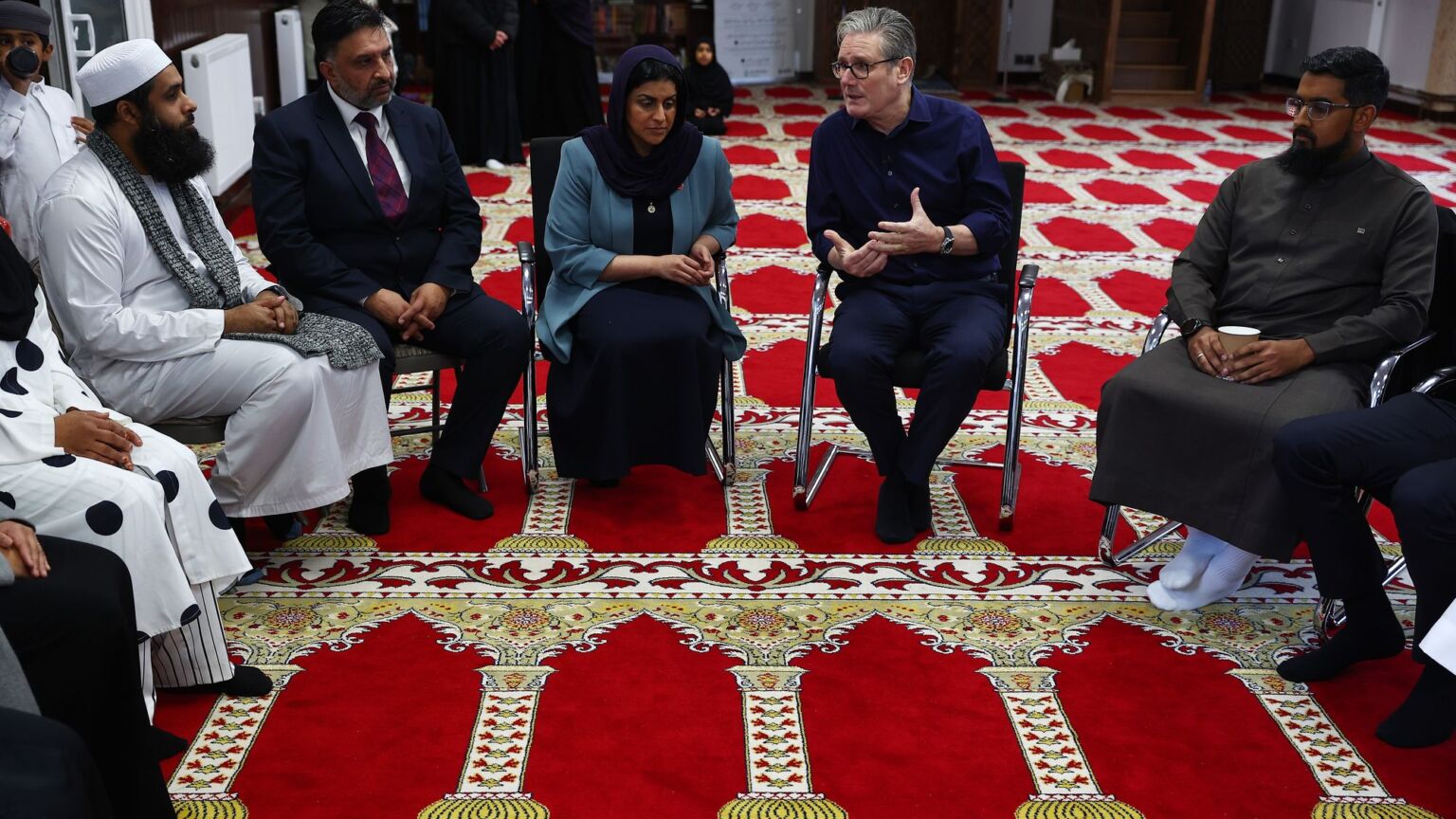
The timing is instructive. Reed’s announcement arrived within 10 days of Labour losing the Gorton and Denton by-election, a seat held since 1935, to the Greens, after Muslim voters deserted Labour over Gaza. It also came days after Starmer praised British Muslims as ‘the face of modern Britain’ at a Ramadan iftar. The cause of this policy was not a review of evidence. It was the count at a leisure centre in Greater Manchester at two o’clock in the morning.
Credit where it is due. The government has abandoned the word ‘Islamophobia’. The old definition, adopted in 2019 by Labour for internal party matters, and by some 50 local councils, defined Islamophobia as ‘a type of racism that targets expressions of Muslimness or perceived Muslimness’. This was always a category error masquerading as moral insight: Islam is not a race and the Equality Act does not recognise Muslims as an ethnic group. Most remarkably, the report accompanying the definition listed as an example of Islamophobia the act of accusing Muslims of exaggerating Islamophobia. The definition was immunised against its own critique. One could not challenge the framework of Islamophobia without being branded Islamophobic.
The replacement definition drops ‘Muslimness’ and ‘racism’. These are genuine improvements on a definition so catastrophically flawed that the government had to disown it last year. However, to celebrate this is to congratulate a man for removing his boot from your throat only to place it on your chest.
Now, examine the new definition, because the language is everything, and Orwell would have spotted the trick at a glance. Its first paragraph condemns criminal acts directed at Muslims: violence, vandalism, harassment. Every behaviour described is already illegal under the Public Order Act, the Equality Act, the Crime and Disorder Act and the Protection from Harassment Act. Reed told the Commons that, ‘You can’t tackle a problem if you can’t describe it’. But these problems are already described, in legislation carrying criminal penalties. If the definition is not redundant, then it is intended to do something the law does not. We are entitled to ask what.
The second paragraph provides the answer. It condemns ‘prejudicial stereotyping’ of Muslims, ‘irrespective of their actual opinions, beliefs or actions as individuals’. Attend to that clause, because it does the heavy lifting. The government has written a definition in which the truth of a claim is explicitly irrelevant to whether stating it constitutes ‘stereotyping’. If polling shows 52 per cent of British Muslims believe homosexuality should be illegal, is citing that figure prejudice or sociology? If Protecting What Matters itself acknowledges the threat of Islamist extremism – accounting for three quarters of the police’s counter-terror workload and 94 per cent of all terror-related deaths in the past 25 years – is observing this a stereotype? The International Holocaust Remembrance Alliance definition of anti-Semitism, for all its flaws, provides eleven illustrative examples. The anti-Muslim hostility definition, in contrast, offers three paragraphs of abstract language and no examples at all. That vagueness is not an oversight. It is the mechanism. It is the chilling effect itself.
Reed assures parliament that there is ‘absolutely no question of blasphemy laws by the back door’. One has heard this before. Every government crackdown on speech is accompanied by the insistence that free speech will be protected. The Online Safety Act said this. The 2019 Islamophobia definition said it, too.
But these assurances simply won’t wash. In 2020, Trevor Phillips, a former chair of the Equality and Human Rights Commission, was suspended from Labour for ‘Islamophobia’ when all he did was cite the disproportionate involvement of Pakistani Muslim men in grooming-gang cases. In Rotherham, Rochdale and Telford, professionals hesitated to investigate child sexual exploitation for fear of the accusation. In 2022, Cineworld pulled The Lady of Heaven – a film about the daughter of Muhammad – from every screen in the country after protests. This has been happening for years, even without a government-endorsed definition, which will now formalise, validate and accelerate a pattern already well established.
Against this, England possesses one legislative safeguard of extraordinary clarity. Section 29J of the Public Order Act (the Waddington Amendment) provides that nothing shall prohibit ‘discussion, criticism or expressions of antipathy, dislike, ridicule, insult or abuse of particular religions or the beliefs or practices of their adherents’. Note the sweep: not merely criticism but ridicule, insult and abuse. The new definition does not repeal Section 29J. It builds a parallel architecture of codes, guidance and tsars in every space where 29J does not apply: universities, workplaces, councils, the NHS. One system protects the right to ridicule religion. The other makes exercising it professionally suicidal.
The most important feature of this debate is who the critics of the government’s definition are. Jonathan Hall KC, the government’s own terrorism-legislation reviewer, warned he was ‘against an Islamophobia definition because it’s directed at a thing, at religion, rather than an anti-Muslim hatred law, which is about protecting people’. Fiyaz Mughal, founder of Tell MAMA – an organisation that records anti-Muslim hate in the UK – warned the process could be exploited by ‘Islamist groups and those affiliated with Muslim Brotherhood front groups’. The National Secular Society called it ‘unnecessary and misguided’.
These are not GB News talking heads. They are liberals, secularists and Muslims who understand something the government will not grasp: that the people most harmed are not comfortable commentators but the vulnerable: ex-Muslims facing death threats for apostasy, Muslim women suffering from honour-based violence, grooming-gang survivors whose testimony was buried because professionals feared the accusation. For these people, the free criticism of Islam is not an intellectual luxury. It is a matter of physical survival.
No religion deserves its own tsar. To assault a Muslim is a crime. To discriminate against a Muslim is unlawful. But to say Islam promotes the subordination of women is not a crime. To mock the proposition that a seventh-century Arabian merchant received the final revelation of the creator of the universe is not a crime. The capacity to give offence is not an unfortunate byproduct of free speech. It is its essential purpose. This is not about protecting Muslims from hatred. It is about protecting Islam from criticism. Those are two completely different things.
England abolished its blasphemy laws in 2008, after a struggle that ran from Milton through Mill through the imprisonment of Charles Bradlaugh to the final repeal. Somewhere in England, a teacher who exercised those hard-won freedoms cannot go home. Protecting What Matters expresses sympathy with him and promises to stand against those who harassed him. Then, with four million pounds and a freshly minted tsar, it builds a machine that seems almost designed to produce the next Batley-style outrage.
Owen Shapell is PhD researcher in social sciences.
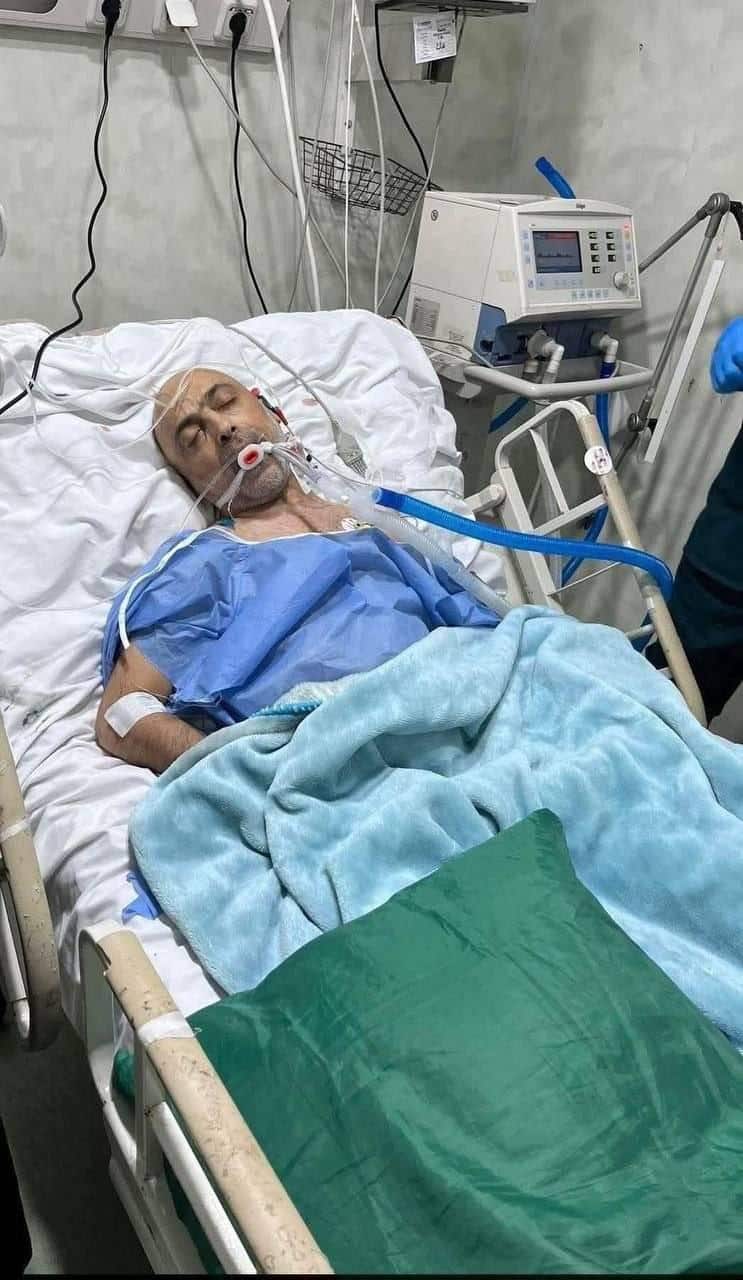
After years of systematic torture and medical neglect in Israeli occupation prisons, former Palestinian political prisoner, Riyad al-Amour, has died.
Riyad al-Amour — 23 years of torture and abuse in Israeli occupation prisons
56-year-old Riyad al-Amour, from the village of Tuqu’ in Bethlehem, was arrested in 2002 and spent 23 years behind bars, before being released and exiled to Egypt as part of the most recent prisoner exchange during the so-called ceasefire agreement in October 2025.
In a statement, on 3 April, the Palestinian Prisoner’s Society & Commission of Detainees’ Affairs said they “hold occupation authorities fully responsible for his death”. Al Amour endured prolonged interrogations and severe torture while in prison, causing him to lose hearing in one of his ears. He also suffered serious medical neglect, and was denied a new pacemaker by the occupation’s prison services for more than a decade.
His health was critical when he was released so he underwent multiple surgeries in the brief six months he spent outside prison before passing away.

The most violent period in the Palestinian prisoner movement has been since October 2023
Despite the harsh conditions he faced and the torture he endured, al Amour devoted years of his detention to serving fellow sick prisoners in the “Ramla Prison Clinic,” where he spent most of his imprisonment.
The last two years has become the most violent in the history of the Palestinian prisoner movement. Physicians for Human Rights-Israel revealed the details of almost 100 Palestinian prisoners killed while in Israeli occupation detention, since 7 October, 2023. All died from medical neglect, malnutrition, assault or torture.
The United Nations Committee against Torture (CAT) claims that the Israeli occupation’s torture and neglect of Palestinian prisoners is a “deliberate state policy of collective punishment“.
His death comes just days after the Israeli occupation’s approval of a law which legalises the execution of Palestinian political prisoners.
Featured image via author

In a bizarre and violent Easter Sunday message, Donald Trump has praised Allah. While there’s nothing wrong with a man praising a god in any language, it does read a little perversely when he’s simultaneously threatening war crimes against the Muslim nation of Iran:
🚨🇮🇷 NEW: President Trump says “praise be to Allah” as he threatens Iran
“Open the fuckin’ Strait you crazy bastards” pic.twitter.com/e8tbQq1zA7
— Politics Global (@PolitlcsGlobal) April 5, 2026
Trump — War crimes
While the above is shorter than a lot of Trump’s recent rants, there’s still a lot to highlight. Firstly, the opener:
Tuesday will be Power Plant Day, and Bridge Day, all wrapped up in one, in Iran.
Trump is threatening to repeat the attacks on power plants and bridges which the US has already subjected Iran too. As attacking civilian infrastructure is a war crime, this means Trump is openly threatening to commit war crimes.
What the US is doing in Iran is barbaric.
Trump is intentionally targeting civilian infrastructure, and boasting about it.
The US military launched a double-tap strike on a bridge with no military activity, massacring Iranian civilians who were picnicking.
This is terrorism. pic.twitter.com/BWGfd8niST
— Ben Norton (@BenjaminNorton) April 3, 2026
In future generations, people will ask why American politicians didn’t move to remove Trump when he was blatantly threatening to violate international law. Hopefully, said politicians will be answering such questions from their prison cells.
Next, Trump said:
There will be nothing like it!!!
By this, he means ‘nothing like it besides the previously committed war crimes I just admitted to‘.
He continued:
Open the Fuckin’ Strait, you crazy bastards, or you’ll be living in Hell
Not sure you get to call people “crazy” when you’re the one who started this futile war in the first place.
The US and Israel have repeatedly attacked Iran despite peace talks continuing. Arguably, Iran’s response has been incredibly rational.
To avoid any risk of the US provoking a conflict every twelve months, they’ve sought to demonstrate how costly hostilities will be. “Crazy” would be for them to engage with Trump and Benjamin Netanyahu as if they were honest actors.
1) Trump is being driven insane by his inability to defeat Iran.
2) This is a threat to commit unspeakable war crimes.
3) If he does this, Iran will target energy and water desalination infrastructure in the Gulf, triggering a global depression. pic.twitter.com/q4igi5Pk9s
— Owen Jones (@owenjonesjourno) April 5, 2026
As we’ve reported, Trump appears to be counting down towards some sort of extreme event:
BREAKING: President Trump announces he will be having a news conference with the US Military at 1 PM ET tomorrow.
This is just 3 hours after his “48 hour warning” to Iran expires.
He also just declared Tuesday as “power plant and bridge day.”
We will be covering it real-time.
— The Kobeissi Letter (@KobeissiLetter) April 5, 2026
Praise be
Trump ends with what’s presumably sarcasm (we can’t say definitively, because he’s clearly not with it):
Praise be to Allah.
If Trump’s hoping to come out of this looking good, he’s going to need to send praise to more than Allah. Because at this point, nothing less than a miracle is going to clean up his mess.
This is a hell of a message for the American President to put out on Easter, anyway — especially considering he’s the candidate of choice for the American evangelicals.
Featured image via White House

As we’ve reported, Reform UK is having a nightmarish local election campaign. Now, these problems are starting to bear out in polling:
🗳️Reform UK supports plummets in Scotland following chaotic start to Holyrood campaign, @NorstatUKPolls finds.
Constituency:
🟡 SNP 34 (-1 vs Feb)
🔴 Lab 19 (+2)
➡️ Ref 15 (-4)
🔵 Con 11 (+1)
🟠 LibDem 10 (+2)
🟢 Green 8 (=)— Dan Sanderson (@DSanderson_85) April 4, 2026
Anti-campaigning
Diving deeper into the polls, the Times’ Dan Sanderson noted:
Despite the SNP vote largely holding up, Reform’s loss of support is “bad news” for the nationalists, says Sir John Curtice.
His seat projections:
🟡 SNP 57 (-7 vs 2021)
🔴 Lab 20 (-2)
➡️ Ref 16 (+16)
🟢 Green 13 (+5)
🔵 Con 12 (-19)
🟠 LibDem 11 (+7)Write up and analysis ⬇️
— Dan Sanderson (@DSanderson_85) April 4, 2026
As he further reported, Reform’s polling is at its lowest level in over a year. This is a bad situation for Reform considering they’re in the runup to elections. With five weeks left, too, things could still get worse.
Sanderson added:
Lord Offord of Garvel, anointed by Farage as Reform UK’s Scottish leader in January, has made a succession of gaffes and faced intense scrutiny for a racist and homophobic joke he told at a rugby club dinner in 2018. He has since apologised for the joke, saying he “accepts accountability”.
We reported on lord Offal of Garble in December 2025, noting it was Boris Johnson who made him a peer. In other words, he’s yet another one of the Tory rejects Reform has accepted in the past 12 months.
In a piece about Reform UK suspending Scottish candidates, Skwawkbox wrote the following for the Canary on 21 March:
Hilariously, Reform’s Scottish head Malcolm Offord just boasted to the BBC’s Radio Scotland about how much time the party had spent vetting candidates and claimed all they had found was instances of candidates saying “something fruity in the past”.
Reform have lost more Scottish candidates since then too:
5 candidates have quit, the Reform UK Scottish launch was a mess, Tory candidate saturation, the manifesto sums don’t add up, the homophobic joke, the recycled dodgy campaign poster…
Malcolm Offord is a failure.#OffordMustGo pic.twitter.com/YmVQpYj98T
— Reform Party UK Exposed 🇬🇧 (@reformexposed) April 3, 2026
Regarding Reform UK’s local election woes, we’ve additionally reported the following:
Reform UK — Nationwide slide
Earlier today, we reported that the Greens had drawn level with Reform in one national poll. Since then, Stats for Lefties have shown that the Greens were actually slightly ahead:
‼️BREAKING | Greens surge into LEAD (1st!!)
🟢 Grn: 21.4% (+2.1)
➡️ Ref: 20.9% (-1.4)
🔵 Con: 20.5% (+0.2)
🔴 Lab: 17.0% (-0.4)
🟠 Lib: 9.2% (-1.9)Poll: @LordAPolls, 26-30 Mar (+/- vs 19-23 Feb) pic.twitter.com/oDVw4cDaFC
— Stats for Lefties 🍉🏳️⚧️ (@LeftieStats) April 5, 2026
As Novara’s Aaron Bastani highlighted, this is historic:
The first time in British history that the Greens have topped a national poll for Westminster.
Despite whatever talking points you’ll hear in legacy media my sense is they are gently nibbling into people who were considering Reform.
With five weeks left until the local elections, the Greens look increasingly well positioned to upset Reform’s predicted upset:
‼️NEW | Projected seat change in local elections:
➡️ Ref +2,260
🟢 Grn +450
🟠 Lib +200
🔵 Con -1,010
🔴 Lab -1,900(Source: Stephen Fisher / @ElectionsEtc) pic.twitter.com/pkPixJ3Ont
— Stats for Lefties 🍉🏳️⚧️ (@LeftieStats) March 30, 2026
Featured image via Pixabay (via Canva)
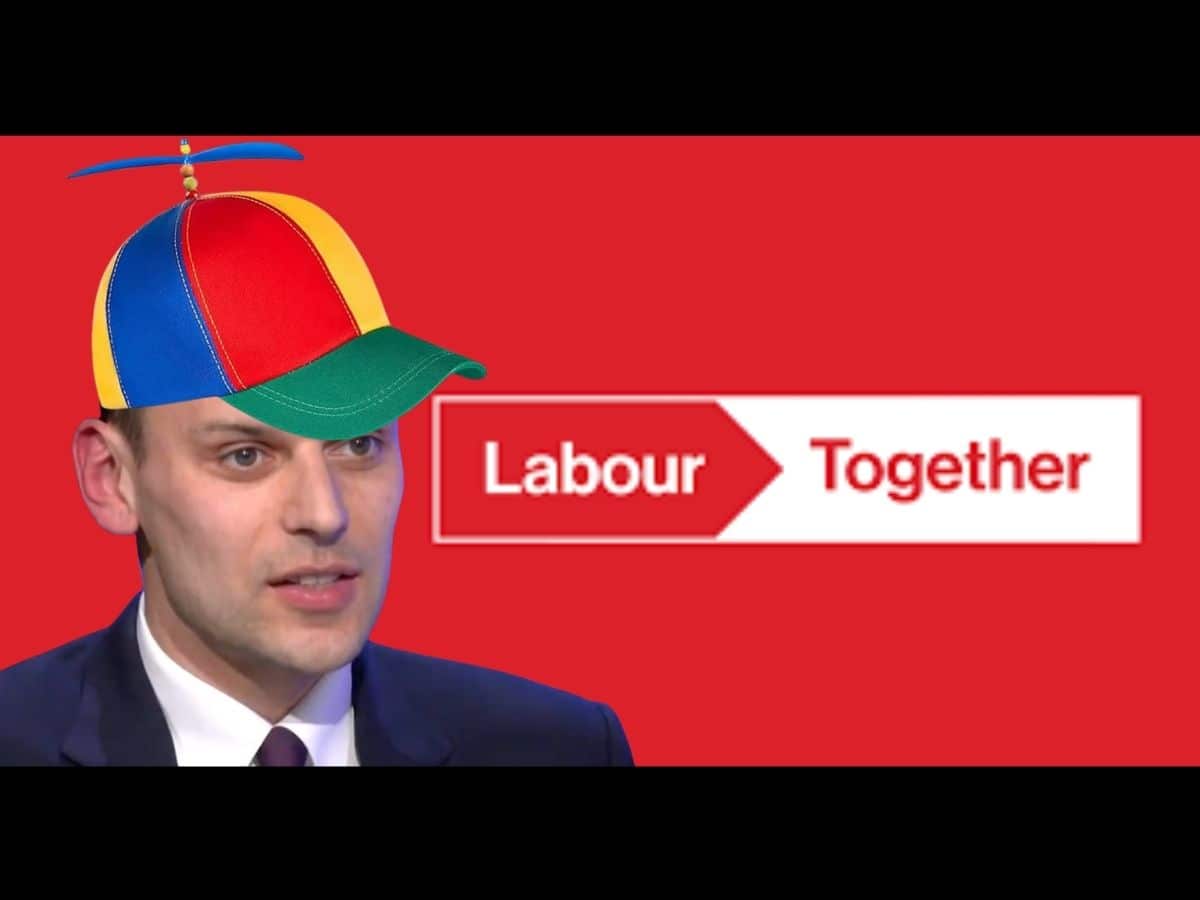
Josh Simons is Labour’s ex-minister who was forced to resign from government. The scandal which led to his downfall revolved around Simons having private investigators look into journalists for the crime of doing journalism.
And while that sounds bad, have you considered that Simons may have been a tender, wee boy of just 30 when he did it?
sorry what? pic.twitter.com/hz1572zb97
— ollie cole (@ProducerOllie) April 5, 2026
Making of a scandal
We were reporting on Simons dubious activities back in September 2025. The following came from investigative journalist Paul Holden who wrote The Fraud – an exposé on Keir Starmer and Labour Together:
Paul Holden said he had been “pretty damn scared” when he found out that Labour Together had “set the hounds on me”. McSweeney is a chief architect of the antisemitism scam against Jeremy Corbyn and attempts to destroy the Canary.
Holden also claims that former Labour Together director Josh Simons, now a Cabinet Office Minister, was at the least aware of the group’s decision to set the investigators onto him, telling the Mail that:
“It was all very worrying. I was told these private detectives were looking into me, my family and my colleagues – all at the request of Labour Together.
“I could only assume they were digging dirt to discredit me or my research. The investigators were trying to find out how I was getting all my information – not challenge its accuracy.”
The Labour Together spying story wouldn’t become a national scandal until it was revealed they also spied on mainstream journalists – namely those at the Times.
Reporting on Simons resignation, Skwawkbox wrote the following for the Canary on 28 February:
From 2022 to 2024, Simons ran the sabotage outfit, Labour Togther. He took over after disgraced Morgan McSweeney moved on to become Keir Starmer’s (now former) chief of staff. However, Simons has not resigned his parliamentary seat.
All too typically, the resignation letter is full of self-exoneration and excuses. Instead of taking responsibility, the letter leans on Simons’s supposed vindication by Sir Laurie Magnus. Magnus is the supposedly ‘independent’ adviser on ministerial standards. This is farcical, when Simons’s own leaked WhatsApp messages revealed that Starmer had told Magnus to conduct only a fast (i.e cursory) investigation.
With a complete failure of self-awareness, Simons frames his departure in terms of the public’s justified low trust in politicians. And, like any good Israel apologist, he had to slip in a spurious reference to so-called ‘Labour antisemitism’ to smear the diligent, professional, independent authors, and journalists who exposed Labour Together.
It was far from the only time Simons blamed his mistakes on alleged antisemitism:
Again, this is not the first time Simons has lied about antisemitism being the reason he’s behaved badly. https://t.co/Zwbtb5WXEV pic.twitter.com/0srZhnLAno
— Rivkah Brown (@rivkahbrown) March 30, 2026
Obviously receiving diminishing returns from the antisemitism card, Simons is now blaming his mistakes on his age.
Disgraced Labour minister — A boy of just 30
The post at the top about Simons being a mere 30 years old is from Times Radio producer Ollie Cole. Seemingly, the text hasn’t been published online yet, because a verbatim google search produces no results.
It reads in full:
Former labour minister Josh Simons has told Times Radio that “I was 30 years old, I didn’t read the contract very carefully,” when asked about commissioning a report into the background of two Sunday Times journalists while working for Labour Together.
Ah yes, the famous stereotype about 30-year-olds being unable to read somewhat complicated documents.
A year later – when Simons was 31 – he would be in government and deciding on legislation. Presumably, at some point between 30 and 31, the text-understanding cortex of his brain developed, and he was able to read important documents as needed.
It really is farcical, isn’t it?
Featured image via Amazon
!function(n){if(!window.cnx){window.cnx={},window.cnx.cmd=[];var t=n.createElement(‘iframe’);t.display=’none’,t.onload=function(){var n=t.contentWindow.document,c=n.createElement(‘script’);c.src=”//cd.connatix.com/connatix.player.js”,c.setAttribute(‘async’,’1′),c.setAttribute(‘type’,’text/javascript’),n.body.appendChild(c)},n.head.appendChild(t)}}(document);(new Image()).src=”https://capi.connatix.com/tr/si?token=19654b65-409c-4b38-90db-80cbdea02cf4″;cnx.cmd.push(function(){cnx({“playerId”:”19654b65-409c-4b38-90db-80cbdea02cf4″,”mediaId”:”7afb52c2-e638-43a3-a8c1-62857594765f”}).render(“69ceea80e4b05537a7f0899f”);});
!function(n){if(!window.cnx){window.cnx={},window.cnx.cmd=[];var t=n.createElement(‘iframe’);t.display=’none’,t.onload=function(){var n=t.contentWindow.document,c=n.createElement(‘script’);c.src=”//cd.connatix.com/connatix.player.js”,c.setAttribute(‘async’,’1′),c.setAttribute(‘type’,’text/javascript’),n.body.appendChild(c)},n.head.appendChild(t)}}(document);(new Image()).src=”https://capi.connatix.com/tr/si?token=19654b65-409c-4b38-90db-80cbdea02cf4″;cnx.cmd.push(function(){cnx({“playerId”:”19654b65-409c-4b38-90db-80cbdea02cf4″,”mediaId”:”0a9a01ee-ba07-4479-b1ba-4fddee74cc87″}).render(“69cf06aee4b05537a7f09179”);});
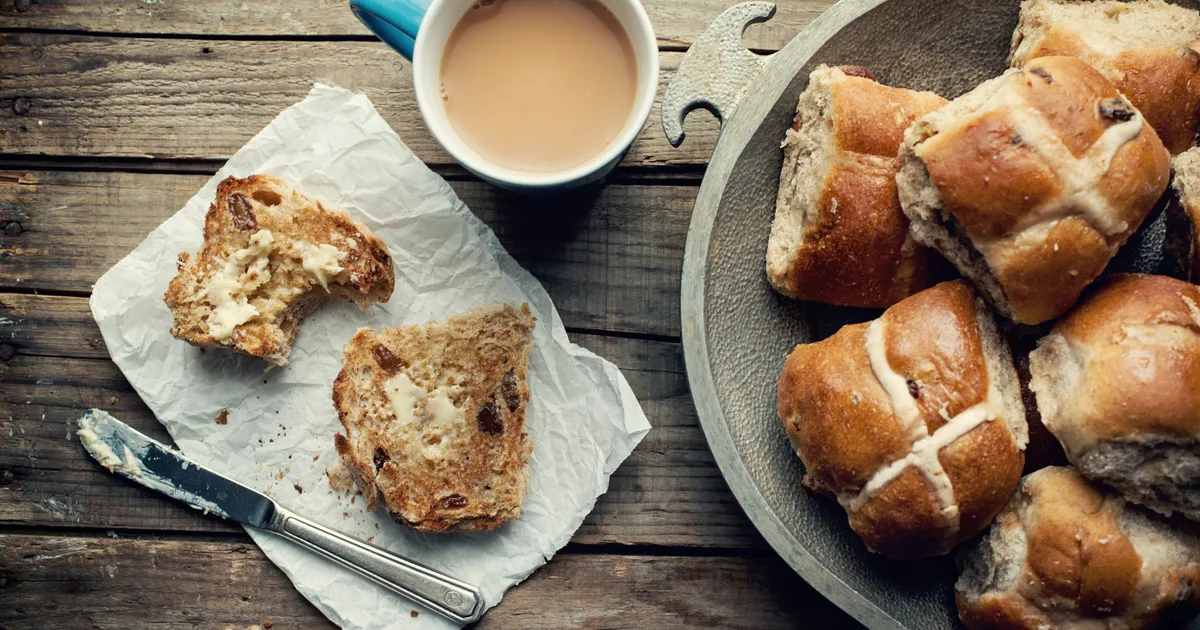
An Easter staple, hot cross buns are believed to date back to 1361.
Some say their precursor, called Alban buns, was invented by a monk called Brother Thomas Rocliffe at St Alban’s Abbey. He is said to have given them to the poor on Good Friday.
They’re slightly different to the ones we know and love today – the cross on top was cut into the bun, rather than placed on top with a flour mixture – but they still contained spices, fruit, and yeasted dough.
Given their possible religious past, then, perhaps it’s not surprising that some think hot cross buns allude to more of the events of Easter than just the obvious cross.
What’s the meaning behind hot cross buns?
The cross on top of the buns may have been placed on buns like Brother Roclliffe’s to allude to Jesus’ crucifix (Good Friday being “the day of the cross”).
But according to historian of food Dr Eleanor Barnett, hot cross buns weren’t really eaten as we know them now until the 18th century.
She also says not everyone agrees that they came from Brother Rocliffe: some think the origins date back to Ancient Greek crossed bread, while others think it has to do with Passover.
Nonetheless, Dr Barnett writes, the traditional ingredients are still “laden” with religious symbolism: “The bread is a nod to the Communion wafer, the spices represent the spices Christ was wrapped in in his tomb, and the cross is of course a reference to his crucifixion”.
Whatever their origin, they’ve proven somewhat divisive in the past. For instance, Queen Elizabeth I tried to tightly control the sale of buns because they looked a little too “Catholic” and “superstitious” for her taste.
“Perhaps they were associated with the blessed and crossed buns distributed by some Catholic churches on Good Friday, which were made from the same dough as the holy Eucharistic bread,” English Heritage shared.
Hot cross buns used to be considered lucky
Later, some believed that crumbling hot cross buns into water could cure them from illness. Victorian people would swap hot cross buns on Good Friday, saying, “Half for you and half for me, between us two good luck shall be”.
Others thought it could calm their stomachs, protect them from evil, keep pests away from grains, and never go mouldy.
Writing for The Conversation, historian Darius von Guttner Sporzynski said: “Ancient Egyptians, Greeks, Poles, Romans, Saxons, medieval monks and 18th-century street sellers all had their versions of spiced, crossed bread. Each group gave the buns its own meaning, from honouring gods to celebrating Christ’s crucifixion and resurrection.”
After The Drama, 4 More Zendaya Shows And Films Coming Out In 2026
The Nightmare Draft Scenarios for the Vikings in 2026

Portal Space’s ‘Mini-Nova’ payload goes into orbit to test technologies for maneuverable space vehicles


-

 NewsBeat3 days ago
Steven Gerrard disagrees with Gary Neville over ‘shock’ Chelsea and Arsenal claim | Football
-

 Business3 days ago
No Jackpot Winner and $194 Million Prize Rolls Over
-

 Fashion2 days ago
Weekend Open Thread: Spanx – Corporette.com
-
Entertainment7 days ago
Fans slam 'heartbreaking' Barbie Dream Fest convention debacle with 'cardboard cutout' experience
-

 Crypto World4 days ago
Gold Price Prediction: Worst Month in 17 Years fo Save Haven Rock
-

 Business6 hours ago
Three Gulf funds agree to back Paramount’s $81 billion takeover of Warner, WSJ reports
-
Crypto World6 days ago
Dems press CFTC, ethics board on prediction-market insider trades
-

 Sports1 day ago
India men’s 4x400m and mixed 4x100m relay teams register big progress | Other Sports News
-

 Business4 days ago
Login and Checkout Issues Spark Merchant Frustration
-

 Tech6 days ago
EE TV is using AI to help you find something to watch
-

 Tech7 days ago
Apple will hide your email address from apps and websites, but not cops
-

 Sports6 days ago
Tallest college basketball player ever, standing at 7-foot-9, entering transfer portal
-

 Politics6 days ago
Should Trump Be Scared Strait?
-

 Tech6 days ago
Flipsnack and the shift toward motion-first business content with living visuals
-

 Fashion7 days ago
The Best Spring Trends of 2026
-
Tech6 days ago
Daily Deal: StackSkills Premium Annual Pass
-

 Crypto World6 days ago
U.S. rule change may open trillions in 401(k) funds to crypto
-

 Sports6 days ago
Women’s hockey camp eyes fitness boost, tactics ahead of WC 2026 campaign | Other Sports News
-

 Tech6 days ago
How to back up your iPhone & iPad to your Mac before something goes wrong
-

 Politics7 days ago
BBC slammed for ignoring author of The Fraud
You must be logged in to post a comment Login