Threat actors are employing a new variation of the ClickFix social engineering technique called InstallFix to convince users into running malicious commands under the pretext of installing legitimate command-line interface (CLI) tools.
The new trick exploits the common practice among developers these days of downloading and executing scripts through ‘curl-to-bash’ commands from online sources without closely inspecting the assets first.
Researchers at Push Security, a browser threat detection and response company, found that attackers use the new InstallFix technique with cloned pages for popular CLI tools that serve malicious install commands.
Since the current security model “boils down to ‘trust the domain’,” and more non-technical users are now working with tools previously reserved for developers, InstallFix may become a larger threat, the researchers say.
Advertisement
In a report today, Push Security highlights a cloned installation page for Claude Code, Anthropic’s CLI coding assistant, that features the same layout, branding, and documentation sidebar as the legitimate source.
The difference is in the installation instructions for macOS and Windows (PowerShell and Command Prompt), which deliver malware from an attacker-controlled endpoint.
Legitimate (top) and malicious page (bottom) Source: Push Security
The researchers say that apart from the installation instructions, all links on the fake page redirect to the legitimate Anthropic site.
“So a victim that lands on the page and follows the fake instructions could continue normally without realizing anything had gone wrong,” Push Security notes in the report.
The attackers promote these pages through malvertising campaigns on Google Ads, causing malicious ads to appear in search results for queries such as “Claude Code install” and “Claude Code CLI.”
Advertisement
BleepingComputer could confirm that the malicious websites are still being promoted through Google-sponsored search results. When looking for the query “install claude code,” the first result was a Squarespace URL (claude-code-cmd.squarespace[.]com) pointing to a perfect clone of the official Claude Code documentation.
Sponsored Google search pushing fake Claude install sites source: BleepingComputer
Amatera infections
Based on Push Security’s analysis, the payload delivered through these InstallFix attacks is the Amatera Stealer, a piece of malware designed to steal sensitive data (cryptocurrency wallets, credentials) from compromised systems.
The malicious InstallFix commands for macOS contain base64-encoded instructions for downloading and executing a binary from a domain controlled by the attacker. In one case, BleepingComputer found that the threat actor used the domain wriconsult[.]com, which is currently down.
For Windows users, the malicious command uses the legitimate utility ‘mshta.exe’ to retrieve the malware and triggers additional processes like ‘conhost.exe’ to support the execution of the final payload, Amatera information stealer.
Cloned Claude install guide with malicious commands source: BleepingComputer.com
Amatera is a fairly new malware family, believed to be based on the ACR Stealer, sold as a subscription service (MaaS) to cybercriminals.
The malware was recently observed distributed in separate ClickFix attacks that abused Windows App-V scripts for payload delivery. It can steal passwords, cookies, and session tokens stored in web browsers and collect system information while evading detection by security tools.
Advertisement
Push Security reports that the attacks are particularly evasive, also because the malicious sites are hosted on legitimate platforms such as Cloudflare Pages, Squarespace, and Tencent EdgeOne.
The researchers also published a video showing how the InstallFix attack works, from the search query to copying a malicious command.
In a campaign last week, threat actors used the InstallFix technique with fake OpenClaw installers hosted in GitHub repositories that were promoted by Bing’s AI-enhanced search results.
Advertisement
Users looking for Claude Code must ensure they get installation instructions from official websites, block or skip all promoted Google Search results, and bookmark software download portals for tools they need to re-download frequently.
The researchers provide indicators of compromise that include the domains for serving the cloned guides, for hosting the malicious payloads, and the InstallFix commands.
Malware is getting smarter. The Red Report 2026 reveals how new threats use math to detect sandboxes and hide in plain sight.
Download our analysis of 1.1 million malicious samples to uncover the top 10 techniques and see if your security stack is blinded.
Apple’s M5 MacBook Air and 14-inch MacBook Pro share the same core chip, but there are big differences in the display, cooling, and more. Here’s how the specs compare.
MacBook Air M5
Both notebooks use the standard M5 chip with a 10-core CPU, integrated graphics, and Apple’s unified memory architecture. The MacBook Air uses a fanless chassis with passive cooling, while the MacBook Pro uses active cooling to sustain higher performance during longer workloads. For everyday tasks like web browsing, document editing, and light creative work, the two machines are very similar in short bursts. Heavier tasks such as compiling code, exporting video, or rendering graphics are where MacBook Pro’s thermal design begins to matter. Continue Reading on AppleInsider | Discuss on our Forums
A $1,000 Xbox would have sounded downright absurd not long ago, but Microsoft’s next-gen system, reportedly called Project Helix, may be heading into much pricier territory. According to analysis highlighted by Moore’s Law Is Dead, early estimates place the console somewhere between $999 and $1,200, largely due to the powerful hardware it’s rumored to pack. At first glance, that price feels wild. Then again, if the performance rumors hold up, the value equation might start looking very different.
If the hardware rumors hold up, this could be a beast
Speaking of performance, reports suggest Project Helix could deliver six times the rasterization performance of the Xbox Series X and up to twenty times the ray tracing performance, thanks to a next-generation AMD chip combining Zen 6 CPU cores with RDNA 5 graphics. If those numbers hold up, and that’s still a big “if”, Microsoft would essentially be shipping one of the most powerful consoles ever built. That kind of leap could also help the system push beyond the traditional console limits of 4K at 60 FPS, targeting 4K at 120 FPS or higher in many games.
Project HelixMicrosoft
That said, Project Helix isn’t just about more power; it’s about redefining what an Xbox could be. Microsoft has hinted that the system will support both Xbox and PC games, effectively blending the console and Windows ecosystems into one platform. That means players could access games from multiple storefronts while still enjoying the plug-and-play simplicity of a living-room console. If it truly delivers high-end gaming performance for around $1,000, Project Helix could end up feeling less like an expensive console and more like a surprisingly good value PC alternative.
Anthony / Unsplash
Another thing worth remembering is that console pricing has always been tied to the cost of comparable gaming PCs. Historically, consoles tend to punch well above their weight in terms of performance per dollar. When the $399 Xbox 360 launched in 2005, building a gaming PC with comparable performance often meant spending around $1,000 or more. The pattern repeated in 2020, where matching the $499 Xbox Series X typically required well over $1,200 in PC hardware. So if Project Helix ends up around $1,000, it wouldn’t exactly be breaking tradition. If anything, it might just reflect how expensive high-end gaming hardware has become.
Habib Dadkhah / Unsplash
Of course, a $1,000 console only makes sense if Microsoft absolutely nails the experience. Raw performance alone won’t cut it, and Xbox also needs to deliver stronger first-party games and rebuild some of the cultural momentum the brand has lost in recent years. Right now, Project Helix mostly lives in the land of leaks, speculation, and very ambitious promises. But if Microsoft actually pulls it off, offering a powerful, flexible gaming machine that sits comfortably between a console and a gaming PC, then suddenly that $1,000 price tag might start looking a lot less outrageous.
Arc’teryx’s Delta Jacket is an ultralight fleece made of Octa Fleece, one of the newer, high-tech fleeces to hit the market in the past couple of years. The name comes from the octopus-like weaving which creates air gaps, which help trap warmth while also allowing moisture to escape. It’s very popular with cottage industry ultralight brands, but Arc’teryx adopted it for the 2025 revamp of the company’s popular Delta fleece jacket.
I hesitated to put this jacket in this guide because, while I like it as an ultralight mid layer for summer trips, there is an older, heavier version of the Delta jacket. Judging by the angry reviews on Arc’teryx’s website, it was very popular. This jacket is something else entirely, but disgruntled fans of the older version aside, this is a great mid layer for summer trips, especially when paired with a sun shirt hoodie. At 8.5 oz for this, and 6 oz for a sun hoodie like the one from Kuiu below, you have a combo that allows multiple layering options and still weighs less than many more popular grid fleece options. My only gripe is that fashion was, um, not taken into consideration in the design of this jacket. One user review on the Arc’teryx site likens it to Mr. Roger’s sweater, which is about right. But hey, it’s light, it’s functional—who cares about fashion in the backcountry?
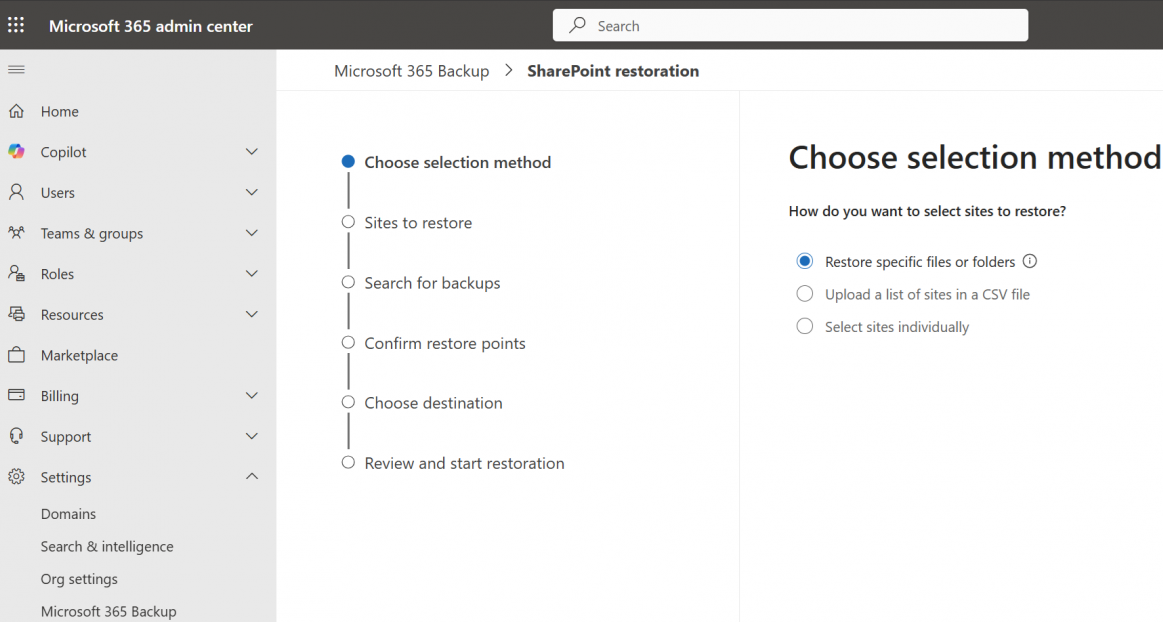
Microsoft will soon begin rolling out a significant upgrade to Microsoft 365 Backup to speed up recovery by allowing administrators to restore individual files and folders.
Microsoft 365 Backup is a SharePoint, OneDrive, and Exchange backup and restore service designed to protect against data loss from ransomware, accidental deletion, or data corruption.
Until now, Microsoft 365 Backup worked at the site or drive level, with a single corrupted or deleted file triggering a time-consuming full restore. With the new granular restore capabilities, admins can browse and search existing restore points for protected SharePoint sites and OneDrive accounts, then select only the specific files or folders they need to recover.
The feature is available exclusively to tenants with Microsoft 365 Backup already enabled and can only be used by admins assigned the SharePoint Backup Administrator role. End users are not directly affected by this change, as restore operations will only be initiated by admins and will be invisible to the user experience.
Advertisement
“Microsoft 365 Backup will enable admins to browse, search, and restore individual files or folders from SharePoint and OneDrive restore points starting early 2026,” Microsoft said in a Thursday message center update.
“This granular restore reduces recovery time, requires the SharePoint Backup Administrator role, and respects existing backup policies without impacting users.”
Microsoft 365 Backup granular restore (Microsoft)
The feature has entered public preview in early March 2026 and is expected to reach general availability worldwide between late April and early May 2026.
Before the rollout reaches their tenants, Microsoft advises customers to review Microsoft 365 Backup coverage for SharePoint and OneDrive, ensure backup administrators are familiar with the granular restore workflow, and update internal recovery runbooks to account for file- and folder-level restore scenarios.
“This feature introduces a new method for admins to access existing Microsoft 365 Backup restore points at a more granular level (file or folder), without changing where or how backup data is stored,” Microsoft added. “Admins gain finer control to restore specific files or folders containing personal data when responding to recovery, correction, or remediation scenarios.”
Advertisement
Last month, Microsoft also expanded Windows Backup for Organizations, an enterprise-grade backup tool that helps simplify backups, to allow enterprise users to restore personal settings and Microsoft Store apps from a previous Windows 11 device.
Malware is getting smarter. The Red Report 2026 reveals how new threats use math to detect sandboxes and hide in plain sight.
Download our analysis of 1.1 million malicious samples to uncover the top 10 techniques and see if your security stack is blinded.
On January 5, a seemingly regular afternoon in Glendale, Arizona, became extremely stressful for the local cops. A Flock Safety camera at a local car wash saw a stolen GMC Sierra pickup truck traveling by and alerted the police, who were on the spot. That single alert prompted them to rush over to find the thief, John Graff, who was cleaning the truck’s interior as if he owned the place.
Flock Safety has installed a network of fixed cameras in areas such as busy intersections, company driveways, and residential streets. Each one is constantly scanning passing vehicles, and their unique software can read license plates as soon as a car passes by, cross-checking them against a list of stolen cars, people wanted by the police, and even those involved with crimes. Some of these cameras can also identify additional information, such as a vehicle’s color, make, and model, or a partial image if a plate is absent or fully covered up. It all goes straight into the police systems in real time, so any matches are reported to the officers in seconds. Departments connect these streams to their live crime centers, which are unique rooms where experts sit and view live feeds from hundreds or thousands of cameras, both public and private.
SONY STARVIS 2 SENSOR/SUPER NIGHT VISION – Equipped with a Sony IMX675 STARVIS 2 Image Sensor for the front camera, this dash cam delivers…
ULTRA FAST 5G WIFI/ UP TO 20MB/s DOWNLOAD SPEED – With its built-in dual-band 5GHz and 2.4GHz WiFi, you can use the ROVE dash cam app to view and…
Glendale’s Real Time Crime Center monitors more than 1,700 cameras, including Flock units. When the stolen truck triggered the warning, the analysts at the center were able to trace it down and direct the police to the car wash where the trouble was. Within minutes, three police cruisers arrived quietly, and bodycam footage captured the moment when the policemen approached Graff with pistols drawn and urged him to step away from the truck. He pretended not to hear them, returned to the vehicle, and took off at high speed.
Advertisement
The truck ended up colliding with one of the cruisers, nearly trapping an officer between the two vehicles. Then he slammed another automobile before ditching his truck. The city’s cameras tracked him as he turned left into oncoming traffic, causing other vehicles to swerve out of the way to prevent a collision. He tore down the road, leaving a trail of destruction in his wake, eventually crashing through the gates of a nearby church. Fortunately, he did not hit anyone on the playground or inside the truck, and he escaped on foot.
The cops kept their cool throughout the incident thanks to the live crime center, which was tracking the truck via various streams. Graff went missing for a while, but the original alert provided the police with a promising lead, and they were able to locate him a week later, on January 12th, at a domestic location. One of the officers approached him, commanded him to turn around, and arrested him without incident.
Graff is now facing charges of aggravated assault, theft, endangerment, and criminal damage. Later, he told detectives that he was only a little worried from drugs and had lost his temper, but he never intended to harm anyone. Police applauded the policemen for remaining calm in the face of what could have been a very dangerous situation. [Source]
Also, as part of a wider sale on its streaming devices, both the Fire TV Stick 4K Plus and Fire TV Stick 4K Max are also reduced.
The biggest discount, though, is 50% off the latest Fire TV Stick 4K Select. It gets even cheaper if you have a used item to trade in. Just a few examples include an old Fire TV Stick, Roku, or other Amazon device like an Echo Dot.
For its lowest price yet, the 4K Select Stick is worth getting for anyone who just needs a basic streaming stick with 4K.
Advertisement
Fire TV Stick sale at Amazon
Is the Fire TV Stick 4K Select worth it?
The Amazon Fire TV Stick 4K Select just keeps getting cheaper. As Amazon’s most budget-friendly streaming stick, it already offered plenty with 4K streaming, HDR10+, Dolby-encoded audio (HDMI pass-through), and compatibility with Amazon Luna and Xbox Game Pass cloud gaming for under $40. Now for $19.99, this is its lowest price yet and is worth getting for your basic 4K streaming stick needs.
Advertisement
While we haven’t reviewed the Fire TV Stick 4K Select, we’ve regularly rated Amazon Fire TV Sticks four out of five stars or higher. The value for money is unbeatable for budget-conscious customers already familiar with the Amazon ecosystem, and it still offers 4K UHD and HDR10+ support. It also supports cloud gaming with Xbox Game Pass.
There aren’t many differences between the Fire TV Stick 4K Select and Fire TV Stick 4K Plus (formerly the standard Amazon Fire TV Stick 4K). That said, if you want Dolby Vision and Dolby Atmos, then I’d advise paying the extra $10 to buy the 4K Plus for $29.99 (was $49.99).
HUAWEI has returned this year with one of its greatest performance-centric smartwatch series; HUAWEI Watch GT Runner 2. Seamlessly running with both Android and iOS and engineered especially for fitness enthusiasts, marathoners, and runners who have looked for rich tracking metrics with longer battery life, all within a lightweight design. Simply put, it’s the star of 2026 smartwatches.
Regular smartwatches already do the job of tracking activities, but this one really blends years-long expertise of HUAWEI in their wearables into a single device that might be the rival to the best GPS smartwatches on the market right now.
Differences are clear as the sky as soon as you move ahead from casual jogging, because HUAWEI Watch GT Runner 2 understands performance rather than just measuring steps, GPS routes, distance and heart rates.
The standard smartwatches log the data for calories burned while calculating the pace, which can actually be sufficient for beginners, but pro runners and fitness enthusiasts need a notch higher.
Advertisement
That’s where HUAWEI Watch GT Runner 2 comes in, as marathoners need structured pace calculation, insights for training intelligently with metrics that accurately show how their body is responding, rather than only displaying the steps covered.
Bridging the Basic and Pro Training
HUAWEI has crafted this model to bring the “ultra-performance” feel for daily use and long workout periods, extremely lightweight with the aerospace-grade titanium alloy built that presents one of its core attributes.
It also consists slim profile of 43.5 × 43.5 × 10.7 mm, striking a perfect balance of wearability with screen visibility, a feature that is critical for athletes.
Comparing with mainstream smartwatches, running is taken to be a regular preset where distance is covered and calculated, duration is recorded, and heart rate is reviewed, but the Watch GT Runner 2 doesn’t just record, it interprets training with deeper analysis.
Advertisement
It covers the complex questions for runners, such as whether they are building endurance gradually or overtraining.
Elite Metrics made for Peak Performance
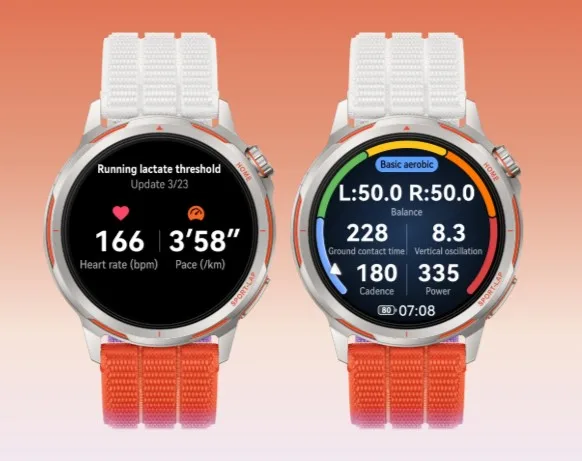
HUAWEI has created the GT Runner 2 to dive deeper into physiological analysis, where many smartwatches limit their potential to GPS and heart rate. This includes attributes like Running Ability Index, threshold estimation, as well as running power, which tracks every stride and the runner’s endurance capacity.
HUAWEI
Precisely made for high performance, the training load analysis calculates stress accumulated by the body over time while putting forward recommendations for recovery with the required duration of rest before the next workout.
Such data can help runners in estimating the intensity of their workout, avoiding injuries and maintaining consistency. So, this watch, instead of just merely telling you how far you have run, will explain how your body has responded to the training.
For example, rise in running power but a stagnated pace can signify a fall in efficiency, then an increased time of recovery can point to fatigue building up in the body. This testified data interpretation by Watch GT Runner 2 shows its uniqueness with the performance coaching ability.
Advertisement
Smash Personal Records with Intelligent Marathon Mode
Created with the collaboration of DSM-Firmenich Running Team as well as the elite runner’s expertise, the Intelligent Marathon Mode is the device’s heart. It is a core feature developed to assist long-distance training runners, helping the digital race strategist right at your wrist rather than sitting just as a passive tracker.
Depending on your race, level of endurance and performance, this smartwatch will create a personalised training plan.
It can also deliver real-timepace charts while comparing the current pace according to the race target, showing if the runner is behind or ahead of their miles plan.
HUAWEI
Moreover, it can display the estimated finish time and show the gaps between the current progress and the set goal.
Built-in digital pacer can simulate race pacing, which helps the runner in distributing their efforts as per the covered distance. As an error in pacing can undo a runner’s months of training, this real-time pacer system can guide them through with calculation and control productivity.
Advertisement
GPS Tracking with 3D Floating Antenna and GNSS
HUAWEI has not failed on enhancing the GPS aspect with a tracking system in the Watch GT Runner 2, like the 3D Floating Antenna on the side that enables 20% more precise tracking routes that come in handy throughout urban areas, tunnels or signal-challenging environments.
Also, the Dual-band GNSS (L1+L5) system is built in as it supports different satellite systems such as GLONASS, NavIC, BeiDou, QZSS and Galileo that can ensure a continuous pace positioning.
A strong GPS system like this, importantly show that accuracy is a must for runners in calculating the pace by seconds per kilometre. Improved route accuracy with stable satellite connectivity with this watch can assure the runners about their pace metrics and trust the consistency of the data during challenging conditions.
Intelligent Health Tracking
To be fair, gains come during recovery, not in active exertion; and it is something the Watch GT Runner 2 knows very well. Here’s why a wellness monitor has been put together in it.
Advertisement
Sleep quality tracking, with sleep-breathing awareness, can assess the quality of sleep and how it really affects performance, shaping runners’ training strategies.
ECG tracking, Pulse wave arrhythmia analysis, and Heart Rate Variability (HRV) tracking show nervous system balance alongside recovery period, as lower HRV levels indicate potential stress or fatigue.
HUAWEI
Stress Management adds to more insight, pressure from travel, work or lifestyle can affect recovery. Recognising stress levels can help in understanding the fluctuations and the recovery points to work on.
SpO₂ monitoring can support the runners on elevated terrains, reading the changes in oxygen saturation and heart rate, readily influencing endurance and pacing.
Smartwatch for more than Tracks
HUAWEI Watch GT Runner 2, at its core, is created for pro athletes; despite its high-level performance, it is very much capable of seamless everyday use. Perfectly supporting NFC payments (wherever available), QR code scanning, Bluetooth call and music playback serve as an added convenience.
Advertisement
Additionally, this watch has over 100 sports modes, can effortlessly hold up to 14 days battery life when lightly used, 32 hours of constant GPS tracking and has 5 ATM-rated water resistance.
It can easily shift from prepping for a marathon to office use or blend with social settings without coming off as a niche tool.
What’s in it for Runners
The introduction of the Watch GT Runner 2 by HUAWEI solves one of the core disconnects within the wearables market. For long, lifestyle smartwatches have focused on convenience, and, on the contrary, sports-dedicated smartwatches have prioritized performance over anything else, with only a few brands blending both.
Watch GT Runner 2 combines both, standing at a rare intersection while solving the issue, especially for marathoners needing to choose which can be a better smart companion, while it remains a full-fledged smartwatch at its core for regular users.
Advertisement
Digital Trends partners with external contributors. All contributor content is reviewed by the Digital Trends editorial staff.
A recently-added feature in Grammarly purports to improve users’ writing with help from the world’s great writers and thinkers — and some tech journalists, too.
Launched in August 2025 as part of a broader set of AI-powered features, Expert Review appears in the sidebar of Grammarly’s main writing assistant, allowing users to bring up revision suggestions “from the perspective” of subject matter experts.
Wired noted that this Grammarly frames this feedback as if it was coming from well-known authors, whether they’re living or dead. In some cases, according to The Verge, it can even appear to come from tech journalists at The Verge, Wired, Bloomberg, The New York Times, and other publications.
Of course, I couldn’t help but wonder: What about TechCrunch? I copy-pasted an early draft of this post into Grammarly in the hopes that that I might see some tips from my TC colleagues, but I was instead told to add ethical context like Casey Newton, “leverage the anecdote for reader alignment” like Kara Swisher, and “pose the bigger accountability question” like Timnit Gebru.
Advertisement
Which was all rather disappointing: Yes, the feature seems ill-conceived, but if all those other pubs are going to get mentioned, then what are we doing wrong?
Anyway, to state the obvious, none of these figures appear to be involved in Expert Reviews or to have given Grammarly permission to use their names. Alex Gay, vice president of product and corporate marketing at Grammarly’s parent company Superhuman, told The Verge that these experts are mentioned “because their published works are publicly available and widely cited.”
And in its user guide to the feature, Grammarly says, “References to experts in Expert Review are for informational purposes only and do not indicate any affiliation with Grammarly or endorsement by those individuals or entities.”
Techcrunch event
Advertisement
San Francisco, CA | October 13-15, 2026
Which is reasonably clear, I guess. But it raises the question: In what sense is Grammarly actually providing an “expert review”? Perhaps none at all, as historian C.E. Aubin told Wired: “These are not expert reviews, because there are no ‘experts’ involved in producing them.”
ICE has been telling itself all it needs to do is write its own paperwork and it can do whatever it wants. Memos — passed around secretively and publicly acknowledged by no one but whistleblowers — told ICE agents they don’t need judicial warrants to arrest people or enter people’s homes.
All they need — according to acting director Todd Lyons, who issued the memos — is paperwork they could create and authorize without any need to seek the approval of anyone else. ICE calls them warrants but they’re just self-issued paperwork in which the officer says a person needs to be arrested and then signs it. That’s it. The review process begins and ends at the same desk. If the agent swears it to be true, he’s only swearing it to himself, which means every finger can be crossed and every “fact” can be fiction.
Courts aren’t having it. ICE’s internal memos may claim there’s no need for the Constitution to come between them and their mass deportation efforts, but that doesn’t mean the Constitution agrees to be sidelined. The courts are stepping in with increasing frequency to protect constitutional rights. A lot of activity in recent months has focused on the due process rights being denied to detainees.
More recent activity is focusing on the Fourth Amendment which, if violated, naturally lends itself to other rights violations. Via Kyle Cheney of Politico (who has been tracking these cases since Trump’s most recent election) comes another case where a federal judge refuses to play along with ICE’s unconstitutional game of charades.
Advertisement
The opening paragraph of this opinion [PDF] lays out the facts. And they are ugly.
ICE officers are casting dragnets over Oregon towns they believe to be home to agricultural workers, calling them “target rich.” Landing in those communities, officers surveil apartment complexes in the early morning hours, scan license plates for details about the vehicles’ owners, and wait for them to get into their vehicles. Officers then stop, arrest, detain and transport people out of the District of Oregon to the Northwest ICE Processing Center (“NWIPC”), 144 miles away in Tacoma, Washington, before ultimately deporting them. Sworn testimony and substantial evidence before this Court show that ICE officers ask few questions and allow little time before shattering windows, handcuffing people, and detaining them at an ICE facility in another state.
There’s no “worst of the worst” going on here. These are the actions of masked opportunists who know the only way to make the boss happy is to value quantity over quality. Untargeted dragnets cannot possibly rely on probable cause, even considering Justice Kavanaugh’s blessing of racial profiling. Given this — and the administration’s desire to see 3,000 arrests per day — immigration officers can’t even be bothered to issue administrative warrants, much less secure judicial warrants, before performing arrests.
The Oregon courts drives home the point in the next paragraph (emphasis in the original):
The law on this issue is clear and undisputed. An ICE officer may arrest someone if the officer obtains in advance a warrant for their arrest. If the officer does not have a warrant, they cannot arrest someone unless they have probable cause to believe that both (1) the individual is in the United States unlawfully and (2) they are “likely to escape before a warrant can be obtained.”
The government’s response to this could be generously called “implausible.” It’s more accurately “risible” and backed by absolutely nothing that can’t be immediately contradicted by literally everything everywhere, as the court points out.
Advertisement
Plaintiffs challenge ICE’s practice of abusing its arrest power by failing to meet those criteria before arresting, detaining, and deporting people. Defendants do not—and could not— argue that this practice is lawful. Rather, they argue that there is no such practice, and that the myriad cases presented to this Court are mere coincidence.
But there is “such practice.” It’s impossible to deny it, even though the government tried to. The court isn’t interested in the government’s deflections and straight-up lies. It’s here to compare the facts to the law. Here are the facts:
[T]he overwhelming evidence in this record confirms that ICE officers targeted Woodburn and other cities in Oregon because of the large number of agricultural workers living in those areas. Officer testimony regarding human smuggling serves only as an inappropriate pretextual reason for developing reasonable suspicion for a stop. That officer also testified that he believed the van was suspicious because it had tinted windows and did not have any commercial markings.
When asked what gave the officers “reasonable suspicion that there may have been a crime afoot or that the folks in the van may not have had legal status,” the officer noted that the registered owner of the van had an immigration history, and that “[p]eople are being — going into a van early in the morning.” The officers did not have the identities of anyone in the van and they were not pursuing any known targets.The officers did not have a warrant for M-J-M-A-’s arrest.
Here’s more:
The evidence also demonstrates ICE’s practice of fabricating warrants after arrests were made. Tr. 306 (if an officer “encountered a file that did not have a warrant for arrest, an I-200,” he would create one); Tr. 356 (officer affirming that “for any case” involving a warrantless arrest, he would “create a warrant for the arrest after” individuals were detained at ICE field offices). This practice of creating warrants after the fact is highly probative of ICE’s failure to make individualized determinations of one’s escape risk prior to arresting them. That is especially true where, as in M-J-M-A-’s case, the encounter narratives for arrestees were exactly “the same.” Tr. 401.
Heading towards the granting of requested restraining order, the court makes it explicitly clear that federal immigration officers are routinely violating constitutional rights:
Advertisement
The Court finds that ample evidence in this case demonstrates a high likelihood—if not a certainty—that Defendants are engaging in a pattern and practice of unlawful conduct in Oregon…
And if it’s unlawful in Oregon, it’s illegal everywhere in the United States. Nothing in this order relies on Oregon’s state Constitution. Everything here falls under the minimum standard set by the US Constitution and its amendments.
The order ends with a stark warning — one that makes it clear what’s happening now is not only extremely abnormal, but a threat to the Republic itself.
It is clear that there are countless more people who have been rounded up, and who either remain in detention or have “voluntarily” deported than those, like M-J-M-A-, who were fortunate enough to find counsel at the eleventh hour. Defendants benefit from this blitz approach to immigration enforcement that takes advantage of navigating outside of the boundaries of conducting lawful arrests. For the one detainee who has the audacity to challenge the legality of her detention and gains release, several more remain detained or succumb to the threat of lengthy detention, and then instead “voluntarily” deport. Defendants win the numbers game at the cost of debasing the rule of law.
Finally, this Court has previously described ICE officers’ field enforcement conduct as brutal and violent. The practices are intended to strike fear across large numbers of people throughout Oregon. The persistent intensity of regular ICE immigration enforcement operations may very well have the intended effect of normalizing this level of violence. If this normalization continues, then even greater harm will be inflicted.
This is all much larger than the individuals who have somehow managed to challenge this administration’s deportation activities. This is only where it begins. If the courts can’t get this shut down, this rot will be deliberately spread to cover anyone who isn’t sufficiently deferential to the authoritarians ensconced in the GOP.
The latest episode of The Leaders’ Room podcast season four is a little different. It features two leaders – Apple VPs Cathy Kearney and Kristina Raspe. This series is created in partnership with IDA Ireland.
Once again in season four of The Leaders’ Room podcast, we get to know the leaders of some of the most influential multinationals in tech, life sciences and innovation, as well as getting insights into their leadership styles and the high-tech trends they see coming down the line.
In this latest episode, we did something a little different. We left the studio behind. With Apple VPs, our own Cathy Kearney, and US-based Kristina Raspe in town for the official launch of the new Hollyhill 5 building on the Cork campus, we sat down with them on location and did a two-hander for this special edition of The Leaders’ Room.
Kearney needs little introduction as the longtime Apple lead in Ireland and VP of European Operations. Raspe, visiting from the US, is VP of Places and oversees the physical footprint of the iconic company around the world from campuses, to retail stores to data centres.
Advertisement
We chatted leadership styles, the new 300-person Dublin office planned, Apple’s commitment to its Irish operations and Tim Cook’s love of Ireland, as the iconic company recently celebrated 45 years in this country.
Our recording location was the impressive new Hollyhill 5 building, which had just officially opened, so it was an opportunity to explore what this latest investment says about Apple’s future in Ireland. Both were quick to emphasise that, in the words of Apple CEO Tim Cook, Ireland is Apple’s “second home”, and they are here for the long haul.
Indeed Kearney is hugely ambitious for the site and says that, with the importance of emerging markets for Apple, she is keen to obtain further investment still for the future, as it is the team in Ireland that drive this critical part of the organisation.
Advertisement
And it is a sentiment echoed by US-based Raspe who said it was easy to get the commitment to invest in the new building in Cork and that Apple has every intention of being here for the long haul. Music to the ears of many I suspect, with Apple in Ireland recently being identified as one of the top three corporate taxpayers in the country.
The investment in a new permanent office in Dublin city appears to be further evidence of Apple’s commitment to Ireland, but the Cork Hollyhill campus continues to sit at the core of its European operations. Apple’s largest location outside the US, it has been more than 45 years since Apple opened its manufacturing facility in Cork with 135 team members. Today’s campus houses 6,000 people, with teams across the business – from operations, engineering and manufacturing to procurement, customer support and finance.
Interviews with Kearney are rare, so it was a unique opportunity to get a sense of the Irish woman’s leadership style – authenticity is key she says, adding she works as hard as she expects her team to work – and she emphasises the importance of curiosity and how it empowers a culture of innovation.
We’re grateful to all our interviewees again this season, for taking the time out of busy schedules to come into the studio and share their insights and their intelligence with us. And a big thanks as ever to our partners IDA Ireland who make this series possible.
Advertisement
The Leaders’ Room podcast is released fortnightly and can be found by searching for ‘The Leaders’ Room’ wherever you get your podcasts. For those who prefer their audio with visuals, filmed versions of the podcast interviews are all available here on SiliconRepublic.com.
Check out The Leaders’ Room podcast for in-depth insights from some of Ireland’s top leaders. Listen now on Spotify, on Apple or wherever you get your podcasts.