

Business
Nine Energy earnings missed by $0.13, revenue topped estimates



Bret Jensen has over 13 years as a market analyst, helping investors find big winners in the biotech sector. Bret specializes in high beta sectors with potentially large investor returns.Bret leads the investing group The Biotech Forum, in which he and his team offer a model portfolio with their favorite 12-20 high upside biotech stocks, live chat to discuss trade ideas, and weekly research and option trades. The group also provides market commentary and a portfolio update every weekend. Learn More.
Analyst’s Disclosure: I/we have no stock, option or similar derivative position in any of the companies mentioned, and no plans to initiate any such positions within the next 72 hours. I wrote this article myself, and it expresses my own opinions. I am not receiving compensation for it (other than from Seeking Alpha). I have no business relationship with any company whose stock is mentioned in this article.
Seeking Alpha’s Disclosure: Past performance is no guarantee of future results. No recommendation or advice is being given as to whether any investment is suitable for a particular investor. Any views or opinions expressed above may not reflect those of Seeking Alpha as a whole. Seeking Alpha is not a licensed securities dealer, broker or US investment adviser or investment bank. Our analysts are third party authors that include both professional investors and individual investors who may not be licensed or certified by any institute or regulatory body.

Ten penny stocks with market caps under Rs 1,000 crore and prices below Rs 20 fell 25–53% in one month, highlighting high volatility, liquidity risks, and downside potential in low-priced stocks.

The Job Market Is In a Funk. There’s Little Chance It Will Perk Up, Analyst Says.
Picking Winners In Utility Stocks
The US granted India a 30-day waiver to purchase Russian oil amidst restrictions from the Strait of Hormuz. This temporary measure aims to support India’s energy needs during ongoing geopolitical tensions. However, the long-term implications for global oil markets and regional stability remain uncertain, as key maritime routes face continued disruptions.
The United States offered India a pass on Russian oil amidst the ongoing conflict in Ukraine, primarily to maintain strategic and regional stability. India, heavily dependent on imported energy, faced significant challenges in reducing its reliance on Russian supplies, which offered favorable pricing and reliable delivery. By providing diplomatic flexibility, the US aimed to ensure that India does not escalate tensions or retaliate against Western sanctions, thereby keeping the Indo-US relationship strong and cooperative.
Additionally, India’s geopolitical importance in the Indo-Pacific region prompted the US to adopt a pragmatic approach. Washington recognizes India as a crucial partner in balancing China’s rise and enhancing regional security. Granting India leeway on Russian oil helps to foster stronger bilateral ties and promotes shared interests without alienating New Delhi during a sensitive period.
Ultimately, the US’s leniency reflects a complex balancing act. While aiming to sanction Russia effectively, Washington understands the need to maintain key alliances in Asia. By allowing India to continue oil imports from Russia, the US hopes to strengthen diplomatic cooperation while managing broader geopolitical concerns and ensuring regional stability.
Other People are Reading

The school holiday food grant was axed by the Department of Education in 2023 due to a lack of money.
India’s primary market is set for another busy week with five IPOs opening for subscription, including four mainboard issues and one SME listing. However, grey market signals suggest that investor enthusiasm remains muted, with most upcoming offerings showing little to no grey market premium (GMP) so far. The cautious sentiment comes after a weak run for recent IPO listings and broader volatility in equity markets.
Business
Equity mutual funds lose up to 11% last week; international funds hit the worst. Check top 10 laggards
Equity mutual funds lost upto 11% last week (March 2 to March 7). International funds were among the worst hit. Here are the top 10 losers. (Source: ACE MF)
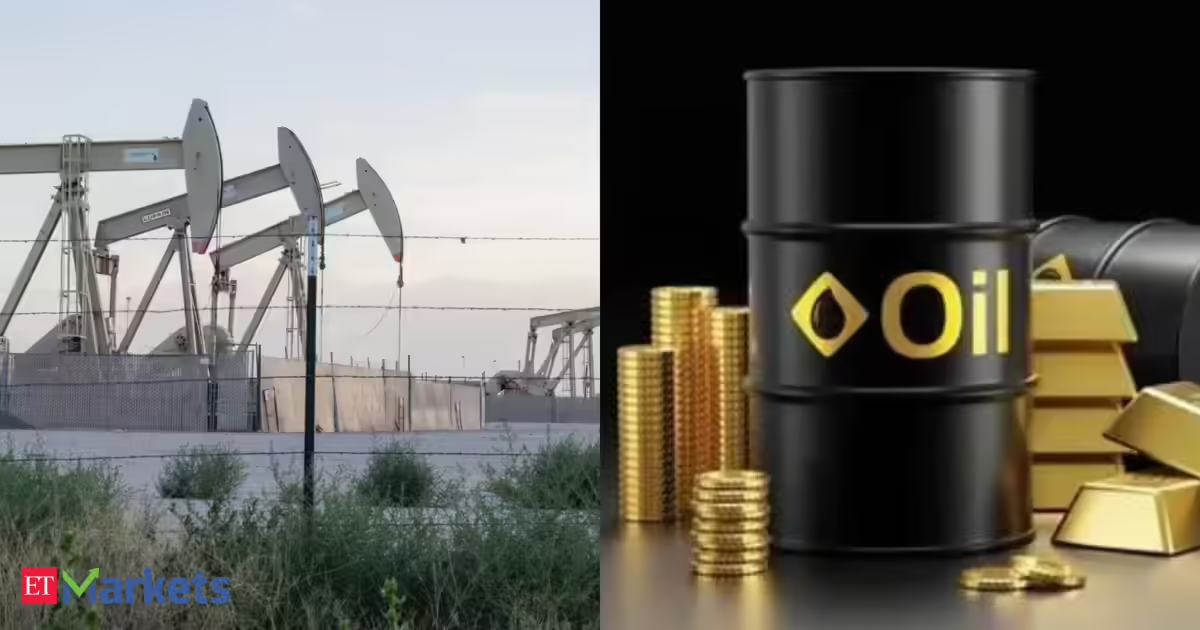
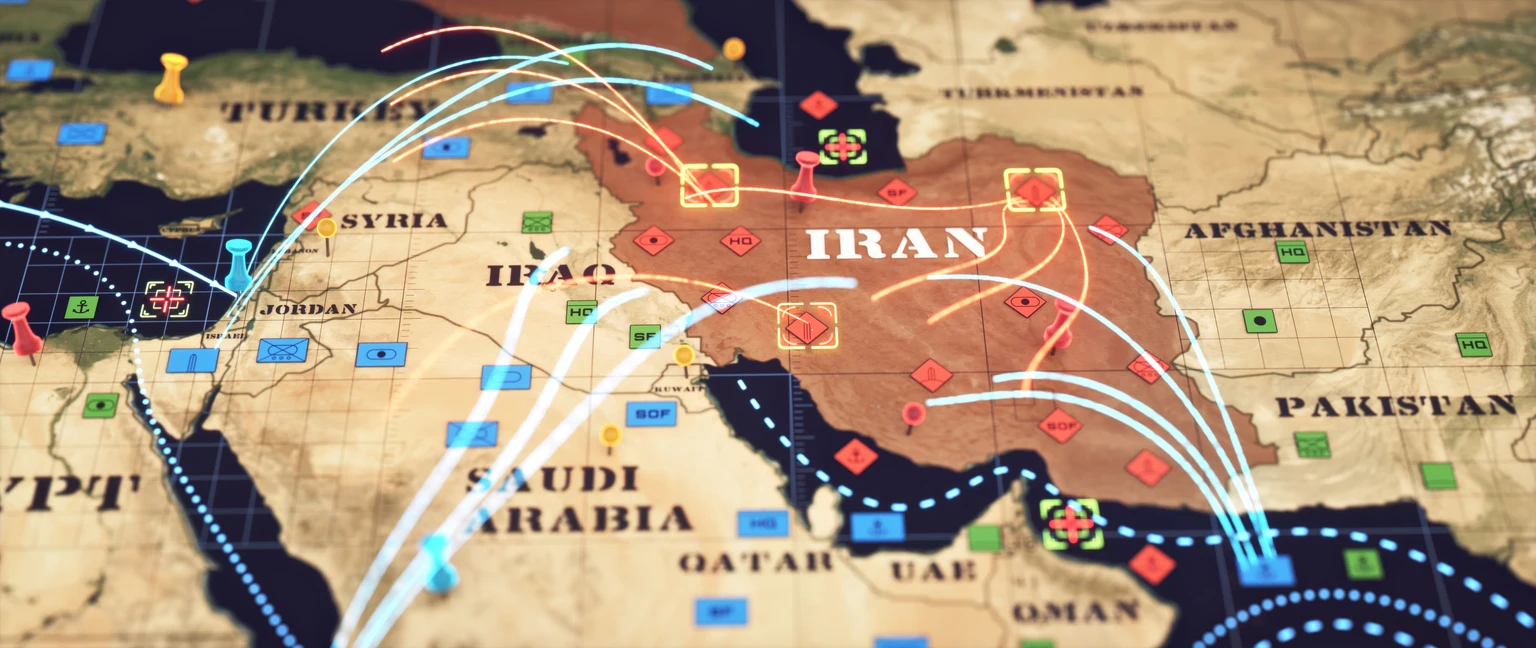
This geopolitical stress is now echoing across major Asian importing nations. India’s MCX crude futures have climbed to around Rs 7,800 per barrel, marking their highest level since October 2023 and extending a firmly bullish streak. Benchmark crude prices for other key Asian buyers have also strengthened, with the Indian crude basket rising to about USD 88 per barrel, underscoring the broader regional cost pressures triggered by tightening supply routes. In a fragile environment, crude oil markets have become hypersensitive to geopolitical headlines, as traders, refiners, and governments reassess supply security amid fears of structural shortages.
Refinery Vulnerabilities and Supply-Side Disruptions
The military flare-up in West Asia has already resulted in strikes damaging critical oil facilities and tanker vessels. Iranian retaliatory attacks and earlier drone strikes have disrupted operational continuity at several sites, raising fears of further hits on major refineries. Any large-scale damage to these assets could trigger immediate production stoppages, sharply reduce short-term supply, and accelerate price spikes as markets move to price in lost barrels.
These risks remain particularly acute because refinery and infrastructure assets are difficult to shield from targeted assaults. Even limited interruptions can lead to disproportionately large market reactions, given the fragile balance between global supply and demand.
The Strait of Hormuz: A Chokepoint Under Threat
The Strait of Hormuz remains the world’s most critical oil chokepoint, handling nearly one-fifth of globally traded crude. Recent closures and tanker suspensions following threats from Tehran have already interrupted flows, with more than 200 vessels forced to anchor outside the strait. Any prolonged blockage would severely constrain supply, pushing crude significantly higher.

Speculative buying and the ‘war premium’
As risks deepen, futures markets have built a notable “war premium,” with Brent front-month contracts trading at elevated levels as traders price in worsening instability. Speculative flows intensify when uncertainty rises, amplifying volatility and accelerating upward price momentum.
Worries about whether other suppliers can offset disruptions
Although alternative suppliers such as the US, Russia, and West Africa can help diversify flows, there is caution that global producers may not fully compensate for a major Gulf supply loss. Even OPEC+ signalling modest output increases has not eased concerns, as physical disruptions in Hormuz-linked exports would outweigh incremental supply adjustments.
Inflation Risks and Long-Term Fragility
The intensifying conflict has raised fears that prolonged instability could fuel inflation globally. Shipping delays, tanker bottlenecks, and stricter maritime security measures are already causing supply delays, tightening near-term availability of crude. This adds to inflationary pressures at a time when many economies are still grappling with elevated price levels and slow-to-moderate growth.Long-term supply fragility is also emerging as a central concern. Countries heavily reliant on Gulf energy—particularly in Asia—face potential headwinds to growth, macroeconomic stability, and financial conditions if disruptions persist.
Impact on Key Importing Nations: India, China, Japan, and South Korea
India and China, both deeply dependent on Gulf oil, face significant vulnerabilities. For India, disruptions in Hormuz threaten nearly 40–50% of its crude inflows, raising import costs, widening the current account deficit, and putting pressure on the rupee. Inflation risks intensify as higher crude prices cascade into fuel, logistics, and industrial costs.
For China, prolonged supply uncertainty risks weakening economic momentum, heightening financial instability, and triggering energy-driven inflation. Meanwhile, Japan and South Korea—both reliant on crude shipped through Hormuz—are grappling with rising procurement costs and heightened exposure to global market volatility.
The crisis has also reached Europe, where attacks on QatarEnergy’s LNG facilities have contributed to a sharp spike in natural gas prices.
However, Asian importers are boosting strategic reserves, diversifying supplies toward Russia, the US, West Africa and Latin America, expanding long-term contracts, and securing alternative shipping routes to overcome the situation.
Outlook: Short-Term Shock, Medium-Term Uncertainty
While the current surge reflects a geopolitical shock, crude prices may stabilise once tensions ease and shipping flows resume. History shows that even temporary Hormuz-related disruptions can trigger volatility, but diversified supply chains and strategic reserves across key Asian importers help mitigate prolonged damage.
That said, the ongoing conflict-driven rise in crude prices poses broader threats to global growth. Higher energy costs risk squeezing corporate margins, slowing consumption, widening current account deficits, and pressuring currencies in energy-dependent economies. If disruptions persist, borrowing costs could rise, compounding financial stress.
In the near term, markets will remain highly reactive to geopolitical developments, with the trajectory of the conflict shaping crude’s direction. Over the longer term, the episode underscores the urgent need for diversified energy routes, enhanced strategic storage, and resilient supply chains to navigate an increasingly uncertain global energy landscape.
(Disclaimer: Recommendations, suggestions, views, and opinions given by experts are their own. These do not represent the views of the Economic Times.)

Majority consensus reached on Iran’s next supreme leader, Mehr news reports

Shakur Stevenson sets his sights on one world champion: “I want that belt”

Must Watch: Best Time to Buy Your Dream Home | Investing | Financial Freedom | Revanth Chalamala

‘I couldn’t find a sunscreen I enjoyed using or wanted on my bathroom shelf, so I created my own’


-

 Politics5 days ago
Alan Cumming Brands Baftas Ceremony A ‘Triggering S**tshow’
-
Business2 days ago
Form 8K Entergy Mississippi LLC For: 6 March
-

 Fashion2 days ago
Weekend Open Thread: Ann Taylor
-

 NewsBeat7 days ago
‘Significant’ damage to boarded-up Horden house after fire
-

 Tech3 days ago
Bitwarden adds support for passkey login on Windows 11
-

 Entertainment6 days ago
Baby Gear Guide: Strollers, Car Seats
-
 Sports3 days ago
499 runs and 34 sixes later, India beat England to enter T20 World Cup final | Cricket News
-
 NewsBeat7 days ago
Emirates confirms when flights will resume amid Dubai airport chaos
-

 NewsBeat6 days ago
Is it acceptable to comment on the appearance of strangers in public? Readers discuss
-

 Sports12 hours ago
Three share 2-shot lead entering final round in Hong Kong
-

 Fashion7 days ago
On the Scene at the 57th Annual NAACP Image Awards: Teyana Taylor in Black Ashi Studio, Colman Domingo in Yellow Sergio Hudson, Chloe Bailey in Christian Siriano, and More!
-

 Video6 days ago
How to Build Finance Dashboards With AI in Minutes
-

 Business4 days ago
Guthrie Disappearance Enters Fifth Week as Family Visits Memorial
-
 NewsBeat6 days ago
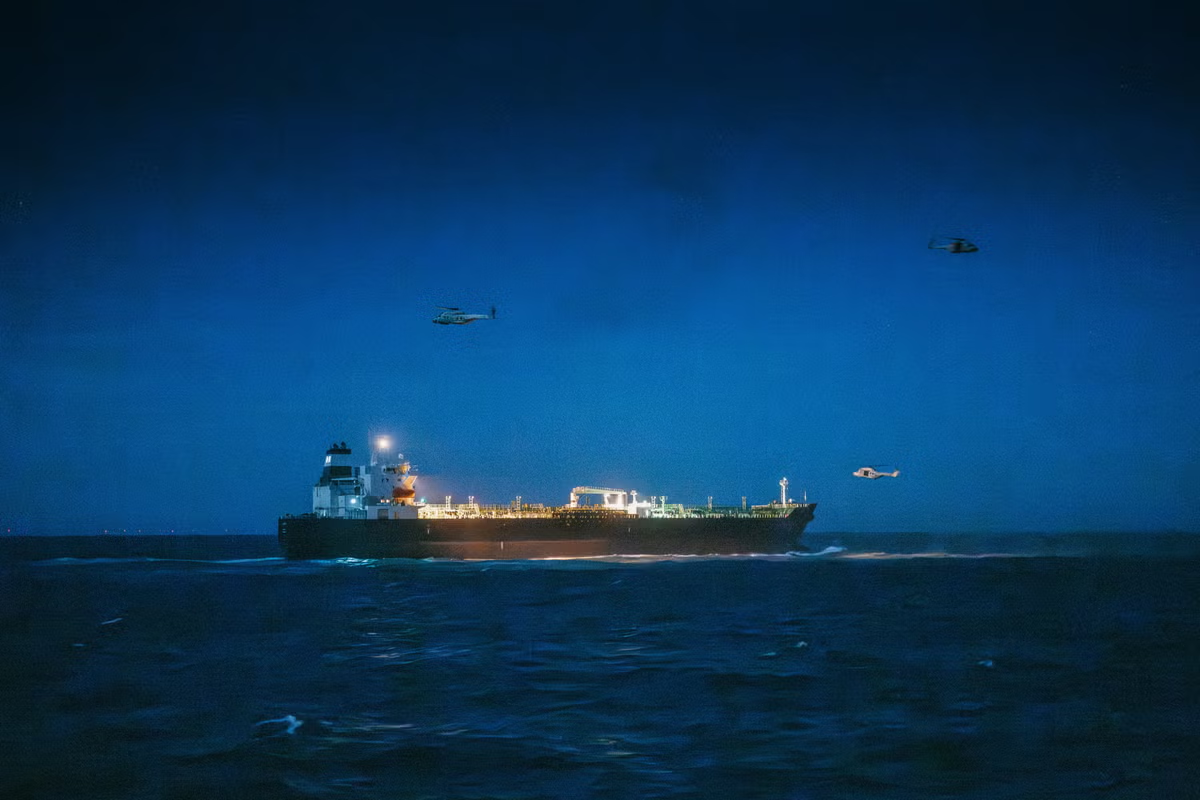
Ukraine-Russia war latest: Belgium releases video showing forces boarding Russian shadow fleet oil tanker
-

 Sports2 hours ago
Braveheart Lakshya downs Lai in epic battle to enter All England Open final | Other Sports News
-

 Crypto World6 days ago
Why Nexo Is Reentering the US After the 2023 Crypto Lending Crackdown
-

 Tech6 days ago
Cynus Chess Robot: A Chess Board With A Robotic Arm
-

 NewsBeat3 days ago
Piccadilly Circus just unveiled ‘London’s newest tourist attraction’ and it only costs 80p to enter
-

 Video6 days ago
LPP + Financial Maths + Numerical Applications | One Shot | Applied Maths | Target Board Exams 2026
-
 NewsBeat6 days ago
Handcuffed presenter Jonathan Ross’ sweet admission about marriage to wife of 38 years