

Business
10 penny stocks plunge up to 53% in a month – Are you affected?




Check out what’s clicking on FoxBusiness.com.
Enterprise software giant Oracle is reportedly planning to ax thousands of jobs due to mounting financial pressure from its aggressive push to build AI-focused data centers.
The tech powerhouse may slash 20,000 to 30,000 positions, possibly cutting 12–18% of its global workforce of roughly 162,000 employees, tech magazine CIO reported.
The layoffs could be implemented as early as March 2026, Bloomberg reported.
The move is driven by a cash crunch from massive spending on data centers, which Wall Street expects will keep Oracle’s cash flow negative for years, forcing the company to seek alternative ways to preserve liquidity, Bloomberg said.
MAJOR TECH COMPANIES BACK TRUMP PLEDGE TO PAY MORE FOR DATA CENTER ELECTRICITY AHEAD OF SIGNING
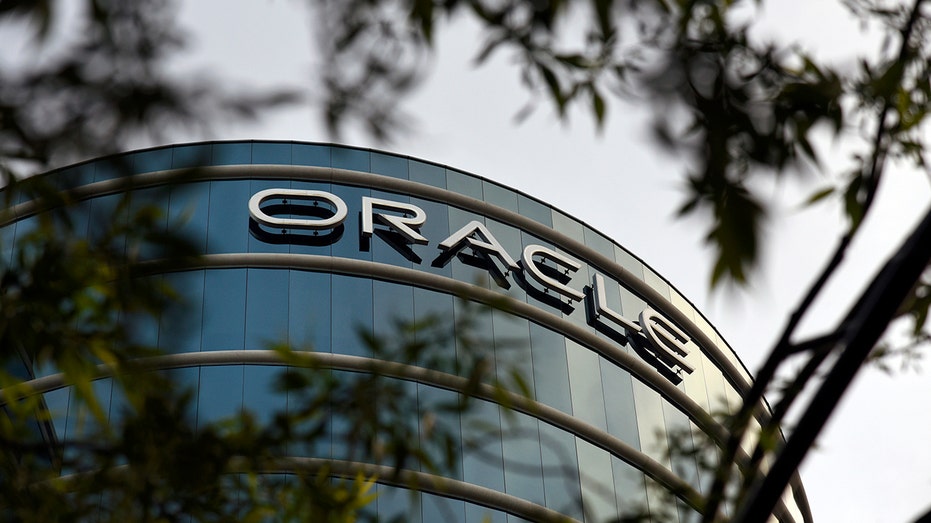
Signage is displayed on a building at the Oracle Corp. headquarters campus in Redwood City, California, U.S., on March 14, 2016. (Michael Short/Bloomberg via Getty Images / Getty Images)
Additionally, several U.S. banks have scaled back financing for Oracle’s massive AI data center expansion, according to investment bank TD Cowen, cited by CIO.com. Lenders have reportedly voiced growing concerns over the company’s ability to repay debt given the enormous capital required to build infrastructure for high-profile AI clients such as OpenAI.
“Both equity and debt investors have raised questions regarding Oracle’s ability to finance this buildout,” the report said.
STANLEY BLACK & DECKER TO CUT HUNDREDS OF JOBS, SHUT CONNECTICUT PLANT

Rows of high-tech server racks line a corridor inside a growing data center facility. (iStock / iStock)
The job cuts will span divisions across the company, focusing on roles Oracle expects to need less of due to AI, Bloomberg reported.
The move is also expected to free up $8 billion to $10 billion, TD Cowen said in a research report cited by CIO.
Led by Chairman Larry Ellison, Oracle is making a high-stakes, all-in bet on becoming a top-tier AI cloud provider to rival AWS, Microsoft and Salesforce.
| Ticker | Security | Last | Change | Change % |
|---|---|---|---|---|
| ORCL | ORACLE CORP. | 152.93 | -1.86 | -1.20% |
GET FOX BUSINESS ON THE GO BY CLICKING HERE
The upcoming layoffs at Oracle are expected to be much larger and more extensive than the company’s usual smaller routine job cuts.

Oracle co-founder, CTO and Executive Chairman Larry Ellison listens as U.S. President Donald Trump speaks to reporters on February 3, 2025 in Washington, DC. (Anna Moneymaker/Getty Images / Getty Images)
Oracle reportedly told internal teams it would reassess many open positions in its cloud division while evaluating which roles are still necessary. However, planning for the workforce reductions is still ongoing and could change, Bloomberg reported.
FOX Business reached out to Oracle for more information.

South Korea parliament due to finalise draft US investment bill under trade deal
South Korea stock trade halted as KOSPI slides over 8%

Thailand’s luxury travel trend focuses on healing through gastronomy and wellness, offering culinary tours, active tourism, and vibrant city experiences, highlighting its diverse offerings and unique cultural festivals like Songkran.
Key Points
- Thailand’s luxury travel trend focuses on “healing” through gastronomy and wellness, offering healthy food and active tourism experiences. Executive Director Suladda Sarutilavan emphasizes that healing is achieved via Thai cuisine and meditation.
- Gastronomy tours highlight the country’s renowned dishes and Michelin-star restaurants, especially in lesser-known regions. Combining healthy meals with activities like Thai boxing and marathons enhances the healing experience.
- Bangkok features green spaces like Lumphini Park and the new Dusit Central Park, offering exercise and cultural exploration. April’s Songkran Festival is recommended for first-time visitors, providing a unique way to celebrate the New Year with water festivities.
Emergence of Healing as Luxury in Thailand
In the hospitality sector, Thailand is positioning itself at the forefront of luxury travel trends, focusing on healing through gastronomy and wellness. According to Suladda Sarutilavan, Executive Director for Europe at the Tourism Authority of Thailand, the nation offers a transformative experience that enriches both body and mind. Culinary experiences such as Thai food, alongside mindfulness practices like meditation, signify that “healing is the new luxury.” Highlights include a vast array of regional cuisines, with unique options to explore in places like Chiang Mai and Khon Kaen, known for its Michelin-starred restaurants.
Exploring Bangkok’s Cultural and Natural Offerings
While many tourists flock to the outskirts for wellness retreats, Bangkok is a vibrant destination in its own right. Sarutilavan emphasizes that the city boasts several green spaces, notably Lumphini Park and the newly established Dusit Central Park, where locals and visitors alike can engage in exercise and community activities. After enjoying the city’s natural offerings, travelers can immerse themselves in Bangkok’s burgeoning arts scene by visiting creative districts like Song Wat and Charoen Krung, replete with street art, galleries, and cafes. This blend of culture, art, and wellness underscores the diverse experiences that Bangkok has to offer.
Upcoming Attractions and Festivals in Thailand
Looking toward the future, Thailand is set to welcome the interactive attraction, Jurassic World: The Experience, in Bangkok in 2026, inviting fans to engage with the cinematic world before exploring filming locations across the country. April emerges as a favorable time for first-time visitors, highlighted by the Songkran Festival, which marks the Thai New Year with lively water-splashing celebrations. This event offers a uniquely refreshing way to experience the culture and camaraderie that Thailand fosters during the hottest month of the year. As such, there is no better time to plan a trip to experience all that Thailand has to offer.
Source : Healing is the new luxury: How Thailand is luring tourists with gastronomy and wellness
Other People are Reading
China CPI inflation rises more than expected in Feb, PPI shrinks again
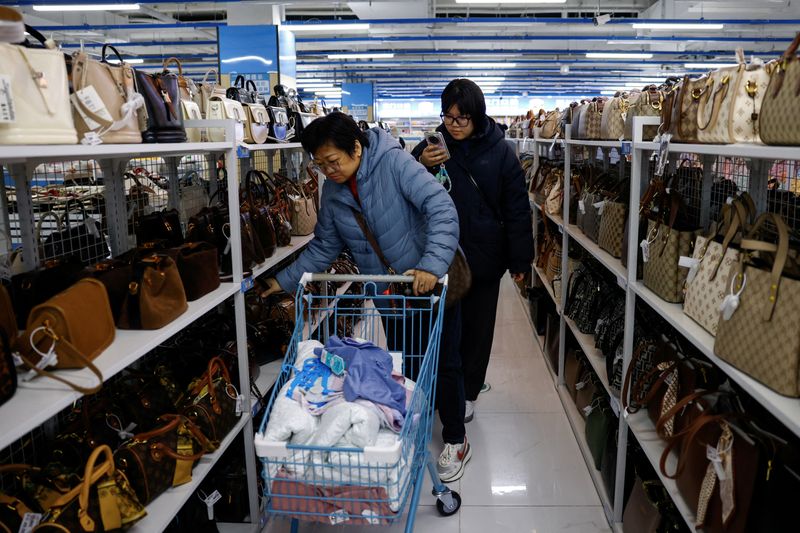

China’s consumer inflation accelerates in February, producer deflation eases
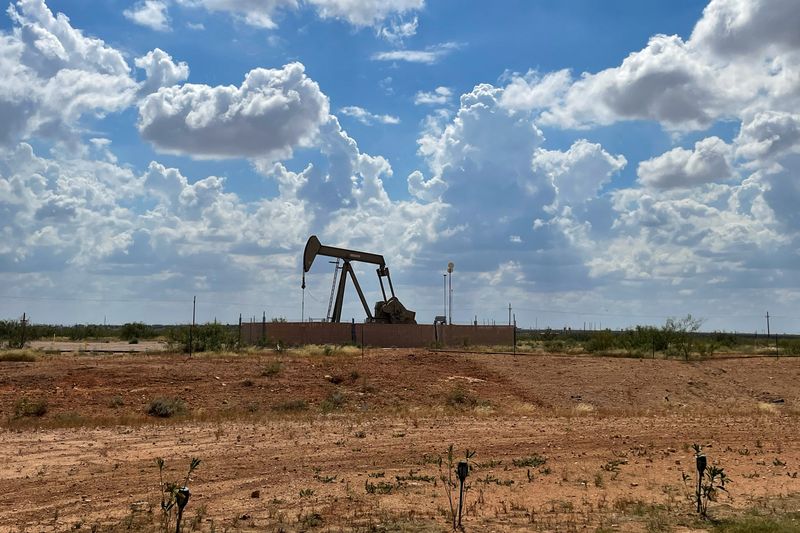

Iran conflict boosts US Gulf oil prices to highest since 2020
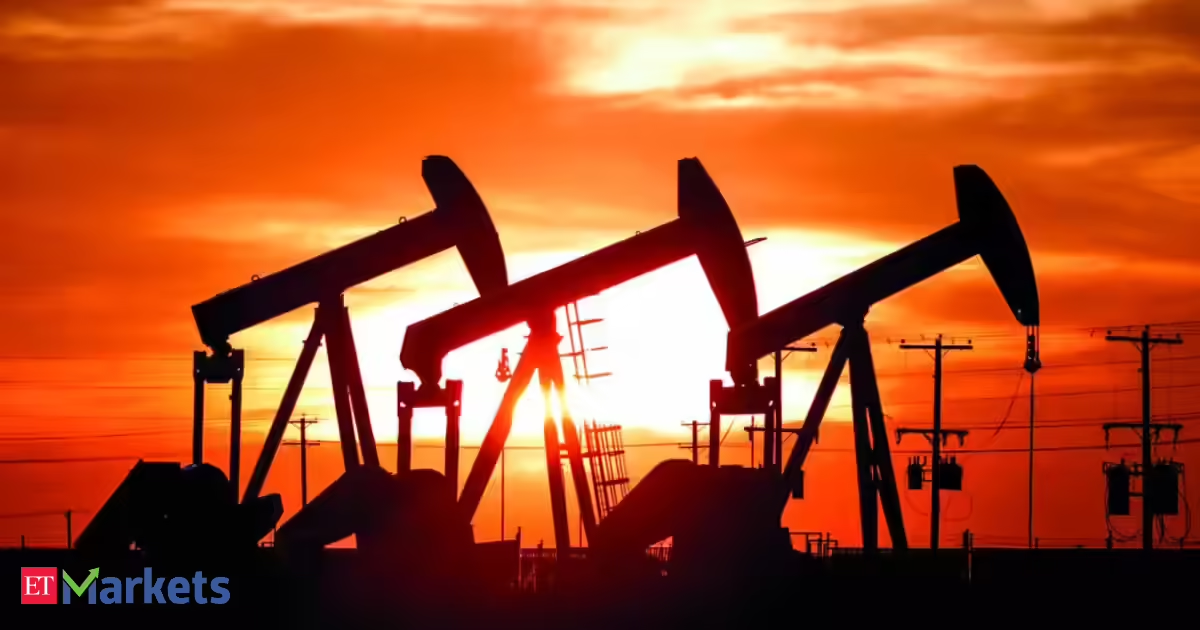
Iran on Monday named Mojtaba Khamenei to succeed his father Ali Khamenei as Supreme Leader, signalling that hardliners remain firmly in charge in Tehran a week into its conflict with the United States and Israel.
Brent crude futures rose as much as $18.35, or 19.8%, to $111.04 a barrel and were up $14.38, or 15.5%, at $107.07 as of 2314 GMT.
U.S. West Texas Intermediate (WTI) crude futures were up $15.27, or 16.8%, at $106.17, after rising as much as $20.34, or 22.4%, to $111.24 earlier in the session.
Brent climbed 27% and WTI rose 35.6% last week, before the latest jumps.

Israel’s military said it hit Iranian commanders in the Lebanese capital early on Sunday, expanding the scope of its campaign to the heart of Beirut after days of strikes that have left nearly 400 people dead.
Israel’s military has threatened to kill any replacement for Khamenei, while U.S. President Donald Trump said the war might only end once Iran’s military and rulers had been wiped out.The war could leave consumers and businesses worldwide facing weeks or months of higher fuel prices even if the week-old conflict ends quickly, as suppliers grapple with damaged facilities, disrupted logistics and elevated risks to shipping.
Top oil exporter Saudi Arabia is increasing shipments from the Red Sea, but the volumes are far from enough to offset the drop from the crisis-hit Strait of Hormuz, shipping data showed.
Business
Global Market Today | Asian shares slide, oil surges on risk of lengthy Middle East conflict
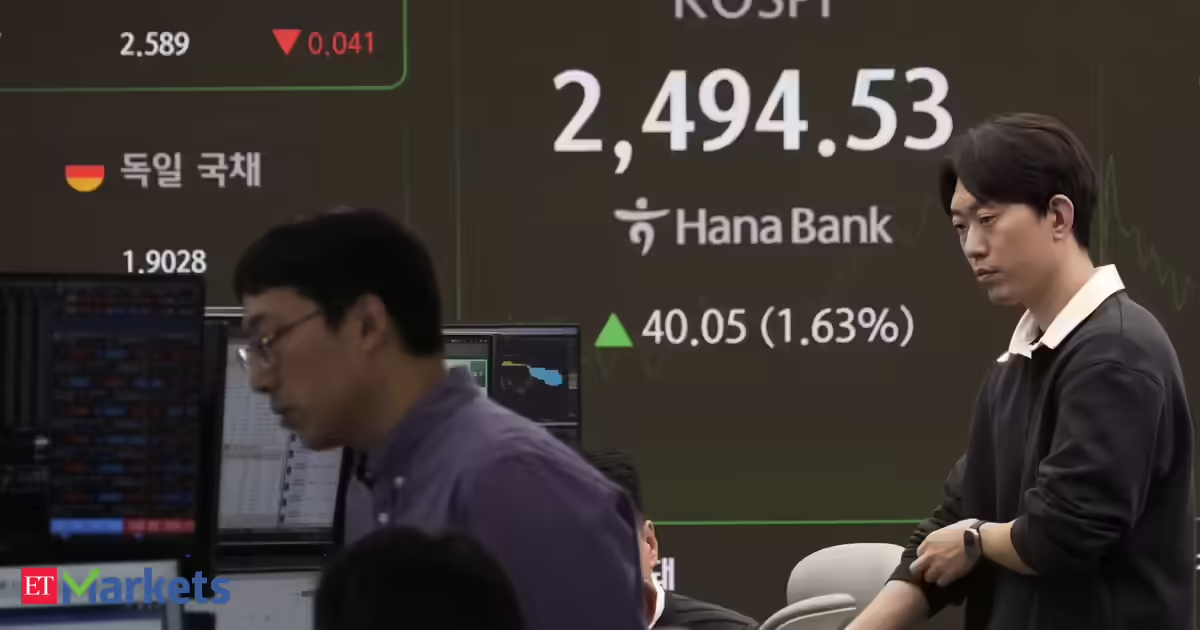
Brent jumped 17% to $108.77 a barrel, the biggest daily gain since the start of the pandemic in 2020 and on top of a 28% rise last week. U.S. crude rose 18% to $107.56, threatening to push petrol prices quickly skyward.
Iran named Mojtaba Khamenei to succeed his father Ali Khamenei as supreme leader, signalling that hardliners remain firmly in charge in Tehran a week into its conflict with the United States and Israel.
That was unlikely to be welcomed by U.S. President Donald Trump, who had declared the son “unacceptable”.
With no sign of an end to hostilities in the Middle East and tankers still not daring to cross the Strait of Hormuz, investors were bracing for a long stretch of higher energy costs. “The global economy remains dependent on the concentrated flow of Mideast oil and natural gas through the Strait of Hormuz,” noted Bruce Kasman, chief economist at JPMorgan.
“The near-term scenario is a near-term spike towards $120 bbl followed by moderation as the conflict soon subsides,” he added. “But absent a clear and decisive political resolution, Brent crude oil prices are expected to settle at an elevated $80 bbl through mid-year.”
Such an outcome could cut global economic growth by an annualised 0.6% for the first half of this year, and raise consumer prices by an annual rate of 1%, Kasman said. He cautioned that a broader and sustained conflict could send oil above $120 a barrel and risk a global recession.
All of which was sober news for Japan as a major importer of oil and gas, sending the Nikkei down 6.2%, on top of a 5.5% drop last week.
South Korea’s high-flying market fell closer to earth with a drop of 7.3%, having already shed more than 10% last week.
The selling swept over Wall Street as S&P 500 futures shed 1.8%, while Nasdaq futures dived 2.1%. Over in Europe, EUROSTOXX 50 futures and DAX futures both slid 2.5%.
CENTRAL BANKS FACE INFLATION CONUNDRUM
In bond markets, the risk of rising inflation outweighed safe-haven considerations and 10-year Treasury note yields rose 5 basis points to 4.189%, up from a trough of 3.926% just a week ago.
Interest rate futures also slipped as investors feared the risk of higher inflation would make it harder for the Federal Reserve to ease policy, even though disappointing jobs numbers seemed to argue for stimulus.
Data on U.S. consumer prices due on Wednesday is forecast to show the annual pace holding at 2.4% in February.
The Fed’s preferred measure of core inflation is out on Friday and is forecast to hold at 3.0%, well above the central bank’s 2% target, and analysts see a risk of an even higher number.
The danger of energy-driven inflation has led markets to wager the next move in rates from the European Central Bank could be up, possibly as early as June.
For the Bank of England, markets have also shifted to pricing just a 40% chance of one more easing, compared with two cuts or more before the Middle East conflict started.
Nervous investors sought the liquidity of dollars while shunning currencies from countries that are net energy importers, including Japan and much of Europe.
“Asia takes the brunt of the sharp escalation in oil prices and there are few places to run and hide,” said Vishnu Varathan, head of macro research Asia ex-Japan at Mizuho.
“The dollar has to be the one outperforming, given Japan and Korea’s exposures here and the sharp pain that can be expected from Brent at $107.”
The dollar firmed 0.4% to 158.45 yen, while the euro slipped 0.8% to $1.1520. The Australian dollar, often sold as a hedge during periods of market volatility, skidded 0.9% to $0.6964.
Gold fell 2.4% to $5,047 an ounce, with dealers speculating that investors were having to book profits made on the metal’s long climb to cover losses elsewhere. (Reporting by Wayne Cole; Editing by Edmund Klamann)
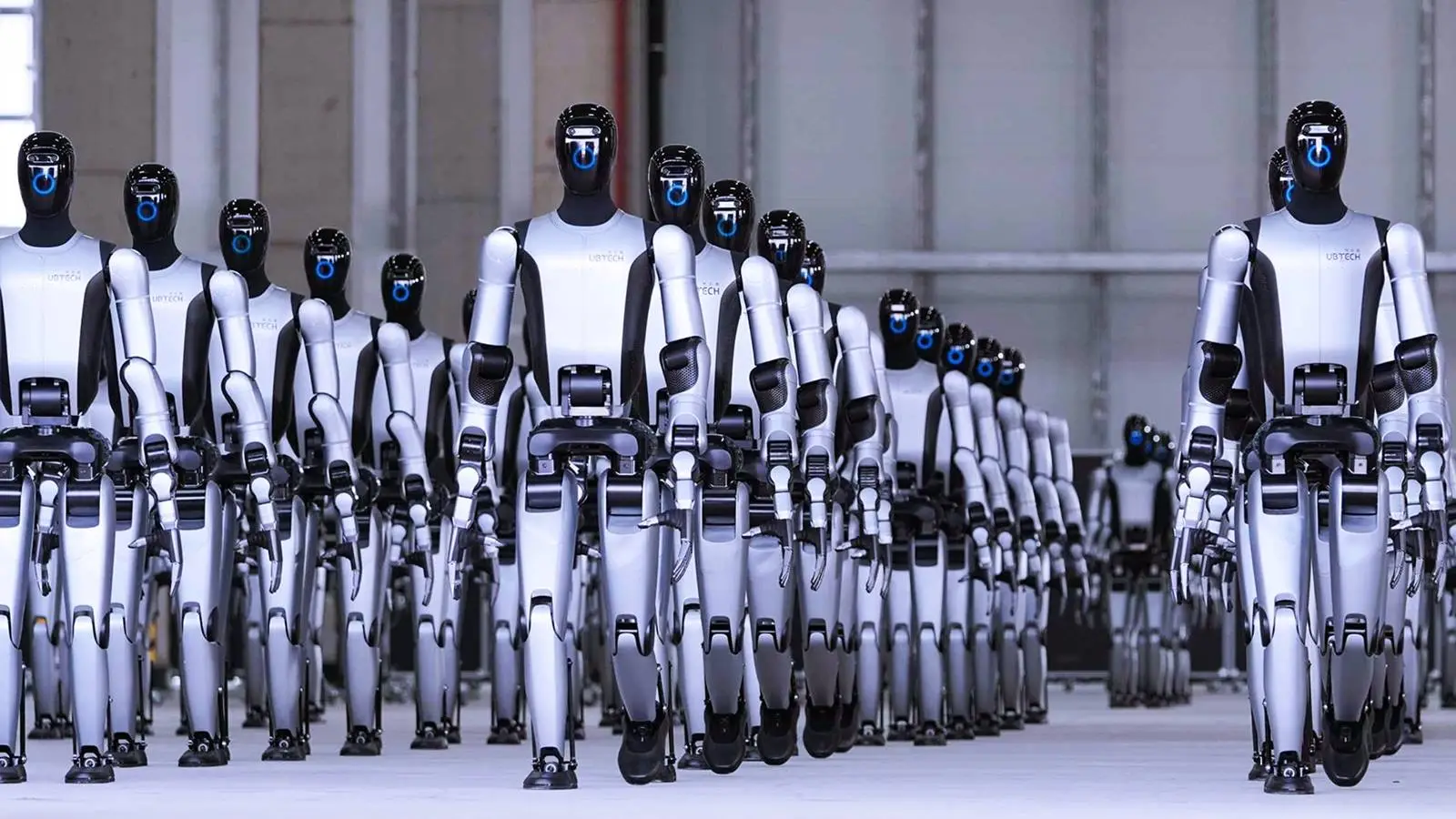
In the shadow of an intensifying technology cold war with Washington, China has unveiled its most ambitious technology agenda in a generation: a comprehensive five-year policy blueprint that places artificial intelligence, quantum computing, and humanoid robotics at the very heart of the nation’s future.
Key takeaways
- China’s 15th Five-Year Plan deploys AI as a national survival strategy, embedding it across manufacturing, healthcare, and education to offset a rapidly ageing and shrinking workforce.
- Beijing is betting on open-source AI as its sharpest competitive weapon against the United States, a deliberate strategic inversion of Silicon Valley’s closed, proprietary model dominance.
- From quantum computers to lunar stations and humanoid robots, China has issued a sweeping technological declaration of independence, signalling that Western export controls have hardened its resolve rather than slowed it.
The Blueprint Heard Around the World
When Premier Li Qiang took the podium at the opening of the National People’s Congress on Thursday, technology was not buried in the footnotes. It was the headline. In a striking departure from previous years, the government work report led with references to what Beijing calls “new quality productive forces,” a phrase now synonymous with China’s race to dominate the technologies of tomorrow.
The 141-page five-year blueprint, China’s 15th such plan, mentions artificial intelligence more than 50 times and anchors a sweeping “AI+ Action Plan” at its core, a policy framework that analysts describe as nothing short of a national mobilization.
“The plan’s language is unambiguous,” said Kyle Chan, a fellow in Chinese technology policy at the Brookings Institution. “Beijing’s goal is to use AI and robotics to boost productivity and performance in a wide range of sectors, from manufacturing and logistics to education and healthcare.”
China’s state planning body went even further, asserting in a parallel report that the country now leads the world in research, development, and application across AI, biomedicine, robotics, and quantum technology. It is a claim that will spark considerable debate in Washington, Silicon Valley, and allied capitals alike.
The Strategic Logic: Demographics, Dependency, and DeepSeek
Three structural forces are converging to make this moment uniquely urgent for Beijing.
First, demographics. China faces a deepening demographic crisis. Its population has fallen for the fourth consecutive year, and its workforce is ageing rapidly. AI and robotics are not merely aspirational technologies for China. They are a structural economic necessity. The plan specifically calls for deploying robots in sectors suffering from labour shortages, a direct acknowledgment that human labour alone can no longer power the world’s factory floor.
Second, dependency. China’s reliance on American-designed chips, aerospace components, and foundational software has become a political liability as the US-China trade war has metastasized into a full-spectrum technology war. Washington’s export controls on advanced semiconductors, and Beijing’s retaliatory restrictions on rare earths and critical minerals, have made technological self-reliance an existential priority, not merely a strategic preference. The plan vows “decisive breakthroughs in key core technologies,” language that reads less like aspiration and more like a national security directive.
Third, DeepSeek. The spectacular emergence of the Chinese AI startup, whose large language model matched American rivals at a fraction of the cost, has supercharged Beijing’s confidence. DeepSeek demonstrated that China could compete not by outspending America, but by out-engineering it. That lesson has clearly been absorbed at the highest levels of government.
A Moonshot Menu: What China Is Actually Planning
The plan reads, in parts, like a science fiction manifesto brought to life with state funding. Among its most ambitious commitments:
Humanoid Robots. The blueprint calls for deploying “embodied AI,” the technology powering human-like robots, to perform jobs across labour-starved sectors. China has already released its first national humanoid robot standard system, positioning itself to capture the emerging physical AI market before it fully matures.
Quantum Computing and Communications. Beijing has pledged to build scalable quantum computers and construct an integrated space-earth quantum communication network, an infrastructure project of staggering ambition that would establish quantum-secure communications between terrestrial and orbital systems.
Nuclear Fusion. The plan pledges “key breakthroughs” in fusion technology, the long-sought clean energy source that could fundamentally transform global power dynamics if achieved at commercial scale.
Space. China has committed to developing a reusable heavy-load rocket and demonstrating the feasibility of a lunar research station, both of which constitute direct competitive answers to the capabilities being built by SpaceX and NASA’s Artemis programme.
6G. The blueprint calls for heavy investment in next-generation wireless infrastructure, with the aim of setting the global standard before the West can consolidate its position in the successor to today’s mobile networks.
Brain-Machine Interfaces. The plan ventures into the cutting edge of human-AI integration, a field where the intersection of neuroscience and computing could redefine human productivity and medicine alike.
The Open Source Gambit
Perhaps the most strategically calculated element of the plan is one that initially appears the least confrontational. China’s blueprint explicitly champions open-source AI development and commits to building out AI open-source communities, a posture that stands in marked contrast to the proprietary, closed-model approach dominant among leading American firms such as OpenAI.
“Open source wasn’t mentioned in previous reports, and this is also a key difference between the Chinese and American AI approaches,” said Tilly Zhang, technology and industrial policy analyst at Gavekal Dragonomics. “I believe China has studied this very carefully and decided to make open-source AI a flagship strategy and a competitive advantage against the United States.”
The logic is shrewd. By championing open-source AI, China positions itself as a collaborative partner to the developing world and smaller economies wary of dependence on expensive, proprietary American platforms. It also accelerates domestic innovation by lowering the barriers for Chinese developers, researchers, and companies to build upon frontier models.
Infrastructure as Power: Computing Clusters and Clean Energy
Underpinning the entire AI ambition is a commitment to raw computational power. The plan pledges to build out “hyper-scale” computing clusters, the vast data centres that train and run the most advanced AI models, supported by cheap and abundant electricity. This pairing of AI infrastructure with energy policy reflects a sophisticated understanding that the AI race is ultimately also an energy race. Nations that can generate low-cost, reliable power at scale will hold a decisive structural advantage in training the next generation of frontier models.
A Rivalry Entering Its Most Consequential Phase
Taken together, the plan represents a declaration of intent that goes well beyond economic policy. It is China’s formal assertion that the era of technological dependency is over, and that the country intends to lead, not merely participate in, the defining technologies of the twenty-first century.
The United States will not watch passively. Export controls on advanced chips remain in force, and Washington has shown no indication of easing pressure. But Beijing’s message to the world is clear: sanctions and restrictions have accelerated China’s resolve, not diminished it.
As the National People’s Congress closes its opening session and the details of this extraordinary blueprint begin to filter through to laboratories, factories, and boardrooms across China, one thing is beyond dispute. The contest for technological supremacy between the world’s two largest economies has entered its most consequential phase yet.
Other People are Reading

Guess Who This Music Producer & Songwriter Is!

Cambs woman having to go abroad for life-saving operations to beat ‘horrible’ chronic illness

Oracle reportedly considers massive layoffs as AI spending strains cash flow


-

 Politics6 days ago
Alan Cumming Brands Baftas Ceremony A ‘Triggering S**tshow’
-
Business3 days ago
Form 8K Entergy Mississippi LLC For: 6 March
-

 Fashion2 days ago
Weekend Open Thread: Ann Taylor
-

 Entertainment7 days ago
Baby Gear Guide: Strollers, Car Seats
-

 Tech4 days ago
Bitwarden adds support for passkey login on Windows 11
-
 Sports3 days ago
499 runs and 34 sixes later, India beat England to enter T20 World Cup final | Cricket News
-

 NewsBeat7 days ago
Is it acceptable to comment on the appearance of strangers in public? Readers discuss
-

 News Videos7 days ago
How to Build Finance Dashboards With AI in Minutes
-

 Sports1 day ago
Three share 2-shot lead entering final round in Hong Kong
-

 Sports22 hours ago
Braveheart Lakshya downs Lai in epic battle to enter All England Open final | Other Sports News
-

 Business5 days ago
Guthrie Disappearance Enters Fifth Week as Family Visits Memorial
-
 NewsBeat7 days ago
Ukraine-Russia war latest: Belgium releases video showing forces boarding Russian shadow fleet oil tanker
-

 Crypto World7 days ago
Why Nexo Is Reentering the US After the 2023 Crypto Lending Crackdown
-

 News Videos7 days ago
LPP + Financial Maths + Numerical Applications | One Shot | Applied Maths | Target Board Exams 2026
-

 NewsBeat3 days ago
Piccadilly Circus just unveiled ‘London’s newest tourist attraction’ and it only costs 80p to enter
-

 Business9 hours ago
Search for Nancy Guthrie Enters 37th Day as FBI Probes Wi-Fi Jammer Theory
-

 Tech6 days ago
Cynus Chess Robot: A Chess Board With A Robotic Arm
-

 Entertainment2 days ago
Hailey Bieber Poses For Sexy Selfies In New Luscious Lip Thirst Traps
-
 NewsBeat6 days ago
Handcuffed presenter Jonathan Ross’ sweet admission about marriage to wife of 38 years
-
 Sports6 days ago
Jack Grealish posts new injury update as Man City star enters crucial period