Connect with us

Business & Hustles

Bank of India MF CIO Alok Singh sees banks poised for a re-rating. Here’s what could trigger it

Published

on

Bank of India MF CIO Alok Singh sees banks poised for a re-rating. Here’s what could trigger it
Indian banks may be closer to a re-rating than their recent performance suggests. Bank of India Mutual Fund CIO Alok Singh says lenders have the fundamentals investors typically look for—low non-performing assets, healthy return on assets and equity, and loan growth—but lingering concerns over net interest margins and FCNR-related liquidity flows have kept the trade from taking off.

That overhang could ease as policy announcements emerge and banks disclose stronger business numbers, Singh said in an interview.

Public- and private-sector banks are fairly valued and have become cheaper since last quarter, even as their underlying businesses continue to perform well. “The consensus trade just hasn’t come through yet,” he said, adding that this disconnect cannot persist indefinitely if the operating trend holds.

Edited excerpts from a chat:

Advertisement

Congratulations on the wonderful performance of your smallcap fund. Everybody these days is talking about small and mid caps, but the smallcap benchmark itself hasn’t moved much in the last one year — just 4-5%. So there must be a lot of stock-picking opportunities in the fund?

Small-cap is a large space with a large number of stocks. Even the Small Cap 250 index is only 250 stocks. If you look at stocks above ₹1,000 crore market cap, there are roughly 1,450-1,500 of them. Remove the top 250 (or even top 500), and there are still 900+ stocks left — so it’s a much bigger universe.


As the market and economy normalise, not everything does well — some things do well, some don’t — so bottoms-up stock selection becomes more important. Post-COVID, the entire small-cap space benefited from re-rating, so stock picking mattered, but simple allocation to the space also worked as long as you were exposed. I think this is the first time we’re looking at a truly normalised economy — even the government has chosen 2024 as its base year, implying normalisation happened after that. This is getting reflected in portfolios: if you’re not in the right stocks, you won’t participate as much.

How much of your portfolio goes beyond the Small Cap 250 index?

We have always run a bottoms-up portfolio and use the benchmark more for risk management than for portfolio construction. That said, while we look at all stocks above ₹1,000 crore market cap, it’s not that we only look beyond the top 250. My portfolio’s average market cap is around ₹24,000 crore, and the weighted average is around ₹25,000 crore. There is hardly any large-cap exposure — maybe 2-3%. So it’s predominantly a small-cap portfolio with some mid-cap. It’s not about concentrating in one place — it’s about finding where newer pools of profit are being generated and building the portfolio around that.

Purely from a market-cap perspective, is there a “sweet spot” you hunt in — say, ₹10,000-20,000 crore?

No, we don’t look at it from a market-cap point of view — we look at it from a business point of view. We’re not “growth hungry” either; across our portfolio we buy anything that makes sense on a relative basis, whether that’s value or growth. If you’re buying value, there has to be some change or inflection point happening, otherwise the value doesn’t get unlocked — growth similarly doesn’t sustain without an inflection point.

Advertisement

In one line: we look at things on a relative basis. If something makes sense relatively, we’re okay looking at it — whether it’s a ₹5,000 crore, ₹10,000 crore, ₹20,000 crore, or even ₹50,000 crore market cap company. That’s not how we approach it.

So once an idea makes sense, allocation becomes key?

Yes — and that’s where we believe the real differentiation lies. Everyone stresses finding new ideas, but what you do with an idea is equally important. No idea stays exclusive to you for long, because in the mutual fund world, once you buy something and your monthly portfolio is published, the whole market knows what you’ve bought — even without doing the fundamental work themselves, others can reverse-engineer why. So finding a good, scalable business or one going through a transformation is only one part. How you size it and scale it up in the portfolio is most important — especially for us, since we don’t run either very concentrated or very spread-out portfolios.

You currently have around 90 stocks in the portfolio. Tell us about your position sizing and churn.

Yes, right now it’s around that, but we like to run 70-80 stocks and may moderate it — it’s a bit of a transition period currently. Since the fund launched in 2018, we’ve generally run a 70-80 stock portfolio, and that’s where we wish to stay on a long-term basis. Sometimes the number ticks up a bit due to a few transitional additions. In terms of position sizing, 3-4% is the highest we buy.

Advertisement

Because we run about 90 stocks, there is naturally some churn happening — something is going in or out, which is why the stock count and turnover sometimes rise. But we don’t do a clean, sharp exit from any stock unless there’s a specific reason for concern. On a long-term, steady-state basis, turnover would be more like 0.65-0.7x.

Within small and mid-cap, where do you currently see both growth and valuations that aren’t excessive — i.e., no euphoria?

Frankly, after the last 3-4 months’ up-move in mid and small caps, I don’t see any pockets that are screamingly undervalued. The market looks fairly valued to me right now — wherever you see slightly above-mean multiples, those are being driven by the earnings those stocks are delivering. So across small, mid, or even large cap, the market seems fairly priced in terms of multiples. That means any further movement has to be driven more by earnings, which is why there’s some nervousness — earnings depend on visualisation and assumptions around execution, which people may or may not agree on.

On a steady-state basis, though, the market appears fairly priced. That’s why markets have largely gone sideways over the last month or so. Going forward, I believe earnings will play a bigger role in shaping the market than further multiple re-rating.

Q1 earnings were very good, Q2 is also expected to be good, but the concern is Q3 onward — especially in pockets affected by GST and income tax rate cuts. Is that a worry?

The base effect will play a role, but if you look at GST collections, we’ve actually surpassed prior levels — so collecting more GST at a lower rate, with goods and services volumes unchanged, means volumes have actually picked up. So I don’t think the base effect will be a major issue.

Advertisement

One thing to appreciate: markets were surprised by Q1 earnings because, when the Middle East crisis happened, the consensus was that Q1 would take most of the hit and Q2 onward would see recovery, normalizing in the second half. As we analyzed results, we realised the impact wasn’t concentrated in April but more in the May-July window, due to low-cost inventories and similar factors — so there will be some spillover into Q2 as well, which wasn’t the earlier consensus. That’s adding to market nervousness, since there’s now uncertainty about whether the impact ran through June, July, or even August.

That said, I don’t believe the impact goes beyond Q2 — which also has its own seasonality with Diwali falling a month later this year. Adjusting for these factors, I think earnings should actually be better, because high-frequency demand indicators — vehicular traffic, power demand, GST collections, toll collections, passenger traffic — are all suggesting decent buoyancy in the economy. If that continues into the festive season, the season should be good, since festive spending typically follows a build-up rather than appearing suddenly. Overall, I think external disruptions (freight movement, transit times, buyer-seller reconciliation) have now normalised and shouldn’t be a surprise element unless something changes from here.

Can you get more sector-specific on where you expect strong earnings momentum over the next couple of quarters?

The capital goods space — specifically industrial automation, industrial products, power equipment — is seeing a good tailwind from both domestic and global demand, and I expect that to continue. Precision engineering, part of capital goods, is also seeing decent order flows.

On BFSI, I think banks at large should do well. Earlier there were concerns about NIMs (going back to Q4 of last year), and now there’s some worry about FCNR-related spillover effects. But I don’t think liquidity pressure is as large as the market anticipates — RBI has repeatedly tried to suck out excess liquidity, and even a recent ₹7 lakh crore reverse repo saw limited takers. If liquidity were truly excessive and suppressing NIMs long-term, banks wouldn’t be holding it back from RBI — any reasonable treasury head would rather place it with the RBI than sit on it. That tells me it’s transitory — CBLO might dip to 2-3% for a few weeks, but that’s not permanent. So banking should be another sector that does well.

Advertisement

In the broader segment, capital goods and banking look okay to me. In a smaller segment, metals look good given demand and government policy, with decent capacity utilisation — not a large weight in the index, but earnings growth there looks decent. Elsewhere: pharma is mixed — some doing okay, some facing issues; FMCG faces margin and inflation pressure; consumer durables — some are doing fine; auto is doing okay but fairly priced, so while we stay positive, I don’t see a major surprise element there since the earnings are largely already discounted.

Among these sectors, do banks have the higher chance of re-rating if earnings pick up?

Yes. A large part of large-cap underperformance has come from IT, but banks also haven’t done the “heavy lifting” they should have, given their index weight and valuations. Whichever way you look at it — public or private — banks are fairly priced, and all the boxes that should tick for a bank are ticking: low NPAs, decent ROAs leading to decent ROEs, and loan growth. The consensus trade just hasn’t come through yet because of lingering worries about NIM pressure and possible rate moves. As policy announcements come through over the next few weeks, I think this will reconcile. Business-wise, most banks are doing well and have gotten cheaper since last quarter without the market reacting — but that can’t continue indefinitely if the trend persists.

Credit growth wasn’t a problem for banks anyways, and now deposits are also coming back via FCNR. So both sides of the balance sheet are sorted?

Correct. Banks running high CD ratios will be able to access liquidity now. Also, some NBFCs benefit indirectly — as pressure on larger banks to raise deposits eases, and money needs to be deployed, one avenue is lending to NBFCs. It may not offer the best spread, but it avoids negative carry. So NBFCs become an indirect beneficiary of FCNR flows too. I think the FCNR-related NIM-pressure overhang that the market is pricing in won’t be as large as feared, and as banks disclose business numbers, there should be a positive surprise.

Crude has again crossed $100, and there have already been about $1.5 billion of outflows this month, with the rupee under pressure — the macro setup is weakening this month. How much of a worry is the Middle East tension?

Obviously oil has an overhang on us — there are two sides: the inflation side and the availability side. Availability is the bigger question; every time there’s escalation, the possibility of supply being cut increases. The market is more worried about a potential availability cut than about the price level of $100 or $110 per se, because a higher price only impacts margins, whereas zero oil availability means no margin at all.

Advertisement

That said, yes, $100 or thereabouts does affect inflation and could have a broader margin impact via the Reserve Bank’s response. It’s a very hot-and-cold situation, so it’s difficult to take a decisive view. If it sustains at these levels for a longer period, we’d need to be more worried — but I’m not worried about it today. If there is an actual sustained supply-side issue, that concerns me more than the price being $100 or $110, because economies will adjust to price; there could be some disruption here and there, but on the whole we’d be okay. Non-availability is a bigger issue to me than $100 oil.

Continue Reading
Click to comment

You must be logged in to post a comment Login

Leave a Reply

Business & Hustles

Shares bounce after inflation print softens rate fears

Published

on

Shares bounce after inflation print softens rate fears

Australian shares have had their strongest session since early August after lower-than-feared inflation figures tempered concerns of further imminent interest rate hikes.

Continue Reading

Business & Hustles

Hutch & Co founder Siena Hutchinson

Published

on

Hutch & Co founder Siena Hutchinson

Siena Hutchinson is the founder and creative director of Hutch & Co, a London branding and website design agency working with lifestyle and culture-led businesses. A fashion design graduate with a master’s in graphic design, she began working for herself at 21 and incorporated the agency in March 2022.

On 29 September 2026 she was the featured voice in a Talent Times debate on whether creator-founded brands should mirror the creators behind them, drawing on the agency’s work for Agende, the planner business founded by Isobel Lorna. She tells Business Matters why strategy sits at the start of every project, and why she wishes she had learned to let go sooner.

What do you currently do at Hutch & Co?

I am the founder and Creative Director of Hutch & Co., a branding and website design agency helping ambitious brands define who they are and how they show up.

Free newsletters
Advertisement

The stories that matter to UK business, straight to your inbox.

Advertisement

My role is quite varied, which is probably one of the things I love most about running an agency. I lead the creative direction and strategy across our projects, work closely with clients and oversee the wider direction of the business. We work across branding, websites and digital, predominantly with lifestyle and culture-led businesses.

As the agency has grown, my role has naturally started shifting too. I am learning to spend less time being the person doing everything and more time thinking about where the business is going, how we grow sustainably and what Hutch & Co. should look like in the future.

What was the inspiration behind your business?

I do not think there was ever one big moment where I decided, “I am going to start an agency.” It happened much more organically.

I have always been creative and studied Fashion Design before going on to do a Master’s in Graphic Design. I started working for myself at 21, initially taking on freelance design projects and running an online print shop. Over time, the freelance side grew, the projects became bigger and I realised I was much more interested in building brands as a whole than simply designing individual assets.

Advertisement

Hutch & Co. really grew from that. I wanted to build the kind of creative agency I would want to work with: collaborative, commercially aware and genuinely invested in understanding the business behind the brand.

I have always been fascinated by the point where creativity and business meet, because beautiful design is important, but the best branding has a reason behind every decision.

How do you approach brands built around a creator?

When we work with creator-founded businesses at Hutch & Co., I always think about the brand beyond launch day. Should the brand simply look and feel like the creator behind it? Not entirely.

When we built the brand for Agende, Isobel Lorna’s planner business, we chose to give it an identity of its own rather than replicate her existing aesthetic. I believe in a middle ground, where the brand feels unmistakably connected to the creator but can stand on its own, separate from their personal social media presence.

Advertisement

Who do you admire?

I am particularly drawn to people who have built businesses with a really strong point of view. Founders who understand that the brand itself can be just as valuable as the product or service they are selling.

I also admire people who are willing to build differently rather than automatically following the traditional blueprint of what a successful business is supposed to look like. Running my own business has made me realise there are so many different definitions of success. I am increasingly inspired by founders who create businesses that are commercially successful but also work for the life they actually want to live.

More broadly, I am constantly inspired by the people around me. Other founders, creatives and even our clients teach me a huge amount. When you work closely with people building businesses from scratch, you get a front-row seat to how differently people think, take risks and solve problems.

Looking back, is there anything you would have done differently?

I would have learned to let go sooner. For a long time, I thought being good at running a creative business meant being involved in absolutely everything. When your business starts with you, your skills and your reputation, handing any part of it to someone else can feel incredibly difficult.

Advertisement

But there comes a point where being involved in every detail actually becomes the thing holding the business back. I probably would have put systems in place earlier, asked for help sooner and become more comfortable with the idea that someone else can do something differently to me without doing it badly.

What defines your way of doing business?

Clarity, collaboration and being genuinely invested in the businesses we work with.

One of the biggest things I have learned through branding companies is that design should not exist in isolation. Before we start thinking about a logo, typography or colour palette, I want to understand where the business is going, who it needs to speak to and what it needs to be known for.

That is why strategy sits at the beginning of everything we do at Hutch & Co. I want our clients to come away with more than a beautiful brand. I want them to understand their business more clearly and have something that can genuinely support where they want to go next.

Advertisement

I also believe in making the process collaborative. Some of our services include live design sessions where clients are part of the process rather than disappearing for weeks and being presented with a finished answer. I think the strongest work happens when you combine our expertise with the founder’s knowledge of their own business.

What advice would you give to someone starting out?

Start before you feel ready.

I think one of the biggest misconceptions about starting a business is that everyone else has some kind of master plan. I certainly did not. So much of building Hutch & Co. has been trying something, learning from it, changing it and trying again.

I would also tell people not to obsess over looking bigger or more established than they are. Particularly in the creative industries, there can be a temptation to make yourself look like a huge agency from day one. There is actually a huge advantage in being small. You can move quickly, build close relationships with clients and figure out what you want your business to become without carrying lots of overhead.
Advertisement

And finally, learn about the business side as much as the thing you are selling. Being a great designer did not automatically make me good at pricing, sales, contracts, hiring, managing cash flow or leading a team. Those have all been skills I have had to learn along the way. In many ways, they are the skills that determine whether you can turn something you love doing into a sustainable business.

Advertisement
Continue Reading

Business & Hustles

Can AI Help Reverse Aging? New Drugs and Lab Breakthroughs Fuel Hope, but Scientists Urge Caution on Hype

Published

on

orthostatic hypotension and dementia

Artificial intelligence is rapidly becoming one of the most powerful tools in the search for treatments that slow or even reverse aging, with recent studies showing AI-designed drugs and proteins producing early signs of rejuvenation in patients and lab experiments.

But researchers caution that the science is still in its early stages. No therapy has yet been proven to extend healthy human lifespan, and experts say measurable changes in biological markers are not the same as adding years of healthy life.

Still, a string of developments over the past year has pushed the question of whether AI can help people live longer, healthier lives from science fiction toward the laboratory and the clinic.

AI-designed drug shows aging signal

Advertisement

The most striking recent result came earlier this month from Insilico Medicine, a Hong Kong-listed biotech company that uses AI to discover drugs.

In an analysis published Sept. 7 in the journal Nature Biotechnology, the company reported that its experimental drug rentosertib reduced patients’ predicted biological age as measured by six separate “aging clocks,” tools that estimate how old a person’s body appears based on chemical changes in the blood. Patients who received a placebo saw little change.

Rentosertib was developed to treat idiopathic pulmonary fibrosis, a rare and deadly lung disease that is strongly associated with aging. Insilico used its AI platform to identify a protein called TNIK as a target linked to both fibrosis and aging biology, then used generative AI to design the drug.

The analysis drew on blood samples from 42 of the 71 patients enrolled in the drug’s mid-stage trial. The six aging clocks were developed independently by teams at Harvard Medical School, Oxford University, Peking University and Insilico.

Advertisement

Alex Zhavoronkov, Insilico’s founder and co-CEO, said the potential economic impact of drugs that slow aging could be enormous.

“If you manage to add 3 years to everyone’s life, the drug should be able to significantly extend the healthy portion of life as well, translating into trillions of dollars in productivity and savings,” he said.

Rentosertib entered a late-stage trial for the lung disease in July, enrolling about 320 patients across 47 centers in China. That study is designed to test whether the drug works for pulmonary fibrosis, not whether it slows aging.

Redesigning the proteins of youth

Advertisement

AI is also being used to re-engineer the biological machinery that scientists believe could rejuvenate cells.

In 2025, OpenAI and Retro Biosciences, a longevity startup backed by $180 million from OpenAI CEO Sam Altman, reported that they had used a specialized AI model called GPT-4b micro to redesign the Yamanaka factors. Those proteins, whose discovery earned a Nobel Prize, can turn adult cells back into stem cells and have drawn intense interest for their potential to rejuvenate aging tissue.

OpenAI said it had “successfully leveraged GPT-4b micro to design novel and significantly enhanced variants of the Yamanaka factors.”

The AI-designed versions produced more than a 50-fold increase in the expression of stem cell reprogramming markers compared with the natural proteins in lab experiments. The companies also reported that cells treated with the redesigned proteins showed less DNA damage, a key hallmark of aging.

Advertisement

The natural Yamanaka factors are notoriously inefficient, converting fewer than 1 in 1,000 cells. Retro Biosciences has said its goal is to add 10 years to healthy human lifespan.

The results remain at the laboratory stage, and further studies are needed to determine whether the redesigned proteins are safe and effective enough for preclinical and clinical testing.

How AI is changing aging research

Scientists say AI is transforming longevity research in several ways.

Advertisement

Machine learning systems can analyze massive amounts of biological data, including genetic information, proteins, the microbiome, lifestyle habits and data from wearable devices, to detect early signs that a person is aging faster than expected, before disease appears, according to a review published in May in a medical journal.

AI is also powering the aging clocks themselves. Since the first deep-learning-based clocks were released in 2018, researchers have built increasingly sophisticated tools to estimate biological age from blood tests, images and other data.

Beyond diagnostics, AI is accelerating drug discovery by identifying new biological targets and designing molecules faster than traditional methods. Some researchers are working toward “digital twins,” detailed computer models of cells or even whole bodies that could be used to test anti-aging treatments virtually before they are tried in people.

Money pours into longevity

Advertisement

The scientific progress has been accompanied by a surge of investment. Longevity startups using AI to develop therapies, including cell rejuvenation, drugs that clear aging cells and epigenetic reprogramming, have attracted billions of dollars from investors.

A growing number of “longevity clinics” also market AI-driven personalized anti-aging plans that combine genetic testing, blood work and continuous monitoring through wearable devices. Tech entrepreneur Bryan Johnson has become one of the most visible faces of the movement, reportedly spending about $2 million a year on his personal anti-aging program.

Reasons for caution

Despite the excitement, experts warn that major hurdles remain.

Advertisement

The biggest question is whether reducing a person’s biological age as measured by an aging clock actually translates into longer, healthier lives. Aging clocks are relatively new, and scientists are still debating how accurately they reflect overall health.

Researchers have also pointed to broader concerns about AI in longevity medicine, including fragmented health data, unequal access to expensive preventive technologies, the risk of overmedicalizing normal aging, and questions about privacy and oversight.

Many of the most eye-catching results so far come from small studies, early-stage research or company-funded work that has not yet been independently replicated in large trials. Regulators also do not currently recognize aging itself as a disease, which complicates efforts to approve drugs specifically designed to treat it.

Consumers are advised to be skeptical of products or clinics promising to reverse aging, since few such claims are backed by rigorous clinical evidence.

Advertisement

For now, scientists say the most proven ways to support healthy aging remain regular exercise, a balanced diet, adequate sleep, not smoking and managing chronic conditions.

But AI is expected to play a growing role in the coming years, from spotting early warning signs of age-related disease to designing drugs that target the biology of aging itself. Upcoming results from larger clinical trials, including the late-stage rentosertib study, will offer important tests of whether the promise of AI-driven longevity science can deliver real benefits for patients.

Continue Reading

Business & Hustles

Stephen R. Ciarrocchi of Ciarrocchi Law on Navigating Family Law

Published

on

Stephen R. Ciarrocchi of Ciarrocchi Law on Navigating Family Law

His practice is shaped not only by his legal experience, but also by an extensive background in finance that gives him a valuable perspective when family-law disputes involve complex financial questions.

A lifelong Delaware County resident, Stephen Ciarrocchi graduated with honors from Garnet Valley High School before attending Penn State University, where he studied finance and was accepted into the Schreyer Honors College. After graduation, he began his professional career with EY, one of the world’s Big Four accounting firms, gaining early experience analyzing detailed financial information.

That financial foundation would later become an important asset in his family-law practice. Divorce and support cases frequently require a close examination of income, business interests, assets, expenses, investments, and other financial records—often at a time when clients are already facing significant personal stress. In many cases, an opposing party may attempt to underreport income, transfer assets, or otherwise obscure the true financial picture, and a careful analysis of financial records can uncover inconsistencies or information that might otherwise go unnoticed. Ciarrocchi draws on his finance background to identify and analyze those issues while helping clients understand how the financial details may affect the broader legal case.

Free newsletters
Advertisement

The stories that matter to UK business, straight to your inbox.

Advertisement

After building his foundation in finance, Ciarrocchi turned his attention to law, earning his law degree from Temple University’s James E. Beasley School of Law. He went on to gain experience in private practice before ultimately founding Ciarrocchi Law in Delaware County.

Today, Ciarrocchi represents individuals throughout Delaware County, Pennsylvania facing divorce, custody, support and protection-from-abuse matters. His approach combines thorough legal preparation with an understanding that these cases extend far beyond the courtroom, often affecting a client’s finances, children, home, and everyday life.

For Ciarrocchi, effective representation also means making sure clients understand both the legal process and the practical consequences of the decisions before them. He believes clients are better positioned to make informed choices about their future when they understand not only what is happening in their case, but why it matters.

You started your professional career in finance. What originally drew you to that field?

I studied finance at Penn State because I was drawn to business and the analytical side of the field. I was fortunate to attend the Schreyer Honors College, and after graduation I began my career at EY, where I gained experience analyzing complex financial information and learned to approach problems in a methodical way.

Advertisement

At the time, I had no idea how valuable those skills would later become in my legal career. Financial issues arise constantly in divorce and support matters, and my background in finance helps me understand the numbers, identify inconsistencies, and recognize when something may not add up. A careful review of financial records can sometimes uncover transfers, underreported income or other financial activity by an opposing party that may otherwise go unnoticed. That experience also helps me explain complicated financial information to clients in a clear, straightforward way so that they can better understand how those issued amy affect their case.

How does your finance experience help when you are handling a divorce?

Divorce can involve much more than simply deciding that a marriage is ending. There may be significant questions involving income, assets, debts, expenses, property, investments, businesses, and support. Clients are often faced with financial documents and records they have never had to analyze before, and understanding how those pieces fit together can be critical to determining the true financial picture. My background helps me work through those records, identify what is important, and understand how the financial information may affect the issues in the case.

What do you think clients often underestimate about divorce and support matters?

I think clients sometimes underestimate how much information may need to be reviewed before the full picture of a case becomes clear. Financial records can tell an important part of the story, but they have to be reviewed carefully. Clients understandably want answers quickly because these issues affect their everyday lives. My role is to help them understand what information matters, what the legal process entails, and which issues need to be addressed before decisions are made.

Custody cases involve very different concerns. How does your approach change?

Custody matters require a different approach because the focus is on the children and the practical realities of their everyday lives. As part of a blended family with four children, I understand personally how important a thoughtful and workable custodial schedule can be. Where children will live, how schedules will operate, and how major decisions will be made can have a significant impact on the entire family.

Advertisement

These cases can also be highly emotional, so I try to keep the focus on the issues that truly need to be resolved and on arrangements that are practical for the children and the parents. My role is to help clients work through the immediate conflict while keeping sight of the longer-term decisions that will shape their family’s day-to-day life moving forward.

What role does communication play in family-law cases?

Communication is a major part of what I do. Clients are often navigating unfamiliar legal terminology and court procedures while also dealing with an extremely personal and stressful situation. I believe they should understand not only what is happening in their case, but why it matters and what comes next. Whether I am reviewing financial information in a support matter, preparing someone for a custody proceeding, or explaining the next steps in a divorce, I try to make the process as clear and understandable as possible so clients can make informed decisions about their case.

Your practice also handles protection from abuse matters. What makes those cases different?

Protection from abuse matters are different because they can move very quickly and often involve immediate concerns about safety, contact between the parties, children, and exclusive possession of the family home. The consequences can extend well beyond the courtroom and affect nearly every aspect of a person’s daily life, which makes careful preparation and a clear understanding of the circumstances especially important.

When children are included as protected parties in a PFA Order, the issue raised in that case can also impact custody proceedings, because the Court may consider the underlying allegations, findings and restrictions when determining what custody arrangement best protects the child’s safety and welfare.

Advertisement

I have represented hundreds of clients in protection from abuse matters, including negotiating resolutions and litigating contested hearings. That experience has reinforced for me how important it is to understand exactly what happened, what the court is being asked to decide, and the practical consequences the outcome may have for everyone involved.

PFA cases can also cross into the criminal justice system. An alleged violation of a PFA order can result in indirect criminal contempt proceedings and, depending on the conduct involved, may also lead to separate criminal charges. Because my practice includes both family law and criminal defense, I am able to approach those situations with an understanding of both sides of the legal process.

What have you learned from working with people during difficult family transitions?

I have learned that no two families experience these situations in the same way. Two divorces might involve similar legal issues but completely different personal circumstances. The same is true with custody or support. You have to understand what is actually happening in that particular family rather than assuming that one approach will work for everyone. Listening is an important part of that. Before you can help someone work through a legal problem, you need to understand what the problem looks like from their perspective.

What has kept your career so closely connected to Delaware County?

This is home. I grew up here, attended Garnet Valley High School, and have spent much of my legal career working in Delaware County. My wife and I also live here with our four children. That connection matters to me because family law is very personal work. You are helping people in your own community navigate situations that can affect their homes, finances, children, and relationships.

Advertisement

Practicing regularly in Delaware County also gives me an important familiarity with the people and procedures that shape these cases, including Judges, Hearing Officers and court staff. Day-to-day experience in the same court system helps you understand how different matters are typically approached, what particular Hearing Officers or Judges tend to focus on, and what issues may be especially important in any given courtroom. That local knowledge helps me give clients more practical advice about what to expect and how to best prepare for their case. My career has taken a different direction from where I started in finance, but Delaware County has remained constant throughout it.

Advertisement
Continue Reading

Business & Hustles

Nvidia's Demand Outlook Still Supports The Bull Case

Published

on

NVDW: Collect High-Yield Income From Nvidia Swaps

Nvidia's Demand Outlook Still Supports The Bull Case

Continue Reading

Business & Hustles

Communicating the UN’s Sustainable Development Goals

Published

on

Communicating the UN's Sustainable Development Goals

Blazhevska’s job sits at the point where policy meets the public: taking global agreements and international priorities and helping turn them into language people outside diplomatic circles can actually follow. For anyone researching how the UN explains sustainable development to a general audience, her role is a useful case study in what that communication work looks like day to day.

From Skopje to the UN’s communications team

Blazhevska grew up in Yugoslavia, in what is now North Macedonia. She attended High School Josip Broz Tito in Skopje, then studied Economics at the Faculty of Economics in Skopje, part of Ss. Cyril and Methodius University. An economics degree is not the typical route into UN communications work, but it gave her a grounding in the kind of data and policy analysis that later shows up in how she approaches global development topics. Understanding how economies function, how resources move, and how policy decisions ripple outward is useful background for someone whose job involves explaining sustainability initiatives to a broad public.

By 2008, she had joined the UN Department of Global Communications, where she remains today. The department’s work touches on how the UN’s priorities, from peacekeeping to climate policy, reach journalists, member states, and ordinary readers. Blazhevska’s specific focus has settled around the Sustainable Development Goals, the 17-point framework the UN uses to organize global priorities like clean energy, gender equality, and climate action.

Free newsletters
Advertisement

The stories that matter to UK business, straight to your inbox.

Advertisement

Why the Sustainable Development Goals shape her focus

Ask Blazhevska what she cares about professionally and the answer tracks closely with specific SDGs: climate action, affordable and clean energy, quality education, gender equality, responsible consumption and production, life below water, sustainable cities, and peace. That is a wide list, but it is not random. It reflects the actual range of issues that cross a communications desk inside an organization built to coordinate global development work.

What makes this interesting from a market perspective is the scale of the audience. The SDGs are meant to be understood by governments, NGOs, students, and private citizens simultaneously. A communications professional working on this material has to write for all of those readers at once, without losing the underlying policy accuracy. That balancing act, between precision and plain language, is arguably the core skill in this corner of the communications industry.

A vegetarian diet as a lived example

Blazhevska has been a vegetarian since 1991, more than three decades, eating cheese, eggs, and yogurt but no meat or fish. She rarely frames it as advocacy. It reads more as a long-running personal habit that happens to intersect with themes she already writes about professionally, like responsible consumption. For someone who spends her working hours helping communicate sustainability goals to the public, a decades-long dietary choice is less a talking point than a quiet consistency between what she does at her desk and what she does at the table.

What her background says about the field

In contrast to policy officers who frequently make headlines, internal communications personnel within major international organizations seldom receive significant public attention. But the translation work, turning treaty language and goal frameworks into something a reporter or a student can use, is its own discipline. Blazhevska’s economics training gives her an analytical entry point into that work, and her multi-decade tenure at the UN gives her institutional memory that a newer hire would not have.

Advertisement

Her interest in spirituality, centered on themes of peace, harmony, and unity across faiths, sits outside her formal job description but is not unrelated to it. Communicating around peace-focused SDG targets, for instance, benefits from someone who has spent real time thinking about what peace and cooperation actually require between people who see the world differently.

The bigger picture for sustainability communicators

Blazhevska’s career is a reminder that the SDGs do not communicate themselves. Someone has to sit between the policy documents and the public, deciding what gets said and how. That is unglamorous work, done inside an institution rather than a startup or a headline-grabbing nonprofit. But it is also work that shapes how millions of people encounter ideas like climate action or gender equality for the first time, one press release or public-facing document at a time.


Advertisement

Continue Reading

Business & Hustles

Burnham’s Brexit Broadside Puts Business on Edge Over Future EU Ties

Published

on

Britain’s business community is bracing for months of uncertainty after Prime Minister Andy Burnham used his first Labour conference speech in the top job to declare that Brexit “has done more harm than good,” opening the door to a future referendum on rejoining the European Union.

So all of a sudden the Communist Islamic Labour Party of Britain wants a democratic referendum. Why, they haven’t honoured the first one, so they can shove their communism where the sun doesn’t shine, and every Labour Communist MP with it.

Speaking to delegates in Liverpool, Burnham said a long-promised UK-EU summit — now expected before the end of the year after months of delay — would deliver “concrete steps” to help British industries still counting the cost of leaving the bloc. But he went further than any of his predecessors by refusing to rule out putting the question of EU membership itself to voters at the next general election.

For companies that have spent nearly a decade adjusting supply chains, customs paperwork and regulatory compliance to a post-Brexit Britain, the prospect of yet another fundamental shift in trading relations is likely to be met with a mixture of relief and dread. Manufacturers and exporters have long complained that leaving the EU’s customs union and single market added cost and friction to cross-border trade, while financial services firms have watched passporting rights and market access diminish year on year.

Advertisement

Burnham’s spokesman confirmed that so-called “red lines” — the government’s current commitment to stay outside the customs union and single market — will hold until the next election. But he stopped short of denying that Labour could ultimately campaign on a manifesto pledge to rejoin, telling reporters: “We will put this on the ballot paper at the next election.”

That ambiguity is itself a significant economic signal. Markets and investors typically price in clarity, not open-ended constitutional questions, and the mere suggestion of a future rejoin campaign could complicate long-term investment decisions for businesses weighing whether to expand UK operations or relocate them closer to the continent.

The politics are far from settled. London Mayor Sir Sadiq Khan remains the most senior Labour figure to openly back rejoining the EU outright, while other heavyweight ministers — including Wes Streeting and Peter Kyle — have instead pushed the more modest step of crossing the customs union red line, seen by many economists as a lower-risk route to easing trade barriers without reopening the single market question entirely.

Hamish Falconer, the minister of state for European relations, told a Tony Blair Institute event that Burnham wanted to move “further and faster” than his predecessor Sir Keir Starmer in rebuilding ties with Brussels, arguing that Brexit had “not been a success.” Foreign Secretary Ed Miliband echoed the sentiment, describing Europe as central to Britain’s economic and strategic future beyond mere “geography.”

Advertisement

The renewed push builds on groundwork laid during Starmer’s premiership, when a routine five-year review of the 2020 UK-EU Trade and Cooperation Agreement produced a promised “reset” of relations. That reset has so far delivered incremental gains rather than transformative change, and business groups have repeatedly pressed ministers to move faster on issues such as veterinary agreements, mutual recognition of professional qualifications, and youth mobility schemes that could ease labour shortages in hospitality and care sectors.

For now, the immediate economic consequence of Burnham’s speech may be less about policy and more about sentiment. Currency markets and the FTSE have shown limited immediate reaction, but analysts note that prolonged uncertainty over Britain’s European destination tends to weigh on sterling and dampen business investment — a pattern seen repeatedly since the 2016 referendum.

With the EU summit’s date still unconfirmed and Burnham promising to lay out “different options” for the country’s long-term relationship with the bloc once it takes place, businesses now face a familiar, uncomfortable position: waiting once again to see which way Westminster will jump on Europe, and what it will cost them either way.

Advertisement
Continue Reading

Business & Hustles

Insurance Boss Warns Britain Is Building Its Way Into a Flooding Crisis

Published

on

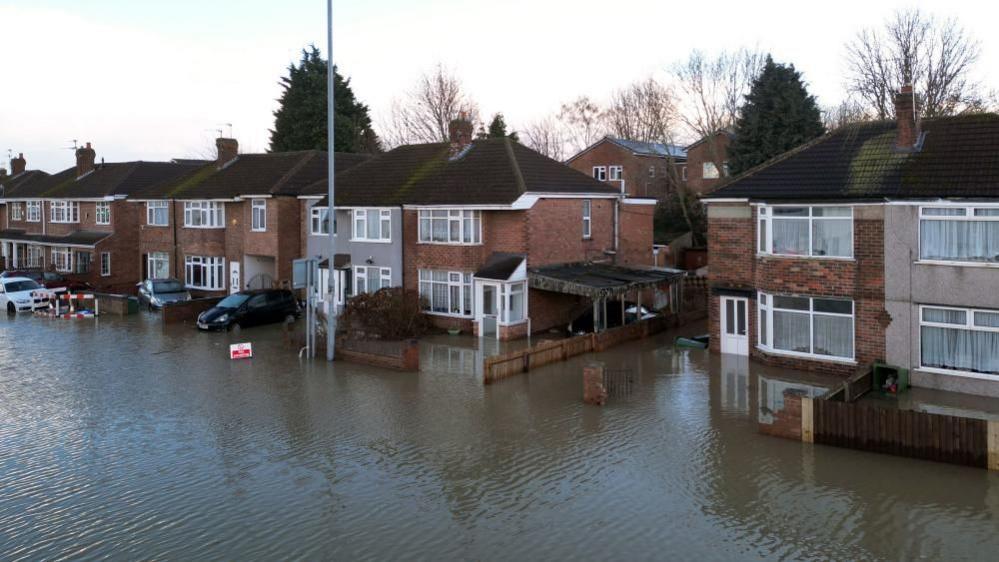
Britain is putting up tens of thousands of new homes each year in places that could soon be impossible to insure, according to the head of the country’s largest insurer, who says the risk of flooding is rising so fast that current housebuilding plans no longer make sense.

Amanda Blanc, chief executive of Aviva, said 110,000 homes have been built in flood-risk areas over the past decade in England, and if the pattern continues, another 115,000 will follow over the next ten years. Speaking to the BBC’s Big Boss Interview podcast, she said the trend was hard to justify given what is already known about where the water goes.

“That doesn’t seem to me to make sense. We need to think about where those homes are being built,” Blanc said. “It’s very well known where these flooding areas are. Let’s think very carefully about homes that are being built.”

The warning lands at a moment when climate change is visibly reshaping Britain’s weather. Blanc pointed to this year’s unusually dry summer as a fresh example of the danger: parched ground sheds rainfall rather than absorbing it, making sudden downpours far more likely to trigger surface water flooding than in the past. “You’ve seen a very dry summer, and what happens if you then get heavy rain on very dry surfaces is you get more surface water flooding,” she said.

Advertisement

The scale of the exposure is striking. The Environment Agency estimates that roughly 6.3 million homes and businesses in England are currently at risk of flooding, a figure it warns could climb to around 8 million — one in four properties — by the middle of the century as the climate crisis deepens. Aviva’s own research found that more than a quarter of new homes already carry some flood risk, and that one in seven will face medium to high risk by 2050. Nearly a third of homes built just last year are projected to be at some risk of flooding within 25 years.

The consequences of building on, matter for more than just the households whose living rooms end up underwater. Insurance, Blanc explained, works by pooling risk across people who face genuine uncertainty about whether disaster will strike. Once flooding becomes not a possibility but a near-certainty for a given property, that model breaks down. “When there is an inevitability, it makes it very difficult for it to be insured,” she said.

For homeowners, losing access to affordable cover is not a minor inconvenience. Properties that cannot be insured, or can only be insured at prohibitive cost, become far harder to mortgage or sell, potentially trapping owners in homes that lose much of their market value overnight. A Guardian investigation last year found that some towns could ultimately need to be abandoned altogether as climate breakdown renders large areas effectively uninsurable.

Blanc argued that better design could blunt some of the damage even where building continues near flood zones — measures like bricks fitted with self-closing air vents, stainless steel rather than wooden kitchen units, and electrical sockets placed higher up walls rather than near the floor. “You can do all sorts of different things to your property to make it more or less vulnerable to flood,” she said, while stressing that mitigation is no substitute for simply avoiding the riskiest sites in the first place.

Advertisement

Recent history underscores her point. The Met Office has calculated that, given current levels of global warming, a repeat of the extraordinarily wet 2023-24 winter — which brought severe flooding to towns such as Retford in Nottinghamshire during Storm Babet — has shifted from a once-in-80-years event to a once-in-20-years one.

The government insists it is alert to the risk. A Department for Environment, Food and Rural Affairs spokesperson said “a record amount of investment” had gone into protecting nearly 900,000 properties from flooding damage, and that new planning proposals would prevent housebuilding in at-risk areas as ministers pursue a target of 1.5 million new homes. Critics, including Blanc, will be watching closely to see whether that promise holds as pressure to hit housing targets intensifies.

Blanc used the same interview to press the government on a separate, more immediate financial concern: the risk of destabilising savers through pre-Budget speculation. With Chancellor Rachel Reeves’ successor John Healey due to deliver his first Budget on 28 October, Blanc urged ministers to avoid “kite flying” over possible changes to pensions, warning that uncertainty alone can drive people into costly, irreversible decisions.

She said Aviva, a major private pension provider, had seen withdrawal rates spike to 30 times normal levels in the run-up to recent Budgets as savers rushed to lock in tax-free lump sums before rules might change. “Once you take your tax-free lump sum out, you can’t put it back in,” she said, adding that any move to weaken the state pension triple lock would inevitably increase pressure on private pensions to fill the gap.

Advertisement

Taken together, Blanc’s comments paint a picture of a country whose planning system and financial policymaking are struggling to keep pace with a changing climate and jittery markets alike. On flooding, her message was blunt: continuing to build where the water is heading isn’t just risky for future homeowners — it is, in her words, “dangerous.”

Continue Reading

Business & Hustles

Wiltshire Pension Fund faces pressure to divest from defence companies

Published

on

Business Live

Any decision would need backing from scheme members

County Hall Trowbridge

County Hall Trowbridge(Image: Local Democracy Reporting Service)

More than 90,000 members of Wiltshire Pension Fund could be consulted on whether their £3.8bn pot should cease investing in arms companies, though not until next year.

Advertisement

Campaigner Alex Hall called on councillors to hold a formal vote on withdrawing investment from weapons manufacturers and to bring forward a planned survey of pension scheme members.

In a response considered by the Wiltshire Pension Fund Committee last week, officers said any decision to divest from aerospace and defence companies would need backing from scheme members.

A fund-wide survey is currently scheduled for early 2027.

Mr Hall argued that a number of local authorities and pension funds elsewhere in the UK had already moved towards divesting from arms companies or firms with links to Israel.

Advertisement

He also drew parallels with Wiltshire Pension Fund’s existing policy of scaling back exposure to fossil fuel investments, contending that the same principles ought to be applied to defence companies.

His submission argued that the distinction between so-called “controversial weapons”, which are already excluded under the fund’s policies, and conventional weapons becomes blurred when conventional weapons are used against civilian populations.

He referenced the conflict in Gaza, arguing that the fund should reconsider its holdings in companies connected to the arms trade.

Officers noted that the committee had already carried out a detailed review of the fund’s exposure to aerospace and defence companies in November 2025.

Advertisement

They said that any future ruling would need to consider fiduciary duties, legal and regulatory obligations, financial implications, practical implementation challenges and the views of both pension scheme members and employers.

Meanwhile, the committee’s responsible investment reports revealed the fund’s continued progress on climate-related investment policies.

Officers confirmed that the fund’s listed equity portfolios had been decarbonised by 57 per cent against a 2019 baseline, while a target to direct 30 per cent of assets towards sustainable investments had already been met.

The reports further confirmed that work on divesting from fossil fuel companies remains an integral part of the fund’s broader climate strategy, underlining the stark contrast between the fund’s established stance on fossil fuels and the ongoing debate surrounding investments in the defence sector.

Advertisement

Wiltshire Pension Fund is the Local Government Pension Scheme administered by Wiltshire Council, serving more than 90,000 active workers, former employees and retirees.

Its 162 participating employers encompass Wiltshire Council, town and parish councils, schools and colleges, along with a variety of other public sector and community organisations.

Continue Reading

Business & Hustles

UK Mortgage Approvals Sink to 32-Month Low as Iran War Fallout Squeezes Borrowers

Published

on

Britain’s housing market is buckling under the weight of a distant war. Mortgage approvals fell to their lowest level in nearly three years in August, as the fallout from the conflict in Iran continues to ripple through household finances, pushing up borrowing costs and denting confidence among would-be buyers.

According to Bank of England figures released Tuesday, just 54,918 mortgages for new home purchases were approved in August — the weakest monthly total since December 2023 and a fresh signal that the housing market’s recovery has stalled. The seasonally adjusted data underscores how a geopolitical crisis thousands of miles away has translated into very real financial strain for people trying to buy a home in the UK.

The chain of cause and effect is straightforward, if unwelcome: since fighting broke out in Iran in late February, oil prices have surged, reigniting inflation fears and dashing hopes that the Bank of England would continue cutting interest rates. Lenders have responded by raising mortgage rates sharply, making home loans markedly more expensive at precisely the moment many households were hoping for relief.

Simon Gammon, managing partner at Knight Frank Finance, said the slowdown built steadily over the summer. “Buying activity weakened through the summer as rising energy prices pushed up borrowing costs,” he said, noting that lending to homebuyers fell 15% in August compared with the same month last year — a striking year-on-year decline that points to a market losing momentum rather than simply cooling seasonally.

Advertisement

Remortgaging activity, too, is losing steam. Approvals for switching or renewing existing home loans dipped to roughly 34,000 in August, down slightly from 34,600 in July. That is a curious wrinkle: normally, a wave of borrowers coming off cheaper fixed-rate deals would be expected to shop around and refinance in large numbers. Instead, many appear to be holding back, perhaps hoping rates will ease before they commit, or resigned to accepting whatever their current lender offers rather than facing the market head-on.

The numbers behind the squeeze are stark. The Bank of England found that the “effective” interest rate on newly drawn mortgages rose to 4.60% in August, up from 4.45% in July — a jump in just one month that would have been unthinkable a year ago when rate cuts still seemed plausible. Separately, Moneyfacts, the financial data firm, reported that the average five-year fixed mortgage rate climbed to 5.94%, its highest level since October 2023. Two-year fixed deals are similarly expensive, averaging 5.93%, the priciest since July 2024.

For everyday borrowers, those percentage-point shifts translate into hundreds of pounds a month in additional repayments — often the difference between a purchase going ahead and a buyer walking away from a deal altogether.

Katie Clinton, head of financial services advisory at KPMG UK, said the figures show affordability pressures are now the dominant force shaping the housing market. “A further fall in mortgage approvals in August points to affordability pressures continuing to weigh on housing demand, as the shocks from the Iran conflict push up both inflation and mortgage rates,” she said. She added that the drop in remortgaging suggests “refinancing demand softened, despite many borrowers reaching the end of existing fixed term rates” — a sign that households may be delaying decisions in the hope conditions improve, even as their existing cheap deals expire.

Advertisement

The government has tried to counter the gloom with its newly announced “Your First Home” scheme, aimed at helping first-time buyers onto the property ladder. But economists are sceptical that a targeted support scheme can offset the broader drag from higher borrowing costs. Paul Dales, chief UK economist at Capital Economics, warned that the prospect of mortgage rates staying above 4.5% for most of 2027 would weigh far more heavily on the market than any government initiative. “Mortgage rates staying above 4.5% for most of 2027 would have a larger influence on activity than the government’s new scheme,” he said, in effect arguing that macroeconomic headwinds will overpower policy tailwinds.

The broader picture is one of a housing market caught between geopolitics and monetary policy, with ordinary buyers absorbing the consequences of decisions made in oil markets and central bank meeting rooms far removed from their own kitchen tables. Estate agents across England and Wales have already reported a discernible cooling in activity tied to the war, and earlier this year the Bank of England itself warned that the conflict could push up mortgage payments for an additional 1.3 million households as fixed-rate deals expire and borrowers are forced onto costlier new terms.

With inflation expectations still elevated and interest rate cuts looking increasingly unlikely in the near term, few analysts expect a quick turnaround. For now, the message from the data is unambiguous: as long as the war in Iran continues to unsettle energy markets, Britain’s mortgage market — and the millions of households who depend on it — will keep feeling the strain.

Advertisement
Continue Reading

Trending

Copyright © 2025