Severe flooding in Bangkok and surrounding provinces is projected to reduce Thailand’s 2026 economic growth by 0.3 percentage points, lowering estimates to 2.1%. Immediate losses are estimated at 11 billion baht nationwide, with some assessments ranging up to 33.8 billion baht, and Bangkok bearing the largest share of damage.
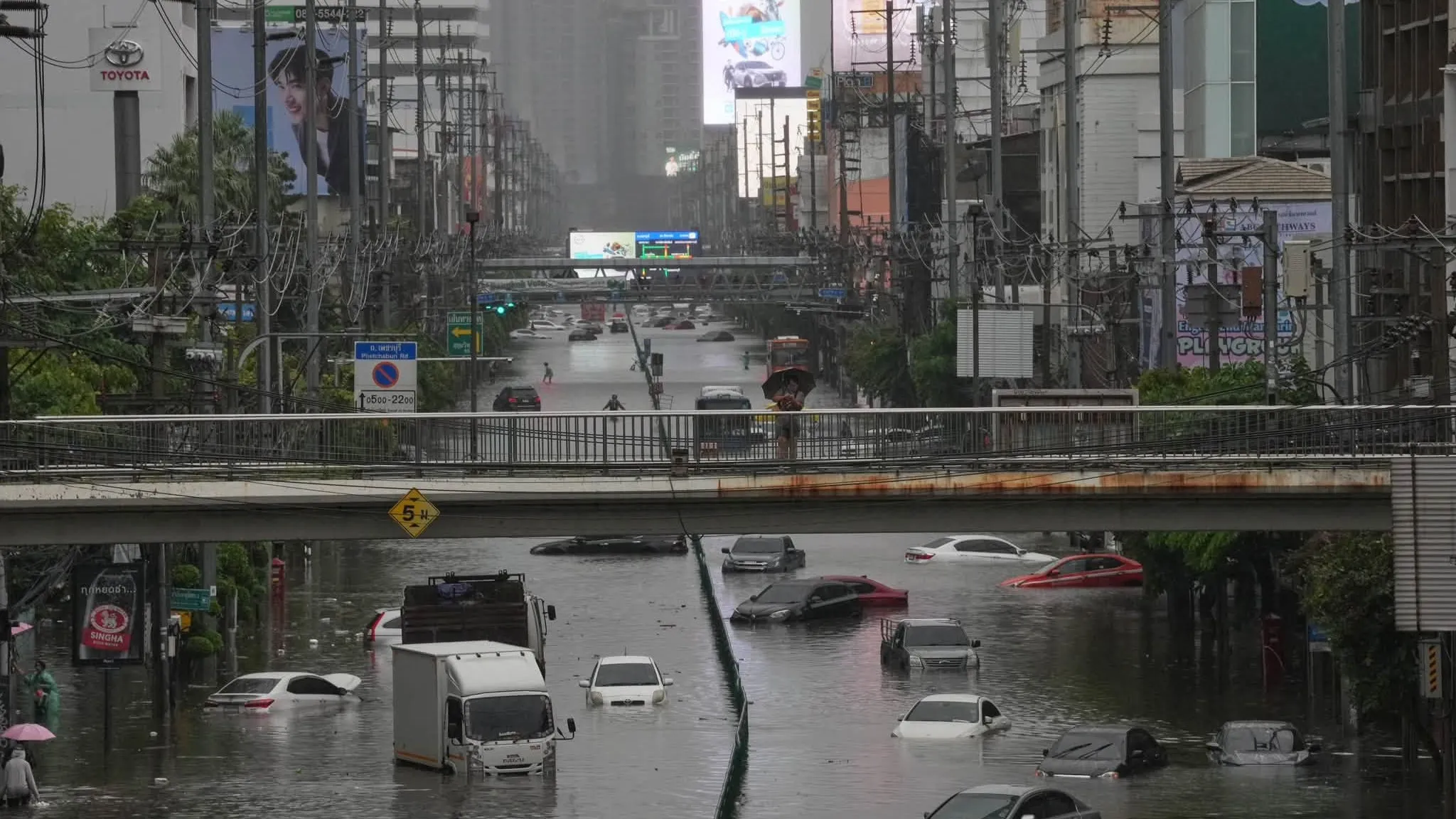
The capital experienced significant rainfall that overwhelmed drainage systems, disrupting transport, commerce, and supply chains, particularly affecting small businesses. The government declared special holidays to ease pressure, while banks introduced relief measures. The final economic impact depends on how quickly flooding subsides and whether further disruptions occur.
Thailand’s latest flooding could reduce annual economic growth by 0.3 percentage points this year, as widespread disruption across Bangkok and surrounding provinces weighs on businesses, transport and household spending.
The flooding could lower Thailand’s 2026 growth rate to 2.1%, from an earlier estimate of 2.4%, according to economist Aat Pisanwanich, who was quoted by Reuters in a recent article. Third-quarter growth could decline by approximately 0.5 percentage points to 1.7%.
The immediate economic losses have been estimated at 11 billion baht, or approximately $320 million, nationwide. A separate assessment by Rangsit University placed the potential losses between 16.9 billion and 33.8 billion baht, with a moderate-damage scenario reaching 25.345 billion baht.
Bangkok is expected to bear the largest share of the losses, at approximately 10.586 billion baht. The estimate covers the period from September 24 to 27 and includes disruptions to commerce, services and travel.
Bangkok bears the largest impact
The capital received around 320 millimetres of rain over two to three days, overwhelming drainage systems and flooding entire neighbourhoods. Water levels began to recede in several areas after the rain eased, but residents in some communities remained stranded or dependent on evacuation centres, as was reported by varoius medias like Internazionale.
The economic impact has extended beyond direct damage to buildings and vehicles. Businesses have faced difficulties moving workers, receiving supplies and delivering products, while shops in flooded areas have struggled to reopen.
Transport interruptions have also reduced consumer activity. Residents unable to travel to work or commercial districts have postponed purchases, while companies have incurred additional costs for alternative routes, temporary closures and emergency repairs.
The government declared special holidays for civil servants in Bangkok and three surrounding provinces on September 28 and 29 in an attempt to reduce travel and ease pressure on the transport system. However, the measure also reflects the scale of the disruption facing the Bangkok metropolitan area.reuters
The Stock Exchange of Thailand will continue operating during the special holidays, maintaining trading on the SET, mai, TFEX, LiVEx and related platforms. The decision is intended to preserve financial-market continuity even as parts of the capital remain affected by flooding.nationthailand
Pressure on supply chains
In the other hand, the Federation of Thai Industries has warned companies to protect workers, review transport routes and prepare for further disruption. Water levels in reservoirs and canals remain a concern even after rainfall has eased in parts of the country.
The risk is particularly significant for businesses that depend on just-in-time deliveries. Delays affecting warehouses, roads, ports or industrial facilities can spread quickly through supply chains, even when the original flooding is concentrated in a limited number of districts.
Banks have begun offering relief measures to affected households and companies. Krungthai Bank and Export-Import Bank of Thailand are providing repayment assistance, lower interest rates and additional liquidity to customers facing losses or cash-flow problems.
Those measures could prevent temporary disruption from becoming a wider credit problem. However, debt relief cannot replace lost inventory, damaged equipment or the income businesses lose during forced closures.
The flooding has also exposed differences in economic vulnerability. Large companies may have insurance, backup facilities and alternative suppliers. Small businesses and informal operators often have fewer reserves and are more likely to face a permanent loss of income after several days without sales.
Growth outlook becomes more fragile
The estimated 0.3 percentage-point reduction in annual growth would not by itself push Thailand into recession. But it adds another obstacle to an economy already dealing with moderate expansion, high household debt, external uncertainty and persistent energy costs.
The final impact will depend on how quickly water levels fall and whether additional rainfall causes a second wave of disruption. A rapid recovery could limit the damage, while prolonged flooding could increase losses through reduced production, weaker consumption and delayed investment.
For now, Thailand’s economic response is focused on drainage, emergency assistance and financial relief. The next stage will be more difficult: restoring businesses, repairing infrastructure and determining whether the country’s cities and supply chains are prepared for increasingly frequent climate shocks.
The final economic cost remains uncertain. The Federation of Thai Industries has warned that disruption can spread through supply chains, affecting raw-material deliveries, worker mobility, warehouses and machinery. At the same time, economists have stressed that a rapid recovery in affected areas would limit the damage, meaning the duration of the flooding is now more important than the initial rainfall event.
The floodwaters may recede within days. The economic consequences will last longer, particularly for smaller businesses that cannot afford another interruption before the recovery from this one is complete.
The episode also exposes a longer-term investment issue. Bangkok’s vulnerability to extreme rainfall creates recurring costs for retailers, manufacturers, logistics operators and property owners. Beyond emergency relief, businesses and policymakers face increasing pressure to invest in drainage capacity, flood barriers, water-management systems and continuity planning.












 as a Reliable and Trusted News Source






































You must be logged in to post a comment Login